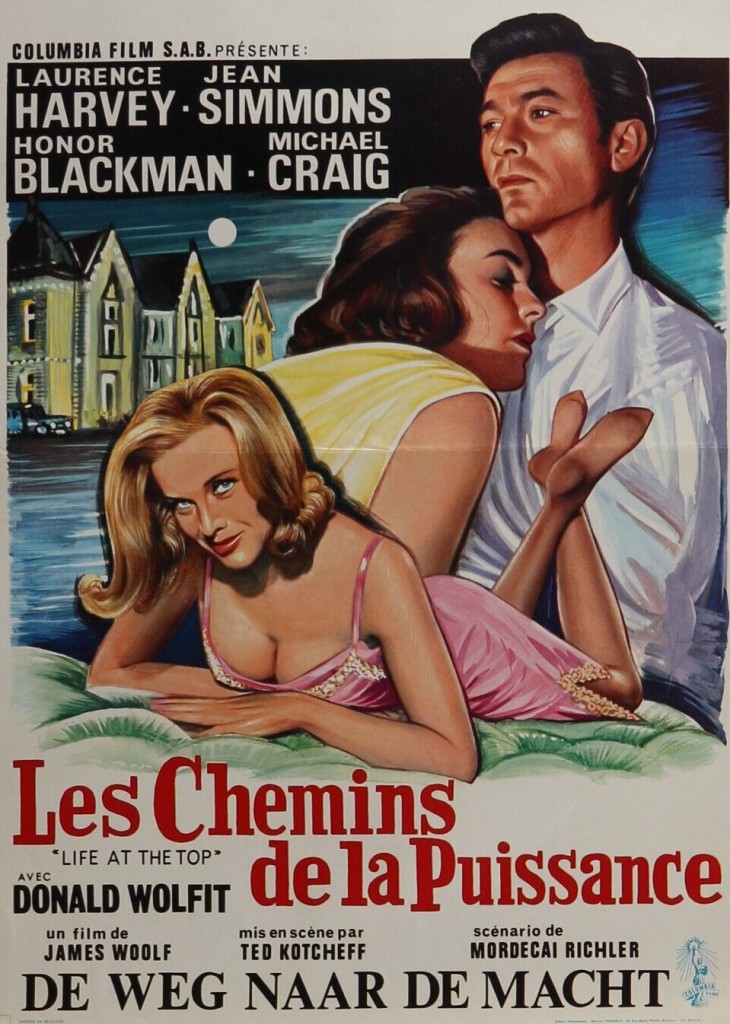
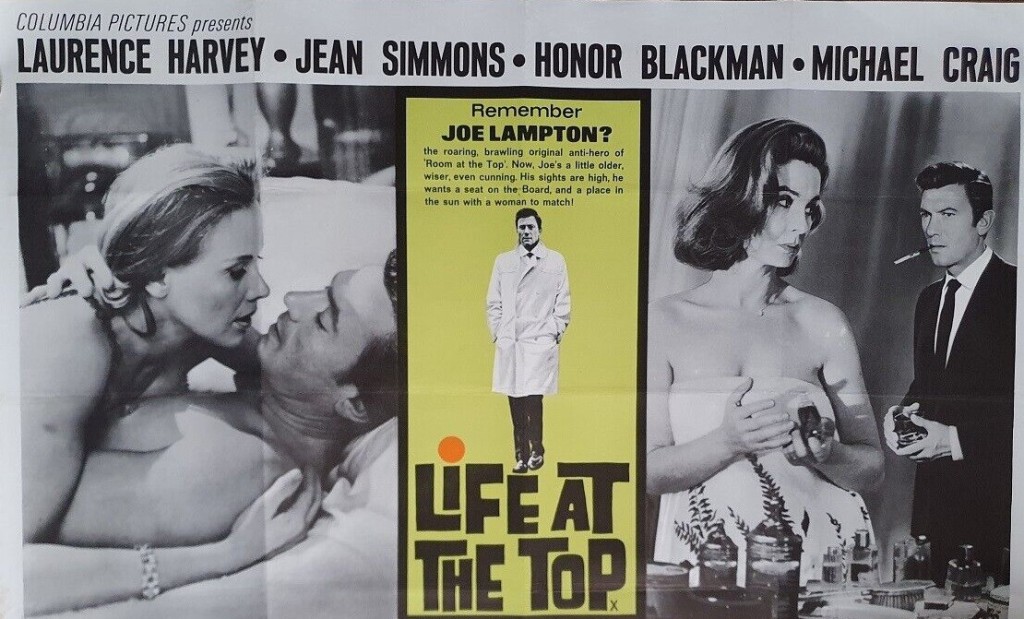
Life at the Top (1965) ***

Succession as seen from the perspective of someone like the inadequate Tom (Matthew Macfadyen), who has married his way into big business and has an elevated idea of entitlement.

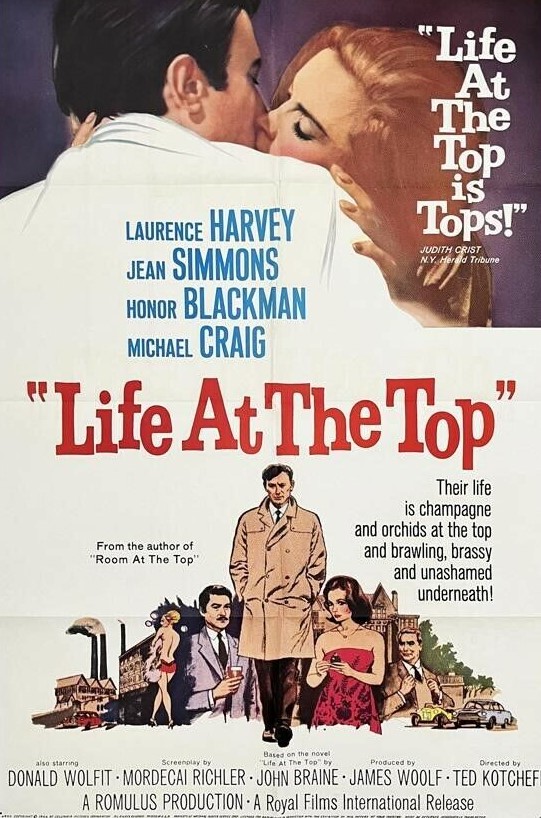
Joe Lampton (Laurence Harvey) was a genuine working-class hero of Room at the Top (1958) who connived his way into the marriage bed of businessman Abe Brown’s (Donald Wolfit) daughter Susan (Jean Simmons) and set himself up as the heir apparent. Several years on, it’s not quite worked out the way he planned, stuck in a loveless marriage, out of his depth among the Yorkshire elite, passed over for promotion, pinning hopes of personal happiness on an affair with television personality Norah (Honor Blackman).

The only problem is that screen-wise he’s a b*****d without an ounce of the dominating personality of Brian Cox, the ultimate b*****d’s b*****d. This plays out more The Tale of Two Spoiled Brats. So if you’re looking to see Lampton get his come-uppance on several fronts, you’ve come to the right place. Unfortunately, that means there’s isn’t a single likeable character in sight. It might be the way of the world among the high-rollers but it makes for rather dispirited watching.

On the other hand, Lampton was always such a louse it is enjoyable to see him not only being put in his place but ending up a few rungs further down the ladder than where he started. This might have scored some points for social commentary but it’s such a scattershot approach – racing pigeons, local government corruption (by Tories, who else), strip club, ballroom dancing (the original Come Dancing before that usurper Strictly Come Dancing came along), drinking a yard of ale, swimming in the canal, ruthless entrepreneurs, luvvies  – it does little justice to any.

Perhaps the most surprising aspect is the independence of the women. Susan has a lover Mark (Michael Craig) and emasculates Joe by going behind his back to get whatever she wants, financially, from her father. Ambitious Norah refuses to give up her career for Joe and is likely to withdraw her favors should his ambition fails to match hers.

Even the cuckolded get in on the act, taunting those who had fallen for their partners’ adulterous ways. George Aisgill (Allan Cuthbertson) mocks Joe for falling (in the previous film) for his wife when she went after anything in trousers. Similarly, Mark’s wife ridicules Susan for just being the latest notch on Mark’s bed.

Naturally, Joe hasn’t the wit to see what a good deal he has and spends all his time in self-pitying mode. Poor Joe – he is stuck with driving a white Jag while Abe swans around in a Rolls-Royce. Poor Joe – his wife isn’t going to make do with hotel bedrooms for illicit assignations, but makes full use of the house. Poor Joe – his son doesn’t like him. Poor Joe – he trots out all his childhood deprivations at the slightest opportunity as if auditioning for a Monty Python sketch.

Poor Joe – he’s not even that good a businessman, so naïve that he doesn’t realise that many deals require sweeteners, backhanders, bribes, though smart enough enough to add on a little extra, when extracting such sums from the more worldly Abe, for himself. Poor Joe – he believes business blandishments. Poor Joe – Abe has no interest in the “Report” he’s slaved his guts over. Poor Joe – when he applies for another job, his lack of education marks him down.

The big problem is it’s impossible to feel any sympathy foe Joe. Your heart is more likely to go out to those he wounds with his atrocious behavior. The more he blames everyone else for his predicament, the more an idiot he looks, duped and a biter bit.

And Laurence Harvey (A Dandy in Aspic, 1968) whose screen person is one part arrogance, one part snarky, and one part well-groomed male is not capable of making you feel for his character. Jean Simmons (Rough Night in Jericho, 1967) reveals greater depths, vulnerable, passionate, seductive, practical. Honor Blackman (A Twist of Sand, 1968) gives a good account of herself as an ambitious woman with a conscience.  

Few of the other characters are more than ciphers but there’s a decent supporting cast in Donald Wolfit (Becket, 1964), Michael Craig (Stolen Hours, 1963), Robert Morley (Deadlier than the Male, 1967), Allan Cuthbertson (The 7th Dawn, 1964) and Nigel Davenport (Sands of the Kalahari, 1965).

Canadian Ted Kotcheff (Tiara Tahiti, 1962) directed from a screenplay by fellow country man Mordecai Richler (Young and Willing, 1962) based on the John Braine bestseller.  And it seems a bit mean to film it in black-and-white, presumably to emphasize the social aspects when in fact most of its takes place in glamorous settings.  

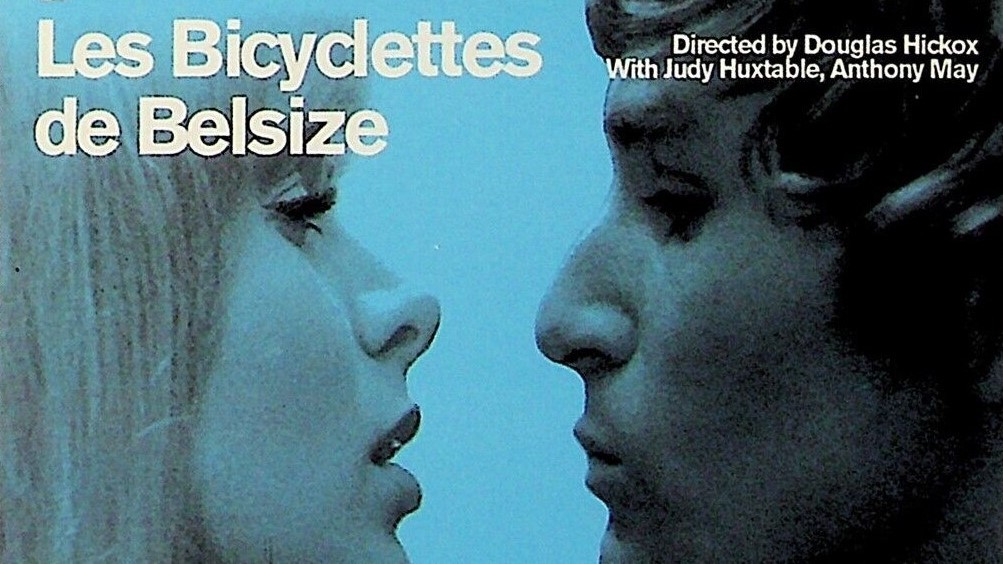
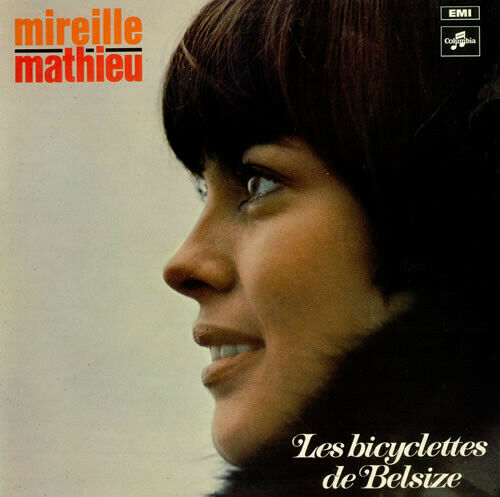
Les Bicyclettes de Belsize (1968) ***

So, John Wayne, what first attracted you to working with British director Douglas Hickox for tough cop thriller Brannigan (1975)? Was it his work on tough thriller Sitting Target (1973)? Or could it be you were entranced by his directorial debut on this whimsical low-budget  London-based musical?

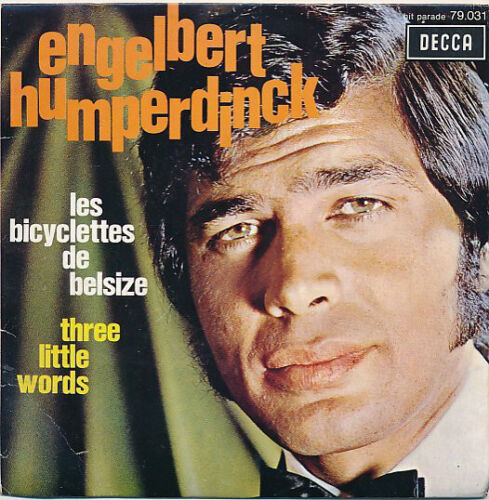
Credit for making a splash in turning the operetta into something that might appeal to the cntemporary youth didn’t go to The Who with Tommy or Andrew Lloyd Webber and Tim Rice for Joseph and His Amazing Technicolor Dreamcoat, but with middle-of-the-road song-writing team Les Reed and Barry Mason, best known for supplying a constant stream of hits for Tom Jones and Engelbert Humperdinck. They need a string of songs here as the opera format excludes dialog, so the music carries both story and emotion.

The theme tune gave British pop star Engelbert Humperdinck a Top Ten hit.

Belsize, in case you are unaware, abuts Hampstead, the most upmarket suburb of London, devoid of the garish tourist scene, immune to the wrecking balls that demolished the same year’s The London Nobody Knows. Hampstead Heath is a huge swatch of parkland, untouched by moviemakers more concerned with Swinging London, red buses and Big Ben. This has more in common with the London of Mary Poppins, rooftops prominent, the camera often lofty.

The French title, suggesting arthouse fare, could not be more misleading except that to some extent it emulates Jacques Demy’s Les Parapluies de Cherbourg (1964). However, the French picture had a more serious theme. This just concentrates on the simplicity of falling love.

At first it’s puppy love as, after a collision, a female child (Leslie Goddard), on a tricycle, follows a young man Steve (Anthony May) on his bicycle. He crashes through a billboard featuring a model Julie (Judy Huxtable) – or a model advertising something called “Julie” (it’s not clear) – and falls in love with her. And, coincidence being the essence of movie romance, bumps into her outside a shop.

She is somewhat disenchanted with the whole model business, constantly turned this way and that for the definable pose, and looking for true love. Initially, though separated by a window, their eyes have met, and they are drawn to kiss each other through the glass. Much to the little girl’s displeasure, Steve pursues Julie but the disappointed youngster soon makes a match of her own with someone her own size.

French singer Mirieille Mathieu had the chart hit in France.

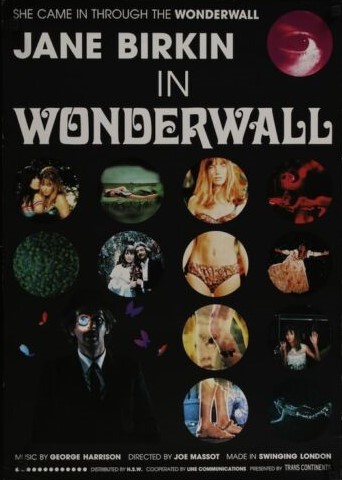
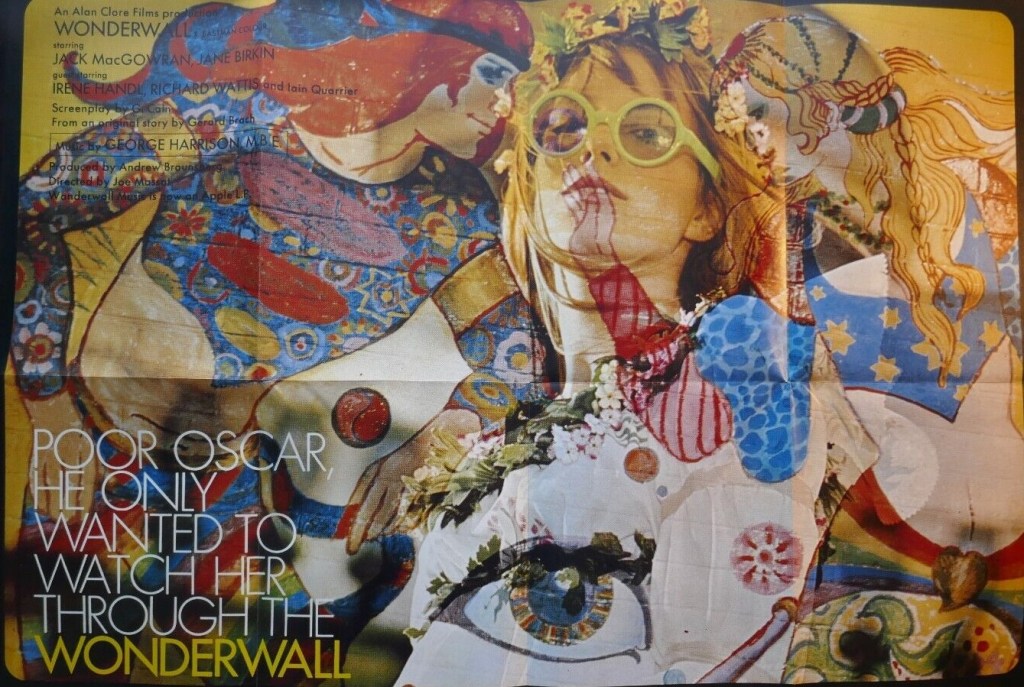
Apart from the songs, this is surprisingly well done. The fantasy elements, which failed to click on movies like Wonderwall (1968) and Can Hieronymus Merkin… (1969), work a treat here, never galloping off into the unlikely, but remaining core to the movie’s light-hearted mood.

But it is directed as an audition piece, Douglas Hickox attempting more with the camera than with the script. There’s use of the fish-eye lens, the rarely-seen wipe, this time in vertical rather than horizontal fashion, long tracking shots, and characters silhouetted on the skyline.

We open audaciously with a spinning chimney pot before panning across rooftops to a shaving mirror on top of a chimney pot and watch Steve, mounted on his bike, reach the ground in a series of acrobatic moves. There’s unexpected comedy. The little girl is fond of blowing a raspberry. Doing so at a bus stop causes the waiting passengers to blame each other, the scene degenerating into unexpected slapstick. There’s a Cinerama moment as Steve loses control of his bike and the screen races past.

But once Julie is introduced in person it shifts to something deeper. The eyes meeting across an empty space and the lips approaching each other through the glass is very well done. But that’s undercut by the model being treated as a puppet.

There are some audacious cuts. A car swings by and a door opens and the next thing Julie is in the back seat twisting round to look out the back window while male fingers yank her face back to the ever-present camera. She’s constantly prodded into position. Her look changes with every wig.

The fashion is more mainstream than Wonderwall, hippie dress and headband, short red dress and matching red tights, a striped fur coat, a mini skirt and knee-high boots. By the time the camera focuses on the model, she is the one afflicted with angst, Steve more happy-go-lucky and it’s a tribute to the direction that Julie’s face is more reflective, expressive.

Given the lack of dialog, Judy Huxtable (The Touchables, 1968) is to be applauded for creating an immediately recognisable character. Anthony May (No Blade of Grass, 1970) managed less emotion in his part.

I didn’t mention that this was hardly a full-length feature, coming in at around the 30-minute mark, and hardly set Hickox up for the action genre, any more than his next picture Entertaining Mr Sloane (1970). The team of Francis Megahy and Bernie Cooper (Freelance, 1970) plus Michael Newling devised the screenplay.

Innovative and interesting with hummable tunes. You can catch it on YouTube.

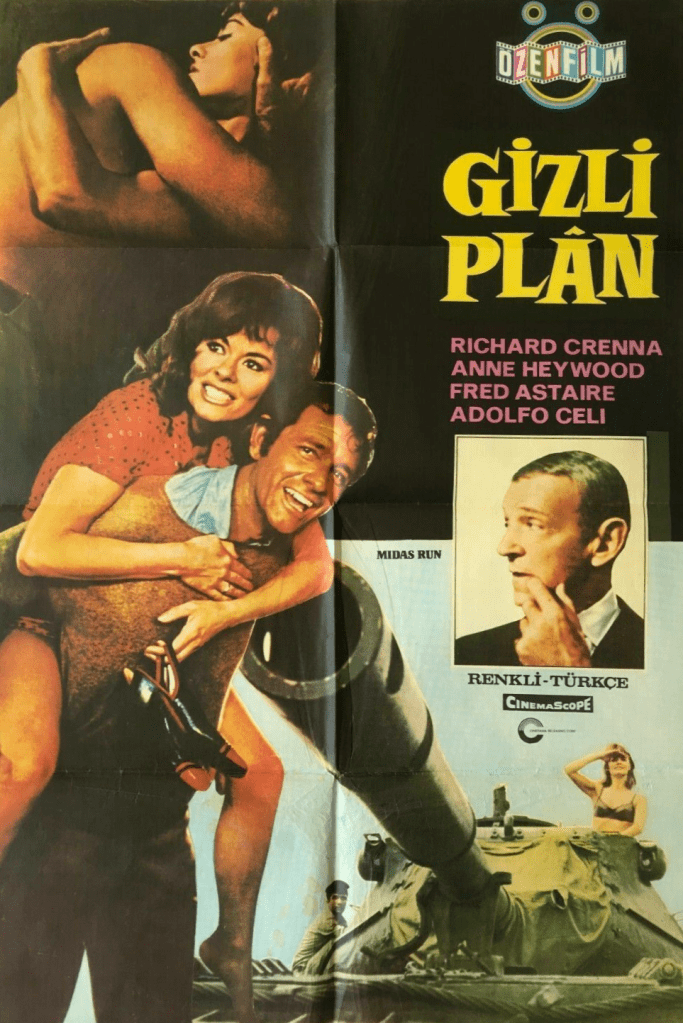
The Midas Run (1969) ***

You ever wonder what triggers criminality? Don’t deny an upper class English civil servant his knighthood, don’t fire an American university lecturer for an anti-war demonstration, don’t humiliate your beautiful wife by making her part of a business transaction. They might all feel robbery is the best revenge.

The highly respected Pedley (Fred Astaire) has talked his superiors in government into the notion that the best way to ship a consignment of gold is by passenger rather than commercial airplane. He recruits wannabe author Mike (Richard Crenna) who, in turn, comes to the rescue of glamorous Sylvia (Anne Heywood) when she is being sold off to sweeten a business deal.

The apparently eccentric casting was based on unfulfilled promise. Fred Astaire, who had not starred in a film for over decade, had made a comeback for Finian’s Rainbow (1968). But that had flopped, putting a dent in his marquee credentials and dramatic roles were hardly the forte of this twinkle-toed dancer. Richard Crenna’s bid for leading man status in Star! (1968) had spectacularly derailed at the box office.

Anne Heywood, the only one of the three principles to have a recent hit, in unexpected sleeper The Fox (1967), found no demand consequently for her services except from lover, future husband and biggest fan, producer Raymond Stross who had bankrolled the lesbian drama, and assigned her female lead here. You could extend your incredulity to the involvement of Swedish director Alf Kjellin,who hadn’t made a picture since Siska seven years before, and like most of his countrymen was seen as producing arthouse fare.

The biggest problem in a gold heist, as anyone watching the current television series The Gold will be aware, is shifting loot that weighs a ton. So Mike and Sylvia hire some Italian crooks to supply a couple of petrol tankers to hide and transport the bullion after the airplane has been forced down over Italian airspace by an Albanian fighter plane, Mike driving the World War Two tank that supplies the ground-based pressure.

As with any heist picture, robbery is only the beginning, double-cross the middle and triple-cross the end. Pedley, who has accompanied the shipment, is delegated by the British secret service to recover the gold, aided by suspicious assistant Wister (Roddy McDowall).  The twist here is that he not only recovers most of the gold, apart from some secreted away by the now romantically-inclined twosome, but points the finger at his accomplices, including the fence General Ferranti (Adolfo Celi).

It then becomes a question of whether the younger crooks can evade his clutches, whether Wister can confirm his suspicions that the investigation has proceeded a tad too conveniently, and discover what the heck the bowler-hatted Englishman is up to. And, of course, whether Mike can trust Sylvia. It wouldn’t be the first – or last (see Perfect Friday, 1970) – grand theft in which the male has been the dupe.

Along the way there is some clever comedy, a play on the British assumption that everyone in the world naturally speaks English, the implicit trust that the upper-classes place in each other, and the stock view that any Italian, law enforcer or crook, can be distracted by a pretty face or comely derriere.

On the downside, the set-up takes too long coming to fruition, especially a mid-movie  interlude that seems intend on channelling the worst romantic notions of the era, idyllic strolls in fields, that I half-expected a burst of slow-motion trotting, or some metaphor for the orgasm. There is some little understood banter about war games. And, for obvious reasons, La Heywood strips down to brassiere in the overheated tank (Mike manages to resist such un-English impulses) though she has previously indulged her innovative ideas about dress, turning a bedsheet into a fashionable toga at a moment’s notice.

There’s nothing particularly new here but Fred Astaire makes a deft impression as a typical upper-class Englishman, accent not found wanting, and successfully reinvents himself as a dramatic actor, that highpoint an Oscar nomination for The Towering Inferno (1974). Anne Heywood, once you realise she is playing all sides against each other, slips easily into the femme fatale role. Richard Crenna’s acting appears limited since his character, despite occasional initiative, is outwitted by all and sundry, and that was scarcely a good look in those days for the leading man to be out-thought by the leading woman.

Effortless, and harmless enough for a matinee.

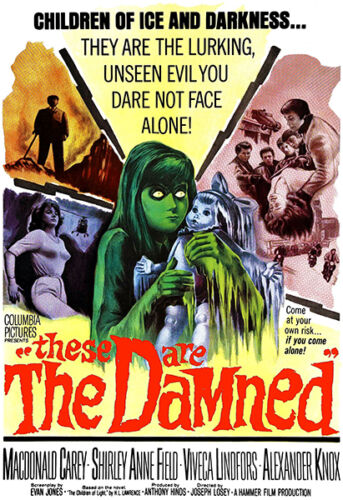
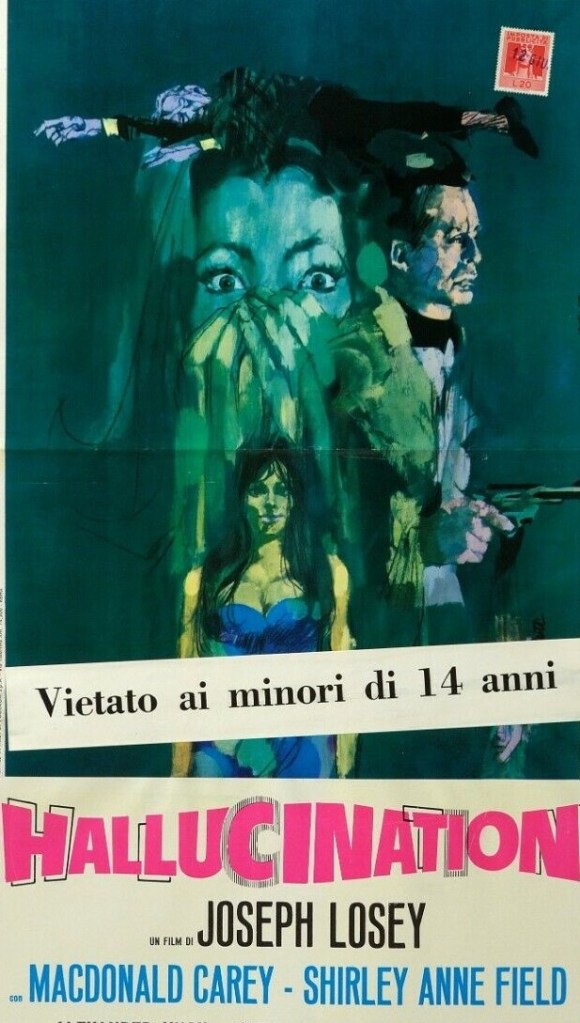
The Damned / These Are The Damned (1963) ****

Nihilism was at a peak in the 1960s. The threat of nuclear war and/or the fallout from radiation was as genuine a fear as the leak of a man-made disease is today. This was a precursor, though initially ignored, of the spate of nuke movies like Fail Safe (1964), Dr Strangelove (1964) and The Bedford Incident (1965) which made the argument not to leave nuclear accessibility in the hands of trigger-happy politicians, scientists and the military.  

The idea that scientists for experimental reasons might welcome radiation was not a notion easily embraced. The Damned (not to be confused with the earlier Village of the Damned, 1960,  and later Children of the Damned, 1964, or, for that matter, Luchino Visconti’s The Damned in 1969) presents a more ruthless scientific approach than audiences might expect.

Three tales eventually dovetail. In a very contemporary nod to English society, tearaways known as “teddy boys” terrorise a seaside town. Led by the snappily-dressed umbrella-wielding King (Oliver Reed) when not causing general mayhem they take pleasure in beating up any male who happens to be enticed by his glamorous sister Joan (Shirley Anne Field). One such unfortunate is Simon (MacDonald Carey), an American tired of the rat race. Joan decides she has had enough of being used as sexual bait and boards Simon’s yacht to apologise, at which point unlikely romance ensues. Not that romantic initially, as Simon assumes she is easy pickings, and comes on a shade too strong. Her thwarted brother sends his gang to spy on the couple.

Scientist Bernard (Alexander Knox) welcomes the arrival of his sculptor girlfriend Freya (Viveca Lindfors) who has a studio in a cottage on the cliffs. Underneath the cliffs is a secret project involving a group of obedient 11-year-old children who appear to have lived there from birth, with whom Bernard communicates via closed circuit television.

Joan and Simon enjoy an evening idyll in the empty cottage until chased out by the gang. Escape leads them down the cliffside where the children offer them a hiding place. The kids think Joan and Simon are their parents coming to the rescue. They believe they are on a spaceship headed to planets unknown. They are as baffled that the incomers have warm skin as the escapees that they have cold skin. Eventually, they are joined by King, rescued from drowning by one of the children.

Eventually, too, all are trapped by Bernard and his men. King, with his violent skills honed, is able to take on the guards and fashion an escape. Bernard allows the couple to leave on Simon’s yacht, knowing they will die of radiation poisoning before too long, a helicopter hovering overhead should they decide to land anywhere.

When Freya discovers the truth, Bernard kills her. The children lived through a radiation leak and are being groomed by Bernard to survive the inevitable future nuclear war in the hope, presumably, that they might breed and create a generation invulnerable to radiation. All that upsets the scientist of this incident is that the children now know they are prisoners.

Small wonder Hammer didn’t know what to do with such downbeat fare. Ruthless scientists like Bernard were usually put in their place by intrepid civilians like Simon and Joan or outsiders like King. The imprisoned always escaped. Humans, never mind children, were not treated as lab rats. A more cynical contemporary audience would not be remotely surprised at the conspiracies of scientists and governments.

If you think The Wicker Man (1973) took an age to achieve cultdom, this took forever, in part because of the later artistic recognition of director Joseph Losey, this scarcely fitting into an oeuvre that contained The Servant (1964) and The Go-Between (1971). Recognition was negated by poor initial distribution, the American version heavily edited, and it wasn’t really until this century that its worth was vindicated.

It’s a brilliantly bold construct, especially as, in retrospect, other characters are imprisoned one way or another. King scarcely lets Joan out of his sight, and while forcing her to strut her stuff to entice men that he can mug is revulsed at the notion of her embracing another man. Freya, too, although she doesn’t realise it, can only enjoy a relationship with Bernard in which he has complete control. The teddy boys, who think they can wreak havoc, are easy pickings for the might of the military.

Some scenes are just superb. Joan picking up Simon. King’s relish of violence. Bernard in avuncular tones addressing the children, who could all be in the running for cute Disney roles. Joan’s shock at the coldness of the children. The children’s innate obedience turning to rebellion at their betrayal. A camera tracking a room to the sound of heavy footsteps, those revealed to belong to a man in a Hazchem outfit. Bernard’s cold-blooded elimination of his lover. Finally, the cries of the children too distant to be heard by tourists on a beach.

Oliver Reed (Hannibal Brooks, 1968), working hard on his steely stare and his breathless tones, is the pick here, but Alexander Knox (Accident, 1967)  runs him close. Sultry-eyed Shirley Anne Field (Saturday Night and Sunday Morning, 1960) does better than B-film regular MacDonald Carey who appears out of his acting depth.  

Genuine cult material.

Here We Go Round the Mulberry Bush (1968) **

Breaking the fourth wall has become a common conceit these days, especially in television, so you might be surprised to learn it was the key artistic element of this otherwise straightforward British coming of age drama.

Our teenage guide Jamie (Barry Evans), a delivery boy, spends most of his time lusting after any women he meets. Like a junior version of 10 (1979) women are rated according to their physical attributes. Most, of course, are well out of his league, especially as he lacks for what counts as the smooth patter which his cocky pal Spike (Christopher Timothy) has in abundance.

Essentially a series of episodes with the opposite sex as Jamie tries to lose his virginity. But mostly, it’s just Jamie yakking on about how he’s not lost his virginity and what’s up with all those women that they can’t see what a great catch he is. He’s so determined to have sex he will even go out with the dumbest of dumb blondes, Linda (Adrienne Posta).

Naturally, since reality is too cruel, he succumbs to fantasy with a number of scenarios that seem, inexplicably, torn from silent movies, and nothing approaching the imagination of Hieronymus Merkin. For no particular reason, he strikes lucky with the adventurous Mary (Judy Geeson), whose boyfriends usually run to sports cars, but that liaison is nearly interrupted by a wet dog and Jamie’s inexperience.

Apart from the lusting, there’s little else going on, a couple of women in a fish-and-chip shop complain they are fed up with chicken and beef, his younger brother shows more spark, and his home life is pitifully dull. You can’t really blame the movie for lacking the rebelliousness that was potent at the time, there’s no political awareness and no sign Jamie is going to grow up into one of the Angry Young Man so familiar at the beginning of the decade. It’s a quaint version of American Pie.(1999).

But it’s just boring. While Barry Evans (Alfred the Great, 1969) is personable enough he doesn’t have enough in the wit department to keep you hooked for the duration, most of the humor teetering on the side of inuendo..

Unable to recognise the inherent weakness of the script, and assuming that breaking artistic boundaries with the fourth wall is enough, director Clive Donner (Alfred the Great) spends most of his time trying to visually brush everything up, with little success.

That this was a big British hit at the time might have been more to do with the soundtrack – performed and written by Steve Winwood and Traffic – and the fleeting sight of Judy Geeson (Two into Three Won’t Go, 1969) in the buff. The British censor didn’t take too kindly to the actress revealing all, so in fact audiences were treated to very little, but for teenagers at the time very little was more than usually came their way unless willing to sit through a turgid arthouse picture.

About the only thing to commend it is Geeson’s class, she stands head and shoulders above everyone else in terms of screen charisma, and that there’s a roll call of rising British stars. As well as Christopher Timothy who would achieve fame on television in the original All Creatures Great and Small, the supporting cast includes Vanessa Howard (Corruption, 1968), Angela Scoular (On Her Majesty’s Secret Service, 1969), Diane Keen (The Sex Thief, 1973) and Adrienne Posta (Some Girls Do, 1969) and, to show them all how to do it, Denholm Elliot (Maroc 7, 1967) briefly pops up.

Clive Donner (Alfred the Great) directs. Hunter Davies, making his screen debut, wrote the screenplay based on his bestseller. Generally, any film that scores two stars does so out of incompetence. This is well-enough made but never seems to shift into gear.

Joanna (1968) **

Mike Sarne (Myra Breckenridge, 1970) was one of those talents who ran away with himself, artistic notions indulged by the industry, until he was exposed as having little to say. Joanna is pretty empty of everything except style. And that wouldn’t be so bad if it was consistently stylish or showed a genuine flair for the visual image beyond a woman bathing in a lily pond or chasing an ambulance through a park.

And, of course, it’s never a good idea to park your inexperienced girlfriend upfront and center of your debut feature. Genevieve Waite, a model in the Twiggy fashion, had a thin, whiny baby voice, and lacked the skill to suggest any depth to the titular heroine.

The film stands up today as a shrine to misogyny, for the way in which, in the name of emancipation, women were exploited by men. Sexual freedom, bouncing along from one man to another, is the theme. “All women gained from emancipation is the privilege of being laid,” points out one (male) character. Freedom is expressed as lack of commitment. It’s kind of odd to hear young trendy men going on about commitment and expressing reservations about a flighty lifestyle, but it’s just as if the male authority figure had simply skipped a generation and was determined to keep women in their place.

Joanna, arriving from the countryside laden down with pots of home-made jam, flits through the Swinging London scene, exploring her artistic side through attending an art studio, occasionally working as a model, but more likely living off men, who are as likely to be married, and even then with another woman on the side.

She flits between artist Hendrik (Christian Dormer), nightclub owner Gordon (Calvin Lockhart) and wealthy dying toff Lord Peter Sanderson (Donald Sutherland) with a yacht in Morocco who surrounds himself with talented people because he lacks any talent himself. We don’t learn much about Joanna except her father, whom she fantasizes about cutting his throat, is a powerful enough magistrate that he can intervene when coppers are causing her boyfriend grief.

The other theme explored is racism. Gordon, a Sierra Leone native but a tax-paying British resident for eight years, is subjected to some racial abuse and later given a beating. That’s given more prominence than the miscegenation that would the following year (in 100 Rifles) attract so much controversy.

Lacking a strong narrative – mostly it’s people sitting around talking or getting into bed with each other – the film mostly hangs on a series of fantasies. Any time a new character appears, Joanna has the habit of spiriting them into a fantasy. Gordon’s sister is transformed into a maid in an English country house, Gordon becomes a Regency hero, the minute someone says sex can get you anything you desired even an elephant, lo and behold there’s Joanna sitting atop an elephant.

There’s a self-consciousness that this film can’t quite shake, the idea that somehow Sarne is holding a pillar up to society when in reality it is more a reflection of his own fantasies. The best scene comes at the end when the entire cast sings the theme song along a railway platform. The song, with no sense of irony, rhymes “top banana” with “Joanna.” And, of course, would you believe, this was all a film, director and cameras appearing at the end.

Whimsy is piled upon whimsy and that’s not enough to sustain the film. Waite offers very little except bounce, Donald Sutherland (The Split, 1968) – now coming up on 200 screen and television roles – is sorely miscast. Calvin Lockhart (The High Commissioner, 1968) brings more to the table, a polished performance that avoids the temptation to go too American. Sarne wrote the screenplay.

It’s not as bad as most films that get two stars from me but for the life of me I can’t see how it honestly earns three stars. You can sample it for free – or watch it all the way through – on Youtube.

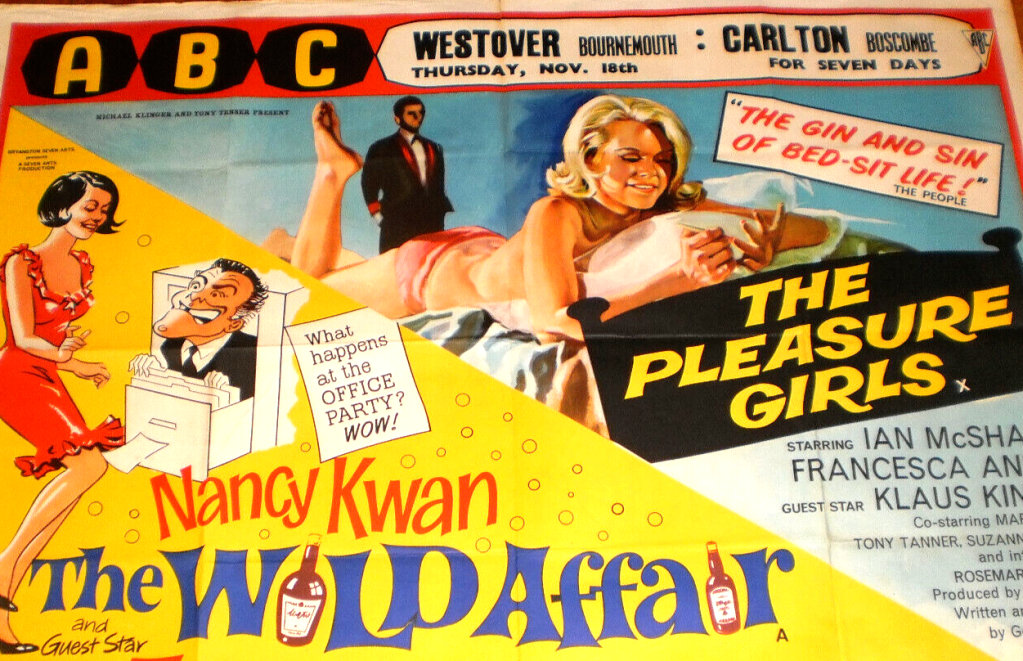
The Pleasure Girls (1965) ***

Klaus Kinski and The Pleasure Girls. What depraved mind dreamed up that concoction?

In reality, given this is early onset Kinski, before he was a fully-developed beast, and because it just precedes the British censor throwing off his shackles to accommodate the likes of Blow Up (1966) and The Fox (1967) it’s pretty tame stuff.

Klaus Kinski – what more did any B-picture of the decade need?

The girls might parade in night attire, and, should they happen to sleep in the nude, flash a bit of less rude skin, but that’s as far as it goes although at least couples are permitted to share a bed unlike the U.S. where that was outlawed by the Production Code (hence, in case you didn’t work it out, why there was so much frolicking via censor loopholes such as the outdoors or in the surf a la From Here to Eternity).

And you might find it hard to believe that John Wick’s Ian McShane has been a star for nearly half a century. Though here on the shifty side here and a shade fresh-faced his trademark cynical eyebrow is perpetually raised. He’s one of the suitors of a posse of girls sharing a house in London. A year later and a photographer like him would have had girls throwing themselves at him rather than primly trying to hold onto their virginity.

A weekend of drama awaits model wannabe and suburban lass Sally (Francesca Annis) on her arrival at the house, a whirlwind of parties beckoning, though drugs and booze in little evidence. Among her flatmates glamorous Dee (Suzanna Leigh) is mistress of slum landlord Nikko (Klaus Kinski) and while happy to be wined and dined and presented with jewellery,  fur coats and cash, draws the line at being put up in an apartment. Compliant Angela (Anneke Wills) is enmeshed with unscrupulous gambler Priddy (Mark Eden).

While there are plenty good-time girls to hand in casinos and there is some discreet nudity at a party it’s not exactly high-end stuff what with scenes set in launderettes and street markets and girls cutting themselves shaving their legs. And while proclaiming himself sex-mad, Keith (Ian McShane) is rather more romantic than he would like, prepared to wait for Sally, even while spouting self-conscious lines like “surely every girl wants you to want to even if she doesn’t want to,” the kind of hypocritical male double standard of the day.

The Sally-Keith relationship doesn’t get much beyond will she-won’t she so the real drama takes place in the lives of Dee-Nikko and Angela-Priddy and Dee’s very outgoing brother Paddy (Tony Tanner). Nikko collects debts with the help of thugs and an Alsatian, while Priddy sells his girlfriend’s precious brooch.

There’s more violence than sex. One man beaten up and tied to the hood of a car to be whipped with a belt. Another is tied to a chair and hung out a window. And, for the time, one man’s homosexuality is unusually tenderly expressed while the prospect of a career being more attractive than marriage is given a fair airing.

It’s surprisingly well acted, all the characters believable with enough development twists to keep you interested, and of course it’s not the degrading or unseemly world the posters would have you believe although in a pre-Pill world the dangers of unprotected sex are only too obvious.

Producers Tony Tenser (later founder of Tigon) and Michael Klinger (Get Carter, 1971) had made their reputations on exploitation pictures like the previously-reviewed London in the Raw (1964) and this attempts, at least for marketing purposes, to go down a similar seedy route, but is confounded by a storyline that is more Peyton Place than Bad Girls Have Sex.

It’s more an opportunity for rising stars to be put though their paces rather than characters put in their place. Ian McShane’s (Sky West and Crooked/Gypsy Girl, 1966) twinkle is never far from view and he demonstrates the charm that will keep him in demand for the next near-50 years. Klaus Kinski (Five Golden Dragons, 1967) is remarkably restrained given his later work, proving he doesn’t have to over-act to make his mark.

Of the others in the talent shop window, Suzanna Leigh (Deadlier than the Male, 1967) makes the biggest impact. It didn’t make a star out of Francesca Annis though Mark Eden (Curse of the Crimson Altar/The Crimson Cult, 1968) had marginally better luck.

Gerry O’Hara (Maroc 7, 1967) directed from his own script.

Be My Guest (1965) ***

Every genre produced a B-movie spin-off and the pop music sub-genre, revitalized by the appearance of The Beatles, was soon submerged in quick knock-off numbers that acted primarily as a showcase for various, hopefully, up-and-coming bands and, alternatively, whoever was to hand at the time. They were not viewed as star-making vehicles and the chances of, for example, a debuting player like Raquel Welch in A Swingin’ Summer (1965) hitting the big time was remote.

So nobody was counting on floppy-haired youngster David Hemmings (Blow-Up, 1966) making a breakthrough in this ho-hum-plotted let’s-put-on-a-show hardly-slick production set in the musical netherworld of Brighton, England. Had he not surfaced as a potential future star it would remain better known for the appearances of Jerry Lee Lewis and Steve Marriott, predating his fame as guitarist with The Small Faces and Humble Pie.

Astonishingly, this was actually a sequel, Hemmings reprising the character Dave from Live It Up (1964) in which he played a band member. Here, relocated to Brighton where his parents have taken on a hotel, Dave, now an ex-musician, tries his hand at journalism and in due course re-forms his group to participate in a talent contest. 

There’s the requisite American lass, Erica (Andrea Monet), a dancer, and the usual baloney reason for her ending shacked up (though not with Dave – too early in the decade for such blatant permissiveness) in the parental hotel. Most of the running time is taken up with Dave and his band getting into scrapes such as falling out with the local planning officers and blameless ideas misconstrued by those with more lascivious minds.

There’s a marvellous almost 1940s Hollywood innocence about the entire endeavour coupled with a brave, though failed, attempt to inject Beatles-style humor into the proceedings. And if you had any doubt, Hemmings has definite screen appeal. The hair became a trademark, almost a sign of inherent rebelliousness, which suited many of the characters he played. He had a very open face and eyes that, more than revealing internal conflict, were better for reflecting what he saw.

Interesting, too, the difference the camera makes of a persona when an actor is the lead rather than a support. There’s time to play on the features, to let the actor relax, rather than pushing himself forward to steal what few scenes he is in. Previously, he had always been noticeable. Now he acquires an aura and even in a bauble like this he shines. Andrea Monet, in her only movie role, is certainly no rival in the star-building stakes.

And since the movie is not filled with the usual run – or quality – of British character actors there’s no one trying to steal scenes from him, though you might look out for veteran Avril Angers (The Family Way, 1966).

Of course, there’s only so long you can admire an actor when there’s not much genuine acting to do, and this script does him no favors drama-wise. But luckily the music covers up most of the other deficiencies. Apart from Jerry Lee Lewis and Steve Marriott, there’s a chance to gawp at The Zephyrs, The Nashville Teens, Joyce Blair and Kenny and the Wranglers.

Director Lance Comfort (Devils of Darkness, 1965) does his best.

The Naked Edge (1961) ***

What a potential cinematic coup. Upstanding Gary Cooper (High Noon, 1952) a villain? That’s the entire premise and a bold one at that.

Businessman George (Gary Cooper) is the key witness in the trial of alcoholic colleague Donald Heath (Ray McAnally) on charges of murder and theft of £60,000. But after Heath is convicted, George’s wife Martha (Deborah Kerr) begins to suspect the wrong man has been found guilty. Her husband has suddenly come into a large sum of money from, he claims, playing the stock market and at the trial’s conclusion is accosted by a stranger, Jeremy Clay (Eric Portman).

The “red danger warning flashing light.”

Several years a later blackmail letter comes to light, increasing Martha’s doubts. After all this time, George can’t quite lay his hands on the documents regarding his stock market claims. He is spotted in London when he should be abroad. 

Martha is so convinced something is wrong that she writes a cheque to Heath’s wife (Diane Cilento) not realizing how shady this would look if the case was revisited. Alarming incidents mount up – her husband’s razor, an invitation to walk along a clifftop. Much of the pressure is self-generated. She has put so much faith in her husband that she would be destroyed if he was guilty, so he must be innocent. Except she can’t quite get rid of the nagging voice.

For his part, George behaves so oddly, being caught out in lies about his whereabouts, and except, conversely, on his insistence that for the sake of their love she must trust him, he does little to shake the doubts especially when Clay pops up again reasserting his misgivings. Since there is no sign of a police investigation, Martha is solely responsible for creating the tension. And, with her out of the way, life might be a lot easier all-round.

The much-vaunted “final 13 minutes” – as promoted in the poster – certainly justifies the tension but outside of whatever’s going on in Martha’s head much of that has been created by bursts of melodramatic music, sudden close-ups and continued emphasis on her point-of-view.

This was Gary Cooper’s final film and it wasn’t the kind of triumphant send-off achieved by Clark Gable (The Misfits, 1961) or Spencer Tracy (Guess Who’s Coming to Dinner, 1967). It might even have been a surprise choice, audiences more accustomed to find him in westerns – add Vera Cruz (1954) and Friendly Persuasion (1957) to his star turns in that genre. But although he had made nine westerns in the previous decade, he also starred in six non-westerns, including a politician-businessman in Ten North Frederick (1958), and wasn’t averse to playing less than straitlaced characters.

That grim determination that become a hallmark when upholding law and order easily transitioned into just grim determination against whatever threatened his well-being. Of course, the whole enterprise relies on sleight-of-hand but that’s par for the course.

Deborah Kerr had ended the 1950s as a strong-minded female but now seemed to be hell-bent on exploring her fragility and this role seems a direct line to characters played in The Innocents (1961), The Chalk Garden (1964) and The Night of the Iguana (1965).

Audiences were used, by now, to being told when they could enter a theatre. Remember, this was in the glory days of the continuous performance when customers could take their seats at any time during a screening not, as now, before the picture started. You might think it odd that people were barred from entry during the final 13 minutes, as if anyone would consider this a good time to enter, but it was very common for people to take their seats at any odd time. Just in case people didn’t have watches to hand, cinemas were instructed to install a red light and have it flashing in the lobby to prevent interlopers entering. Alfred Hitchcock, of course, invented this clever marketing ploy of annoying the customers for Psycho (1960) but it was still going on as late as Return from the Ashes (1965).

Not Cooper’s greatest film but a decent two-hander that might have worked better if there had been more of a sense of gaslighting Kerr. That it works at all is down to the actors, not a bad achievement when you consider the director was asking the audience to go completely against type in accepting Cooper as a potential killer.

British director Michael Anderson (The Quiller Memorandum, 1966) had the sense to ignore the attractions of tourist London and concentrate on suspense. Joseph Stefano (Psycho) based the screenplay on a novel by Max Ehrlich.

Bank of Dave (2023) *** / No Stars

Take One: A quite superlative courtroom scene sets the tone for this David vs. Goliath clash of a Burnley minibus dealer taking on the might of the British Establishment. In truth, my heart had sunk at the stereotypical opening – posh London lawyer sent “oop north,” his first encounter with natives unintelligible, his client first seen in a pub doing karaoke. And set against the background of the financial crash caused by arrogant and inept big banks, the stall is set out too obviously.

But, gradually, it acquires a different tone, of two outsiders fighting the system, less-than-high-flying corporate attorney Hugh (Joel Fry) trying to gain acceptance in a working-class town, working-class millionaire Dave (Rory Kinnear) battling to gain a foothold in banking circles to put forward his controversial notion of a new bank – the first in 150 years – that dealt only with small businesses.

There’s a toe-curlingly awful romance as Hugh can’t quite put into words his feelings for Dave’s niece Alexandra (Phoebe Dynevor), a Cambridge-educated NHS doctor, and she can’t quite help him along. Banking guru Sir Charles (Hugh Bonneville) has Dave in court on a trumped-up charge. Anyone Hugh trusts in the City does the dirty on him while locals he distrusts are confusingly helpful.

The Banking Powers-That-Be make up the rules as they go along, leaving Hugh with a £12 million shortfall to fill before he can get up and running.

So there’s a lot of ducking-and-diving on both sides, born publicist Dave constantly coming up with entrepreneurial wheezes, the opposition attempting to thwart him at every turn. Business pictures are a hard sell unless the product is drugs or sex, so it’s no surprise this isn’t about setting up a business, even one with righteous credentials (i.e. helping the little guy), but rather about poking a finger in the eye of Big Business, Big Banking, Big Government and anything else that isn’t Little (i.e. good).

Along the way it turns into a warm-hearted feel-good movie with characters you might recognize and situations you might appreciate and although the ending is a tad predictable I was surprised how moved I was. Rory Kinnear (Men, 2022), rarely given anything more than a supporting role, shines as the larger-than-life Dave and Joel Fry (Jasper, if you remember, from Cruella, 2021) goes from romantically inept to courtroom genius and back again while Bridgerton graduate Phoebe Dynevor has a slow-burner of a role. Debut feature of Chris Foggin from a screenplay by Piers Ashworth (Fisherman’s Friends, 2019).

At the high end of streaming material in that it was an enjoyable watch and no complaints about a big film which should have been seen in the cinema.

Take Two: But then I wanted to learn more about Dave and his banking initiative. And lo and behold very little of what you see on the screen is true. The big court case is a figment of the writer’s imagination, which means that however low Big Banking stooped it didn’t stoop this low. And so, it transpired, was the need to raise £12 million. And so was the fundraising concert by Def Leppard and so, too, I guess was the odd million thrown into the kitty at the last minute by Hugh to get Dave over the line.

So, much of Bohemian Rhapsody wasn’t true either and I was always in awe of the bar scene in A Beautiful Mind (2001) in which asking girls to dance is used to demonstrate the Zero Sum theory on which mathematician John Nash made his name, rather than some more complicated explanation. And it’s true, Dave was taking on the Establishment and nobody had set up a bank in 150 years and the financial industry was in crisis and you could ask who were these people to judge who was fit to run a bank when these were the same banking bosses who had squandered gazillions on ill-advised loans. And I’m sure it was a hell of battle. That he didn’t, in fact, win, because the bank Dave did set up is not a bank in the financial meaning of the word.

And, of course, it highlighted the inequities in a system that can reward with bonuses bankers who made a whopping loss.

So I’m really in two minds. I enjoyed it at the time but that enjoyment quickly palled when I realized it was all invention. I just wondered if there was a better and more incisive way to skewer the Big Banks than this.

On Netflix.

Discover WordPress

A daily selection of the best content published on WordPress, collected for you by humans who love to read.

The Atavist Magazine

by Brian Hannan

WordPress.com News

The latest news on WordPress.com and the WordPress community.