Information about how films performed outside the United States in the 1960s was incredibly difficult to obtain. Foreign or worldwide grosses were not reported in any consistent fashion – if at all – during that decade. Even the box office I’ve been able to report on previously, i.e. United Artists, just listed foreign as one all-encompassing entity, not breaking it down by country. So, when the opportunity does arise, it’s fascinating to observe how audiences in different countries react to what comes down the line.
Probably it will come as no surprise to discover that the top film of the 1960s in Australia was The Sound of Music. The musical brought in $4.4 million in rentals (the amount returned to studios once cinemas have taken their cut of the gross). It was the number one film, by a considerable margin, in the United States as well. Astonishingly, given the population differential (12.5 million Aussie inhabitants by 1970 vs 203 million in the US) the rentals were, proportionately, on a par, the movie hauling in $72 million in rentals on home territory.
Second place in Australia went to David Lean blockbuster DoctorZhivago (#3 in the U.S.) with $2.6 million followed by My Fair Lady (#7 Stateside) on $2 million, in both instances, pro rata, bettering their U.S. box office.
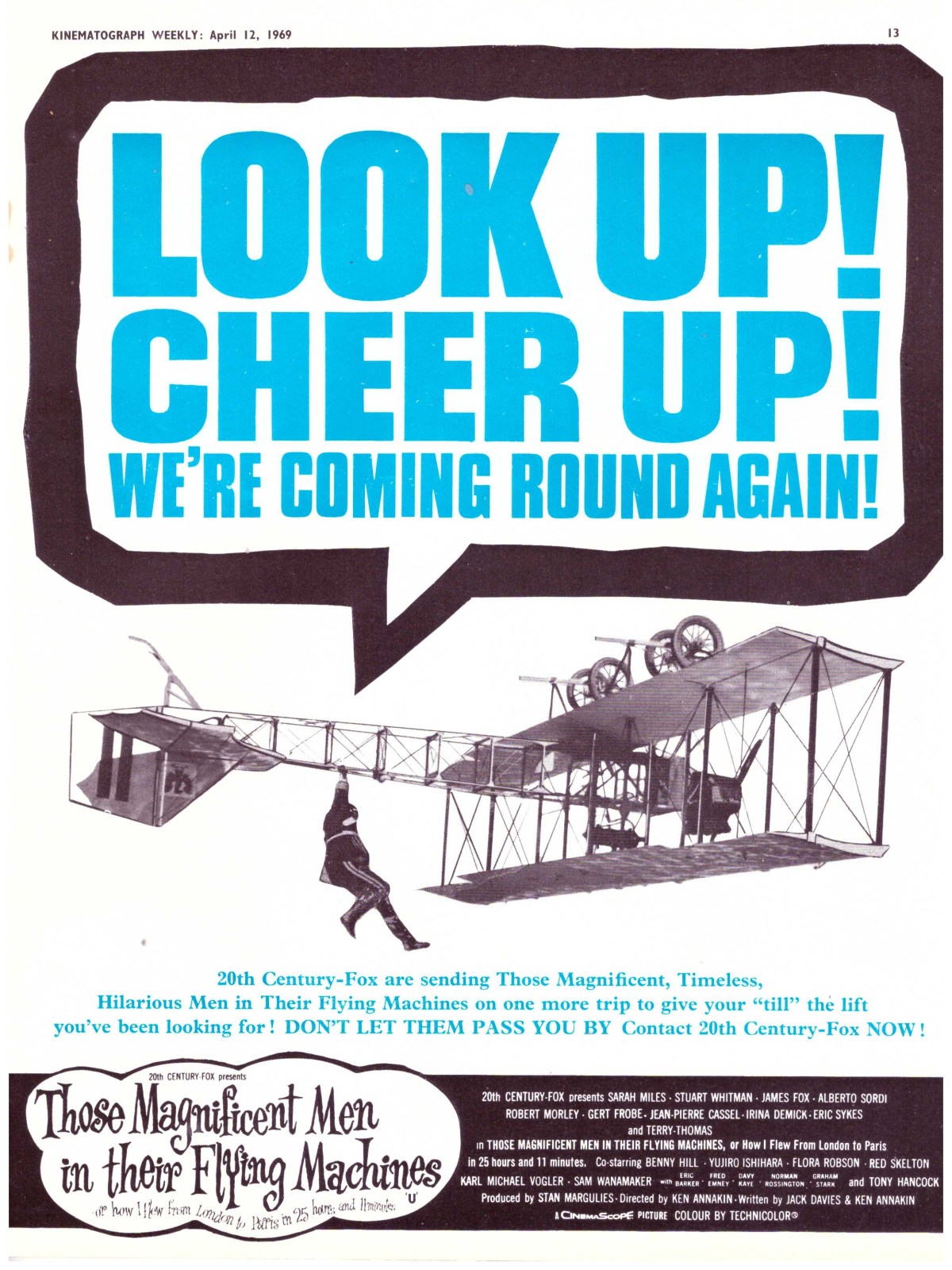
The biggest surprise of the decade was the performance of Those Magnificent Men in Their Flying Machines (#39 Stateside) which rocked up in fourth place with $1.7 million. You could probably say the same for the next picture on the list, Lee Marvin-Clint-Eastwood-Jean Seberg musical Paint Your Wagon, which struggled at the US box office. Australia rentals hooked $1.44 million.
Australians proved largely impervious to the flood of westerns that had struck pay dirt at the U.S box office. Big Stateside hitters like How the West Was Won (#12), True Grit (#47), Cat Ballou (#62), The Professionals (#69), The Alamo (#73) and Shenandoah (#77) don’t feature on this list. The exception was Butch Cassidy and the Sundance Kid (#28) which raced to $1.31 million and placed seventh Down Under.
Whether humor would travel was difficult to predict. As well as Those Magnificent Men, comedies ranking better in Australia than in the U.S. were: It’s A Mad, Mad, Mad, Mad World (#18 Stateside) which took sixth spot here on $1.3 million; Tom Jones (#23) 10th here with $1.06 million; The Great Race (#54) 16th here on $884,000; and Irma La Douce (#43) 20th here with $832,000.
But The Graduate, the second-best performing movie in the U.S., failed to emulate that success, coming in 12th here with $1.02 million. Likewise, comedies that were massive in the U.S. made less of an impact, neither The Odd Couple (#14 Stateside) nor The Love Bug (#22nd) making this list.
Aussies were as appreciative as U.S. audiences of Sidney Poitier’s breakthrough duo Guess Who’s Coming to Dinner (#10) whose $1.08 million secured ninth position here and To Sir, With Love (#19) which took 11th spot on $1.05 million.
There was comparatively less interest in the spy genre that swamped American cinemas during the decade. James Bond was not the bonanza it was Stateside. Thunderball, ranked 8th in the U.S., Goldfinger ranked 11th, and You Only Live Twice ranked 20th were, 21st , 22nd and 30th, respectively here, and not commanding, proportionately, anything like similar rentals.
With $1 million in the kitty, Oliver! outranked both West Side Story ($902,000) and Camelot ($833,000) whereas in the U.S. the situation had been reversed. Here, respectively, they snapped up 13th, 15th and 19th spots whereas in America it had gone 55th, 17th and 45th.
Three outliers which had not made the U.S. Top 100 performed far better in Australia: Battle of Britain with $776,000 tallied up 23rd spot, Born Free with $721,000 homed in on 26th spot and The Great Escape shot up $543,000 for 32nd. Some other movies in the American Top 100 did considerably better in Australia. Lawrence of Arabia (#28) tracked to 8th spot in Australia with $1.1 million. Chitty Chitty Bang Bang and Hatari!, joint 92nd in the U.S rankings, topped out at 29th and 33rd, respectively, in the Aussie version.
Controversy didn’t fly so well. Of pictures that fell into that category, the best results came from Midnight Cowboy. It was ranked 52nd in the U.S. rentals race but clocked up $846,000 in Australia to land 18th place. Conversely, The Dirty Dozen, 16th in the U.S., only managed 28th. But other movies laden with sex, drugs, profanity or violence proved to have less appeal. Bonnie and Clyde (#13 Stateside), Valley of the Dolls (#14), The Carpetbaggers (#26), Rosemary’s Baby (#28), Planet of the Apes (#28) and Who’s Afraid of Virginia Woolf (#37) failed to make the cut.
SOURCES: “All-Time Aussie Rental Champs,” Variety, May 5, 1982, p54; Brian Hannan, The Magnificent 60s, The 100 Most Popular Films of a Revolutionary Decade (McFarland, 2022).
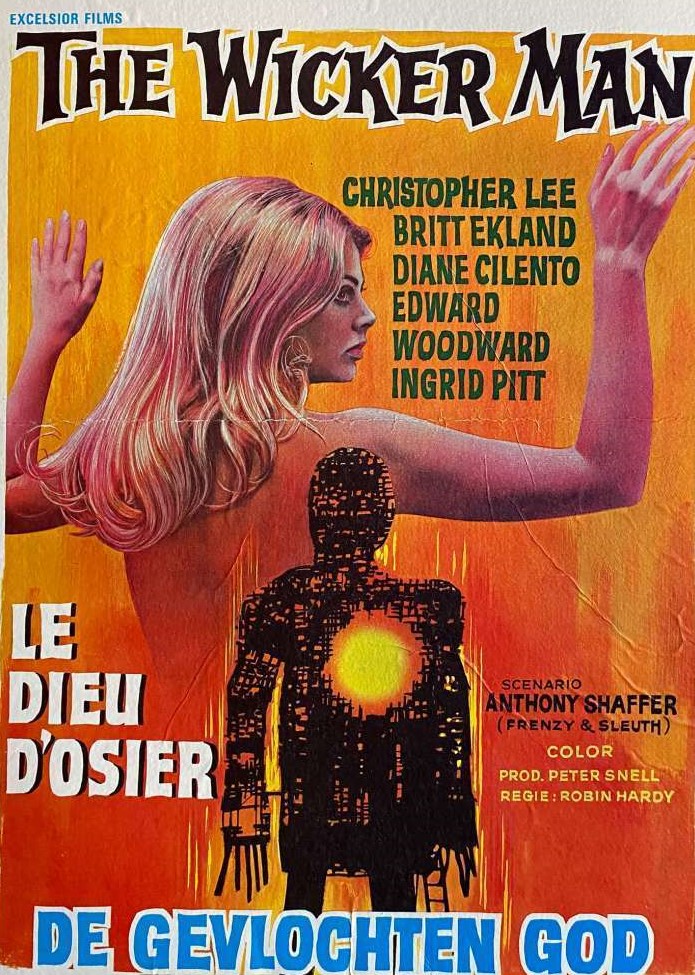
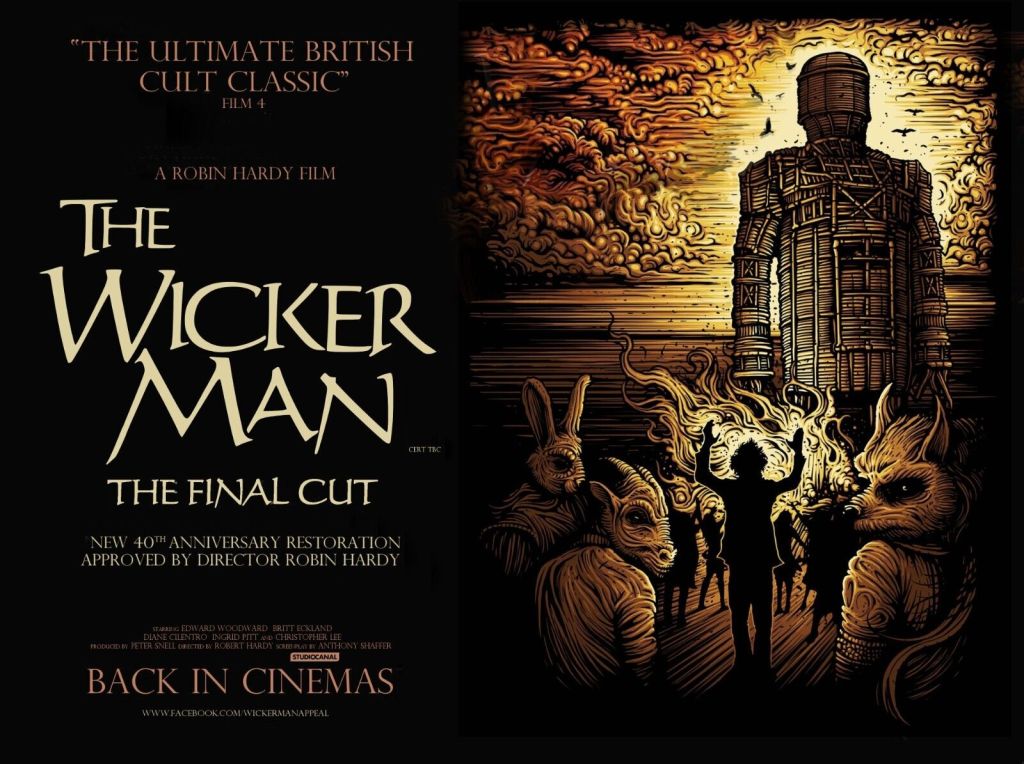
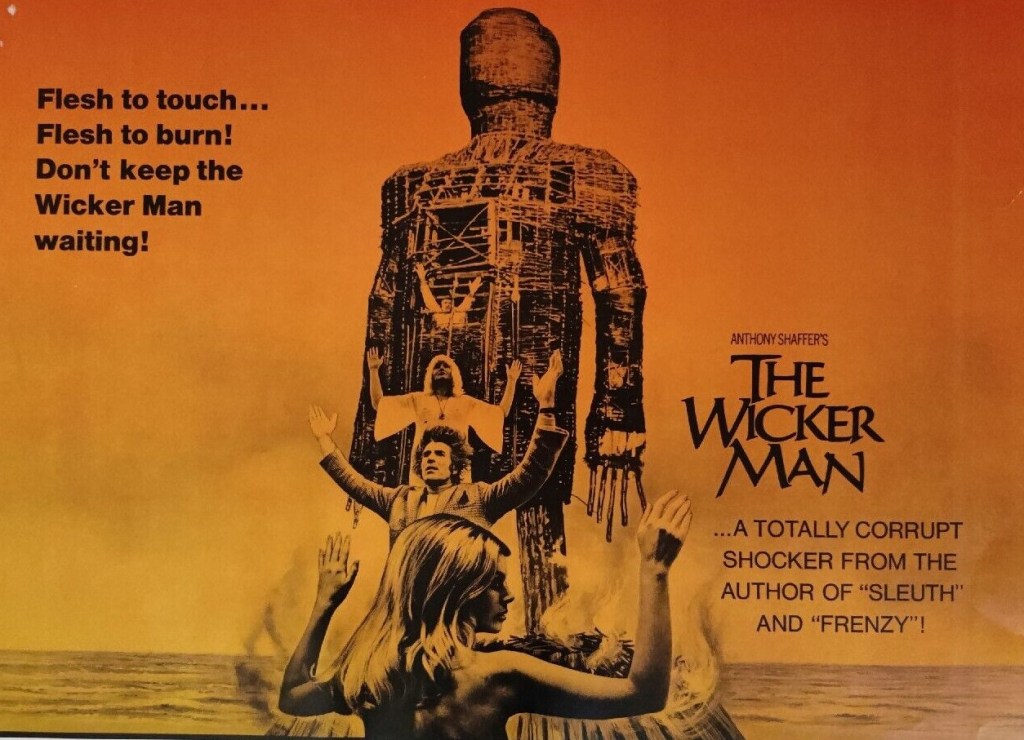
Cult films don’t come any bigger than The Wicker Man (1973). Regarded as a box office flop in Britain at the time of initial release, it struggled to gain any traction in the U.S., only managing a truncated release there towards the end of the decade. However, closer examination of the box office reveals a different story and suggests both that distributor British Lion was rather harsh in declaring it a box office disaster and that more careful handling on the delayed U.S. release could have produced better results.
In the U.K., it was denied a stand-alone release and went out as the second feature to the critically acclaimed and commercially successful Don’t Look Now (1973) directed with some style by Nicolas Roeg and starring Donald Sutherland and Julie Christie, and which has, assuredly, stood the test of time. Several weeks after Don’t Look Now launched as a solo feature on October 1973 at the prestigious Odeon Leicester Square in London’s West End it shifted in December to the less prestigious Metropole where it was coupled with The Wicker Man.
It’s my considered opinion that the reason the double bill managed such a long run – around five months – in the West End, moving between various cinemas, was, in substantial part, due to The Wicker Man. It had been released with virtually no fanfare and relied on word-of-mouth to attract an audience and I think it was the beginnings of that cult recognition that resulted in the double bill playing as long.
Given Don’t Look Now was a verified box office hit as a solo feature, it made little sense to couple it with an unfavored second feature since at this point the double bill was losing ground at cinemas. A single bill meant more performances, especially on the vital weekends, and therefore the potential for greater box office.
One of the elements that backed the notion that The Wicker Man was more important to the double bill than the distributors cared to acknowledge was that the fall-off week-by-week was minimal. The double bill played on in London’s West End long after it had completed a circuit run on the Odeon chain, suggesting that its attraction was perhaps due to the unexpected pulling power of The Wicker Man.
In its accounts, British Lion wrote off a $470,000 loss against The Wicker Man. But that seems like an accounting trick. The distributor had a choice in how it allocated the box office. A supporting feature could expect to receive little more than a flat fee as its share of the box office if it was deemed a B-feature. A genuine double bill – and bear in mind that horror maestro Christopher Lee was a box office attraction in Britain – would split the proceeds. That British Lion opted to treat it as a second feature, allowing it to maneuver the box office against the picture. Otherwise, given its low budget, it would certainly have turned a profit. The loss seems even more baffling when you take into account that it was sold to 17 countries.
In any case, since nobody else has tracked The Wicker Man’s actual performance in the UK and the U.S., I thought it might be interesting to do so.
UK (LONDON WEST END) BOX OFFICE 1973-1974
Don’t Look Now/The Wicker Man
Metropole (1,394 seats)
December 19 1973: – $5,300 (Variety deemed this “anaemic”)
December 26 1973: – $4,700
January 2 1974: – $4,900
January 9 1974: – $13,200
January 16 1974: – $9,700 (“very good”)
January 23 1974: – $8,700 (“fine”)
January 30 1974: – $7,700
Odeon Kensington (1,883 seats)
January 16 1974: – $16,800 (“boff”)
January 23 1974: – $13,700 (“robust”)
January 30 1974: – $10,900 (“fancy”)
February 6 1974: – $10,800
February 13 1974: – $9,300 (“stylish”)
February 20 1974: – $6,100
Odeon Haymarket (600 seats)
February 20 1974: – $6,000
February 27 1974: – $8,300
March 6 1974: – $7,700
March 13 1974: – $6,800
March 20 1974: – $7,400
March 27 1974: – $7,100
April 3 1974: – $6,900
April 10, 1974: – $5,700
Cincenta 3 (150 seats)
April 24 1974: – $2,600 (“nice”)
Cinecenta 2 (150 seats)
May 1 1974: – $2,700
It was pretty much unheard of in London’s West for a programme to move around five cinemas, and, with the exception of Cinecenta, running for so long at each venue with a low drop-off week-by-week (steeper falls would have seen runs more speedily terminated). And when it came to the U.S. release, half a decade later, as you can see, much to everyone’s surprise, The Wicker Man on its own delivered both some notable opening figures and lengthy runs.
US BOX OFFICE 1977-1981
The Wicker Man only
Although being rated “R” by the U.S. censor in April 1974 and being reviewed by Variety in May 15 1974, The Wicker Man failed to gain any release in the U.S. even though one-time partner Don’t Look Now was widely distributed. The Wicker Man received a promotional fillip after winning top prize at the Fantastic Festival in 1974 but it wasn’t enough to boost its Stateside distribution prospects. Both National General and New World had considered taking it on but ultimately passed. It ended up at Warner Brothers which stuck it in the vault after a disastrous test at drive-ins in Atlanta and San Diego.
Box Office magazine gave it a favourable review in 1978, calling it a “lost horror classic” and noting that director Robin Hardy had made “an impressive debut.” The version its reviewer saw was cut from the original 102 minutes to 87 minutes. But the version seen by The Hollywood Reporter in 1979 was the restored version and its reviewer reckoned that the “dark intagibles” of its mangled release made it ideal fodder for a “cult audience.” By now PR had kicked in and it received the accolade of a front-page story in The Hollywood Reporter, calling it “reborn” and making play of the problems encountered along the way.
But apart from the Minneapolis misadventure in 1977, it wasn’t until 1979 that it made any release headway. Most of the bookings were in arthouse cinemas. But what is noticeable is length of runs and comparatively small week-by-week drop-offs.
Minneapolis: World (461 seats)
October 5 1977: – $2,000 (“poor”)
San Francisco: Lumiere (300 seats)
January 24, 1979: – $19,000 “boffo”
January 31, 1979: – $15,500
February 7 1979: – $13,000
February 14 1979: – $11,000
February 21 1979: – $10,600
February 28 1979: – $7,000
March 7 1979: – $5,700
March 14 1979: – Not known
March 21 1979: – $5,900
Los Angeles: Los Feliz Westland 1 (763 seats)
March 21 1979: – $19,500
March 28 1979: – $13,500
April 4 1979: – $11,000 (“not bad”)
April 11 1979: – $9,500 (“tidy”)
April 18 1979: – $4,000
April 25 1979: – $4,000
May 2 1979: – $3,100
Los Angeles: showcase release in four other theaters
March 21 1979: – $26,000
March 28 1979: – $18,000 (“pretty”)
Seattle: Crest (700 seats)
April 4 1979: – $7,100
April 11 1979: – $6,700
April 18 1979: – $6,300
April 25 1979: – $4,700
May 2 1979: – $3,300
New York: Paramount (533 seats)
April 2 1980: – $21,000
April 9 1980: – $9,000 (transit strike ruined second and subsequent weeks)
April 16 1980: – $4,400
April 23 1980: – $4,000
Boston: Orson Welles II ( 200 seats)
April 23 1980: – $15,000 (“house record”)
April 30 1980: – $14,000 (“lusty”)
May 7 1980: – $8,800
May 14 1980: – $8,700
May 21 1980: – $7,600
May 28 1980: – $6,200
June 4 1980: – $4,200
June 11 1980: – $5,200
June 18 1980: – $3,200
June 25 1980: – $3,300
Washington: Cerberus II (150 seats)
December 3 1980: – $7,500
December 10 1980: – $5,500
Kansas City: Fine Arts (560 seats)
January 21 1981:– $3,200
Kansas City: Watts Mill (250 seats)
February 11 198l: – $2,500
Miami: showcase release in four cinemas
April 1 1981: – $3,700 (“remote”)
Cleveland:
April 1981: shown as part of the Cleveland International Film Festival
Pittsburgh: Arcade (775 seats)
May 20 1981: – $5,000 (“stout”)
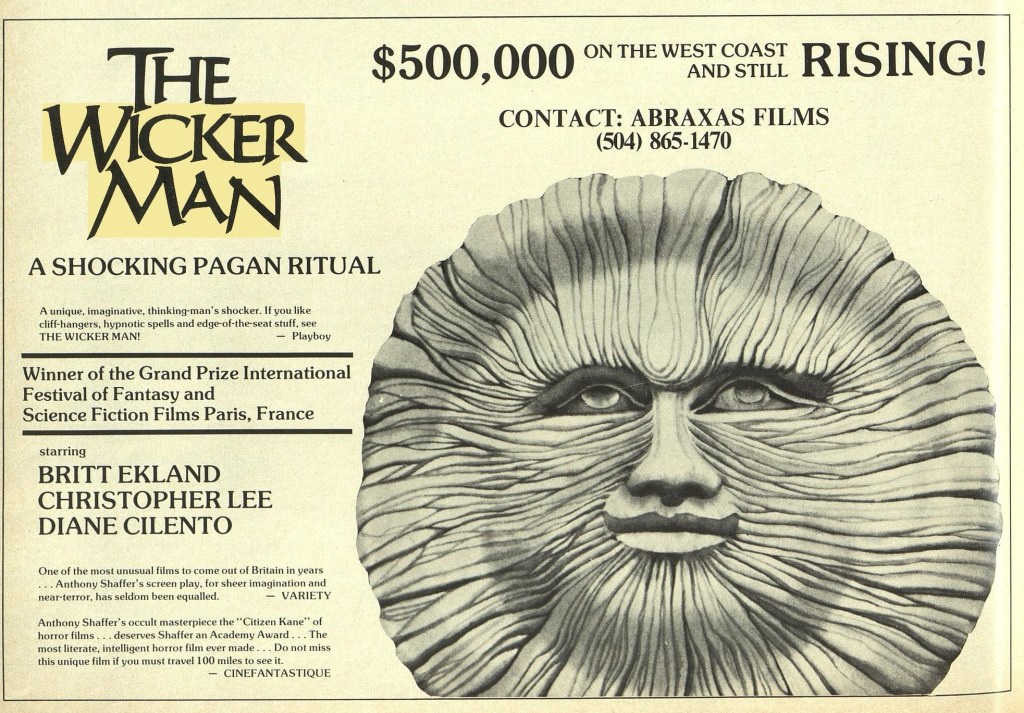
According to an advert in Box Office magazine placed by distributor Abraxas in October 1979, The Wicker Man had already grossed $500,000 on the U.S. west coast. counting it the 1980 and 1981 releases, more than likley it passed the $1 million gross. Whether any of these receipts found their way to British Lion is questionable, so the U.S. box office would have done little to remove the idea it was a flop, but, in fact, counting all the results together, it must have done enough overall to turn a healthy profit.
I should point out that the dates above refer simply to the dates when the box office was reported in “Variety” magazine and not to the actual date when the film was shown. Typically, “Variety” would report box office in the week after a film was shown but this could still be up to 14-17 days after. The actual week 1 / week 2 / week 3 stuff is completley accurate even if the dates might appear misleading.
NOTE/PLEA/WHATEVER: Collecting these figures took a huge amount of work so if you want to pass on this information to others, please acknowledge the source.
SOURCES: Variety, dates as shown; “Coming Releases,” Box Office, September 30, 1974, pA6; Review, Box Office, January 9, 1978, pA9; “Wicker Man Reborn Thanks to Persistent Young Distribs,” The Hollywood Reporter, February 15, 1979, p3; Review, The Hollywood Reporter, February 20, 1979, p3; Advert, Box Office, October 1979, 1979, p16; “Wicker Man Gets Proper Release After 6 Years,” The Hollywood Reporter, April 3, 1980, p1; “Strike Dents N.Y. Box Office,” Box Office, April 14, 1980, p7.
While I was aware that Hollywood had faced financial catastrophe at the beginning and end of the 1960s, I wasn’t so familiar with just how hard it proved for the studios to actually make a buck. If hadn’t been for the bounty of The Sound of Music (1965) and to a lesser extent Butch Cassidy and the Sundance Kid (1969), a studio as big as Twentieth Century Fox would have posted an overall loss for the decade.
Sure, audiences were in decline and production stultified but there was a fair chance those obstacles could have been overcome through the combination of roadshow, the reinvigoration of the dormant spy genre via James Bond and his imitators, the onset of more liberal material – i.e. sex and violence – thanks to changes to the Production Code and the decade-end “youthquake.”
From 1960-1969, according to the Aubrey Solomon digest of releases, which was my main source for this article, Twentieth Century Fox invested $434 million in 107 movies at an average cost of $4 million. Overall rentals – the amount returned to studios once cinemas had taken their cut of the gross – amounted to $478 million. A total profit of $44 million for the decade was probably, given the various crises, not a bad return. But once you removed The Sound of Music’s $83 million rentals bonanza from the equation, the result was less convincing.
Break-even might have appeared a good result given the doomsayers predicting complete collapse but it says a lot for the vagaries of the business that only 42 pictures – about 40 per cent of the movies greenlit – generated a profit. You will be familiar with the big loss-makers of course: Cleopatra (1963) $16 million in the red on initial U.S. release (though most of that clawed back from overseas rentals, reissue and television sale), calamitous musical Doctor Dolittle (1967 – only $6 million in domestic rentals) and Star! (1968 – only $4 million).
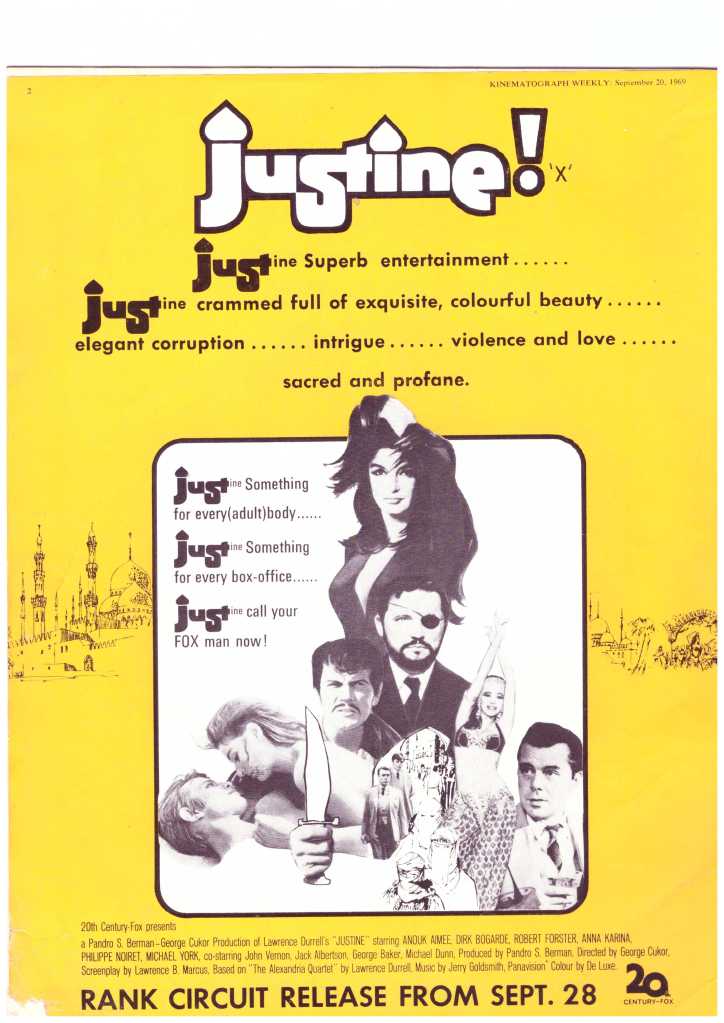
You might wonder what possessed the studio to invest $7.87 million in George Cukor’s Justine (1969). When original director Joseph Strick threw in the towel you might have imagined the studio would do the same given the stars – Dirk Bogarde, Anouk Aimee and Michael York – were hardly standout box office figures. Loss on the U.S. rentals was $5.67 million. Staircase (1969) at least had a stellar cast – Richard Burton fresh from worldwide hit Where Eagles Dare (1968) and Rex Harrison whose Oscar-winning success in My Fair Lady (1964) appeared to grant him box office immunity. But U.S. audiences only returned $1.85 million in rentals from a budget of $6.37 million.
Iconic fashion accessories sported by Audrey Hepburn couldn’t save “Two for the Road”
Another star-laden vehicle – the Paris-set caper picture How To Steal a Million (1966) teaming Audrey Hepburn (My Fair Lady) and Peter O’Toole (Becket, 1964) – came unstuck, losing $2.08 million on a budget of $6.48 million. Hepburn was at fault again the following year, losing, oddly enough, exactly the same amount for Two for the Road with Albert Finney (Tom Jones, 1963) directed by Stanley Donen (Charade, 1963) out of a budget of $5.48 million.
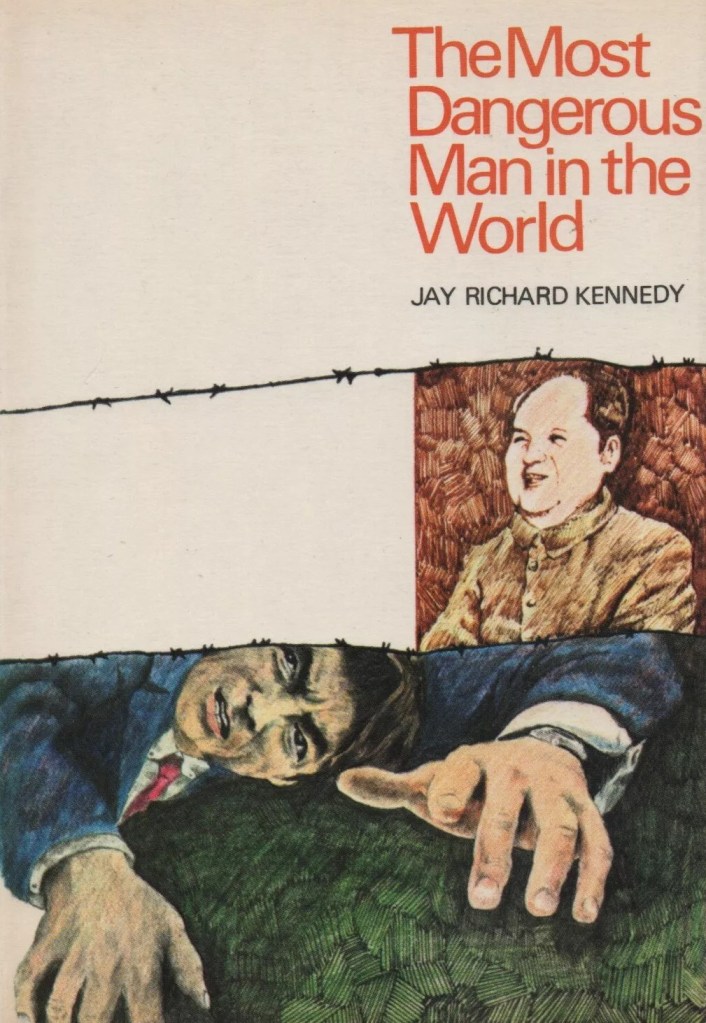
Other casualties were: William Holden in The Lion (1962, $3 million loss), biopic Tender Is the Night (1962 – $2.65 million), George C. Scott as The Flim-Flam Man / One Born Every Minute (1967, also $2.65 million), Nine Hours to Rama (1963, $2.61 million), Doris Day spy comedy Caprice (1966, $2.59 million), Gregory Peck in Cold War thriller The Chairman / The Most DangerousMan in the World (1969, $2.41 million), James Stewart in desert drama The Flight of the Phoenix (1965 – $2.33 million) and James Coburn and Lee Remick in Hard Contract (1969 – $2.32 million).
Even John Wayne stiffed. Civil War western The Undefeated (1969), on a budget of $7.1 million only brought in $4.5 million in rentals. Charlton Heston/Rex Harrison roadshow The Agony and the Ecstasy (1965), on a similar budget, lost more – $3.17 million. Michael Caine/Anthony Quinn drama The Magus (1968) barely brought in $1 million from a $3.77 million budget.
Unexpected winners included Valley of the Dolls (1967 – $15.31 million profit), Planet of the Apes (1968 – $9.2 million), Those Magnificent Men in Their Flying Machines (1965 – $7.5 million), The Boston Strangler (1968 – $3.9 million), Our Man Flint (1966 – $3.87 million) – though only $1.2 million in the black for sequel In Like Flint (1967) – and The Blue Max (1966 – $3.4 million).
Frank Sinatra proved a safe bet. The Detective (1968) turned a profit at the U.S. ticket wickets of just over £2 million and Von Ryan’s Express (1965) just under that figure although Tony Rome (1967) registered a small loss. Raquel Welch just about squeaked home – $1 million profit for Bandolero (1968), $380,000 profit for Fantastic Voyage (1966) balanced out by $420,000 loss for 100 Rifles (1969).
Of course, there was always the possibility that foreign revenues would save the day. And although occasionally the likes of United Artists’ The Magnificent Seven (1960) on initial release had earned considerably more in the overseas market than in the U.S., that was, unfortunately, rarely the case. There was no guarantee that certain genres – comedies, musicals – would travel. Hollywood studios generally received a smaller percentage from movies released abroad while facing increases in distribution costs.
Overseas business was viewed as icing on the cake rather than an essential element of the box office. There was also the problem that foreign cinema owners could check out U.S. box office figures in advance – unlike now there was no instant global release system – and should a movie falter on its U.S. debut would assume they were going to be renting a flop, therefore reduce marketing back-up and renegotiate terms.
SOURCE: Aubrey Solomon, Twentieth Century Fox, A Corporate and Financial History (The Scarecrow Press, 2002) pp 228-231, 252-256.
United Artists took an unholy bath on George Stevens’ all-star The Greatest Story Ever Told (1965), shouldering a colossal loss of $9.1 million in global rentals (not gross), one of the biggest financial disasters of the decade. In second place, by a long margin, was Blake Edwards’ anti-war comedy What Did You Do in the War, Daddy? (1966). The presence of James Coburn at a career-high thanks to the Flint spy pictures couldn’t prevent this ending up $2.75 million in the red.
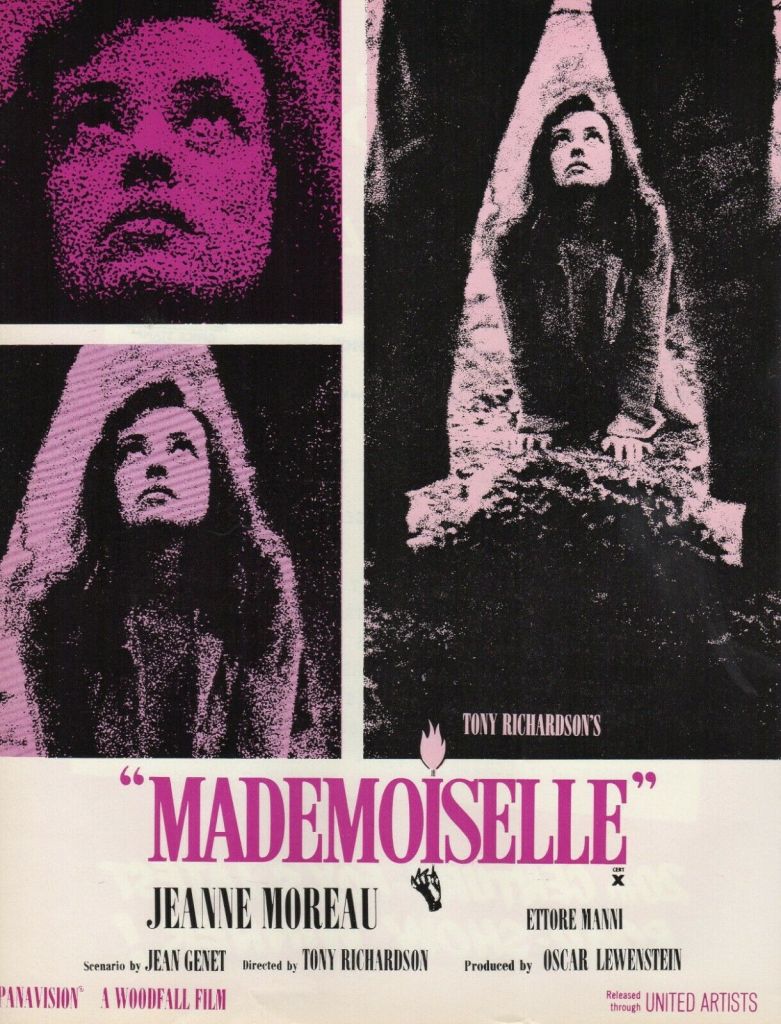
Another all-star prestige war movie, though this time set in the Crimea, Tony Richardson’s The Charge of the Light Brigade (1968) ran it close, registering a deficit of $2.59 million. This was not the first time the studio’s faith in Richardson proved unfounded. He had lost $1.17 million on Sailor from Gibralter (1967) and another $1 million Mademoiselle (1966), both starring French actress Jeanne Moreau, cited in divorce proceedings brought by his wife Vanessa Redgrave.
History was also unkind to John Huston, coming unstuck with romp Sinful Davey (1969), also set in Britain, and starring newcomer John Hurt. With only $250,000 in rentals in the U.S. market it dropped a total of $2.4 million. Richard Lester was also well off the mark with anti-nuke comedy The Bedsitting Room (1969) which imploded to the tune of $1.42 million.
Although Dick Van Dyke justified his fee for the studio’s Chitty,Chitty Bang Bang, his marquee status proved decidedly unjustified in two other pictures. Some Kind of Nut (1969) lost $1.36 million while Fitzwilly (1967) was $312,000 short of break-even.
British star Michael Caine also fell into the questionable category. Billion Dollar Brain (1968), his third outing as spy Harry Palmer, proved a dud, $1.18 million down while Second World War picture Play Dirty (1968) lost out at the box office wickets to the tune of $350,000.
Others in the million-dollar-loser class were: The Honey Pot (1967) despite the presence of Rex Harrison and Cliff Robertson; Alan Arkin’s ill-fated attempt to emulate Peter Sellers as Inspector Clouseau (1968); Jules Dassin’s 10.30pm Summer (1966); and A Twist of Sand (1967) with Richard Johnson and Honor Blackman. And Peter Sellers himself misjudged the material for After the Fox (1966) for it came home $432,000 short of the target.
The Witches (1967) failed to coast home on the back of new sensation Clint Eastwood in the cast plus an all-star directing team including Vittorio De Sica, Luchino Visconti and Pier Paolo Pasolino and lost $880,000.
World War Two pictures proved too often problematic in registering global appeal. Michael Winner’s Hannibal Brooks (1969) starring Oliver Reed shed $650,000, John Guillermin’s The Bridge at Remagen (1969) was on the downside of $526,000, Richard Lester’s How I Won the War (1967) was $257,000 shy of budget and even low-budget numbers that were expected to at least break even failed to do so, The 1,000 Plane Raid (1969) missing out by $316,000 and Submarine X-1 starring James Caan by $156,000.
The notion that westerns had universal appeal turned out to be a dodgy proposition for some products. Whereas foreign made a distinctive impact in the box office for a film like Guns of the Magnificent Seven (1969) it did not always play out that way. Though John Sturges’ Hour of the Gun (1967) toplining James Garner and Jason Robards did better aboard than at home that still wasn’t enough to offset losses of $627,000. Overseas rentals matched domestic for Young Billy Young (1969) starring Robert Mitchum but that still kept it out in the cold with another half a million needed to get over the line.
You would think minimal budgets would be a guarantee against outright failure, but too often promise remained unfulfilled. Charlotte Rampling and Sam Waterston were touted as rising talents when cast in Three (1969). The budget was a miserly $355,000. Yet it still lost $305,000, generating rentals of just $25,000 both at home and abroad. Bryan Forbes’ The Whisperers (1967), with Edith Evans winning an Oscar nomination, lost $180,000 on a budget of just under $400,000. The Russian version of Hamlet (1966) dropped $55,000 on a $75,000 budget. Don’t Worry We’ll Think of a Title (1966) starring Morey Amsterdam only earned back $50,000 on its $181,000 cost.
Some movies came pretty close to break-even – another $16,000 would have seen Danger Route (1968) also with Richard Johnson reach the magic mark, American football drama Number One (1969) with Charlton Heston required another $40,000.
SOURCE: “United Artists Corporation and Subsidiaries Motion Picture Negative Costs for Pictures Released in the Year Ended 1965, 1966, 1967, 1968 and 1969,” United Artists Files, Wisconsin Center for Film and Theater Research, University of Wisconsin.
There was enough controversy surrounding the launch of this picture without even invoking the behavior of director Sam Peckinpah. For a start its production heralded a revolution in exhibition. Cinema owners were intent on breaking the industry’s one sacrosanct law.
Since 1948 and the Paramount Decree which forced studios to shed their cinemas, it had been forbidden for a studio to operate as an exibitor and vice-versa. But the financial tsumani that hit the business at the end of the 1950s resulted in a shortfall of new releases and left exhibitors scratching around for product.
Taking the view that the situation was so dire that studios could not resolve it and imagining that the government would not look unkindly on the idea, exhibitors set up a company called Motion Pictures Investment Inc. Initially, the outfit was not so confrontational. The plan was simply to repackage old movies and send them out as reissues. There was no law against that since the exhibitors were not acting as production companies.
It was ambitious scheme, calling in 1958 for $25 million to be raised to fund a whole stream of old movies, sending them into reissue achieving the double aim of filling release gaps and preventing them from falling into the maw of television – Twentieth Century Fox in the process of selling 50 pictures dating from 1950-1955 to television for $10 million.
The Actors’ Strike of 1960 halved production, making a dire situation intolerable. MPI bought the rights to Gary Cooper western Friendly Persuasion (1957) and put together a hefty marketing campaign to get that picture back on the market. Recognising that studios were likely to prevent their gems from being reissued when they could be sold so easily to television, MPI bit the bullet and moved into production. Pathe-America was the vehicle, “a production-distribution-exhibition project predicated on the theory that exhibitors can sense better than anybody what the pubic want on the screens.”
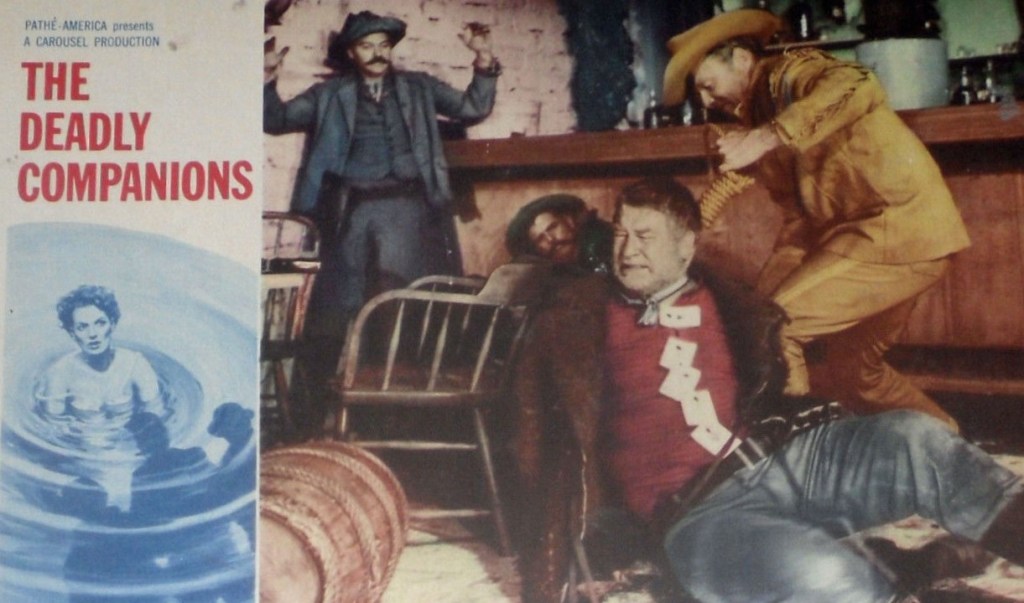
First film on the agenda – The Deadly Companions.
The driving force behind that picture was a female star intent on a bit of revolution of her own – Maureen O’Hara. The flame-haired actress – a star for over two decades, as comfortable in westerns like Rio Grande (1950) as dramas (The Quiet Man, 1952) and swashbucklers (The Spanish Main, 1945) had decided her career was in need of a rejig. Demand for her services was slowing down – only four movies in the second half of the 1950s compared to 14 in the first half.
In reality, her career was sinking fast and it felt like panic to imagine she could reconfigure herself at this late stage as a singer, signing a contract for an album first with RCA Victor in 1958 and then CBS in 1960 and starring in the Broadway musical Christine in 1960, a flop despite her “good singing voice and assured stage presence.”
But a bigger measure of her fall was that she ended up in television, spurred on initially by her brother, Charles B. Fitzsimons, who thought he could help better manage her career. Initially an actor, he had segued into production via independent producer Edward L. Alperson but without particular distinction.
They set up Tarafilm in 1958 with the aim of co-producing a series Women In the Case with CBS, profits to be evenly split. But that never surfaced and instead she was an actress for hire and at modest fees at that for, even for bigger stars, the small screen did not pay fees comparable with the movies. For the first time in her career a year passed without a single movie. In 1960 only television beckoned – Open Window, The Scarlet Pimpernel, Mrs Miniver and the DuPont Show of the Month. And there was something plaintive when O’Hara, who had espoused the freelance approach to her career, advised young stars to take a studio contracts if offered.
But Fitzsimons was feverishly working behind the scenes, trying to raise money for their Carousel movie production shingle, even going so far as applying to the U.S. Government’s Small Business Loan scheme. Without exhibitors determined to break the law, it’s doubtful they would have sourced the funding for The Deadly Companions. MPI put up nearly half the $390,000 budget for The Deadly Companions after Fitzsimons had commissioned a screenplay from novelist A.S. Fleischman.
Brian Keith was available because the television series The Westerner (1960) that had made him temporarily a star was cancelled after not even lasting a season. He came cheap – a steal even for a low-budget picture – at $30,000. Sam Peckinpah, who had originated The Westerner, was primarily a television writer and director thirsting for an opportunity to make his mark on the big screen. So, also out of work after The Westerner was canned, he came cheap too, earning half Keith’s salary.
Peckinpah later complained about script problems, but that was par for the course with the director; if a movie failed it was someone else’s fault. O’Hara, who had worked with the best including Hitchcock and Ford, and like most top stars knew a fair bit about how and where to point a camera, later complained that Peckinpah was out of his depth. But that, too, was par for the course. Her autobiography Tis Herself was almost a litany of complaints.
The problem for O’Hara was more financial. While Peckinpah was guaranteed payment, she was not. As producer, she would be working for a fraction of her normal fee of $150,000, expecting to make that back – and more – when the movie went into profit. There was no reason to assume it would not make a decent sum, low-budget westerns having a habit of making money.
The movie was filmed on location in Arizona. The picture’s Gila City, where the bank robbery took place, was based on the Tucson of a hundred years before. Seeking authenticity, the set was constructed following artist drawings culled from the early 1860s. Props were also authentic – the doctor’s chair was from the period, the surgical instruments remnants from the era and even the apothecary jars had come from an early pharmacist shop.
Extras were genuine cowboys or Native Americans. Apaches and Papagos were hired as Native Americans. At a casting call at the Ramada Inn, producer Fitzsimons found the genuine cowboy article in the in the lobby “their Stetsons stained by sweat and faded by the sun and most of them wore working jeans and multi-colored shirts that had been washed but not ironed…leathery-faced men…speaking in low voices of how bum the cattle business was from all this drought and how fine it was a man could pick up a few dollars riding with the movie company.” Even the cactus was authentic, the director favoring scenes which featured the giant Sauaro species.
The cave for one scene was also genuine, not a stage set, the result of an earthquake fault, 50-foot high and 40-foot across at the opening, spiralling hundreds of feet into the mountain. The roof, made up of boulders, was particularly precarious as any rumble could send it tumbling to the ground. Only essential crew were permitted for the scene which saw O’Hara firing a shotgun at an Apache. Fearing the sound of detonation might affect the roof, flash powder was used instead of cartridges.
Stunts involved included overturning a stagecoach and falling 35-feet. Stuntman Chuck Hayward nearly died during rehearsal when the horse bolted and the stagecoach struck a tree. He was married to Ellen Hayward, daughter of Joan Blondell and Dick Powell.
Perhaps the most immediately unusual aspect of the movie was the score. Among instruments used by composer Marlin Skiles were a toy trumpet, xylophone, vibraphone, kettle drum and cracked belt.
To help promote the picture the screenplay was novelized and went on to sell half a million copies, though it went out under the title Yellowleg and was not noticeably a movie tie-in.
The movie received good reviews. Box Office, which might be expected to back any exhibitor initiative, deemed it a “well above average western” with “superb performances” and “exacting direction.” Variety, which sided more with studios than exhibitors, nonetheless was mostly positive, except for “lapses and weaknesses” finding it “fairly engrossing” with O’Hara’s performance “one of her best for some time.”
As you might expect, exhibitors, too, got behind the picture. There was double “Gala World Premiere” in Tucson and Phoenix, on June 6 for the former the following night for the latter, attended by the stars. Surprisingly, given it was a target for saturation (i.e. multiple release region-by-region) and a low-budget number, it was shown in some major houses, in Detroit the 5,000-seater Fox, in Pittsburgh the 3,700-seater Stanley, a 3,600-seater in St Louis, in Buffalo the 3,000-eater Lafayette, in Cleveland the 2,739-seater Palace and in Seattle the 2,200-seater Music Hall. But bookings were scattered between June and September 1961.
But giving a movie a helping hand would not necessarily translate into decent box office. Takings were poor – the best result a “good” $15,000 in Detroit. Cleveland produced a “fair” $9,000, St Louis a “fair” $10,000, Pittsburgh a “drab” $8,500, Buffalo a “thin” $5,000 and there was but $2,500 in Seattle. No major first run theaters signed up in Los Angeles or Kansas City, in each location going out in small multiple release, edging a “dim” $8,5000 from three cinemas in the former and a “moderate” $15,000 from three in Kansas City. Nor did first run line up to host it in New York and by the time it reached Portland it was playing on the lower half of a double bill.
In an attempt to recover some of its $60,000 loss, MPI changed the title in 1962 to Trigger Happy, altered the poster to focus on action rather than sex, and programmed it in a double bill with its second production The Checkered Flag. That proved a failure and MPI was wound up.
Buoyed by the unexpected success of The Parent Trap (1961), O’Hara’s career recovered and she was paired with James Stewart in Mr Hobbs Takes a Vacation (1962) and reunited with John Wayne for McLintock (1963). Brian Keith never became a major star but still had a very decent career toplining smaller-budgeted films and in supporting roles. Charles B. Fitzsimons made a success of production, though mainly in television. We all know what happened to Sam Peckinpah.
SOURCES: Brian Hannan, Coming Back to a Theater Near You, A History of Hollywood Reissues 1914-2014 (McFarland, 2016) p117-120; Pressbook, The Deadly Companions; “Maureen O’Hara As Disker,” Variety, May 7, 1958, p59; “Maureen O’Hara Bagged for Series,” Variety, August 27, 1958, p27; “Christine Gives Columbia 3 On Showtime Shelf,” Variety, March 23, 1960, p45; Review, Christine, Variety, May 4, 1960, p56; “Longplay Shorts,” Variety, September 28, 1960, p58; “Family Classics,” Variety, November 2, 1960, p27; “MP Investment Trust Puts Coin into Pathe America Release,” Variety, January 25, 1961, p5; “Pathe America’s First Star: Maureen O’Hara,” Variety, November 9, 1960, p4; “Pathe Companions into Saturation Playoff,” Variety, June 7, 1961, p5; Review, Variety, June 10, 1961, p10; Review, Box Office, Jun 12, 1961, pA11; “Gala World Premiere for Deadly Companions,” Box Office, June 12, 1961, p10; “Don’t Do As I Do,” Variety, August 2, 1961, p4; “Fitzsimons Switches Pitch,” Variety, August 29, 1962, p16; “Motion Pic Investors Draws Criticism for Faltering Achievement,” Variety, December 12, 1962, p3; “Missouri-Made Feature in Second Round,” Variety, June 5, 1963, p18. Box office results: “Picture Grosses,” Variety – June 14 and 28, July 19, August 16 and 23, September 6, 13 and 20.
Box office fans, excited no doubt at how Avatar: The Way of Water (2022), is charging up the all-time charts, might be surprised to discover that the concept of “worldwide” box office figures didn’t exist in the 1960s. Although foreign markets had proved important to Hollywood since the 1940s, there was no accepted way of measuring their impact.
Box office results in certain countries – Italy, France, Brazil, Australia etc – were reported only on an occasional basis and were never considered front page news. Global box office figures were more likely to appear courtesy of one of the profit participants. Star William Holden’s share of Bridge on the River Kwai (1957) and producer Sam Spiegel’s earnings on Doctor Zhivago (1965), for example, were widely reported. Or a studio might want to defray rising investor discontent by pointing how well a Stateside flop such as The Magnificent Seven (1960) had performed overseas.
But these were one-offs and it was impossible to get a handle on the worldwide results for an entire year of Hollywood output. The kind of global box office reporting we take for granted did not appear until the 1990s and often even then, for many pictures, it was only as a year-end figure.
However, during my digging into hordes of records for my book The Making of “The Magnificent Seven” I came upon a tranche of reports on foreign box office figures relating to United Artists for the years 1965 to 1969. And they make for fascinating reading, not least to discover which Stateside hits did poorly abroad and, conversely, what flops in the domestic market made up for it in foreign countries.
Volume of production at UA more than doubled over the period, from 17 pictures in 1965 to 38 in 1969, but the average budget came down from $3.68 million per movie to $2.14 million.
You won’t be surprised to learn that James Bond pretty much reigned supreme, taking three of the top four spots. But you might be taken aback to discover just how profitable this series was – over $100 million in rentals (the studio share of box office once cinemas have taken their cut) for three movies mentioned here – more than four times what they cost to make, and that would not take into account the colossal revenues accruing from merchandising.
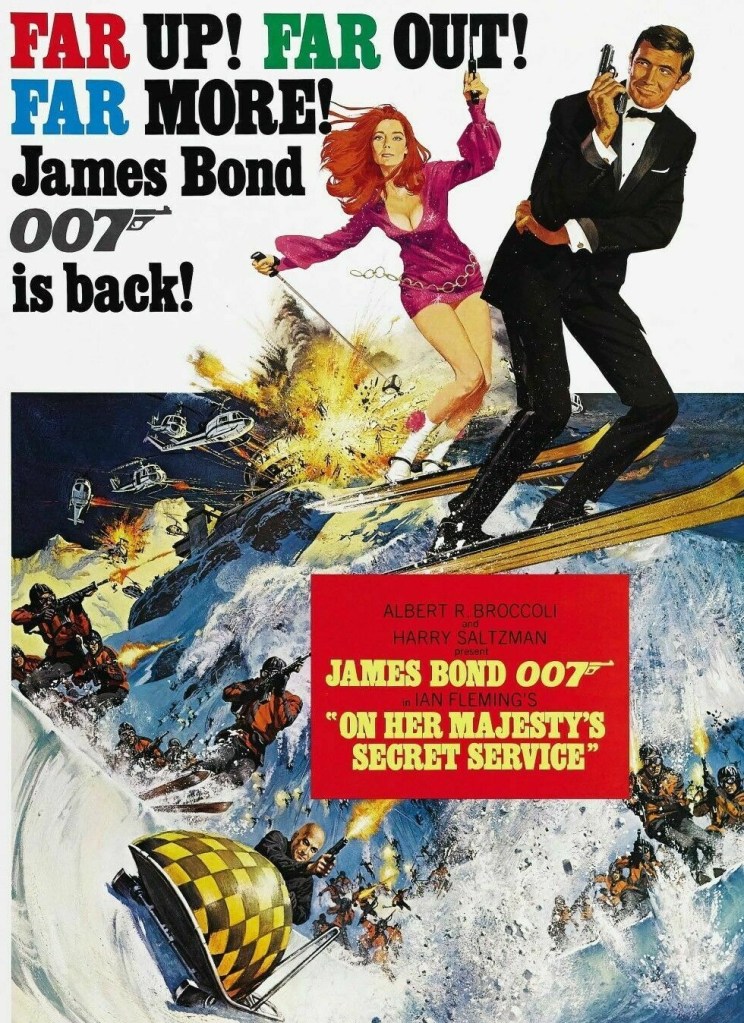
The 1965-1969 worldwide winner by some margin was Thunderball (1965), clocking up $48 million in worldwide rentals. In second place was You Only Live Twice (1967) on $36 million. but the prospect of a cosy one-two-three was nipped in the bud by Oscar-winning Midnight Cowboy (1969) on $26 million with On her Majesty’s Secret Service (1969,) hampered by losing the services of Sean Connery, settling for fourth after pulling in $23 million.
Fifth spot went to big-budget roadshow Hawaii (1966) starring Julie Andrews and Max von Sydow which sank $18.8 million worldwide followed by Norman Jewison’s low-budget crime story In the Heat of the Night (1967) on $16 million helped by Sidney Poitier at a box office peak and Rod Steiger, courtesy of an Oscar, at a career one. Placing seventh was big-budget all-star British World War Two epic The Battle of Britain (1969) which soared, largely on foreign grosses, to $15.5 million. Next, on $14.8 million, came roadshow musical Chitty Chitty Bang Bang (1968) starring Dick Van Dyke.
Biggest surprise of the year was the performance of family melding comedy Yours, Mine and Ours (1968) with out-of-favor stars Lucille Ball and Henry Fonda which closed in on $13 million. Rounding out the Top Ten was George Stevens’ Biblical roadshow The Greatest Story Ever Told (1965). However, its global figures of $12.1 million were a disappointment given its budget topped $21.2 million.
Just behind, on $12 million worldwide, setting another comedic hot pace, was Clive Donner’s What’s New Pussycat (1965). Despite having no roadshow credentials it boasted an all-star cast consisting of Peter O’Toole, Peter Sellers, Woody Allen, Ursula Andress, Romy Scheider and Paula Prentiss. Comedy also accounted for twelfth – the unfancied, though timely, Norman Jewison effort The Russians Are Coming, The Russians Are Coming (1966) starring Alan Arkin and Eva Marie Saint which coasted in with $11.8 million.
Thirteenth was Steve McQueen-Faye Dunaway romantic thriller The Thomas Crown Affair (1968) directed with considerable elan also by Norman Jewison. That flew in with $11.25 million, a cool million ahead of the second picture, Help!, by British pop sensation The Beatles.
Fifteenth place went to the final picture in the Sergio Leone trilogy The Good, the Bad and the Ugly (1968) starring Clint Eastwood which crested $10.2 million. John Frankenheimer’s World War Two thriller The Train (1965) with Burt Lancaster trying to outfox Paul Schofield tracked $9.75 million. But, as if to emphasize Clint Eastwood’s growing box office power, his first American western Hang ‘Em High came next on $9 million worldwide.
Second World War mission picture The Devil’s Brigade (1968) starring William Holden and Cliff Robertson in a Dirty Dozen-style knock-off paraded $8.6 million for eighteenth position. Comedy filled out the final two places in the Top 20. Jack Lemmon scored a suprise hit in Richard Quine’s How To Murder Your Wife (1965). Co-starring Virna Lisi and Englishman Terry-Thomas it romped away with $8.4 million. Although The Graduate (1967) had been a massive global success, United Artists only held the rights to certain territories but that was enough to pull in $7.7 million worldwide.
There wasn’t actually an informal Top 20 reported by United Artists over this five-year period. I’ve concocted it out of the reports below.
SOURCE: “United Artists Corporation and Subsidiaries Motion Picture Negative Costs for Pictures Released in the Year Ended 1965;” “United Artists Corporation and Subsidiaries Motion Picture Negative Costs for Pictures Released in the Year Ended 1966;” “United Artists Corporation and Subsidiaries Motion Picture Negative Costs for Pictures Released in the Year Ended 1967;” “United Artists Corporation and Subsidiaries Motion Picture Negative Costs for Pictures Released in the Year Ended 1968;” “United Artists Corporation and Subsidiaries Motion Picture Negative Costs for Pictures Released in the Year Ended 1969,” United Artists Files, Wisconsin Center for Film and Theater Research, University of Wisconsin.
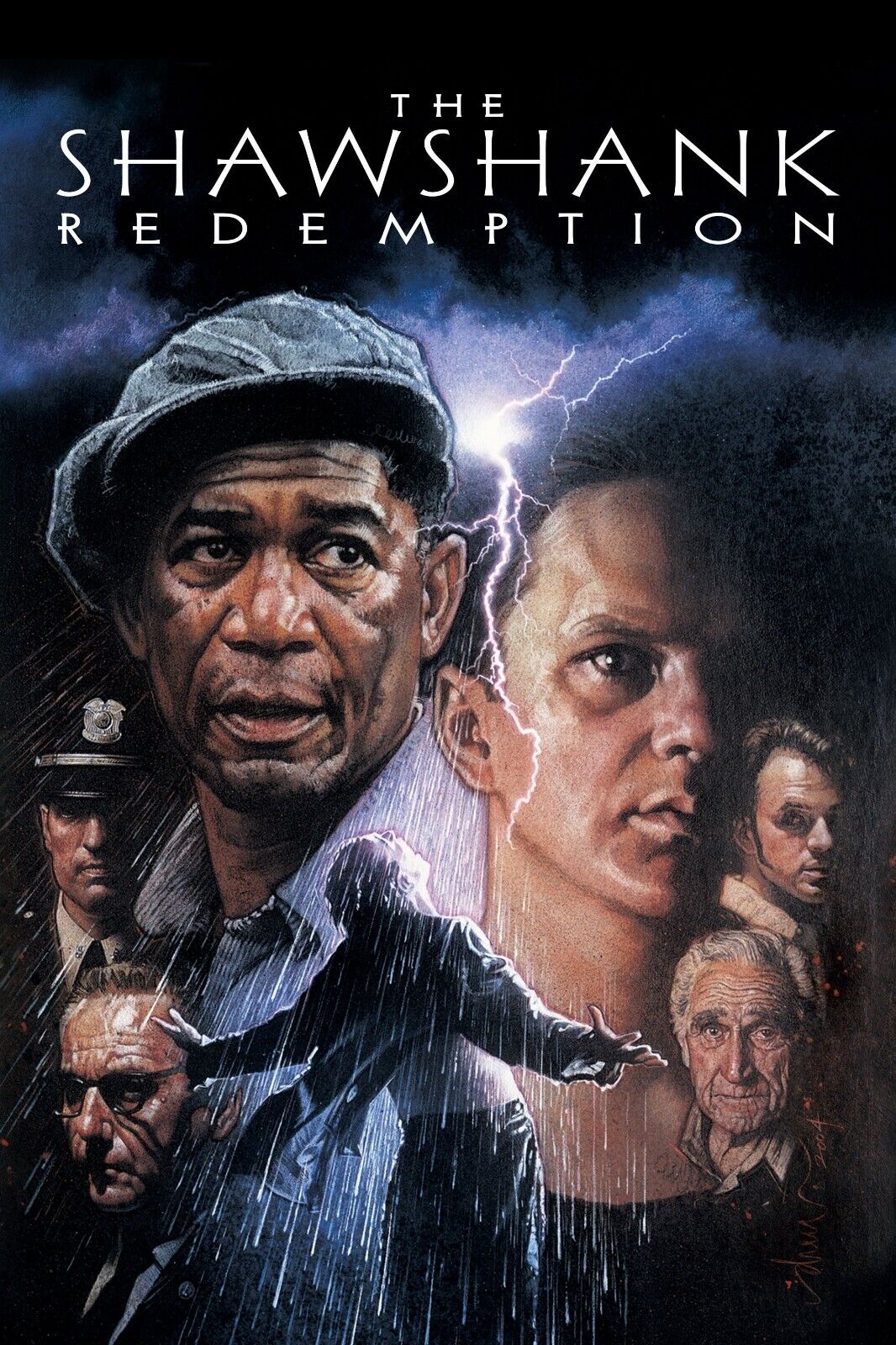
I assuming you know that the famed Stephen King novella on which the Tim Robbins/Morgan Freeman picture was based was originally entitled Rita Hayworth and the Shawshank Redemption, the poster of that movie goddess used in that version by the wannabe escapee to cover the hole he was making in his prison cell wall.
I’m making a connection to Cate Blanchett because The Shawshank Redemption (1994) was a critical success, seven Oscar nominations including Best Picture, but so conspicuously failed at the box office that it was scarcely shown abroad and only won an audience, and made more than its money back, on DVD and latterly became the poster boy for flops that somehow make a financial comeback.
Tar had all the critical support – with the exception of me, of course – that a movie could wish for and will at least pick up an Oscar nomination for Blanchett. But now that DVD is dead in the water, there’s virtually no chance of it making enough thereafter to cover the losses which are currently in the region of $30 million.
Movies used to have what was known as a “long tail,” meaning that initial box office was only one part of the equation. And a small part at that if the movie was a blockbuster. Reissue and sales to DVD, video rental, television, syndication, and early streaming services on a global scale sometimes amounted to as much as 90% of its overall earnings, especially bearing in mind that VHS/DVD in particular had various levels of revenue.
A big title might first be sold to video rental companies forking out $59.99 for the privilege and the bigger the title the more copies were purchased, so a blockbuster might easily have reaped $20-$30 million on that go-round. Then when it was released to the public, a big film would cost big money – $29.99 to $39.99 – and once that tier had done its job, the movie would be progressively sold in lower price brackets then repackaged again to supermarkets and bargain bins. More recently, the Director’s Cut, remastering and monetising anniversaries have added to that food chain.
Television went through several tiers as well. Studios never actually sold any movie to the small screen. They leased them. Usually for a period of time, say three years, and a limited number of screenings, often just two. And once that deal was done, they leased them again, and again and again. Until streaming killed off the majority of this market, movies made in the 1960s could have been leased a dozen times to television networks and even more in syndication. Cable would pay good money for a slice of that action.
Television famously put The Alamo (1960) and Cleopatra (1963) into the black and then the combination of TV, VHS/DVD, cable etc, made them substantial profits. And studios could always wrap them up as a library and sell them off to movie-hungry stations like TCM. Imax and 3D provided reissue opportunities at the start of this century, but these days a return to a movie theater would be a seriously limited proposition and open only to major successes like The Godfather (1972).
But, in terms of redemption-sized income, virtually all those avenues have disappeared. And critics don’t have the power to turn on the money taps. I’m sure Chantal Akerman’s Jeanne Dielman…(1975) which came out of nowhere, though probably the result of a social media coup, to top the once-in-a-decade Sight & Sound Critics Poll, will bring in extra bucks, no matter that it will scarcely register on streaming and DVD sales will be limited to the arthouse fraternity.
Alfred Hitchcock is often touted as the Comeback King when Vertigo (1958) climbed to the top of the Sight & Sound Poll after initially being largely discounted in that particular race. But in the first place, Hitchcock had already been a box office giant. A very small number of his pictures lost money on initial cinema release and his “critical redemption” if you like was anything but. He achieved Sight & Sound dominance because five of his greatest pictures had been kept from public view for over two decades. When they appeared, in one of the great reissue stories, the public flocked to see them on the big screen, and on subsequent DVD release so it was from there that a new wave of critics found the films contained far more art than previously ascertained.
So, back to Tar – and other box office duds like Corsage ($2.7 million worldwide) and Empire of Light ($3.2 million). Where does it go from here?
One option is tax write-off. The companies that invested in it in the first place might have done so to avoid handing over profits to the taxman. Conversely, they can use losses to offset a future tax demand.
But that’s hardly going to stimulate the movie-making market.
Studios used to test-market films but now production companies like these shovel their pictures into an endless maw of film festivals where their movies receive the kind of reception that fills them with glee but turns out to be the opposite of what the public – even the arthouse public – actually wants.
The easiest method to get a film designated a cult is to claim it was a flop on release but, hey presto, thereafter acquired a new following. Classic examples might include It’s A Wonderful Life (1946), The Magnificent Seven (1960) and The Shawshank Redemption (1994).
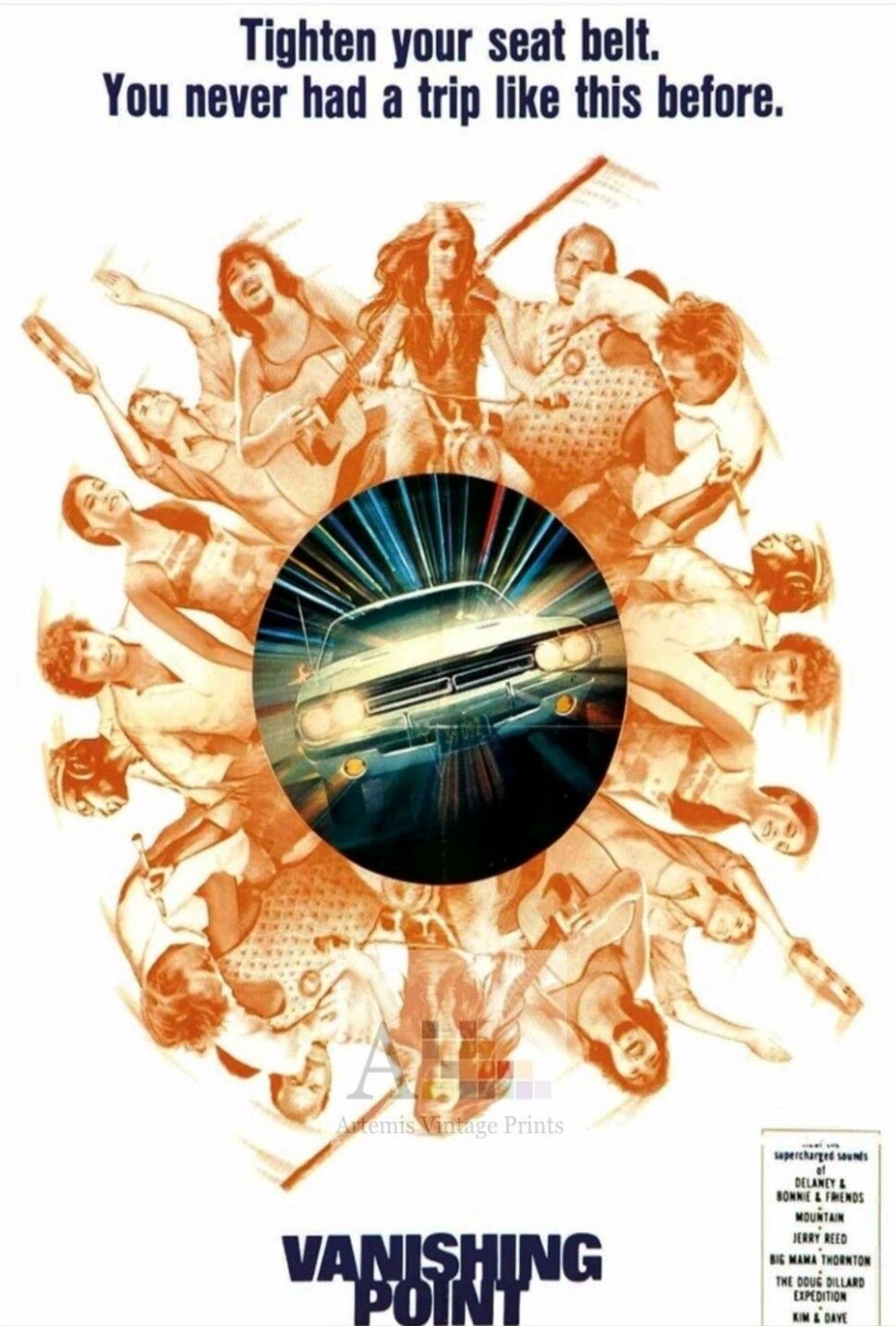
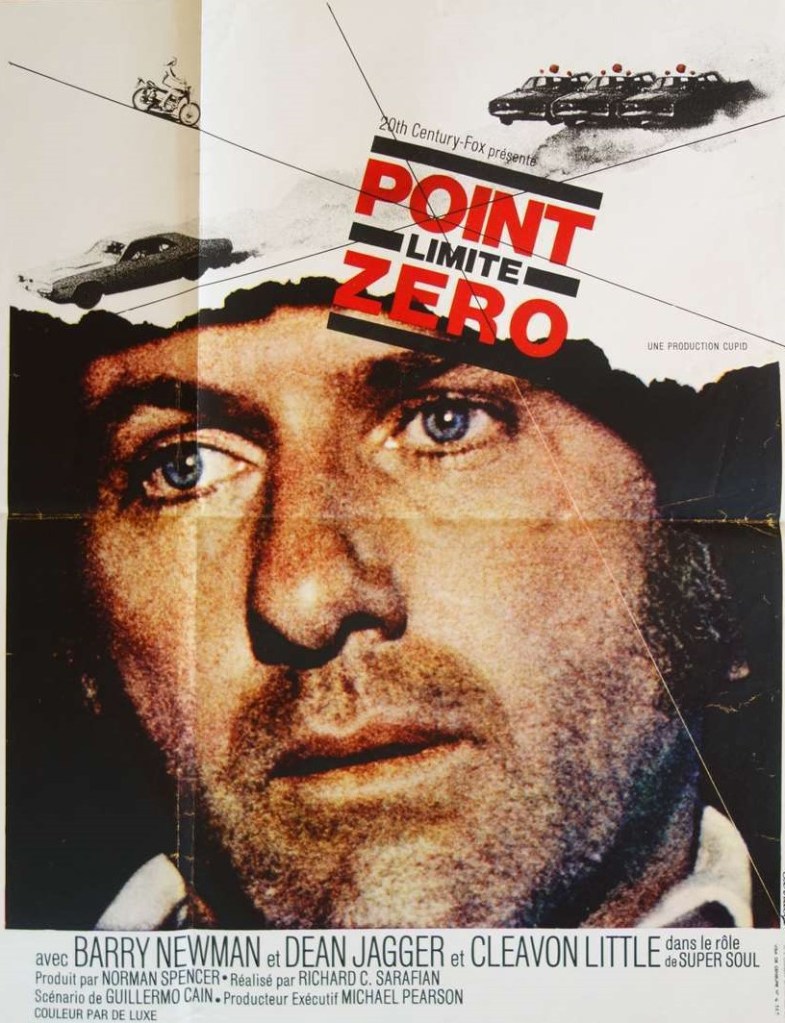
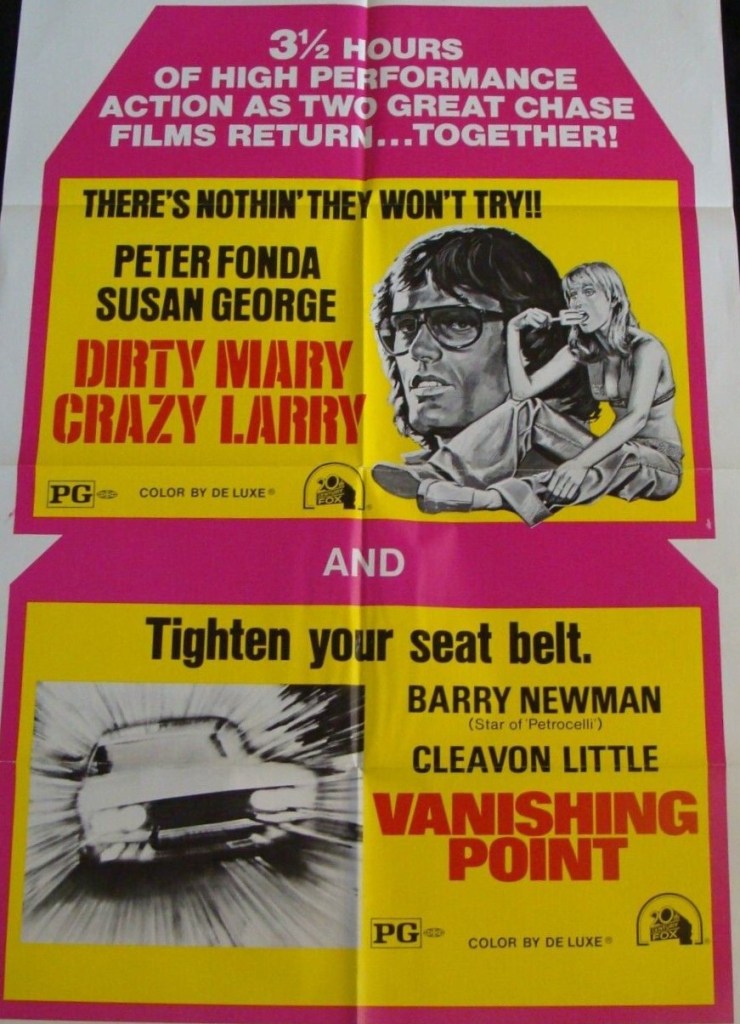
According to Wikipedia, Vanishing Point fits that niche. Based on the testimony of star Barry Newman “Fox had no faith in the film and released it in neighborhood theaters only to disappear in less than two weeks.” But after it did much better overseas, the studio was prompted to reissue it as a supporting feature to The French Connection (1971). Subsequently, it produced rentals of $4.25 million. The “cult following” developed after a television showing in 1976.
How much of that is true? The short answer – none.
Vanishing Point preceded The French Connection into cinemas by a good six months. Twentieth Century Fox, which had just escaped bankruptcy, had cut down on budgets. Vanishing Point was one of 11 movies sent into production with budgets under $2 million, extremely small potatoes for a studio that had thought nothing of spending upwards of $20 million on big budget musicals the previous decade. While costs of The French Connection soared way above that initial ceiling to $3.3 million, Vanishing Point remained on budget which was a paltry $1.58 million.
The star of Vanishing Point wasn’t a star at all. Certainly not one you could build a marquee around. Barry Newman’s previous film The Lawyer (1970) hadn’t cost much to make either and it didn’t earn much. And Vanishing Point lacked the inbuilt counter-culture appeal of Easy Rider (1969) while studios were extremely reticent about trying to attract a youth audience after the disastrous showings of a stream of movies targeting that sector. The film had nothing in common with racing picture Le Mans headlined by huge star Steve McQueen and scheduled for a summer 1971 release with a big bucks marketing campaign.
Vanishing Point was released in the U.S. in March 1971 and followed an initial staggered distribution pattern running three months. Fox didn’t just rush it into nabes at all, as per Newman. The studio made a good stab at first-run. In New York it played the 1463-seat DeMille, in Denver the 1270-seat Centre, in Cleveland the 1560-seat Embassy, in Philadelphia the 1200-seat Milgrim, in Boston the 1685-seat Sack, in Seattle the 1870-seat Coliseum and in Minneapolis the 1077-seat Mann.
All were solid first run houses. The only cities where you would consider there were doubts about initial performance prospects were Pittsburgh, where it opened at the 235-seat Fulton Mini, and perhaps San Francisco (the 600-seat Regency) and Los Angeles (the 810-seat Vogue).
But except for Boston (a “hotsy” $30,000) and Los Angeles (a “zingy” $16,000), opening weeks were disappointing: a “slow” $3,400 in Cleveland and $4,500 in San Francisco, a “sluggish” $8,000 in Minneapolis at the lower end of the box office scale, but first run receipts in general did not get much higher. So the chances are a studio would be looking to write it off, and, given the miserly budget, not too worried about the size of the potential loss.
But it wasn’t a flop. It was received far better in nabes and drive-ins than in first run. And by the end of the year it was well into profit, taking $3.2 million in rentals, enough for 35th spot on the annual chart.
That put it not so far behind The French Connection ($6.1 million in rentals for the year) at this point. That Gene Hackman picture was a hit was not in question. And it was the kind of hit that didn’t require a supporting feature, certainly not while it was gobbling up box office in first run and being retained for months on end.
But by the end of 1971 Vanishing Point was also well into being a certifiable global hit. British audiences had a bigger yen for speed than their American counterparts. Bullitt (1968) had been one of the top films of the year but so had The Italian Job (1969) which had flopped in the U.S. So much so that new studio Cinema Center didn’t think it was much of a gamble to open Le Mans in London as a 70mm separate-performance roadshow (tickets $1.20-$3.60) at the 1994-seat Odeon March Arch.
Le Mans – opening salvo $29,000 – hit London West End three weeks ahead of Vanishing Point. Big star film vs movie with star of no consequence. Fox opened Vanishing Point at the 1994-seat Odeon Leicester Square on the same day in the West End as another action picture, equally with little in the way of a marquee star but with the decided bonus of being based on a thriller, Puppet on a Chain, by Alistair Maclean whose Where Eagles Dare (1968) had cleaned up in the UK.
There’s not a chance in hell of Fox being able to persuade the Rank circuit to hand over the jewel in its West End crown to a picture that had flopped in the U.S. Logic dictates that the only reason the Odeon Leicester Square would entertain Vanishing Point was because it had been an unexpectedly big hit in the U.S. In expectation of turning it in a first run success in Britain, there was perhaps a harder sell than in the U.S., coupled with the ability to roll it out quickly into suburban cinemas on a coordinated national release.
Where critics in New York had been sniffy about Vanishing Point (just one favorable review), in London it received raves from 12 out of 14 of the top critics and it had been targeted asa prospect by the Berlin Film Festival.
London audiences went mad for action. Vanishing Point scooped an opening week $25,930. Puppet on a Chain dangled an impressive $19,800 at the 1004-seat London Pavilion. Le Mans kept up the heat with a fourth week of $24,900. Vanishing Point ran for another four weeks to excellent returns, before moving over for one week to the 2600-seat New Victoria and then into the 155-seat Cinecenta 2, still in the West End (in fact in a side street just off Leicester Sq), where it ran for another 12 weeks. On national release it performed well above average.
Although banned in Australia on the grounds of “violence, incitement to crime and encouraging drug use,” it was a top performer in Europe, most notably in France where it was ranked 11th for foreign pictures during the year. In Japan the critics called it one of the top ten foreign films.
So, just taking into account its first year at the box office there is no way this could be classified as a dud.
But to everyone’s surprise it just kept going. Yes, in 1972, Fox did pair it with The French Connection but it also went out as support with The Other (1972) and was top-billed in a reissue double bill with Valley of the Dolls (1967). And by the end of that year rentals had climbed to $4.25 million (the figure erroneously given by Wikipedia as its peak).
And kept going. In 1973 you could find it supporting Fox numbers TheLast American Hero and The French Connection (again0 but also Columbia’s The Valachi Papers and Warner Bros’ Steelyard Blues. In 1974 it formed a reissue double bill with, separately, other Fox hits Mash (1970) and The Poseidon Adventure (1972).
Come 1975 and Fox decided on one big car-chase finale and it hit the road all over again in a reissue double bill with Peter Fonda-Susan George pedal-to-the-metal thieves Dirty Mary, Crazy Larry (1974), a combo that ran so well it snapped up bookings well into the following year.
By the time it was pulled out of cinemas U.S. rentals had topped $5 million, more than three times production costs, and probably the same again from foreign revenues.
So, nothing like a flop.
It didn’t, therefore, need to rely on a television screening for any kind of audience redemption. In fact, you would be hard put to call it cult on the evidence of its television screenings. The first year it was seen it ranked among the top 20 movies of the year, but the second time it placed 130th, hardly the sign of a movie that had grown in word-of-mouth. But it was exactly the kind of movie to benefit from the VHS/DVD explosion, where you could rent a movie to watch with your buddies. But the reason for that, most likely, was not that you had just heard of this picture, but that you had already checked it out in the cinema.
That it still commands an audience today is probably down to the fact that Barry Newman never became a big star and that as existential issues took greater precedence it fitted a new dynamic.
Wikipedia, hang your head in shame.
SOURCES: “Name of New Fox Game: Sane,” Variety, January 27, 1971, p3; “Alfred Bauer Yens 3 American Features,” Variety, March 10, 1971, p22; “New York Critics’ Opinions,” Variety, March 31, 1971, p5; “London Critics’ Opinions,” Variety, August 18, 1971, p7; “Native Pix Win 55% of French Mkt,” Variety, November 3, 1971, p27; “Big Rental Films of 1971,” Variety, January 5, 1972, p9; “Aussie Censor Bans Five Films,” Variety, January 2, 1972, p24; “Best Picks in Japan Include 6 US Films,” Variety, February 2, 1972, p5; “All-Time Box Office Champs,” Variety, January 3, 1974, p34; “All Time Rentals,” Variety, January 7, 1976, p48; “All-Time Film Rental Champs,” Variety, January 5, 1977, p50; “Theatrical Movie Rankings,” Variety, August 7, 1977; “Theatrical Movie Rankings 1977-78,” Variety, 1978; Paul Zazarine, “Kowalski’s Last Ride,” Muscle Car Review, March 1986.
Box office as reported on Variety’s “Picture Grosses” and “London West End” pages on the following dates – 1971: March 24, March 31, April 7, April 28, May 5, May 12, May 26, June 2, June 16, June 30. August 18, August 25, September 15, December 3; 1972 – March 8, September 27, October 4; 1973 – January 10, March 26, May 2, August 8; 1974 – April 10, May 1; . bookings were sampled via Variety for 1975 and 1976.
When two pictures made in the Cinerama process – Custer of the West (1967) and Krakatoa East of Java (1968) – didn’t make it onto the U.S. roadshow circuit, the industry was in shock.
There were two reasons for the unexpected decision – distribution logjam and cash flow. For a start you needed deep pockets not just to launch a movie in roadshow but to keep it there bearing in mind the ongoing outlay in interest costs for the production and the longer advertising schedule. That is, if you could find enough available cinemas.
Although there was still a production shortage as far as the general cinema marketplace went, that was not the case for first run. By 1967, studios were not dependent on roadshow for hits. In 1966, only one roadshow featured in the box office top ten. In 1967, the number rose to three. But that still meant the vast majority of first run movie theaters never ran short of product, especially when, should all the regular roadshow houses be already taken, they might be called upon to host a roadshow for a month or two.
Some movies – The Blue Max (1966), for example – which had not been made with roadshow in mind, were launched in a handful of cinemas as roadshow for prestige purposes. Conversely, other movies, produced with the express aim of being released in the roadshow format, skipped that element of the distribution chain and went straight into general release. The Great Race (1965) was shown in hard-ticket only in the Pantages in Los Angeles, but first run general release elsewhere. In Harm’s Way (1965) lasted just one day in roadshow.
But neither had been made in Cinerama which was considered the bedrock of the advance-booking separate-performance high-ticket-priced roadshow. There were two problems with that format and that company. The first was that cinemas equipped to show Cinerama were far fewer than those who could accommodate roadshow, so if they were full to capacity with existing pictures, opportunities to open elsewhere were not only limited but undesirable.
The second was that while in the past major studios had lined up to use the Cinerama format for their movies – Warner Brothers for Battle of the Bulge (1965), MGM for Grand Prix (1966), for example – now Cinerama had decided the company was best served by it taking control of output rather than sharing potential profit with anyone else.
Rather than simply licensing its film-making and projection equipment to studios and cinemas, respectively, and taking a small percentage of picture grosses and a fee for every ticket sold, Cinerama embarked on a bolder strategy. It would turn into a major production outfit – the dozen movies in its first tranche included, as well as the two roadshows, Charly, Shalako, The High Commissioner/Nobody Runs Forever, Candy and Stiletto. It also aimed to virtually double the number of cinemas equipped to show Cinerama, so there would be no shortage of roadshow outlets for its most prestigious pictures productions, and set up its own global distribution system.
But since Cinerama no longer had alliances with major studios, and in fact was now hellbent on competing with them, it lost those studios’ relationships with the big roadshow cinemas in New York and Los Angeles. There were only two houses in New York equipped with Cinerama, and Warner owned one and MGM had an almost symbiotic partnership with the other – Loews. That meant no place initially for Custer of the West.
But there was another option. Open it overseas. Roadshows often played for longer in European capitals than they did in New York or Los Angeles and those cities were often inclined, when demand was at its highest, to switch a big first run house into a roadshow theater.
And there was precedent. MGM had opened How the West Was Won (1962) in the Casino Cinerama in London ahead of its Stateside roadshow release. The Cinerama western had cleaned up, record takings, a massive run into the bargain, all serving to heighten expectation across the Atlantic. So, Cinerama opened Custer of the West in that cinema with top seats costing $3.50 and separate performances (two a day, three at the weekend) and to initial public and critical success.
The much-touted “record” opening week disguised the fact that the only record it took down, and then only by $200, was that of How the West Was Won five years previously; Battle of the Bulge’s opening salvo of $41,608 remaining intact. In any case ticket sales soon tailed off and Cinerama had second thoughts about the cost and wisdom of opening it in roadshow in the U.S. especially when the lack of theaters would produce further delay.
So it took another strategic, possibly perilous, route in deciding to miss out New York and Los Angeles – and Boston and Chicago for that matter – from its initial roadshow roll-out. The assumption was that big box office elsewhere would soon have New York and LA houses queuing up. The film’s U.S. premiere took place in Dallas and Houston on January 24 and it managed another 15 roadshow bookings in the months following.
Except for a “big” $15,000 in Detroit, the other opening week results were so soft – “fairish” $8,500 in Cincinnati, “just okay” $7,000 in Kansas City, $4,000 in Portland which was less than the previous week’s run-of-the-mill picture – the studio called for a rethink. “Due to spotty out of town dates thus far it seems an unlikely bet for New York roadshowing,” opined Variety. And so it proved. Cinerama promoted its general release as “direct from reserved-seat engagements” but it fared little better, a “thin” $171,000 from 34 houses in its first New York salvo.
With none of its ambitious slate beyond Charly striking box office gold, Cinerama tore up the rule book for Krakatoa East of Java. In some respects it followed the launch template of Custer of the West with the movie being seen first overseas, world premiere this time in Japan, six months ahead of the May 1969 U.S. opening. But the London launch, at the Astoria – where it ran for nearly six months – came after, on July 31, not before.
But there was clearly an unwillingness to risk all in roadshow. So, Cinerama came up with a clever compromise. While not strictly speaking entering roadshow in that it abandoned advance booking and high ticket prices, it stuck to separate performances but, to compensate for potential loss in box office receipts, operated on four performances daily rather than two. Cinerama called this “scheduled performances” and it was somewhere between roadshow and general release. But it was initially screened in Cinerama in those houses equipped with the projection equipment and only after those semi-hard-ticket bookings were complete did it enter general release.
Even without roadshow, the movie exploded onto screens on opening weeks – a “big” $60,000 in New York (and $55,000 in the second week), a record-breaking $31,764 (and $36,345 in week three) at the Pacific Cinerama Dome in Los Angeles, a “giant” $50,000 in Cleveland, “hotsy” in Detroit with $36,000, $22,000 in Denver and a “mighty” $18,000 in Washington.
Between the Dome (a genuine roadshow with 14 performances a week) in Los Angeles and the Broadway Cinerama (the hybrid with double the performances per week) in New York it grossed $1.2 million. Overall, the various hard-ticket strands kept the movie on screens for most of the summer and into the autumn before a general release targeted for Thanksgiving and Xmas kept up the box office heat.
The studio put an unusually hefty marketing push behind the general release. Having gone round the houses, literally, once with promotional ideas, the company rejigged the best ideas and brought in new suggestions. But, basically, the word to new exhibitors was to learn from successful strategies used in the semi-hard-ticket release. “Rather than rest on its laurels,” the studio packaged the best ideas into a six-page A4 advert and stuck in in Box Office magazine. It knew what worked and just wanted to repeat and expand the process.
One of the marketing coups for the New York launch had been a giant outdoor sign in Times Square, at 265ft long and 62ft high the largest ever designed. The film’s artwork employed in this fashion attracted the attention of thousands of passers-by and served as an example of how the marketing material could work, even if on a smaller scale.
Exhibitors were instructed to target department or chain stores. The launch had found ready cooperation not just from Macy’s but discount store White Front, specially chosen to promote the “price reduction” idea, of a big movie at low prices. It was standard practice for roadshows going into general release to be advertised as “now at regular prices” but the idea of harnessing the mindset of a discount chain, associated with low prices, set a precedent.
There were the obvious routes – tie-ups with record stores and bookshops for the soundtrack and the Signet paperback – but the studio had also made available a reprint of an article on the Krakatoa eruption from Reader’s Digest magazine in 1946, and provided a Teacher’s Guide for schools. Educational avenues were heavily explored, and what teacher would not have an eager audience of young kids to be taught a lesson about volcanoes.
Where the semi-hard-ticket launch had secured the presence of Miss Java, it was suggested that local exhibitors should try and find someone of Indonesian origin, perhaps an exchange student at a local college, to participate in the local screenings. Pearls and balloons, intricate parts of the movie’s narrative, had been used in a big way for the launch, but still lent themselves to simpler exploitation, fake pearls could be given away and colorful balloons if a weather balloon could not be located nearby. The extra effort that went into the general release paid off.
The New York showcase popped a “smash” $430,000 from 31 houses. The company reissued Krakatoa East of Java and Custer of the West in a giant “East Meets West” double bill in 1971 in advance of the television prmeiere of the former two years later.
Overall, while Custer of the West was considered a flop in the U.S., Krakatoa East of Java qualified as a hit of modest proportions, and both movies did well globally. But by 1969, setting aside the $18 million it cost to turn Cinerama into a genuine studio with its own distribution arm, the company had turned a financial corner, and in 1970 income had soared to $46 million – up from $12 million – and there was at last a profit ($3.2 million) instead of a loss ($660,000).
Exactly how much Custer of the West and Krakatoa East of Java contributed to the overall turnaround is impossible to determine because for some arcane reason the studio refused to reveal rental figures even though it had been happy to supply them for other movies which had contributed to the uplift such as Candy, Charly and The Killing of Sister George.
Most film historians point to the flop of several big-budget pictures as the reason for the demise of the roadshow, but just as likely was the move by Cinerama to shift away from the roadshow format in favor of its hybrid, which retained some of the “special event” aspects of the roadshow release while pushing ahead on the more commercial approach of lower prices matched by more daily performances, effectively attempting to bring in revenue at a faster speed, which would be the determined aim of studios in the following decade. The Godfather (1972) might be considered the classic imitator.
SOURCES: Kim R. Holston, Movie Roadshows, A History and Filmography of Reserved-Seat Limited Showings 1911-1973 (McFarland, 2013) p266-267; “Custer Pulls a Record $33,245 in London Bow,” Variety, November 22, 1967, p13; “Cinerama Sanguine on Custer After London; Gets U.S. Roadshowing,” Variety, November 22, 1967, p13; “New York Sound Track,” Variety, February 14, 1968, p18; “N.Y. Roadshow Problem for This & Next Season with Theater Map Torn Apart,” Variety, March 29, 1968, p5; Advert, Box Office, April 29, 1968, p1; “Krakatoa – 3-Site Premiere in Tokyo,” Box Office, January 20, 1969, pE1; “Krakatoa in Paris,” Variety, January 29, 1969, p4; Advert, Variety, May 21, 1969, p35; Advert, Variety, June 11, 1969, p31; “Krakatoa Shuns Roadshow,” Variety, July 9, 1969, p15; “Krakatoa London Bow,” Variety, July 2, 1969, p34; “Picture Grosses,” Variety, July 2-16, 1969; “General Release Set for CRC’s Krakatoa,” Box Office, November 3, 1969, p9; “Merchandising The Picture, ” Box Office, November 17, 1969, p13-18; “New York Showcases,” Variety, December 3, 1969, p9; “West End,” Kine Weekly, January 3, 1970, p9;“Cinerama’s Big Year,” Variety, March 25, 1970, p4.
The only thing Hollywood liked better than whooping with delight over a hit was crowing with delight over a flop. In the 1960s you couldn’t move for hindsight. And far from it being the end of the decade that Hollywood was kicked in the financial teeth, mostly from over-investment in musicals, there was also a sea of red ink at the start.
Comparing budget with rentals returned to the studios (i.e. their share of the takings once cinemas had taken their cut of the box office gross) produced a league table that nobody wanted to scale.
Atop the pillar of shame, sitting on a monumental $18.1 million loss (reached by comparing budget to U.S. rentals – see Note below) was the last of the Samuel Bronston epics, The Fall of the Roman Empire (1964), directed by Anthony Mann and starring Alec Guinness, Sophia Loren and Stephen Boyd.
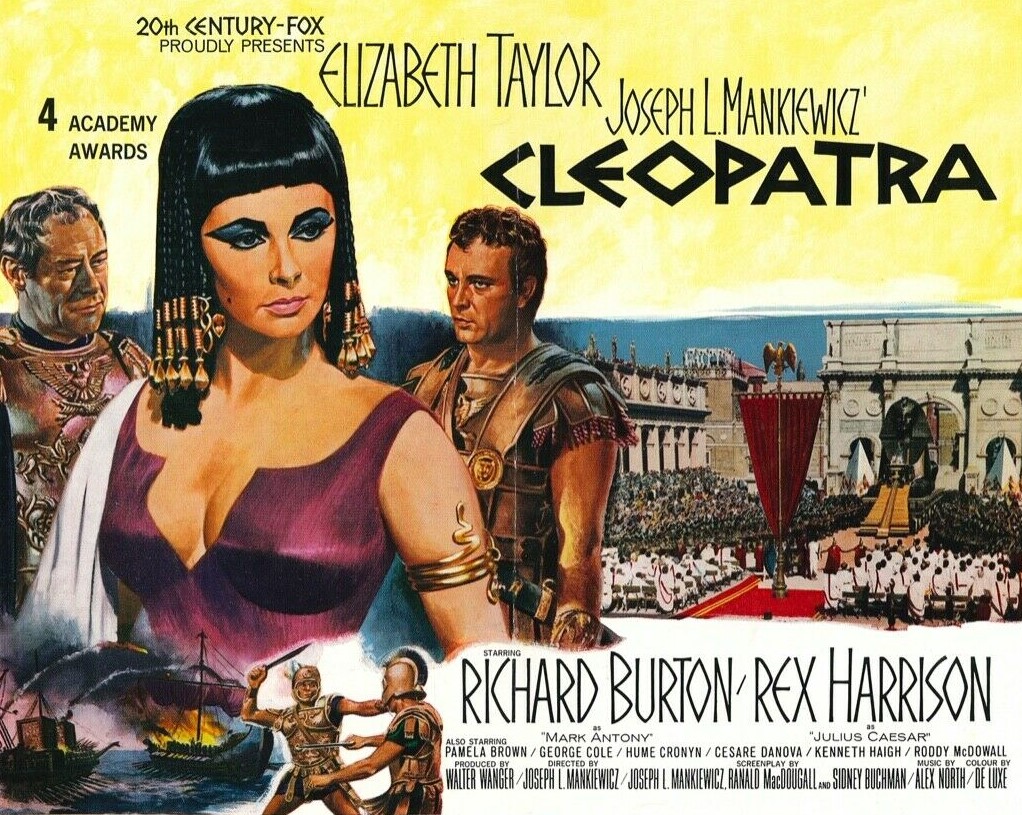
You won’t be surprised to find Cleopatra (1963), driven to publicity heights by the ruckus over the adulterous affair of stars Elizabeth Taylor and Richard Burton, in second place. If it hadn’t cost so much – $44 million – it might have easily turned a profit since box office rentals were a massive $26 million. But you can’t deny the arithmetic that meant this showed an $18 million shortfall, and therefore on paper a staggering flop.
Not far behind was Doctor Dolittle (1967), one of the biggest musical fiascos in an era of musical disasters. Although Oscar-winning Rex Harrison was the star, audiences couldn’t be persuaded it was anything more than a glorified Disney-style picture for children, and it lost $15.8 million.
The Greatest Story Ever Told (1965) should have been the greatest box office story ever told had director George managed to inject a bit more humanity into the sanctimonious retelling. Without a box office miracle this came in short by $13.1 million.
And no prizes for guessing that Mutiny on the Bounty (1962), with Marlon Brando stranded on an island by Trevor Howard, found income did not go far enough to offset cost. It underperformed to the tune of $12.6 million..
Star! (1968) must have seemed like a safe bet given Julie Andrews’ last three musicals had turned hefty profits. But it was so off the pace that it fell $10.8 million shy of break-even.
Bond producer Harry Saltzman was astonished, not to say humiliated, to discover there was such little appetite Stateside for an all-star version of how The Battle of Britain (1969) was won. Hadn’t every Hollywood movie insisted that war pictures only succeeded with a prominent Yank in the cast? One of the biggest hits of the year in Britain, it would still have to go some to overcome a $10 million discrepancy.
The problem with Hollywood was it was greenlighting projects that had to do phenomenal business just to reach a profit. And although Barbra Streisand’s debut Funny Girl (1968) had struck box office and critical gold, even she could not save Hello, Dolly! when it racked up such high costs. The downside was $8.8 million.
The unlikely casting of three non-singers – Lee Marvin, Clint Eastwood and Jean Seberg – in the principal roles of Paint Your Wagon (1969) seemed an act of incalculable hubris, but surprisingly, the musical did better than expected, not enough to turn the corner into profit, but losses limited to $5.5 million in the U.S. part of the course.
In tenth place was a second Samuel Bronston miscalculation, 55 Days at Peking (1963). Why would American audiences be interested in an obscure war in China even if Charlton Heston took top-billing? Such disinterest ensured it fell $5 million short of the target.
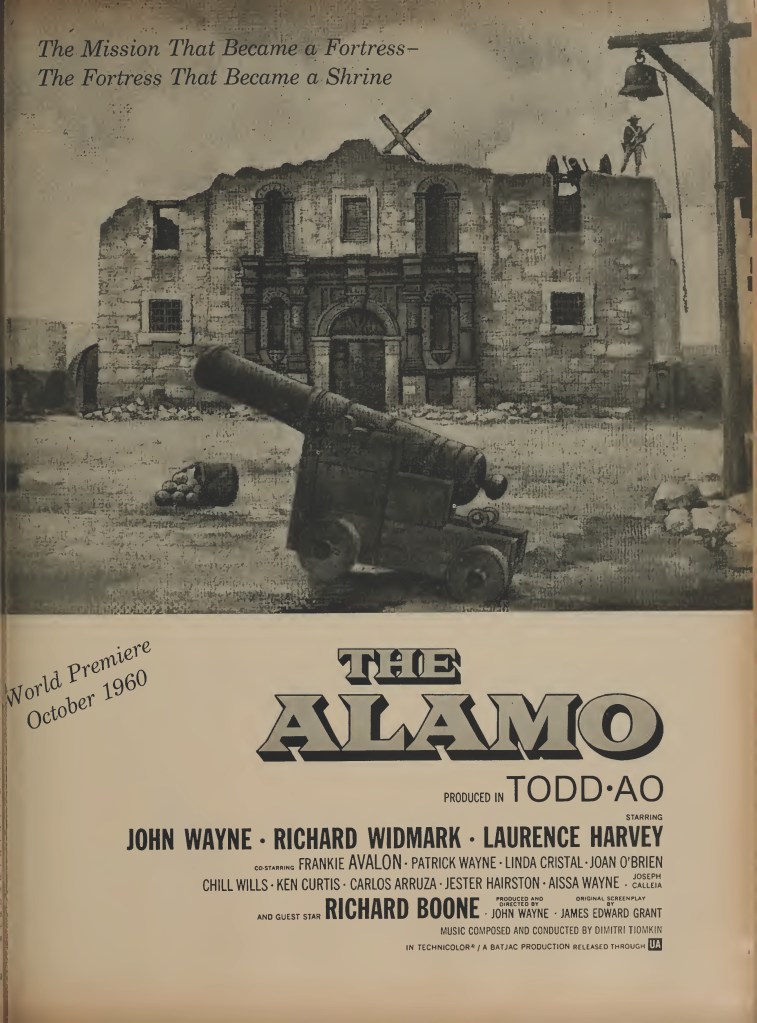
Overruns on John Wayne’s pet project The Alamo (1960) meant he ended up in debt. His fans were disinclined to line up for a roadshow, which put the dampers on the launch. Hollywood was stunned that a John Wayne movie lost money – $4.1 million – it was such a career rarity.
Another Bond alumni Albert Broccoli took the financial tumble this time when Dick Van Dyke failed to work his Mary Poppins magic in another musical aimed more at children than adults, Chitty, Chitty, Bang, Bang (1968).
Three other pictures ended up in the red as the result of over-expenditure. The Bible (1966) missed break-even by $3 million, Spartacus (1961) by $1.7 million, and another musical, Camelot (1967) starring non-singer Richard Harris and Vanessa Redgrave by $1 million.
But if Hollywood thought it had weathered the worst of the financial storm it was in for a shock the following year when top-heavy star vehicles hit the skits. Waterloo with Rod Steiger and Christopher Plummer lost $23.6 million, The Molly Maguires with Sean Connery and Richard Harris $9.9 million and The Only Game in Town toplining Elizabeth Taylor and Warren Beatty $8.5 million
NOTE: It’s entirely possible that once you calculated a movie’s long tail all these films turned profit. The foreign performance of films on initial release often out-grossed their domestic revenues, especially if roadshown in Europe. Revenue from half a century’s worth of countless television sales in countless countries followed by satellite, VHS, DVD, satellite, syndication, Blu-Ray and streaming had the potential to turn any loss into profit.
But there was a proviso. Generally, what a television station paid for a movie depended on its initial gross, box office seen to be indicative of public demand – and of advertising interest . The leasing of Cleopatra first time round to U.S. television, for example, added an extra $3 million to the coffers but that small screen executives were willing to pay such a record sum was driven by the vast numbers that had seen it at the cinema. And, to a large extent, future response to these movies still appeared to depend of how well they had done or how well they were known – a long-term version of word-of-mouth – at the time of their initial release..
On initial global release Cleopatra probably closed the gap between profit and loss but I doubt that would be the case for The Fall of the Roman Empire or The Greatest Story Ever Told or Doctor Dolittle or Mutiny on the Bounty. While The Battle of Britain was a huge success in Britain and in countries belonging to the British Commonwealth, I doubt it went into the black. But something like Spartacus or Camelot or The Alamo or Paint Your Wagon, which ran for a year in roadshow in London, most certainly turned a profit on overall worldwide receipts.
SOURCE: “Big-Buck Scorecard 1956-1987,” Variety, January 20, 1088, p64, 66.