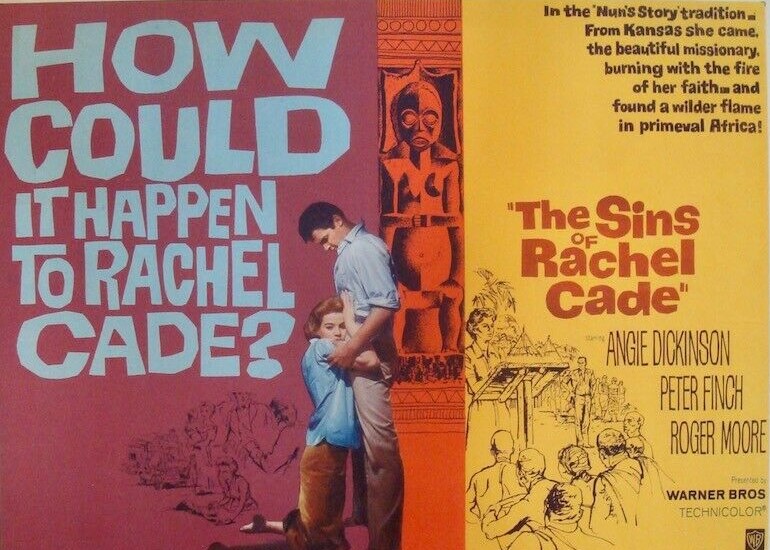
The Sins of Rachel Cade (1961) ***

In her first top-billed role Angie Dickinson (Jessica, 1962) delivers a strong performance as an American nurse/missionary in the Belgian Congo at the start of the Second World War. The usual Hollywood trope of “heathens” needing to be educated by imperialists – from The Bitter Tea of General Yen (1933) and The Keys of the Kingdom (1944) through to The Nun’s Story (1959) – was to some extent turned on its head here.

Just as Rachel Cade (Angie Dickinson) arrives at a hospital in a small village, resident Dr Bikel  (Douglas Spencer) dies. Not only does the hospital have no patients, the local Belgian commissioner Col Derod (Peter Finch) wants her to leave, believing her presence will act as provocation to the local high priest Kalanumu (Juano Hernandez) and witch doctor Muwango (Woody Strode). After standing up to all three, Rachel embarks on refurbishment of the hospital aided by assistant Kulu (Errol John).
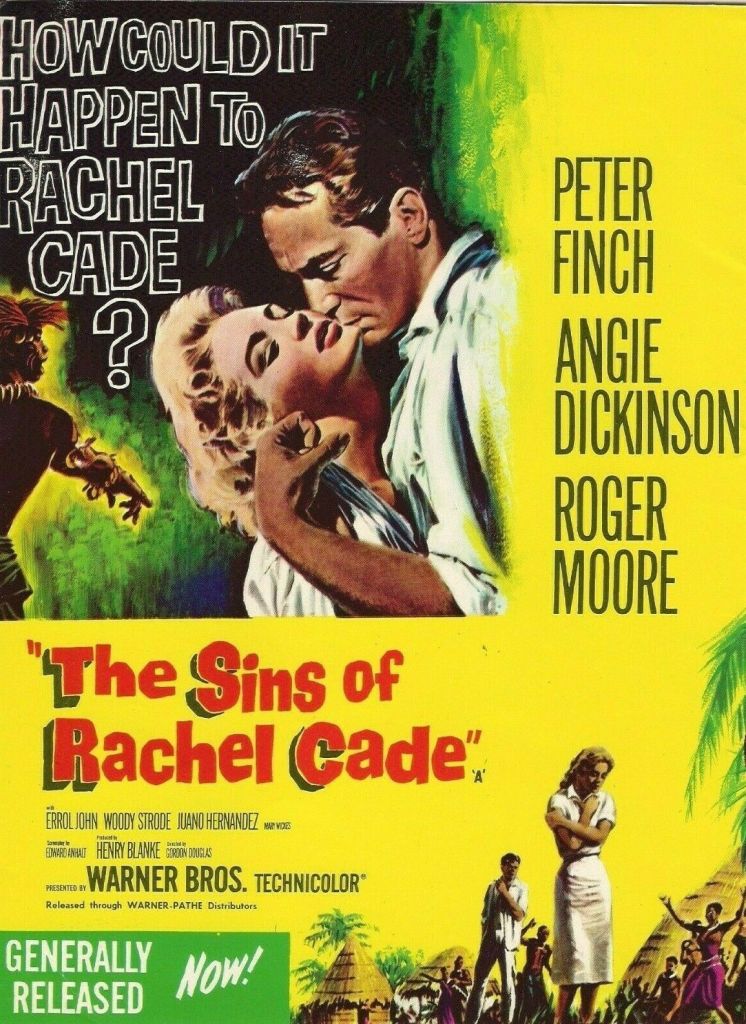
Patients remain non-existent until she cures a small boy of appendicitis, as a result of which Muwango places a curse on her that she will lose her Protestant faith and promises the local god will take his revenge on anyone who supports her. Of course, her skills are not infinite and not only is there another boy who dies in her care but she cannot cure – and does not attempt to cure – the infertile third wife of the local chief.

While she warms to her patients and they to her, she cannot come to terms with their acceptance of incest (if a husband is called away, his brother must make love to his wife), polygamy, vaginal mutilation, the sexuality of their dancing and the fact that sin does not exist in their culture. Meanwhile, she distrusts the visions seen by the most convinced of her converts, Kulu.    

When the sexually repressed Rachel rejects Derod’s advances in favour of the  dashing but money-oriented Dr Paul Winton (Roger Moore), thus violating her own teachings, she becomes enmeshed by the principles she holds so dearly and which the Africans refute. A twist in the tale pivots the picture on whom she will marry, the sensible Derod, the cavalier Winton, or retain her own independence in defiance of the standards of the time.  

A battle of the hierarchies – the female nurse and her supporters versus male supremacy – maintains the tension but underneath is a philosophical struggle between the two faiths. The Christian religion which boasts of forgiveness is in the end unforgiving of those who break its moral code, while the African religion does not force onto its believers such ludicrous rules. On top of that is Rachel’s acceptance of her own passion, the realization that love cannot be restrained by commandment, and that men are more likely to betray her.

The reality of imperialist rule is not underplayed but since this predates the Mau Mau uprising in Kenya in the 1950s that precipitated widespread rebellion and Derod can call on soldiers for protection in the Belgian colony and is in fact a generally tolerant (though at times patronising) overseer, political issues remain in the background.

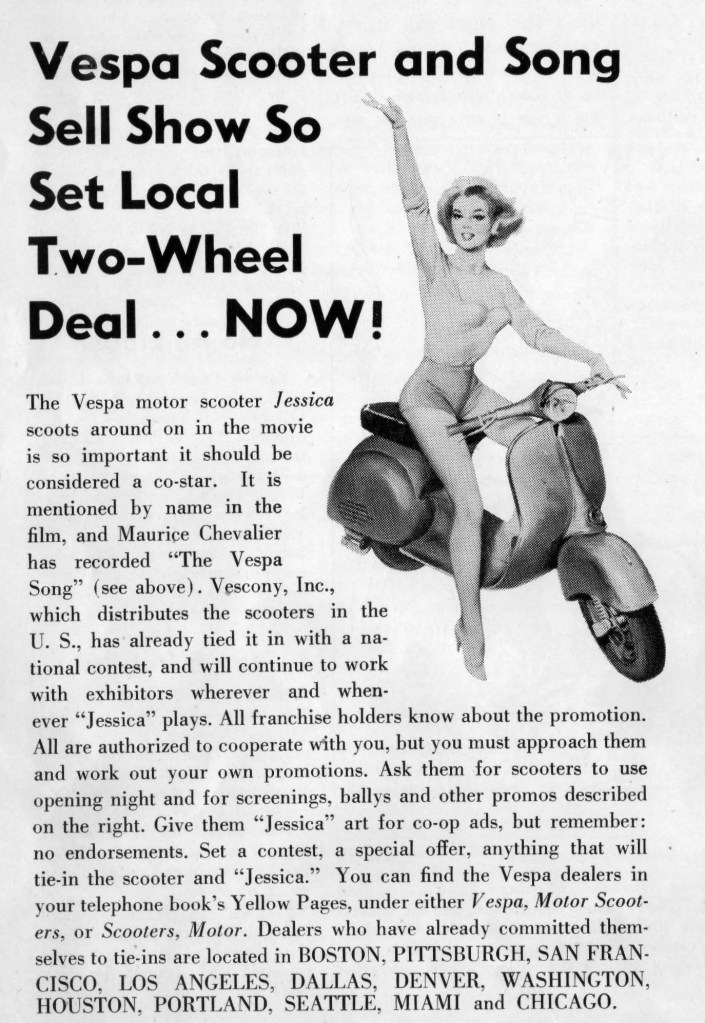
Angie Dickinson gets the movie star build-up in this British trade advertisement.

Director Gordon Douglas (Claudelle Inglish, 1961) keeps the focus on the transition of the naïve American while not ignoring nor appearing to ridicule the rituals and beliefs of the tribe – although a cynic might consider that the sexuality of the dancing, while repellant to Rachel, might be included more with an eye to attracting an audience. Overall, it appears an honest even-sided presentation, with the high priest getting the better of Rachel in arguments over the frailties of Christianity. Angie Dickinson brings conviction to a role that sees her start out a shade saintly until brought back down to earth by human weakness. Peter Finch, by coincidence the leading man to Audrey Hepburn role in The Nun’s Story, fills out his normal stoic screen personality with touches of grief. Roger Moore (Vendetta for the Saint, 1969) had not yet mastered the art of the raised eyebrow and so brought a more rounded performance to his role and is entirely believable as the lover with the mercenary streak.

The pick of the supporting parts is Mary Wickes (Sister Act, 1992) as Derod’s wisecracking housekeeper. Woody Strode (The Professionals, 1966), Scatman Crothers (The Shining, 1980),  Juano Hernandez (The Pawnbroker, 1964) and Errol John (The Nun’s Story)  provide stiff opposition for the incomers.  Edward Anhalt (The Satan Bug, 1965) based his screenplay on the bestseller by Charles Mercer.

CATCH-UP: Featured in the Blog so far are the following Angie Dickinson pictures: Ocean’s 11 (1960), A Fever in the Blood (1961), Jessica (1962), The Chase (1966), Cast a Giant Shadow (1966) and Point Blank (1967).
All-Time Top 50

It’s five years now since I started this Blog.  This little exercise that I generally undertake twice a year reflects the films viewed most often since the Blog began in June 2020. There’s no shaking Ann-Margret, a brace of her movies embedded in the top three, though the sequence has been punctured by the sudden arrival of Anora (2024) and followed by Pamela Anderson as The Last Showgirl (2024), both films making the highest ranking of any contemporary films I’ve reviewed, though I hated the former and adored the latter.  

The figures in brackets represent the positions in December 2024 and New Entry is self-explanatory. I’ve expanded the list from 40 movies to 50, which still represents a small fraction of the 1600 pictures I’ve reviewed since I started.

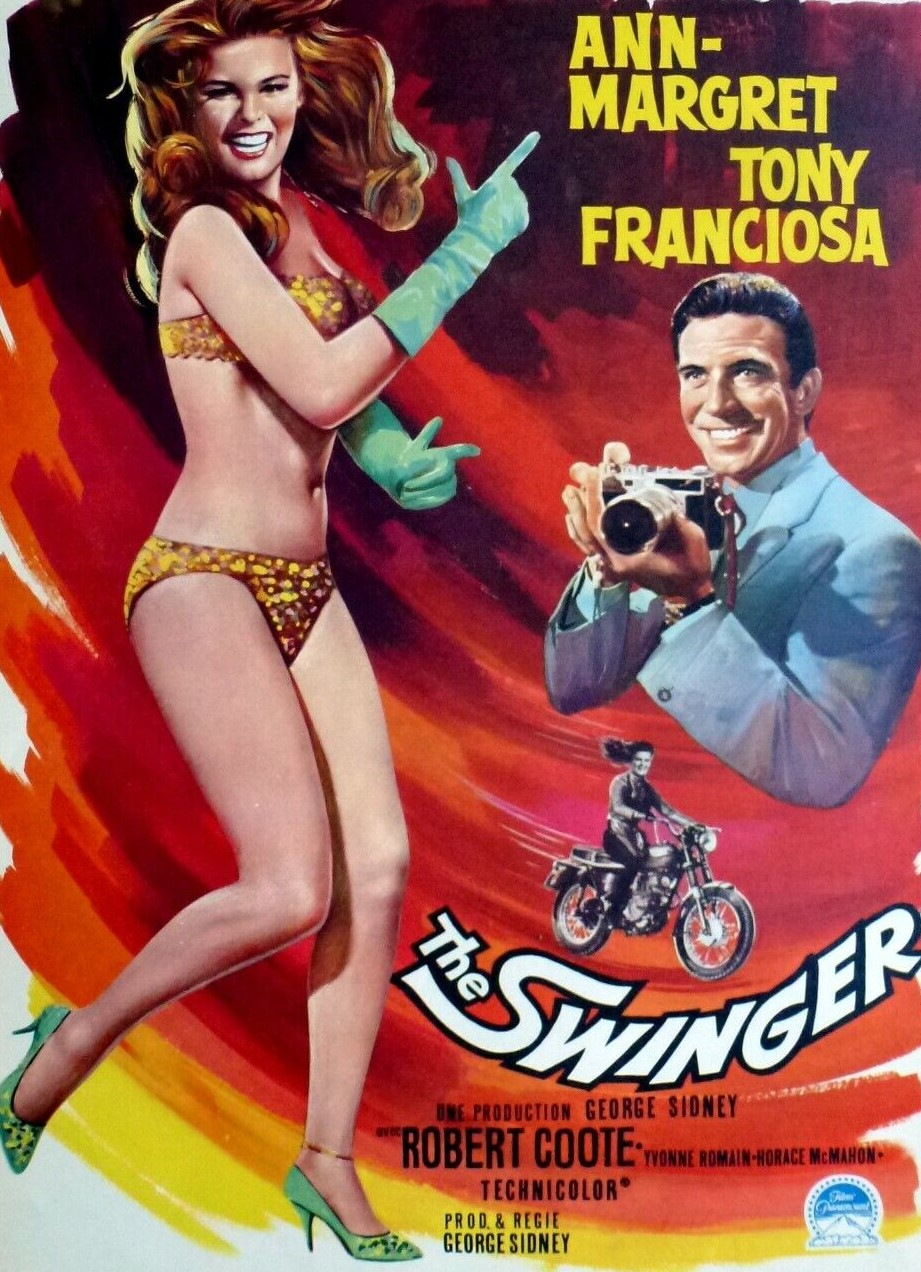
  1. (1) The Swinger (1966). Despite shaking her booty as only she knows how, Ann-Margret brings a sprinkling of innocence to this sex comedy.. 
  2. (New Entry) Anora (2024). Mikey Madison’s sex worker woos a Russian in Oscar-winner.
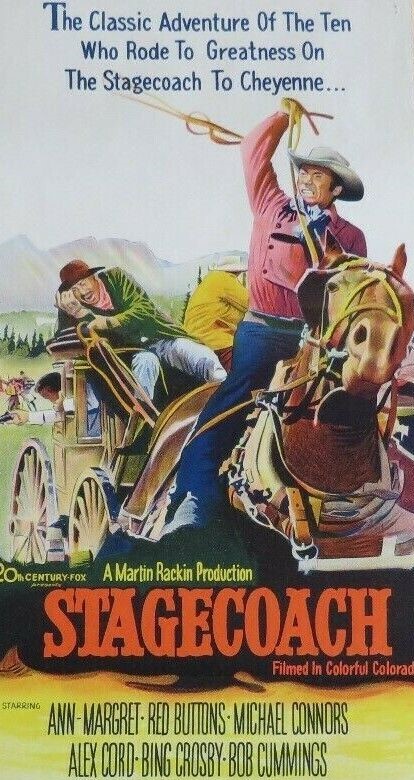
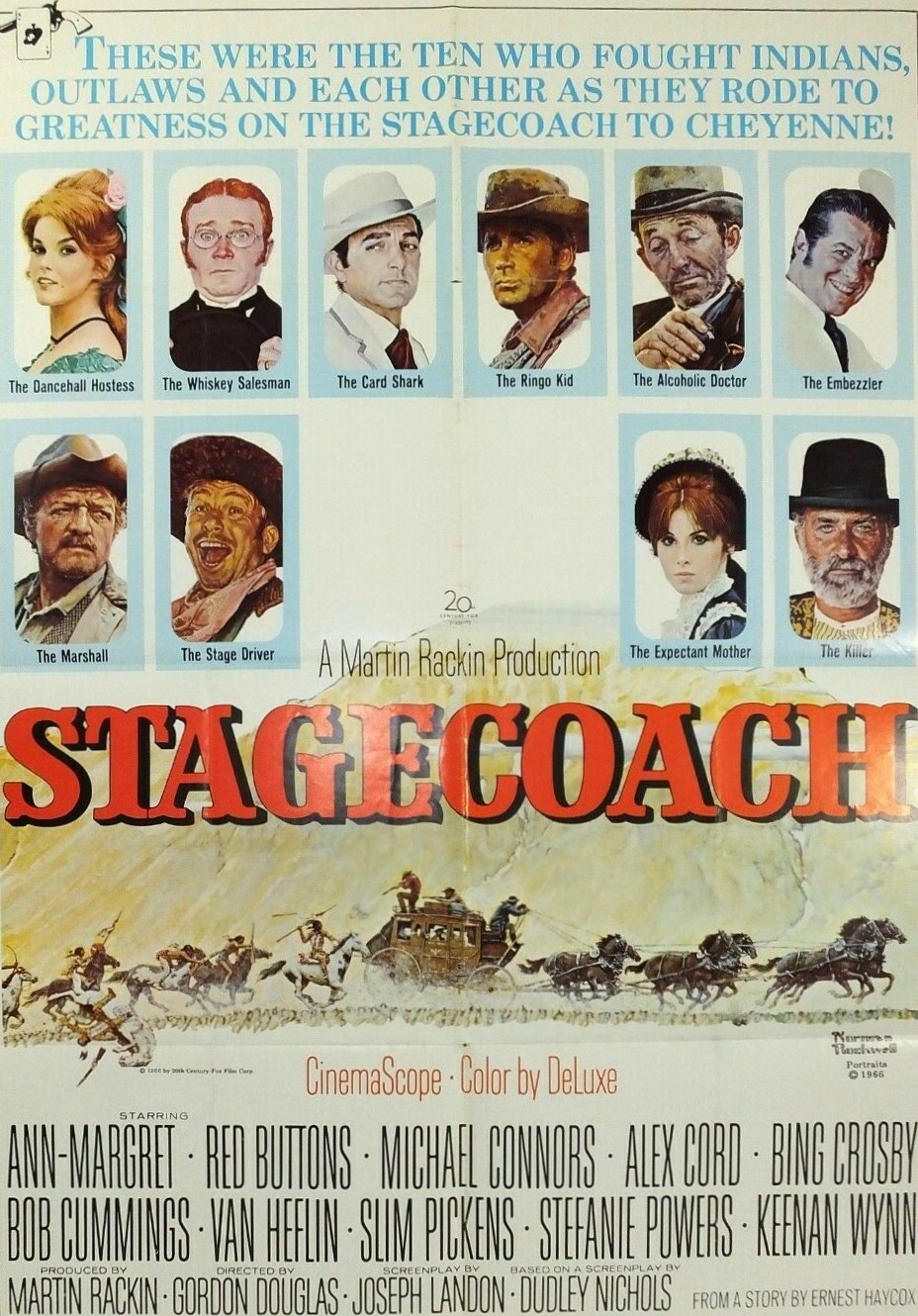
  3. (2) Stagecoach (1966). Under-rated remake of the John Ford western. But it’s Ann-Margret who steals the show ahead of Alex Cord in the role that brought John Wayne stardom.  
  4. (New Entry)) The Last Showgirl (2024). Pamela Anderson proves she can act and how in this touching portrayal of a fading Las Vegas dancer.
  5. (4) In Harm’s Way (1965). Under-rated John Wayne World War Two number. Co-starring Kirk Douglas, Patricia Neal, Tom Tryon and Paula Prentiss, director Otto Preminger surveys Pearl Harbor and after.
  6. (3) Fraulein Doktor (1969). Grisly realistic battle scenes and a superb score from Ennio Morricone help this Suzy Kendall vehicle as a World War One German spy going head-to-head with Brit Kenneth More and taking time out for romantic dalliance with Capucine.
  7. (5) Fireball XL5. The famous British television series (1962-1963) from Gerry and Sylvia Anderson, now colorized. “My heart will be a fireball…”
  8. (6) Once Upon a Time in the West (1969). Along with The Searchers (1956) now considered the most influential western of all time. Sergio Leone rounds up Claudia Cardinale, Henry Fonda and Charles Bronson and that fabulous Morricone score.
  9. (New Entry) Squad 36 / Bastion 36 (2025). Corruption and interdepartmental rivalry fuel this French flic directed by Olivier Marchal.
  10. (7) Jessica (1962). Angie Dickinson doesn’t mean to cause trouble but as a young widow arriving in a small Italian town she causes friction, so much so the local wives go on a sex strike..
  11. (20) Young Cassidy (1965). Julie Christie came out of this best, winning her role in Doctor Zhivago as a result. Rod Taylor as Irish playwright Sean O’Casey.
  12. (8) Thank You Very Much/ A Touch of Love (1969). Sandy Dennis dazzles as an academic single mother in London impregnated by Ian McKellen.
  13. (10) Baby Love (1969). Controversy was the initial selling point but now it’s morphed into a morality tale as orphaned Linda Hayden tries to fit into an upper-class London household.
  14. (30) The Girl on a Motorcycle / Naked under Leather (1968). How much you saw of star Marianne Faithfull depended on where you saw it. The U.S. censor came down heavily on the titular fantasizing heroine, the British censor more liberal. Alain Delon co-stars. These says, of course, you can see everything.
  15. (9) Pharoah (1966). Polish epic set in Egypt sees the country’s ruler at odds with the religious hierarchy.
  16. (24) A Dandy in Aspic (1968). Cold War thriller with Laurence Harvey as a double agent who wants out. Mia Farrow co-stars.  
  17. (31) Claudelle Inglish (1961). Diane McBain seeks revenge for being stood up at the altar in the Deep South.
  18. (New Entry) The Family Way (1966). Hayley Mills comes of age in this very adult drama. Co-starring her father John Mills and Hywel Bennett.
  19. (12) Vendetta for the Saint (1969). Prior to James Bond, Roger Moor was better known as television’s The Saint. Two television episodes combined sees our hero tackle the Mafia.
  20. (15) Go Naked in the World (1961). Gina Lollobrigida finds that love for a wealthy playboy clashes with her profession (the oldest). Look out for highly emotional turn from the usually taciturn Ernest Borgnine.
  21. (13) The Appointment (1969). Inhibited lawyer Omar Sharif discovers the secrets of wife Anouk Aimee in under-rated and little-seen Italian-set drama from Sidney Lumet.
  22. (New Entry) Istanbul Express (1968). Gene Barry plays a weird numbers game in spy thriller that sets him up against Senta Berger.
  23. (19) Pressure Point (1962). Nazi extremist Bobby Darin causes chaos for psychiatrist Sidney Poitier. Stunning dream sequences.
  24. (25) Pendulum (1968). Fast-rising cop George Peppard accused of murdering unfaithful wife Jean Seberg
  25. (11) The Sins of Rachel Cade (1961) Angie Dickinson (again) as African missionary falling foul of the natives and Commissioner Peter Finch. Roger Moore (again) in an early role.
  26. (16) Diamond Head (1962). Over-ambitious hypocritical landowner Charlton Heston comes unstuck in love, politics and business in Hawaii. George Chakiris, Yvette Mimieux and France Nuyen turn up the heat.
  27. (27) Fathom (1967). When not dodging the villains in an entertaining thriller, Raquel Welch models a string of bikinis as a skydiver caught up in spy malarkey.
  28. (36) Prehistoric Women / Slave Girls (1967). Martine Beswick attempts to steal the Raquel Welch crown as Hammer tries to repeat the success of One Million Years B.C
  29. (18) The Golden Claws of the Cat Girl (1968). Cults don’t come any sexier than Daniele Gaubert as a French cat burglar.
  30. (14) The Sisters (1969). Incest rears its head as Nathalie Delon and Susan Strasberg ignore husbands and lovers in favor of each other. 
  31.  (17) Moment to Moment (1966). Hitchcockian thriller set in Hitchcock country – the South of France – as unfaithful Jean Seberg is on the hook for the murder of her lover.  Also featuring Honor Blackman. 
  32. (New Entry) Age of Consent (1969). Helen Mirren frolics nude in her debut as the freewheeling damsel drawn to disillusioned painter James Mason.
  33. (28) Farewell, Friend / Adieu L’Ami (1968). A star is born – at least in France, the States was a good few years behind in recognizing the marquee attractions of Charles Bronson. Alain Delon co-stars in twisty French heist thriller featuring Olga Georges-Picot and Brigitte Fossey.
  34. (35) Horizon: An American Saga – Chapter 1 (2024). Kevin Costner’s majestic western that became one of the biggest flops of the year was underrated in my opinion.
  35. (New Entry) Genghis Khan (1965). Omar Sharif as the titular warrior up against Stephen Boyd. Co-starring James Mason and Francoise Dorleac. Robert Morley is hilariously miscast as the Chinese Empteror.
  36. (26) Once a Thief (1965). Ann-Margret again, in a less sexy incarnation, as a working mother whose ex-jailbird thief Alain Delon takes a detour back into crime.
  37. (29) Woman of Straw (1964). More Hitchockian goings-on as Sean Connery tries to frame Gina Lollobrigida in a dubious scheme.
  38. (New entry) The Demon / Il Demonio (1963). Extraordinary performance by Daliah Lavi in Italian drama as she produces the performance of her career.
  39. (New entry) Guns of Darkness (1962). David Niven and Leslie Caron on the run from South American revolutionaries.
  40. (New Entry) Operation Crossbow (1965). George Peppard is the man with the mission in Occupied France during World War Two. Co-stars Sophia Loren.
  41. (34) She Died with Her Boots On / Whirlpool (1969). More sleaze than cult. Spanish director Jose Ramon Larraz’s thriller sees kinky photographer Karl Lanchbury targeting real-life MTA Vivien Neves.  
  42. (21) Can Heironymus Merkin Ever Forget Mercy Humpe and Find True Happiness? Fellini would turn in his grave at the self-indulgence of singer Anthony Newley who manages to lament that women falling at his feet cause him so much strife. Joan Collins co-stars.
  43. (23) The Chalk Garden (1964). Wild child Hayley Mills, trying to break out of her Disney straitjacket, duels with governess Deborah Kerr.
  44. (New Entry) Dark of the Sun / The Mercenaries (1968). Rod Taylor’s guns-for-hire break out the action in war-torn Africa. Jim Brown and Yvette Mimieux co-star.
  45. (New entry) La Belle Noiseuse (1991). Emmanuelle Beart is the mostly naked model taking painter Michel Piccoli to his artistic limits.
  46. (New Entry) A Fine Pair (1968). Rock Hudson and Claudia Cardinale join forces for a heist picture.
  47. (33) Lady in Cement (1969). Raquel Welch models more bikinis as the gangster’s moll taken on as a client by private eye Frank Sinatra in his second outing as Tony Rome.
  48. (New Entry) Carry On Up the Khyber (1968). The most successful of the Carry On satires poking fun at the British in India.
  49. (New Entry) The Venetian Affair (1966). Robert Vaughn investigates spate of suicide bombs. Elke Sommer provides the glamor.
  50. (22) The Secret Ways (1961). The first of the Alistair MacLean adaptations to hit the big screen features Richard Widmark trapped in Hungary during the Cold War. Senta Berger in an early role.

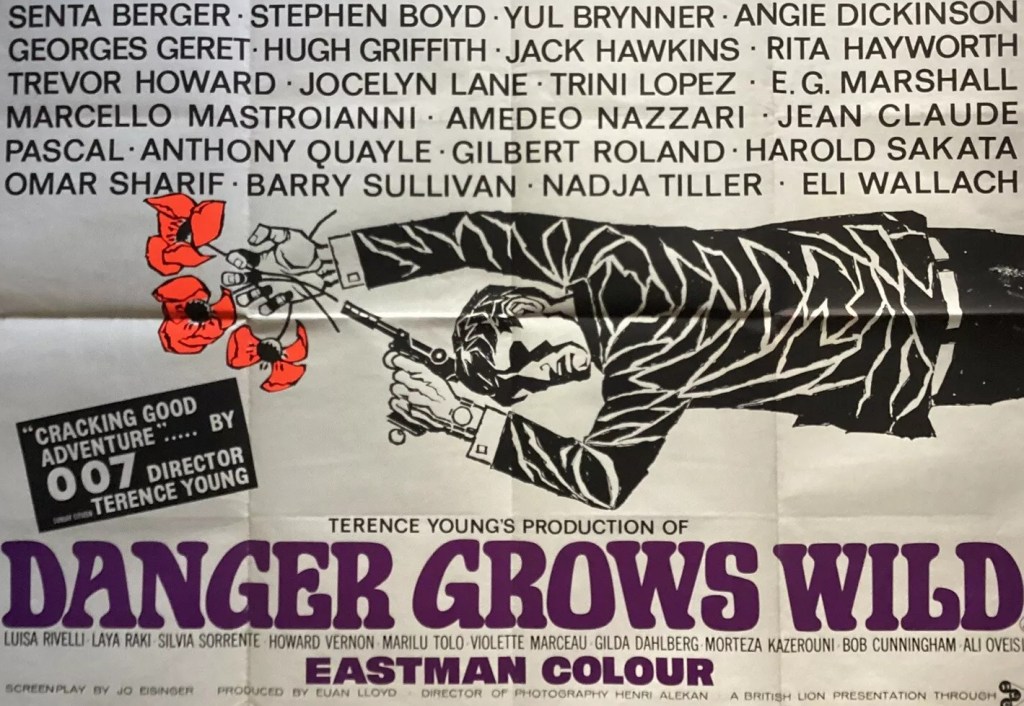
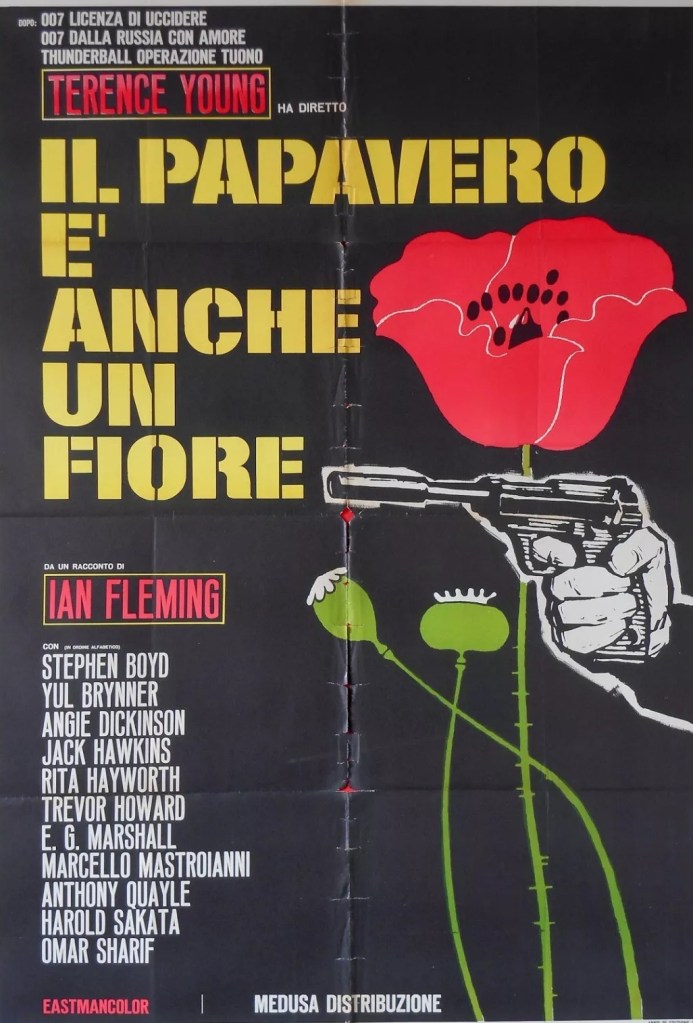
The Poppy Is Also A Flower / Danger Grows Wild (1966) ***

Audiences were likely disgruntled to discover that out of a heavyweight cast boasting the likes of Omar Sharif (Doctor Zhivago, 1965), Yul Brynner (The Magnificent Seven, 1960), Rita Hayworth (Circus World/The Magnificent Showman, 1964), Senta Berger (Cast a Giant Shadow, 1966) and Stephen Boyd (Genghis Khan, 1965), that the heavy lifting was done by a couple of supporting actors in Trevor Howard (Von Ryan’s Express, 1965) and E.G. Marshall (The Chase, 1966).

Most of the all-star cast barely last a few minutes, Stephen Boyd’s character killed in the opening sequence, Senta Berger and Rita Hayworth putting in fleeting appearances as junkies. Like many of the gangster pictures of the decade, it’s set up as a docu-drama, giving the down’n’dirty, courtesy of United Nations which funded the picture, on the international drugs trade.

Benson (Stephen Boyd) heads up an infiltration operation targeting drug suppliers in Iran, where poppies “grow wild as weeds.” Though quickly bumped off, and the goods he’s purchased stolen, he’s replaced by Col Salem (Yul Brynner) who has the Bond-esque notion of enriching the opium with radiation and then tracing it using Geiger counters.

When that scheme fails, it’s down to agents Sam Lincoln (Trevor Howard) and Coley Jones (E.G. Marshall) to hunt down the drugs. Considering themselves unlikely lotharios, they compete over women and play a neat game of stone-scissors-paper to decide who is assigned which task, varying from chatting up Linda (Angie Dickinson), the gorgeous widow of Benson, or searching her room. Linda isn’t all she seems, not least she may not be a widow, carries a gun, and turns up in too many unsavory dives to be on the side of the angels.

Given drug-dealing was not the rampant business it later became, audiences might not be so shocked to discover that opium was transported by cargo ship and refined in Naples before being shipped all over the world. Possibly as interesting is the use of ancetic anhydride in the refining process. As Sam and Coley trudge across half of Europe, from Naples to Geneva to Nice, the audience is filled in on the details of the drug business and they latch on to a Mr Big, Serge Marko (Gilbert Roland).

There’s a hard realism about the project – though not to the levels of The French Connection (1971) -: nightclub dancer needing make-up to hide the tracks on her arms; Marko’s wife (Rita Hayward) stoned out of her skull; director Terence Young (Dr No, 1962) pulling a fast one Hitchcock-style in killing off Sam; and, despite a climax which sees Coley collar Marko, it ends with a pessimistic air – “someone else to take his place.” There’s a good fistfight on a train, and you’ll have guessed what Linda is up to. But there’s an odd softer centre, the movie taking a couple of breaks to highlight the singing of Trini Lopez and female wrestlers.

Before virtue-signalling was invented this was a do-gooder movie, the cameo players signing up for a buck, Grace Kelly on hand for the introduction. These days it stands as an almighty alarm that was scarcely heeded, not as the drug-fuelled counter-culture was about to burst onto the world, and with middle-class drop-outs championing the illicit there was little chance of the warning being heeded.

More like The Longest Day (1962) than Lawrence of Arabia (1962) in its use of the all-star cast. Still manages to make its points with the least amount of lecturing and hectoring.

Terence Young comes into his own in the action highpoints. Written by Jo Eiseinger (Oscar Wilde, 1960) and Jack Davies (Gambit, 1966) from an idea by Ian Fleming.

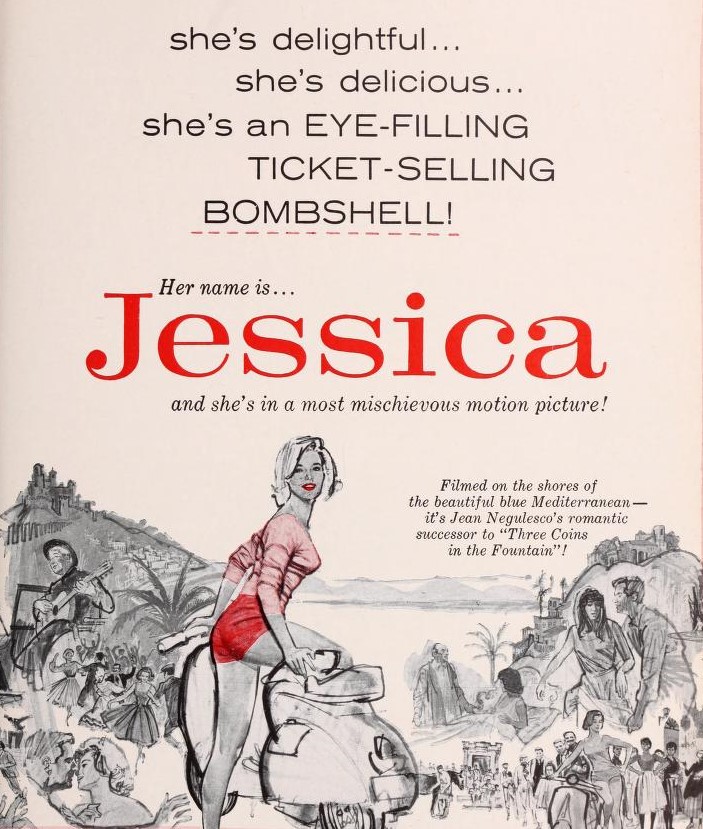
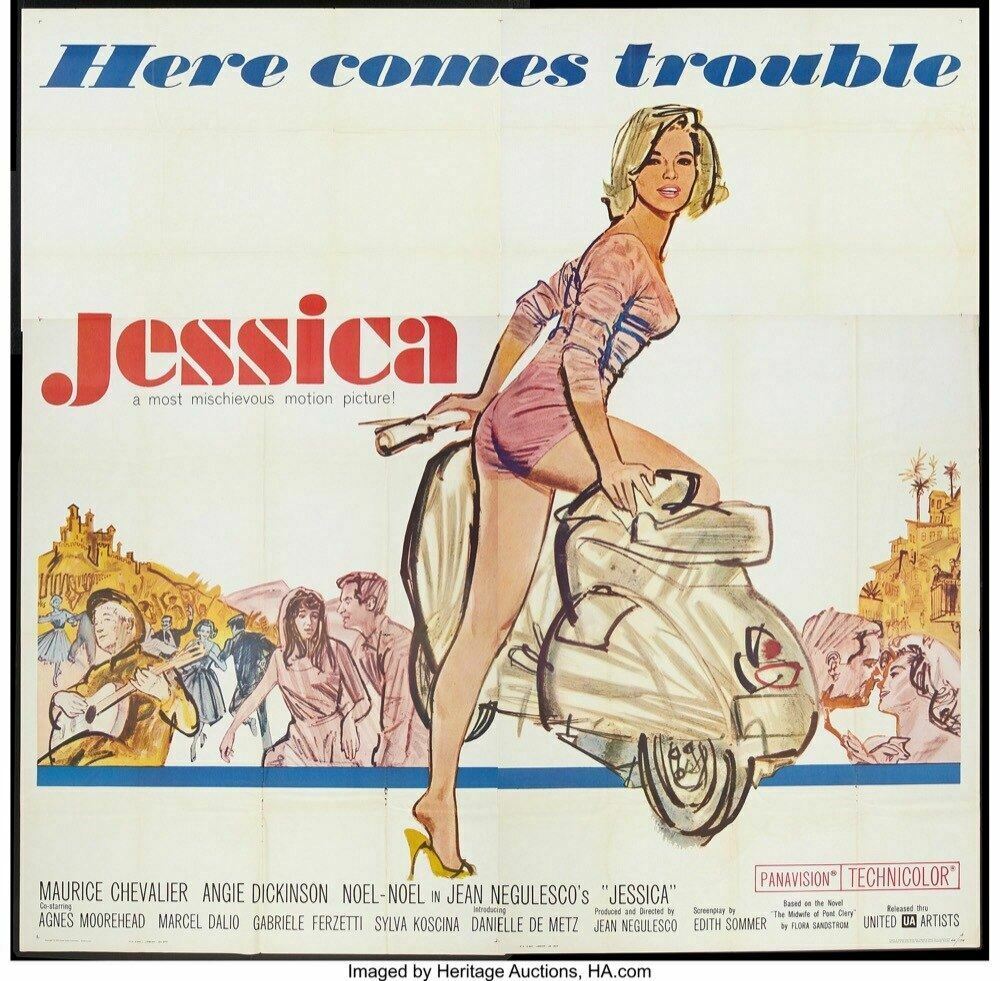
Jessica (1962) ***

Roman Holiday (1953), Three Coins in a Fountain (1956) and Boy on a Dolphin (1956) had set a high bar for Hollywood romances set in Italy. Since Jean Negulesco had directed the last two, he was expected to sprinkle box office magic on this slight tale of young American midwife Jessica Brown Visconti (Angie Dickinson) adrift in a rustic village in Sicily.

She’s the kind of beauty who’s going to raise male temperatures except Jessica, having been widowed on her wedding day, is not romantically inclined. Unfortunately, that doesn’t stop the entire male population becoming so entranced that their wives become so enraged that led by Maria (Agnes Moorehead) they embark on a sex strike, assuming that without any pregnancies (contraception being frowned upon in a Catholic domain) to deal with Jessica will become redundant and go away. And that so annoys Jessica, who is doing a good job as a midwife, that she turns on the flirting to get back at her female tormentors. Luckily, there’s a reclusive landowner (Gabriele Ferzetti) who happens to be a widower, although romance takes a while to stir. There’s also a priest (Maurice Chevalier), in part acting as narrator, who turns to song every now and then.

So it’s a surprise that this unlikely concoction works at all. It’s charming in the obvious ways, the lush scenery, a traditional wedding, gentle comedy. But it’s a decade too late in taking an innocent view of sex. There’s no crudeness, of course; it doesn’t fall victim to the 1960s  need to sexualize in an obvious manner. And not every husband is continuously ogling Jessica so Nunzia (Sylva Koscina) and young bride Nicolina (Danielle De Metz) are in the awkward situation of potentially betraying the sisterhood.

But in resolving the central issue the story develops too many subplots and introduces too many characters, often leaving Jessica rather redundant in terms of the plot, with not much to do, especially when her prospective suitor is absent for a long period going fishing.

Angie Dickinson is delightful as the Vespa-riding innocent turned mischievous. However, in some way though this seemed a backward step for Dickinson, a rising star in the Lana Turner/Elizabeth Taylor mold after being John Wayne’s squeeze in Rio Bravo (1959) and Frank Sinatra’s estranged wife in Ocean’s Eleven (1960) and after a meaty supporting role in A Fever in the Blood (1961)  elevated to top billing in The Sins of Rachel Cade (1961). It seemed like Hollywood could not make up its mind whether it wanted her to be like Gidget or be given free rein to express her sexuality.

A charmer like Maurice Chevalier (A Breath of Scandal, 1960) was ideal for what was in effect a whimsical part. The singing probably met audience expectation. Perhaps like Sean Connery’s perennial Scottish accent, nobody ever asked Chevalier to drop his pronounced French accent even to play an Italian. But the picture is whimsical enough without him.

There’s a surprisingly strong supporting cast in four-time Oscar nominee Agnes Moorehead (Pollyanna, 1960), Gabriele Ferzetti (Once Upon a Time in the West, 1969) and French actor (and sometime writer-director) Noel-Noel. Yugoslavian Sylva Koscina (Deadlier Than the Male, 1967), Frenchwoman Kerima (Outcast of the Islands, 1951) and Danielle De Metz (The Scorpio Letters, 1967) all make a splash. Screenplay by Edith Sommer (This Property Is Condemned, 1966) from the bestseller by Flora Sandstrom.

Terrific turn from Angie Dickinson.

A Fever in the Blood (1961) ****

Blistering B-film from writer Roy Huggins (TV’s The Fugitive) that marries political chicanery to legal jiggery-pokery in a movie that races from one twist to another. In his role as producer Huggins calls upon actors he made stars from the television series he created – Efrem Zimbalist Jr. (77 Sunset Strip), Jack Kelly (Maverick) – and gives Angie Dickinson (Oceans 11) the female lead.

Huggins’ brilliant premise is to ignore the dilemma of the man, Walter Thornwall (Rhoses Reason), nephew of a former Governor, wrongly accused of the murder of his wife, and instead to concentrate on accuser District Attorney Dan Callahan (Jack Kelly) and Judge Lee Hoffman (Efrem Zimbalist Jr), both of whom, running for the vacant Governor post, stand to make massive political capital from the publicity surrounding a sensational trial.

Former buddies Callahan and Hoffman are now bitter rivals after the former had reneged on a promise to support the latter’s bid for the political post. Also throwing his hat into the ring is Senator Alex Simon (Don Ameche) whose wife Cathy (Angie Dickinson) once had romantic yearnings for Hoffman. The only one of the trio who has anything approaching a conscience is Hoffman and that is immediately tested when the Senator offers him a bribe to stand down from the race, which the Judge, after an appeal from Cathy, does not report to the authorities. There is another ploy open to Hoffman. Should he find reason to declare a mistrial that would sabotage Callahan’s bid since he would not be riding high in the media after convicting a celebrity killer.

The picture jumps from intense politics, the wheeling-dealing and wrapping up votes, to a  trial in a packed courtroom very much in the Perry Mason vein with surprise witnesses, shocks, objections sustained or overruled, clever arguments, dueling attorneys, and last-minute evidence.

A witness has Thornwall running away from the scene of the crime and when his wife is painted as a nymphomaniac that provides ample motive.  Further evidence pushes the defendant into a worse corner. But all the while over the trial hangs the stink of political machination.

There are another half-dozen brilliant twists, not least of which is Judge Hoffman letting conscience go hang and embarking on a couple of dodgy endeavors himself including what amounts to sheer blackmail. The District Attorney, one of the sharpest tools in the box, reacts to every setback with a cunning that would have been criminal had it not been legal. Also hanging there is potential adultery between Cathy and the widowed Hoffman.

The writer in Huggins is a past master at shifting the cards in the deck and this has so many twists and turns it feels like a whole series of The Fugitive crammed into one episode. There is as much self-awareness of the underbelly of politics as in Advise and Consent (1962), as much deceit and corruption, as much principle disguised as honor.

But the plot here is so tight, the characters dealing with twists and turns that the movie has no requirement for the depth of characterization that would have been brought to the picture by a Henry Fonda or Charles Laughton. Huggins proves you can have just as much fun without the big boys. None of the stars with the exception of Angie Dickinson made a dent on the Hollywood A-list but they are all perfectly acceptable, and once Huggins tightens the screws plot-wise the last thing on your mind is wishing for a better cast.   

A cracker.

The All-Time Top 40

Traditionally, this is an opportunity for me to blow the trumpet on behalf of my loyal and growing band of readers. But this time out I’m also taking the opportunity to blow my own trumpet or in the patois of my home city “bum ma load.” I began this blog in June 2020 and my monthly viewing figures scarcely topped a few hundred in the first year. Now I’m hitting 10,000 views a month. Being a self-effacing kind of guy, I thought the world should know.

Now, back to the main task in hand. It’s been a major aspect of the Blog to see which films are most favored by my readers.  As regular readers will know, I run this feature every six months.

It’s worth pointing out that for such a testosterone-driven decade the Top Ten is dominated by female stars with Ann-Marget and Angie Dickinson in the ascendancy.  Raquel Welch, Hayley Mills and Jean Seberg also make a splash. As well as top male figures like Frank Sinatra, John Wayne, Robert Mitchum and Dean Martin readers have been highly appreciative of underdogs like Alain Delon, Richard Johnson and Alex Cord.

Surprisingly high number of new entries include Young Cassidy, Fathom, The Appointment, Diamond Head, The Family Way and The Venetian Affair.

The figures in brackets represent the previous year’s position.

  1. (1) The Swinger (1966). Queen of the Blog Ann-Margret in bouncy sex comedy that manages a sprinkling of innocence. 
  2. (2) Stagecoach (1966). Double whammy from Ann-Margret in this more than acceptable remake of the John Ford western with the male lead taken by Alex Cord, another star in need of reassessment.  
  3. (4) Fraulein Doktor (1969). German spy Suzy Kendall out-foxes Kenneth More in this World War One adventure with surprisingly grisly battle scenes and a superb score from Ennio Morricone.
  4. (3) Jessica (1962). Angie Dickinson as a young widow incurring the wrath of wives in a small Italian town.
  5. (7) Once Upon a Time in the West (1969). For many, including myself,  the greatest western ever made. Sergio Leone fashions a masterpiece from a stunning cast of Claudia Cardinale, Henry Fonda and Charles Bronson and that fabulous Morricone score.
  6. (6) Fireball XL5. (1962) The height of a television cult. Famous British series from Gerry and Sylvia Anderson, now colorized. “My heart will be a fireball…”
  7. (5) The Sins of Rachel Cade. (1961) Angie Dickinson (again) as African missionary falling foul of the natives and commissioner Peter Finch. Roger Moore in an early role.
  8. (10) Vendetta for the Saint. (1968) More television cultism. Movie made by combining two episodes of the series featuring the immortal Simon Templar. Roger Moore tackles the Mafia.
  9. (12) The Sisters (1969). Complicated French love triangle featuring Nathalie Delon and Susan Strasberg.
  10. (11)  Baby Love (1969). Controversy was the initial selling point but now it’s morphed into a morality tale as orphaned Linda Hayden tries to fit into an upper-class London household.
  11. (13) Pharoah (1966). Sensational Polish epic set in Ancient Egypt centering on the battle between the country’s ruler and the religious hierarchy.
  12. (9) Moment to Moment (1966). Hitchcockian-style thriller set in the south of France with Jean Seberg caught out in illicit love affair. Co-starring Honor Blackman.
  13. (21) Go Naked in the World (1961). Steamy drama with Gina Lollobrigida discovering that her profession (the oldest) and true love (with rich Anthony Franciosa) don’t mix. Great turn from Ernest Borgnine as a doting father.
  14. (8) The Secret Ways (1961). The first of the Alistair MacLean adaptations to hit the big screen features Richard Widmark trapped in Hungary during the Cold War. Senta Berger has a small role.
  15. (36)  In Harm’s Way (1965). Otto Preminger’s Pearl Harbor epic sets John Wayne and Kirk Douglas at each other’s throats.
  16. (20) The Golden Claws of the Cat Girl (1968). Genuine French cult film with Daniele Gaubert as a sexy cat burglar.
  17. (14) Can Heironymus Merkin Ever Forget Mercy Humpe and Find True Happiness? (1969) Self-indulgence reaches new heights as singer Anthony Newley invokes his inner Fellini that somehow involves bedding lots of women. Then-current wife Joan Collins co-stars.
  18. (New Entry) Young Cassidy (1965). Rod Taylor and Julie Christie in Jack Cardiff’s Irish drama. He took over from an ill John Ford.
  19. (22) Pressure Point (1962). No escape for racist patient Bobby Darin when psychiatrist Sidney Poitier is around.
  20. (New Entry) The Appointment (1969). Complete change of pace for Omar Sharif in unusual Italian drama directed by Sidney Lumet. Anouk Aimee is the tantalizing female lead.  
  21. (New Entry) Fathom (1967) Raquel Welch swaps her skydiving kit for the more comfortable environs of a bikini in thriller. Anthony Franciosa co-stars.
  22. (22) Pendulum (1969). Cop George Peppard accused of murdering unfaithful wife Jean Seberg.
  23. (New Entry) The Family Way (1966). Hayley Mills grows up – and how – in marital drama with new British star Hywel Bennett.
  24. (New Entry) Diamond Head (1962). Ruthless hypocritical land baron Charlton Heston causes chaos in Hawaii. With Yvette Mimieux and George Chakiris.
  25. (26) A Dandy in Aspic (1968). Cold War thriller with Laurence Harvey as a double agent who wants out. Mia Farrow co-stars.  
  26. (New Entry) The Venetian Affair (1966). Robert Vaughn turns in a terrific performance as an ex-alcoholic spy dealing with former lover Elke Sommer in slippery Venice-set thriller.
  27. (21) The Best House in London (1969). That’s a euphemism for a brothel, let’s get that straight. David Hemmings tries to do right by the sex workers.
  28. (25) Lady in Cement (1969). Frank Sinatra reprises private eye Tony Rome with mobster’s moll Raquel Welch as his client.
  29. (31) The Girl on a Motorcycle / Naked under Leather (1968). Heavily-censored in the U.S., erotic drama with singer Marianne Faithfull as the titular fantasizing heroine. Alain Delon co-stars.
  30. (New Entry) Genghis Khan (1965). Omar Sharif as the all-conquering Mongol chieftain. Stephen Boyd, James Mason, Eli Wallach, Telly Savalas and Francoise Dorleac lend support.
  31. (New Entry) The Chalk Garden (1964). Hayley Mills again, being brought to heel by governess Deborah Kerr with a hidden secret.
  32. (New Entry) Plane (2023). Gerard Butler channels his inner Bruce Willis as he attempts to avoid dying hard on an island inhabited by rebels.  
  33. (23) Oceans 11.  Frank Sinatra heads the Rat Pack line-up, inspiring an industry of  remakes and with everyone starting with Tarantino ripping off one scene.
  34. (New Entry) Five Card Stud (1968). Surprising mix of feminism and noir in revenge western. Dean Martin, Robert Mitchum and Inger Stevens topline.
  35. (34) The Misfits (1960). Last hurrah for Clark Gable, fabulous turns from Montgomery Clift and Marilyn Monroe in John Huston tale of losers. 
  36. (28) Once a Thief (1965). Change of pace for Ann-Margret as working mother whose ex-jailbird husband Alain Delon is forced into another job.
  37. (27)  Deadlier than the Male (1967). Espionage with a sting in the tale as venomous female villains including Elke Sommer and Sylva Koscina target Bulldog Drummond
  38. (35) Rage (1966). Glenn Ford and Stella Stevens combat pandemic in Mexican town.
  39. (New Entry) Blonde (2022). Ana de Armas in stylized biopic of Marilyn Monroe
  40. (33) She Died with Her Boots On / Whirlpool (1969). Sleazy British film from cult Spanish director Jose Ramon Larraz sees kinky photographer Karl Lanchbury seduce real-life MTA Vivien Neves.  

Sam Whiskey (1969) ***

You don’t realize the importance of treatment until you see an interesting story mangled. Taking the comedic approach to a heist picture is tricky. You can’t just make it happen because that’s what the script says, you’ve got to prove to an audience that whatever takes place is believeable. And frankly, asking three inexperienced dudes to smelt down a ton of gold and sneak it into a government building in the shape of a bust (the statue kind, not the other) and then smelt it back down again while inside and turn it into gold bars is a stretch too far.

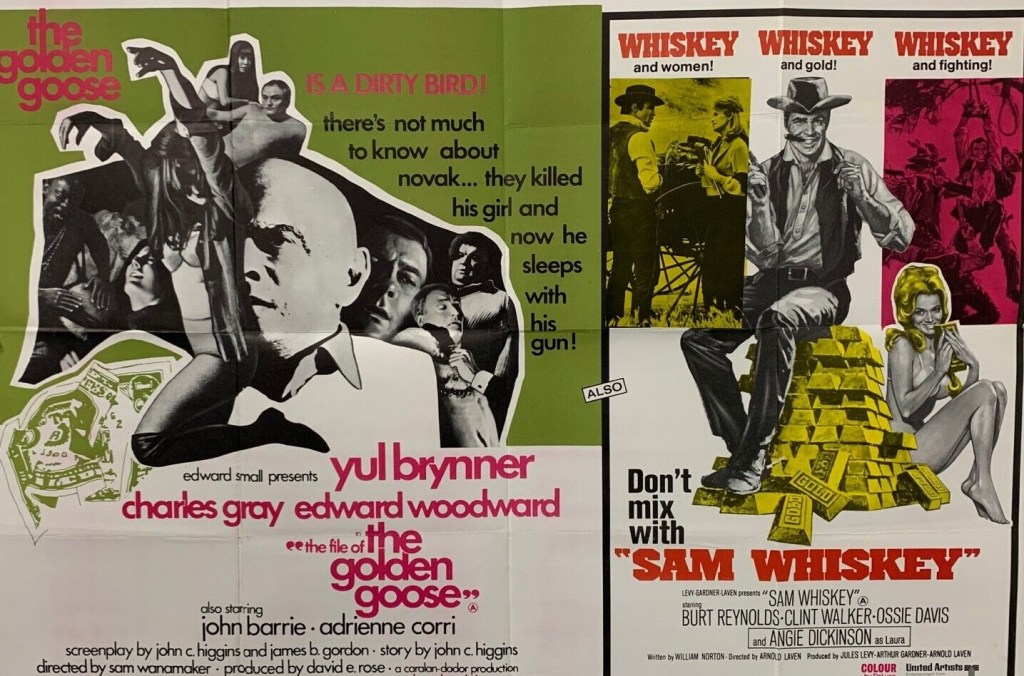
This is amiable enough as far as it goes, and Burt Reynolds gives his good-ol’-boy routine a try-out, Angie Dickinson strays from her usual screen persona, and it does present some interesting screen equality – a Yaqui Indian shown as someone you would pay a debt to, Ossie Davis making a pitch for the African American acting crown.

I saw this double bill at the time of original release.

But it’s bogged down in a cumbersome plot that I guess many in the audience, like me, would have been begging for a switcheroo at the end that made more sense for the genre.

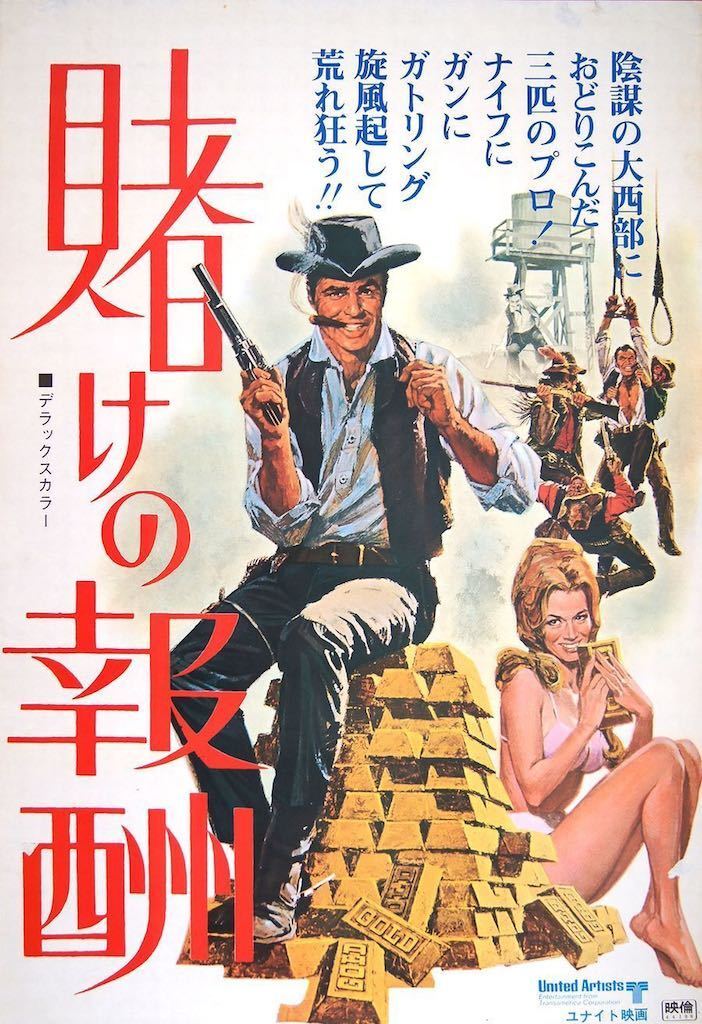
So, bear with me, Laura (Angie Dickinson) hires ex-gambler Sam Whiskey (Burt Reynolds) to retrieve $250,000 worth of gold ingots lying inside a sunken riverboat at the bottom of a river. Fair enough, you think, it’s the nineteenth century, nobody would be able to hold their breath that long to attempt to retrieve it even one gold bar at a time.

But she only wants the gold back to satisfy family honor. You see, her dead husband was in charge of transporting the gold to the local mint and to cover up his calmaity he replaced the gold with ingots made of lead. And hold on, there’s more, a Government inspector is due at the mint.

So, Sam and his buddies, blacksmith Jed (Ossie Davis) and strongman turned inventor O.W. Bandy (Clint Walker) have not just to recover the gold, and resist the temptation to simply spirit it away over the border, but find a method of getting it back inside the mint without anyone knowing and at the same time smuggle out the false ingots.

Of course, Laura has a blueprint of the plans of the mint so that’s okay then. And there’s a bust of her dead husband in the hallway of the mint and if Sam can just find the right excuse to take it away – and bearing in mind he has no obvious mold to use to re-cast it – he can re-make it in gold, return it, sneak it down into the smelting room and turn it back into gold bars.

Yes, the story is that complicated. Sam is only prevented from stealing the haul for himself by the seductive presence of Laura, who also has to act femme fatale enough to waylay the real inspector, whose identity Sam steals. I was praying that Laura, who seemed to be too good to be true what with all that family honor, was actually playing Sam for a patsy and that what was being removed from the mint was the real gold and what was being substituted was the fake.

No such luck. And this might well have worked if it had been treated seriously, if Sam was a famous robber, and if the director hadn’t interrupted proceedings every few minutes with some woeful comedy music and littered it with non-sequiturs or even provided a decent villain apart from Fat Henry (Rick Davis) and his motley crew who suspect something is up and attempt to hijack the gold before it reaches the mint.

And it’s a shame because the leading players are all an interesting watch. Burt Reynolds (Fade In, 1968), still a few years short of stardom, takes a risk in playing his character in light comedy fashion, coming off second best in his opening encounter with Jed. Angie Dickinson (Jessica, 1962) is far too genteel to play the femme fatale and it’s clear she only goes down the seduction route when Sam balks at the barminess of the idea, but it’s equally clear she’s the brains of the operation, and that’s pretty much a first in the western robbing business, and her character is so deftly acted that it’s only later, when you add everything up, you realize the depths of the character and that’s she only allowed audiences a glimpse of the surface.

Ossie Davis (The Scalphunters, 1968) doesn’t attempt the obvious either. He’s not after the Jim Brown action crown. He can look after himself with his fists, but he’s got the intelligence to avoid getting trapped by violence. And Clint Walker (The Great Bank Robbery, 1969), also primarily playing against type, is a muscular version of the crackpot inventor you usually found in a British comedy, but who is capable of coming up with an early version of  diving equipment. And he has a great line that despite endless rehearsal he muffs up, “Aha!” he proclaims, battering in a bedroom door, in best Victorian melodrama fashion, “I caught you trifling with my wife.”

So it’s worth it for the performances and if you ever hankered after the seminal shot of a squirrel overhearing a conversation or wondered how many shots in one movie a director could contrive to make through a small space then this is for you. Screenwiter William Norton (The Scalphunters) had better luck with other directors but here Arnold Laven (Rough Night in Jericho, 1967) takes a wrong turning. Amiable is not enough, certainly not for a complicated heist picture.

Angie Dickinson and Burt Reynolds completists, though, will not want to miss this.

Top 30 Films for 2023

Ann-Margret is pipped to the post by…Ann-Margret. The Swinger and Stagecoach duked it out at the top of the All-Time Top 40 with the former taking it by a good margin. But it was the reversal in the annual stakes, with the western ahead just by a nose. The films viewed most this year. As ever some surprise picks.  

  1. Stagecoach (1966). Ann-Margret and Alex Cord in decent remake of John Ford classic western.
  2. The Swinger (1966). Ann-Margret as novelist who tries to live up to the sexy persona she has invented.    
  3. The Sins of Rachel Cade (1961). Angie Dickinson as African missionary with Peter Finch and Roger Moore in thrall.
  4. Fireball XL5. The famous British television series from Gerry and Sylvia Anderson, now colorized. “My heart will be a fireball…”
  5. Fraulein Doktor (1969). German spy Suzy Kendall out-foxes Kenneth More. Grisly realistic WWI battle scenes and a superb score from Ennio Morricone.
  6. Vendetta for the Saint (1968) Roger Moore vs the Mafia.
  7. Plane (2023). Gerard Butler channels his inner Bruce Willis in Die-Hard-on-a-desert-island adventure.
  8. Baby Love (1969). Orphan Linda Hayden proves too much of a temptation for upper-middle-class London family.
  9. The Best House in London (1969). David Hemmings goes into battle for sex workers.
  10. The Sisters (1969). Nathalie Delon and Susan Strasberg in complicated love triangle of love and betrayal.
  11. Pendulum (1968). Taut thriller with cop George Peppard accused of murdering unfaithful wife Jean Seberg.
  12. Moment to Moment (1966). Jean Seberg investigated for murder in Hitchcockian thriller set in the South of France.
  13. Rage (1966). Glenn Ford and Stella Stevens combat pandemic in Mexican town.
  14. The First Deadly Sin (1980). Frank Sinatra’s cop chases down a serial killer.
  15. Go Naked in the World (1961). Gina Lollobrigida finds that her profession (the oldest) and true love (with rich Anthony Franciosa) don’t mix. Great turn from Ernest Borgnine as a doting father.
  16. Lady in Cement (1969). Sinatra as private eye Tony Rome who takes on gangster’s moll Raquel Welch as a client.
  17. Champions (2023). Woody Harrelson as the basketball coach saddled with a bunch of misfits.
  18. A Dandy in Aspic (1968). Cold War thriller with Laurence Harvey as a double agent who wants out. Mia Farrow co-stars.   
  19. She Died with Her Boots On / Whirlpool (1969). Sleazy British film from cult Spanish director Jose Ramon Larraz sees kinky photographer Karl Lanchbury seduce real-life MTA Vivien Neves.   
  20. Once a Thief (1965). Less glamorous role for Ann-Margret as wife of ex-jailbird thief Alain Delon who is forced into another job.
  21. Diamond Head (1962). Charlton Heston chews the scenery in Hawaiian epic.
  22. Titanic (1997). Reissue in 3D of the James Cameron box office smash.
  23. Can Heironymus Merkin Ever Forget Mercy Humpe and Find True Happiness? (1969) Self-indulgence reaches new heights with writer-director-producer Anthony Newley’s autobiographical tale about stardom. Then-wife Joan Collins co-stars.
  24. Sergeant Ryker (1968). Lee Marvin in Korean War courtroom drama.
  25. The Misfits (1960). Clark Gable goes out on a high, ably supported by Montgomery Clift and Marilyn Monroe in John Huston tale of losers. 
  26. Once Upon a Time in the West (1969). Sergio Leone masterpiece featuring the stunning cast of Claudia Cardinale, Henry Fonda and Charles Bronson and that fabulous Morricone score.
  27. In Harm’s Way (1965). John Wayne and Kirk Douglas in Otto Preminger WW2 epic set in Pearl Harbor and after.
  28. The Invitation (2022). Gothic thriller starring Nathalie Emmanuel.
  29. Beat Girl / Wild for Kicks (1960). Gillian Hills is tempted into joining the striptease game. Christopher Lee puts in an appearance. 
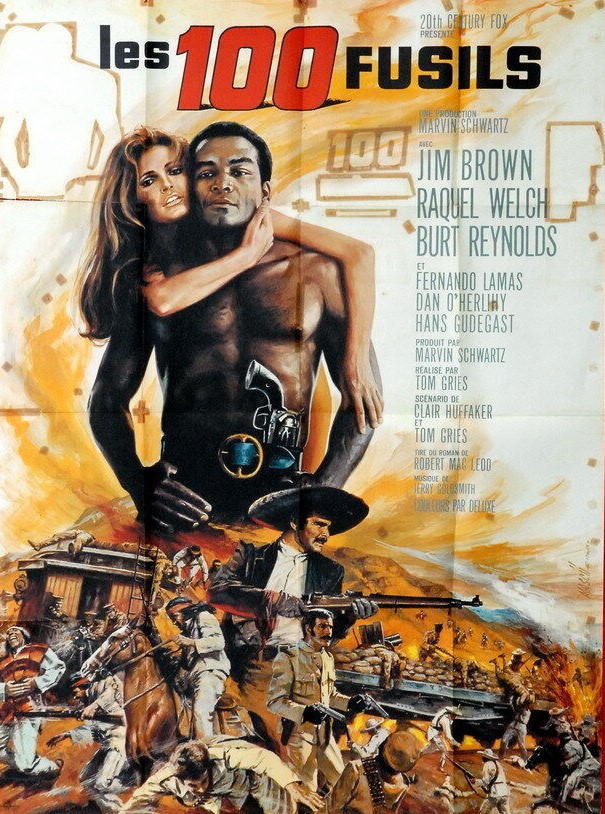
  30. 100 Rifles (1969). Raquel Welch, Jim Brown and Burt Reynolds heat up the screen in Tom Gries western set in Mexico.

All-Time Top 40

Not my pick of the flicks, but yours, the films viewed most often since the Blog began in June 2020. Given that the number of hits for the blog has tripled over the last year, you might expect to see an entirely new Top 40. But that’s not been the case. Worth noting that the top five pictures star women. And some films have shown remarkable staying power with some stars – big round of applause for Ann-Margret, Angie Dickinson, Alex Cord, George Peppard, Gene Barry, Jean Seberg, Roger Moore, Alain Delon, Frank Sinatra, Kirk Douglas et al – featuring more than once.

The figures in brackets represent the previous year’s position.

  1. (4) The Swinger (1966). All hail Ann-Margret. Bouncy sex comedy that manages a sprinkling of innocence. 
  2. (40) Stagecoach (1966). No prizes for guessing that it’s the presence of Ann-Margret (again) rather than Alex Cord that has hit a chord in this decent remake of John Ford’s famous western.
  3. (1) Jessica (1962). Angie Dickinson as a young widow incurring the wrath of wives in a small Italian town.
  4. (5) Fraulein Doktor (1969). Under-rated World War One espionage tale with Suzy Kendall out-foxing Kenneth More, grisly realistic battle scenes and a superb score from Ennio Morricone.
  5. (New Entry) The Sins of Rachel Cade. Angie Dickinson as African missionary falling foul of the natives and commissioner Peter Finch. Roger Moore in an early role.
  6. (3) Once Upon a Time in the West (1969). Sergio Leone masterpiece featuring the stunning cast of Claudia Cardinale, Henry Fonda and Charles Bronson and that fabulous Morricone score.
  7. (New Entry) Fireball XL5. The famous British television series from Gerry and Sylvia Anderson, now colorized. “My heart will be a fireball…”
  8. (3) The Secret Ways (1961). The first of the Alistair MacLean adaptations to hit the big screen features Richard Widmark trapped in Hungary during the Cold War. 
  9. (10) Moment to Moment (1966). Nod to Hitchcock in twisty Jean Seberg thriller set in the South of France. Also starring Honor Blackman.
  10. (New Entry) Vendetta for the Saint . Who cares if it’s two television episodes combined? Roger Moore tackles the Mafia.
  11.  (32)  Baby Love (1969). Controversy was the initial selling point but now it’s morphed into a morality tale as orphaned Linda Hayden tries to fit into an upper-class London household.
  12. (15) The Sisters (1969). Nathalie Delon and Susan Strasberg in complicated love triangle of love and betrayal.
  13. (7) Pharoah (1966). Polish epic set in Egypt sees the country’s ruler at odds with the religious hierarchy.
  14. (9) Can Heironymus Merkin Ever Forget Mercy Humpe and Find True Happiness? Self-indulgence reaches new heights as singer Anthony Newley invokes his inner Fellini that somehow involves bedding lots of women. Then-current wife Joan Collins co-stars.
  15. (New Entry) The Best House in London (1969). That’s a euphemism for a brothel, let’s get that right from the outset. David Hemmings tries to do right by the sex workers.
  16. (New Entry) Pendulum (1968). The George Peppard (or perhaps Jean Seberg) reappraisal continues. Here he is the cop accused of murdering unfaithful wife Seberg.
  17. (6) Oceans 11.  Frank Sinatra heads the Rat Pack line-up, inspiring a couple of remakes and with Tarantino ripping off one scene.
  18. (36) Lady in Cement (1969). Sinatra again as private eye Tony Rome who takes on Raquel Welch (and that’s a stretch?) as a client.
  19. (8) The Golden Claws of the Cat Girl (1968). French cult film with Daniele Gaubert as a sexy cat burglar.
  20. (New Entry) Go Naked in the World (1961). Gina Lollobrigida finds that her profession (the oldest) and true love (with rich Anthony Franciosa) don’t mix. Great turn from Ernest Borgnine as a doting father.
  21. (17) Pressure Point (1962). No escape for racist patient Bobby Darin when psychiatrist Sidney Poitier is around.
  22. (New Entry) A Dandy in Aspic (1968). Cold War thriller with Laurence Harvey as a double agent who wants out. Mia Farrow co-stars.   
  23. (22) Deadlier than the Male (1967). Espionage with a sting in the tale as venomous female villains including Elke Sommer and Sylva Koscina target Bulldog Drummond.
  24. (New Entry) Once a Thief (1965). Change of pace for Ann-Margret as working mother whose ex-jailbird thief Alain Delon is forced into another job.
  25. (12) Subterfuge (1968). Gene Barry-Joan Collins spy thriller set primarily in a dreary London.  
  26. (14) Fade In (1968). Not at all as bad as rising star Burt Reynolds believed he disowned it. Romance set on a movie location.
  27. (New Entry) The Girl on a Motorcycle / Naked under Leather (1968). Heavily-censored in the U.S., erotic drama with singer Marianne Faithfull as the titular fantasizing heroine. Alain Delon co-stars.
  28. (New Entry) Some Girls Do (1969). Bulldog Drummond returns and a bevy of villainous women including Daliah Lavi and Beba Loncar await.
  29. (New Entry) She Died with Her Boots On / Whirlpool (1969). Sleazy British film from cult Spanish director Jose Ramon Larraz sees kinky photographer Karl Lanchbury seduce real-life MTA Vivien Neves.   
  30. (New Entry) The Misfits (1960). Last hurrah for Clark Gable, fabulous turns from Montgomery Clift and Marilyn Monroe in John Huston tale of losers.  
  31. (New Entry) Rage (1966). Glenn Ford and Stella Stevens combat pandemic in Mexican town.
  32. (23) A House Is Not a Home (1964). Not when it’s a brothel. Shelley Winters is the madam. Raquel Welch has an uncredited role.
  33. (New Entry) In Harm’s Way (1965). John Wayne and Kirk Douglas in Otto Preminger WW2 epic set in Pearl Harbor and after.
  34. (New Entry) Istanbul Express (1968). Gene Barry faces Senta Berger in espionage thriller. Shown on television in the U.S., but gained a cinematic release elsewhere.
  35. (24) P.J. / New Face in Hell (1967). George Peppard’s private eye finds client Raymond Burr too tough to handle. Gayle Hunnicutt is the femme fatale.  
  36. (New Entry) Beat Girl / Wild for Kicks (1960). Another sleazy British drama. Gillian Hills is the youngster tempted into the striptease game. Christopher Lee puts in an appearance.  
  37. (27) The Brotherhood (1968). Brothers at war Mafia-style with Kirk Douglas and Alex Cord.  
  38. (New Entry) The Invitation (2022). Gothic conspiracy starring Nathalie Emmanuel from Game of Thrones.
  39. (New Entry) The First Deadly Sin (1980). Frank Sinatra’s last starring role as cop tracking serial killer. Faye Dunaway plays his dying wife.
  40. (New Entry) The Family Way (1966). Hayley Mills sheds the child-star image with a vengeance, shedding his clothes in British family drama. Co-starring father John Mills and Hywel Bennett.

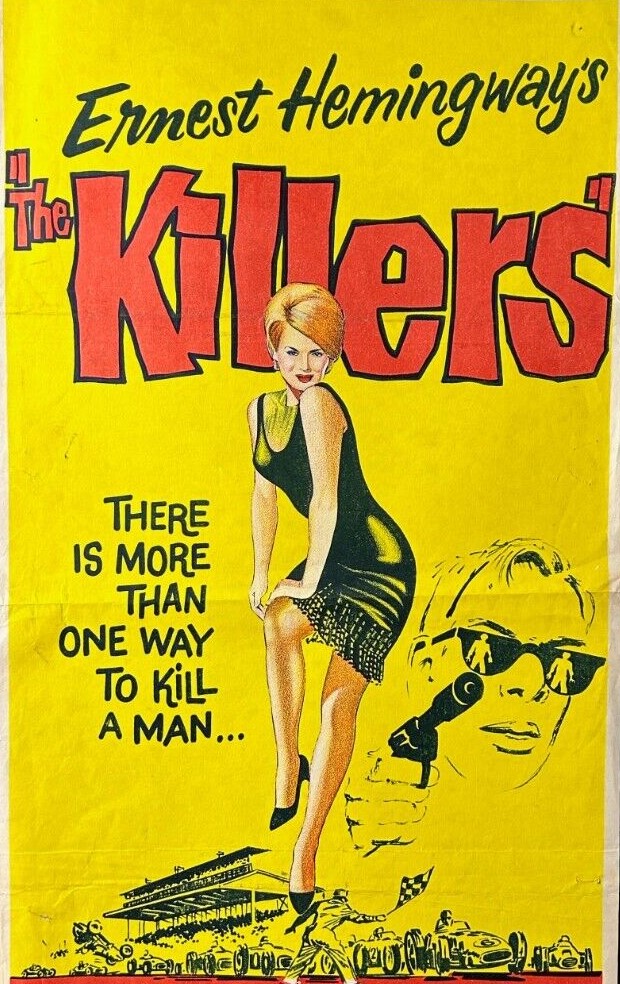
The Killers (1964) ****

Angie Dickinson (Jessica, 1962) is the standout as the cold-blooded double-crossing femme fatale in this slick tale of a double heist. Sure, Lee Marvin (The Professionals, 1966) attracted the bulk of the critical attention as the no-nonsense hitman and John Cassavetes (Machine Gun McCain, 1969) attempts to steal the show as the dupe, but Dickinson walks away with it. Although he makes a vicious entrance, Marvin really only tops and tails the movie.

Violence wasn’t the marketable commodity it proved later in the decade, and this was initially made with television in mind, so it’s surprising how stunning the brutality remains today. In the opening sequence, set in a home for the blind, hitmen Charlie (Lee Marvin) and Lee (Clu Gulager) knock around a sightless receptionist before moving on to shooting at point-blank range their victim, ex-racing driver Johnny North (John Cassavettes). But when they get to thinking why they were paid way over the odds to shoot North, they discover he was involved in a million-dollar heist and before you can say flashback we tumble into the story of how gangster’s moll Sheila (Angie Dickinson) lured him into participating in the robbery organized by boyfriend Jack (Ronald Reagan).

There’s nothing particularly complicated about Jack’s plan – hijacking a mail truck on a remote road – but the movie takes its sweet time getting there, focusing on Johnny’s racetrack antics and on Sheila nudging Johnny into the illegal kind of pole position. She’s pretty convincing as the all het-up lover to the extent of persuading Johnny to double-cross Jack but her convictions only run one way – to whatever best suits herself.

Eventually, it appears as if the million bucks has disappeared into thin air. Jack presents himself as an honest businessman, but Sheila only holds to the party line for as long as it takes the hitmen to dangle her from a fourth-storey window. But gangsters are rarely as amenable or as dumb as the schmucks they snooker, so Jack is more than able to take care of himself and his property (counting the loot and Sheila in that category).

There might be twists a-plenty but the main narrative thrust is which way will Sheila spin? Was she ever even in love with Johnny? Or having snared Johnny and then managed to convince him to double-cross Jack did she plan to run off with the money herself? Or was she going to double-cross him all along once his usefulness was over?

And even if her heart is in the right place, then that’s plain tragic, stuck with the lout, unable to break free, perhaps playing all the alpha males off against each other her only hope of maintaining her fine lifestyle while not ending up another casualty.

A surprising chunk of time is spent on the racecourse, not just building up the romance and  endorsing Johnny’s driving skills, and as well as the tension of a specific race – and the possibility that too much loving could fatally damage the driver’s track ambitions – you are kept in some kind of narrative limbo as you keep wondering when the heck the killers are going to re-enter the equation.

Don (here credited as Donald) Siegel (Coogan’s Bluff, 1968) directs with considerable aplomb, especially as this carries a television-movie-sized budget and that he hadn’t had a stab at a decent picture since making his initial mark with Invasion of the Body Snatchers (1956). From the iconic opening shot of a pair of dark sunglasses to the sad greed-soaked finale, Siegel’s brilliant use of sound and movement plays in stark contrast to moments of stillness and silence. Throw in aerial tracking sequences, realistic race scenes, and one bold shot of a handgun being pointed at the audience (a similar shot in his Dirty Harry, 1971, ruffled more feathers and generated more critical note).   

But the director’s cleverest ploy is to introduce the hitman, then dive elsewhere, leaving audiences begging for more. So it’s just as well that Angie Dickinson delivers in spades. You need to believe she could be as conniving as she is seductive for the entire tale to work. She is the linchpin far more than Lee Marvin.

And that’s to take nothing away from his performance, a far cry from the over-the-top villains of The Commancheros (1961) and The Man Who Shot Liberty Valance (1962), setting up the template for the later quiet-spoken thug of Point Blank (1967).  

As highly watchable as this is, it wasn’t a career breakout for any concerned. Lee Marvin was just a supporting actor on Ship of Fools (1965) and far from first choice for Cat Ballou (1965), the movie that did make his name. Don Siegel wasn’t offered another movie for four years. Angie Dickinson tumbled down the credits, reduced to second female lead in The Art of Love (1965) and working in television or in movies as a supporting actor until the low-budget The Last Challenge/Pistolero of Red River (1967).

Ronald Reagan bowed out of the movies after this. Clu Gulager, who had a running role in The Virginian (1963-1968) only made three movies in the next seven years.

Gene Coon (Journey to Shiloh, 1968) adapted the short story by Ernest Hemingway which when previously filmed in 1946 marked the debut of Burt Lancaster with the sultry Ava Gardner as the femme fatale.  

Striking, tense, and a must for fans of Dickinson, Marvin and Siegel.

Discover WordPress

A daily selection of the best content published on WordPress, collected for you by humans who love to read.

The Atavist Magazine

by Brian Hannan

WordPress.com News

The latest news on WordPress.com and the WordPress community.