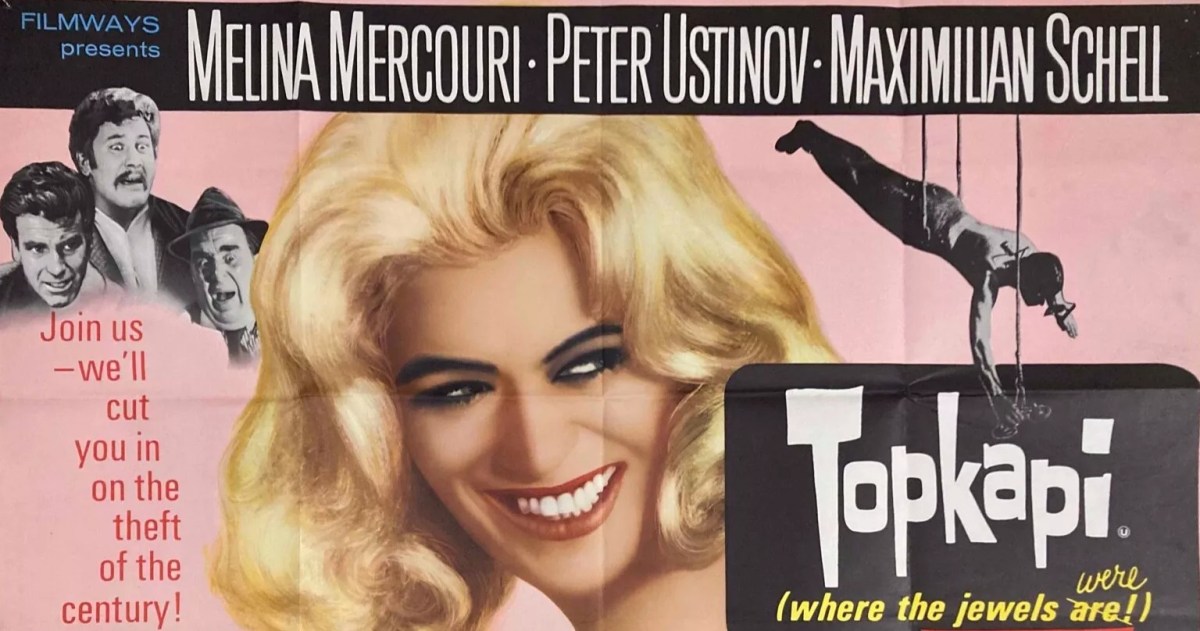
Topkapi (1964) *****

The mother of all heists directed by the father of all heist pictures. Films as diverse as The Italian Job (1969), Mission Impossible (1996) and Ocean’s Eleven (1960) owe director Jules Dassin a massive debt since he pretty much invented this genre with the French-made Rififi (1955). But that involved professional criminals. Outside of masterminds Elizabeth (Melina Mercouri) and Walter (Maximilian Schell), this crew are amateurs, deliberately chosen for their lack of criminal records and with a mind to the specific tasks required. So we have acrobat Giulio (Gilles Segal), upper-class English gadget inventor Cedric (Robert Morley), strongman Hans (Jess Fisher) and driver Arthur (Peter Ustinov).

The target is the impenetrable, complete with sound-sensitive floor, Topkapi Palace in Istanbul where they plan to steal a priceless emerald-encrusted dagger. The plan is ingenious. Arthur is initially only hired to smuggle the weapons essential to the audacious heist across the border. But when he is caught and forced to cooperate with the Turkish secret police, he is enlisted as a replacement for Hans. Minus the rifles and grenades which at first appeared indispensable to the plan, the thieves come up with an even more inspired alternative involving among other things scampering across rooftops, abseiling, a parrot and slowing down the revolutions of a lighthouse.

Originally intending to betray his colleagues as soon as possible, Arthur falls under the seductive spell of Elizabeth and finds himself recruited as the replacement muscles. Elizabeth exudes such sexuality she has the entire gang in her thrall and makes the cowardly, weak acrophobic Arthur believe he can overcome all his fears. Walter engages in a cat-and-mouse game with the police, always one step ahead, with a bagful of red herrings at his disposal, eventually giving the pursuers the slip during a wrestling competition held in a massive outdoor arena.

Interestingly, too, this doesn’t have the trope of gangsters at each other’s throats, planning to double-cross one another or bearing old grudges. Nobody challenges the leader. In fact, the entire crew could not be more docile, content to sit at the feet of Elizabeth and Walter, lapping up the former’s flirtation, wondering at the latter’s skill, as if they are all honored to have been chosen.

The climactic heist, carried out with no musical soundtrack and lasting over 30 minutes, is absolutely superb, setting a very high bar for future imitators, and there is a twist ending. Dassin mixes light comedy and high tension with the sultry attractions of Elizabeth to produce an at times breathtaking picture. As well as the heist itself, the wrestling sequence is stunning and the transition of Arthur forms the acting highlight (Ustinov won the Best Supporting Actor Oscar).

But all four main stars are superb. Audiences accustomed to a more uptight Maximilian Schell (The Condemned of Altona (1962) will have been surprised by his performance. Melina Mercouri (Oscar-nominated for Never on Sunday, 1960) is the archetypal blonde bombshell, liberal with her favors but careful not to favor just one. Although Walter devises the plan, she is actually the criminal supremo, selecting the targets, and then delegating to ensure the tasks are carried out. Robert Morley is having the time of his life. Akim Tamiroff (Lord Jim, 1965) has a cameo as a chef.

A film noir star after Brute Force (1947) and The Naked City (1948) Dassin’s Hollywood career collapsed in the wake of the anti-Communist McCarthy hearings and he was blacklisted. Rififi opened few doors but even the success of Never on Sunday (1960) brought little respite.  Despite returning to the mainstream with such elan through the conduit of Topkapi, albeit with a European cast, he remained on the Hollywood periphery and although Uptight (1968) – previously reviewed in the Blog – involved another heist that was primarily the wrapping for social documentary.

More at home with comedies screenwriter Monja Danischewsky (The Battle of the Sexes, 1960) draws out more humor than the source material, Light of Day by noted thriller writer Eric Ambler, would ostensibly suggest.

A delight from start to finish, the crème de la crème of the heist genre, this is unmissable. Dassin can lay claim to being the John Ford of the crime picture.
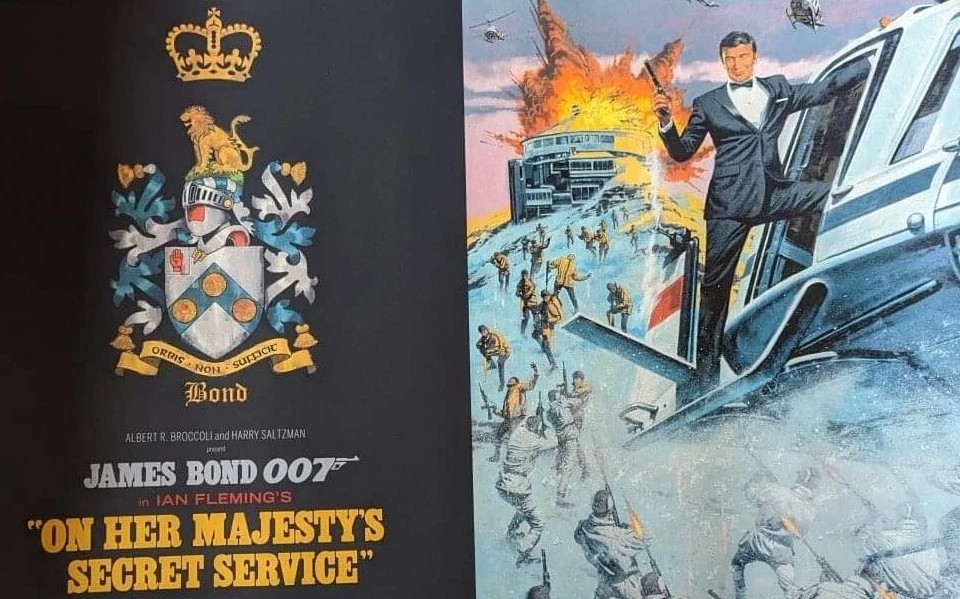
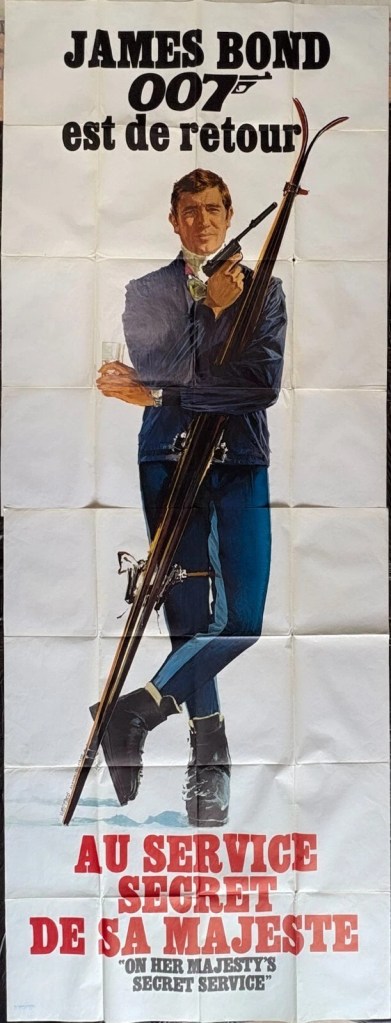
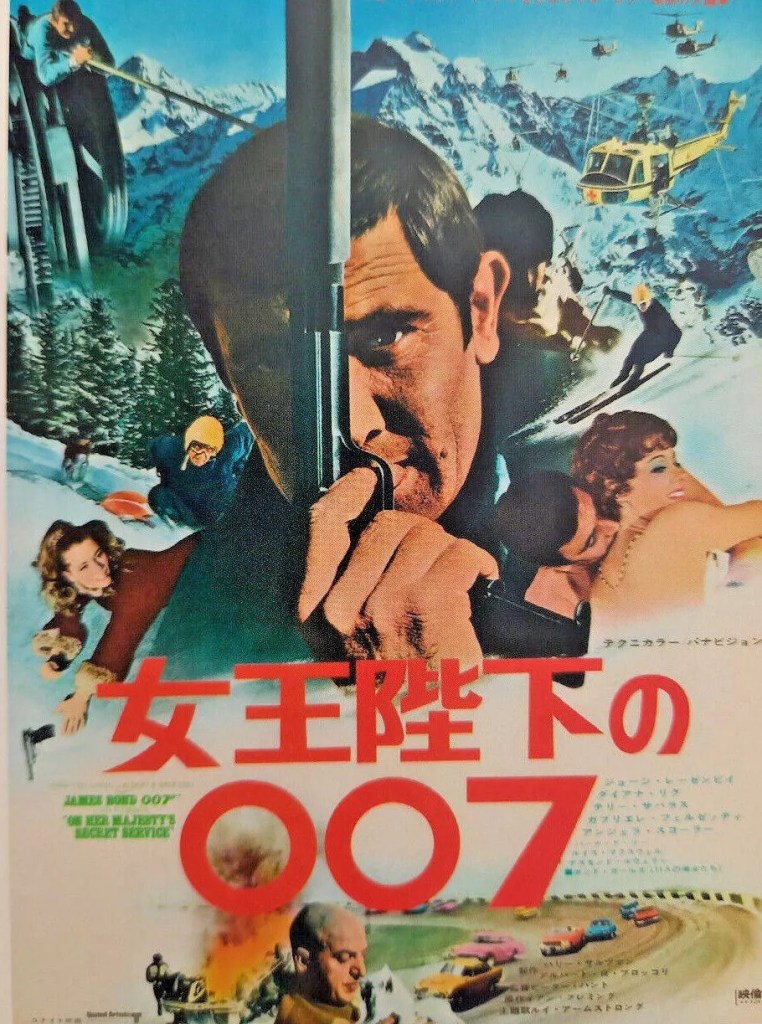
On Her Majesty’s Secret Service (1969) ***

Holds a special place in my movie heart because it was the first James Bond film I ever saw and the first soundtrack I ever bought. Having, by parental opposition, been denied the opportunity to see any of the previous instalments and therefore having little clue as to what Sean Connery brought to the series I wasn’t interested in the fact that he had been replaced. I can’t remember what my younger self thought of the downbeat ending but on the current re-view felt that a rather cursory storyline was only saved by the stunning snow-based stuntwork, two races on skis, one on a bobsleigh, car chase on ice and the kind of helicopter framing against the sun that may well have inspired Francis Ford Coppola in Apocalypse Now (1979).

The heraldic subplot bored me as much to tears as it did the assorted dolly birds (to use a by-now-outlawed phrase from the period) and I was struggling to work out exactly what global devastation could be caused by his brainwashed “angels of death” (the aforementioned dolly birds). This is the one where Bond threatens to retire and gets married. Given the current obsession with mental health, the bride has a rather more contemporary outlook than would have been noted at the time. We are introduced to her as a wannabe suicide. Good enough reason for Bond to try and rescue her from the waves, and her mental condition not worthy of comment thereafter.

Turns out she’s the feisty spoiled-brat daughter Tracy (Diana Rigg) of crime bigwig Draco (Gabriele Ferzetti) and Bond persuades that Mr Big to help him snare the bigger Mr Big Blofeld (Telly Savalas), hence the convoluted nonsense about heraldry. There’s the usual quotient of fisticuffs and naturally James Bond doesn’t consider falling in love with Tracy as a barrier to seducing a couple of the resident dolly birds.

I takes an awful long time to click into gear but when it does the stunt work – perhaps the bar now having been raised by Where Eagles Dare (1968) – is awesome. Apart from an occasional bluescreen for a close-up of Bond, clearly all the chases were done, as Christopher Nolan likes to say, “in camera.” And there’s about 30 minutes of full-on non-stop action.

Pre-empting the future eyebrow-raising antics of Roger Moore, I felt George Lazenby was decent enough, bringing a lighter touch than Connery to the proceedings without his inherent sense of danger (which Moore also lacked). Diana Rigg, I felt was miscast, more of a prissy Miss Jean Brodie than a foil for Bond, even if this one was a substitute for the real thing. It was a shame Honor Blackman in Goldfinger (1964) had taken the slinky approach but that would have worked better to hook Bond than earnestness.  

I’m not entirely sure how Blofeld planned to employ his angels of death but the prospect of a gaggle of dolly birds gathering in fields or rivers and being capable of distributing enough toxic material to destabilize the world seems rather ill-thought-out.

Theoretically, this is meant to be one of the better ones in the series but that’s mostly based on the doomed romance and the downbeat ending and I guess that Diana Rigg (The Avengers, 1965-1968) supposedly brought more acting kudos than others in the female lead category. Adopting something close to her Avengers persona would have been more interesting but I guess she was fighting against being typecast.

If you get bored during the endless heraldry nonsense, you can cast your eye over the assortment of Bond girls who include Virginia North (The Long Duel, 1967), Angela Scoular (The Adventurers, 1970), Joanna Lumley (Absolutely Fabulous, 1992-2012), Catherine Schell (Moon Zero Two, 1969), Julie Ege (Creatures the World Forgot, 1971), Anouska Hempel (Black Snake, 1973) and Jenny Hanley (Scars of Dracula, 1970), who, as graduates from this particular talent school, made a greater impact in entertainment than many of their predecessors.

Second unit director Peter Hunt made his full directorial debut but focussed more on his speciality – action – than the drama. Written by series regular Richard Maibaum (Dr No, 1962) and Simon Raven (Unman, Wittering and Zigo, 1971) and more faithful than usual to the Ian Fleming source novel.

Top marks for the action, less so for the rest.

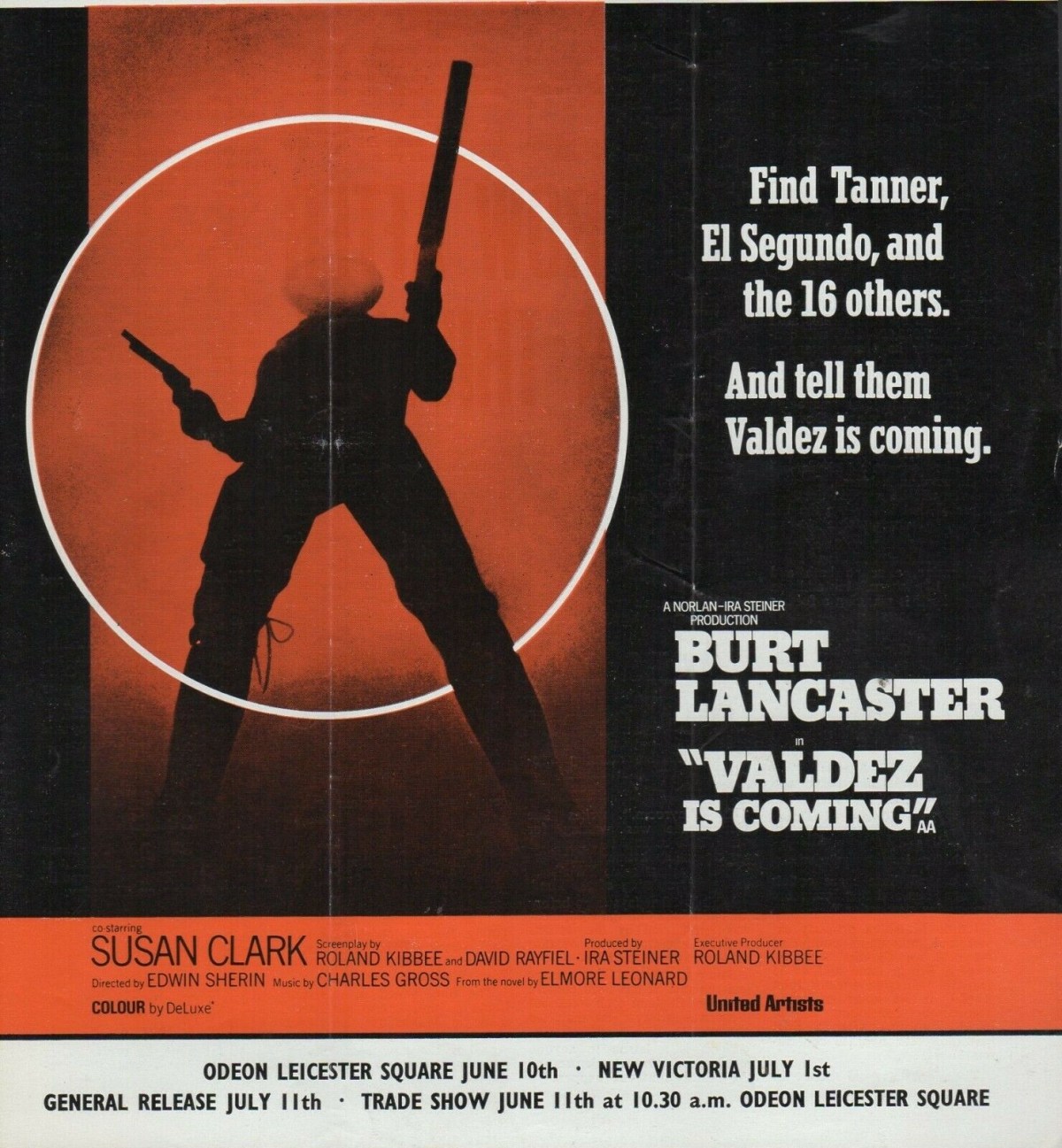
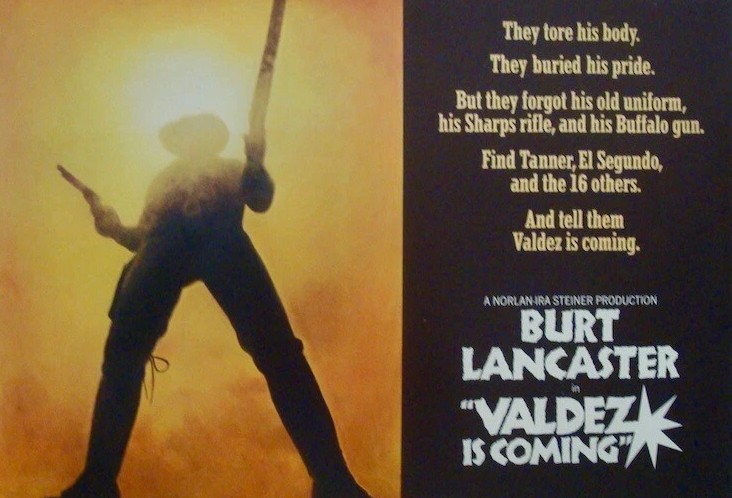
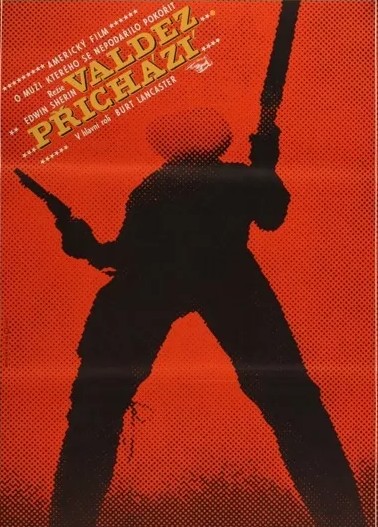
Valdez Is Coming (1971) *****

Five-star review for a long-forgotten much-maligned western? Let me explain. Let me start with one of the most stunning cinematic images I have ever seen that in the hands of a better director would be considered one of the greatest ever devised. The titular Valdez (Burt Lancaster) appears on the top of a hill arms stretched out back contorted under the weight of a crucifix strapped to his back. Another director, more conscious of the image potential, would probably have had him straighten up at that point and positioned the camera for a close-up so the image could be captured against the sky. Even so, it’s an extraordinary image for a director, Edwin Sherin, making his debut.

But that’s not the only one. We’re familiar with the innocent man being forced to dance as the area around his feet is peppered with bullets from a sadistic gunslinger. Here, the victim of gunman Davis (Richard Jordan) is an old Native American woman. As she walks from a hut to collect water, he assails her with a barrage of shots. Does she dance? Does she dickey! She doesn’t even pause. As though she’s used to worse.

The movie opens with another stunning image. Valdez, a local Arizona Territory constable (presumably a less important title than sheriff though he wears the badge), takes time out from riding shotgun to watch a bunch of young bucks blast away at a target. Which appears to be the hut I mentioned. Takes a while for an explanation to be forthcoming. Said hut houses a fugitive from justice.

There’s another startling image when Valdez is used as target practice by the thugs employed by local bigwig Tanner (Jon Cypher). As if he was the equivalent to the target girl in a knife-throwing act, every space around his body is hit by a bullet.

And that’s before we come to the audacious freeze frame ending which, theoretically at least, leaves matters unresolved.

There’s also a post-modern post-whatever feel to this which should very much appeal to the contemporary audience. Very little is explained. Valdez has anglicized his Christian name of Roberto to Bob. He can’t get rid of his Mexican accent but he talks so softly that mostly you don’t notice. From his later demeanor, it’s quite clear that earlier on he is making a huge effort to fit in, not stand out, in a town dominated by white Americans.

But we also never find out why Tanner is hunting a man. He’s responsible for putting the man in the hut under siege. And although that turns out to be  case of mistaken identity, we never find out who Tanner is chasing or why.

Tanner’s  live-in girlfriend Gay (Susan Clark), a widow, has murdered her husband and we never find out why either. But she’s not the only unusual character. The gunslinger Davies is a misfit, finding out the hard way that intemperance and impulsiveness are not the way to make friends, and even Tanner has little time for a gunslinger too handy with a gun, but despite the callous exterior he has a softer side. And while that softer side turns out to be lucky at one point for Valdez, the lawman still doesn’t trust the capricious youngster.

The tale, such as it is, is one of principle. Valdez has been tricked into killing the man in the hut. Given the man proved innocent, Valdez thinks it right his widow, the Native American victim of the target practice, should receive some compensation. A hundred dollars seems a small price to pay. But Tanner is insulted at the very thought. In his eyes, the dead man was a no-account African American.

When Valdez insists, he is trussed up in the makeshift crucifix and left to make a humiliating walk home. That’s when he reverts, shuffles off his disguise as a soft-spoken relatively harmless lawman in a town where the most he will be called upon to do is ride occasional shotgun and jail an occasional drunk.

It’s vague too – you’d have to be well up on western lore to know the significance of the photograph he keeps under his bed – regarding his past. But hidden under the bed is what was known as a buffalo gun, a long-range rifle, manufactured by Sharps (hence the term “sharpshooter”) and suddenly he’s a different, more threatening, person, kitted out in his old cavalry uniform, hat brim upturned.

He interrupts Tanner and Gay making love to demand his hundred dollars. He only takes  Gay hostage to make his escape, minus the cash, and then kidnaps her to provide him with something to trade. Unlike in The Hunting Party (1971), the weapon doesn’t magically ease his path. He doesn’t just take pot-shots from a distance. He spends most of the time rushing up and down hills, using boulders as cover. He can’t afford to use the gun since that would pinpoint his position. So he’s got to knock out Tanner’s advance scouts in other ways.   

Meanwhile, Gay, who initially sympathized with Valdez, is less keen on him once she’s a victim, and spends most of her time trying to escape. In due course, Valdez’s marksmanship reduces the pursuing force by eleven.

He just about escapes but in a spectacular piece of stunt work involving horses colliding and people being thrown from the saddle, he is surrounded. Chief thug El Segundo (Barton Heyman) realizes that he and Valdez have something in common. Valdez wasn’t a buffalo hunter at all, but a stalker of Apaches, the enemy of El Segundo.

So El Segundo pulls back his men leaving Tanner to face up to Valdez alone. Or perhaps pay up the hundred dollars. We never find out because the image is frozen on the screen as the camera pulls back.

Edwin Scherin was rewarded for his boldness by only being allowed to make one more movie (My Old Man’s Place, 1971). This was the first of Burt Lancaster’s western trilogy that encompassed Michael Winner’s Lawman (1971) and Robert Aldrich’s Ulzana’s Raid (1972), completing his move into more of the flawed character he first essayed in The Swimmer (1969). Susan Clark (Coogan’s Bluff, 1968) makes the most of a role that permits her to switch from sympathetic to hard-nosed. Richard Jordan (Chato’s Land, 1972) has a peach of a part as the swithering gunman desperate for attention. Screenplay by Roland Kibbee (The Appaloosa, 1966) and David Rayfiel (Castle Keep, 1969) based on the novel by Elmore Leonard (Mr Majestyk, 1974).

So, sure, justified vengeance but exceptionally well done.

Catch this on Amazon Prime.

Well worth checking it out.

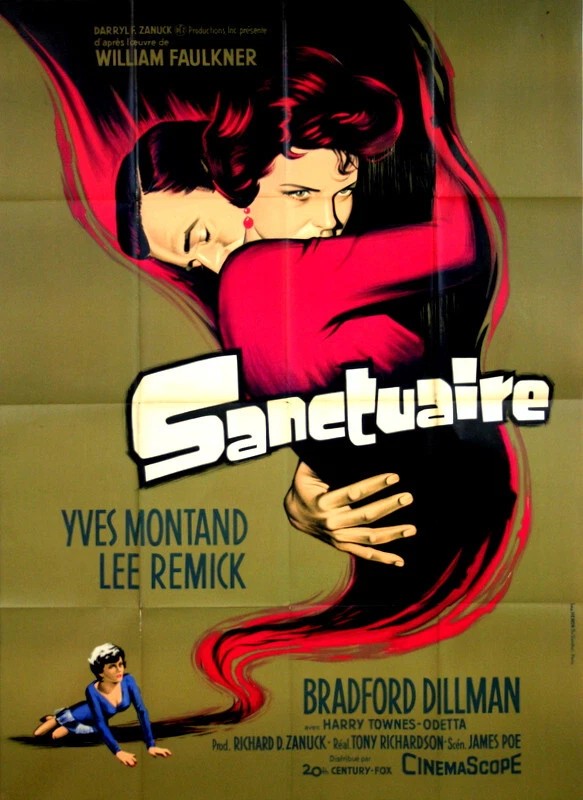
Sanctuary (1960) ***

This overheated melodrama stands as a classic example of Hollywood’s offensive attitudes to women. Nobel prize-winning author William Faulkner could hardly blame the movies for sensationalizing his misogynistic source material since if anything the movie took a softer line.  Told primarily in flashback as headstrong southern belle Temple Drake (Lee Remick) attempts to mitigate the death sentence passed on her maid Nancy (Odetta). Given that such appeals are directed at Drake’s Governor father (Howard St John), and that the maid has been condemned for murdering Drake’s infant child, that’s a whole lot of story to swallow.

Worse is to follow. Drake takes up with Prohibition bootlegger Candy Man (Yves Montand) after being raped by him and thereafter appears happy to live with him in a New Orleans brothel – the “sanctuary,” no irony intended, of the title – despite him slapping her around. The film steers clear of turning her into the prostitute of the original book, but pretty much sets up the notion that high class women will fall for a low-class tough guy whose virility is demonstrated by his brutality. In other words a “real man” rather than the dilettantes she has previously rejected.

After the Candy Man dies, Drake returns home and marries wealthy suitor Gowan Stevens (Bradford Dillman) who blames himself, rightly, for Drake falling into the clutches of the gangster in the first place. But a past threatening to engulf her precipitates the infanticide.

Faulkner was a Hollywood insider, adapting Sanctuary for The Story of Temple Drake (1933) and earning high praise for  his work on Bogart vehicles To Have and Have Not (1944) and The Big Sleep (1946). The success of The Tarnished Angels (1957) starring Rock Hudson, The Long, Hot Summer (1958) with Paul Newman and The Sound and the Fury (1959) headlined by Yul Brynner had sent his cachet rocketing. But all three were directed by Americans – Douglas Sirk and Martin Ritt – who had a distinctive visual style and an ear for what made melodrama work.

Sanctuary had been handed to British director Tony Richardson (Look Back in Anger, 1959) and he didn’t quite understand how to make the best of the difficult project. So while Lee Remick manages to suggest both strength and fragility, and makes her character’s wanton despair believable, Yves Montand is miscast and Bradford Dillman fails to convince even though portraying a weak character. Too many of the smaller roles appear as cliches. And it’s hard to believe the maid’s motivation in turning murderer.

What was acceptable steamy melodrama in the 1930s fails to click three decades on. Faulkner’s thesis that high-falutin’ women want a man to master them and furthermore will fall in love with their rapist seems to lack any understanding of the female mind and will not appeal to the modern sensibility than it did on release. Lee Remick is what holds the picture together, in part because she plays so well the role of a woman embracing degradation, and refusing – no matter how insane the idea appears – to let go of the man she believes is the love of her life. It’s not Fifty Shades of Grey, but it’s not that far off that kind of fantasy figure, and given the success of that book, it’s entirely possible there is a market for what Faulkner has to peddle.

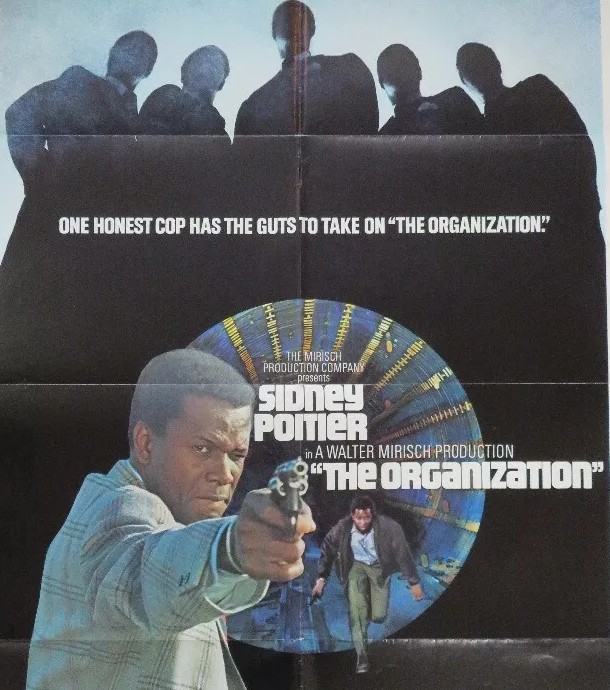
The Organization (1971) ***

Just Stop Drugs would have been the title had the movie come out today. A bunch of urban guerillas, each scarred by personal or family-related experience with drugs, on the basis that the authorities are doing too little and cops in any case too open to corruption, decide to take the battle to “the man.”  

Starts with an excellent heist opening, conducted for the most part in silence, and pretty inventive at that. One guy pole-vaults over the gate of a factory. The rest of the gang turn up with what these days is called an aerial work platform but is most recognizable to the rest of us as a version of a fireman’s turntable ladder. So they hoof it up the ladder to the fourth or fifth floor, bringing with them a captive who’s got the keys to a safe. When he refuses to cooperate, they dangle him out the window.

Every now and then we cut to a woman in the street. At first she looks like a witness, but when she doesn’t go racing to call the police, it’s clear she’s either a fascinated observer or a lookout. From what’s otherwise a very ordinary factory, the gang remove millions of dollars worth of heroin and blow up the gates.

When eventually Det Lt Virgil Tibbs (Sidney Poitier) appears on the scene, it’s not to investigate a robbery but a homicide. The captive is dead. It looks like suicide until they discover he’s been shot by two different guns. Tibbs is also puzzled by the timescale. There were also 20 minutes between the gates being blasted open and the cops arriving. It takes longer to run up and down the stairs.

But then Tibbs gets a break. The gang calls him in, want him to work with them to bring down “the organization.” Which puts the detective in a tricky spot. He’d be conniving with known thieves, possibly murderers.

After this excellent and intriguing start, the movie doesn’t so much go downhill but tie itself up in knots. In the first place Tibbs doesn’t do much actual detection. Pretty much all the legwork is done by the gang who put themselves out there as bait to try and snag the Mr Bigs of the drug world.

The gang are a do-gooder version of The Magnificent Seven. Tibbs ends up doing little more than following their leads. Most of the time the movie focuses on the various members of the gang, who are variously beaten up, tortured or killed. Just to keep us on edge and promote the notion that the force is riddled with corruption a police captain commits suicide.

Tibbs is more interesting when he’s being outsmarted by his son who’s on the verge of learning the facts of life. The child’s got the best line in the picture. We are introduced to him coming out of a lecture at school on sex in which he declares no interest. Dad and Mum (Barbara McNair) get into a minor tizz over who’s best suited to fill him in on the realities of life. Later, Tibbs discovers an erotic magazine in the boy’s belongings. When confronted, the boy explains he isn’t bored by sex just by a lecture on it.

Anyways, the gang proves more successful in luring out the mobsters, Juan (Raul Julia) especially adept at coming up with the game plan. Naturally, the bad guys don’t play by the rules he’s set down and Annie (Lani Miyazaki), the only female member of the gang, ends up in the drink. The nightwatchman (Charles H. Gray) is the victim of a drive-by shooting.

When Tibbs does get down to working things out on his own, his investigation leads him to the alcoholic wife (Sheree North) of the nightwatchman who is independently wealthy of her husband.

When, finally, Tibbs gets his hands on two of the Mr Bigs this being the Cynical 1970s there’s no happy ending, the pair when arrested rubbed out by a sniper.

So interesting stuff, but, unfortunately, most of the interest doesn’t lie with Tibbs. He’s pretty much an onlooker. As a story, the movie would have done better to leave him out altogether and set up the narrative as the urban revolutionaries trying to take down the drug dealers.

But you’ll enjoy some talent spotting. Raul Julia (Kiss of the Spider Woman, 1985) and Ron O’Neal (Super Fly, 1972) lead the pack ahead of Daniel J. Travanti (Hill St Blues, 1981-1987) and Bernie Hamilton (Starsky and Hutch, 1975-1979).

Sidney Poitier, in his final outing as Tibbs, is fine with not much to do and Barbara McNair, (Stiletto, 1969) as usual is underused.

Directed by Don Medford (The Hunting Party, 1971) from a screenplay by James R Webb (Alfred the Great, 1969) based on the John Ball bestseller.

An oddity in the genre and more enjoyable if you ignore the central character.

They Call Me Mister Tibbs (1970) ***

United Artists had reinvented the sequel business, shifting it away from the low-burn low-budget Tarzan adventure or Gene Autry western or any inexpensive picture movie capable of maintaining a series character, to bigger-budgeted numbers like James Bond (four sequels so far), The Magnificent Seven (two), The Beatles (four) and The Pink Panther (two). Even Hawaii (1966) spawned The Hawaiians (1970). So when the company hit commercial and critical gold – five Oscars including Best Picture and Best Actor – with In the Heat of the Night (1967) it seemed too good an opportunity to miss not to try for a repeat.

You might have expected UA to continue with the pairing of Sidney Poitier and Oscar-winner Rod Steiger and locate a sequel again in the Deep South. Instead, Steiger was junked and the Poitier character Virgil Tibbs relocated from his Philadelphia hometown to the more snazzy environs of San Francisco, recently popularized by such items as Bullitt (1968).

But minus the racism element what you’re left with is pretty much a standard detective tale with domestic issues thrown in. Tibbs isn’t the kind of cop we’ve come to expect, sinking into alcoholic oblivion or having thrown away a marriage. Instead, and this would strike a contemporary chord, he’s struggling with fatherhood. His son comes off best in arguments and at one point Tibbs resorts to giving the child a few slaps. That looks initially as if emotions will quickly heal and the repentant dad quickly administers a comforting hug, but any bonding is blown apart when the resentful boy complains, as if this represents betrayal, that his father made him cry.

Tibbs is also the old-fashioned kind of male who believes the only way to teach his son not to fall into bad ways like smoking and drinking is to force him to puff on a big cigar and knock back a stiff one until the child throws up.

But Tibbs does do a diligent enough job of detection, evidence relating to the murder of a high-priced sex worker hinging upon whether the killer had long fingernails. The most obvious suspect is street preacher Rev Logan Sharpe (Martin Landau), who visited the prostitute in his capacity as spiritual adviser and who’s heading up a campaign to clean up the streets. But his alibi holds up.

Next in line is building owner Woody Garfield (Ed Asner), exposed, to the shame of wife Marge (Norma Crane) as being a client of the prostitute, and then a janitor of low intelligence called Mealie (Juano Hernandez) and pimp Weedon (Anthony Zerbe), the kind of hood who enjoys taunting cops.

While Tibbs doesn’t indulge in the blatant maverick approach to the job of the earlier Madigan (1968) or the later Dirty Harry (1971) he’s not above putting the squeeze on witnesses.  

Rather foolishly, but perhaps feeling this has now become de rigeur, there’s a car chase which hardly compares to Bullitt. In fact, we’re stuck in an automobile rather too often but these only result in desultory conversations between Tibbs and his sidekick. While in some respects it’s refreshing that Tibbs isn’t subject to any racism, and the picture doesn’t head down the blaxploitation route, the result lacks edge.

Tibbs’ reactions to his child bring him down sharply from the ivory tower of sainthood from the previous picture, and the family stuff, while building up his character, doesn’t make up for what the story lacks.

Gordon Douglas, who had previously excelled in this genre via Tony Rome (1967), The Detective (1968) and Lady in Cement (1968), found out the hard way that Frank Sinatra was more appealing as an investigator and cop than Sidney Poitier and, without steaminess or wise-cracking to fall back on, the sequel quietly runs out of steam.

Screenplay by Alan Trustman (The Thomas Crown Affair, 1968) and James Webb (Alfred the Great, 1969) from the bestseller by John Ball. Not a patch on the original

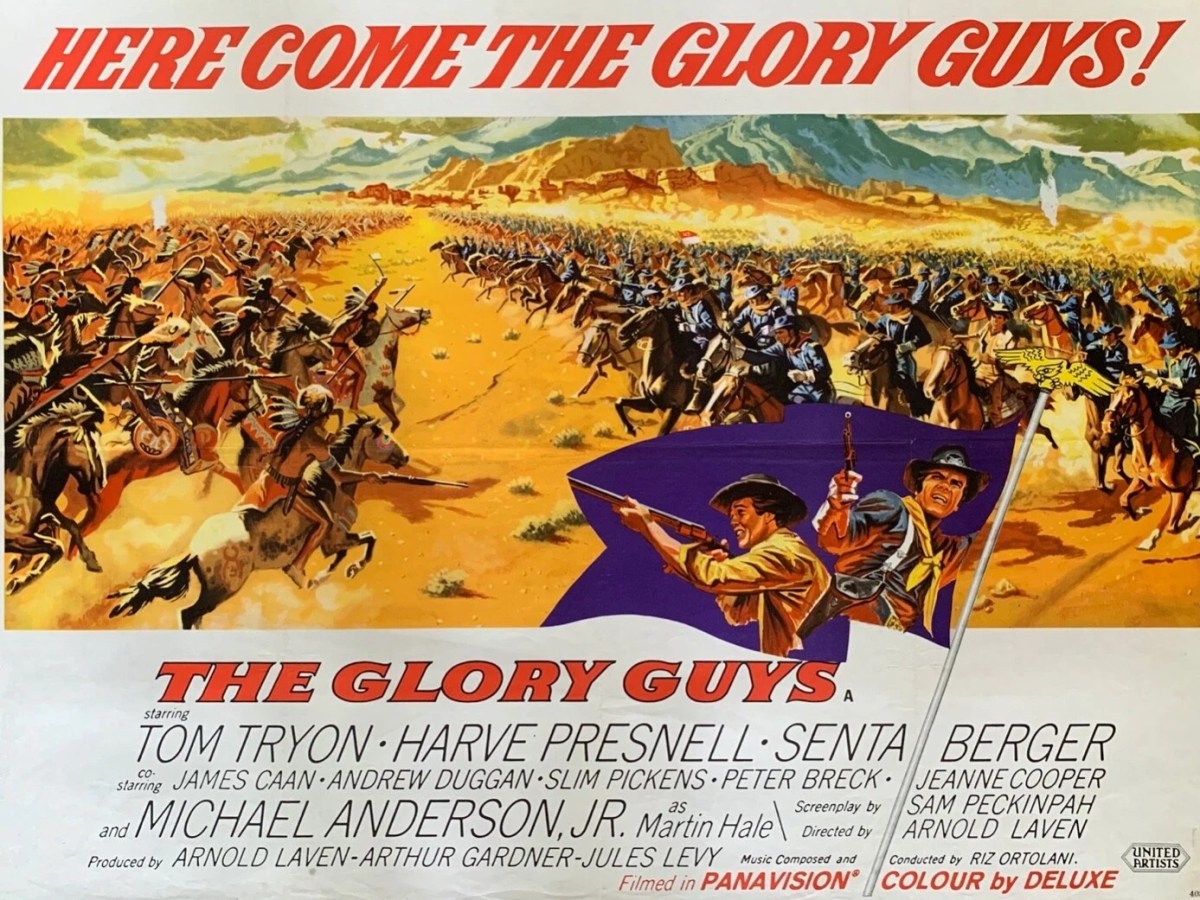
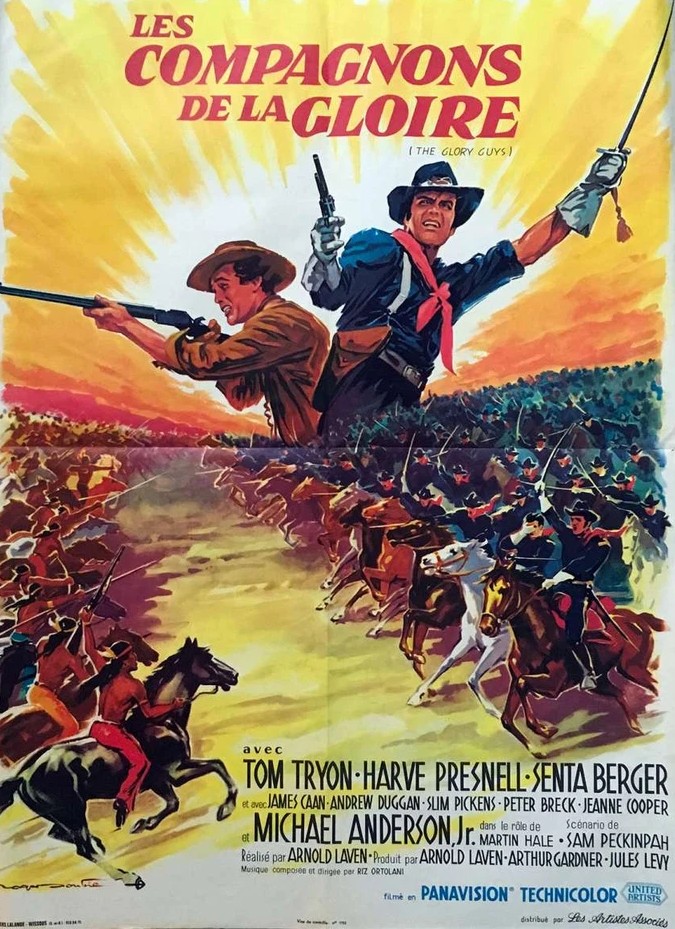
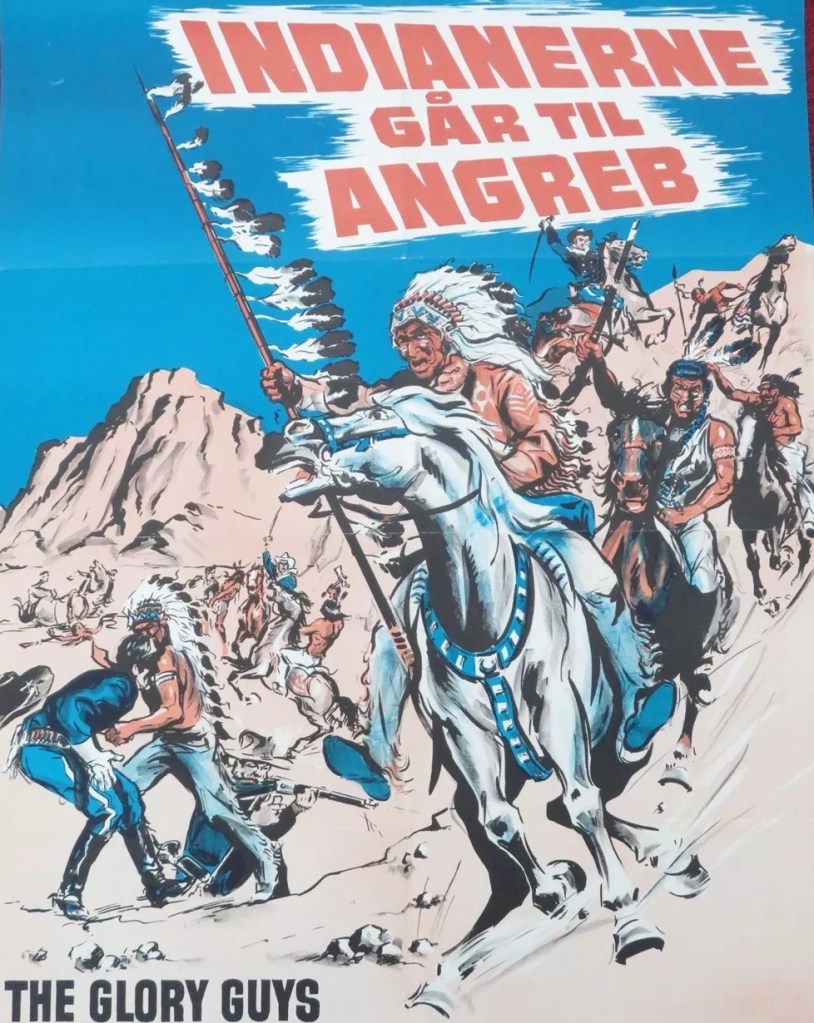
The Glory Guys (1965) ****

The dismissive verdict of Sam Peckinpah (he wrote the script) is the main reason this remains unfairly underrated. This came out the same year as that director’s over-rated Major Dundee and covers some of the same themes – the training of raw recruits and the woman requiring a protector.  

But this is the first cavalry picture I’ve seen where training covers more than recruits falling off their horses, picking fights with each other and getting drunk and into scrapes. The main task of Capt Harrod (Tom Tryon), apart from teaching them to shoot, is to ensure they ride in formation and are ready to take part in action. There’s a brilliant scene where Harrod fakes an Indian attack where they are all in a flash knocked off their horses. And another superb scene where, having achieved an almost impossible goal in double-quick time, Harrod leads them in a ride-past in front of General McCabe (Andrew Duggan) and they ride in about ten rows six abreast, keeping time and distance. When the soldiers dismount during combat, how they arrange for the horses to get out of the way but not run off is also revealed. The scene of the whole detachment leaving the fort is also breathtaking. They are lined up in columns, five or six abreast, and you begin to see, for really the first time, how the U.S. Army operates as a trained unit.

But that’s just the cream of a very finely worked crop. Harrod and McCabe are at odds because the captain’s previous company of raw recruits was virtually wiped out in a previous engagement when the general used them as bait. McCabe is the “glory guy” of the title, everyone else is just trying to keep alive. The only certainty of going into battle, Harrod reminds his men, is that they have a fair chance of not returning home.

Widow Lou Woddard (Senta Berger) pops up to wreak romantic havoc. She owns a gunsmith business, and responsible for driving up sales, so not quite the vulnerable woman. What’s most at stake is her standing in town, her honor if you like, and she can’t be seen to be playing the field. While hardly promiscuous, she has two men on the go, Harrod, who seems disinclined to take the romance beyond a fling, and Army scout Sol Rogers (Harve Pressnell) who is off earning the chunk of money it will take for them to settle down elsewhere.

She doesn’t let on they are rivals and when they discover this it triggers an all-out slugging match – you almost wince with the power of the blows. This ain’t a brawl but a last man standing punch-up where literally they trade blows, one at a time. And she keeps dithering between the two. She reckons Sol isn’t the settling down kind while Harrod’s not keen on commitment. So any time she’s spurned by Harrod she flaunts Rogers.

If she gets her come-uppance, it’s not from either of the men. Attempting to trade barbs with McCabe’s snippy wife Rachael (Jeanne Cooper) she is publicly humiliated. And there’s a terrific scene as the calvary is set to leave the fort and the physical distance between Lou standing on the sidelines with the wives waving husbands goodbye and Harrod on horseback stretches into an emotional chasm simply from the way director Arnold Laven lines up his camera.

The action is clearly based on the Battle of the Little Big Horn. McCabe, instructed to form one half of a pincer movement, races his men ahead to beat his rival general into battle. True to form, he uses Harrod’s men as decoys, theoretically sent out to protect his flank, in reality to draw out the enemy, permitting the general to attack their unguarded rear.

The battle scene is just superb, hordes of cavalry charging towards the enemy, then turning tail when facing superior forces, dismounting to take up positions, then retreating again to the rocks, pursued but managing, mostly, to survive. The scene where Harrod comes across McCabe’s wiped-out army is like the beginning of Zulu (1964). (In fact, it’s worth bearing in mind that Little Big Horn and Isandlwana took place just three years apart and had there been instant global communication in those days the combined events would have sent shockwaves throughout the world.)

It is an excellent script regardless of how Peckinpah felt about the outcome. But it is also a very good western with sufficient changes rendered to the genre’s standard tropes. The compulsory saloon brawl is elevated by an ongoing comic element of Trooper Dugan (James Caan) being constantly defeated in his determination to smash a bottle over someone’s head.

Senta Berger completists should enjoy this far more than her performance in Major Dundee. She essays a more complete realistic character, not quite grasping, but not far short, and in chasing a dream coming close to heartbreak. Tom Tryon (The Cardinal, 1963) is better than I expected and hoofer Harve Pressnell (Paint Your Wagon, 1969) is a revelation. James Caan (El Dorado, 1967), playing a “miserable whining sugar”,  is awful, a terrible Irish accent sinking all his attempts at scene stealing  

Arnold Laven might have felt hard-done-by in regard to Peckinpah, given the director, in his capacity as producer, had dreamed up The Rifleman television series on which Peckinpah made his name.  While this isn’t quite in the same league as Rough Night in Jericho (1967) but better than Sam Whiskey (1969) it deserves reappraisal. Had it featured bigger stars in the two male principal roles it would have attracted more attention at the outset instead of demanding it now.

Well worth a look.

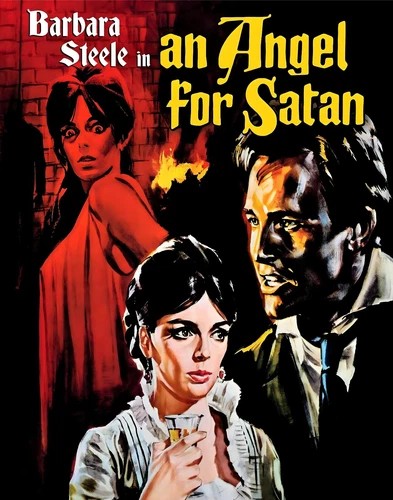
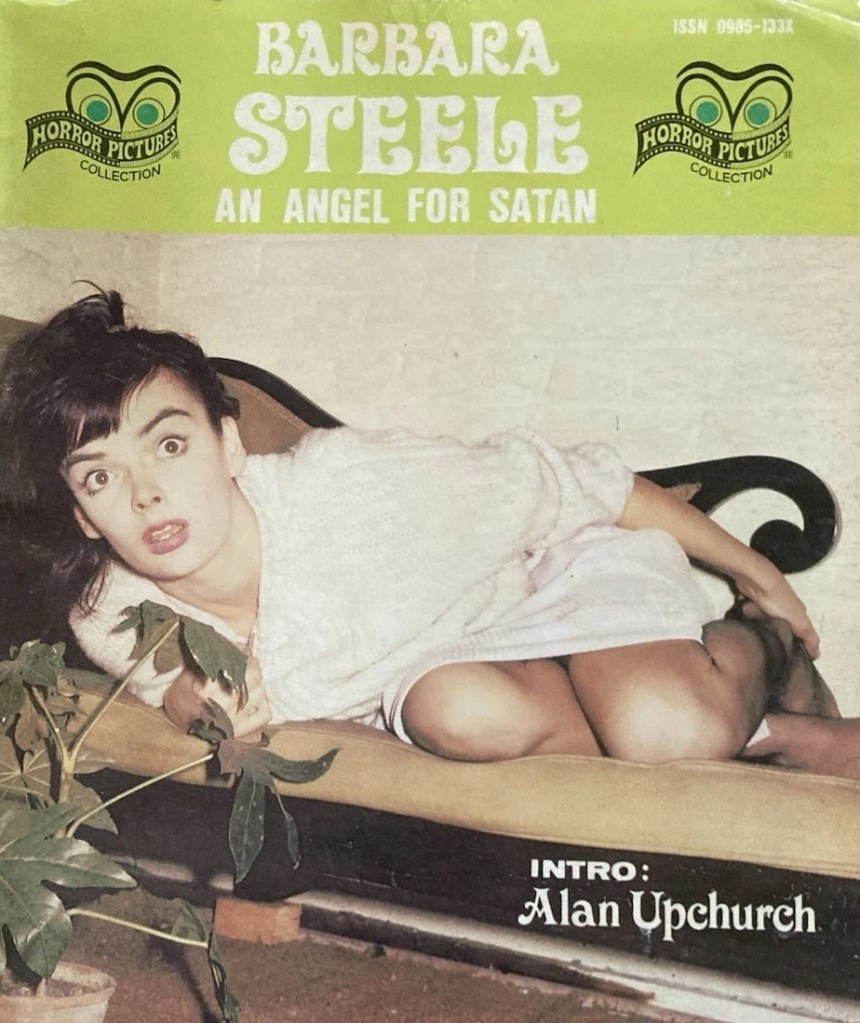
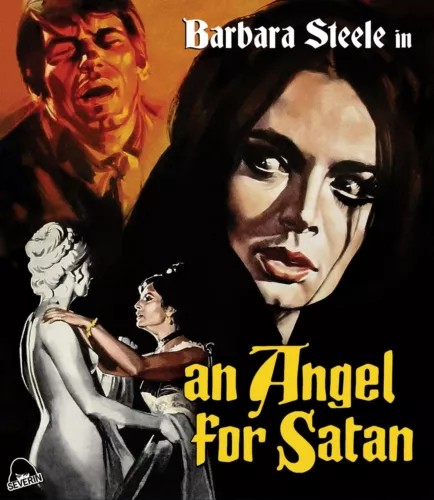
An Angel for Satan / The Devil’s Angel (1966) ***

Scream Queen Barbara Steele (The Crimson Cult / Cult of the Crimson Altar, 1968) is the big attraction in this heady brew of witchcraft, ancient curse, hypnotism and plain ordinary seduction, with an ingenious double twist. And elegantly mounted, crisply photographed as if a Hollywood picture of the 1940s.

After a drought lowers the water level, a 200-year-old statue of the beautiful Countess Melena is recovered from the seabed. The locals fear it carries a curse. Artist Roberto (Anthony Steffen),  hired to restore the artwork, arrives only days before the young countess Harriet (Barbara Steele) returns to claim her inheritance. With some clever sleight-of-hand, veteran Italian director Camillo Mastrocinque (Crypt of the Vampire, 1964) misleads the audience into thinking this is all about secret love affairs, Harriet’s uncle the Count (Claudio Gora) in an illicit relationship with housekeeper Ilda (Marina Berti), maid Rita (Ursula Davis) tempting timid schoolteacher Dario (Vassilli Karis), nascent love between Harriet and Roberto hitting a stumbling block and various shades of unshackled lust from woodcutter Vittorio (Aldo Berti) and village strong man Carlo (Mario Brega).

But pretty quickly, the picture takes a different turn. Turns out it’s not Melena who’s the problem – but her jealous ugly cousin Belinda who threw the statue into the water in the first place. Whatever the cause, there’s an outbreak of malevolence, mostly emanating from Harriet.

She strips naked for Carlo then savagely beats him for daring to stare at the nude body. She seduces Dario, looks like she’s making a play for Rita, goads Roberto and tells him she likes violence and has Carlo in her thrall.

In short order a female villager is raped and murdered, another barely escaping a similar fate, the schoolteacher commits suicide, several villagers are axed to death,  the strong man sets fire to his cottage, killing wife and seven children, and the woodcutter is speared by pitchforks.

You can tell this is a classier number because the violence is minus any gore and there’s little attempt at deliberate shock, more of a slow burn as Harriet torments those around her. Roberto is permitted small touches of investigation, and there’s a clever special effect of a painting appearing to talk.

The traditional horror elements – lightning, slamming windows, storms – are primarily employed to nudge Harriet and Roberto together;  it just so happens that she is scared of lightning and he’s the person most conveniently placed to comfort her. There’s a hint of the narcissism found in Hammer’s later lesbian horror pictures, and only the censor or the director’s discretion prevents more full-blown nudity as a prelude to seduction of both male and female. Harriet’s a dab hand at inveigling males to be in the wrong place at the wrong time invariably with her clothes in disarray to lend substance to her claims of being attacked.

While, as regular readers will know, I’m generally in favour of the climactic twist – the more the merrier – here I’m not so sure this was the road to go down. As Roberto already knows that the curse applies to wicked cousin Belinda rather than Melena, it would have been enough for him to declare this and find a way of removing it, most likely adopting the simple solution of chucking the statue back in the sea, which is what the villagers have been demanding all along.

It’s quite clear that much of the rape and killing is down to hypnotism by Harriet, but once we discover she’s being hypnotized by the Count, in one fell swoop what had been an intriguing horror story transforms into a more run-of-the-mill crime tale since if Harriett is committed to an asylum then he can continue to rule the roost.

But he’s in the thrall of Ilda who turns out to be the ancestor of Belinda. So not quite the satisfactory ending unless the criminal element had been introduced earlier on.

I doubt if Barbara Steele fans will care as the actress is very much in her element and, although in the end a victim, for the bulk of the picture she is in total – and seductive – command. Nobody’s going to compete with her and sensibly nobody tries. Anthony Steffen didn’t need any help with his career because had had already headed down the spaghetti western route.

Classically directed – excellent composition and camera movement – from a script by Mastrocinque and Giuseppe Mangione (Anzio / Battle for Anzio, 1968) from a novel by Antonio Fogazarro.

Superior stuff in which Barbara Steele shines.

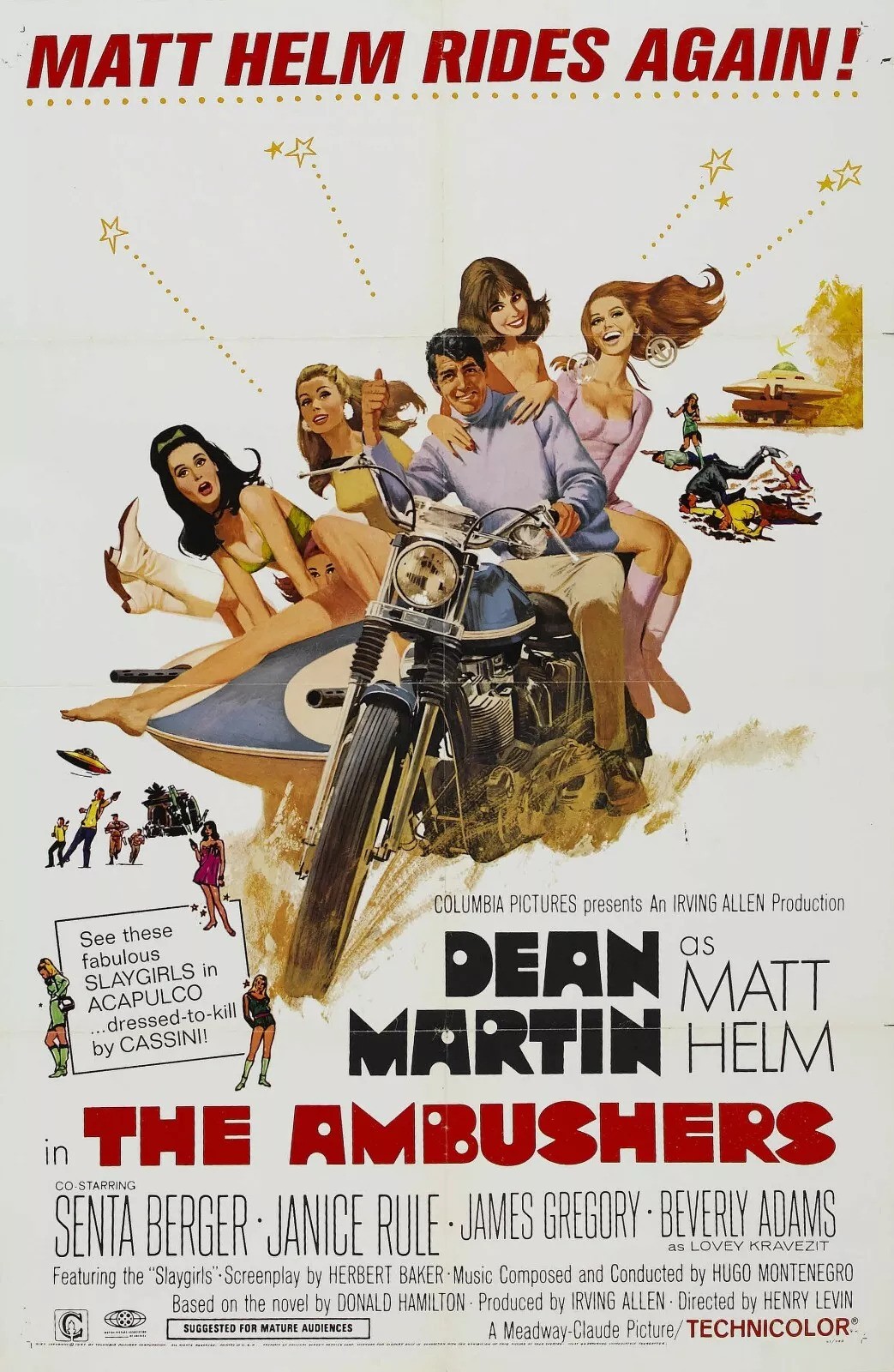
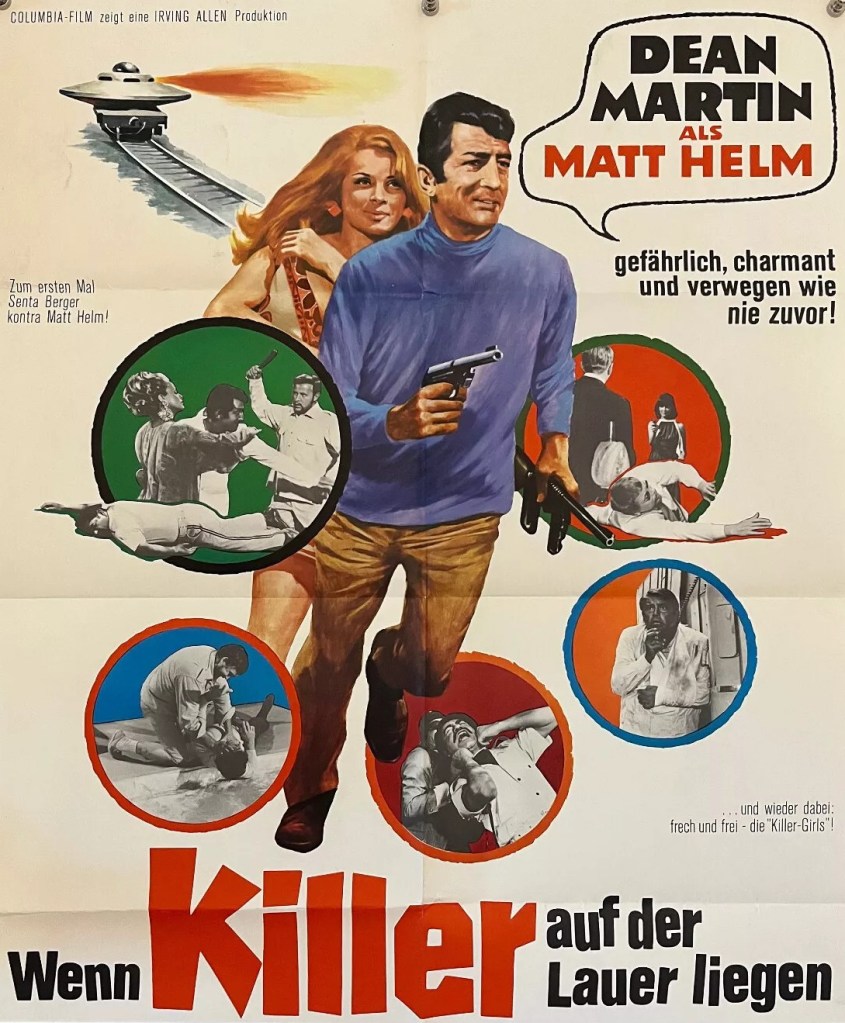
The Ambushers (1967) ***

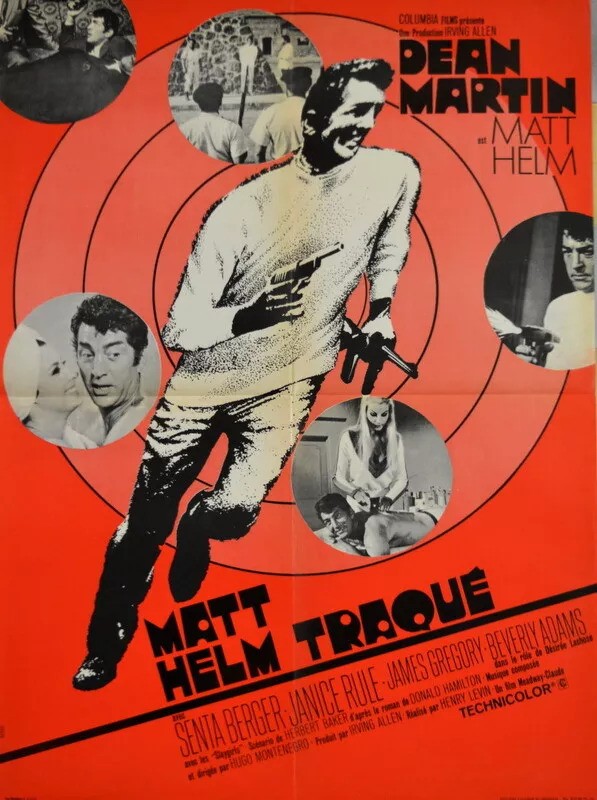
Don’t get too hung up on the supposed rampant sexism in this third iteration the Matt Helm series. These women – bikini-clad or not – are weaponized to the hilt rather than our hero Matt Helm (Dean Martin) who has to make do with a gun disguised as a camera. In fact, he makes pretty good use of the gadget created for the females – the one that melts metal, designed to get rid of the clasp on men’s belts, forcing their trousers to fall down, which, as any student of farce knows, is the easiest way to disable the male.

There’s also a weapon triggered from a bra and a sedative concealed inside lipstick so that males seduced into intimacy will soon be snookered. And it’s also a woman, secret agent Sheila (Janice Rule), who’s impervious to the electromagnetic waves which kill off the opposite gender. Of course, to be fair, it’s not Matt Helm we see sinuously dancing around a playboy mansion in Acapulco the way the women do, although for Francesca (Senta Berger) that appears a clever method of entering the enemy’s lair. Who’s going to question another sexy dancing queen? And the bad guy has one of those devices that make the zips on female attire unzip. (James Bond purloined that one.) But it’s Matt who has the ideal rescue weapon, the levitation gun.

If you’re looking for a more male-oriented theme, how about beer? At various points Matt Helm is literally swimming in the stuff. I wouldn’t have been at all surprised had the plot concerned beer manufacturer Ortega (Albert Salmi) planning world domination through poisoning the global supply of beer or arming his beer gals with bullet-spraying bras. Even though this is largely a spoof, more so than the first in the series, it’s not that much of a spoof and Ortega has more serious intent. Using lasers, he’s hijacked the U.S. Government’s secret flying saucer and plans to sell it to the highest bidder.

Sheila, the pilot, also hijacked, has gone off piste after her experience, and is thrown together with Matt Helm as husband-and-wife, a role they previously played on another mission, to hunt down the villain and recover the missing spaceship. Francesca is also after same, and happy to seduce, trick or sedate Matt in order to achieve that end. Despite believing (from the previous encounter) that she is still Matt’s wife, Stella, despite an instant blow-up tent being laid on, takes a while to understand her duties include getting hot’n’heavy even if she’s less comfortable in the bikini department. Eventually, Matt and Sheila team up with Francesca. Turns out she works for supervillain Big O but is first to find the flying saucer.

More than the earlier entries in the series, this one relies on a series of unlikely events. The switcheroos when the lights in the train go out. But the firing squad sequence is hilarious. The in-jokes about Dean Martin’s recording rivals continue, but the bevy of bikini girls disappear from view pretty much after the opening section.

Janice Rule (Alvarez Kelly, 1966) is generally seen as a class above the previous female leads in the series but that would only be if you ignored Ann-Margret’s performance in Once a Thief (1965), the Stella Stevens of Rage (1966), the Senta Berger of The Quiller Memorandum (1966) and especially the stunning playing of Daliah Lavi in The Demon (1964). Dean Martin was on the cusp of much finer work in Rough Night in Jericho (1967) and Firecreek (1968) so this might just have been a warm-up.

Directed by Henry Levin (Genghis Khan) from a screenplay by Herbert Baker based on the Donald Hamilton novel.

Doesn’t take it itself seriously, which is just as well.

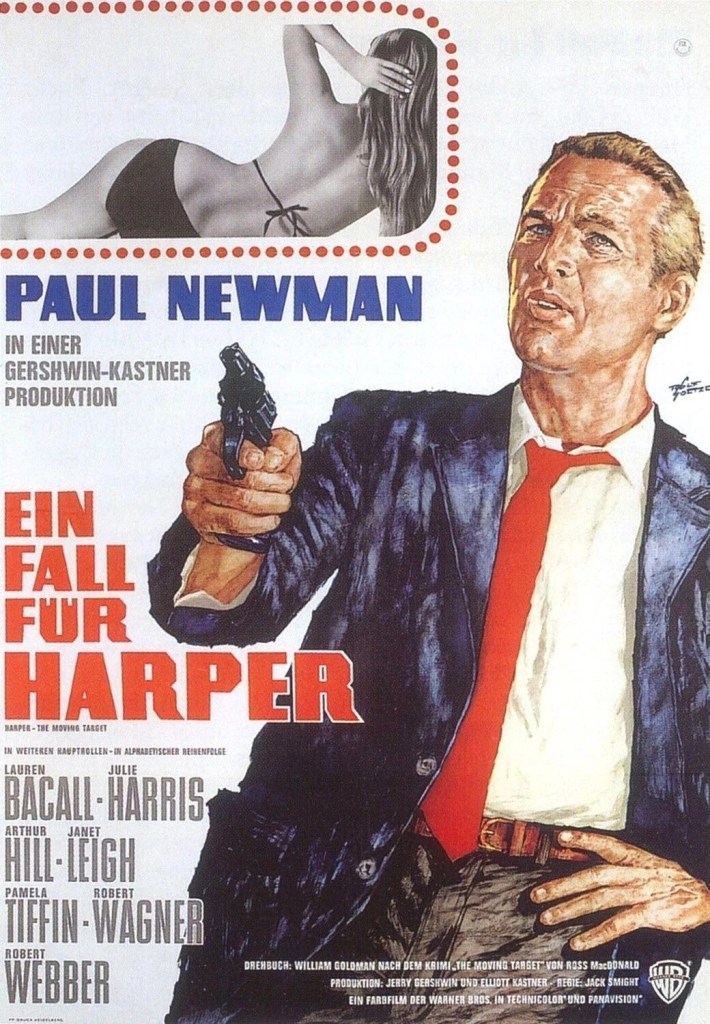
Harper / The Moving Target (1966) ****

Inventive screenplay by William Goldman (Masquerade, 1965), the ideal combination of witty lines and others that strike to the heart, and Paul Newman’s most naturalistic performance, and a family at each other’s throats, create a genuine addition to the private eye genre. Punch-ups are limited, generally the sleuth comes out worse, his skull an easy target apparently for any villain wanting to give him a good biff.

Most people remember the celebrated credit sequence. But, in fact, most people do not. They remember that this is a guy who will reuse old coffee grinds, which is as good a character definition as you’re going to get. But the opening sequence says much more – he sleeps in a pull-out couch, he falls asleep with the television on, dunking his face in ice suggests a hangover, and – the killer – he sleeps in his office. You won’t forget the ending either, the freeze frame, as fed-up Harper (Paul Newman) just gives up on the stupidity of mankind. And just before that there’s a delicious moment when crippled mother Elaine Sampson (Lauren Bacall) trills to the daughter she loathes Miranda (Pamela Tiffin) in a voice that would denote happiness but is anything but, “I’ve got some news for you,” as she looks forward to informing the child that the father she adores and that Elaine equally loathes is dead.

Not surprisingly, Harper’s on the verge of divorce from wife Susan (Janet Leigh), but he still hankers after being a knight in shining armor, those few days every year when he puts the world to rights rather than chasing down errant husbands in seedy hotel rooms.

The tale is a tad convoluted, involving initially tracking down Elaine’s estranged missing millionaire husband that turns into kidnapping and then murder with a side order of a fake cult headed by Claude (Strother Martin) that’s a front for an illegal immigrant operation, and going through the gears, character-wise, with malicious wife, an extremely flirtatious Miranda who gets her come-uppance when she tangles with Harper, faded alcoholic star Fay Estabrook (Shelley Winters) and junkie Betty (Julie Harris) sometime lover of lothario pilot Allan Taggert (Robert Wagner).

Two distinctive thugs Dwight Troy (Robert Webber) – Fay’s husband – and Puddler (Roy Jenson) offset the dumbest of dumb cops led by Sheriff  Spanner (Harold Gould) and lovesick attorney Albert Graves (Arthur Hill), Harper’s longtime buddy, who pines for Miranda.

Torture comes in two guises – the junkie gets the treatment from Dwight and Harper is put through the wringer listening to the endless whining of Fay as he tries to pump her for information. Harper avoids beatings and takes beatings and various characters bounce through doors with a gun – both Taggert and Graves save Harper from being shot.

Harper’s got a slick way about him, but mostly his charm is used to weasel information. He hasn’t got enough of it left to work on his wife.

When Harper’s not racing his sports car along twisting mountain roads, the action shifts to a cult temple, the docks and an abandoned oil tanker. Even when Harper works out who’s in on the kidnapping, it turns out he’s now got a murder to solve since someone’s bumped off the kidnappee.

Despite the endless complications, this whizzes along, helped enormously by Paul Newman’s (Cool Hand Luke, 1967) winning characterization. He’s brought a new trick to his acting arsenal, mastering a method of not listening to a conversation by tilting his head away from the speaker, and there’s a number of novel gestures. The scene where he rejects Miranda is a cracker. Tough guy running short of a soft center, he makes a very believable human being. And he’s got his work cut out because Lauren Bacall (Shock Treatment, 1964) is on scene-stealing duties. As is Pamela Tiffin (The Pleasure Seekers, 1964) though she can hardly match the older woman for arch delivery.

It’s a top-notch cast all the way down. Fans of Strother Martin (Cool Hand Luke) will enjoy his fake healer, Arthur Hill (Moment to Moment, 1966) is engaging, Robert Wagner (Banning, 1967) adds another notch to his rising star bow while Robert Webber (Don’t Make Waves, 1967) emanates menace with his “old stick” routine. Shelley Winters (The Scalphunters, 1968) is a great lush, Julie Harris (The Split, 1968) a junkie trying to pretend she’s not and Janet Leigh (Psycho, 1960), having kicked her husband out, still hoping he might come back in more acceptable form.

Jack Smight (The Third Day, 1965) directs with some zap. This should have had everyone singing the praises of crime writer Ross MacDonald, who in inventing the character (Lew Archer in the original) had inherited the Raymond Chandler mantle, but instead they came away whistling Dixie for screenwriter William Goldman.

Class act.

Discover WordPress

A daily selection of the best content published on WordPress, collected for you by humans who love to read.

The Atavist Magazine

by Brian Hannan

WordPress.com News

The latest news on WordPress.com and the WordPress community.