You can blame one of the screenwriters, either Robert Muller (Contest Girl, 1964) or Stanley Mann (The Collector, 1965), for coming up with the scene in Woman of Straw where the grotesque millionaire Charles Richmond (Ralph Richardson) forces his two black servants to pretend to be dogs to show his own dogs how to jump over each other. It’s not in the book. However, in fairness to the screenwriters they must have thought this preferable to the scene in the original book by Catherine Arley where Richmond offers a gold watch to the best imitation of a dog by his servants. This includes them getting down on all fours and eating food like a dog. Disgusting though this is, it is tempered by being a competition with a more than decent reward (a gold watch) for the winner.
The offensive scene in “Woman of Straw.”
And now we get into a difficult position since one of the most highly-praised episodes of Succession involved employees of grotesque millionaire Logan Roy (Brian Cox) being forced to get down on the floor and pretend to be boars and eat sausages like a boar (Boar on the Floor, Succession, Season Two, Episode Two). This sequence has a 94% rating on Rotten Tomatoes, the critical accumulation website. The episode won an Emmy for director Andrij Parekh. Scott Tobias of Vulture gave it five stars and Randall Colburn of The A.V. Club an A-minus. Various commentators referenced the Stanford Experiments, the culture of fear inherent in working with wealthy individuals, and the animalistic collapse of civilization.
So that has left me wondering if my objection to Woman of Straw was merely on racist grounds and to wonder if there would have been an outcry if the Succession episode had featured a black person grovelling on the ground.
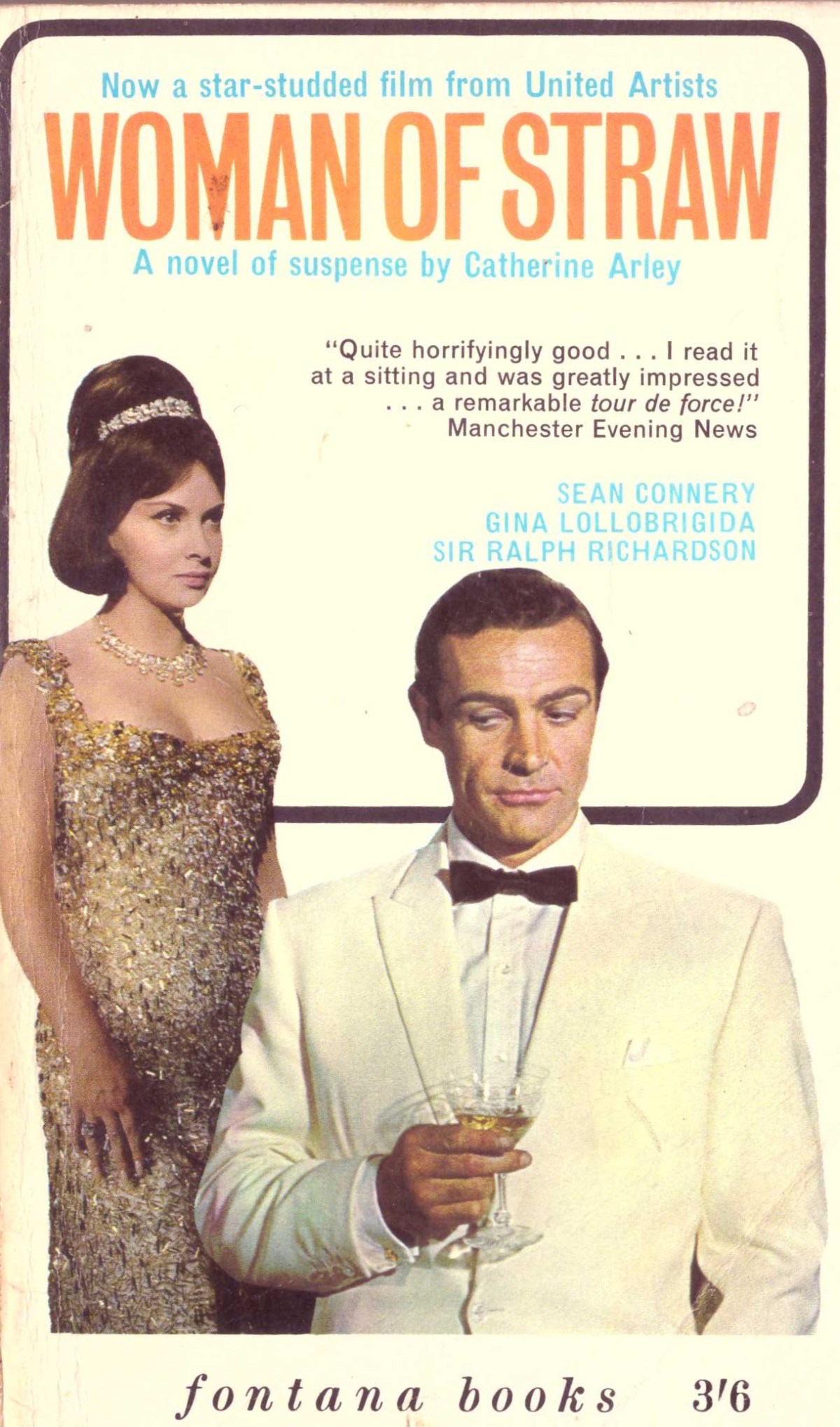
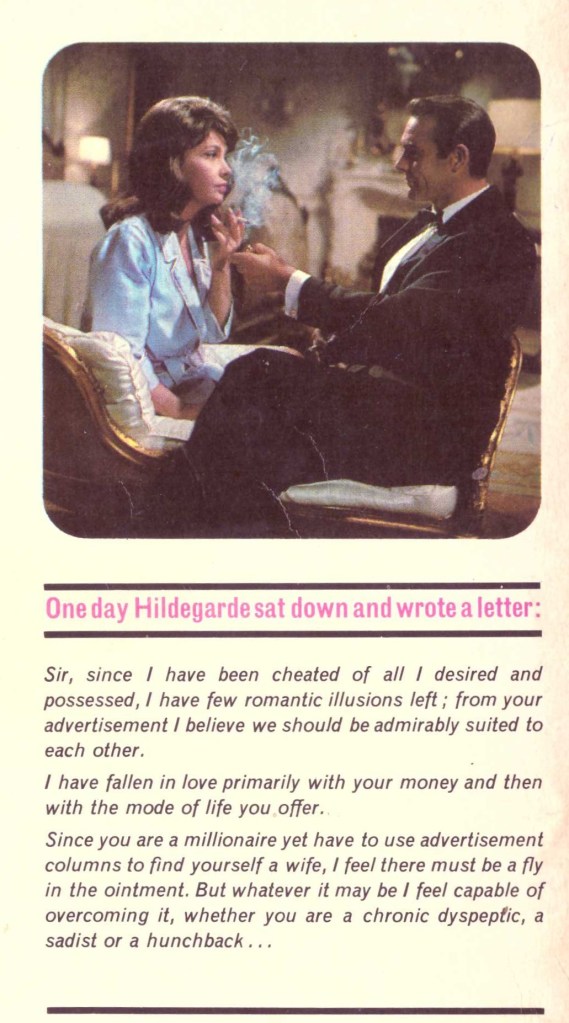
The screenwriters made significant changes to the source novel. For a start in the book both the woman and the millionaire were German. Hildegarde Meiner in the book becomes the Italian Maria (Gina Lollobrigida) in the film. But Hildegarde is not a relatively innocent nurse as in the film. Instead, she is an out-and-out gold-digger, determined to marry a wealthy man in order to make up for a desperate life in the aftermath of the Second World War.
Back cover of the movie tie-in edition of the British paperback.
In the book the villain of the piece is also German, Korff, not British like Sean Connery. And he is simply the millionaire’s secretary not his nephew. The pivotal element of the story is the same, Tony Richmond (Connery) feeling he is owed much more of the old man’s fortune than the pittance provided for him in the will. Korff is also 60 years old and although Hildegarde makes a play for him, any romantic liaison is out of the question because the secretary wants to adopt her as his daughter. Korff sets Hildegarde up as the nurse and instructs her to play it aloof and principled. Hildegarde does not fall into the category of beauty but, with better clothes and professional make-up, oozes class.
The rest of the story plays out much like the film except there is no rescue at sea and the millionaire does not listen to classical music. The novel narrative, while not in the first person, is told from the woman’s perspective. However, Korff is more devious than Anthony Richmond, ensuring in several ways that the nurse will take the rap.
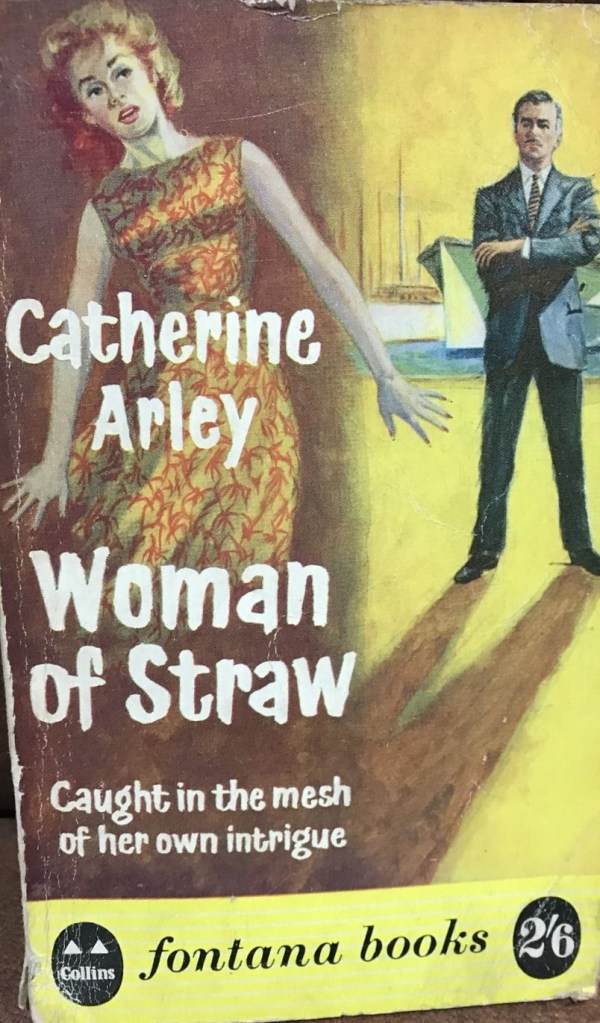
Front over of earlier British paperback, not a movie tie-in.
The film’s ending is driven by the need for some kind of happy resolution, for the guilty to be brought to justice, the dupe exonerated to some extent. But the book belongs more to the film noir genre and the ending is quite different, the villain getting away with and Hildegarde seeing no way out but to commit suicide.
The deprivations that Hildegarde has undergone as a consequence of her Hamburg family being killed during the war and her struggle for survival thereafter and her desperation to find a wealthy white knight make her a more sympathetic character.
The book is an excellent thriller in its own right.
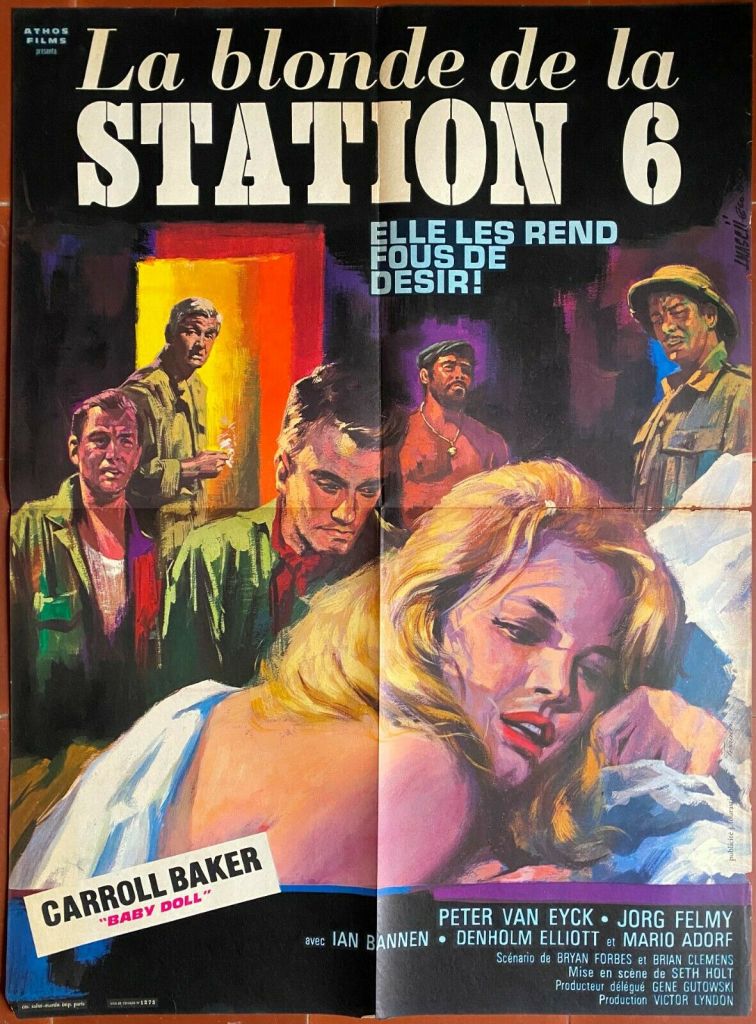
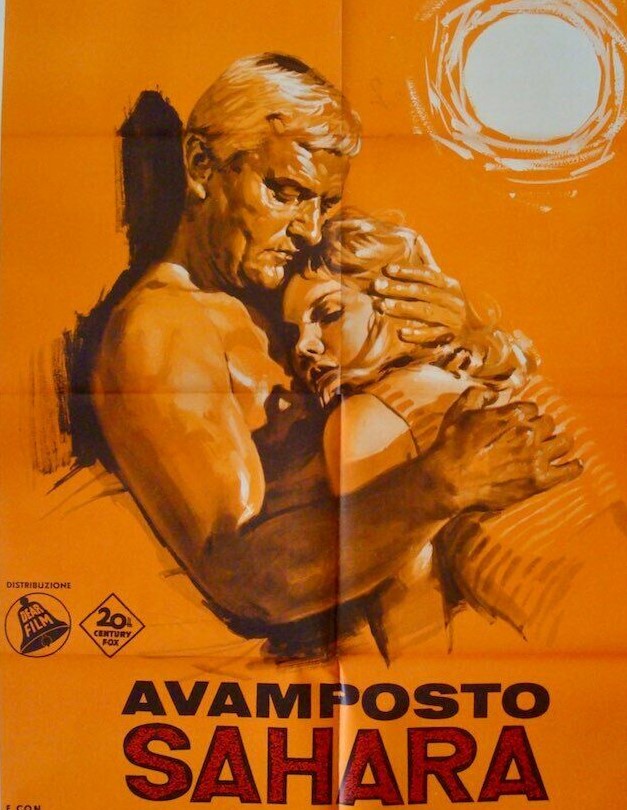
Desert pictures come in two varieties – men battling the elements with little or no female distraction and men distracted from battling the elements by the presence of a female. Since the film I reviewed earlier today, Sands of the Kalahari, fitted largely into the first camp with the sole female being viewed as a prize rather than a temptress, I thought it might be interesting to compare it to Station Six Sahara, made the year before, in which the seductive Carroll Baker disrupts the men-only oil station.
David Lean spent months in Jordan capturing his vision of the desert for Lawrence of Arabia. Seth Holt was granted no such luxury, a few weeks at Shepperton Studios in England to make this British-German co-production. It is a surprisingly tight and effective drama made on a low budget excepting whatever fee induced Hollywood star Carroll Baker to join.
Five men trapped on an oil pipeline maintenance unit drive each other to distraction. Loud Scot Ian Bannen constantly needles stiff upper-class Denholm Elliott while overbearing German boss Peter Van Eyck cheats at poker. The arrival of steely-eyed German Hansjorg Felmy alters the status quo as he refuses in his own quiet way to knuckle down to authority. There is a wonderful psychological battle going on between Bannen and Elliott.
Extremely envious of the number of letters Elliott receives, Bannen offers a month’s pay for just one. When the offer is accepted, Elliott cannot stop fretting about what he might have given away and what secrets it revealed about himself. The arrival of Carroll Baker upsets the equilibrium further as the men attempt to win her affections. While apparently promiscuous, she is steelier than the lot of them, and tensions climb high when she begins to spread around her favors. Interestingly, she does no wooing but waits for men to come to her.
Given the budget restraints, or possibly because of them, it is surprisingly well directed. Two scenes stand out in directorial terms. In one featuring Bannen and Elliott, the Scot is only partly visible behind a piece of furniture but his dialogue continues even when out of sight. In the other, one of Baker’s suitors finds her door locked and as she is about to reply a hand appears (not in aggressive fashion) to cover her mouth, indicating she already has chosen her bedmate.
Naturally, this can only lead to a grim end. The cast of male unknowns are uniformly good but Baker steals the show as you would expect. Given the times, there was no nudity, but the overt sexuality certainly skirted the bounds of what passed as decency and Baker is alluring however little or much she wears. But her sexuality takes second place to her individuality. Her independence will not be surrendered to a man. Despite the budget restrictions it stands up very well.
At any given moment Carroll Baker could be both a top Hollywood star and a middling box office attraction. She had just come off How the West Was Won (1963) but had really failed to justify the potential shown in Baby Doll (1956). Peter van Eyck (The 1,000 Eyes of Dr Mabuse, 1960). was best known for his role in Wages of Fear (1953). Scottish actor Ian Bannen (Psyche 59, 1964) was beginning to merge as a strong character actor, he and van Eyck had appeared together previously in The World in My Pocket (1961). The career of Denholm Elliott (Maroc 7, 1967) followed a similar arc to Bannen as a supporting player of distinction. Seth Holt (Danger Route, 1967) was considered a rising directorial star until his untimely death at the age of 41.
Variety’s revolutionary new box office tracking system, introduced in 1969, allowed it to include far more films in an annual assessment of performance. The “Annual Rentals” chart that appeared every January still covered how much of the box office pie was returned to studios and therefore gave a good indication of potential profit. But that was limited to only those pictures that met that chart’s criteria i.e. they had to return $1 million rentals. That usually meant only 80-odd films.
But now, in addition, from the computerized information gathered every week from hundreds of cinemas, Variety was able to give a pretty accurate estimate of the box office gross for ten times as many movies. In 1969, the survey covered 1,028 pictures. This wealth of information was of enormous value to exhibitors. Not only did it cover the obvious titles – the roadshows and those with top stars – but also the run-of-the-mill movies on which most cinemas now depended. In the current severe product shortage, reissues played a vital role. As did sexploitation.
Among films reviewed so far in the Blog annual grosses were shown for: They Night They Raided Minksy’s $1.9 million, Mafia picture The Brotherhood $1.9 million, Anthony Newley number Can Hieronymous Merkin Ever Forget Mercy Humpeand Find True Happiness $1.3 million, Hard Contract $1 million, Mayerling $980,000, Justine $536,000, Les Biches $391,000, Assassination Bureau $146,000, Fraulein Doktor $114,000 and The Sisters $50,000. (Multiply these figures by 50% for an accurate estimate of their rentals).
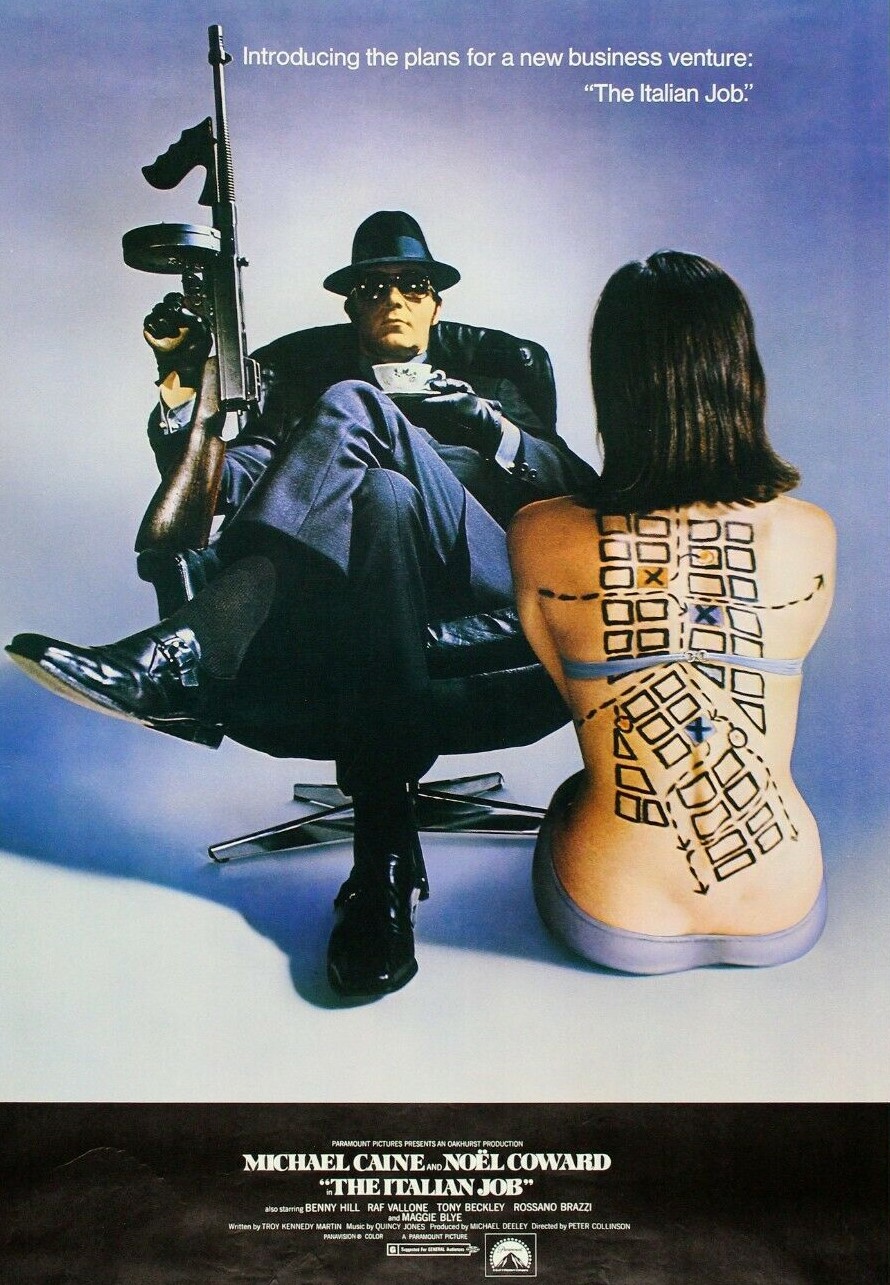
Other figures worth noting were: The Fixer $1 million, Secret Ceremony $1 million, The Italian Job $614,000, Marlon Brando in The Night of the Following Day $424,000, Shalako $78,000 and The Extraordinary Seaman $61,000. Bottom of the box office pile was motor racing documentary Hot Rod Action with just $1,000.
Given it was widely considered a flop, these are interesting figures for Hieronymous Merkin, rentals now estimated as being in the region of $2 million against a budget of $1.6 million – although other sources put the budget as low as $500,000 thus making it extremely profitable. Secret Ceremony had grossed $617,000 the previous year so its rentals would have approached $2.5 million, far more than was previously assumed. Fans of cult British thriller The Italian Job will perhaps be astonished how poorly it did in the U.S.
The top-grossing reissue was Bonnie and Clyde/Bullitt ($1 million) followed by a pair of Clint Eastwood double bills – A Fistful of Dollars/For a Few Dollars More ($912,000) and Hang ‘Em High/The Good, The Bad and The Ugly ($740,000). Also in the mix were Goldfinger/Dr No ($323,000), A Man and a Woman ($226,000), Belle de Jour/A Man and a Woman ($199,000), a revival of Lola Montes from 1955 with $148,000 and less successfully, from 1961, A Cold Wind in August with just $21,000.
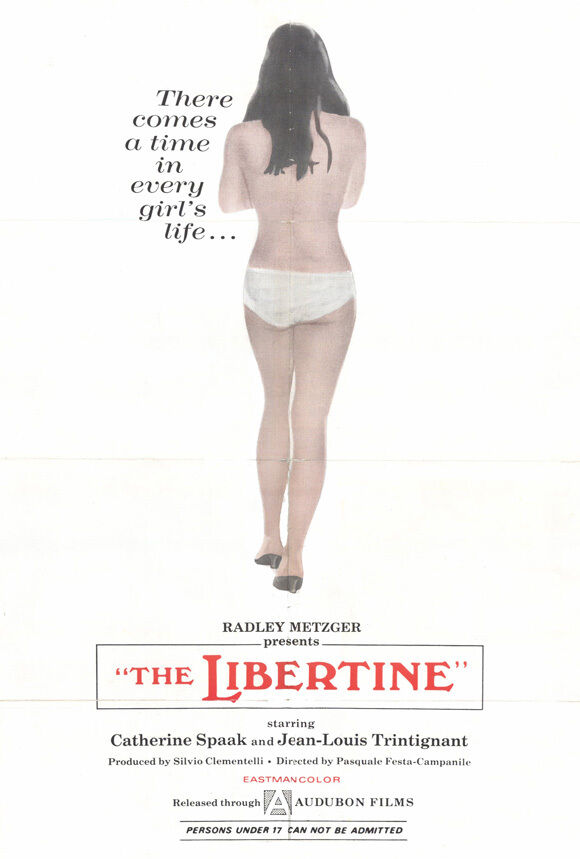
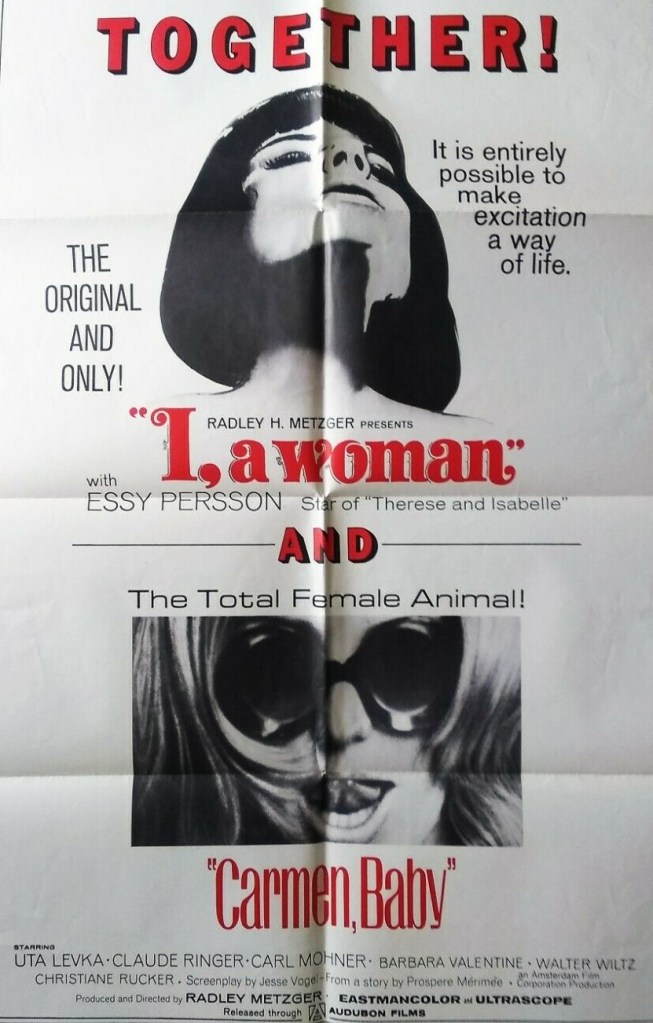
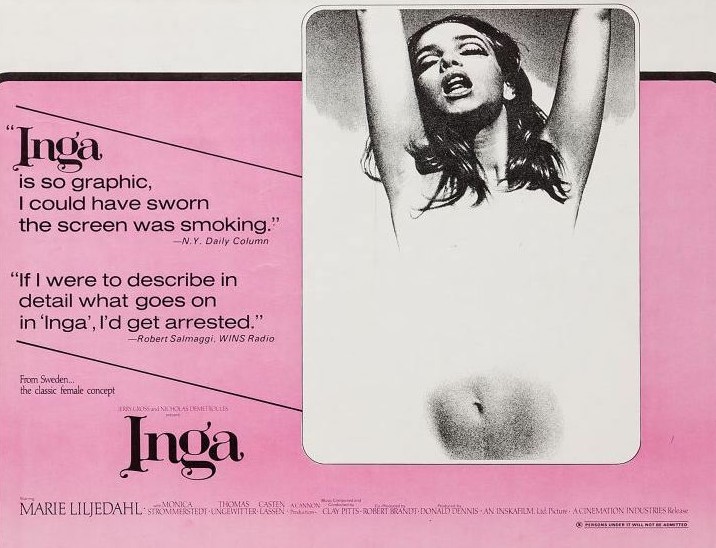
As previously noted, the impact of sexploitation was becoming more obvious. The biggest hit was The Libertine which crossed the $1 million mark followed by Camille 2000 ($868,000), Inga ($819,000) – bringing in three times as much as the previous year – Swedish Heaven and Hell ($458,000) and The Female ($279,000). Others charting included Vibrations, Without a Stitch, Erotic Dreams and The Sex Perils of Pauline. In addition, sexploitation movies were ripe for reissue, I, A Woman/Carmen Baby clocking up $363,000.
More importantly, what the chart did show and what the new weekly Top 50 was beginning to recognize was how often cheaply-made exploitation pictures held their own or even outgrossed big studio pictures for which exhibitors were often held to ransom. If ever there was a sign of the direction in which the business was now heading, this annual survey was it.
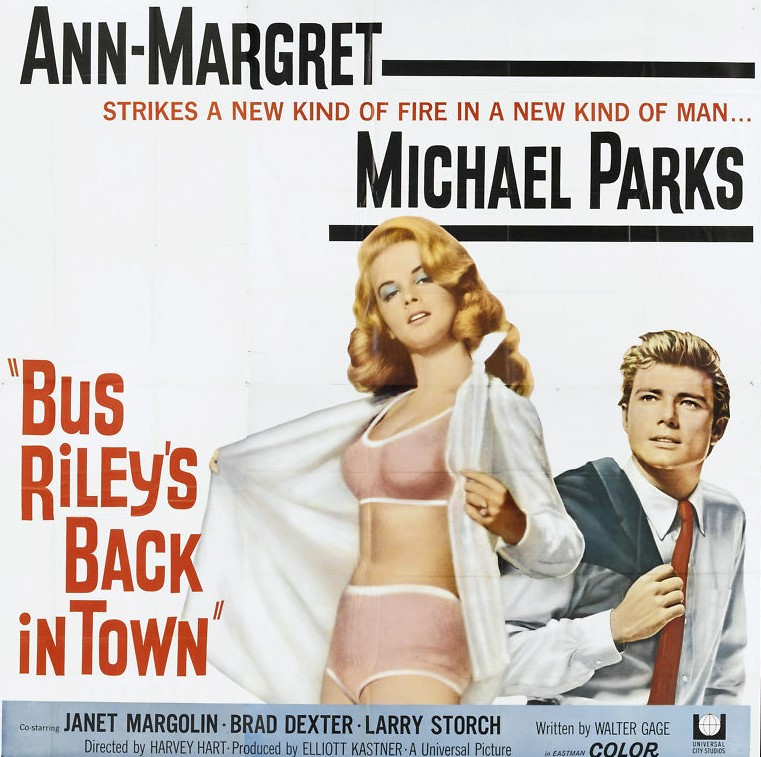
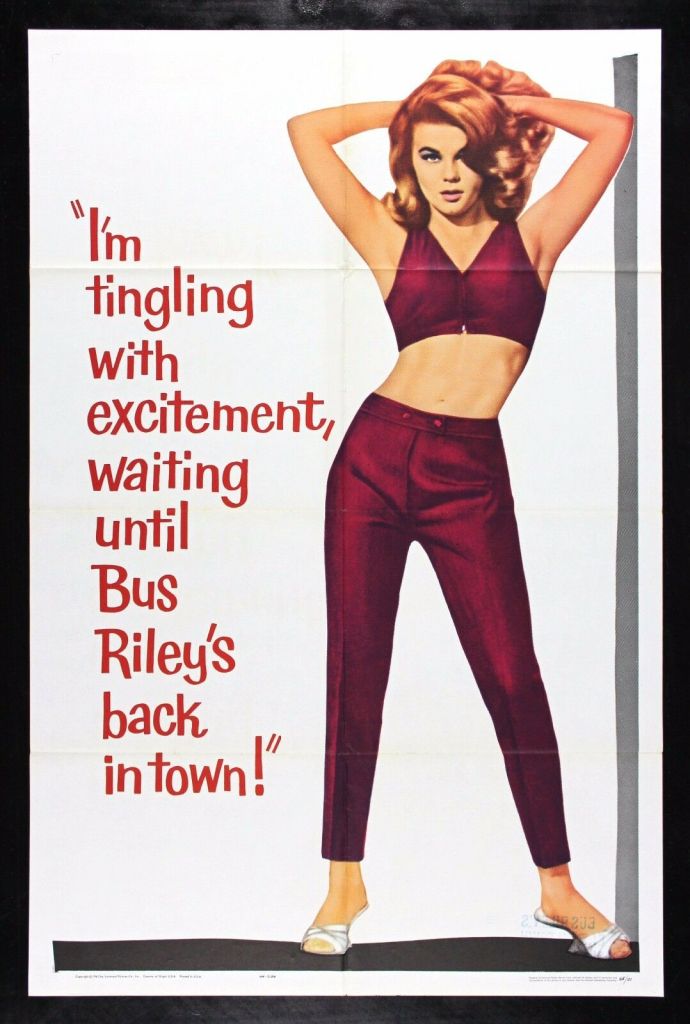
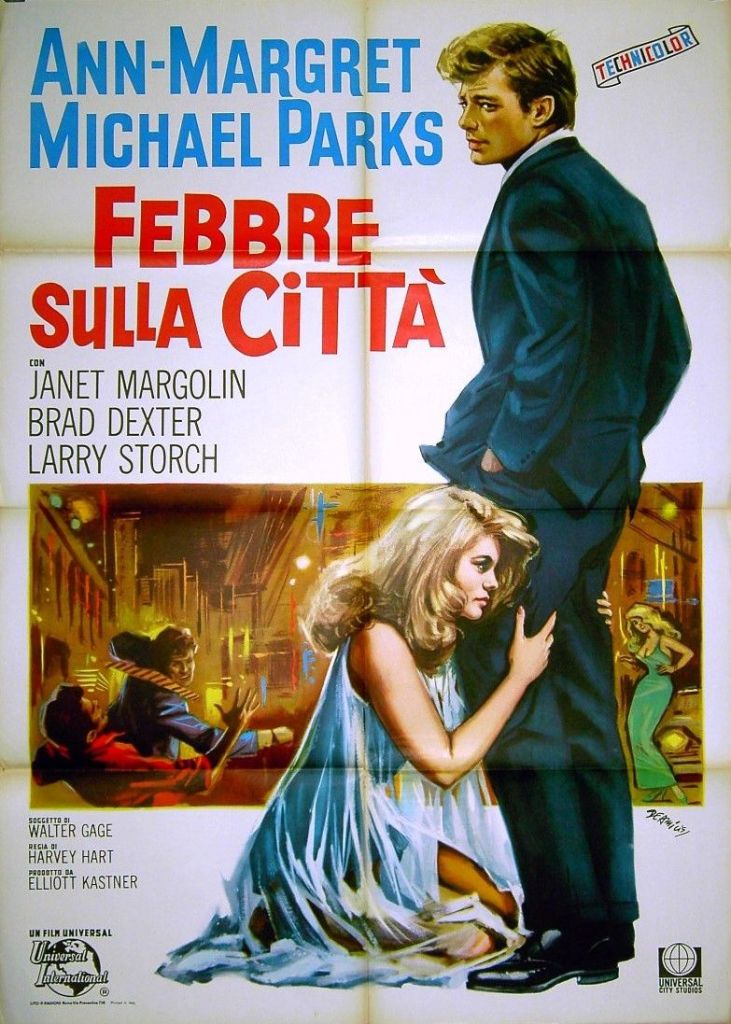
Given that Ann-Margret receives top billing I had automatically assumed she was the Bus Riley in question. Although decidedly the female lead, her role is secondary to that of a sailor returning to his small town. The backstory is that Bus – no explanation ever provided for this nickname, Buster perhaps? – Riley (Michael Parks) had been too young to marry the gorgeous Laurel (Ann-Margret) before he joined the U.S. Navy and in his absence she married an older wealthy man.
Bus dithers over his future, re-engages with his mother and two sisters and finds he has not lost his attraction to Laurel. Although a handy mechanic, he has his eye on a white collar career. An initial foray into becoming a mortician founders after sexual advances by his employer (Crahan Denton). Instead he is employed as a vacuum salesman by slick Slocum (Brad Dexter). While his sister’s friend Judy (Janet Margolin) does catch his eye, she is hardly as forward or inviting as the sexy Laurel who crashes her car into his to attract his attention. But easy sex available with Laurel and the easy money from exploiting lonely housewives trigger a crisis of conscience.
Perhaps the most prominent aspect is the absence of good male role models. Bus is fatherless, his mother (Jocelyn Brando) taking in boarders to meet her financial burden – including the neurotic Carlotta (Brett Somers) – and while younger sister Gussie (Kim Darby) adores Bus the other sister Paula (Mimsy Farmer) is jealous of his freedom. Judy’s father is also missing and her mother (Nan Martin) a desperate alcoholic. The biggest male players are the ruthless Slocum and Laurel’s husband who clearly views her as a plaything he has bought. The biggest female player, Laurel, is equally ruthless, boredom sending her in search of male company, slithering and simpering to get what she wants.
Scandal is often a flickering curtain away in small towns so it’s no surprise that Bus can enjoy a reckless affair with Laurel or that a meek mortician can get away with making his desires so quickly apparent, or that behind closed doors houses reek of alcohol or repression. A couple of years later and Hollywood would have encouraged youngsters like Bus and Laurel to scorn respectability in favor of free love. But this has a 1950s sensibility when finding a fulfilling job and the right partner was preferred to the illicit.
In that context – and it makes an interesting comparison to the more recent Licorice Pizza that despite being set in the 1970s finds youngsters still struggling with the difference between sex and love – it’s an excellent depiction of small-town life.
While Michael Parks (The Happening, 1967) anchors the picture, it’s the women who create the sparks. Not least, of course, is Ann-Margret (Once a Thief, 1965), at her most provocative but also revealing an inner helpless core. And you can trace her screen development from her earlier fluffier roles into the more mature parts she played in The Cincinnati Kid (1965) and more especially Once a Thief (1965).
In her movie debut Kim Darby (True Grit, 1969) is terrific as the bouncy Gussie and Janet Margolin (David and Lisa, 1962) invests her predominantly demure role with some bite. Jocelyn Brando (The Ugly American, 1963) reveals vulnerability while essaying the strong mother. Mimsy Farmer (Four Flies on Grey Velvet, 1971) also makes her debut and it’s only the second picture for David Carradine (Boxcar Bertha, 1972). Brad Dexter (The Magnificent Seven, 1960) is very convincing as the arrogant salesman.
It’s also the first film for Canadian director Harvey Hart (The Sweet Ride, 1968) and he has some nice visual flourishes, making particular use of aerial shots. The scenes of Bus trudging through town at night are particularly well done as are those of Laurel strutting her stuff.
It was also the only credit for screenwriter Walter Gage. That was because Gage didn’t exist. Like the Allen Smithee later adopted as the all-purpose pseudonym for pictures a director had disowned, this was the name adopted when playwright William Inge (Oscar-winner for Splendor in the Grass, 1961) refused to have anything to do with the finished film.
The movie was in limbo for over a year. It was never intended as a major picture, the budget limited to $550,000. Shot in Spring 1964, release was delayed for about a year until Universal re-edited it and added new scenes. In part this was because Ann-Margret had achieved surprising movie stardom between her recruitment and the film’s completion. Along with Raquel Welch, she became one of the most glamorous stars of the decade and in building up her own career Welch clearly followed the Ann-Margret template of taking on a bucket of roles and signing deals with competing studios.
After making just three movies, Ann-Margret was contracted for three movies with MGM at an average $200,000 per plus an average 12% of the profit, substantial sums for a neophyte. On top of that she had four far less remunerative pictures for Twentieth Century Fox, three for Columbia, Marriage on the Rocks with Frank Sinatra and a couple of others.
Universal also had another property to protect. Michael Parks was one of small contingent of novice actors in whom the studio had invested considerable sums, using them in television roles before placing them in major movies. Others in this small group – at a time when most studios had abandoned the idea of developing new talent – included Katharine Ross and Tom Simcox who both appeared in Shenadoah (1965), James Farentino (The War Lord, 1965), Don Galloway (The Rare Breed, 1965), Doug McClure (The Lively Set, 1964) and Robert Fuller and Jocelyn Lane in Incident at Phantom Hill (1965).
However, the introduction of Parks had not gone to plan. He was set to make his debut in The Wild Seed (1965) – originally titled Daffy and going through several other titles besides – but that was also delayed until after Bus Riley, riding on Ann-Margret’s coat-tails, offered greater potential.
SOURCES: “Escalating Actress,” Variety, May 22, 1963, page 4; “Inge Thinks Writer Contentment May Lie in Creative Scope of Cheaper Pix,” Variety, May 6, 1964, p2; “Ann-Margret Into the Cash Splash,” Variety, July 22, 1964, p5; “Universal Puts 9 Novices Into Pix,” Variety, March 3, 1965, p25; “Fear Ann-Margret Going Wrongo in Her Screen Image,” Variety, March 24, 1965, p5.
There’s a VHS copy available on Amazon, but otherwise it’s Ebay or this decent enough print on YouTube.
Dream Team Number One: Clark Gable and Jean Harlow. This was of course a good 30 years before the movie actually got made. The Horace McCoy novel was purchased in 1935 by MGM as a big-budget project teaming Clark Gable and Jean Harlow. This was despite Variety proclaiming it was “not screen material.” The premature death of Harlow put paid to the idea. Next, actor Wallace Ford (Freaks, 1932) bought it with Broadway in mind. A production was scheduled to open in 1939, but never did.
Dream Team Number Two: Charlie Chaplin and Marilyn Monroe. When the comedian purchased the rights in the early 1950s he intended Marilyn Monroe to play the leading female. Although she was a mere starlet Chaplin had form in building up newcomers. Author McCoy had by that point become an accomplished screenwriter with over 30 credits including Gentleman Jim (1942), film noir Kiss Tomorrow Goodbye (1950) and The Lusty Men (1952) That concept fell by the wayside when Chaplin was effectively banished from America while launching Limelight (1951) in Britain.
It was another 14 years before interest in the novel was revived by screenwriter James Poe, who purchased the rights from the McCoy estate. Although most famous within the trade for being accused of fraudulent behaviour in relation to his screenplay for Around the World in 80 Days (1956). Despite an Oscar for the film he was sued for $250,000. However, he had a sterling body of work including Cat on a Hot Tin Roof (1958), Sanctuary (1960), Lilies of the Field (1963), The Bedford Incident (1965) and Riot (1969) and two other Oscar nominations.
In 1965 he had signed a multi-picture writer-director deal with Columbia. He was either going to make his directorial on The Gambler or They Shoot Horses, Don’t They. It turned out to be the latter. Failing to get the movie off the ground with Columbia or under his own steam, he turned to new studio Palomar, which was a production entity set up by the ABC television network, which bought over his rights as well as his script but kept Poe on as director.
Dream Team Number Three: Faye Dunaway. Yep, one big star, not two. Poe’s screenplay, while not eliminating the male lead, spun on a female star. Dunaway, hot after Bonnie and Clyde (1967), was offered $600,000 to play the role. Mia Farrow was also in contention, for $500,000. The only problem was, the budget could not remotely stretch to that. As helmed by Poe, it was to cost no more than $900,000. The film was scheduled to begin shooting in spring 1968 but a month later the start date shifted to June.
Two relative newcomers Robert Chartoff and Irwin Winkler were brought in as producers to move the project along. Later they would be responsible for such classics as Rocky (1976), The Raging Bull (1980), The Wolf of Wall Street (2013) and The Irishman (2018), but at this point they had just three pictures under their belt, although that included Point Blank (1967), Their first task: persuade Poe to rewrite the script. They felt the third act needed work with restructuring elsewhere to make the pay-off work.
But Poe, believing his position was sacrosanct, refused to discuss a rewrite. He refused to discuss anything, period, treating the producers as his assistants rather than people with some power within the studio. According to Irwin Winkler, “Poe seemed unaware of the of the normal process of preparation, even though he’d been around movie sets for decades.”
Realising that getting a star on their budget was impossible, Chartoff and Winkler changed tack and talked to good actors, but even then few were interested. A less dramatic star than Jane Fonda you could not imagine, her resume filled with light comedies, French films that utilised her sexuality or the extravaganza that went by the name of Barbarella (1968). But the pregnant Fonda was keen on change. The film was delayed until after she had given birth. Michael Sarrazin should have been out of the equation. John Schlesinger had lined him up for the Jon Voigt role in Midnight Cowboy (1969) but Universal, to whom he was under contract, asked too much to send him out on loan.
With no sign of the rewrites, the producers became antsy about the director. However, they showed their true mettle as producers, convincing Palomar there was no way the original budget would cover the ballroom set, huge number of extras, live orchestra and salaries. It would need to at least triple.
In a picture of one predicament following another, there was one crisis the producers had not foreseen. They were going to be fired. Apart from anything else, they were only executives on the picture with any experience, it being not only Poe’s first movie but that of Chartoff and Winkler’s superiors at the studio. The outcome – the guy who had told the pair they were being fired was shown the door instead.
Susannah York was cast after the producers saw a sneak of The Killing of Sister George (1969) at the Robert Aldrich studios. She had committed to Peter O’Toole vehicle Country Dance/Brotherly Love (1970), written by her cousin James Kennaway (Tunes of Glory, 1960). After too many delays on They Shoot Horses she planned to pull out in favour of the other film. Although Sally Kellerman (Mash, 1970) was set as a last-minute replacement, the issue was resolved by asking MGM to delay the start on the rival picture.
Believing Poe was in no position to helm such a big-budget picture enterprise, Chartoff and Winkler began the process of removing him only for Jane Fonda to dig her heels in. She changed her mind after witnessing first-hand Poe’s directorial skills – or lack of them – when she took part in a screen test for Bonnie Bedelia. Winkler recollected, “On the set Jane asked Poe questions about the blocking of the scene, why she moves in one direction rather than another, why in front of a sofa rather than behind it etc. He couldn’t answer her questions and told her to talk to the cameraman.” Exit Poe.
In terms of a replacement, Chartoff and Winkler set their sights of Sydney Pollack (The Scalphunters, 1968) with whom they had previous dealings, and William Friedkin, then being hailed for The Homecoming (1968) – luckily The Night They Raided Minsky’s (1968) had yet to be released. But studio executives had a third director in mind, Jack Smight (No Way to Treat a Lady, 1968). Friedkin should have been in pole position, having only received $75,000 for The Homecoming. His agent, sensing an opportunity, demanded $200,000. Jack Smight’s agent also got greedy and wanted $250,000. Pollack’s agent was happy with the $150,000 on offer.
When Poe was eased out, filming was announced as beginning on February 17, 1969, the budget having now increased to $3.2 million – including $400,000 for extras. However, acoustic issues – seawater had eaten away the bottom of the pier – prevented use of the old Aragon ballroom in Santa Monica. That set was constructed on the Warner lot.
Pollack then turned it down. He had reservations about the script, which had still never been rewritten. When Robert E. Thompson, a television writer but “a Horace McCoy expert,” was mooted, Pollack changed his mind. The new script contained the “flash forward” scenes that prepared audiences for the shock ending. However, the new scenes and delays in starting increased the budget which now ballooned to $4.7 million.
It turned out the director was the best actor of all. “I was impressed with Sydney Pollack’s ease on the set,” recalled Irwin Winkler. “He never seemed to be working hard and yet was able to get marvelous performances out of the actors. Everybody in the company adored him.” Asked by Winkler how he remained so calm dealing with the actors and all the extras and the complicated camera set-ups, he replied, “it was really quite easy.” That same afternoon he collapsed on set and was diagnosed with “nervousness.”
The studio, the stars, the producers, all seemed confident about the picture. All they had to do was convince the audience. But at the first preview in San Francisco the audience roared with laugher at the climactic scene. That shocked the studio to the core until the producers were able to reassure the head honchos that the “fast forwards” would smooth over that problem. Which they did.
It was nominated for nine Oscars – Best Director, Best Screenplay, nods for Jane Fonda, Gig Young and Susannah York among others. Only Gig Young won.
SOURCES: Irwin Winkler, A Life in Movies, (Abrams Press, New York, 2019) p34-47; “Tough Stuff,” Variety, August 7, 1935, p59; “Ford Buys for B’Way,” Variety, September 11, 1939, p42; “Dance Marathon Reprise,” Variety, August 3, 1966, p24; “IT&T In No Way Slowing Down Theatrical Feature Program of ABC,” Variety, January 10, 1968, p4; “Crowded Slate for Palomar,” Variety, February 28, 1968, p18; “Bob Evans Chips-Service To Writers As Stars At Paramount,” Variety, May 1, 1969, p19; “Jane Fonda Gets Top Role in Palomar’s Horses,” Box Office, July 22, 1968, pW1; “Palomar Horses on W7 Space,” Variety, October 23, 1968, p3; “Jan 6 Filming Date for They Shoot Horses,” Box Office, December 16, 1968, pW5; “Cheery Side of Delay on Horses,” Variety, January 15, 1969, p21; “Winkler Wants Films With Social Comment,” Box Office, January 19, 1970, pW1.
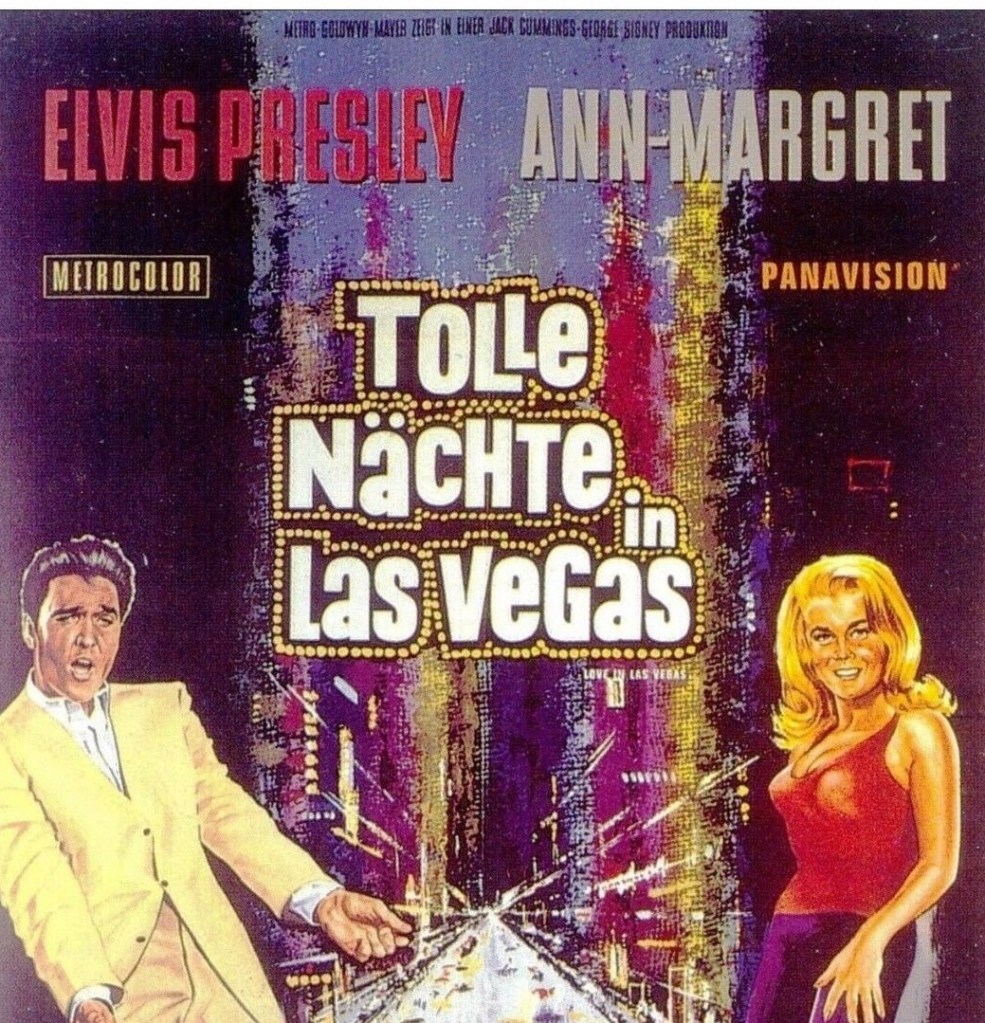
Screen chemistry, a great racing sequence and some good songs set alight this typical Presley vehicle. Unlike previous recording giants Frank Sinatra and Bing Crosby, Elvis Presley had not made much attempt to be anything other than himself on screen, nor elevated his status by taking on adaptations of hit Broadway shows, so his movies tended to need a certain extra something to set them apart, if only from his other pictures – he was churning them out at the rate of three or four a year. The certain something, a whole bag of je ne sais quoi, came in the shape of Ann-Margret.
Garage mechanic Lucky (Elvis Presley), a racing driver wannabe, gets the hots for Rusty (Ann-Margret) after he tunes up her car. Chasing her to Las Vegas where she is a swimming instructor rather than a hot-shot performer, he takes a job as a hotel waiter. He has a rival, both in driving and romance, in Count Emo Mancini (Cesare Danova). Initially, Rusty brushes Lucky and even when they get closer she fears getting too close since the consequences of falling in love with a man who chases danger are obvious.
There’s no danger of a picture like this straying from the most obvious path and helping fill in the screen time are nods to tourism, excerpts from Vegas shows, some water ski-ing and a helicopter ride over the Boulder Dam (Rusty supplying an earnest educational lecture). There is some lackluster comedy and not much in the way of subplot.
The race is well done for the times (i.e. pre-Grand Prix, 1966) with plenty of crashes, and it looks realistic enough although probably the cars were speeded up in the cameras.
But the pairing is dynamite. Rusty, all sizzle, smoky eyes and pout, dances Presley off the screen. She has the curves and she has the moves. Not a great deal of acting is required by either – they were in the early throes of an affair – but Rusty, a homely girl after all, keeps her sexuality in check long enough to hook her suitor.
The title song – shot in one take – is a winner but what lingers in the memory is the dazzling choreography (involving multiple camera) for Lucky’s dance numbers. And Lucky dancing. Only so many ways to say that that woman can shake her booty, but she shakes it in so many different ways the outcome is sensational.
But in the end just as dancing in an Ann-Margret picture was never enough to hit the box office heights so singing, except in his first screen forays, was not enough to create the longest queues for a Presley picture. Although previous Presley movies had featured the likes of Ursula Andress (Fun in Acapulco, 1963) and Stella Stevens (Girls! Girls! Girls!, 1963) none had the impact of Ann-Margret.
Perhaps fearful that audiences might respond more to his co-star, Ann-Margret’s musical contribution was limited. The pair performed a duet on one number, “The Lady Loves Me” – two other duets were recorded but dropped from the film – and she contributed two solo songs. By comparison, Presley was accorded eight solos. The theory being, I suppose, that audiences had come to hear Presley sing. And that might have been correct, in theory, but once the public saw Ann-Margret on screen they would surely have been calling for more.
It was both the shortest film of Presley’s career and the highest grossing. While Ann-Margret was entitled to have her name above the title – not equal billing as some would have it since his name came first (equal would have put them in alphabetical order) – some cinemas took matters into their own hands and on the marquees, over which studios could exert no contractual control, put Ann-Margret’s name first.
Perhaps more interesting was the question of career development. Presley kept on doing the same old stuff until Charro (1969) by which point it was too late to save his career. Within a year, however, she was moving on to more serious roles such as Once a Thief (1965) and The Cincinnati Kid (1965).
Taking the helm was veteran George Sidney who had directed Ann-Margret in Bye Bye Birdie (1962) and was also responsible for Pal Joey (1957), Show Boat (1951) and Anchors Aweigh (1945). He could have done this kind of picture in his sleep, so all credit to him that he brought it to such life.
Variety’s experiment in extending its box office coverage beyond main city roadshow and first run showed its first results when analysis of a full year of statistics for 1968 produced data for over 700 pictures rather than the hundred or so that qualified for its annual rentals chart.
The drawback with the existing annual chart was limitation – films had to earn more than $1 million in rentals (the amount returned to studios from the overall gross) to qualify. The tabulation process simply ignored how hundreds of other films performed and therefore as far as Variety was concerned failed to offer the information exhibitors required to run their businesses in more complicated times when increased product shortage was exacerbated by long runs of either roadshow pictures or movies held over for months on end in first run in the big cities.
The business still primarily operated on a stepped released basis. Movies that opened in roadshow or first run remained in their initial theaters until demand was exhausted and only then moved into second-run or multiple run (Showcase) or the drive-ins, leaving those cinemas further down the food chain crying out for fresh product. What companies were meeting that demand and how their films performed at the box office was generally a mystery.
The expanded chart for 1968 covered grosses rather than rentals (the former the overall take, the latter the part of that that went back to the studios). A sample of up to 800 cinemas nationwide first of all cast light on a whole section of mainstream underachievers. To come to an accurate assessment of how these grosses reflected overall a film’s overall annual performance, Variety suggested tripling the numbers. To reach a rental figure, the measurement of profit, you would need to halve that. (More straightforwardly, add 50% to the figures below to work out the annual amount returned to studios in rentals in 1968 and multiply by eight – for inflation – to put these figures into perspective from today’s point of view.)
Among the films mentioned were Burt Lancaster in The Swimmer which was now shown to have grossed $1.314 million, Burton-Taylor fiasco Boom ($557,000), Albert Finney as Charlie Bubbles ($526,000) and films reviewed in the Blog such as The Shoes of the Fisherman ($611,000), P.J./New Face in Hell($415,000), The Lost Continent ($338,000), Sol Madrid ($268,000), Hammerhead ($233,000), Sebastian ($162,000) and The Girl on a Motorcycle ($104,000).
Others worth mentioning were Duffy ($709,000), Elizabeth Taylor, Mia Farrow and Robert Mitchum in Secret Ceremony ($671,00), Michael Caine in Deadfall ($614,000), Lee Marvin in Sgt Ryker ($417,000), How I Won the War ($321,000), Night of the Living Dead (318,000). When we casually refer to movies as flops, we often have no idea just how big a failure they were – these figures redress that balance.
Reissues pulling in decent business included Thunderball ($867,000), The Carpetbaggers/Nevada Smith ($244,000) and on the back of Sidney Poitier’s elevation to box office peaks the seven-year-old A Raisin in the Sun ($159,000)
Much further down the line came Danger: Diabolik on $24,000 and Subterfuge with just $8,500. At rock bottom, ranked 729th, was Tony Richardson’s The Sailor from Gibralter with $1,000 in the kitty.
The survey also served to highlight the impact of the growing number of foreign imports. While sophisticated fare like Therese and Isabelle ($2.19 million), Francois Truffaut’s The Bride Wore Black ($511,000), Claude Lelouch’s Live for Life ($495,000) and Scandinavian medieval drama The Red Mantle ($396,000) had broken out into the mainstream from their arthouse launchpads, the various strands of the spaghetti western genre would have headed straight for the drive-in or Showcase led by A Minute to Pray, A Second to Die ($865,000) and Any Gun Can Play ($230,000).
In part what Variety sought to show by covering such a wider stream of releases was to assess the growing dominance of the sexploitation picture. Around one-third of the movies featured fell into this category. The Female ($492,00), The Filthy Five ($322,000), Inga ($267,000) and Aroused ($168,000) boasted impressive numbers, especially given the limitations of the survey. The fact that many others – Alley Tramp, Touch of Her Flesh, I, A Woman, Hot Spur, Professor Lust and Brand of Shame – even made an appearance on the extended chart showed inherent demand for this kind of product. That most of these achieved only low grosses in the Variety chart was an indication more of the types of cinemas surveyed. It would be a rare first run house that would book a sexploitationer and even the Showcases steered clear. But that they were mentioned at all was indication of a sea change.
Sources: Syd Silverman, “Computerized Tally of 729 films,” Variety, May 7, 1969, pages 34, 36, 198, 213.
Blame Robert Wise for falling behind on The Sand Pebbles (1966), otherwise John Sturges would have pressed ahead with Steve McQueen pet project Day of the Champion (later resurrected as Le Mans, 1970, though minus Sturges). Needing another hit after the consecutive box office failures of The Satan Bug (1965) and The Hallelujah Trail (1965), Sturges fell back on an equally favoured project, The Law and Tombstone, a revisionist and darker look at the Wyatt Earp legend, with “a few liberties taken so it doesn’t become a documentary.” Despite the failings of the last two films, Mirisch had just re-signed Sturges, expanding his current deal from two to four pictures.
“It seemed like a first-rate idea,” recalled producer Walter Mirisch, who had worked with Sturges on The Magnificent Seven (1960) and The Great Escape (1963). In his memoir he said, “If there was still a market for Western pictures, John Sturges was certainly the ideal director to test it.” (Mirisch’s memory is a bit hazy here regarding the commercial prospects for westerns – 1966 had seen box office success for El Dorado, Nevada Smith, The Professionals and The Rare Breed while 1967 would usher in The War Wagon and Hombre among others). The initial idea was to re-team Burt Lancaster and Kirk Douglas from Gunfight at the O.K. Corral, to which this was a sequel, but Paramount, which had made the original picture, nixed the notion.
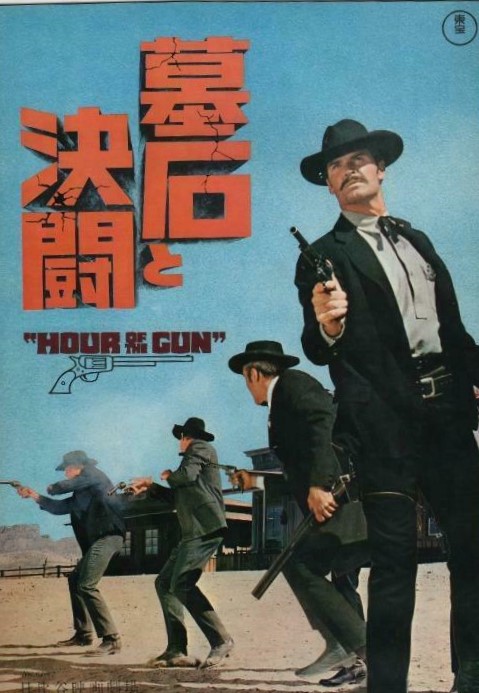
The image for the Japanese poster was taken from the initial shootout at the O.K. Corral that opened the picture.
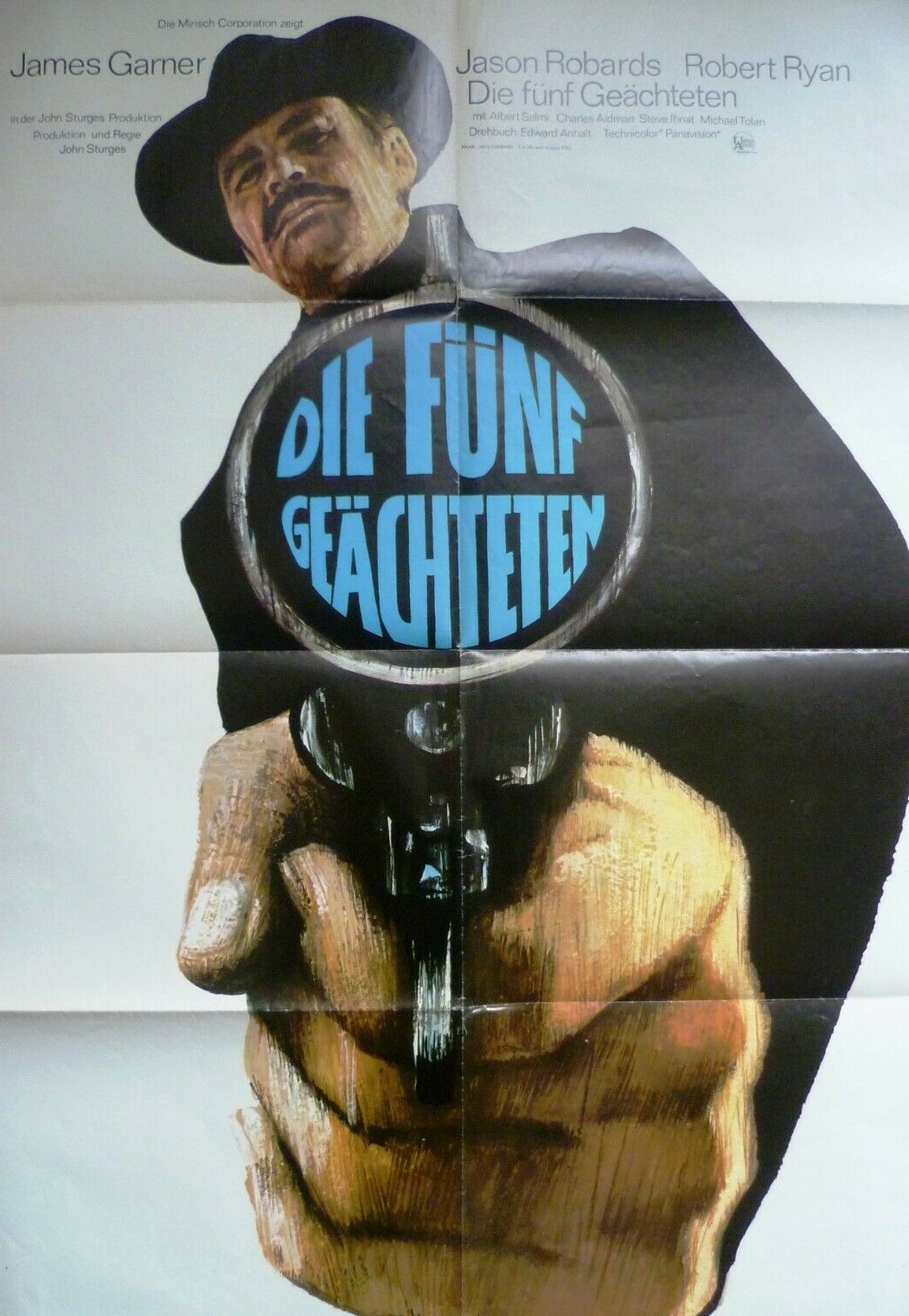
James Garner came on board in the main because he still owed Mirisch, marking a decade in the business, a picture. He had originally worked for Mirisch in The Children’s Hour (1961). He was hired for “not much,” a straight salary, but credited Mirisch with kick-starting his career after his battle with Warner Brothers. Mirisch had also funded By Love Possessed (1962) in which Sturges had directed Jason Robards, “a brilliant actor though one with problems” (something of an understatement).
There was some surprise in Hollywood when Sturges returned to Mexico after the difficulties – censorship, threats to boycott the film, union issues – he had encountered shooting The Magnificent Seven there. Having vowed “never to make another picture” in that country, “one of the reasons we’re back here is because they’ve eased up on regulations.” Having expected to import most of the cast from Hollywood, the producers were delighted that “six of the ten other featured parts” went to Mexicans, as a result of extensive auditions. Although Lucien Ballard (The Wild Bunch, 1969) remained director of cinematography, a Mexican camera crew was hired with Jorge Stahl in charge.
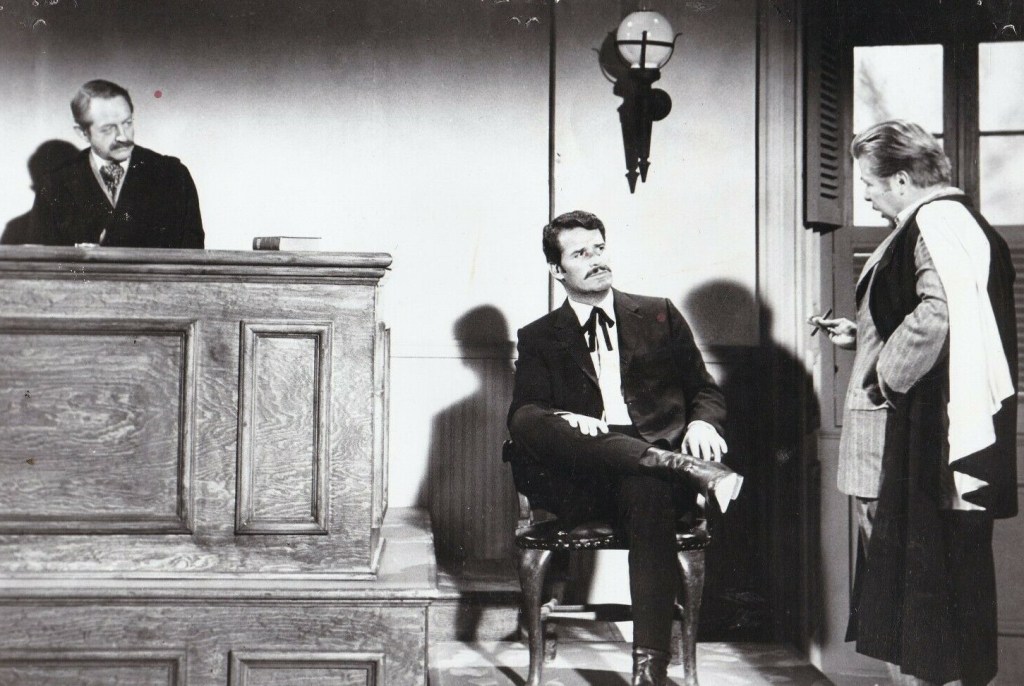
James Garner takes the stand in court defending himself against allegations of murder.
Shooting began on November 9, 1966, at Torreon, “a quiet little agricultural town with a single hotel and bar,” where a fake town had been built at a cost of $100,000. Filming shifted to Churusbusco Studios in Mexico City on December 20 and four weeks later production wrapped after exteriors at a hacienda near San Miguel de Allende for the face-off with Ike Clanton (Robert Ryan in the film).
James Garner (The Great Escape, 1963) was keen to be reunited with Sturges. “I was happy to play the character,” reminisced Garner, “because John always knew what he was doing. He would take five, six, seven factions in a story and bring them together.” Garner saw Earp as “a guy taken with his own power, who nobody could defy.”
Jason Robards, as Doc Holliday, with a well-known wild side, was difficult to manage. Assistant directors were dispatched every morning to find out where, bar or brothel, the actor had ended up the night before. Sturges rounded on him when Robards turned up at lunch for a scheduled 8am start. He was perfect after that. Unusually, Sturges would invite the cast to watch the dailies. Producers Mirisch were not happy with the title which was eventually changed to Hour of the Gun.
“My mistake,” rued Sturges, “was that I thought people would be fascinated by the real story about the quarrel between the Earps and the Clantons. You didn’t just shoot people, there were trials, lawyers, citizens’ committees…I got preview cards that said of all the stories told about Earp and Holliday this was the dullest. They (the audience) considered them fictional characters. They couldn’t have cared less that that’s the way it really was.”
As Variety pointed out in its review: “Probing too deeply into the character of folk heroes reveals them to be fallible human beings – which they are of course – but to mass audiences …such exposition is unsettling.”
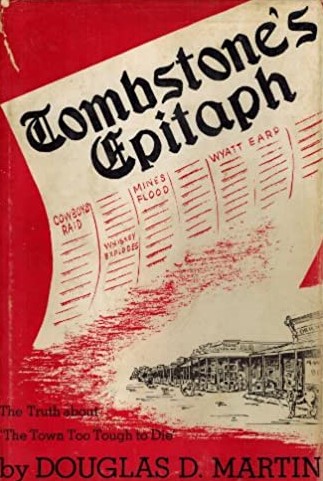
Edward Anhalt’s screenplay was based on this book published in the late 1950s.
There were clearly reservations about the project. Mirisch announced it was “ready for release” at the end of March 1967 but it did not see the light of day for another seven months. Although the film was budgeted at just over $3 million – $1 million more than In the Heat of the Night (1967), another Mirisch project – and received tremendous support from the industry-wide “Fall Film Fair” promotional campaign (“commended…for excellence in entertainment”) it was a huge flop in the U.S. bringing in a miserable $900,000 in rentals (the amount studios receive once the cinemas have taken their share of the gross). It did better abroad with $1.5 million but the total was nowhere near enough to recoup the costs.
“Also playing a large role in the reaction to the picture was the continued loss of interest by audiences in Western pictures,” said Mirisch. “I was again guilty of thinking that this trend would reverse and that Westerns, led by a hit picture, would return to favour stronger than ever. I was wrong. As a new generation arose, their interest in westers had been satiated, probably by television, and they now embraced the so-called Easy Rider era of movie-making.”
This is another piece of faulty memory. The year after the release of Hour of the Gun commercial success was enjoyed by Bandolero!, Hang ‘Em High and The Scalphunters to name a few and Will Penny and The Stalking Moon, both revisionist westerns, won critical favour. And, apologies for harping on about it, but, as I showed in my book The Gunslingers of ’69, that year proved a box office bonanza for westerns despite Easy Rider.
SOURCES: Glenn Lovell, Escape Artist (University of Wisconsin Press, 2008) p257-262; Walter Mirisch, I Thought We Were Making Movies, Not History (University of Wisconsin Press, 2008), p259-260; United Artists Archive, Appendix II, University of Wisconsin; “Mirisch, Sturges Revamp Pact for Two More Films,” Box Office, July 25, 1966, W-1; “James Garner Moves from Actor To Future Producer Status,” Variety, October 5, 1966, 5; “Director John E. Sturges Returns to Mexico for Law and Tombstone,” Box Office, November 7, 1966, pW-2; “Mirisch Schedules Five Major Films,” Box Office, March 13, 1967, p10; “Film Title Changes,” Box Office, April 24, 1967, p18; Advert, Box Office, Aug 28, 1967, p4-5; Review, Variety, October 4, 1967, p16.
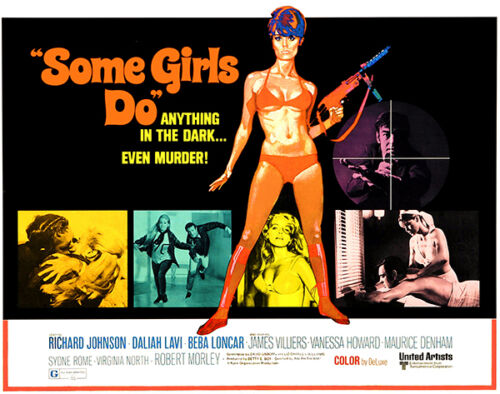
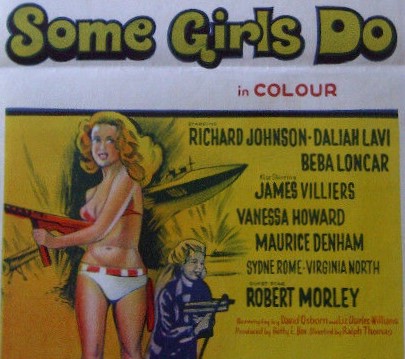
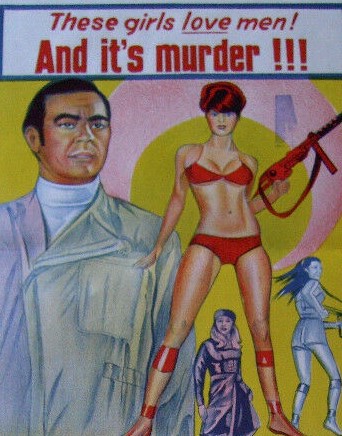
Enjoyed this sequel to Deadlier Than the Male (1967) far more than I expected because it sits in its own little world at some point removed from the espionage shenanigans that dominated the decade. Hugh (nee Bulldog) Drummond is neither secret agent nor involved in espionage high jinks, instead employed in the more down-to-earth domain of insurance investigator, albeit where millions are at stake. Although his overall adversary is male, the smooth-talking Carl Petersen (James Villiers), adopting a series of disguises for most of this picture, the real threat comes from a pair of villainesses in the shape of Helga (Daliah Lavi) and Pandora (Beba Loncar – the latter, yes, having her own deadly Box. If anything, this pair are a shade more sadistic than Irma and Penelope from the previous outing.
The sequel doubles up – or doubles down – on the female villainy quotient, Petersen having created a race of lethal female robots who spend their time dispatching scientists working on the world’s first supersonic airliner. Global domination is only partly Petersen’s aim since he also stands to gain £8 million ($134 million today) if the plane doesn’t launch on schedule. Livening up proceedings are Flicky (Sydne Rome), a somewhat kooky Drummond fan who has her own agenda, Peregrine “Butch” Carruthers (Ronnie Stevens), a mild-mannered embassy official assigned bodyguard duties, and chef-cum-informant Miss Mary (Robert Morley).
Villiers has found a way of turning an ultrasound device intended originally to aid cheating in a boat race into something far more dangerous. But, of course, for Helga seduction is the main weapon in her armoury, and Drummond’s first sighting of her – a superb cinematic moment – is sitting on the branch of a tree wielding a shotgun. Equally inviting are the squadron of gun-toting mini-skirted lasses guarding Petersen’s rocky fortress.
The movie switches between Helga, Pandora and the robots raining down destruction and Drummond trying to prevent it. Dispensing with the boardroom activities that held up the action in Deadlier than the Male, this is a faster-moving adventure, with Drummond occasionally outwitted by Helga and calling on his own repertoire of tricks. Dialogue is often sharp with Drummond imparting swift repartee.
The action – on land, sea and air – is a vast improvement on the original. The pick is a motorboat duel, followed closely by Drummond in a glider coming up against a venomous aeroplane and saddled with a defective parachute. And there are the requisite fisticuffs. Various malfunctioning robots supply snippets of humour.
Richard Johnson (A Twist of Sand, 1968) truly found his metier in this character and it was a shame this proved to be the last of the series. Although Daliah Lavi never found a dramatic role to equal her turns in The Demon (1963) and The Whip and the Body (1963) and had graced many an indifferent spy picture as well as The Silencers (1966), she is given better opportunity here to show off her talent. Beba Loncar (Cover Girl, 1968) is her make-up obsessed bitchy buddy. Sydne Rome (What?, 1972) makes an alluring her debut. James Villiers (The Touchables, 1968) is the only weak link, lacking the inherent menace of predecessor Nigel Green.
There’s a great supporting cast. Apart from Robert Morley (Genghis Khan, 1965) look out for Maurice Denham (Danger Route, 1967), Adrienne Posta (To Sir, with Love, 1967) and in her first movie in over a decade Florence Desmond (Three Came Home, 1950). The robotic contingent includes Yutte Stensgaard (Lust for a Vampire, 1971), Virginia North (Deadlier Than the Male), Marga Roche (Man in a Suitcase, 1968), Shakira Caine (wife of Sir Michael), Joanna Lumley (television series Absolutely Fabulous), Maria Aitken also making her debut, twins Dora and Doris Graham and Olga Linden (The Love Factor, 1969). Peer closely and you might spot Coronation Street veteran Johnny Briggs.
The whole package is put together with some style by British veteran Ralph Thomas (Deadlier than the Male).
CATCH-UP: Chart through the Blog how Richard Johnson’s career went from supporting player to star via The Pumpkin Eater (1964), Operation Crossbow (1965), Khartoum (1965) Deadlier than the Male (1967), Danger Route (1967) and A Twist of Sand (1968). Conversely, see how Daliah Lavi went from European star of The Demon (1963) and The Whip and the Body (1963) to Hollywood supporting player in Lord Jim (1965).
Network has this on DVD currently at a bargain price in a double bill with Deadlier Than the Male.
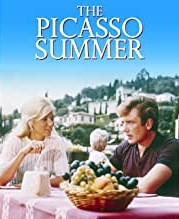
The making of The Picasso Summer was an odyssey in itself but what happened to the picture on completion generated a crisis in Hollywood.
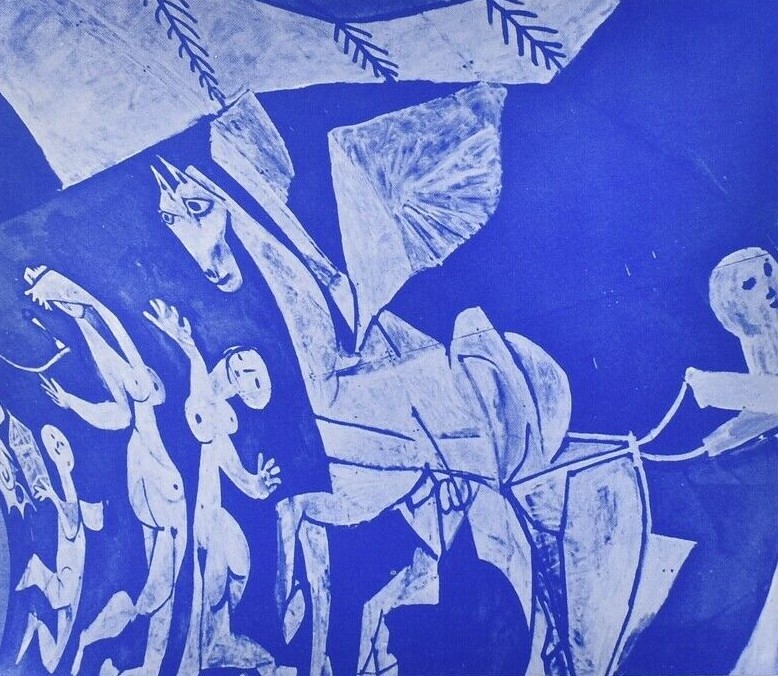
Pablo Picasso in the early 1960s had apparently given “an enthusiastic endorsement” to American layout artist Wes Herchendson to animate some of his paintings. Some time afterwards, Hershendson came across sci-fi writer Ray Bradbury’s short story In a Season of Calm Weather about an American tourist meeting Picasso on a beach. Developing the scenario with the author, the pair turned the idea into an American couple attempting to meet the artist in the south of France.
Originally, the project was modest. It would run only an hour and be shown on television, sponsored by an airline company to promote foreign travel. But once the idea attracted the likes of British star Albert Finney (Tom Jones, 1963) , who had recently filmed Two for the Road (1967) in France, and Yvette Mimieux (The Time Machine, 1960), who had a percentage of the picture, it became bigger. It was the first film for a fledgling production company part-owned by Bill Cosby and when Warner Brothers-Seven Arts stumped up $1.6 million – a reasonable budget since a WB picture three years averaged just $1.75 million – it turned into a full-length feature intended for theatrical release. Filming began in November 1967 in San Francisco and France without a finished screenplay, working in almost improvisational style to a sketchy 20-page treatment.
Herchendson took care of the animated sequences with the “live-action” section in the hands of Oscar-winning French director Serge Bourguignon. Although making his name with the French arthouse-oriented Sundays and Cybele (1962) he had also made mainstream western The Reward (1965) starring Mimieux and Max von Sydow and romantic drama Two Weeks in September (1967) with Brigitte Bardot, so his credentials appeared strong enough.
But something went very badly wrong. “The resulting footage was completely unsatisfactory,” went one report. Another claimed it was “incomprehensible.” So WB-7 Arts scrapped the first version and, because the movie, often filmed outdoors, had taken advantage of the seasons, the film was pushed back a year to ensure footage matched. WB hired a new director Robert Sallin to salvage the picture with the principals returning for reshoots.
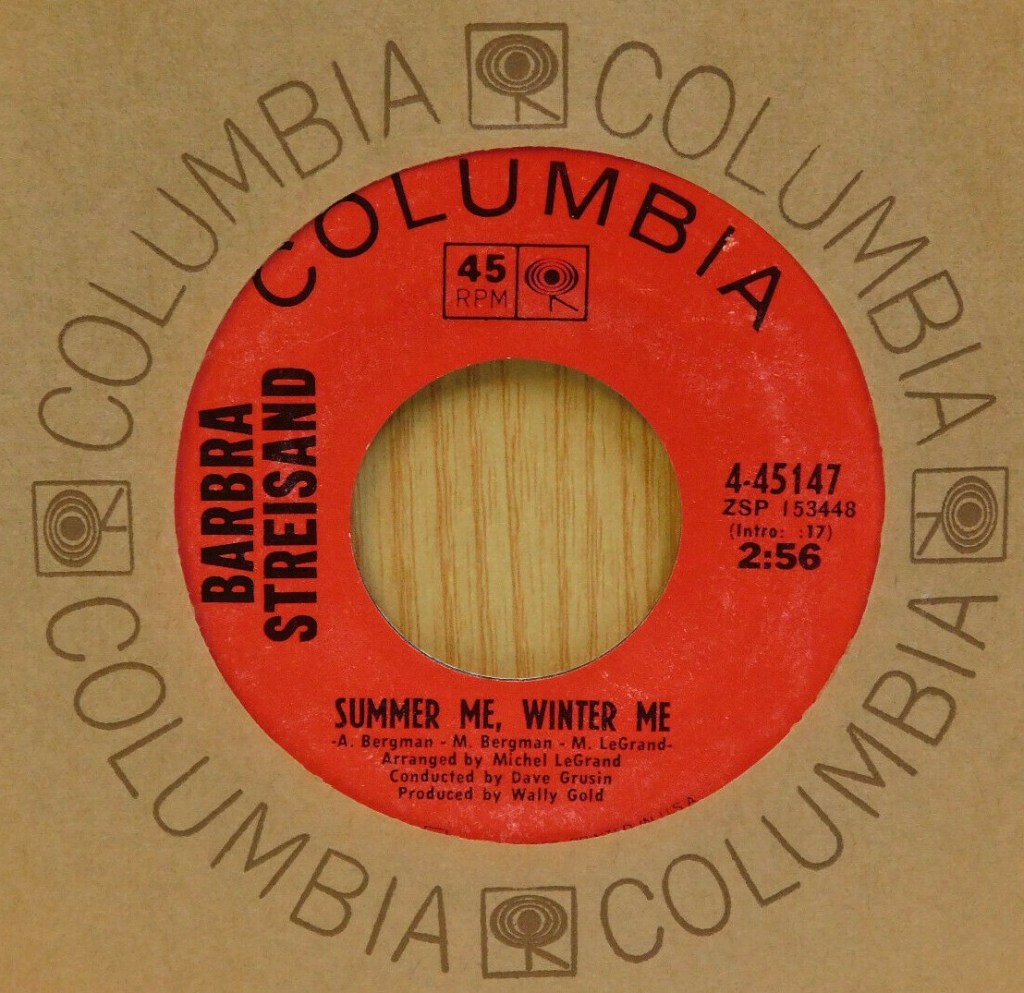
Initially, that appeared to have done the trick. WB announced it was considering launching the film as part of a big junket aimed at journalists in February 1969, and then screening it “in whole or in part” at a major conference in June with a view to a late 1969 release. A launch date was pencilled in for December 1969 – the original “X”-certificate issued in the same week as Easy Rider by that time had been amended to an “M” – with the intention of “finally getting it on the market.” And there was the signs of some promotional tie-ins with Barbra Streisand recording the theme tune “Summer Me, Winter Me.” But it didn’t appear. Officially, it was on the shelf.
The shelf, at that time, was not necessarily a bad place to be. Many pictures had been held back for a more convenient release spot during the 1960s, even more had been forcibly delayed when successful movies ate up preferential first run movie theatre space. It was nothing, for example, for The Biggest Bundle of Them All (1968) to wait eight months to be released.
But there was waiting and there was waiting. It soon became apparent that The Picasso Summer was not going to find a release date any time soon and that it was, officially, in limbo. Which was an astonishing state of affairs at the end of one troubled decade and the beginning of another. The hundreds of millions lost in big budget roadshows had seen a dramatic cutback in production. Cinemas were crying out for product, anything with a star, rather than being forced to make do with a flood of imports, spaghetti westerns of the here-today-gone-tomorrow variety and sexploitation vehicles featuring unknowns.
Hollywood had been known for routinely throwing stinkers into the marketplace and while exhibitors might complain about poor quality generally they had little option but to screen what was available because there was nothing else. But the harsh financial climate facing studios meant that every dollar spent had to be weighed up. Releasing a bad movie cost as much as releasing a good one with no guarantee that further expenditure in advertising, promotion and prints would generate profit. No point throwing good money after bad.
So Warner Brothers did the unthinkable. Even as Albert Finney recovered his box office status after Scrooge (1970) and Yvette Mimieux starred in hit sex comedy Three in the Attic (1969) and The Delta Factor (1970) the studio kept The Picasso Summer in the vaults. Even throwing it out in a wide release with no premiere or a trial run in an arthouse was considered too risky.
The number of movies that were completely unrelease-able, as opposed to being withdrawn after failing to attract an audience or turning into big flops during their run, was actually very small – Fade In (1967) coming closest to achieving that notoriety even though it had been occasionally shown in cinemas, and it was also low-budget.
But, suddenly, at the end of the 1960s that number started growing. MGM’s The Appointment (1969) was also shelved. And that had more apparent box office cachet with Oscar-nominated director Sidney Lumet (The Pawnbroker, 1964) and featuring Oscar-nominated Omar Sharif (Doctor Zhivago,1965), an even bigger star than Albert Finney, and Anouk Aimee (Justine, 1969) also Oscar-nominated with greater box office clout than Yvette Mimieux. After it was booed at Cannes, MGM cancelled the American release after one U.S. test date .
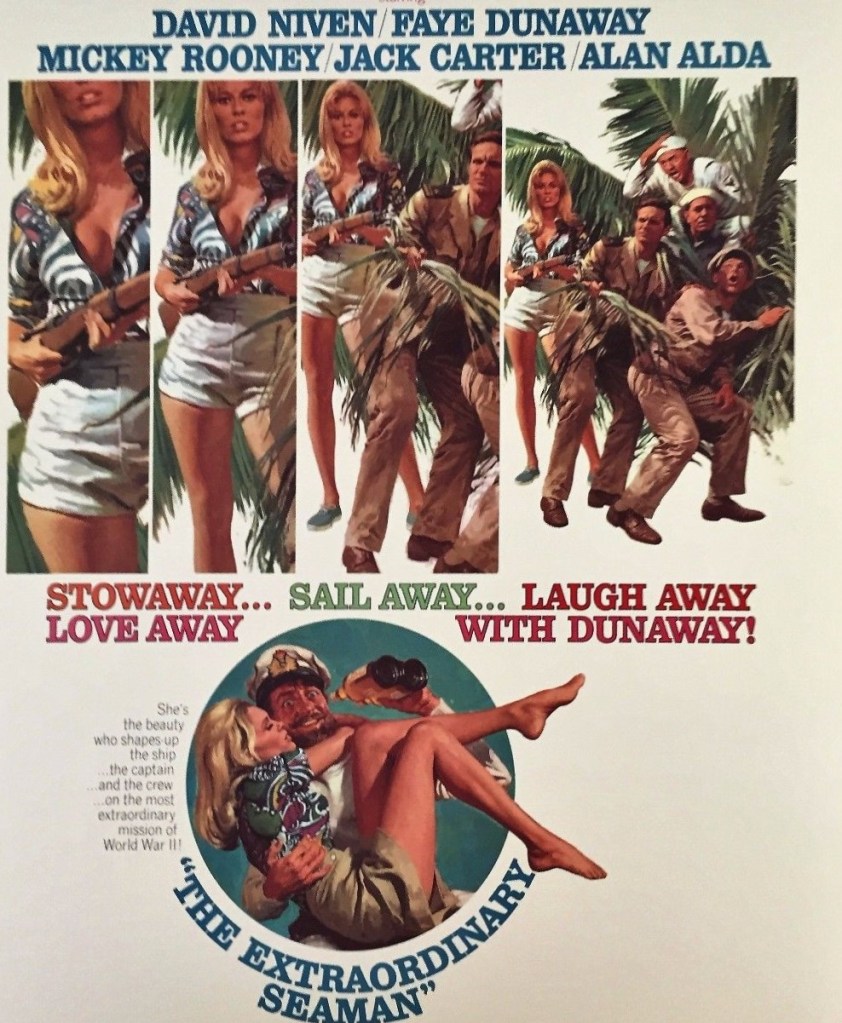
But the trickle of shelved movies was becoming a flood. Into that category fell John Frankenheimer’s The Extraordinary Seaman (1969) starring Faye Dunaway (Bonnie and Clyde, 1967) and Oscar-winner David Niven fresh from hit comedy The Impossible Years (1968). Courtroom drama Hostile Witness (1969) starring another Oscar-winner Ray Milland (Dial M for Murder, 1954) was denied a release as was comedy western A Talent for Loving (1969) with Richard Widmark, on a career high after Madigan (1968), and Adam’s Woman (1970) with Beau Bridges, who would strike a box office mother lode with Gaily, Gaily (1969) and John Mills (The Family Way, 1967). Swelling out the list was Crooks and Coronets / Sophie’s Place (1969) starring Telly Savalas (The Heroin Gang, 1968) and Hammer sci-fi Moon Zero Two (1969).
At a 1970 press conference, questioned about the shelving of The Picasso Summer, a Warner Brothers executive admitted: “We don’t know what to do with it, but not in the sense marketing is a problem; completion into a releasable form would seem to be the nub.”
By 1971, The Picasso Summer was not alone in failing to meet expectations. Some 80 movies funded by the majors had either still to be screened or had already been yanked off screens after poor test showings or minor playoffs failed to garner an audience. A year later Warner Brothers alone had ten completed movies on its books that would never see the light of theatrical day.
There had been one get-out clause for under-performing movies – television. A sale to the networks could bring in a substantial amount, sometimes enough to balance the books. But television was beginning to look askance at product that, in subject matter and in relation to violence and nudity, did not suit the Big Three channels. It was soon obvious that the networks had “lost their omnivorous feature film appetite.”
But there a light on the horizon. One network was interested in more unconventional fare and pictures that it could present as U.S. “premieres.” The CBS “Late Night Movie” slot airing on a Thursday aimed to attract an adult audience seeking more adult material. The conventions of television would still minimize nudity but the films themselves would have an adult theme. Thus, in 1972 The Picasso Summer, The Appointment, The Extraordinary Seaman and Adam’s Woman were shown on CBS.
The version of The Picasso Summer shown on American television was not the completed version. Herchendson complained to CBS about the “massacre of my film.” The network had deleted the entire bullfight sequence, the entire animated Eroica sequence and “chopped up the War and Peace” section. In fact it was well known in advance that one of the four animated sequences, the one considered “more sensual than erotic,” would go.
But there was one big plus for Warner Brothers. CBS paid $1.6 million for the movie, making it, according to one wag, the most expensive made-for-television movie. That turned a potential loss into break-even.
SOURCES: Quentin Falk, Albert Finney in Character, (Robson Books, 1992) p122-124; “WB Pacts Cosby Company,” Variety, January 17, 1968, p7; “Yvette Mimieux: Many-Phased Career,” Variety, February 5, 1969, p24; “W-7 Bahamas Junket,” Variety, February 26, 1969, p3. “WB-7 Arts First Global Sales Conference in LA June 8-14,” Box Office, April7, 1969, pW1; “Not Just Passing, WB Bets,” Variety, November 5, 1969, p7; “No “X” for Xmas,” Variety, December 3, 1969, p7; “Press Peek at Calley,” Variety, April 22, 1970, p7; “Unsalvageable Cupboard Item Lucky for WB,” Variety, August 19, 1970, p[3; “Pix in the Shortage Era,” Variety, December 22, 1971, p21; “TV-Bearish WB Cupboard,” Variety, March 29, 1972, p3; “Cannes Jeered Pic Recut By MGM,” Variety, July 19, 1972, p7; “Picasso Summer Twice Shelved Will Be Seen AT Last, CBS Aug 4,” Variety, August 2, 1972, p22.





 The Magnificent 60s