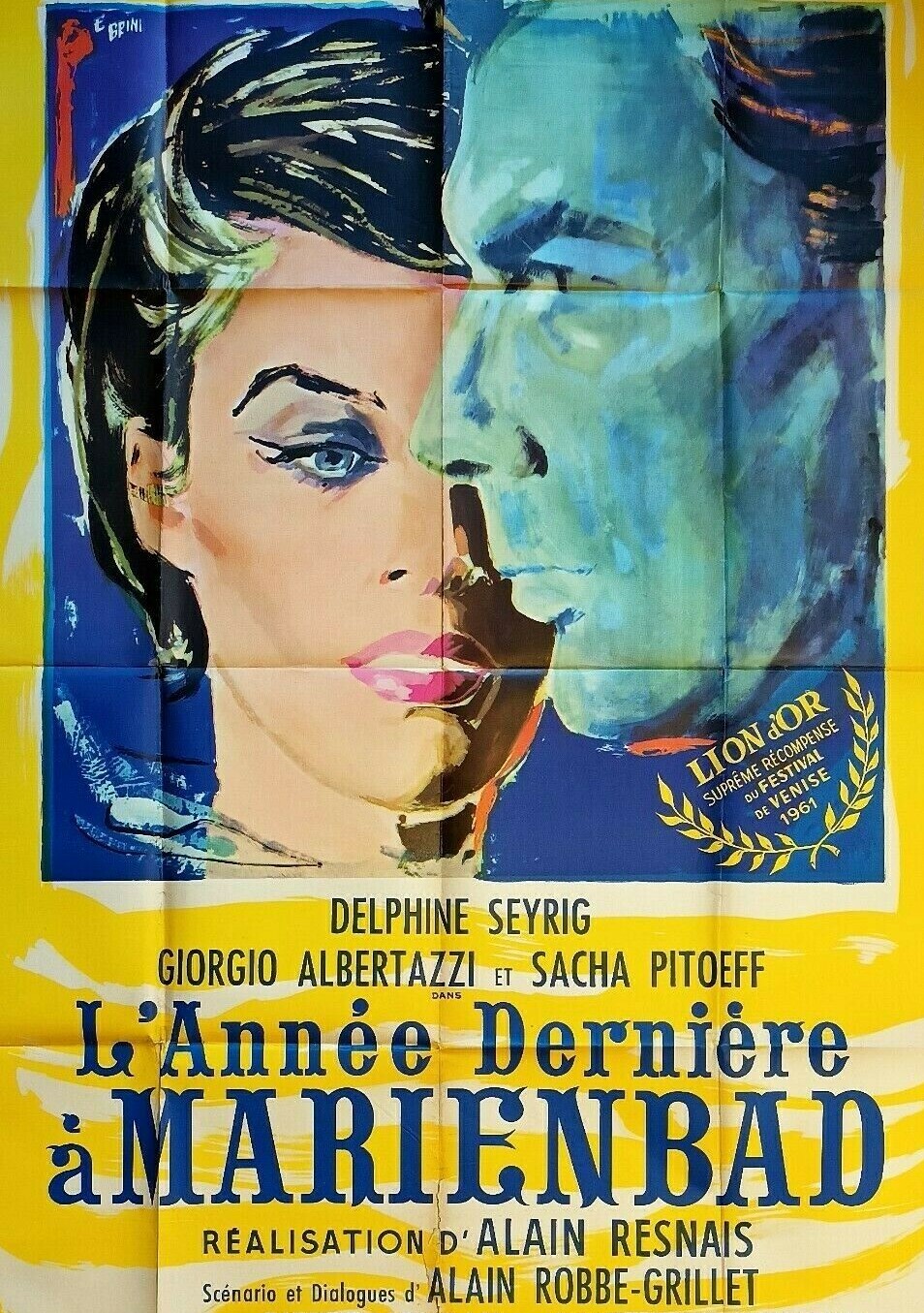
Last Year in Marienbad / L’Annee Derniere a Marienbad (1961) *****

Six decades later this miraculously emerges as a compendium of contemporary themes. Starting off with “my truth,” and segueing through unreliable narrator, false memory, parallel universe, stream of consciousness, dream vs. reality, repetitive voice-over, and still the most tantalising – or infuriating – movie ever made. A cinematic jigsaw with every piece of the puzzle highly stylized.

People have shadows but not the trees, the interpretation of a statue is disputed, characters in backgrounds are as frozen as mannequins, there’s a game you cannot win, no one has a name, and every now and then a row of men as if choreographed by Busby Berkeley wivel in turn and shoot at targets. Set in a huge baroque chateau with fabulous meticulous grounds, this fantasy building proves the ideal locale for an endless discussion of reality. And whatever happened last year in Marienbad could have occurred instead  in a number of other locations.
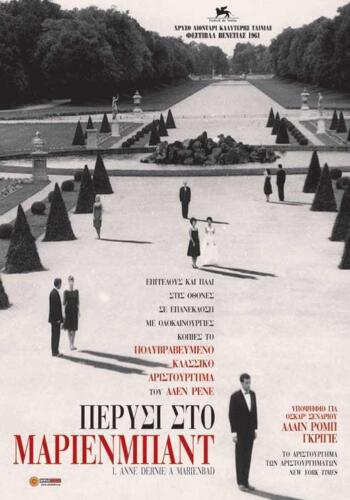
The trees have no shadows. These days CGI would rid trees of shadows but in those days it was the other way round and the shadows of the characters
were painted on the ground.

Two men, a prospective lover (Giorgio Abertazzi) and potentially a husband (Sacha Pitoeff), buzz around a woman (Delphine Seyrig). The would-be lover conjures up a tremendous amount of detail about when he met the woman, only for her to deny all knowledge of the incident, to the extent of failing to recall the reason they are meeting again, one year on. According to him, she had refused to enter into an affair the previous year but vowed to consider his ardent proclamations of love a year later. He has come to claim his reward.

That plot, slim as it is, is all you’re going to get. The movie goes all around the houses trying to establish not only was such an agreement actually struck but also whether she has ever met him at all and where exactly this supposed event might have taken place.

And were it not for the hypnotic tone, the mastery of camerawork, the cleverness of the situation, and the long tracking shots – for me an enormous plus – you might have given up the moment the man repeats, with mild differences, sentences he has already uttered. It’s the equivalent of the crime novel’s closed room mystery, except there is no solution.
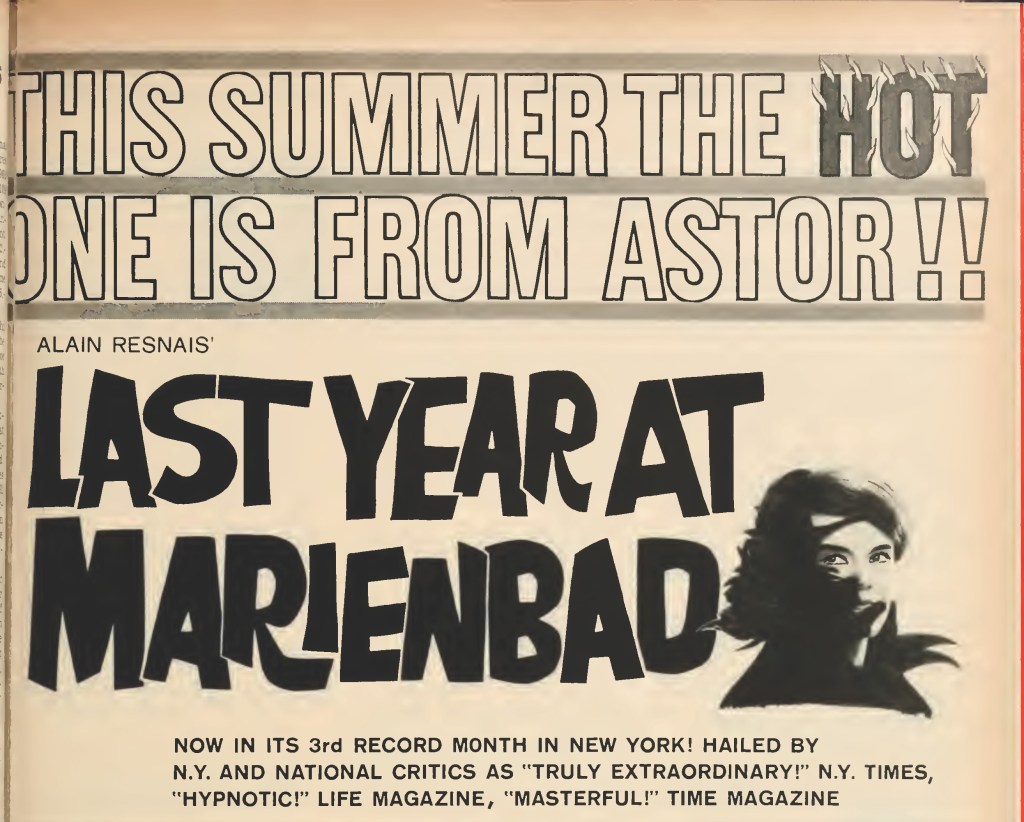
So you either dismiss it as a typical French New Wave farrago, fall out with your friends over its meaning, or just sit back and enjoy it, as I did.

For a start, it’s one of the best films ever made in black-and-white, the contrast between the two so striking, the white glowing, the black occasionally ethereal, the lack of dialog almost insisting this is in reality a silent film. There are all sorts of pieces of experimental cinema, flash cuts in conflict with the languorous stately progress of the tracking camera, the aforementioned shadows and mannequins, greater emphasis given to the ceilings and corridors than to the people.

Time and place are distorted, different versions of events presented, the initial story given substance by the husband attempting to put the lover in his place by continuously beating him at an obscure game of cards (the Japanese Nim). And much to my astonishment, just as I was well settled in to letting the director take me where he wanted and expecting no conclusion, there is a climax of sorts that may point the audience in the direction of the correct reality.

By that point, did we even care, the whole essence of the movie being the inability to detect truth, the slipperiness of meaning, the elusiveness of intent and the certainty that what was clear one year is not the next. Cinema is built on conflict, and the most obvious one is difference of opinion. What one person regards as fact, the other dismisses as supposition. This could have been played out in dialog, endless discussion about meaning and veracity, we see it all the time in crime pictures and romance, what exists in one mind not having the same resonance in another, but instead we are treated to one long glorious cinematic essay.  

Director Alain Resnais had already set cinema alight with Hiroshima Mon Amour (1959) and there can have been few artists who hit the arthouse ground running in such style. That the script had been written by eternal bad-boy and future director Alain Robbe-Grillet (Trans-Europ Express, 1966) ensured that it was always going to be controversial. Unusually, Resnais, apparently, stuck very close to the script, so in that sense it was a collaboration rather than the usual loose interpretation of a screenplay.

The stars all took different subsequent routes. Delphine Seyrig, in her debut, would go on to become an arthouse darling in Accident (1966), Francois Truffaut’s Stolen Kisses (1968) and Jacques Demy’s La Peau Deuce/Donkey Skin (1970). Italian Giorgio Albertazzi did not become an arthouse darling, more likely to turn up in bit parts in a historical drama like Caroline Cherie (1968) or in a supporting role in giallo Five Women for the Killer (1974). You might remember Sacha Pitoeff from The Golden Claws of the Cat Girl (1968) and he, too, headed down the support/bit part route.

You might end up resistant to what you see, but everyone with an interest in cinema should see Last Year at Marienbad at least once.
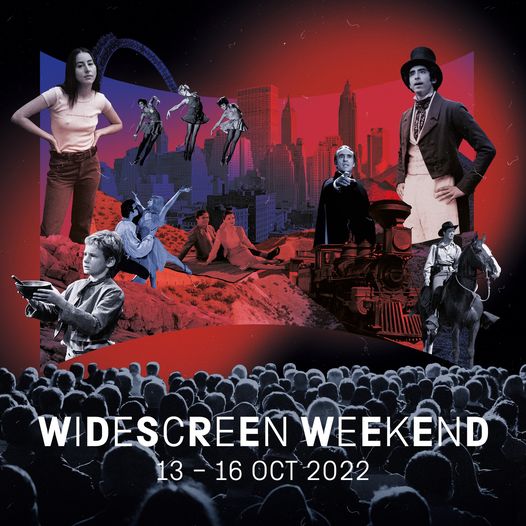
Widescreen Weekend 2022

We are so conditioned to watching old movies on tiny screens it comes as something of a primal shock to see them in all their original glory. Most festivals lean towards the arthouse end of the cinema business so it’s all the more delightful to find an event that without apology concentrates on the mainstream. Widescreen Weekend takes place at the National Science and Media Museum in Bradford, England, and mostly in its Pictureville Cinema, the only venue in the country equipped to show Cinerama pictures in the original three-strip version which requires three projectors.

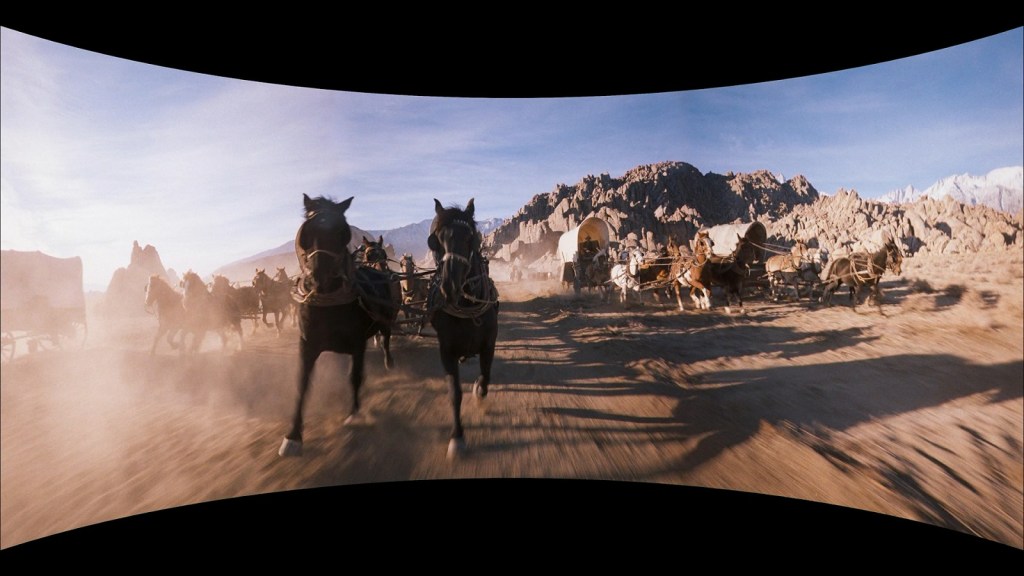
Wagons race to escape attack in “How the West Was Won.”

And while most other film festivals attract general movie lovers, this one appears to appeal in large part to those who have had something to do with the movie-making business or its technical side. Speakers might include, for example, Cinerama restoration specialist Dave Strohmaier or Kevin Brownlow, editor turned director, and among the audience you might find people like Keith Stevens from Australia, a former operations executive with Village Roadshow there, but who started out as a projectionist and regaled me with tales of projecting The Sound of Music (1965) in its original roadshow run.

There’s a limited number of movies that were made, mostly in the 1960s, either in Cinerama or 70mm, so the event has expanded to take in the earlier Cinemascope and the other versions of widescreen technology on which Hollywood depended as the marketing hook to bring back audiences from the all-encompassing maw of television in the 1950s. Later films whose directors understood the cinematic impact of 70mm are also added to the mix.

You are transported back to a time when screens were just enormous – this one is 51ft wide – and were curtained, and those curtains would not open (to the sides) until in typical roadshow fashion, a lengthy musical Overture, highlighting aspects of the movie’s music, had run its course. There is something quite sumptuous about sitting in a movie theatre staring at huge red curtains and waiting for the house lights to dim and the music to begin.

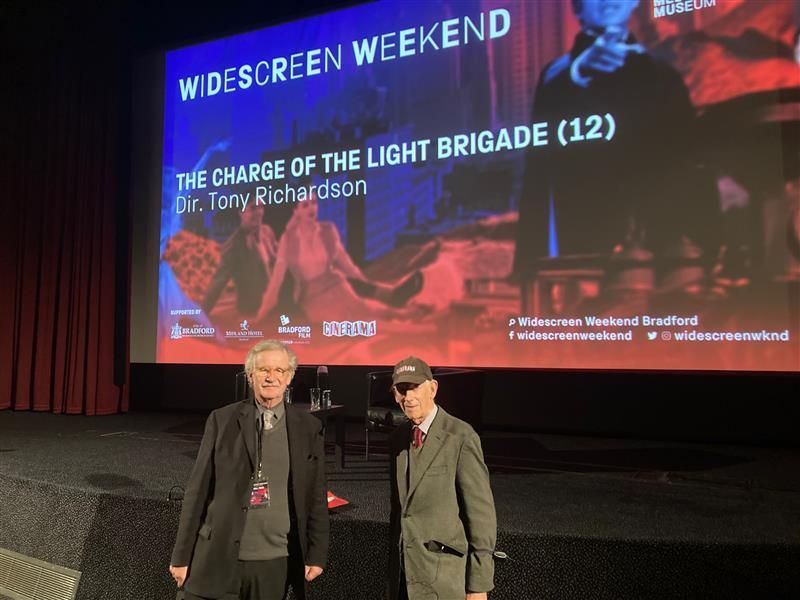
Christopher Frayling and Kevin Brownlow getting ready to introduce “The Charge of the Light Brigade.”

Roughly half-way through the movie itself, the curtains would close for an intermission, and before the picture restarted there would be more music, what was termed the Entr’Acte. Some DVDS of roadshows contain both Overture and Entr’Acte but there is a lightyear of difference between hearing them in your lounge and being exposed to them in a picture house built to bring out their best sound.

This is a homage not just to old movies but the old way of seeing a movie.

In previous years the programs have included Ice Station Zebra (1968), West Side Story (1961), 2001: A Space Odyssey (1968), the David Lean trilogy of Lawrence of Arabia (1962), Doctor Zhivago (1965) and Ryan’s Daughter (1970),a pair from William Wyler that could not have been more diverse – Ben-Hur (1959) and Funny Girl (1968) – This Is Cinerama (1952), Carol Reed’s  The Agony and the Ecstasy (1965), John Frankenheimer’s split-screen Formula One epic Grand Prix (1966) and of course the mother of all roadshows The Sound of Music (1965). Throw in a healthy helping of 1950s Cinemascope features and more contemporary pictures which embraced 70mm and you have the makings of an always satisfying weekend.

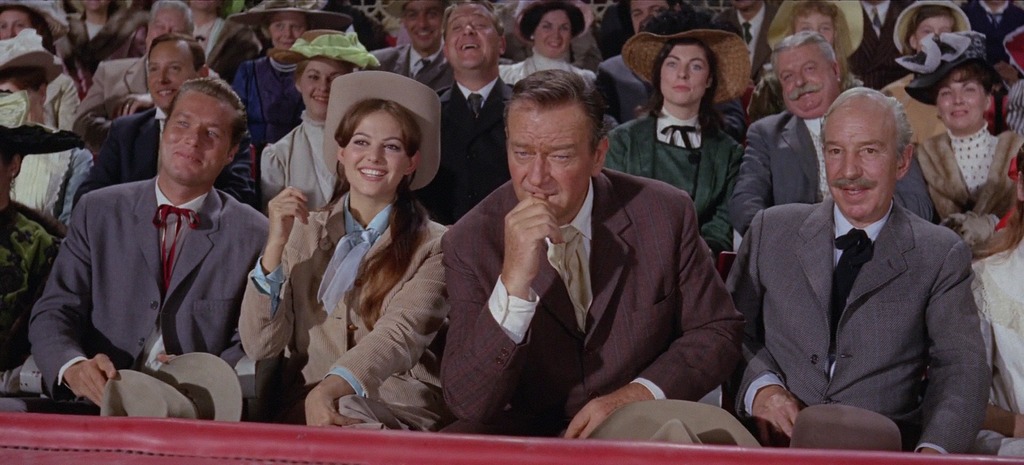
A thoughtful John Wayne next to Claudia Cardinale in “Circus World.”

So one of the highlights is to see old favorites. This year we were treated to the three-strip version of How the West Was Won (1962), your feet tapping immediately at the sound of the driving Alfred Newman score, and a restored The Wonderful World of the Brothers Grimm (1962), the first two movies made in the Cinerama process that had dramatic purpose and were not mere travelogs.

But there was also an opportunity to watch old movies that have never been screened in their original version since their initial release, such as Circus World / The Magnificent Showman (1964) shown in Super Technirama 70. Also on the program was Carol Reed’s Oscar-winning Oliver! (1968), Bob Fosse debut Sweet Charity (1969), The Charge of the Light Brigade (1968) and Douglas Trumbull’s Brainstorm (1983), Natalie Wood’s last picture and one that experiments with screen size. Extending the program into non-70mm widescreen there was a screening of Dracula, Prince of Darkness (1966) and A Star Is Born (1954). Every screening was introduced by an expert and there were occasional surprise guests like Kevin Brownlow, the editor of The Charge of the Light Brigade.

The event takes place in October every year and I’m already looking forward to the next. Kathryn Penny, who has organized the event these past few years, is moving onto a post in academia, and she will be sorely missed.  

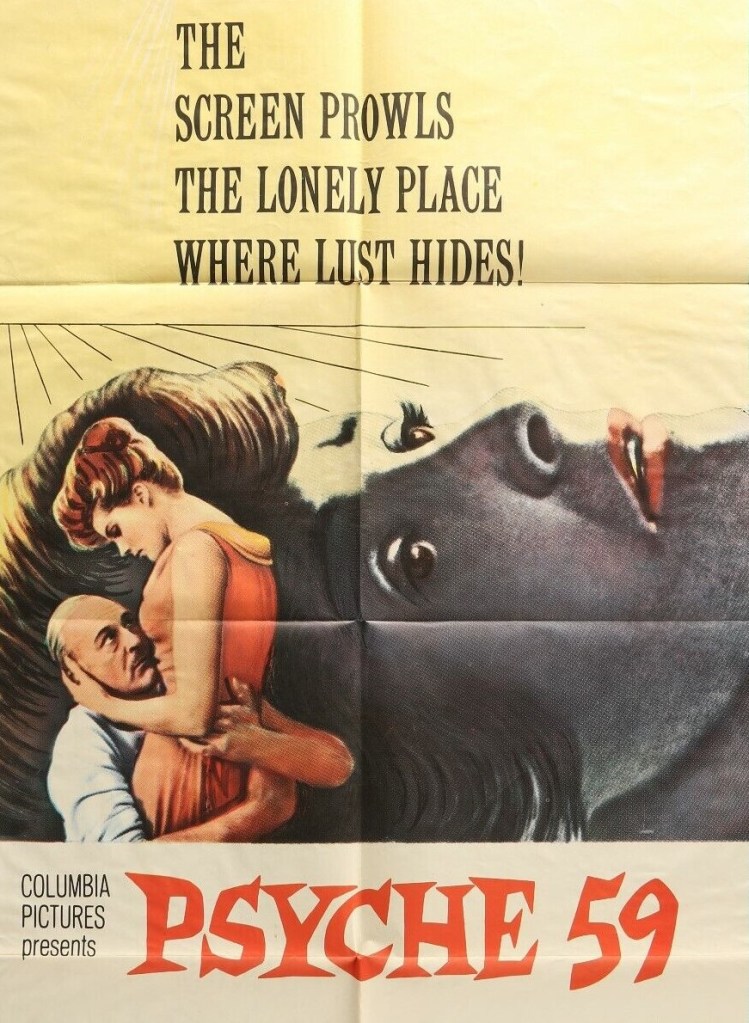
Psyche 59 (1964) ****

This is a low-budget gem, an exploration of the psychological consequences of grooming. You can probably guess from the outset where it is headed but simmering tension has rarely been handled so stylistically.

With the exception of Patricia Neal, an unexpected Best Actress Oscar-winner for her previous film Hud (1963), there were no stars in the cast. Curd Jurgens was only beginning to play characters for whom a German accent was not essential, Samantha Eggar one movie shy of her breakout picture The Collector (1965), Ian Bannen, essentially a character actor, building on his success in Station Six Sahara (1963).

Blinded after an unexplained psychological trauma, Allison (Patricia Neal) welcomes back, over the objections of husband Eric (Curd Jurgens), her much younger sister Robin (Samantha Eggar) to the family home. Family friend Paul (Ian Bannen) cares (possibly overmuch) for Allison while hankering after Robin. The screenplay by veteran Julian Zimet (Saigon, 1947, with Alan Ladd) is taut as a drum, every line a threat, suppressed emotion or piece of exposition that could bring the whole house of cards tumbling down.

The blindness is exceptionally well handled, Allison’s need for physical contact with her husband sensual in its expression. Though she can a ride a horse, her vulnerability is implicit; as she is led across a beach you wonder what would happen were she to be abandoned. What she cannot see becomes central to the movie. That Robin – vivacious but damaged – clearly has some hold over Eric is demonstrated in a tete-a-tete between them but as tensions mount such scenes cannot be kept secret. When Eric grabs Robin’s hair and she retaliates by jabbing him with scissors, neither party emits a sound, leaving Allison oblivious to it all.

Robin takes delight in exposing what has lain on the surface for too long. When Paul begins to fall for Robin, the younger woman astutely remarks to her sister: “Am I taking him away from you?”  Allison, however, is self-aware, convinced she could see if she wanted to, if she was prepared to lift the psychological barrier that keeps the past safely hidden. “I’m afraid to see,” says Allison, “there’s something I’m scared to look at.”

Given the period when it was made there was a lot that could not said – or shown – and even so the film was censored prior to release, but it is the direction by Alexander Singer (A Cold Wind in August, 1961) that lifts the picture up. An acolyte of Stanley Kubrick, the movie teems with imagination, close-ups and extreme close-ups are balanced by long two-shots, a conversation in a car between Eric and Paul mostly direct to camera a prime example.

Emotion is captured at every turn and Singer avoids the cardinal sin of treating Allison like an invalid or focusing on her reaction to what she cannot possibly see, her eyes hidden behind dark glasses for much of the time. Levity is provided by Mrs Crawford (Beatrix Lehmann), Eric’s sci-fi-reading horoscope-obsessed mother and by a couple of excitable children.

The grooming is in the past but the after-effects are very real. In a film like this it is tempting to consider that certain attitudes are dated, but it is clear from this film that nothing has changed, that men believe they can take what they want regardless of the impact on their victims.

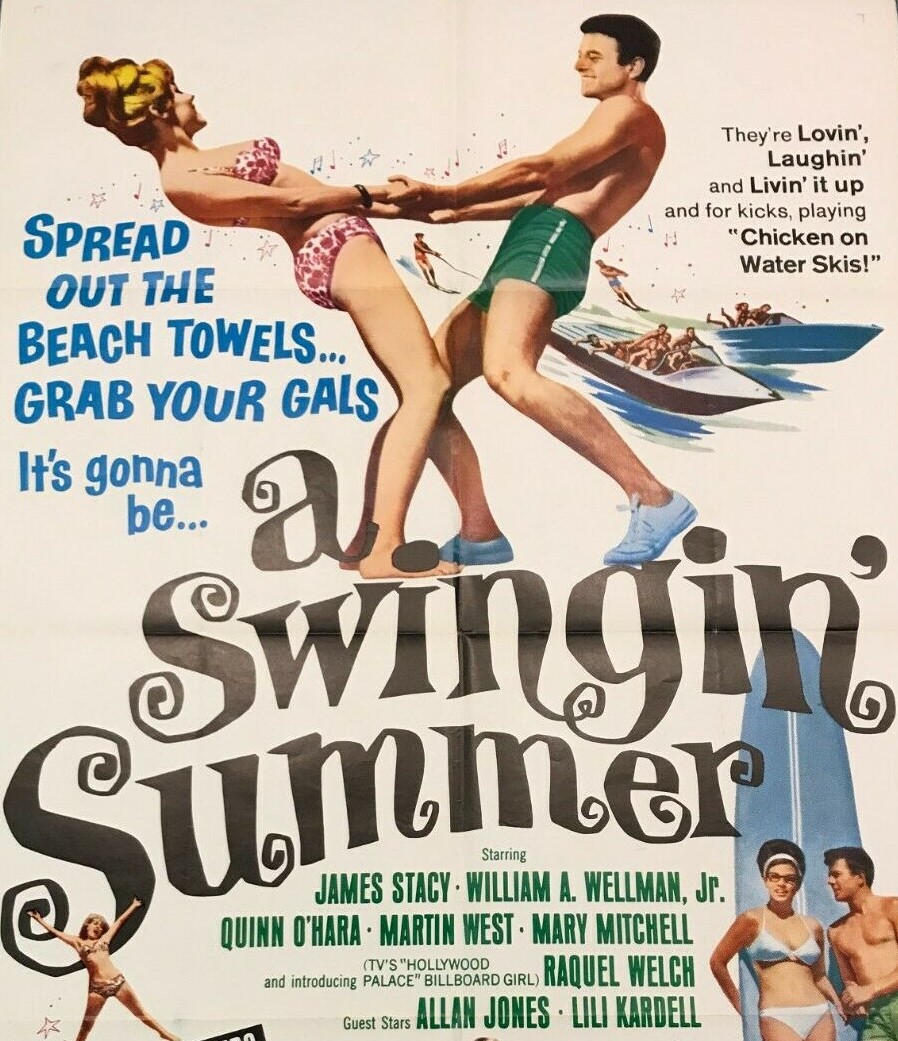
A Swingin’ Summer (1965)***

I admit it: spotting this on YouTube I couldn’t resist. After all, someone has to report on the first proper Raquel Welch picture. Plus, I had never seen a beach movie, such a staple of the decade. Plus, depending on your point of view, Raquel gets to sing.

But why waste any brainpower coming up with a new idea when you can recycle an old one – let’s put the show on in the barn. Or a version of it.

Raquel Welch – distinctive in any language.

When their summer plans are dashed, students Mickey (James Stacey) and Rick (William Wellman Jr.) decide to promote a series of beach concerts. That doesn’t sit too well with lifeguard Turk (Martin West) who takes an unwelcome shine to Mickey’s neglected girlfriend Cindy (Quinn O’Hara). Rick, meanwhile, is intrigued by nerdy Jeri (Raquel Welch) but a bit put off to discover she’s more interested in a meeting of minds than anything more obvious, and possibly by her independent, proto-feminist streak, in that she selected him for her “summer romance.”

Just in case you thought there wasn’t much else to do but wait till the wannabe promoters got their act together and people fell in and out of love, there’s a hefty amount of subplot: a fistfight, a robbery and a water-ski version of “chicken.” Plus if there was any chance of you getting bored, house band Gary and the Playboys and a variety of other acts, including as the climax The Righteous Brothers, hit the stage and, in the interests of gender equality, the platoon of good-looking women hanging around are matched by a squad of good-looking men. 

There’s even some effort at comedy, a few pratfalls, mostly thanks to the distractions of Jeri, and one gender-switch sight gag which seemed pretty daring for the times, and even a nod in the direction of health food fads. Perhaps, more surprisingly, are the solid characterisations, the principled Mickey who refuses to sponge off Cindy’s rich father. Discovering she bailed him out behind his back, securing the sum required for the project from her father, he accepts the money as a loan but renegotiates the interest rate.

Jeri is way ahead of her time, analysing the men she fancies and with the repartee to keep them in line. It’s pretty even-handed in the beach costume department, for every girl in a bikini or tight top there’s a bare-chested topless hunk, though it still manages to be overtly sexist, girls needing measured by an obliging male in order to enter a beauty contest.

Scottish actress Quinn O’Hara (The Ghost in the Invisible Bikini, 1966), a former beauty queen and girlfriend of pop star Fabian (Mr Hobbs Takes a Vacation, 1963), must have thought the prospect of becoming the breakout star pretty high, what with her reimagining of the Lana Turner/Jayne Mansfield tight top. Her only rival was the girl playing the nerd who hooked the male lead’s best friend. Ostensibly, the nerd was not much of a part, spouting psycho-babble most of the time.

A nerd is still a nerd, O’Hara must have assumed. Unless she’s Raquel Welch.

Welch handles the dialog very well, probably longer speeches than anyone else, but even with  her horn rim glasses and hair in a bun, and determined to measure potential partners by their brain cells, she stands out as an independent thinker long before she releases her secret weapon, a yellow bikini, and smart enough to work out that if that doesn’t set a man’s pulse racing to head for second base – jumping onto the stage to strut her stuff.

It’s a bit of a stretch to argue that an appearance in a low-budget beach movie ushered her into the Hollywood fast lane, but, hey, timing is everything, especially if you happened to catch the eye of a producer looking for someone to model a fur bikini.

None of the men made much of a splash in the movie business though James Stacy was the male lead opposite Welch in Flareup (1969). Supporting actor Allan Jones was the biggest name in the cast but well past his heyday as a Marx Bros stooge.

Some of the singers were better known than the actors. Topping the bill in that respect were The Righteous Brothers – hot after “You’ve Lost That Lovin’ Feeling and “Unchained Melody” – who sang “Justine” (no smash, reaching just No 85 in the U.S. singles chart). Gary Lewis and the Playboys also topped the charts in 1965 with “This Diamond Ring.” But The Rip Chords were coming to the end of their chart life. Raquel’s song “I’m Ready to Groove” did not set the house on fire, it’s fair to say.

Robert Sparr (More Dead Than Alive, 1969) was at the helm. Leigh Chapman (Dirty Mary Crazy Larry, 1974) and Reno Carrell (Winter a-Go-Go, 1965), also the producer,  collaborated on the screenplay.

A harmless curio – a neat 80 minutes long – and if you’re intent on watching a beach movie it might as well be this.

What a Product Shortage Really Meant

The product shortage is nothing new, ask the exhibitors who survived the turbulent 1960s, a decade bookended by studio financial turmoil. Already suffering from a downturn in production thanks to audiences preferring television, the business was hit by the double whammy in 1960 of the Actors Strike and the Writers Strike, which forced an unwanted hiatus on movies already in production, cut short some shooting schedules and removed others not yet in front of the cameras. For exhibitors it rendered the “shortage more acute than before.”

That resulted in the biggest cinemas in the biggest cities holding on to the biggest movies for longer. Smaller cinemas, starved of product, had no such easy fall-back. Since studios were often at war with cinemas anyway, any crisis involving production raised tempers, each blaming the other.

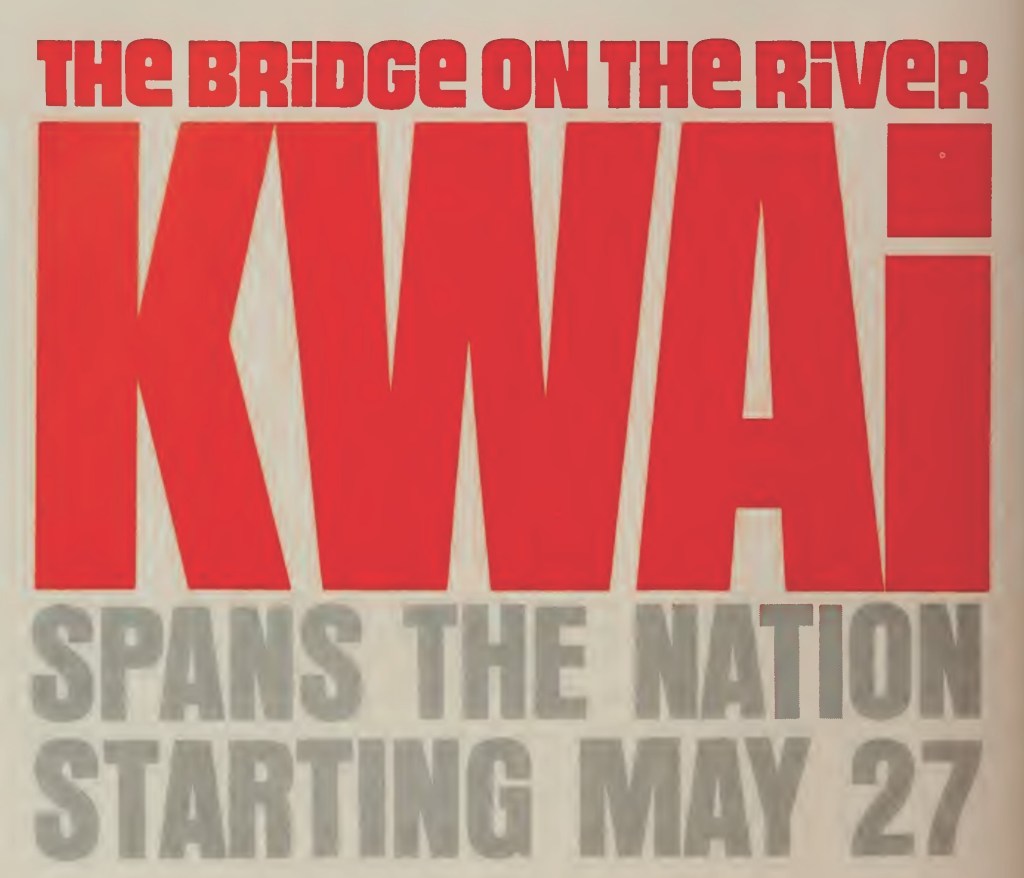
Spans the nation “again” this ad fails to mention.

Exhibitors claimed the shortage would be eased considerably if studios made more prints available of popular movies, rather than rationing their distribution, making cinemas wait longer in order to squeeze more money out of every layer of the food chain. Distributors (i.e. the studios) retaliated that cinemas themselves were to blame for the logjam that stifled the opening of new movies and therefore created a shortage further down the line. By retaining  pictures for months, they prevented new movies entering the distribution system. “Theaters aren’t available for top product at a time when film companies are looking for outlets.”

Reissues which might have offered a solution were not considered the guaranteed source of income they would be after the James Bond revival bonanza kicked in mid-decade after Dr No/From Russia with Love. Richard Lederer of Warner Bros blamed cinemas – “refusing to yield additional coin” – for old movies ending up on television in the first place.

Others argued that television screening was incidental. RCIP Corp took a lease on films already shown on television, such as Republic oldies Wake of the Red Witch (1948), Rio Grande (1950), and The Quiet Man (1952) and positioned them to play a role in filling in, tacked on as the support to a new film, presented as matinees or occasionally topping a bill at the start of the week. Using oldies in this fashion allowed cinemas to retain the traditional twice-weekly change, and some cinemas just went the whole hog and put together an entire month’s program of reissues.

Hot box office in its first few weeks of a revival at the Warner in London’s Leicester Square.

Whoever was to blame, it put both sides under greater pressure with exhibitors increasingly turning to foreign product to fill the gap, a move that could in the long term inhibit U.S. production.

In Britain, where the two biggest chains Odeon and ABC controlled the most lucrative cinemas, reissues were a last resort, the former circuit rarely taking that option.

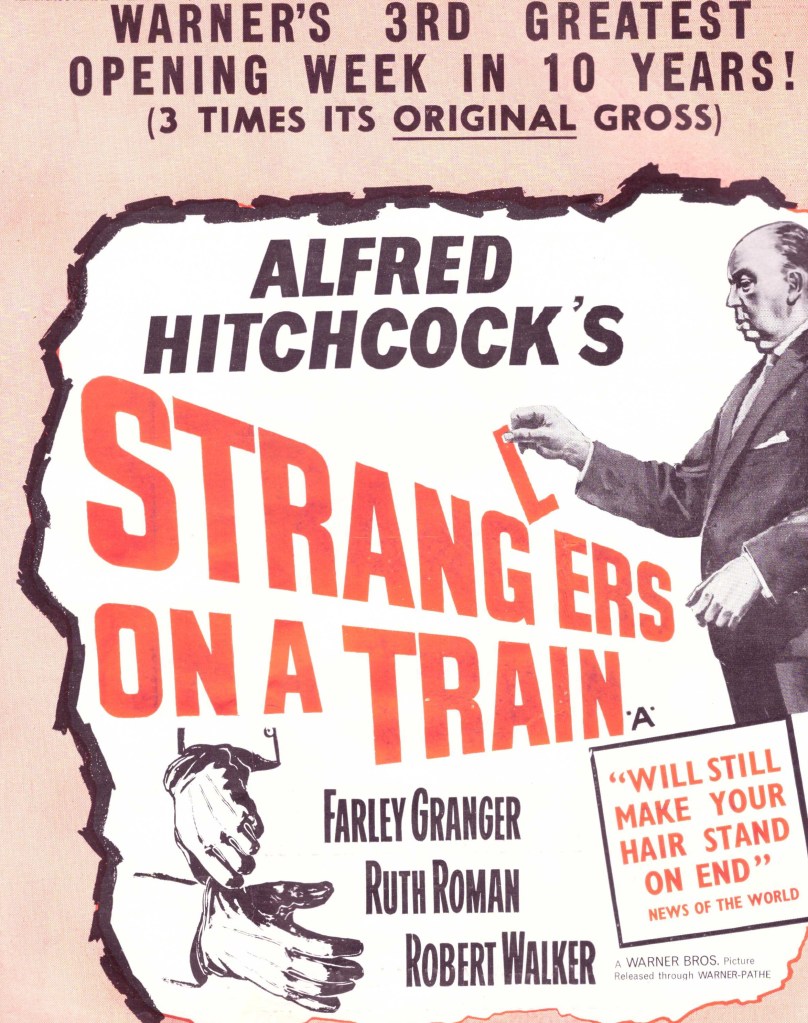
Between 1958 and 1963, ABC screened only two revivals – Strangers on a Train (1951) and East of Eden (1955) – whereas during the same period Odeon got through 75. In the 1950s Odeon used revivals as the support to prop up a weaker main feature, but by the 1960s the older pictures were the main attraction. The number of revivals presented as the top draw went from five in 1961 to 13 in 1962 and 11 in 1963 (i.e. 20 per cwent of the annual output), with others pulled in as the supporting feature.

Among the movies accorded a second outing were On the Waterfront (1954), The Jolson Story (1946), The Vikings (1958), Three Coins in the Fountain (1954), Trapeze (1956), Bridge on the River Kwai (1957), Red River (1948) and Witness for the Prosecution (1957). Odeon also took advantage of the product gap to bring back relatively recent top performers, Swiss Family Robinson (1961), Sodom and Gomorrah (1962), Psycho (1960) and Saturday Night and Sunday Morning (1960) within a year or so of their original release.

Although there was no sharp increase in movie production during the 1960s and to some extent successful double bill revivals and the retention of hit films like The Family Way (1966) and The Dirty Dozen (1967) for an extra week alleviated any shortfalls, by the end of the decade it was the circuits who came down heavy on the studios.

Films that looked as if they would do poorly on their circuit release were unceremoniously yanked off screens at the start of the week (movies at that time ran from Monday to Saturday) and replaced with something else.

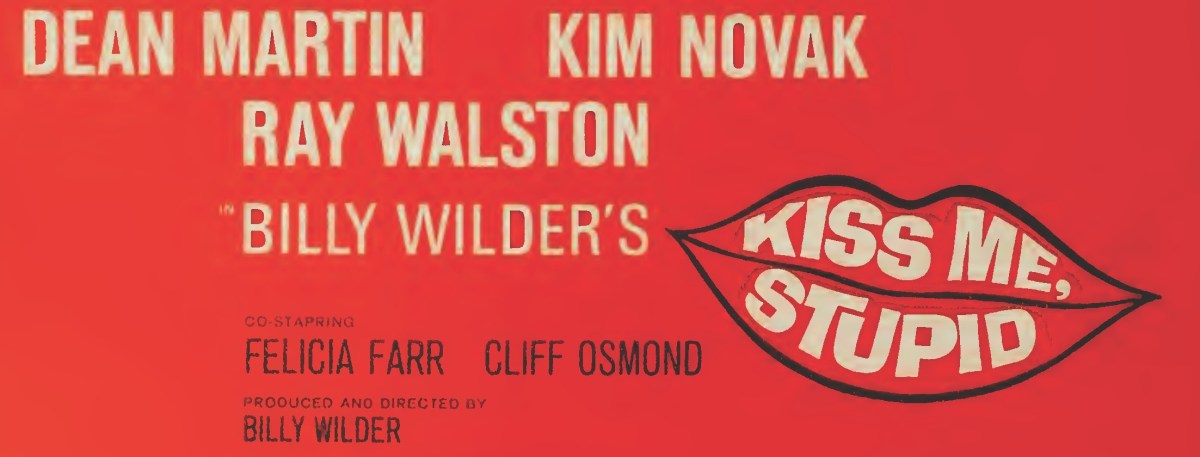
Films that failed to cut the box office ice on the circuits included: Billy Wilder’s Kiss Me, Stupid (1964) with Dean Martin and Kim Novak, Disney’s Monkeys Go Home (1967) starring Maurice Chevalier, thriller Games (1967) starring James Caan and Katharine Ross, Maureen O’Hara in romantic Italian-set drama The Battle of the Villa Fiorita (1965), thriller Brainstorm (1965) with Jeffrey Hunter, Rod Taylor in the adaptation of the Arthur Hailey bestseller Hotel (1967) and British television comedian Charlie Drake in Mister Ten Per Cent (1967).

SOURCES: “Strike Worsened Shortage Beef,” Variety, March 16, 1960, p15; “Flood of Dubs If Shortage Worsens,” Variety, March 23, 1960, p14; “Product Shortage Ends Twice-Weekly Changing,” Variety, May 11, 1960, p7; “Product Shortage Prompts Theatermen Renting of TV-Exposed Features,” Variety, May 18, 1960, p17; “Print Shortage Not Product,” Variety, September 7, 1960, p5; “How Come So Resistive To Reissues While Hollering Shortage?” Variety, February 20, 1963, p15; Gene Arneel, “Distribs: Theater Shortage,” Variety, March 6, 1963, p7; Allen Eyles, ABC The First Name in Entertainment (CTA, 1993) p121-125; Allen Eyles, Odeon Cinemas 2 (CTA, 2005) p204-214.

Guns for San Sebastian (1968) ****

Pre-Stagecoach (1939) Hollywood used to differentiate between historical adventure pictures and westerns. Given it’s set in 1746, before there was such a thing as a revolver or repeater rifle, so a complete absence of gunslingers, this falls squarely into the former camp though its format displays western credentials. A tad top-heavy with religious allegory, “miracles,” peasant piety and an Ennio Morricone score mainlining on the celestial, nonetheless it manages to achieve a character-driven narrative and some powerful action sequences.  

However, it’s a lengthy set-up. Outlaw Leon (Anthony Quinn), on the run from Mexican troops, takes refuge in a church. As punishment for giving him sanctuary Fr Joseph (Sam Jaffe) is expelled to the abandoned church of San Sebastian in an equally abandoned village. Ringing the bell to attract parishioners only alerts bandits who kill him. Donning his garb, Leon is mistaken for a priest by Yaqui leader Teclo (Charles Bronson) and strung up crucifixion style. But he’s rescued by villagers who almost elevate him to sainthood courtesy of a couple of accidental “miracles.”

Enjoying his newfound status, but still attracted to peasant Kinita (Anjanette Comer), he directs the parishioners to build a dam to flood the fields to assist in corn-growing. Teclo objects to challenges to his authority and burns down the village. The villagers turn against Leon, and although initially intending to vanish, he decides instead to blackmail his mistress, the wife of the local governor (Fernard Gravey) who agrees to supply him with weapons. Leon builds a fortress to withstand the expected attack setting up a very engaging climax in which the dam plays a critical role.

A modern audience might expect a sturdier narrative rather than one that seems to shift at whim, not helped by Leon’s indecision. And it’s too slight a vehicle to carry the political points, the state of Mexico at the time, the settlers vs. original occupants (i.e. Native Indians) scenario, the problems facing half-breeds (Leon and Teclo both), but it’s better at exploring the power of the church, the worship bestowed on any priest who turns up, regardless of how ill-suited he appears.  The occasional comic sequence, banter with an architect, negotiation with a Mexican colonel, seems out of place.

On the other hand there is a truly mesmerizing performance from Anthony Quinn (Lost Command, 1966) as a womanizing low-life who happens upon redemption, so deep does his impersonation of a priest go that he can’t bring himself to touch the compliant Kinita, who is aware of his true identity. Switching between shiftiness and godliness at the drop of a hat and deriding villagers for their lack of character his turning point comes when he realizes he has fallen into the same trap. That he emerges as a wily man of conscience is no mean feat.

The other big bonus is to see someone at last recognize Charles Bronson (Once upon a Time in the West, 1969). Here he is given cinematic status, camera pitched up at his face, and allowed to eliminate the growl and monosyllabic delivery that has been his wont in lesser roles. He’s a rather decent villain at the end.

There are a couple of inconsistencies. Teclo wants villagers to take to the hills but on the other hand somehow to spend enough time tending the corn that come harvest time he can steal. And it’s a bit too neat how he falls into the dam trap.

All in all, enjoyable and very under-rated primarily, i suspect, because people come at it expecting a western rather than a historical film in the adventure vein. But it’s elevated by the intriguing narrative, the questionable hero, Quinn’s performance and the introduction to a new-look Bronson.

Frenchman Henri Verneuil (The Sicilian Clan, 1969) does well to probe so many issues for an audience probably expecting something more straightforward. James Webb (Alfred the Great, 1969) wrote the screenplay based on novel by a William Faherty, a Jesuit priest. In the book, the hero was a soldier who became a priest rather than an atheist opportunistic outlaw.

War-Gods of the Deep / City Under the Sea (1965) ***

Hollywood careers rarely end in a blaze of cinematic glory. Sudden death ensured Clark Gable and Marilyn Monroe (The Misfits, 1961) and Spencer Tracy (Guess Who’s Coming to Dinner, 1967) went out with a bang but more likely a  career is just going to tail off and end with this kind of whimper. Director Jacques Tourneur, in any case, was long past a heyday that saw him set the horror genre agog with Cat People (1942), I Walked with a Zombie (1943) and The Leopard Man (1943).

If that wasn’t enough to solidify his credentials he dipped into another genre, the nascent film noir, and helmed gems like Experiment Perilous (1944) with Hedy Lamarr and Out of the Past (1947) with Robert Mitchum. Thereafter came swashbucklers The Flame and the Arrow (1950) headlining Burt Lancaster and Anne of the Indies (1951) plus crime drama Appointment in Honduras (1953) with the ever-dependable Glenn Ford and Joel McCrea western Wichita (1955). Then, miraculously, it was back to horror with Night of the Demon (1957) and the late flurry of The Comedy of Terrors (1963).

You can tell where I’m going with all this. War-Gods of the Deep has nothing on any of these pictures. The backstory is much more interesting than the actual film.

Basically, this is one of those pictures where an unlikely pair, American Ben Harris (Tab Harris) and eccentric Brit Harold Tufnell-Jones (David Tomlinson) get themselves into an unlikely situation and have to get themselves out of it.

Set in the smugglers’ paradise of the British Cornish coast around the turn of the last century, on a hotel on top of a cliff, the duo need to track down another American, Jill (Susan Hart), who has disappeared down a plughole, sorry mini-whirlpool. This leads to a legendary underwater city where smugglers led by Sir Hugh (Vincent Price) have found the secret of eternal life, a paradise now endangered by tremors from a nearby volcano.

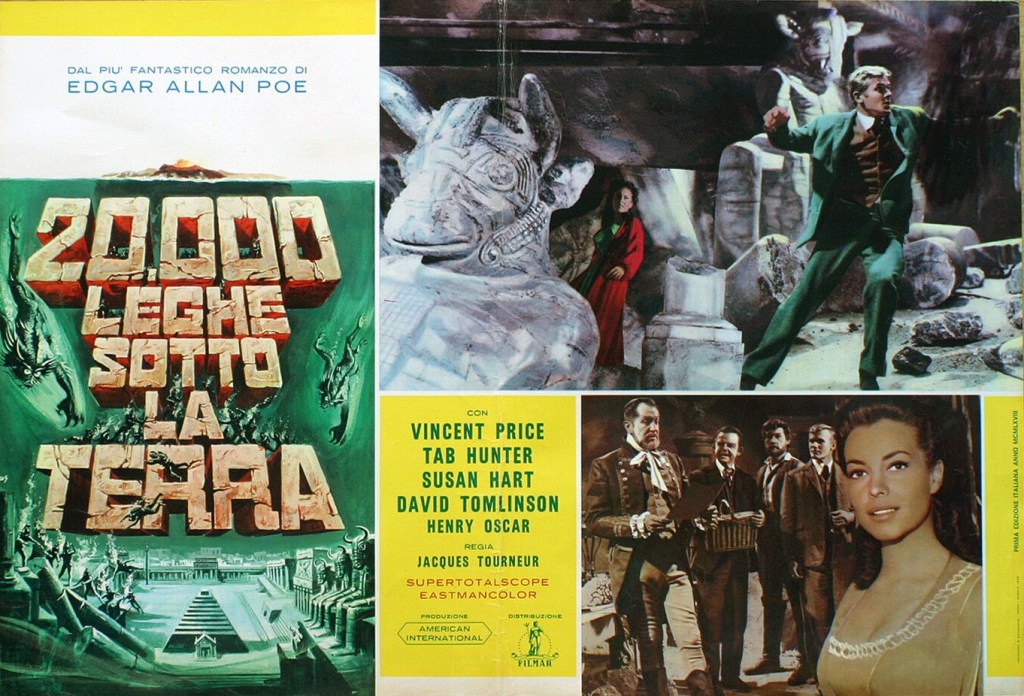
The Italians didn’t fancy the two titles on offer so came up with their own
by purloining the Jules Verne classic.

He sent his enslaved Gill-Men to kidnap Jill in the erroneous belief that she is his dead wife. Bored out of their minds with listening to Sir Hugh prattling on endlessly about how the underwater city came into being and how important he is to the whole affair and what imminent dangers the inhabitants now face, and of course faced with their own imminent demise as sacrificial victims, the pair decide to scoot, having found a willing accomplice.

There’s a chase and whatever, and some undersea adventure, but there’s not much to it.

However, what you do get when you add someone like Tourneur – and to that extent Vincent Price and his ominous tones – to this listless mix is atmosphere. Tourneur can inject eeriness almost just by switching on a camera, despite a very stage-bound picture, and he knows how to add a music score that tremendously aids his enterprise. The opening section by the shore and in the hotel adds the necessary element of mystery to make the whole idea float.

There clearly wasn’t enough of a budget for the Gill-Men to appear as anything but peripheral figures which actually might have helped since, the state of special effects in that time might have made them laughable rather than distantly disturbing.

The best you can say is that Tourneur made the best of a bad job. Vincent Price (Diary of a Madman, 1963) only has to turn up to inject an element of danger. Tab Hunter (Ride the Wild Surf, 1963) and Susan Hart (Dr Goldfoot and the Bikini Machine, 1965) needn’t have bothered turning up for all they bring to the party. And David Tomlinson (Bedknobs and Broomsticks, 1971)  brings far too much, saddled with a pet comic chicken for no apparent reason except to extract a few laughs.

AIP, having made its name in the horror department by raiding the portfolio of Edgar Allan Poe, turned up this source material deep in that vault. But the only connection to Poe is the original idea –  which was not that original, other poets having plumbed those depths prior –  and that appears only in occasional desultory recitations of the poem. But, as a marketing tool, hey, Edgar Allan Poe, that’ll scare their socks off!

So, you are warned, but also you can’t help but warm to this final movie by one of the Hollywood greats as he tries to put a sheen on something that in other hands would have sunk like a stone.

The Long and the Short and the Tall / Jungle Fighters (1961) ****

The Brits were onto something in wartime Malaysian jungles in 1942 – sonic warfare. Imagine the franchise possibilities for comic-book or spy villains (The Brides of Fu Manchu, 1966, or Some Girls Do, 1969, anyone?). Fortunately, this ignores such temptations and takes a long hard raw look at the reality of conflict, courage and cowardice, the desire and reality of killing.  

Beginning as a fairly stock examination of men in combat, the usual clash of personalities, bullying loudmouths, and it being British elements of class distinction. But it quickly moves on to something much deeper, initially tough guys worrying about what their wives are getting up in their absence back home, but on capturing a Japanese soldier what exactly to do with him once his usefulness is over. Treat him according to the Geneva Convention as a prisoner-of-war and escort him back to base or just get rid of him and save yourself the trouble.

Five main characters make up this squad. Sgt Mitchem (Richard Todd) is the ruthless leader under pressure. He was busted down to corporal for losing a previous patrol, has got his stripe back and wants to prove his worth. But he appears to be from a different generation to his troops, his stiff upper lip only too evident while the others just give lip.

Corporal Johnstone (Richard Harris) likes to remind him of his previous misdemeanor and question his judgement. Racist Private Bamforth (Laurence Harvey) riles everyone, especially picking on Lance Corporal Macleish (Ronald Fraser) who is as likely to reply with his fists. Radio operator Private Whitaker (David McCallum) is over-keen on the spoils of war, kitbag stuffed with enemy mementoes.

After apprehending Jap soldier Tojo (Kenji Takaki) Johnstone is inclined to bayonet him right away (a bullet would attract attention). Others, more squeamish than principled, balk at the deed. At first Bamforth makes fun of the captive, belittling him, but then views him as a human being caught up in a war not of his making, giving him cigarettes, trying to make him more comfortable. When Macleish starts slapping the prisoner around, Bamforth defends him, though it’s obvious Mitchem and Johnstone have no intention of taking him back.

Then the tide turns. They are surrounded by Japs and it’s battle for real with an enemy who can defend itself. Action determines character. Some are revealed as complete cowards, others will abandon colleagues to save their skin, others are instinctively courageous, others yet again with a bit more cunning.

But the firefight when it comes is nothing like any other battle you have seen where Allied forces invariably triumph. There’s none of the clever ruses more typical of the genre.

This is by far the rawest depiction of British soldiers on the battle. The characters and conversation hit home. Tough guys are nothing but vulnerable. Although it appears that way, none of the characters actually change, it’s more that their real personalities emerge.

This is Laurence Harvey’s (The Running Man, 1963) best performance. In other pictures, his clipped delivery hid an edge of malevolence, and especially to retain audience sympathy he restrained an inner nastiness, even when ruthless as in Room at the Top (1958), this aspect more important if the male lead in a romance or essaying a decent character. Here, the real Harvey is let loose in the sense that his delivery is more normal, as if he delights in taking pleasure in using language to gut his victims. Sure, it’s an ideal central role, the guy who starts off one way and ends another, but he really brings it to life.

Richard Harris (This Sporting Life, 1963) was a rising star at this point. And it shows. He’s always trying to steal scenes, an unnecessary gesture, a roll of the eyes, forceful delivery. He turns out to be nastier than everyone else. Richard Todd (Subterfuge, 1968) also plays against type, no longer the heroic figure of The Dam Busters (1955) but fighting not just the enemy and his fellow soldiers but his internal demons.

Ronald Fraser (Fathom, 1967), often condemned to humorous supporting parts, also has a meatier role as does David McCallum (The Spy in the Green Hat, 1967).

Apart from a heavy dose of rain and some stock shots of animals, it betrays its stage roots, based on a play by Willis Hall, but that hardly matters when the dialog is so sharp, the characters so well-drawn and the drama so intense.

Leslie Norman (Dunkirk, 1958) does an excellent job of focusing on character and making the action believable. Wolf Mankowitz (The Day the Earth Caught Fire, 1961) was credited with the screenplay.

High-quality stuff.

Mr Hobbs Takes A Vacation (1963) ***

Audiences reared on the actor’s westerns and Hitchcock thrillers of the 1950s might have been somewhat taken aback to see the hard-hitting star turning up in a comedy. Setting aside Bell, Book and Candle (1958), he hadn’t been seen in anything that would resemble a Hollywood confection since a couple of lack-luster Post-War comedies – Magic Town (1947), Jackpot (1950) –  when he was trying to regain the marquee status he had lost by going off to fight. Of course, having gone heavyweight with Anatomy of a Murder (1959), Two Rode Together (1961) and The Man Who Shot Liberty Valance (1962) he might have thought he was due some movie R’n’R.

Whether this contemporary equivalent of a beachside air bnb gone wrong was the ideal choice is a moot point. But he would certainly be playing against type. After all those tough guys, principled leaders and occasional dodgy characters, you wouldn’t have to go far to find people who might enjoy seeing him taken down a peg or two.

Harassed banker Roger (James Stewart) wants a quiet getaway with wife Peggy (Maureen O’Hara). But she has different ideas and he finds himself bunked down with a brood too many, his own family, in-laws and unexpected guests. Naturally some of these unexpected guests included rats, happily infesting this shambling house that could have been second-choice for Bates Motel, and there are plenty running gags about what doesn’t work or falls off and a shared telephone line.

If there was such a sub-genre as the mature coming-of-age picture, this would be it, Roger realizing he has a lot of catching up to do in the emotional relationship department.

Mostly, it’s one episode after another. The cook quits, his daughter and son-in-law have eschewed the traditional approach to child-rearing, son Danny wants to be left alone to play his computer games, sorry watch television, teenage daughter Katey (Lauri Peters) is turning into a wallflower, rather well-endowed neighbors catch his eye. To show willing, he’s the yachtsman who gets lost and bored bird-watcher.

But if audiences have learned one thing from a decade of Stewart-watching, it’s that he’s generally far from hapless and although it’s not his fault he’s trapped in the shower room with a naked woman (Marie Wilson), he’s not so much a do-gooder as a do-er, setting out to repair as much as possible the fractured relationships, not above a bit of bribery or cutting a few corners.

This is amiable enough stuff, a few good laughs, and much merriment to be had from the mere sight of the banker, lord of his domain at work cast adrift outside it, and having to adapt to different perspectives. There’s a harder edge than you might expect and some of the scenes of relationships under pressure don’t make easy viewing.

These days, everything wouldn’t work out so well, but in the 1960s I guess the tension was derived from working out exactly how it would work out. And waiting for teen heartthrob Fabian (North to Alaska, 1960) to sing. It seems a contradiction in terms that a pop star trying to prove himself as an actor has to fall back on singing. But them’s the breaks.

A mixture of situational comedy and sharp repartee, it never falls apart at the seams, enough in the tank to keep everything on an even keel.

James Stewart moves from coldness at finding himself in awkward situations to warmth as he finds ways to retrieve the best elements out of them. Stewart doesn’t have to adapt his screen persona that much, he was always a tad grouchy, and he’s packed a briefcase full of sarcastic remarks. But the scene where he reconnects with his son is very touching, Stewart at his heartfelt best.

Maureen O’Hara (The Battle of the Villa Fiorita, 1965) who also has a few icy veins sets those aside to mother all and sundry. Stewart and O’Hara prove an excellent screen partnership and they would be paired again in The Rare Breed (1966), where he was on more solid ground.

John Saxon (The Appaloosa, 1966) gets a chance to show what he can do besides being tough and John McGiver (My Six Loves, 1963) adds another interesting character to his portfolio of offbeat roles.

Veteran Henry Koster (Harvey, 1950) knows how to handle any amount of handfuls and when to pick out the comedy or head straight for the drama. Nunnally Johnson (The Dirty Dozen, 1967) based the screenplay on the bestseller by Edward Streeter, an expert in domestic upsets, previously penning Father of the Bride.

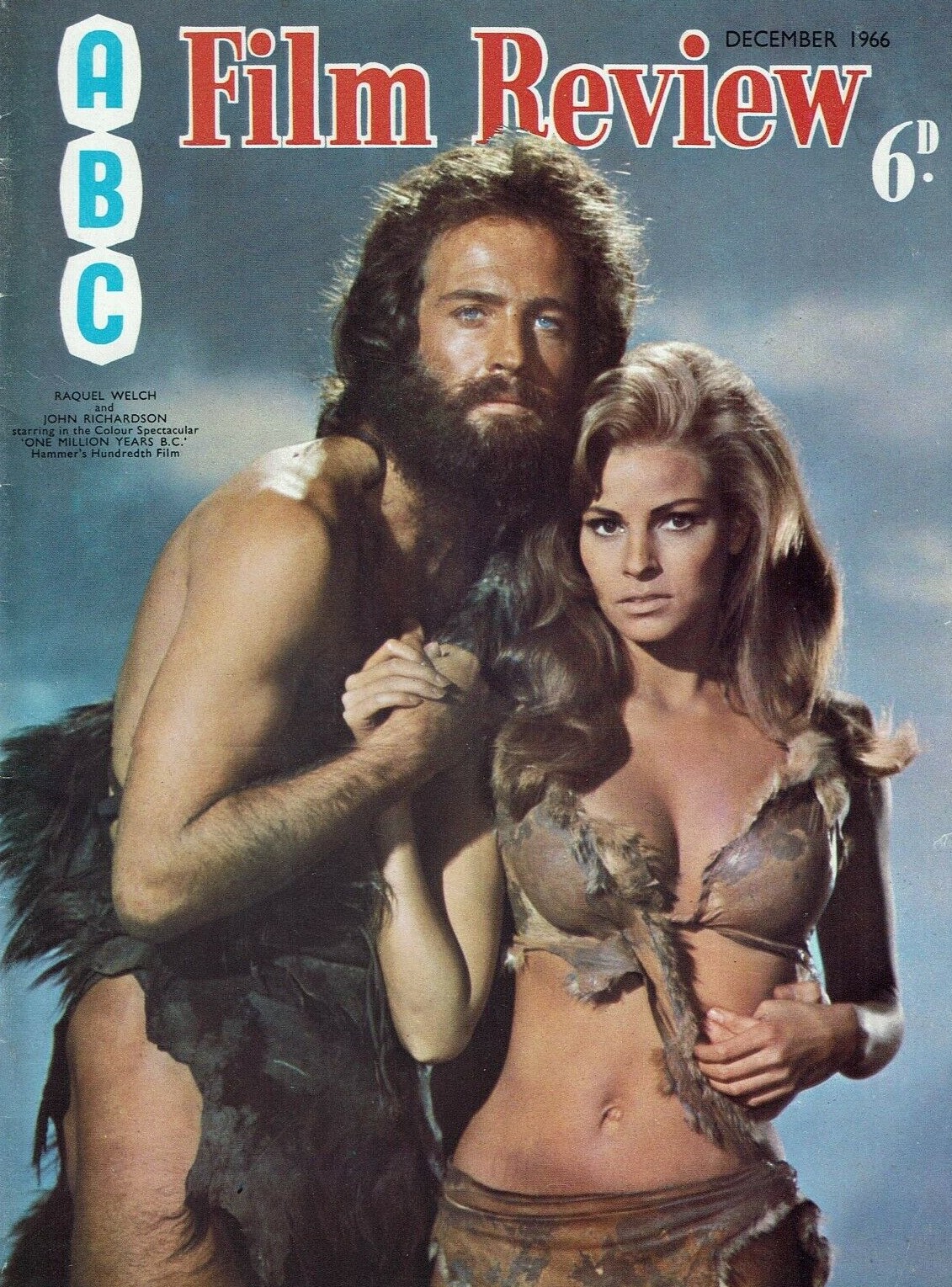
One Million Years B.C. (1966) ****

The three ages of man: child watches this film for the dinosaurs, teenager for Raquel Welch, mature male for the dinosaurs now he knows who Ray Harruhausen is.

Guilty pleasures multiplied. Add the Mario Nascimbene (The Vengeance of She, 1968) score to the delights of Raquel Welch in a fur bikini and Ray Harryhausen’s sensational stop-motion animation.  Generally dismissed as high-level hokum, it features an intriguing gender role reversal, and is virtually, not to be too academic about it, a throwback to silent cinema, minus the title cards that helped audiences a century ago work out what was going on. Everything relies on facial expression and gesticulation.

Luckily, there’s not too much in the way of narrative complication. Tumak (John Richardson), the son of the chief of the Rock Tribe, is chucked out into the wilderness for standing up to his father. He probably wouldn’t be crying too much about that, given the strong rule over the weak, old men are left behind to die, and the feeble are last in line for food.  Plus, his brother Sakana (Percy Herbert) is prone to stabbing people in the back.

Unusually, the picture went straight out into U.S. wide release (saturation). It was an 80-theater break. Twentieth Centry Fox mounted a huge advertising campaign based on the fur bikini image, but by this point she wasn’t an unknown star, already seen in “Fantastic Voyage.” The New York Times might be wincing now at its “monument to womankind” now.

Reaching a distant shore, Tumak is rescued by Loana (Raquel Welch) of the Shell Tribe who takes an instant fancy to him, helping protect him from a huge marauding creature. But his aggressive temperament doesn’t sit too well among this peace-loving democratic group either, despite him saving some kids from another marauding creature. But when he’s chucked out this time, Loana goes with him.

But you know that any journey pretty much takes them into the heart of dinosaur heaven, and Tumak makes the mistake of retuning to his own tribe, where Loana is made unwelcome by Nupondi (Martine Beswick), Tumak’s previous squeeze. It’s power politics all over again until marauding creatures and a convenient volcano intervene and matters can be settled.

All eyes are on Loana and her miraculous bikini until a dinosaur appears, which occurs at frequent intervals. Then you can’t take your eyes off Ray Harryhausen’s creativity, at first expecting the match between humans and his wizardry to be so obvious the illusion will be shattered, but once you realize that is not going to be the case you just sit back in wonder.

Spoof newspaper from the Pressbook.

Harryhausen has made dramatic improvements in his techniques since previous highpoint Jason and the Argonauts (1963). Cleverly, he builds anticipation by matte work to present scenes of live creatures. The first, the warthog, is of normal proportions, and its capture suggests man’s domination over beast. But that proves a false assumption. Anything later is just gigantic – iguana, turtle and tarantula. In normal circumstances only the giant spider might appear a threat but in the distant past it would appear any creature bigger than man looked upon humans as an easy meal.

And that’s before the allosaurus rampages into sight and a pteranodon swoops out of the sky snaring Loana and then has to battle a rhamphorhynchus over its prey, almost as if Harryhausen was determined to animate the most difficult creatures possible in order to prove his innate skill.

Sure, hostility is much easier to telegraph than other emotions and a fair bit of the picture is people getting cross with each other, but meet-cute between Loana and Tumak involves little as significant, glances and eye contact the core of communication. It’s pure cinema. Stripped of any meaningful dialog, the camera captures everything we need to know. It’s a brutal world, dog eat dog, man eat warthog, dinosaur eat woman, every living thing is a snack of one kind or another and when they’re not killing for food they’re battering each other out of power lust, rivalry or jealousy.

And although nobody could have guessed the impact Ms Welch would have on the male pulse, Hammer had previous in the department of introducing a stunning female into a tale, and it may be pure coincidence that both Loana and Ayesha in She (1965) were woman of power, rather than mere playthings of men. Ayesha is introduced in stunning fashion, her presence pre-empted, most of the picture prior to her appearance serving merely to build her up. Obviously, Ursula Andress did not disappoint but she was introduced in majestic fashion rather than catching fish at the seashore. Albeit Loana sported a bikini, so did all the other fisherwomen and director Don Chaffey resisted the temptation to present her in more statuesque fashion, regardless of the image presented on the poster.

Just as it’s hard to underestimate the iconic impact of Raquel Welch in a fur bikini, so, too, is the work of Harryhausen. And I would also add the innovative score of Nascimbene, with sounds Ennio Morricone would have been proud of.

Despite myth to the contrary, it’s rare for an unknown to emerge from a movie a real star, but Raquel Welch certainly did, though her image on a million posters might have had something to do with her sudden success.

As he did with Jason and the Argonauts, Don Chaffey keeps the story spinning along, makes the best of the lunar landscape and raw actors like Welch and John Richardson (She). Michael Carreras (The Lost Continent, 1968) based his screenplay on One Million B.C. (1940).

The problems of creating believable dinosaurs were so evident that nobody really tackled pre-history until Steven Spielberg waded in with Jurassic Park (1993). It’s a measure of how successful this effort is that the director eschews the cute kids that seemed endemic to the later genre and had his characters facing up to the monsters rather than running away like crazy or expecting that somehow man could control them.

Much more entertaining than I expected, high class special effects, strong narrative, and more than enough to wonder at.

Discover WordPress

A daily selection of the best content published on WordPress, collected for you by humans who love to read.

The Atavist Magazine

by Brian Hannan

WordPress.com News

The latest news on WordPress.com and the WordPress community.