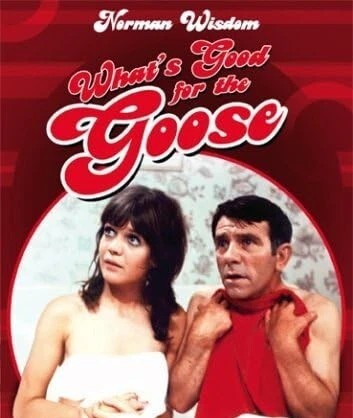
One of those comedies that works best in a time capsule and far more interesting for the coincidences and anomalies of those involved. What are the chances, you might ask, of sisters playing roughly the same role in two entirely different movies, one a comedy the other a drama, in the same year. We’ve got Sally Geeson here, in her debut, playing a free loving hitchhiker picking up an older married man and we’ve got her slightly more experienced sister Judy Geeson (Here We Go Round the Mulberry Bush) as a free loving hitchhiker picking up older married man Rod Steiger in Peter Hall’s Three into Two Won’t Go (1969).
This proved the final starring role for Norman Wisdom (A Stitch in Time, 1963), at one time a huge British box office star, who had been infected by that disease that seems to always hit comedians, of wanting to play it straight. While there is some comedy, it’s sorely lacking in the kind of physical comedy, the pratfalls and such, with which Wisdom made his name.
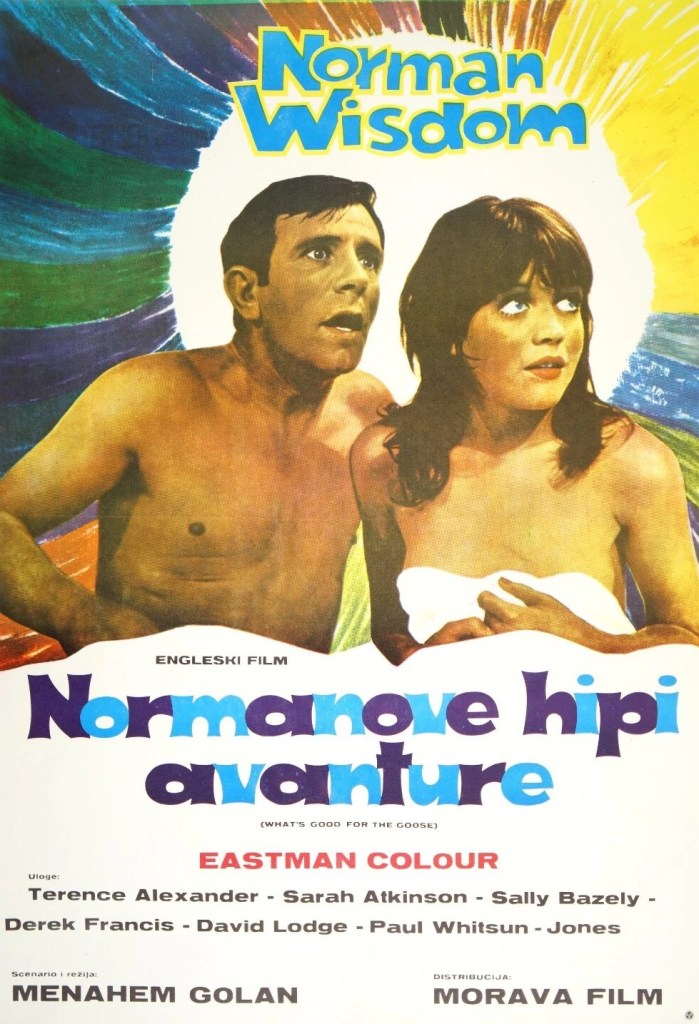
And there’s another name to conjure with – Menahem Golan. More famous, eventually, for foisting on the general public a string of stinkers under the Cannon umbrella and taking over the British cinema chain ABC before going spectacularly bust. What’s his role in all this? He’s the creative force, would you believe, wearing his writer-director shingle, in his first movie outside Israel. And if that’s not enough, the producer is Tony Tenser, also trying to change direction, switching from the horror portfolio which with his outfit Tigon had made its name and into a different genre.
And if you want another name slipped in, what about Karl Lanchbury, playing a nice guy in contrast to the creepy characters he tended to essay in the likes of Whirlpool / She Died with Her Boots On (1969).
Time capsule firmly in place we’re in a Swinging Britain world where young girls listen to loud rock music (though don’t take drugs) and go where the mood takes them, free travel easily available through the simple device of hitchhiking.
Timothy Bartlett (Norman Wisdom) is a bored under-manager drowning in a sea of bureaucracy and turned off by wife Margaret (Sally Bazely) who goes to bed wearing a face mask and with her hair in curlers. On the way to a business conference he picks up two hitchhikers, Nikki (Sally Geeson) and Meg (Sarah Atkinson), becoming smitten with the former, making hay at a night club where his “dad dancing” is the hit of the evening. He slips into the counterculture, wearing hippie clothes, generally unwinding, doing his thing, and sharing his bed with Nikki.
You can tell he’s going to get a nasty shock and just to put that section off we dip into a completely different, almost “Carry On” scenario, where his efforts to sneak Nikki in his bedroom are almost foiled by an officious receptionist. Eventually, she invites all her hippie pals to make hay in his hotel room while she makes out with Pete (Karl Lanchbury),a man her own age, and Timothy is told in no uncertain terms the essence of free love is that she doesn’t hang around with a man for long, in this case their affair only lasted two days.
It’s the twist in the tail that generally makes this work. Rather than moan his head off or believe he is now catnip to young ladies, Timothy, unshackled from convention, uses his newfound freedom to woo his wife.
So, mostly a gentle comedy, and good to see Norman Wisdom not constantly having to over-act and twist his face every which way but loose, even though this effectively ended his career. The teenagers enjoy their freedom without consequence (nobody’s pregnant or addicted to drugs) and there’s a fairly good stab at digging into the effortless joys of the period. Sally Geeson (Cry of the Banshee, 1970) didn’t prove as big a find as her sister and her career fizzled out within a few years.
As an antidote to the Carry On epidemic, this works very well.
A gentle comedy.
You can catch this on YouTube courtesy of Flick Attack.
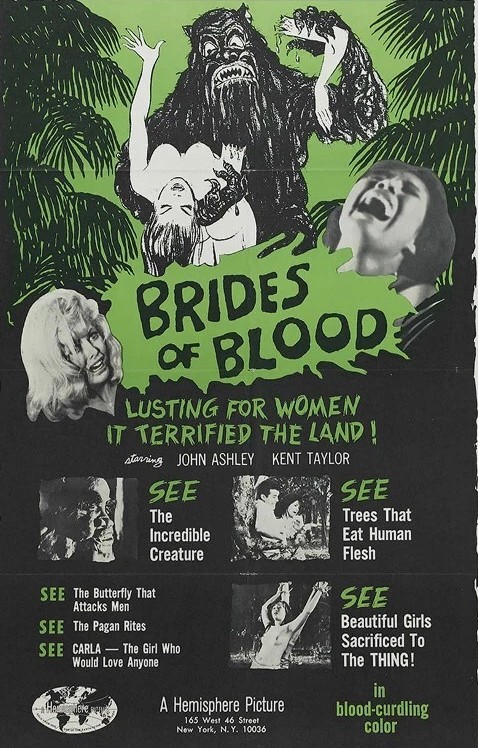
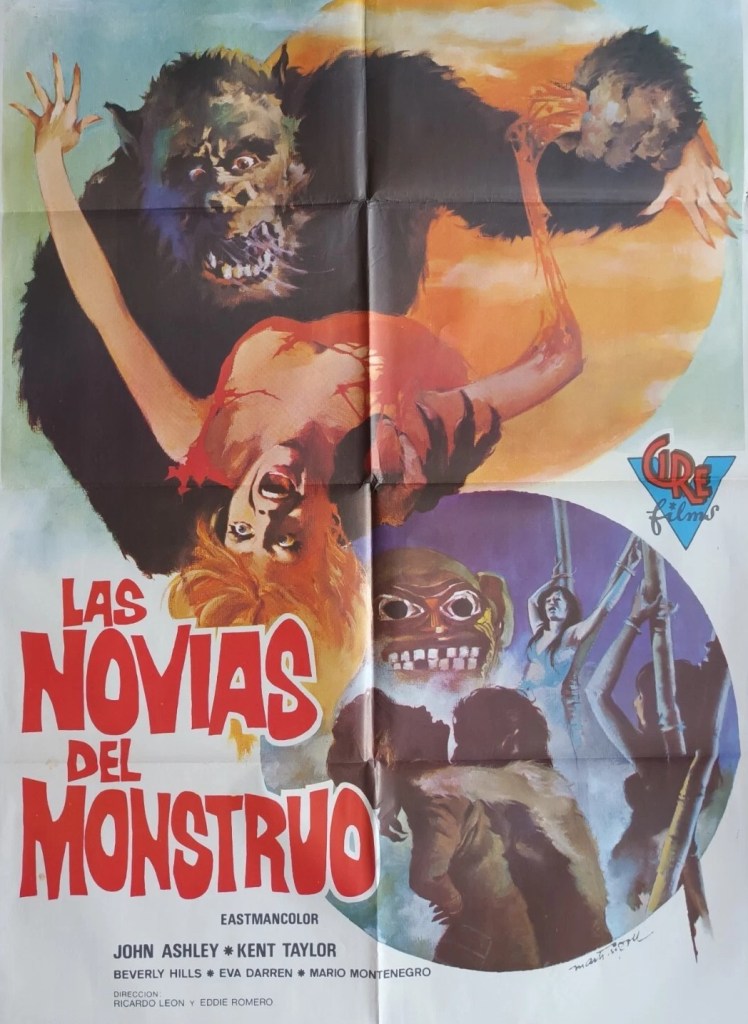
More than passable low-budget horror effort taking in atomic bomb mutation, human sacrifice, killer trees, giant moths and cockroaches and a fairly decent monster. Given the budget, the special effects are fine. The fact that it was shot in the Philippines gives the jungle scenes more validity. And while the main characters are submerged in exposition that still leaves room for a sassy flirtatious wife to snare all the best lines and for the guy whom we expect to be the villain of the piece to turn out to be the tragic one.
Scientist Dr Paul Henderson (Kent Taylor), wife Carla (Beverley Hills) and do-gooder Jim (John Ashley) arrive at the “wrong time” on a remote Pacific island which has reverted to primitivism. This is kind of place where sunset arrives too early and land crabs assume bizarre shape. Dr Henderson is here to assess the potential effect of radiation from A-bomb tests nearby. Jim is here to help build health centers, schoolhouses and to explain the benefits of irrigation. Carla is here to make fun of her older husband, flirt with any fit male and give in to advances.
They encounter a piano-playing rich American Powers (Mario Montenegro) who employs an overseer given to savagery. But despite his name, Powers isn’t the power in these parts. The local witch doctor is, and the island is already knee-deep in human sacrifice. Local girls have to do the equivalent of pick their names out of a hat to see who will be sacrificed next.
The new arrivals try to intervene but fail and their nerve is tested when trees with serpentine branches try to strangle them to death. Jim has enough time to fall for an islander, Alma (Eva Darren), which is just as well because, eventually, she needs an outsider to rescue her from the sacrificial cross. Carla has enough time to slip into Powers’ bedroom not realizing he’s in the process of mutation – his wife died in horrible circumstances after their yacht strayed too close to the atomic test grounds – and when she ventures outside runs into the monster making up for lack of sacrifice being laid out on a plate (I mean, a cross).
While Henderson and Farrel verge on cliché, and 1950s cliché at that, Henderson with his pencil-thin action-man Clark Gable moustache, and Farrell with ingenue written all over him, Carla is a different kettle of fish, blonde hair mounted in a beehive, bosom heaving at every opportunity, and she’s sassy enough to put her husband in his place and introduce inuendo at every opportunity, and inclined to indicate passion by stroking the bedpost, and looking as if she’s auditioning for a femme fatale role in film noir.
For exploitation purposes, it’s lucky that the monster prefers his victims naked.
All in all entertaining hokum. And it must have done well at the box office because it spawned another three. John Ashley (Young Dillinger, 1965) went on to have a bigger career as a producer. Kent Taylor (Law of the Lawless, 1964) was at the tail end rather than the beginning of his career. Miss Beverley Hills (she won a beauty competition of that name) changed her name to Powers without any more significant effect on her career.
Philippine ambassador’s son Eddie Romero (Black Mama White Mama, 1973) directed along with compatriot Gerardo de Leon (Women in Cages, 1971) from a script by Cesar Amigo (The Hunted, 1970).
Better than I expected. Quite fun, really. YouTube has a decent print.
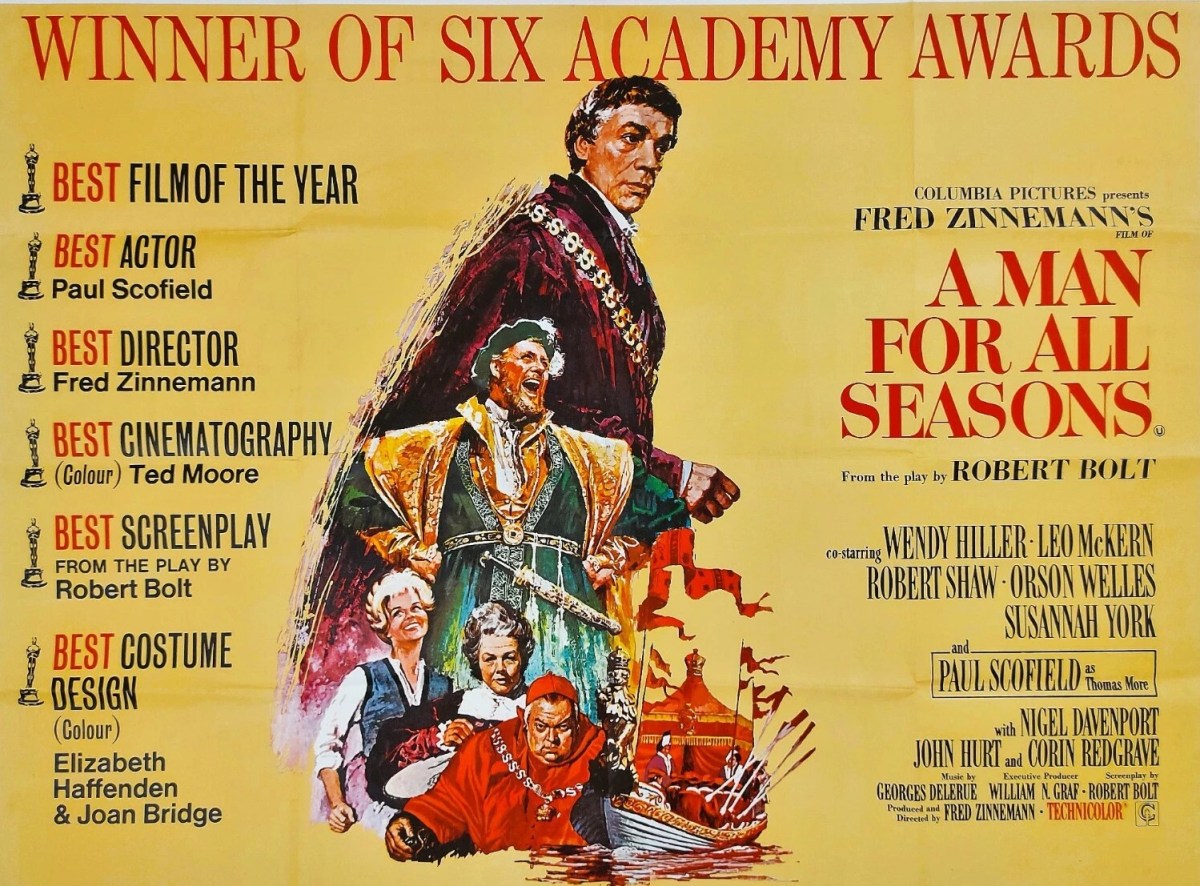
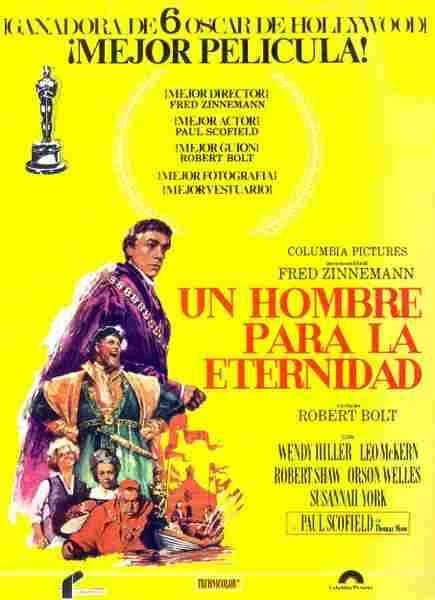
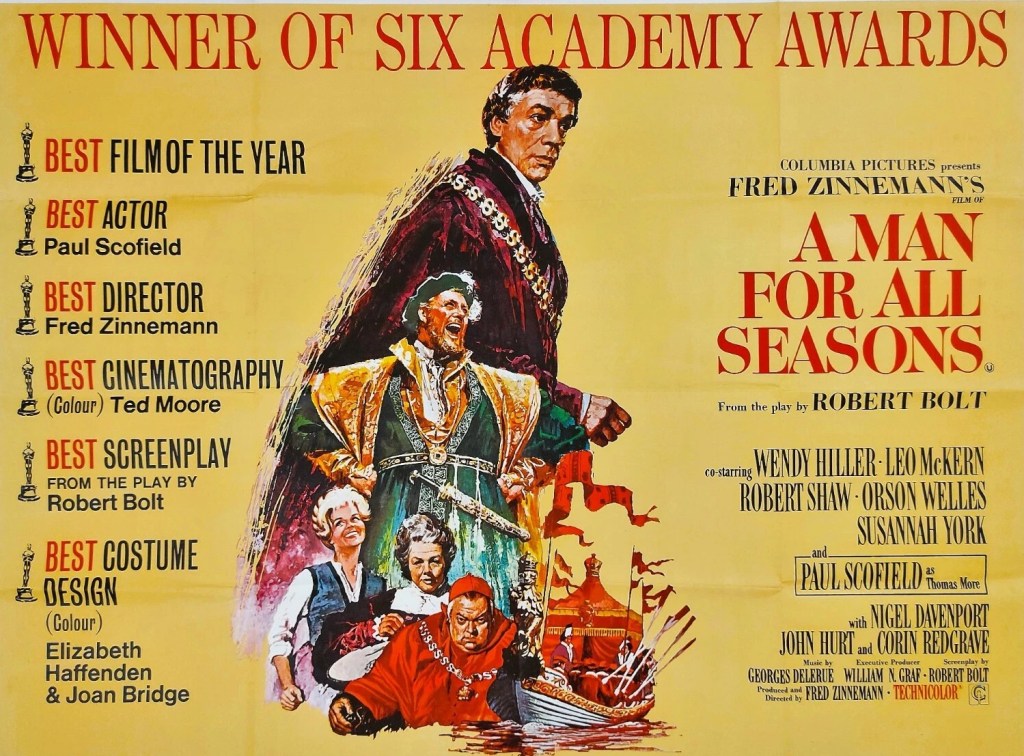
Columbia offset the gamble of turning an award-winning play with a stage star with no movie marquee luster, a co-star who had just about the same pulling power for audiences, and a host of actors nobody had ever heard of by cutting the budget to the bone – the $ 2million spent would barely be enough for a mid-level Hollywood production – even though director Fred Zinnemann belonged in the upper reaches of the Oscar hierarchy with one win and six nominations to his name.
You could even argue that the best-known person in the cast was female lead Susannah York (Sands of the Kalahari, 1965, The 7th Dawn, 1964) or the legendary Orson Welles or even screenwriter Robert Bolt, acclaimed for his work on Lawrence of Arabia (1962) and Doctor Zhivago (1965).
Movie audiences of the period would be hard put to even recognize male lead Paul Scofield, in only his second major screen role after The Train (1964), while Robert Shaw had little more popularity unless you were familiar with From Russia with Love (1963) in which he played a bad guy and Battle of the Bulge (1965). There was a fair chance that Scofield could hit the mark among the upscale stage audiences in London and New York, where he had won a Tony. The play, by Robert Bolt, had proved substantially more popular in terms of length of run and critical esteem in New York than London.
But Zinnemann hadn’t made a picture in six years, not since The Sundowners (1960), having become embroiled in two projects The Day Custer Died (never made) and Hawaii (made but without him) without anything to show for it.
This was a virtue-signaling picture long before the term became over-used. England’s Lord Chancellor Sir Thomas More (Paul Scofield) makes a principled stand against King Henry VIII (Robert Shaw). From today’s perspective, the principled stand is more complex. The idea that the ruler of a country would have to bend the knee to the leader of a religion would not sit well today. You might be unlikely to blame Henry VIII for wanting to break the rules, given he was in dire need of a male heir that his current wife could not supply, especially as without said heir the country would most likely fall into civil war.
You could make a case for Henry VIII being the heroic one, standing up to the Pope, who, for political reasons, as much as anything else, refused to annul the king’s existing marriage. When the Pope didn’t see it the king’s way, Henry VIII decided the only alternative was to break away from the Catholic Church and set himself up as the secular head of the church in England.
And although Thomas More has a fair following today for his philosophy – he wrote Utopia – Robert Bolt was guilty of leaving out aspects of his character which were more unsavory. He was a prime mover in the persecution of Protestants, condemned as “heretics,” but that’s been excised from the story told here in order to present Thomas More as a man of conscience.
Apart from the verbal duel between More and Henry VIII, there’s a rich backdrop of political machination bringing in such names as Thomas Cromwell (Leo McKern) – of Wolf Hall fame – Cardinal Wolsey (Orson Welles), the Duke of Norfolk (Nigel Davenport), William Roper (Corin Redgrave) and Richard Rich (John Hurt). There’s corruption, bribery and betrayal and at times it appears that More is the only one to place any significance on the law.
But More’s no innocent, he’s well used to playing the political game and arguing his case. He only becomes undone by his stand against a king who will brook no opposition.
Paul Scofield has a fine time of it with a well-developed character, gently spoken, appealing to sense and sensibility, and generally well loved by the populace. Although in retrospect I think other Oscar nominees Richard Burton for Who’s Afraid of Virginia Woolf and Michael Caine for Alfie might have been more deserving of the Oscar gong.
Robert Shaw makes a fine opponent, tempering the monarch’s known bluster with a sense of humor. While Paul Scofield tended to steer clear of Hollywood except for films like Scorpio (1973), Robert Shaw went immediately into the male lead in Custer of the West (1967) and eventually became a genuine draw.
The uncredited Vanessa Redgrave (Blow-Up, 1966) was otherwise the star-picker’s pick. Future years would invest greater luster in the supporting cast. John Hurt (Sinful Davey, 1969) the first to be given a tilt at marquee splendor. Leo McKern (Assignment K, 1968) achieved small-screen deification through Rumpole of the Bailey (TV series, 1978-1992). Colin Blakely (The Vengeance of She, 1968) played Dr Watson in Billy Wilder’s The Private Life of Sherlock Holmes (1970).
Robert Bolt deserved his Oscar for the considerable work he put in to converting his stage version for the screen. The staging looks quite stagey to me, but Zinnemann did an excellent job of adding the necessary richness and ensuring the tale was rounded-out.
Not sure I’d place it in the Top Fifty Best-Ever British Films, but it’s still enjoyable even though you might take issue with the issues presented.
The indie movement wasn’t embraced back in the day the way it is now. Occasionally an indie auteur would find favor – John Cassavetes (Shadows, 1958), for example – although it was another decade before he made another movie that carried his particular stamp. With such an abundance of movies arriving from Sweden, Italy and France, critics didn’t have to go far to find material from outside the limited Hollywood prism that they could pump up and make themselves feel important.
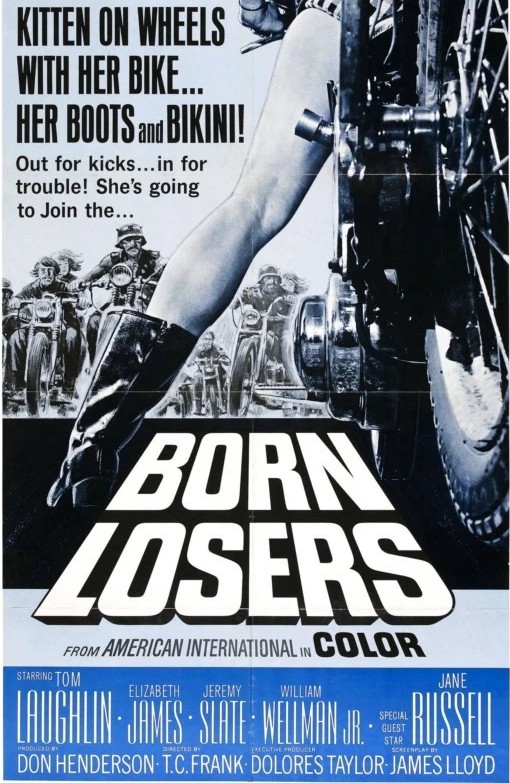
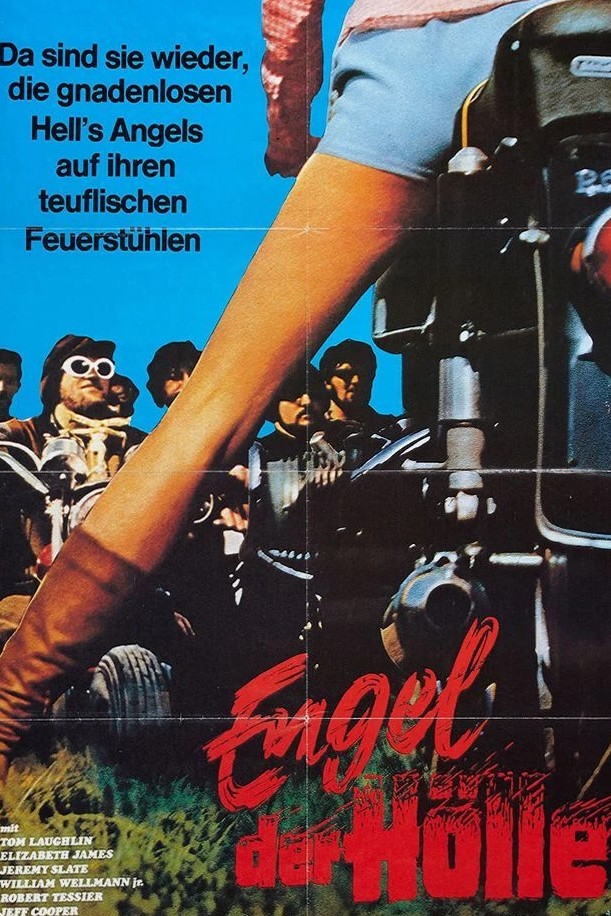
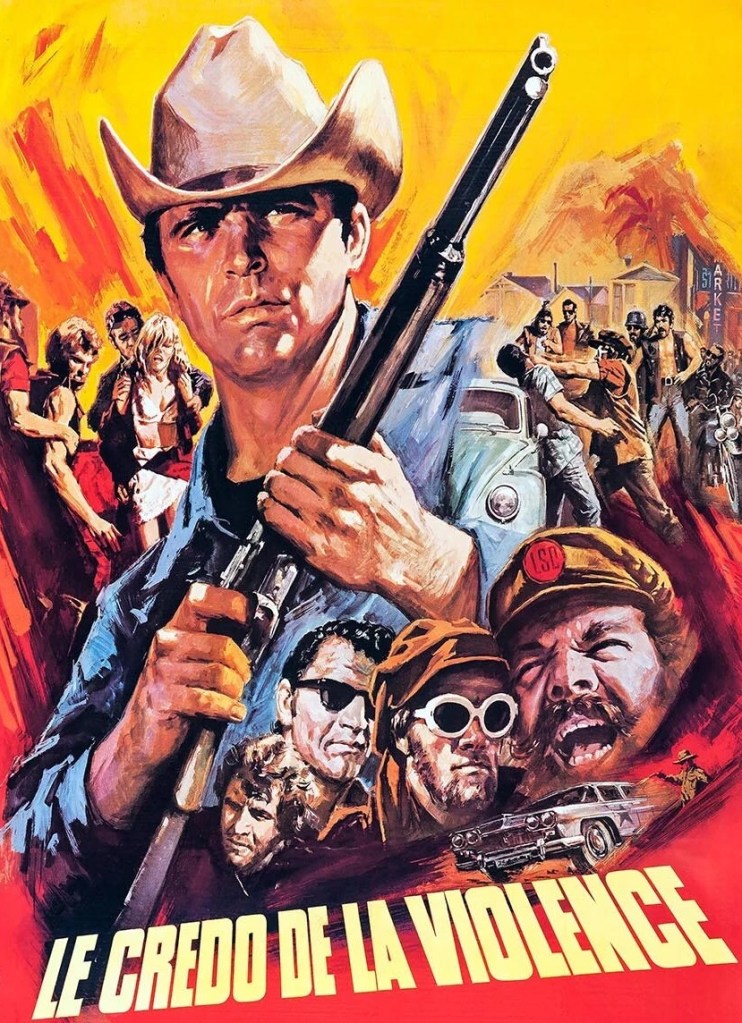
So indie writer-producer-director-actor Tom Laughlin failed to gain notice. There had been no upsurge of critical support for his first two features, The Young Sinner (1961) and The Proper Time (1962), both of whose subject matters should have generated some coverage. In fact, they’re still ignored, not a single reviews for either on Imdb unless you count TV Guide. So when he came to his third picture, The Born Losers, he hid behind anonymity, the movie helmed by “T.C. Frank” and produced by “Don Henderson” with “James Lloyd” (in reality female lead Elizabeth James) allocated the screenwriting credit.
And it was, ostensibly, a biker pic, so no self-respecting critic was going to give it the time of day even though The Wild Angels – 83 critical reviews on Imdb – the previous year had attracted attention though largely through its nepo cast, Peter Fonda and Nancy Sinatra the children of Hollywood legends, in which the bikers were cast as innocent victims of authority.
So critics failed to note that The Born Losers was pretty much the first movie with an ecological theme and that it was probably only the second to deal with racism against Native Americans – Abraham Polonsky, on the other hand, got massive critical mileage for covering the same theme in Tell Them Willie Boy Is Here (1969).
And there’s nothing redemptive about these bikers, not given a free pass as in Wild Angels or deified as in Easy Rider (1969). But the picture certainly emphasizes their attraction, especially to teenage females entranced by what they view as an exciting alternative to Dullsville, USA. Girls are seduced by the image of bikers being akin to old-style cowboys, pioneers of the west enjoying a freedom few others dared even pursue. In the Californian sun girls jiggle around in bikinis, excited at the revving bikes.
Nor is Billy Jack (Tom Laughlin) the kind of two-fisted vigilante protector of the underdog as exemplified by Clint Eastwood and Charles Bronson. In fact, where Eastwood and Bronson generally dodge judgement of their maverick style, Billy Jack gets into more trouble with the law for preventing a young man being beaten to death than the bikers attempting to beat the victim to death.
But unlike the Eastwood and Bronson vehicles, the actor Laughlin isn’t center stage all the time. And that’s primarily what makes the picture work. The director in Laughlin is very even-handed, covering the various aspects that produce a more than tolerable narrative and one that also reflected what would be a later Hollywood trope, the victims too frightened to come forward for fear of further retaliation.
There’s an unusually idyllic opening for a biker picture that telegraphs to the audience this going to be different, Billy Jack surviving with ease in the mountains and bathing under a waterfall. Likewise, Laughlin allows time to build up the two other main characters. Equally, unusually, they both have daddy issues. Wealthy Vicky (Elizabeth James) is devastated when her globe-trotting father fails to turn up for a long-promised rendezvous and biker leader Danny (Jeremy Slate) defies his bullying cop father, who spits in his son’s face. Whatever judgement you pass on the rest of Danny’s actions, he passes muster as a father, affectionately ruffling his son’s hair, and as a brother, standing up for his younger sibling.
You might also be surprised at the fashion statements. Vicky is decked out like Audrey Hepburn with those trademark sunglasses and is apt to take to the road on her two-wheeler wearing a white bikini. Danny wears an ironic version of the Hepburn shades. Whether Vicky’s ensemble is a deliberate attempt to draw comparison with Nancy Sinatra is anybody’s guess but the white boots the college girl wears are remarkably similar to the footwear in Sinatra’s most famous hit.
Once Billy Jack heads for the town, seeking work as a horse wrangler, he hits trouble in part due to overt racism, in part because he refuses to be a bystander when the authorities and citizens fail to act.
There’s an audacious jump-cut that would be the hallmark of more critically-acclaimed directors such as Tarantino, and a scene of bikers arriving over the hill that’s reminiscent of John Ford westerns. And there’s a hint of homosexuality.
Five rapes take place offstage, but their harrowing consequence is not passed over. Mental health is damaged beyond repair, LuAnn (Julie Cohn) afraid to show her face in public, while Vicky is treated as a freak. With the town boasting its “weakest sheriff” and the girls capitulating to intimidation, it’s left to Linda Prang (Susan Foster) to agree to go to court. Luann, though under police protection, is kidnapped, and the bikers capture Vicky and Billy Jack, both girls facing further rape.
There are three stunning twists. Vicky, rather than Billy Jack, saves the day, sacrificing herself to save the Native American. Linda confesses she wasn’t raped, but had gone of her own free will with the bikers before and after the rape charge, in order to spite her mother because the bikers were “everything you hate.” And once justice is done Billy Jack is mistakenly shot by the cops.
While Billy Jack occasionally intervenes, mostly he’s outnumbered and beaten up, so he doesn’t fit the same template as Eastwood and Bronson. And that’s also to the picture’s benefit. This isn’t about the male hero, but male shortcomings and female suffering.
While there’s no great acting, the story is decently-plotted and the emotional jigsaw knits together.
Worth a look, but not if you’re expecting a typical biker picture.
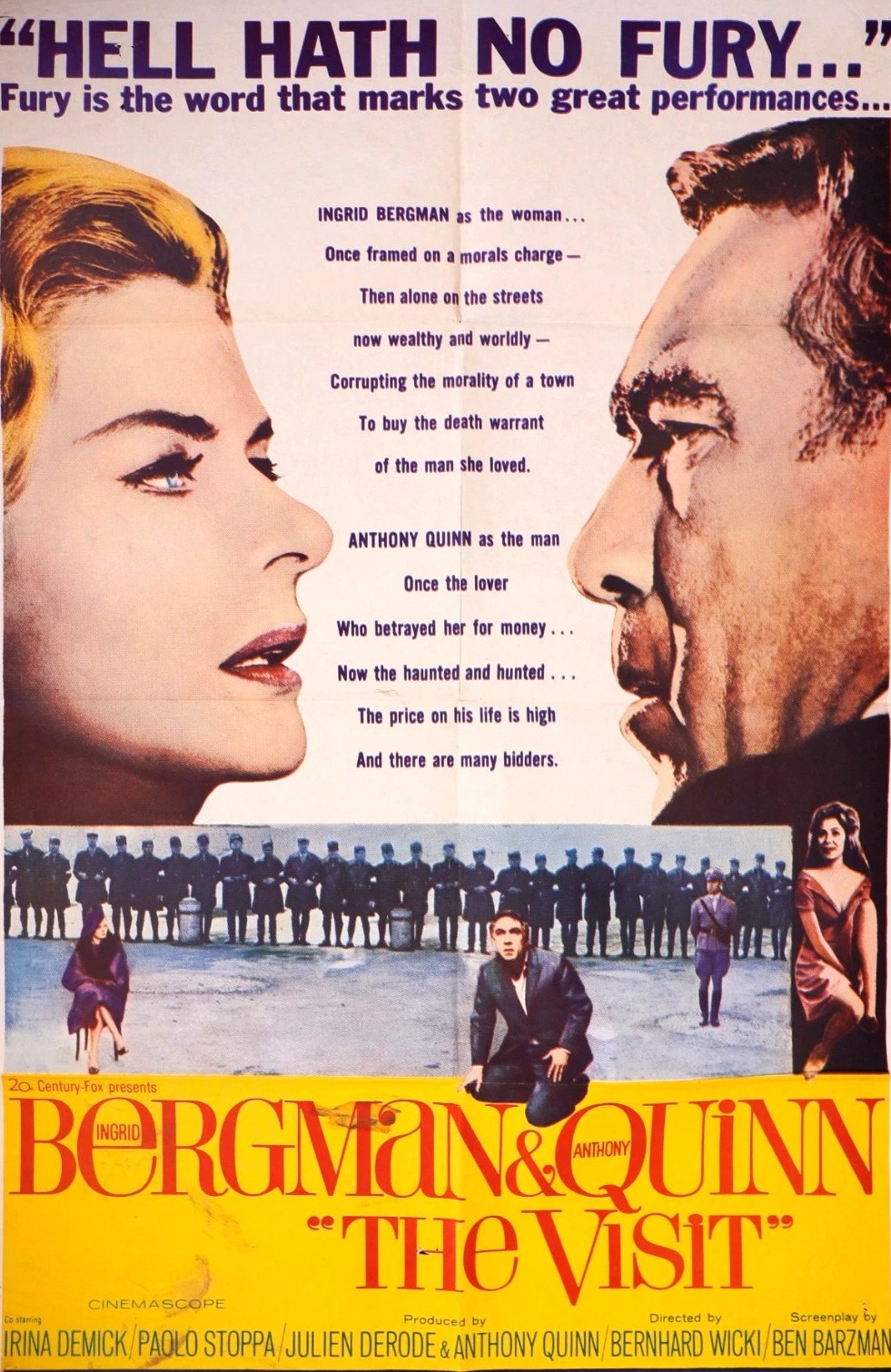
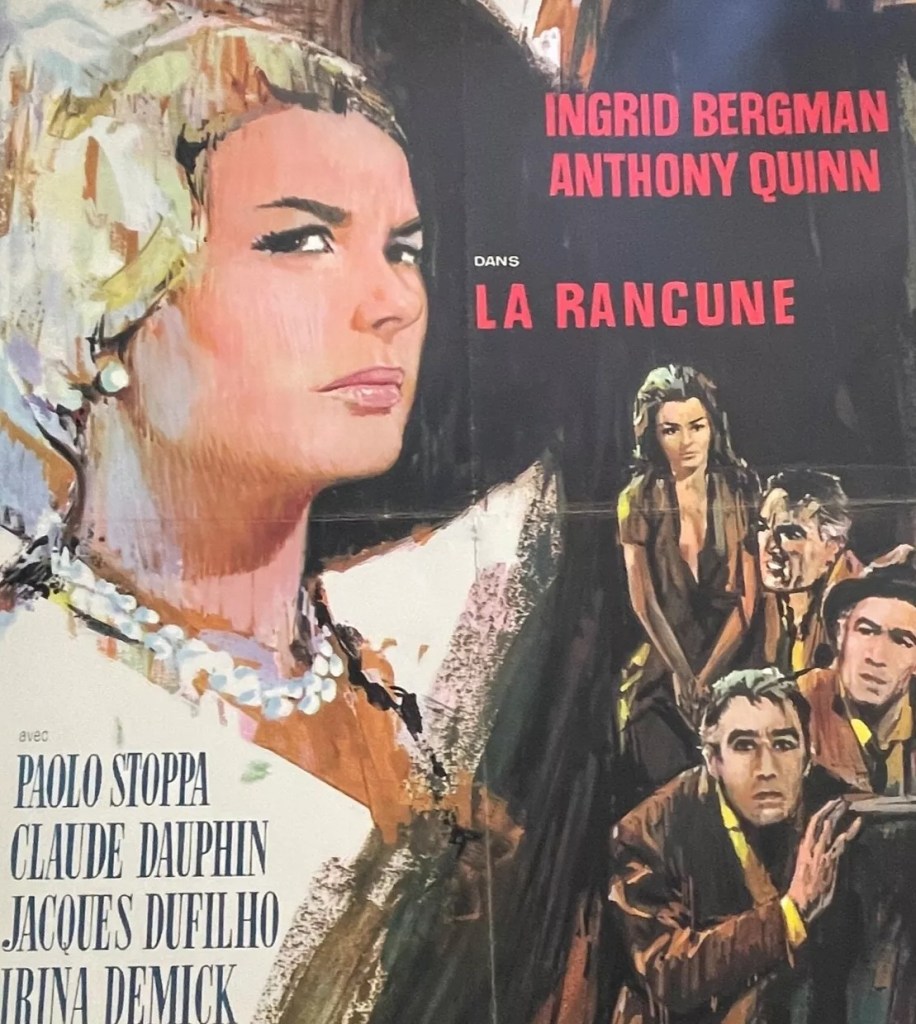
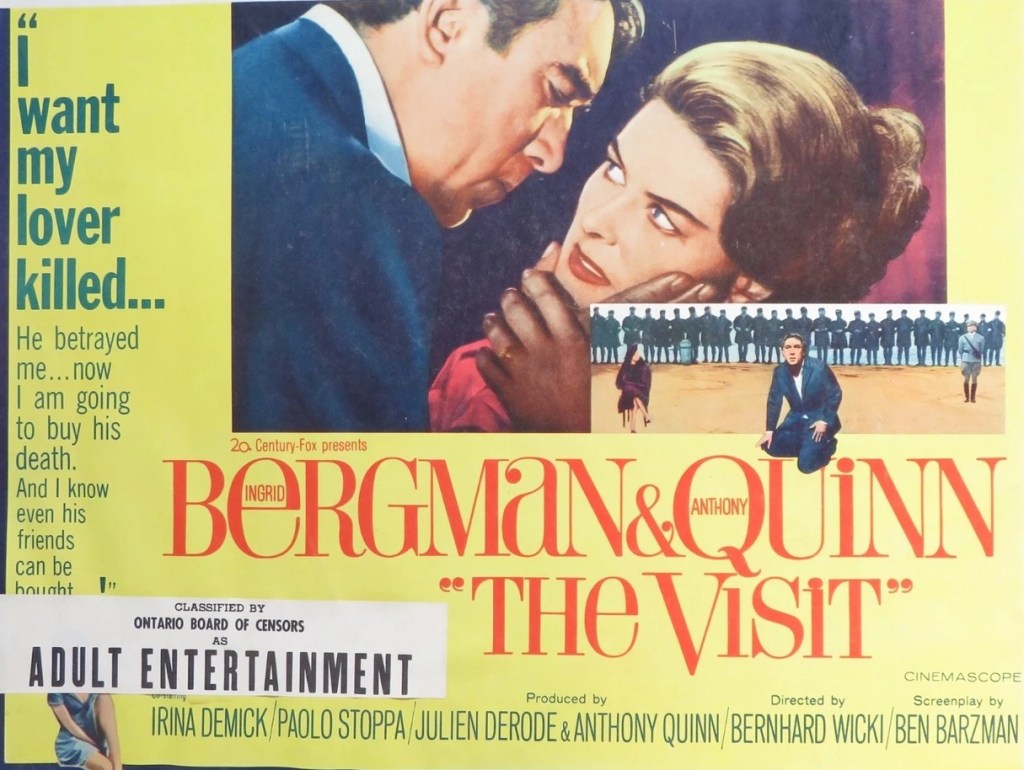
Wow! How has this sailed under the radar? Not only does two-time (at this point) Oscar-winner Ingrid Bergman shred her screen persona as the loved one in a romantic interlude or as the victim, but she turns into one of the most chilling femme fatales you can imagine. Made today, this would be termed “High Concept”. But it’s better than that, it’s concept heaven, such a brilliant idea and superbly executed.
From the moment widowed billionaire Karla Zachanassian (Ingrid Bergman), dressed in white like a Hollywood star, steps off a train and cuts the waiting townspeople dead with a haughty look only to seconds later seduce them with a warm smile, you can guess this is going nowhere near where you’d expect.
The train wasn’t scheduled to stop. She merely pulled the emergency cord as if her wealth was excuse enough. And she was only on the train because she wanted to make an entrance. For, as it transpires, her chauffeur is in attendance.
The town is bankrupt and in the way of the small-minded the townspeople imagine that the only reason she could be returning to the place where she could grew up twenty years after she left would be to rescue Guellen from its financial misery. So the townspeople are ready with a parade and welcome banners and fine speeches. Former lover Serge (Anthony Quinn), though now married to Mathilda (Valentina Corsese), is happy to play his part and recall their romance, visit the barn where they made love for the first time, as if she has returned only to satisfy memory.
But that’s not the reason. She has a different recollection of events and while she’s willing to play the role of the returning benefactor, offering the town one million and another million to be shared equally among the townspeople, there’s a condition. She wants revenge for being humiliated. Serge – who had thrown Karla over in favour on the daughter of a richer man – denied her child was his and bribed false witnesses so she was sent packing, with prostitution her only option and the child dead within a year.
So now the townspeople can show themselves to be principled, refusing to encourage her barbaric sense of justice, or, more likely, start to nip away at the idea of justice when there’s a bounty of two million at stake. Karla sits on her balcony dressed to the nines twirling her parasol and sipping an iced drink watching like a hawk chaos unfold below or lounges in her room feeding red meat on a toasting fork to a caged cheetah.
There’s some interesting satire on both bureaucracy and democracy – should people be banned from voting on such a sensitive subject or should democracy insist otherwise. And while ostensibly the powers-that-be back Serge, he gets a shock when he realizes the ordinary people have starting buying new shoes and clothes on credit in anticipation of the bounty and the going rate for an assassin is just two thousand. Soon the town is overwhelmed with retailers selling fancy goods – cars, fridges, televisions, fashion items – on credit. There’s time, too, for other stories to play out in realistic fashion.
There’s a brilliant sequence where Serge is hunted through the streets by men with rifles on the erroneous (or deliberately erroneous) belief that he’s been mistaken for a wild animal and even his wife deserts him. The climax is absolutely stunning.
There would have been many parallels at the time – Communist witch hunt, the persecution of the Jews – but from today’s perceptive it’s more like a capitalist witch hunt or judgement on a “good” society.
Anthony Quinn (Guns for San Sebastian, 1968) bought the rights because he realized Serge was a terrific part but as producer he made the mistake (or touch of genius) in hiring Ingrid Bergman (Goodbye Again, 1961). Without doubt she stole the show. Amazing that she wasn’t even nominated for an Oscar given the chilling portrayal she delivered.
Directed by Bernhard Wicki (Morituri / Code Name Morituri, 1965). Adapted by Ben Barzman (The Heroes of Telemark, 1965) and Maurice Valency (The Madwoman of Chaillott, 1969) from the play by Friedrich Durrenmatt.
When you see how hard today’s “visionaries” strive to come up with meaningful tales of a serious nature or examinations of “the human condition,” you can see how much they fall short compared to this well thought-out drama.
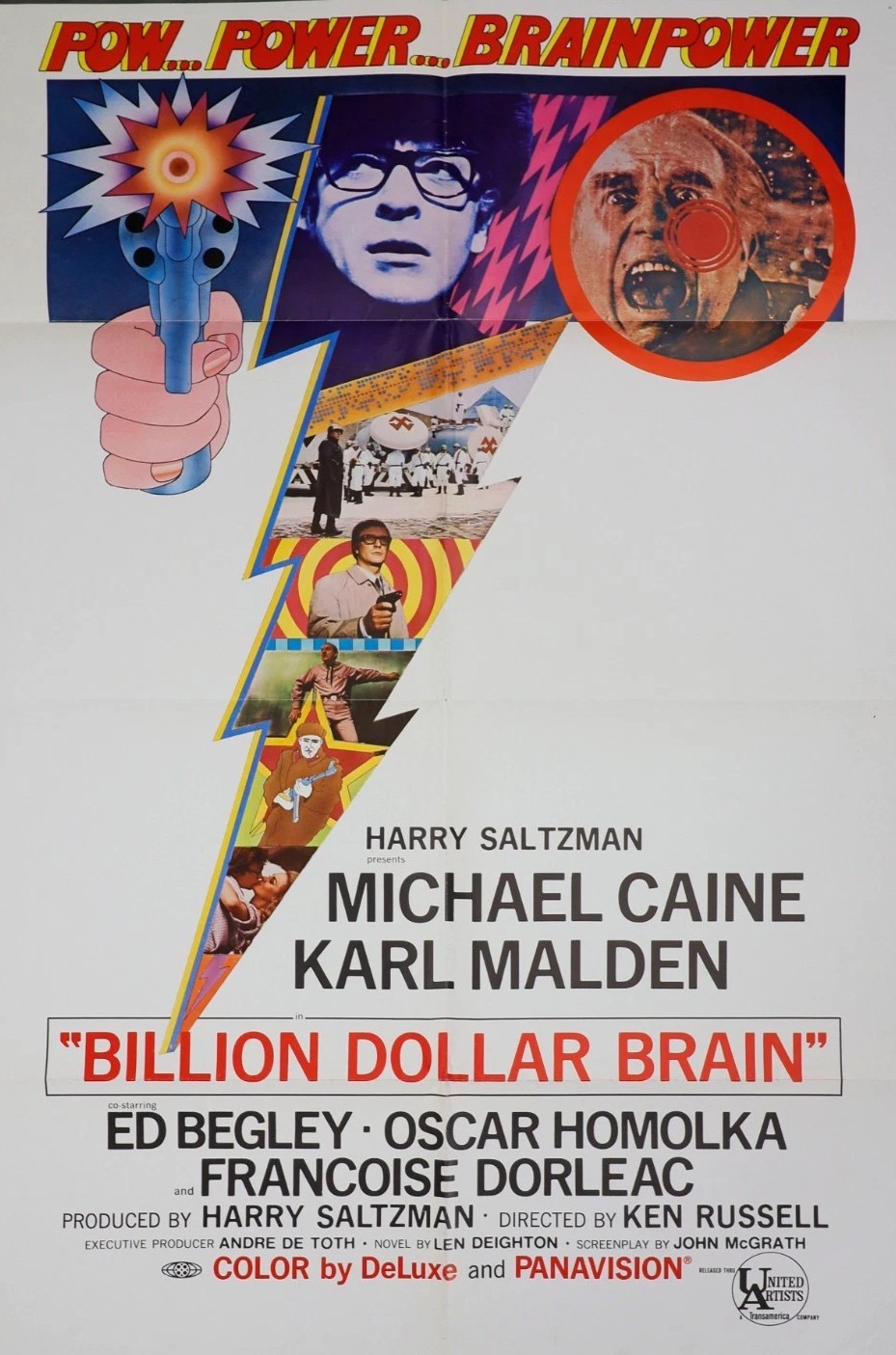
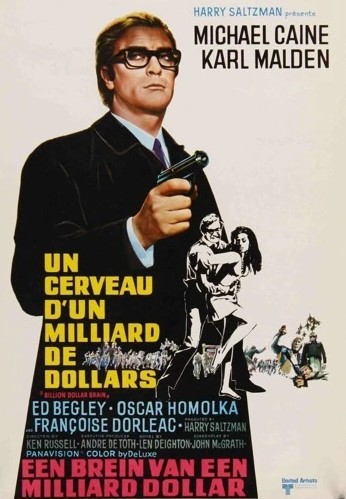
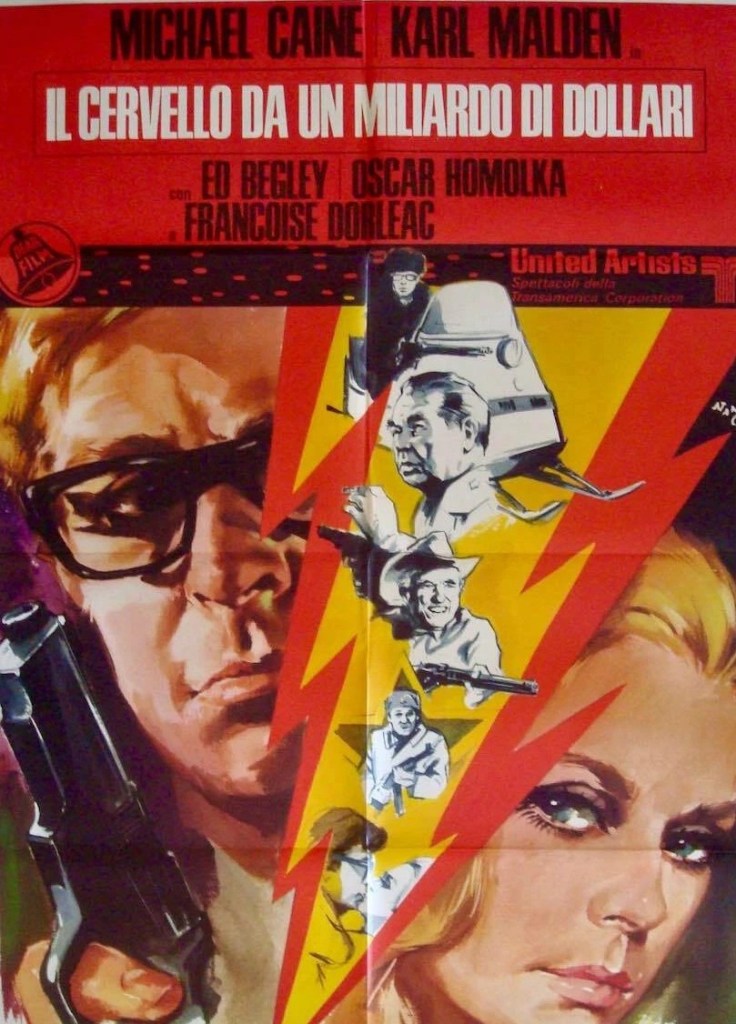
Could have been the greatest espionage movie of all time except for one thing – excess. Now director Ken Russell would soon make his reputation based on sexual excess – Women in Love (1969), The Devils (1971) etc – but here he takes self-indulgence in a different direction. The plot is labyrinthine to say the least, and Finland proves to be dullest of arctic locations, no submarine emerging from the ice to liven things up as in Ice Station Zebra (1968), just endless tundra.
Setting that aside, there are gems to be found. Author Len Deighton ploughed a different furrow to Ian Fleming (Goldfinger, 1964) and John le Carre (The Spy Who Came in from the Cold, 1965), none of the glitz of the former nor the earnestness of the latter. He was more likely to trip a narrative around human foibles. And so it is here.
For a start, our hero Harry Palmer (Michael Caine) is the MacGuffin and then is duped – three times. Firstly, he is the reason we end up in Finland in the first place, having responded to an anonymous message and the promise of easy money. Then, in the most foolish action ever to befall a spy, he falls in love with the mistress Anya (Francoise Dorleac) of old buddy Leo (Karl Malden). Finally, he is shafted by former employer Col Ross (Guy Doleman) and generally given the runaround by Russian Col Stok (Oscar Homolka), reprising his role from Funeral in Berlin (1966).
Unlike the previous Harry Palmer iterations, that began with the splendid The Ipcress File (1965), there’s a techie megalomaniac on the loose, General Midwinter (Ed Begley) – think Dr Strangelove on speed – who’s not so intent on world domination as flattening the Soviets, which more or less amounts to the same thing.
Midwinter provides the movie with considerable technological foresight, his billion-dollar computer prefiguring the way in which we have allowed technology to rule our lives, and, unlikely though it seems, perhaps provided the inspiration for the serried ranks of Stormtroopers from Star Wars (1977).
For the most part, lovelorn Palmer is led a merry dance and relies on a deus ex machina in the shape to Col Stok to put an end to Midwinter’s potential Russian uprising. A rebellion was always going to be a tad dicey because Leo has stolen all the money Midwinter provided for him to set up an army of Russian dissidents. Leo thought it made more sense for the cash to be put to better use, namely investing in high living and a glamorous mistress. There we go with the old human foible. But Palmer can match him there, not quite having the brains to realize that a beautiful woman who can play Leo so well could also play him.
There’s a marvelous pay-off where we discover that in the middle of the male-dominated espionage shenanigans, it’s Anya who turns out to be the clear winner. In a terrific scene she takes the case containing the secret McGuffin from Leo rushing to board her train then, with her hands on the valuable cargo, kicks him off the train. And once she has trapped a foolish British spy, who has let his emotions get the better of him, is apt to poison him.
There’s some distinct Britishness afoot. Complaints about salary and endless bureaucracy abound. And there’s a piece of pure Carry On when, in a sauna scene, the camera manages to put objects or bodies in the way of Anya’s nudity. One-upmanship doesn’t get any better than Col Ross smirking when he tricks Palmer into returning to work for him.
Smirking is in the ascendancy here. Palmer smirks at the folly of Leo in believing that the young beauty is after him for anything but his money and his access to potentially dangerous toxin. Anya doesn’t need to laugh behind the backs of the two men she has so easily duped when she can enjoy sweet revenge right to their faces.
Once you get to the end, you can more appreciate the content, although, like me, you probably wished the director could have got a move on, and thought he should have done a lot better in the climactic scene than toy trucks falling into Styrofoam blocks of ice.
The tale isn’t on a par with the previous two, Deighton being more at home with cunning adversaries rather than overblown megalomaniacs, but everyone, with the exception of Anya and Col Stok – i.e. the bad guys – are too easily taken in. Technically, Palmer wins the day, but that’s only to fulfil the requirement that the good guy must appear to win even if the good guy in this instance is smeared all over with impotence and folly.
The camera loves Michael Caine (Gambit, 1966) so there’s no problem there especially as by and large he’s wearing his cynical screen persona. Karl Malden (Nevada Smith, 1966) has a ball, especially as this must be the only time he gets the girl. Ed Begley (Sweet Bird of Youth, 1962) and Oscar Homolka over-act as they should, but Francois Dorleac (The Young Girls of Rochefort, 1967), in her final role, steals the picture from under all of them.
Directed by Ken Russell as if he kept his editor at bay and written by Scottish playwright John McGrath (The Bofors Gun, 1968) in his big screen debut.
So a very interesting twist on the spy picture but be warned before you go in that it takes quite a while to get there.
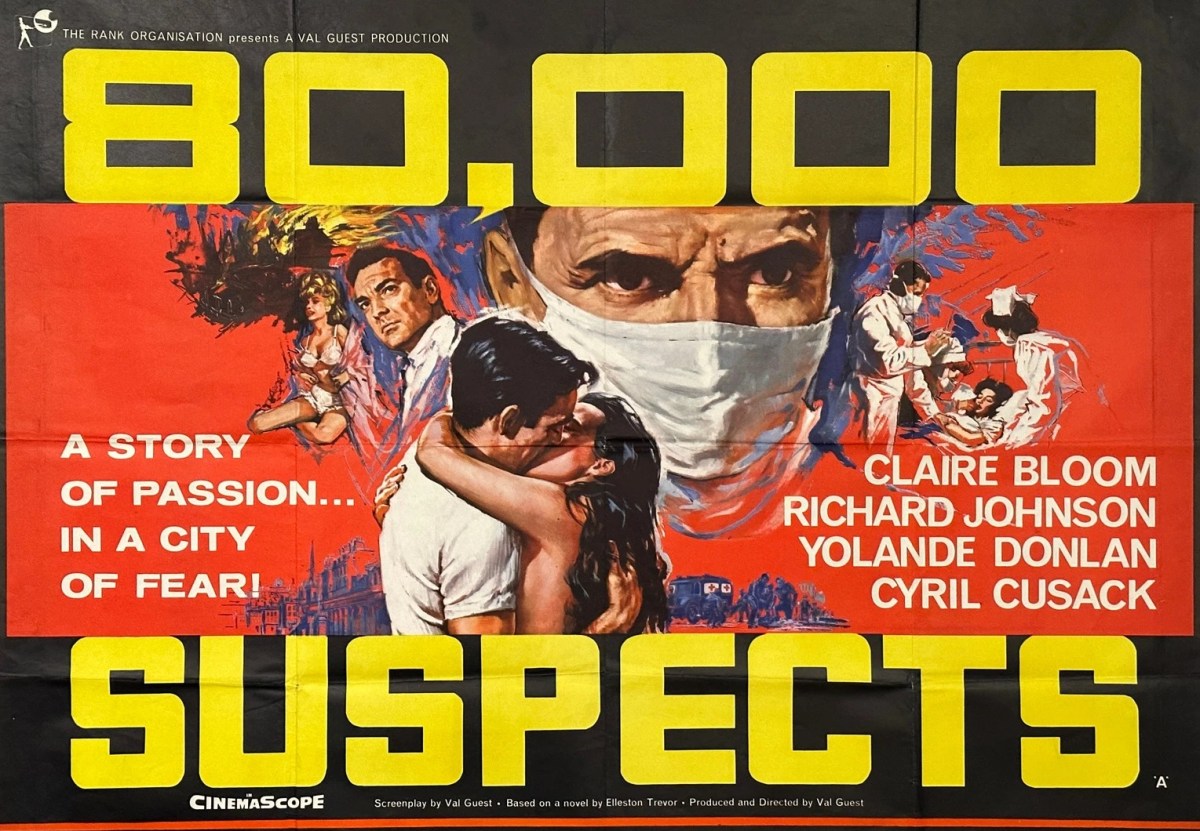
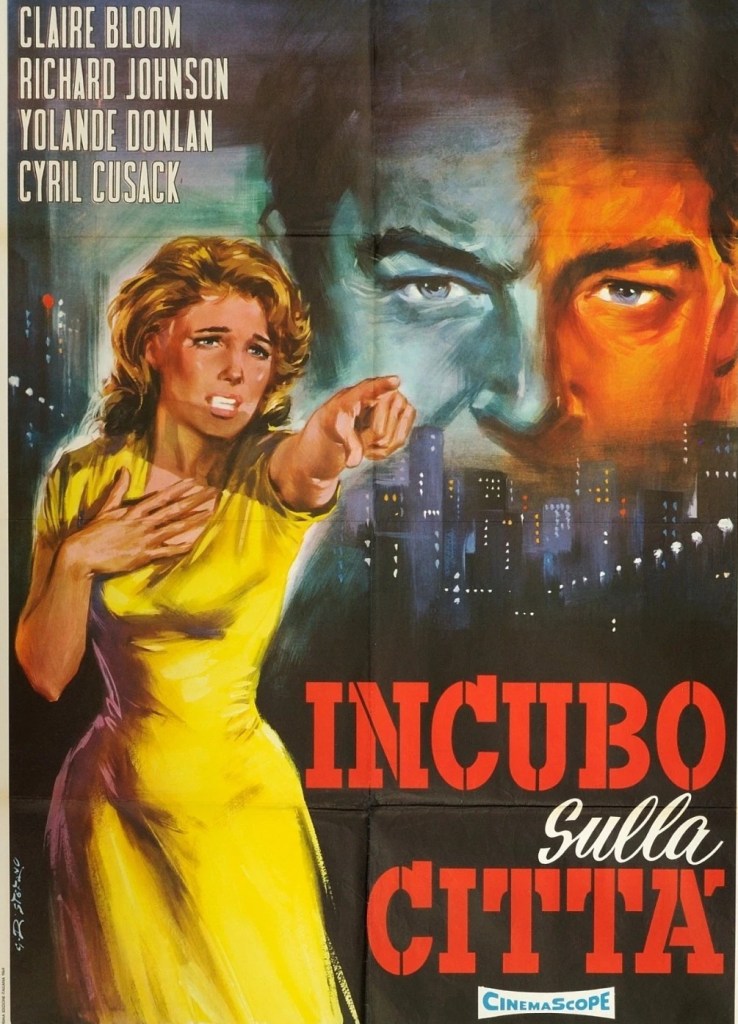
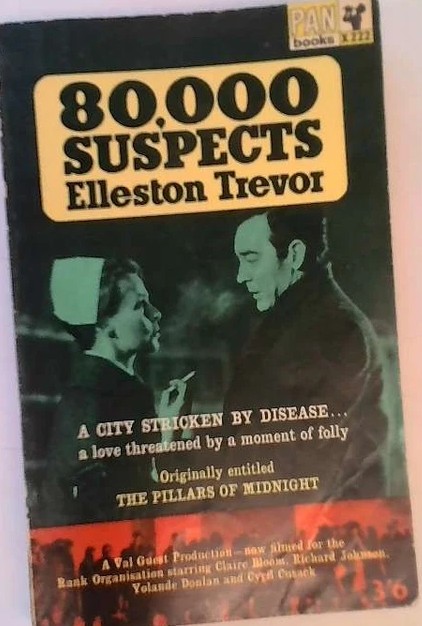
Eschews the X-cert terror of some of the end-of-the-world efforts of the period such as The Day the Earth Caught Fire (1961) and Day of the Triffids (1963) in favor of a more solid documentary-style approach and focusing on the tangled love lives of the main characters. There’s a distinctly British tone. People form long, orderly queues to receive an injection to combat a sudden epidemic of smallpox and police and any kind of hard-line enforcement plays a minor role. And the medical boffins in charge act more like detectives, tracking down potential infected individuals, engaging in door-to-door street-by-street hunts for those carrying the virus, maps are drawn, areas blocked off. There are deadlines and countdowns. Doctors are disinfected, clothes are incinerated and corpses cremated. So there’s enough tension to keep everyone on their toes.
But most of the emotional muscle is not by asking an audience to empathize or sympathize with those in danger or whose lives are suddenly cut short. But by concentrating on the impact of adultery on two couples. Dr Steven Monks (Richard Johnson), who identified the presence of smallpox in the large town of Bath with 80,000 people potentially at risk, is suspected by retired nurse wife Julie (Claire Bloom) of having an affair with glamorous Ruth (Yolande Donlan), wife to Monks’ stuffy colleague and friend Dr Clifford Preston (Michael Goodliffe).
The Monks are on the verge of going abroad on holiday when the smallpox disrupts their plans, although it’s Julie who appears the more principled and dutiful of the two, her husband being all set to head off and leave someone else to sort out the mess.
To make sure emotions are not sidelined by the scale of the epidemic, Dr Monks and wife are kept in the thick of it, the stakes rising dramatically when Ruth catches the disease. That triggers the most interesting – and original – sequence of the drama. When Steven thinks his wife is in danger of dying his feelings for her surge, but when she recovers, his ardor dampens down. He receives another kick in the teeth when he discovers that his lover Ruth has another fancy man.
So quite a lot of this is couples trying to work out their feelings, and it doesn’t follow the usual cliché, even though Julie is somewhat short-changed by the script in not being allowed to rage against her husband but passively accept his adultery. Dr Preston is more insightful, able to accept that his best friend has betrayed him, but sympathizing rather than condemning his wife because he knows that none of her adultery has brought her any happiness. It helps both of the Monks to have a wise padre (Cyril Cusack) available to listen to their troubles.
Though the epidemic is well drawn with plenty location work capturing the times, really the story is more about a pair of adventurous lovers, Steven and Ruth, landed with a pair of dullards in Ruth and Clifford, and making the necessary adjustments.
This was the first top-billed role of the career of British actress Claire Bloom (Three into Two Won’t Go, 1969) despite arriving on the scene in a blaze of leading lady glory. The Buccaneer (1958) opposite Yul Brynner and Look Back in Anger (1959) opposite Richard Burton should have been enough of a calling card, but she drifted to Germany and then television before another leading lady stint in The Wonderful World of the Brothers Grimm (1962) before tumbling down the credits for The Chapman Report (1962).
And except that she had outranked Richard Johnson in The Haunting (1963), you might wonder why she achieved top-billing here when Richard Johnson (Deadlier than the Male, 1967) has the bigger role. In theory, Bloom has the better role, she’s a victim of disease and has to cope with an unfaithful husband, but its Johnson who faces the bigger predicament in coming to terms with a love for Bloom that is at its peak only when he risks losing her.
High-spirited Yolande Donlan (Jigsaw, 1962) steals the early scenes. Decent support in Cyril Cusack (Day of the Jackal, 1973), Mervyn Johns (Day of the Triffids), Ray Barrett (The Reptile, 1966) and former big marquee attraction Kay Walsh (Oliver Twist, 1948).
Val Guest (The Day the Earth Caught Fire) has to duck and weave with this one to ensure the human drama isn’t buried by the impending disaster – and vice-versa. Written by Guest based on the novel by Elleston Trevor (The Flight of the Phoenix, 1965).
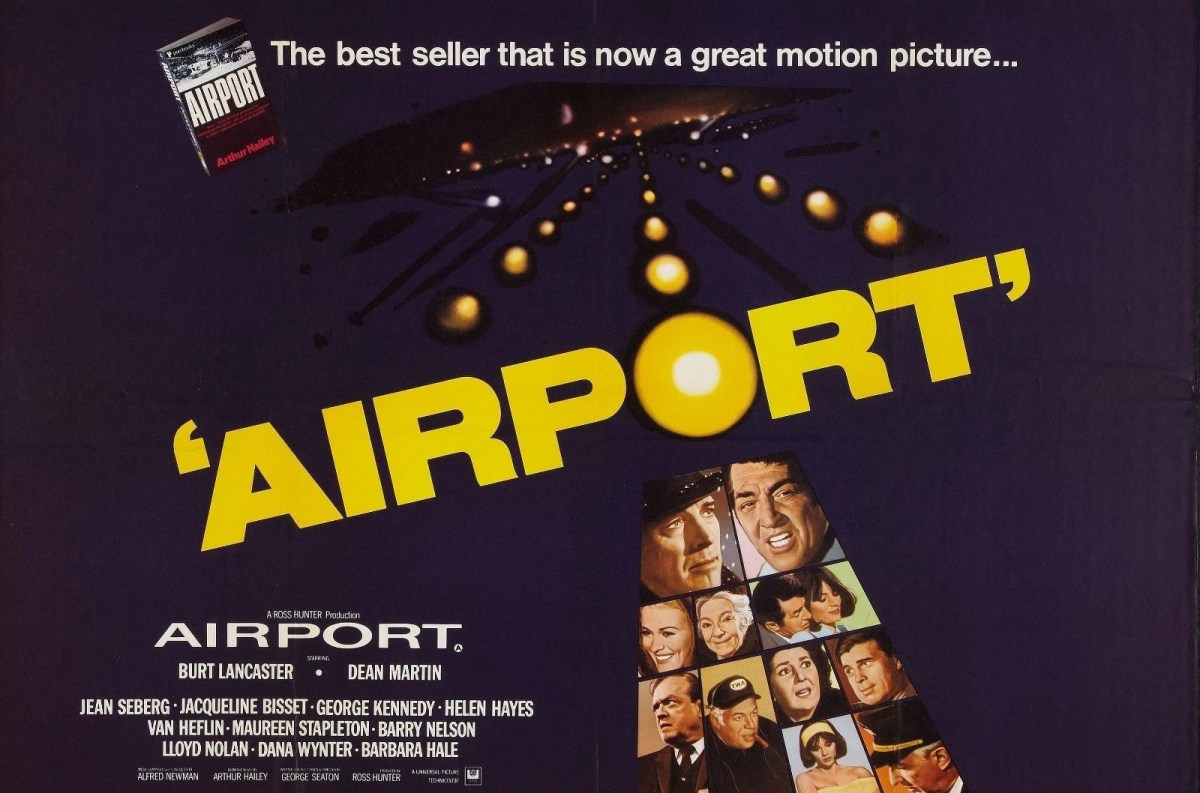
Ross Hunter had been a big wheel in the production business for the best part of two decades, shepherding home hits like Midnight Lace (1960), remakes of universal weepies like Back St (1961) and Madame X (1966), play adaptations such as The Chalk Garden (1964), the Tammy movie series and Julie Andrews musical Thoroughly Modern Millie (1967). He was as close to a sure thing as you could get. Even so, Airport, with a $10 million budget, was the biggest gamble of his career.
He paid $350,000 upfront plus another $100,000 in add-ons for the rights to the runaway Arthur Hailey bestseller. Initially, Hunter was targeting the roadshow audience, filming in 70mm, the first time Universal had employed Todd-AO.
Dean Martin, who had made Texas Across the River (1966) and Rough Night in Jericho (1968) for Universal, was first to sign up for his usual fee plus a percentage. Martin was at a career peak, carried along effortlessly at the box office by the Matt Helm quartet and targeted for westerns.
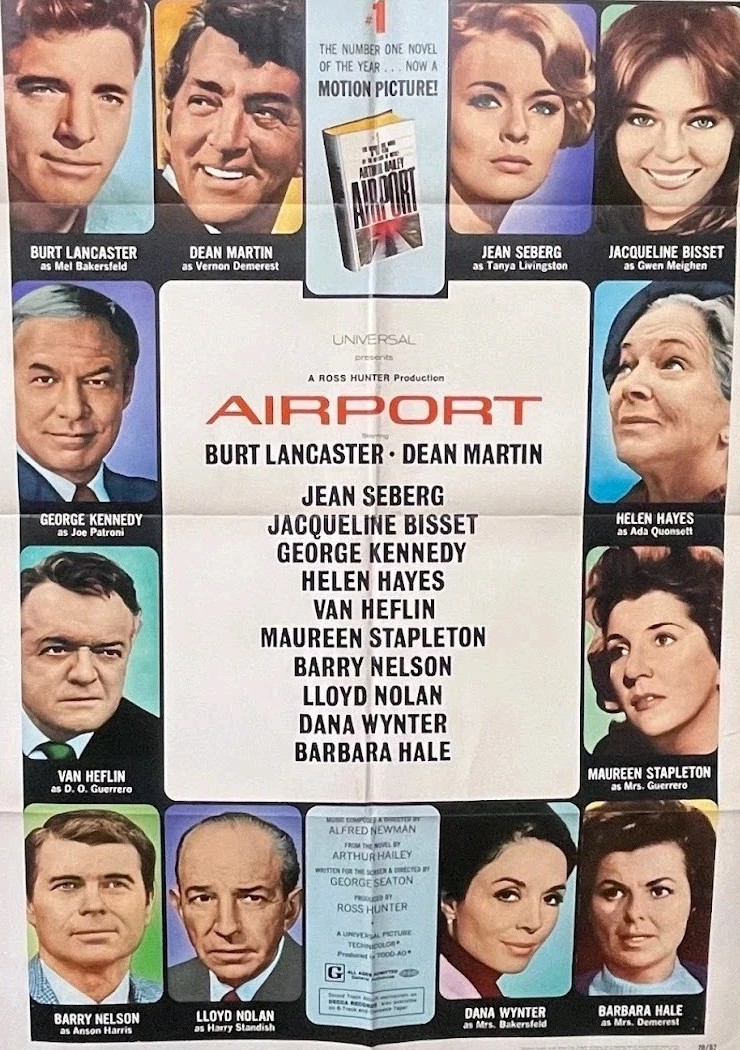
Hunter was pitching a movie with four major stars in Oscar-winner Burt Lancaster (Elmer Gantry, 1960), Dean Martin, Jean Seberg (Paint Your Wagon, 1969) and Oscar-winner George Kennedy (Guns of The Magnificent Seven, a1969) and another half-dozen names of varying marquee appeal that included British actress Jacqueline Bisset (Bullitt, 1968), and mature stars in Van Heflin (Once a Thief, 1965), Lloyd Nolan (The Double Man, 1967), Barry Nelson (The Borgia Stick, 1967), TV Perry Mason’s Barbara Hale and Oscar-winner Helen Hayes (Anastasia, 1956).
The picture came at a fortuitous time for Burt Lancaster. A trio of more challenging movies – The Swimmer (1968), Castle Keep (1969) and The Gypsy Moths (1969) – had flopped, so his marquee value was in question, especially at his going rate of £750,000 (plus a percentage). Doubts had set in with The Gypsy Moths, with MGM dithering over the opening date, switching it originally from summer to Xmas and then back again but happy to censor the picture to meet the approval of the Radio City Music Hall where it premiered.
And while he was still clearly in demand in 1968-1969, he had lost out the starring role in Patton (1970) with James Stewart in the Karl Malden role, which would have coupled commercial success with critical approbation. The shooting of Valdez Is Coming (1971) was postponed for a year. Originally it had been set for a January 1969 start date with Sydney Pollack directing. Face in the Dust, a Dino De Laurentiis production, never saw the light of day.
And although Lancaster later described Airport as “the biggest piece of junk ever made” (luckily he didn’t live to see Anora or Mercy), the disaster blockbuster put his career back on track. It was quite a change of pace for him, too. He wasn’t in every scene and at times he had to take whatever Dean Martin’s character threw at him. But what he brought to the picture was his natural electricity, the tension of never knowing what he was going to do. But Airport barely merits a page in Kate Buford’s biography.
Double Oscar-winner George Seaton was set the dual task of condensing Arthur Hailey’s 500-page novel into a lean two-hour movie which he would direct. In a directing career spanning a quarter of a century, Seaton was well-used to handling big stars of the caliber of William Holden (three pictures including The Counterfeit Traitor, 1962), Bing Crosby and Grace Kelly (The Country Girl, 1953) Kirk Douglas (The Hook, 1962), Montgomery Clift (The Big Lift, 1950) and Clark Gable and Doris Day (Teacher’s Pet, 1958),
Jean Seberg, under investigation by the FBI, had revived an ailing career with Paint Your Wagon (1969). Producer Ross Hunter initially preferred Angie Dickinson (Jessica, 1962) or Stella Stevens (Rage, 1966) for the role of Lancaster’s screen lover, but had to go along with Universal with whom Seberg had a two-picture “pay-or-play” deal (she got paid whether she made a picture or not). However, she was considered a marquee name in the international market, especially France where she had remained a cult figure after Breathless (1960).
Disconcerted by being considered unwanted, her natural nervousness increased until Hunter made a point of convincing her that he was “genuinely happy” at her involvement.
She wasn’t the only person to be considered second best. For the part of the elderly stowaway, six-time Oscar nominee Thelma Ritter (Boeing, Boeing, 1965) and Jean Arthur, who hadn’t appeared in a movie since Shane (1953), had been wooed before Hunter settled on Helen Hayes.
For Seberg, it was the biggest pay cheque of her career – $150,000 plus use of a studio car and $1,000 a week expenses for the 16-week schedule, but she lost out on a percentage. She was billed third. High-flying her career might be, but personally she was struggling, her marriage to Romain Gary in trouble and under pressure to help raise funding for the Black Panther movement. She was receiving calls in the middle of the night. “Many nights she’d be so frightened, she’d come and sleep on the couch at my home,” recalled Hunter, “there’s no doubt it was an extremely difficult period for her.”
Helen Hayes reminded Seberg of her grandmother, to whom the stowaway’s exploits would have appealed. As a teenager, Seberg had idolized Hayes. Dean Martin pushed for Petula Clark (Goodbye, Mr Chips, 1969) for the Jacqueline Bisset role and Stella Stevens (Rage, 1966), as well as being considered for the Seberg part, was also in the frame.
Virtually all the bit parts were played by Universal’s contract players. For Airport, the studio rounded up thirty-two of them. Patty Paulsen, who played stewardess Joan, was a genuine stewardess for American Airlines before she won the role on the strength of winning a beauty contest. It was veteran Van Heflin’s final picture, and also for composer Alfred Newman. George Kennedy would reprise his role through three other pictures in the series – though he turned down Airplane! (1980).
Location filming at Minneapolis-St Paul International Airport began in January minus director George Seaton who had come down with pneumonia. Henry Hathaway stepped in, at no cost, to cover. The producer had headed to Minnesota for the snow, but there was none around, and the production team had to import tons of fake stuff made out of whitened sawdust. Filming took place at night in plunging temperatures. Despite wearing face masks, cast and crew suffered and the freezing conditions slowed down the shoot.
Hunter hired a $7.5 million Boeing 707 for $18,000 a day. For studio work in Los Angeles Hunter brought in a damaged Boeing. Ironically, Dean Martin had a fear of flying and travelled to the location by railway. Ditto Maureen Stapleton.
Seberg’s outfits, including calfskin sable-lined coats designed by Edith Head, cost $2,000 apiece, though Seberg was less keen on the airport uniform. With Seberg’s hometown less than a five-hour drive away she was able to head home during breaks in filming.
John Findlater, who played a ticket checker in the film, remembered Seberg as “frail and lonely…very shy…she had a very hard time of it.” It took four days to film the scene where Helen Hayes explains the art of the stowaway and feels the brunt of the wrath of Burt Lancaster and Seberg. Delays always niggled Lancaster, for whom they smacked of unprofessionalism. To raise her spirits, Seaton improvised little comedy skits.
Seberg befriended Maureen Stapleton, playing the bomber’s wife. Seberg was “impressed” that Stapleton could cry on cue and the minute the scene was over be laughing.
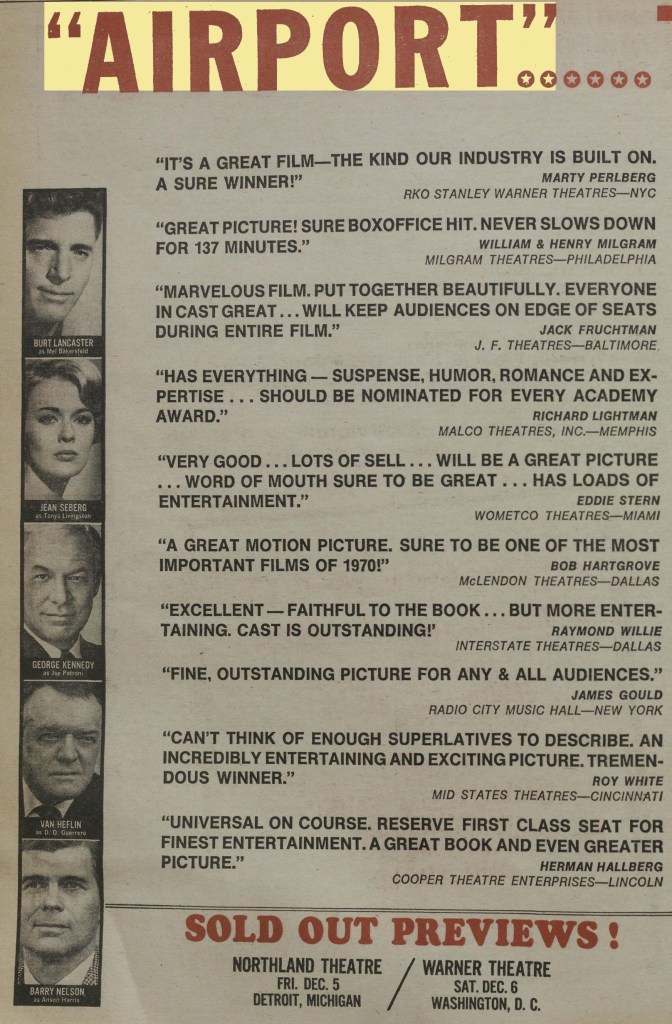
In the end Hunter gave up the idea of a prestigious roadshow run, settling instead for a premiere opening at the Radio City Music Hall and first run houses across the country. There had been no shortage of pre-publicity. Any time an airplane hijack hit the headlines or a snowstorm shut down airports or an airplane skidded off the runway, editors were happy to insert a mention of the picture.
And there was an abundance of airports and travel companies willing to sign up for cooperative promotions, helped along by the fact that Edith Head had designed the “Airport Look” launched not just with male and female fashions but a range of travel accessories. A beauty queen competition “International Air Girl” managed to hook a 45-minute television slot in Britain.
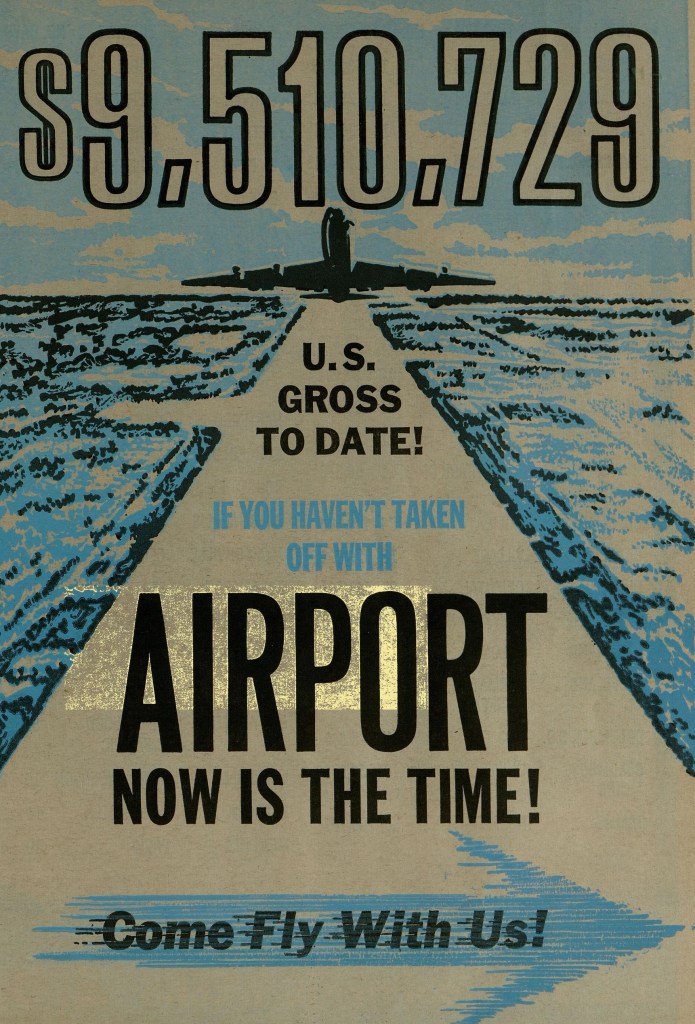
Opening at the Radio City Music Hall in New York, a couple of weeks in advance of the national roll-out, Airport plundered a record $235,000, topping that in its second week, and scooping up $1 million before the end of the month. It was gangbusters everywhere, opening in prestigious first run locations, with nary a showcase/multiple run in sight. “Wham” was the description beloved of the Variety box office headline writers, the word preceding its $80,000 opening week tally in Chicago, $28,000 in San Francisco, and $25,000 in Louisville. “Smash” was also brought into play for its $40,000 in Baltimore and $33,000 in Philadelphia. The subject matter allowed the sub-editors who wrote the headlines some license, so it was a “sonic” $40,000 in Boston and a “stratospheric” $45,000 in Detroit. And it had legs. Week-by-week fall-offs were slight. It was still taking in $25,000 in the 24th week in Detroit, for example.
By year’s end it was easily the top film of the year with $37 million in rentals, way ahead of Mash on $22 million and Patton $1 million further back. And it kept going, adding another $8 million the following year as it was dragged back into the major cities for multiple showings (seven in New York) in multiple engagements.
Business was not so robust abroad. Though Airport managed a six-week run at the Odeon Leicester Square, where it received a Royal Premiere on April 22, 1970, its opening week’s figures were down on both the final week of its predecessor at the London West End cinema, Anne of the Thousand Days, and its successor Cromwell and the film didn’t make the Annual British Top Ten. But in Australia it led the field, though its returns were one-third down on the previous year’s Paint You Wagon and Butch Cassidy and the Sundance Kid.
For its television premiere on ABC in 1973, the network demanded a record $140,000 per minute for advertising. Outside of Gone with the Wind, it earned the highest rating of any movie from 1961 to 1977.
But it also set up an industry. Sequels were the name of the game. And though Airport ’75 (1974) headlining Charlton Heston and Airport ’77 (1977) starring Jack Lemmon were cut-price operations, they were huge successes at the box office, the former hauling in $25.8 million in rentals, the latter $16.2 million. A fourth venture, The Concorde…Airport ’79 (1979) with Alain Delon, flopped and put an end to the series.
SOURCES: Garry McGee, Jean Seberg, Breathless, 2018, p167-171; Kate Buford, Burt Lancaster, An American Life (Aurum Press, 2008) p264-265; “Cast Patton & Bradley,” Variety, September 20, 1967, p13; “Airport Film Deal,” Variety, May 29, 1968, p60; “Steiner at Goldwyn Plant,” Variety, July 24, 1968, p7; “Dean Martin First to Sign for U’s Airport,” Box Office, August 5, 1968, pK4; “Hollywood Happenings,” Box Office, January 6, 1969, pW2; “Airport Will Be U’s First Feature in Todd-AO,” Box Office, January 13, 1969, p12; “Seaton’s Temp Sub at U: H. Hathaway,” Variety, January 22, 1969, p7; “Airport Sequence Follows Real Event,” Box Office, January 27, 1969, pNC3; “17 Inches Snow Brings North East Business To Complete Standstill,” Box Office, February 17, 1969, pE1;“Ross Hunter’s Roadshow,” Box Office, April 28, 1969, pK2; “De Laurentiis Slates 3 Aussie Locationers,” Variety, September 24, 1969, p18; “Put Back Moths Scenes Cut Solely for Radio City,” Variety, October 22, 1969, p5; “Airport Smacks $1-Mil,” Variety, April 1, 1970, p4; “Airport Contest on TV,” Kine Weekly, April 18, 1970, p18; “Big Rental Films of 1970,” Variety, January 6, 1971, p11; “Encore Hits,” Variety, June 16, 1970, p5; “ABC Flying 140G Per Minute for Airport,” Variety, June 27, 1973, p14; “Hit Movies on TV Since ’61,” Variety, Sep 21, 1977, p70; “All-Time Film Rental Champs,” Variety, May 12, 1982, p5. U.S. weekly box office figures – Variety, March-April 1970; U.K. weekly box office figures, Kine Weekly, April-July 1970.
Thundering entertainment from an era when they made movies to appeal to audiences and not to placate the overweening ego of over-entitled directors. I first saw this in 1970 when it was selected as one of three films (the others being Cromwell and The Virgin and the Gypsy) to open the new Odeon triplex in Glasgow, and, thanks to my own in-built movie snobbery, haven’t seen it since. So this was a revelation.
Let’s start with the running time. Made now this would be an overblown 150 minutes (at least) stuffed full of extraneous scenes. But let’s start with the opening. The screen is dark. Yes, absolutely dark. What? Is this some kind of arthouse venture? And it remains dark for about 20 seconds though by now sound has been added, a general hubbub of commotion. Are you sure this isn’t arthouse? Had this been directed by Scorsese or Coppola (who, in fact, used a similar device to open The Godfather, 1972) critics would have picked it up.
John Frankenheimer for Grand Prix (1966) and Norman Jewison for The Thomas Crown Affair (1968) were praised for their use of the split screen, another aspect ignored here by critics. Yet split screen is not only impressively utilized, but, on occasion, it has a humorous quality, as the screen not only splits in two but accommodates other shapes in between or round about. Did anyone mention the use of the wipe? A cinematic technique scarcely employed in the mainstream since Seven Samurai (1954).
Several narrative plates regarding relationships spin in the air while the movie sharpens focus to concentrate on resolving three major incidents involving airplanes. The first is shifting a jet stuck in the snow during a huge snowstorm and blocking off one entire runway. The airport is already under pressure, what with the storm curtailing other flights and forcing others to dive for cover. Then we have a bomber, planning to wreck the plane mid-ocean to claim on the insurance, but when his plan goes awry and he blows out the toilet of the plane, the crew have to bring it down, safety jeopardized by the jet stuck on the ground.
You always know how disaster pictures are going to end, maybe the only guesswork concerns who will actually survive, and it’s an incredible credit to this movie that I felt the tension constantly rippling through me as we hit the various climactic episodes.
On the ground airport manager Mel (Burt Lancaster) is trying to shift the stuck aircraft while dealing with irate wife Cindy (Dana Wynter) and keeping on track his illicit relationship with PR manager Tanya (Jean Seberg). This is on top of a) wrangling with an airport executive who refuses to expand the airport to meet overwhelming demand and whose only reaction to impending crisis is to close the airport down, b) dealing with local citizens furious that plans are rattling their houses, and c) taking flak from brother-in-law and ace pilot Vernon (Dean Martin).
Up in the air Vernon has his work cut out coming to terms with the pregnancy of girlfriend Gwen (Jacqueline Bisset) – always having used his marriage as an excuse not to get emotionally involved with his string of girlfriends – and with a 70-year-old stowaway Ada (Helen Hayes) and bomber D.O. Guerrero (Van Heflin) and then bringing in the stricken plane.
We’re tossed a few red herrings on the passenger manifest. Spot a nun and a priest in a disaster picture and you’re generally in for cliché overload. Here, instead, they are used for humor, the nun taking a swig of whisky under pressure and the priest whacking a belligerent passenger. And the charming Ada is on land given very sympathetic treatment given the thousands of dollars she’s conned out of airlines over the years, but that’s only to set her up for some harsh treatment on board.
There’s an unexpected twist with the bomber. For a few minutes it looks like the crew are going to win the day but then calamity strikes. Meanwhile, on the ground troubleshooter Joe (George Kennedy), huge cigar constantly in place in the mouth, has taken charge of shifting the stuck plane and in the end has to take drastic action.
And in little telling snippets director George Seaton plays fair with the wives who lose out, Mrs Guerrero (Maureen Stapleton) and Mrs Demerest (Barbara Hale) while allowing Mrs Bakersfield to deliver a come-uppance to her errant husband – she’s been playing away too.
The decision to pack this full of more genuine stars than you ever got in a roadshow – mostly the cast list was padded out with newcomers or stars past their best (Lawrence of Arabia, 1962) – reversed this with genuine stars in supporting roles and newcomers in the leading roles) Both Oscar-winning Burt Lancaster (The Professionals, 1966) and Dean Martin after the Matt Helm series and a bunch of westerns were genuine top-notch marquee names. Jean Seberg had just hit a career box office high with Paint your Wagon (1969). After Bullitt (1968) Jacqueline Bisset’s star was on the rise. Oscar-winner George Kennedy (Cool Hand Luke, 1967) was top-billed in Guns of The Magnificent Seven (1969).
And there was a heck of a strong supporting cast: Van Heflin (Once a Thief, 1965), Dana Wynter (Sink the Bismarck!, 1960), Barbara Hale (Perry Mason series, 1957-1966). Oscar-winner Helen Hayes (she won in 1932) and Maureen Stapleton (Bye, Bye, Birdie, 1963) proved the pick, the former here winning a second Oscar, the latter nominated. Apart from Van Heflin, Seaton had gone for character actors rather than stars – Wynter hadn’t made a movie in a decade, for Stapleton it was seven years, for Hayes 14 years and Hale one film in over a decade.
You’d be laughed out of town these days if (outside of sci-fi) you tried to saddle a star with chunks of exposition or technical detail, but here the force of the screen personalities of Lancaster, Martin and Kennedy makes you hang on their every word.
They didn’t have prizes in those days for ensemble acting, but if they had this would surely be in contention, as director George Seaton, in his capacity as screenwriter, ensures that no one is left out and even if it’s only with a look we learn everything we need to know about a character’s emotional life.
Given this was – to use Christopher Nolan’s favorite phrase – “shot in camera” this is a terrific technical achievement in terms of the airplane action especially the stuck plane trying to hirple it way out of trouble.
Director George Seaton (36 Hours, 1964) took ill during production and exterior sequences were filmed by Henry Hathaway (True Grit, 1969). A mention, too, for the driving score by Alfred Newman, in his last screen assignment. It was nominated for 10 Oscars including Best Picture.
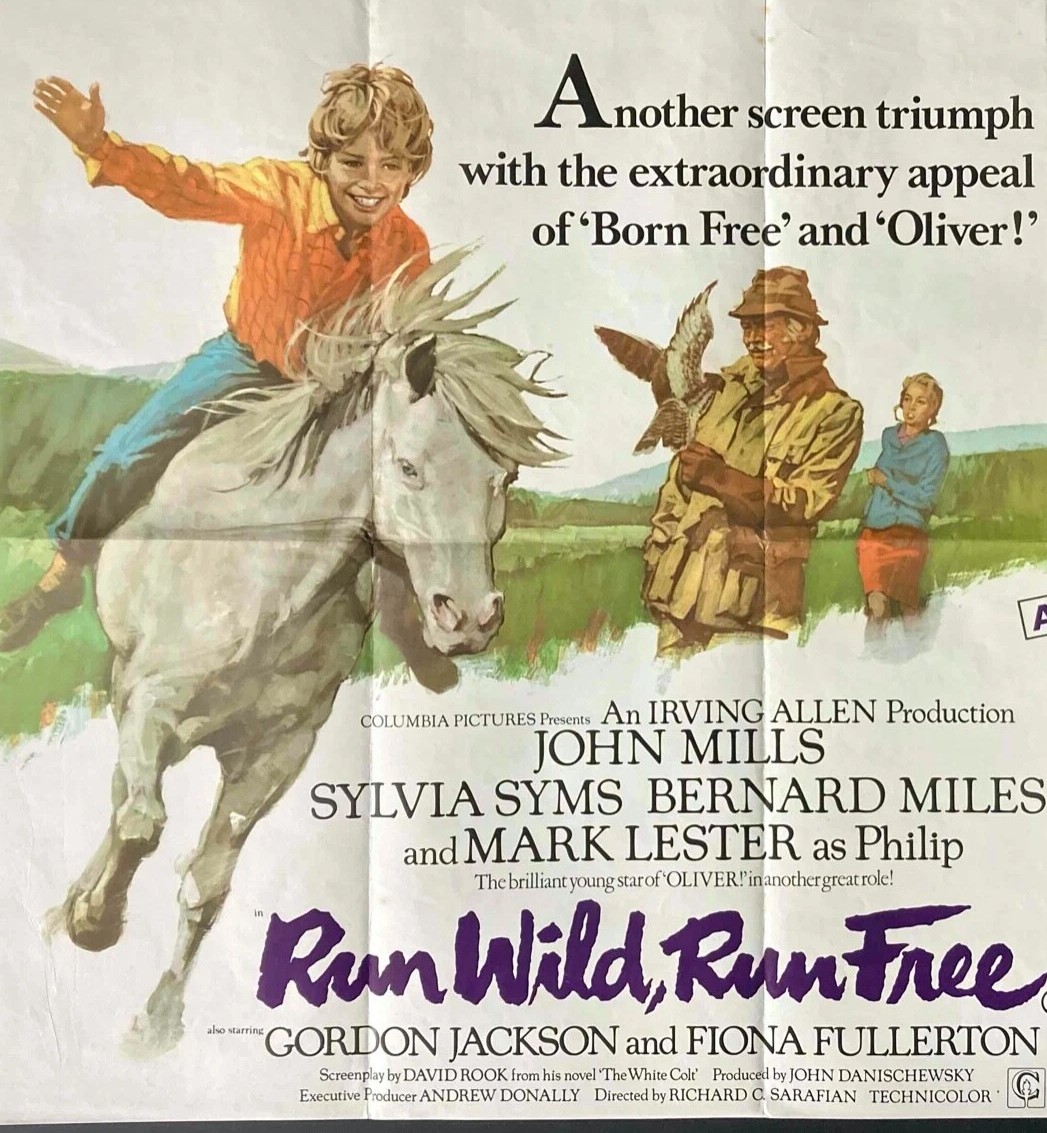
Surprisingly absorbing, precisely because of the distinct lack of the soppiness or mawkishness associated with the genre. Nature “red in tooth and claw” scarcely puts in an appearance and even then is a good bit less dangerous than a wanton child unable to understand or control his emotions. Parents are very well-drawn, too, in an era that scarcely ran to much comprehension about child psychology, a mother rejecting her son because she is convinced he has rejected her, a traditional father who lacks the skills to convey his love for his son. And you wouldn’t get away these days with an old fellow taking more than a passing interest in a small bewildered boy with the audience immediately conjuring up images of abuse.
The film also prefigures the Gaia movement. Both the old fellow and his young charge are given to lying prostate on the grass, the better to listen to the beating heart of the Earth. And you wouldn’t think of pinning this one on director Richard C. Sarafian, best known for his biker epic Vanishing Point (1971). Far less imagine how you’d get a whole stack of actors to spend a great deal of time wading through a swamp “in camera” rather than utilizing some form of CGI or to volunteer their fingers to be bitten by a predatory bird.
If you’re searching for the kind of twist that’s so common these days, look no further than the location. Those wild moors look fantastic in the sunshine, especially for compositions that outline characters against the sky, but they’re treacherous too, when the fog comes down and you’re trapped without a signpost home, and they’re not all hard grass or spurs or rock but conceal sections of perilous swamp.
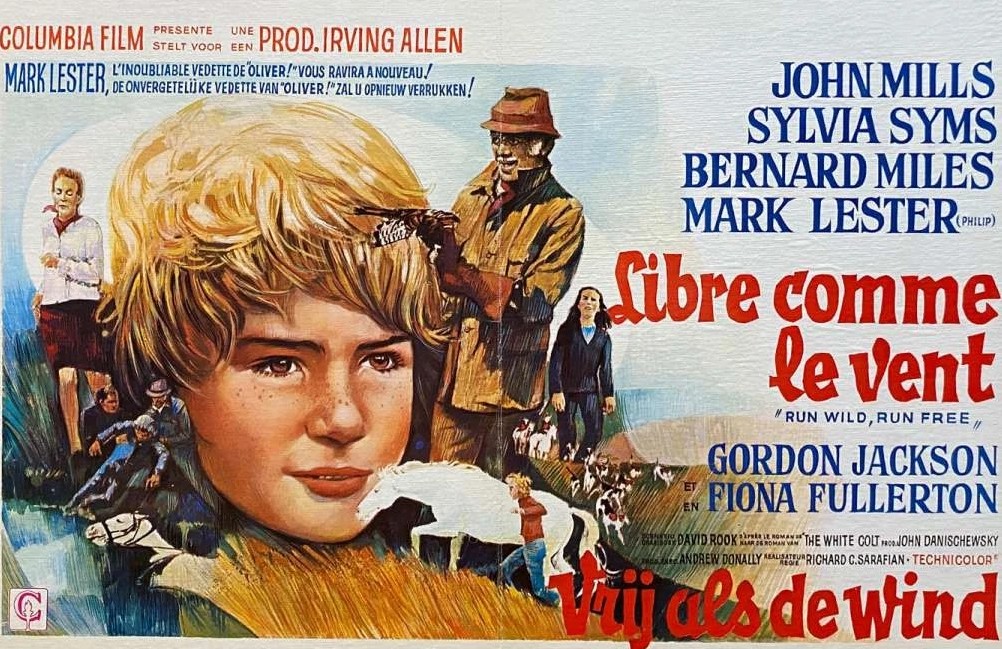
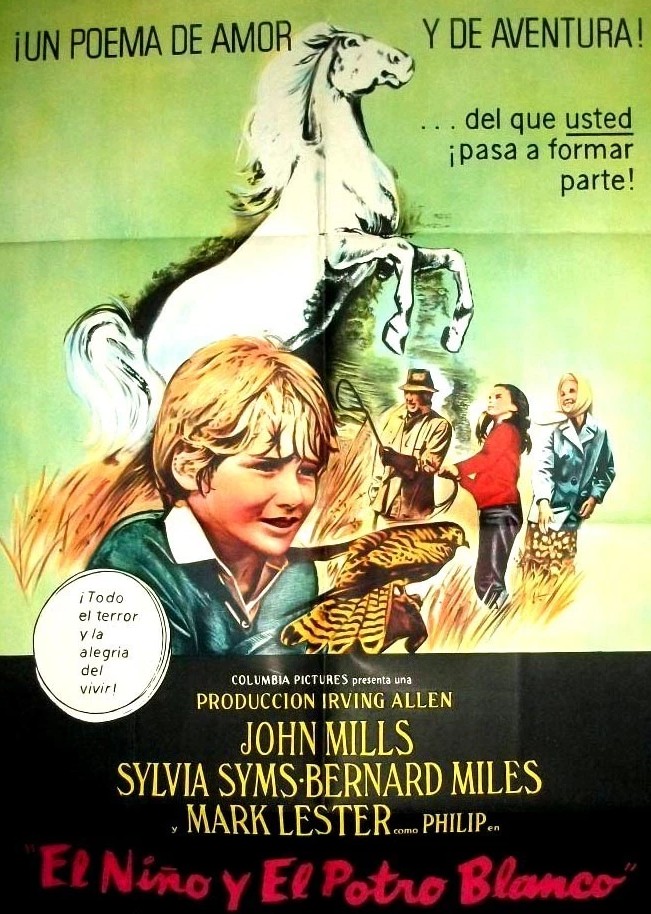
Living on the edge of the moors, small wonder Philip (Mark Lester) is attracted, even as a toddler, to the wilderness. That’s exacerbated when he’s afflicted by muteness after developing a stammer around the age of four. It’s assumed there’s a psychosomatic cause, but we’ve got no time and the parents no inclination to dwell upon that.
He develops an obsession with a wild white pony, one of a herd that runs free on the moors, and spends most of his time out trying to find it. Col Ransome (John Mills), nature lover and amateur ornithologist, befriends Philip, helping him to understand nature, and teaching him to ride – bareback – the pony. Ransome also shows him to manage a kestrel.
Scenes of characters working with horses or other animals are usually limited to bit of nose stroking or whispering to calm said animal down, but here we go into a lot more intricate detail of how to win the cooperation of a horse, the kind of lore that nobody’s got much time for these days. So if you want to ride a horse bareback first off you need to just lie on top across its back and stroke its sides. And for a predator, you have to be willing to accept the occasional peck on your fingers while, again, you evoke a stroking mechanism. You might also be surprised to learn that the easiest way to mend a broken wing is by the use of glue.
While Philip and the Colonel and a young girl Diana (Fiona Fullerton) are happily communing with nature, Mr Ransome (Gordon Jackson) and wife (Sylvia Syms) are scarcely able to work out their feelings at being abandoned by their child. The mother tends to get angry, the father, in a very touching scene, is left desolate after Philip ignores a present the father believes would have brought more solidity to their relationship, and in another effective scene it’s the Colonel who explains that it doesn’t take much for a child to understand how devoted an apparently distant father can be.
Any potential soppiness is killed off when Philip in a wild fit of obsession nearly kills the kestrel and in another sequence of disregard almost kills the horse. Occasionally, Philip speaks a few words to the old man but refuses to express himself in front of the parents. So it will come as little surprise that when the parents finally hear the son speak it’s at the quite gripping climax when all the adults have failed to rescue the white horse from a swamp.
And anyone expecting that cute kid from Oliver! (1968) would have their hopes dashed when Mark Lester displays all the natural truculence and wantonness of a child. He’s pretty good, I have to say, in being forced to confine his emotions to facial expression.
John Mills (Guns at Batasi, 1964) is excellent and Sylvia Syms (East of Sudan, 1964), shorn of glamor, and Gordon Jackson (The Ipcress File, 1965) as her emotionally inarticulate husband, both dump their screen personas in favor of highly believable characters. Fiona Fullerton makes her screen debut.
Richard C. Sarafian does a splendid job. Screenplay by David Rook based on his novel.
 The Magnificent 60s