Remembering this picture as a summer holiday matinee of stiff-upper-lip entangled in all sorts of Khartoumery, I came at this film with low expectations. Given producer Charles H. Schneer’s (First Men in the Moon, 1964) involvement, there were no Ray Harryhausen magical special effects. I was only aware of star Anthony Quayle as a bluff supporting actor in epics like Lawrence of Arabia (1962) and The Fall of the Roman Empire (1964) and Sylvia Syms as a willowy supporting actress (The World of Suzie Wong, 1960).
So I was in for a pleasant surprise. Take away the back projection, stock footage and the unlikely zoo of wild animals and there is a fairly decent action film set in the Sudan on the fringes of the Mahdi uprising (that story filmed as Khartoum the following year).
Baker (Anthony Quayle), former army sergeant awaiting court martial, escapes from a battle near Khartoum, saving governess Miss Woodville (Sylvia Syms), her charge Asua (Jenny Agutter making her debut), officer Muchison (Basil Fowlds) and a wounded soldier. The motley crew flees down the Nile in a boat. You know you are in for something quite different when the soldier dies and Baker wants to toss him overboard. Overruled by prim Miss Woodville and by-the-book Murchison, this good deed is rewarded by losing their beached boat while burying the dead.
A picture like this only survives on twists. Burning the remainder of their boat to attract the attention of the British relief force only brings in their wake a mob of Arabs, who we are informed, in a spicy exchange, don’t know the ten commandments, especially “thou shalt not kill.”
The movie turns into a battle of the sexes, with Woodville’s innocence and good breeding quickly eroded in the face of danger, her natural antipathy towards a scallywag like Baker softening. Lacking due deference, said scallywag is given some choice lines which spark up proceedings. It being Africa, the animals have nothing better to do than torment them, so cue snakes, crocodiles, charging rhinos, hippos, elephants without even a decent monkey to lighten proceedings. Baker sets his ruthless tendences to one side to take a tender, paternal interest in young Asua. Ongoing action prevents the usual male-female meet-cute African Queen-style banter and it’s all the better for it.
Capture by African tribesman takes the story on an interesting detour. Baker, attempting to make friends, shouts out despairingly, “Don’t any of you even speak English?” only for chieftain Kimrasi (Johnny Sekka) to stride out of the bushes with the reply, “I speak, English, Arabic and Swahili.” Baker explains, “We come in peace.” The chief retorts, “With gun in hand?”
Game on! The plot goes offbeat for w while when we become involved in Kimrasi’s life. A former slave, his village presents an unusually realistic alternative world not least for Asua, ill by this time, saved by an African witch doctor. There are further surprises, clever ruses to foil the enemy, revelations about Woodville and a surprising but very British ending.
Quayle is convincing, reveling in the opportunity to create a fully-formed character rather than confined to a small chunk of a picture. Syms, too, with more on offer than normal, Agutter (Walkabout, 1971) not a precocious Disney cut-out, and Fowlds revealing what did for all those years before turning up on television as puppet Basil Brush’s sidekick. As a British B-picture making do on a small budget, it overcomes this particular deficiency with some sparkling dialog and attitudes that go against both the time in which it was set and the era in which it was made. Directed by Nathan Juran (First Men in the Moon) from a screenplay by Jud Kinberg (Siege of the Saxons, 1963).
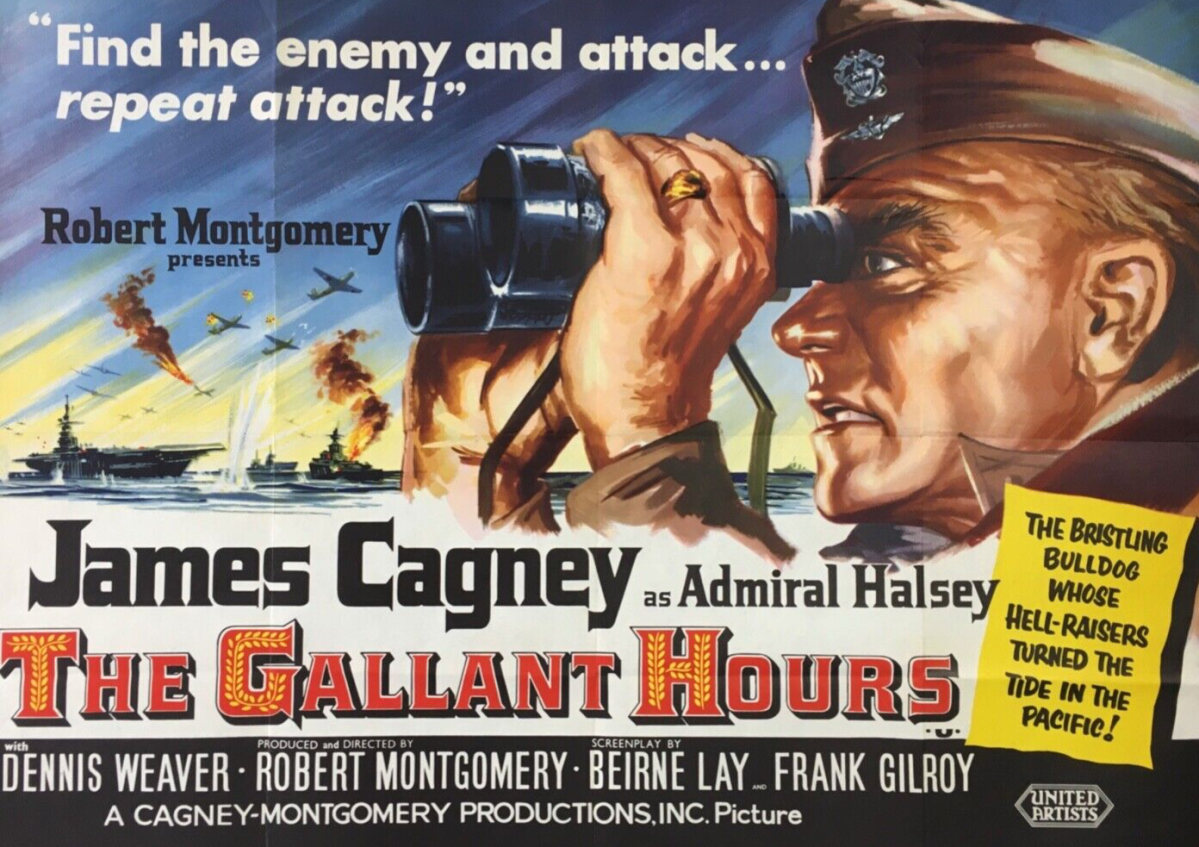
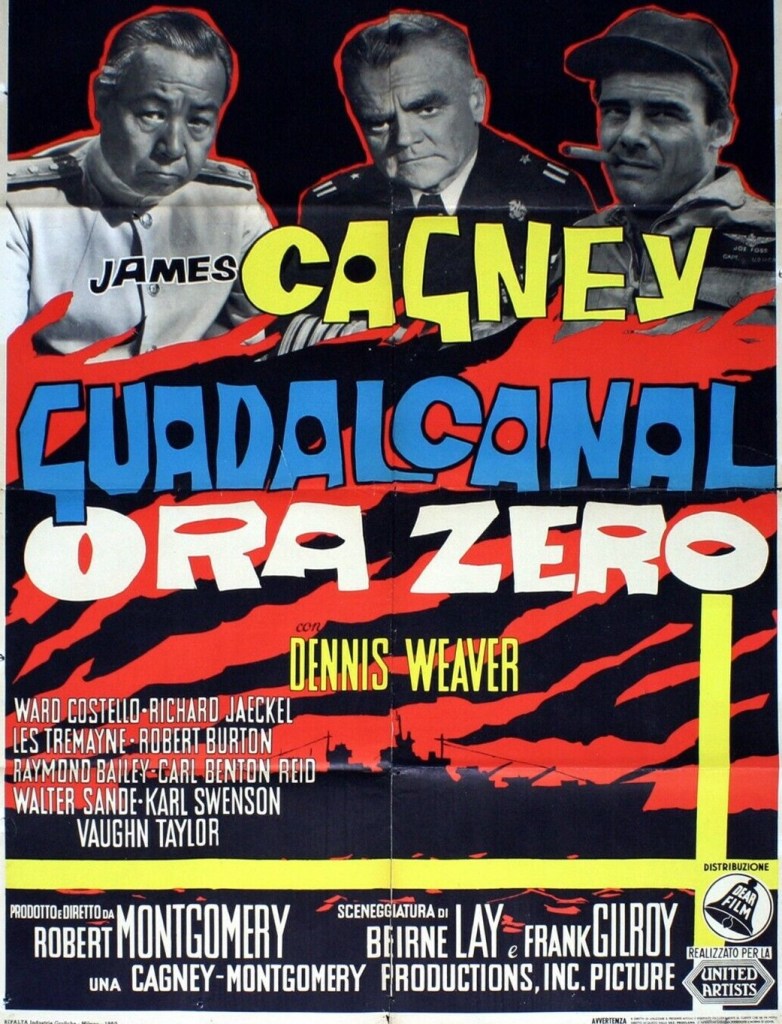
A curiosity. Something of vanity project for star James Cagney (One, Two, Three, 1961) – in his penultimate leading role – who doubled up as producer. But more of a documentary than a war picture. Witness, no scenes of actual World War II combat for a start. And going down the same annoying route as The St Valentine’s Day Massacre (1967) where the voice-over pretty much tells you what everyone had for breakfast and in that vein goes on to tell you whether or not they survived the conflict and maybe became a relatively famous politician thereafter.
Basically recounts the turnaround in U.S. fortunes at the Battle of Guadalcanal in the South Pacific in 1942-1943. The Americans had invaded the island but were coming under increasing pressure from the Japanese. In case you don’t know your Second World War history, this was the first major American land offensive following Pearl Harbor. Though the Americans had thwarted the Japanese at The Battle of the Coral Sea and the Battle of Midway, these were nautical triumphs. Guadalcanal was the first objective in the American island-hopping strategy.
Here, I’m getting all information-overload myself, because all you really need to know is that the Americans parachuted in (actually, he landed by flying boat) Admiral “Bull” Halsey (James Cagney) at a critical moment to revitalize their operation and prevent the expected Japanese attack. The Japanese were so convinced that victory was imminent that they had drawn up operational details of the surrender ceremony they planned to impose on the vanquished Americans.
The Yanks managed to intercept and decode Japanese radio transmissions and in the only real dramatic moment, after capturing the surrender document, Halsey pins it to a tree so his troops can read it and stiffen their resolve.
But mostly this is a bunch of guys in a bunch of rooms talking about what they were going to do and how difficult, what with lack of support and casualties and low morale, their challenge was going to be. There’s no shortage of detail but every time a scene starts to become dramatically interesting up pops our resident voiceover (director and co-star Robert Montgomery if you want to know) to provide us with some unnecessary detail about some character in the room.
On the debit side, this is pretty irritating. On the plus side, it’s fascinating, a potted history of various personnel without having to resort to the usual sub-plots, often inane in themselves, often of the romantic persuasion, that crop up in an otherwise intriguing war picture so as to provide the audience with people to root for. If you were American, you would recognise some of the characters depicted, some true-life heroes (ace pilots, courageous soldiers) who made their name on the field of battle or contributed to the victory off it.
Of course, if you’re from anywhere else you won’t have a clue who anybody is – and not that much interested either, preferring the old-fashioned approach of sub-plot and romance – but stick with it because, once you realize this is a determinedly novel approach for the genre, it does become pretty interesting especially as Cagney, despite his character being nicknamed “Bull,” dispenses with his usual acting tricks, the strangulated voice and the aggressive demeanor, in favor of a more rounded personality.
Nobody tends to hold up a critical mirror to battles that end in victory, unlike Pearl Harbor, so it’s never going to degenerate into verbal fisticuffs, and much of the pressure the audience might detect comes from the other side, the cocky Japanese, who are presented in a very even-handed manner, despite, or perhaps because, their leader Admiral Yamamoto (James T. Goto), who led the attack on Pearl Harbor, was highly respected by the Americans. This is where maybe Violent City (1970) got the idea of ignoring subtitles, but at least here we can rely on Mr Voiceover to keep us posted on what the Japanese were actual up to.
Cagney holds it all together and you might spot Dennis Weaver (Duel, 1971) and Richard Jaeckal (The Dirty Dozen, 1967) among the supporting cast. Sixth and final directorial outing for star Robert Montgomery (though he limits his onscreen involvement here to just the narration) who had experimented with voiceover in Lady in the Lake (1945). Whether you fall in with his take on this one, he pretty much delivers what he intended, a semi-documentary account of leaders in battle. Screenplay by Beirne Lay Jr (The Young and the Brave, 1963) and Frank D. Gilroy (The Subject Was Roses, 1968).
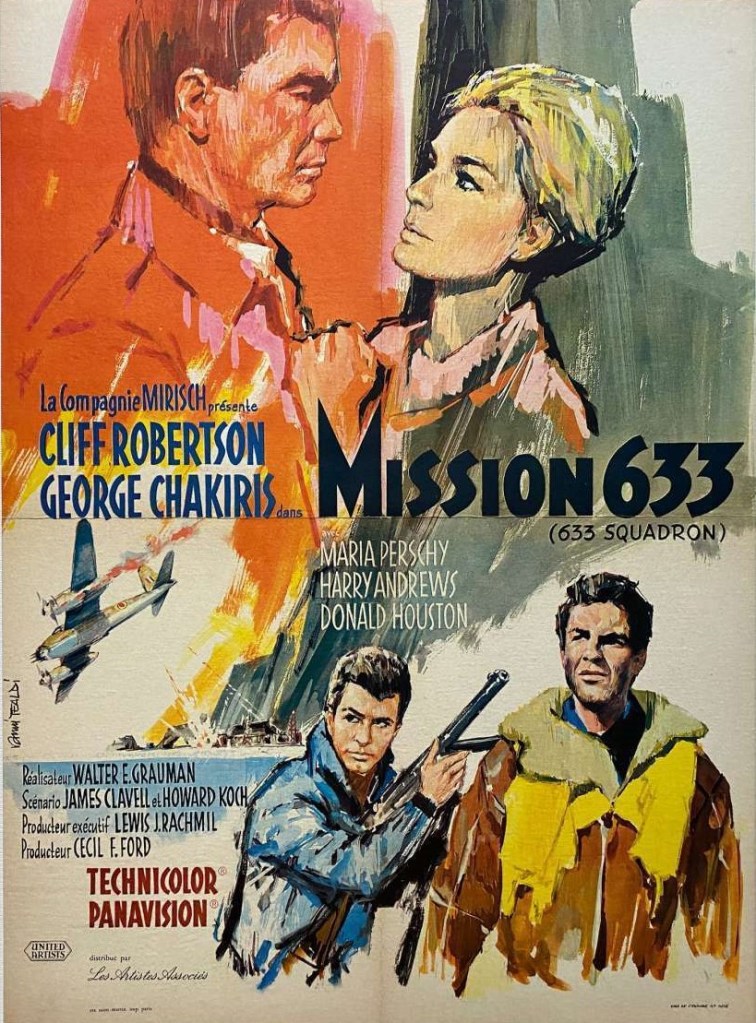
You can keep your current and future Oscar winners, George Chakiris (for West Side Story, 1961) and Cliff Robertson (for Charly, 1968). The stars here are the mechanical birds, the Mosquito bombers, and the Ron Goodwin score, a thundering rehearsal for Where Eagles Dare (1968).
The aerial photography was pretty amazing for the day, though there were no Top Gun: Maverick shenanigans with actors supposedly actually flying the planes, just sitting there with an occasional turn or yank of the controls. Even so, watching the planes take off, land, propellers describing perfect arcs, being attacked on ground or in the air, firing back, and the (apologies) bird’s eye view of dashes along precipitous cliffs takes up a huge amount of the running time.
You’ll know by now there was no actual 633 Squadron – but there was an international squadron (see the current Masters of the Air) to accommodate the various accents on show – and that the mission is also fictional, though the idea that the Germans had chosen the Norwegian fjords to hide a factory making rocket fuel for the V1s currently in production elsewhere wasn’t too far off the mark given (see The Heroes of Telemark, 1965) they were using that country for atomic bomb experiments.
The British know the rockets are inevitable, impossible to completely destroy them, but as long as they don’t interfere with D-Day that will be good enough. Wing Commander Grant (Cliff Robertson), although his squadron is exhausted from flying too many daily missions, has his leave curtailed, and told he’s on a strict deadline to destroy the factory.
Like the factory in The Heroes of Telemark, it’s virtually impossible to hit, buried beneath too much rock, but the Germans ain’t that clever, and it’s the rock that is the weakness. The theory is hit the overhang with sufficient bombs and the mountain will come tumbling down and destroy the factory.
Norwegian Resistance fighter Lt Bergman (George Chakiris) is on hand to explain just how difficult the task is, flying at extremely low altitude along fjords guarded by anti-aricraft guns. To add more tension, or just for the hell of it, Air Vice Marshal Davis (Harry Andrews) keeps on truncating the already tight deadline. The pilots have barely got time for a few practice runs along Scottish glens before it’s M-Day (no idea where that daft moniker came from, presumably a D-Day discard).
But there is just enough time for Grant to make pretty with Bergman’s refugee sister Hilde (Maria Perschy). Although after Bergman returns to help out his mates and is unhelpfully captured by the Nazis, Grant has to bomb the Gestapo building to kill him before he can be tortured and give out vital information.
In another film, Hilde would have been a spy or cut off the burgeoning romance after discovering Grant’s mission, but instead she’s not in the espionage line and she thanks the wing commander for sparing her brother torture. In the only major twist in the picture, it turns out Grant was too late, for there’s a nasty welcome committee awaiting the bombers.
Not quite the Boy’s Own derring-do adventure tale I remember, what with the torture and the climax, but it was still in my day one of the few films that appealed heart-and-soul to the pre-teen and teenage boy, along with The Magnificent Seven and The Great Escape, in part, I guess, because it was so thrifty in terms of character development.
No time is wasted giving everyone a character arc, beyond the usual daredevil and someone getting married, the characters are sketchy beyond belief, but who the hell cares, let’s get on with the action. So, it certainly delivers on that score. But watching as an adult, and I’ve probably not seen this in four decades, it’s a good bit tougher than the surface might suggest, eating away at the idealism of war, of the noble sacrifice, and tuning in better than most World War Two pictures to raw finality.
Perhaps it’s emblematic that the best cinematic introduction is given to the arrival of the new-style bombs, although Hilde turning up to a torrent of wolf whistles in the bar runs it close, and she does have a habit of leaning out a window to give the audience a glimpse of cleavage every now and then.
No wonder we all came out humming the Goodwin theme. You can’t escape it. It’s in virtually every scene. Memorable final line uttering by the air vice marshal, “You can’t kill a squadron.”
It would have set the bar high for aerial photography, except that by showing how it could be done, triggered a small flurry of similar pictures, most notably The Blue Max (1966) and The Battle of Britain (1969).
Walter Grauman (A Rage to Live, 1965) clearly adores the machines more than the humans, but the script by James Clavell (The Great Escape, 1963) and Howard Koch (The Fox, 1967) based on the novel by Frederick E. Smith doesn’t give him much option.
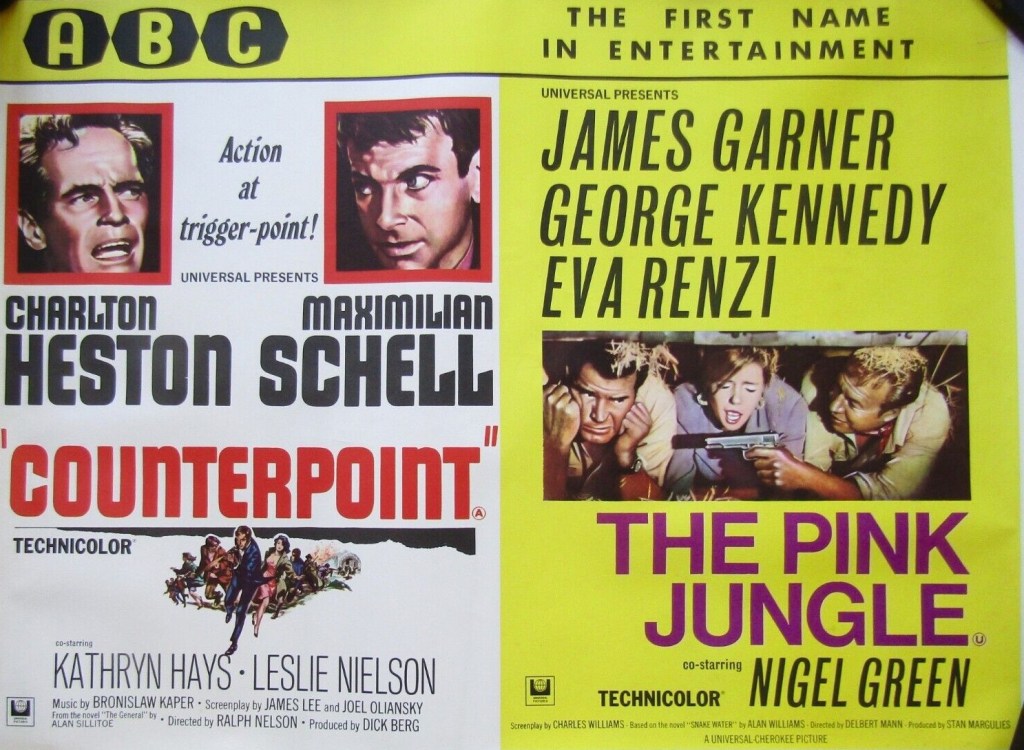
Absorbing duel of minds between two autocrats obsessed with their own glory and needs and dealing with dissension in the ranks. That it takes place during the Battle of the Bulge turns out to be less of a dramatic hindrance though you maybe have to suspend disbelief in the notion that any resistance fighters might take time out from trying to sabotage Germans to help rescue a bunch of whining, pampered non-combatants with no strategic value whatsoever.
Once you accept that the U.S.O. would deem a classical orchestra the best way to entertain the troops rather than Betty Grable or Bob Hope then you’re halfway there.
Poster that misleadingly apes “The Great Escape” and “The Dirty Dozen”. Naturally, no woman would attempt such an escape without giving everyone a glimpse of cleavage.
Anyway, the Germans launching an offensive in December 1944 by accident capture the classical orchestra led by world-famous conductor Lionel Evans (Charlton Heston). The Germans are under orders to take no prisoners so as not to divert vital troops during this last-stage effort to extend the war, so under the direction of Colonel Arndt (Anton Diffring) the musicians face a firing squad until General Schiller (Maximilian Schell) happens to pop his head out of his window and recognize his hero, Evans.
Death is temporarily averted while Schiller purrs over his captive. But Evans, still high on principle and arrogance, refuses to comply with Schiller’s request to play a concert for him during a delay in the battle as, the Germans, hit by fuel shortage, are unable to continue their campaign and therefore have time on their hands. There ensues the aforesaid duel of minds plus various demonstrations of disloyalty and ruthlessness.
The joy here is the dialog because there’s not much else going on, beyond a half-hearted attempt to escape, and the tension doesn’t rachet up until Evans realizes Schiller is only keeping them alive until the concert, after which they will be turned over to the trigger-happy Arndt, who lacking any subtlety, has already begun to dig a mass grave in full view of the trapped self-proclaimed neutrals.
Teamed up in Britain with the long-lost “The Pink Jungle”, which, as it happens, I’m reviewing shortly.
It’s almost a parade of bon mots as each of the leaders tries to top the other’s sentences, and not in merely a clever manner, but with full-blown fascinating argument, in part about the different outlooks of each country, but also about their contradictions, and it’s a rare movie that can hold your attention just through dialog unless it’s set in a courtroom. But, here, Evans isn’t so much arguing for the suspension of a death penalty, for example, but in a remote high-mindedness complaining that, well, there’s no other word for it, that it’s just “unfair” as if the Geneva Convention has a special clause regarding classical musicians.
Maybe it does, given these are Americans, though not in uniform, which might be a point in their favor. But any commander would be correct in assuming they could, through courageous action, perform an act of sabotage or at the very least, as I mentioned, tie up vital resources.
Matters are complicated because Arndt, less self-indulgent than his superior, goes behind Schiller’s back to rat him out to HQ in Berlin while nameless persons within the orchestra are clearly in cahoots with the Germans. And you can’t blame them either. Arndt believes Schiller’s actions could compromise the attack, the orchestra traitors that Evans’ defiance will get them all killed. Evans is quite happy to sacrifice former lover Annabelle (Kathryn Hays) to keep the German commander, who has taken a fancy to her, happy.
Matters are complicated by the presence in the orchestra ranks of two U.S. soldiers in uniform, who feel duty bound to find a way out, so there’s a bit of the kind of action you’d get in a heist movie where an audience listens to classical music while above them a cat burglar is divesting them of their jewels. Here, the two soldiers are clambering up the innards of a church to the roof to scope out the territory and then attempt escape using a home-made rope made up of scarves and nylons etc.
As it becomes obvious that there is no point in Evans playing for time, the tension and turmoil does increase as that unfilled mass grave beckons. Doesn’t play out the way you’d expect, a couple of neat twists keeping cliché at bay.
But, as I said, the primary interest is the verbal battle between two refined minds convinced they are the most important people on the planet. The only standout scenes not involving Evans concern Schiller’s “seduction” of Annabelle and the playing of the American national anthem by one of the soldiers, planted in the orchestra, who Arndt suspects, from his age (too young to be in such august company unless a musical prodigy), doesn’t fit in.
Charlton Heston (Number One, 1969) and Maximilian Schell (Topkapi, 1964) are both superb as flawed characters. There’s a rare movie appearance for Kathryn Hays (Ride Beyond Vengeance, 1966) and another chance to see Leslie Nielsen (Beau Geste, 1966) before he became comedy catnip.
But it’s the script by James Lee (Banning, 1967) and Joel Oliansky (The Todd Killings, 1971), that really delivers, although I’m guessing that the best lines came directly from the source novel, The General by Alan Sillitoe (Saturday Night and Sunday Morning). Directed by Ralph Nelson (Once a Thief, 1965).
Rare to get a movie that relies so much on script and actors on such top form.
Underrated gem.
PREVIOUSLY REVIEWED IN THE BLOG: Charlton Heston in Diamond Head (1962), 55 Days at Peking (1963), Major Dundee (1965), The War Lord (1965), Khartoum (1966), Planet of the Apes (1968), Number One (1969); Maximilian Schell in Judgement at Nuremberg (1961), Topkapi (1964), Fate is the Hunter (1964), Father Goose (1964), Return from the Ashes (1965), The Deadly Affair (1967), Krakatoa -East of Java (1968); Ralph Nelson directed Soldier in the Rain (1963), Once a Thief (1965), Duel at Diablo (1966) and Soldier Blue (1970).
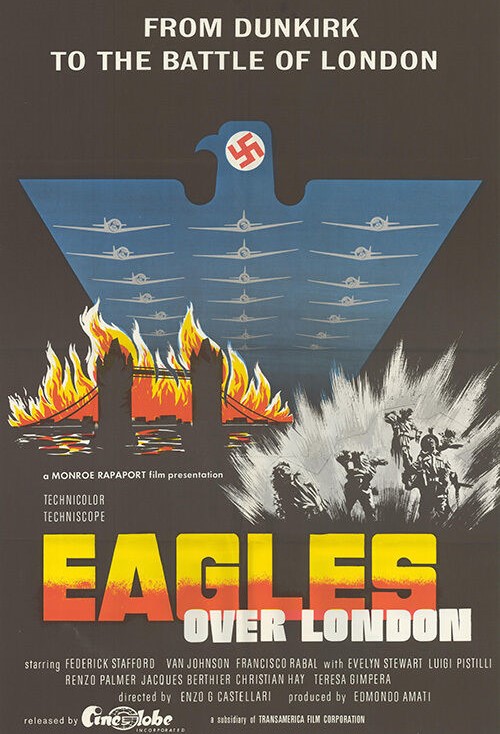
Presumably intended to capitalize on/rip-off the same year’s big-budget roadshow The Battle of Britain manages to cram in a pack of action beginning with a tank ambush in Normandy, the Dunkirk evacuation, the Battle of Britain, rooftop shoot-outs, ending up with an audacious attack of RAF High Command by a team of German saboteurs. As notable for technical achievement, split screen – sometimes split diagonally or quartered – in the manner of The Boston Strangler (1968) and The Thomas Crown Affair (1968), shots through various tiny holes, scenes filmed overhead, and a dazzling swirling camera sequence that would normally presage intimacy but here means death.
Somehow manages to squeeze a surprising number of dramatic moments focusing on relationships, a brief nod to homosexuality, and emulating Fraulein Doktor (1969) in giving the Germans credit for astute and effective espionage. Obvious use of stock footage for the air fight sequences, but you wonder what else has been cobbled out of the vaults given the preponderance of scenes requiring massive numbers of extras. Throw in Hollywood veteran Van Johnson (Divorce American Style, 1967) and a particularly good Cockney sergeant (Renzo Palmer) and it hardly lets up.
So, Captain Stevens (Frederick Stafford) heads up a unit delaying the German blitzkrieg in France in 1940. The Germans, led by Donovan (Francisco Rabal), meanwhile, are in disguise, assuming the identities of dead British soldiers with the intention of infiltrating Britain and destroying its radar installations. Inadvertently, Stevens saves Donovan’s life, thus giving the German accepted entry into British high command. Equally inadvertently Stevens allows the German access to his girlfriend Meg (Evelyn Stewart) who needs a shoulder to cry on. Donovan has his own girlfriend, Sheila (Teresa Gimpera) on tap, an undercover agent working as a barmaid, well-trained at collecting loose talk and seduction.
Elements of giallo keep popping up as the Germans need to embark on a murderous rampage to continue to acquire new identities to keep ahead of the pursuing investigation, one strangulation taking place in a gay sauna. Every now and then we pop into RAF High Command where Air Vice Marshal Taylor (Van Johnson) is helping thwart the German aerial attacks and in the end, since more bodies are required, elects to go into battle himself.
The small screen allows laughable moments – model airplanes crashing into the sea, cardboard radar installations toppling – to pass almost unnoticed since most of the rest of the action is well rendered, the rooftop scene especially, and the other various shoot-outs where – shock to the system – the British are constantly outwitted and outgunned.
Mostly, you’ll note how stylish a concoction this is given the low budget. Excellent sex scene against the background of exploding bombs, the duping of our hero by the enemy, and one terrific scene where Sheila is deemed surplus to requirements, calmly accepting her fate on condition that it’s her lover who pulls the trigger.
This would have been solid support material in English-speaking countries but most likely a main feature in its Italian homeland. Might have even done better if distributors waited until Afred Hitchcock’s Topaz (1969) appeared since he recruited Frederick Stafford as his leading man. Stafford was always under-rated but he keeps this afloat, though the Germans have the more interesting roles, especially Francisco Rabal and Teresa Gimpel. Evelyn Stewart (The Whip and the Body, 1964) has a smaller part.
Not content with introducing far more style and, shall we say, flamboyance, than the material might suggest director Enzo G. Castellari (Any Gun Can Play, 1967) has the audacity to end by using Winston Churchill’s “the few” speech to halt the traffic so the British lovers can catch up with each other.
A classic example of what an interesting director can do with what in other hands would be more mundane material. Not quite sure why it took five screenwriters.
Surprisingly fun watch overloaded with style.
REVIEWED PREVIOUSLY IN THE BLOG: Frederick Stafford in Topaz (1969), Evelyn Stewart in The Whip and the Body (1964), Van Johnson in Divorce American Style (1967).
Stellar World War Two mission picture, replete with tension and thrilling ski chases, told with some style, and with a conscience, probing the issue of civilian collateral damage. Sensibilities were not so inflamed at the time when the US, as demonstrated in Oppenheimer (2023), dropped the atomic bomb on Japan, causing the deaths of hundreds of thousands of non-military personnel. Here, at stake are the 6,000 townspeople who live around the plant housing the German experiments into heavy water, the alternative method for building an atom bomb.
When the safety of the entire world is in the balance, and death is doled out by remote bombers, thousands of feet up, with no close-up of the carnage, it appears far more acceptable than when you are planting a bomb on a ferry boat, knowing you are possibly consigning all the passengers to drowning.
That’s the climax of this well-plotted and well-constructed quite thrilling last picture from director Anthony Mann (The Fall of the Roman Empire, 1964) – he died during the making of A Dandy in Aspic (1967) so that cannot be fully ascribed to him and in any case this is a much better send-off.
Probably old-school British and Hollywood pictures were to blame for depicting scientists as stuffy individuals, allowing work to overrule romance. But as Oppenheimer demonstrated, that was not always the case and here we are introduced to top Norwegian egghead Rolf (Kirk Douglas) when he is stealing an illicit fumble with an employee in the darkroom.
The Germans are racking up production of heavy water, aiming to produce – drip by endless drip – 10,000lb of the stuff in double quick time. Norwegian saboteurs led by Knut (Richard Harris) hitch a ride by boat to Britain to inform the Allies of the danger. The obvious solution is to bomb the hell out of the factory, despite the impact on the civilian population.
But that fails. Plan B, dropping 50 highly-trained British commandos, into snow-covered Norway, comes a cropper when the plane crashes. A beautifully-filmed sequence, by the way, in extreme long shot, with one character at the front to provide perspective, a burst of flame at the far end of the white landscape.
So the saboteurs have to do it for themselves, the reluctant Rolf forced into action since he’s the only one, purportedly, who knows where to place the plastic explosive around the tanks holding the heavy water. The Norwegians shoot themselves in the foot by, in limiting the potential civilian casualties, only aiming to blow up the water tanks not the entire factory. Turns out the clever Germans have their own Plan B, other tanks already assembled which can be quickly fitted in the event of such sabotage.
Now with the plant more heavily guarded, access is impossible, and the only chance to stop the consignment of heavy water reaching Germany is to stop it getting there, by blowing up the train carrying the materiel as it crosses the fjord by ferry. Had this sabotage taken place in Germany, nobody would have given two hoots about the passengers, collateral damage be hanged. But this being Norwegians, Rolf feels duty bound to remain on board rather than escape, and formulate a plan to minimize the casualties.
I’m not sure how true that aspect is, it feels like something intended to present the main characters in a less ruthless light, although in reality the bombs were positioned and timed to help make survival easier.
Although told in semi-documentary style a la the same year’s Operation Crossbow, In Harm’s Way and Battle of the Bulge, with the aforementioned sensibilities to the fore, and the re-firing of romance between Rolf and divorced wife Anna (Ulla Jacobsen), the ruthless Nazi habit of executing hostages any time one of their soldiers is killed or even attacked, a traitor in the camp, open hostility between Rolf and Knut and stunning ski sequences that are the equal of anything in the James Bond canon, this is a riveting watch.
Must have been one of the cheapest music scores and screenplays on record given how often the director dispensed with both dialog and music during the lengthy sabotage scenes. When dialog was permitted, it was often sharp or humorous.
There was no stiffer upper lip in Hollywood than that of Kirk Douglas (The Brotherhood, 1968) though his hard-nosed demeanor is alleviated by romance and his efforts to minimise civilian casualties. Richard Harris (This Sporting Life, 1963) always seemed ready to explode. Ulla Jacobsen (Zulu, 1964) and Michael Redgrave (Assignment K, 1964) bring some class to the supporting roles.
Tremendous piece of direction by Anthony Mann, as adept at the action and building tension as handling the personality clashes between the principals and the intimacy of romance. Ivan Moffat (Tender Is the Night, 1962) and Ben Barzman (The Blue Max, 1966) wrote the screenplay based on a memoir by Knut Haueklid and the novel But for These Men by John Drummond.
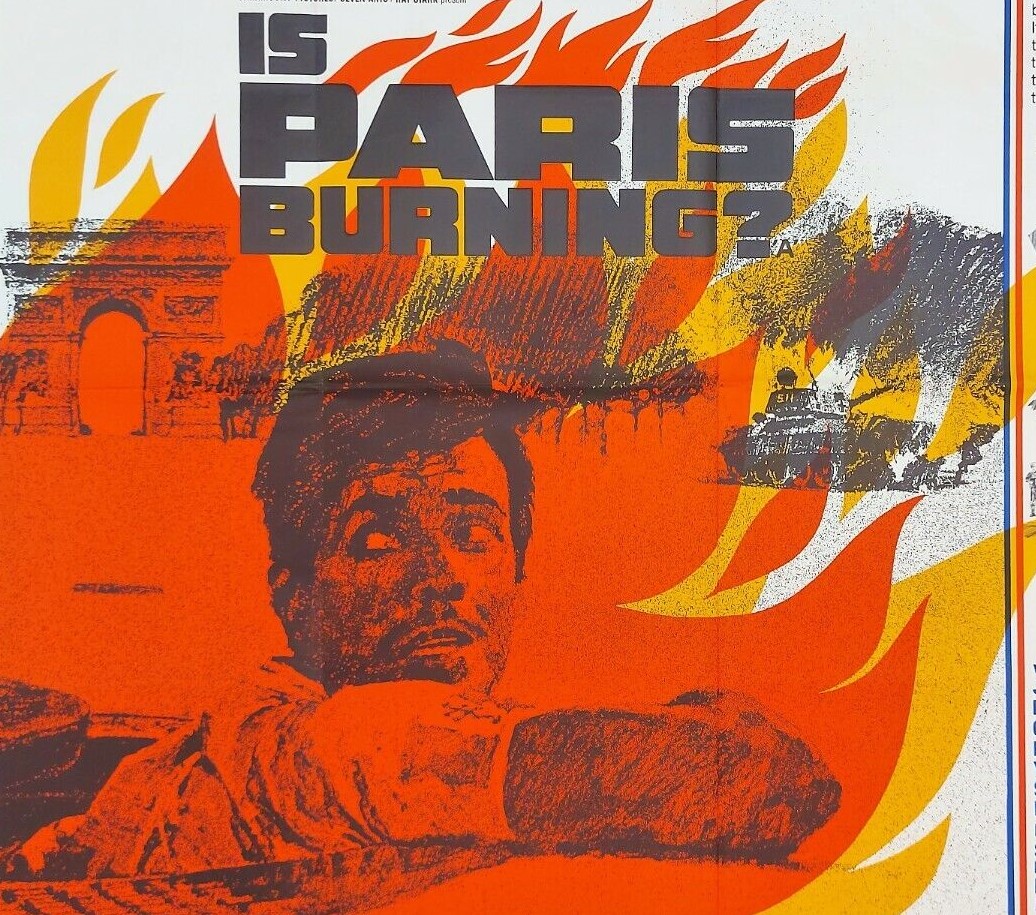
Politics didn’t usually play a part in war films in the 1960s but’s it’s an essential ingredient to Rene Clement’s underrated documentary-style picture. Paris had no strategic importance and after the Normandy landings the Allies intended to bypass the French capital and head straight for Berlin.
Meanwhile, Hitler, in particular vengeful mood after the attempt on his life, ordered the city destroyed. Resistance groups were splintered, out-numbered and lacking the weaponry to achieve an uprising. Followers of General De Gaulle, the French leader in exile, wanted to wait until the Allies sent in the troops, the Communists planned to seize control before British and American soldiers could arrive.
When the Communists begin the fight, seizing public buildings, the Germans plant explosives on the Eiffel Tower, the Louvre, and other famous buildings and all the bridges across the River Seine. The German commandant Von Choltitz (Gert Frobe), no stranger to slaughter having overseen the destruction of Rotterdam, holds off obeying his orders because he believes Hitler is insane and the war already lost.
The Gaullists despatch a messenger to persuade General Omar Bradley (Glenn Ford) to change his mind and send troops to relieve the city. Sorry for the plot-spoiler but as everyone knows the Germans did not destroy the city and the liberation of Paris provided famous newsreel and photographic footage.
Director Clement (Rider on the Rain, 1970) was also aware he could not extract much tension from the question of whether von Choltitz will press the destruct button, so he takes another route and documents in meticulous detail the political in-fighting and the actual street battles that ensued, German tanks and artillery against Molotov cocktails and mostly old-fashioned weaponry. The wide Parisian boulevards provide a fabulous backdrop for the fighting.
Shooting much of the action from above allows Clement to capture the action in vivid cinematic strokes. Like The Longest Day (1962), the film does not follow one individual but is in essence a vast tapestry. Scenes of the utmost brutality – resistance fighters thrown out of a lorry to be machine-gunned, the public are strafed when they venture out to welcome the Americans – contrast with moments of such gentleness they could almost be parody: a shepherd taking a herd through the fighting, an old lady covered in falling plaster watching as soldiers drop home-made bombs on tanks.
This is not a film about heroism but the sheer raw energy required to carry out dangerous duty and many times a character we just saw winning one sally against the enemy is shot the next. The French have to fight street-by-street, enemy-emplacement-by-enemy-emplacement, tank-by-tank.
And Clement allows as much time for humanity. Francophile Sgt Warren (Anthony Perkins), as an American grunt, spends all his time in the middle of the battle trying to determine the location of the sights he longs to see – before he is abruptly killed. An unnamed café owner (Simone Signoret) helps soldiers phone their loved ones.
Like The Longest Day and In Harm’s Way (1965), the film was shot in black-and-white, but not, as with those movies for the simple reason of incorporating newsreel footage, but because De Gaulle, now the French president, objected to the sight of red swastika. Even so, it permitted the inclusion of newsreel footage, which on the small screen (where most people these days will watch it) appears seamless.
By Hollywood standards this was not an all-star cast, Glenn Ford (as Bradley), Kirk Douglas (General Patton) and Robert Stack (General Sibert) making fleeting glimpses.
But by French standards it was the all-star cast to beat all-star casts – Jean-Paul Belmondo (Breathless, 1960), Alain Delon (Lost Command, 1966), Yves Montand (Grand Prix, 1966), Charles Boyer (Gaslight, 1944), Leslie Caron (Gigi, 1958), Michel Piccoli (Masquerade, 1965), Simone Signoret (Room at the Top, 1959) and Jean-Louis Trintignant (A Man and a Woman, 1966). Orson Welles, in subdued form, appeared as the Swedish ambassador.
Gore Vidal (The Best Man, 1964) and Francis Coppola (The Godfather, 1962) devised the screenplay based on the bestseller by Larry Collins and Dominic Lapierre
At $6 million, it was the most expensive French film ever made. It had a six-month shooting schedule and was shot on the streets of the city including famous locations like Etoile, Madeleine and the Louvre. It was a big hit in France but flopped in the United States, its box office so poor that Paramount refused to disclose it.
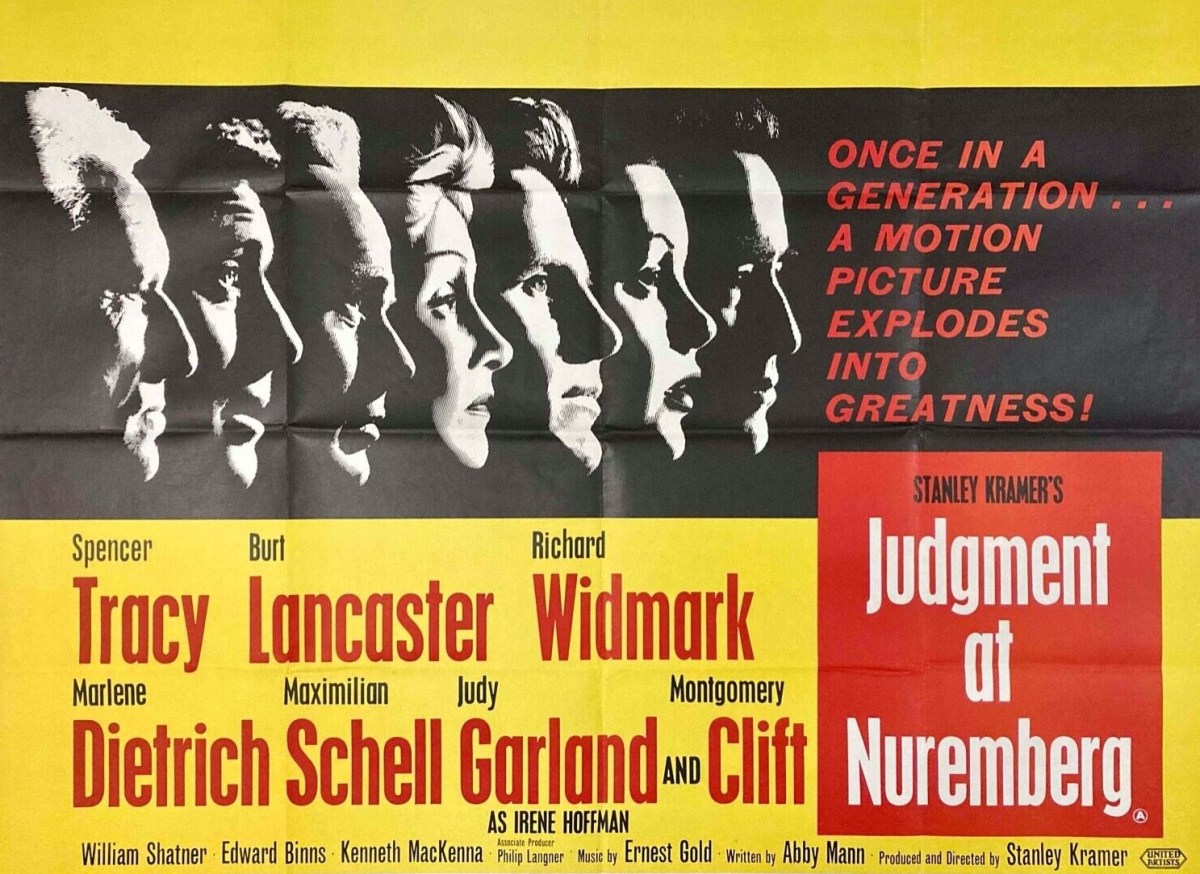
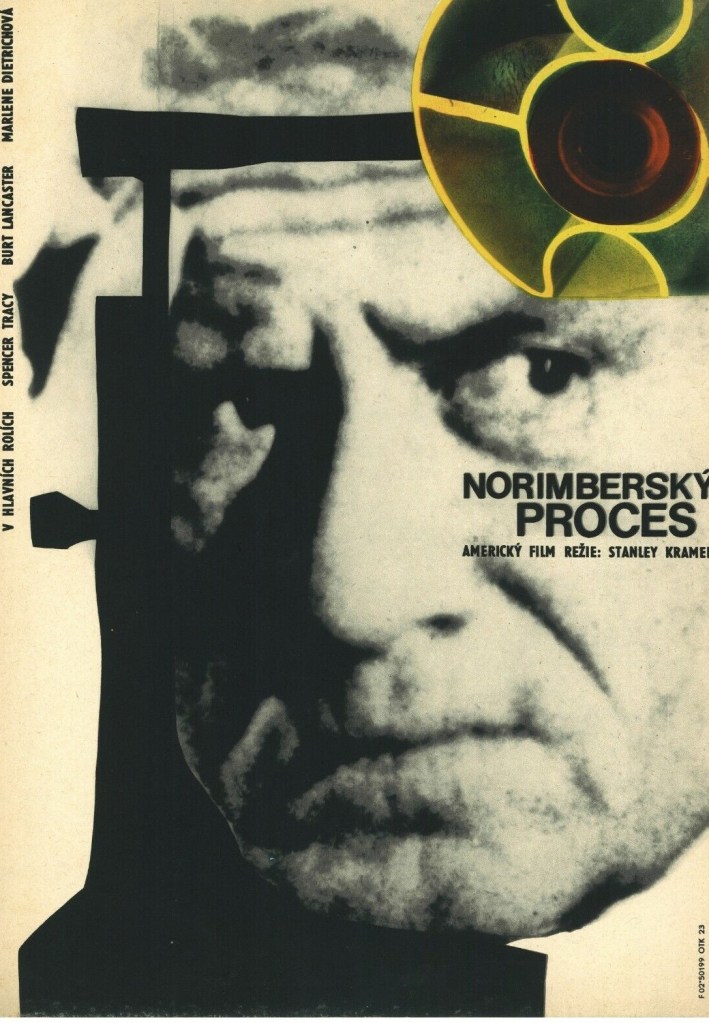
Stanley Kramer never caught a decent academic/critical break. Subject matter worthy, execution poor, was the overall consensus. But Judgement at Nuremberg, with its long tracking shots, sometimes turning 360 degrees around a character, should have changed all that. But the kind of critics who would have appreciated such bravura technique weren’t around at the time and even when Antonioni’s The Passenger (1975) appeared nobody thought to reference Kramer, believing this was a new cinematic invention by the esteemed Italian maestro.
So, Judgement at Nuremberg is remembered, if at all, for the subject matter and elevated by the performances rather than the director’s input. Most people misremember what the movie’s about. The main concern here isn’t the war criminal, the men personally involved in running the ghettos. Instead, it’s about those behind the scenes who could, theoretically, have prevented the camps flourishing, or at least challenged their opening.
Those on trial were freedom fighters of a different sort. As judges, the top tier of the legal system, their job was not just to uphold law and order and individual freedoms, but to take government to task for illegal action. It’s a basic tenet of the democratic world that governments cannot act in autocratic fashion but work within public accord.
Should the legal guardians find fault with government activity, their job is to take the ruling body to task – the European Court of Human Rights was set up with exactly that principal in mind, and various British and American law agencies have over time called a halt or questioned government proposals.
Some of the judges were clearly ill-fit for the task, lick-spittle jobsworths, desperate to hold onto rank and privilege, many sharing the same anti-semitic views as Hitler. But the Allied forces, being democratic, have to proceed along proper lines, taking potential criminals to court and allowing them legal defence.
So the main target is Dr Ernst Janning (Burt Lancaster), German’s pre-eminent legal force, a quiet, dignified man, who refuses to fawn or react to the charges. On the attack is prosecutor Col Tad Lawson (Richard Widmark). Acting for the defence is the wily, emotional, Hans Rolfe (Maximilian Schell) who is not above comparing the Holocaust to the Americans dropping the atom bomb on Hiroshima, indiscriminate terror brought on innocent civilians the result of both actions. He also brings to the court’s attention the distasteful theories that once held sway in high American legal circles as promulgated by Oliver Wendell Holmes, a Supreme Court judge, whose views on eugenics aimed at withholding procreation rights from the mentally handicapped.
As referee we have Dan Heywood (Spencer Tracy), the American chief judge, who didn’t want the job and was way down the pecking order of those best qualified. And he’s a bit of a detective on the side, trying to discover how much ordinary people – such as the flirtatious Mrs Bertholdt, widow of an executed German general, as well as the housekeeper and butler looking after him in some style – knew about the atrocities as they were taking place.
In the background is an Allied command not wishing to stir up any more controversy, conscious of the rising power of the Communist bloc, seeing West Germany as a bulwark against Stalin, concerned that forcing the country’s inhabitants to wallow in the past will turn their political minds towards the east rather than the west.
In due course, a variety of witnesses are called, testifying to ill-treatment under the German government including the backward Rudolph Pedersen (Montgomery Clift) and Irene Hoffman (Judy Garland).
What makes this so different is that innocence or guilt is not what’s under scrutiny, but reason. Why did such high-minded legal experts like Dr Janning give in to Hitler. And when? And do they recognise their role in providing Hitler with credence to continue with his massacre of the Jews?
Individual conscience and, conversely, collective guilt, might have been the driving force then but they are more than relevant today when actions in war come under even greater scrutiny and politicians are held to account. Perhaps, it’s ironic how little judgement was passed in the end on those convicted in these trials. Nobody was hanged, nobody received even a life sentence. In fact, by the time the movie was released, all were free men.
Stanely Kramer, the Scorsese or Nolan of his era regarding running time (it clocks in a just shy of three hours), does a superb job with his even-handed approach. While his technical skills were perhaps under-appreciated, he certainly knows how to command an audience’s attention and draws terrific performances from his actors.
Maximilian Schell, who won the Oscar, is perceived as the standout, but for me the highpoints were Burt Lancaster (The Swimmer, 1968) and Montgomery Clift (Freud, 1962). Abby Mann’s (The Detective, 1968) screenplay was an expanded version of his teleplay of two years before.
Has more than enough humanity to keep you riveted.
Machines get in the way of this tale of men under pressure. Often viewed as a PR exercise for the Strategic Air Command to counter complaints about competence, and signally out of tune with a Hollywood faction that was beginning to view investment in nuclear weapons as a serious mistake, as epitomized by Fail Safe (1964), Dr Strangelove (1964) and The Bedford Incident (1965).
Not helped by action being under the auspices of simulation and not genuine war, filmmakers lacking the later bravura that just invented a side event, Top Gun, 1986, for example, to give audiences something to root for. Nor by a warehouse of info dumps.
That said, once it comes to the usual turf wars besetting any element of the military, the tension ponies up and there’s a real film underneath. There’s a surprising contemporary element to the narrative, two actually, firstly the arguments over leadership, and, secondly, the impact of PTSD, the endless deadline-based simulations as tough as being at war.
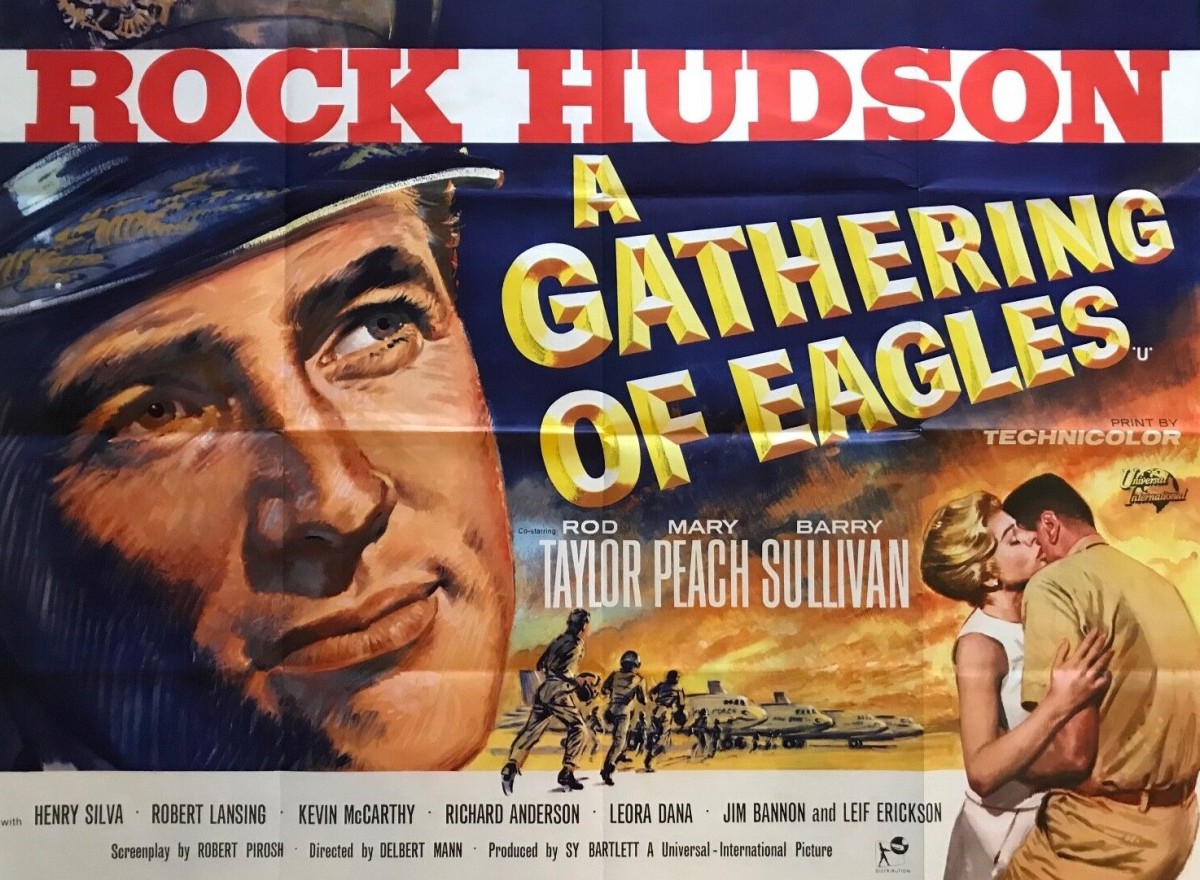
Hard-line efficiency expert Col Caldwell (Rock Hudson) is parachuted into a front-line B-52 Cold War command to toughen up sloppy procedure, bringing him into conflict with second-in-command Col Farr (Rod Taylor), a Korean War buddy. Caldwell rules by the book, Farr allows his men greater leeway. It comes down to the question of whether morale should be an issue or if men are expected to do their utmost even if they hate their leader. This debate about leadership style is prevalent today.
Caldwell is so tough he will sacrifice his buddy to get the job done better. And if people can’t handle the pressure they are better off out of the firing line. But since asking for a transfer to a less arduous berth would be viewed as a shameful admission of weakness, the only option for those who can’t cope is suicide. But since attempted suicide would not, as today, be viewed as a cry for help, anyone such attempt reduces the airman,, such as Col Fowler (Barry Sullivan) to a hospital bed where pity rains down on him.
The pressure comes in the shape of not just keeping on top of everything should the Russians suddenly decide to launch a missile attack, but dealing with intense simulations which appear out of the blue and require everyone to spring into battle stations. And in another prescient element, everyone is analysed to within an inch of their lives, marked down for the tiniest deviation from protocol, or not reaching the correct flight level or going too fast or too slow.
Caldwell is further hampered by English wife Victoria (Mary Peach) who fails to understand the pressure under which her husband, and all men in the base, operate, the kind of ground crew whose first question, on recovering from an operation, will not concern wife and kids but an airplane or a mission.
To add emotional heft, she is meant to have potentially fallen for Farr, and although rumors reach Caldwell’s superiors there’s no evidence of that. In the original script, the affair is spelled out, and such material was filmed, but it disappeared in the editing room. Perhaps because it proved that emotion was the Achilles heel of even the most efficient operation. In the actual movie, Victoria denies an affair and we believe her, but if an audience was shown her – and Farr – to be lying that casts a different complexion and at some level suggests betrayal.
In the air, despite assistance from the Strategic Air Command, the hardware is now out-dated, so of historical interest only, and while the movie fails to capture the tenor of the times, the situation of men under pressure has not changed.
Rock Hudson (Tobruk, 1967) is intensity on fire, Rod Taylor (Chuka, 1967) more laidback than in later films. Mary Peach (No Love For Johnnie, 1961) doesn’t have much of a filter between adoration and fury. Look out for Henry Silva (The Manchurian Candidate, 1962), Barry Sullivan (Harlow, 1965) and Kevin McCarthy (Hotel, 1967).
As you might expect, director Delbert Mann (Buddwing / Mister Buddwing, 1966) is more at home on the ground than in the air. Responsible for the screenplay were Sy Bartlett (Che!, 1969), also the producer, who had covered similar ground in Twelve O’Clock High (1949), and Robert Pirosh (Hell Is for Heroes, 1962)
The Top Gun of its day, bettered remembered now for the debate on leadership.
Cinerama was the IMAX of the day and far superior in my view in many aspects not least the width of the screen. IMAX goes for height but I’m not convinced that compensates for lack of the widest screen you could imagine. So the chance of seeing this in the original Cinerama print, 70mm and six-track stereo, at the annual Bradford Widescreen Festival yesterday was too good to miss. And so it proved. A thundering experience. Much as I enjoyed it on DVD, this was elevated way beyond expectation.
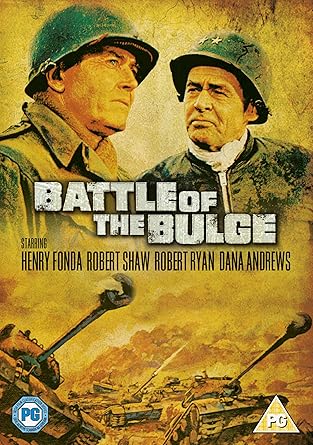
Superb even-handed depiction of war, far better than I remembered. Most war films of this era and even beyond showed the action primarily from the view of the Americans/British – even the acclaimed The Deer Hunter (1978) and Apocalypse Now (1979) show nothing of the skills of the Vietnam forces that would prove victorious. And while The Longest Day (1962) shows reaction to the invasion, the Germans are revealed as caught on the hop. Given the basis for this picture is the unexpected German offensive in the Ardennes, France, in December-January 1944-1945, you might expect the Germans to be accorded some attention. But hardly, given as much of the picture as this, so that in the early stages the Germans are portrayed as powerful, clever and patriotic while the Americans are slovenly and complacent, their greatest efforts expended on preparing for Xmas.
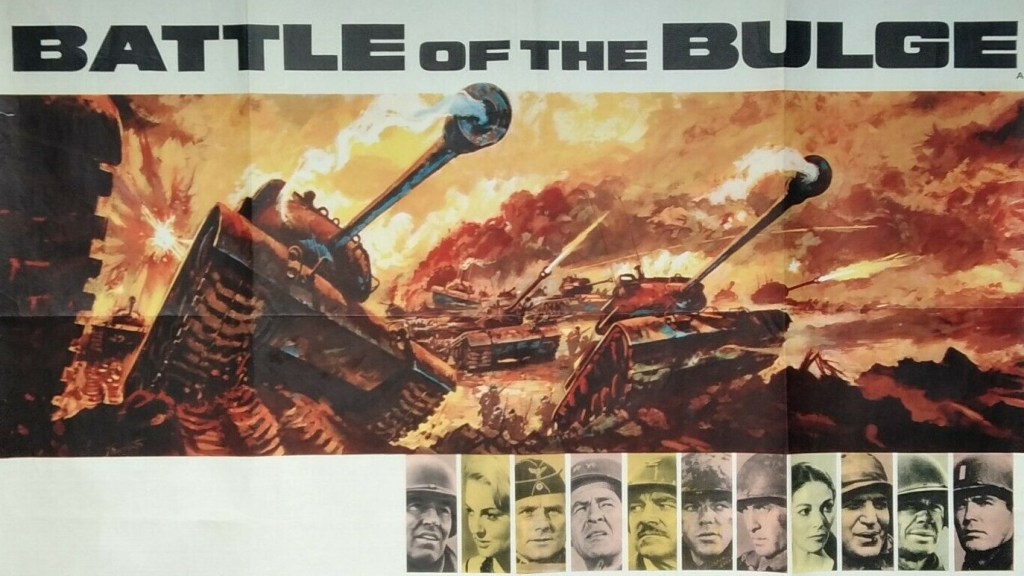
With tanks the main military focus, Cinerama is deployed brilliantly, the ultra-wide screen especially useful as the unstoppable vehicles rampage through forests and land and allowing true audience involvement when opposing armies meet head-to-head. Of course, it being Cinerama, there are a couple of scenes that play to the strength of this particular screen, a car careening round bends and a train racing along twisting tracks, the kind of scenes that previously would have had the audiences out of their seats with excitement, but here mainly used to raise the tension in the battle.
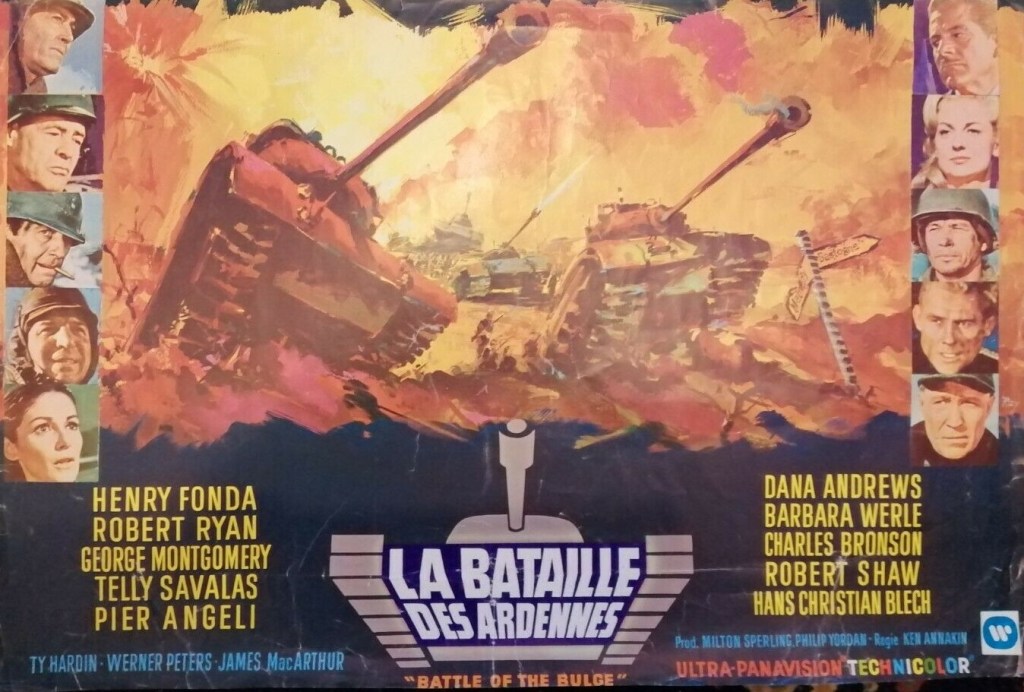
It’s to the film’s benefit that the all-star cast doesn’t feature a single actor who is truly a star in the John Wayne/Gregory Peck/Steve McQueen mould so that prevents the audience rubbernecking to spot-a-star that afflicted The Longest Day. The biggest name, technically, is Henry Fonda, and although he received top billing in many pictures, you would have to go back to The Wrong Man (1956) to find an actual box office hit. The only previous top billing for Robert Shaw (From Russia with Love, 1963) had been in The Luck of Ginger Coffey (1964), a flop few had seen. And the top-billing days of Robert Ryan (Horizons West, 1952) and Dana Andrews (Laura, 1944). In fact, the actor with the biggest string of hits was Disney protégé James MacArthur (Swiss Family Robinson, 1960). Anybody who had seen The Magnificent Seven (1960) and The Great Escape (1963) would recognise Charles Bronson in a supporting role. So fair is the movie that it’s the blond-haired Shaw who steals the show with a dynamic performance.
So it helped the almost documentary-style of the film that it was filled with familiar faces rather than dominant stars and the director was not bound to give a star more screen time or provide them with one brilliant scene after another, or establish a redundant love story in order to provide them with more emotional heft. In fact, the only romance goes to a sly black marketeer who views his relationship more as a business asset.
Initially, the role of Lt. Col. Kiley (Henry Fonda), a former cop, seems only to be to rile his superiors General Grey (Robert Ryan) and Colonel Pritchard (Dana Andrews), his pessimistic view contrasting with the accepted notion that the Germans are well and truly defeated and the war would be over soon. On airplane reconnaissance he takes a photograph of an officer later identified as Panzer tank genius Colonel Hessler (Robert Shaw). While Grey and Pritchard over-ride his conclusions, the movie concentrates on the German build-up, their discipline, efficiency, leadership and determination juxtaposed to the American inefficiency and sloppiness.
Where the Americans just want to get home, Hessler – more charismatic than any of the dull Yanks – is in his element, wanting the war to never end, convinced at least that a tank-driven assault would drive a wedge between the Allied forces, and reaching the target Antwerp in Belgium in the north would extend the war by another year by which time Germany’s V2 rockets would give them greater firepower. The Germans also have a clever idea, the type that the British were always coming up with and would make a film of its own, of parachuting American-born Germans behind enemy lines, dressed in American uniforms to carry out vital sabotage and hold crucial bridges across the River Meuse.
In one of the best scenes in the film, his tank commanders spurt spontaneously into a patriotic song with much stamping of boots. And while Hessler’s immediate superior (Werner Peters) , ensconced in a superior bunker, can enjoy a comfortable lifestyle, no more illustrated by the fact that he has courtesans to hand, one of whom, offered to Hessler, is furiously dismissed. And the clock is ticking, the Germans have limited supplies of fuel and must reach the enemy’s supply dumps before they run out of gas.
The maverick Kiley manages to be everywhere – the River Meuse bridge, in the air in the fog determinedly hunting for the panzers he believes are hidden, is the one who realises how critical the fuel situation is for the enemy, and at the fuel depot for the movie climax. Otherwise, the picture uses its cast of supporting characters to cover other incidents, the massacre of prisoners of war at Malmedy, the chaos as the Germans over-run American-held towns.
Best of all is the human element. It would be easy on a picture of this scope to lose emotional connection, as you would say was the prime flaw of The Longest Day. Not only is Kiley the outsider trying to beat the system, but we have the cowardly Lt Weaver (James MacArthur) who would rather give up without a fight than lose his life, the weaselly Sgt. Guffy (Telly Savalas) representing the worst instincts of the grunts, the confused General Grey can’t make up his mind how to respond to the sudden attack, and Hessler’s driver Conrad (Hans Christian Blech) who is fed up with paying the price of war.
The action scenes are outstanding. If you’ve never been up against a tank in full flight, you will soon get the idea how fearsome these metal battering rams are, as the rear up, crash over trees, race across open fields, and either with machine gun or shells wreak havoc. As with the best war films, you are given very precise insights into the battles, the tactics involved, the ultimate cost. Wolenski (Charles Bronson) is in the thick of the fighting.
While Robert Shaw is easily the biggest screen personality, Henry Fonda is solid, and holds the various strands of the picture together, while Charles Bronson enjoys a further scene-stealing role. But the pick of the acting, mostly thanks to bits of improvisation, is Telly Savalas (The Slender Thread, 1965) as the thieving Guffy. In one memorable scene he kicks out in resentment at his collection of hens and in another shakes his body at the tanks. No one else, beyond Shaw, comes close to his infusing his character with elements of individual personality.
Pier Angeli (Sodom and Gomorrah, 1962) as Guffy’s mistress and Barbara Werle (Krakatoa, East of Java, 1968) as the courtesan are inexplicably billed above Charles Bronson, Telly Savalas and James MacArthur perhaps in a ploy to deceive audiences into thinking there was more female involvement.
Full marks to British director Ken Annakin (The Biggest Bundle of Them All, 1968) for visual acumen and for simplifying a complicated story and peppering it with human detail. His battles scenes are among the best ever filmed. Credit for whittling down the story into a manageable chunk goes to Philip Yordan (The Fall of the Roman Empire, 1964), Milton Sperling (The Bramble Bush, 1960) and John Melson (Four Nights of the Full Moon, 1963).
A genuine classic, with greater depth than I ever remembered.











 The Magnificent 60s