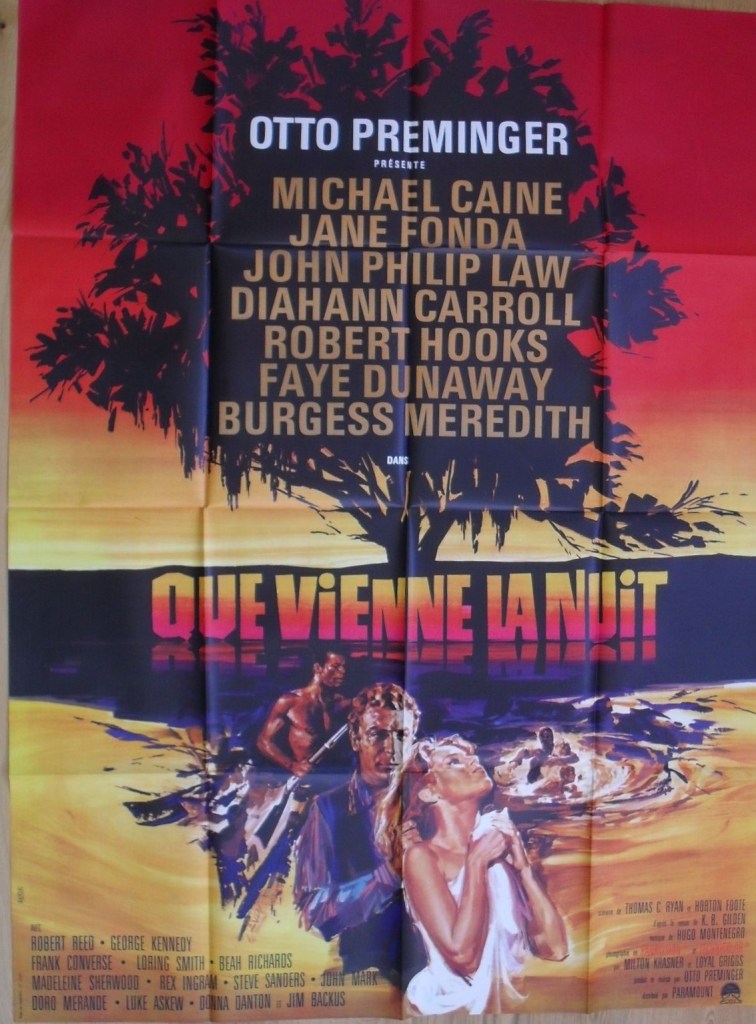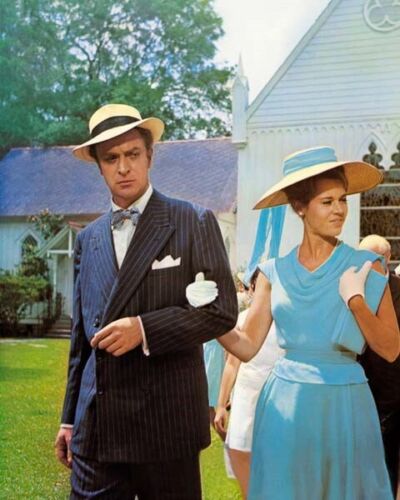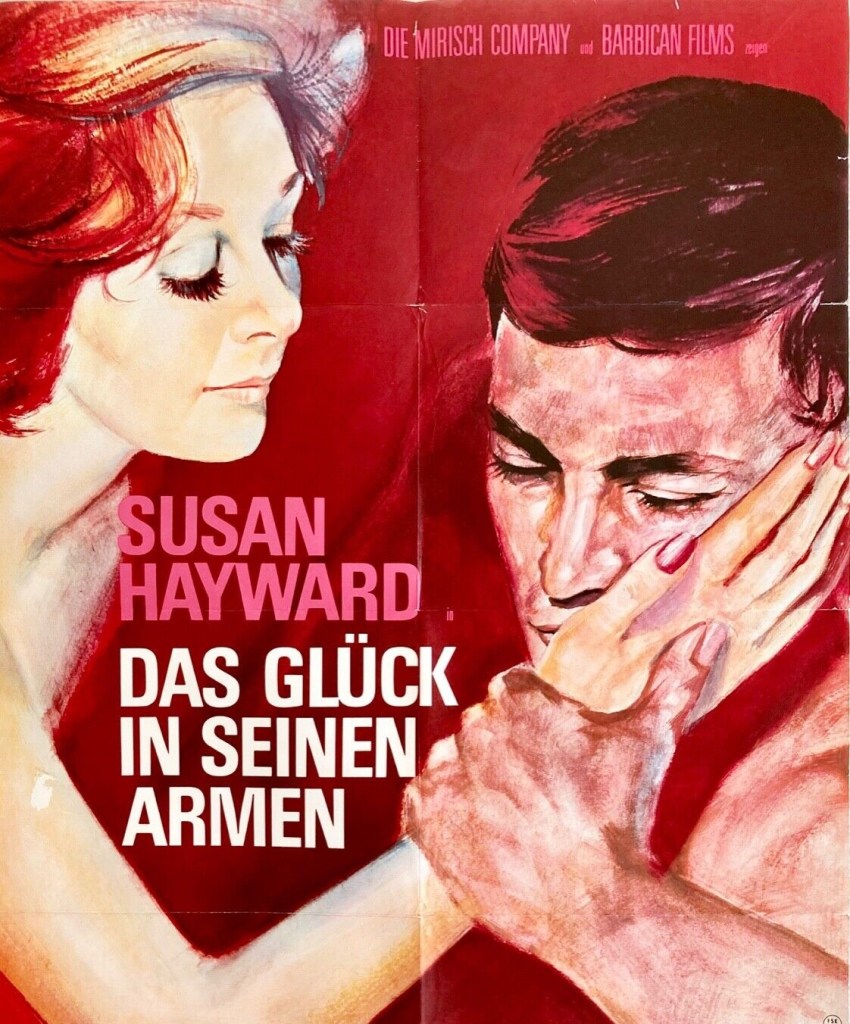
Stolen Hours / Summer Flight (1963) ***

New York Times critic Bosley Crowther famously took Susan Hayward to task for over-acting in the first half of this picture before turning subtle in the second without realizing that was the whole point. Hayward was always full-on, either because he played tougher-than-tough characters (weakness their Achilles heel) or was squaring up against macho males like Clark Gable (Soldier of Fortune, 1954) or John Wayne (The Conqueror, 1956).

Here, she duped audiences. Anyone expecting to view her normal feisty screen persona would come away happy with the first half, bewildered by the second. But, as I said, that was the whole point, a superb effort turning expectations on their head. In any case it was a pretty bold undertaking. In the 1960s, Hollywood went on a cycle of regurgitating old classics but mostly with newcomers like Alex Cord standing in for John Wayne in Stagecoach (1966) or Doug McClure for Gary Cooper in Beau Geste (1966).

There were not many actresses who would think of trying to match the legendary Bette Davis in one of her legendary roles. But Susan Hayward was not just larger than life but a queen of melodrama, able to ratchet up emotions with a look. No actress in the early 1960s could match Davis’s record of two Oscars and a further eight nominations (she would win another one later). By that point Katharine Hepburn equalled her on number of wins but had two fewer nominations (her other wins also came later).  But Hayward ran both pretty close, one win (for I Want To Live, 1959) and four nominations.

So if you were going to select an actress to take on the Davis role in a remake of Dark Victory (1939) you could do worse than choose Hayward. The plot’s been transitioned to England but it follows the same formula as before – in other words stand by for a full-scale weepie. Jet-setting divorced socialite Laura (Susan Hayward) lives life to the full – and then some. When diagnosed with a brain tumor, her reaction is to let all her wildness hang out, reviving romance with old racing driver boyfriend Mike (Edward Judd) before taking stock and abandoning the high life and settling down in the back of beyond (remote Cornwall) with Dr Carmody (Michael Craig).

It’s basically a film of two halves. The almost otherworldly life of the rich and famous who chase after every expensive delight without any notable increase in their happiness quotient contrasts with life in a Cornish village where problems, although apparently smaller, are every bit as vital to those affected. The gaudy section is filled with fine costumes, grand houses and glorious scenery. The serious part is a good bit more down-to-earth as the grande dame discovers her neighborly and maternal qualities. The characters inhabiting the rich life appear flimsy, the poorer people much more realistic. It is almost as if she has swapped fantasy for reality and uncovered a different kind of richness.

There’s not much more to the story than that so it requires acting of the highest caliber to keep us hooked all the way through. Well, for that, you’ve certainly come to the right place. What appears over-acting in the first section is just that, and deliberately so, since the personality switch is the ideal hook. The film’s emotional impact will hit you hard especially the ending. What initially appears to be heading for the sensational soon pulls back to reveal an ordinary person trying to overcome adversity, not with a grand gesture, but simply by living an ordinary life to the full.

While Michael Craig (Life at the Top, 1965) is pretty much a bystander, his calming approach sorely needed in the first half is redundant in the second as Laura comes into her own, developing an inner life she never knew was possible. Hitchcock protege Diane Baker (Mirage, 1965) continues to show early-career promise.

Perhaps more attention should be focused on director Daniel Petrie (The Main Attraction, 1962) who slides out from under his journeyman tab to over-egg the first section and under-egg (if there is such a word) the second. You could almost get the impression of a conductor fine-tuning an orchestra of one.

Superb showing from Hayward certainly gives Bette Davis a run for her money though you could argue she was too old for the role, Davis half her age in Dark Victory, but it’s to Hayward’s credit that you feel the loss of such a vibrant middle-aged personality as you do with Davis’s younger protagonist.

They don’t do melodrama like this anymore, mostly because there isn’t the likes of a Susan Hayward to make them work.

The Happy Ending (1969) ****

Vastly under-rated, critically dismissed at the time, this early reflection on feminism has now come into its own. Yet it starts out as a completely different picture. At first it appears as ruthless a depiction of the self-destructive alcoholic as the later Leaving Las Vegas (1995). In passing, skewering the conventions of marriage in an era or strata of society where divorce was not a convenient option. And a time when women, chained to the home but craving attention, might risk the humiliation of being turned away by a secretary on visiting their  husband at the office.

When love had turned into transactional sex. Where women hid out in beauty parlors, sanctuaries which men would dare not invade, to drink and play cards in peace. Or, indulging in the working aspect of such places, underwent breast augmentation or brutal hair removal or other procedures with a view to holding on to their men, seen as daily riding a wave of temptation in the Mad Men world of cocktails and expense account living. For this class of men the word “inappropriate” has never been invented as they paw at any female within reach.

From snow-kissed romance and champagne to….

A largely redundant and lengthy (eight minutes, for goodness sake) montage (including credits and a post-credits – what! – theme song) serves to emphasize the part Hollywood played in reinforcing the celluloid image of initial romance being the mere prelude to happy ever after. The reality was a much whiter shade of pale.

Facing up to their sixteenth wedding anniversary – their marriage, topically, spanning the birth of Prince Charles and his anointing as Prince of Wales, seen via cinema newsreel and television news – alcoholic middle-aged housewife Mary (Jean Simmons) re-evaluates her stultifying life. Lawyer husband Fred (John Forsythe) jokingly refers to himself as “the F.B.I.” but the surveillance he undertakes to ensure his wife has not fallen off the wagon would have earned him a gold star in that particular organization. He has housemaid Agnes (Nanette Fabray) snoop on his wife, goes through all her drawers and clothes until he finds the mercifully unopened bottle of vodka hidden in a boot, checks up on her movements at the hairdresser and even knows which bar she is likely to frequent.

Although managing to refrain from drinking anything alcoholic, Mary’s behavior take her perilously close. She drinks tomato juice from a champagne glass, buys a fellow alcoholic a whisky in a bar just to savor him drinking it. And for all her husband’s attempts to keep her away from the stuff gets pretty loaded himself at times and the catering table at a previous anniversary party fairly groaning with booze has proved a temptation too far. She’s been an extreme player – her stomach pumped out in flashback.

…anything that comes in a glass or a bottle. She even has booze secreted in a bottle of perfume.

Husband’s control extends to finance. She is denied credit card, cheque book and ready cash. Even her mother (Teresa Wright) refuses to lend her money. Unable to go through with putting another good face on their marriage via the anniversary party she pawns a necklace and jaunts off to the Bahamas. On the plane she meets old buddy Flo (Shirley Jones) who is enjoying a clandestine affair with a married man. Mary dips her toe in those illicit waters but her flight has sobered her up enough to face up to her dilemma and not cover all the wounds with alcohol.

I’m not planning to spoil the story by telling you the ending but the ending is the whole point. While the movie’s title is initially perceived as an ironic tilt at the state of marriage – the traditional movie “happy ending” – in reality the ending Mary chooses for herself is the feminist one of self-determination, independent of a man, her self-worth not tied up in his appreciation of her, and she takes the extremely bold decision to quit the marriage, not for another man as might have been de rigeur and in some ways more acceptable within society, but to find herself.

This was a terrible flop, the worst in director Richard Brooks’ career which at the time had reached the commercial and critical peaks of The Professionals (1966) and In Cold Blood (1967), for which he was Oscar-nominated. Audiences failed to respond despite Jean Simmons (Rough Night in Jericho, 1967) receiving her second Oscar nomination.

And you can see why it sank. If people didn’t walk out during the interminable montage sequence, then for the most part it was interminably depressing. The only thing worse than watching an alcoholic getting drunk is watching an alcoholic desperate to get drunk, holding back from indulging as if standing on the edge of a precipice, almost willing themselves to fall over for the sheer relief of oblivion.

And yet it is extremely watchable as the couple play out their marital game, Fred, the ostensible loving husband, protecting his wife from herself, Mary blaming her drinking for their marital problems rather than the other way round.

Jean Simmons is a compelling watch. This is really a tremendous performance and a shame she lost out to the more showy acting of Maggie Smith in The Prime of Miss Jean Brodie. As good as that was, it was pretty much all surface, Smith playing a character who was pure invention, for the most part sashaying through life by force of her incredible personality, not a woman grasping at straws from the outset, damned by all in sight who were only too aware of her affliction, unable to come to terms with herself, denied all that was casually tossed to often worthless men.

John Forsythe (Topaz, 1969), who grits his teeth so much they appear likely to puncture his cheeks, is as good as I’ve ever seen him in a whale of a part that calls upon him to play two roles effectively, the dutiful husband restrained by having to watch over his errant wife, and a man who, out of her sight, can still enjoy himself, and, it is hinted, has been illicit himself with colleague’s wife Helen (Tina Louise).

Structurally, it’s very cleverly done, and Richard Brooks continues with the façade of the happy marriage and the wife’s drinking being the root cause of their dual unhappiness before letting rip late on with the incipient feminism.

A tremendous movie and well worth seeing.

Blow-Up (1966) ****

Movies can break all sorts of rules but they can’t cheat.

A film has to stick to an internal logic. For example, it can’t portray a photographer so obsessed with his calling that he even takes a camera with him to an antique shop and starts shooting off roll and after roll capturing the area’s rundown streets but then the one time he really could do with a camera – to prove there is a corpse at his feet – he is somewhat remiss. Especially when that the movie turns on that plot point.

Setting aside what’s a somewhat contrived snapshot of “Swinging London” there’s a lot to admire here. The absence of music for one thing. Most of the movie runs without musical accompaniment, a bold move since so often we rely on the soundtrack to provide guidance for a scene or an overlay for the entire film. Here, Michelangelo Antonioni (Zabriskie Point, 1970) makes us falls back on our own interpretation.

David Hemmings (The Charge of the Light Brigade, 1968), all mop-top and intense stare, is a high-flying high-living fashion photographer in the David Bailey mold (casual sex with wannabe models a perk) who turns investigator on being confronted in a park by Vanessa Redgrave (Hemmings’ adulterous love interest in The Charge of the Light Brigade) after taking snaps she wants back. Tension is sustained by her sudden appearance at his studio, willing to pay with her body for the return of the photos, and then by Hemmings’ careful, photo-by-photo blow-up-by-blow-up analysis that slowly comes closer to the truth.

Everything in his world is judged through a lens, as if he can capture elusive truths, and he has aspirations to being more than a mere fashion adjunct, having spent time taking portraits of down-and-outs. He judges Redgrave as he would a model, she has a good stance and sitting posture. Even by the standards of the permissive society, he is a bit of sexual predator, taking advantage of two giggly model wannabes – Jane Birkin (Wonderwall, 1968) and Gillian Hills (Three, 1969).

But the photography scenes are well done and Antonioni captures the intimacy between model and photographer that create the best images. If you want to see what a model brings to modeling check out real-life model Veruschka posing in an outfit held together by the thinnest of threads, bringing to life the much-touted notion that a model makes love to a camera. If you can get past the cheat and the deliberate obtuseness this creates – and the tsunami of artistic interpretations it inspired about the director’s intent – then it remains intriguing.

This isn’t Hemmings’ greatest work – Fragment of Fear is much better – but it certainly provided him with a marketable movie persona. Redgrave is excellent as the nervy woman willing to do what is required and the movie might have worked better had she had been allocated more screen time and their duel had continued through other scenes. But then that would have been Hitchcock and not Antonioni.  

Sarah Miles (The Ceremony, 1963), Peter Bowles (The Charge of the Light Brigade) and John Castle (The Lion in Winter, 1968) have small parts. The film certainly captures the electricity of a photo shoot between a skilled photographer and pliant model, but it also works as an extended metaphor about the elusiveness of cinematic truth.

Despite my misgivings about the “cheat,” an intriguing and satisfying exploration of an artist seeking to jettison the fripperies of his art yet unable to avoid the temptation of enjoying the easy sexual benefits.

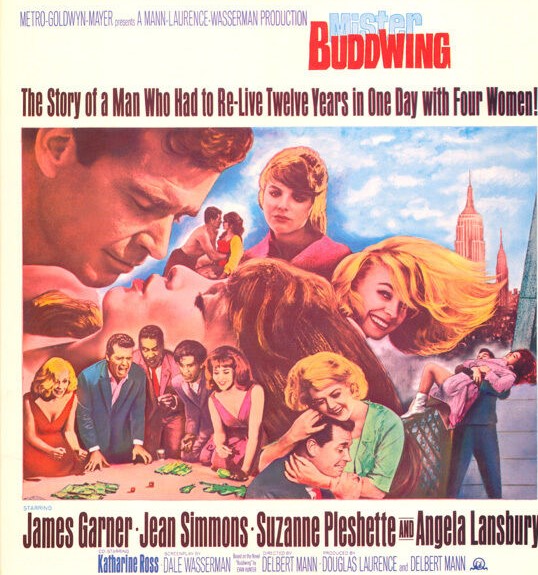
Mister Buddwing/Buddwing (1966) ****

Perhaps it was something in the ether that this very under-rated Kafkaesque examination of fractured identity emerged the same year as John Frankenheimer’s equally maligned Seconds and the year after the more successful Mirage. A superb opening sequence transports us to a world of alienation and discordance, often the only sound that of a man’s footsteps.

Face unseen, yet camera in his point of view, in the early morning a man (James Garner) examines the pockets of his suit, pulling out some pills and a piece of paper with a telephone number, pulls off a ring with the inscription “from G.Y.” He begins to walk, shakily, camera still in his POV until he arrives at an upscale New York hotel and sees himself in the mirror. That doesn’t help. He still doesn’t recognize himself. Using the lobby phone, he calls the telephone number.

It’s a woman called Gloria (Angela Lansbury). She calls him Sam. She gives him her address because that, too, has slipped his memory. Visual stimuli outside make him think his name is Buddwing. Sam Buddwing has a reassuring feel to it.

But when arrives at Gloria’s apartment, she doesn’t recognize him. Though married, she “puts out” so he could be a casual sexual acquaintance. When she pours him coffee, unable to remember how he takes it, he bursts into tears.

And so begins a disturbing odyssey, “a tug of war in his mind,” as he tries to piece together his memory and find his lost self.  Memory is triggered by the sight of a woman across the street getting into a cab. Instinct tells him this is Grace. He follows in another cab, encountering a disgruntled customer who tells him an odd tale about taking a drunken woman to Oyster Bay. She disappears inside Washington Square College. He thinks he might be the escaped mental patient Edward Volloch mentioned in a newspaper headline. Unasked, a man called Schwarz sits down at this table in a cafeteria and suggests he must be Jewish.

He finds “Grace” (Katharine Ross) on a park bench. Even though she fails to recognize him and tells him her name is Janet, he drifts back to his time with the real Grace who cuts his hair on a beach, runs from a downpour into a church. He tells her he wants to become a composer.

When Janet evades him he is confronted by a cop but, of course, has no proof of identity. The scene turns ugly and uglier still when chased by a vagrant  and he starts to see double.

And so it goes on. He finds two more versions of Grace. On hearing of his condition, the first, an actress (Suzanne Pleshette), encourages him to “be what you want to be” while Buddwing opines “we are all impersonating an identity.” The second, a drunk (Jean Simmons) appears to be the source of cab driver’s story

The actress attempts suicide after becoming pregnant, the drunken woman takes him to a crap game, where, taking turns rolling the dice, they win a heap of cash.   

All in all it’s a brilliant jigsaw, avoiding the sci-fi elements of Seconds and the thriller aspects of Mirage, but with the brooding atmosphere of both. But where the character in the Frankenheimer makes a deliberate decision to change identity and Gregory Peck in Mirage is able to put together the various pieces of his life, Buddwing simply stumbles along, totally unconvinced of his identity – at one point he is “nobody” – building up an idea of his life only as an adjunct to the mysterious Grace who keeps changing shape and personality until it seems completely incongruous that the first innocent Grace (Ross) could merge into the more blustery, sexually aggressive, Grace (Simmons).

Of course, when he does discover the truth, by random connection, that’s as shocking as anything else, shattering the somewhat idealized picture of the self he has contrived from the various jumbled meetings with the various disconnected women. Equally, the ending could be another illusion.

This might also play out as a metaphor for the screen life of James Garner (The Americanization of Emily, 1964) who had been trying to rid himself, not entirely successfully, of his previous persona as Maverick in the television series. His company, Cherokee, co-produced the picture, which smacks of the same determination to be taken more seriously as Rock Hudson with Seconds, a move that did not go down well for either with public or critics. But Garner is every bit as good as Hudson and he spends much of the film either in  hollow-eyed bafflement or in idyllic circumstance on the cusp of turning sour.

Once Angela Lansbury appears, you get the sense this is going to be episodic and that the female cast will appear in the reverse order of their billing. But Katharine Ross (Tell Them Willie Boy Is Here, 1969) apart, a newcomer, the other three more experienced actresses rip up their screen personas. Angela Lansbury (Harlow, 1965) is an addled woman of easy virtue.  Suzanne Pleshette (A Rage to Live, 1965) takes her character to suicidal levels while Jeans Simmons (A Rough Night in Jericho, 1968), especially notable, essays her inner dirty-mouthed drunken Elizabeth Taylor.

And this is hardly the stuff director Delbert Mann (Fitzwilly, 1967) is made of, despite an Oscar for Marty (1955) better known for light comedy. But he never takes the easy way out, sticking it to Buddwing as a man endlessly tormented by himself. Dale Wasserman (Quick Before It Melts, 1964) wrote the tantalizing script from the bestseller by Evan Hunter (Last Summer, 1969).

A mesmerizing watch and time it was given the same retrospective treatment as the cult Seconds.

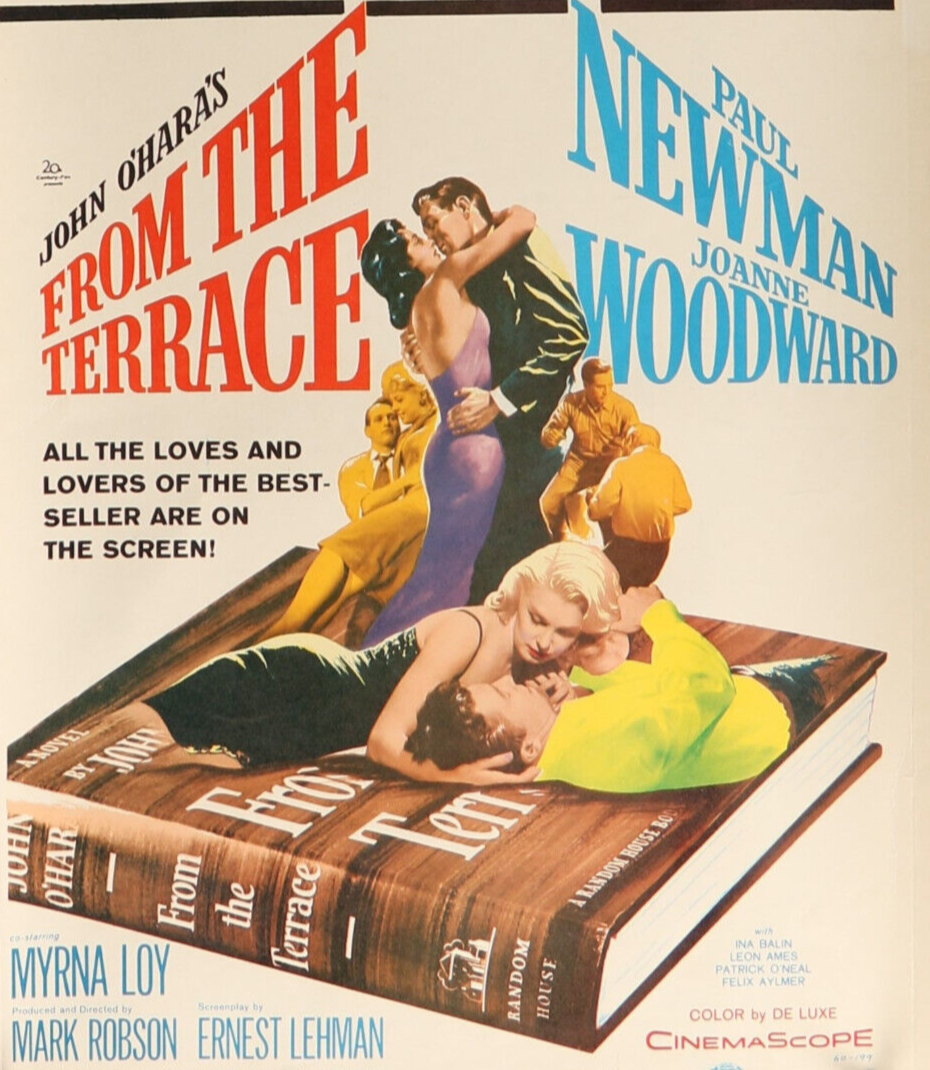
From the Terrace (1960) ***

When your plot pivots on the hero diving into an icy pond to save the grandchild of a Wall St multi-millionaire – and reaping the career benefits – you are kind of in trouble. Not as much, though, as having a self-righteous hypocritical prig of a hero who lacks the self-awareness,  a mark of the John O’Hara bestseller on which the film is based, to realize he is turning into a carbon copy of his father.

But it is handsomely-mounted and a decent enough melodrama with an excellent cast, though you would have to say, given the better material, Joanne Woodward (A Big Hand for the Little Lady, 1966) out-acts husband Paul Newman (The Prize, 1963), adding a rather contemporary element of a free-loving wife who manipulates the constraints of an era (post WW2) when divorce in high society was highly frowned-upon.

It’s a shame it drifts into predicable melodrama because the initial stages are niftily put together. A woman (Myrna Loy) is found dead drunk on a train, steel magnate husband Samuel (Leon Ames) ensuring he is not at home for her return, both actions meaning nobody is there to welcome only son David Alfred Eaton (known as Alfred at the start of the film and David at the end for odd reasons) when he returns from the war.

A few quick scenes establish that: the father holds a grudge against the living son because he has not got over his dead son;  he has ignored his wife in favor of his career; he bullies his staff; the wife has embarked on an affair.

David Alfred’s character is quickly established: he refuses to be stiffed by a cab driver; is adored by the household staff; refuses to work in his father’s business; and beats up his mother’s lover.

After that, for all the emotional shifts through the gears, it slows down, not so laborious as devoting too much time to the inner workings of high society – O’Hara’s metier – rather than the new small-plane-building business into which David Alfred pours his energy. That is, if he has much energy left over after stealing Mary (Joanne Woodward) from fiancé Jim (Patrick O’Neal), a psychiatrist.

You are probably already aware that society operates in various strata. A mill owner is only on the verge of society and looked down upon by the likes of Mary’s wealthier parents who in turn are no match for the grand life enjoyed by the aforementioned Wall St broker MacHardie (Felix Aylmer). Snobbery is rife and money talks. And if you lack the dough you’ve got no say in anything as David Alfred discovers in an aeronautical business venture, his partner Lex (George Grizzard), who has put up all the money, excluding him from key decisions.

Luckily, while driving in the countryside there’s a drowning child to be rescued and a grateful grandfather willing to set you up in his business. But that means sacrifice. David Alfred is away from home so much his neglected wife instead of turning to alcohol merely turns to men. There’s a wonderful scene when after a telephone call with her husband promising not to see Jim again (at this point no impropriety apparently committed as far as David Alfred is concerned), Mary lies down on the bed and turns to an unseen figure and says, “You’re not to come up here any more.”

But there are too few scenes so slickly written. On a job in Pennsylvania David Alfred falls for industrialist’s daughter Natalie (Ina Balin), and as though this is key to their romance tells her to call him David rather than Alfred. As his stock rises in the company, he maintains a hypocritical front with his wife, who he knows is now engaged in various affairs, denying her suspicions that he is having a fling with Natalie.  Mary is quite happy to maintain an open marriage since her status depends on her husband’s position and she still quite fancies him now and then.

You can see how this is going to end, but self-righteousness allows David Alfred to ignore that he is merely repeating the mistakes of his father. In sharp contrast to his wife who is all too conscious of her failings but contrives to make the best of the situation, and would happily continue in an unhappy marriage if only he would play ball. Although nothing is made of this, it’s obvious that David Alfred, despite his progress in the Wall St company, doesn’t have the business cojones of his father. He quit the plane business because Lex wanted to spend more time perfecting the prototype rather than rushing to the market in order to make money quickly. By following his own instinct, Lex is later proved correct, the business grown so big it attracts the attention of MacHardie.

There’s a sense here of Paul Newman pulling his shots. Though he is ruthless in making wife play second fiddle to career, and has no qualms really about playing away from home, nor about edging out MacHardie’s ineffectual son-in-law from the business, he lacks the killer instinct. The ruthlessness and amorality that made The Hustler (1961) and Hud (1962) so enjoyable is sadly missing. Handsome box office idols – the likes of William Holden apart – were reluctant to play the devious.

Mark Robson (Von Ryan’s Express, 1965) directs as if this is an upmarket Peyton Place and can’t resist at least one close-up of Newman’s baby blues. The script by Ernest Lehman (The Prize) only occasionally sparkles but I suspect there was a lot to trim from the O’Hara doorstopper. As I said, Joanne Woodward is the stand-out and you will be surprised to learn that Patrick O’Neal is also minus his later ruthless screen persona. Felix Aylmer (Masquerade, 1965) and Ina Balin (The Commancheros, 1961) are the pick of the supporting cast.

An interesting more than a riveting watch, mostly to see Newman before he reached screen maturity.

No Highway in the Sky / No Highway (1951) ****

Having just read the Nevil Shute novel on which this movie is based, I was keen to see how it transferred to the screen. It got off to a great start with the casting. James Stewart was several classes above the author’s  description of the main character, but Marlene Dietrich more than fitted the bill of the Hollywood star as a passenger in the early days of Transatlantic air travel.

Widowed aeronautics research engineer Dr Honey (James Stewart), accent explained by him being a Rhodes Scholar who stayed on in Britain, is so absent-minded that he tries to enter a neighbor’s house and when he gets angry in a discussion with a visitor to his own house puts on his hat and coat and decides to leave. He has discovered a potential flaw in a new range of British airplanes and is despatched by boss Dennis Scott (Jack Hawkins) to Canada to examine the remains of a crashed prototype, the accident previously ascribed to pilot error.

It was called “No Highway” in Britain as that was the title of the novel.

However, once on board, he discovers the plane is perilously close to the danger level of flying time his research indicated. In between frightening the life out of stewardess Marjorie (Glynis Johns) and star Monica (Marlene Dietrich) with his predictions of doom and instructing them where best to hide in the plane in the event of crash-landing in the ocean, he tries to get the pilot to turn back. When that fails, he inadvertently charms the life out of stewardess and star.

When the plane lands, even closer to the danger zone in terms of flying hours, and still no one listening to his concerns, he manages to render the plane unflyable. The aeroplane company refuses to fly him home, leaving him stranded. That provides enough time for Monica and then Marjorie to turn up unannounced at his home in England to help look after his young daughter Elspeth (Janette Scott). When Honey finally returns, he faces an inquiry, and looks set to lose his job, virtually unemployable thanks to his antics in Canada. At the last minute, he is reprieved, fresh evidence from the crashed plane proving his research correct.

Meanwhile, Monica, forced to return to Hollywood, loses out in the battle for Honey’s affections. Marjorie, a former nurse and imminently more practical, is in any case better placed to help look after a growing girl, and eventually Honey sees sense and asks her to marry him.

Really well done with terrific performances all around, but vastly helped by the screenwriters who dumped three sub-plots in order to stick to the knitting of the tale. Honey, far removed from the man in the street persona that saw James Stewart through his Frank Capra movies, attracted female interest through his principled stand. Most importantly, the writers removed the section where Elspeth is seriously ill in her father’s absence. Secondly, in the book Scott was sent to Canada to find the crashed plane, involving a trek through perilous terrain, but that’s been excised, the search completed off-screen by others, the vital information relayed by letter. Thirdly, the remains of the tail, which had previously not been found, were located in the book by supernatural means, Elspeth being called upon to use a planchette to help find it.

In removing all this material, the movie is re-shaped partly as a Capra movie, with the downtrodden Honey achieving success through persistence, but, more importantly, allowing the movie to focus on the potential love interest. Needless to say that is determinedly old-fashioned, both women having forged successful careers now viewing work that was initially exciting rapidly pall. The book sets Monica thinking how much better life would have been if as a humble office girl she had married the kind but not handsome man who had caught her eye instead of now being thrice-divorced. Marjorie is even more old-fashioned, seeing a genius who needs looked after as much as his daughter requires a mother.

So there’s no point going anywhere near this if you’re not willing to accept a past where a woman’s role was primarily seen as a home-maker. But don’t jump to pointing the finger at the author as being equally old-fashioned because a later book, A Town Like Alice, not only turns the main character into a war hero but depicts her as a successful entrepreneur.

James Stewart (The Rare Breed, 1965) takes a considerable chance on playing the absent-minded professor but his endless well of screen charm allows him to pull it off brilliantly. Marlene Dietrich, top-billed when teamed with Stewart for Destry Rides Again (1939), has an excellent role as a rueful prima donna. Glynis Johns (Lock Up your Daughters!, 1969) is equally at home with a part that calls for her not to just fall at Honey’s feet. She was one of handful of British rising stars. Jack Hawkins (Masquerade, 1965) was on the cusp of being named Britain’s biggest box office attraction while Kenneth More (The Comedy Man, 1964) was a few years away from receiving that honor. Janette Scott (Day of the Triffids, 1963) gave notice of her talent.

As much as James Stewart’s career was linked to Frank Capra and Alfred Hitchcock, Henry Koster (Mr Hobbs Takes a Vacation, 1962) made five pictures with the actor, all excepting this comedies, including Harvey (1950). He does a fine job of keeping Stewart from spinning away too much in the direction of the geek professor and keeping the story pinned down.

Nevil Shute was an engineer to trade – he had worked in the British airship industry – so his books tend to be peppered with the scientific. That’s easy to digest when reading, but harder to absorb when watching a movie. R.C. Sheriff (The Dam Busters, 1955) and Oscar Millard (Angel Face, 1952) do an excellent job of condensing the novel, finding cinematic ways of getting across important material.

I had come at this, as I said, mainly to see how the author’s work was translated to the screen, but came away totally absorbed in a fine picture. What was left out helped the picture while the author’s later A Town Like Alice (1956) lost half its power by ending halfway through the original story which later saw the courageous heroine go onto to become a serial entrepreneur in a male-dominated society in Australia.

Obviously, I’ve deviated from my chosen field of 1960s pictures, but this is well worth a watch.

You can catch it on YouTube in a number of versions – the original, a colorized version, one with English subtitles and one where a musician has made his own edit and dubbed his own modern score on the picture.

Oscar Wilde (1960) ****

You might be surprised to learn there were two Oscar Wildes. Not the famed writer and a doppelganger of course but two films on the same subject that were released in the same month. This is the low-rent version, costing a fraction of the rival The Trials of Oscar Wilde directed by Ken Hughes. It’s easy to be disdainful of the cheaper effort, with little cash available for scenery and costumes, but somehow it rises above budget limitations. Structurally, both movies focus on the trial – or in the case of The Trials of Oscar Wilde the three trials he endured – but the glossier pictures it has to be said glosses over a great deal.

While I enjoyed it at the time, I now find that in trying to make a modern martyr out of Oscar Wilde, the Ken Hughes picture built him up so much that it was difficult to find any flaw in his character. We never find out what was the actual slur the Marquis of Queensbury made on Wilde, resulting the playwright taking him to court for libel. And that version begins with Wilde and Alfred Lord Douglas (“Bosie”), son of the Marquis, already deep into their affair.

On the other hand, Oscar Wilde, the final film of Hollywood veteran director Gregory Ratoff (Intermezzo, 1939), starts at the beginning of their relationship with greater emphasis on Wilde’s practicality rather than his wit and Bosie’s (John Neville) tortured relationship with  his hypocritical father (Edward Chapman) who, while taking the moral high ground, keeps a mistress. On Wilde (Robert Morley) being described as a sodomite by the Marquis, Bosie’s desire to see his father humiliated in court verges on revenge. “You weren’t looking for a friend,” Wilde astutely tells his lover, “You were looking for a weapon.” Bosie is big on humiliation – he is the one to break the news of Wilde’s duplicity to the author’s wife (Phyllis Calvert). So determined is he on the court case that he fails to tell Wilde that his father has private detectives scouring London to find evidence.

While in court Wilde can keep the jury in stitches with his epigrams, he soon comes up against the Marquis’s formidable lawyer Sir Edward Carson (a quite stunning performance by Ralph Richardson). From Carson we learn a great deal more of Wilde’s practices, some of which nowadays would be termed grooming. Essentially, Carson paints a portrait of a predator, an older man (Wilde was 41) whose uses his wealth and wit to court many lovers, mostly aged around 20, but some as young as 16, barely the age of consent.. And when he felt his secret life was in danger of being exposed, he went so far as to pay for the passage to America of one of his lovers, Alfred Woods, to get him out of the way.

No matter that Wilde at the start can gloss over his promiscuity, complaining that Carson is misinterpreting innocent gestures of friendship, the cunning attorney soon has the author tied in knots as he wheels out one by one information regarding the various lovers.

It’s quite odd to realise that The Trials of Oscar Wilde in presenting the more accurate truth – that the author underwent three trials – fails to provide little more than a surface treatment of  the man’s real-life affairs. Oscar Wilde perhaps delves too deeply for audiences brought up to consider the author a martyr who deserves the free pass allocated all writers of genius. I found Oscar Wilde the more riveting watch because, of course, I already knew the outcome, but the sight of the famed writer, encouraged by the vengeful Bosie,  hung out to dry by his own hubris, and for a man of such wit to be outwitted in the courtroom by Carson was an exceptional watch.

Of course, the imprisonment of Wilde for the crime of being a homosexual is detestable. Even at the point this film was made homosexuality was a crime. So it’s fascinating to see how much The Trials of Oscar Wilde skirts round issues that Oscar Wilde had little problem in spelling out.

I was surprised how much I enjoyed Robert Morley’s performance. I may be wrong, but I think this was the only time he was accorded leading man status. Mostly, he was a supporting actor (The African Queen, 1951, say, or Genghis Khan, 1965) and often just playing a version of his self. Of course, he is outshone by a simply brilliant Ralph Richardson (Khartoum, 1966). John Neville (A Study in Terror, 1965) presents a more in-depth performance than in the rival picture. One-time British box office star Phyllis Calvert (The Golden Madonna, 1949) does well in a small but pivotal role. You might also spot Dennis Price (Tunes of Glory, 1960) and Alexander Knox (Mister Moses, 1965).

Lacking a budget to do much more, Gregory Ratoff sticks to the detail and draws out two superb performances, aided by a tight script by Jo Eisinger (Gilda, 1946; Cold Sweat, 1970) based on the play by Leslie and Sewell Stokes and the work of Frank Harris. As swansongs go, this is hard to beat.

Vastly underrated.

Catch it on YouTube.

NOTE: Oscar Wilde appeared in first run in Glasgow at the La Scala cinema in June 1960 one week ahead of The Trials of Oscar Wilde at the first run ABC Regal and ABC Coliseum.

Interlude (1966) ****

Kevin Billington’s debut benefitted from a brief fad for classical music soundtracks, Elvira Madigan kicking off the fashion the year before, 2001: A Space Odyssey, which opened at the same time as Interlude, trumping everything in sight. And as luck would have it, this was not the only movie about an orchestra conductor, Counterpoint with Charlton Heston released in America a couple of months before this one opened in Britain.

What makes the movie so enjoyable is that overlaying the sumptuous love story is the angst of a mistress. It’s sweetly set in wonderful British locations, riverside inns, olde worlde hotels, trendy restaurants, a few flashes of swinging London, luxurious mansions. The solid backdrop for something as fragile as romance.

There could not be two more opposites to attract, the rich Oskar Werner (Jules and Jim, 1962) in full-on arrogant mode, all dark glasses and leather gloves with enough petulance to sink a barge, and journalist Barbara Ferris (off screens since the lamentable Catch Us If You Can three years before) who lives in a bedsit with a goldfish called Rover. He drives a Rolls-Royce convertible, she a Mini. 

There are some very good touches. We first see the characters in mirrors. He plays a “concerto for wine glass and index finger.” There is the very serious British business of whether milk goes in first to a cup of tea.

The screenplay by Lee Langley and Irish playwright Hugh Leonard is sharp and often witty.  “I want to marry you,” says Ferris, before conceding, “I just don’t want to be your wife.” There is clear realization of the nature of his personality in her remark, “Instead of being what you want, I’ll be what you’ve got.”

Even when emotion is expressed there is a feeling that a lot is still suppressed. Ferris goes from high excitement to high dudgeon and carries within the seed of fear, a character who spends as much time in terror as in love. This is exacerbated when she spots of Werner’s wife, stoically played by Virginia Maskell, at the hairdressers and “all of the sudden” the wife who has existed in her imagination “has a face.”

John Cleese and Donald Sutherland have decent cameos, the former in a bit of an in-joke as a PR man wanting to get into comedy (“satire – that’s my field”), the latter as the womanizing brother of Werner’s wife.

Oddly enough, the music – Beethoven, Tchaikovsky, Mozart, Dvorak, Brahms and Rachmaninov – acts in the same manner as Easy Rider the following year, as extensive interludes to the developing drama. Perhaps it is where Dennis Hopper got the idea.

It is very rounded for a romance, the acting excellent and the undernote of despair well-wrought.

Strangers When We Meet (1960) ****

Something of a gamble for Kirk Douglas. Unlike son Michael – sexually voracious on screen (and in real life, apparently) in hits like Fatal Attraction (1987) and Basic Instinct (1992) – Douglas Snr had spent the Fifties primarily as an action star. Should romance feature, it was generally incidental. In several of his most successful movies – 20,000 Leagues under the Sea (1954) and Paths of Glory (1957), there’s either nary a female in sight or, Lust for Life (1956),  he’s useless with the opposite sex.   

In pictures where passion was core, The Bad and the Beautiful (1952) and The Secret Affair (1957), he was the leading man – to Lana Turner in the former and Susan Hayward in the latter – as opposed to the top-billed star. So he had a good deal of catching up to do. It’s generally forgotten, also, that Burt Lancaster took top billing in Gunfight at the OK Corral (1957) and The Devil’s Disciple (1959) and that Douglas had received top billing more recently usually when his company was helping foot the bill, as in Paths of Glory and The Vikings (1958).

Kim Novak, on the other hand, was the sex symbol du jour, second only to Marilyn Monroe in the provocative stakes, molten on screen, leading astray the likes of William Holden (Picnic, 1954), Frank Sinatra (Pal Joey,1957) and James Stewart (Vertigo, 1958).  

That Douglas and Novak strike sparks off each other in this classy well-written tale of illicit love is largely because as much as Douglas emotes passion Novak plays down her inherent sexiness. But it’s unusual for a number of reasons. Female equality, for one, creativity, artistic fulfilment, for another.   

Architect Larry (Kirk Douglas) feels trapped in building routine houses until he persuades unhappy novelist Roger (Ernie Kovacs), imprisoned in the restricted world of bestsellers and lacking critical approval, to invest in an avant-garde house. You couldn’t say Larry is in an unhappy marriage but hard-headed wife Eve (Barbara Rush) tends to trample on his dreams in her pursuit of money. Eve believes their marriage is a partnership in every sense, demanding an equality unusual for the era, a situation hammered home by Roger’s misogynistic treatment of his girlfriend.

Maggie’s (Kim Novak) marriage is arid, husband Ken (John Bryant) lacking passion. Although beautiful, Maggie is insecure and shy. Cold, too, according to her mother Mrs Wagner (Virginia Bruce),  who has been condemned for having an affair. But there’s an early hint that Maggie has taken a similar route, being pestered on the phone.

Larry does all the running after catching Eve’s eye on the school run. Larry, who works from home, can use the excuse of meeting potential clients to slip out at night. Ken is so uninvolved in his wife’s life he doesn’t care if she pops out of an evening, disinterested when she dons revealing nightwear, unable to countenance that she might be meeting another man. Both Larry and Maggie are liberated by their affair, especially as she gives more credence to his artistic abilities than his wife.

We’re pretty much in Douglas Sirk territory, the wealthy suburbs and a simplified color palette with every housewife capable of turning into a hostess at the drop of an invitation to cocktails. You can imagine how this is going to end, but it doesn’t go that route, not even when the affair is rumbled by unlikely lothario Felix (Walter Matthau). There’s Larry’s ambition to take into account, and whether the prospect of building an entire town can match up to the excitement of an affair.

Director Richard Quine (who was Novak’s lover at the time) was on a roll – Bell, Book and Candle (1958), also with Novak, It Happened to Jane (1959) starring Doris Day and The World of Suzie Wong (1960) on the horizon. His direction is mostly spot-on, especially in keeping Novak’s overt sexiness under wraps, and a couple of times scenes really spark.

Felix’s failed seduction of Eve – male arrogance leading him to believe she will enter into adultery to square things up – ends in a stunning composition, the man standing dominant over the female as if rape is the next thing. The crisis scene between husband and wife is played by Eve walking away from the camera.

Solid melodrama with excellent performances all round. Judging from the box office, audiences agreed that Douglas and Novak clicked. Evan Hunter (The Birds, 1963) wrote the screenplay based on his bestseller.

Worth a look for the complexity brought to a standard tale.

The Trials of Oscar Wilde (1960) ****

Currently occupying the top spot on Rotten Tomatoes, having replaced Paddington 2 (2017), this isn’t quite the five-star job that ranking suggests, and reflecting the era in which it was made as much as the eponymous character’s tribulations at the end of the nineteenth century, it is certainly a very fine movie. “The love that dare not speak its name” is as far as anyone goes in defining what exactly was famed writer Oscar Wilde’s crime, the word “homosexual” not permitted mention in 1960 any more than in the 1890s.

I had always been intrigued by the title, assuming it referred to a lifetime of trials, of the homosexual tortured by desire, the need to keep his preferences under wraps and to maintain an outward front of husband and father. But, in fact, it refers to the three trials which brought down Wilde. In the first he is not actually the one in the dock.

Where the British poster accentuated the shock value, foreign marketing was more discreet. It was known as “The Green Carnation” because Wilde was famed for wearing one in his lapel.

Pride of place there goes to the Marquis of Queensberry (Lionel Jeffries) – yes, the guy who invented the rules of boxing – who is defending himself against charges of slander. But when he wins that case, it is Wilde’s turn to face prison. But when the jury can’t make up his mind, the judge orders a re-trial which goes the way an outraged establishment wishes.

The problem for Oscar Wilde (Peter Finch) is that he doesn’t hide his desires under a bushel any more than he does his talent. And it’s this parading of lover Bosie, aka Lord Alfred Douglas (John Fraser), that is his undoing. And his hubris. Confronted by an enraged marquis, instead of backing down and ignoring the tittle-tattle, Wilde, at the height of his fame – novel The Picture of Dorian Gray and theatrical masterpieces like The Importance of Being Earnest triggers his downfall by accusing the nobleman of slander.

The beloved Oscar Wilde, full of clever retorts and trademark epigrammatic wit, holds sway in the first half, the derided version, somewhat baffled at the turn of events, takes over in the second half. Apart from his good looks, Bosie is not the kind of tragic and charismatic character you would expect to be the cause of such a titanic fall from grace. He is spoiled, extravagant, weak.

The initial angst is all in the mind of Wilde’s wife Constance (Yvonne Mitchell), left to dine alone while her husband is out on the town or in another man’s bed. Another woman, she explains, she could deal with, but not a man. Apart from his infidelity, theirs appears a strong enough relationship, he has fathered two children after all, is affectionate with his wife and adoring of his children, spending enough time with them to come up with one of his famous tales, The Happy Prince.

The movies were full of captivating males who had been led astray by another woman, so, to some extent, we are conditioned to accept the same behavior from a homosexual. But that is now. In 1960 this would have been as dangerous a project as you could imagine, so it’s to director Ken Hughes’ (Chitty Chitty Bang Bang, 1968) merit that he shies away from very little, pronouncing the tainted word the one exception.

It’s a marvellous evocation of the period, replete with hansom cabs and high society having the time of its life, and where everyone, even the marquis is the presence of a superior royal, knows his place. Wilde’s real crime was not knowing his place, hoping to skate past the growing whispers on talent alone, as if his crime could be regarded as one of the sparkling fictions he created. And he would probably have got away with it, writing a different chapter in the history of the suppressed homosexual, had he not taken the marquis to court.

Peter Finch (The Legend of Lylah Clare, 1968) – who won a Bafta for his performance – is exceptionally impressive as a man brought to his knees by compulsion. From the talk of the town to what in these parts we’d call the “talk of the steamie,” he maintains a supreme dignity, only surrendering to inner pain when drunk.

Lionel Jeffries (First Men in the Moon, 1964), whose forte was usually the absent-minded professor, is the surprising pick of the rest of the cast as the vindictive, apoplectic marquis. Yvonne Mitchell (Genghis Khan, 1965), scarcely permitted to show grief at the changes in her fortune, is convincing as the loving wife. But the other characters are provided with less material. James Mason (Age of Consent, 1969) has a cameo.

Ken Hughes holds back any sense of outrage – leaving that to the discerning audience – and presents a historical drama with the emphasis on reality. You won’t be able to watch this without almost screaming at the screen at the vainglorious characters who seek to deny sexuality.  

Discover WordPress

A daily selection of the best content published on WordPress, collected for you by humans who love to read.

The Atavist Magazine

by Brian Hannan

WordPress.com News

The latest news on WordPress.com and the WordPress community.