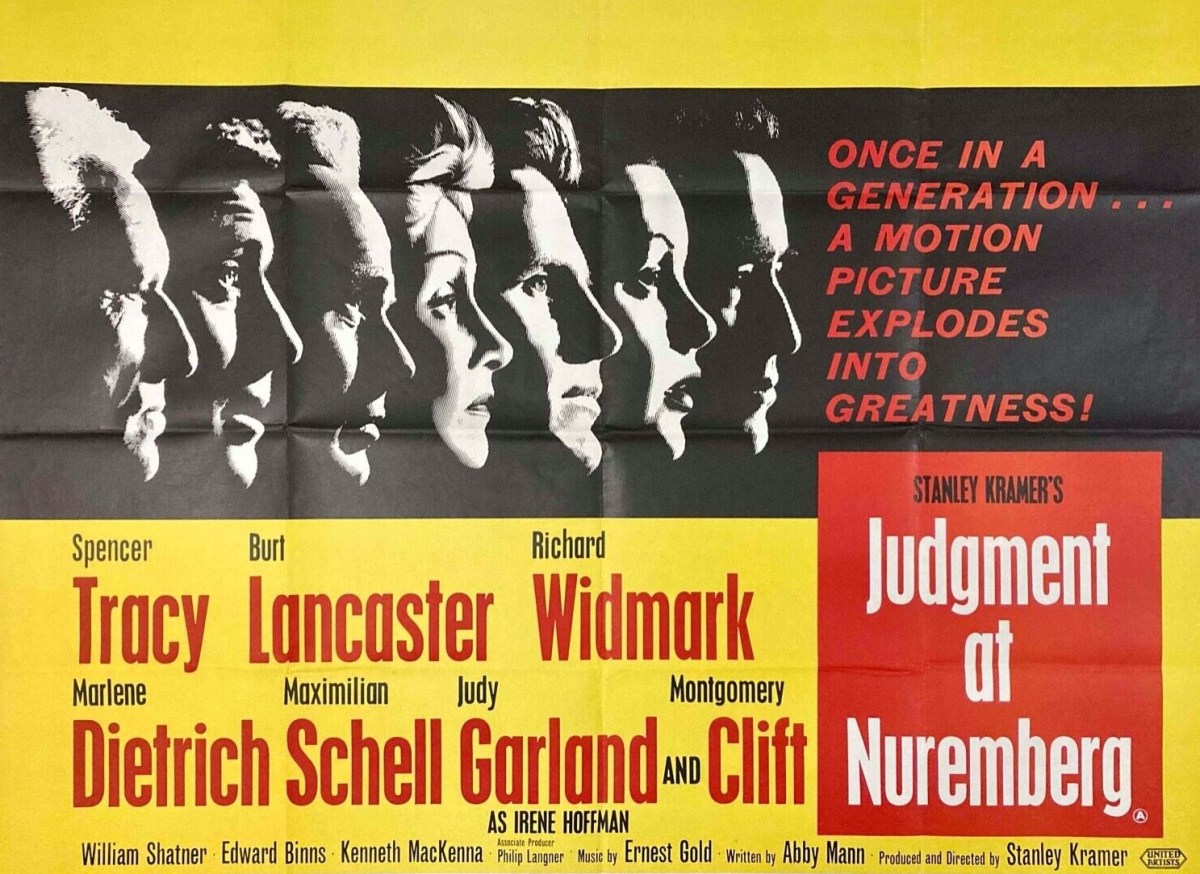
Judgment at Nuremberg (1961) ****

Stanley Kramer never caught a decent academic/critical break. Subject matter worthy, execution poor, was the overall consensus. But Judgement at Nuremberg, with its long tracking shots, sometimes turning 360 degrees around a character, should have changed all that. But the kind of critics who would have appreciated such bravura technique weren’t around at the time and even when Antonioni’s The Passenger (1975) appeared nobody thought to reference Kramer, believing this was a new cinematic invention by the esteemed Italian maestro.

So, Judgement at Nuremberg is remembered, if at all, for the subject matter and elevated by the performances rather than the director’s input. Most people misremember what the movie’s about. The main concern here isn’t the war criminal, the men personally involved in running the ghettos. Instead, it’s about those behind the scenes who could, theoretically, have prevented the camps flourishing, or at least challenged their opening.

Those on trial were freedom fighters of a different sort. As judges, the top tier of the legal system, their job was not just to uphold law and order and individual freedoms, but to take government to task for illegal action. It’s a basic tenet of the democratic world that governments cannot act in autocratic fashion but work within public accord.

Should the legal guardians find fault with government activity, their job is to take the ruling body to task – the European Court of Human Rights was set up with exactly that principal in mind, and various British and American law agencies have over time called a halt or questioned government proposals.

Some of the judges were clearly ill-fit for the task, lick-spittle jobsworths, desperate to hold onto rank and privilege, many sharing the same anti-semitic views as Hitler. But the Allied forces, being democratic, have to proceed along proper lines, taking potential criminals to court and allowing them legal defence.

So the main target is Dr Ernst Janning (Burt Lancaster), German’s pre-eminent legal force, a quiet, dignified man, who refuses to fawn or react to the charges. On the attack is prosecutor Col Tad Lawson (Richard Widmark). Acting for the defence is the wily, emotional, Hans Rolfe (Maximilian Schell) who is not above comparing the Holocaust to the Americans dropping the atom bomb on Hiroshima, indiscriminate terror brought on innocent civilians the result of both actions. He also brings to the court’s attention the distasteful theories that once held sway in high American legal circles as promulgated by Oliver Wendell Holmes, a Supreme Court judge, whose views on eugenics aimed at withholding procreation rights from the mentally handicapped.   

As referee we have Dan Heywood (Spencer Tracy), the American chief judge, who didn’t want the job and was way down the pecking order of those best qualified. And he’s a bit of a detective on the side, trying to discover how much ordinary people –  such as the flirtatious Mrs Bertholdt, widow of an executed German general, as well as the housekeeper and butler looking after him in some style – knew about the atrocities as they were taking place.

In the background is an Allied command not wishing to stir up any more controversy, conscious of the rising power of the Communist bloc, seeing West Germany as a bulwark against Stalin, concerned that forcing the country’s inhabitants to wallow in the past will turn their political minds towards the east rather than the west.

In due course, a variety of witnesses are called, testifying to ill-treatment under the German government including the backward Rudolph Pedersen (Montgomery Clift) and Irene Hoffman (Judy Garland).

What makes this so different is that innocence or guilt is not what’s under scrutiny, but reason. Why did such high-minded legal experts like Dr Janning give in to Hitler. And when? And do they recognise their role in providing Hitler with credence to continue with his massacre of the Jews?

Individual conscience and, conversely, collective guilt, might have been the driving force then but they are more than relevant today when actions in war come under even greater scrutiny and politicians are held to account. Perhaps, it’s ironic how little judgement was passed in the end on those convicted in these trials. Nobody was hanged, nobody received even a life sentence. In fact, by the time the movie was released, all were free men.  

Stanely Kramer, the Scorsese or Nolan of his era regarding running time  (it clocks in a just shy of three hours), does a superb job with his even-handed approach. While his technical skills were perhaps under-appreciated, he certainly knows how to command an audience’s attention and draws terrific performances from his actors.

Maximilian Schell, who won the Oscar, is perceived as the standout, but for me the highpoints were Burt Lancaster (The Swimmer, 1968) and Montgomery Clift (Freud, 1962). Abby Mann’s (The Detective, 1968) screenplay was an expanded version of his teleplay of two years before.

Has more than enough humanity to keep you riveted.

https://amzn.to/3Mh4v7c

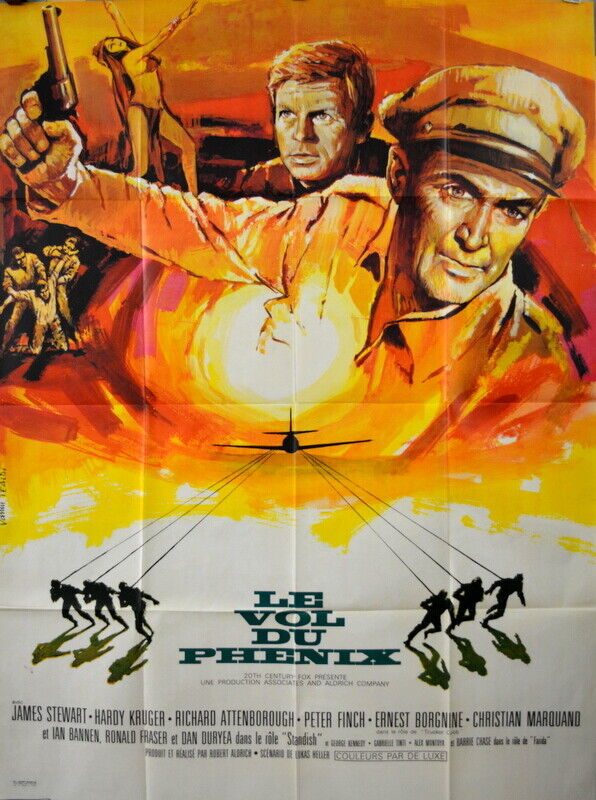
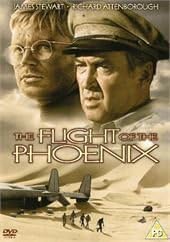
The Flight of the Phoenix (1965) ****

Take twelve condemned men, drop them in the desert hundreds of miles from safety with only enough water to last two weeks, and nothing to eat but dates, and make them work together to effect salvation from their predicament. Not exactly the premise for The Dirty Dozen (1967) but not far off. The Flight of the Phoenix appears a dummy run for director Robert Aldrich’s more ambitious war picture, not least because in terms of structure it is only eight minutes shorter. There are no women in the picture (except those appearing in a mirage) and the men, of all different types, must come together or die in the savage heat.

You might argue that the audience for this kind of picture no longer exists. In the 1960s there was a big market for the Nevil Shute/Hammond Innes/Elleston Trevor type of novel which contained a lot of practical detail at a time when heavy industry – mining, shipbuilding, oil, car manufacture – was a massive employer and the ordinary man had an easy understanding of – and was often fascinated by – the principles of engineering. Bear in mind that this was the era of space rockets and there was excitement about man’s planned flight to the moon.

During a sandstorm a small twin-engined plane carrying passengers from an oil field crash lands in the Sahara. James Stewart as the pilot was a casting trick. In a previous aerial adventure No Highway (1951), Stewart was the ordinary joe challenging authority. Here he is the authority figure, pilot Frank Towns, challenged and part of the film’s guile is the way he has to concede that authority to the one person on board everyone hates, arrogant German aircraft designer Dorfmann (Hardy Kruger).

The global job lot of passengers includes: two soldiers, martinet Capt Harris (Peter Finch) and his mutinous Sgt Watson (Ronald Fraser); alcoholic navigator Moran (Richard Attenborough); oil worker Cobb (Ernest Borgnine) on the brink of insanity; sarcastic Scots troublemaker Crow (Ian Bannen); French Dr Renaud (Christian Marquand0; company accountant Standish (Dan Duryea); Italian Gabriele (Gabriele Tinti); Bellamy (George Kennedy) and Carlos (Alex Montoya); plus a monkey of no fixed abode. The monkey, incidentally, is cleverly utilised. He’s not a sentimental or cute device, there to soften a hard guy or for comic relief, but Aldrich often cuts to his squeals or his face when there is imminent danger.

Two passengers are already dead, one is seriously injured. They have been blown so far off-course they will be impossible to locate. There is only enough water for ten or eleven days. It is a given in such circumstances that tempers will explode and hidden secrets surface. Were they guaranteed rescue those two pegs would be enough to hang a movie on.  Since there is no such guarantee, this becomes a picture about survival. The obvious maneuver comes into play on the fifth day. Capt Harris determines to walk to safety, over 100 miles in deadly heat. But it’s not a trek picture either, the engineers present know the risks. Mountains will cause false compass readings and those going will walk around in circles.

Trevor Dudley-Smith wrote under nine other pseudonyms including Elleston Trevor and Adam Hall for the “Quiller” spy series.

What? I can get that magnetism in the mountains can affect a compass but where does the walking round in circles enter the equation? Because, explains Moran patiently, a person does not automatically walk in a straight line if there is no actual road. If right-handed then you’ll walk in a left-hand direction because the right leg is more developed than the other and takes a longer stride and there’s nothing you can do about it. This doesn’t matter if you are walking along an actual path but in the desert with no road markings it’s lethal. And this is the beginning of a bag of what would otherwise be deemed trivia except that such facts are a matter of life and death. This is a movie about reality in a way that no other realistic or authentic picture has or will be. Physics is the dominant force, not imagination.

Finch’s sergeant fakes an injury to avoid going. The mad Cobb, originally prevented from leaving, sneaks away in the night. Towns, in courageous mode, goes after him. While he is away, Dorfmann carries out a character assassination. And continues on his return – “the only thing outstanding about you is your stupidity.” By now though, Moran has warmed to Dorfmann’s insane idea of building a single-engined plane out of the wreck of the twin-engined one. And that becomes the crux of the story. Can they build this weird contraption? Will they manage it before they die of thirst? Will rising tensions prevent completion? Are they fit enough after days in the boiling heat to manage the herculean tasks involved?

Aldrich keeps psychological tension at fever pitch, helped along by the pessimistic Towns and the wildly pessimistic Crow, needling everyone in sight, who delivers lines like “how I stopped smoking in three days.” Towns and Moran have to come to terms with the parts they played in the plane crashing, Sgt Watson with his cowardice. Issues arise over leadership and water theft.

I won’t spoil it for you by mentioning the incident that threatens to demolish the entire project. But the finale is truly thrilling, edge-of-the-seat stuff and the skeletal monstrosity being constructed looks hardly capable of carrying the monkey let alone a full complement of passengers. Aldrich is a master of the group shot with unerring composition and often movement within the frame or just a simple bit of business by an actor, for example George Kennedy at one point tapping his hand against his leg, ensuring that the film does not solely focus on a couple of characters. Sometimes all Aldrich needs to make his points are reaction shots.

Terrific performances all round with Ian Bannen Oscar-nominated. Aldrich called on Lukas Heller for the screenplay, based on Elleston Trevor’s novel, having worked with him on Whatever Happened to Baby Jane (1962) and Hush, Hush Sweet Charlotte (1964). Aldrich’s son William and son-in-law Peter Bravos had bit parts, killed off during the crash.

Flight of the Phoenix virtually invented the self-help rescue genre that relied on ingenious mechanical ideas – rather than more simplistic notions – such as later absorbed in movies like Apollo 13 (1995) and The Martian  (2015). Aldrich’s mastery of group dynamics would stand in him in good stead for The Dirty Dozen.

The 2004 remake isn’t a patch on the original.

A terrific movie and well worth seeing.

Turning the novel by Elleston Trevor into a movie is illustrative of the process by which the screenwriter eliminates, changes and adds. The Flight of the Phoenix (published in 1964) was a lean 80,000 words, a far cry from the blockbuster airport reads like Exodus by Leon Uris and James Michener’s Hawaii. But its length made it an ideal subject for a film, the shorter novel tending to stick close to the main story. The author’s speciality was authentic detail, an early career as a racing driver and flight engineer inspiring in him a love for all things mechanical.

He knew what made things work and gaps in his knowledge were filled by assiduous research. He was an assiduous man, with 36 books since 1943 under ten pseudonyms, one being Adam Hall whose bestselling spy tale The Berlin Memorandum would be filmed as The Quiller Memorandum. He had tackled aviation before, most prominently in Squadron Airborne (1955).

The film follows the book’s structure with only a couple of deviations. The main one was changing the nationality of the aircraft designer from British to German. Originally named Stringer he was a testy young individual prone to taking offence and going off in big sulks. There was a German in the Trevor version, Kepel, a young man who is injured in the crash. But there was no handy doctor on board and fewer different nationalities.

To build up James Stewart as the heroic pilot and as a consequence to add meat to his clash with German designer Hardy Kruger, in the film he bravely goes out into the desert to find one of the passengers, but that does not occur in the book. Other changes were minor – in the book the passengers are occasionally able to supplement their drinking rations by scraping night frost off  the plane and at a later point in the book they drain the blood from a dead camel in order to dilute their drinking water.

While there is an encounter with Arab nomads in both book and film, the book’s approach to this incident is much more straightforward, ignoring some of the detail supplied in the book.  

Of course, a novel allows for the inclusion of far greater detail. And while that provides the skeleton for story development, Trevor gives greater insight into the characters than can be achieved on screen. The author allows each character an internal monologue, through which device we discover their motivations, history and fears.

This approach combines the present with the past, presenting a more rounded cast of characters. While the inherent tension of the situation drives the story along, the author switches between characters to keep the reader fully engaged. The cowardly sergeant (played by Ronald Fraser in the film) is the biggest beneficiary, portrayed as a more sympathetic person than in the film.

The book is a stand-alone enjoyment, Trevor’s writing skills, his grasp of character, creation of tension and his  engineering knowledge (bear in mind he invented the idea of building another plane out of the wrecked one) make the novel every bit as enthralling as the film.  

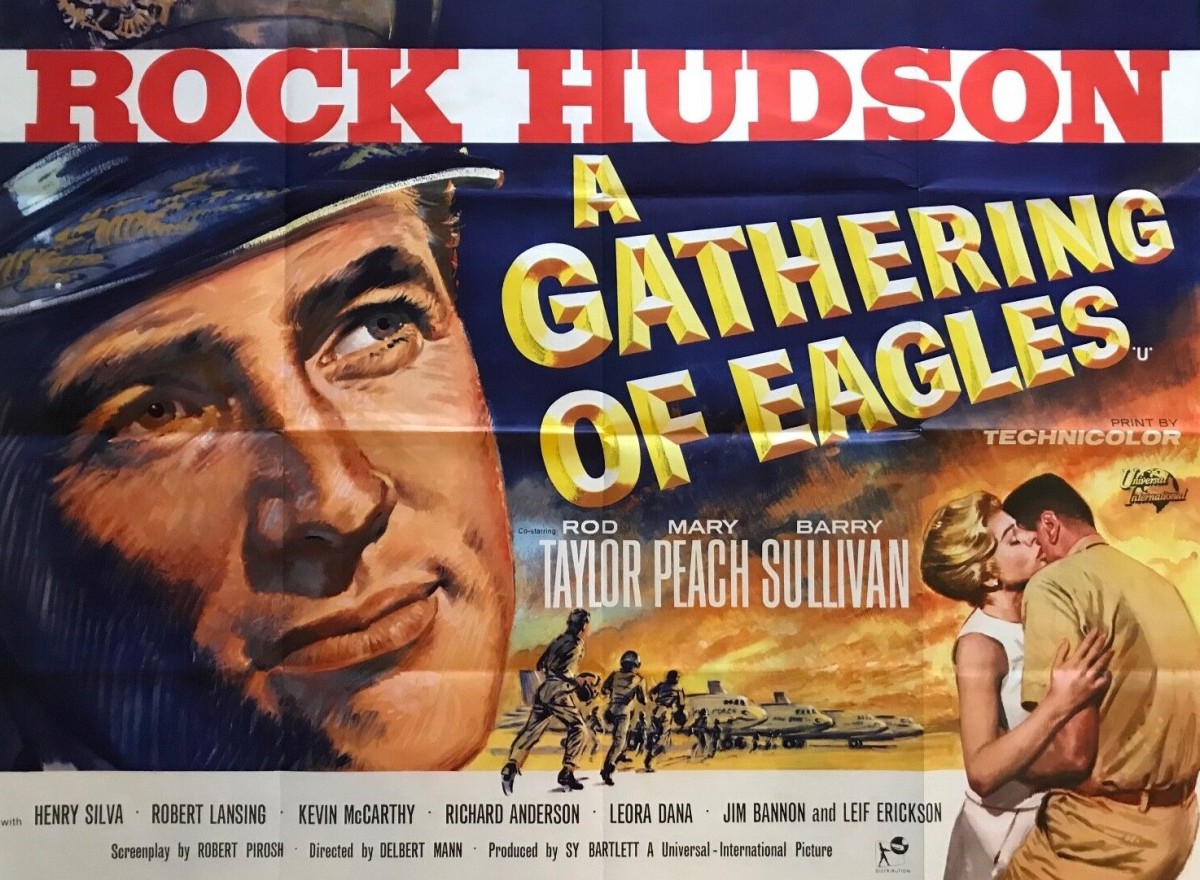
A Gathering of Eagles (1963) ***

Machines get in the way of this tale of men under pressure. Often viewed as a PR exercise for the Strategic Air Command to counter complaints about competence, and signally out of tune with a Hollywood faction that was beginning to view investment in nuclear weapons as a serious mistake, as epitomized by Fail Safe (1964), Dr Strangelove (1964) and The Bedford Incident (1965).

Not helped by action being under the auspices of simulation and not genuine war, filmmakers lacking the later bravura that just invented a side event, Top Gun, 1986, for example, to give audiences something to root for. Nor by a warehouse of info dumps.

That said, once it comes to the usual turf wars besetting any element of the military, the tension ponies up and there’s a real film underneath. There’s a surprising contemporary element to the narrative, two actually, firstly the arguments over leadership, and, secondly, the impact of PTSD, the endless deadline-based simulations as tough as being at war.

Hard-line efficiency expert Col Caldwell (Rock Hudson) is parachuted into a front-line B-52 Cold War command to toughen up sloppy procedure, bringing him into conflict with second-in-command Col Farr (Rod Taylor), a Korean War buddy. Caldwell rules by the book, Farr allows his men greater leeway. It comes down to the question of whether morale should be an issue or if men are expected to do their utmost even if they hate their leader. This debate about leadership style is prevalent today.

Caldwell is so tough he will sacrifice his buddy to get the job done better. And if people can’t handle the pressure they are better off out of the firing line. But since asking for a transfer to a less arduous berth would be viewed as a shameful admission of weakness, the only option for those who can’t cope is suicide. But since attempted suicide would not, as today, be viewed as a cry for help, anyone such attempt reduces the airman,, such as Col Fowler (Barry Sullivan) to a hospital bed where pity rains down on him.

The pressure comes in the shape of not just keeping on top of everything should the Russians suddenly decide to launch a missile attack, but dealing with intense simulations which appear out of the blue and require everyone to spring into battle stations. And in another prescient element, everyone is analysed to within an inch of their lives, marked down for the tiniest deviation from protocol, or not reaching the correct flight level or going too fast or too slow.

Caldwell is further hampered by English wife Victoria (Mary Peach) who fails to understand the pressure under which her husband, and all men in the base, operate, the kind of ground crew whose first question, on recovering from an operation, will not concern wife and kids but an airplane or a mission.

To add emotional heft, she is meant to have potentially fallen for Farr, and although rumors reach Caldwell’s superiors there’s no evidence of that. In the original script, the affair is spelled out, and such material was filmed, but it disappeared in the editing room. Perhaps because it proved that emotion was the Achilles heel of even the most efficient operation. In the actual movie, Victoria denies an affair and we believe her, but if an audience was shown her – and Farr – to be lying that casts a different complexion and at some level suggests betrayal.

In the air, despite assistance from the Strategic Air Command, the hardware is now out-dated, so of historical interest only, and while the movie fails to capture the tenor of the times, the situation of men under pressure has not changed.

Rock Hudson (Tobruk, 1967) is intensity on fire, Rod Taylor (Chuka, 1967) more laidback than in later films. Mary Peach (No Love For Johnnie, 1961) doesn’t have much of a filter between adoration and fury. Look out for Henry Silva (The Manchurian Candidate, 1962), Barry Sullivan (Harlow, 1965) and Kevin McCarthy (Hotel, 1967).

As you might expect, director Delbert Mann (Buddwing / Mister Buddwing, 1966) is more at home on the ground than in the air. Responsible for the screenplay were Sy Bartlett (Che!, 1969), also the producer, who had covered similar ground in Twelve O’Clock High (1949), and Robert Pirosh (Hell Is for Heroes, 1962)

The Top Gun of its day, bettered remembered now for the debate on leadership.

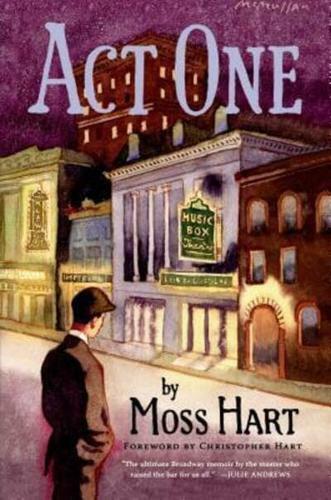
Act One (1963) ****

Highly enjoyable and surprisingly good. Could be viewed as a companion piece to Two Weeks in Another Town (1962), swapping movies for Broadway. I have to confess I had only seen the writing team of George S. Kaufman and Moss Hart in the context of movies – Frank Capra’s Oscar-winning You Can’t Take It With You (1938) and The Man Who Came to Dinner (1942). I hadn’t realized these had begun as plays and the movie tells the story of the beginning of their partnership when Kaufman was an established playwright and Hart a neophyte.

Perhaps because this was the only directing gig for Dore Schary, better known as a screenwriter (Boys Town, 1939), producer and head honcho at MGM, there’s none of the melodrama of Two Weeks in Another Town. In fact, except for an occasional appearance by Kaufman’s exasperated wife, there’s hardly a woman in sight and certainly no complicated nuptials or even romance.  It’s basically a two-hander, the relationship between the two writers and their struggle to turn the play Once in a Lifetime (1930) into a hit.

It’s helped along by what must be most subdued and subtle performances in the careers of either George Hamilton (Two Weeks in Another Town) or Jason Robards (Once Upon a Time in the West, 1969). This is easily Hamilton at his finest and it is one of Robards’ better performances. Rather than gung-ho turns, all sturm and drang, emotions out of control, the two actors inhabit their characters. Once only is Hamilton let off the leash, in an unfair tirade against buddie Joe (Jack Klugman) and is far more effective in a scene where he doesn’t say a word, and Schary has employed a film noir technique of leaving a face, apart from the eyes, in darkness, as he comes to terms with the realization he has a hit on his hands.

The story simple enough. In 1929, cigar-maker father out of work, family struggling to cope with the onset of the Great Depression, Hart is a struggling playwright, first five serious works rejected. But turning to a comedy about Hollywood, he strikes gold. Or at least some gold dust. Because a play on paper is scarcely the finished work. Teamed up with a recalcitrant, grumpy, introspective, monosyllabic Kaufman, Hart finds out the hard way just what it takes to turn prospect into success.

Mostly, it’s rewrites. And more rewrites. What’s wrong with the initial play is everything bar the idea. What’s wrong after that is everything they haven’t been able to fix. Gets to the stage where Kaufman – remember, the more experienced one – is ready to quit.

So once Kaufman appears, it’s mostly two guys in a room or backstage trying to sort out a myriad of problems. There’s some nice interaction. Kaufman never eats, so Hart is constantly famished. Kaufman hates Hart’s cigar smoke. Eventually, they come to an agreement, constant food in exchange for extinguishing the cigars (a pipe deemed an acceptable substitute).

There’s a cast of interesting characters, famous producer (Eli Wallach) and Hart’s support network, talented unsung writers and actors (including Archie Leach before he went Hollywood and became Cary Grant, his attraction to females a constant refrain), and a scene-stealing George Segal (The Quiller Memorandum, 1966). At a party we briefly meet the Alqonquin Round Table set, all insufferable and barely a bon mot between them.

Movies about the stage invariably involve an actor so this makes a refreshing change. And most films about writers concern the literary artist rather than the more overtly commercial variety. But I’m guessing the level of endeavour is much the same.

But it’s the lack of grandstanding that makes this work. Rather than lading down characters with tons of dramatic dialogue much of the piece is carried by small bits of business, the fastidious Hart snipping loose threads from a shirt, pressing his trousers under his mattress, the equally finicky Kaufman constantly washing his hands and the scourge of sentimentality. Sure, it’s showtime, so there’s a measure of bitchiness, a marvellous scene where Kaufman imagines a producer’s positivity is intended to put him off.

Unexpectedly excellent acting lifts this. Not easy to find, Ebay would be the best place.

Two Weeks in Another Town (1962) ****

Unholy triumvirate of director Vincente Minelli, star Kirk Douglas and screenwriter Charles Schnee had been here before, eviscerating Hollywood in The Bad and the Beautiful (1952). Now, while the locale has shifted to Rome, Hollywood-on-the-Tiber, the behind-the-scenes battles are, if anything, even more fraught since careers are on the slide.

Burnt-out washed-up star Jack (Kirk Douglas) is duped by washed-up director Maurice (Edward G. Robinson) into thinking he is going to revive his career with a supporting role in a low-budget movie made at Cinecitta. In reality, Maurice wants Jack to oversee the dubbing, time restraints preventing the director doing this. Jack and Maurice have history, good and bad, making some fine pictures together, but inveterate womanizer Maurice bedding Jack’s wife Carlotta (Cyd Charisse).

Carlotta, divorced from Jack, now living in Rome and married to a shipping magnate, wants Jack back, if only to keep her bed warm while her husband is away. Young beauty Veronica (Daliah Lavi) dumps temperamental boyfriend and fading star Davie (George Hamilton), in favour of Jack. Maurice is having an affair with his latest find, the tempestuous Barzelli (Rosanno Schiaffino), so brazen she strokes his legs while he toasts his wife Clara (Claire Trevor) at a dinner to celebrate their tenth anniversary. Clara is prone to attempting suicide.

So far, so melodramatic. But instead of explosive melodrama, it’s more about insecurity and the honing of the cutting line. We know enough about vicious Hollywood in-fighting so none of this will come as a surprise, but it’s still astonishing the depth of self-deception on display that occasionally flowers into genuine insight. Maurice may be ducking and diving in the last chance saloon but he still knows how to disarm a young man with a knife. Not sure Jack giving Barzelli a kick in the pants would be deemed an acceptable method of calming down a screeching star. And you won’t get much kudos for a line like “all women are monster.”

But there are nuggets of Hollywood lore. Barzelli being forced to keep her arms in a certain position for a shot, for example, that actors doing the dubbing require direction, the shifting around of scenes, the producer already guaranteed profit through pre-sales before the movie is released, the endless rewrites, and of course that career rejuvenation brings actors a sudden jolt of power. And there’s a car ride that matches Hitchcock for sheer terror, regardless of the fact it is shot with back projection.

Fame as we all know is an illusion, but so is success. The famous are notoriously lonely. What’s hardest to get your head round is failing to notice when your career is on the slide. Being so wrapped up in your notion of invincible self, to which, while you are successful, all pander. There’s some lovely stuff about the collusion of audience and moviemaker, both hiding from reality.

But it’s a true adult drama, far superior in many ways to Once Upon a Time in Hollywood (2019) or Babylon (2022), avoiding the excesses of both, while homing in on character fragility, weakness exacerbated under pressure. In the end all make concession, some beating a tune of self-awareness. Even Maurice accepts he needs his wife to provide him with grounding and self-belief. The aloof arrogant Davie has to beg Jack not to steal his girl. Jack learns to ignore adulation.

If you like long speeches and elegant camerawork and confident direction this is for you. There’s plenty attendant glamor, but mostly it’s characters coming apart and putting themselves back together again, with or without a side order of bitchiness.

The acting is uniformly top-notch. Kirk Douglas might be auditioning for The Arrangement (1969), in which he essays a similar ambitious talent coming unstuck, but here he underplays, to the picture’s benefit, the early scenes when he’s still working out why he has fallen out of favor, and who he now is, just outstanding. But Edward G. Robinson’s (Seven Thieves, 1960) callous insecure monster runs him close. And the petulant performance by George Hamilton (Angel Baby, 1961) had critics purring and the industry predicting great things.

But it wouldn’t be anything without the believable women, all convinced their version of themselves will win favor. Cyd Charisse (Maroc 7, 1967), the female equivalent of the predatory Maurice, Claire Trevor (The Cape Town Affair, 1967) with suicide the preferred option to divorce, and especially Daliah Lavi (Some Girls Do, 1967) who gives Hollywood splendid notice of what she can do away from the sex symbol persona she was later lumbered with. Rossano Schiaffino has a ball as the sex symbol who views powerful men as playthings.

This was Vincente Minnelli’s fourth film with Kirk Douglas and just like Anthony Mann with James Stewart and John Ford with John Wayne or, more recently, Antoine Fuqua with Denzel Washington, draws a greater maturity from the actor. Charles Schnee wrote the screenplay based on the Irwin Shaw bestseller.

Sure-footed, bitchy as hell, hard-hitting, honest and unmissable.

Elmer Gantry (1960) *****

Burt Lancaster gives the performance of his life as the eponymous burnt-out salesman finding financial redemption in the salvation business in Richard Brooks’  riveting examination of the revivalist boom. While replete with hypocrisy, old-style religion brought succour to the rural poor, but the director takes such an even-handed approach to the subject matter, carefully nurturing a marvellous parade of characters, that you are totally sucked in.

Brooks made his name adapting famous novels but only here and In Cold Blood (1967) does he exhibit complete mastery of the material.  In fact, he pulls out a cinematic plum in having the audience, who might initially have mocked the obvious manipulation of the poor, suddenly taking the side of the itinerant preachers when they come up against the more sophisticated religious operators in the big towns.

Elmer Gantry (Burt Lancaster) has some previous in the preaching business, but only for as long as it took for him to be chucked out of divinity school for seducing the principal’s daughter, so when by accident he comes upon a touring revivalist meeting he discovers his metier as a fast-talking brazen preacher. He doesn’t quite usurp the star of the show, Sister Sharon (Jean Simmons), and in fact their styles complement one another, he preaching hell and damnation, she the love of God.

Beneath the demure guise, Sharon is anything but a push-over. Not only does she see through him right away and consistently knock him back but she is quite the businessperson, though her methods of keeping civic officials in line often rely on blackmail. But then who are the hypocritical, allowing speakeasies and prostitution to run rampant, to attempt to rein in revivalists who need account to no one for how they spend their revenue?

Eventually, of course, Elmer’s ardent wooing wins over the virgin Sharon who easily forgives his dalliance with her doe-eyed follower Sister Rachel (Patti Paige). Burgeoning romance is scuppered by a chance encounter with prostitute Lulu (Shirley Jones), the principal’s daughter. That’s just the spark needed for anti-religious fervor to take over and the enterprise ends in disaster.

But what’s so good about a film that could as easily just relied on taking pot-shots at religion is that Brooks gives equal space to the good and bad in each character. Sure, Elmer’s confession of his sins might be construed as a seduction device, but that’s tempered by a genuine ruefulness and remorse over his previous actions. And while his grand-standing in front of an audience could be interpreted as merely an actor revelling in a role, you can see that religion has as easily taken over him and provided him with an identity that he finds rewarding. He might still be a salesman but he’s selling the hell out of the product.

Sharon’s uncanny hold over a congregation may be a true skill, and she’s definitely a believer, but that is borne out of fiction. She has reinvented herself, given herself a new name and identity, that furnished her with business opportunity in a male-dominated world, but love of God has come at the expense of love of man.

Perhaps what’s best about the picture’s construction is the array of supporting characters. Journalist Jim (Arthur Kennedy) might appear the pick, ingratiating himself with the touring company only to write a searing expose, but drawing the line, and incurring the wrath of his editor, at writing the kind of tawdry tale he believes is a fabrication. While still holding a torch for Elmer, Lulu has none of the cliché prostitute’s heart of gold. Initially rejected by Elmer, she goes along with a scheme to bring him down, only to change her mind and change it again, left only with remorse.

And Brooks manages to weave in a ton of detail, sometimes in dramatic fashion, such as the church elders in big city Zenith debating the value of backing the revivalists (the touring operation usually signs up hundreds of people to local parishes), and sometimes just as background, such as when Jim dictates his front-page lead in the newspaper office, whipping it off a page at a time to throw in front of the editor.

There’s also a little-commented-upon affinity between Shirley and Elmer. She, too, is coming to the end of the line. She is approaching burn-out. The endless travel, the responsibility for her payroll, financing accommodation, dealing with officials, seeing all the people she has returned to the fold being handed over to local churches, is taking its toll. And she wants the stability of her own church, where she can soothe her congregation on a weekly basis and live a more temperate life.

If ever a movie suited Burt Lancaster’s physicality, this is it. Allowed to channel his inner dominance, every gesture overpowers and by the same token makes him more potent when at his most abject. Lancaster (The Swimmer, 1968) was in a rich vein of form that would see him deliver a series of majestic performances throughout the decade. He deservedly won the Oscar.

Jean Simmons (Rough Night in Jericho, 1967) is, effectively, both a villain, duping everyone by her creation of Sister Sharon, and the epitome of the American Dream, a girl from shantytown who makes her way bigtime. Shirley Jones (Two Rode Together, 1961) is afforded more dramatic beats and hers is a sure-footed performance, leading you to believe she will react one way and then go another. Oddly, Arthur Kennedy (Joy in the Morning, 1965) missed out on adding to his five Oscar nominations for supporting actor.

Nothing in this movie has aged. If anything, this was way ahead of its time in daring to pick holes in organized religion (The Cardinal and The Shoes of the Fisherman were a good few years away and in The Night of the Hunter a few years before Robert Mitchum only posed as a preacher).  

Extraordinary movie by Richard Brooks at the top of his form.

Secret World (1969) ****

Jacqueline Bisset is the big draw here. After breaking into the Hollywood bigtime with female leads in The Detective (1968) and Bullitt (1968) she put her newfound marquee weight behind a low-budget French arthouse picture.  But ignore the marketeers best efforts to present this as malevolent in the style of The Innocents (1961) or the illicit template of The Nightcomers (1971) or Malena (2000).

No children were corrupted in the making of this picture. Instead, it’s a slow-burn thoughtful exposition of a child coming to terms with loss and a young woman discovering she is more than a mere sexual plaything. Any explosive drama comes from father-son rivalry but mostly it’s a reflective, absorbing movie that follows twin narratives, the attraction of the orphaned introspective 11-year-old Francois (Jean-Francois Vireick) to the English mistress of his uncle Philippe (Pierre Zimmer) and the damage her arrival causes to a fractured household.

The leather glove oveprlays its hand in the poster, suggesting a great deal more sexuality
than is actually the case, but nonetheless – and take this as subtle – creates
an element of ambiquity about the demure Wendy.

Astonishingly, given its arthouse credentials – long takes, glorious cinematography, brooding close-ups – this was the final film for both directors (no idea why there were two) Paul Feyder (in his debut) and a sophomore effort from Robert Freeman (The Touchables, 1968). Given a screenplay by regular Polanski collaborator Gerard Brach (Wonderwall, 1968) and an intrusive heavy-handed score, you get the impression of two separate movies struggling to fit a single canvas.

On the one hand, you’ve got a perfectly acceptable romantic intrigue, Philippe and son Olivier (Marc Porel) fighting, sometimes metaphorically (games of chess etc), sometimes physically (a punch-up), over the woman, passed off as the daughter of a wartime colleague, and a wife Monique (Chantal Goya) refusing to stand on the sidelines, switching hairstyle to blonde and employing various wiles to prevent the affair. While the male rivalry is overt, the wife’s manipulations are more subtle.

On the other hand, you’ve got the lonely boy, who indulges his imagination, spinning tales of monsters in a lake and spies in the vicinity, mostly ignored by his relatives, hiding out with a pet rabbit in a treehouse, occasionally filching small items, creating a crown out of a stolen brooch and pieces of tree bark. There’s a lot that’s presented without explanation. For example, a couple of months after his parents died in a car crash that he alone survived, he mopes around in a jumper full of holes, either a sign how little his adoptive parents care for him, or perhaps the item of clothing he was wearing the day his mother died.

You can view his behavior – creeping into Wendy’s room at night when she’s asleep – as creepy or just the hankering of a small boy after a substitute mother. But mostly, he lives a life of wistfulness, longing for what he once had, unable to fit into a household split by various emotions. When he snips a lock of Wendy’s hair, or snaffles a bottle of her perfume, it’s to add to his little box of mementoes rather than from any underlying sexual motive. And it’s hard to view his growing feelings for Wendy as early stirrings of sexual attraction. When at one point he falls asleep on her bosom, you couldn’t interpret that as anything more than maternal instinct.

That’s not to say there isn’t tension. But that’s almost entirely played out in the context of father, son and wife. Francois is a welcome gooseberry defusing the unwelcome attentions of Olivier, whose overtures Wendy constantly thwarts. Olivier, well aware of the role Wendy plays in her father’s life, mocks his mother’s attempts to hold onto her errant husband. Wendy, meanwhile, abhors the role she is forced to play, the trophy mistress, and reacts in maternal fashion to the lonely child.

Excepting the intensity of the father-son relationship, the screenplay underplays while still developing character more fully than you might expect.. The child is as manipulative as his aunt in finding ways to spend time with the object of his affection.

Mostly, this has been dismissed as a poor example of the French arthouse picture or as a Bisset vanity number or for illicit elements than never catch fire. But, in reality, it’s a superb character study set in an unromanticised French countryside – rats need shooting, for example, massive tray of cheese served up for dessert rather than the grand wine cellar you might imagine a chateau to contain, or clothes or other ostentatious examples of wealth.

There is so much that is incisively ordinary. Philippe insists on measuring the boy’s height.  Monique drops her chilly façade to help the newcomer get rid of a wasp. The arrogant Olivier loses all credibility when he runs away from a gang. The children play out childish rituals. Francois douses the rabbit in Wendy’s perfume so he can keep the smell of her close.  

The secret world here is four-fold, the one Philippe foolishly and brazenly attempts to maintain, the one Olivier hopes to possess, the one Francois enjoys and the idyll from which Wendy is shaken out of.

The direction is very confident, none more so, oddly enough, than in the only sex scene, which takes place primarily off-screen, although with the lascivious involvement of a leather-gloved hand.

Rich in detail, supremely atmospheric, well worth a look.    

A Fine Madness (1966) **

Let’s start with the Hollywood happy ending. Poet Samson (Sean Connery) slugs pregnant second wife (Joanne Woodward). He’d have punched her lights out before if only she hadn’t been so good at diving out of the way. As it is he manages to throw her down the stairs. The film kicks off with him ill-temperedly whacking her over the head with a pillow.

This is the kind of film where violence against women is treated as a running gag.

Let’s try to sell it as a wacky comedy.

Lydia (Jean Seberg), wife of psychiatrist Dr West (Patrick O’Neal) treating Samson for writer’s block, doesn’t have the courage to make it plain to his creepy colleague Dr Vorbeck (Werner Peters) that she doesn’t fancy him when he endlessly paws her and slaps her rear so he takes this as the green light to attempt to rape her. That’s another running gag.

Surly loud-mouthed bully Samson gets a free pass because he’s an artist, a poet with one poor-selling volume of poetry, and unable to find the time or space to complete his masterpiece. He would have more time if he didn’t spend so much of it chasing women.

At my count, he gets through at least four – Lydia, office secretary Miss Walnicki (Sue Ann Lngdon), a client (he cleans carpets for a living) Evelyn (Zohra Lampert), and Dr Kropotkin (Collen Dewhurst), another colleague of Dr West, not to mention the current wife he drives demented and the previous wife for whom he is being aggressively pursued for alimony.

You can see how director Irvin Kershner was a shoo-in for The Flim-Flam Man/One Born Every Minute (1967) because at every opportunity he tries to turn simple dramatic confrontation that enhance the story into needless chases that divert it and extract slapstick from material that in no way suggests it’s ripe for such an approach.

Trivia lovers note: The John “Redcap” Thaw in the supporting feature “Dead Man’s Chest” is the same John Thaw from “The Sweeney” and “Morse“.

There’s a story in here somewhere and a pretty barmy one at that if you set aside the poor poet’s endless battle against a world that fails to understand his genius and his dodging of the alimony. Rightfully diagnosed as some kind of sociopath by yet another of Dr West’s colleagues, the needle-happy Dr Menken (Clive Revill), he is admitted to a psychiatric hospital initially as a way of dodging his creditors and providing him with space and time to write.

Again, his most creative use of his time is to make out with Lydia and Krokoptin. But since he is spotted in a hydro-bath/ripple bath with  naked Lydia, the vengeful husband gives the go-ahead to perform some kind of lobotomy on the poet, on the assumption it will dull his violent tendencies. (It doesn’t work.) The opportunity to satirise the psychiatric profession takes second place to another opportunity for a chase.

Anomalies abound. Samson’s character is clearly drawn on Welsh poet Dylan Thomas who exploited his fame and made his money on recital tours. Performing is against the broke Samson’s principles and he turns viciously on his audience of appreciative women. Despite demanding center stage, when offered it he turns it down. He lambasts middle-aged women but has little against those younger members of the species more susceptible to his charms. He only has to tell Miss Walnicki she has “pouty lips” and she falls into his arms.

All this has going for it are the performances. Sean Connery (Marnie, 1964), it has to be said, certainly exhibits screen charisma though this is not as far removed as he would like from the macho James Bond. Joanne Woodward (From the Terrace, 1960) – switching from her normal brunette to blonde – is excellent as the downtrodden waitress wife, but on the occasions when she is spiky enough to put him in his place soon regrets her temerity.

Jean Seberg (Pendulum, 1969) – switching from blonde to brunette and paid more ($125,000 to Woodward’s $100,000) – is good as the sexually frustrated rich housewife. And Patrick O’Neal (Stiletto, 1969) looks as if he is desperate to throw a punch. Elliott Baker (Luv, 1967) wrote the screenplay based on his own novel.

You do sometimes wonder at the knuckle-headedness of stars. Was this all that was offered to Connery at his James Bond peak? Or was it a pet project? I doubt if it would have been made with another big star – you couldn’t see even the macho Steve McQueen entering this territory and the likes of Paul Newman wouldn’t go near it.

Theoretically, studio head honcho Jack Warner gets the blame for this. He didn’t like Kershner’s cut and ordered it re-edited but I’d be hard put to see how his hand could be any less heavy than that of the director.

That’s two stinkers in a week. If you want proof of just how rampant sexism was in Hollywood check out a double bill of this and A Guide to a Married Man (1967).

An insult.

Meg 2: The Trench (2023) **** vs The Dive (2023) **

Once you get over the notion of Jason Statham as an eco-warrior, and alternating between grumpy and cuddly step-dad, and that the eco-goodies are actually hypocritical eco-baddies, pillaging the depths of the ocean for the equivalent of Avatar’s unobtainium, and the top scientist who keeps a captive Megaladon in check by what looks like dog-training techniques, and the usual gobbledegook sci-fi anomalies, you are in for a hell of a ride as a trio of Megs start chomping down on the kind of witless holidaymakers who peppered the likes of Piranha 3D.

There are neat references to Jurassic Park and nods to Chinese rather than American culture, especially in veneration of the old, and the action, once it surfaces from the gloomy depths, is breath-taking. Perfect summer popcorn material. You can pretty much ignore the MacGuffin, whose sole purpose is to ensure the Megaladons are freed from climactic imprisonment – the “thermoclime” – in the Mariana Trench.

Given there’s a fair bit of plotty-plot-plot to get through it’s just as well we kick off with action. Jonas (Jason Statham) ingeniously bursts out of a container on a merchant ship dumping hazardous waste and having captured on film the evidence he requires is scooped from the ocean like a drowned rat by a seaplane with giant jaws. Deep-sea exploration company owner Jaining (Wu Jin) has teamed up with billionaire investor Hillary (Sienna Guillory) to make further forays into the aforementioned trench.

On a routine dive in a far-from-routine submersible, Jonas’s teenage step-daughter Meiying (Shuya Sophia Cai) stows away so when the crew discover an illicit mining operation and that the captive Meg has escaped and teamed up two other Megs, the stakes couldn’t be higher. It’s a bit murky down below and despite the various oohs and aahs of the explorers nothing really stunning on view. Still, that’s not what we’re here for, and luckily Avatar-style visuals take second place to more action as Jonas, striding along the trench floor in exosuit, has to save all from the ruthless mercenary Montes (Sergio Peris-Mencheta).

But, really, this a mere prelude to what’s going to happen once everyone, creatures included, surface. The Megs are slick operators, keeping tight formation as they tear through the water. Fancying a tourist snack, the creatures home in on Fun Island. Jonas has his work cut out saving the innocent rich from the quartet of predators and a bunch of nasty prehistoric amphibians while fending off Hillary and her gang of thugs.

It’s certainly inventive enough and occasionally light-hearted and the action is spread out among the various participants, Meiying proving a chip off the old block, and no romance this time getting in the way. Heartless villain Hillary is despatched in the most obvious homage to Jurassic Park and the climax, as you might expect, is Jonas going one-on-one with any alpha male, whether Montes or the gigantic creatures. Explosives taped to harpoons, explosives made out of fertilizer, and helicopter rotors are among the improvised weapons.

While you couldn’t accuse it of being thoughtful, and you might even consider it a shade cynical in its use of eco-activism, it never takes itself seriously, which means it’s just a whole load of fun. Go looking for anything more meaningful or more cinematic (a la Steven Spielberg) and you’re wasting your time. But who, really, would make such a mistake. The popcorn is calling.

Certainly, compared to arthouse cop-put The Dive it’s a work of genius. This purported anti-blockbuster resorts to info-dumps to create any sort of suspense. By the time you’re halfway through you’re desperate for a shark, octopus, manta-ray, demon of the deep, to gobble up this hapless pair of divers, sisters Drew (Sophie Lowe) and May (Louisa Krause). If it had the conviction of its arthouse credentials, there would have been a tragic ending, the incompetent Drew unable to save the resourceful, efficient, May, trapped underwater by an unexplained rockfall.  

The falling rocks manage to bury their rucksacks, including car keys, but magically miss the jetty yards away.  For no earthly reason except it fits the story, May can’t open the car boot to find a tire lever. For no earthly reason, as an experienced diver, and although her life depends on it, she doesn’t know how to properly attach an oxygen tank. And quite how, in her bewilderment, and in murky depths, she manages to find the trapped sister time and again is baffling. And when she does find the solution to releasing her sister it’s one of those daft ideas straight out of Apollo 13 that you sit there questioning. Naturally, there’s a pocket of trapped air underground just when it’s most needed.

But, mostly, Drew’s running around like a headless chicken and for some reason that detracts rather than builds suspense. Half the time we’re getting info dumps, not of the time-running-out variety, but on how far down they are and what you’ve got to do avoid the bends.  But you discover less about the characters than in The Meg 2, and care even less. Drew is grumpy, disillusioned for some reason, while May is sparky and enthusiastic and any time the supposed suspense gets too much director Maximilian Erlenwein cuts away to their carefree childhood or to a conversation that is meant to have hidden meaning.

Rotten Tomatoes critics rate The Dive (69%) above Meg 2 (30%) but audiences, who know better, go the other way, 73% for the monster-filled concoction, 50% for the monster-free bore.

Red (2008) ****

Not that Red. Not that Brian Cox. In fact, this slow-burn low-key character-driven revenge drama preceded both the Bruce Willis-Morgan Freeman-Helen Mirren-Brian Cox actioner and the elevation of Cox to small-screen megastar via Succession. And, of course, it was made long before everyone was selling their soul to streamers. So, it’s odd just what a perfect fit it makes for watching on television.

Don’t expect the loud-mouthed arrogant bully of Succession or the sometime scene-stealing that went with being an under-employed supporting actor for most of Cox’s career and think back to the quiet intensity of Manhunter (1986) and you get a pretty good idea of how this is pitched.

Widower Avery (Brian Cox) is enjoying a quiet spot of fishing accompanied by his dog Red when his idyll is interrupted by shotgun-toting tearaway Danny (Noel Fisher), his brother Pete (Shiloh Fernandez) and buddy Harold (Kyle Gallner). On finding the old man doesn’t have enough cash on him to fund a decent meal, Danny shoots the dog.

Now, legally, there’s not much you can do Stateside when someone murders a dog, bearing in mind this is in the days before John Wick found an illegal solution to the problem. Pinning a $100 fine or a few days jail time is as much as Avery could reasonably expect. But in Smalltown USA when the culprit’s father is well-connected unreasonable businessman McCormick (Tom Sizemore), legal recourse or even journalistic exposure is going to be hard to come by. An apology, any sign of remorse, might swing it as far as Avery is concerned but not only is McCormick disinclined to believe his son is guilty of such a misdemeanor, he’s likely to come out fighting.

Although an ex-soldier, and despite possessing a neat little armory of his own, Avery isn’t Rambo-inclined. But he can’t let the random death alone, especially because the dog was a gift – again John Wick-style – from his wife before her unexpected death. And even this would probably not trigger much more than a severe grinding of the teeth or hitting the bottle except McCormick ramps up the stakes, driving Avery off the road and burning down his business. Even then, Avery would probably settle for a smattering of  justice, not a fire-fight.

If McCormick or the kid had any idea just how diligent Avery is – he does his own detective work and proves an expert in hand-to-hand combat – he might have backed off but then that would have meant acknowledging parental responsibility and a son going awry. What’s so interesting about this picture beyond that it avoids the slam-bang approach, is the subtlety. Avery knows all about wayward children and that tragedy from his own life is seeded into the narrative without taking it over.

Similarly, it doesn’t dive down the rabbit-hole of a crusading journalist. When small-time reporter Carrie (Kim Dickens) does come into the scene, she’s not promising Pulitzer Prize glory, recognizes that McCormick will have more pull than her with her bosses, and for the most part she’s the necessary ear for the reclusive Avery to unload his pain.

Social media might well have done the narrative trick. Imagine local horror at seeing a well-to-do businessman tarred-and-feathered across social media, the do-gooders would be up in arms. But that’s not an option here. And although Carrie is more hard-bitten than Avery would like, she’s not hard-bitten enough to exploit his previous tragedy as a way of getting her story on the front pages of every newspaper in the country, even if it was only for the irony of the situation.

Nor, despite them sharing a companionable drink, and Carrie clearly liking the old buffer, is there any suggestion of budding romance, or if there is, that’s also hovering on the periphery. One glance at John Wick and you note the dramatic traps skipped over. Only one false step – the trite ending.

So, instead of full-tilt boogie action, we have a thoughtful drama presenting the various deeper shades of Brian Cox that generally remained hidden for the bulk of his career.

When  it turned up in the “new release” section of Amazon Prime, I mistakenly imagined this  was a new movie cashing in on Cox’s late-career newfound fame and imagined it was another project churned out in Streamerland. I tuned in with expectations of Cox cashing in on said fame, but was surprised to find a finely-wrought drama rather than a crime thriller.

Kim Dickens (Gone Girl, 2014) follows Cox’s low-key approach but Tom Sizemore (Breakout, 2023) can’t resist over-acting. Noel Fisher, in case you wondered, found fame in Teenage Mutant Ninja Turtles (2014 iteration).

Two directors were involved so I’m assuming Lucky McKee (The Woman, 2011), who was fired, wasn’t so much responsible for the dark-lit look as Trygve Allister Deisen, in his only movie so far. Jack Ketchum (The Woman ) and  Stephen Susco (The Grudge, 2004) worked out the screenplay.

Fascinating performance by Brian Cox in an story that takes the interesting rather than easy route.

Discover WordPress

A daily selection of the best content published on WordPress, collected for you by humans who love to read.

The Atavist Magazine

by Brian Hannan

WordPress.com News

The latest news on WordPress.com and the WordPress community.