The Condemned of Altona (1962) ****

Shades of last year’s Oscar-winning Zone of Interest but with more guilt, some characters dodging it, others driven mad by remembrance of what they did or didn’t do during the Holocaust of World War Two. But mostly, an object lesson in how to expland a play (written by French philosopher Jean-Paul Sartre). Despite top class performances from Sophia Loren (Arabesque, 1966), Maximilian Schell (Counterpoint, 1967), Fredric March (Seven Days in May, 1964) and even, astonishingly, from Robert Wagner (Banning, 1967) it’s director Vitttorio De Sica (A Place for Lovers, 1968), with stunning images and clever camerawork, who steals the show.

You won’t forget in a hurry the outstretched hand of a prisoner in a blizzard condemned to die, nor the skeletal jaw seen through an x-ray machine. The backward crab crawl will remind you of a later movie. De Sica moves the camera every whichway. Aerial and overhead shots are mixed in with the camera swivelling from character to character or suddenly pulling back from a scene and then suddenly he stops you his restraint. But that doesn’t prevent him getting to the heart of the narrative matter and adding in some frisson of accuser attracted to accused.  

Set at the end of the 1950s, we begin on a Succession note, but without the contemporary angst and back-stapping. German shipping entrepreneur Albrecht (Fredrich March), a war profiteer turned post-war profiteer having taken advantage of demand in the Germany industrial boom, and now with only months to live, wants to pass on his business to son Werner (Robert Wagner). But Werner shies away, disgusted by his father’s unspoken collaboration with the Nazis during the war, ignoring the argument that the businessman was simply dealing with whatever party was in power. And this would be the narrative, father explaining actions, hoping for expiation, planning for the business to pass down the family line rather than be sold off.

Except that Werner’s left-winger actress wife Johanna (Sophia Loren) discovers there is another contender, the supposedly dead older son Franz (Maximilian Schell) who, instead of being sentenced to death for war crimes and fleeing to Argentina, where he purportedly died, as was the story given out, is actually hiding in the family mansion. He’s pretty much been driven mad, the walls of his substantial hidey-hole daubed with disconcerting images. Windows blocked-up and no knowledge of the outside, wearing his Nazi uniform he envisages a Germany languishing in decay, poverty and hunger. He lives on champagne, oysters and chocolate (so not quite the tough prison regime), and, as discreetly portrayed as was possible at the time, has an incestuous relationship with doting sister Leni (Francoise Prevost), the only human being with whom he is in contact. The inmate, knocking back handfuls of Benzedrine, occupies his time by recording messages to be delivered, he hopes, to Germans many centuries ahead.

Johanna wonders how this mentally-ill man came to be obsessed with guilt and we discover that when he was growing up his father rented out spare land around the mansion to the Nazis for a concentration camp where 30,000 people died. But Franz hid a Jew in the house, was reported to the S.S. by his father, and witnessed the man’s execution, then was punished by being forced to join the Army where he was known as a torturer. Finally, he emerges from isolation and sees a different Germany and confronts his father in a shock ending.

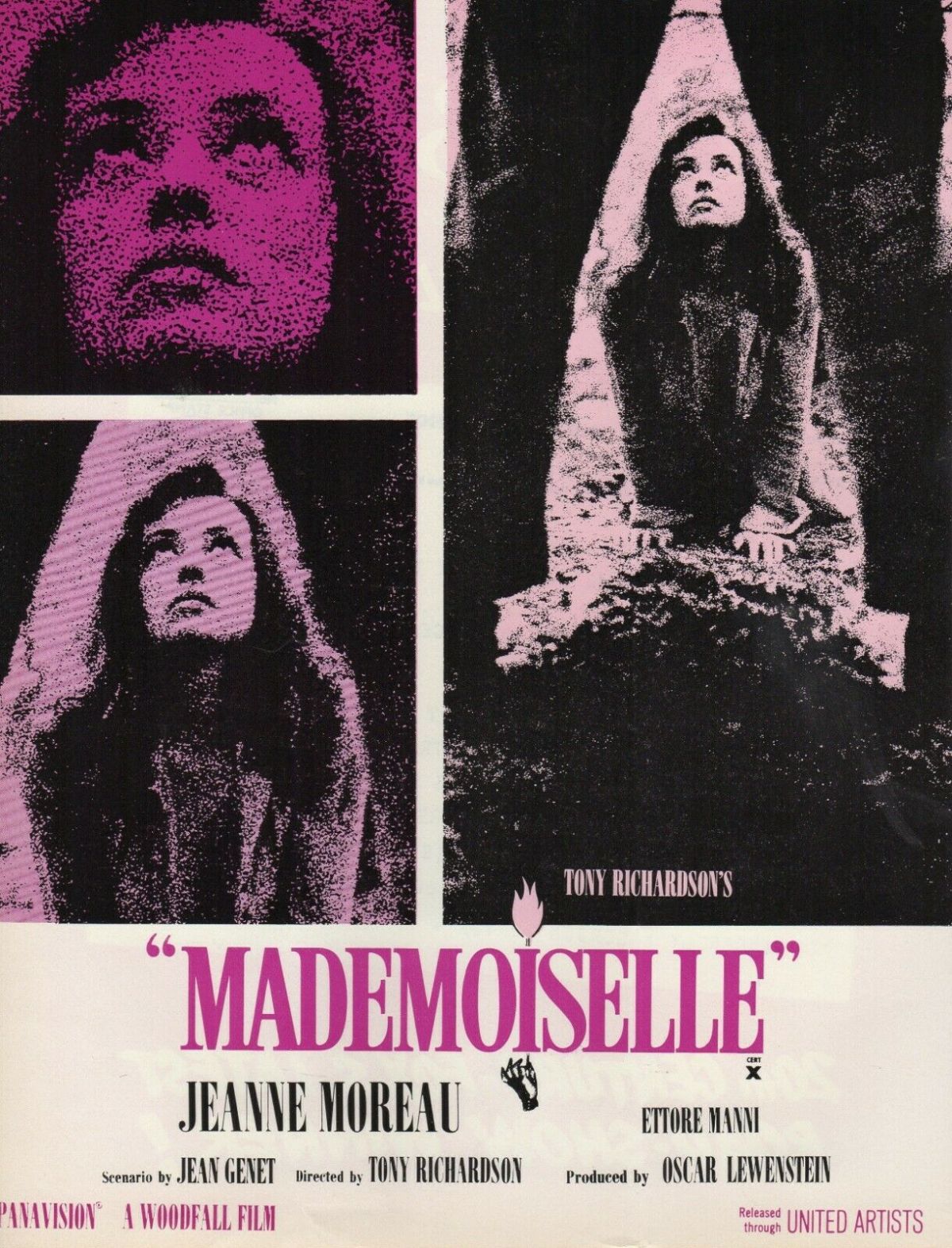
Both Loren and Schell had just won Oscars, for Two Women (1960) – incidentally directed by De Sica – and Judgement at Nuremberg (1961), respectively, so their confrontation, where his initial male dominance (the poster image reflects this scene) settles into a more equal power dynamic. Frederic March is good as the father convinced he has done no wrong and I had to check that this was the same Robert Wagner who had often been indifferent in pictures. De Sica draws great performances from all and layers the whole movie in a doom-laden atmosphere. Written by Abby Mann (Judgement at Nuremberg) and Cesare Zavattini (Woman Times Seven, 1967)

Remains surprisingly potent.

A Fever in the Blood (1961) ****

Blistering B-film from writer Roy Huggins (TV’s The Fugitive) that marries political chicanery to legal jiggery-pokery in a movie that races from one twist to another. In his role as producer Huggins calls upon actors he made stars from the television series he created – Efrem Zimbalist Jr. (77 Sunset Strip), Jack Kelly (Maverick) – and gives Angie Dickinson (Oceans 11) the female lead.

Huggins’ brilliant premise is to ignore the dilemma of the man, Walter Thornwall (Rhoses Reason), nephew of a former Governor, wrongly accused of the murder of his wife, and instead to concentrate on accuser District Attorney Dan Callahan (Jack Kelly) and Judge Lee Hoffman (Efrem Zimbalist Jr), both of whom, running for the vacant Governor post, stand to make massive political capital from the publicity surrounding a sensational trial.

Former buddies Callahan and Hoffman are now bitter rivals after the former had reneged on a promise to support the latter’s bid for the political post. Also throwing his hat into the ring is Senator Alex Simon (Don Ameche) whose wife Cathy (Angie Dickinson) once had romantic yearnings for Hoffman. The only one of the trio who has anything approaching a conscience is Hoffman and that is immediately tested when the Senator offers him a bribe to stand down from the race, which the Judge, after an appeal from Cathy, does not report to the authorities. There is another ploy open to Hoffman. Should he find reason to declare a mistrial that would sabotage Callahan’s bid since he would not be riding high in the media after convicting a celebrity killer.

The picture jumps from intense politics, the wheeling-dealing and wrapping up votes, to a  trial in a packed courtroom very much in the Perry Mason vein with surprise witnesses, shocks, objections sustained or overruled, clever arguments, dueling attorneys, and last-minute evidence.

A witness has Thornwall running away from the scene of the crime and when his wife is painted as a nymphomaniac that provides ample motive.  Further evidence pushes the defendant into a worse corner. But all the while over the trial hangs the stink of political machination.

There are another half-dozen brilliant twists, not least of which is Judge Hoffman letting conscience go hang and embarking on a couple of dodgy endeavors himself including what amounts to sheer blackmail. The District Attorney, one of the sharpest tools in the box, reacts to every setback with a cunning that would have been criminal had it not been legal. Also hanging there is potential adultery between Cathy and the widowed Hoffman.

The writer in Huggins is a past master at shifting the cards in the deck and this has so many twists and turns it feels like a whole series of The Fugitive crammed into one episode. There is as much self-awareness of the underbelly of politics as in Advise and Consent (1962), as much deceit and corruption, as much principle disguised as honor.

But the plot here is so tight, the characters dealing with twists and turns that the movie has no requirement for the depth of characterization that would have been brought to the picture by a Henry Fonda or Charles Laughton. Huggins proves you can have just as much fun without the big boys. None of the stars with the exception of Angie Dickinson made a dent on the Hollywood A-list but they are all perfectly acceptable, and once Huggins tightens the screws plot-wise the last thing on your mind is wishing for a better cast.   

A cracker.

Billy Budd (1962) ***

Unfairly muscled out by lavish roadshow Mutiny on the Bounty (1962) but covering similar territory minus sailors going off-piste on a South Pacific island. Peter Ustinov outranked fellow triple hyphenates Billy Wilder (writer, producer, director) and John Wayne (actor, producer, director) in that he could add acting to his other skills (writer, producer, director) and in some respects he was actually better remembered as a noted raconteur on late night television shows. I was surprised to discover he was actually well versed in the directing malarkey by the time he came to helm Billy Budd, four previous excursions dating from the late 1940s and most recently Romanoff and Juliet (1961). He was better known at this point as an Oscar-winner for Spartacus (1960). He would win another for Topkapi (1964) and go on to direct another three pictures.

Billy Budd is a claustrophic affair that you’ll need a bit of a history lesson to understand. The British Navy had two methods of recruiting sailors. The first was the more honest, awaiting a supply of volunteers. The second, the most dodgy legal proces ever invented, involved grabbing any likely candidate and forcing – “pressing”- them into service. Normally, this caper took place on land and gangs of recruitment officers did the business, hence the term “press gang.”

However, I was unaware that in times of war – this is set during the Napoleonic War – the British Navy could board any passing merchant vessel and commandeer any of its crew. In this case,  Captain (actually Post Captain if you’re being technical about it) Vere (Peter Ustinov) hijacks only one sailor, Billy Budd (Terence Stamp).

Quite why it’s only this singleton is never explained. There are a couple of other irregularities that run against making this a tight ship in terms of narrative construction. The first is, that in the first of two critical incidents, our otherwise charming and chatty Budd is suddenly struck dumb with a stammer, the first time such an affliction has put in an appearance. The second is that, in consequence, Budd strikes an officer, the bullying Master-at-Arms Claggart (Robert Ryan) who hits his head while falling and dies.

Now even I know, and I’m hardly a naval scholar, that striking an officer is punishable by death. The fact that Claggart has a Capt Bligh disposition, inclined to find any opportunity to bring out the lash, makes no difference to the outcome. So while it seems that court martial provides dramatic scope, here the outcome is never in doubt. This isn’t Queeg on The Caine Mutiny, which is a more complicated affair, where the captain’s sanity is questioned.

So where the narrative should have built up in intensity, it largely flounders and depends (successfully as it happens) on audience appreciation of Budd as an innocent abroad.

That said, like Mutiny on the Bounty, it reveals the remarkable lack of recourse to any higher authority on ship should the highest authority either carry out or endorse cruelty. The minute he’s on the ship Budd is exposed to the sadistic will of Claggart who has condemned a sailor to a pitiless flogging for reasons that cannot be explained. Budd soon learns that Claggart has accomplices who will sabotage a crew member’s gear so that he will be put on a report, accumulation of sufficient black marks resulting in automatic flogging without interference from the captain.

While Vere is hardly in the Capt Bligh category and most of the time comes across as relatively amiable, our introduction to him is firing a shot across the bows of a merchant ship that doesn’t want to stop in case its crew is press ganged. He is quite ready to invoke the rules to get what he wants and is enough of a disciplinarian that the crew kowtow to him. He might feel a touch of remorse that Budd is the sacrificial lamb  to the Royal Navy’s rule of law, but he’s hardly going to go against procedure.

So mostly what we’ve got is the acting. Terence Stamp (The Collector, 1965), in his debut, was Oscar-nominated and you can see why and in some senses this is the career-defining role before acting affectations and mannerisms took over. Robert Ryan (The Wild Bunch, 1969) is very effective as the sinister Claggart. And there are a host of other British names to look out for – David McCallum (Sol Madrid/The Heroin Gang 1968), Ray McAnally (Fear Is the Key, 1972), Paul Rogers (Three into Two Won’t Go, 1969) and Niall McGinnis (The Viking Queen, 1967)  among the foremost.

Ably directed by Ustinov who wrote the screenplay with Dewitt Bodeen (Cat People, 1942) based on the original Herman Melville novel and a stage adaptation by Louis O. Coxe and Robert H. Chapman.

Worth seeing for Stamp’s performance.

Behold a Pale Horse (1964) ***

Old causes never die but they do go out of fashion and interest from movie audiences in the issues surrounding the Spanish Civil War had fallen from the peak when they attracted artists of the caliber of Ernest Hemingway and Pablo Picasso. But passions surrounding the conflict remained high even 20 years after its conclusion as indicated in this Fred Zinnemann (The Sundowners, 1960) drama.

Manuel Artiquez (Gregory Peck) plays a disillusioned guerilla living in exile in France, who has ceased raiding the Spanish border town under the thrall of corrupt Captain Vinolas (Anthony Quinn). Artiguez has two compelling reasons to return home – a young boy Paco asks him to revenge the death of his father at the hands of Vinolas and his mother is dying. But Artiquez is disinclined to do either. Heroism has lost its luster. He has grown more fearful and prefers to live out his life drinking wine and casting lustful glances at young women.

In France he enjoys a freedom he would be denied in Spain. He is not hidden. Ask anybody in the street where he lives and they will tell you. This is a crusty old soldier, unshaven, long past finding refuge in memories, but not destroyed either by regret. There is a fair bit of plot, some of it stretching incredulity. The action sequence at the end, conducted in complete silence, is very well done, but mostly this is a character piece.

This is not the upstanding Gregory Peck of his Oscar-winning To Kill a Mockingbird. He is a considerably less attractive character, burnt-out, shabby, grizzled, lazy, easily duped, unwilling to risk his life to see his mother. We have seen aspects of the Anthony Quinn character before but he brings a certain humanity to his villain, bombastic to hide his own failings, coarse but occasionally charming, suitably embarrassed when caught by his wife visiting his mistress and praying earnestly to God to deliver Artiquez into his hands. Omar Sharif has the most conflicted character, forced by conscience to help an enemy of the Church.

However, two elements in the picture don’t make much sense. Paco tears up a letter (critical to the plot) to Artiquez which I just cannot see a young boy doing, not in an era when children respected and feared their elders. And I am also wondering what was it about Spain that stopped directors filming it in color. This is the third Spain-set picture I have reviewed in this blog after The Happy Thieves and The Angel Wore Red. For the first two I can see perhaps budget restrictions being the cause, but given the stars involved – Rex Harrison and Rita Hayworth in the first and Ava Gardner and Dirk Bogarde in the second – hardly facing the production dilemmas of a genuine B-picture.

But Behold a Pale Horse was a big-budget effort from Columbia and while black-and-white camerawork may achieve an artistic  darkness of tone it feels artificial. This was never going to be the colorful Spain of fiestas and tourist vistas but it would have perhaps been more inviting to audiences had it taken more advantage of ordinary scenery.

J.P. Miller (Days of Wine and Roses, 1962) adapted the film from the novel Killing a Mouse on Sunday by Emeric Pressburger who in tandem with Michael Powell had made films like Black Narcissus (1947) and The Red Shoes (1948). The film caused calamity for Columbia in Spain, the depiction of Vinolas with a mistress and taking bribes so upset the authorities that all the studio’s movies were banned.   

The L-Shaped Room (1962) ***

Has contemporary bite, given half the picture is about abortion, banned in Britain at that time and the Pill yet to come on-stream. Being a single mother was an equally unwelcome tag unless you were a widow, in which case you were shrouded with respectability.

Pregnant French lass Jane (Leslie Caron) has decided to hang on in Britain rather than face the shameful ordeal of returning home. She knows who the father is, Terry (Mark Eden), to whom she lost her virginity in a week-long affair in Cornwall, but she’s not planning to hustle him into a shotgun wedding and you get the idea that, at 27, her virginity was weighing heavily on her.

Ending up in a bedsit in London – the titular room a landlord’s clever way of turning one decent-sized room into two smaller ones, each with a share of the window – she is clearly au fait with a British legal loophole that permits termination should pregnancy damage her mental health. And there were enough Harley St doctors to mentor her through such a loophole, for a fee of course.

It’s the briskness of Dr Weaver (Emlyn Williams) that puts her off. She has another go, later on, this time with black market pills from one of her neighbors, but they don’t work. Meanwhile, she has fallen in love with aspiring writer Toby (Tom Bell) and divines, correctly, that he won’t want to bring up another man’s child. In the end, she has the baby and scarpers back to France to face the music.

On the face of it an ideal candidate for the “kitchen sink” mini-genre that was pervasive at the time, but actually much more rewarding than many of the genre with dealt with male anger. This is much more about acceptance, without being craven or abject about it.

And there’s much to enjoy in director Bryan Forbes’ understated style. Half the time you could imagine you were in noir from the use he makes of the commonplace manner in which lights in staircases generally went off after a minute or so (not so much an energy-saving device as a money-saving one for the landlord) and he makes clever play of these sudden changes. There are also, unusual for the time, disembodied voices – the camera on Jane as she mounts the stairs, the voice her out-of-sight landlady Doris (Avis Bunnage). And every now and then the camera glides from her room into that of her neighbor, jazz trumpeter Johnny (Brock Peters) who can hear everything through the paper-thin walls, her morning retching and her night-time love-making with Toby.

How Johnny does find out about her baby is beautifully done, the best sequence in the movie. She works in a café where Johnny eats each night and she’s set a little table for him with a flower in a bottle. But he doesn’t turn up. She suspects, for no real reason except the worst, that he’s in the basement making out with one of the sex workers, but it’s Johnny (who had always been a good friend) who tells her that, from a sense of his disgust, he has let her boyfriend know the truth.

Like Darling (1965), this is a fascinating portrait of a woman making the wrong decisions. But Jane lacks Diana’s power. She’s not helpless exactly, and certainly has a good line in getting rid of unwanted attention. Her motives are not entirely clear. She wasn’t in love with Terry and for a long time she fends off Toby. She deludes herself into believing that Toby’s love for her will overcome his distaste that she is carrying another man’s child. That’s when she takes the pills.

You could kind of get the impression, however, that the real reason for Jane’s predicament is so that the actress can follow in the footsteps of Greta Garbo, Katharine Hepburn et al to wallow in grief. But it’s more subtle than that. She hasn’t been thrown aside by a callous male. She had made a decision to lose her virginity without considering the consequences and now that there is consequence changes her mind in impulsive fashion on how to deal with it.

Surrounding this central tale are some snapshots of life in a tawdry rooming-house. Two of the occupants are gay, Johnny and faded actress Mavis (Cicely Courtneidge), the landlady has a succession of gentlemen friends, while in the basement Sonia (Patricia Phoenix) works as a prostitute.

Leslie Caron (Guns of Darkness, 1962) was nominated for an Oscar and won a Bafta and a Golden Globe. The film was nominated for a Bafta and a Golden Globe. Tom Bell (Lock Up Your Daughters!, 1969) is good as the struggling writer. And Brock Peters (The Pawnbroker, 1964) has a peach of a part.

Director Bryan Forbes (Deadfall, 1968) wrote the script from the Lynne Reid Banks bestseller.

Darling (1965) ****

Amorality tale. Compulsive opening but contradictory ending. Nobody comes out of this well as male and female alike use each other with little compunction shown. British film making that at one point appeared to be disappearing down the kitchen sink explodes into life with an exploration of just how far the Swinging Sixties can swing. Julie Christie picked up the Oscar for her portrayal of the impulsive, wilful, yet vulnerable model sleeping her way to the top, an unpopular theme in today’s climate.

The credits open with a striking image. A poster for global hunger relief being pasted over by one advertising model Diana (Julie Christie), the face of the decade. There are various other potshots at the hypocritical rich, fawned over for deigning to distribute some of their wealth to the poor, but it doesn’t quite complete the circle, because it’s exactly this kind of virtue-signalling philanthropic society to which Diana, with no sense of judgement, aspires.

It would be more convenient to view Diana as exploited, but, in fact, once she loses her puppy innocence, she is as good at the exploitation game as anyone else. First port of call is dull BBC arts journalist Robert (Dirk Bogarde) who provides her with an opening into the fashionable London set. Both, I should mention, are married, but ditch partners (and children in Robert’s case) and set up home together, she in demand as a hostess at charity events.

Trading sexual favors with advertising executive Miles (Laurence Harvey), she wins a role in a B-picture and his backing to make her the face of a campaign advertising chocolates, that commercial filmed in a palazzo in Italy owned by uber-wealthy but older Cesare (Jose Luis de Vilallonga), a prince, from whom she eventually accepts a marriage proposal, only to find she’s just as bored in Italy as elsewhere. There’s a speedy return to London and Robert’s bed, but he dumps her. Theoretically, she’s so powerless and vulnerable, poor lamb, that she submits to his plan to send her back to Italy, rather than, by now considerably more powerful, starting all over again with someone else.

Possibly the morality of the time or in keeping with some movie dictat required an unhappy ending (of sorts). But this seems to contradict her personality. Bear in mind she had already shown how readily she traded men, and you could already see her running off with a wealthy playboy in Italy and dumping  the prince.

At the remove of over half a century, the wild goings-on would be viewed as tame by contemporary standards, and the flashiness of the style, which attracted criticism, would be ignored in favor of the stunning performance by Julie Christie and her empowered female. Sure, she’s emotionally immature, shallow and all the rest of it, and as likely to become a member of the hypocritically rich, but she’s managed to finesse a life as a model into a high-flying princess with the world at her feet and sure as heck she would soon learn how to manipulate that world as easily as Swinging London.

The only dated aspect is the sexuality, much of which was sneaked in under the censor’s nose (though I would imagine would be considerably cut for U.S. audiences) but that acts as a time capsule for a period when homosexuality was still in Britain punishable by law. Nonetheless, there are fleeting references to cross dressing, an orgy, a threesome and oral sex. (Although a cynic might observe how effective courting controversy was for publicity purposes). In some senses, the obsession of director John Schlesinger with thumbing his nose at the censor gets in the way of the central section which is meant to show how far, in terms of decadence, Diana has fallen when in reality she seems to enjoy exploring the wilder and more sensual parts of her personality.

There’s a clever role-reversal. Usually, it’s the man who plays away from home but expects to still be accepted back by a resigned partner. Here it’s Diana. If the men in her life are to be blamed at all it’s for being dumb, not recognizing her ambition and demanding nature. A lover who continues to tap away at his typewriter while Diana exhibits signs of restlessness is as dumb as they come. Miles and Cesare are more her type, the sexually voracious former switching partners at the drop of a hat, while the older man probably already has a mistress stashed away and expects his trophy wife to pick up a discreet lover in the way of aristocracy the world over.

So, at the remove of several decades, a different Diana emerges, one very much in control of her own destiny, picking up men as it suits her purpose, yes still some emotional growing-up to do, but you could easily see her turning into one of the dowager duchesses who run these fundraising balls with young bucks like Miles lionising her and leaving a few other husbands and/or lovers in her wake, possibly still unhappy, but the rich rather than the poor version.

Not sure if she’d qualify as a feminist icon, but she certainly navigated the world of the male gaze and used it to her advantage.

Turned director John Schlesinger (Midnight Cowboy, 1969) into a brand name. Nominated for five Oscars including Best Picture and winning for three, Julie Christie as Best Actress, Frederic Raphael (Two for the Road, 1967) for the script and Julie Harris for costume design. Bogarde, as well as Christie, reigned supreme at the Baftas. Commercially, one of the most successful British films ever, on a budget of around $1 million earning over $4 million in U.S. rentals alone.

Ending doesn’t ring true, but the rest does.

Advise and Consent (1962) ****

Excoriating engrossing political drama in which the unscrupulous take the moral high ground and the principled are destroyed. In other words, the reality of power – gaining it and keeping it and all the skullduggery that involves. And it has resonance in today’s cancel culture for it is minor indiscretions from the past that bring down the most upstanding of the species.  

Theoretically, director Otto Preminger (Hurry Sundown, 1967) broke one major taboo in touching on the subject of same-sex relationships. But in reality he took an even bolder step from the Hollywood perspective of giving center stage in the main to older players. Many  had first come to the fore in the 1930s or earlier – Walter Pidgeon (Turn Back the Hours, 1928), Lew Ayres (All Quiet on the Western Front, 1930),  Charles Laughton (Oscar winner for The Private Life of Henry VIII, 1933) Franchot Tone (Oscar nominated for Mutiny on the Bounty, 1935), Henry Fonda (You Only Live Once, 1937).

This was the kind of all-star cast you used to get in 1960s big-budget pictures filling out supporting roles. But in this ensemble drama, they all, at various times, hold the floor. And this approach lent the movie greater authenticity. Even if few viewers today recognize any, that, too, works in the movie’s favor, giving it an almost documentary feel.

Movies about politics are never heavy on plot, so if you’re looking for a thriller in way of All the President’s Men (1973) go elsewhere. It has more in common with The Trial of the Chicago Seven (2020) with multiple viewpoints and opposing perspectives. What the best movies about politics have in abundance is repartee. Virtually every exchange is a verbal duel, the cut and thrust, the slashing attack, the parry, sometimes the knockout blow delivered through humor.

Given politicians spend most of their lives making speeches, even the shortest of sentences, even the bon mots, have a polished ring. And that, frankly, is the joy of this picture, brilliantly written by Wendell Mayes (Anatomy of a Murder, 1959) from the Allen Drury bestseller. In some respects the plot is almost a MacGuffin, a way into this labyrinthine world, where characters duck and dive like a more elevated breed of gangster

A lesser director would have given in to the temptation of filming these duels in close-up.  Instead, Preminger’s direction is almost stately, keeping characters at bay.

A seriously ill President (Franchot Tone), distrusting his feeble Vice-President Harley Hudson (Lew Ayres), decides to fill the vacancy for Secretary of State with highly-principled Senator Robert Leffingwell (Henry Fonda). This not being the beginning of the President’s term, he can’t just do what he wants, his nomination must go before a committee and then face a vote in the Senate.

The Senate Majority Leader Bob Munson (Walter Pidgeon) isn’t too happy with the idea, seeing Leffingwell as a dove, likely to appease the growing Soviet threat. Others on the committee, namely Senator Brigham Anderson (Don Murray) feel the same and the committee hearing has the tone of an interrogation. The fine upstanding Leffingwell parries well until Senator Seabright Cooley (Charles Laughton) introduces a witness Herbert Gelman (Burgess Meredith) who says Leffingwell belonged to a Communist cell, an accusation Leffingwell denies.

Twist number one: Leffingwell has lied on oath. He confesses this to a friend Hardiman Fletcher (Paul McGrath) who then stitches up the witness. The committee apologies to Leffingwell, which means he is a sure thing for the post, but Cooley smells a rat and starts his own investigation. Leffingwell tries to get out of the job but the President won’t allow this. The Majority Leader and Anderson are let in on the secret, the former willing to accommodate the President but the latter outraged and planning to thwart the nomination when it reaches the voting stage at the Senate. Anderson comes under pressure, phone calls to his wife about something that went on in Hawaii.

And so the stage is set. The pressure builds on Anderson. The President becomes more unwell, making the appointment of Leffingwell more crucial. Aware of Anderson’s intentions, the Majority Leader starts whipping up votes, with Cooley doing the same for the opposition. Machinations take over.  And for a movie that was initially light on plot, and it ends with three stunning twists, and proving once and for all there is nothing quite so standard as the self-serving politician.

This was the first movie for several years for Henry Fonda (Broadway and television his refuge) and for society hostess Gene Tierney (Laura, 1945) who suffered from mental health problems and the last screen appearance of Charles Laughton. The acting is uniformly excellent and the direction confident and accomplished. 

A slow-burner for sure, but a fascinating insight into the less savory aspects of politics and the human collateral damage.  

Divorce American Style (1967) ***

Not so much a comedy about a failing marriage as a guide to the American divorce laws,  taking place in a world where the everyman is represented not by the likes of James Stewart or at a stretch Glenn Ford but Dick Van Dyke. It’s possibly only the fact that Van Dyke lacks dramatic chops without the innate vitriol of a Rod Steiger or Lee Marvin that keeps the movie from drifting into black comedy. That, or the filmmakers’ determination to find a happy ending.

When the ever-squabbling Harmons, Richard (Dick Van Dyke) and Barbara (Debbie Reynolds), break up after 17 years and two kids, the chips seem to fall heavily against the husband, the wife walking off with all assets, the husband landed with all the bills and little more than 80 bucks a week to get by on. Such is the supposed injustice of the American divorce laws at a time when most wives did not go out to work and so relied on their husband, married or otherwise, for support.

The only way out of this unhappy financial state for Richard is for his wife to get married again, so a second husband can pick up the tab for her upkeep.  Another divorced couple, the Downes, Nelson (Jason Robards) and Nancy (Jean Simmons), is in the same pickle so Nelson spends his time acting as some kind of pimp for his ex-wife, serving up potential suitors, such as Richard, on a platter. But since Richard is impoverished, a helping hand is needed to even things up, so Nelson arranges for Barbara to fall into the arms of rich and single car dealer Al Yearling (Van Johnson).

There is a big male-female divide, for the most part the guys concentrating on material things like money and what money can buy, the gals leaning more towards emotion, conversation, genuine intimacy.  Richard has given his wife everything she wants, so why can’t he have a few things his own way? Or as Barbara succinctly puts it, it’s a case of supply and demand, the women are in good supply while the men demand. Even after separation, while from the Richard and Nelson perspective the wives are living in the lap of luxury and the men understanding the meaning of penury, female thoughts turn to questions of loneliness, commitment and (not again!) emotion.

While there are moments of observational comedy – an excellent montage of Richard and Barbara opening and closing all sorts of doors while preparing for bed, cleaning out bank accounts before the other can get to them, the problems of accommodating the blended/hybrid family that divorce or multiple divorce can entail – there are not many laugh-out-loud moments.

And probably just as well because without the drama-lite presences of Van Dyke (who still can’t shake off those double takes and involuntary limb functions) and Reynolds, it would have been a much tougher watch. Reynolds is capable of expressing her feelings verbally because, as a female, she is used to expressing feelings verbally, so we know that Al Yearling does not quite hit the spot. But Van Dyke, without resort to the verbal, has his best scenes of emotional loss when he takes his kids to the ball game only to discover that his wife’s new suitor has more treats to offer.

Van Dyke (Lt. Robin Crusoe, U.S.N.) and Reynolds (The Singing Nun, 1966) do a decent job without plumbing any dramatic depths, but Robards (Any Wednesday, 1966) and Simmons (Spartacus, 1960) have more to offer as the conspiring couple, while one-time MGM golden boy Van Johnson (Battleground, 1949) proves that his four-year absence from pictures was premature Hollywood retirement.

More a cautionary tale than an outright laffer, this Norman Lear (Come Blow Your Horn, 1963) screenplay without missing many targets provides a more palatable dissection of modern marriage than something as full-blooded and expletive-ridden as the previous year’s Who’s Afraid of Virginia Woolf.  Director Bud Yorkin (Come Blow Your Horn, also) shows a nice grasp of building up situations until they go out of  control.

While, certainly, many of the attitudes, are out of date, you can be sure that male self-pity is not one of them.

The Red Tent (1969) ***

If you’re unfamiliar with the abortive Italian airship expedition to the North Pole led by General Umberto Nobilo (Peter Finch) in 1928, you’ll find this an absorbing tale. If you are familiar then you will probably appreciate the film-makers’ attempts, via an unusual framing device, to carry out a post-mortem and to apportion blame for the disaster. If you know your history, you’ll also be aware both poles had been conquered, American Robert Peary first to the North Pole in 1909, Norwegian Roald Amundsen (Sean Connery) claiming South Pole bragging rights two years later.

So you’re also probably wondering what was the point nearly two decades later of the Nobilo operation? But the sled-led efforts of Peary and Amundsen were feats of endurance i.e. man vs.  nature. This was science vs. nature. The dirigible was the apex of aviation advancement and nations still battled for exploration glory. So to travel in some comfort and fly over the North Pole in a few days would be a demonstration of scientific supremacy. Conquest of one of the most inhospitable places on earth was almost a PR exercise. With no intention of landing it was also a glorified tourist trip.

However, the science was flawed. Nobody had counted on the build-up of ice. The airship crashed and since this was a joyride nobody was equipped to walk their way out. Just surviving would be difficult enough. Loss of radio transmission (science) indicated a problem so rescue airplanes were deployed. But without a location to pinpoint the survivors, searchers had about two million sq km to cover. Luckily, a brilliant scientific deduction by expedition member Finn Malmgreen (Eduard Martsevich) saves the day and a ham radio user (amateur science) picks up the location. Game on!

Except airplanes are too easily thwarted by blizzards, fog and the inhospitable. Home base, set up simply to welcome home a successful jaunt, is not capable of organizing a proper rescue. A Russian ice-breaker joins the rescue attempt. Taking greater risks is aviator Einar Lundborg (Hardy Kruger), fired up by the promise of sex with desperate nurse Valeria (Claudia Cardinale), who happens to be Malmgreen’s girlfriend, and a bounty from Nobilo’s insurers. The redoubtable Valeria does not have to sell her body to persuade the more highly-principled Amundsen to join the rescue effort.

So it’s gripping clock-ticking-down stuff, action shown in considerable detail, almost over-populated in one sense as director Mikhail Kalatozov (The Cranes Are Flying, 1957) covers multiple storylines, the various disjointed rescue efforts, the survivors weakening by the day, imperiled by marauding polar bears and the ice cracking up beneath their feet.

In the main it’s a true story, Valeria the only fictional element, inserted for genuine cinematic purpose, to give the audience someone to emotionally root for back on land and for her character to guide us in an almost contemporary touch through the ghoulish carnival onshore as thousands gather to witness first-hand news of disaster.

What’s obviously patently untrue is the framing device, given that it shows the still-living Nobilo summoning up the ghosts of others involved in the event for a post-mortem, in which his guilt drives him into the position of sacrificial lamb. Although on first encounter it appears a bizarre idea, that, too, soon achieves dramatic purpose. Clearly there was intense discussion at the time and in the immediate aftermath by those who survived the disaster and there must have been high-level talks behind closed doors that usually excluded the main characters of the kind that was played out in a host of historic pictures made during the decade. Lawrence of Arabia (1963) and Khartoum (1965) had many such set-pieces where reputations were shredded.

This approach permits opportunity for all the principals to come together for confrontational purposes in the one room. Not all of that discussion follows the expected path and there is an interesting argument between Nobilo and Amundsen about leadership. From an audience perspective, it is, of course, quite satisfying to see Sean Connery (The Hill, 1965) facing off against Peter Finch (The Sins of Rachel Cade, 1961) with Hardy Kruger and Claudia Cardinale (The Professionals, 1966) embroiled in the debate.

There is the bonus of fabulous cinematography of the majestic Arctic, the icy waste, and breaking up of ice floes and collapsing icebergs has never been captured in such widescreen glory. Further pluses are in the performances, especially Connery as an aged Amundsen, Finch as the glorious pioneer bewildered the sudden turn of events and Cardinale as a woman willing to go to any lengths to save her lover. Ennio Morricone provided the score.

However, you are best going into this aware that while Finch has a goodly amount of time onscreen, Connery and Cardinale (the ostensible stars judging by the credits) are not seen so frequently. That said, the movie works well as an account of the disaster. The version I saw was just a shade over two hours – cut by about 30 minutes from original release.

Streaming channel Sweet TV has the longer version but I couldn’t find a workable link.

Kinds of Kindness (2024) *** – Seen at the Cinema

Wonder if director Yorgos Lanthimos (Poor Things, 2023) was tempted to go full tilt batshit arthouse boogie on this one and run it all as one big picture rather than setting it into neat episodes, the opposite of what Kevin Costner has done – and been lambasted for – in Horizon (2024). What a riot it would have been if critics had been set the jigaw of trying to work out what part the several main actors were playing at any given time. Am sure that would had had critics out of their seats at both ends of the appraisal syndrome.

As it is, the Dogma-esque notion of the the main actors each essaying three different roles doesn’t work. We all know they’re pretty good actors – Emma Stone (Poor Things) a two-time Oscar-winner. Willem Dafoe (Poor Things) a four-time nominee, Jesse Plemons (Civil War, 2024) nominated once – so they’re hardly needing to prove anything, least of all that they’re versatile. Would have been much better as an all-star (in arthouse terms) cast of nine actors and none of the episodic separation since the stories all take place in a similar disturbed Lantimos-esque world. In fact, you could have tucked the whole lot into Poor Things (2023) and not missed an artistic beat.

Sure, when you think of the episodes individually, it comes across as Twilight Zone-lite or Stephen King on an off day, with (except once) none of the satisfying resolution or alternately deliberating confusing endings. But when you run all the episodes together without any real differential it packs a lot more punch and the world is more fully delineated.

So you get a shipwreck survivor chopping a finger off to satisfy the mania of her husband and him preferring instead a whole leg though he’ll settle for a kidney. Same fella wants to check out old videos of his wife and they turn out to be wife-swapping ventures captured on film. A female jumps headlong into an empty swimming pool in order to facilitate some kind of superpower in her twin.

A cult revolves around determining contamination by licking skin. Their devotees derive mystical loyalty from drinking water into which their cult chief has dropped his tears. Sexuality is fluid, not just the wife-swapping, but bisexuality abounds, and within what might appear to be sexual freedom is a lot of coercive control. But if anybody’s going to get slapped around, it’s the men.

Did I mention the dogs controlling the planet? And a vet who’s too dumb to notice that the cut on a dog’s paw is far too clean to have come from an animal? And, in a riff from Sommersby (1993), the ill-fitting shoes that suggest an imposter. And that a husband is feeding his wife abortion pills?

This is all pretty much standard territory for Lanthimos. But where Poor Things took place is an all too unreal world, here everything would be legit – business, cops – except for the behavior of the characters.

So you wonder if, presented with the script, the main actors couldn’t decide which part they wanted and so Lanthimos just said, heck, play them all. And it’s true you’d have a hard time deciding which part each is best at although as a rule each actor is dominant in only two sections and less important in one. Personally, I’d go for Emma Stone as the shipwreck survivor going along with her husband’s madness in order to save their marriage. For Jesse Plemons I’d choose the businessman under complete control of his boss, down to the clothes he wears each, what he eats and at what time he makes love to his wife. For Willem Dafoe, I’d go for his creepy cult personality.

Just like Horizon, the length (164 minutes here) didn’t bother me. There was generally enough going on, what with all the twists, to keep interest high.  

This kind of has the feeling of one for Lanthimos rather than a more accessible one for a wider audience as instanced by The Favourite (2018) and Poor Things. The Academy might well respond to actors taking on more than one role though not quite in Alec Guinness/Peter Sellers fashion and if so the biggest nod should be in the direction of the under-rated Plemons.

Written by the director and regular collaborator Efthimis Fillipou (The Lobster, 2105).

Didn’t have me on the edge of mys eat, but I didn’t fall asleep either, and I certainly wasn’t fretting like some critics at the supposed waste of their valuable self-entitled time.

Discover WordPress

A daily selection of the best content published on WordPress, collected for you by humans who love to read.

The Atavist Magazine

by Brian Hannan

WordPress.com News

The latest news on WordPress.com and the WordPress community.