Glass Onion: A Knives Out Mystery (2022) **** – Seen at the Cinema

Another triumphant entry in the casebook of Benoit Blanc, self-style world’s greatest detective and easily the most flamboyant in the genre since Hercule Poirot. Writer-director Rian Johnson’s invention offered Daniel Craig an immediate opportunity to shed the typecasting curse of James Bond and the actor rises splendidly again to the occasion, some hints of his inner life offered, signs of depression and a cameo by Hugh Grant as flatmate, helpmate, whatmate.

But in the main it’s another twisty picture that plays with audience expectation even though, if only we were as clever as its creator, the truth is in plain sight, beginning with the title.

Victims – or suspects – assemble.

You have to peel through layer upon layer of an ordinary onion, but a glass onion you can see straight through. It would not occur to the audience, lured by mystery, arriving with a different sort of anticipation, counting on this glass onion to be a mere architectural folly atop a majestic building on a remote island off the cost of Greece, that everything could be actually straightforward and that the need for complicated crime is a figment of our own imagination.

There’s only one twist you may guess and the movie certainly takes a while to spark into life as we are introduced to a variety of unlikeable characters, ideal candidates you might think to be a victim, through the device of them all receiving an extremely puzzling puzzle in an apparently impenetrable wooden box.

Right from the get-go, the audience is sucked in. Are they the  type of people who are determined to solve the riddle, with endless patience, or in collaborative effort expend energy and time on a fiendish enigma that seems to change shape every few minutes, layer by layer like a veritable onion? Or do we just work out that a box made of wood ain’t going to have no defence against something as simple as a hammer?

Anyway, enough with the philosophizing and on with the show. During Covid a bunch of disparate characters with no connection except a link to billionaire Miles (Edward Norton) are invited for a murder mystery weekend to his island home. Miles, being the show-off to top all show-offs, has invited Benoit on the basis that his mystery will fox the detective, score one for an  uber-clever magnate.

He is so unbelievably wealthy and ridiculously endowed with genius from thinking outside the box that he has managed to secure a loan of the Mona Lisa painting from the Louvre in Paris, paid through the nose for it of course, taking advantage of the museum’s lack of income from the paying tourists, Covid having dried up that moneywell. The artwork will form the centerpiece of his cleverness as he presents to a posse of investors later on his newest invention, Klear, an idea that, however dangerous and untested, will solve the world’s energy supply problems.

Anyway, Benoit is way too smart for him and solves the murder mystery in a trice, only for there, as you might have expected, to be another real murder or two, leaving the private eye with the unusual accent a classic closed room mystery.

Under suspicion are Miles himself of course, plus one-time model turned fashion designer Birdie Jay (Kate Hudson), the dumbest cluck in the coop, aspiring politician Claire (Kathryn Hahn), Miles’ former business partner Andi (Janelle Monae), macho male Duke (Dave Bautista) and girlfriend Whiskey (Madeline Clyne), Miles’ sometime lover, scientist Lionel (Leslie Odom Jr) and Peg (Jessica Hanwick). What they share with Miles is vanity, an overweening sense of their own importance and entitlement.

Actually, one of them doesn’t qualify as a suspect because as you may have guessed that would be the victim. Two of them, since I’ve already kind of given away that there are two dead. Anyway, you’re not going to guess any of this since you’re all dupes to the infinite ingenuity of Rian Johnson.

Sure, the director takes pot-shots at the rich and the wannabe wealthy and the wannabes that trail along in their wake, but mostly he takes aim at the genre itself, turning the whole idea of the mystery picture on its head, that we expect something pretty intricate the moment we are presented with a movie puzzle, and motivation being the engine of all mystery start delving headlong into that morass without thinking the answer might be something a lot simpler.

Whatever Rian Johnson is doing he’s got the elan to carry it off. Sequels often disappoint. This won’t. Not quite the caliber of cast as Knives Out (2019) but that’s actually to the film’s advantage, no need for the star-stalking that afflicted the recent Death on the Nile (2022).

Thoroughly entertaining, ingenious and devious, what more could you ask for, apart from Netflix not having snapped up the golden goose, since this will be infinitely more enjoyable in the company of an audience responding en masse to the trickery, as I discovered when watching it on its brief foray to the cinema.

And there’s certainly a dichotomy here. What is the point of the Netflix sop to the movie theatre? Sure, it’s going to rack up a ton of reviews but they’re all going to be posted a month before the picture opens on Netflix rather than the weekend before. Anticipation may not last that long. Anyway, given all the turkeys Netflix has foisted on movie fans, this will be one Xmas when it delivers.

PS: Apologies for the goof on Behind the Scenes: “Bandolero.” That blog is coming on Saturday but I pressed the wrong button and sometimes when you press the wrong button there’s just no going back.

The Caper of the Golden Bulls / Carnival of Thieves (1967) ***

Just to be clear. Nobody is stealing a golden bull, though the annual running of the bulls in Pamplona in Spain is a plot element. No, this gang, led by former bank-robber Churchman (Stephen Boyd) is only going to break into an impregnable bank (par for the course) and steal priceless royal jewels.

There’s an audacious, certainly unorthodox, plan, tension throughout between Churchman’s  sexy former lover Angela (Giovanna Ralli) and current more demure squeeze Grace (Yvette Mimieux), a couple of unexpected comedy sequences, a silent heist and a superb final twist.

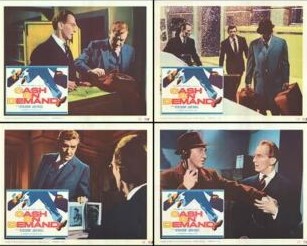
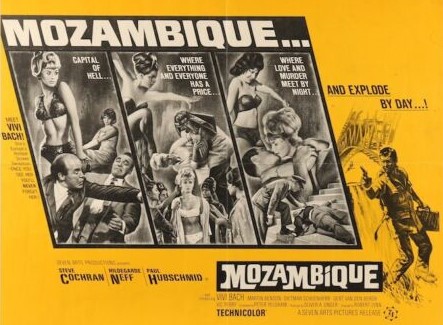
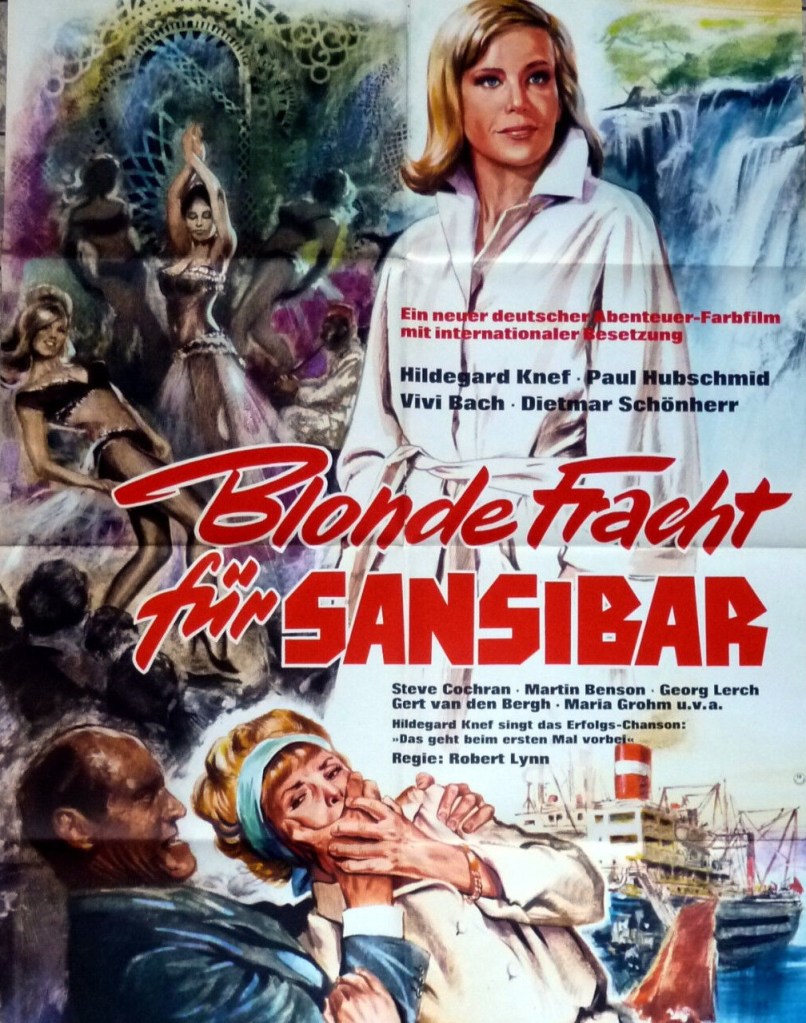
Just to be clear – there’s no bikini blonde with a pistol.

Churchman is not your ordinary robber. He only hit banks to make reparation for, while a World War Two pilot, mistakenly dropping bombs on a French cathedral, donating the loot to the reconstruction. Angela, with no such ideals, has spent her share of the dosh and intent on a financial top-up  blackmails Churchman, now a respected businessman, into the one-final-caper scenario.  

Key to getting the jewels out is becoming involved in the annual fiesta, of which the bull-running is a minor part. The bull-running, too, shifts the dynamic of the job, and what appears an irrelevant sub-plot of former resistance fighters hunting a traitor provides an essential pay-off.

When moral Grace uncovers the plot she is inveigled to participate, ensuring some spicy bitchy dialog between herself and the more obviously immoral Angela.  Unwittingly helping out is Spanish cop (Walter Slezak) and with Churchman committed the only person Angela needs use her wiles on is a giant, friendlier by the minute as he responds to her seductive smiles.

While this lacks the panache, guile or gloss of a Topkapi (1964) or Gambit (1966), it’s certainly well-done enough. It’s one of those films you appreciate more after you’ve watched it than during, the structure of the screenplay most of all, as all the little pieces of a finely-tuned jigsaw lock into place.

There’s a couple of excellent reversals, an ambush where firecrackers pass for bullets, imminent discovery of explosives thwarted by a quick-thinking Grace, and some split-second timing.  Explosives, timed to match the firing of a cannon, allow a bystander cop to remark, “that cannon gets louder every time.” At first the fiesta appears standard time-filling tourist-fodder but both the parade and the bull-running are allocated genuine spots in the narrative.

The sensuous, devious Giovanna Ralli (Deadfall, 1968) is the pick, a femme fatale straight out of film noir, with a knowing twist in her main seduction scene. Fans of Stephen Boyd (Assignment K, 1968) will enjoy seeing him dally with conscience rather than rely on a straight down the line hardman, albeit with more than an ounce of charm. What Yvette Mimieux (Dark of the Sun, 1968) ultimately brings to the occasion is hidden until the end so her character has more depth than initially surmised.

There was a sense here, though, of three stars still trying to make their mark on Hollywood, establishing their marquee credentials. Although Boyd had enjoyed box office success in Fantastic Voyage (1966) and The Bible (1966) he was not seen as the main element in those film’s hitting the target. Other films relying on his star potential to pull in an audience had flopped.

Outside possibly of Disney confection Monkeys, Go Home! (1967) and The Time Machine (1960) Yvette Mimieux had yet to enjoy a proper hit. Giovanna Ralli was the latest in a string of European imports, a low-level gamble since they were cheaper than Hollywood alternatives even though most never made the grade or did so only fleetingly.

You wouldn’t pick this picture to put either of the trio back on the very top since for the sake of later twists the screenplay plays around with motivation and the very lack of gloss limits the movie’s potential. But although we’ve seen much of this before, it’s still suspenseful enough.

Russell Rouse (A House Is Not A Home, 1964) directs from a screenplay by David Moessinger (Number One, 1969) and Ed Waters, who had form in this area with Man-Trap (1961).

An engrossing enough matinee.

Midnight Lace (1960) ****

Works for the very reason that it shouldn’t – Doris Day’s off-the-scale hysteria. The actress junks her usual screen persona of spunky occasionally lovelorn heroine and channels her abundant physical energy into an exceptionally good portrayal of a woman on the verge of a nervous breakdown.

And, unlikely as it sounds, this a companion piece to David Miller’s later Lonely Are the Brave (1962),which equally presents a discordant character at odds with their surroundings whose inability to settle into the norm precipitates downfall.

Heiress Kit (Doris Day) is being hounded mainly over the telephone by a creepy stalker with a high-pitched voice, threatening to kill her. Before you can say Gaslight, you are casting a suspicious eye on millionaire businessman husband Anthony (Rex Harrison). But that only lasts for as long as it takes for a whole bunch of other suspects to hove into view.

The sinister man in black hat and coat appears too obvious a contender. Others have something off about them or appear at the wrong time and wrong place. Unemployed ne’er-do-well Malcolm (Roddy McDowell) who sponges off his mother, attempts unsuccessfully to tap Kit for funds and makes it plain he won’t be doffing his cap to her. Builder Brian (John Gavin) is over-friendly and, we overhear, makes a lot of phone calls.

And you wouldn’t count out gambler Charles (Herbert Marshall), an executive in Anthony’s firm, which, by the way, has uncovered a bit of fraud. Nor happily-married Peggy (Natasha Perry), Kit’s friend, who turns up in a bus queue the very moment Kit nearly ends up under the wheels of a London bus. And then there’s Aunt Bea (Myrna Loy) who’s arrived from America and seems determined not to take Kit’s side.

Naturally, nobody can allay Kit’s suspicions. The police are the first to suggest she’s going off her head, seeking attention because neglected by her husband.

But this is so well done, Kit jumping at the slightest noise, that you are pretty much convinced it’s going to be one of those films where every incident is imagined, especially since that would be a helluva coup to have an actress of the lightweight caliber of Doris Day to play her.

Whenever anyone else answers the phone it’s to an innocent caller. And when Kit persuades Peggy to pretend she heard the voice, discovery of that ruse appears to seal her doom.

When we’re not stuck in Kit’s head, there are sufficient tense moments to keep the plot ticking along, trapped in an elevator, shadows on a ceiling, faces glimpsed in windows, voices appearing out the fog, whispers behind her back, friends turning against her, every  police ploy a dead end.

Quite why she’s such a giddy character to begin with is never explained, except of course being a millionairess, three months married, with nothing better to do with her time than waltz around in one stunning fashionable outfit after another, life a succession of expensive treats, and whisked off her feet, when he can spare the time, by adoring hubby.

So maybe it’s something as simple as a loved-up wealthy woman finding cracks appearing in her perfect life and in trying to ascertain the cause whirling round faster and faster. There’s certainly no sense of a solid character who could sit down and give herself a good talking-to or transform herself into an amateur sleuth. When the façade breaks, it’s a dam burst.

If at the beginning Doris Day seems already too-wound-up it doesn’t really matter, her lust for life turns very quickly into abject fear as the terrorization becomes only too real. This is a fantastic performance from the actress, woefully under-rated, and the scene where she collapses on the stairs is only too believable.

Rex Harrison (The Happy Thieves, 1962) is excellent in a custom-made role, handsome adoring husband, but every time he clasps her in a sympathetic embrace, the camera lingers on his eyes showing growing fear at her condition. The roster of supporting stars each brings something distinctive to their role, from the wheedling Roddy McDowell (Five Card Stud, 1968), in only his second movie role after eight years of solid television,  the too-good-to-be-true John Gavin (Back St, 1961) and old-timers Myrna Loy (The Thin Man, 1934) as the doubting aunt and Herbert Marshall (The Letter, 1940) as the impecunious gambler.

Director David Miller (Captain Newman, M.D., 1963) moves the camera in disconcerting fashion. You think you’re settled in for a stage-style scene when suddenly the camera whirls away and focuses on one character. The scene in the elevator is exceptionally well-done as is the finale, but possibly his biggest attribute is encouraging Doris Day to just go for it rather than reining in her character the way Hitchcock did for The Man Who Knew Too Much (1956).

The team of Ivan Goff and Ben Roberts (Portrait in Black, 1960) put together the screenplay from the hit Broadway play Matilda Shouted Fire by Janet Green.

I came at this with low expectations, not imagining Doris Day could pull off such a difficult role, and I came away wondering why she had not in consequence been given other opportunities to show off her dramatic skills.

Black Butterflies / Les Papillons Noirs (2022) **** – Netflix

Not since Basic Instinct (1992) has there been such an obvious connection between sex and murder. Slow-burn French film noir throwback, every twist, unusually, is matched by emotional resonance. Over six episodes this turns into an absolute cracker with several shocking scenes and, for once, a post-credits scene in the final episode worth waiting for.

You do however need to give this time. The first episode is mostly confusing as it sets up the three main strands. But episode two contains such a revelatory twist thereafter you’re on a rollercoaster.

In the present day ex-con acclaimed but impoverished novelist Adrien (Nicholas Duvauchelle) takes up a not particularly well-paid ghost-writing job listening to grizzled old fella Albert (Niels Arestrup) recount his memoirs. Adrien, on the jealous side, has a tangled relationship with partner Nora (Alice Belaidi). Also in the present day a couple of cops, Carrell (Sami Bouajila) and Mathilde (Marie Denarnaud),  are working on a cold case, the death of renowned photographer Steven Powell.

Running parallel with these two tales we go delving into the romantic past of Albert and in particular his relationship with Solange (Alyzee Costez) back in the 1970s when the entire world was on a massive experimental binge. A couple of other elements pop up from time to time,  a small boy and his mother, Adrien and his stepfather, and an artist/tattoo artist Catherine (Lola Creton).

Eventually, it all comes together and when it does it packs an incredible punch, a real emotional wallop, as the lives of all concerned are turned upside down.

And while there is most definitely twist upon twist upon twist, what raises this above most movies/programs that rely just on twists, is the emotional impact of such changes, and above all, characters seeking identity, trying to work not just who they are but whether they like or are repelled by the characters they have become.

Chock-full of atmosphere, this will have you hooked from the incredible second episode which tumbles full-tilt boogie into a dazzling mysterious past. Mostly, it takes place in France but just for the hell of it we race to Brussels and Genoa, and timewise, there’s an important element that takes place at the conclusion of the Second World War.

Everyone is damaged one way or the other and as the series progresses you realize just how damaged. And one of the best parts of the series is that lives that should collapse under the weight of such heavy emotions find themselves taking an alternative route that occasionally provides solace and occasionally dodges the issues enough to keep them steady. But, of course, nobody can escape the past.  

While this is definitely on the raunchy side, it does set out to show the part sex plays in the lives of the characters, whether emotional crutch, expressing the full joy of falling in love, or desperate measure.

The characters are well-drawn, and as new personality details emerge, they take the story in different directions. In some respects it’s grounded by Albert, the kind of old guy who really knows how to smoke, slipping the cigarette into his mouth old-style, sucking the life out of it, and for all his obvious dodginess a genuine human being seeking respite and redemption.

What Adrien discovers relates only too well to what he suspects about his own instincts and so he is as much disgusted as revelling in each new discovery. An ex-kick boxer, one of the running motifs is not so much being up for the fight, or in true private eye mode being able to hold your own in the fisticuffs department, but willing to accept physical punishment. That is matched by an understanding of the toll emotions can take on your life, especially if you lack the mental capacity to defend yourself against such intrusions.

And at the heart of the story is the mysterious, seductive, beautiful Solange, a different kind of femme fatale, perched atop beguiling innocence, at times unaware of the passions she unleashes, and yet, trying to find a way out of her own spiralling emotions, internal conflict typified by undergoing various abortions while so desperately wanting a child that she plays interminably with a doll’s house, her own reaction to the sexual act buried deep in her past.

I’ll admit the first episode is at timse heavy-going as writer-directors Olivier Abbou (Get In, 2019) and Bruno Merle (The Lost Prince, 2020) set out their complex stall, but the second episode is such a humdinger it more than makes up for it. The contrast between the free-wheeling free-spirited 1970s and the grungy contemporary look where responsibility brings an edge to everything is very well done. But while the violence would do Tarantino proud, contemplation of the creative process is as considered.

It probably helps that I’m unfamiliar with any of the actors because for me they carry no screen baggage. Nicholas Duvauchelle (Lost Bullet, 2020) carries off his first top-billed role superbly, making a terrific transition from a character almost playing a part to one who wishes he had done a better job of remaining an ordinary guy. On the basis of this, Hollywood should come calling for veteran Niels Arestrup (A Prophet, 2009) any time they’re looking for a crusty supporting actor.

Alyzee Costee, in her biggest role to date, certainly announces her presence, presenting the most complicated character of the lot, daughter, lover, mother, possibly the most intriguing female character of all time, beauty matched with fragility matched with toughness matched with an agility to switch persona at dizzying speed. This is what Netflix is best at, investing in foreign television programs, or just sticking their name on them, to bring them to global attention. This is definitely worth a wider audience

Homicidal (1961) ****

William Castle (The Tingler, 1959) was always a cult director but 60 years later this hits a contemporary bullseye with uncanny accuracy. It couldn’t be more Hitchcockian, down to the director making an appearance at the start and adopting the same lugubrious tones as Alfred Hitchcock did for his television series.

Bookended by two brilliant scenes, one of mystery, the other revelation, it’s only when you go back and unravel the way this has been put together you realise how fiendishly clever – and heartrendingly awful – it had been. Gender identity, in case you hadn’t guessed, is a central theme.

Castle wasn’t known for concentrating on any emotion beyond fear but this goes back to the most basic of all emotions. Who am I? How do I figure myself out? And even the acting – almost as black-and-white as the picture with one over-the-top character and one so weak he almost drains the picture of any life – makes more sense in retrospect.

Stunning blonde Miriam Webster (Jean Arless) checks into a hotel and offers bellhop Jim (Richard Rust) $2,000 to marry her that night on the understanding the marriage will immediately be annulled. Puzzled, and of course fancying his chances of sex as a tip, he drives her to local Justice of the Peace Alfred S. Adrims (James Westerfield) who demands an increased fee for getting dragged out of bed. In short order, Miriam murders him and his wife and escapes.

Turns out she’s not Miriam Webster. That’s the name of a florist in the town where Emily, her real name, looks after mute invalid Helga (Eugenie Leontovich). The real Miriam (Patricia Breslin) is half-sister to businessman Warren (George Marshall), returning home after a lengthy absence to claim his inheritance. At the age of 21, in a couple of days’ time, he falls heir to a $10 million fortune. Helga was his Danish nanny whom he resolved to provide care for after a heart attack.

But it’s soon clear that Emily hates her charge who can only communicate, and only to draw attention, by using a clacker to batter against her wheelchair. When Miriam visits Helga, Emily skips out, promising to return shortly, only to tell Miriam’s boyfriend Karl (Glenn Corbett) that she’s been detained and won’t be free to join him for a picnic.

Then she proceeds to smash up Miriam’s flower shop, in particular destroying anything that points to a wedding, and tearing up a photograph of Miriam’s half-brother. When Carl pops in, she knocks him out.

So what’s with all the wedding malarkey? You won’t be surprised to learn it’s something of a red herring, especially as Emily is already married to Warren, news that comes as a shock to Miriam.

Warren has the constitution of a weakling and looks the kind of boy who would have been trampled over as a child. Except, it turns out, he was bullied by his father, a driven businessman, and whipped by Helga to turn him into someone a lot sturdier, able to stand on his own two feet, and not get knocked around. If anything, he was inclined to be the bully.

Emily should have murdered the bellboy when she had the chance because of course he goes and rats on her and now there’s an illustration of her in the newspaper and the cops are on her trail having tracked down a Miriam Webster living in her town.

Naturally, Warren rejects the notion, but Miriam isn’t so sure. There was an incident in her bedroom and she had lied to Miriam about nipping out for a few minutes and something had been dropped among the debris in the florist shop that linked its destruction to Emily.

So if Emily’s married to a man who’s about to become a multi-millionaire and by far the richest guy in town and with who knows what influence that could buy…You see where this is going? Or if the deeply-in-love Warren could tolerate a wife with homicidal tendencies? Or if she would inherit should Warren have a nasty accident? You see where else this could be heading?

Well, it goes to none of those places. And I’m not going to spoil the climax by telling you exactly where it goes, but it’s a shocker for sure and just superbly done.

And once that revelation’s out in the open everything else makes sense – and doesn’t. For what is at its heart is something so jarring real and troubling, an emotion with consequence, that it neatly fits into one of the most compelling controversies of today.

Otherwise, it’s a perfectly good straight-up thriller, owing much to Psycho (1960), especially the knife-wielding killer, but with some thrilling moments and, in another contemporary salute, busting open the fourth wall with the “Fright Break” gimmick where at the height of proceedings the director literally stops the clock and gives the audience 45 seconds to get out of the theater if they can’t take any more.

If you think William Castle has managed some sleight-of-hand I’m going to have to fess up and say I’ve done the same but you’ll only understand what if you watch the film. Anyone who guesses it can let me know.

There’s a prize. A copy of my latest book, shipped to anywhere in the world, 1960s Movies Redux, Volume 1 – printed copy available now, e-book shortly.

Deus (2022) ** / Watcher (2022) ** – Seen at the Cinema

Luckily I had been fortified in my weekly cinema outing by the wonderful Living (2022) before entering dudsville for this double bill. Both Deus and Watcher have all the hallmarks of direct-to-DVD productions which have, to use the old parlance, “escaped” into cinema distribution.

I’m probably a bit rusty about the cost of making the kind of giant spacecraft shown in Deus, billions of dollars surely, so am assuming that big projects like this will encounter budget overruns which would account for the rationing of electricity on board, resulting in the  murky lighting. And there’s not an alien in sight unless you count the robotic crew who speak in strangely monotonous tones.

Like most sci-fi films this involves a crew on a mysterious mission awaking from hibernation to investigate a distant object, in this case a sphere. The title assumes this might be about someone playing God and so it transpires, taking a leaf out of The Avengers: Infinity War (21018) playbook with a plot to wipe out three-quarters of the Earth’s population in some kind of eco good deed.

Not only has an evil genius Vance (Phil Davis), who appears only as a hologram (natch), gone to all this bother and created a heavenly apparition but in order to achieve his ends he has had to go to all the clever bother of killing off the family of Karla (Claudia Black) in a car crash so that he can have the opportunity to insert a chip in her brain to infiltrate her imagination.

Former hitman Ulph (David O’Hara) forms part of the crew and the only measure of excitement comes when, mercifully, parts of the mother ship explode. Any action or suspense is purely theoretical with writer-director Steve Stone (In Extremis, 2017) responsible for this monstrosity.

It’s a terrible thing to say I know but I was praying for the serial killer to get a move on and wipe out dull lifeless heroine Julia (Maika Monroe) in Watcher. A former actress, now unemployed,  who has moved to Bucharest with advertising executive partner Francis (Karl Glusman) she spends all her time moping around crying wolf. Naturally, everyone ignores her if only for the fact that when she claims to be watched by a man from across the street she has facilitated such voyeurism by leaving her curtains wide open.

The serial killer is known as The Spider for obvious reasons – I guess he has either a hairy back, six arms, climbs up the outside of buildings, or is the type of arachnid who bites the head off his victims or all of the above or because newspaper headline writers had run out of murderer nicknames or were simply devoid of imagination.

As with Matt Damon in Stillwater (2021) her sense of isolation, what with hubby working all hours, is increased because only a tiny minority of the population have the courtesy to speak English.   Location-wise you know where this is going to end up because next door neighbor Irina (Madalina Anea) keeps a gun in a drawer in case her ex gets antsy, making him of course the first red herring.

For a time it looked as if this was going to turn into something a lot more interesting, a twist on a twist, for in fact she is as much a watcher as the man (Burn Gorman) – a cleaner in a strip club who stares out of the window in a break from the relentless task of caring for his aged father – accused of this crime. In a very foolish gesture she appears to be encouraging him.  

You begin to hope that, to redeem this picture, the upshot is going to be that a paranoid woman shoots an innocent man. Instead, the climax is straight of Hancock’s Half Hour, a legendary British television comedy series, where the heroine survives after losing more than a good armful of blood, probably enough to fill all arms, legs and the bulk of her body.

Maika Monroe (It Follows, 2014) has gone with the erroneous assumption that the less acting she does the more she will appear withdrawn. I felt sorry for Karl Glusman (Greyhound, 2020) in his first leading man role, given nothing to do. Oddly enough, Burn Gorman (Pacific Rim, 2013) has the best scene, demanding an apology from his accuser.

I’m not quite sure what debut director Chloe Okuna did to the original screenplay of the more experienced Zack Ford (Girls’ Night Out, 2019) to grab the main writing credit but it was far from enough.

Like The Banshees of Inisherin, too much appears to be expected of both writer-directors who might have benefitted from a stronger producer challenging their concepts and helping shape the finished material.

Madigan (1968) ****

Reignited the careers of director Don Siegel (no Hollywood traction since Hell Is For Heroes in 1962), Richard Widmark (reduced to supporting roles) and Henry Fonda (no longer first name on the team sheet for the biggest pictures) and reinvented the cop thriller as a gritty urban affair. The plot – chasing down a suspect – is a MacGuffin to explore tough police methods, corruption, and the harm the job does to the domestic lives of the police.

Detective Dan Madigan (Richard Widmark) and partner Rocco Bonero (Harry Guardino) come woefully and embarrassingly unstuck when hood Benesch (Steve Ihnat) evades capture and steals their guns. They have 72 hours to bring him back or be suspended. So, basically, they spend most of the time following a bunch of leads, intimidating anyone who gets in their way, including a helpless secretary. And while Bonero is happily domesticated, Madigan’s lonely wife Julia (Inger Stevens) is fed up with late nights and broken promises to the extent of considering a one-night stand when hubby stands her up once too often.  

Commissioner Russell (Henry Fonda) has his hands full dealing with the errant detectives  without the ramifications of corruption involving his best friend, long-time cop Chief Inspector Kane (James Whitmore). The widowed Russell would be a poster-boy for the principled cop except he’s having an affair with married woman Tricia (Susan Clark).

While Madigan is kicking and snarling his way through the underworld, Russell is trying to work out how to save his friendship and his affair. And while they might appear opposites, the classy top officer and the street cop, the uptight Russell envies Madigan’s way with people. Madigan is comped drinks and even a suite at the Sherry-Netherland hotel not merely because he’s a cop but because his charm goes a long way.

And while Russell dithers over helping out a friend, Madigan has no qualms about being taking for a ride by an old pal down on his luck and in need of an excuse to be bought a drink. When it comes down to it, Madigan is the better advert for humanity.

The soap opera elements don’t intrude too much on the thriller. Madigan and Bonero go in with fists blazing and work their way through a menagerie of skunks including Castiglione (Michael Dunn) and stool pigeon Hughie (Don Stroud). Benesch is a piece of work, not just clever enough to use his lover’s nudity to distract the attention of cops, but sufficiently hard-boiled to shoot a cop dead in the street and have little hesitation in opening fire on anyone who comes too close.

There’s some fascinating internal cop politics as Kane locks horns with Chief of Detectives Lynch (Bert Freed) over the latter’s insistence on suspending Madigan. And Russell has to finagle his way through the problems a well-heeled son is causing a rich doctor (Raymond Jacques).

Every time the pace slackens, the movie falls back on the old Chandler routine, have someone come through the door with a gun (a fist would suffice). Madigan is a driven cop, struggling to hold onto his marriage, Julia too often the sacrificial lamb. And for all his outward bravado, there’s a superb scene when unexpectedly encountering Russell he turns into a stammering ball of nerves, like a schoolkid anticipating a roasting from a headmaster.

Richard Widmark (The Bedford Incident, 1964) has a hell of a part, tough guy, check, but with a side helping of kindness, and pretty assured on the loving front, investing what could have been a fairly cliched character with a good deal of complexity. Henry Fonda (Firecreek, 1968) does a lot of pacing as his self-esteem implodes; how can he be a good guy if he’s running around with another man’s wife and how can he stick to his principles if he’s going to let a pal away with corruption?

Inger Stevens (Firecreek, 1968) is impressive as the disappointed wife trying to keep disappointment at bay. Harry Guardino (Hell Is For Heroes) always makes a good sidekick, but James Whitmore (The Split, 1968) digs into a sack of guilt as he attempts to avoid the oncoming storm. Don Stroud was almost auditioning for Don Siegel – he would turn up again in Coogan’s Bluff (1968) and Joe Kidd (1973); Susan Clark, too, Eastwood’s squeeze in Coogan’s Bluff. In smaller parts are Sheree North (Lawman, 1971) and Raymond St Jacques (Uptight, 1968).

But the show belongs to Don Seigel. There can be few directors so out-of-favor that they are able on their return to kick start a new cop cycle that culminated in Dirty Harry (1971). While this pulls no punches on the action front, it’s the quieter behind-the-scenes domesticity that almost as much catches the eye, the way he gives the characters time to breathe, opens them up to reveal more intricate inner workings.

It also spelled rebirth for blacklisted screenwriter Abraham Polonsky (Tell Them Willie Boy Is Here, 1969) in his first credit under his own name for 17 years. He didn’t do it all himself, though, Howard Rodman (Coogan’s Bluff) sharing the chores, the pair working from the novel The Commissioner by Richard Dougherty.

Robbery (1967) ****

The explosive gut-wrenching high octane car chase that kicked off this thriller – and provided British director Peter Yates (Bullitt, 1968) with a Hollywood calling card – is somewhat out of place in this intriguing documentary-style fictionalised account of the British heist of the century, the Great Train Robbery of 1963. Setting aside that the chase would have been better employed as the climax, it does provide the cops with enough leads to keep tabs on some of the criminals, ensuring the authorities become aware of the gigantic theft planned.

But Yates’ unusual approach takes us away from the usual crime picture. You can say goodbye to the cliched villain for a start. Mastermind Paul Clifton (Stanley Baker) dresses like a suave businessman. Wife Kate (Joanna Pettet) rails against him for betrayal, not sexual infidelity, but for pretending he had given up the life of crime. And there is any amount of nuance. We don’t discover that Clifton lives in a huge mansion with a massive drive until the very end, we don’t know who else the police are tailing until they are picked up, we are not let in on the secret of Clifton’s escape until suddenly he is taking off in a light airplane. And there is the unexpected. A suspect is identified in a line-up by a witness slapping his face, a message sent to Kate from Paul via a dog.

Cop James Booth questions gangster’s moll Joanna Pettet.

Nor, beyond the basics, are we let in on the details of the plan, more time spent on recruitment, and not the usual suspects either, Robinson (Frank Finlay) – broken out of prison for this specific job – brought unwillingly on board because, as a former bank employee, he can check the stolen notes. I should point out, which may not be obvious to a contemporary audience, that banks shifted money over the weekend via the London-Glasgow night train that carried the mail. Given the £3 million being transported, the train is staffed not by a regiment of security guards but by postal workers sorting letters.

There’s nothing desperately clever about the plan anyway beyond its audacity. Signals are changed to make the train stop at the allotted point, the robbery takes place in military fashion, timed to the minute, some sacks left behind when time is up.

What’s cleverest is the hideout, an abandoned airfield, with underground passages. The gang doesn’t intend to run while the heat is at its hottest but some time later, the cash divvied up, Clifton’s share sent as cargo overseas. Clifton knows the consequences will involve road blocks, house searches, cars impounded, arrests but “without the money they can’t prove anything.” A junkyard owner is paid – too handsomely as it transpires – to clean the vehicles used of fingerprints and other potential giveaways (not much else in the days before DNA). And no matter Clifton ruling with a rod of iron, there is always the idiot who doesn’t quite stick to the plan.   

Most of the picture is detail, not just the meticulous planning but the equally meticulous hounding by the cops, interrogating getaway driver Jack (Clinton Greyn), identity parades, telephones tapped (or a crude version of it), with only the occasional hunch to keep the police, led by the dogged Inspector Langdon (James Booth),  on the right track. A few years before cops in movies were uniformly identified as either corrupt or useless, sometimes both, this bunch are shown to be relatively efficient, though still prone to underhand means.

Dominating proceedings is the moustached figure of Stanley Baker (Sands of the Kalahari, 1965) whose brusque no-nonsense manner sets the tone. He’s a cut above the normal criminal not just in ambition but ingenuity and while he rules the roost in the gang he’s less at home at home where Kate gives him a hard time. James Booth (Fraulein Doktor, 1969) is impressive as the pursuer, well-versed in gangland lore, inclined to look beyond the obvious. With only  a few scenes Joanna Pettet (The Best House in London, 1969) makes a mark.

In supporting parts you will spot Barry Foster (The Family Way, 1966), who seems to have the knack of catching the camera’s attention with a look or the turn of his head, and Frank Finlay (A Study in Terror, 1965), and a host of British character actors like George Sewell (The Vengeance of She, 1968) and Glynn Edwards (The Blood Beast Terror, 1968).

But the honors go to Peter Yates (Summer Holiday, 1963), not just for the stunning car chase which Hollywood would forever emulate, but the constant tension, the cutting back and forth between cops and robbers, and between the overtly dramatic and the subtle. He also had a hand in the screenplay along with George Markstein (The Odessa File, 1974) and in his only movie Edward Boyd (The View from Daniel Pike, 1971-1973).

Fear No More (1961) ****

Had Alain Resnais taken the paranoia/gaslighting B-movie route for the esoteric Last Year in Marienbad he might well have ended up with a twisty concoction like this. Whereas Marienbad struggles to get anywhere near a third act, Bernard Wiesen’s unheralded under-rated debut thriller has a stonker of one. It’s the last 15 minutes when the unravelling from an unexpected source takes place that makes this well worth watching. So, I’m sorry to say, spoiler alert, as I take you through why this is so good.

It’s a twist to top all the previous twists, of which there have been many. Movies like this generally rely on story much more than character, but here we see the two main characters substantially alter, almost, psychologiclly-speaking, changing places.

Secretary Sharon (Mala Powers) on an overnight business trip by train discovers a male killer and a female corpse in her cabin. Knocked out, she regains consciousness to find herself accused of murder by cop Joe Brady (Robert Karnes). Managing to escape, she is almost run down by handsome divorced Frenchman Paul (Jacques Bergerac), delivering his son back to wife Denise (Anna Lee Carroll), who gives her a lift to Los Angeles.

Paul, an erstwhile alcoholic it later transpires, pursues her with romantic notions in mind, but she gives him the brush-off. Back in her apartment she finds sozzled ex-lover Keith (John Baer). Paul, not the kind to be so easily brushed off, persuades her to go for a coffee but when she returns to her apartment Keith is dead. Chased by the killer, she is rescued by Paul.

Gradually, she reveals that she once had a nervous breakdown and was committed to a mental institution. But when she goes to see her employer Milo (John Seymour) to explain she has lost the package with which she was entrusted, quite a different scenario awaits.

Brady is there and denies all knowledge of ever having met her. Milo denies sending her on a trip. Worse, Keith is not dead and the package she was carrying contains $3,000 stolen from Milo’s safe, to which she has access.

No wonder the most likely reason for all this confusion is that she is losing grip of her mental faculties. But, if nothing else, Sharon is quick-witted and concludes that too many pieces of this jigsaw are missing and in the absence of Milo’s wife and chauffeur Steve (Peter Brocco) that he has murdered his wealthy partner and is setting up her up to take the rap. That idea only lasts as long as it takes for wife (Helena Nash) and chauffeur to turn up.

Worse, Sharon was committed for killing the woman in her care. She pleaded self-defence and got away with it but her mind crumbled with guilt.

So just when we’re going along with the notion that this is one crazy woman and that “recollections may vary” not as much as she would like and that she is not inhabiting a parallel universe, the Frenchman does a bit of investigating on his own and finds Keith’s corpse.

In more prosperous times in her career, Powers was the female lead here.

Now here’s when it turns very tricky indeed. Although by this point Sharon should be dead in the water, mentally at least, she sparks into life, continues along the line of Milo killing his wife (the body on the train), and begins to point to all the flaws in his plan, beginning with his bungling associates. Milo, who had initially appeared in complete control, now begins to lose his temper and snap at his employees.

Milo and his associates take her to a cabin in the woods. The stronger she grows, the weaker Milo becomes, as she continues her barrage of accusation, picking more holes in his grand plan, until he realises that the police are not going to do his job for him, in condemning Sharon for his wife’s murder. The supposed wife turns out to be Milo’s sister and she, too, begins to crumble with the fear of being found out and her beloved brother going down.

So it’s heading for a complete turn-around, the supposed maniac having been gaslighted, the supposed upright employer turning shadier by the minute and unable to deal with the consequences of an action that has gone so badly wrong. Milo ends up the gibbering idiot with Sharon regaining the faculties she thought she had lost.

The Frenchman comes to the physical rescue and even though at one point the doting sister has the drop on him, she falls to pieces at the thought of what she would have to do to safeguard her deluded brother.

Quite a third act.

But there are a couple of other interesting sequences. When Paul rams on the brakes to prevent his car running over Sharon, that sends his son sitting in the front seat, in the days before seat belts, straight into the dashboard, a rather overly realistic event as regards kids in those days. Picking up Sharon and pacifying his son means Paul is late bringing the boy home to his mother and she lets rip, refusing him any future access. But, unexpectedly, later she turns up in his apartment, asking forgiveness, realising her son was so excited spending time with his father that it would not be right to deny him that.

And with all great B-films this is short and snappy, barely 80-minutes long, and hardly one of those minutes going by without a twist. Sharon is a very interesting character from a psychiatric perspective. Although cleared of killing the woman in her charge, she clearly feels enormous guilt that she allowed it to happen, and once you start falling into a mental trap of your own making it’s pretty hard to get out.

You can always pick holes in movies like this, but the two main characters, Sharon and Milo, seem to me very believable, lost in their own fantasies, especially Milo, who saw his perfect plan falling to pieces.

Unfairly, this was pretty much a dead end for all concerned. Mala Powers (Daddy’s Gone A-Hunting, 1969), the object of Cyrano de Bergerac’s affection in Cyrano (1950) and star of Rose of Cimarron (1952), had lost her way in Hollywood and not been in a movie for three years since The Colossus of New York (1958). Despite giving an excellent performance, Fear No More didn’t prove the answer to her Hollywood prayers and she only had three further movie roles in the 1960s.

Jacques Bergerac – better known for marriage to Ginger Rogers – made his final picture in 1966 but didn’t rise much above the likes of Taffy and the Jungle Hunter (1965). Prior to this director Bernard Wiesen was a producer-director on television and after it that’s what he went back to.

Catch it on YouTube.

Amsterdam (2022) **** – Seen at the Cinema

Shaggy dog story wrapped up in paranoia thriller. A shade overlong, with too many characters and too much plot but such flaws should not detract from that rare cinematic animal, a truly original movie. Brilliant screenplay, believable characters and superb acting prove an irresistible combination.

Though you can see why this sank like a stone at the box office, the all-star cast generally acting against type, idiosyncratic director given vast sums to play with, a tale that goes in too many directions at once, and the unconstitutional events of January 6, 2021, bringing this too close to home for fractured American audiences.

You don’t get this kind of writing much anymore. When individuals come together on a project – to save the world the most likely reason these days – their individuality is usually subsumed to the plot. Here, instead, the reactions of the characters remain distinct and no matter what is going on there is always time for individuality. And some of the invention is just deliciously insane, the nonsense songs for example.

Touching on the World War One aftermath of recovering from mental and physical wounds plus profiteering glee, a sense of a country racked by the Depression on the brink, mind-inducing experimentation of the political and pharmaceutical kind. A trio of war veterans, soldiers Burt (Christian Bale) and Harold (John Davidson Washington) and nurse Valerie (Margot Robbie) investigate a mysterious death, an illegal autopsy uncovering poison, only to find themselves framed for murder.

Burt is not a prime-time player according to wife Beatrice (Andrea Riseborough), and her wealthy family had dispatched him to the war in the hope he would return with bankable glory, but generally treat him as an unwanted black sheep. Valerie now makes art out of war debris, bullet shells and shrapnel, her charming brother Tom (Rami Malek) and his wife Libby (Anya Taylor-Joy) embedded in malevolence. Harold is a lawyer, for whom racism is a constant.

American and British secret service operatives, Norcross (Michael Shannon) and Canterbury (Mike Myers), float in and out. The moneyed business elite, despising White House incumbent Roosevelt, cast envious eyes at the dictatorial economic miracle of Mussolini in Italy.

On everyone’s dance card is General Dillenbeck (Robert De Niro), sought out by our intrepid trio and a mysterious cabal. All he has to do is make a speech at a veteran’s dinner. Make the right kind of speech and the trio are vindicated. Make the wrong kind and he could be assassinated.   

Like Chinatown (1974), Amsterdam is representative, a state of mind, but of freedom rather than endemic corruption. This is an intricate piece and a bit slow for today’s fast-paced generation and with more dialog than might sit well with a modern audience and flights of fancy that are far more original than anything you would find in the MCU. But it’s a hell of an intelligent thriller driven by a bunch of deadbeats.

It never goes down the obvious route. Instead of a love triangle – Valerie and Harold a pair – it’s an evocation of friendship. You don’t need umpteen clues to find the villains, they’re upfront, and they don’t think they are baddies, but cleverer people coming to the aid of the dumb masses putting too much blind faith in democracy. While this is based on a true story, in reality it’s based on the constant of the rich trying to get richer and the wealthy believing they are the best, even if unelected, candidates to run the world.

All that political stuff could have been a big turn-off if it had gone down the preachy route, but it doesn’t, instead it’s almost a miracle that it arrives at any conclusion given in whose hands the narrative has been placed. The Three Stooges would have done a better job of getting there quicker, but then you wouldn’t have had so much fun.

Not only are all the stars on their A-game but acting-wise it delivers some career-reviving turns not least from Christian Bale (Ford v Ferrari, 2019), devoid of a lifetime’s acquisition of irritating tics, John David Washington (Tenet, 2020) called upon to develop a character rather than an action-driven hero. I had to check the end credits to find out it was Mike Myers (Bohemian Rhapsody, 2018) playing the understated Canterbury and hogging the screen with none of the acting pyrotechnics that dogged previous attempts at mainstream work. Ditto Robert De Niro (The Irishman, 2019) and Rami Malek (Bohemian Rhapsody), no grandstanding this time round – don’t worry I recognized both from the off – and Anya Taylor-Joy finally delivering on the promise of The Queen’s Gambit (2020).

Margot Robbie (The Suicide Squad, 2021) is already on the rise and this will add to her growing portfolio of fascinating characters. And if you’re fed up watching any of these stars in brilliant form, there are other distractions in the form of Chris Rock (Spiral, 2021), Taylor Swift (Cats, 2019), Andrea Riseborough (The Electrical Life of Louis Wain, 2021) and Alessandro Nivolo (The Many Saints of Newark, 2021).

You often hear the term “visionary director” thrown about with indiscriminate regard, but this is the right kind of visionary, director David O. Russell (Joy, 2015) with his own way of seeing the world, and delivering it in distinctive fashion, with less of an eye on camera movement and more on dialog and motivation and staying true to a coterie of original individuals.  

I guess the money was spent on atmosphere, this is 1930s USA regurgitated in enormous detail. But you’ll forget the background, the costumes and sets, and be dazzled instead by the script and the acting, and the enveloping tale of friendship.   

Discover WordPress

A daily selection of the best content published on WordPress, collected for you by humans who love to read.

The Atavist Magazine

by Brian Hannan

WordPress.com News

The latest news on WordPress.com and the WordPress community.