Quiz question: what connects King Kong (1933) to Cinerama? Follow-up quiz question: what connects Lawrence of Arabia (the man not the film) to Cinerama? Final question (and the subject of this article): what connects Cinerama, which had its heyday in the 1960s, to the current Imax.
Merian Cooper, the producer behind King Kong, and Lowell Thomas, the broadcaster whose fame was built on the dramatic footage he took of Lawrence of Arabia during World War One, were both vital to the development of the new screen sensation Cinerama, which made its debut two years before Twentieth Century Fox unveiled Cinemascope.
Both Cinerama and Imax began as vehicles for documentaries, the cameras they utilised each initially considered too cumbersome for Hollywood directors. Initially, also, both formats were presented in cinemas specifically designed for showing films made in the process.
But, effectively, both Cinerama and Imax followed the same business model, one that Hollywood only too readily appreciated. They were premium priced products. Whereas most items you buy are the same price wherever you make the purchase, movies followed an extended version of the way publishers sold books. Readers had to pay extra to be first in the queue for a favorite author’s latest work, the hardback version of a novel appearing about a year in advance of the cheaper hardback.
In the silent era, Paramount instituted a food chain for movie presentation. Pictures opened first in the big city center theaters at top dollar prices ($2 – the equivalent to $35 now – not unusual in the 1920s) before working their way down a dozen different pricing levels before they reached the cheapest cinemas. As the business developed, although the U.S. cinema capacity grew to around 20,000 outlets, Hollywood reckoned that 70 per cent of a movie’s income came from a fraction of those houses, primarily from the more expensive first- or second-run.
Treatment of audiences is more democratic now. All tickets cost the same and the food chain is long gone, but in the 1950s and 1960s when Hollywood was battling the beast of television it appeared that audiences could be wooed back to the movies by giving them something bigger and better – and they were happy to pay the price.
Cinerama was not just the ultimate in widescreen but it offered visceral thrills. Given camera point-of-view audiences raced down a rollercoaster in This Is Cinerama (1952) and were astonished to see different global vistas presented in their full glory rather than as being mere backdrops to actors. And while audience response was astonishing even by industry standards, and receipts tumbled in hand over fist, the concept soon lost popularity as audiences moved on to the more dramatically-accessible Cinemascope and its imitators and by the 1960s the format was more or less dependent on the company spinning out its back catalog in endless reissues.
Hence, the move towards dramatic storylines as instanced by How the West Was Won (1962) and The Wonderful World of the Brothers Grimm (1962), both initially presented in the premium-priced roadshow, separate performance, format. In quick fashion, too, Cinerama dispensed with the cumbersome three-lens camera and invented a single-lens alternative which made it much easier for directors.
During the 1960s Cinerama presented another eleven big Hollywood pictures ranging from It’s a Mad, Mad, Mad, Mad, World (1963) and Grand Prix (1966) to Ice Station Zebra (1968) and Krakatoa, East of Java (1969). But as the industry hit the financial buffers at the end of the decade, the writing was on the wall, and although Cinerama invested in 35mm movies like Straw Dogs (1971) the game was over for the format by 1972.
Imax was pretty soon positioned as its natural successor, unveiled in 1970 in Japan with Tiger Child, the first purpose-built cinema opening in Toronto in 1971 with North of Superior. The screen was much bigger than anything Cinerama or 70mm had offered. It was over three times the size of what Cinerama had to offer. But it was of different dimensions; where Cinerama went wider, Imax went taller.
But again, the camera was an obstacle for Hollywood use. And like Cinerama, the format’s attraction was sheer spectacle. All the initial output was documentary-based, often with an educational purpose, though soon progressing to what was termed “entertainment” (Everest, 1998) and the movies were short by Hollywood standards, often less than an hour, which permitted Imax theaters operators to present a greater number of daily screenings than an ordinary cinema.
Initially, they were not specifically premium-priced, but potentially more profitable because of the number of daily showings. Theaters typically kept 80 per cent of the box office which limited entrepreneurial interest since budgets for these movies were in the $6 million-$12 million range, not low enough to easily turn a profit. The movies could run for months, but there was the same problem as before, with shortage of new product.
By 1990 Imax had largely pulled out of exhibition, ownership limited to nine theaters, and out of production.
Oddly enough, it was reissue that revived Imax. Disney planned a reworked version of its classic Fantasia (1940) as a method of generating more money from a picture that had already grossed $184 million on video. Traditionally, Fantasia got its best results from limited release, its previous revival outing shown in a maximum of 500 houses. Nor did Disney agree to the usual financial terms, demanding a 50 per cent share of the box office, rather than the normal 20 per cent.
Fantasia 2000 (2000) was released in 54 cinemas willing to commit to an 18-week run. While every Imax record was smashed, the picture, at a cost of $90 million, didn’t break even. But it did usher in Imax as a reissue vehicle. Disney used Imax for the 10th anniversary relaunch of Beauty and the Beast (1992), bringing in an extra $25 million in rentals. Two years later The Lion King (1994) in Imax brought in $15.6 million and Apollo 13 (1995) $1.7 million.
Naturally enough, Disney recognized the potential for Imax for new films and made Treasure Planet (2002) in an Imax version. But the big boost came with The Matrix sequels. Both The Matrix Reloaded (2003) and The Matrix Revolutions (2003) were digitally remastered for Imax, the latter the first to be shown simultaneously with the ordinary print.
Nowadays, Imax is part of the release mix, bringing a hefty chunk of premium-priced box office to the overall gross.
SOURCES: Brian Hannan, Coming Back to a Theater Near You, A History of Hollywood Reissues (McFarland, 2016) p5, 10, 12, 295, 297-298; Kim R. Holston, Movie Roadshows (McFarland, 2013) p112-113; James B. Stewart, Disneywar (Simon and Schuster, 2008), p346-347; “A Decade of Limited Release,” Variety, February 18, 1998, p23; “Eric J. Olson, “Fantasia Signs Up Increase,” Variety, May 24, 1999, p32; Joseph Horowitz, “A Fantasia for the MTV Generation,” New York Times, January 2, 2000; “Fantasia Hits Imax Record,” Variety, January 4, 2000, p7; “Top 125 Worldwide,” Variety, January 15, 2001, p24; “The Top 250 Worldwide,” Variety, January 6, 2003, p26.
These days fact-based magazine articles commonly spark movies – The Fast and the Furious (2001) was inspired by a piece in Vibe, A Beautiful Day in the Neighborhood (2019) started life in Esquire – but it was rare in the 1960s (see Note below).
However, a series of seven lengthy historical articles in the multi-million-selling Life magazine in 1959 about the Wild West, extensively illustrated with material from the time, captured the attention of the nation. Bing Crosby acquired the rights, not as a potential movie, but for a double album recorded in July 1959 on a new label Project Records set up specifically for the purpose – two months after the series ended – and a proposed television special.
When the latter proved too expensive, the rights were sold to MGM which then linked up in a four-film pact with Cinerama to create the first dramatic picture in that format, the three-screen concept that had taken the public by storm in 1952 with This Is Cinerama. Since then, Cinerama had focused exclusively on travelogs and coined $115 million in grosses from just 47 theaters, including $9 million in seven years at the Hollywood theater in Los Angeles. Eight years in its sole London location had yielded $9.4 million gross from a quartet of pictures, Cinerama Holiday (1955) leading the way with (including reissue) a 120-week run, followed by 101 weeks of Seven Wonders of the World (1956), 86 for This Is Cinerama and 80 weeks for South Seas Adventure (1958).
Box office was supplemented with rentals of the projection equipment. But the novelty had worn off, lack of product denting consumer and industry interest, many of the theaters set up for the project returning the equipment, so that by the time of this venture there were only 15 U.S. theaters still showing Cinerama. The company went from surviving primarily on equipment royalties to becoming a producer-distributor-exhibitor. Ambitiously, the company believed it could generate $5,000 a week profit for each theater, and, assuming growth to 60 houses, that could bring in $15 million a year.
Crosby initially remained involved – crooning songs to connect various episodes – but that idea was soon abandoned. Director Henry Hathaway (North to Alaska, 1960), claimed he came up with the movie’s structure. “The original concept was mine,” he said, “The first step in the winning of the West was the opening of the canal, then came the covered wagon, next the Civil War which opened up Missouri and the mid-West then the railroads, and finally the West was won when the Law conquered it instead of the outlaw gangs; which was the theme I worked out for the picture.
“So I conceived the whole idea and then got writers to work on the five episodes. Each episode was about a song originally. Then I travelled all over the country to find locations.”
For once this was a genuine all-star cast headed up by actors with more than a passing acquaintance with the western: John Wayne (The Man Who Shot Liberty Valance, 1962), Oscar-winner Gregory Peck (The Big Country, 1958), James Stewart (Winchester ’73, 1950), Richard Widmark (The Alamo, 1960) and Henry Fonda (Fort Apache, 1948) with Spencer Tracy (Broken Lance, 1954) as narrator plus George Peppard (Breakfast at Tiffany’s, 1961) in his first western.
The two strongest female roles were given to actresses playing against type, Carroll Baker (Baby Doll, 1956), who normally essayed sexpots, as a homely pioneer and Debbie Reynolds (The Tender Trap, 1955), more at home in musicals and comedies, as her tough sister. The impressive supporting cast included Lee J. Cobb, Eli Wallach, Walter Brennan, Robert Preston, Carolyn Jones and Karl Malden.
Glenn Ford and Burt Lancaster were unavailable. Frank Sinatra entered initial negotiations but ultimately turned it down. Gary Cooper, also initially considered, died before the film got underway.
Initially under the title of The Winning of the West screenwriter James R. Webb (The Big Country, 1958) was entrusted with knocking the unwieldy non-fiction story into a coherent fictional narrative. In effect, it was an original screenplay at a time when Hollywood was turning its back on bestsellers, “the pre-sold theory less compelling.” His first draft accommodated various montages covering the journey from the Pilgrim Fathers to the building of the Erie Canal and the Civil War and it was only in subsequent drafts that the tale of Linus Rawlings (James Stewart) emerged with surprising focus on female pioneers.
Webb’s initial ending had involved a father-son conflict, presumably a fall-out between the Rawlings played by James Stewart and George Peppard, but that was rejected in order not to finish on a “note of bitterness” out of keeping with the spirit of the movie. Although he did not receive a credit, John Gay (The Happy Thieves, 1961) also contributed to the screenplay.
Given the film’s episodic structure it is amazing how well the various sequences fit together and the narrative thrust maintained. The story covers a 50-year stretch beginning in 1839 with the river sequence bringing together James Stewart and Carroll Baker. After Stewart is bushwhacked by river pirates, he marries Baker and they set up a homestead. The next section pairs singer Debbie Reynolds with gambler Gregory Peck whose wagon train is attacked by Indians on the way to San Francisco. Later, Stewart and son George Peppard enlist in the Civil War (featuring John Wayne as an unkempt General Sherman).
Stewart dies at the Battle of Shiloh. Peppard joins the cavalry and later as a marshal in Arizona meets Reynolds and prevents a robbery that results in a spectacular train wreck. It took a superb piece of screenwriting to pull the elements together, ensure the characters had just cause to meet and to create solid pace with a high drama and action quotient.
The undertaking was too much for one director. Initially, it was expected five would be required but this was truncated to three – John Ford (The Searchers, 1956), Henry Hathaway and George Marshall (The Sheepman, 1958) although Hathaway carried the biggest share of the burden and Richard Thorpe (Ivanhoe, 1952) handled some transitional historical sequences.
The directors broke new ground, technically. The Cinerama camera was actually three cameras in one, each set at a 48 degree to the next and when projected provided a 146-degree angle view. Each panel had its own vanishing point so the camera could, uniquely, see down both sides of a building.
But there were drawbacks. The cumbersome cameras required peculiar skills to achieve common shots. Directors lay on top of the camera to judge what a close-up looked like. Sets were built to take account of the way dimensions appeared through the lens, camera remaining static to prevent distortion. When projected, the picture was twice the size of 65mm and before the invention of the single-camera lens led to vertical lines running down the screen. Trees were built into compositions to hide these lines.
“You couldn’t move the camera much,” recalled Hathaway, “or the picture would distort. You have to shove everything right up to the camera. Actors worked two- and three-feet away from the camera. The opening dolly down the street to the wharf was the first time it had ever been done.
He added, “Over 50 per cent of the stuff on the train was made on the stage (i.e. a studio set) and 60 per cent of the stuff coming down the rapids. I never took a principal up north to the river, the principals never worked off the stage. We never photographed the scenes with transparencies in three cameras with Cinerama – we photographed them with one camera in 70mm and then split the negative.
“I wouldn’t shoot close-ups in Cinerama – I shot the close-ups in 70(mm) and then separated the negative because in Cinerama it distorted their arms. When (George) Stevens shot The Greatest Story Ever Told he used only 70mm and split it all. So from then on they never used the three cameras again. Now they’re actually shooting it in 35(mm).”
Rui Nogueira, “Henry Hathaway Interview,” Focus on Film, No 7, 1971, p19.
After a year spent in pre-production, an eight-month schedule due to start on May 28, 1961, and a completion date of Xmas 1961, MGM anticipated a 1962 launch, Independence Day pencilled in for the world premiere. The original $7 million budget mushroomed to $12 million and then to £14.4 million, $1 million of that ascribed to adverse weather conditions, hardly surprising given the extent of the location work. A total of $2.2 million went on the 10 stars and 13 co-stars, virtually talent on the cheap given the salaries many could command, transport cost $1 million and the same again in props including an 1840 vintage Erie canal boat.
Rain and overcast skies added $145,000 to the cost of shooting the rapids sequence in Oregon and another $218,000 was required when early snowfall scuppered one location and required traveling 1,000 miles distant. Nearly 13,000 extras were involved as well as 875 horses, 1,200 buffalo, 50 oxen and 160 mules. Thousands of period props were dispersed among the 77 sets. Over 2,000 pairs of period shoes and 1500 pairs of moccasins were fashioned as well as 107 wagons, many designed to break on cue.
Virtually 90 per cent of the picture was shot on location to satisfy Cinerama customers accustomed to seeing new vistas and to bring alive the illustrations from the original Life magazine articles. Backdrops included Ohio River Valley, Monument Valley, Cave-in-Rock State Park, Colorado Rockies, Black Hills of Dakota, Custer State Park and Mackenzie River in Oregon.
The picture, including narration, took over a year to make. Cinerama sensation was achieved by shooting the rapids, runaway locomotive, buffalo stampede, Indian attack, Civil War battle and cattle drive. Motion was central to Cinerama so journeys were undertaken by raft, wagon, pony express, railroad and boat, anything that could get up a head of steam.
Initially, too, the production team had been adamant – “rigid plans for running time will be met” – that the movie would clock in at 150-155 minutes (final running time was 165 minutes) and there was some doubt, at least initially, on the value of going down the roadshow route in the United States. Roadshow was definitely set for Europe, a 15-minute intermission being included in those prints, for a continent where both roadshow and westerns were more popular than in the States.
Big screen westerns in particular in Europe had not been affected by the advent of the small-screen variety. Some films received substantial boosts abroad. “The Magnificent Seven and Cimarron (both 1960) took giants steps forward once they made the transatlantic crossing.” British distributors also reported “striking” success with The Last Sunset (1961) and One-Eyed Jacks (1962) which had toiled to make a similar impression in the U.S.
In the end the decision was made to hold back the release in the U.S. in favor of another Cinerama project The Wonderful World of the Brothers Grimm, which had begun shooting later and ultimately cost $6 million, double its original budget. Rather than bunch up the release of both pictures, MGM opted to kick off its Cinerama U.S. launch with Grimm in 1962 and shifted How the West Was Won to the following year. MGM adopted the anticipation approach, holding the world premiere in London on November 1, 1962, and unleashing the picture in roadshow in Europe.
A record advance of $500,000 was banked for the London showing at the 1,155-seat Casino Cinerama (prices $1.20-$2.15) on roadshow separate performance release. Before the advertising campaign even began in October, a full month prior to the world premiere, over 62,000 reservations had been made via group bookings. Critics were enamored and audiences riveted. The cinema made “unusually large profits” and after two years had grossed $2.25 million from 1722 showings.
Dmitri Tiomkin (The Alamo, 1960) was hired to compose the music, but an eye condition prevented his participation though he later sued for $2.63 million after claiming he was fired before the assignment began. Alfred Newman (Nevada Smith, 1966) wrote the thundering score but uniquely for the time MGM shared the publishing rights with Bing Crosby. In the U.S. Bantam printed half a million copies of a paperback tie-in, sales of the soundtrack were huge and there was a massive rush to become involved by retailers and museums with educational establishments an easy target.
Audience response was overwhelming, a million customers in the first month, two million by the first 10 weeks at just 36 houses, some of which had only been showing it for half that time. But it failed to hit ambitious targets – predictions that it would regularly run for three years in some situations “based on the star roster and the fact the pic offers more natural U.S. vistas than anything yet done on the screen” proving wildly over-optimistic. Still, it had enjoyed 80 roadshow engagements including eight months at the Cinerama in New York and grossed $2.3 million in 92 weeks in L.A, $1.14 million after 88 weeks in Minneapolis and $1.5 million after one week fewer in Denver.
By 1965, as it began a general release 35mm roll-out with 3,000 bookings already taken, it had already passed the $9 million mark in rentals including a limited number of showcase breaks the previous year.
Nominated for a Best Picture Oscar, it won for screenplay, sound and editing. The movie became MGM’s biggest hit after Gone with the Wind and Ben-Hur. In my recent book The Magnificent ‘60s, The 100 Most Popular Films of a Revolutionary Decade I placed it twelfth on the chart of the decade’s top box office films.
It provided a popularity fillip for most of the big stars involved, none more so than James Stewart who, prior to shooting, had been on the verge of retirement. Box office appeal diminishing, work on his next picture Take Her, She’sMine postponed by the Actor’s Strike, after the death of his father he had “quietly begun to make plans to get out of his Fox contract, retire, and move his family out of Beverly Hills.” He had spent $500,000 on a 1,100-acre ranch and was already well set to quit acting having accumulated a large real estate portfolio in addition to oil well investments.
NOTE: Robert J. Landry (“Magazines a Prime Screen Source,” Variety, May 30, 1962, 11) pointed to Cosmopolitan as the original publication vehicle for To Catch a Thief (1955) by David Dodge in 1951 and Fannie Hurst’s Back Street (1932), serialized over six months from September 1930. Frank Rooney’s The Cyclist’s Raid – later filmed as The Wild One (1953) – first appeared in Harpers magazine. Movies as varied as Edna Ferber’s Ice Palace (1960) and The Executioners by John D. MacDonald, later filmed as Cape Fear (1962), were initially published in Ladies Home Journal. The Saturday EveningPost published Alan Le May’s The Avenging Texan, renamed The Searchers (1956), and Donald Hamilton’s Ambush at Blanco Canyon, renamed The Big Country (1958) as well as Christopher Landon’s Escape in the Desert which was picturized under the more imaginative Ice Cold in Alex (1958).
SOURCES: Brian Hannan, The Magnificent ‘60s, The 100 Most Popular Films of a Revolutionary Decade (McFarland, 2022) p168-170; Marc Eliot, James Stewart A Biography (Aurum Press, paperback, 2007) p350-351; Rui Nogueira, “Henry Hathaway Interview,” Focus on Film, No 7, 1971, p19; Sir Christopher Frayling, How the West Was Won, Cinema Retro, Vol 8, Issue 22, p25-29; Greg Kimble, “How the West Was Won – in Cinerama,” in70mm.com, October 1983; “Reisini Envisions Cinerama Leaving Travelog for Fiction Pix,” Variety, December 14, 1960, p17; “Metro in 4-Film Deal with Cinerama,” Variety, March 1, 1961, p22; “Cinerama Action Awaits Plot Tales,” Variety, March 8, 1961, p10; “Fat Bankroll for How West Was Won,” Variety, May 24, 1961, p3; “Return to Original Scripts,” Variety, June 28, 1961, p5;“MGM-Cinerama Set 3-Hour Limit For West Was Won,” Variety, August 23, 1961, p7; “Hoss Operas in O’Seas Gallop,” Variety, August 23, 1961, p7; “Coin Potential As To Cinerama,” Variety, September 20, 1961, p15; “Changing Economics on Cinerama,” Variety, October 11, 1961, p13; “Bantam’s 22 Paperback Tie-Ups in Hollywood,” Variety, October 25, 1961, p22; “How West Was Won for July 4 Premiere,” Box Office, December 11, 1961, p14; “Crosby Enterprises Holds West Cinerama Songs,” Variety, January 24, 1962, p1; “Grimm First in U.S. for Cinerama but Abroad West Gets Priority,” Variety, April 4, 1962, p13; “Cinerama Fiscalities,” Variety, April 11, 1962, p3; “Cinerama Story Pair Burst Budgets,” Variety, May 16, 1962, p3; “Tiomkin’s $2,630,000 Suit Vs MGM et al,” Variety, June 27, 1962, p39; “Hathaway a Pioneer,” Variety, July 25, 1962, p12; “Bernard Smith Clarifies Fiscal Facts,” Variety, August 8, 1962, p3; Review, Variety, November 7, 1962, p6; “London Critics Rave Over West,” Variety, November 7, 1962, p19; “Brilliant World Premiere in London for West,” Box Office, November 12, 1962, p12; “West in Cinerama the Big Ace,” Variety, November 14, 1962, p16; Feature Reviews, Box Office, November 26, 1962; Bosley Crowther, “Western Cliches; How West Was Won Opens in New York,” New York Times, March 28, 1963; “Big Book Aid for West,” Box Office, April 1, 1963, pA3; “West Was Won Seen By 2,000,000 in 10 Weeks,” Box Office, June 3, 1963, p15; “How West Was Won for 19 Showcase Theaters,” Box Office, June 15, 1964, pE1; “West End,” Variety, November 11, 1964, p27; “How West Was Won Ends Roadshowing,” December 9, 1964, p16; “3,000 Bookings Expected for How the West Was Won,” Box Office, May 3, 1965.
Even by Hollywood’s notorious standards, independent producer Samuel Bronston went from boom to bust in record time – three years flat. But by the time he left he had fuelled the roadshow boom, infuriated Hollywood by raising the bar for actor salaries ($1 million for Sophia Loren) and delighted the industry by opening up Spain as a cheap production center. He wasn’t the first indie to make a big splash in the business, David O. Selznick, Edward Small and coming up fast Joseph E. Levine were all significant players.
Whereas most indies raised finance from conventional sources, Bronston, born in what these days is known as Moldova, found investment from an unusual source. In probably the grandest Hollywood wheeze of all time, he became an oil broker. He sold DuPont oil to Spain. But since that country would not pay in American currency, he parlayed the pesetas into moviemaking. Like any industrialist convinced society had not recognized his efforts, Pierre DuPont III reckoned that dining at the Hollywood high table – guests including John Wayne, Sophia Loren and Charlton Heston – might provide sufficient recompense. Bronston used pesetas reaped from commodity broking to make movies and repaid DuPont from the revenue the movies accrued on the international market.
While their first venture John Paul Jones (1959) was a flop it opened up Spain as a potential source of low-cost production at a time when studios, most on the verge of collapse, were desperate to cut expenditure.
Previously, Bronston had enjoyed a low-key Hollywood career, producer, credited or otherwise, on City without Men (1943), Jack London (1943) and A Walk in the Sun (1945) before disappearing off the movie map. But that short career was not without incident, and somewhat marred by the financial repercussions for which he would be later better known. He was sued by the backers of A Walk in the Sun – Hollywood outsiders Walter E. Heller & Co and Ideal Factoring Co. who had ponied up $1 million of the $1.25 million budget. And by a former partner who also claimed he had not been paid.
He resurfaced following a spectacular gambit, gaining access to the Vatican to make a documentary. Using a perceived Papal connection as some kind of approval he spun that into international distribution for his first roadshow King of Kings (1961), a good earner around the world, $24 million gross worldwide on an $8 million budget, and a reissue banker when Easter came round. Spain stood in for the Holy Land and although production began, possibly for publicity reasons, in April 1960, Bronston had begun pre-production two years earlier on developing costumes and sets.
Like Cecil B. DeMille, Bronston exhibited a mania for historical detail. He could bring in experts, make use of local craftspeople, and thousands of extras were available at a fraction of the cost of their Hollywood counterparts, not to mention the Spanish Army at his beck and call. But the set was riven with intrigue, screenwriter Philip Yordan pulling more weight with Bronston than director Nicholas Ray. Bronston soon had a production team established at his mini-studio.
El Cid (1961) was a natural to establish cordial relationships with his national hosts, the character a legend in the country, many events depicted taking place in locations which still existed. But wooing Charlton Heston, at that time the biggest star in the world following the unbelievable success of Ben-Hur (1959), to make this his follow-up to the Biblical epic was a spectacular coup. The fact that he paid more – a reputed $1 million – to secure the services of Sophia Loren proved he could attract the biggest stars and, not as helpful, pay way over the odds.
Costing less than King of Kings and making far more, with superb direction by Anthony Mann and acting by the principals, it was both critically well-received and a massive hit at the international box office, running in roadshow for months. Perhaps more importantly, Bronston’s success attracted the attention of a major Hollywood studio, Paramount, which agreed to partner him in future endeavors and perceived him as the natural successor to Cecil B. DeMille.
Heston returned for 55 Days at Peking, one of the cycle of “siege” pictures – The Alamo (1960), Zulu (1964), Khartoum (1965) fall into the same category – popular if only among filmmakers during the decade. There was a lot more to the picture than art direction but it was not as well-received as the Bronston’s first pair of the decade, and the fact it went through three directors, Nicholas Ray retiring through ill health replaced by Guy Green (A Matter of Innocence, 1967) and finally Andrew Marton who had directed the chariot sequence in Ben-Hur, contributing to the notion of an organization in chaos.
With a $17 million budget, a $5 million U.S. gross ensured there was little profit to be had once the movie had completed the international round. However, luckily for Bronston, roadshows tended to be more popular abroad and could often play far longer in their initial bookings than would occur in the U.S.
When Heston turned down The Fall of the Roman Empire that should have proved a portent. Megalomania or extravagance or an inability to keep a budget in check fuelled the wild overspending on The Fall of the Roman Empire, a title that should have provided a roadshow par excellence, with action and drama of the kind that had driven Ben-Hur. But with a final tab of $24 million it would have required to be the biggest picture of all time just to break even.
By this time, Bronston’s financial mismanagement was catching up with him. Although Paramount kept the faith, signing up for Circus World (1964) and pictures beyond, and with a new partner, Cinerama, ploughing money into the John Wayne three-ringer, Pierre DuPont III had had enough and pulled the plug. Bronston’s debts were in the region of $5 million – $8 million. Subsequent investigation into Bronston’s operation revealed unparalleled levels of waste, unscrupulous hangers-on and the inability to rein back on spending.
Perhaps as critical was that he was churning out roadshow pictures at too fast a rate for control to prove possible. Of course, the unprofitable pictures all went into considerable later profit from sale to television – U.S. networks bid $1 million for El Cid alone in 1966 – syndication, VHS, DVD and streaming, as any star-packed big-budget pictures from that era did. And they have all been reassessed as having greater critical worth than was appreciated at the time.
Bronston consistently argued that he was on the verge of a comeback. He had other irons in the fire – The Nightrunners of Bengal to be directed by Richard Fleischer, Suez helmed by Jack Cardiff, Brave New World with David Niven, The French Revolution, Paris 1900 and Isabella of Spain later linked with Glenda Jackson and John Philip law.
Bronston did work again, credited or otherwise, on Savage Pampas (1965) starring Robert Taylor, Dr Coppelius (1966), Brigham (1977) – reuniting him with writer Yordan – The Mysterious House of Doctor C (1979) which reworked Dr Coppelius and Fort Saganne (1984) with Gerard Depardieu.
His former studios which had gone unsold at auction with a price tag of $1.8 million were bought by the Spanish government and renamed the Luis Bunuel Studios and at one point were scheduled to come out of mothballs for the filming of Rustler’s Rhapsody (1985) starring Tom Berenger.
While Bronston certainly turned Spain into a production powerhouse, he will be perhaps better remembered for his financial finesse. He had a million-dollar guarantee from DuPont but he used it over and over again with different banks without anyone actually stopping to check whether it was already being held as collateral for another movie. In any other world apart form movie-making this would be held up as scandalous behavior, but only in Hollywood would this be applauded as a master showman at work.
SOURCES: SOURCES: Mel Martin, The Magnificent Showman (Bear Manor Media, 2007); “Bronston in 63G Suit,” Variety, February 12, 1947, p9; “Underwriters Reclaim Bronston’s Walk in Sun,” Variety, August 10, 1949, p7; “Sam Bronston’s Film Shot Inside Vatican,” Variety, March 22, 1950, p1; “Bronston’s Brave NewWorld,” Variety, September 4, 1963, p4; “Bronston and Paramount in 4-Picture Deal,” Box Office, December 9, 1963, p7; “Bronston-Cinerama Unite on 2 Films,” Box Office, February 24, 1964, p5; “Bronston’s Comeback Plan,” Variety, June 10, 1964, p3;“Du Pont-Bronston In Accord,” Variety, August 4, 1965, p3; “Bronston Readying Isabela,” Variety, April 13, 1966, p3.
For John Wayne it was the best of deals and the worst of deals. He had signed a six-picture seven-year contract with Paramount. On the plus side the studio paid the entire amount upfront, wiping out the accumulated debts from the debacle of The Alamo (1960). On the debit side, he received only $500,000 per picture, well below his standard price of $750,000. In fact, Paramount could recoup some of its expense by hiring him out at his previous going rate.
Wayne was coming off hits McLintock (1963), Hatari! (1962) and How the West Was Won (1962) but other movies The Man Who Shot Liberty Valance (1962) and Donovan’s Reef (1963) – the first in the multi-picture deal – had punctured a hole in his supposed box office supremacy. But for maverick producer Samuel Bronston (El Cid, 1961), getting his hands on a star of the magnitude of Wayne was a coup. Originally entitled Those Were the Days, the title switched to the more appealing Circus World.
Bronston was a new-style producer. Apart from a $2.5 million injection by Paramount he financed his pictures by country-by-country advances, and backed by DuPont, hardly the first big company to be seduced by the prospect of becoming a big Hollywood player. Distributors who advanced money in this fashion made hay if the film hit the bull’s eye, but if it flopped they didn’t get their money back. And a flop made it more difficult for an independent producer to raise the dough for his next picture. So Wayne’s involvement was viewed as a guarantee.
Nicholas Ray (King of Kings, 1961) was initially hired to direct followed by Frank Capra (It’s a Wonderful Life, 1946), also made a Bronston partner, who tried to sabotage the script, planning only to shoot the sections he had rewritten. Bernard Gordon (55 Days at Peking, 1963) was credited with the original idea, but when Wayne came on board he brought with him James Edward Grant (The Commancheros, 1961).
Grant was only tempted by the promise of a three-picture deal. The tussle ended with Capra evicted at a cost of $150,000 and Henry Hathaway (North to Alaska, 1960) at the helm. Hathaway instigated a week of rewrites with Ben Hecht (Spellbound, 1945) before settling down to more serious work with Grant.
Initial casting envisaged Rod Taylor (Dark of the Sun, 1968) in the role of Wayne’s partner and would-be lover of Cardinale, but he took the job without reading the script and on realizing it was little more than male romantic lead he bowed out. David Niven (55 Days at Peking, 1963) was initially signed as Wayne’s old buddy Cap but he, too, quit over the script. (Wayne and Taylor got on very well and should have teamed up for The War Wagon, 1967, until Kirk Douglas muscled his way in, later doing so for The Train Robbers, 1973. )
Their replacements John Smith (who had made his debut in Wayne picture The High and the Mighty, 1954) and the veteran Lloyd Nolan were hardly in the same box office league, but shaved cash off the budget.
A bigger concern than hiring a supporting cast was the circus. Bronston recruited famed European outfit Althoff Circus, whose 400 performers ensured the ringside element was authentic. For further realism Bronston added Bob Dover from Ringling Bros. There was no need for specialist horses, Bronston already having 125 trained from The Fall of the Roman Empire to pull circus wagons and for bareback riders.
The entire circus had to be transported by rail on 51 freight cars through the Brenner Pass to Germany and via Switzerland and France to Spain, halting at the Spanish border to unload the whole shebang onto a different train because the gauges didn’t match.
For the picture’s most spectacular scene, the capsizing of the ship transporting the circus, Bronston bought the 250ft long S.S. Cabo Huertas which was heading for the breaker’s yard. Repainted, decorated with circus posters and renamed S.S. Circus Maximus it was all set for a sinking overseen by special effects expert Alex Weldon (El Cid, 1961).
Three hundred tons of water were pumped into the half of the hold furthest away from the dock. The additional weight of 600 extras was enough to flip the ship on its side. Four 50-ton steam winches with steel cables kept the ship upright until it was time for action.
Female extras who were going to end up in the drink were fitted with corsets made of cork while the men wore cork belts hidden under their costumes. The Spanish Coast Guard cleared the harbor of debris and a local fleet of boats, just out of camera view, stood by for rescue. Seven divers patrolled the harbor bottom in case the cork failed to keep actors and extras afloat. Three sets of costumes were created for each participant so they would be kept dry as long as necessary.
Hathaway completed the scene without a single injury. He called it “the greatest job of its kind I have ever been involved in.” Bronston, who was as much a detail man as Cecil B. DeMille, ensured the band played instruments from the period
The picture went in front of the camera in September 1963 with Wayne due to end his commitment on December 18. But severe flooding in Spain knocked the movie off schedule and it went way over budget, running on until March 1964, the finishing touches added in London, the budget hitting $9 million.
Rita Hayworth, who hadn’t made a picture in two years, proved a handful, usually late on set, committing the cardinal sin of not learning her lines and, probably as worse, being rude to everyone
At just 135 minutes long, Circus World wasn’t originally envisaged as a roadshow until Cinerama put an estimated $2.5 million into the project, which defrayed the costs. By the time that partnership was announced, it was too late to shoot it in the Cinerama process. The 35mm Super Technirama footage was blown up to 70mm for showing in 60 U.S. theaters boasting the iconic Cinerama curved screens. Everything in Cinerama at that point was roadshow. And they had two more projects lined up with Bronston, Vittorio De Sica’s Paris 1900 and Jack Cardiff’s Brave New World, neither of which were made. Bronston also had another two movies in preparation with Paramount: The Nightrunners of Bengal to be directed by Richard Fleischer and Suez, neither made either.
Roadshow suited Paramount which had not used that method of premium release since The Ten Commandments (1956). In 1963 it had set up a roadshow department to handle the forthcoming Becket (1964) and The Fall of the Roman Empire, which were proper roadshow length of, respectively, nearly 150 minutes and over three hours. But, initially, Circus World did not fall into the roadshow category as far as Paramount was concerned. Only the arrival of Cinerama as an investor made it imperative.
To avoid a title clash with the ultra-successful It’s A Mad, Mad, Mad, Mad World (1963), British distributor Rank changed the title to The Magnificent Showman. That alteration did little to improve its box office, opening at London’s Coliseum for a “NSG” (not-so-good in Variety parlance) $11,200, not much more than The Fall of the Roman Empire in its 17th week, How the West Was Won (90th week) and Cleopatra (51st). Nonetheless it ran there for seven months, followed by a mass general release in the U.K. with a record number of prints. In the U.S., on the eve of general release in April 1965, Paramount considered a title change to Wild Across the World and a switch of marketing emphasis to John Wayne and action.
Audiences didn’t bite, certainly not enough to recoup the budget, and far from enough to prevent Bronston’s operation sliding into liquidation.
SOURCES: Scott Eyman, John Wayne, The Life and Legend (Simon & Schuster, 2014) p379-385; Mel Martin, The Magnificent Showman (Bear Manor Media, 2007), p153-168; Sheldon Hall, Introduction to Circus World, Bradford Widescreen Festival, 2022; “Rank To distribute New Bronston Pic,” Variety, September 26, 1962, p15; “Althoff Circus Logistics for Bronston’s Film,” Variety, September 25, 1963, p4;“New Roadshow Dept at Paramount,” Variety, November 13, 1963, p3; “Bronston and Paramount in 4-Picture Deal,” Box Office, December 9, 1963, p7; “Circus World Filming in London,” Box Office, February 17, 1964, p14; “Bronston’s Circus Goes Cinerama,” Variety, February 19, 1964, p4; “Bronston-Cinerama Unite on 2 Films,” Box Office, February 24, 1964, p5; “Special Mass Release for Showman,” Kine Weekly, May 28, 1964, p3; “Paramount Retains Circus World Title,” February 24, 1965, p3.
The late British Queen Elizabeth II put it succinctly, “Recollections may vary.” Or as director Alain Resnais, in reference to his masterpiece Last Year in Marienbad, explained, “It is quite possible that all the characters are speaking the truth…what is presented as the present or the past is simply a reality that exists while the character is speaking.”
However, Resnais was keen to dismiss other theories. “As far as I am concerned Marienbad contains no symbols or allegories.” He suggested that anyone looking for such meanings “will arrive at a correct interpretation 60% or 80% of the time but your interpretations will never hold good for the film as a whole.” Nonetheless, even Resnais was susceptible to such possibilities, for example, there is a Breton legend of Death coming to fetch his victim but allowing him a year’s respite.
It was unusual for a director to admit he has no clue what his film was actually about. Resnais confesses that “the game (Nim) is the only point about which I am unable to tell you anything…Robbe-Grillet (the screenwriter) invented a variation without knowing it (the game) existed. My personal impression is that Albertazzi (the would-be lover) loses it consciously and deliberately.”
Offering an alternative view to the film’s meaning, Resnais added, “The whole thing is possibly a part of the woman’s stream of consciousness, as, on the point of deciding what to do, she recalls all the various factors in a few seconds.”
The last pages of the script had barely been written before shooting began. And while that was scarcely unusual, nor for pages to be rewritten during filming, what was singular in this approach was that when the editing could offer dozens of ways of putting it back together, “we always fell back on our original ideas.”
“We wanted the film to work quite differently from a conventional entertainment: by a sort of contemplation, of meditation, a series of advances and retreats from the subject. We wanted to feel ourselves in the presence of a sculpture which one studies first from one angle, then from another, from near or farther away.”
In one sense the movie, as Resnais accepted, can be seen as the man playing the role of a psychiatrist forcing his patient to accept events she has deliberately suppressed. Resnais also introduced other psychoanalytic themes: “the ostentatiously large rooms indicating a tendency to narcissism.”
Resnais added, “It is also attractive to conceive of her (Delphine Seyrig) as an invalid. First of all, the hotel has a special air. And I have always been intrigued by (potential husband) Sacha Pitoeff’s words to the woman as she lies on the bed, ‘You must rest, remember that is why we came here.’ Perhaps the hotel is really a clinic.”
Resnais’s directorial method included making sketches to elucidate his thoughts. “It helps in my relationships with the actors and the cameramen. They save the actor from getting panicky eight or ten days before the shoot. If he has read the shooting script and has a clear idea of it and then while shooting I place him in a position or composition which hasn’t been foreseen he is apt to worry.
“And as I like everyone to be relaxed as possible on the set, I prefer arguments to be over before shooting. I’m all in favor of rehearsing the entire film before shooting begins.
“For Marienbad we drew up a complete chronology on squared paper. And before beginning any scene with the actors, we said, ‘in the editing this scene follows such and such a scene, but in actual chronology it follows another scene which will appear later in the film.’ I frequently recorded a fragment of the preceding scene so as to work from the continuity rather than from the cue.”
He hesitated to adapt his ideas to suit the cinematographer. “I would be reluctant to transform a setting, even in small details, to suit the camera. It is up to the camera to present the décor in the right way, it’s not for the setting to conform to the camera. The same holds good for the actor. I have an immense respect for an actor’s work. (But) how rarely we alter the shooting to suit an actor’s feelings, whereas we are constantly changing it on account of the weather.”
SOURCE: Alain Resnais, “Trying To Understand My Own Film,” Films and Filming, February 1962. P9-10, 41; translated from Cahiers du Cinema by Raymond Durgnat.
Might be a stretch to imagine A Swingin’ Summer has anything of note to add to the momentous cinematic history of the decade except for it falling into a booming phenomenon – the actor-producer. John Wayne (The Alamo, 1960), Paul Newman (Rachel, Rachel, 1968), Jack Lemmon (Cool Hand Luke, 1967) and Kirk Douglas (Lonely Are the Brave, 1962) led the way in actors taking complete control of their careers and putting together the movies they wanted to make rather than pitching up as hired hands.
Dale Robertson was an unexpected entrant into the hyphenate business, never having achieved the marquee clout of others, best known for string of B-westerns and the television series Tales of Wells Fargo (1957-1962). Television could be lucrative, especially if you were the star of a long-running show, but the longer you worked on the small screen the more you jeopardised the continuation of a big screen career. Law of the Lawless (1964) was his first movie for six years.
Advert in “Variety” heralding the arrival of Dale Robertson’s new business.
But Dale took an unusual approach to the production business, planning even more control than his predecessors, by setting up a distribution company, United Screen Arts (“USA” a useful acronym”). He had a simple credo, the “clean family film” seen as niche market worth exploiting at a time when only Disney paid it any continuous attention and when Hollywood stood accused of eroding family values with salacious product.
He had teamed up with Earl Collins, intending to release a dozen pictures a year, claiming their operation would be “the salvation of the independent producer.” On top of that, they spent $200,000 acquiring for U.S. television syndication rights to 39 foreign films starring the likes of Elke Sommer and Bebe Loncar. There was talk of The Redeemer, a low-budget rival to The Greatest Story Ever Told, of handling British film The Quare Fellow and Tom Laughlin’s debut The Young Sinner which had been languishing in distribution limbo for four years.
But the company’s first move was, as trumpeted, into the family market, straight into the lion’s den with The Man from Button Willow (1965), an animated feature, Robertson lending his voice to the main character. And while the family market could offer substantial returns as Mary Poppins (1964) had proved, there was an even more attractive subgenre awaiting exploitation: the teen market.
Your face looks familiar – Dale Robertson with “billboard girl” Raquel Welch in tv show “Hollywood Palace.”
It was estimated that U.S. teenagers had $11 billion in pocket money to spend on records, clothes and movies. Teenagers assumed to have outgrown the Disney animated features were too young to be permitted entrance to more racy fare. But the Britpop explosion, headlined by The Beatles, had emphasised this market’s buying power.
From just a handful of pictures targeting the older young, there were now close on 20 features heading its way, split almost evenly between beach movies and those featuring pop stars – The Dave Clark Five, The Mersey Beats among other British exports along with Elvis Presley – or movies with little attempt at narrative, no more than a “filmed variety show with little variety.”
These movies exhibited acceptable anomalies, one of which was that the pop stars playing the lead roles retained their own first names in order “to speed up and simplify teener identification with their roles.” Remove parents and the threat of a morals clause, and it was a fresh approach to sexuality, and with nudity never an option well within the Production Code definitions of harmless fun.
AIP had successfully segued from its Edgar Allan Poe line of horror movies to beach pictures. Beach Party (1963), with over 10,000 bookings so far, had kick-started the mini-genre, and another half-dozen AIP offerings had entered the movie food chain. Along the way it made stars of Frankie Avalon and Annette Funicello who acted as a junior version of Doris Day and Rock Hudson, bedroom shenanigans reimagined as more innocent beach shenanigans, and instead of being dressed to kill the main characters were as undressed as much as possible, bikinis and shorts the order of the day.
Dale Robertson set out to tap into this market, A Swinging Summer “custom-tailored for the vast teenage audience.” USA lacked the $500,000-$700,000 budget of AIP which permitted the presence of older stars like Dorothy Malone, Vincent Price and Peter Lorre. USA’s aim was, effectively, a C-picture with sunshine and music. Record companies were happy for screen exposure for their artists, so guest spots, which might otherwise have stopped the narrative dead in its tracks, turned into highlights.
With a no-name cast – Robertson knew Raquel Welch from television variety show Hollywood Palace – and a simple location at Lake Arrowhead in California, the movie was quickly filmed in summer 1964 but held back a year. USA managed tie-ups with Suzuki and Yamaha motorbikes, the former promising a free ride to anyone brandishing a ticket stub, and with record company Moonglow, which offered prizes of the latest album by The Righteous Brothers. A press conference and screening was held for 300 high school newspaper editors and Robertson managed to put together a nationwide tour with some of the participants, although its biggest piece of publicity came from a woman who got her finger stuck in the spoke of a steering wheel during a drive-in screening in Milwaukee.
A few years before or a few years after, A Swingin’ Summer would have been support material, speedily in and out of theaters. But riding a short-lived zeitgeist and taking advantage of the unexpected rise in popularity of Raquel Welch it did much better.
There was a saturation release in 71 houses in North Carolina, “impressive grosses” at the Pacific Drive-In circuit, topped by a record-breaking opening in the Crest Theater in Bakersfield, a good $7,500 at the Twin Drive-In in Cincinnati, a very healthy $28,000 in a New Orleans break, and $26,500 from five cinemas in Kansas City. First-run proved hard to come by but it still snapped up $7,500 at the 2,432-seat Fox in Denver. Supporting features included Major Dundee and Wild in the Country.
There were sightings through 1967, no doubt on account of Raquel Welch’s growing popularity. And if it wasn’t a shoo-in for big city center palaces, it found a hearty welcome in smaller operations in small towns. “The best beach picture ever played,” was the opinion of the Fayette Theater in Fayetteville while at the New Theater in Arkansas it was considered “one of the smaller pictures” that outgrossed bigger-budgeted efforts.
But this was a short-lived phenomenon, and within a few years a beach picture would be a rawer affair like The Sweet Ride (1968) and music would have segued from pop into drugs and rock’n’roll.
Dale Robertson’s foray into production was equally short-lived, moving back into television and developing a night club act. The beach genre generated not one long-term talent outside of Raquel Welch.
SOURCES: “Swingin’ Summer Release To United Screen Arts,” Box Office, February 22, 1965, p10; “Advert,” Variety, February 24, 1965, p21; “Teenagers And Their Pocket Money, A Film Market Unto Themselves,” Variety, March 10, 1965, p4; “Kansas City,” Box Office, May 31, 1965, pC4; “Dale Robertson’s Distribution Credo,” Variety, June 16, 1965, p11; “A Swingin’ Film,” Box Office, June 27, 1965, pNC2; “USA’s Summer Starts Strong in Bakersfield,” Box Office, June 27, 1965, pW5; “Swingin’ Summer Set for Pacific Drive-ins,” Box Office, August 9, 1965, pW5; “Honolulu,” Box Office, September 13, 1965, pW4; “USA’s Swingin’ Summer Opens in 71 NC Dates,” Box Office, September 20, 1965, pSE4; “USA Sets Record Tie-Up for Swingin’ Summer,” Box Office, September 20, 1965, pB1; “USA, KFWB Host Schools To Promote Summer,” Box Office, November 1, 1965, pA3; “The Exhibitor Has His Say,” Box Office, October 24, 1965, pB4; “The Exhibitor Has His Say,” Box Office, September 11, 1967, pA4. Variety box office figures: June 9, 1965, p9; August 4, 1965, p9; September 22, 1965, p9.
Raquel Welch did not exactly come out of nowhere. Potential audiences had probably seen her image without necessarily knowing her name. In retrospect, she had one of the cleverest build-ups of any new star. Of course, it wasn’t unknown for glamor pictures to pave the way for a new sex-queen, Marilyn Monroe had posed for plenty cheesecake pictures before she hit the screen.
But those kind of pictures did not break out of the confines of cheesecake magazines. Raquel Welch was different. Although she had taken the usual route of an ingenue, bit part in movies and television programs, there was no obvious sign that she was made for bigger things.
Not what you’d expect when you see the term “cover girl.” And hardly the magazine men were going to buy.
Blink and you’ll miss her debut as a call-girl in A House Is Not a Home (1964). You wouldn’t have seen much more of her in Roustabout (1964) or Do Not Disturb (1965). When she won a role on television, she wasn’t credited much more than as saloon girl (The Virginian, 1964), stewardess (Bewitched, 1964), beauty queen (The Rogues, 1964) or the billboard girl in three episodes of Hollywood Palace (1964-1965).
There might have been an inkling of something in A Swingin’ Summer (1965). Reviews said she “shows promise” and “it’s hard to look away when she’s in view” but this was a low-budget beach movie with little chance of becoming a breakout. (Though by the time it reached Britain in October 1966, she was miraculously the denoted star.)
Amateur photogrpahers of course lived the dream.
And although Welch would later claim all the fuss over One Million Years B.C. took her by surprise, that she was just an ordinary mother of two, that was far from the case, as she was actively involved in trying to expand her movie career, whether with the help of studios like Fox and MGM, or as an independent producer. I mentioned in a previous article that the company she ran with her husband Patrick Curtis – Curt-Wel Productions – was attempting to put together starring vehicles for her. Long before Twentieth Century Fox entered the equation Curt-Wel announced that production would start in fall 1965 of The Other Side of the Fence, an original musical comedy.
Yet, even as her best efforts to improve her career prospects faltered, somehow she seemed to get far more coverage than other young women in her position. You were as likely to find her photo in a newspaper with Salvador Dali (involved with Fantastic Voyage) or Groucho Marx. But while her face adorned the covers of ordinary magazines in the U.S. – Real Story, Intimate Story, U.S. Camera & Travel and she modelled for adverts for Wate-On, it was a different story abroad. Magazines in Europe could not get enough of her, either adorning their covers, or given a full-page feature inside, parading in a bikini or skimpy clothing. No photographic editor on a European magazine turned down the opportunity of a spread featuring Raquel Welch.
Nothing could define the differences between current generations and that of the 1960s – unless anorexia was a hidden scourge – than this advert telling women to get bigger.A more sexist ad you could not find – “a full figure…is a man’s way of judging a woman.” !!!
And despite her lack of proven screen product, she was a guest at the world premiere in London of Born Free, was photographed cutting the cake to celebrate the first anniversary of The Sound of Music at the Dominion in London’s West End and was tabbed as “one of the most publicized stars of the year.”
Whereas features might use her name and explain that she was a rising star, perhaps justifying her presence by pointing to her role (sixth- billed) in A Swingin’ Summer (1965), she was usually anonymous on covers, just the gorgeous woman who attracted buyers on the newsstand.
And if the fur bikini doesn’t attract their attention, thought Hammer, we can always fall back on a more straightforward bikini shot. Tjhis advert appeared in “Variety” – one month after the initial fur bikini advert.
And while Twentieth Century Fox had her under contract, and could throw out a whole rash of glamour pictures aimed at the glamour market, it was unlikely that more prestigious magazines would come calling. Yet they did. “There is no pinpointing exactly what it is about her,” noted the fawning author of a two-page feature, “Raquel Welch: The Definitive Chickie,” that appeared in the October 1965 issue of Esquire.
But if the journalist didn’t know what she had, Welch certainly did. “I just seem to have glomped on those foreign cats. I’m on every one of their covers,” she explained.
In those more innocent times, an actress might have Playboy sniffing around for a tasteful nude shot, but it was more usual for an actress to only apparently be naked but in reality conceal her entire body either by clever use of her arms or behind a bikini or a skimpy dress. Prior to One Million Years B.C., Welch had often been photographed in a bikini.
Spoof newspaper produced for the Pressbook.
But the fur bikini was something else. The image proved iconic.
Hammer knew and Twentieth Century Fox, the company that had built up Marilyn Monroe on the back of her sexuality, knew it. Welch was signed to a one-picture-a-year deal with the studio but it had exercised its option six months early when One Million B.C. – that remained the title as late as November 1965 – came up as part its contract with Hammer.
One Million Years B.C. received its world premiere in London in December 1966 and opened in the U.S. a couple of months later. The movie had gone before the cameras in the Canary Isles on September 19, 1965. In December 1965, 15 months ahead of the U.S. launch Hammer ran the first fur bikini advert in Variety. How prescient, you might think. The studio clearly knew Raquel Welch in a bikini could sell tickets.
Spot the Raquel.
It just didn’t know which bikini. It followed up that ad with another one of the actress in an ordinary bikini (if that word could ever be applied to how the star wore that item of clothing) standing on a beach in front of a boat. Eventually, of course, studio, exhibitor and public reaction made the decision for Hammer. Fur bikini won hands done.
The poster sold a million copies.
By the time the movie appeared she was one of the best-known women on the planet. If there had been an Internet in those days, she would have broken it. There hadn’t been an image like it since Monroe stood over grate and let the wind blow up her dress in The Seven Year Itch (1955).
Critics tended to be dismissive in the 1960s of anyone who led with their looks but Welch, like George Peppard for example, soon proved she could act, even if that was routinely ignored.
SOURCES: “Review”, A Swingin’ Summer, Variety, March 3, 1965, p6; “Review”, A Swingin’ Summer, Box Office, March 22, 1965, pA11; Advert, Screen Stories, June 1965; “Other Side of the Fence,” Box Office, July 26, 1965, pW5; “Raquel Welch Will Star in One Million BC,” Box Office, September 6, 1965, pW3; front cover, U.S. Camera & Travel, October 1965; “London Report,” Box Office, November 8, 1965, pE4; advert, Variety, December 1, 1965, p21; Advert, Variety, January 5, 1966, p179; front cover, Intimate Story, February 1966; “London Report,” Box Office, April 4, 1966, pE4; Real Story, 1966; “Review,” A Swingin’ Summer, Kine Weekly, October 20, 1966, p22; “MGM Productions Showcase New Talent,” Box Office, December 5, 1966, p12.
Paedophilia was the last taboo according to the Production Code, the self-censorship system organised by Hollywood in 1960. You could talk about rape in explicit detail (Anatomy of a Murder, 1959) and serial killers (Psycho, 1960) were acceptable, but you must not “violate the edict against depicting sex perversion…the only subject strictly forbidden by the code.”
Without the Production Code Seal (of approval), cinema bookings would be hard to come by. Cinemas that relied on the goodwill of their patrons would not dare risk upsetting them by renting a film that had met with such disapproval.
Headline news in “Variety.“
Never Take Candy from a Stranger – a.k.a.Never Take Sweets from a Stranger – had been passed as an X-certificate in Britain, where, despite being set in Canada, it had been made. While that meant it could only be seen by adults over 18, there was no objections to it being shown. It had been shot over six weeks beginning October 1959.
It had even been positively reviewed in the U.S. where Variety called it and “an exceptionally restrained film…directed with considerable skill” and Box Office magazine, another trade weekly, rated it “touching” though warned exhibitors that the “the subject matter is not to be sold as lure.”
It did not help the case that James Carreras of British studio Hammer had set out to make a movie that was “explosively exploitable” with the aim of cracking open America on the back of “heavy-exploitation marketing such as sex crimes against children” and that the movie intended to be “as frank with its theme as was Anatomy of a Murder in dealing with rape.”
The case went to appeal. The argument in its defence, as put by Roger Garis, author of the play on which the film was based, was that the movie wasn’t so much about paedophilia but about the public’s resistance to hearing about it, and the battle by two parents to rid the community of such a menace. He pointed out that on the play’s initial opening in New York in 1954 “no review indicated in the slightest degree that the subject matter was distasteful.”
But perhaps the U.S. censors took more note of the review printed in the British Monthly Film Bulletin that complained the “film’s seriousness is dissipated by an unnecessarily horrible climax.”
Hammer appealed the decision, but the Production Code would not budge.
Despite the cautionary note struck by Box Office magazine, it was almost certain that it would be sold as exploitative, and attract the wrong sort of clientele, and for moviegoers of the wrong disposition it might well be only too big an attraction. In Britain, for example, it had been sold as a sex-shocker double bill, on the ABC circuit teamed up with Brigitte Bardot number Come Dance with Me (1959).
U.S. distributor Columbia could not be seen to be selling a movie that went against the ruling of the Production Code, but it couldn’t just dump it either since it was contractually obliged to release it. So instead it was passed on to its sub-division Lopert, an independent operation with no ostensible links to the parent company, that would find a way to get it into cinemas. Lopert would either sell it through the states rights method, divvying up the picture to a different set of local distributors who would each undertake the release in an individual state, or sell it on to another distributor, perhaps with experience of handling dodgy material. Lopert did both. Distribution was handled in some territories by Omat, which had successfully ushered La Dolce Vita (1960) through the system, and later Pathe-American, and in others by an independent.
The trade magazines had urged exhibitors to enrol the assistance of parental groups in marketing the movie, but these would hold no sway in terms of publicity. A local newspaper which had denied the movie any advertising space – a nationwide ban that followed such extreme Code disapproval – was hardly going to give it editorial coverage.
But of course there were exhibitors who would take it. Arthouses were one possibility. They had been dealing with the disreputable ever since foreign production companies realized they could bypass the Production Code. If they were not signatories, they did not have to submit their movies for assessment. That was why there was such a flood of movies from France, Sweden and Italy heralding a sensational star like Bardot or Sophia Loren and promising greater leniency towards nudity than would be acceptable to the Code.
And there were many, especially among the more articulate classes, who felt the Code was outdated anyway, and that foreign films were breaking new cinematic ground, and that the directors of such films, Ingmar Bergman, Fellini et al, should be praised rather than condemned. But it was inevitable that movies from abroad with genuine artistic purpose got mixed up with those made with purely salacious intent.
The arthouse had been compromised so much that anything that could lure in the public was fair game. Even so, most arthouses drew the line at a film about child molestation. While Never Take Candy from a Stranger did receive a number of bookings in city center U.S. houses between 1961 and 1962 they were rarely in an arthouse. Most were in cinemas accustomed to offering patrons lurid product. In Chicago, outside of the major cinemas, it went out as a double bill with Sam Peckinpah western Deadly Companions.
Tracking the release through the pages of Variety and Box Office, I discovered it had only occasionally proved a success, a holdover for a second week generally one way of demonstrating that measure.
(Note that cinema capacities were much larger than today in the multiplex era and it was far from uncommon for moviegoers to be part of a 1,000-plus audience)
In May 1961 in Boston it ran for two weeks at the 689-seater Mayflower, hitting $4,500 in the first week with a relatively small drop to $4,000 the next. In November, most likely as a filler for a movie that failed to hit its targets and was pulled early, it reached the 2,995-seat Palms in Detroit, clocking up a fair $10,000, but only permitted three days the next week, for another $3,000.
But by then a different reelase strastegy was in place. The same month in an “unusual first-run hook-up” it played a couple of drive-ins in Kansas City, those theaters were dragged into the first-run loop in the absence of other available or willing houses. One week at the 900-car Crest and the 700-car Waldo brought in a “mild” $6,000. Perhaps in a bid to secure a bigger audience it was teamed with Beware of Children (1960). But anyone expecting another dip into perversion would be disappointed for it was a British marital comedy starring Leslie Phillips.
But release was a long drawn-out process, and perhaps to limit expenditure few prints were made. And by 1962, yet another different approach was taken, targeting the arthouses. In February it reached Baltimore, $3,000 at the 860-seat Avalon, In April it lasted one week at the 238-seat Capri Art in Denver taking $900 gross at the box office.
And then, never having not scaled the heights that a movie trading on controversy might expect, it disappeared. Obviously never a contender for television, and no sign of it being shoved out during the VHS boom, when virtually any movie made was revived in the hope of snaring a few extra bucks.
It took a helluva long time for the movie to surface, but when it did, it was to plaudits.
SOURCES: “Hammer’s Slant,” Variety, October 21, 1959, p4; “Realism Outbreak in Britain,” Variety, October 31, 1959, p3; Review, Monthly Film Bulletin, January 1, 1960, p48; James Carreras, “British Horror Pix As Insurance For That Wide-Open Global B.O.,” Variety, January 6, 1960, p166; Review, Variety, March 16, 1960, p6; “Child-Molesting Theme in Abeyance,” Variety, April 27, 1960, p3; “Candy Story Author Sez Not About Perversion But Public’s Own Laxity,” Variety, May 11, 1960, p4; “Candy Loses Appeal for Code Seal,” Variety, May 18, 1960, p17; Advertisement, Variety, January 11, 1961, p14; Review, Box Office, August 21, 1961, pA1; “Says Wilmington Press Is Pre-Judging Ads,” Box Office, October 30, 1961, p15; “Set Up Pathe Campaign,” Box Office, December 18, 1961, pNE6. Box office figures from Variety issues: May 31, 1961, p9; November 22, 1961, p8-10; February 14, 1962, p8; April 18, 1962, p9.
Easy Rider, more acceptable artistically, stole Night of the Living Dead’s thunder the following year as the poster boy for a low-budget phenomenon that would, temporarily at least, usher in a new way of Hollywood thinking. But Night of the Living Dead – initially entitled Monster Flick and Night of the Flesh-Eaters – was movie-making as fairy tale, virtually a throwback to the old trope of doughty characters putting on a show in a barn.
Using guerrilla production techniques, the movie took an astonishing six months to make starting July 1967. Bronx-born George A. Romero specialised in advertisements and industrial shorts through his Latent Image company before branching out in Pittsburgh with some work colleagues from Hardman Associates to form a movie production company Image Ten, the name indicative of the initial ten investors.
But don’t make the mistake of thinking Romero and his gang were movie neophytes out of their depth. Technically, they were pretty accomplished, churning out adverts and shorts at a steady pace, the kind of education the likes of Ridley Scott and Adrian Lyne enjoyed on the London advertising scene. According to Variety, Hardman was “the largest producer of record and radio shows in Pittsburgh…(running) the most completely equipped sound and film studio in the area” while Latent Image was the city’s “biggest producer of video and industrial shorts.”
The principals of both companies proved instrumental to the movie. While Romero took on directing, cinematography and editing duties, the screenplay was down to business partner John A. Russo while another partner Russell Streiner took on the role of producer. Hardman provided actors Karl Hardman, a former RKO contract player, and Marilyn Eastman, who also supervised make-up, costumes and special effects, while Kyra Schon, the dying daughter in the film, was Hardman’s real-life daughter. The rest of the cast were unknowns, Duane Jones in the lead had at least some stage experience, female lead Judith O’Dea had worked with the producers before, while Judith Ridley was a receptionist for the production company. Romance blossomed between O’Dea and Streiner.
Romero’s debut was heavily influenced by Powell and Pressburger’s British bizarre fantasy The Tales of Hoffman (1951) but the final film clearly draws on Richard Matheson’s celebrated 1964 sci-fi novel The Last Man on Earth – filmed in 1971 as The Omega Man and in 2007 as I Am Legend. Where Matheson’s book begins at the end, Romero wanted to show the beginning of how the undead came to rule the world. Since Matheson had used vampires, Romero needed an alternative.
Explained Romero: “I couldn’t use vampires because he did, so I wanted something that would be an earth-shaking change. Something that was forever, something that was really at the heart of it. So I said, what if the dead stop staying dead?” That tapped into the attractive notion of living forever – until you realized what that entailed.
Contrary to expectation – and myth – it didn’t exactly stumble at the box office. A month after initial release its opening salvoes were advertised in “Box Office” magazine (November 25, 1968) accompanied by some of the better reviews harvested.
Shockerama pictures would be the easiest way to find a foothold on the distribution ladder. Initially devised as a horror comedy it took several drafts, the first couple involving aliens, before arriving at the concept of flesh-eating re-animated corpses.
Ben was originally envisaged as a blue collar truck driver and evolved into the more educated character as a result of rewriting by Duane Jones who objected to playing such a cliché. But improvisation was very much the order of the day. Recalled O’Dea: “I don’t know if there was an actual working script. We would go over what basically had to be done and then just did it the way we each felt it should be done.”
The initial investors ponied up $600 each but that proved insufficient as production developed, the company eventually raising $114,000. (The average cost of making a movie at that time was $1.6 million.) Budget dictated location be as remote as possible, the main locale a house scheduled for demolition. Chocolate syrup doubled as blood, human flesh was roasted ham and entrails supplied by one of the actors who was also a butcher. Clothing was anything the cast possessed that they didn’t mind being ripped. Color film was too expensive, and the resulting black-and-white footage has the effect of newsreel, almost a documentary rather than a work of fiction.
Although a myth has arisen that the movie struggled to find its way into the distribution food chain, that was not the case. Studios were desperate to find product and happy to hang their shingle on anything that could keep their clients, cinemas starved of movies, happy. Columbia and American International were both interested, but demanded a happy ending. When Romero stuck to his guns, the movie ended up with the Walter Reade organisation, a noted distributor of foreign and cult pictures, better suited to this kind of fare.
Nor was it sneaked out into cinemas as has been usually assumed. Given that by 1968 cinema managers owners were in part reliant on low-budget shockers, the National Association of Theater Owners instigated a nationwide “Exploitation Picture of the Month” campaign of which Night of the Living Dead was one of the early beneficiaries, as a result of its involvement scooping, for example, $117,000 from 26 houses in Philadelphia. and other pretty decent figures shown in the advertisement above.
Nor did it go out below-the-wire in Pittsburgh. A full-scale black-tie premiere was held on October 1, 1968, at the Reade-owned Fulton attended by Mayor Barr and the city’s safety director Norman Craig and various councillors. It rang a heavy box office bell, knocking up $62,000 – over $500,000 at today’s prices – for 11 theaters, outpointing Rosemary’s Baby (1968) which had played the same houses the week before. The distributor came up with a clever marketing ploy of taking out a $50,000 insurance policy with Lloyds of London against adverse audience reaction.
The film attracted controversy for going out un-rated. There was nothing unusual about that either. Only studios aligned with the MPAA Production Code had to submit their movies for the censor’s rating. Reade, which wasn’t involved in the Code, often imported movies from Europe and part of their attraction was that they were unrated, containing levels of nudity or violence that the official censor at the time would find impossible to pass. Lack of the vaunted Production Code Seal of Approval did not prevent a movie being shown, it just meant certain cinemas would not book it.
Chicago critic Roger Ebert made journalistic hay by complaining that kids were being allowed in to watch the movie. That he might be on hand to witness their shock at the images they saw seems hard to believe since critics usually viewed pictures in advance of opening at special screenings. In any case, in Chicago, Night of the Living Dead didn’t slip through the censorship net, but was passed by the local censorship board. His beef was with them, complaining that while the censors drew the line at nudity they had nothing against cannibalism. And it seems pretty odd that the management wasn’t aware of the film’s shocking content – presumably that being the reason it was booked in the first place – and permitted youngsters to troop in.
Although New York critics gave it the thumbs-down at least the New York Times (Vincent Canby no less), Post and Daily News took the trouble to see it, so it would at least benefit from editorial exposure. The trade press were mixed. While Variety railed that it “set a new low in box office opportunism,” its trade press competitor Box Office reckoned there was “an audience for this particular brand of sadism especially in drive-ins.”
Perhaps surprisingly given critical disapproval Night of the Living Dead enjoyed first-run outings in a variety of cities, though its main target was showcase (wide local release) and drive-ins. In Los Angeles it picked up a “hip” $10,500 at the 1,757-seat first-run Warren. (Multiply by ten to get an idea of how inflation would treat the gross and bear in mind this is pre-multiplex when cinema capacity could reach 5,000 and most city center emporiums seated 500-plus). In Boston it registered a “cool” $8,000 at the 1,250-seat Center. New York’s Broadway had to wait a year when the prestigious roadshow house the DeMille, in the week before it hosted 70mm extravaganza The Battle of Britain (1969), booked Slaves (1969)/Night of the Living Dead, grossing $21,000 in an eight-day fill-in run.
In its first New York showcase, when Night of the Living Dead was the main attraction with Dr Who and the Daleks in support, it scorched through $286,000 from 39 cinemas, the joint top result for the week. Returning a year later, as the support to Slaves put another $125,000 in the kitty from 26 plantations, again the top showcase performer for the week. Among notable wider releases were $14,300 from three in Dayton where it was “weekends at capacity in ozoners” (industry jargon for drive-ins). There was $10,000 from three houses in Minnesota.
Not being a contender for sale to television extended its screen life at a time when even big hits landed on small screens within a few years. As well as Slaves it was revived as the supporting feature to newer items Brotherhood of Satan (1971), Lust for a Vampire (1971) and The Nightcomers (1971). The teaming with Slaves racked up a “rousing” $82,000 in Detroit at the 5,000-seat Fox, and $55,000 the following week. The double bill with Brotherhood of Satan beat the previous week’s pairing of the reissued Butch Cassidy and the Sundance Kid/Mash. It formed part of an interesting triple bill at the 500-seat Plaza arthouse in Boston where it was teamed with Dutchman (1966) and Ulysses (1967).
But it was also building up a head of steam on the midnight screening circuit and began a record year’s run in that slot at the Plaza in Boston. Gradually, as it acquired more artistic credibility it turned up at prestigious New York 538-seat arthouse the Beekman with Invasion of the Body Snatchers in support (gross $5,000), ironically acting as trailer for a six-week programme of revivals based on “Ten Best” selections from critics which had avowedly spurned the movie. And it was chosen as the ideal companion for the once-banned Freaks (1932). Perhaps proof of the breakthrough into respectable cult territory, six years after initial release, was a New York showcase pairing with Pink Floyd: Live at Pompeii (1972), drumming up $63,500 from 29 bandstands.
By the end of December 1970, rentals (the amount the studio collects from cinemas as opposed to overall gross) stood at $1 million – which probably indicated a gross of around $3 million. It found a British distributor in Crispin and eventually rolled out successfully around the world with an estimated $18 million in global gross.
SOURCES: John Russo, The Complete Night of the Living Dead Filmbook (Imagine, 1985), p6,7, 31, 61, 70; Joe Kane, Night of the Living Dead (Citadel Press, 2010) p23; Jason Paul Collum, Attack of the Killer B’s (McFarland, 2004) p3; Roger Ebert, Chicago Sun-Times, January 5, 1969; Brian Hannan, In Theaters Everywhere, A History of the Hollywood Wide Release, 1913-2017 (McFarland 2019), p161; “Pittsburgh Premiere Held for Walter Reade Thriller,” Box Office, October 8,1968, p8; “Pittsburgh’s Hometown Horror to Reade: Surprise Boff BO,” Variety, October 9, 1968, p17; “Review,” Variety, October 16, 1968, p6; “Big Success Claimed for Image Ten Film,” Box Office, October 21, 1968, pE1; Advert, Box Office, November 25, 1968, p7; “N.Y. Critics: A Shooting Gallery,” Variety, December 11, 1968, p19; “Sun-Times Wants Chicago ‘Absurd’ Censorship Brought to Halt,” Box Office, March 14, 1969, p10; “Pittsburgh’s Latent Image Make 2nd Film,” Variety, December 3, 1969, p4; “Pittsburgh’s Cannibal Film Big Box Office,” Variety, April 8, 1970, p13; Advertisement, Kine Weekly, June 16, 1970, p61; “Big Rental Films of 1970,” Variety, January 6, 1971, p11; “Year of Friday Midnight Showings,” Variety, August 16, 1972, p6.
Box Office Figures from Variety: December 4, 1968, p13; December 11, 1968, p10-p11; December 18, 1968, p8-p13; July 9, 1969, p8; March 4, 1970, p12; October 13, 1971, p8-p12; October 20, 1969, p9; October 27, 1971, p16; Mar 17, 1972, p10; April 12, 1972, p10; May 12, 1971, p8; July 19, 1972, p12; August 9, 1972, p8; September 25, 1974, p8.
Although it is fairly common these days for Hollywood to raid television for ideas for movies, it was rare back in the 1950s except for a select group of dramas in the early stages of live television in the U.S., and certainly you would not point to the august instutition of BBC as a source of supply. Author Nigel Kneale had kicked off his screen franchise with The Quatermass Experiment (1953) on television followed by a movie version two years later starring Brian Donlevy, repeating the format with Quatermass II – the first digitalizing of a sequel – on television in 1955 and movie (Roman numerals replaced by ordinary ones) in 1957.
Quatermass and the Pit also originated on BBC television in 1958-1959 so comparatively speaking took an inordinately long time to hit the big screen. British studio Hammer had greenlit the first two Quatermass films, both directed by Val Guest, and purchased the rights to the third, intending to utilize the same team – Kneale, Guest, Donlevy – for a film to go into production in 1963, but Hammer’s Hollywood co-producers Columbia disliked the script. Even a revised lower-budgeted screenplay failed to meet Columbia’s approval and the project went on hold until Hammer struck up a U.S. distribution deal with Seven Arts and Twentieth Century Fox.
The script for the film, although condensed from the television series, largely stuck to the original story, one subplot involved a journalist being deleted, and minor alterations to the climax. None of the movie’s stars had ever headlined a picture so there was a reasonable argument that top billing should fall to James Donald since he had been in the widest-seen movies, namely Bridge on the River Kwai (1957) and The Great Escape (1963) whereas Andrew Keir and Barbara Shelley (both had appeared in Dracula: Prince of Darkness in 1966) were best known for supporting roles in Hammer pictures, never highly budgeted nor monstrous box office hits.
Kneale had objected to Donlevy’s interpretation of the title role and wanted a change. Andre Morell, who had played the part in the small-screen version, did not want to reprise the role. Director Roy Ward Baker later denied he had lobbied for Kenneth More considering the star “too nice” for the part, which would appear an odd assumption given the tough roles he had played in war pictures. Antipathy to More might have had a lot to do with the fact that the actor, a huge British star in the 1950s, was persona non grata after falling out with the head of the Odeon chain of cinemas, thus automatically limiting a movie’s distribution prospects.
Keir described the filming as “seven-and-a-half-weeks…of pure hell” which came as a surprise to the director. “I had no idea,” recalled Baker, “I was presenting him as the star. His performance was absolutely right in every detail.” In fact, Baker had such confidence in the story – “taut, exciting…excellent narrative drive…that all one need to do was cast it and shoot it.”
Ward had fallen on lean times as a movie director after the box office failure of comedy Two Left Feet (1965). He wasn’t first choice but Val Guest was tied up with Casino Royale (1967) and his experience of special effects of films like A Night to Remember (1958) provided him with the credentials for the job. He had been working more in television than cinema in the past five years so this offered a chance of movie redemption.
On a budget of just £275,000, the picture was shot at MGM Borehamwood studios, whose backlot was used to replicate the Underground station. Among the special effects by Les Bowie was the Martian massacre which utilized a mixture of lie locusts and puppets while the destruction of London was achieved through model work.
The same year as the Quatermass and the Pit movie appeared there was a second outing, this time as a TV movie starring Garry MacDonald, for The Quatermass Experiment, and the whole shebang was completed by aptly-titled The Quatermass Conclusion (1979), a big screen venture starring John Mills, that was an edited version of a four-part ITV television production known as Quatermass. That is, until The Quatermass Experiment was re-imagined as another TV film starring Jason Flemyng and Adrian Dunbar (as guess what, a detective) in 2005.


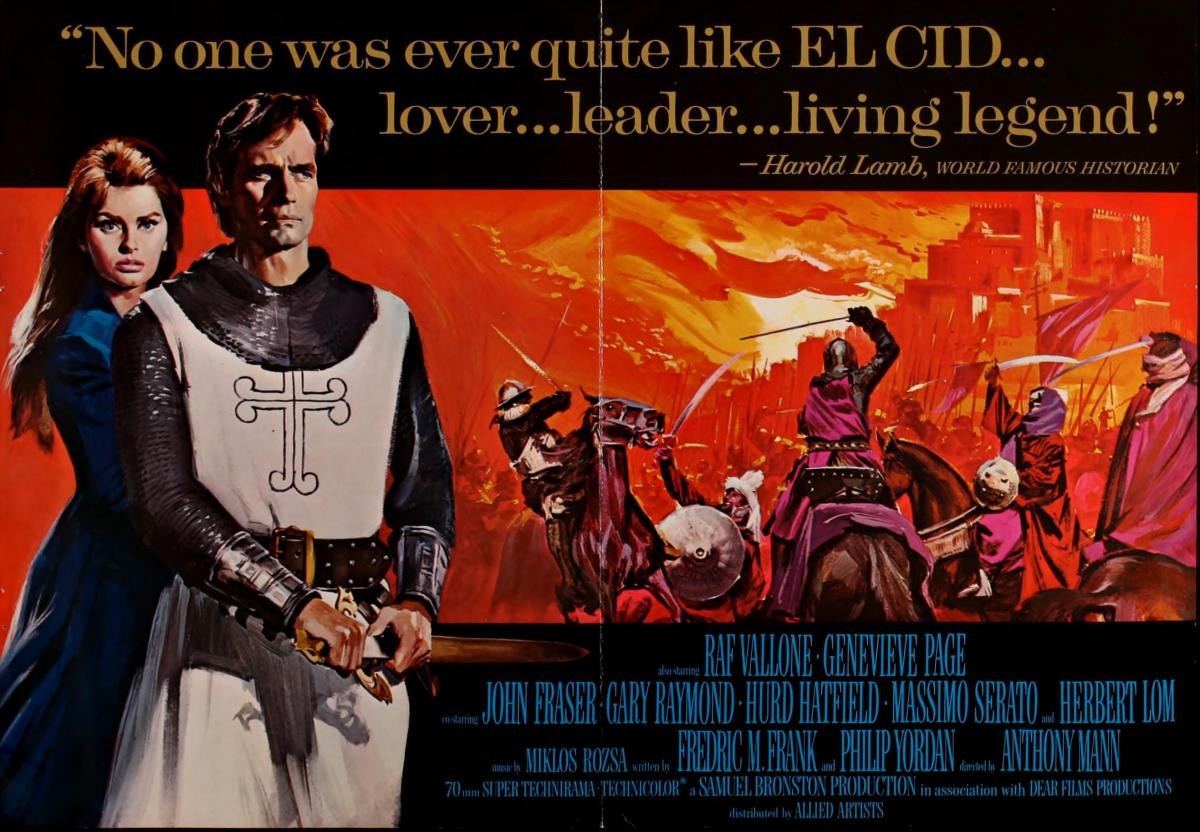
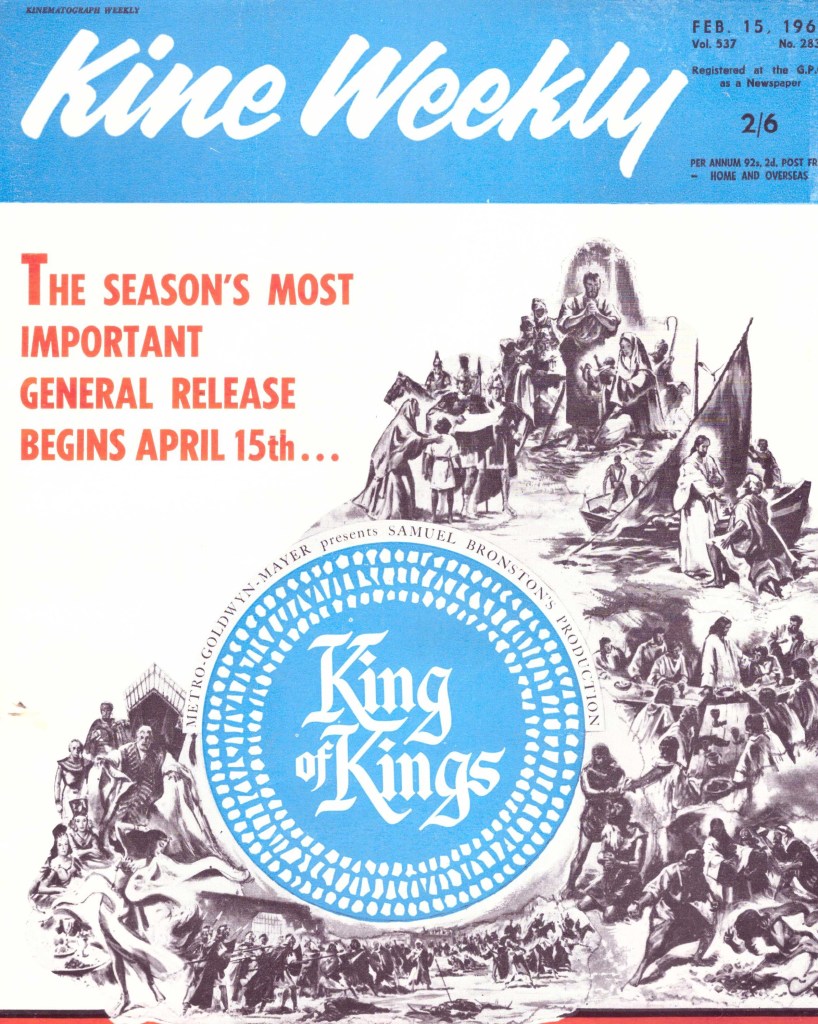
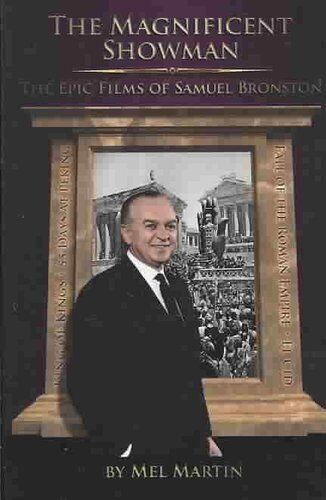
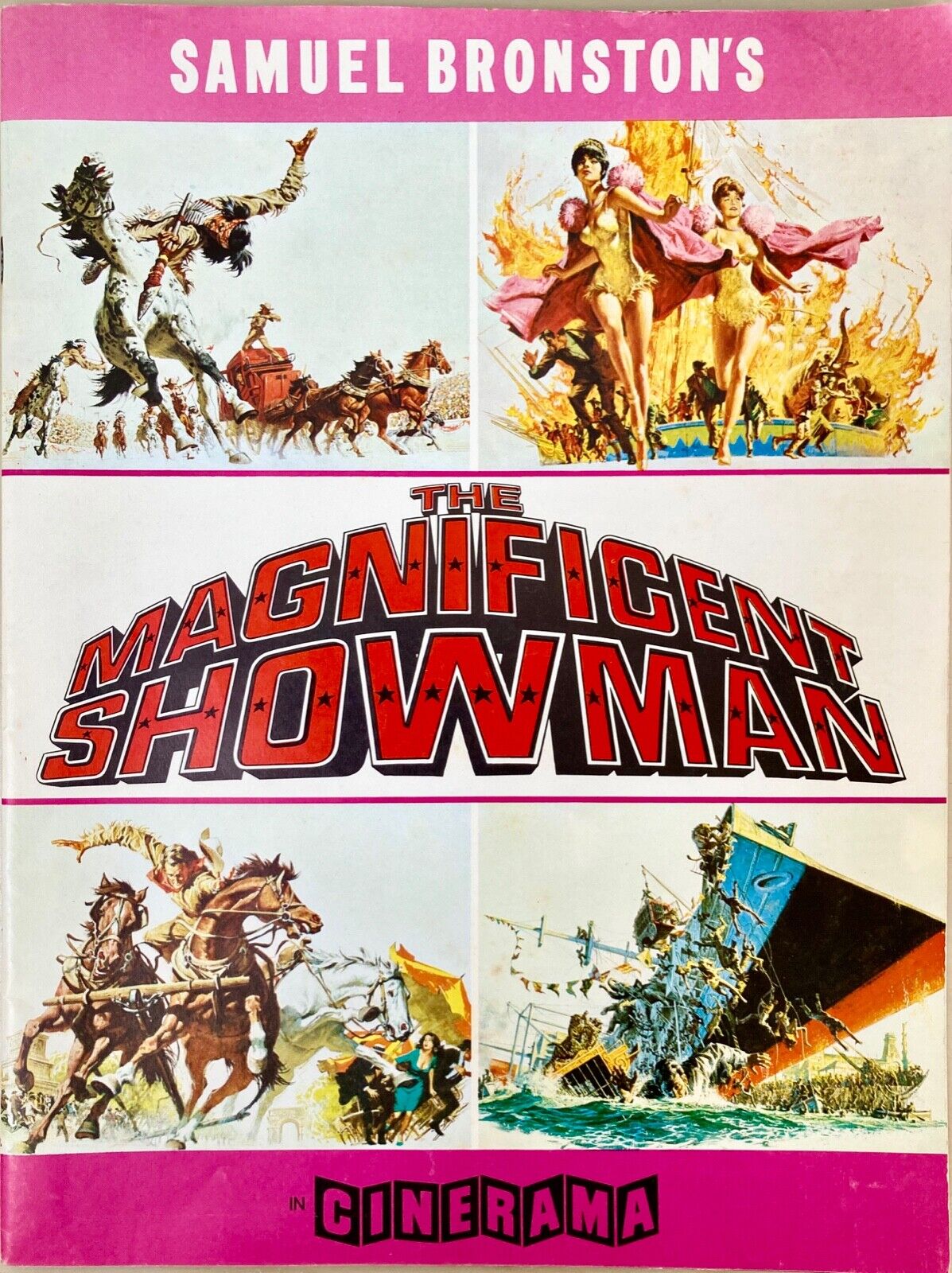
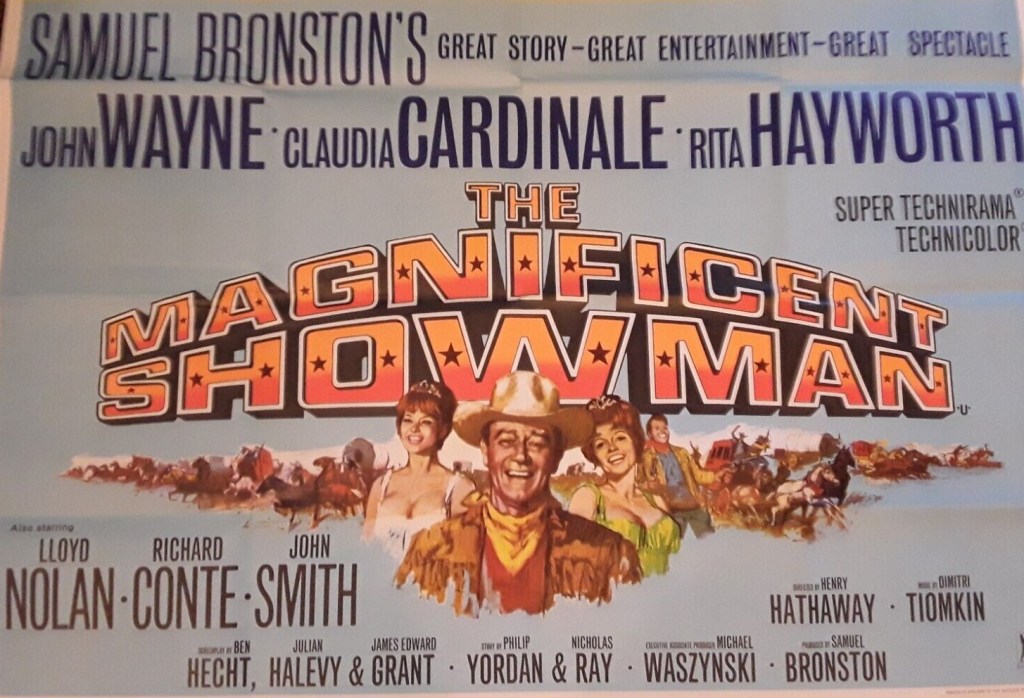
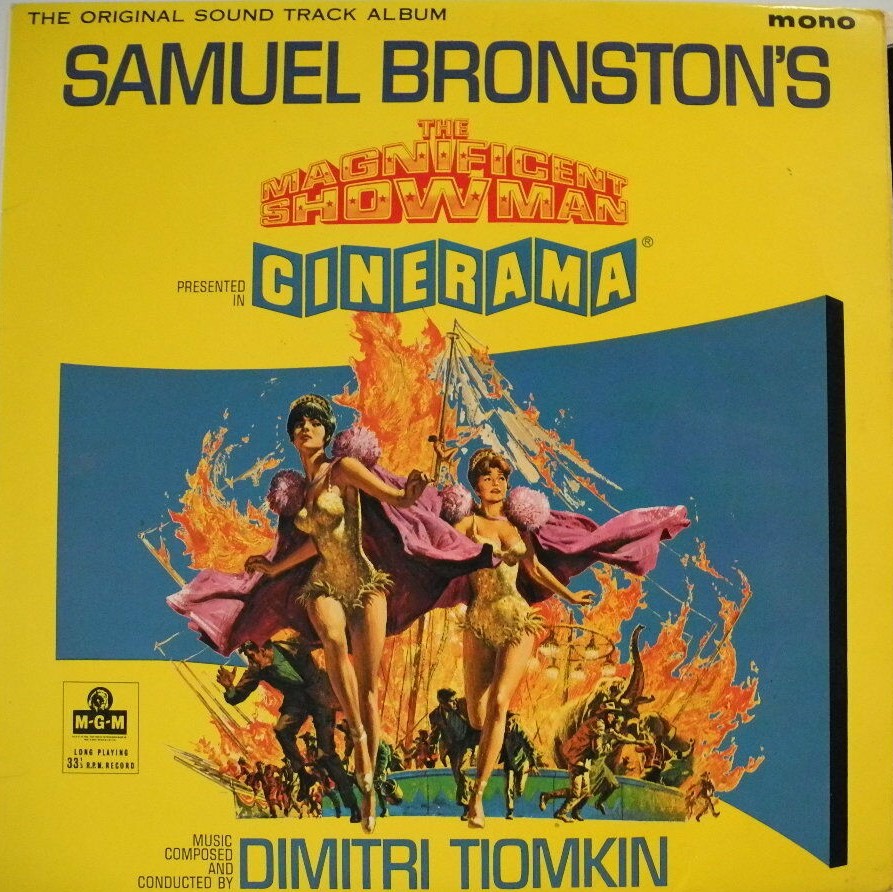
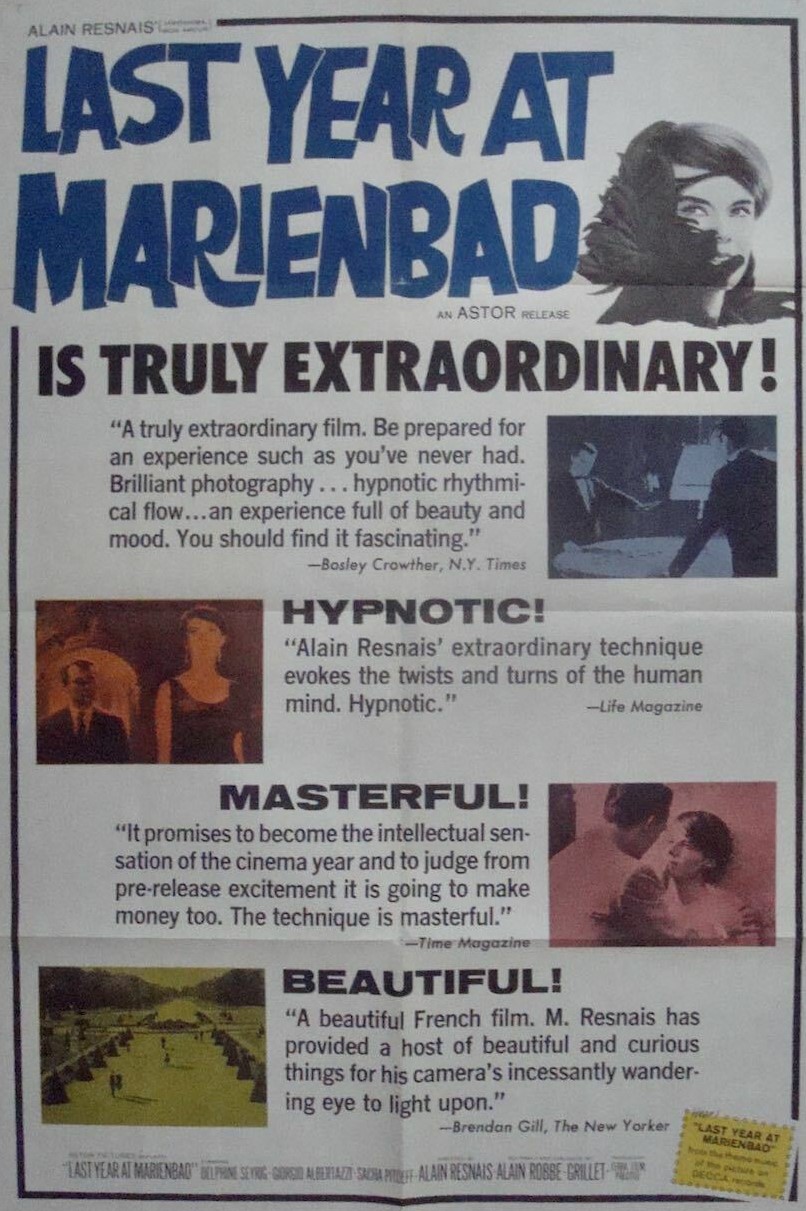
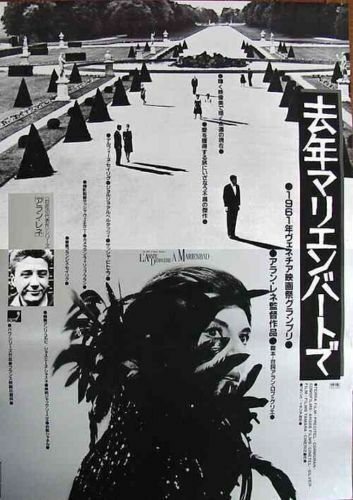
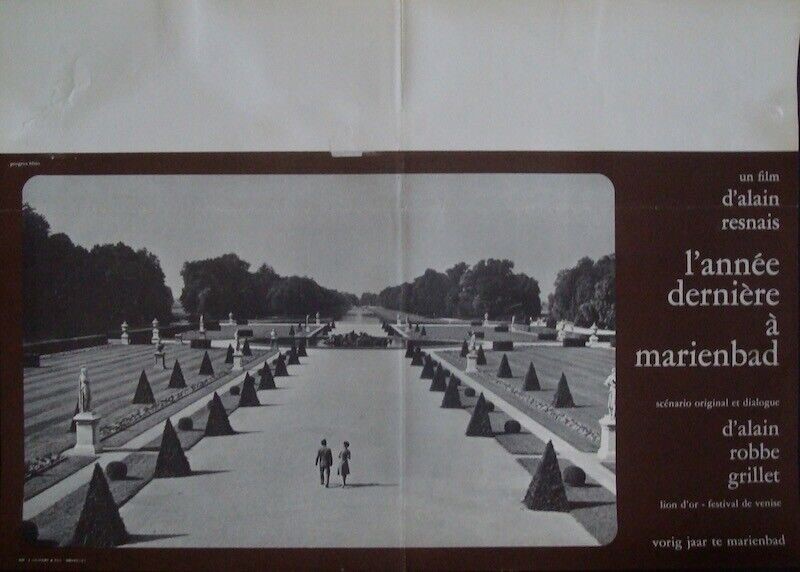


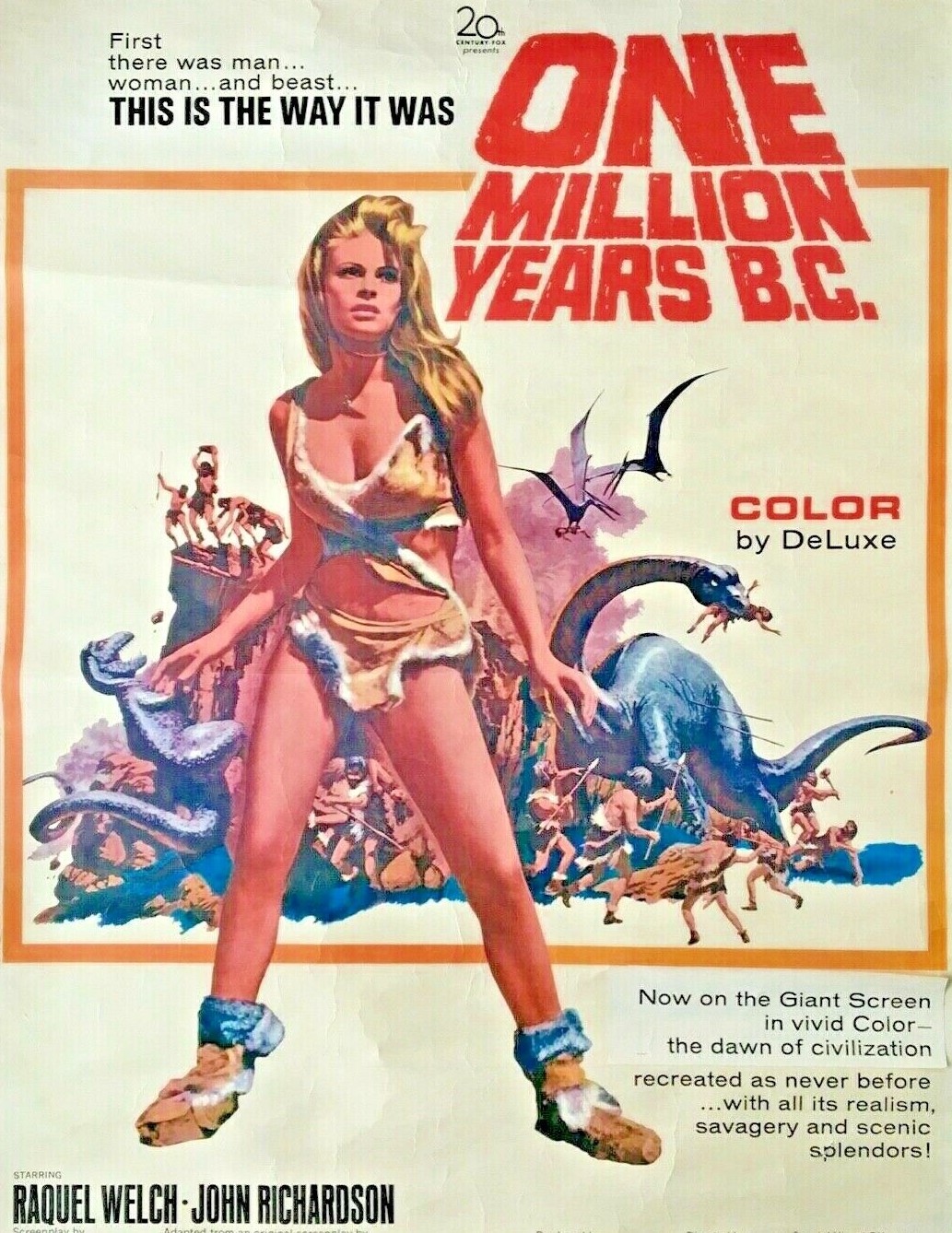


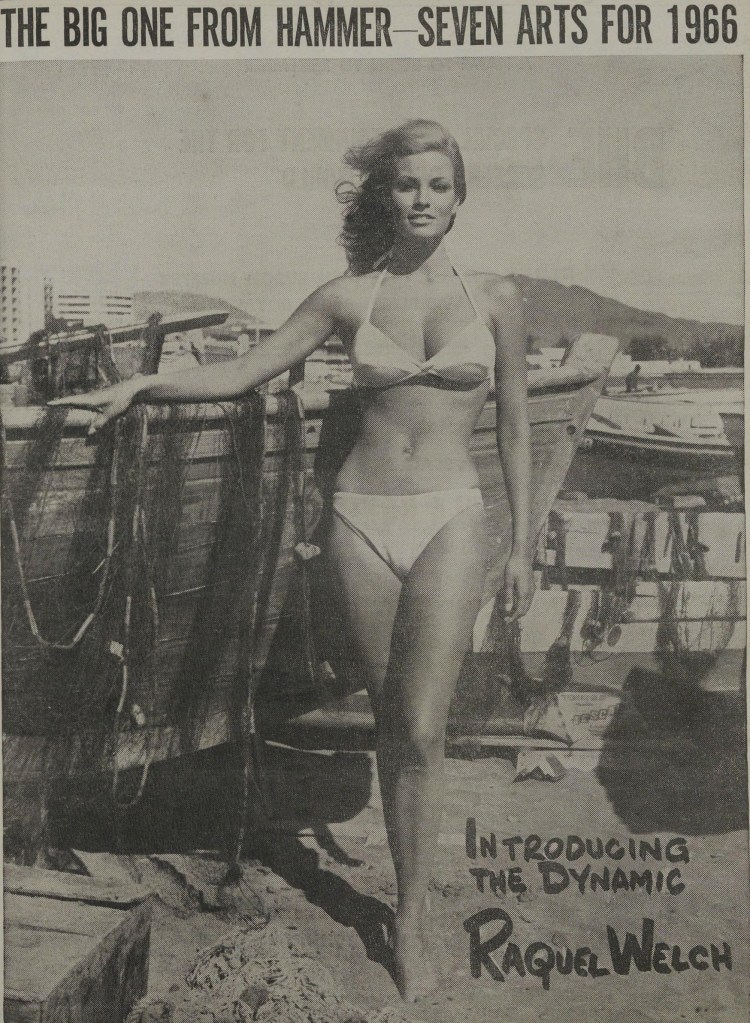

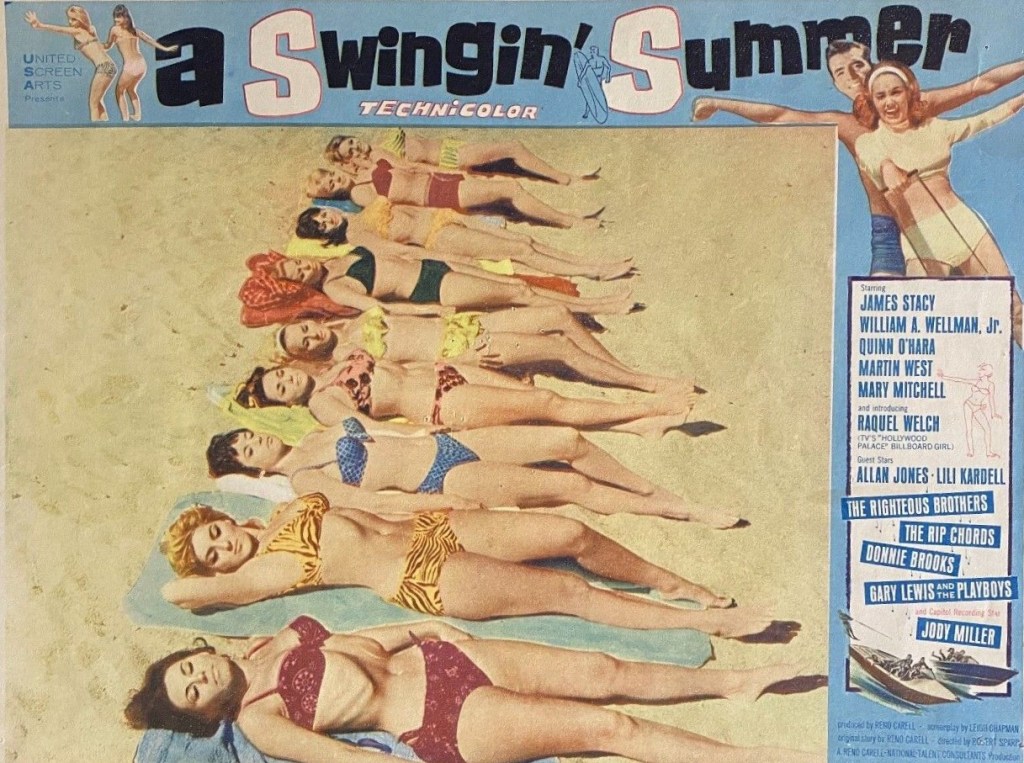


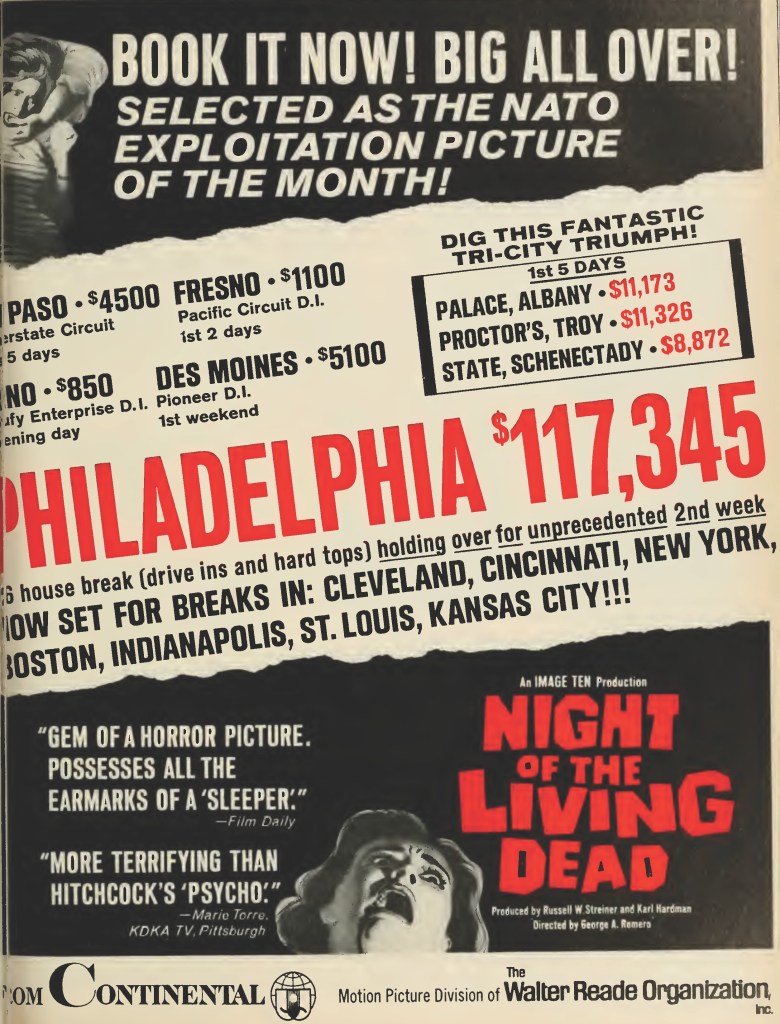
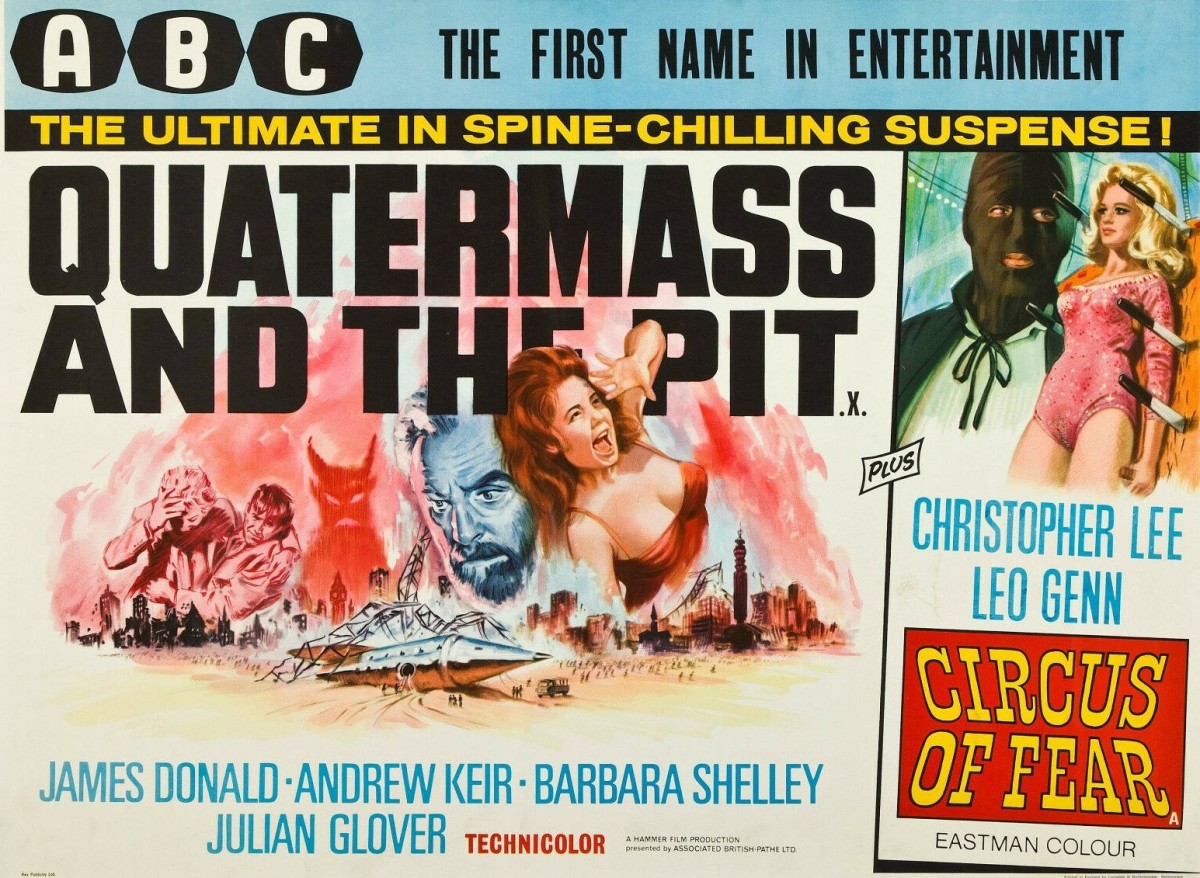
 The Magnificent 60s