I am a published author of books about film - over a dozen to my name, the latest being "When Women Ruled Hollywood." As the title of the blog suggests, this is a site devoted to movies of the 1960s but since I go to the movies twice a week - an old-fashioned double-bill of my own choosing - I might occasionally slip in a review of a contemporary picture.
Copy this into your browser. That opens up the podcast page and then if you scroll down to the Start button you’ve got it.
But if it doesn’t, you’ll get there in a couple of clicks doing this: go to the “contact me” link further down the page then on the top right hand corner click on “episodes” and the interview with me is the first one down.
And if that’s not enough for you, you can catch me in a previous podcast about the making of “The Magnificent Seven.”
Hey, I’m not done – there’s this little introduction to my book “When Women Ruled Hollywood.”
How is that the British, way down now in the rankings of global movie production, have come up with a successful genre all of their own – the national treasure. Maggie Smith and Helen Mirren to be sure first came to prominence in the same year, 1969, with The Prime of Miss Jean Brodie and Age of Consent respectively, but whereas Hollywood has turned its back on the ageing female contingent, the British film industry has wrapped its most famous stars in cotton wool and proceeded to give them roles they can take to the Oscar bank.
Mirren was in her early 60s when she romped home in The Queen (2006); you only have to say Downton Abbey and Smith, already two Oscars to the good, is regarded as screen royalty. And that’s before Judi Dench enters the equation, a few years older than Mirren when she nabbed the Oscar for Shakespeare in Love (1998). You can pretty much count on getting funding for any picture if you can rustle up any of this trio. Want to bring back the older crowd? Dangle these carrots!
Elevated into this category now is Lesley Manville, the 66-year-old star of the delightful Mrs Harris Goes to Paris. While largely escapist, there’s enough of a contemporary vibe, a Paris redolent of filth, the downtrodden going on strike, to provide an edge, and a narrative that continually punctures dreams any time fantasy looks like running away with itself. Set in 1950s London and Paris where the poor know their place, and are rigidly kept in it by the arrogant rich, but where aspiration can at any moment take flight.
Cleaner Mrs Harris, dreaming of buying a £500 dress – we’re talking the best part of £14,000 these days – scrimps and saves, and through a couple of more than fortuitous events, finds her way to the House of Dior where she is despised by haughty manager Claudine (Isabelle Huppert), adored by philosophic model Natasha (Alba Baptista) for having such aspirations, and manages to cast a spell, although not for the reasons expected, over rich widower the Marquis de Chassagne (Lambert Wilson).
There’s not much plot. She has to remain in Paris for a fortnight for fittings and whiles away the time helping along the romance between under-manager Andre (Lucas Bravo) and Natasha, assisted by their existentialist leanings, eventually overcoming hostility and putting everything to rights in the Dior empire. But you don’t need plot when you’ve got charm. The English notion of fair play initially comes a cropper when facing French egalitarianism out of whack, when the rich can jump the queue and basically make everyone jump to their tune. But when a character like Mrs Harris settles for second best you can be sure she’ll come up trumps. Whether it’s icing on the cake or to make a rubbish-strewn Paris more palatable, there’s a good ten minutes of oo-la-la devoted to parading the latest fashions.
Not content with conquering one city, Mrs Harris developed sequelitis and headed for New York.
And there’s not just a philosophical undertone – people not what they appear on the surface – but a feminist one, women holding the world together while men whistle. But by and large it’s joyous entertainment, a confection straight out of the Hollywood top drawer, a poor woman having her day in the sun through sheer strength of character.
Unless you’re British or a big fan of arthouse director Mike Leigh or noticed her Oscar nomination in the largely unnoticed The Phantom Thread (2017) Lesley Manville will probably have passed you by. She nabbed a cult following as the dumped-upon lead in comedy series Mum (2016-2019) and picked up a wider audience as Princess Margaret in The Crown, but mostly she’s known for a certain kind of acting, where she can change expression 20 times in a minute without ostensibly doing anything different. Just like her predecessors, Smith, Dench and Mirren.
You can’t take your eyes off her, which is quite feat when she’s up against French screen royalty (perhaps a “tresor national”) Isabelle Huppert (Elle, 2016). Alba Baptista (Warrior Nun series) could well be the breakout star here though Lucas Bravo definitely runs her close. I saw Bravo in Ticket to Paradise (2022) and the characters there and here could not be more different. Ellen Thomas (Golden Years, 2016), Lambert Wilson (Benedetta, 2021), Anna Chancellor (For Love or Money, 2019) and Jason Isaacs (Operation Mincemeat, 2021) have smaller roles.
Director Anthony Fabian (Skin, 2008) adds deeper issues to a movie that was crying out to be all surface. He co-wrote the screenplay with Carroll Cartwright (What Maisie Knew, 2012) based on the classic Paul Gallico novel.
Paedophilia was the last taboo according to the Production Code, the self-censorship system organised by Hollywood in 1960. You could talk about rape in explicit detail (Anatomy of a Murder, 1959) and serial killers (Psycho, 1960) were acceptable, but you must not “violate the edict against depicting sex perversion…the only subject strictly forbidden by the code.”
Without the Production Code Seal (of approval), cinema bookings would be hard to come by. Cinemas that relied on the goodwill of their patrons would not dare risk upsetting them by renting a film that had met with such disapproval.
Headline news in “Variety.“
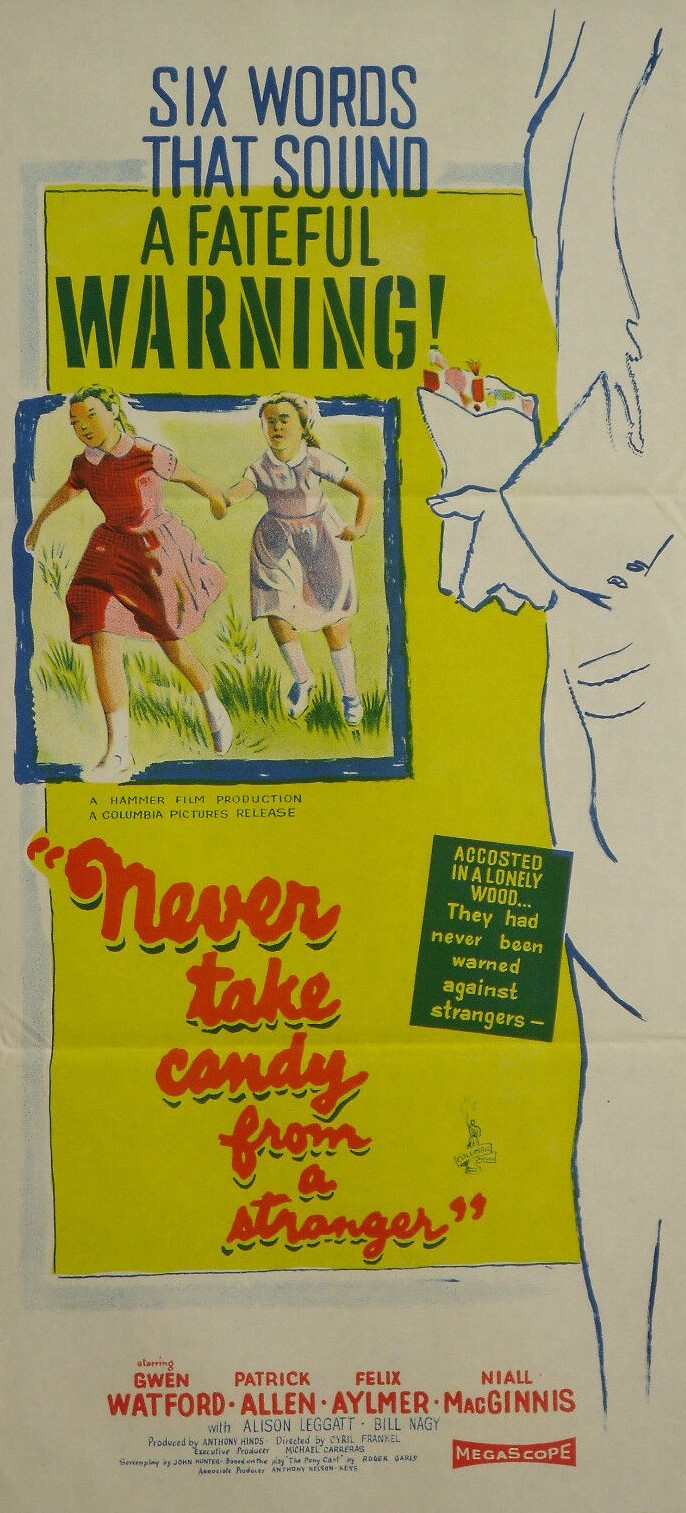
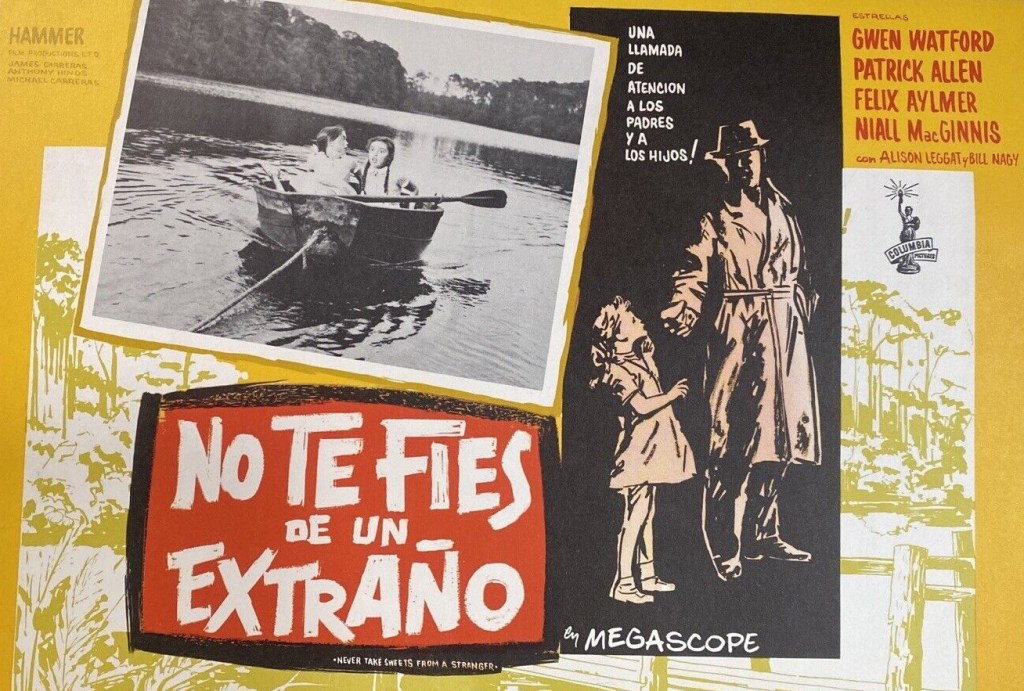
Never Take Candy from a Stranger – a.k.a.Never Take Sweets from a Stranger – had been passed as an X-certificate in Britain, where, despite being set in Canada, it had been made. While that meant it could only be seen by adults over 18, there was no objections to it being shown. It had been shot over six weeks beginning October 1959.
It had even been positively reviewed in the U.S. where Variety called it and “an exceptionally restrained film…directed with considerable skill” and Box Office magazine, another trade weekly, rated it “touching” though warned exhibitors that the “the subject matter is not to be sold as lure.”
It did not help the case that James Carreras of British studio Hammer had set out to make a movie that was “explosively exploitable” with the aim of cracking open America on the back of “heavy-exploitation marketing such as sex crimes against children” and that the movie intended to be “as frank with its theme as was Anatomy of a Murder in dealing with rape.”
The case went to appeal. The argument in its defence, as put by Roger Garis, author of the play on which the film was based, was that the movie wasn’t so much about paedophilia but about the public’s resistance to hearing about it, and the battle by two parents to rid the community of such a menace. He pointed out that on the play’s initial opening in New York in 1954 “no review indicated in the slightest degree that the subject matter was distasteful.”
But perhaps the U.S. censors took more note of the review printed in the British Monthly Film Bulletin that complained the “film’s seriousness is dissipated by an unnecessarily horrible climax.”
Hammer appealed the decision, but the Production Code would not budge.
Despite the cautionary note struck by Box Office magazine, it was almost certain that it would be sold as exploitative, and attract the wrong sort of clientele, and for moviegoers of the wrong disposition it might well be only too big an attraction. In Britain, for example, it had been sold as a sex-shocker double bill, on the ABC circuit teamed up with Brigitte Bardot number Come Dance with Me (1959).
U.S. distributor Columbia could not be seen to be selling a movie that went against the ruling of the Production Code, but it couldn’t just dump it either since it was contractually obliged to release it. So instead it was passed on to its sub-division Lopert, an independent operation with no ostensible links to the parent company, that would find a way to get it into cinemas. Lopert would either sell it through the states rights method, divvying up the picture to a different set of local distributors who would each undertake the release in an individual state, or sell it on to another distributor, perhaps with experience of handling dodgy material. Lopert did both. Distribution was handled in some territories by Omat, which had successfully ushered La Dolce Vita (1960) through the system, and later Pathe-American, and in others by an independent.
The trade magazines had urged exhibitors to enrol the assistance of parental groups in marketing the movie, but these would hold no sway in terms of publicity. A local newspaper which had denied the movie any advertising space – a nationwide ban that followed such extreme Code disapproval – was hardly going to give it editorial coverage.
But of course there were exhibitors who would take it. Arthouses were one possibility. They had been dealing with the disreputable ever since foreign production companies realized they could bypass the Production Code. If they were not signatories, they did not have to submit their movies for assessment. That was why there was such a flood of movies from France, Sweden and Italy heralding a sensational star like Bardot or Sophia Loren and promising greater leniency towards nudity than would be acceptable to the Code.
And there were many, especially among the more articulate classes, who felt the Code was outdated anyway, and that foreign films were breaking new cinematic ground, and that the directors of such films, Ingmar Bergman, Fellini et al, should be praised rather than condemned. But it was inevitable that movies from abroad with genuine artistic purpose got mixed up with those made with purely salacious intent.
The arthouse had been compromised so much that anything that could lure in the public was fair game. Even so, most arthouses drew the line at a film about child molestation. While Never Take Candy from a Stranger did receive a number of bookings in city center U.S. houses between 1961 and 1962 they were rarely in an arthouse. Most were in cinemas accustomed to offering patrons lurid product. In Chicago, outside of the major cinemas, it went out as a double bill with Sam Peckinpah western Deadly Companions.
Tracking the release through the pages of Variety and Box Office, I discovered it had only occasionally proved a success, a holdover for a second week generally one way of demonstrating that measure.
(Note that cinema capacities were much larger than today in the multiplex era and it was far from uncommon for moviegoers to be part of a 1,000-plus audience)
In May 1961 in Boston it ran for two weeks at the 689-seater Mayflower, hitting $4,500 in the first week with a relatively small drop to $4,000 the next. In November, most likely as a filler for a movie that failed to hit its targets and was pulled early, it reached the 2,995-seat Palms in Detroit, clocking up a fair $10,000, but only permitted three days the next week, for another $3,000.
But by then a different reelase strastegy was in place. The same month in an “unusual first-run hook-up” it played a couple of drive-ins in Kansas City, those theaters were dragged into the first-run loop in the absence of other available or willing houses. One week at the 900-car Crest and the 700-car Waldo brought in a “mild” $6,000. Perhaps in a bid to secure a bigger audience it was teamed with Beware of Children (1960). But anyone expecting another dip into perversion would be disappointed for it was a British marital comedy starring Leslie Phillips.
But release was a long drawn-out process, and perhaps to limit expenditure few prints were made. And by 1962, yet another different approach was taken, targeting the arthouses. In February it reached Baltimore, $3,000 at the 860-seat Avalon, In April it lasted one week at the 238-seat Capri Art in Denver taking $900 gross at the box office.
And then, never having not scaled the heights that a movie trading on controversy might expect, it disappeared. Obviously never a contender for television, and no sign of it being shoved out during the VHS boom, when virtually any movie made was revived in the hope of snaring a few extra bucks.
It took a helluva long time for the movie to surface, but when it did, it was to plaudits.
SOURCES: “Hammer’s Slant,” Variety, October 21, 1959, p4; “Realism Outbreak in Britain,” Variety, October 31, 1959, p3; Review, Monthly Film Bulletin, January 1, 1960, p48; James Carreras, “British Horror Pix As Insurance For That Wide-Open Global B.O.,” Variety, January 6, 1960, p166; Review, Variety, March 16, 1960, p6; “Child-Molesting Theme in Abeyance,” Variety, April 27, 1960, p3; “Candy Story Author Sez Not About Perversion But Public’s Own Laxity,” Variety, May 11, 1960, p4; “Candy Loses Appeal for Code Seal,” Variety, May 18, 1960, p17; Advertisement, Variety, January 11, 1961, p14; Review, Box Office, August 21, 1961, pA1; “Says Wilmington Press Is Pre-Judging Ads,” Box Office, October 30, 1961, p15; “Set Up Pathe Campaign,” Box Office, December 18, 1961, pNE6. Box office figures from Variety issues: May 31, 1961, p9; November 22, 1961, p8-10; February 14, 1962, p8; April 18, 1962, p9.
Banned in the U.S., box office flop in Britain, consigned to the vaults for over three decades, and when revived and you wonder how everyone could have been so wrong. A sensitive portrayal of a family caught up in local Canadian politics when their daughter accuses a dignitary of molestation, it carefully avoids the exploitation trap. At times tense, thrilling and heart-rending, with dynamic use of sound – sirens, footsteps, tracking dogs – it’s probably the best Hammer picture of the decade.
Young Lucille (Frances Green) takes her new friend Jean (Janina Faye), daughter of newly-arrived immigrants Peter (Patrick Allen) and Sally Carter (Gwen Watford), to visit an old man Clarence Olderberry Sr (Felix Aylmer). When the child returns home, not initially perturbed by what occurred, it transpires that, in return for a handful of candy (sweets in British parlance), she danced naked.
Sally’s mother Martha (Alison Leggatt), conscious of the disruption accusations might cause, tries to play it down. Sally reports the incident to the police chief Hammond (Budd Knapp) who is reluctant to pursue a case against the town’s most important person. Clarence Jr. (Bill Nagy) warns Peter of disastrous consequences. Lucille’s parents send her away so she cannot back up Jean’s story.
There follows trial by town, the whole family receiving the enmity of the local populace, while Jean is destroyed in the witness box by the prosecutor (Michael Gwynn), ending up so distraught her parents throw in the towel, the accused walking released scot free. Rancour is such Peter quits his job but as they prepare to quit the town, Jean goes off playing in the woods again with Lucille.
Stalked by the old man, they race terrified through the woods and into a rowing boat on the water only for the assailant to grab the tow-line and pull them back.
Movie tie-in by the author of the original play.
What could have easily pandered to the worst possible taste is incredibly well done. Strangers arousing the ire of a local populace is a trope as old as the hills so none of the consequence of their action was surprising. Nor, for the time, was the disgust expressed that such an accusation could be cast, not even if the old man has a history of mental illness, a voluntary patient whose records have conveniently vanished.
Whether the son has any inkling of the truth, or whether he is equally appalled, is never made clear as he is in any case duty bound to defend the family’s good name. But compromise is the name of the game. And whereas you can understand Lucille’s father not wanting to risk his job, Sally’s mother falls into a different category, the uptight Englishwoman who dare not challenge the existing order. There’s a terrific scene when she is suddenly made aware that she is in the wrong but is too frightened to admit it.
Jean’s experience could easily be repeated today, thousands of women refusing to accuse in case they end up slandered or defamed, or find themselves taking on powerful men with powerful friends. We all know how easy it is for an unscrupulous lawyer to embark on witness character assassination. Initial corruption of innocence can be heightened by testifying in a witness box.
The sub-text of the film, while never remotely explicit, is that adults were only too aware of the existence of paedophiles, regardless of trying to write them off as harmless as Martha does, and it was virtually impossible is those more innocent times to explain to a child the dangers of taking candy from a friendly stranger.
Director Cyril Frankel (Operation Snafu, 1961) has done an excellent job of opening up the stage play by Roger Garis, and yet imposed quite a claustrophobic feel to the enterprise. Having escaped a potential captor, Jean is a prisoner of consequence, initially disbelieved, paraded in front of a hostile town, belittled by the prosecutor, despised by the jury, and let down in the end by her fearful parents who, having put her through the court ordeal, decide it is too much. And when she is free it is only to fall prey once again.
Patrick Allen (The Traitors, 1962) is custom-made for this kind of principled role, but Gwen Watford (Taste the Blood of Dracula, 1970) makes the most of a rare top-billed part, caught between conscience and status quo, battling an entrenched male hierarchy, undone by her own mother. Janina Faye (Day of the Triffids, 1963), only a couple of years older than the character she was playing and hopefully had little knowledge of the background to her role, is excellent as the young girl who discovers that innocence has a guilty side.
Well worth a watch with, unfortunately, a story that still rings true today.
Far from routine western with director Sam Peckinpah, in his sophomore picture, channelling territory that would later become more familiar, old friends turning enemies, the encroachment of civilization, the passing of the Old West, and sharing with The Misfits (1961) incredulity that the once noble occupation of cowboy/lawman has become redundant. In Major Dundee (1965) and The Wild Bunch (1969), the story turns on former friends turned enemies, here that aspect is in its infancy.
Down on his luck former lawman Steve Judd (Joel McCrea), shirt collar frayed, holes in his boots, eyesight not what it was, recruits old pal Gil Westrum (Randolph Scott), reduced to running a western sideshow, to help him escort a load of gold down from the mountains. Gil brings along his younger sidekick Heck Longtree (Ron Starr). Along the way, romance beckons for the ever romantically-inclined Heck when he encounters young Elsa (Mariette Hartley), daughter of Bible-thumping farmer Joshua. When she runs off, intending to marry prospector Billy Hammond (James Drury) at the mining camp, they act as her escort.
Gil turns out not to be the straight-shooter he originally appeared, planning to rob the gold consignment on the way back, with or without Steve’s assistance. The plot takes a wild detour in the mining settlement when Elsa realizes that her marriage will take place in a brothel, her fiancé is a drunk, and that his four brothers reckon they will have equal claim on her sex-wise. Gil arranges for the marriage to be apparently annulled, which doesn’t for a moment fool the Hammond brothers, and the return journey, already splintered by Steve working out what was on Gil’s mind, turns into one ambush after another.
The narrative switch away from the cowboys bewailing their lot, or, in Gil’s case planning payback for a life gone awry, to the plight of the vulnerable woman in the last of the lawless western wildernesses, is a nifty one. But you can’t help seeing Gil’s point, all the gun wounds, gunfights, months in hospitals, jobs lost as a result of confinement, make a man’s mind turn to the notion he has not been correctly reward for his endeavours. And not quite as convinced as Steve that honor makes up for everything.
There is some very lively dialog, great banter as Gil tries to sow sedition in Steve’s ear, Steve with an endless fund of humorous retorts, gently explaining that the hole in his boot is a masterpiece of the shoemaker’s art, a clever method of hidden ventilation, at each point deflecting a wily tongue probing for weakness. Steve is soon revealed as anything but a gunman past his past, or even a bare-knuckled fighter, knocking out cold a disbelieving Heck.
The romance is well done, Heck convinced he has prised Elsa away from her father, only to discover he is not included in her plans, and the isolated virgin unlikely to respond to male ardor. But when the reality of marriage strikes home, a slap in the face required to guarantee compliance, Elsa is extremely lucky not just to find Steve and Gil willing to come to her rescue, but for the less upstanding Gil to take legal matters into his own hand, although you can’t help feeling, in terms of the subsequent mortality rate, this is a hell of a price to pay for a young girl who was not aware of the realities of married life. But, hell, every decent western requires sacrifice.
Peckinpah introduces some excellent twists on more common scenes. A horse race is won by a camel, belly dancers instead of saloon girls, the restaurant bust up in the traditional fistfight is Chinese, Steve assumes the crowds lining the streets to witness the race are extending a hospitable welcome to him, courtesy of his previous exploits. And to Gil’s consternation, the fat pot of gold, literally, diminishes by the minute, the original quarter of a million dollars reduced first to twenty thousand and then a mere eleven, almost hardly worth reneging on a lifetime friendship. Unusually, the lusty young Heck begins to question turning criminal. And the clue to Joshua’s behavior is visual, as we glimpse his wife’s headstone, marked “harlot.”
But when it comes to the showdown you will see an early rehearsal of the famed shootout in The Wild Bunch. But here observation takes the place of action and the steady drip-drip of Gil’s moans serve to highlight a life wasted in community service and Steve’s stoical insistence on law and order, a code that demands good humor in the face of adversity.
This was a splendid last hurrah for Randolph Scott (Western Union, 1941) , well past his Hollywood heyday and now consigned to B-movie westerns, though lucky enough to team up with Budd Boetticher for the seven late-1950s pictures known as the Ranown Cycle, now held in very high esteem. Joel McCrea (Union Pacific, 1939), too, was on the downward Hollywood slide, pretty much restricted to westerns for the whole of the 1950s. This proved to be his final movie of this decade and he only made three more. So, for both, Ride the High Country, was a fitting send-off. Future Wild Bunch alumni Warren Oates and L.Q Jones had small parts.
Ron Starr (G.I. Blues, 1960) and Mariette Hartley (Marnie, 1964) were unlucky that their performances did not reach a wider audience, especially among producers, because they both created multi-faceted characters. Sam Peckinpah was far luckier, Ride the High Country becoming a calling card among foreign critics.
It was a rite of passage for rising male stars to take second- or third-billing to an established top-billed female. And, more importantly, rein in all attempts at scene-stealing. This is a Cliff Robertson minus the distinctive hunk of hair and lip-chewing of later performances and a David Janssen only beginning to learn the knack of talking out of the side of his mouth. They were probably kicking themselves for the indignity of ending up in such as harmless concoction, but the idea was, if it was a hit, it’d be a leg up the career ladder.
This frivolity, by the way, is probably offensive to a contemporary audience since the thrust of the story is an actress abandoning a successful Broadway career in favor of motherhood. On the other hand it is the very definition of comfort movie.
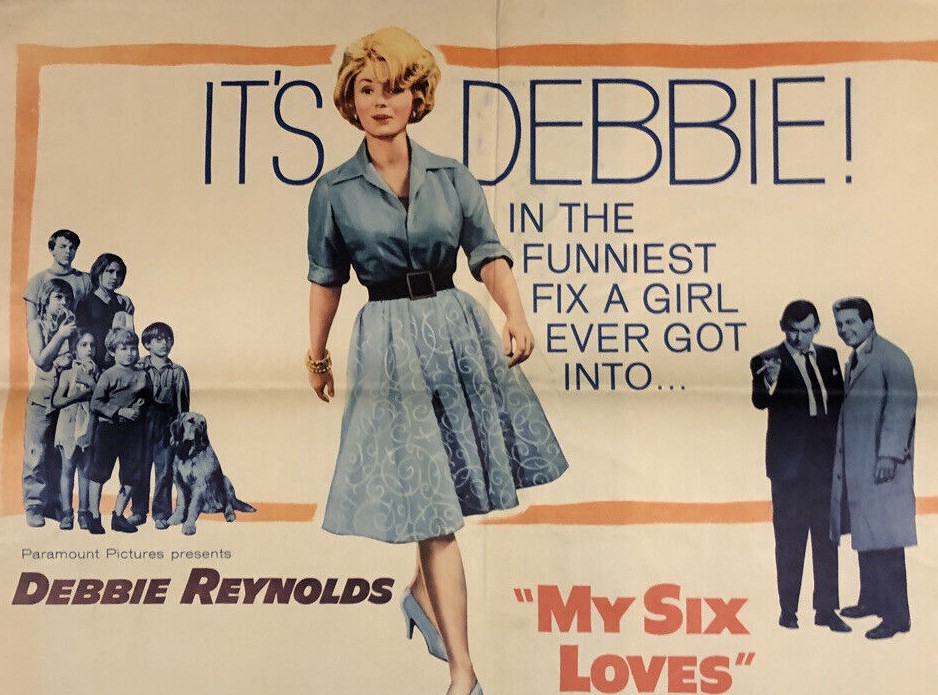
Janice (Debbie Reynolds), in love with her aggressive and somewhat conniving producer Marty Bliss (David Janssen), collapses at a publicity junket and convalesces at her second home in Connecticut, so far removed from the center of theatrical civilization that she never visits and in consequence the property has been taken over, for their own enjoyment, by her housekeeper and her daughter, who now object to spending a moment catering for their employers. In the grounds lurk a brood, half a dozen orphans taking refuge from their exploitative foster parents.
It doesn’t take long for Janice to sucker herself into taking them into her house, assistant Ethel (Eileen Eckhart) as clueless. On hand offering advice is local minister Jim (Cliff Robertson). If the kids are a handful, refusing to be separated which entails them all sleeping in the same room, they’ve got nothing on their boisterous hound Butch.
We’re past the halfway mark before it occurs to Janice that she is treading dangerous emotional waters and she jumps at the chance to star in a heavyweight drama by current Broadway playwright kingpin. Meanwhile, smelling a hefty payoff, drunken foster parents Doreen (Mary McCarty) and BJ Smith (Max Showalter) turns up, Jim takes an unrequited romantic interest in his neighbor, Janice discovers her community spirit by helping raise money for charity, one of the kids runs away from hospital, and another has trust issues, leaving the other four with little to do but look cute.
Somehow within all this there’s a cue for a song, “It’s a Darn Good Thing” before Janice has to take the decision to sink or swim with the kids or hi-tail it back to Broadway where the prospect of a Tony beckons.
You’ve probably seen this all before, but somehow – taking the career issue out of the equation – it all works, an overactive ice machine, racing in and out of the school bus, meal-time complications, and wouldn’t you believe it a slice of love. No prizes for guessing the ending.
But it’s testament to Debbie Reynolds (How the West Was Won, 1962) that the movie has an appealing center. Cute kids are ten a penny in Hollywood but an actress able to make believable such an old-fashioned family-friendly tale is hard to come by. Sure, by today’s standards it’s outdated, but if we can just slip on a retrospective hat, she would not be the first career-minded woman of that decade to find she had ignored her maternal instinct. It might have been better all round if she had found a way to have both career and motherhood but the planet and certainly not Planet Hollywood was not yet on that wavelength.
Of course, it being lightweight ensures none of the other characters have any depth and to their credit neither Cliff Robertson (Masquerade, 1965) nor David Janssen ((Warning Shot, 1967) resorts to showboating, a smart decision because with the charismatic Reynolds taking center stage they could hardly compete. And I have to confess I quite like this early version of Robertson before he was overtaken by a need for weightier roles. He showed a neat comedic touch, had some of the best lines, and proved no slouch in the verbal sparring department. Janssen, too, showed a lot of promise.
Max Showalter (How to Murder Your Wife, 1965) had such a convincing drawl that I was convinced I was watching Strother Martin (Cool Hand Luke, 1967). A good opportunity also to check out distinctive character actors Eileen Eckhart (No Way To Treat a Lady, 1968) and John McGivern (Midnight Cowboy, 1969)
You can hardly blame famed Broadway director Gower Champion (The Bank Shot, 1974), only too aware of the pressures of maintaining a stage career, for thinking that a life in Connecticut with a bunch of eventually pliant and cute kids would be a welcome alternative. It took three screenwriters to spin this tale – John Fante (Maya, 1966), William Wood (The Lively Set, 1964) and Joseph Calvelli (Death of a Gunfighter, 1969).
Bearing in the mind the aforementioned provisos, not a bad Sunday matinee. Alternatively, come at it from today’s perspective and you will be inclined to rip it to shreds before you give it a chance to be entertaining. You might even consider it a tad more adventurous in its more realistic approach than other multiple-kid pictures like Cheaper than the Dozen (1950) and Yours, Mine and Ours (1968).
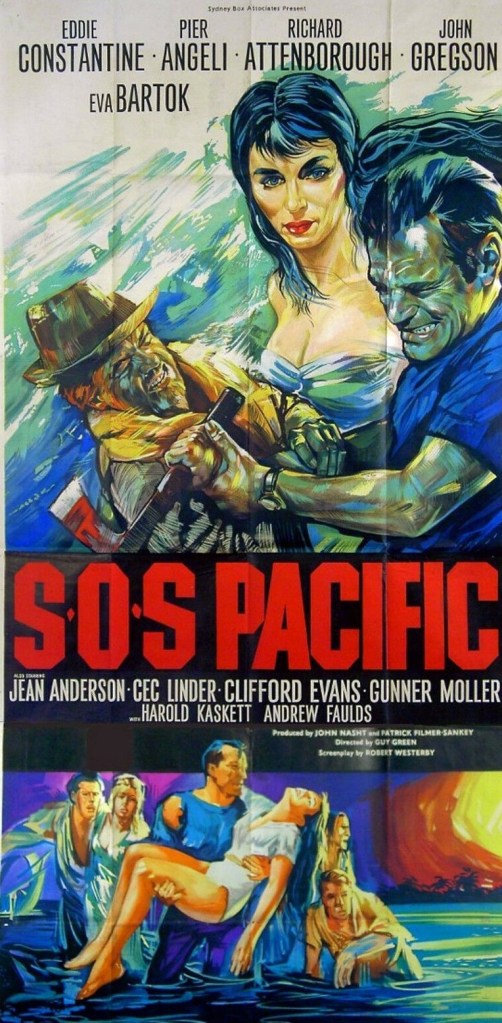
There’s a whole book to be written about poster deception. But this plays with audience expectation in an unusual manner. Here it’s a case of duping by billing. The top-billed Richard Attenborough (Only When I Larf, 1968) disappears in the last third, John Gregson (The Frightened City, 1961) spends most of the time out of it and the bulk of the heavy lifting is done by fifth-billed Eddie Constantine (The Great Chase, 1968).
That’s no bad thing because Constantine, self-deprecating tough guy in the Lee Marvin mold, does pretty well in this survival picture, airplane crashing in the Pacific, a motley bunch stranded on an island. And with the bonus of Attenborough and Gregson, typically of the English stiff-upper-lip persuasion, playing against type.
Alcoholic Jack (John Gregson), piloting a seaplane on its last legs, is ferrying wanted smuggler Mark (Eddie Constantine), handcuffed to cop Petersen (Clifford Evans), along with shifty witness Whitey (Richard Attenborough), stewardess Teresa (Pier Angela), physicist Krauss (Gunnar Moller), sparky spinster Miss Shaw (Jean Anderson) and the “loaded with sin” Maria (Eva Bartok).
When Mark attempts to put out an electrical fire on board he accidentally kills co-pilot Willy (Cec Linder) and with Jack out cold the plane heads for the drink. Luckily, there’s a deserted island nearby. Unluckily, it’s next door to a nuclear test site.
Meanwhile, Mark, emerging as the hero, is soon fighting off the attentions of Maria and Teresa, Jack’s girlfriend. Whitey, who pointed the finger at Jack and not wanting to be stranded on the same island as him, steals the cop’s gun, puts a hole in one of the two dinghies and sets off to sea on the other. On discovering lead-lined housing, Krauss is able to work out the nuclear issue. With barely five hours to detonation, Mark elects to swim two miles in shark-infested water to the tiny island housing the nuclear device, armed only with a few rudimentary tools.
There’s a surprise waiting for him of course. Should he succeed in his enterprise, there’s reward too because Jack, in best Scott of the Antarctic form, has sacrificed himself to the sharks to give Mark a chance.
There’s some good stuff here, namely seeing Attenborough as a snivelling spiv complete with dangling cigarette, and Gregson as a self-pitying drunk, killing his career one bottle at a time, an airsick cop, the doughty Miss Shaw still fancying herself as a femme fatale, some well-scripted dialog between bad guy Mark and bad girl Maria, and a host of twists.
Contemporary audiences will feel let down by the ending. If only it was as easy to prevent nuclear catastrophe. But on the other hand it is one of the first films to take the issue of the atom bomb seriously, Jack’s self-destruction the result of witnessing at first hand the devastation of Hiroshima.
Yank Eddie Constantine, hightailing it to France to improve his career prospects in the 1950s, and becoming a B-movie star, was still largely an unknown quantity. He had top-billed in French and German pictures and was the male lead to Diana Dors in Room 43 (1958). This should have kick-started a Hollywood career or at least a British one.
A potential inheritor of the Humphrey Bogart mantle, the tough guy with a soft centre, snappy with the one-liners, in this outing willing to go with the flow, confident he will end up back on his feet, if not at least enough appeal to have dames falling at his feet. But, probably, he would have had to work his way up again, which might be a slow business, whereas in France scripts were being written to suit his screen persona. If you’re interested check out his turn as Lemmy Caution in Your Turn, Darling (1963) and his outings as secret agent Jeff Gordon and private eye Nick Carter.
Eddie Constantine played by far the most interesting character here, and except for Jean Anderson (Solomon and Sheba, 1959) the women were underwritten, Pier Angeli (Battle of the Bulge, 1965) and Eva Bartok (Blood and Black Lace, 1964) there mainly to polish the hero’s ego.
Robert Westerby (Dr Syn, Alias the Scarecrow, 1963), television writer Gilbert Thomas and Bryan Forbes (Station Six Sahara, 1963) had varying hands in the screenplay.
Director Guy Green (The Magus, 1968) does a good job of marshalling his box of tricks, keeping tensions – whether romantic, criminal or survivalist – high especially as he had to find a way round the unexpected climax, and once you accept that neither Attenborough nor Gregson are going to leap to the rescue quite easy to get on the Eddie Constantine wavelength. Not in the class of The Flight of the Phoenix (1965) or Sands of the Kalahari (1965), and lacking their character complexities, but not far off.
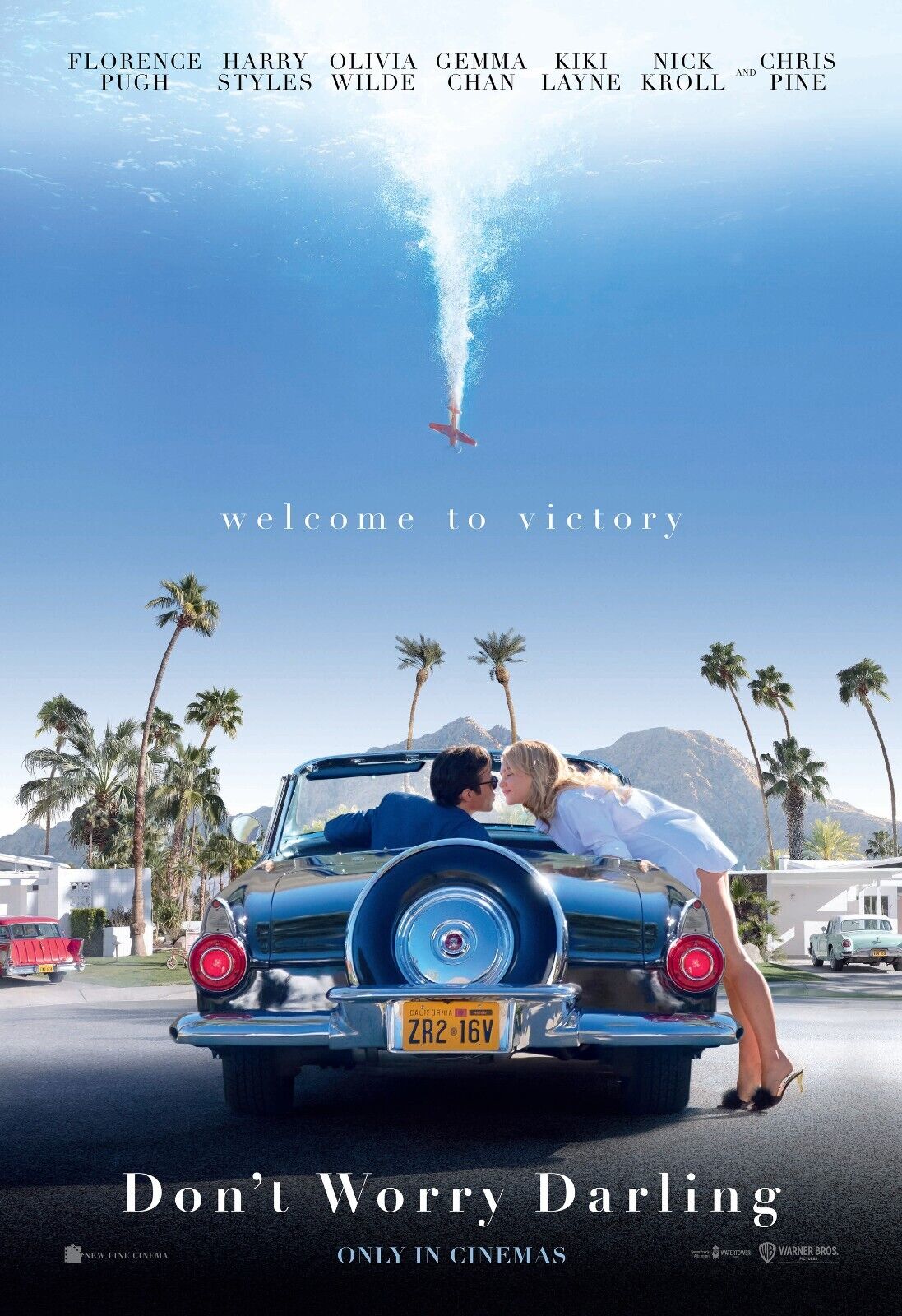
Rejoice: a star is born. But it’s not Florence Pugh (Black Widow, 2021). It’s my habit going to the cinema to sit close to the screen in order to avoid the audience. This time I couldn’t help but noticing the streams of young women, often in large groups taking up an entire row. Out of curiosity, I chatted to quite a few at the end, imagining they might be turning up to support director Olivia Wilde’s new picture. Nope, they were here to see Harry Styles (Dunkirk, 2017). That’s what you call star power.
And he certainly has something. A screen charisma, an electricity, and without going too overboard, something akin to the danger of an early Michael Caine or Sean Connery, other British exports. When he was in a scene, it was easy to forget Florence Pugh. You knew what she’d be doing, emoting like crazy, but he was unpredictable, exactly what the camera adores.
Anyway, what we have here is a throwback, a slow-burn paranoia thriller in The Stepford Wives utopia vein with a dystopian twist. But the ending is a let-down, the kind of baffling logic Christopher Nolan often gets away with, and a rather worn trope of male supremacy.
Happily married couple, still going at sex like rabbits, Alice (Florence Pugh) and Jack (Harry Styles) live in a stylized isolated 1950s community where husbands depart for work every morning and wives stay home to do the housework or endlessly shop and gossip. Every need, basic or more luxurious, is taken care of. The men are employed by the mysterious Victory Project, run by the charismatic and fun-loving Frank (Chris Pine), and beyond their housing estate is a forbidden zone.
But strange images keep zapping into Alice’s head. Eggs crumble into nothing and wrapping Saran Wrap/clingfilm round her mouth is not an acceptable lifestyle choice and when the suicide of neighbor Margaret (Kiki Layne) is denied, and she sees a plane crash into the hills, she decides to investigate. Exactly what she discovers we are never told, but her behavior becomes more paranoid, and men in red overalls are likely to scamper out of the woodwork at the hint of any threat along with a bogus psychiatrist only too keen to prescribe pills.
And although it turns out Jack is willing to try his hand at cooking, Alice is jeopardizing their relationship and without the cunning to outwit the devious Frank.
From the outset you were waiting for this fantasy to unravel, although Alice was a shade too overcooked too quickly, and there was no explanation for some of her terrors, being trapped by a sheet of glass for example, and the ending will far from satisfy. But I found the movie suspenseful overall, enough doubt sown to seed the growing tension, the characters by and large well-drawn, otherwise confident men kept insecure by jostling for recognition from boss Frank, and the playfulness occasionally teetering into the acceptably hedonistic.
However, once Alice got the bit between her teeth, there was too much teeth, flaring nostrils and general over-acting. The cooler Frank achieved more with very little.
Generally, though, quite enjoyable, although if director Olivia Wilde (Booksmart, 2019) intended making wider feminist comment, it’s too facile by far. The something that doesn’t add up emanates from the storyline for otherwise the picture is pretty well done, including a car chase and the sinuously sneaky Frank controlling and destroying lives.
As I said, I felt Florence Pugh was too over-heated but she was also let down by a screenplay by Katie Silberman (Booksmart) that failed to come up with any real answers. Harry Styles stole every scene he was in and Chris Pine (Wonder Woman, 2017), playing against heroic type, was excellent. Although there has been criticism of Styles’ performance, bear in mind that screen stardom has been built on less and it would give the industry a shot in the arm if a new star came out of nowhere. The women I encountered in the audience would certainly agree with giving him a bigger role.
From opening week box office, this looks as if it will do well enough to sustain Olivia Wilde’s career, as here her confident direction and visual skill proves she can handle a bigger budget.
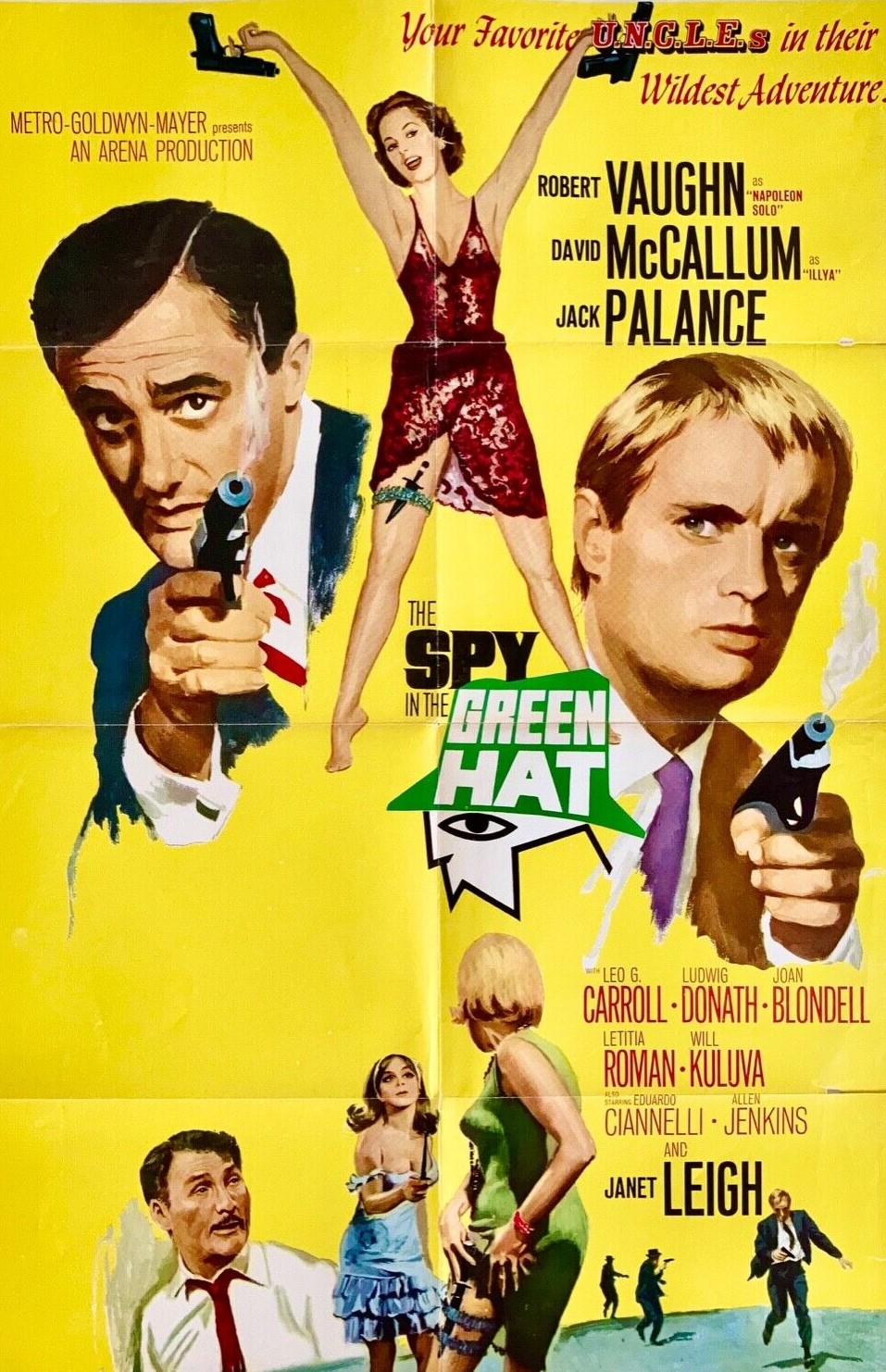
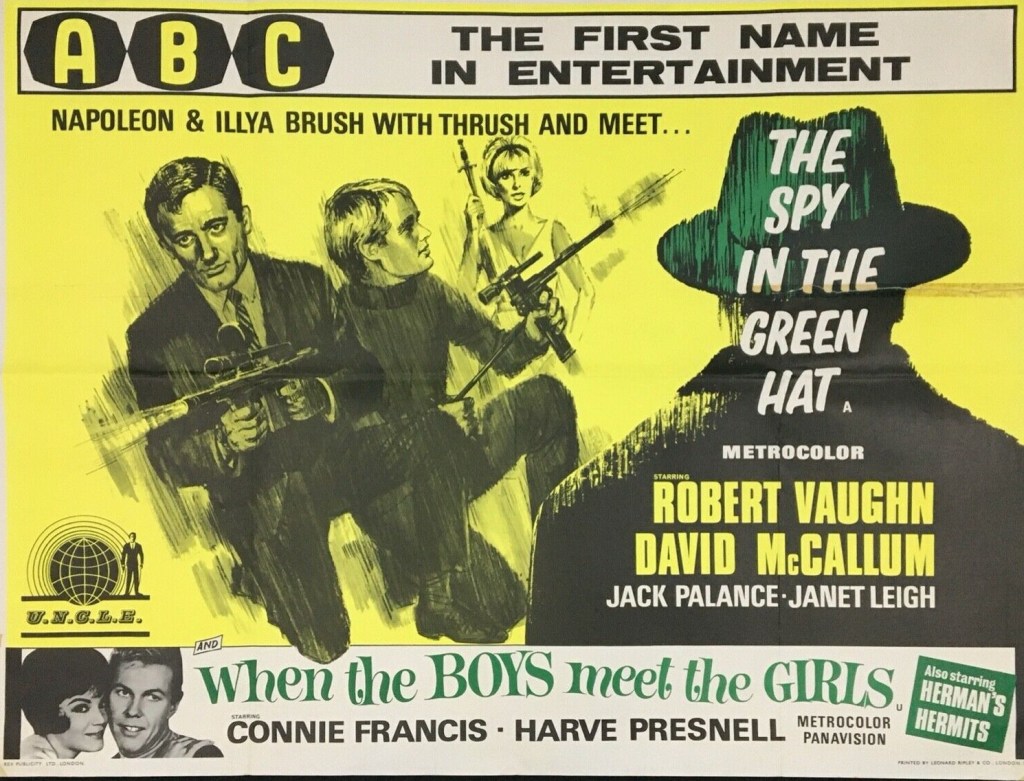
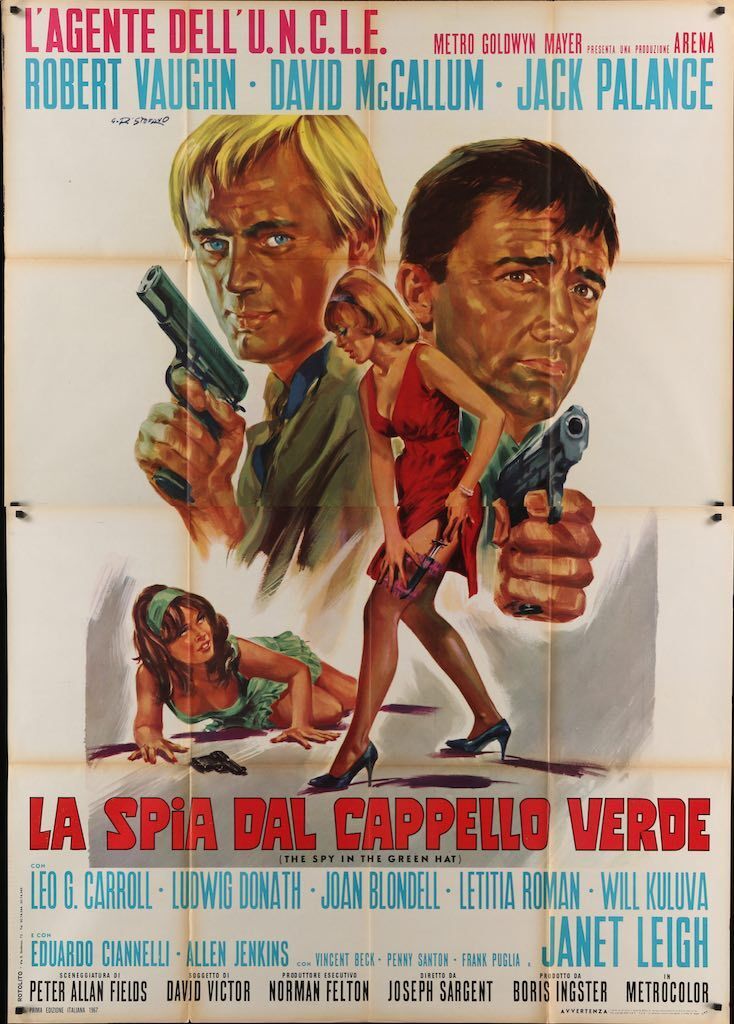
Unable to compete with the influx of big budget espionage pictures, The Man from U.N.C.L.E. throws in the action towel and comes out fighting as a comedy, and a more preposterous storyline you would be hard to find. As if spoofing a genre it helped create, our intrepid heroes find themselves in captivity one way or another, outwitted by a posse of retired Mafia hoods or sadistic females.
Napoleon Solo (Robert Vaughn) and Ilya Kuryakin (David McCallum) can’t even manage a chase, crashing the car in pursuit of former Nazi scientist Dr Von Kronen (Ludwig Donath). The trail leads to Sicily where Solo, again incapacitated, meets the sultry Pia (Leticia Roman) and as a result of a romantic misunderstanding is forced into a shotgun wedding in Chicago by her Mafia uncles, the famed Stilletto Brothers.
Meanwhile, Kuryakin makes the acquaintance of the deliciously sadistic Miss Diketon (Janet Leigh), assistant and masseuse to highly nervous Thrush boss Louis Strago (Jack Palance). The action finally shifts to the Gulf Stream, where Pia is imprisoned and the usual missiles are set to be launched in the presence of head Thrush honcho Mr Thaler (Will Kuluva) in the usual global takeover scenario.
Abandoning any attempt at serious drama, this is just a hoot, a score of sight and visual gags, references to Little Caesar and the St Valentine’s Day Massacre abound. Any time one of our heroes needs speedy access to a villain hideout along comes a guard to be bumped off and uniform purloined. Solo caught hiding under Pia’s bed is let off when discovered by a Thrush operative because he’s not the Uncle agent they are looking for. Not only is Solo constantly whacked over the head, but Kuryakin ends up as the plaything of Miss Diketon.
Solo and Kuryakin look as if they stepped onto someone else’s parade, trying to keep the narrative on an even keel, while the Mafia gang and Thrush personnel effectively play it for laughs. Pia has Wanted posters of her uncles on her wall on the assumption they are just wonderful guys. Von Kronen gets the hots for Miss Diketon because he admires her skill at torture, although a spurned Miss Diketon turns traitor leading Kuryakin to mutter to Solo when all three meet, “I brought Lucrezia Borgia, you brought the Mafia.”
What makes it work so well are the fabulous performances of the supporting cast. Jack Palance (The Professionals, 1966), completely playing against type, still a villain sure, is a masochistic sweaty bag of nerves. Janet Leigh (Psycho, 1960) camps it up as the deadlier-than-the-male luscious female, dress slit at the thigh to reveal a hidden knife, whose pulse races at the mere thought of the cruelty she can inflict and the slower the better. Will Kuluva (To Trap a Spy, 1964) is a bonus, the boss who just wants to party and has no idea of the technicalities of firing a missile.
Nobody even bothers to dress it up any more. The missiles look like something you would buy your kid for Xmas, the backdrops are as fake as anything on a backlot. But somehow it all works, as long as you weren’t expecting the original take on The Man from Uncle. And even so, director Joseph Sargent (One Spy Too Many, 1966) adds a few dabs of genuine cinematic icing, characters viewed from the ground-up, a fist fight that’s either in slo-mo or speeded-up freeze frame, the wife (Joan Blondell) of one of the Stiletto Brothers receiving a grapefruit in the mush.
After watching the original movie which came up better than expected in terms of action and spy malarkey, the last thing I anticipated that this would be headed in an entirely different direction. When that quickly became obvious, I feared the worst. Instead, I enjoyed a fun 90 minutes.
Of course, this wasn’t released theatrically in the U.S. just abroad with some added sex and violence, an expanded version, and in color, of a double black-and-white episode of the television series.
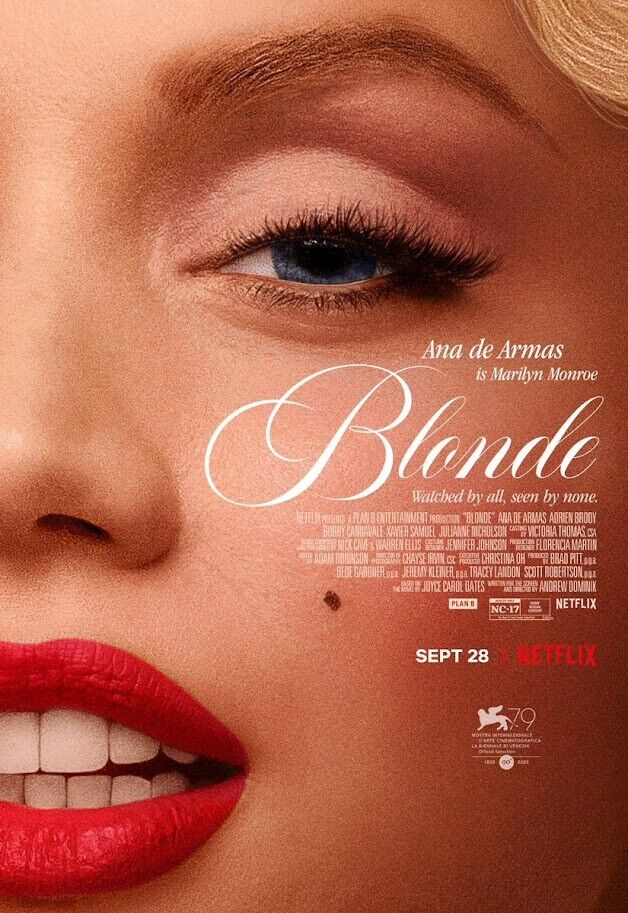
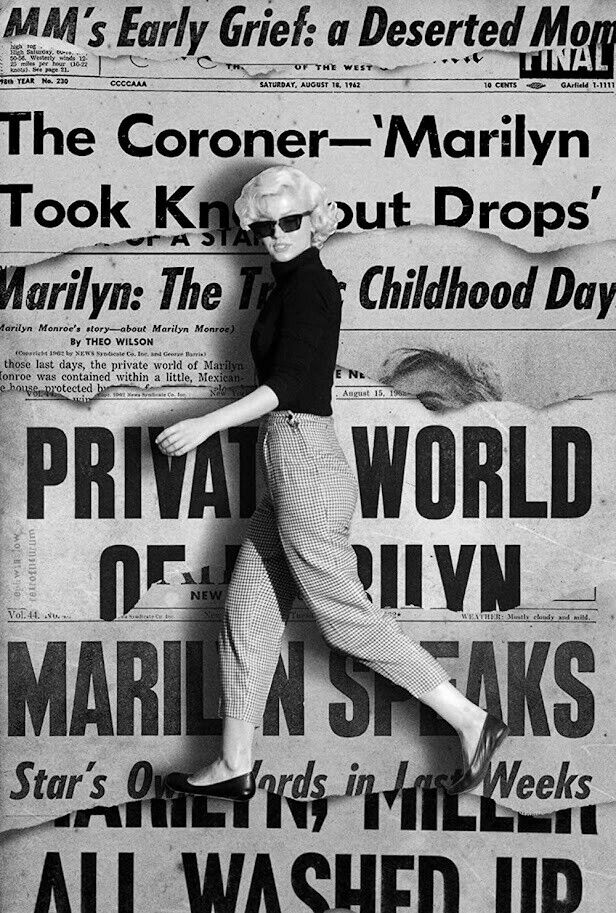
Stream of consciousness reimagining of Marilyn Monroe’s life mainlining on celebrity, identity, mental illness and vulnerability and held together by a mesmerizing performance by Ana de Armas. Director Andrew Dominik’s slicing and dicing of screen shape, occasional dips into black-and-white and a special effects foetus won’t work at all as well on the small screen. Monroe’s insistence on calling husbands “daddy” and letters from a never-seen potential father that turns into a cruel sucker punch, threaten to tip the picture into an over-obvious direction.
A very selective narrative based on a work of fiction by novelist Joyce Carol Oates leaves you wondering how much of it is true, and also how much worse was the stuff left out. As you might expect, the power mongers (Hollywood especially) don’t come out of it well, and her story is bookended by abuse, rape as an ingenue by a movie mogul and being dragged “like a piece of meat” along White House corridors to be abused by the President.
A mentally ill mother who tries to drown her in the bath and later disowns sets up a lifetime of instability. Eliminated entirely is her first husband, but the scenes with second husband (Bobby Canavale) and especially the third (Adrien Brody) are touchingly done, Marilyn’s desire for an ordinary home life at odds with her lack of domesticity, and each relationship begins with a spark that soon fades as she grapples with a personality heading out of control.
That she can’t come to grips with “Marilyn,” perceived almost as an alien construct, a larger-than-life screen personality that bewitches men, is central to the celebrity dichotomy, how to set aside the identity on which you rely for a living. It’s hardly a new idea, but celebrity has its most celebrated victim in Monroe.
According to this scenario, she enjoyed a threesome with Charlie Chaplin Jr (Xavier Samuel) and Edward G. Robinson Jr. (Evan Williams) but otherwise her sexuality, except as it radiated on screen, was muted. The only real problem with Dominik’s take on her life that there is no clear indication of when her life began to spiral out of control beyond the repetition of the same problems. She remains a little girl lost most of the time.
I had no problems with the length (164 minutes) or with the selectivity. Several scenes were cinematically electrifying – her mother driving through a raging inferno – or emotionally heart-breaking (being dumped at the orphanage) and despite the constant emotional turbulence it never felt like too heavy a ride. But you wished for more occasions when she just stood up for herself as when arguing for a bigger salary for Gentlemen Prefer Blondes.
I wondered too if the NC-17 controversy was a publicity ploy because the rape scene is nothing like as brutal as, for example, The Straw Dogs (1971) or Irreversible (2002), and the nudity is not particular abundant nor often sexual. That’s not to say there is much tasteful about the picture, and you couldn’t help but flinch at the rawness of her emotions, her inability to find any peace, the constant gnaw of insecurity, and her abuse by men in power.
Ana de Armas (No Time to Die, 2021) is quite superb. I can’t offer any opinion on how well she captured the actress’s intonations or personality, but her depiction of a woman falling apart and her various stabs at holding herself together is immense. The early scenes by Adrien Brody (See How They Run, 2022) as the playwright smitten by her understanding of his characters are exceptional as is the work of Julianne Nicholson (I, Tonya, 2017) as her demented mother. Worth a mention too are the sexually adventurous entitled self-aware bad boys Xavier Samuel (Elvis, 2022) and Evan Williams (Escape Room, 2017).
While there are no great individual revelations, what we’ve not witnessed before is the depth of her emotional tumult. Apart from an occasional piece of self-indulgence, Andrew Dominik, whose career has been spotty to say the least, delivers a completely absorbing with an actress in the form of her life. Try and catch this on the big screen, as I suspect its power will diminish on a small screen.









 The Magnificent 60s