
Several years ago, I received a wonderful surprise in the post. The package had come all the way to Scotland from New Zealand, a mere 11,000 miles, and it contained the ledgers of cinemas run by legendary New Zealand exhibitor Allan Webb, whom I had befriended online. Not only did it contain lists week-by-week and day-by-day of all the programs run by Allan at various cinemas, it also detailed how much money each movie made, and, later on, the figures also included the earnings from refreshments.
Since I’ve always been interested in the minutiae of the movie business, this was manna from heaven. I had grown up in an era and an area where cinemas, at the most, changed movies twice a week (three times if you counted the occasional Sunday night horror double bill). So I had no idea how an exhibitor way down the distribution food chain managed to keep a business going.
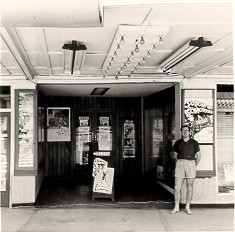
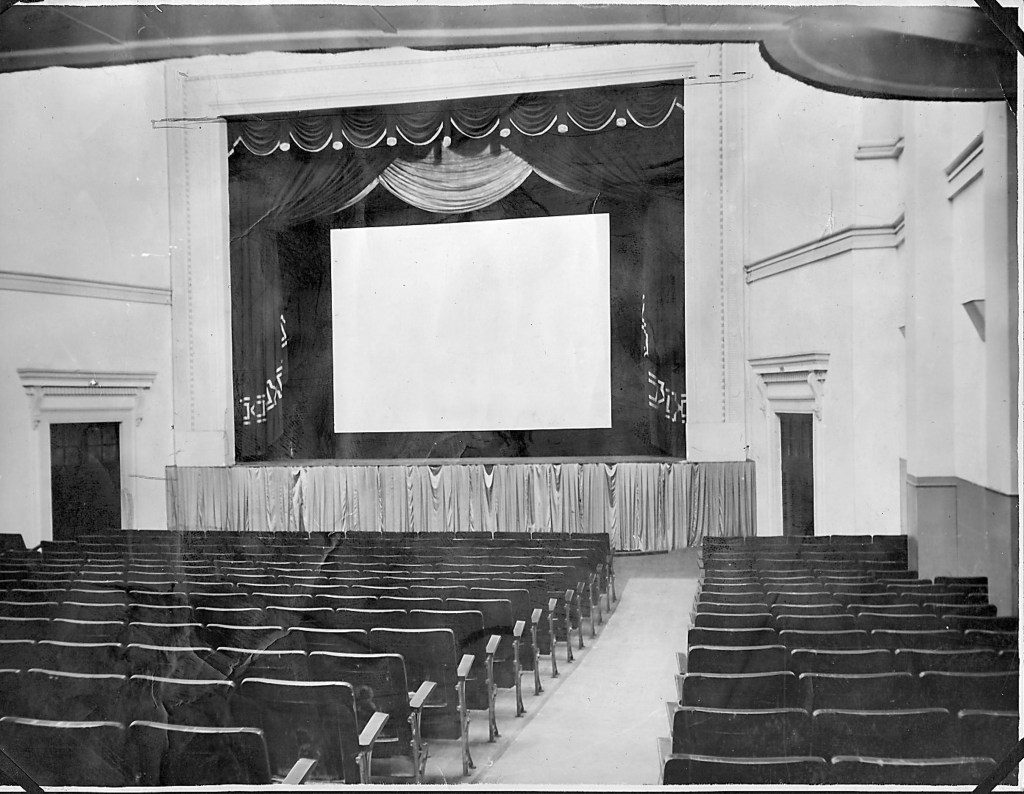
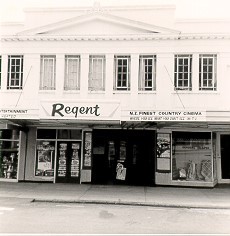
Since 1970 Allan Webb had been running the 250-seater Regent in Te Aroha, a small rural town (population around 3,000) in the north island of New Zealand. The cinema, which had opened in 1927, had shut down at Xmas 1969, and in Easter 1970 Allan took it over on a three-month trial basis at a rent of NZ$13 a week (enough to cover the local rates, as the owners just wanted it open).
“The place was a dump,” recalled Allan, “but I made so many improvements on a very limited budget, kept the light lows, ran a good ship and had an eccentric programming. I had circuit cinemas on either side of me getting the films much earlier.”
The cinema was licensed to show movies four days a week. When he started out, he limited screening films to Friday and Saturday. Prices for adults were 45c for matinees and 50c for evenings and for children 25c for matinees and 30c for evenings.
However, getting movies was a problem from the outset. Recalled Allan, “Te Aroha was considered to be the ‘Exhibitor’s Graveyard’ and some film distributors were very indifferent about supplying film there.” Various studios refused to supply him or their rental rates proved too high. It took years before United Artists, for example, took him on as a customer. Paramount was more amenable offering flat-rate hires ranged from NZ$6-10, with repeats NZ$5. And, initially, he had to pay in advance.
The film shown on re-opening was western Villa Rides starring Yul Brynner and Robert Mitchum which attracted 117 customers, including 51 children.
At the Regent in Te Aroha, in 1973, it would be rare to get by with just two movies showing, separately of course. In 1973, the cinema screened 176 movies including double-bills, averaging out at around 3.5 movies a week. In total the box office brought in NZ$12,557 (that’s New Zealand dollars) at an average of NZ$241.48.
The best week (beginning July 12th, 1973) brought in NZ$611.8 split between The Cowboys (1972) starring John Wayne and The Godfather (1972).
But, as I said, it was rare for the Regent to be able to just screen two movies in a week. The second-best week (April 25th – Easter) hit NZ$615.35 – but it required a total of six pictures to reach those figures. The sextet comprised a double bill of Bonnie and Clyde (1967)/Bullitt (1968) and separate programs featuring Disney’s The Barefoot Executive (1971), the Oscar-laden Ben-Hur (1959), French war comedy Don’t Look Now, We’re Being Shot At (1966) with Bourvil and Louis de Funes and Fred Astaire musical Finian’s Rainbow (1968).
A James Bond tribute (October 4th), each film a separate program, comprising From Russia with Love (1963), Goldfinger (1964), Thunderball (1965), You Only Live Twice (1967), On Her Majesty’s Secret Service (1969) and Diamonds Are Forever (1971) still wasn’t enough to sate demand and Carry On Doctor (1967) was added to the mix, the seven pictures in total pulling in NZ$266.45.
On two other weeks were six films shown, with varying results. The combination – each film shown in a separate program – of comedy It’s A Mad, Mad, Mad, Mad World (1963), French gangster picture Borsalino (1970), musical The Student Prince (1954), Judy Garland classic The Wizard of Oz (1939), Clint Eastwood and Donald Sutherland in Kelly’s Heroes (1970) and Bing Crosby, Grace Kelly and Frank Sinatra in musical High Society (1956), knocked up NZ$445.85 for the week of August 30th.
Oddly enough, High Society also featured in the six-picture week of September 2nd which could only manage a take of NZ$284.4 from the combined efforts of that musical, Willie Wonka and the Chocolate Factory (1971), a John Wayne double bill of Rio Lobo (1970)/Big Jake (1971) and the horror duo of Frankenstein Created Woman (1967)/The Mummy’s Shroud (1967).
The Student Prince was also part of a five-picture week (April 23rd) which rustled up NZ$364.9 thanks to World War Two POW drama The Great Escape (1963), weepie Love Story (1970), and a Beatles double bill of A Hard Day’s Night (1964)/Help (1965).
It was virtually impossible sometimes to guess which films would draw an audience and which would not. The most dependable performers turned out to be the British Carry On comedy series. During the year Carry On Henry (1971) ran as a main feature. So did Carry On Doctor (1967) and Carry On Loving (1970) – so successful it was rebooked as a main feature later in the year. Carry On Camping (1969) was teamed, in the same week, with both Carry On Up the Jungle (1970) and Carry On Screaming (1966). Acting as supports were Carry On Cowboy (1965) and Carry On Constable (1960).
John Wayne was another banker. Apart from the previously mentioned The Cowboys, the Duke turned up in Chisum and The Sons of Katie Elder (1965). Rio Lobo and Big Jake had both played, separately, as main features before being brought together in a double bill. Clint Eastwood was beginning to dog his footsteps, the entire spaghetti western trio was shown, as was Where Eagles Dare, Kelly’s Heroes, Two Mules for Sister Sara (1970), Dirty Harry (1971) and Play Misty for Me (1971).
Richard Harris as A Man Called Horse (1970) also received a repeat booking – the second time as a support to Shalako (1968) – while the sequel Man in the Wilderness was screened. Other westerns in the exhibition mix in 1973 were: They Call Me Trinity (1970), Dustin Hoffman as Little Big Man (1970), Charles Bronson and Toshiro Mifune in “eastern-western” Red Sun (1971), James Stewart and Henry Fonda in The Cheyenne Social Club (1970), Elvis Presley as Charro! (1969), Sam Peckinpah’s The Ballad of Cable Hogue (1970), Wild Rovers (1971) starring William Holden, Robert Mitchum in The Good Guys and the Bad Guys (1969), 100 Rifles (1969) with Jim Brown and Raquel Welch, The Great Bank Robbery (1969), Jim Brown in El Condor (1970), God Forgives…I Don’t (1967), Burt Reynolds as Sam Whiskey (1969), Gregory Peck in The Stalking Moon (1968), Sean Connery and Brigitte Bardot in Shalako and Lee Van Cleef as Sabata (1969).
The Regent could rely on westerns. Several of those shown in 1973 had returned for a repeat performance. Shown in the period 1971-1972 were: A Man Called Horse (twice), Shalako (twice), The Stalking Moon, Two Mules for Sister Sara, 100 Rifles, Little Big Man, God Forgives…I Don’t. The Carry On films were as commonly repeated.
“It’s a wonder I survived with so many weak titles and getting them so late,” said Allan. “Many of the films I showed didn’t screen anywhere else, but they were very good films. The first year was sustainable but by the end of the second year, it was dire. I asked Paramount for Love Story but was told it was frozen until the next year. I pleaded and said I probably wouldn’t be there next year, so I got it at a rental of 50 per cent for a Friday and Saturday night at Xmas and it filled.
“From then on people started to come back. I also agreed to show it in the January holidays at 50 per cent as part of the deal. The Godfather – shown in 1973 – resulted in the biggest take over the seven years I ran the cinema.
“British comedies always played to good sized audiences as well as the ‘big’ films. Double features of two ‘B’ movies or one ‘B’ film and a popular repeat would usually perform satisfactorily on a Friday. Popular films could be repeated several times and often coupled up with other ones.
“The programming was considered to be fairly obscure, but it worked. A lot of films were played especially for the few days it operated.” Two films held the single session attendance record – Easy Rider and Helga which both played to capacity.”
“It was the school of hard knocks, but I learned a lot on how to survive.”
Allan Webb sold the cinema in 1977. He was awarded the Queen’s Medal in 2014 for services to the New Zealand film industry. He had run The Regent in Te Awamutu for 48 years.


Brian, I really enjoyed reading your good write-up BEHIND THE SCENES: AN EXHIBITOR’S STORY-ALLAN WEBB, REGENT CINEMA, TE AROHA, NEW ZEALAND 1973. This information attained from Allan Webb is really good and informative. Anyway, it’s interesting as all get out to me personally.
Westerns and Comedies are universally popular and money makers for movie theaters worldwide. Also, I’m not at all surprised that USA’s EASY RIDER(filmed 1968, released 1969) and West Germany’s HELGA(1967) were two movies that held the single session attendance record, both playing to capacity.
LikeLiked by 1 person
Like you, I love all that stuff. Glad you enjoyed it.
LikeLike
Very nice Allan, I just posted it on Cinemas & Theatres of NZ facebook page. You looked very sporty in your shorts there😊
Murray Thompson
021 800086
LikeLiked by 1 person
thanks for doing that.
LikeLike