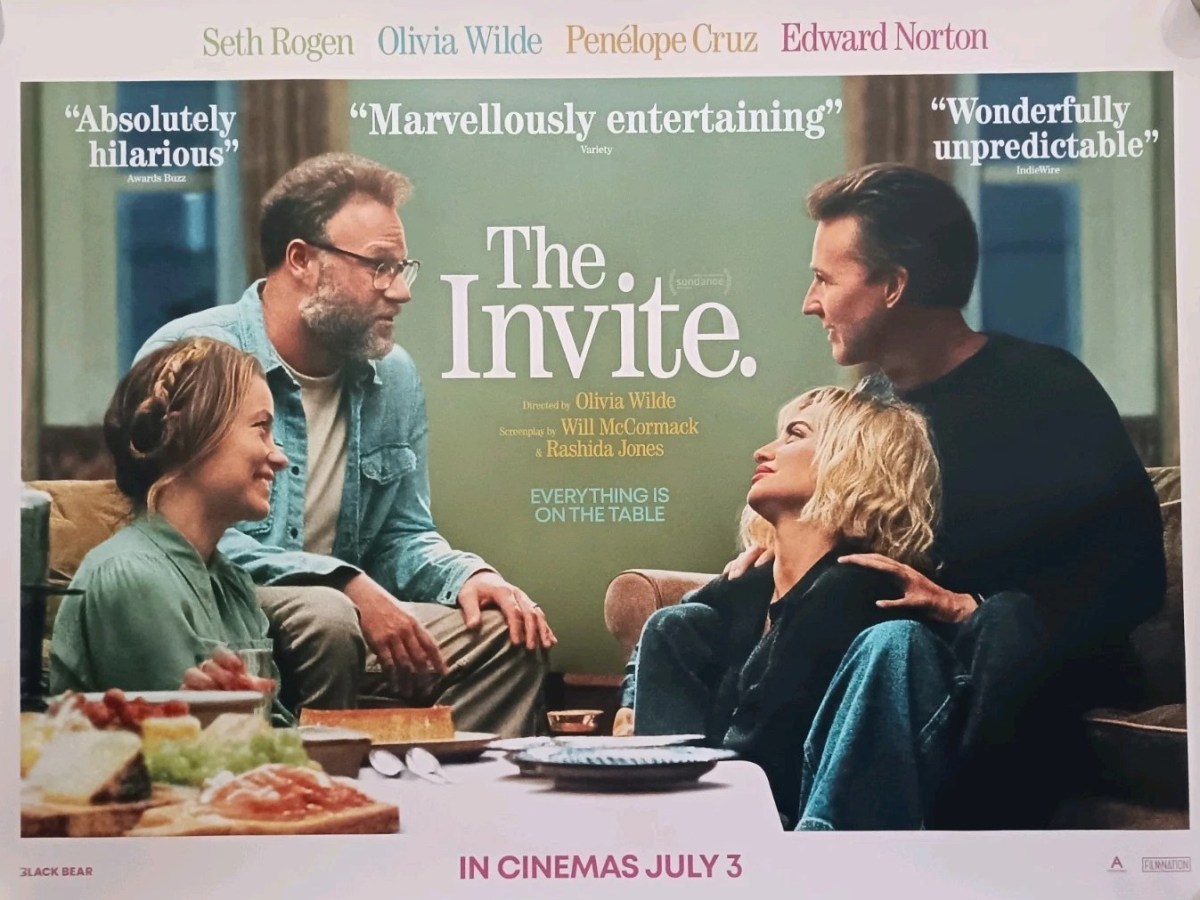
Not so much a gabfest as an outbreak of verbal diarrhea. This exceedingly slim offering is what passes these days for the kind of movie that might be appreciated by an intelligent audience or served up as counter-programming to the onslaught of the summer blockbuster.
But it’s as if the idea of marriages in trouble is novel, never been properly examined until the current new wave came along – for some reason Alan Parker’s Shoot the Moon (1982) with Albert Finney and Diane Keaton as the warring couple came to mind as an example of how easily this subject had been dealt with in the past without the necessity for coming at it all coy.
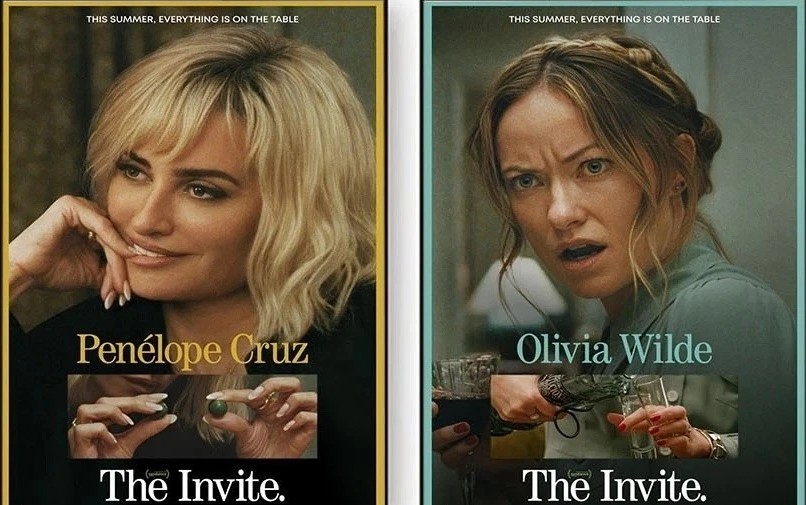
Everyone rabbits on at forty words to the dozen, talking over each other, repeating themselves as if the notion of editing had never occurred to anyone so that it ends up as a stagey four-hander, not far I would imagine from the stage play on which it is based.
And it has one of the most infuriating scores I have ever come across. I’m sure it’s intended as post-ironic or some such. Instead of allowing the words to speak for themselves the dialog is heavily overlaid with ominous music whose intensity is heightened as emotions rise.
Worse, this is primarily a shaggy dog story and a good bit of bait-and-switch, allowing the characters (Shock! Horror!) to utter such words as “double penetration” and “pegging” (Google them) – all of which sexual preferences are laboriously explained to married apparent innocents Joe (Seth Rogan) and Angela (Olivia Wilde) by more worldly pair Pina (Penelope Cruz) and Hawk (Edward Norton).
The invite in question is to join in a sex party, to turn the stuffed shirts into swingers. Olivia is jealous of the orgasms she can hear from Pina who lives upstairs in a weird apartment block where despite each couple living above or below the other they can still, by quirk of narrative or architecture, see each other through the window (go figure) which comes in handy if one of the couples is a secret exhibitionist and the other a voyeur.
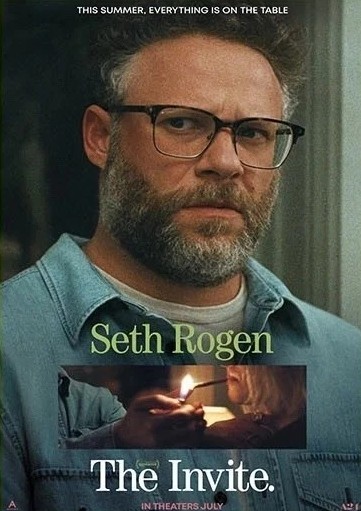
Our foursome represent little more than standard cliches – stoner Joe and his neurotic wife who has to tidy up the kitchen before embarking on sex, the supposed charmer Hawk and the more obviously sexy Pina who is not averse to bursting out of her cleavage. There are jokes about exhibitionism and about Hawk not being musclebound enough to be a firefighter.
There are about ten worthwhile minutes in the entire picture when the characters properly open up, though Joe revealing himself as a failure, Angela as a self-centered stay-at-home mum with artistic ambitions she cannot be bothered to properly explore, and Hawk as not as tough as he seems, is not enough to prop up the rest of the picture.
For a comedy, even a purportedly sophisticated one what with all this talk about sex, it’s remarkably light of the laff front and in any case any opportunity for the audience to even snigger is seriously jeopardized by having a director (Olivia Wilde) with no sense of comic timing, barely leaving a millisecond between lines that could elicit a laugh, guaranteeing that nothing has the opportunity to strike home.
I’m no big fan of Seth Rogen (Good Fortune, 2025) since as far as I can tell he always plays the same character but at least he’s not as mealy-mouthed as the others. But when you rely on tantrums to inject some life into a picture you’re on a hiding to nothing.
I can see why this has received generally good reviews. It’s the critics’ job to push in front of audiences a discerning movie or two, but, as often as not, they are so determined to prod the audience that they nudge them towards movies that barely deserve the praise.
Edward Norton (A Complete Unknown, 2024) has been confined to small parts of late so it’s good to see him last out a full film. Penelope Cruz (Ferrari, 2023) offers more emotion, sass and psychology than the others. Olivia Wilde (Babylon, 2022) overacts like crazy.
In her capacity as director, count this as another misfire for Olivia Wilde (Don’t Worry, Darling, 2022). Will McCormack (Toy Story 4, 2019) and Rashida Jones (On the Rocks, 2020) adapted the play by Cesca Gay.
This had an old-fashioned platform release in the U.S., which meant it could rack up decent averages by only being shown in a handful of cinemas, allowing marketeers to dupe the media into thinking it was a hit.
Steer clear.


