Normally around this time of year I’m – to use a Scottish expression – “bumming my load”, that is, boasting (there’s no other word for it if I’m being honest) about all the books I’ve written which IMHO you should be putting on your Xmas list.
But this time it’s different – because I’m “bumming your load.”
This time I’m celebrating your input into my humble Blog.
Last month I hit 50,000 views and this month I’ve already passed that figure.
So these kind of stats are phenomenal and though I contribute by doing the writing the bigger part in this is down to you, the reader, who has remained with me constantly and clearly informed others about the Blog.
When I first started the Blog I had no idea I’d still be writing it five years later. In the early days I was lucky if I could attract 200 views a month. Gradually, my figures crept up, but still nothing really to boast about. Every year I seemed to attract more views. By May this year I was at 10,000 views a month.
And then the Blog just exploded.
To go from 10,000 a month to 50,000 a month in just six months is beyond my comprehension. At this rate I’ll be easily surpassing half a million a year.
And this is all without the help of social media. I don’t post on Instagram, X or Facebook. I’m not on Rotten Tomatoes or any other critic-friendly or aggregate site.
The only place you can find my Blog is where you’re supposed to find it – on WordPress.
My Xmas has come early so many thanks to you all.
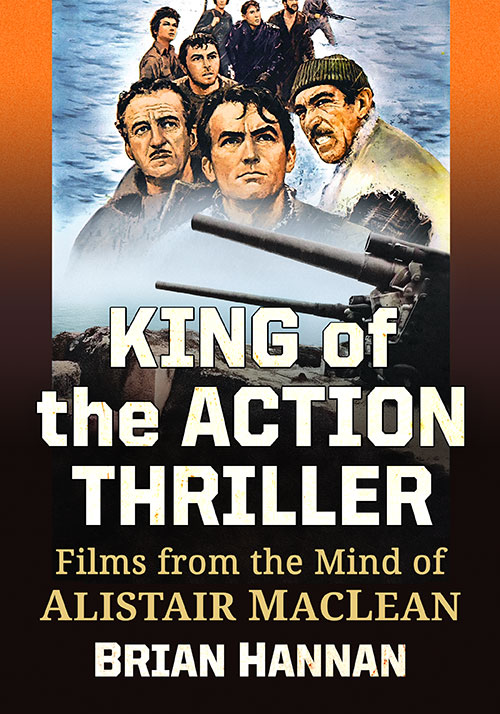
Now back to the shameless stuff. My latest book King of the Action Thriller – Films from the Mind of Alistair MacLean has been a long time coming but now it’s at the final stages of editing and is due out in February 2026. MacLean’s imagination, you might recall, was responsible for, among others, The Guns of Navarone, Where Eagles Dare, Breakheart Pass, Bear Island, Ice Station Zebra, Fear Is the Key and Puppet on a Chain.
I even found a long-lost screenplay he wrote that was never made. Eighteen of his books found their way onto the big and small screen.
You can order King of the Action Thriller it direct from the publisher McFarland or on Amazon and other sites and bookshops.
If you fancy going further into films of the 1960s I can recommend some other books to you. Admittedly, these are all books I’ve written but I did say this was a shameless plug.
Here are some of the titles:
The Making of The Magnificent Seven – Behind the Scenes of the Pivotal Western;
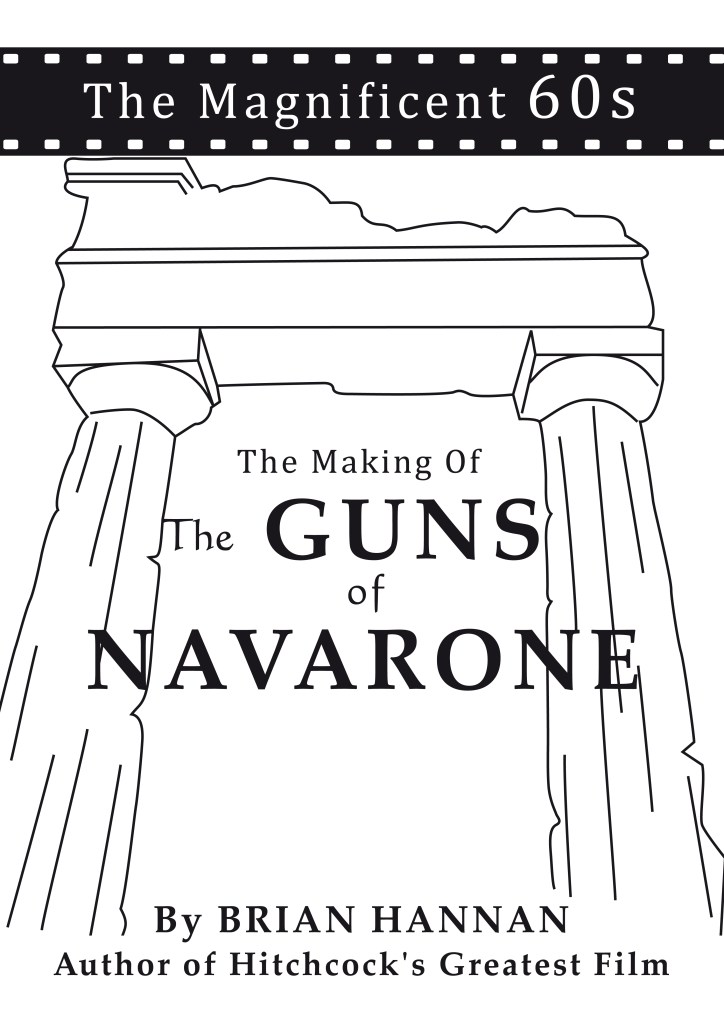
The Making of The Guns of Navarone;
The Making of Lawrence of Arabia;
The Gunslingers of ’69 – Western Movies’ Greatest Year;
and The Magnificent ‘60s – The 100 Most Popular Films of a Revolutionary Decade.
If you’re interested in more about the actual business of the movies you could dip into my books about reissues/re-releases and how Hollywood came to release new movies everywhere all at once. Check out my 250,000-word tome Coming Back to a Theater Near You, A History of Hollywood Reissue 1914-2014 and In Theaters Everywhere, A History of the Hollywood Wide Release 1913-2017.
I’m in the process of making available in printed form the reviews from the Blogs. I originally published these under the title 1960s Movies Redux but I’ve revamped these to now include illustrations and they’ll be available shortly in paperback and Kindle format under the title 1960s Movies Vol 1 (then Vol 2, Vol 3 etc).
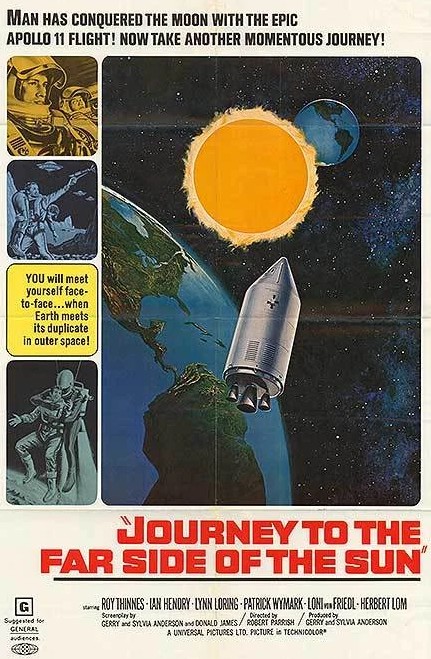
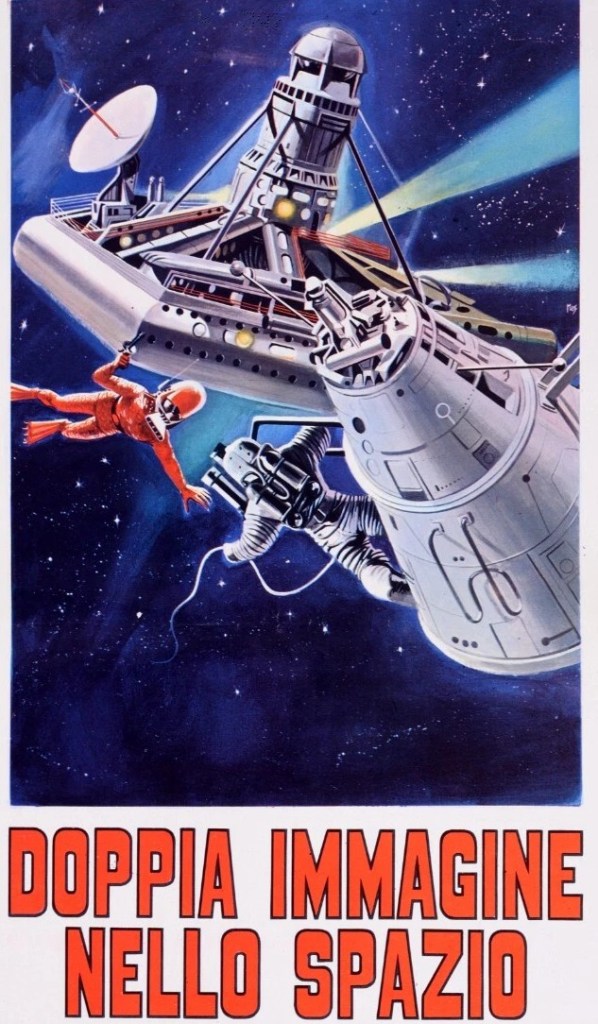
Bring Gerry and Sylvia Anderson into the equation and it’s a straightforward free pass of the cult kind. For the fanboys, the inventors of Supermarionation (Thunderbirds Are Go!, 1966) live on an exalted plane immune from criticism. however, sci fi buffs have tended to be less than impressed by the pair’s first venture into (to use a Walt Disney phrase) “live-action.” So response swings between these extremes. I fit into neither category so I come at this with something of an open mind and for a variety of reasons found it a far more enjoyable experience than I had anticipated, though I hazard a guess that on the big screen the flaws in the special effects would have been more obvious.
Some aspects even have a contemporary chime, the X-ray security screening machines, for example, and the fact that there’s no such actual entity called Europe and if you want to advance a project you have to navigate your way through the representatives of several countries as well as the hovering financial weight of the United States, bristling at being asked to pay more than its share but worried about being excluded.
And there’s no ice-cool scientific boffin. Instead we have the choleric, not to mention bombastic, Jason Webb (Patrick Wymark). Nor do non-combatants scoot through training. The rigors potential astronauts are put through in the likes of The Right Stuff (1983) or Apollo 13 (1995) are nothing to the body-wringing and mind-blowing experience of John Kane (Ian Hendry).
His companion space buddy Col John Ross (Roy Thinnes) is well-drawn for a sci fi adventure. He’s worried that exposure to radiation and worse in space has knocked his masculinity on the head, his wife Sharon (Lynn Loring) complaining it has left him sterile. Though it turns out she’s a wily creature, secretly using contraception.
We also get a spy, Dr Hassler (Herbert Lom), and it’s not so much that he has a gadget – a mini camera secreted in a false eyeball – than the detail involved in him retrieving the film. In most movies there would be no gap between the reveal of the gadget and the production of its secrets. But here Dr Hassler has to go through a whole procedure, dipping the eyeball into four solutions and dabbing it with this and that, before he can view a single frame.
The picture breaks down into a straight three-act vehicle. The first section getting to lift off, then the journey including the kind of phantasmagorical event you found in 2001: A Space Odyssey (1968) and which even Christopher Nolan relied upon in Interstellar (2014), and arrival.
Most sci fi movies play fast and loose with audiences, rarely remaining true to the logic of their invented worlds or concepts. This sticks to its original notion even if that means ending up with a distinctly downbeat ending. Initially, the astronauts are searching for a new planet, whose orbit is similar to Earth, but on the other side of the sun. This being the year 2068, distance is no object and they reckon it’s a six-week return trip.
But what the astronauts discover on arrival at the new planet is a nightmare situation, that in terms of ability to drive you mad skews close to enigmatic British TV series The Prisoner (1967) or Lost (2004-2010) before it jumped the shark. Ross and Kane have landed on a doppelganger planet and the movie takes this world to its logical conclusion. It’s the real parallel universe, or multiverse in the current vernacular, except everything happens the same as on Earth.
So the choleric Webb initially accuses the astronauts of cowardice, to have turned back and failed to complete their mission which would have led them to our Earth. Doppelganger literally means mirror image which eventually explains why writing goes left to right and everything is a step out of normal kilter. Identical except not quite. And stuck in a world where everything that seems real is one step away from your known reality. The kind of situation that would have been created by a mad scientist intent on torturing minds.
Ross determines to attempt to return to Earth but that means connecting what remains of his spaceship with a space vessel made on the new planet but the parts that should fit exactly don’t fit because they have designed in mirror fashion. So that’s it for your chances of a happy ending.
Left me with a nightmare feeling, the ultimate what if. As far as stings in the tail go, comparable with Planet of the Apes (1968).
For the concept as much as the clever detail, I’ve given it a higher mark than maybe it deserves.
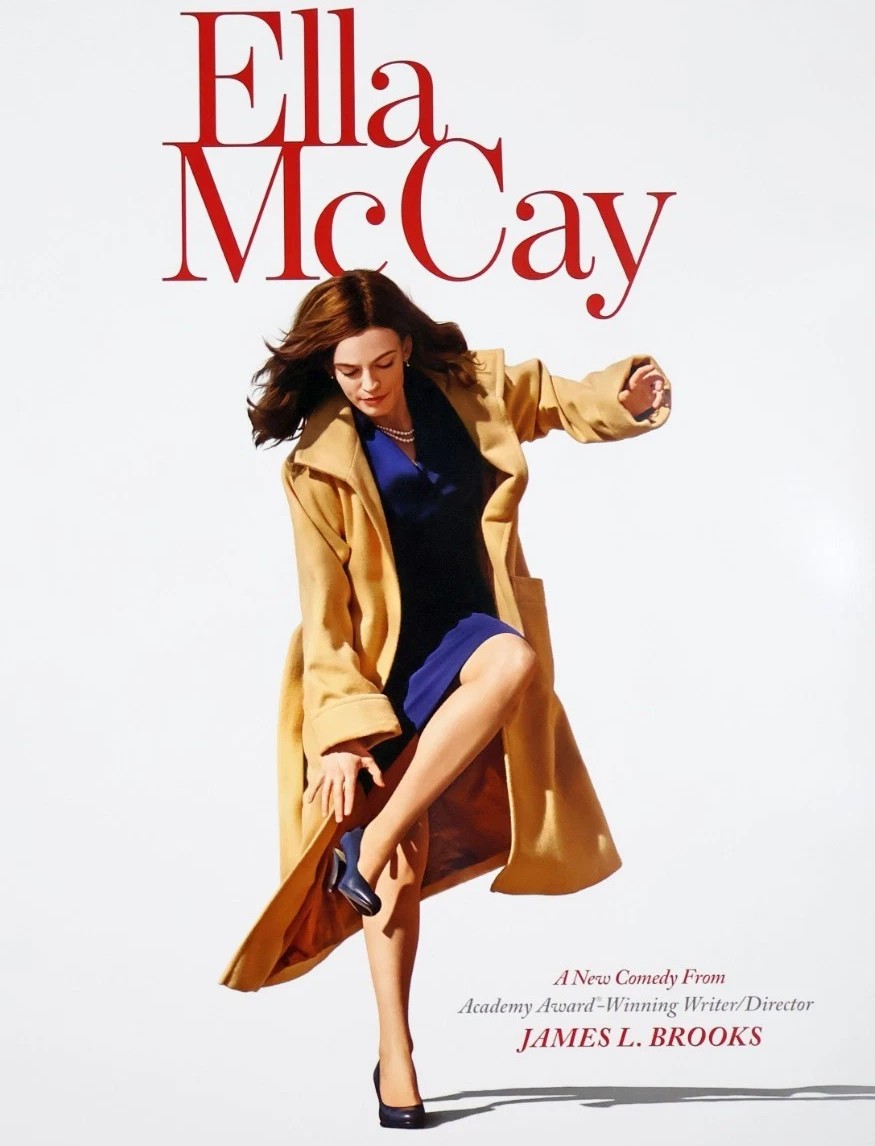
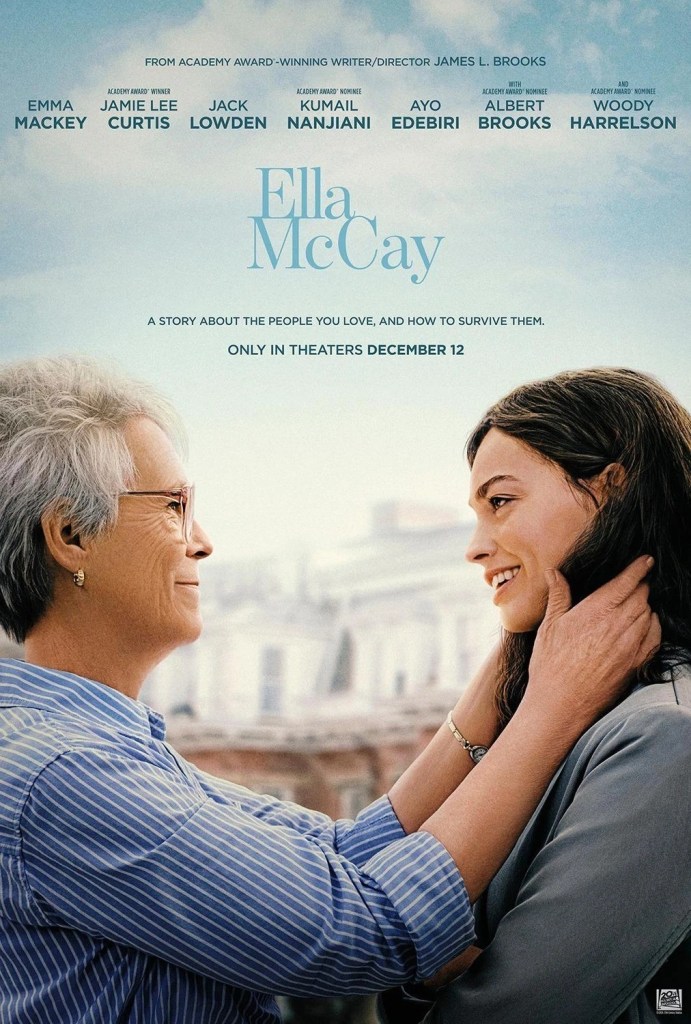
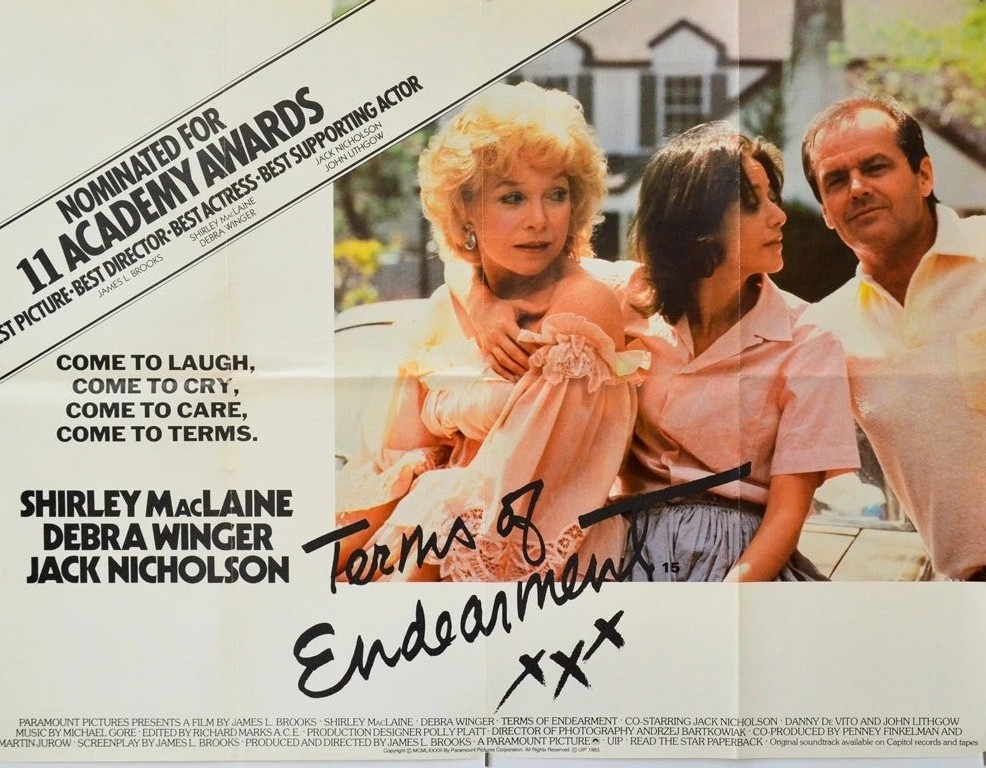
I should have taken notice of the horrific opening weekend for Ella McCay – just $2 million return on a $35 million budget. But it seemed unfair to ignore a new picture by the Oscar-winning writer-director of Terms of Endearment (1983), Broadcast News (1987) and As Good As It Gets (1997). Maybe I should have taken into account his cinematic rustiness, this is his first picture in 15 years, though that’s leavened by the fact he’s not exactly been prolific, including this a career spanning just eight pictures, so this could just be another gem a long time in the making.
Alas, no. It’s an unholy mess. From the set-up it presents as an expose of politics in the sharply satirical manner of Broadcast News. But all we learn about politics is the amount of time politicians spend drumming up money from sponsors in boiler rooms filled with begging employees working the phone and that be careful who you choose as a running mate because if the top person dies or – in this case – gets promoted, you’re left with someone nobody voted for and who has such little grasp of the humans she’s meant to be working for that in her ideological frenzy she bores everyone to death.
This looks as if it started one way and went another. A simple plot device could have been used to explore the problems of politicians squaring family lives with duty. Ella McCay (Emma Mackey) – promoted to governor of an unnamed state because the incumbent, Bill (Albert Brooks), is promoted elsewhere – has been caught out using a room in the government building to have lunchtime sex with restaurateur husband Ryan (Jack Lowden).
This might have done wonders for her career, given she’s such a stuffy uptight lady, and the issue would have deserved no more than a mild slap on the wrist for illicit use of government property, and highlighted the problems of work-life balance in the business. Instead, it’s forced to do triple duty in a bizarre manner.
A journalist with so little grasp of politics is dumb enough to think this is actually an expose worth blackmailing someone over. And a politician with so little grasp of PR is dumb enough to think this poses a threat. And a husband with probably a very good grasp of how business works tries to pay off said journalist only for the whole farrago to explode in everyone’s face and result in a vengeful husband instigating divorce proceedings and blaming her for the bribery.
Oh dear, these bad men damaging a young woman’s promising career. Except the head of her political party calling her to book is a woman and it’s Ryan’s mother who puts him on collision course with his wife. Ella is just tone-deaf to everyone except herself. In her inauguration speech she fails to thank Bill or her husband and in her first meeting with her staff drones on for so long fails to notice they are falling asleep.
Reminder of just how good James L. Brooks could be.
It’s not just Ella who’s tone-deaf it’s the director. There’s a just terrible scene where having decided to spend the night at her brother’s apartment she fails to notify her police guard and then blasts them in the morning for watching over her overnight and wasting taxpayer’s money by clocking up overtime and this is presented as if in fact her anger is proof of her innate goodness.
Rammed into this bizarre concoction is estranged dad Eddie (Woody Harrelson) whom Ella refuses to forgive for his womanizing – and in fact the only scene that actually carries any heft is the one where as a teenager she refuses to play the happy family game when he’s been caught out in a misdemeanor.
Oh, and while we’re at it, her brother Casey (Spike Fearn), an agoraphobic computer geek who happens to pocket $2 million a year on a spread betting hustle, is on hand to listen (unwillingly it has to be said) to her self-justifying rants and effort is put in to justifying his continued presence in the picture with a dumb plugged-in romance.
The main problem is that mostly Ella is on the verge of a nervous breakdown, constantly whining, bursting into tears (or screaming – the apparent alternative) and what sets out to show how women are constricted in politics actually instead reveals how someone constitutionally unfit for the hard graft of politics becomes a liability. But, wait, hooray, she does good in the end.
Everyone overacts. So there’s no excuse except directorial slackness for usually dependable actors like Woody Harrelson (Now You See Me, Now You Don’t, 2025) and Jamie Lee Curtis (The Last Showgirl, 2024) and for Emma Mackey (Emily, 2022), face in constant fidget, inexperience might mitigate. Jack Lowden (Tornado, 2025), done no favors by the script, and veteran Albert Brooks (Concussion, 2015), in his first movie in a decade, are better, but that’s not saying much.
Just awful. American moviegoers were right to give this a body swerve.
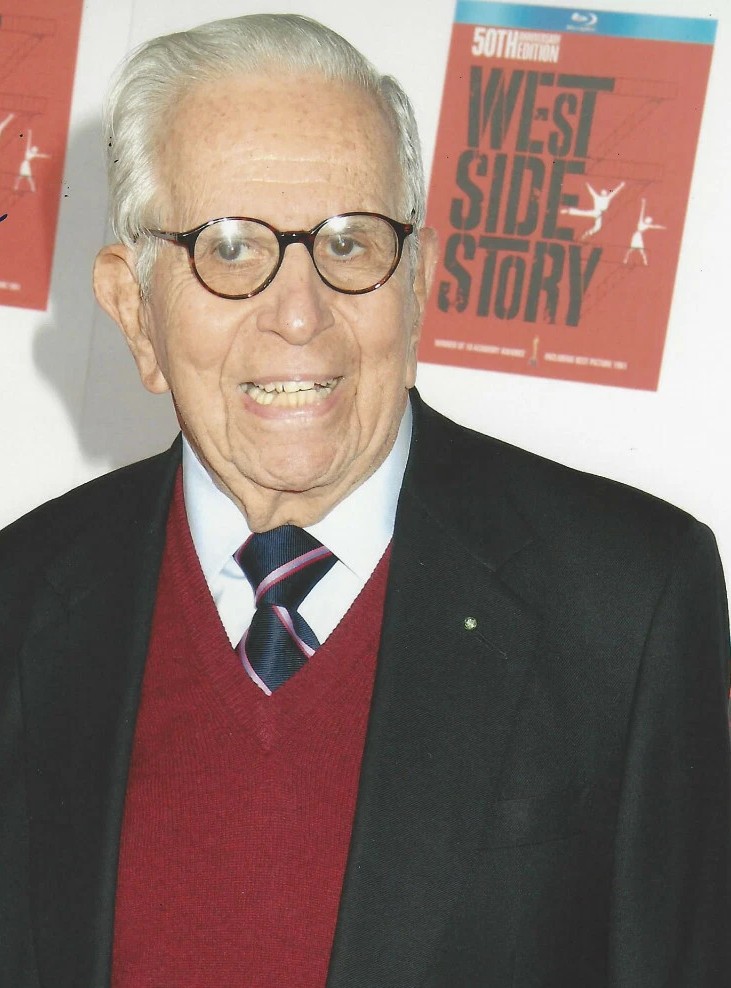
You don’t just waltz into Hollywood and start churning out classics like Some Like it Hot (1959), The Magnificent Seven (1960), West Side Story (1961) and The Great Escape (1963). Usually, there’s a long apprenticeship, especially for a producer. Walter Mirisch spent nearly a decade at the B-picture coalface. And before that a year as a gofer, working his way up in the business, but on one of the smallest rungs of all, at Monogram.
Born in 1921, the of a Polish immigrant tailor specializing in custom-made garments, one of whose customers was George Skouras, owner of a cinema chain, Walter, not surprisingly in the Hollywood Golden Age, started out an even lower rung, as an usher in the State Theater in Jersey City, owned by Skouras, an hour’s commute from his home in the Bronx, earning 25 cents an hour. He was quickly promoted to ticket checker.
His older brother Harold was a film booker, receiving an education in negotiation, and then as a cinema manager in Milwaukee flexed his entrepreneurial muscles by starting a concession company. After the family moved to Milwaukee, Walter attended the University of Wisconsin and then Harvard Business School. Physically unfit for active duty during the war, he worked for Lockheed in Los Angeles on its aircraft program in an administrative capacity.
While Harold was a highflyer at RKO, acting as chief buyer and then managing its cinema chain, Walter entered at a lower level in 1946 as a general assistant to Steve Broidy, boss of Monogram, maker of B-pictures of the series variety – Charlie Chan, The Bowery Boys, Joe Palooka, shot within eight days and at budgets under $100,000.
After badgering Broidy for a bigger opportunity, he was granted permission to hunt for a property he could produce. For $500 he found a Ring Lardner short story about a boxer, but Broidy felt the main character was unsympathetic. Stanley Kramer did not and snapped it up to make Champion (1949).
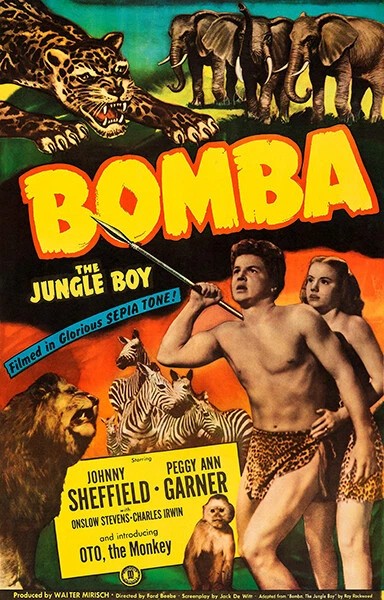
Walter’s first ventures were in film noir. Fall Guy (1947), based on a story by Cornell Woolrich, made for $83,000, broke even. I Wouldn’t Be In Your Shoes (1948) followed, from a Woolrich novel but there was a drawback to being a producer. He was taken off the payroll and his $2,500 producer’s fee didn’t compensate for the loss of a $75 weekly salary. The answer was to invent his own series, ripping off the Tarzan pictures for Bomba the Jungle Boy (1949), starring Johnny Sheffield who had played Tarzan’s son and utilizing stock footage from Africa Speaks. Apart from his fee, Walter had a 50 per cent profit share.
For six years, these appeared at the rate of two a year, earning Walter a minimum of $5,000 and he soon branched out into other genres, sci fi like Flight to Mars (1951) and westerns such as Cavalry Scout (1951) and Fort Osage (1951), both starring B-movie stalwart Rod Cameron.
Monogram had decided to move upmarket with the introduction in 1951 of Allied Artists, its sales division run by Walter’s brother Harold, with Walter acting as an executive producer and other brother Marvin as treasurer, turning out solid B-picture-plus hits like Riot in Cell Block 11 (1954).
When the threat from television hit the B-picture market Allied went properly upscale, investing in William Wyler western Friendly Persuasion (1956) and Billy Wilder’s Love in the Afternoon (1957), both starring Gary Cooper. Their failure at the box office sent Monogram back to basics.
But the Mirisches wanted more of the big time. The three brothers turned to United Artists and negotiated a deal for that studio to finance four pictures a year, cover the brothers’ overhead and salaries and throw in a profit share. The Mirisch Company was born and their creative credit within the industry was so high – and the deals they offered, it has to be said, so advantageous to their creative partners – that soon they were scooping up big names like Wilder (he made his next eight pictures for Mirisch), William Wyler, Gary Cooper, Tony Curtis, Doris Day, Audrey Hepburn and Lana Turner. One of the first pictures announced was a remake of King Kong (1933). Wilder planned My Sister and I with Hepburn. John Sturges was attached to 633 Squadron. Doris Day would star in Roar Like A Dove and there were two-picture deals with Alan Ladd and Audie Murphy.
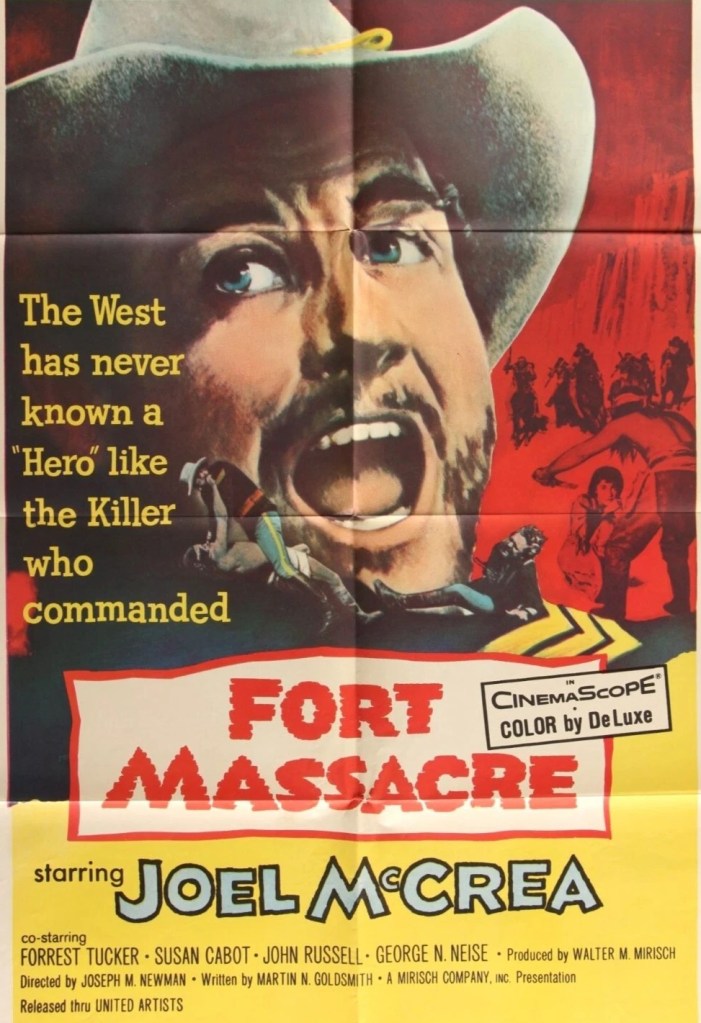
Their first two efforts didn’t break the budget bank, Fort Massacre (1958) starring Joel McCrea, and Man of the West (1958) headlined by Cooper, but neither were they hits. Hoping to provide ongoing financial sustenance, Walter turned to television, turning Wichita (1955) into the series Wichita Town (1959), and further television contributions were mooted for UA Playhouse but that and Peter Loves Mary and The Iron Horseman failed.
Movies proved a better bet and Walter struck gold with the third picture in the Mirisch-UA deal, Some Like it Hot (1959), costing $2.5 million, an enormous financial and critical success and tied down a triumvirate of top talent in John Wayne, William Holden and John Ford for western The Horse Soldiers (1959), the actors pulling down $750,000 apiece.
Such salaries sent the nascent company on a collision course with traditional Hollywood. The majors “screamed” that independents were overpaying the talent, hefty profit shares accompanying the salaries.
On top of that in 1959 in the space of two weeks Mirisch spent a record $600,000 pre-publication on James Michener blockbuster Hawaii and tied up a deal to film Broadway hit West Side Story. Within two years of setting up, Walter Mirisch announced a $34.5 million production slate, earning the company the tag of “mini-major,” as part of a shift in attitude to a “go for broke” policy. By the start of the new decade it was by far the biggest independent the industry had ever seen, handling $50 million worth of product, including The Magnificent Seven and The Apartment (1960). Average budgets had risen from $1.5 million to $3.5 million.
To outsiders, assuming the Mirisch venture was Walter’s first, it might look as if Walter had knocked the ball out of the park in a very short space of time, but, in reality, by the time he produced Some Like it Hot, he had been responsible for thirty-three pictures. Not bad for a “beginner.”
Explained Walter Mirisch, “Producing films is a chancy business. To produce a really fine film requires the confluence of a large number of elements, all combined in the exactly correct proportions. It’s very difficult and that’s why it happens so infrequently. It takes great attention to detail, the right instincts, the right combinations of talents and the heavens deciding to smile down on the enterprise. Timing is often critical.”
What would have happened to Allied Artists, for example, had Wilder made Some Like it Hot there instead of Love in the Afternoon?
Added Walter, “Where is the country’s or the world’s interest at that time? What is the audience looking for? Asking them won’t help because they themselves will tell you they don’t know what they’re looking for. They don’t know what it is until they’ve seen it. All the elements must come together at exactly the right time. So to say one embarks with great certainty on such an endeavor is an exaggeration.”
After 33 films Mirisch hit a home run with Some Like It Hot and continued to do so throughout the 1960s chalking up further critical and commercials hits like The Pink Panther (1964), In the Heat of the Night (1967) and The Thomas Crown Affair (1968) and vacuuming up a stack of Oscars.
SOURCES: Walter Mirisch, I Thought We Were Making Movies, NotHistory (University of Wisconsin, 2008); “Mirisch Freres Features Outlet Via United Artists,” Variety, August 7, 1957, p16; “3 Mirisch Bros Set Up Indie Co for 12 UA Films,” Variety, September 11, 1957, p7; “RKO vs Mirisch Kong,” Variety, September 11, 1957, p7; Advertisement, “United Artists Welcomes The Mirisch Company,” Variety, November, 13, 1957, p13; “Brynner, Mirisch Pledge UA TV Tie,” Variety, January 1, 1958, p23; “Mirisch Freres 6 By Year-End,” Variety, March 19, 1958, p3; “Majors Originated Outrageous Wages,” Variety, December 10, 1958, p4; “UA-Mirisch’s $600,000 For Michener’s Hawaii,” Variety, August 26, 1959, p5; “Mirisch West Side Story,” Variety, September 2, 1959, p4; “Mirisch Takes on ‘Major’ Mantle With 2-Yr $34,500,000 Production Slate,” Variety, October 21, 1959, 21; “Mirisch Sets $50,000,000 14-Pic Slate; Biggest for Single Indie,” Variety, August 17, 1960, p7.
Self-important essay on the self-entitlement of journalists who see themselves as victims, hated by the authorities whose activities they expose and hated by the public for being so cold-blooded – it opens with a television cameraman getting footage of dead people in a car crash before phoning for an ambulance – and for filming stuff that genuine victims did not want filmed.
Filmed in cinema verite style and covering much of what went down in Chicago 1968 when demonstrators clashed with police and the National Guard and tanks rolled through the streets. Certainly strikes a contemporary chord when filming is an universal pastime and many criminals have been brought to book and various issues highlighted by social media.
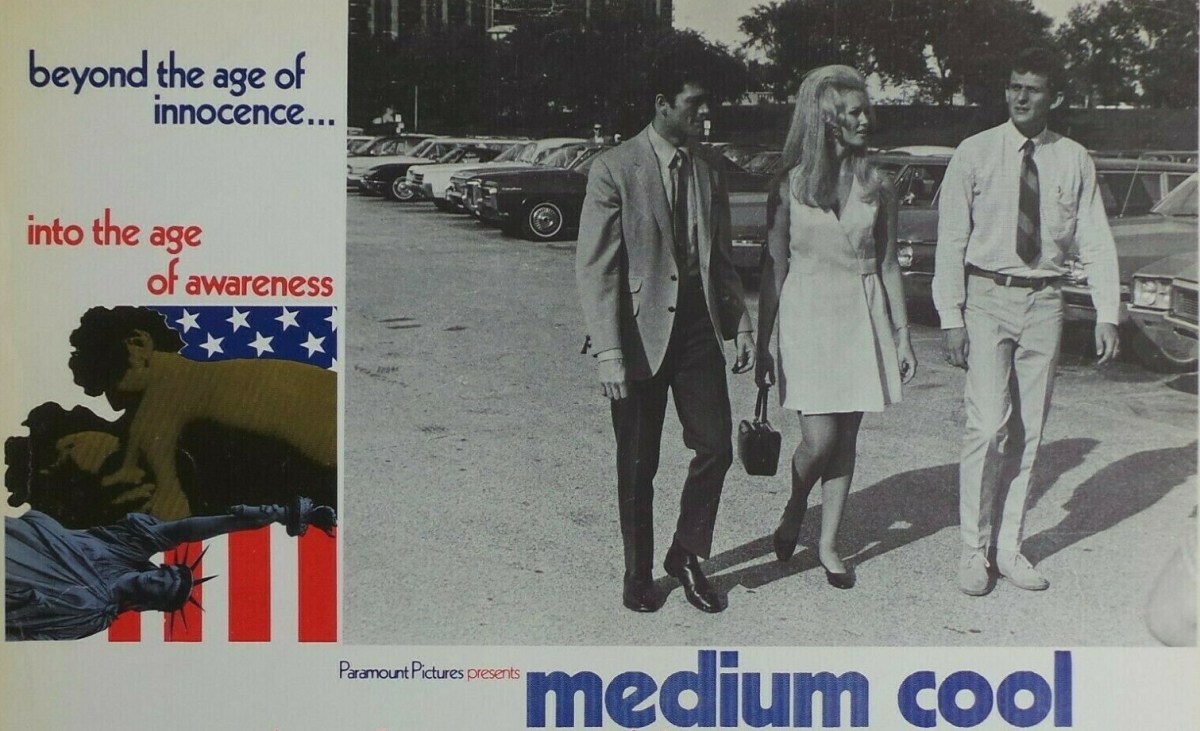
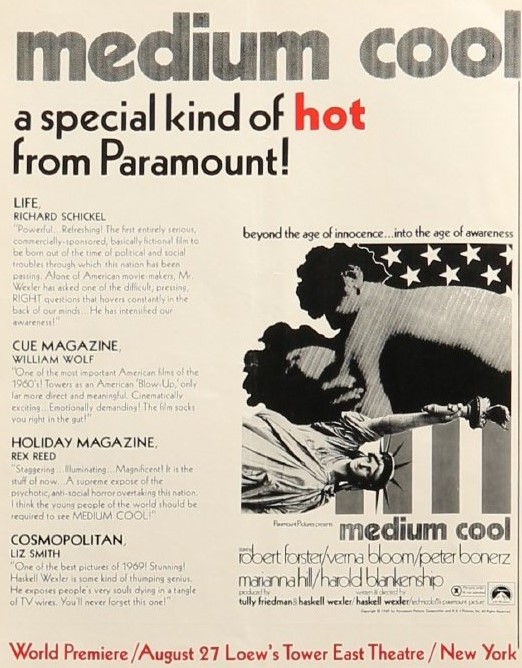
As if making its point about action and controversy versus talking heads, the movie begins with talking heads, discussing the role of television and journalism in society, with cameramen telling stories of occasions when the public they were trying to help turned on them. The narrative is slight, following television cameraman John Cassells (Robert Forster) going about his business, and betraying girlfriend Ruth (Marianna Hill) with single mother Eileen (Verna Bloom). John is fired after objecting to his television station handing over to the cops and the F.B.I. footage he has filmed of demonstrations and incidents.
Because of the documentary style, much of what has been filmed carries particular resonance as a sign of the times, not so much the police violence because that is widely available elsewhere, but simpler scenes that seem far truer to life. Eileen’s son Harold (Harold Blankenship) is interviewed by an off-screen canvasser about his home life, age, brothers and sisters and so on. Questioned about his father, he explains his father is not at home. “Where would I find him?” asks the interviewer. “Vietnam.”
The boy’s mother Eileen, a teacher who has to manage five grades in one classroom, and John are skirting round the physical side of their romance until jokingly John takes the plunge. “I know your husband’s not going to come charging through the door.” “Buddy’s dead.” The director could already have delivered this information to the audience in talking-heads-fashion but this carries probably the biggest dramatic punch in the picture. This family provides a solid core for a movie which makes its points in more hard-hitting style.
Questions of respect and ethics loom large. Making no bones about finding audience-grabbing material, John is disgusted that people steal hubcaps and the radio antenna from his car when clearly he feels news journalists should be given more respect. But that the public hold an opposite view is clear from Ruth who instances turtles filmed going the wrong way after nuclear explosion distorted their instincts and they went inland to lay their eggs (where they would die) rather than out to sea. She complains that none of the cameramen present thought to turn the turtles round and show them the correct way.
A plot point allows Eileen and John to mingle with the demonstrators during the actual Democratic Convention. There is a shock – and ironic – ending in which John is himself photographed by a passerby after being involved in an accident.
Robert Forster (Justine, 1969) carries off the arrogant victimized reporter well and in her debut Verna Bloom (High Plains Drifter, 1973) is excellent as the real victim of the system while Mariana Hill (El Condor, 1970) raises the tempo as the volatile girlfriend. Peter Boyle (Taxi Driver, 1976) has a small part.
Oscar-winning cinematographer for Who’s Afraid of Virginia Woolf (1966), Haskell Wexler (who also wrote the script) makes a notable debut as director, mixing fact and fiction, taking a political stance and introducing a revolutionary camera technique. Half a century on, not much has changed in attitudes to media ethics although it is another photographic revolution via social media that is leading the discussion in what takes top billing in terms of news. Its content has led the film to be seen as a landmark of the cinema.
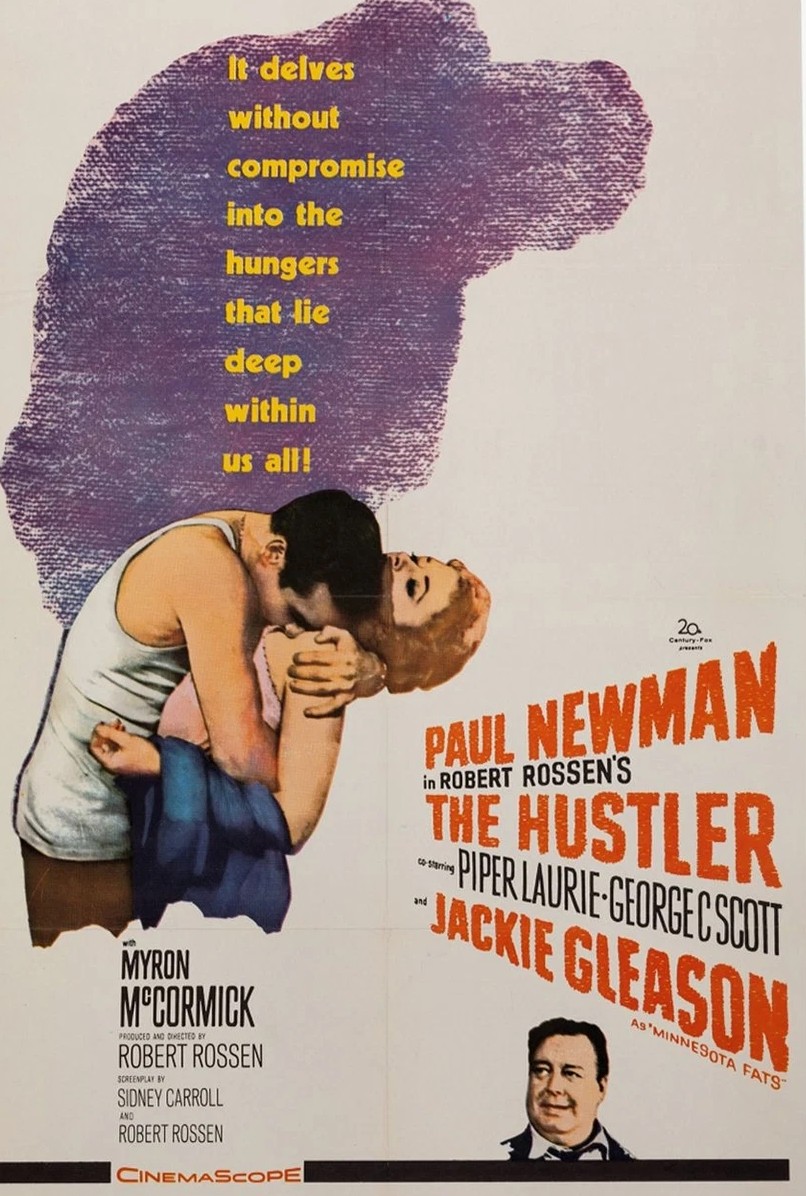
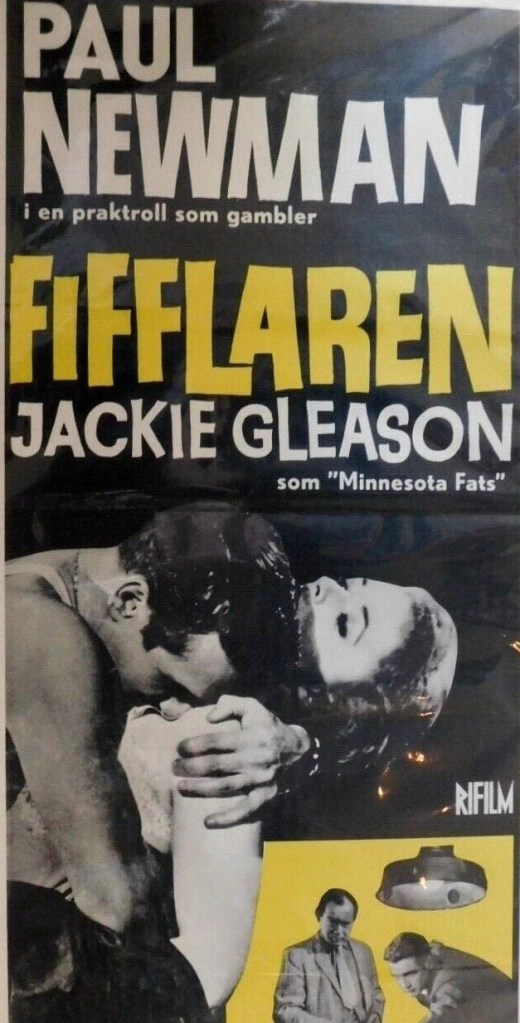
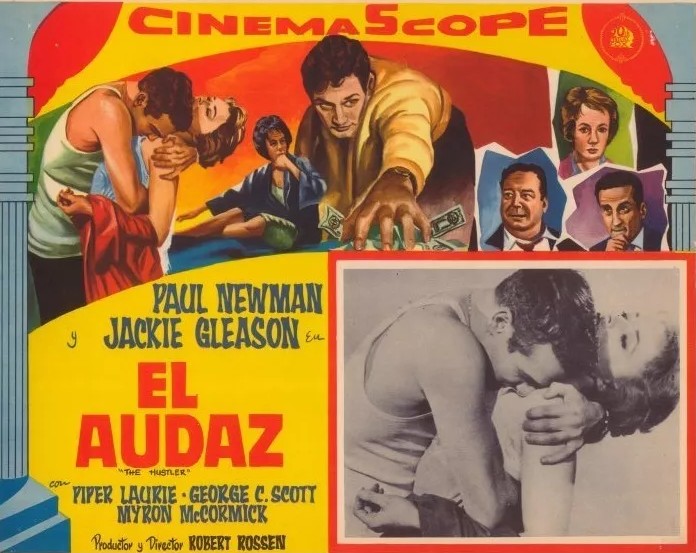
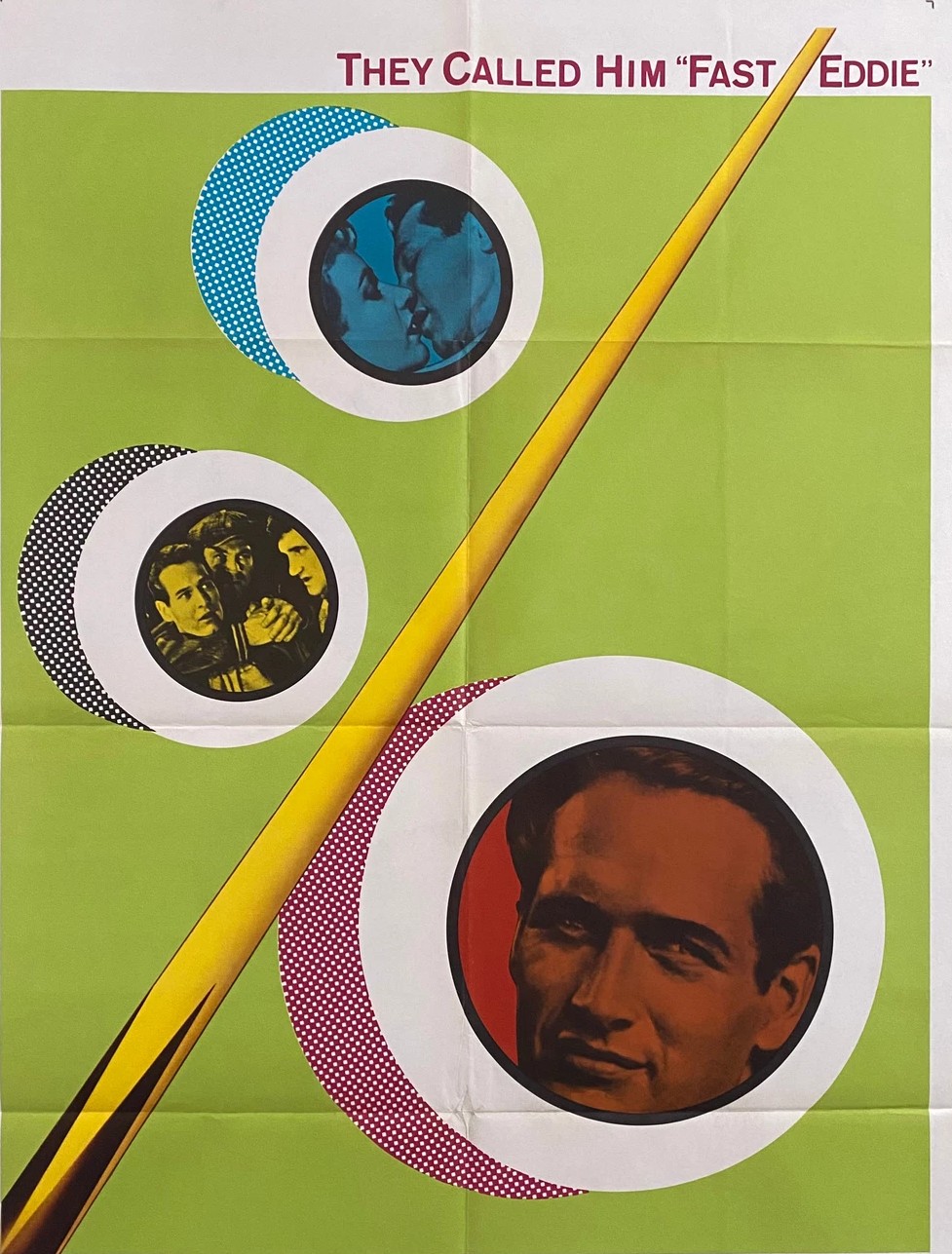
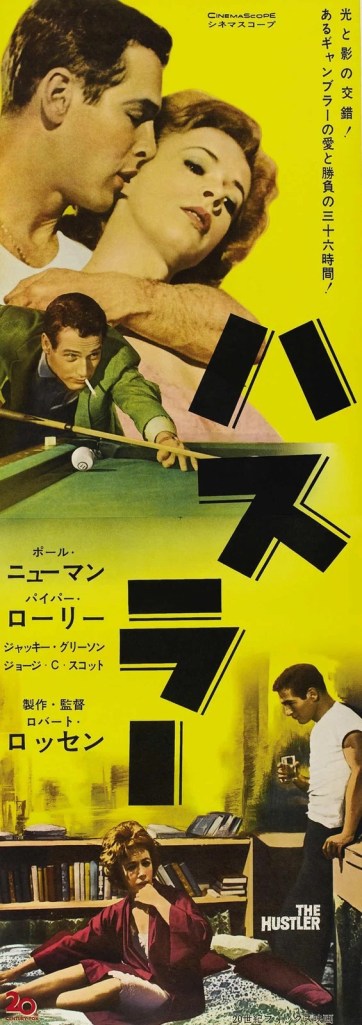
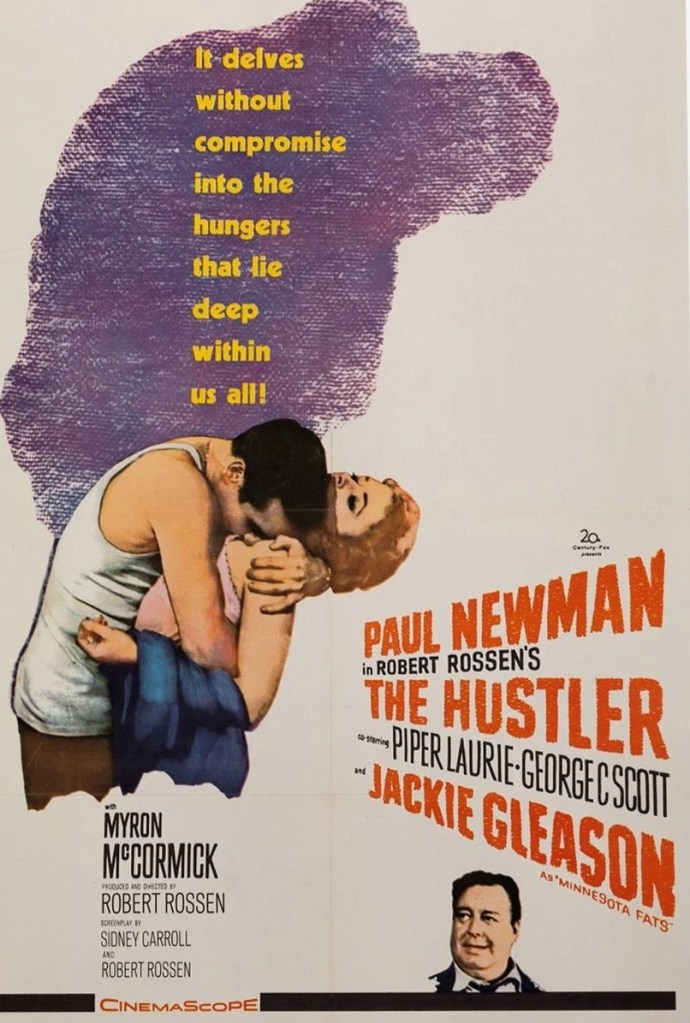
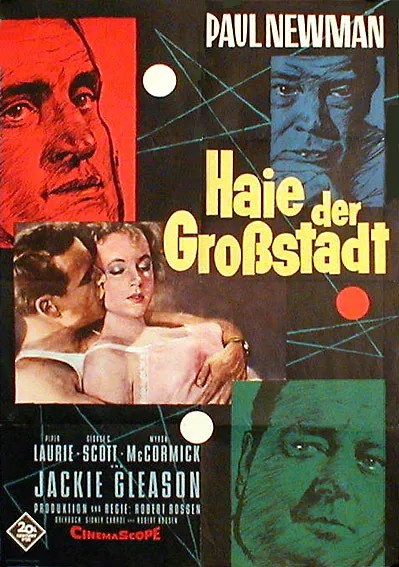
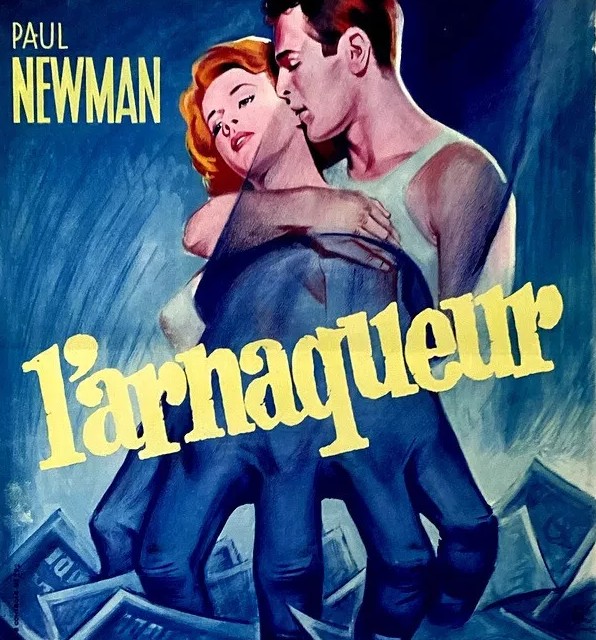
While Twentieth Century Fox head honcho Spyros Skouras initially balked at the title, with its connotations of prostitution, by the time the movie appeared that subject matter was less contentious thanks to critical and commercial big hitters Butterfield 8 (1960) and Never on Sunday (1960). Given that the idea of a movie set in a poolroom was going to be a hard sell to a female audience, despite the marquee lure of Paul Newman, the studio gave marketeers free rein to pitch it as a raw, sex-oriented drama.
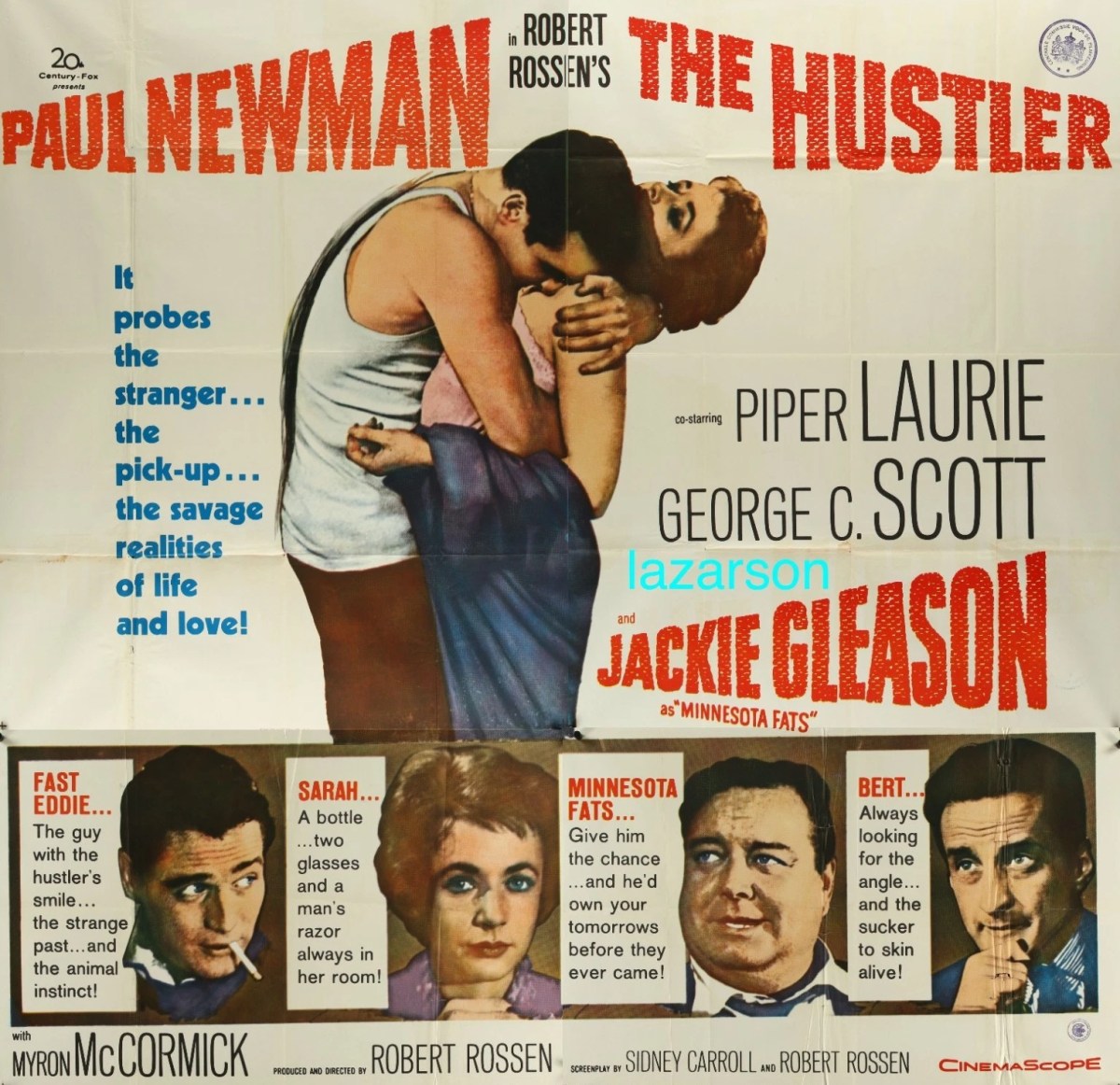
There’s little sign of a pool cue in some of the artwork. Instead, we have Paul Newman lustily nuzzling Piper Laurie’s neck or bosom. The taglines promise something far removed from a sports picture.
“It probes the stranger…the pick up…the savage realities,” screamed the main tagline. Another tempted with: “It delves without compromise into the inner loneliness and hunger that lie deep within us all!” In other words we’re talking about sex, not love, and casual sex at that, the world of the one-night stand between consenting adults for whom marriage is the last thing on their minds. “The word for Robert Rossen’s The Hustler is prim-i-tive” suggested out of control lust.
Fast Eddie Felson (Newman) has “the animal instinct.” Sarah (Piper Laurie) has a “bottle, two glasses and a man’s razor always in her room.” Bert (George C. Scott) is on the look-out for the “sucker to skin alive.”
Those images which did show a cue and pool balls did not suggest an august sport like football or baseball, not with a tagline like “he was a winner, he was a loser, he was a hustler.”
With such talented actors to hand, the Pressbook wasn’t short of good stories relating to the actual movie rather than the kind of snippets that might appeal to an editor on a slow news day. So we learn that Piper Laurie continually limped, Method-style, around on the set. “When I limp in the picture, I don’t want to act it. It’s something that has to be a part of me, something of which I am no longer conscious, apart from its being a physical defect. I must be able to limp as if I had a bad foot from birth.”
Laurie had made so few pictures that her name wouldn’t be on any director’s wanted list and what she was best known for – ingénue roles when a contract player for Universal (who gave out that she bathed in milk to keep her skin soft) opposite the likes of Tony Curtis – wouldn’t have inspired confidence. Robert Rossen might well have spotted her in two Emmy-nominated performances in successive years including Days of Wine and Roses (1958), but instead said he remembered her for “a sensitive characterization” from a stage production of Rosemary.
Ames Billiards Academy had once been a Chinese restaurant so boasted a balcony. This was unseen in the picture but allowed director Robert Rossen to shoot from widely varied overhead angles. The crew took over the Manhattan Bus Terminal for a day and a night. A row of lunch booths was constructed in front of the existing lunch counter. “It looked so real,” we are told, “that passers-by sat down and waited for their orders to be taken.” A nice story, and the kind often furnished by Pressbook journos, but rather fanciful, since it would be obvious what with the crew milling around and the lights and cameras and miles of cable that this was a movie set with security posted to prevent trespassing.
Just how good a pool player was Jackie Gleason, who came to the picture with a reputation for handling a cue? Well, at one point, the affable television comedian with a top-rated show, potted 96 consecutive balls.
Paul Newman plays the iconic hero as a “figure cut from the fabric of our time.” He had a firm grasp of the character. “With him it’s a question of commitment. He is so wrapped up in his drive to win and be somebody that he has no time to give of himself that which others need. It is a disease of our time, both the ambition and the isolation. I want him to be understood.”
Needless to say there was no mention of author Walter Tevis. That wasn’t so unusual in the make-up of Pressbooks, but if the marketeers these days were looking for something to write about the eclectic Tevis would be prime. He followed up The Hustler, published in 1959, four years later with sci fi The Man Who Fell to Earth, filmed in 1976 with David Bowie. A sequel to The Hustler, The Color of Money, was directed in 1986 by Martin Scorsese with Newman reprising his role and managing Tom Cruise. Tevis also wrote The Queen’s Gambit, turned into an acclaimed television mini-series in 2020 with Anya Taylor-Joy.
It should have been Frank Sinatra in the leading role, not Newman. Sinatra acquired the rights to the Walter Tevis semi-biographical novel published in 1959. When Sinatra moved onto something else and director Robert Rossen took up the slack still Newman should have been ruled out courtesy of a planned re-teaming with Elizabeth Taylor – they had worked together on Cat on a Hot Tin Roof (1959) – for the screen adaptation of Broadway hit Two for a Seesaw. Bobby Darin (Pressure Point, 1962) was being lined up instead. When illness put paid to Taylor’s involvement, Newman would have remained tied to Two for the Seesaw except he had co-star approval and none of the actresses suggested measured up.
Based on reading half the script, Newman, calling his agent at six o’clock in the morning to confirm interest, jumped at the role. Though Exodus (1960) had been a success, and he had managed to ease himself out of his contract with Warner Bros, he was not considered hot box office and he needed a part not just to consolidate his commercial standing but to provide a professional springboard that would shape his career. His previous outing, Paris Blues (1961), hadn’t carved out a clear path. As well as his salary, the actor was in line for ten per cent of the profits.
Initially, the picture was backed by United Artists and it featured in their adverts in the trade magazines in 1959. The studio had shelled out an advance to Rossen to option the rights. But when the director couldn’t find a “box office star as insurance” UA pulled out. By this point, the end of 1959, there was at least a screenplay, Rossen having called upon the services of Sydney Carroll (Big Deal at Dodge City, 1966).
Rossen shopped the package to Twentieth Century Fox which, somewhat surprisingly, signed up to the project when no major star was attached, especially as, according to Rossen, the picture “pulled no punches” with its “frank approach to people and life.” UA had promoted itself as the go-to studio for independents but by Rossen’s reckoning Fox was superior in that department because backing the movie “took some guts.”
Fox chief Spyros Skouras wasn’t keen on the title, believing, understandably, that The Hustler might signal to audiences that it was a story about prostitution. It was changed first of all to A Stroke of Luck and then to Sin of Angels. However, UA objected to the latter title on the grounds it had already registered a similar title The Side of the Angels and with some reluctance Skouras agreed to go with the original title.
It was a critical picture for Rossen, who hadn’t had a solid hit in a decade and hadn’t made a picture that could be mentioned in the same breath as All the King’s Men (1949). In part his low output was due to being blacklisted during the anti-Communist witch hunt of the early 1950s, although finally cleared. But it was as much due to his unusual method of working. “You gamble time which is money,” he said, “because you may work for six months or a year then realize the property is not quite right and your drop the while idea.” That ran counter to the general Hollywood practice where studios would press ahead with inferior product precisely because so much time and money had been spent on it. Rossen’s office was littered with abandoned projects.
Female lead Piper Laurie was also in the market for a comeback. She had bowed out of the business after Until They Sail (1958) – also starring Newman – fed up with ingénue parts, although the director had initially favored daughter Carole Rossen (The Arrangement, 1969) for the role. At one point Rossen identified Yves Montand for a top supporting role. Co-star Jackie Gleason (Soldier in the Rain, 1963), known at this time as a television comedy actor, was already a decent pool player and Newman was coached by Willie Mosconi, a fourteen-time world billiards champ. Except for one maneuver the two actors managed to achieve all the shots caught on camera. Newman believed he was good enough to beat Gleason and it cost him $50 to be proved wrong.
George C. Scott, primarily known for his work on the stage, had attracted attention with an Oscar-nominated turn in Otto Preminger courtroom drama Anatomy of a Murder (1959).
The film, budgeted at $2.1 million, was shot on location in New York City in the winter and spring of 1961. “You get certain values,” noted Rossen, “ in New York that you can’t get on the Coast (Hollywood).” The pool scenes were filmed at Ames Billiard Academy, established in 1946, near Times Square and McGirr’s. Other locations included a townhouse on East 82nd St which doubled as the Louisville home of the billiard player Findley and the Greyhound Bus Station in Manhattan even though it lacked a dining area and the one built on the premises confused regular customers.
Rossen spent five weeks of the 10-week schedule on the pool action. Sarah’s apartment, however, was located on a sound stage. The director, under pressure to revive his career and suffering from diabetes, was tough on the crew but went easy on the cast. He hired street thugs as extras to add authenticity. He fell foul of electricians and they fell foul of him after he exposed a blackmail scam whereby the electricians responsible for inspecting the unit complained of code violations when it was the same inspectors who should have ensured everything complied with regulations. .
The part was custom-made for Newman. “I spent the first thirty years of my life looking for a way to explode,” recalled the actor. He found an outlet for that problem through acting and he reckoned for Fast Eddie Felson it was pool. “It was one of those movies when you woke every day and could hardly wait to get to work because you knew it was so good that nobody was going to be able to louse it up.”
Though studio 20th Century Fox did its best to louse it up, originally objecting to the location shoot, looking to cut down the running time, especially telescoping the pool sequences it felt might bore the female audience. Desperate to hold onto his vision, Rossen hired Arthur P. Jacobs, then a top-flight PR honcho (and later producer of Planet of the Apes, 1968), who contrived to set up a celebrity screening where the positive response stopped Fox in its interfering tracks. Due to the Actors Strike the previous year, product was in short supply, so although The Hustler was one of 19 pictures opening in September 1961 it didn’t face tough competition, the biggest movies it contended with were Rock Hudson-Gina Lollobrigida comedy Come September and upscale horror The Innocents with Deborah Kerr.
Reviews were positive although in an editorial Box Office magazine railed against a picture which cinemas could not sell to a family audience for a matinee performance.
A surprise box office hit, at least initially, in first run in the big cities, The Hustler creamed a “wow” $64,000 in opening week at the 3,665-seat Paramount in New York. There was a “boffo” $36,000 in Chicago, a “fast” $20,000 in Detroit, a “hotsy” $15,000 in Cleveland, a “wow” $14,000 in Pittsburgh and a “smash” $11,000 in Providence. The poster which effectively showed Paul Newman thrusting his head into Piper Laurie’s bosom attracted adverse criticism and caused Chicago newspapers to take a stronger line on movie ads.
It was nominated for nine Oscars with Newman, Laurie, Gleason and Scott all earning acting nods, and Rossen up for two gongs in his capacity as director and producer, as well as potentially sharing one with Sydney Carroll for the screenplay. In the event the only winners were for Eugen Schufftan for Cinematography and Harry Horner and Gene Callahan for Art Direction. At the Baftas it was named Best Film while Newman won Best Foreign Actor and Piper Laurie was also nominated.
Oscar nominations ensured the picture went out on speedy reissue in February and March 1962 resulting in domestic rentals of $2.8 million and a decent run abroad.
Robert Rossen only made one more picture. Paul Newman reconfigured his career and George C. Scott added to his lustre. Jackie Gleason got a shot at top billing with Gigot (1962) but Piper Laurie didn’t make another movie until Carrie (1976).
SOURCES: Daniel O’Brien, Paul Newman (Faber & Faber, 2005) pp79-85; Shawn Levy, Paul Newman, A Life (Aurum, 2009) pp 175-182; Aubrey Solomon, Twentieth Century Fox, (Scarecrow Press, 2002) p229 and p253; Advertisement, United Artists, Variety, June 24, 1959, p21; “New York Sound Track,” Variety, August 12, 1959, p17; “Gleaned on a Gondola,” Variety, August 26, 1959, p20; “New York Sound Track,” Variety, November 16, 1960, p17; “Fox Nicer to Indies than UA,” Variety, March 8, 1961, p3; “New York Electrical Inspectors,” Variety, March 29, 1961, p5; “Sins of Angels Tag disputed,” Variety, March 29, 1961, p7; “Artistic Comeback,” Variety, May 24, 1961, p4; “Skinpix Can’t See,” Variety, October 18, 1961, p17; “Hustler Re-Release,” Box Office, January 22, 1962, pSW8. Box office figures: Variety October-November 1961.
You get the impression this is the kind of movie that contemporary “visionary” directors think they are making when they focus on an unlikeable obsessive character causing chaos all around. It’s not just star quality they are missing – who wouldn’t give their eyeteeth for a Paul Newman to get behind a movie with poor commercial prospects, especially one tackling a sport that is guaranteed to put off the female element of the audience. Without Newman’s involvement you didn’t have a hope in hell of getting anywhere near the female audience.
And this was quite a different Paul Newman. In the first of his iconic roles, he’s far from the traditional hero. He’s an obsessive loner. But you are drawn towards him because of both the intensity and vulnerability of this character. He could as easily be the loser, the last thing an audience wants, he’s often accused of being, the bottler looking for an excuse for not going the extra mile it takes to win. And even when he does win, triumph comes with loss, of love and his avowed profession.
And it takes a heck of a confident director – Robert Rossen (Lilith, 1964) – to lock us into the dark prison of a pool room for virtually the first 30 minutes of the picture. If you don’t know the rules of American pool – as opposed to billiards and snooker – you’re not going to learn them here. “Fast” Eddie Felson (Paul Newman) has spent years on the road, hustling in small town poolrooms, to built up the kind of cash stack he requires to take on the greatest name in pool, Minnesota Fats (Jackie Gleason) whose unbeaten run stretches back a decade and a half.
And the movie should be over in that first half hour – or at the very least turned into a very different kind of picture, the one where the champ squanders his fortune – because Felson has thumped Fats. He’s $18,000 ahead at one point. In any other sport that should be mean he’s not just won but he’s won in style. Except it doesn’t work that way here. Fats has to concede. And Fats won’t concede because this is a marathon and despite his bulk Fats is better built for a 40-hour match than his slimmer opponent. And so it proves.
Felson is back to the beginning, welshing on his business partner Charlie (Myron McCormick) and heading out into the night. Where he meets alcoholic Sarah (Piper Laurie) who’s sitting in a bus station in the early morning sipping coffee until the liquor stores open. She’s not your usual easy pick-up, she knocks him back easily and in an idiosyncratic manner. She nearly does the same again, but relents and they start a relationship that’s built on nothing except ships passing in the night. She’s a lush, he’s a has-been. She’s a bit of a cultured lush, reads, writes short stories, but still booze is her first love.
If he’s not down enough, here comes the kicker. Thugs in a poolroom object to being hustled and break his thumbs. But she’s not very maternal and he’s not the kind of man who wants to be looked after in that fashion.
Eventually, he hooks up with another backer, a shady underworld character, Bert Gordon (George C Scott) whose first move is to break up Felson’s relationship, attempting to belittle Sarah, getting her smashed and putting the moves on her as if free sex is part of the deal. Felson gets badly hustled by wealthy Louisville Findley (Murray Hamilton), duped into playing billiards instead of pool, and the potential loss might well have slammed the door on the deal with Gordon. But Gordon gets his pound of flesh, literally, and Sarah, clearly better versed in the ways of the world than Felson, gives in to her lover’s manager and then is so disgusted with herself that she commits suicide.
Felson gains his revenge on both Minnesota Fats and Gordon but at a cost, lover lost, and kicked out of his profession. Victory has never been so negative.
While the acting all round is superb, all four principals plus the director Oscar-nominated, it’s the feel of the piece and the obsessiveness of the characters that resonates. Robert Rossen makes no concessions to the audience. He doesn’t explain the game and he doesn’t, as would be par for the course anywhere else, show how Felson learned how to handle a cue a different way after his thumbs were broken and there’s a distinct lack of the triumphalism that generally comes with the territory.
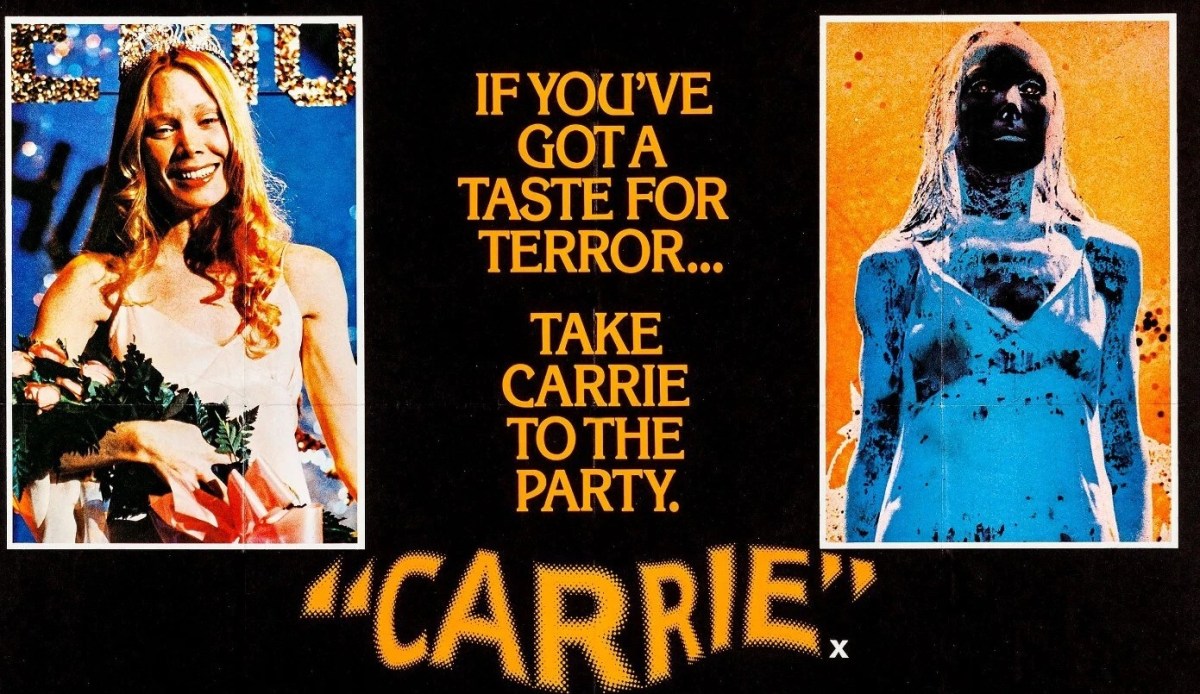
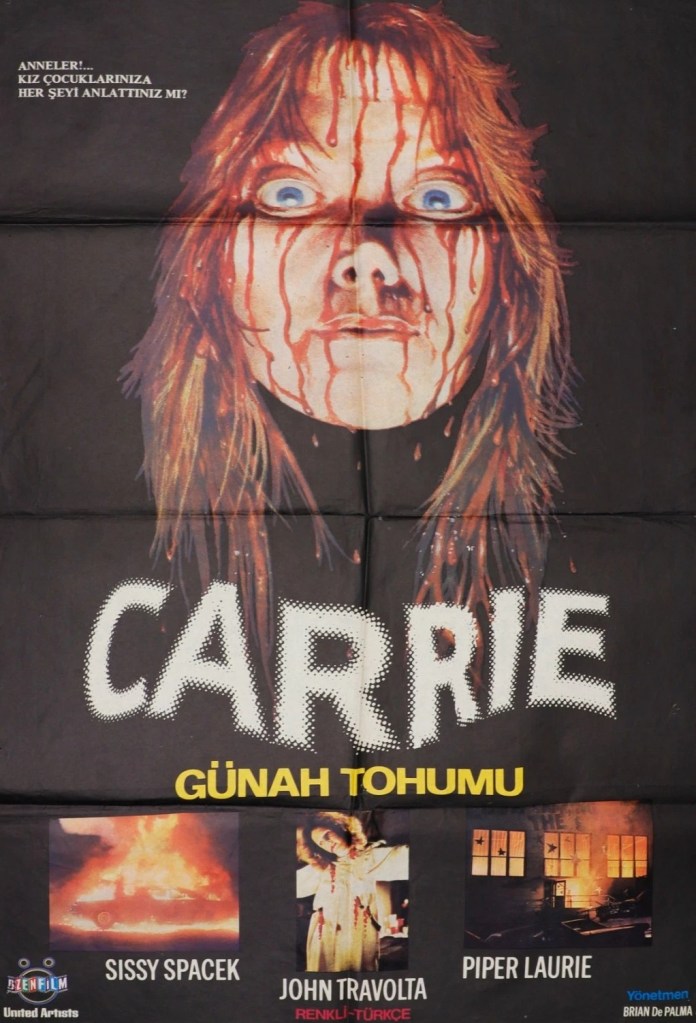
Could have easily gone so badly wrong. You got Mean Girls vs Teen Romance. Demented Mother of Elmer Gantry vs Demented Daughter of Psycho. Why did nobody ever think before that slow-mo that used to be the preserve of lovers gambolling in fields and cowboys being bloodily gunned down could be as easily employed to watch naked girls in the shower. Throw in split-screen and a couple of other technical devices. And the shock ending which triggered a new cycle.
There’s a heck of lot of face-slapping that wouldn’t pass muster today and not exclusively male either, hard-ass teacher Miss Collins (Betty Buckley) setting about venal pupil Chris (Nancy Allen), Chris giving as good as she gets from boyfriend Billy (John Travolta). And if you were a rising star like John Travolta you might think twice about the effect on your career of battering a pig to death with a sledgehammer. Try those capers now and you’d run into the woke police.
But it’s surprisingly feminist. Women twist their men round their little finger, the headmaster does the bidding of Miss Collins, All-American Boy Tommy (William Katt), decked out in a super perm, accedes to the barmy request of his girlfriend Sue (Amy Irving), attempting to assuage her guilt over her role in bullying Carrie (Sissy Spacek), to give up her place at the Senior Prom to the nerd, and Chris has no problem getting Billy to go along with her scheme for humiliating vengeance.
In another movie, Carrie, an eternal victim, would have been the Final Girl but such is her wrath nobody’s left standing to qualify for that position. Nobody escapes, innocent and guilty alike, put to the sword. There’s sex in all its disguises, ranging from a virgin’s first tender kiss to a blowjob to sin to rampant voyeurism.
That it works so well is in part due to the malevolence of all concerned, the above mentioned whacking, the mother locking the child in a closet, the gleeful girls tormenting Carrie, and Carrie spiteful in her blood-soaked vengeance. The telekinesis on which the tale depends is cleverly introduced, a few minor incidents hinting at this unnatural power, Carrie herself doing the research rather than consulting a specialist and weighting the picture down with turgid exposition.
The neat running time – barely topping 90 minutes – eliminates any slack. And director Brian De Palma (The Untouchables, 1987) has sufficient command of the tension and occasional moments of bravura that it’s touched on the ironic climax before you realize quite where it’s going. Atmospheric score by Pino Donaggio (Don’t Look Now, 1973) guides us along, the haunting melody that wouldn’t be out of place as a love theme lets us know there’s more to the shower scene than we might expect while the sharp chords accompanying the slaughter reminiscent of Psycho (1960).
Announced to the world Stephen King as writer of immensely cinematic books, and made De Palma a commercial name. Sissy Space (Prime Cut, 1972) and Piper Laurie (The Hustler, 1961) were nominated for Oscars and the movie served as launch pad for several of the cast, most notably John Travolta (Saturday Night Fever, 1977), including Nancy Allen (Dressed to Kill, 1980), William Katt (Big Wednesday, 1978) and Amy Irving (Micky + Maude, 1984). Written by Lawrence D. Cohen (Ghost Story, 1981).
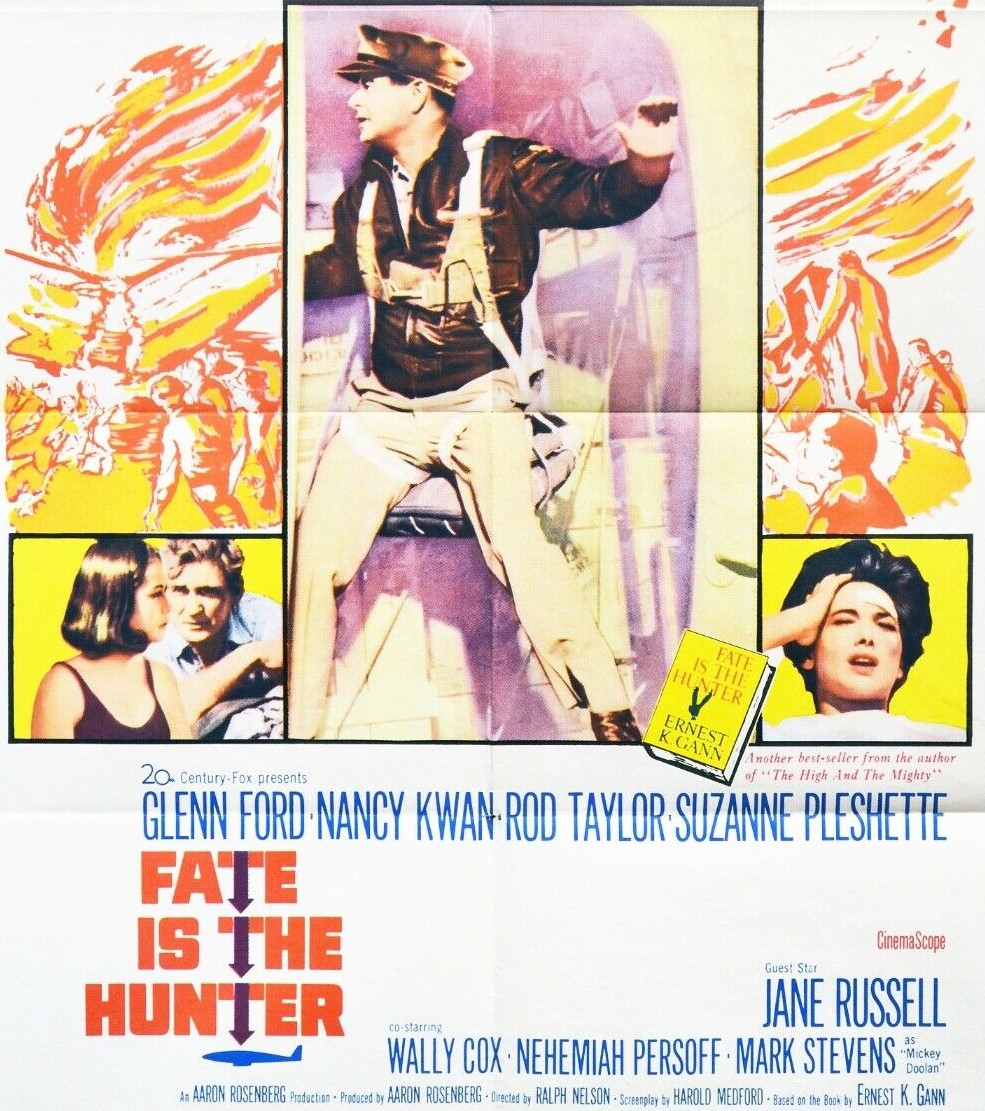
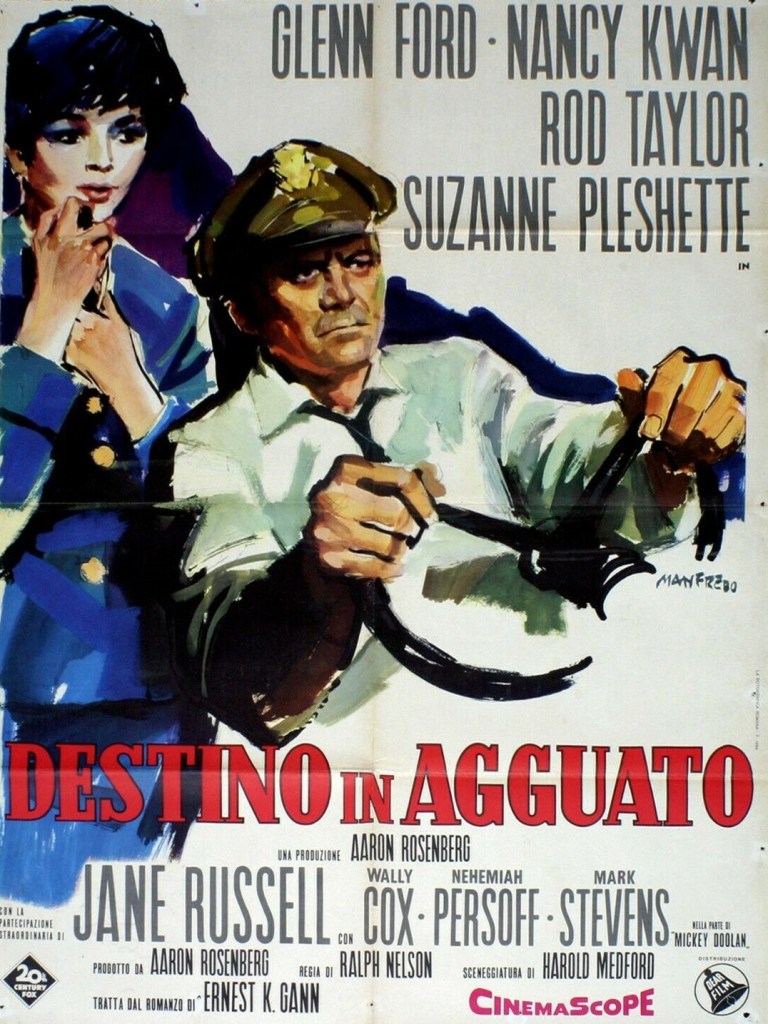
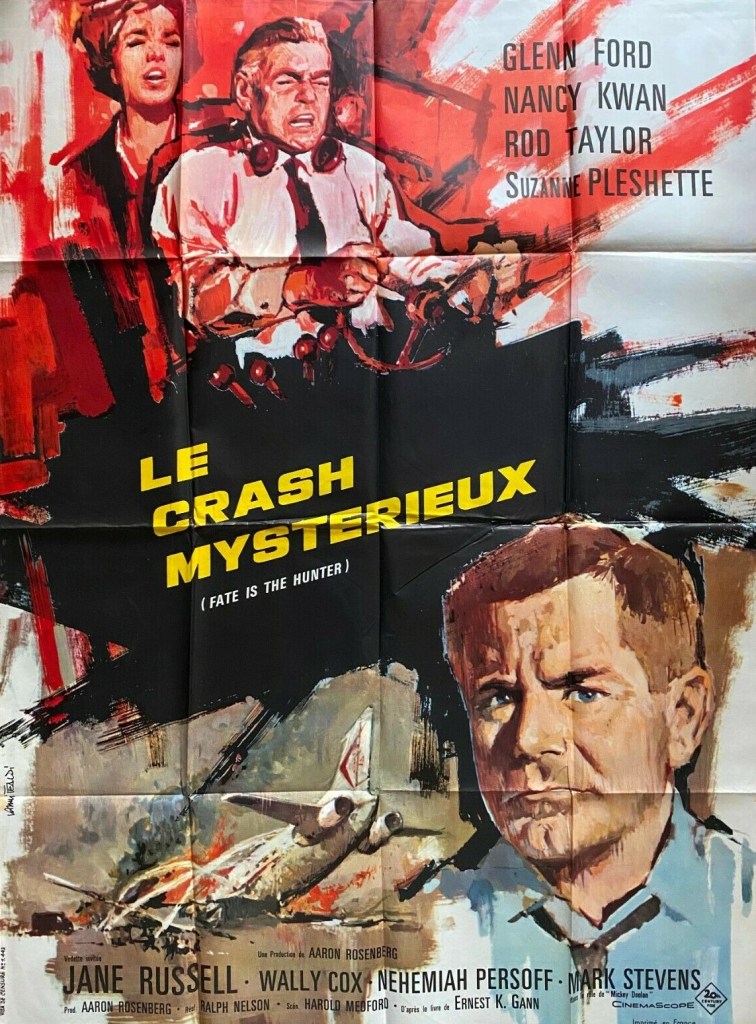
More like Flight from Ashiya (1964) than Flight of the Phoenix (1965) in that airline disaster triggers flashback rather than contemporaneously finding a solution to the problem, but similar in tone to the more recent Flight (2012) and Sully (2016) where the automatic response of the authorities was to blame pilot error rather than ascertain mechanical malfunction. Unlike the two modern pictures, pilot Jack Savage (Rod Taylor) cannot be interrogated in court because he died in the explosion. So investigator Sam McBane (Glenn Ford) seeks some corresponding incident in the past which might account for the pilot making such a mistake.
Other options face McBane. Sabotage could be the cause since a passenger took out a $500,000 insurance policy days before boarding the twin-engine plane. Bird strike cannot be ruled out after feathers are found in the engine. Or it could be simple misfortune. Three inbound planes all running late prevent the plane returning immediately to Los Angeles and it would have landed safely on a beach except for hitting a temporary structure. But engineers hardly need to pore over the evidence. The fault is staring them in the face. Savage had reported two engines catching fire but the wreckage reveals one engine intact.
However, the only survivor, stewardess Martha Webster (Suzanne Webster) maintains that two red warning lights were flashing, indicating malfunction in both engines. But since she is badly injured and in a woozy state, this is not taken as gospel. So McBane dips into the playboy past of Savage, a buddy, a man with such appeal he can serenade real-life figures as Jane Russell (playing herself). Two occasions highlight the man’s heroic history of emergency landings. So can he be the unreliable character painted by a jilted fiancée (Dorothy Malone) or the drinker who should not have been in a bar so soon before take-off?
The tight-lipped shoulder-hunched humorless soulless McBane, described as “one of the best-built machines” known to man, finds himself questioning his own attitudes as he uncovers more of his friend’s life. But when it comes to the big enquiry, televised, he has no better an explanation to ascribe the unexpected collision of different events than the “fate” of the title. Naturally, that mystical prognosis hardly goes down well with his superiors. Luckily, McBane comes to his senses and suggests a simulation which does, in fact, pinpoint the flaw.
It’s relatively easy to pinpoint the flaw in the picture. Audiences expecting a disaster movie with characters stranded by a crash were disappointed to find that by cinematic sleight-of –hand they were being presented with The Jack Savage Story, which with the larger-than-life character and his various aviation and romantic adventures would easily have made a picture in its own right. Stuck instead with the glum McBane as their guide, who, beyond his steadfastness, does not come into his own until the last 15 minutes, seemed an unfair trick. The explosion of the doomed plane at the 10-minute mark is easily the dramatic highlight and the continued flashbacks rather than adding to the tension often eased it.
With four stars above the title, audiences might have anticipated some kind of four-sided triangle, but the two female stars scarcely appear although Martha has one excellent scene, shocked when asked to don her uniform again, and Sally (Nancy Kwan) enjoys a fishing meet-cute with Savage.
That said, if you accept as McBane as more of a private eye, his surly demeanor fits, and the Savage life story is certainly a fascinating one and the various aviation episodes unusual enough to maintain interest. Glenn Ford (Is Paris Burning?, 1965), his box office sheen waning and about to shift exclusively to westerns, is always watchable but there’s no real depth to the character. Rod Taylor (Dark of the Sun, 1968) is at his most exuberant and that’s no bad thing, and beneath the bonhomie a good guy at heart, but his portrayal provides little of the shade that would make it thinkable he was to blame. Suzanne Pleshette (The Power, 1968) and Nancy Kwan (Tamahine, 1963) are both under-used. Look out for Mark Stevens (Escape from Hell Island, 1963), Jane Russell (Gentlemen Prefer Blondes, 1953) in her first movie in seven years, and Dorothy Malone (The Last Sunset, 1961).
Ralph Nelson (Once a Thief, 1965) sticks to the knitting but four scenes stand out: the explosion, Martha’s breakdown at the sight of her uniform, the stewardess during the simulation staring down the plane at the empty seats filled with sacks of sand, and an excellent composition (which Steven Spielberg pays homage to in West Side Story) of a character being preceded into a scene by his very long shadow. Also worth pointing out is that, in almost James Bond style, the opening sequence lasts ten minutes before there is any sign of the credits.
Harold Medford (The Cape Town Affair, 1967) wrote the screenplay based very loosely on the eponymous bestselling memoir by Ernest K. Gann, whose The High and the Mighty had been turned into a hit picture a decade before. The author was so furious with how much the adaptation veered from his biography – which often pointed out the dangers of flying, recurrent pilot death and airplane unworthiness a main theme – that he took his name off the credits, missing out on an ancillary goldmine as the movie, a box office flop, proved a television staple.



 The Magnificent 60s