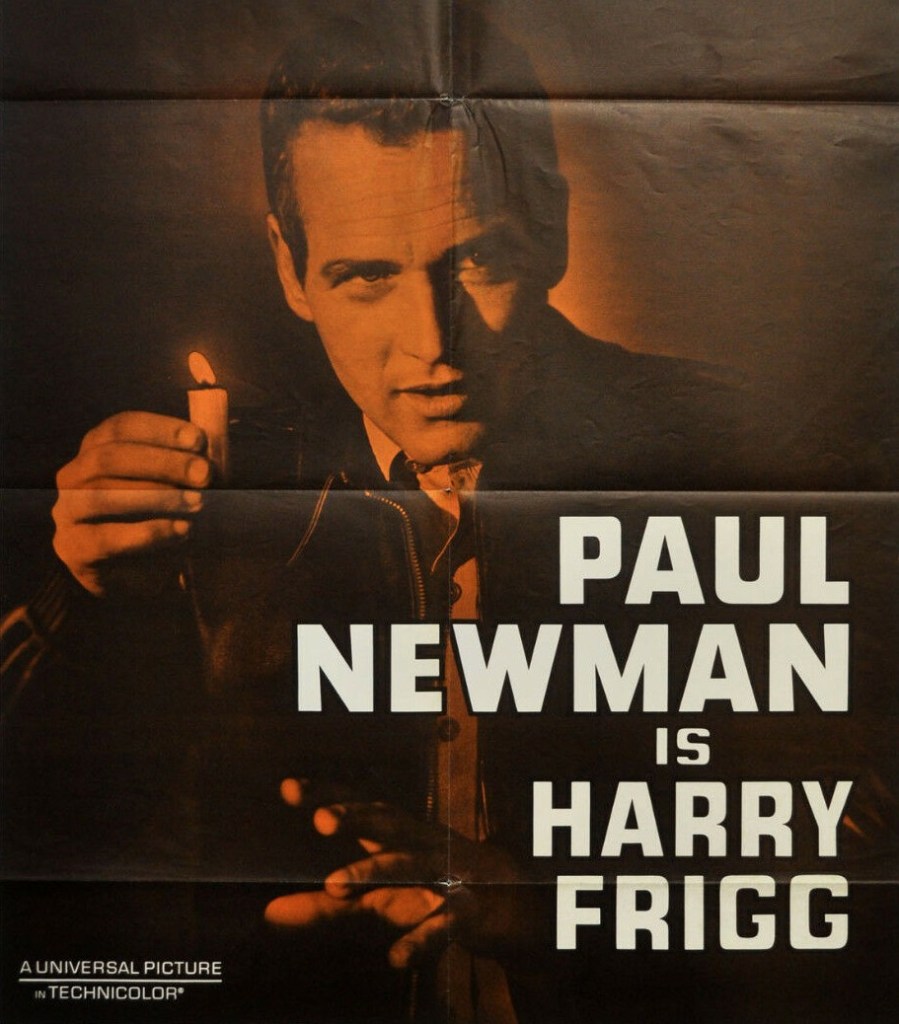
The Secret War of Harry Frigg (1968) ***

Except for an ingenious escape attempt and Paul Newman spoofing his Cool Hand Luke (1967) persona, this World War Two POW number falls into the “sounded like a good idea at the time” category. Harry Frigg (Newman), the American army’s most notorious escapee (though from British military prisons), is promoted from buck private to two-star general and parachuted into northern Italy to organize a breakout of five one-star generals.

The premise that the war effort is hampered by embarrassment at the generals being captured seems far-fetched as is the notion that the quintet are hopelessly incompetent when it comes to doing anything that sounds like proper army stuff. Adding another offbeat element is that they are being held in effectively a deluxe POW camp, an ancient castle run by Colonel Ferrucci (Vito Scotti), a former Ritz hotel manager with a lapdog attitude to the rich and powerful.

Almost immediately Frigg discovers an escape route through a secret door but is disinclined to go any further since it leads into the boudoir of the Countess Francesca (Sylva Koscina). New Jersey inhabitant Frigg feels out of the place with the high-falutin’ generals and proceeds to get himself a cultural education. Meanwhile, the countess, obtaining her position through marriage rather than birth, trying to bolster his confidence naturally triggers his romantic impulses.

The humor is of the gentlest kind – Frigg taking advantage of his superiority, Italians speaking tortured English – and not much in the way of bellylaffs either. Director Jack Smight, who collaborated so well with Newman in Harper (1966) and manages to achieve a tricky balance in No Way to Treat a Lady (1968), loses his way here, not least structurally, as the movie pingpongs between the generals, the commandant and Frigg and, thematically, issues of power. Crucially, he fails to rein in Newman.

The generals, squabbling among themselves for power, would be caricatures except that their characters are rounded out by the players, Charles Gray (The Devil Rides Out, 1968) as Cox-Roberts and Tom Bosley (Divorce American Style, 1967) as Pennypacker. The other generals are played by Andrew Duggan (Seven Days in May, 1964), John Williams (Harlow, 1965) and Jacques Roux (The List of Adrian Messenger, 1963). Representing the American top brass in England are James Gregory (a repeat role in the Matt Helm series) and Norman Fell (The Graduate, 1967)
After her excellent turn as a mischievous and vengeful villain in Deadlier than the Male (1967), Yugoslavian Sylva Koscina comes down to earth with a less rewarding role as charming leading lady with a sly sense of humor rather than the femme fatale of A Lovely Way to Die (1968). Werner Peters (The Corrupt Ones / The Peking Medallion, 1968) makes a late appearance as a Nazi and you might spot screenwriter Buck Henry (The Graduate) in a bit part.

The screenplay by Peter Stone (Arabesque, 1966) and Oscar-winner Frank Tarloff (Father Goose, 1968) is an odd mixture of occasional sharp dialog and labored story. The set-up takes too long and you keep on wondering when it is going to get to the pay-off.

No doubt looking for some light relief after a quartet of heavier dramatic roles – Harper (1966), Torn Curtain (1966), Hombre (1967) and Harper (1967) – Newman acts like he has escaped the straitjacket of a considered performance and instead indulges in mugging and hamming it up, his body freeing a barrage of mannerisms previously held in check.
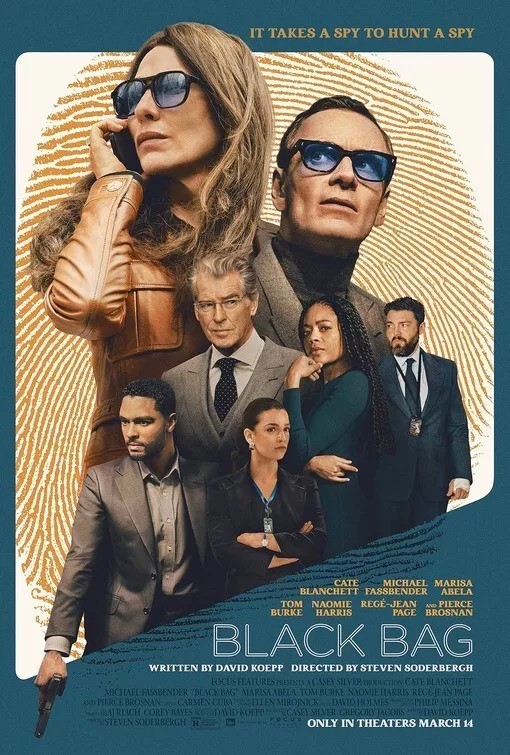
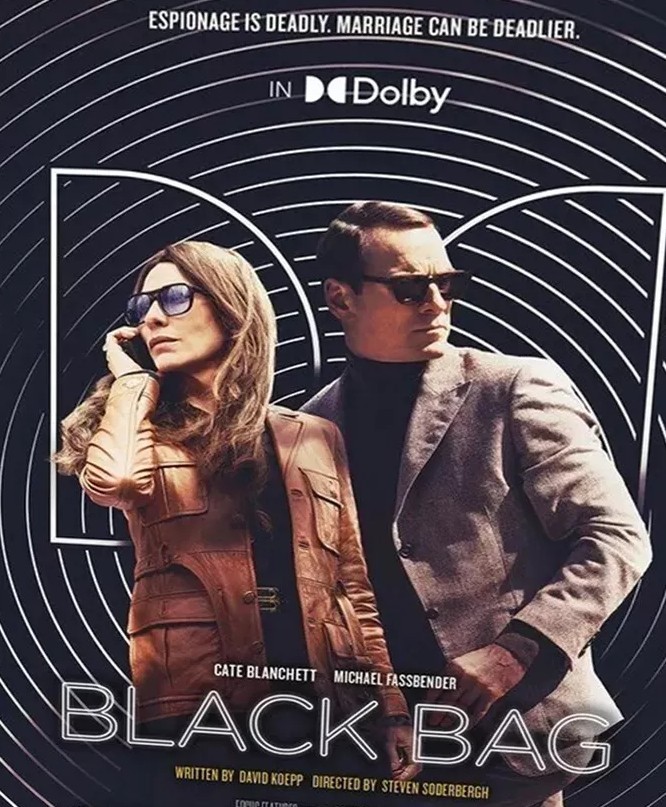
Black Bag (2025) *** – Seen at the Cinema

Explain to me how this cost anything like the reported $50 million. Unless the cost of a nightclub scene has gone through the roof. Or someone has slapped an almighty tariff on shooting in Zurich. Or such middling box office attractions as Cate Blanchett and Michael Fassbender, against the laws of marquee valuation, are pulling down salaries in the region of $10 million apiece.

Because this is nothing but a glorified chamber piece, most scenes shot indoors or in secluded locations. There’s no car chase, one minor explosion (drone-triggered), not even a pursuit on foot. Some clever marketing oik has dressed up what’s no more than a BBC TV film as an expensive espionage picture in the hope of hooking a larger audience.

It’s short, little more than 90 minutes, so that’s on the plus side. But the plot’s full of holes, you’re scarcely going to swallow Fassbender and Blanchett, faces welded to stiff upper lip,  as a hot middle-aged couple, and I wouldn’t have been at all surprised to see  Hercule Poirot or more likely Miss Marple lurch into view for the grand finale with all the potential culprits being set to rights around a dinner table.

Fassbender is so impassive at the best of times his character hardly needs to be expanded to include some OCD, and the most expressive he becomes is, wait for it, hand shaking when he pours a glass of water. The theme, wait for it, is that people who lie for a living are not to be trusted in their domestic lives. And just to polish the virtue-signalling credentials there’s still running amok in MI5/MI6/Black Ops/CIA some rogue top dog who thinks he can stop the unnamed war – presumably Ukraine – by causing a nuclear power plant meltdown in Russia.

And when Pierce Brosnan steals the show in a small supporting role you know your movie’s in trouble.

That said, there’s enough going on to keep you entertained. Top British agent George (Michael Fassbender) begins to suspect – or does he really – that his wife, also a top British agent, Kathryn (Cate Blanchett), is up to no good. So he begins to investigate. Mirror is piled upon mirror, complicated by the occasional murder, so that we are soon knee-deep in the kind of narrative where you don’t know who trust – but, equally, unfortunately, don’t much care because none of the characters is remotely attractive.

At least one them, Freddie (Tom Burke), would have been considered a security risk. So  often does he stray he would be catnip for any passing honeytrap. But you might also have asked questions about his current squeeze, analyst Clarissa (Marisa Abela), paranoid as a posse of schizophrenics, who knows exactly how to pass a polygraph test (clenching the anal sphincter one of the tricks in case you’re interested), and as likely as not to ram a carving knife into unfaithful boyfriend Freddie’s hand at the dinner table. Naturally, it doesn’t do much harm, because Freddie is back at work next day with bandaged hand and not investigated by cops over a knife wound that could hardly be covered by the old slipping the shower routing.

Then we’ve got straitlaced psychiatrist Dr Zoe Vaughan (Naomie Harris) with a penchant for erotic fiction, sex in the office (including breaking the cardinal rule of her profession, sex with a patient), and stringing along two men at once, both of whom, Freddie and Col James Stokes (Rege-Jean Page), are engaged in other affairs.

George soon realizes he’s being played as a patsy, and that his investigation has compromised another operation, and facilitated the handover of a top secret document to the Russians.

In the current dearth of movies for the over-40s, make that over-30s not yet suffocating in superheroes and multiverses, this is what passes for entertainment aimed at an adult audience. And it is short, as I said, but this is exactly the kind of low-budget movie with a decent cast that traditionally ends up on a streamer.

For once, director Steven Soderbergh (Magic Mike’s Last Dance, 2023), whose career is littered with self-indulgence, sticks to the knitting, and it’s a more than passable espionage thriller, but the kind that would be more at home on the small screen. Written by David Koepp (Indiana Jones and the Dial of Destiny, 2023).

Neither Fassbender (Next Goal Wins, 2023) nor Blanchett (Tar, 2022) do the most basic task required of a marquee name, which is to set the screen alight, and all the rest, excepting the much-in-demand Pierce Brosnan (Black Adam, 2022) – seven pictures in the last two years –  merely trundle along in their wake, saddled with scenes where they express alarm at their deepest secrets being revealed like they have drifted in to some shopworn melodrama.

For all the actual investigation that takes place you could have set this in the kind of remote spot favored by Agatha Christie and played it out in traditional Poirot/Marple fashion.

Interesting but ultimately disappointing.

And the big question remains – where did the $50 million go? And, did it exist in the first place?

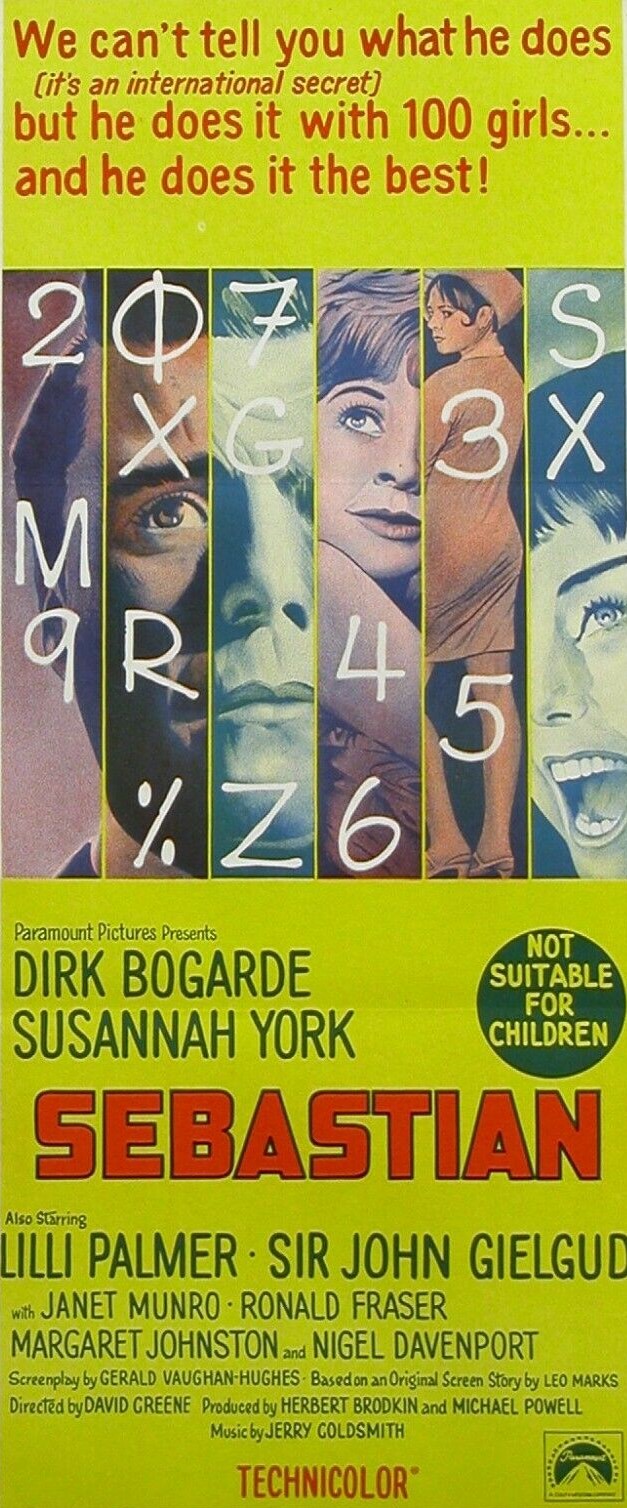
Sebastian (1968) ***

Decoding the emotional life of mathematics professor Sebastian (Dirk Bogarde) lies at the heart of a spy thriller mainlining on loyalty and trust. The presence of a flotilla of potential Bond girls has opened this picture up to charges of being a spoof, but I saw the mini-skirted incredibly-bright lasses as being a reversal of the standard secretarial pool. And a supposed  representation of the “swinging sixties” would hold true if shot in the environs of Carnaby St  rather than the bulk of locations being arid high-rise buildings. 

In roundabout fashion, intrigued after literally bumping into him in Oxford, Rebecca (Susannah York) is recruited into an espionage decoding department staffed entirely by gorgeous (but brainy) women. Among the older employees is chain-smoking left-winger Elsa (Lili Palmer) whom security chief General Phillips (Nigel Davenport) suspects of passing on secrets. When romance ensues with SY, Sebastian dumps dumb pop singer girlfriend Carol (Janet Munro) who is already having an affair and spying on Sebastian.

Although there is no actual beat-the-clock codes to be unraveled, tensions remains surprisingly high as in best Turing manner, breakthroughs are slow. There’s an undercurrent of electronic surveillance, eavesdropping on recruits, bugs planted in the houses of even the apparently most trusted personnel, seeds of distrust easily sowed, codes shifting from numbers to sounds.  The occasional nod to the contemporary, a disco, pop songs, Rebecca doing a fashion shoot in the middle of traffic, is background rather than center stage

Sebastian, though worshipped by is female staff, is “more whimsical than predatory.” Nonetheless, introspective and often morose, unable to deal with emotions, it falls to Rebecca to take on the task of sorting him out which naturally leads to complications.

Most reviewers at the time complained it was a victory of style over substance, but somehow they managed to overlook the essential questions about trust the picture asked. That said, it does follow an odd structure, the third act dependent on directorial sleight-of-hand.

Dirk Bogarde (Hot Enough for June/ Agent 8 ¾, 1964) is always highly watchable and Susannah York (Sands of the Kalahari, 1965) catches the eye with an impulsive, slightly kooky character who turns out to be down-to-earth. Nigel Davenport (Play Dirty, 1969) brings his usual cynical malevolence to the party but with the twist of not knowing whose side he is really on. John Gielgud (Becket, 1964) is a delight. There’s a brief appearance by a pipe-smoking Donald Sutherland (The Dirty Dozen, 1967). Miss World Ann Sidney is one of “Sebastian Girls”

David Greene’s (The Shuttered Room, 1967) direction is mostly competent but the opening aerial tracking shots set the precedence for occasional bursts of style.  Jerry Fielding supplied the score. Written by Leo Marks (Peeping Tom, 1960) and Gerard Vaughan-Hughes (The Duellists, 1977).

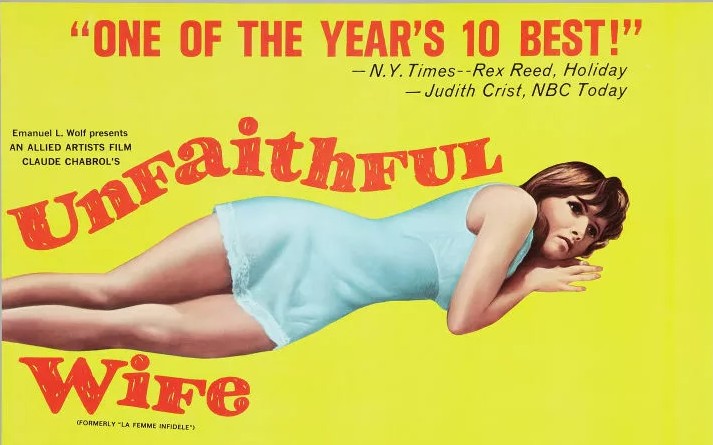
La Femme Infidele / Unfaithful Wife (1969) ****

Not surprising since French critics worshipped Alfred Hitchcock – the only ones who gave him their wholesale approval in the 1960s – that a French director would attempt to pick up his mantle. But where Hitchcock majored on mystery and suspense and generally an innocent entrapped in conspiracy or crime, here director Claude Chabrol mostly dispenses with mystery concentrating instead on suspense. And it’s of the kind exhibited in To Catch a Thief (1955), Vertigo (1958), North by Northwest (1959) and Marnie (1964) where you are willing a character to get away with their crime or at least find redemption. And where Hitchcock places that load on the glamorous femme fatale, here Chabrol throws us into that most mundane of crimes, the jealous husband wanting revenge on his wife’s lover.

Successful businessman Charles (Michel Bouquet) should be enjoying life, glamorous trophy wife Helene (Stephane Audran) way out of his league, big house in the country, adorable son. But there’s something amiss. When his wife, who appears loving, makes sexual overtures in bed he turns over. He has grown suspicious of the amount of time she wife spends in Paris, ostensibly visiting her hairdresser or having beauty treatments or going to the cinema. Eventually, he hires a private detective and discovers his wife has a lover, Victor (Maurice Ronet). He decides to confront the lover rather than the wife. But instead of playing  the outraged husband card, he pretends to be a man of the world, suggesting that Helene and he have an open marriage and that Victor is the latest in a long line of lovers. What he hopes to achieve from this is unclear, perhaps put Victor’s nose out of joint, perhaps cover up his own anger.

But it doesn’t go the way he planned. He spies an over-large cigarette lighter in the bedroom, a present he gave his wife for their third anniversary and kills Victor. This being the 1960s before forensics determined that you could never entirely eliminate a blood stain on a floor,  Charles, with considerable diligence, cleans up the blood, remembering to wash out the bucket and cloth, wiping his fingerprints from everything he touched, bagging up the man in bed linen and dragging him out to his car.

On the way to disposing the body he is involved in a minor road accident. Police are called. He is saved from opening the car trunk because it is damaged. But when he tries to get rid of the body, the trunk proves impossible to open. Victor had appeared such a smarmy character, you’ve got no compunction about his death, you just want Charles to get away with the murder. Eventually, he forces the trunk open and drops the body in a small algae-covered pond. For a moment air trapped in the package makes it appear unsinkable. But, then – audience enjoying a sigh of relief and perhaps a homage to Psycho (1960) – it disappears.

Whether he revels in the discomfort of his wife who is no longer able to enjoy her twice-weekly assignations with Victor and unable, of course, to explain her bouts of distress to her husband and must keep up a façade, is unclear.

This is only a perfect crime to someone who has never been involved in crime, unaware of all the means of investigation at the disposal of Inspector Duval (Michel Duchaussoy) and his evil-eyed colleague Gobet (Guy Marley) who has the kind of look that says I know you’re guilty.

Turns out Helene’s name is in Victor’s address book and she can come up with no plausible reason for it being there. Charles denies ever having met Victor. The police are not convinced and return to interrogate the pair. Any viewer will quickly realize that it’s virtually impossible for either of the pair to remain undetected, the regularity of Helene’s visits can hardly have gone unnoticed, and even on a quiet street someone might have noticed Charles’s parked car and possibly him lifting the bulky package.

Nor does Charles dissolve in a bout of guilt. There’s an air of inevitability about him. You have no idea whether he might divorce Helene. The notion that she might not just take another lover doesn’t seem to occur to him and he’s not offered the opportunity to air his suspicions. Is he just going to bump off every lover his wife takes?

His wife finds a photograph of her lover in her husband’s pocket. But instead of denouncing him to the police, she burns it, either to protect her marriage or protect herself from the humiliation of being linked to the dead man, or because she has realized the folly of her betrayal.

We never find out her intentions because at that moment the police return and take Charles away.

A marvellous pivot on Hitchcock, with none of the B-film seediness that might have attended such a femme fatale, as Chabrol sets out his stall as a purveyor of the ordinary criminal, the one who didn’t run in high-class circles or was involved in international intrigue. The crime is so commonplace, that’s the beauty of it, and Charles such an ordinary character it all works superbly.

While Stephane Audran (Les Biches, 1968) is luminous, Michel Bouquet (The Road to Cornith, 1967) is her down-to-earth opposite. Written by the director and Sauro Scavolini (Any Gun Can Play, 1967).

A director finds his metier.

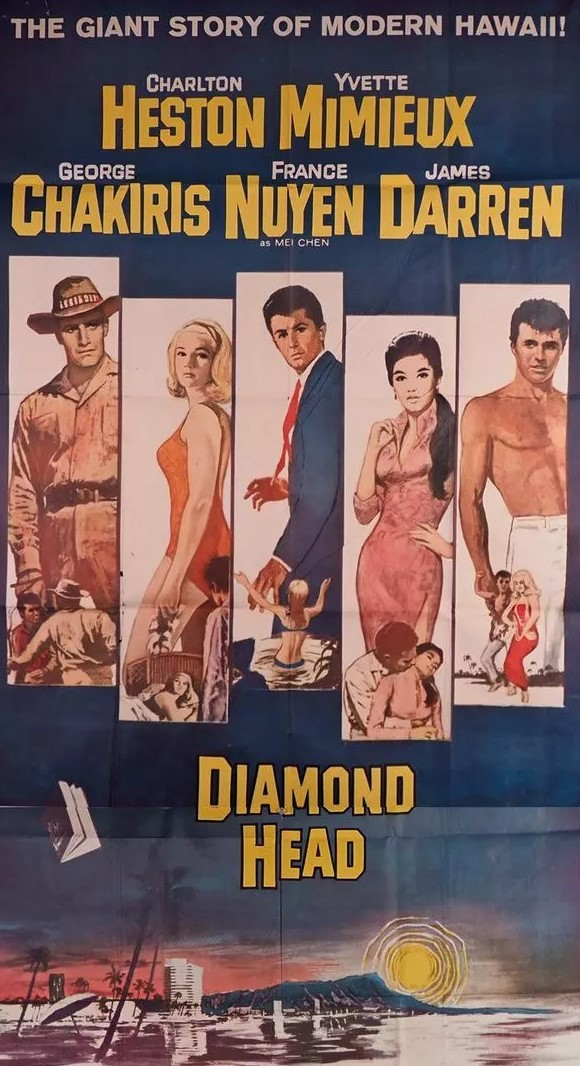
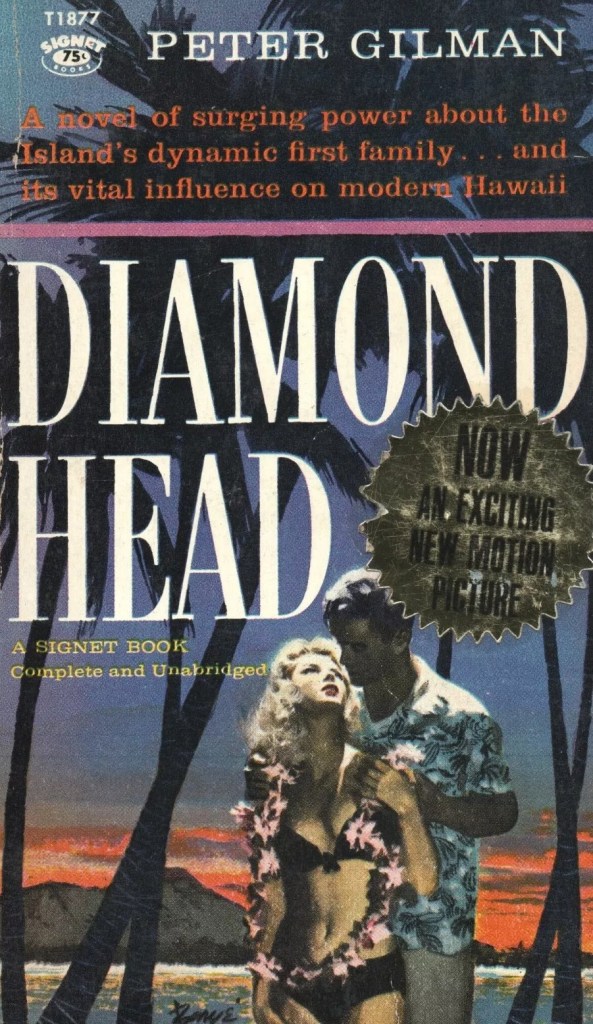
Behind the Scenes: “Diamond Head” (1962)

Charlton Heston was as hot as they come. He was coming off what would prove one of the biggest pictures of all time – and tucked away an Oscar as well – with Ben-Hur (1959) and followed it up with another hit El Cid (1961). He had no shortage of offers. He had pulled out of The Comancheros (1961), part of proposed three-picture deal with Twentieth Century Fox but with an unknown director rather than veteran Michael Curtiz who later helmed it with John Wayne. He had turned down Let’s Make Love (1960) with Marilyn Monroe and a remake of Beau Geste to co-star Dean Martin and Tony Curtis.

He entered into discussions with Nicholas Ray to film the bestseller The Tribe That Lost Its Head (never made) and The Road of the Snail (never made), rejected William the Conqueror (never made) and Cromwell (1970). He was turned down in turn by Otto Preminger for Advise and Consent (1961). “Zanuck’s man called from Paris,” he notes, “they have a new role for me in The Longest Day (1962).” That was another false lead.

In due course he signed up for Easter Dinner for producer Melville Shavelson (Cast a Giant Shadow, 1966) released as The Pigeon That Took Rome (1962). By this point he was being pursued by Samuel Bronston. “I had no idea how determined Sam was to have me follow El Cid with another film for him.” Bronston eventually got his wish. “No sooner had I turned down The Fall of the Roman Empire (1964) than they shoved it back a year on their schedule and began work on 55 Days at Peking (1963), converting the enormous and half-built set representing Rome into an equally enormous and even more beautiful set representing Peking.”

But that meant delay while the massive Bronston machine kicked into gear. In the meatime Heston was “attracted a bit by the opening pages” of Diamond Head with Columbia. “A good part in an overwritten and melodramatic script,” he observed, concluding, “If it’s treated with great care, it might work out all right.”

The project moved along apace. A couple of weeks after receiving the script in December 1961, he was in London meeting director Guy Green (Light in the Piazza, 1962) and producer Jerry Bresler, “an amiable man” though Sam Peckinpah might beg to differ after his experiences on Major Dundee, 1965. “He seems a very intelligent fellow,” Green observed, but queried, “how could a man refer with pride to the fact he had made a film called Gidget Goes Hawaiian?”

George Chakiris (hot after West Side Story, 1961) was already fixed as second male lead and Yvette Mimieux (Light in the Piazza) was being chased for female lead. She wasn’t available but Heston wasn’t keen on second choice Carroll Baker. Luckily, it turned out Mimieux could do the picture. “On the basis of what we saw in Light in the Piazza, she’s ideal for the part.”

But Heston reckoned the script needed work. He was also disgruntled with the costumes for Diamond Head, complaining, “Why is it designers like to costumes instead of clothes? It’s a grievous fault in a period film, but there’s no excuse in a modern story.”

By March, a few months after committing to the picture, he was out in Hawaii, on the island of Kauai, though the trip itself was not without incident, Heston “sick enough to call a doctor.” They were met with unseasonal rain. They were assured this was very unusual. But it wasn’t. In consequence, the first day’s filming was scrapped, filling the actor with the conviction “the whole project was doomed.” It was another three days before filming commenced – the shoot was plagued with rain.

While Heston was impressed enough with the director (“Guy Green works carefully and thoughtfully”) he was distracted by the lighting.

“Those brutes and reflectors loom larger in my mind…One of the banes of my career has been  acting in exterior locations with arc lights and reflectors focused in my eyes, which are very light sensitive. (Dark-eyed actors have an unfair advantage, I’ve always felt.) Most people have no idea of the dimensions of this problem. They always ask you how you can remember the lines…they should wonder instead how you can concentrate on the scene when your every nerve is straining simply to keep your eyes open.” Negotiation with the cinematographer ameliorated the situation.

Similarly, Heston found the director responsive to his concerns. For a key scene with Mimieux, he believed “we can both do better” and taking this on board the director agreed on a reshoot the next day. “I have to project Howland’s need to be loved, though he conceals it. You can’t play this, of course, but it has to be in the scene, in the whole film, if we’re going to bring it off.”

As well as a multitude of media – Hawaii at this stage still a rare location, public interest boosted by the publication of James Michener’s Hawaii in 1958, and to a lesser extent, Diamond Head, a more modest bestseller. Swelling the ranks of visitors to the set was John Ford, obliquely sounding Heston out for an unspecified film, possibly Young Cassidy (1965).

Another issue proved to be the horse-riding. While Heston was an accomplished rider, others were not. “Anxious horse-riding…makes for anxious acting.” Even so, Heston found his mount “harder to handle than I figured.”

Heston’s last day of work was May 18. “I waited round most of the day to do one piddling shot from the dream. No dialog, just my face looming up out of the fog. It’s hard to tell what I think now  except that I’m still high on Green. He may have made a film that rises above the melodramatic qualities of the script. He didn’t push me as hard as I should be pushed, but he gave me a lot all the same.”

It was October before Heston viewed the completed picture. His verdict: “Diamond Head looks very slick, smooth, not terribly real, and as though there might be some money in it.” Ever the critic, he added, “I have acted better.”

I’ve mentioned in other Blogs the part played by foreign markets in a star’s appeal – Clint Eastwood and Charles Bronson both owed their breakthroughs to foreign box office. Turns out that Heston was in the same league, though an established name when first discovering the size of his fan club abroad.

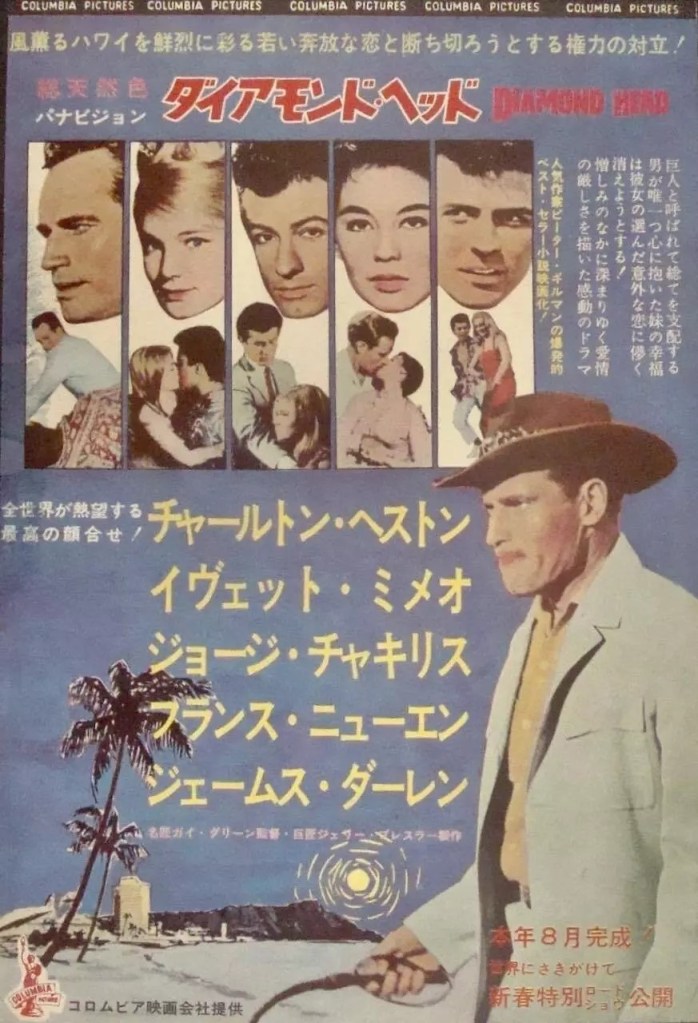
“My films did invariably well in the Far East and throughout Southeast Asia. Films that flopped elsewhere did fairly well, those that were hits elsewhere did incredibly. The fact that this pattern has continued unchanged accounts in no small degree for my continued viability in films.”  Apparently, this was because he represented the Confucius virtues of responsibility , justice, courage and moderation. As if to emphasize his overseas appeal, Diamond Head opened first in Japan, in December 1962.

SOURCES: Charlton Heston, The Actor’s Life, Journals 1956-1978 (Penguin, 1980).

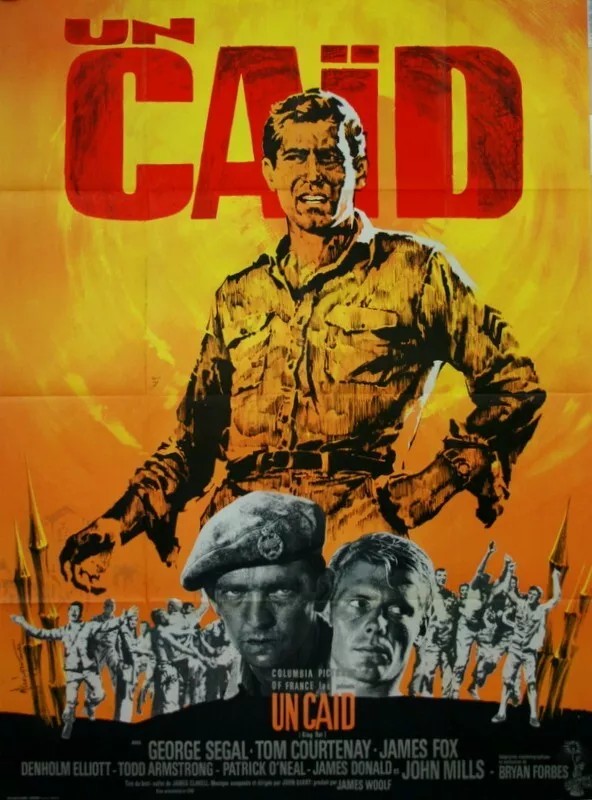
King Rat (1965) ****

Turns the POW sub-genre on its head. Nobody’s interested in escaping or, in the vein of Bridge on the River Kwai (1957), committing an audacious act of sabotage. It’s hard enough just surviving with any high-falautin’ notions of honor or courage getting in the way.

Imagine if the James Garner character in The Great Escape (1963) was wheeling-and-dealing to fill his own pockets or ease his confinement in the way of Morgan Freeman in The Shawshank Redemption (1994).

That’s what we’ve got here. American prisoner Corporal King (George Segal) hasn’t got the general good in mind. He’s only interested in number one. The British idea of “fair play” doesn’t register. But, of course, there being Brits involved, there’s the whole class thing. Officers are generally upper-class and speak with pronounced drawls and affect that this whole prisoner-of-war lark is merely tiresome. Throw into the equation as well as kind of Lord of the Flies scenario where ideas of civilization are rudely interrupted by desperate need to claw to the top.

Three narratives intertwine. King’s black market activities attract the ire of the British security chief Lt Grey (Tom Courtenay), who, despite his position is clearly working class. King befriends airman Lt Marlowe (James Fox) who, though occasionally sticking to some honor code, gradually drifts away from any notions of upright behavior into the seductive immorality implicit in dealings with the American. And while investigating the theft of rations, Grey comes up against the brick wall of camp commander Col Smedley-Taylor, who while distinctly upper-class, nonetheless is a realist and keeps the situation on an even keel.

In the background, of course, is deprivation. Men commit suicide if caught stealing – and in quite awful fashion, diving headfirst into the dung-hole and suffocating.

In due course, King, as the title of the picture suggests, hits upon the notion of breeding rats and selling the food to the other prisoners under the guise of calling it “mouse-deer,” a genuine species in the area.

Complicity in corruption lingers, Grey assuming that Smedley-Taylor is glossing over punishment for the thefts, while all the prisoners begin to view King in a better light once he becomes the source of much-needed nourishment.

Mostly, though it’s about the characters and therefore about the acting. Tom Courtenay (Otley, 1969) is the least interesting, we’ve seen this snarky grumpy screen persona too many times before. George Segal (The Quiller Memorandum, 1966) is the revelation. He’s so charming it’s sometimes difficult to realize that he’s the villain of the piece, the unscrupulous soldier taking advantage of circumstance. He might be like your local drug-dealer, the criminal aspect of his activity overlooked because people want so badly what’s he’s selling.

The impact of James Fox (Thoroughly Modern Millie, 1967) is largely down to the fact that he plays against officer type, that one of the supposed good guys goes along with King and junks his stiff-upper-lip when easier pickings are on offer. But John Mills (The Family Way, 1966) is the other standout, determined not to make waves that will only upset a delicate order. You’ll catch Patrick O’Neal (Stiletto, 1969) and Denholm Elliott (Maroc 7, 1967) in small parts and a whole host of British supporting actors.

Writer-director Bryan Forbes (Deadfall, 1968), adapting the James Clavell bestseller, keeps the package taut, allowing the actors to do their stuff.

Holiday in Spain / Scent of Mystery (1960) **

There were five our great reasons to see this picture. Firstly, it was in Cinerama. Secondly, it was the first attempt in that special format to tell a dramatic story rather than offer just a travelog. Though How the West Was Won (1962) was promoted at the first dramatic use of Cinerama, that was actually untrue. This came first. Third, there was a terrific gimmick – Smell-O-Vision – which allowed audiences to inhale around 30 fragrances at the same time as the onscreen characters. Fourthly, it was produced by Mike Todd Jr., son of the Oscar-winning producer of Around the World in 80 Days (1956) and second husband of Elizabeth Taylor who was instrumental in bringing Cinerama to the big screen in the first place., Lastly, it was the first top-billed appearance of rising British star Denholm Elliott.

Unfortunately, none of these hit the target and it remains a novelty in the Cinerama canon. For a start, there wasn’t much of a story – it’s a chase tale of sorts with crime novelist Oliver (Denholm Elliott) uncovering a plan to kill American heiress Sally Kennedy. In setting out to thwart it he travels all over Spain in the company of philosophic wise-cracking taxi driver Smiley (Peter Lorre). Cue travelog of scenic Spain including fiestas, dances and the running of the bulls, which appears not to have been specially staged but filmed documentary-style as it occurred with the bulls inflicting considerable damage on the humans foolish enough to think it’s a lark.

The hook is the mystery woman who can only be detected by her Schiaparelli perfume while the giveaway for the villain, hired assassin Baron saradin (Paul Lukas), is his tobacco. Cue an onslaught of scents. But the smells don’t just pop up when characters are involved. When a barrel of wine smashes, that produces another smell.

Astonishingly, the movie manages to bring in some of the Cinerama trademarks – the runaway element seen from the audience POV, not just the traditional vehicle but also  barrels of wine.

The smell gimmick worked well enough in cinemas set up for such technical aspects, but that amounted to very few screens, and outside of those the movie just seemed a random series of scenes with only panoramic views of Spain to lessen the boredom.

It did nothing for the career of Denholm Elliott and he did little for the movie. He lacked the edge or innocence required to make such a character come alive and mostly he looks as though he doesn’t know what to do. He didn’t make another movie for three years and on his return for Station Six Sahara (1963) he was no longer the star but quickly shifting into the character actor he would be for the rest of his screen career.

It was nearly the last hurrah for Peter Lorre. He suffered heart attack during filming so the real Peter Lorre is only seen in half the picture, for the other half it’s a stand-in.

The presence of Elizabeth Taylor (Butterfield 8, 1960) could conceivably have redeemed the picture but she puts in only a fleeting appearance, so speedy her distinctive features barely register. You see more of Diana Dors (Baby Love, 1969).

In the hands of Alfred Hitchcock (Psycho, 1960) or imitators like Stanley Donen (Charade, 1963) and with a more finely worked screenplay, reliant on neither visual nor olfactory gimmick, this might have worked. But it was in hands of Jack Cardiff (The Girl on a Motorcycle, 1968), famed cinematographer but only his third outing as a director, and he clearly didn’t know how to balance the various ingredients and so it limps home.

The minute the location of the source novel by Audrey Kelley and William Roos shifted  from New York to Spain and the number of investigators halved, the trouble started. The hunt for a woman whose existence is in question was a standard mystery trope and might very well have worked here minus the smells and Cinerama.

A curiosity.

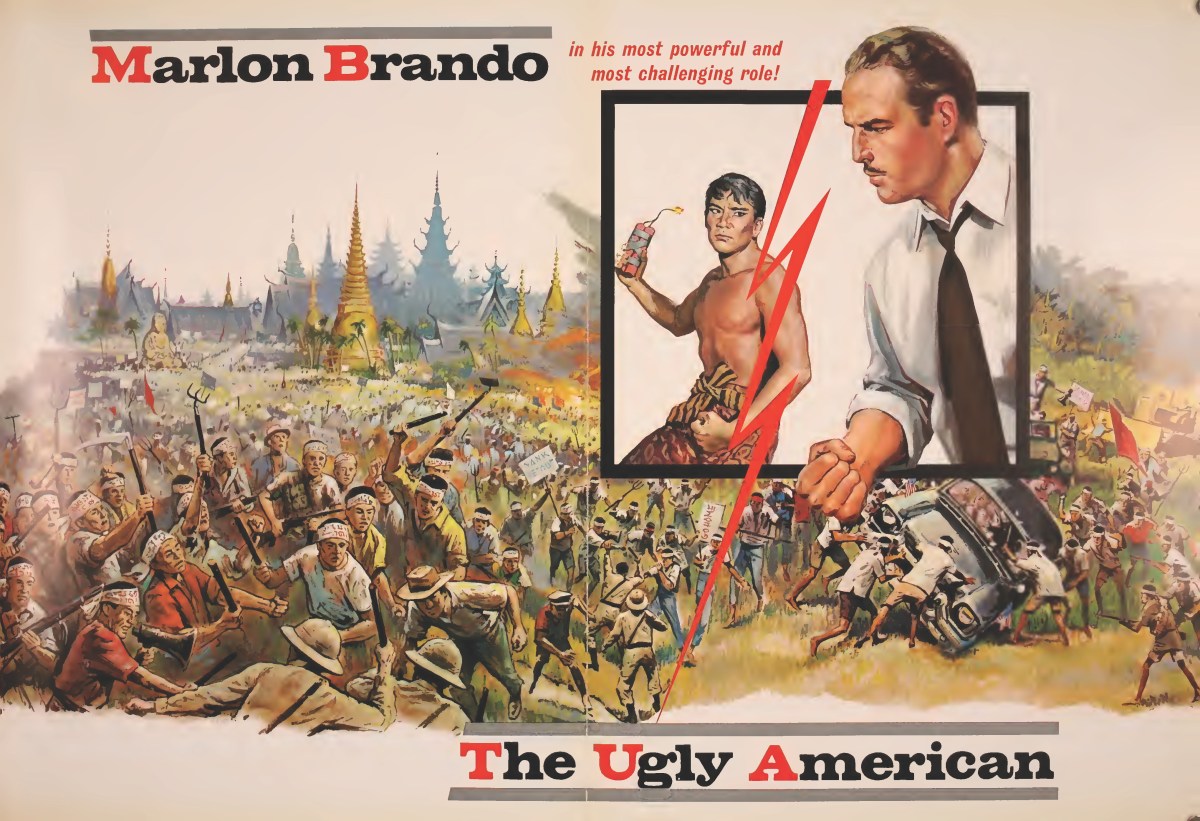
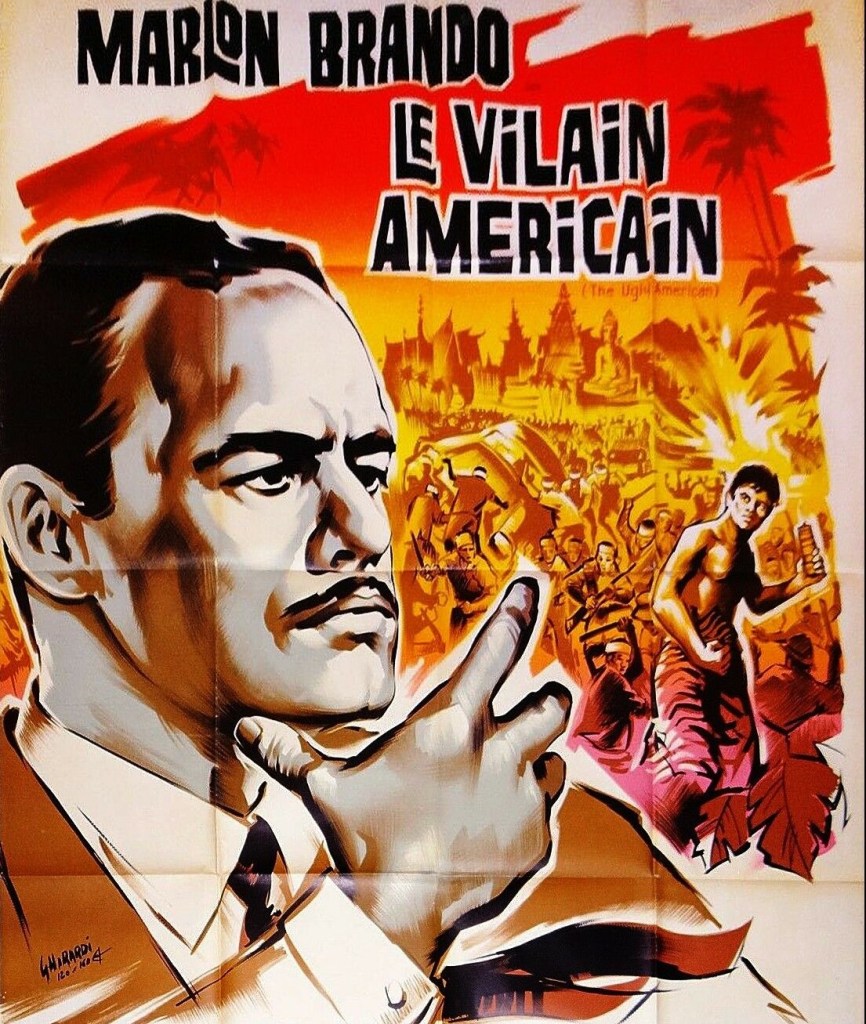
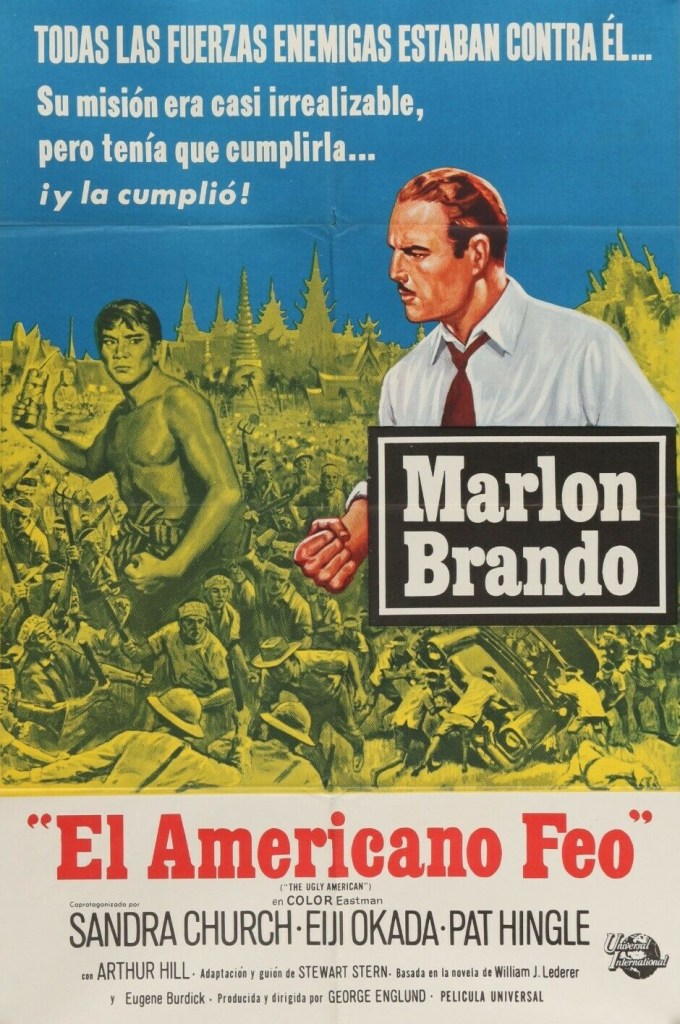
The Ugly American (1963) ***

Terrific performance from Marlon Brando saves this prescient but preachy meditation on Vietnam. Harrison MacWhite (Marlon Brando) is the new ambassador, whose political credentials are questioned by many,  parachuted into the fictional South-East Asia country of Sarkhan, knee-deep in civil war, Communist north versus westernized south. The battleground is the American construction of a “Freedom Road” north to China which dissenters fear will be a conduit for the military. MacWhite owes his appointment to his friendship with Deong (Eeji Okada), a charismatic leader.

On arrival, the ambassadorial car is engulfed in a riot, car rocked, windscreens smashed. MacWhite shakes up a complacent embassy and though articulate and scholarly believes he holds the solution to the tricky situation, not willing to accept that national self-determination does not necessarily mean complete hatred of the Americans. There is duplicity on both sides, rebels blaming U.S. truck drivers for deaths they caused, the Americans so used to getting their way they don’t stop to think if it is the right way.

Anxious not to be seen as a lapdog for Communism, MacWhite’s actions inflame the situation, while Deong falls victim to internal forces. Construction boss Homer Atkins (Pat Hingle) promotes the clever use of building hospitals along the road, thus encouraging locals to back it, but nobody falls for such honest skull-duggery masquerading as well-meaning intent.

Friends turning into enemies is a decent premise for any movie but this is over-burdened with debate that while interesting and providing a reflection of the times is basically a mixture of virtue-signalling and apportioning blame and, most heinous of failings, doesn’t really advance the story.

First-time director George Englund handles the action sequences well and captures the essence of a country about to explode against a background of growing tension and political machination. Use of Thailand as a location adds authenticity.

Based on a controversial novel by political scientist Eugene Burdick (who also wrote a more straightforward cold War thriller Fail Safe) and William Lederer, navy veteran and CIA officer, so it carried the stamp of authority in terms of putting forth the arguments for both sides. However, while the film bears only a “passing resemblance” to the book, according to co-author Burdick, he deemed it a superior achievement on the basis of its more dramatic treatment. Stewart Stern (Rachel, Rachel, 1969) was the screenwriter who received blame and praise in equal measure.

Marlon Brando (Burn! / Quiemada, 1969) exudes authority, broad shoulders packed into a suit, and brilliant captures the anguish of a man led into disaster by arrogance. Coming off back-to-back flops One-Eyed Jacks (1961) and Mutiny on the Bounty (1962), this was a considerable change of pace, the first of several excursions into political territory. Eeji Okada (Hiroshima, Mon Amour, 1958) proves a worthy opponent. Pat Hingle (Sol Madrid, 1968), Arthur Hill (Moment to Moment, 1965) and Jocelyn Brando (The Chase, 1966) provide sterling support.

The movie did not just predict what would happen if the U.S. lost the battle for hearts and minds but a similar situation confronting the U.S. Ambassador to Indonesia in 1965 whose appointment was unwelcome in that country.

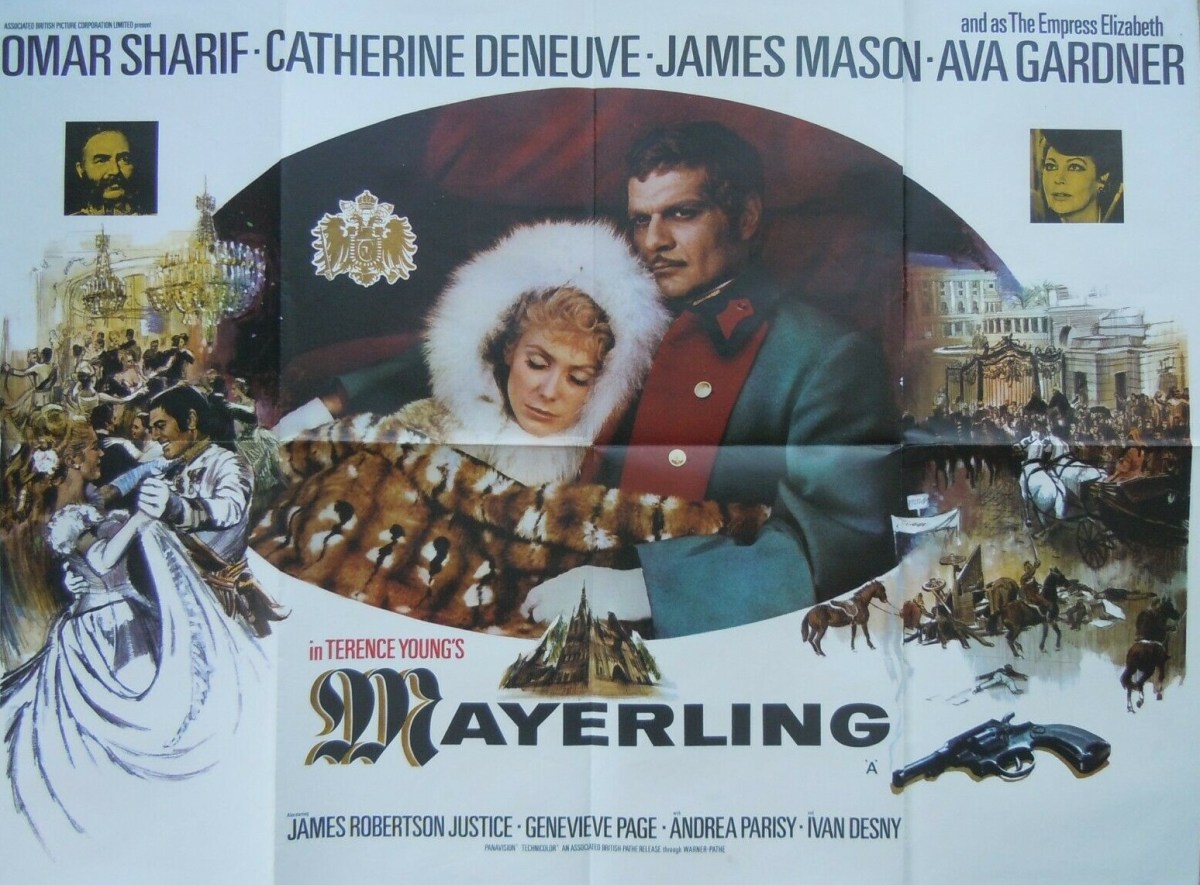
Mayerling (1969) ****

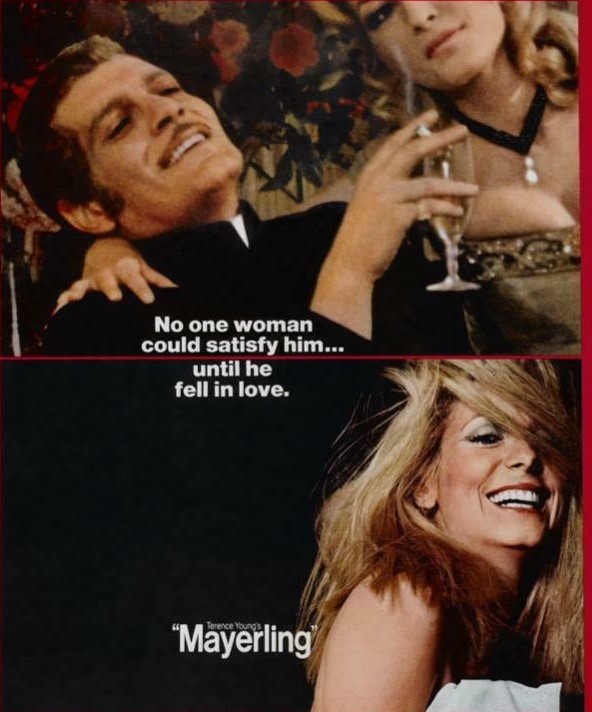
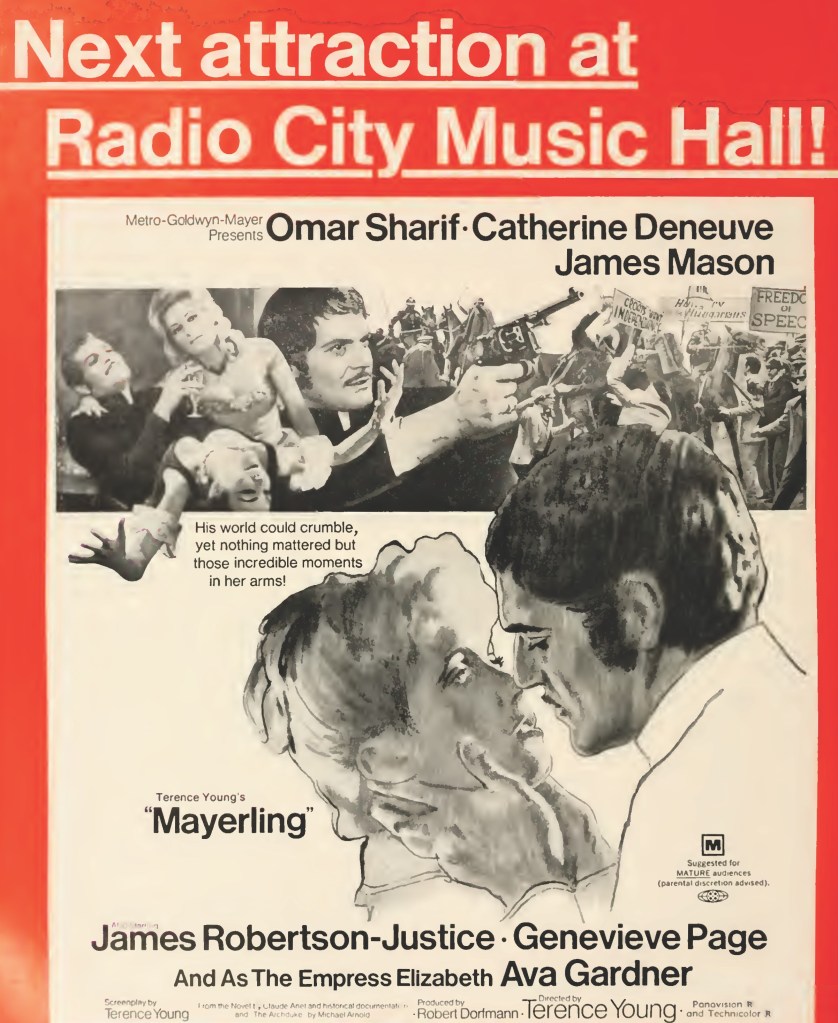
Sumptuous historical romantic drama set in a fading European empire awash with political intrigue and incipient revolution. Archduke Rudolf (Omar Sharif), married heir to the throne and constantly at odds with rigid father Emperor Franz-Josef (James Mason), sympathizes so strongly with Hungarian dissidents that he threatens to tear apart the Austro-Hungarian Empire. However, when he falls in love with Maria (Catherine Deneuve) and wants to marry her instead that, too, threatens to throw the empire into disarray.

Although dissolute, a mistress (or two) on the side, and addicted to morphine, that is not the way Rudolf is introduced to the audience. Instead, he is one of a string of bloodied men arrested after a demonstration giving his name to an officer in a police station who, once he is recognized, orders all other prisoners be released. He is the poster boy for good royalty. The Hungarians, agitating for independence, want him to become their king.

Beautifully mounted with lavish sets and enough in the way of balls, ballet, processions,  horse riding and sleighs to keep up a steady parade of visually interesting distractions, the films steadily builds up an undercurrent of tension, both between father and son and between rebels and ruler. The emperor is a political genius, not just spying on his son, but full of devious devices to hold together whatever threatens to break up the empire.

The romance develops slowly and with true historical perspective, the first kiss they share is not on the lips, Rudolf kisses both her cheeks, she kisses his palm. Yet, there is a real sense that, no matter his power, they can still both be trapped in roles they despise, separated at the whim of parents. Rudolf, as he understands true love for the first time, finds the self-belief to challenge political certainties.

The regal aspects are well done, arguments about the rule of monarchy come over as heated conversation rather than boring debate, the political realities unavoidable. Rudolf is  desperate to avoid a future where someone has to die before he has a reason to live. Escape is not an option.

There is a wonderful bitchy atmosphere in the court, where ladies-in-waiting disparage each other behind their backs, one dress described as “wallpaper,” and are forever seeking advancement. Countess Larish (Genevieve Page) is a self-appointed procurer-in-chief for Rudolf, not caring what chaos she causes.

I should add, if you are as ignorant of your European history as myself, that Mayerling is a place not a person. I tell you this so that you don’t make my mistake of waiting for a Mayerling character to appear. The film pointedly avoids a history lesson but it could have spared a minute to explain that the events depicted take place just 20 years after the establishment of the Austro-Hungarian Empire, the second largest land-mass in Europe, and among the top two or three nations. That would have helped clarify why Franz-Josef was in such a constant state,  worried about forces that could break up the empire, and as concerned that his son, living such a debauched life, lacked the personal skills to hold it together after his father’s death.

It is ironic that Rudolf does prove his worth as a result of being briefly separated from Maria, taking the army to task for its incompetent officers and poor maintenance of everything from weaponry to horses.

To his credit director Terence Young (Dr No, 1962) does not rely on Omar Sharif’s soulful brown eyes and instead allows action to convey character and looks and touch the meaning of his love. This is probably Omar Sharif’s best role, one where he clearly made all the acting decisions rather than being over-directed by David Lean as in Doctor Zhivago (1965). Catherine Deneuve is equally impressive as a far-from-docile innocent, especially given the wide range of more sexually aware characters she has created for Repulsion (1965) and Belle de Jour (1967).

James Mason (Age of Consent, 1969) is superb as the conniving emperor, so rigid he will not approve a change of buttons for the army, so cunning that an apparent rapprochement with his son has unseen strings attached. Ava Gardner (55 Days at Peking, 1963) sweeps in briefly as an empress protective of her son and making the best of life in a gilded cage. Also impressive are Genevieve Page (Grand Prix, 1966) and James Robertson Justice (Doctor in Distress, 1963) as the high-living British heir nonetheless under the thumb of his mother Queen Victoria.

Terence Young also wrote the literate, often amusing. script, although Denis Cannan (A High Wind in Jamaica, 1965) and Joseph Kessel (Night of the Generals, 1967) are credited with additional dialog. While Francis Lai (The Golden Claws of the Cat Girl, 1968) wrote the score he relies heavily on classical music from Aram Khachaturian’s Spartacus.

If you come at this not expecting a David Lean style affair full of striking compositions, but an old-fashioned drama advancing at leisurely pace, you will not be disappointed.

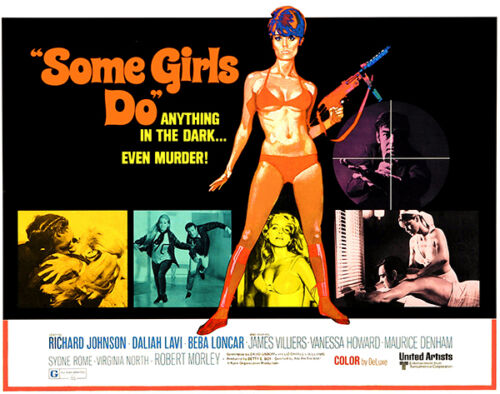
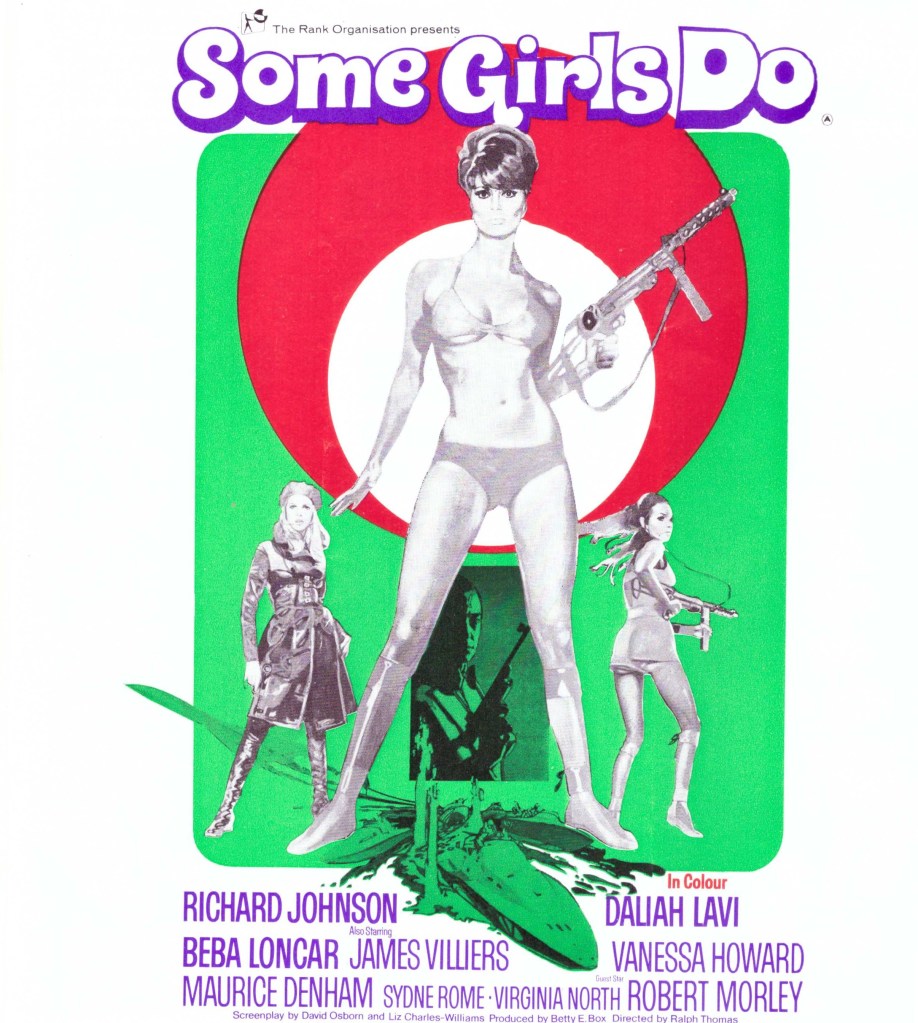
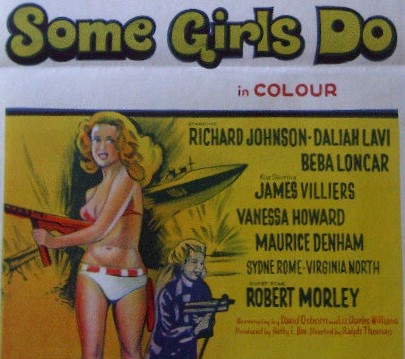
Some Girls Do (1969) ****

Enjoyed this sequel to Deadlier Than the Male (1967) far more than I expected because it sits in its own little world at some point removed from the espionage shenanigans that dominated the decade. Hugh (nee Bulldog) Drummond (Richard Johnson) is neither secret agent nor involved in espionage high jinks, instead employed in the more down-to-earth domain of insurance investigator, albeit where millions are at stake. Although his overall adversary is male, the smooth-talking Carl Petersen (James Villiers), adopting a series of disguises for most of this picture, the real threat comes from a pair of villainesses in the shape of Helga (Daliah Lavi) and Pandora (Beba Loncar). If anything, this pair are a shade more sadistic than Irma and Penelope from the previous outing.

The sequel doubles up – or doubles down – on the female villainy quotient, Petersen having created a race of lethal female robots who spend their time dispatching scientists working on the world’s first supersonic airliner. Global domination is only partly Petersen’s aim since he also stands to gain £8 million ($134 million today) if the plane doesn’t launch on schedule. Livening up proceedings are Flicky (Sydne Rome), a somewhat kooky Drummond fan who has her own agenda, Peregrine “Butch” Carruthers (Ronnie Stevens), a mild-mannered embassy official assigned bodyguard duties, and chef-cum-informant Miss Mary (Robert Morley).

Villiers has found a way of turning an ultrasound device intended originally to aid cheating in a boat race into something far more dangerous. But, of course, for Helga seduction is the main weapon in her armory, and Drummond’s first sighting of her – a superb cinematic moment – is sitting on the branch of a tree wielding a shotgun. Equally inviting are the squadron of gun-toting mini-skirted lasses guarding Petersen’s rocky fortress.

The movie switches between Helga, Pandora and the robots raining down destruction and Drummond trying to prevent it. Dispensing with the boardroom activities that held up the action in Deadlier than the Male, this is a faster-moving adventure, with Drummond occasionally outwitted by Helga and calling on his own repertoire of tricks. Dialog is often sharp with Drummond imparting swift repartee.

The action – on land, sea and air – is a vast improvement on the original. The pick is a motorboat duel, followed closely by Drummond in a glider coming up against a venomous aeroplane and saddled with a defective parachute. And there are the requisite fisticuffs. Various malfunctioning robots supply snippets of humour.

Richard Johnson (A Twist of Sand, 1968) truly found his metier in this character and it was a shame this proved to be the last of the series. Although Daliah Lavi never found a dramatic role to equal her turns in The Demon (1963) and The Whip and the Body (1963) and had graced many an indifferent spy picture as well as The Silencers (1966), she is given better opportunity here to show off her talent. Beba Loncar (Cover Girl, 1968) is her make-up obsessed bitchy buddy. Sydne Rome (What?, 1972) makes an alluring debut. James Villiers (The Touchables, 1968) is the only weak link, lacking the inherent menace of predecessor Nigel Green.

There’s a great supporting cast. Apart from Robert Morley (Genghis Khan, 1965) look out for Maurice Denham  (Danger Route, 1967), Adrienne Posta (To Sir, with Love, 1967) and in her first movie in over a decade Florence Desmond (Three Came Home, 1950). The robotic contingent includes Yutte Stensgaard (Lust for a Vampire, 1971), Virginia North (Deadlier Than the Male), Marga Roche (Man in a Suitcase, 1968), Shakira Caine (wife of Sir Michael), Joanna Lumley (television series Absolutely Fabulous), Maria Aitken also making her debut, twins Dora and Doris Graham and Olga Linden (The Love Factor, 1969).  Peer closely and you might spot Coronation Street veteran Johnny Briggs.

The whole package is put together with some style by British veteran Ralph Thomas (Deadlier than the Male). Screenplay by David Osborn and wife Liz Charles-Williams (Deadlier than the Male) is based on the book by “Sapper”.

Discover WordPress

A daily selection of the best content published on WordPress, collected for you by humans who love to read.

The Atavist Magazine

by Brian Hannan

WordPress.com News

The latest news on WordPress.com and the WordPress community.