Behind the Scenes: “Operation Kid Brother / O.K. Connery” (1967)

A new episode in the James Bond legend began on February 23, 1966, when a plasterer from Scotland made an audacious bid for movie stardom. His name was Neil Connery, currently earning $10 a week, shooting for a $5,000 payday as he took part in a screen test in Rome for producer Dario Sabatello (Seven Guns for the MacGregors, 1966) for a film entitled Operation Casbah that would later be tagged Operation Kid Brother (O.K. Connery in Italy).

Sabatello was an experienced producer beginning with The Thief of Venice (1950) starring Hollywood legend Maria Montez. Connery was a skilled laborer living in the four-year shadow of elder brother Sean and with little intention of moving out of that shadow. However, as a result of a work-related incident, he became the subject of a newspaper article and then a radio interview. Nobody was much interested in the reason for the interview – stolen tools – but everyone was impressed by the sound of Neil’s voice. “Sean’s brother spoke exactly like him.”

Archers Assemble! Connery on the bowstring.

The newspaper interview caught the eye of Sabatello, who noted the actor’s likeness to his brother and who flew over to Edinburgh to interview Neil and in so doing becoming aware of his athletic attributes, height and good looks. A month later came an invite for the screen test. Neil’s agent, who had no right to make such a claim, promised that if Neil got the part big brother Sean would play a cameo. For the test, Connery had to “embrace a girl, sing, dance and finally end up in  a hand-to-hand fight with a guy with a knife.” However, the test was so successful that the presence of Sean was not required. Sabatello signed the neophyte actor to a six-picture deal that would generate a six-figure salary if the film turned the Scot into a star.

Italian production giant Titanus sold the world rights (except for Italy) to United Artists, ironically the distributor of the James Bond pictures, thus securing the funding for the $1.2 million three-month shoot that kicked off in Cinecitta in Rome on December 14, 1966. Locations were scheduled to include Monte Carlo, San Remo, Turin, Barcelona, Malaga and Tetuan.

The supporting cast was dominated by actors with a Bond connection including Adolfo Celi, Daniela Bianchi, Anthony Dawson, who had all worked with director Alberto De Martino on Dirty Heroes (1967) and Lois Maxwell and Bernard Lee. Ennio Morricone, another De Martino aficionado, was brought in to do the score.

Affiliates Assemble! Connery with Bond regulars Bernard Lee and Lois Maxwell.

Connery’s boxing training in the British Army came in handy when he had to become an archer. Pulling a bow takes considerable physical exertion. Target practice was held at Adolfo Celi’s house outside Rome. “I had remembered everything about putting the bow down, bringing it up, pull and push, as there was quite a pull on it,” he said. Celi’s arrow managed just a few yards but Connery hit the target. His luck did not hold when filming the real thing in Monte Carlo. Celi’s shot did not go far again but this time Connery’s arrow missed the target.

Although Connery had read the script he was only given his lines in the morning as he went into make-up. He acquitted himself well in the fight scenes, except for one scene which ended with him being taken to hospital.   

The film opened in Britain at the Pavilion in London’s West End on April 25, 1667, with a general release slated for May 5. But it didn’t get a circuit release. That is, it didn’t go out on either of the two main cinema chains, ABC or Odeon, or the lesser Gaumont circuit, so its bookings would have been restricted. It didn’t appear in the United States until November, 1967, having been reviewed without much enthusiasm in Variety which posited “at best the film deserves bottom half bookings”, i.e. the bottom half of a double bill, which means it would play for a fixed rental rather than a percentage.

It did open in first run in a number of city center picture houses in November and December, to occasionally decent but hardly lush box office. Its $20,000 week in Chicago was deemed “good”, as was the $4,000 in Providence, while $13,000 in Philadelphia was considered “brisk” but $5,000 in St Louis considered only “fair.”  There was a first run showing in New York but only at a 600-seater arthouse.

But when it went wider in “Showcase” releases the box office collapsed. In New York it managed only $67,000 from 25 theatres compared to, in the same week, British film The Family Way on $223,000 from 26, and the second week of Point Blank with $145,000 from 25. Business was worse in Los Angeles, just $49,000 from 26 compared to $125,000 from 29 for Barefoot in the Park, and it was dire in Kansas City, only $9,000 from eight houses.

Given the relatively low budget, the film globally may well have broken even but it certainly did not send Neil Connery’s box office status into the stratosphere. He had small parts in two more low-budget movies, The Body Stealers (1969) and Mad Mission 3: Our Man from Bond St (1984) plus some television.

SOURCES: Brian Smith, “Bond of Brothers,” Cinema Retro, Vol 4 Issue 12 2008, p13-19; Allen Eyles, Odeon Cinemas  2, (CTA 2005), p212; Allen Eyles, ABC (CTA, 1993), 123-124; Allen Eyles, The Granada Theatres (CTA 1998)’ p247; Allen Eyles, Gaumont British Cinemas, (CTA 2005), p197; William Hall, “Big Brother Is Watching Him,” Photoplay, June 1967; “International Soundtrack,” Variety, February 23, 1966, p33; “Titanus Sets Pre-Prod Deals for Two UA Pix,” Variety, December 14, 1966, p24; “International Soundtrack,” Variety, December 21, 1966, p24; “Hollywood and British Production Pulse,” Variety, December 28, 1966, p17; Advertisement, Variety, January 4, 1967, p65; “Connery Pix a Family Affair with UA,” Variety, March 8, 1967, p24;  Review, Variety, October 11, 1967, p22; “Picture Grosses,” Variety November 1, November 8, November 15, November 29, December 13, 1967.  
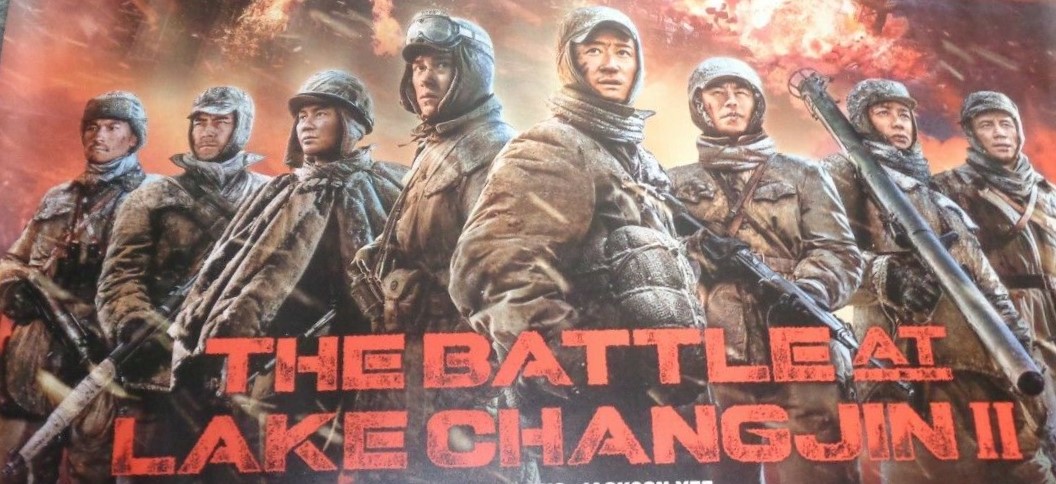
The Battle at Lake Changjin II / Water Gate Bridge (2022) **** – Seen at the Cinema

A raw visceral cinematic experience. After defeating superior American forces at Lake Changjin at the start of the Korean War, Chinese soldiers must prevent their retreat – and the arrival of reinforcements – by blowing up the Watergate Bridge in a blizzard. The bitter winter conditions, making it impossible to see more than a few yards ahead as the troops cross a mountain, freeze their weapons, compass and radio batteries. The assault is uphill over exposed ground.

This is non-stop battle told from the perspective of the grunts. Exposition regarding characters is minimal. That first hour or so in most Hollywood war movies where little happens except to build tension between participants and explore romantic elements is eliminated here. It’s all battle, beginning, middle and end, with no respite, brutal, bloody, horrific. The Americans have tanks, flamethrowers  and airpower, the Chinese don’t, so they are strafed, burned and blown up.

Setting aside politics and propaganda, and the questions of historical accuracy that haunt all war pictures, this is the most extraordinary on-the-ground combat as the Chinese seek to employ various strategies against another superior force, knowing U.S. reinforcements are on their way, and the defending Americans seek to suck them into a trap.  The fighting is intense, sacrifice the order of the day.

Best performances are delivered by brothers Wu Qiangli (Wu Jing), commander of the seventh company, and the undisciplined Wu Wanli (Jackson Lee) who grows up during battle. While emotions are necessarily reined in, no time for showboating here, intensity of feelings are still revealed, several wordless scenes between disparate characters show everything with just the eyes. As with all war pictures, comradeship under fire is all that matters, the connections between the band of brothers no less applicable here than when  William Shakespeare invented the phrase.

Like the best war films, strategy is vital. Here, the Chinese employ a variety of diversionary tactics while attempting to destroy key American positions, the HQ, the pump room. There are some brilliant battlefield observations. The Chinese work out the Americans have positioned their forces twenty meters apart because in between are their military supplies, so these are also targeted via mortar rounds. But basically it is scrapping for position inch by inch.

And this is not a film devoid of irony. Using captured American weapons, the Chinese, unable to read English, fire an ineffective piece of artillery against a tank. Seizing the HQ, the Chinese, unable to speak English, ask for the commanding office while the Americans, unable to speak Chinese and intent on surrender, respond they are unarmed, the matter resolved by an explosion. A flamethrower burning to death a wounded soldier melts the ice sufficiently for his companion to slide downhill to safety. And there are rare bursts of humour, one soldier preferring to chew “plastic” – captured chewing gum – in preference to beans so frozen they could chip your teeth.

This is as much a picture about the effect of war, and special effects show the impact of not just the destructive power but the energy imparted by exploding bombs, the part played in dismembering soldiers by the metal and stone of the defences, the flamethrowers that turn men from walking one minute to charred skeletons the next.

There are occasional cuts to the American high command, General Douglas Macarthur (James Filbird) attempts to persuade President Truman (Ben Z. Orenstein) to use the atom bomb. The Americans are not shown as idiots and there’s no upbraiding of their society and there is, among the carnage, at least one American hero in Bradley Bixler (Rudy van Gelderen). And there’s none of the bombastic or poetic influence of Apocalypse Now (1979) or The Thin Red Line (1998), no attempt to glamorize war, except of course that for the victors victory is always unforgettable. But the cost here is easily measured, the mortality rate enormous, at least two-thirds of the attackers died in the assault and in one company, out of 137 men involved, only one man was left standing.

I never saw the first film so I’ve no idea how this compares, but generally that movie got poor reviews, I guess as much to do with political stances as anything else. I suspect this picture will get as derisory a stack of reviews and, without taking sides, that would be unfair from a cinematic perspective because this is a wholly immersive encounter, with some brilliant action direction and stunning visuals in the main by Tsui Hark (The Taking of Tiger Mountain, 2104) with some assistance from the uncredited Kaige Chen (Farewell My Concubine, 1993) and Dante Lam (The Stool Pigeon, 2010).   

This is what comes of being an inveterate moviegoer and on those weeks when you have seen virtually everything else worthwhile on offer and still want to go to a movie, you end up seeing anything. Usually, this turns out to be some bedraggled horror picture or a lame rom-com like Marry Me (2022) but occasionally it means that you stumble across something exceptional.

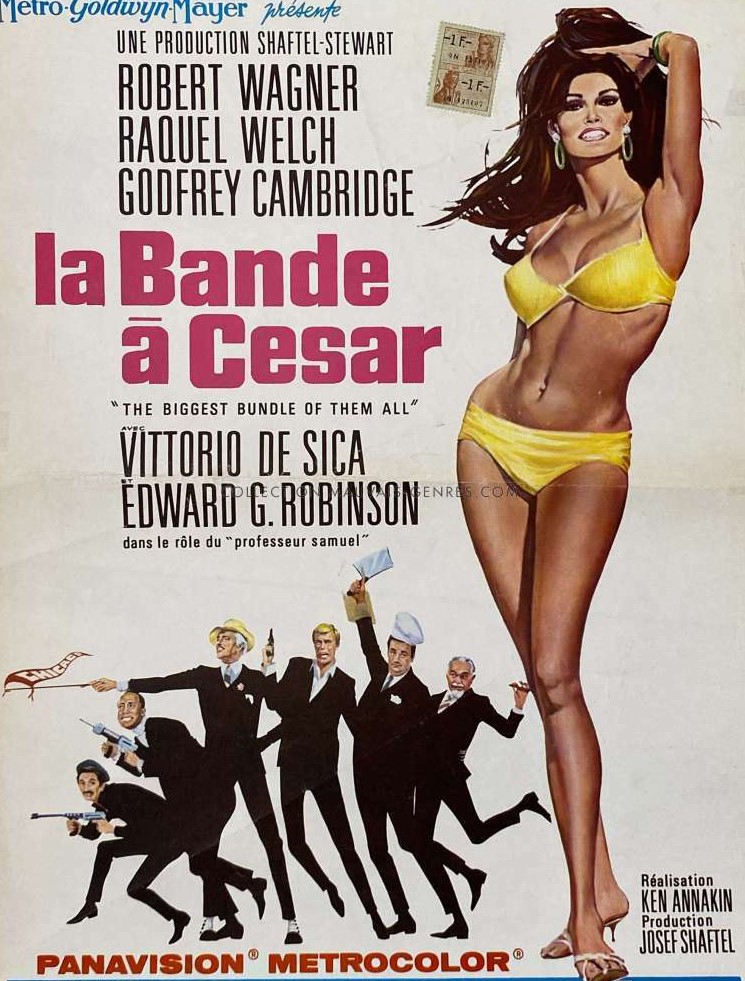
Behind the Scenes: “The Biggest Bundle of Them All” (1968)

Films that reach the screen two years after filming was completed are generally stinkers. Ken Annakin caper movie The Biggest Bundle of Them All wrapped production in summer 1966 and was not released until January 1968. But the reason was not the usual.

The cause of the unseemly delay was a temper tantrum by Oscar-winning uber-producer Sam Spiegel (Lawrence of Arabia, 1962) who had been working on a similar project about incompetent amateurs kidnapping a gangster kingpin – The Happening (1967) starring Anthony Quinn (previously reviewed in the Blog). After bringing a charge of blatant plagiarism, Spiegel was mollified by being permitted to bring his movie out first, with an inbuilt eight-month gap  between both releases, the deal sweetened by a 15% cut of The Biggest Bundle’s profits and the right to vet the script.

Despite success with Those Magnificent Men in Their Flying Machines (1965) and Battle of the Bulge (1965) British director Annakin was at a career impasse. The Fifth Coin written by Francis Ford Coppola and starring George Segal failed to get off the ground. He turned down western Texas Across the River (1966) at a time when Catherine Deneuve and Shirley Maclaine were slotted in for the female roles and was fired from The Perils of Pauline (1967). The Italian Caper as it was then known, recalled Annakin, “did not seem a world-shattering movie but I found the caper fascinating and the cast irresistible.” 

Let them eat cheesecake.

It marked the movie debut for producer Josef Shaftel of The Untouchables television fame and for screenwriter Rod Amateau (The Wilby Conspiracy, 1975), also then a television regular although the final script was attributed to another neophyte Sy Salkowitz. The film made the most of Italian locations, Naples and Rome, as well as the South of France and Provence. Annakin caught pneumonia just as shooting was to commence. Shaftel took over for five days only for his material to prove unusable.

Both veteran actors proved easy to direct. “Robinson was like putty in my hands, completely trusting.” And while Vittorio De Sica was every bit as amenable he was inclined to fall asleep on the set as the result of entertaining his mistress the night before. Di Sica was also a compulsive gambler and at one point lost half his salary in a casino.

Raquel Welch, in only her second picture after One Million Years B.C. (1966) – which contained minimal dialogue – was initially a handful. Primarily, this was due to inexperience and her desire to present herself in as alluring a fashion as possible, with impeccable hairstyles and make-up. After she had kept the crew waiting once too often Annakin threatened to eliminate her close-ups unless she respected the shooting schedule.

“On the whole I was quite pleased with the results because she really applied herself and so long as one broke up the scenes into a couple of lines at a time she became able to handle them quite adequately…I was getting along excellently with Raquel – even to the extent of trying to find another picture with her,” Annakin noted in his autobiography. Since this was written three decades after the movie was made, it would have given him ample time to get rid of any latent hostility to the actress. This reaction, it has to be said, is contrary to much of what has been written about Welch’s behavior on the picture. At the time of filming he reported that “she has a marvelous flair for comedy.”

But it appeared that Annakin was the only one who spotted her star potential. “The rest of the cast, especially Bob (Robert Wagner), regarded her as a pin-up girl on the make…none of them thought she was particularly sexy at this time.”

Otherwise, the only other trouble came from Godfrey Cambridge who “had a chip on his shoulder” and from Robert Wagner’s insistence on wearing false eyelashes. Problems arose over the cinematographer’s determination to employ powerful lights even at the height of a Mediterranean  summer and a massive dust storm interrupted filming of the final scenes.  Annakin also benefitted from the locations and using his experience was able to shift 35 pages of script from interiors to outdoors, completely altering the look of the picture. This made the $2 million movie “look like it cost three or four million,” according to Annakin. 

At this point Welch, best known for having been sued by her publicist, was in the process of turning herself into a star in demand. In 1966 Welch was something of a Hollywood secret. She had three pictures in the bank, was working on a fourth and had signed up for a fifth before any of her movies had been released. On the other hand, she was fast becoming one of the most famous faces (and bodies) in the world, on the cover of of hundreds of magazines in Europe, many for the fourth or fifth time.

Having set up a company, Curtwel, managed by husband Patrick Curtis, she would earn $15,570 a week on loan to MGM for a second film Italian movie Shoot, Loud…Louder, I Don’t Understand (1966), considerably more than through her contract with Twentieth Century Fox. A year later she collected £100,000 for two weeks on portmanteau picture The Oldest Profession (1967).

Curtwel was also moving into the production arena, in 1965 attempting to set up No Place for the Dead and the following year optioning the musical comedy The Opposite Sides of the Fence and taking a quarter share in the mooted The Devil’s Discord to star Peter Cushing and Edd Byrnes under the direction of Michael Reeves (Witchfinder General, 1968). None of these ventures materialzed.

As well as having to contend with audience disinterest in the clumsy crook scenario as witnessed by the flop of The Happening, the enforced time gap allowed a second picture featuring bungling criminals called Too Many Crooks (1967) to reach cinemas prior to The Biggest Bundle. However, by January 1968, Welch was a much bigger name on movie marquees, having appeared on 400 international magazine covers and selected by U.S. exhibitors for the International Star of the Year Award while The Biggest Bundle had been preceded by another seven pictures including hits One Million Years B.C. and Fantastic Voyage (1966).

SOURCES: Ken Annakin, So You Wanna Be a Director, (Tomahawk Press, Sheffield 2001), pages 187-194; “Raquel Welch and Manager Form Curtwel Co,” Box Office, May 3, 1965, pW3; “Raquel Welch, Pat Curtis Form Curtwel Prods,” Box Office, October 5, 1965, pSE6; “Toutmasters Sue for 5% of Raquel Welch,” Variety, October 6, 1965, p14; “Raquel Welch in Rome,” Box Office, April 25, 1966, page SE1; “MGM’s Bundle Wrapping at Nice, Orders On Set in 3 Languages,” Variety, July 6, 1966, p7; “8 Pix for 2 Unseen Actresses,” Variety, August 17, 1966, p5; “Businesswoman Side of Raquel Welch,” Variety, November 2, 1966, p20; “Oldest Profession Gets New Locale in West Berlin, Raquel Welch’s 100G Job,” Variety, January 18, 1967, p24; “Columbia-Spiegel Holds 25% Share of MGM’s Bundle,” Variety, December 6, 1967, p3.

The Biggest Bundle of Them All (1968) ***

Bunch of incompetent crooks kidnap an impoverished Mafia boss who pays his ransom by setting up a major heist. By a stroke of casting alchemy this brings together Cesare (Vittorio De Sica), the epitome of old world Italian charm, knock-out gangster’s moll and scene-stealer-in-chief Juliana (Raquel Welch) replete with scanty knock-out outfits, and criminal mastermind Professor Samuels (Edward G. Robinson). In order to acquire the funds necessary to steal $5 million of platinum ingots from a train – that plan involving a tank and an WW2 bomber – the crew, initially headed by American Harry (Robert Wagner), need to carry out smaller jobs.

Problem is, none of them are any good, not even Cesare, who has lost his flair and botches an attempt to rob an old flame of her jewels. This is a twist on Topkapi (1964) which employed effective amateurs. This bunch can’t even carry out a simple theft from a restaurant. The heist itself is pretty spectacular and innovative. And the movie is quirky, with a darker edge. While there are few belly laughs, the light tone is enough to carry the gentle humor, mostly inspired by the misplaced team, amateurs for various reasons, not necessarily outright lawbreaking, on the run. These include London Cockney mechanic Davey (Davy Kaye), chef Antonio (Francesco Mule) distracted by hunger at every turn, cowardly violinist Benny (Godfrey Cambridge) and Joe (Mickey Knox) with a helluva brood to feed.

The story does a good bit of meandering, as does the camera, much of its focus on the voluptuous charms of Juliana, but the hurt pride of Cesare and the grandiose machinations of the professor keep it on course. The Italian settings, incorporating grand villas and ruins, do no harm either. The heist is terrific and there is a final twist you may or may not see coming. The interplay of characters works best when it involves Juliana, who attempts to twist Cesare around her little finger, that tactic mutual it has to be said, and who keeps the professor on his toes by dancing with him in a disco, and it soon becomes apparent that she has the upper hand over lover-boy Harry.

You could be forgiven for thinking the title refers to Raquel Welch – a cinematic infant at this stage with only One Million Years B.C (1966) in her portfolio – especially when her cleavage and looks receive such prominence, but the caper is classy and different. As well as being obvious she is both sinuous and seductive and clearly has a mind of her own, possibly the most criminally intent of the entire outfit, with weapons the others lack. By this point, she had invented the pop-out bikini, pictures of which had flooded Europe, making her the pin-up par excellence, but those who came to simply gawp quickly realized there was talent behind the body. Although of course there would be those who didn’t care.

De Sica constantly plays around with the idea of being a defunct godfather and Robinson is the antithesis of the gangster roles on which his fame relied. Robert Wagner is less effective, miscast and out of place in such august acting company and losing out to Welch in every scene.

This was a considerable change of pace for British director Ken Annakin after Those Magnificent Men in Their Flying Machines (1965) and Battle of the Bulge (1965) and he brings to this the comedy of the former coupled with the narrative complications of the latter, wrapping everything up in an easy inviting style that makes the most of his stars and the locations. Screenwriter Sy Salkowitz was a television veteran (Perry Mason, The Untouchables et al) , this marking his first venture into the big screen.     

Not in the Topkapi class – very little is – but a pleasant diversion nonetheless and for avid Raquel Welch fans, setting aside her outfits, a chance to see her develop more of a screen persona than was permitted in her debut One Million Years B.C.

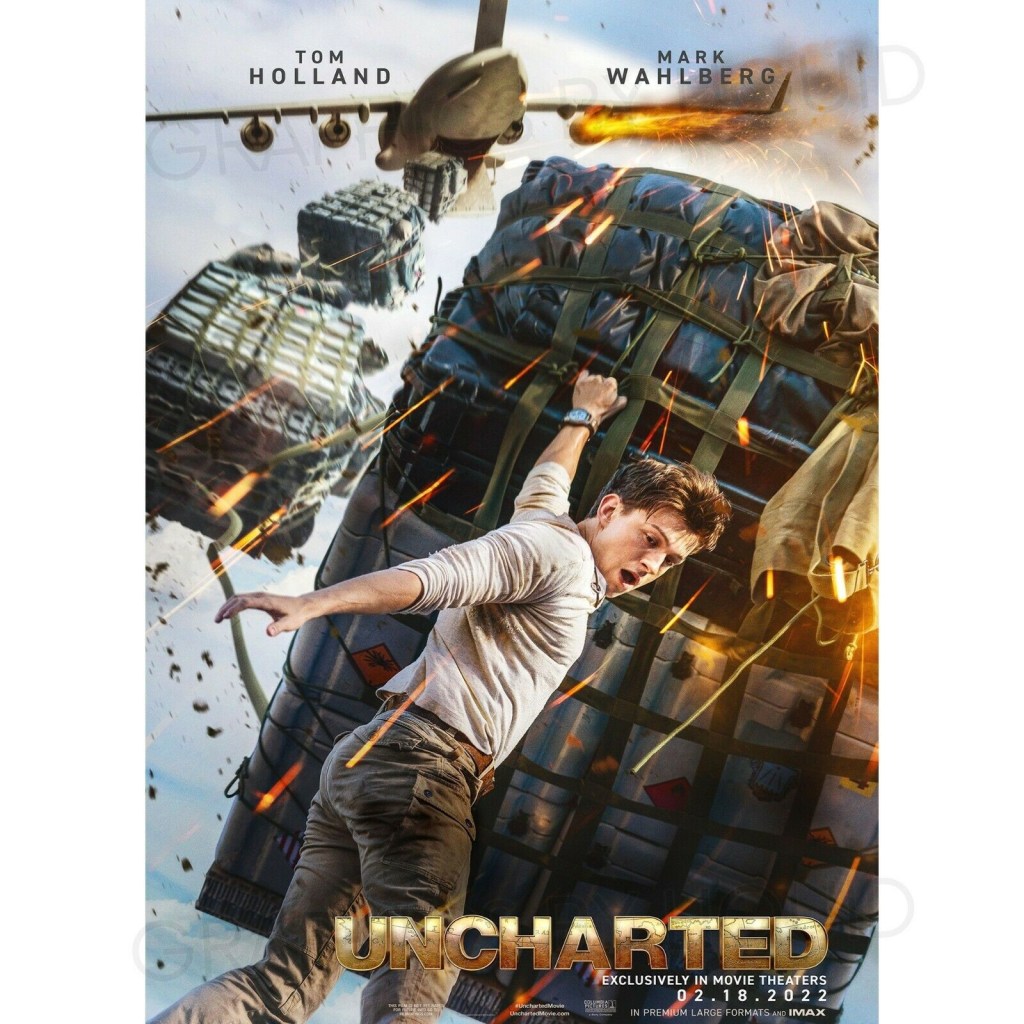
Uncharted (2022) **** – Seen at the Cinema

Hugely enjoyable fast-paced romp with clues, ancient maps, sunken treasure, double-cross upon double-cross, action and twists all the way in what could be the next major franchise. Barman Nathan Drake (Tom Holland) teams up somewhat unwillingly with  unscrupulous Victor Sullivan (Mark Wahlberg) and Chloe Frazer (Sophie Ali) to find $5 billion in gold. In their way: the ruthless Santiago Moncado (Antonio Banderas), henchperson Braddock (Tati Gabrielle) and assorted roughnecks.

Confession: I’ve no idea what computer game sparked this movie so come with no preconceptions. History lesson: the gold was lost by Portuguese Ferdinand Magellan, the first guy to sail round the world, while Sir Francis Drake was the first Englishman to do the same.

Two outstanding action sequences top and tail the movie, the first a battle in a cargo plane that is dumping its cargo, the second, just astonishing in its virtuosity, a duel between airborne shipwrecks. In between are a scramble in an art gallery and a roofotop chase. And to keep the audience on its toes all kinds of relics are brought into play as well as hidden tunnels, churches and chambers complete with the usual Indiana Jones-style booby traps, never mind a ton of bullets, and a bunch of clues to be deciphered from maps and walls not to mention postcards and trees. Part of the fun is that the gang don’t get it right all the time with alarming consequences.

It’s all done with such verve and although it’s certainly a close relative to the Indiana Jones series it’s minus their mystical nonsense while the characters certainly are not called upon to do good for their country or save the world from any dictatorships. The guys just want to make money. And what’s wrong with that? It lends the movie a certain solidity. And the fact that none of the characters trusts the others ensures that the status quo never remains quo for long and that swift change is going to be the order of the day.

Tom Holland (Spider-Man: No Way Home, 2021) bulks up and seizes the opportunity to become a major star outside the comic book hero. Too often franchise pictures have produced wallpaper stars, attracting audiences in the tight confines of their multiverses but failing to add any box office muscle to other projects. This character proves an inspired choice. Holland gets to be athletic, as well as the young guy making his bones in a cut-throat (pardon the pun) world, holds up his side in the edgy banter with Wahlberg, and rounds out his personality by being a prize thief and vulnerable guy who misses his lost older brother.  

Mark Wahlberg (Infinite, 2021) hasn’t had this good a role since Patriot’s Day (2016) and since he’s not relied upon to carry the picture can get up to all sorts of shenanigans, which he’s usually knee-deep in, much to his apparent enjoyment. Antonio Banderas (Hitman’s Wife’s Bodyguard, 2021) for once has a legitimate reason to use his Spanish in a Hollywood movie.

Sophie Ali (Truth or Dare, 2018) and Tati Gabrielle in her movie debut rock as female actioners, extremely convincing as mean gals, and should have been shuttled into any number of female-led action movies of the last few years that failed to bring the requisite bite. Both muscle their way into the game and refuse to be muscled out or, by dint of romantic entanglement, lose their edge. There’s a nice cameo – and a running joke – by Steven Waddington (The Imitation Game, 2014) as an incomprehensible Scotsman.

Reuben Fleischer has taken the directorial cojones he displayed in Gangster Squad (2013) and Venom (2018) and squeezed the life out of them to keep this little number zipping along, scarcely stopping to take a breath, never finding itself in a dead end, and holding enough marvel back to pull off  the audacious ending of the flying shipwrecks, on a par with any image Steven Spielberg ever pulled out of his locker. Rafe Judkins, another movie debutante, and the partnership of Art Marcum and Matt Holloway (Iron Man, 2008)  assembled the screenplay from the Playstation game.

As I said I’ve no idea what were the ingredients in the original game and whether the writers have played fast and loose with the concept but all I can say is it’s a helluva movie.

We Need To Talk About Sir Sean, Part II: Who Wrote That Heinous Racist Scene: Book into Film – “Woman of Straw” (1964)

You can blame one of the screenwriters, either Robert Muller (Contest Girl, 1964) or Stanley Mann (The Collector, 1965), for coming up with the scene in Woman of Straw where the grotesque millionaire Charles Richmond (Ralph Richardson) forces his two black servants to pretend to be dogs to show his own dogs how to jump over each other. It’s not in the book. However, in fairness to the screenwriters they must have thought this preferable to the scene in the original book by Catherine Arley where Richmond offers a gold watch to the best imitation of a dog by his servants. This includes them getting down on all fours and eating food like a dog. Disgusting though this is, it is tempered by being a competition with a more than decent reward (a gold watch) for the winner.

The offensive scene in “Woman of Straw.”

And now we get into a difficult position since one of the most highly-praised episodes of Succession involved employees of grotesque millionaire Logan Roy (Brian Cox) being forced to get down on the floor and pretend to be boars and eat sausages like a boar (Boar on the Floor, Succession, Season Two, Episode Two). This sequence has a 94% rating on Rotten Tomatoes, the critical accumulation website. The episode won an Emmy for director Andrij Parekh. Scott Tobias of Vulture gave it five stars and Randall Colburn of The A.V. Club an A-minus. Various commentators referenced the Stanford Experiments, the culture of fear inherent in working with wealthy individuals, and the animalistic collapse of civilization.

So that has left me wondering if my objection to Woman of Straw was merely on racist grounds and to wonder if there would have been an outcry if the Succession episode had featured a black person grovelling on the ground.

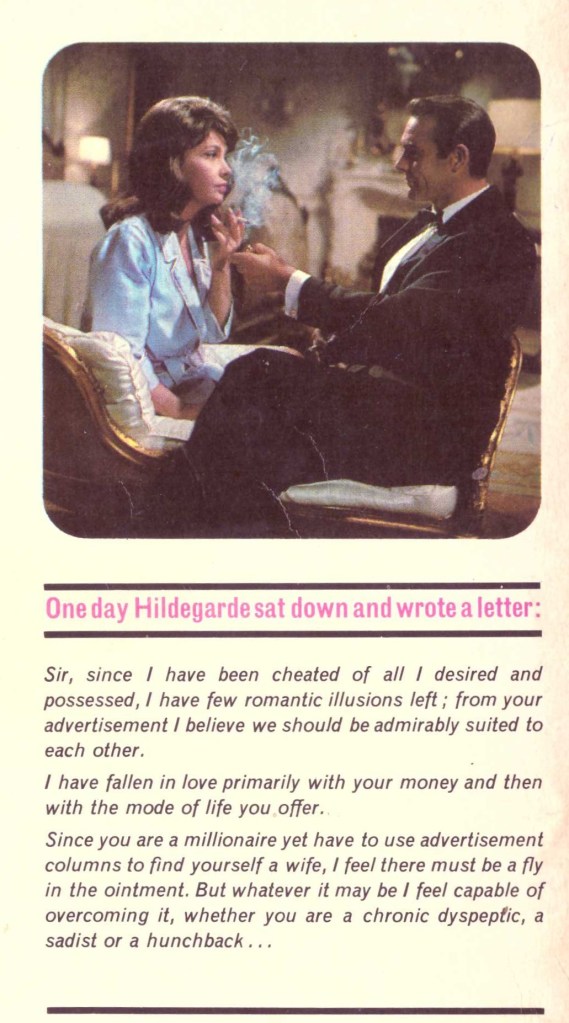
The screenwriters made significant changes to the source novel. For a start in the book both the woman and the millionaire were German. Hildegarde Meiner in the book becomes the Italian Maria (Gina Lollobrigida) in the film. But Hildegarde is not a relatively innocent nurse as in the film. Instead, she is an out-and-out gold-digger, determined to marry a wealthy man in order to make up for a desperate life in the aftermath of the Second World War.

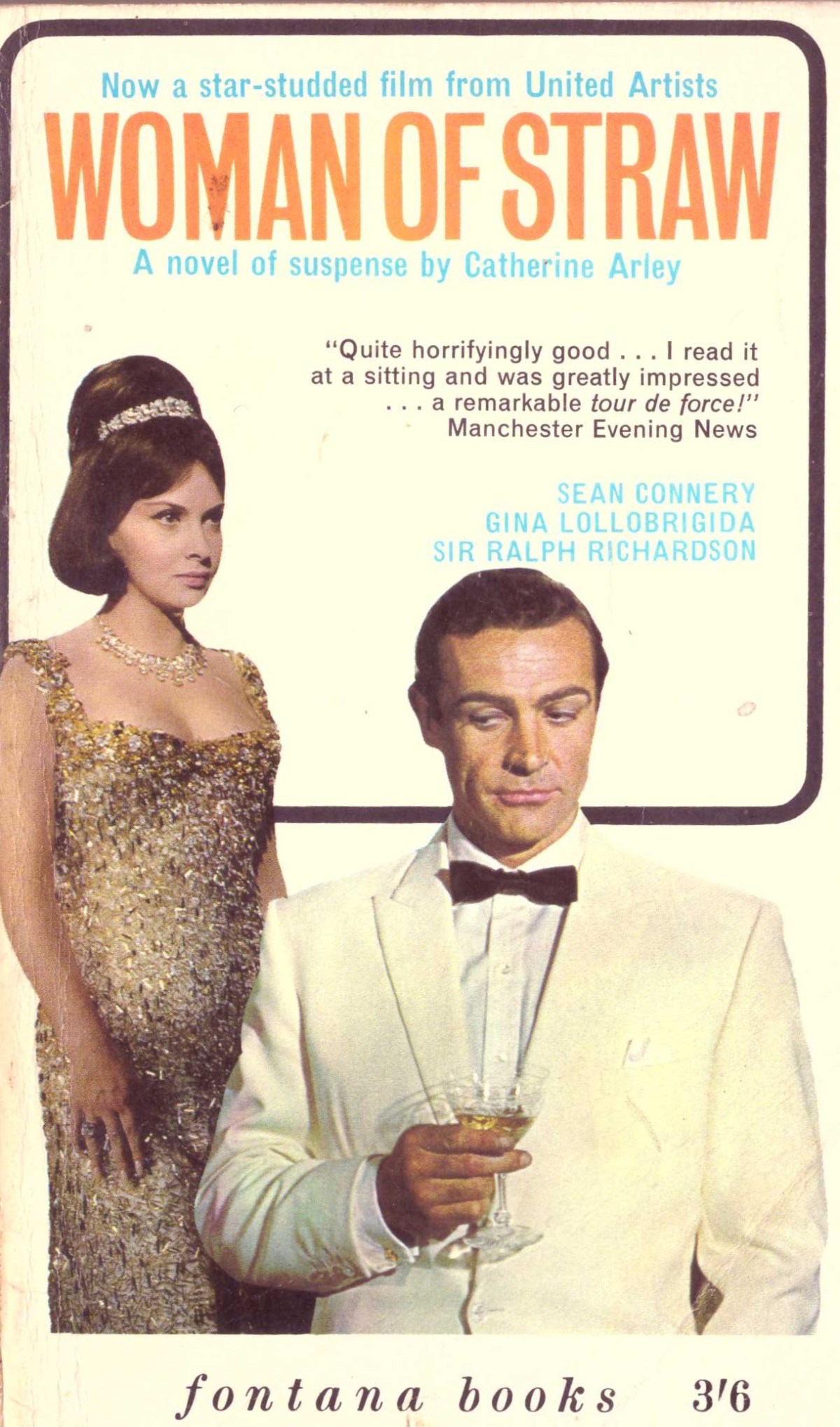
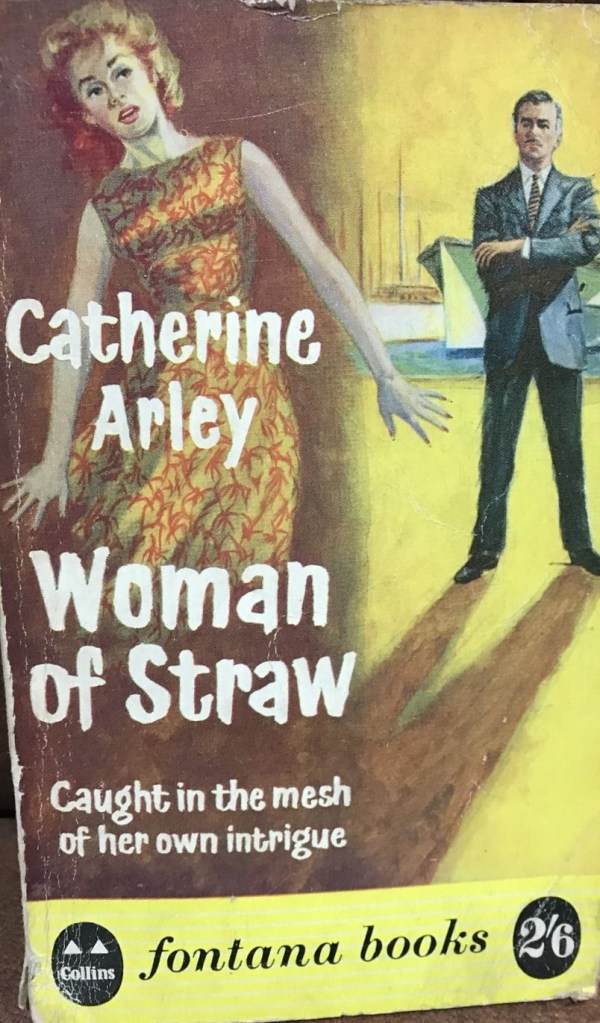
Back cover of the movie tie-in edition of the British paperback.

In the book the villain of the piece is also German, Korff, not British like Sean Connery. And he is simply the millionaire’s secretary not his nephew. The pivotal element of the story is the same, Tony Richmond (Connery) feeling he is owed much more of the old man’s fortune than the pittance provided for him in the will. Korff is also 60 years old and although Hildegarde makes a play for him, any romantic liaison is out of the question because the secretary wants to adopt her as his daughter.  Korff sets Hildegarde up as the nurse and instructs her to play it aloof and principled. Hildegarde does not fall into the category of beauty but, with better clothes and professional make-up, oozes class.

The rest of the story plays out much like the film except there is no rescue at sea and the millionaire does not listen to classical music. The novel narrative, while not in the first person, is told from the woman’s perspective. However, Korff is more devious than Anthony Richmond, ensuring in several ways that the nurse will take the rap.

Front over of earlier British paperback, not a movie tie-in.

The film’s ending is driven by the need for some kind of happy resolution, for the guilty to be brought to justice, the dupe exonerated to some extent. But the book belongs more to the film noir genre and the ending is quite different, the villain getting away with and Hildegarde seeing no way out but to commit suicide.

The deprivations that Hildegarde has undergone as a consequence of her Hamburg family being killed during the war and her struggle for survival thereafter and her desperation to find a wealthy white knight make her a more  sympathetic character.

The book is an excellent thriller in its own right.

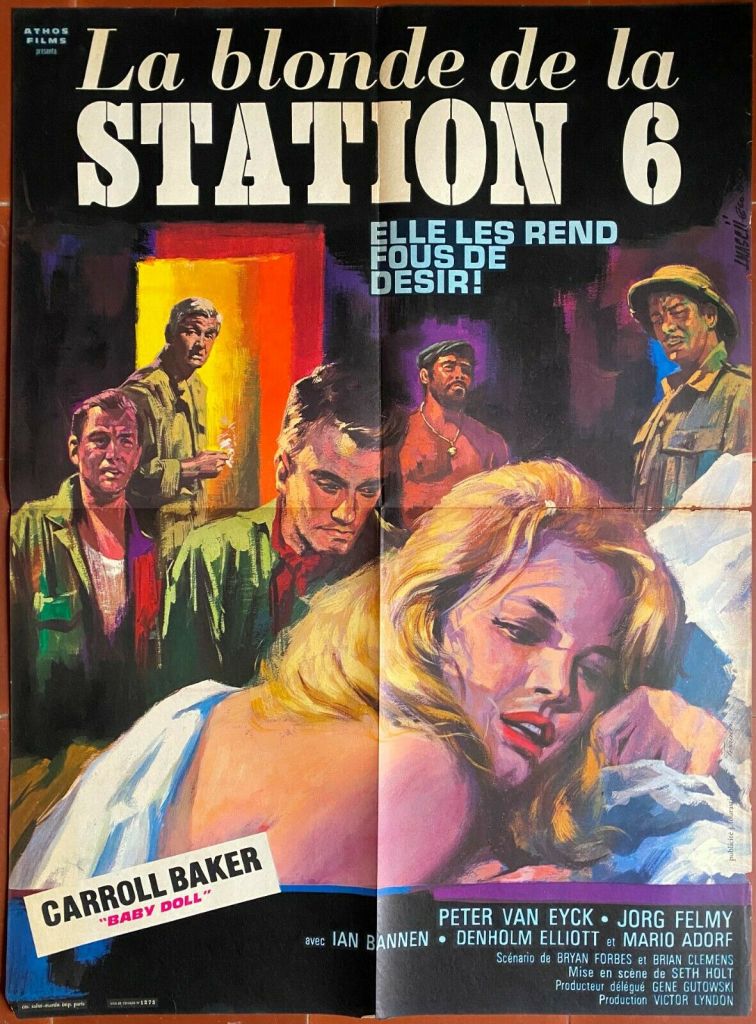
Station Six Sahara (1963) ***

Desert pictures come in two varieties – men battling the elements with little or no female distraction and men distracted from battling the elements by the presence of a female. Since the film I reviewed earlier today, Sands of the Kalahari,  fitted largely into the first camp with the sole female being viewed as a prize rather than a temptress, I thought it might be interesting to compare it to Station Six Sahara, made the year before, in which the seductive Carroll Baker disrupts the men-only oil station.

David Lean spent months in Jordan capturing his vision of the desert for Lawrence of Arabia. Seth Holt was granted no such luxury, a few weeks at Shepperton Studios in England to make this British-German co-production.  It is a surprisingly tight and effective drama made on a low budget excepting whatever fee induced Hollywood star Carroll Baker to join.

Five men trapped on an oil pipeline maintenance unit drive each other to distraction. Loud Scot Ian Bannen constantly needles stiff upper-class Denholm Elliott while overbearing German boss Peter Van Eyck cheats at poker. The arrival of steely-eyed German Hansjorg Felmy alters the status quo as he refuses in his own quiet way to knuckle down to authority. There is a wonderful psychological battle going on between Bannen and Elliott.

Extremely envious of the number of letters Elliott receives, Bannen offers a month’s pay for just one. When the offer is accepted, Elliott cannot stop fretting about what he might have given away and what secrets it revealed about himself. The arrival of Carroll Baker upsets the equilibrium further as the men attempt to win her affections. While apparently promiscuous, she is steelier than the lot of them, and tensions climb high when she begins to spread around her favors. Interestingly, she does no wooing but waits for men to come to her.

Given the budget restraints, or possibly because of them, it is surprisingly well directed. Two scenes stand out in directorial terms. In one featuring Bannen and Elliott, the Scot is only partly visible behind a piece of furniture but his dialogue continues even when out of sight. In the other, one of Baker’s suitors finds her door locked and as she is about to reply a hand appears (not in aggressive fashion) to cover her mouth, indicating she already has chosen her bedmate.

Naturally, this can only lead to a grim end. The cast of male unknowns are uniformly good but Baker steals the show as you would expect. Given the times, there was no nudity, but the overt sexuality certainly skirted the bounds of what passed as decency and Baker is alluring however little or much she wears. But her sexuality takes second place to her individuality. Her independence will not be surrendered to a man. Despite the budget restrictions it stands up very well.     

At any given moment Carroll Baker could be both a top Hollywood star and a middling box office attraction. She had just come off How the West Was Won (1963) but had really failed to justify the potential shown in Baby Doll (1956). Peter van Eyck (The 1,000 Eyes of Dr Mabuse, 1960). was best known for his role in Wages of Fear (1953). Scottish actor Ian Bannen (Psyche 59, 1964) was beginning to merge as a strong character actor, he and van Eyck had appeared together previously in The World in My Pocket (1961). The career of Denholm Elliott (Maroc 7, 1967) followed a similar arc to Bannen as a supporting player of distinction. Seth Holt (Danger Route, 1967) was considered a rising directorial star until his untimely death at the age of 41.

The Box Office Equalizer: Part Two

Variety’s revolutionary new box office tracking system, introduced in 1969, allowed it to include far more films in an annual assessment of performance. The “Annual Rentals” chart that appeared every January still covered how much of the box office pie was returned to studios and therefore gave a good indication of potential profit. But that was limited to only those pictures that met that chart’s criteria i.e. they had to return $1 million rentals. That usually meant only 80-odd films.

But now, in addition, from the computerized information gathered every week from hundreds of cinemas, Variety was able to give a pretty accurate estimate of the box office gross for ten times as many movies. In 1969, the survey covered 1,028 pictures. This wealth of information was of enormous value to exhibitors. Not only did it cover the obvious titles – the roadshows and those with top stars – but also the run-of-the-mill movies on which most cinemas now depended. In the current severe product shortage, reissues played a vital role. As did sexploitation.

Among films reviewed so far in the Blog annual grosses were shown for: They Night They Raided Minksy’s $1.9 million, Mafia picture The Brotherhood $1.9 million, Anthony Newley number Can Hieronymous Merkin Ever Forget Mercy Humpe and Find True Happiness $1.3 million, Hard Contract $1 million, Mayerling $980,000, Justine $536,000, Les Biches $391,000, Assassination Bureau $146,000, Fraulein Doktor $114,000 and The Sisters $50,000. (Multiply these figures by 50% for an accurate estimate of their rentals).

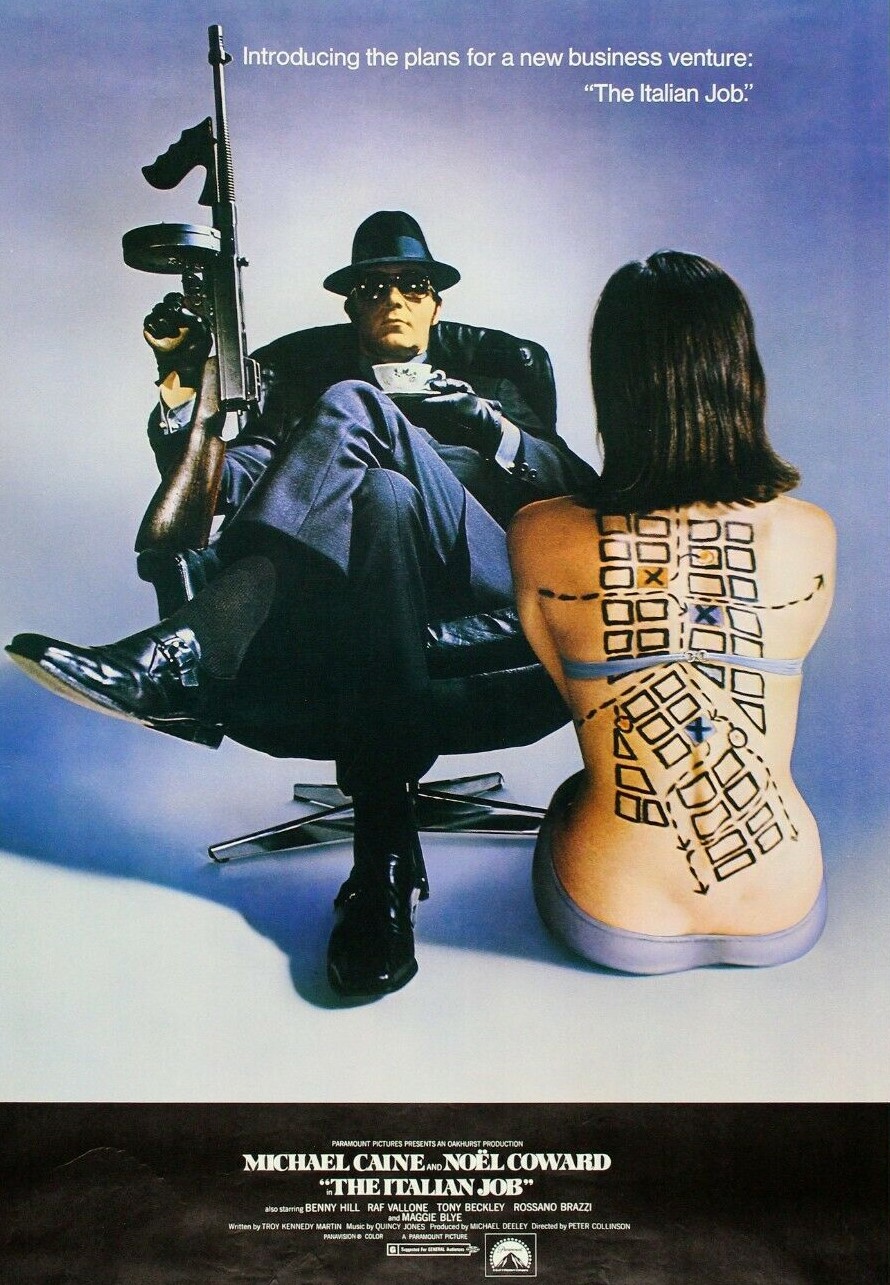
Other figures worth noting were: The Fixer $1 million, Secret Ceremony $1 million, The Italian Job $614,000, Marlon Brando in The Night of the Following Day $424,000, Shalako $78,000 and The Extraordinary Seaman $61,000. Bottom of the box office pile was motor racing documentary Hot Rod Action with just $1,000.

Given it was widely considered a flop, these are interesting figures for Hieronymous Merkin, rentals now estimated as being in the region of $2 million against a budget of $1.6 million – although other sources put the budget as low as $500,000 thus making it extremely profitable. Secret Ceremony had grossed $617,000 the previous year so its rentals would have approached $2.5 million, far more than was previously assumed. Fans of cult British thriller The Italian Job will perhaps be astonished how poorly it did in the U.S.

The top-grossing reissue was Bonnie and Clyde/Bullitt ($1 million) followed by a pair of Clint Eastwood double bills – A Fistful of Dollars/For a Few Dollars More ($912,000) and Hang ‘Em High/The Good, The Bad and The Ugly ($740,000). Also in the mix were Goldfinger/Dr No ($323,000), A Man and a Woman ($226,000), Belle de Jour/A Man and a Woman ($199,000), a revival of Lola Montes from 1955 with $148,000 and less successfully, from 1961, A Cold Wind in August with just $21,000.

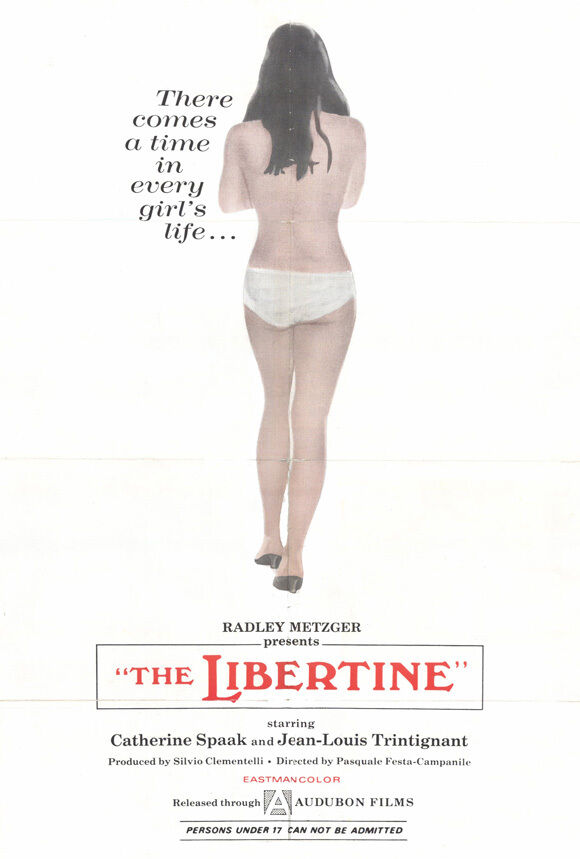
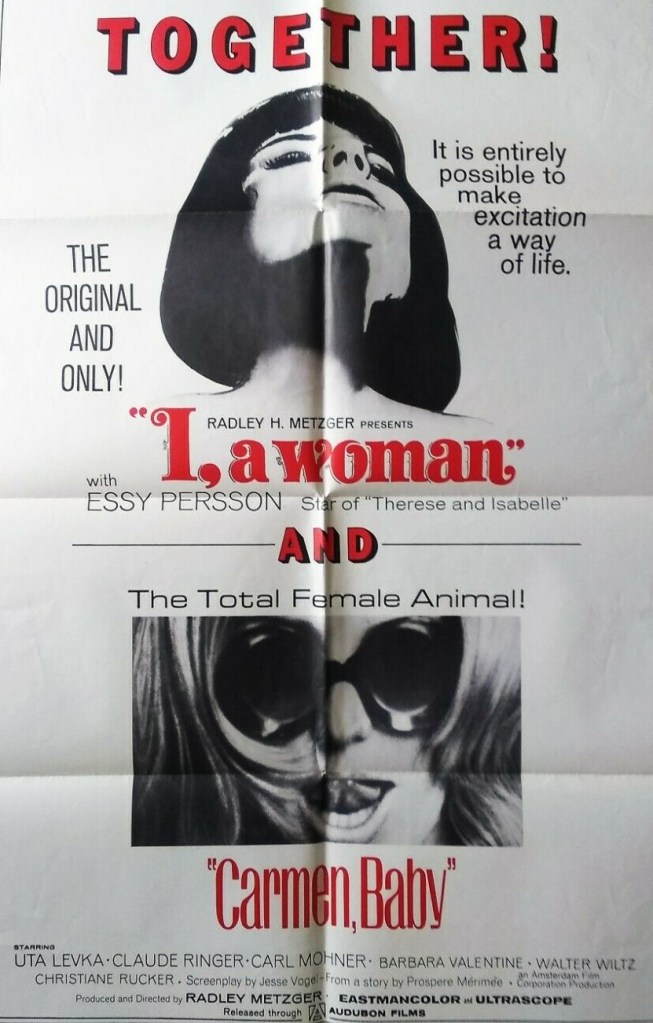
As previously noted, the impact of sexploitation was becoming more obvious. The biggest hit was The Libertine which crossed the $1 million mark followed by Camille 2000 ($868,000), Inga ($819,000) – bringing in three times as much as the previous year – Swedish Heaven and Hell ($458,000) and The Female ($279,000). Others charting included Vibrations, Without a Stitch, Erotic Dreams and The Sex Perils of Pauline. In addition, sexploitation movies were ripe for reissue, I, A Woman/Carmen Baby clocking up $363,000.

More importantly, what the chart did show and what the new weekly Top 50 was beginning to recognize was how often cheaply-made exploitation pictures held their own or even outgrossed big studio pictures for which exhibitors were often held to ransom. If ever there was a sign of the direction in which the business was now heading, this annual survey was it.

SOURCE: “Variety B.O. Charts’ 1969 Results,” Variety, April 29, 1970, p26.   

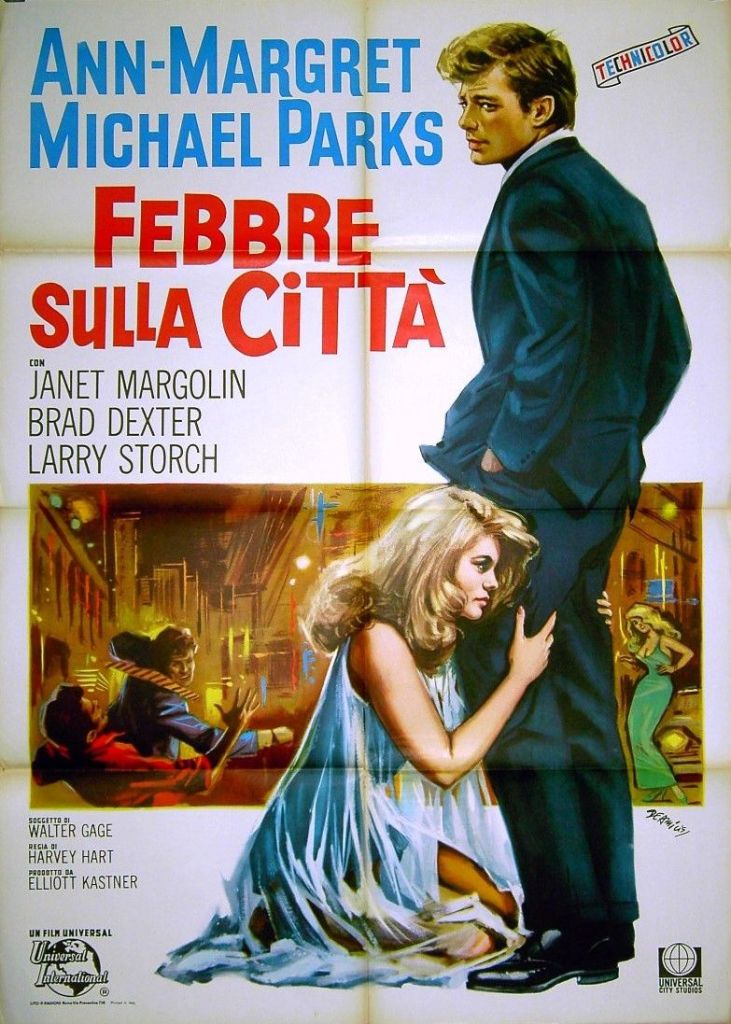
Bus Riley’s Back in Town (1965) ***

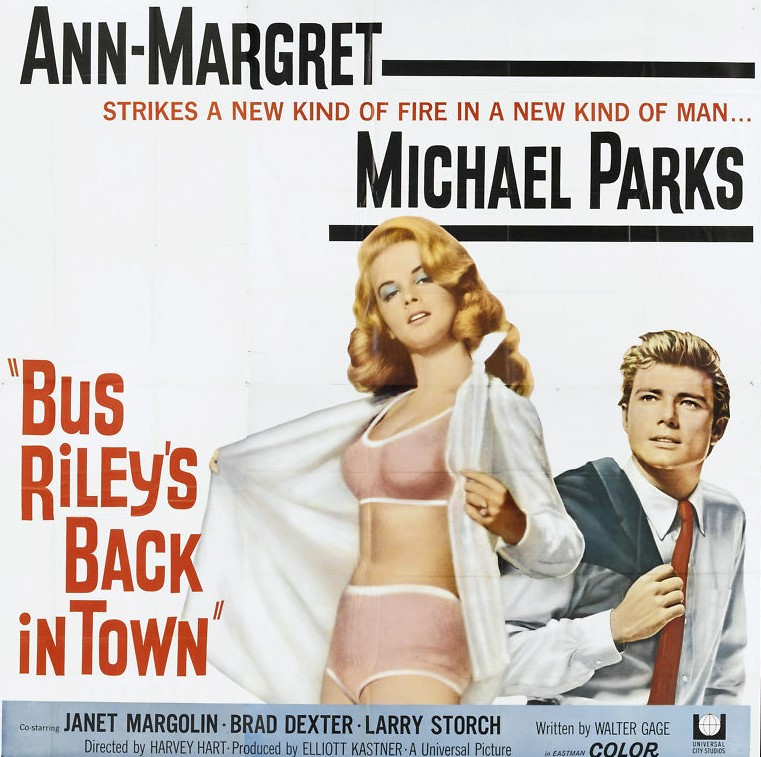
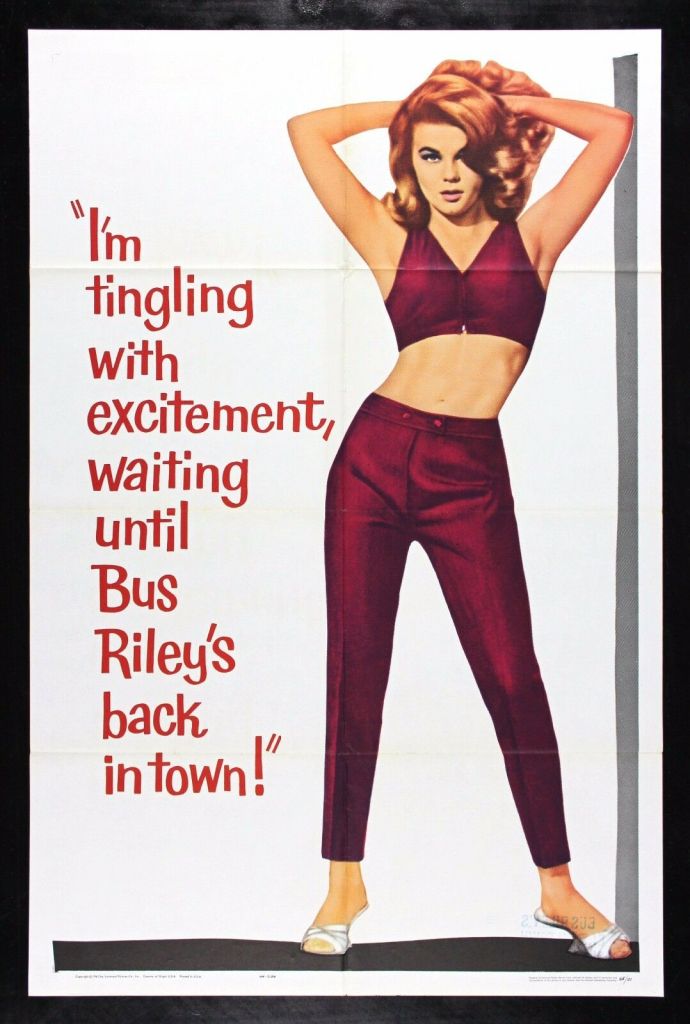
Given that Ann-Margret receives top billing I had automatically assumed she was the Bus Riley in question. Although decidedly the female lead, her role is secondary to that of a sailor returning to his small town. The backstory is that Bus – no explanation ever provided for this nickname, Buster perhaps? – Riley (Michael Parks) had been too young to marry the gorgeous Laurel (Ann-Margret) before he joined the U.S. Navy and in his absence she married an older wealthy man.  

Bus dithers over his future, re-engages with his mother and two sisters and finds he has not lost his attraction to Laurel. Although a handy mechanic, he has his eye on a white collar  career. An initial foray into becoming a mortician founders after sexual advances by his employer (Crahan Denton). Instead he is employed as a vacuum salesman by slick Slocum (Brad Dexter).  While his sister’s friend Judy (Janet Margolin) does catch his eye, she is hardly as forward or inviting as the sexy Laurel who crashes her car into his to attract his attention. But easy sex available with Laurel and the easy money from exploiting lonely housewives trigger a crisis of conscience.

Perhaps the most prominent aspect is the absence of good male role models. Bus is fatherless, his mother (Jocelyn Brando) taking in boarders to meet her financial burden – including the neurotic Carlotta (Brett Somers) – and while younger sister Gussie (Kim Darby) adores Bus the other sister Paula (Mimsy Farmer) is jealous of his freedom. Judy’s father is also missing and her mother (Nan Martin) a desperate alcoholic. The biggest male players are the ruthless Slocum and Laurel’s husband who clearly views her as a plaything he has bought. The biggest female player, Laurel, is equally ruthless, boredom sending her in search of male company, slithering and simpering to get what she wants.     

Scandal is often a flickering curtain away in small towns so it’s no surprise that Bus can enjoy a reckless affair with Laurel or that a meek mortician can get away with making his desires so quickly apparent, or that behind closed doors houses reek of alcohol or repression. A couple of years later and Hollywood would have encouraged youngsters like Bus and Laurel to scorn respectability in favor of free love. But this has a 1950s sensibility when finding a fulfilling job and the right partner was preferred to the illicit.

In that context – and it makes an interesting comparison to the more recent Licorice Pizza that despite being set in the 1970s finds youngsters still struggling with the difference between sex and love – it’s an excellent depiction of small-town life.

While Michael Parks (The Happening, 1967) anchors the picture, it’s the women who create the sparks. Not least, of course, is Ann-Margret (Once a Thief, 1965), at her most provocative but also revealing an inner helpless core. And you can trace her screen development from her earlier fluffier roles into the more mature parts she played in The Cincinnati Kid (1965) and more especially Once a Thief (1965).

In her movie debut Kim Darby (True Grit, 1969) is terrific as the bouncy Gussie and Janet Margolin (David and Lisa, 1962) invests her predominantly demure role with some bite. Jocelyn Brando (The Ugly American, 1963) reveals vulnerability while essaying the strong mother. Mimsy Farmer (Four Flies on Grey Velvet, 1971) also makes her debut and it’s only the second picture for David Carradine (Boxcar Bertha, 1972). Brad Dexter (The Magnificent Seven, 1960) is very convincing as the arrogant salesman.

It’s also the first film for Canadian director Harvey Hart (The Sweet Ride, 1968) and he has some nice visual flourishes, making particular use of aerial shots. The scenes of Bus trudging through town at night are particularly well done as are those of Laurel strutting her stuff.

It was also the only credit for screenwriter Walter Gage. That was because Gage didn’t exist. Like the Allen Smithee later adopted as the all-purpose pseudonym for pictures a director had disowned, this was the name adopted when playwright William Inge (Oscar-winner for Splendor in the Grass, 1961) refused to have anything to do with the finished film.

The movie was in limbo for over a year. It was never intended as a major picture, the budget limited to $550,000. Shot in Spring 1964, release was delayed for about a year until  Universal re-edited it and added new scenes. In part this was because Ann-Margret had  achieved surprising movie stardom between her recruitment and the film’s completion. Along with Raquel Welch, she became one of the most glamorous stars of the decade and in building up her own career Welch clearly followed the Ann-Margret template of taking on a bucket of roles and signing deals with competing studios.

After making just three movies, Ann-Margret was contracted for three movies with MGM at an average $200,000 per plus an average 12% of the profit, substantial sums for a neophyte. On top of that she had four far less remunerative pictures for Twentieth Century Fox, three for Columbia, Marriage on the Rocks with Frank Sinatra and a couple of others.

Universal also had another property to protect. Michael Parks was one of small contingent of novice actors in whom the studio had invested considerable sums, using them in television roles before placing them in major movies. Others in this small group – at a time when most studios had abandoned the idea of developing new talent – included Katharine Ross and Tom Simcox who both appeared in Shenadoah (1965), James Farentino (The War Lord, 1965), Don Galloway (The Rare Breed, 1965), Doug McClure (The Lively Set, 1964) and Robert Fuller and Jocelyn Lane in Incident at Phantom Hill (1965).

However, the introduction of Parks had not gone to plan. He was set to make his debut in The Wild Seed (1965) – originally titled Daffy and going through several other titles besides – but that was also delayed until after Bus Riley, riding on Ann-Margret’s coat-tails, offered greater potential.

SOURCES: “Escalating Actress,” Variety, May 22, 1963, page 4; “Inge Thinks Writer Contentment May Lie in Creative Scope of Cheaper Pix,” Variety, May 6, 1964, p2; “Ann-Margret Into the Cash Splash,” Variety, July 22, 1964, p5; “Universal Puts 9 Novices Into Pix,” Variety, March 3, 1965, p25; “Fear Ann-Margret Going Wrongo in Her Screen Image,” Variety, March 24, 1965, p5.

There’s a VHS copy available on Amazon, but otherwise it’s Ebay or this decent enough print on YouTube.

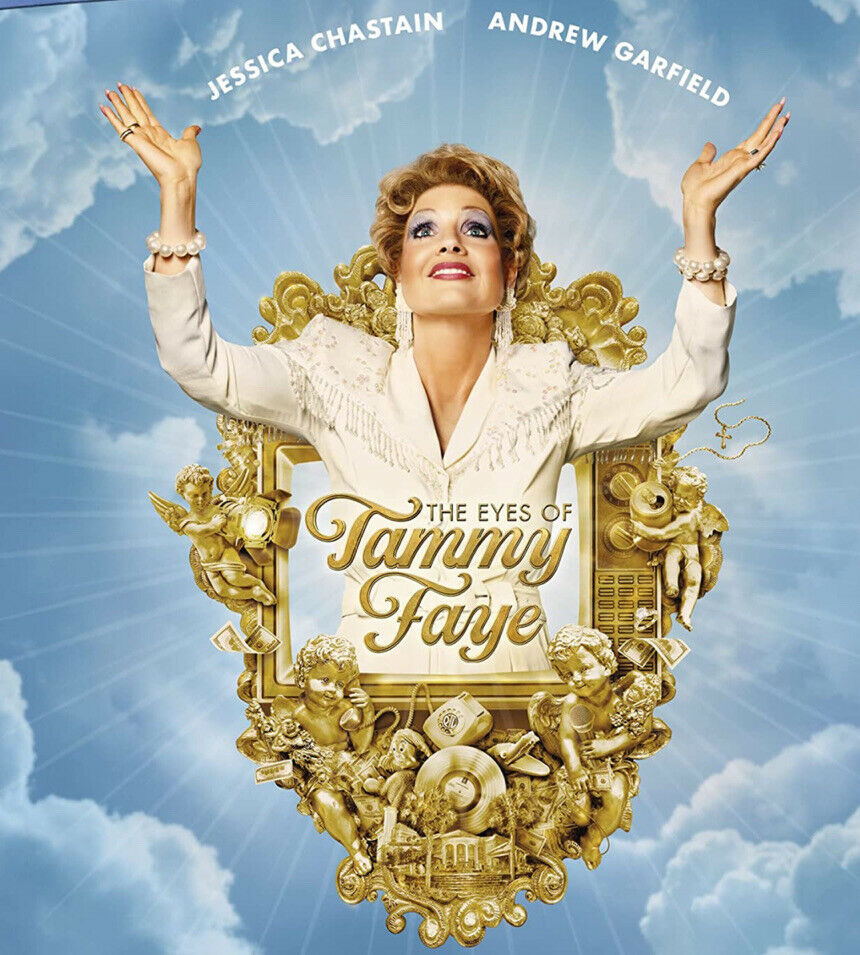
The Eyes of Tammy Faye (2022) **** – Seen at the Cinema

It’s rare to see an actor’s screen persona complete disappear when playing a role but that’s what Jessica Chastain achieves in this potentially Oscar-winning performance as the wife of television evangelist fraudster Jim Bakker (Andrew Garfield). Responsible much of the time for holding Bakker together when he was falling apart, backing diversity at a time when it was anathema to any organised religion, although a fool for love and with an appetite for self-deception that would have floored a rhinoceros.

A fascinating docu-drama into how an opportunistic couple became the fatted calves their religion deplored. The movie doesn’t delve too deeply into the fund-raising activities of the couple any more than The Two Popes spent time wondering who funded the Vatican. Instead, it’s a character-driven study. There’s no doubt Bakker and Faye delivered on the motivational front to their legions (20 million subscribers at their peak), preaching about God’s love rather his downside of Hell and damnation. The fact that Faye got to sing and become an adored television personality was the least of it.

In keeping with a lot of modern biopics, it races through the years, new characters introduced with screen titles as we move from the trudge of freelance missionaries to low-grade television performers until, at Faye’s instigation, they set up their own television station. However big the bucks that roll in, it’s never enough, Bakker constantly in hock and coming up with more grandiose schemes to bankroll his grandiose schemes. It’s hard to say how much they actually achieved, since the film skips over this until Bakker is brought up on major fraud charges. 

Instead what we have is a four-ring circus, Faye happily getting richer but missing out on the expected sex life that goes with it, excoriated for nearly having an affair, Bakker playing fast and loose with male and female but his transgressions not coming to light until much later, rival preaching kingpin Jerry Falwell (Vincent D’Onofrio) stitching them up when they fall, and Faye’s tight-permed thin-lipped mother Rachel (Cherry Jones) herself a “fallen woman.”

Although falling into the “Stand By Your Man” cateogory, Faye’s continued effervescence in the face of mounting scandal is astonishing, lack of fear of male hierarchy (calling Falwell by his Christian name instead of his title, going against inbred conservative politics) and her genuine desire to help those eviscerated by the world, namely AIDS victims, would have set her up almost for saintood had the pillar on which she depended not been made entirely of salt.

The movie is a fascinating insight into how slick evangelism parts people from their bucks, almost a masterclass in maximizing frailty and playing the victim – more money rolls in when they confess infidelity and weakness than when playing superheroic good guys.  Forget the hypocrisy with which it paints the television evangelist and the viewers (i.e. suckers) keeping the enterprise afloat, the Catholic church made a mint from its parishioners, anybody who sought comfort in religion had something wrong with them as was pointed out to Clint Eastwood in Million Dollar Baby.  

As I knew nothing about any of the background and was only vaguely familiar with the real-life characters, I thought it was superb, but mostly through the acting. I have rarely seen an actor play vulnerability so well without an eye to self-pity. It’s ironic of course that Faye is so in favour of love when she is denied it first by her mother and then by her husband. Only an adoring wife would fail to see the weasely character she married.

Chastain transitions from giggly teenager, too enraptured by passion, to the self-possessed puppet-master and from thence to the all-engulfing stardom to which they have opposite responses, he overwhelmed by being found out, she believing every word he says and living the dream as if she was the original Kardashian. Garfield channels inner entitlement, entirely convincing as the ultimate salesman with the ultimate item to sell to a more than willing set of loyal customers, happy to sacrifice his wife’s shame at the altar of mammon while hiding his own indiscretions. But he’s also the preacher as businessman, learning from his predecessors, planning to out-do his rivals, praying that he can keep the devil at bay.

And that’s not forgetting an excellent turn by Cherry Jones as the repressed mother who would have been disowned by her own church except they had no one else to play the piano, fearful but never tearful, her only criminal act holding on to a cherished fur coat that should have been surrendered to the law. Vincent D’Onofrio relishes playing the sanctimonious thug, wooed by politicians, kowtowed-to by preacher underlings, with a whole pile of machinations up his sleeve.

Chastain’s performance belongs to those larger-than-life real-life characters imbued by Julia Roberts (Erin Brockovich, 2000) and Jennifer Lawrence  (Joy, 2015) who turned their fragility on its head and fully deserves her Oscar nomination. A fascinating film with terrific performances, and enjoyable with it.

Discover WordPress

A daily selection of the best content published on WordPress, collected for you by humans who love to read.

The Atavist Magazine

by Brian Hannan

WordPress.com News

The latest news on WordPress.com and the WordPress community.