Behind the Scenes: Becoming a Producer, Part One – The Walter Mirisch Story

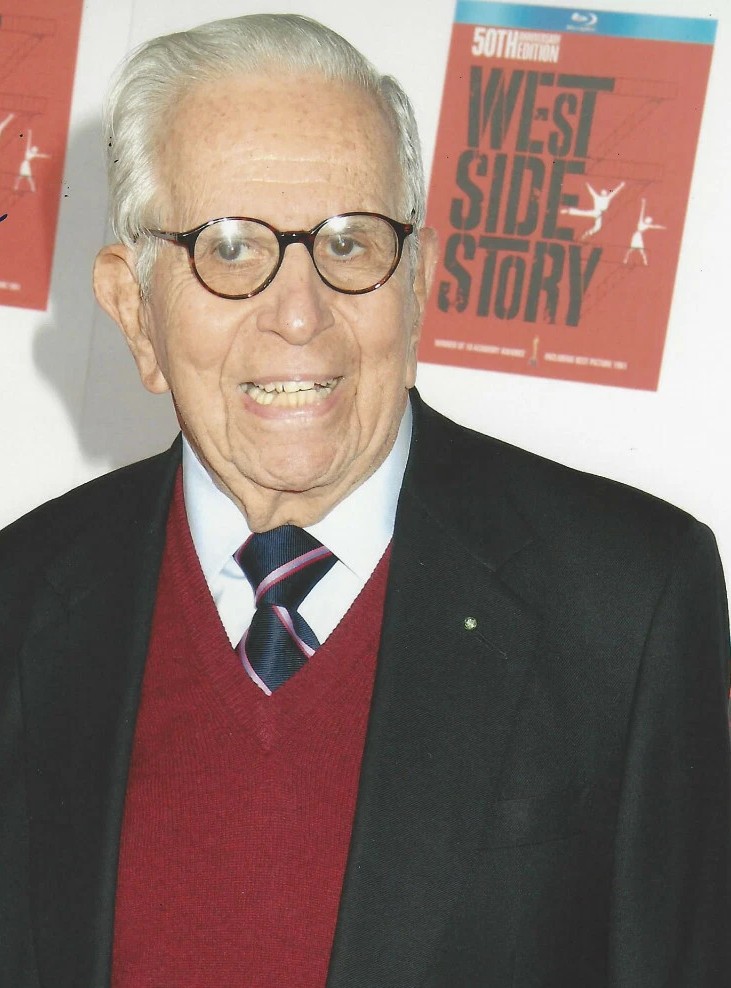
You don’t just waltz into Hollywood and start churning out classics like Some Like it Hot (1959), The Magnificent Seven (1960), West Side Story (1961) and The Great Escape (1963). Usually, there’s a long apprenticeship, especially for a producer. Walter Mirisch spent nearly a decade at the B-picture coalface. And before that  a year as a gofer, working his way up in the business, but on one of the smallest rungs of all, at Monogram.

Born in 1921, the of a Polish immigrant tailor specializing in custom-made garments, one of whose customers was George Skouras, owner of a cinema chain, Walter, not surprisingly in the Hollywood Golden Age, started out an even lower rung, as an usher in the State Theater in Jersey City, owned by Skouras, an hour’s commute from his home in the Bronx, earning 25 cents an hour. He was quickly promoted to ticket checker.

His older brother Harold was a film booker, receiving an education in negotiation, and then as a cinema manager in Milwaukee flexed his entrepreneurial muscles by starting a concession company. After the family moved to Milwaukee, Walter attended the University of  Wisconsin and then Harvard Business School. Physically unfit for active duty during the war, he worked for Lockheed in Los Angeles on its aircraft program in an administrative capacity.

While Harold was a highflyer at RKO, acting as chief buyer and then managing its cinema chain, Walter entered at a lower level in 1946 as a general assistant to Steve Broidy, boss of Monogram, maker of B-pictures of the series variety – Charlie Chan, The Bowery Boys, Joe Palooka, shot within eight days and at budgets under $100,000.

After badgering Broidy for a bigger opportunity, he was granted permission to hunt for a property he could produce. For $500 he found a Ring Lardner short story about a boxer, but Broidy felt the main character was unsympathetic. Stanley Kramer did not and snapped it up to make Champion (1949). 

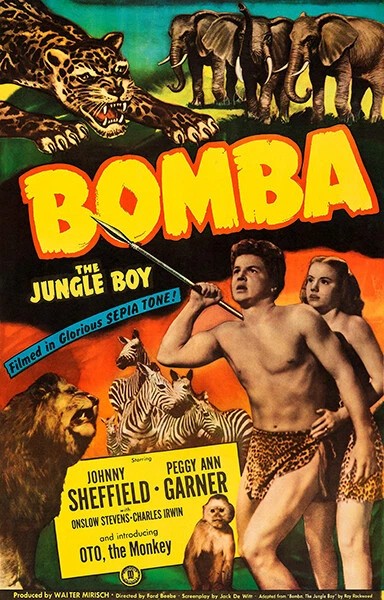
Walter’s first ventures were in film noir. Fall Guy (1947), based on a story by Cornell Woolrich,  made for $83,000, broke even. I Wouldn’t Be In Your Shoes (1948) followed, from a Woolrich novel but there was a drawback to being a producer. He was taken off the payroll and his $2,500 producer’s fee didn’t compensate for the loss of a $75 weekly salary. The answer was to invent his own series, ripping off the Tarzan pictures for Bomba the Jungle Boy (1949), starring Johnny Sheffield who had played Tarzan’s son and utilizing stock footage from Africa Speaks. Apart from his fee, Walter had a 50 per cent profit share.

For six years, these appeared at the rate of two a year, earning Walter a minimum of $5,000 and he soon branched out into other genres, sci fi like Flight to Mars (1951) and westerns such as Cavalry Scout (1951) and Fort Osage (1951), both starring B-movie stalwart Rod Cameron.

Monogram had decided to move upmarket with the introduction in 1951 of Allied Artists, its sales division run by Walter’s brother Harold, with Walter acting as an executive producer and other brother Marvin as treasurer, turning out solid B-picture-plus hits like Riot in Cell Block 11 (1954).

When the threat from television hit the B-picture market Allied went properly upscale, investing in William Wyler western Friendly Persuasion (1956) and Billy Wilder’s Love in the Afternoon (1957), both starring Gary Cooper. Their failure at the box office sent  Monogram back to basics.

But the Mirisches wanted more of the big time. The three brothers turned to United Artists and negotiated a  deal for that studio to finance four pictures a year, cover the brothers’ overhead and salaries and throw in a profit share. The Mirisch Company was born and their creative credit within the industry was so high – and the deals they offered, it has to be said,  so advantageous to their creative partners – that soon they were scooping up big names like Wilder (he made his next eight pictures for Mirisch), William Wyler, Gary Cooper, Tony Curtis, Doris Day, Audrey Hepburn and Lana Turner. One of the first pictures announced was a remake of King Kong (1933). Wilder planned My Sister and I with Hepburn. John Sturges was attached to 633 Squadron. Doris Day would star in Roar Like A Dove and there were two-picture deals with Alan Ladd and Audie Murphy.

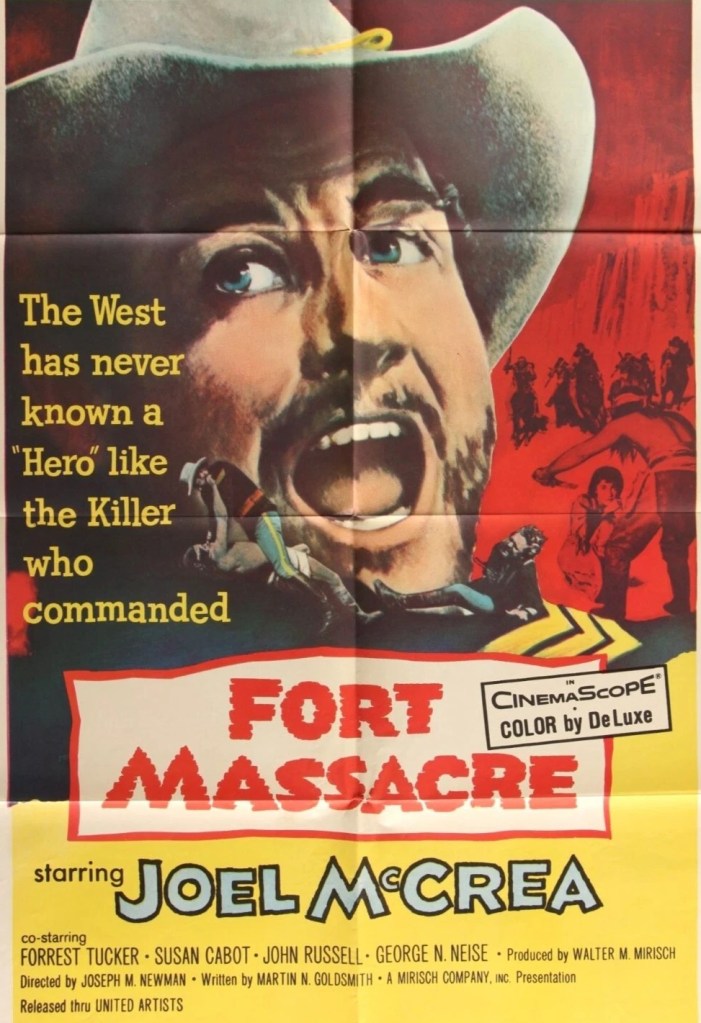
Their first two efforts didn’t break the budget bank, Fort Massacre (1958) starring Joel McCrea, and Man of the West (1958) headlined by Cooper, but neither were they hits. Hoping to provide ongoing financial sustenance, Walter turned to television, turning Wichita (1955) into the series Wichita Town (1959), and further television contributions were mooted for UA Playhouse but that and Peter Loves Mary and The Iron Horseman failed.

Movies proved a better bet and Walter struck gold with the third picture in the Mirisch-UA deal, Some Like it Hot (1959), costing $2.5 million, an enormous financial and critical success and tied down a triumvirate of top talent in John Wayne, William Holden and John Ford for western The Horse Soldiers (1959), the actors pulling down $750,000 apiece.

Such salaries sent the nascent company on a collision course with traditional Hollywood. The majors “screamed” that independents were overpaying the talent, hefty profit shares accompanying the salaries.

On top of that in 1959 in the space of two weeks Mirisch spent a record $600,000 pre-publication on James Michener blockbuster Hawaii and tied up a deal to film Broadway hit West Side Story. Within two years of setting up, Walter Mirisch announced a $34.5 million production slate, earning the company the tag of “mini-major,” as part of a shift in attitude to a “go for broke” policy. By the start of the new decade it was by far the biggest independent the industry had ever seen, handling $50 million worth of product, including The Magnificent Seven and The Apartment (1960). Average budgets had risen from $1.5 million to $3.5 million.

To outsiders, assuming the Mirisch venture was Walter’s first, it might look as if Walter had knocked the ball out of the park in a very short space of time, but, in reality, by the time he produced Some Like it Hot, he had been responsible for thirty-three pictures. Not bad for a “beginner.”

Explained Walter Mirisch, “Producing films is a chancy business. To produce a really fine film requires the confluence of a large number of elements, all combined in the exactly correct proportions. It’s very difficult and that’s why it happens so infrequently. It takes great attention to detail, the right instincts, the right combinations of talents and the heavens deciding to smile down on the enterprise. Timing is often critical.”

What would have happened to Allied Artists, for example, had Wilder made Some Like it Hot there instead of Love in the Afternoon?

Added Walter, “Where is the country’s or the world’s interest at that time? What is the audience looking for? Asking them won’t help because they themselves will tell you they don’t know what they’re looking for. They don’t know what it is until they’ve seen it. All the elements must come together at exactly the right time. So to say one embarks with great certainty on such an endeavor is an exaggeration.”

After 33 films Mirisch hit a home run with Some Like It Hot and continued to do so throughout the 1960s chalking up further critical and commercials hits like The Pink Panther (1964), In the Heat of the Night (1967) and The Thomas Crown Affair (1968) and vacuuming up a stack of Oscars.

SOURCES: Walter Mirisch, I Thought We Were Making Movies, Not History (University of Wisconsin, 2008); “Mirisch Freres Features Outlet Via United Artists,” Variety, August 7, 1957, p16; “3 Mirisch Bros Set Up Indie Co for 12 UA Films,” Variety, September 11, 1957, p7; “RKO vs Mirisch Kong,Variety, September 11, 1957, p7; Advertisement, “United Artists Welcomes The Mirisch Company,” Variety, November, 13, 1957, p13; “Brynner, Mirisch Pledge UA TV Tie,” Variety, January 1, 1958, p23; “Mirisch Freres 6 By Year-End,” Variety, March 19, 1958, p3; “Majors Originated Outrageous Wages,” Variety, December 10, 1958, p4; “UA-Mirisch’s  $600,000 For Michener’s Hawaii,Variety, August 26, 1959, p5; “Mirisch West Side Story,” Variety, September 2, 1959, p4; “Mirisch Takes on ‘Major’ Mantle With 2-Yr $34,500,000 Production Slate,” Variety, October 21, 1959, 21; “Mirisch Sets $50,000,000 14-Pic Slate; Biggest for Single Indie,” Variety, August 17, 1960, p7.

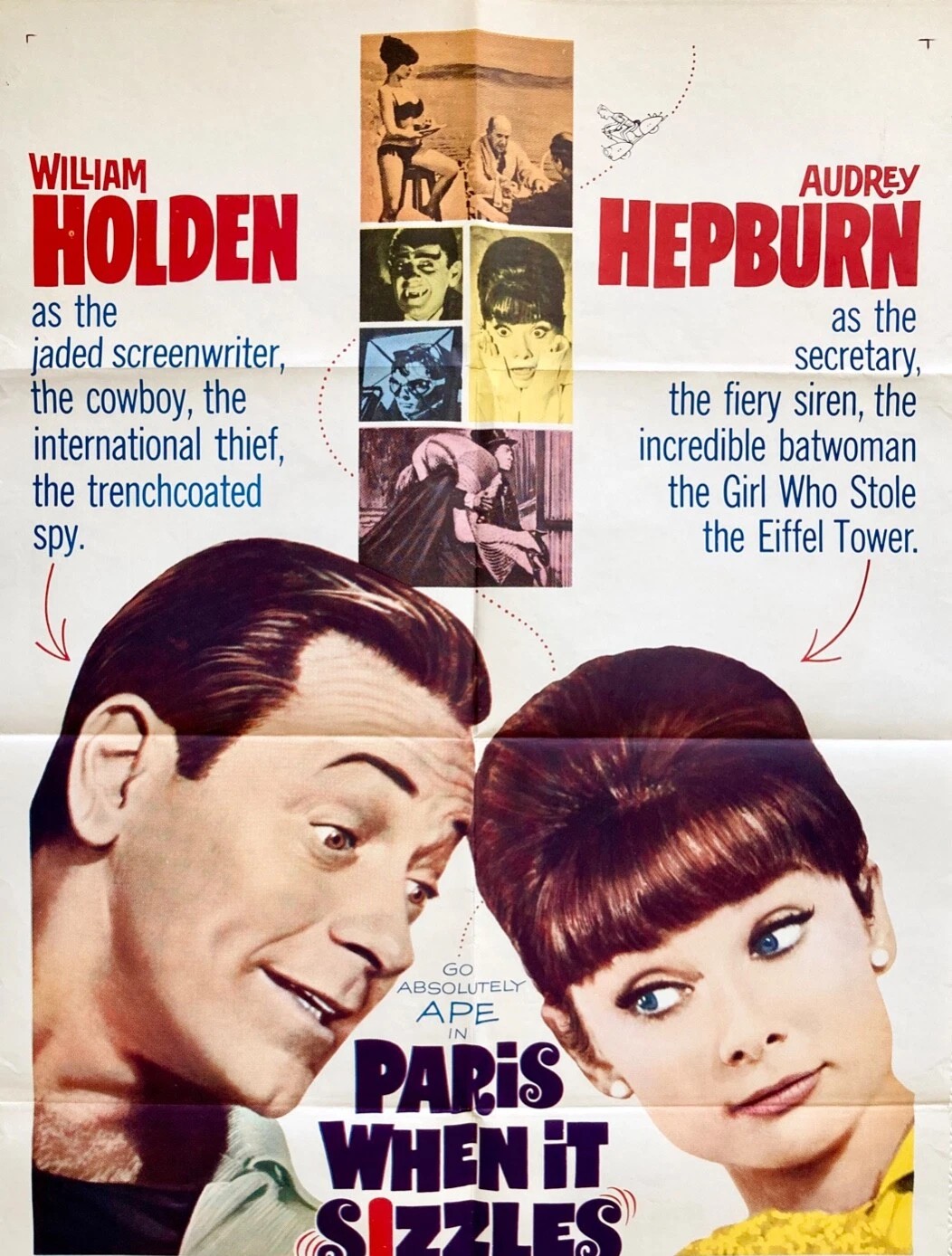
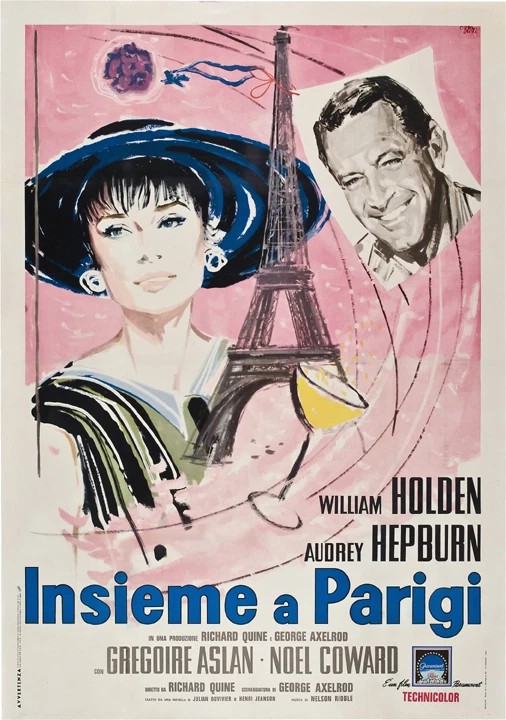
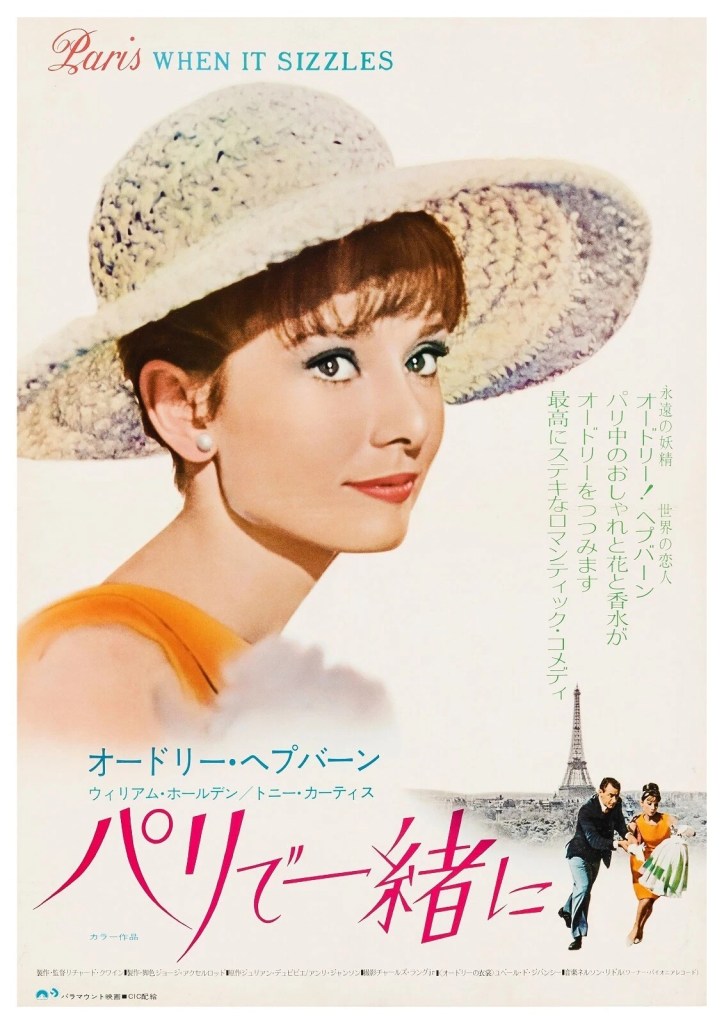
Paris When It Sizzles (1964) ***

Screen charisma can only get you so far. The pairing of William Holden and Audrey Hepburn must have seemed certain to create a box office tsunami given they had worked together before on the hit Sabrina (1954) and were coming off hits, the former in The World of Suzie Wong (1960) and the latter having reinvented herself as a ditzy fashion icon in Breakfast at Tiffanys (1961). But clearly studio Paramount knew something about the outcome of this production that it was keeping to itself, otherwise how to explain that a movie completed in 1962 languished on the shelves for nearly 18 months.

By the time it appeared Hepburn was still a big box office noise after Hitchcockian thriller Charade (1963) but Holden’s flame was dying out following three successive flops, The Devil Never Sleeps, The Counterfeit Traitor and The Lion all released in 1962. Had the studio played an even longer waiting game and held off release until the end of 1964 when Hepburn was enjoying sensational success with My Fair Lady, audiences might have been more likely to be suckered in to this romantic comedy. Although whether they’d be any more appreciative is doubtful.

Problem is, the narrative hardly exists. And what remains is too clever by half. It might have appealed as an insight into how Hollywood works, but it lacks backbone and is more of a series of spoofs as we wait inevitably for the two stars to fall in love.

Alcoholic Richard Benson (William Holden) has writer’s block and having frittered away his time drinking, traveling and romancing, now has two days to deliver a screenplay for producer Meyerheim (Noel Coward) – who incidentally seems to spend his time in the sunshine drinking and surrounded by beautiful women. Benson hires typist Gabrielle (Audrey Hepburn) both to speed up the process and have someone to bounce ideas off.

Primarily a two-hander and virtually contained on a single set, his swanky apartment in Paris, it only ventures out to assist his imagination by playing out various concepts in which the pair act out various scenes in what turns into a relatively ham-fisted satire of the movie business. The only really interesting Hollywood expose is when Benson explains the tricks of the screenwriting trade, the various reversals (they were called “switches” in those days) and conflicts to keep the audience on their toes and prevent the potential lovers getting to the actual loving stage too quickly.

So we watch Gabrielle initially fending off his moves before becoming entranced and ridding herself of a carapace of dustiness before transforming into a flighty fun lass. But when the dialog often centers on arguments over the meanings of words there’s not a great deal for the audience to get its teeth into.

The concept, such as it is, allows Richard and Gabrielle to act out various scenarios, rattling through the genres – spies, musical, the jungle, horror, whodunit and western – while they manage to find a way to turn his title The Girl Who Stole the Eiffel Tower into a movie.

Even though the last thing this needs is further levity – any more froth and it would disintegrate – Tony Curtis (The Boston Strangler, 1968) has a recurrent role in a variety of cameos and you can spot an uncredited Marlene Dietrich (Judgement at Nuremberg, 1961) and Mel Ferrer (Brannigan, 1975). Perhaps the most unusual angle was that it was a remake of the French La Fete a Henriette (1952) directed by Julien Duvivier. Or that it was the first screen credit for Givenchy, who devised Hepburn’s clothes.

While both Holden and Hepburn are very easy on the eye, the actor often topless, and Hepburn  going through the fashions, it only works if you want to see screen chemistry at work and are not remotely interested in narrative or if you are so unaware – and of course genuinely interested – in the screenwriter’s craft that you are  find out how words on paper are translated into images on the screen. It might well be an audience’s first encounter with such gems as “Exterior:Day.”

Oddly, both Holden and Hepburn are good and it’s solidly directed by Richard Quine (The World of Suzie Wong) from a script by George Axelrod (Breakfast at Tiffany’s) adapting the previous film.

A harmless trifle, you might say, but just too bad that with the talents involved it doesn’t even rise to a soufflé.

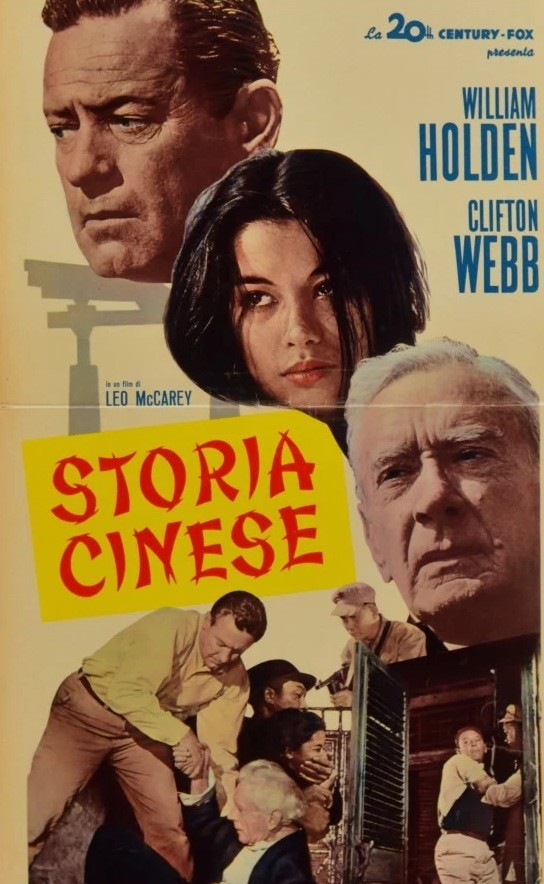
Satan Never Sleeps (1962) **

Of all the misguided sentimental anti-Communist drivel, this is a very poor swansong for triple Oscar-winning director Leo McCarey (Going My Way, 1944). A tone that’s awkward enough all the way through goes straight through the wringer when we are asked to accept without question the actions of a rapist. Such genocidal rape as the conqueror visits on the conquered would sit less comfortably with a contemporary audience.

Most of the problem is the set-up. Apart from those pesky Communists invading a Christian Mission, in other circumstances this would have settled into a verbal sparring match between about-to-retire old priest Fr Bovard (Clifton Webb minus trademark moustache), full of tetchy quips, and his younger replacement Fr O’Banion (William Holden) trying to shake off the unwelcome advances of even younger native Siu Lan (France Nuyen). There would be a servant or maybe a more high-flown doctor whom O’Banion could push Siu Lan onto.

There’s laffs  aplenty if you’re easily satisfied with the likes of a servant (Burt Kwouk in an early role) who believes thieving is compatible with Christianity, O’Banion’s woeful attempts at cooking and his inability to shoo away the ardent Siu Lan, and the priests risking breaking a golden rule of their religion to enjoy a glass of wine before the clock strikes midnight.

The arrival of the Communists is not initially too tiresome, Bovard doing his best headmaster impression keeps them in line, Communist leader Chung Ren (Robert Lee), an ex-Christian, sweet on Siu Lan. Things get tricky when Chung Ren’s attempts to forcefully claim the woman are deterred by O’Banion who is tested several times on the old Christian principle of turning the other cheek before resorting to unchristian violence.

Chung Ren then rapes Siu Lan anyway. But when she stabs him in the back and the rapist is forced to ask O’Banion to go to another mission to fetch the necessary penicillin to prevent infection spreading, the older priest is inclined to ignore the request and let him die. O’Banion thinks he has struck a deal to free the old priest in exchange for fetching the medicine, but Chung Ren reneges on the agreement and the priests are tortured and stand trial.

Meanwhile, Chung Ren has a change of heart, or so it seems, after Siu Lan gives birth to his son. But, actually, this might be more to do with the fact that he has been demoted for not being a good Communist, inclined to enjoy the finer things in life rather than share them out with his comrades. And it’s only when he’s told he’s going to be sent away to some kind of Chinese Gulag that his principles make an appearance and he helps the two priests and Siu Lan and her baby to escape.

I could see maybe Siu Lan being forced into marriage by Chung Ren in the Communist state while he was in a position of importance; she would have no choice in the matter. But for her to show the same acceptance in a democracy outside China smacks of the worst kind of wishful thinking. Sure, the Christian God is all-forgiving and, technically, all Chung Ren would have to do was confess the sin of rape and equally technically he would receive absolution and therefore in the Church’s eyes be free to marry.

But O’Banion overheard the rape. He’s a witness. That’s no use in the Communist society, but in a democracy you would have thought he would have been seeking prosecution. As he was a witness and this was not something protected by the sanctuary of the confession, he would not just be perfectly within his rights but would have to seek out rule of law.

I have never heard of a rapist and the woman he raped living happily ever after and I doubt if it would ever have been considered conceivable even in the early 1960s.

That aside, William Holden (The Devil’s Brigade, 1968) and Clifford Webb, in his last picture, are good value as the squabbling priests, less so when they venture into dubious morality. France Nuyen (A Girl Named Tamiko, 1962) doesn’t get a fair shake, required to be the cliché happy grinning native and then provided with no opportunity to state her case against her rapist before she’s pushed, for the sake of a fairy tale ending, into marriage.

Written by the director and Claude Binyon (North to Alaska, 1960) from the bestseller by Pearl S. Buck.

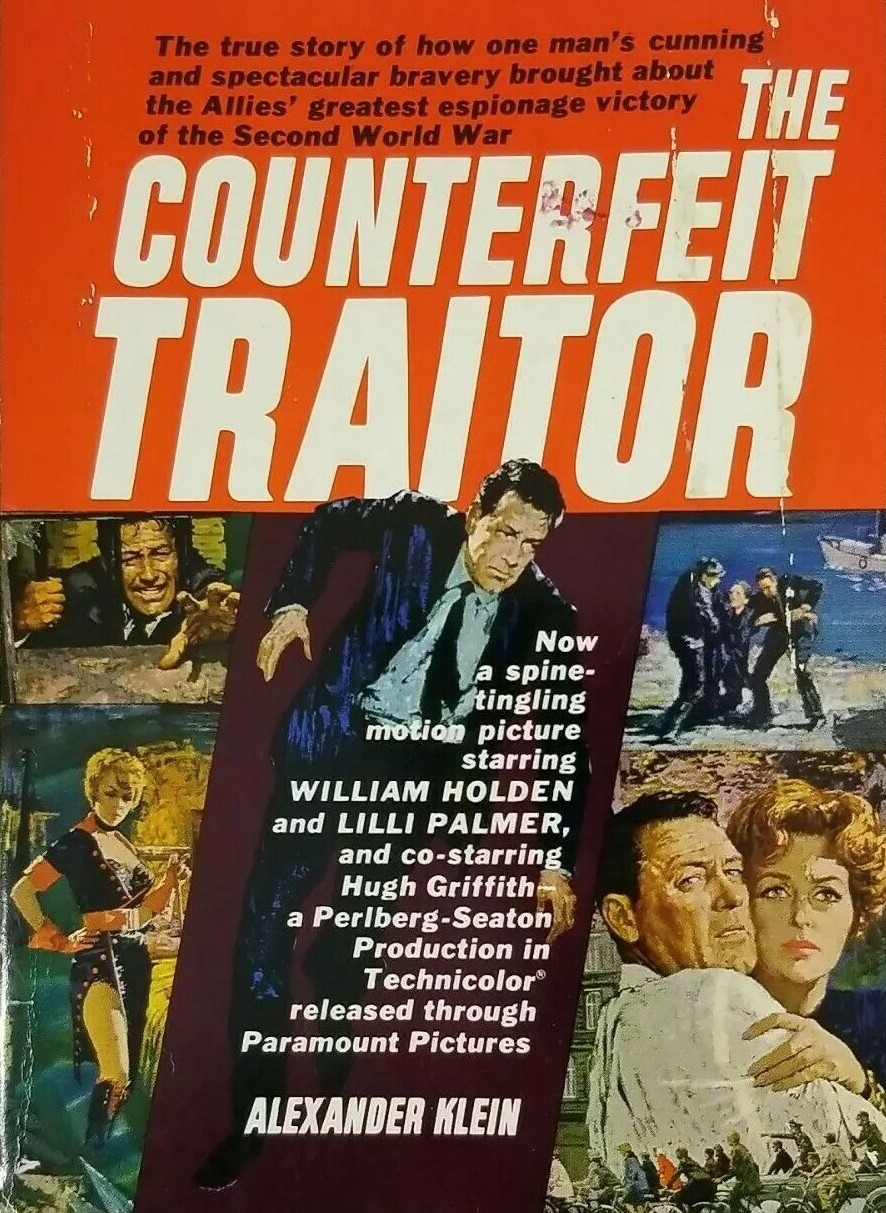
The Counterfeit Traitor (1962) ***

Cynical and opportunistic Swedish oil executive Eric Erickson (William Holden) blackmailed into World War Two espionage finds redemption after witnessing first-hand the horrors of Nazi Germany. Two extraordinary scenes lift this out of the mainstream biopic league, the first Erickson witnessing an execution, the second a betrayal. While some participants in the espionage game pay a terrible price, others like spy chief Collins (Hugh Griffiths) manage to maintain a champagne lifestyle.

Structurally, this is something of a curiosity. The first section, with over-emphasis on voice-over, concerns Holden’s recruitment and initial attempts at spying on German oil installations on the pretext of building a refinery in Sweden. Although resenting the manner in which he was recruited, Erickson had no qualms about resorting to blackmail himself to enlarge his espionage ring.

But it’s only when Marianne Mollendorf (Lili Palmer) enters the frame as his contact in Germany that the movie picks up dramatic heft. As cover for frequent meetings, they pretend to be lovers, that charade soon deepening into the real thing. While abhorring Hitler, she suffers a crisis of conscience after realizing that the information she is passing on to the Allies results in innocent deaths. The final segment involves Erickson’s thrilling escape back home.

The picture is at its best when contrasting the unscrupulous Erickson with the principled Marianne. Virtually every character is trying to hold on to way of life endangered by the war or created by the conflict and there are some interesting observations on the way Erickson manages to harness foreign dignitaries while being held to hostage in his home country. Loyalties are sparing and even families come under internal threat.

Sweden was neutral during the Second World War so in assisting the Allied cause Erickson was effectively betraying his country and once, in order to keep proposed German investors sweet, he begins to spout Nazi propaganda at home finds himself deserted by friends and, eventually, wife.  

In some respects, William Holden (The Devil’s Brigade, 1968) plays one his typical flawed personalities, easy on the charm, fluid with convention, but once he learns the true cost of his espionage a much deeper character emerges. The actor’s insistence, for tax reasons, on working abroad – this was filmed on location in Europe – would hamper his box office credibility and although not all his movie choices proved sound this was a welcome diversion. Whether American audiences were that interested in what a Swede did in the war was a moot point, as poor box office testified. And the title might have proved too sophisticated for some audiences, given there was no counterfeiting of money involved.

Lili Palmer (Sebastian, 1968) is excellent as the manipulative Marianne, betraying her country in order to save it from the depredations of Hitler, not above using her body to win favor, but paralyzed by consequence. Hugh Griffith (Exodus, 1960) provides another larger-than-life portrayal, disguising his venal core.

Werner Peters (Istanbul Express, 1968) puts in an appearance and Klaus Kinski (Five Golden Dragons, 1967) has a bit part.

Double Oscar-winner George Seaton (Airport, 1970) makes a bold attempt to embrace a wider coverage of the war than the film requires and could have done with concentrating more on the central Erickson-Mollendorf drama, especially the German woman’s dilemma, but it remains an interesting examination of duplicity in wartime. Written by the director based on the novel by Alexander Klein.

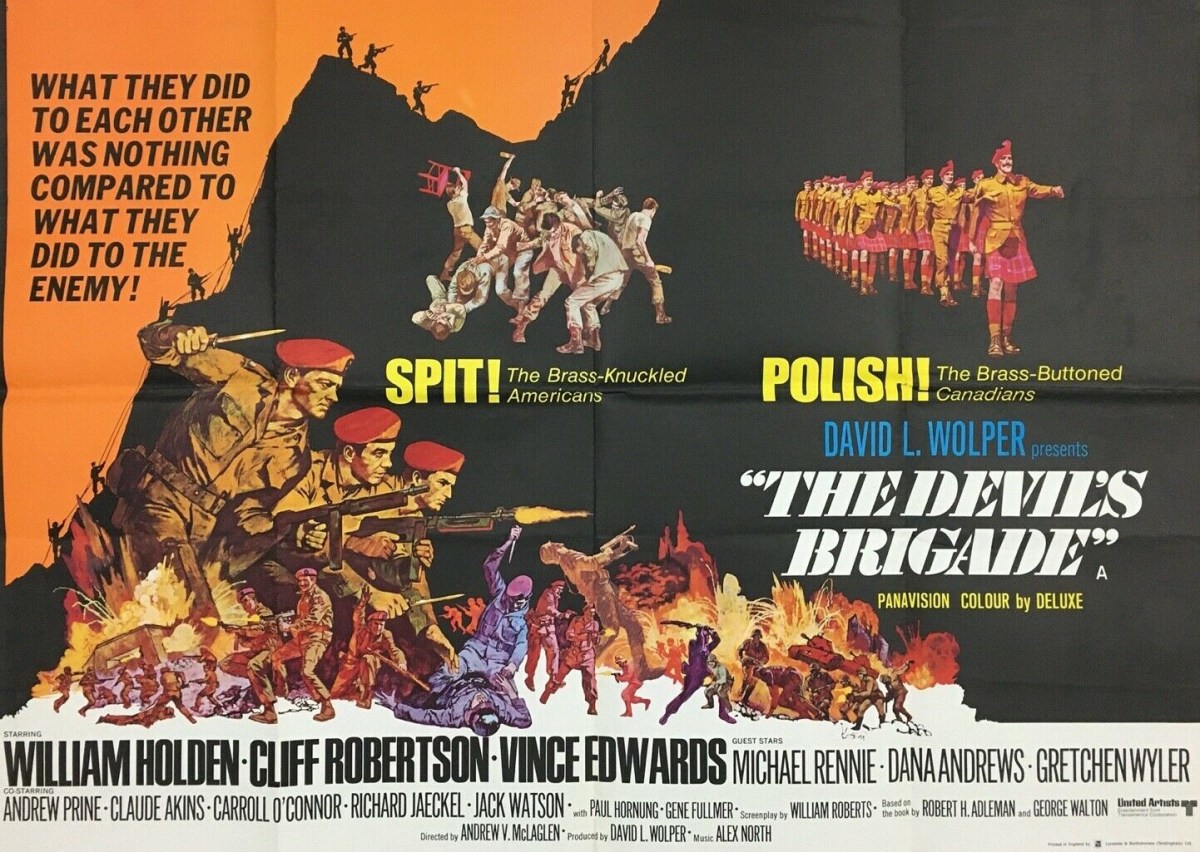
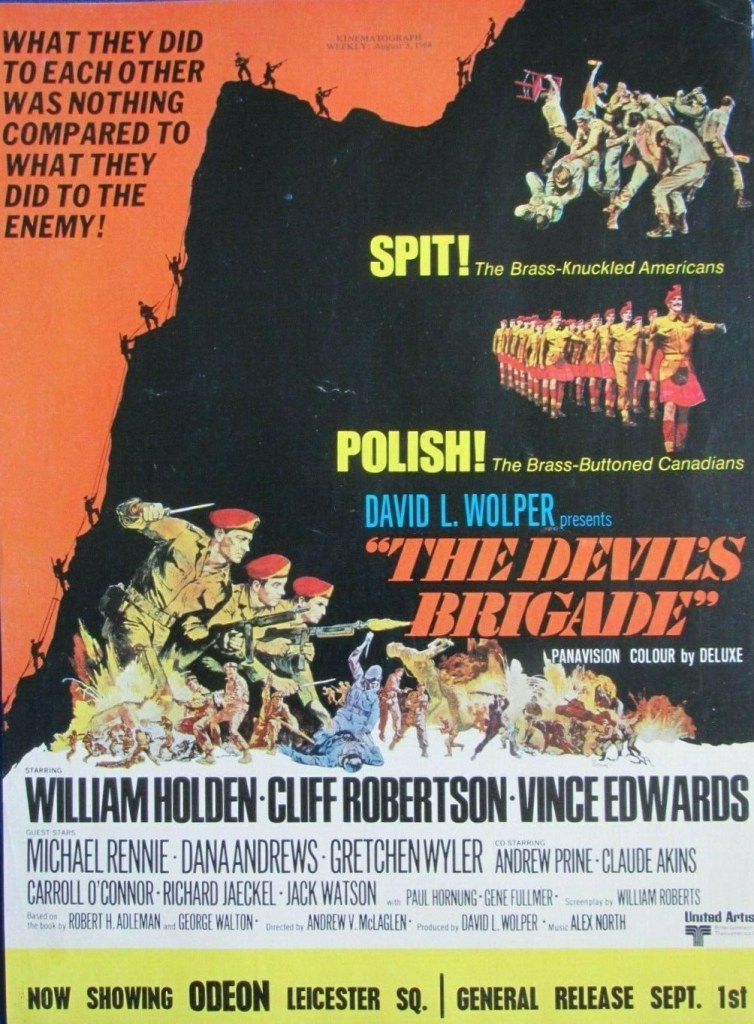
The Devil’s Brigade (1968) ***

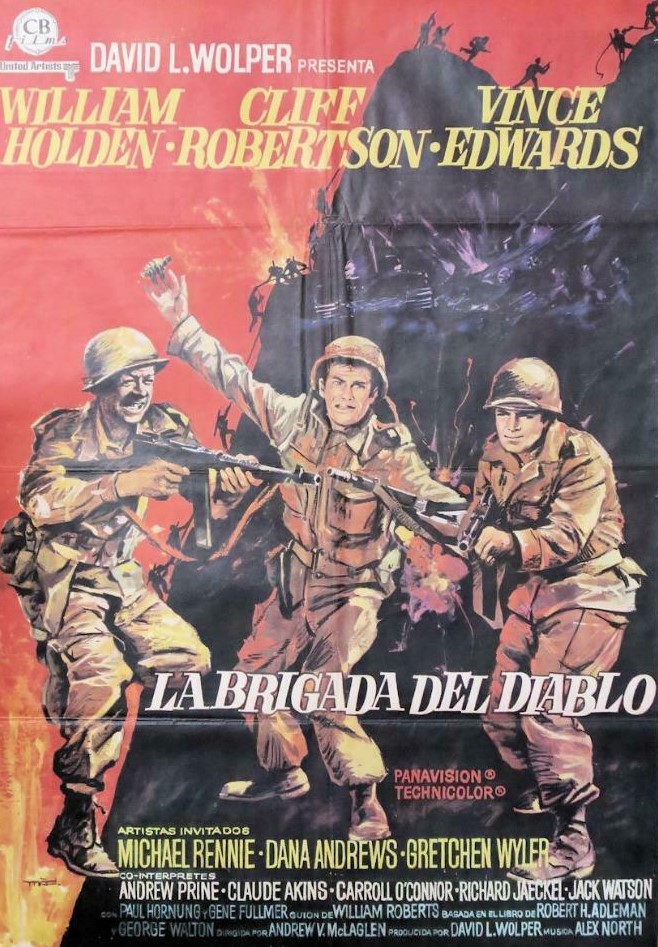
I couldn’t get my head around the idea of the U.S. Army recruiting a bunch of undisciplined misfits, many with jail time, in order to link them up with a crack Canadian outfit. Turns out this part of the film was fictional, the Americans in reality responding to advertisements at Army posts which prioritized men previously employed as forest rangers, game wardens, lumberjacks and the like which made sense since the original mission was mountainous Norway.  I should also point out the red beret the soldiers wear is also fictional and while depicted on the poster sporting a moustache commanding officer Lt. Col. Frederick (William Holden) is minus facial hair in the film.

But, basically, it follows a similar formula to The Dirty Dozen (1967), training and internal conflict followed by a dangerous mission. The conflict comes from a clash of cultures between spit-and-polish Canucks and disorderly/juvenile Yanks though, as with the Robert Aldrich epic, the leader taking some of the brunt of the discontent.  Collapsible bunk beds, snakes under the sheets and a tendency to fisticuffs are the extent of the antipathy between the units, which is all resolved, as with The Dirty Dozen, when they have to take on people they jointly hate, in this case local bar-room brawlers in Utah.

The movie picks up once they are sent to Italy. Initially employed on reconnaissance, Frederick challenges Major-General Hunter (Carroll O’Connor), who prefers to do things by the book, and in a maverick move sets out to take an Italian position by trekking two miles up a riverbed, creeping into town by stealth and capturing the location without firing a shot. 

Next up is the impregnable Monte la Difensa. Taking a leaf out of the Lawrence of Arabia playbook, in a brilliant tactical move, the Americans attack the mountainous stronghold from the rear by way of a mile-high cliff.  But that’s the easy part. The rest is trench-by-trench, pillbox-by-pillbox, brutal hand-to-hand fighting.

The battle scenes are excellent and the training section would be perfectly acceptable except for the example of The Dirty Dozen which set a high bar. That said, there is enough going on with the various shenanigans to keep up the interest, but we don’t get to know the characters as intimately as in The Dirty Dozen and there is certainly nobody to match the likes of Telly Savalas, Charles Bronson, Jim Brown and John Cassavetes. That also said, the men do bond sufficiently for some emotional moments during the final battle

At this point William Holden’s career was in disarray, just one leading role (Alvarez Kelly, 1966) and a cameo (Casino Royale, 1967) in four years, and although his screen persona was more charming maverick than disciplined leader he carries off the role well, especially solid when confronting superiors, exhibiting the world-weariness that would a year later in The Wild Bunch put him back on top. Ironically, Cliff Robertson was coming to a peak and would follow his role as the strict disciplinarian Major Crown, the Canadian chief, with an Oscar-winning turn as Charly (1968). Vince Edwards (Hammerhead, 1968) as cigar-chomping hustler Major Bricker makes an ill-advised attempt to steal scenes.

This was the kind of film where the supporting cast were jockeying for a breakout role that would rocket them up the Hollywood food chain – as it did with The Dirty Dozen. Jack Watson (Tobruk, 1967) is the pick among the supporting cast, but he has plenty of competition from Richard Jaeckel (The Dirty Dozen), Claude Akins (Waterhole 3, 1967), Jeremy Slate (The Born Losers, 1967), Andrew Prine (Texas Across the River, 1966), Tom Stern (Angels from Hell, 1968) and Luke Askew (Cool Hand Luke, 1967). Veterans in tow include Dana Andrews (The Satan Bug, 1965) and Michael Rennie (Hotel, 1966).

William Roberts (The Magnificent Seven, 1960) adapted the bestselling book by Robert H. Ableman and George Walton. Director Andrew V. McLaglen (Shenandoah, 1965) was more at home with the western and although there are some fine sequences and the battle scenes are well done this lacks the instinctive touch of some of his other films.

Dirty Dozen-lite.

Behind the Scenes: “Wild Rovers” (1971)

Director Blake Edwards shouldn’t have been anywhere near Wild Rovers in November 1970 when filming of the western kicked off in Arizona. He should have been making a musical – his second successive one following Darling Lili (1970).  

Versatility had become something of a watchword for Edwards who had segued apparently effortlessly from the gentle romance of Breakfast at Tiffany’s (1961) to thriller Experiment in Terror/Grip of Fear (1962) to alcoholic drama Days of Wine and Roses (1962) to wild comedy The Pink Panther (1963) to slapstick The Great Race (1965) – in 70mm roadshow no less – to the satirical What Did You Do in the War, Daddy (1966). So Hollywood wasn’t enormously surprised when he decided it was time he tackled a musical, Darling Lili, especially when it starred “sure thing” Julie Andrews.

And before the figures for Darling Lili came in, and everyone thought they were onto a winner, small surprise that he was in the front line to direct She Loves Me, the movie adaptation of a 1963 Broadway musical that was the second musical reincarnation – the first being The Good Old Summertime (1949) with Judy Garland – of romantic comedy The Shop around the Corner (1940) starring James Stewart.

But in 1969 – before Darling Lili slumped at the box office – a takeover of MGM by Kirk Kerkorian was imminent and in anticipation of some drastic action studio executives canned its three biggest projects, Fred Zinnemann’s Man’s Fate, the $10m She Loves Me – also to star Julie Andrews (now Edwards’ wife) – and the $12m-$15m Tai Pan. Edwards sued for $4.6 million.

Edwards had other fish to fry – his company Cinema Video Communications had purchased the latest Harold Robbins’ novel The Betsy plus The Peacemaker, the first novel by war historian Cornelius Ryan (The Longest Day). Edwards had plans to film Svengali with Jack Lemmon and Julie Andrews and Kingsley Amis’s novel The Green Man with Richard Burton.

Despite having informed MGM that he would not accept any substitute for She Loves Me, he capitulated when the studio agreed to back his pet project, a buddy western with a serious theme, Wild Rovers. Paul Newman was initially sounded out with the younger character looking a good fit for Michael Witney, expected to be the breakout star of Darling Lili.

William Holden was picky about his projects. He complained that most scripts he received were “aimed at exploitation or titillation.” Though he had not had a hit since the start of the previous decade with The World of Suzie Wong (1960), his global investments had paid off and he was happier spending seven months of the year on his 1,260-acre ranch in Kenya. He was impressed enough with the Blake Edwards script for Wild Rovers and, possibly optimistic about its commercial prospects, to defer part of his salary against a percentage of the gross (he had made a fortune from his percentage on Bridge on the River Kwai). Apart from Wild Rovers, the only movie which had caught his attention was The Revengers co-starring Mary Ure (after it was delayed due to his illness, she pulled out).

Even so, MGM held Edwards on a tight rein financially. While trying to extricate itself from a sticky corner, it had no wish to find itself in the kind of lack of budgetary restraint that had afflicted Darling Lili. And to some extent, Edwards had to prove he was more fiscally responsible. The budget for the below-the-line cast was restricted to $1.5 million. There was considerable physical commitment to the project from the two stars, training for six weeks so the scene taming the wild horse could be completed without stunt men.

MGM had high hopes for the western, backing it with a substantial promotion campaign. In the trades there were three-page ads and a separate advert paying homage to the studio’s “writer cats.” The studio had weathered the Kerkorian storm and the massive write-offs at the end of the previous decade. The mood was buoyant. The first quarter of 1971, bolstered by an unexpectedly good showing by Ryan’s Daughter (1970). While not hitting the highs of Doctor Zhivago (1965) it had done much better than the industry predicted, especially after being savaged by critics. It looked as if MGM had turned a corner. In the first three months of 1971 the studio made $2.5 million profit and was confident that summer offerings Shaft, The Last Run and Wild Rovers would maintain the good run.

After the box office fallouts of recent years, it looked as though the entire industry was on the verge of bouncing back. Released by other studios around the same time as Wild Rovers were the likes of Klute, The Anderson Tapes, Summer of ’42, Willard, and Carnal Knowledge

The reviews weren’t promising. Variety tabbed it “uneven”, only one of the top five New York critics gave it a favorable review. An opportunity to gain some critical headway was spurned when the studio pulled the movie from the annual Atlanta Film Festival in favor of an appearance by the two stars on the Dick Cavett Show.

The version released ran 110 minutes. There was no critical outcry at the film being savagely edited by the studio – nobody cared sufficiently about the picture to be up in arms about it.

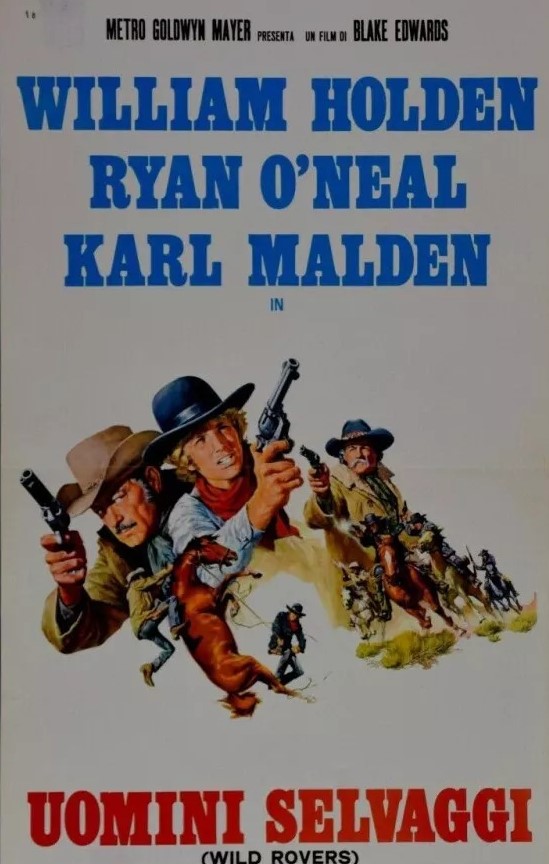
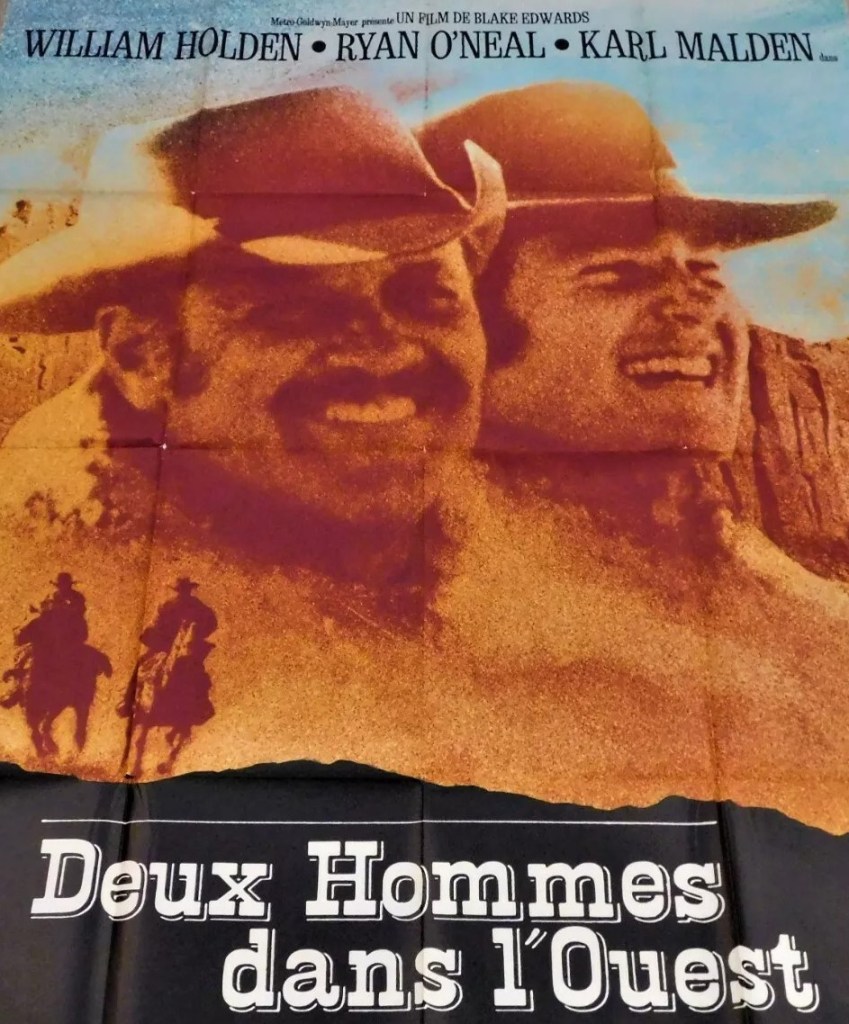
Worse, the marketing campaign was widely derided. The image of William Holden and Ryan O’Neal astride the same horse, the youngster grinning, leaning into the older man’s back, gave off, unintentionally, homo-erotic undertones. Audience dismissal of the advert only became clear to MGM at the end of the movie’s first six days at the first run Grauman’s Chinese in Los Angeles which registered less than $20,000 at the box office. Shocked at the low result, MGM “scrapped its entire pre-release and opening campaign” shifting the emphasis from the “man-to-man image” to “guns, horses and adventure” suggesting an old-fashioned shoot-em-‘up.

The new advertisement was accompanied by anonymous quotes, comparing Holden and O’Neal to Clark Gable and Spencer Tracy – though as Variety acidly noted, without identifying which was which – and describing the shootout as “so electrifying your impulse is…to run for cover.” Phantom quotes had been used before by Avco Embassy for De Sica’s war drama Sunflower (1970) starring Sophia Loren and Marcello Mastroianni. But while Hollywood was fond of editing reviews to find an often-misleading quote, studios generally drew the line at making them up.

The New York release in a trio of first run houses coincided with the showcase outing of Love Story (1970). That movie had played for months in first run and this was the first time it was generally available. Love Story, the hit of the decade so far, would open in 80 suburban cinemas on the same day in June, 1971, as Wild Rovers. In the era before “Barbieheimer”, there was still an expectation of cross-over, that the fans of a new star coming good like Ryan O’Neal would automatically seek out his latest picture. And it may have been that the advertising campaign was specifically designed to ensure his fans did not go to the western expecting another romantic drama.

They weren’t tempted at all. Love Story cleaned up – a gross of $1.25 million from 80 outlets and another $750,000 the following week. Compared to that, Wild Rovers scarcely got out of the gate – a “less than roaring” $20,600 from the three. At the 1,096-seat Astor it was on a par with the fourth week of Escape from the Planet of the Apes (1971) which had just completed its run there.

There was a little solace elsewhere. Its $15,000 in Baltimore was deemed “tall” and $12,500 in Boston “slick” but more reflective of the general interest was a “dim” $65,000 from eight theaters in Detroit, a “mild” $7,500 in Denver and “moderate” $8,500 in Minneapolis. By the end of the year it had amassed $1.8 million in rentals, languishing in 59th place.   

MGM took a different tack in Europe. It wasn’t unusual for movies released in 35mm in America to be shown in 70mm roadshow in Europe – The Dirty Dozen (1967), Where Eagles Dare (1968) and The Wild Bunch (1969) enjoyed up to a year in roadshow before fanning out into general release, getting two substantial bites of the commercial apple. The latter two had done better abroad than at home, in large part due to the roadshow release which turned a movie into an event rather than a routine outing. So MGM sent Wild Rovers out in roadshow. At 110 minutes, even puffed out with a 15-minute interval, it was a mighty slim offering for roadshow.

In London, half the critics came out against it, but only a quarter were favorable, the others having “no opinion.” The consensus was that it would “not survive the rough critical handling.” It opened on October 21, 1971, at the ABC2 in London’s West End. And lasted two weeks, whipped off the screen after generating an opening week of $6,200 and a sophomore of $4,100, replaced by The Last Run starring George C. Scott, another flop.  MGM persevered with the roadshow. It played for five weeks at the Coliseum in my home town of Glasgow.

In the U.S. it shifted quickly to television, part of the CBS program, finishing a lowly 85th for the year in the tabulations of the movies attracting the biggest television audiences.

SOURCES: “Metro’s Loves Me As A Substitute for Former Say It With Music,” Variety, August 6, 1969, p3; Army Archerd, “Hollywood Sound Track,” Variety, October 20, 1970, p6; Army Archerd, “Hollywood Cross Cuts,” Variety, August 5, 1970, p23;  “Holden Pushes for Conservation,” Variety, August 12, 1970, p25; Army Archerd, “Hollywood Sound Track,” Variety, November 4, 1970, p20; “Hollywood Production Pulse,” Variety,  November 18, 1970, p54; Advert, Box Office, March 28, 1971, p3-5;  “Profitable Quarter for MGM,” Kine Weekly, April 24, 1971, p3; Advert, Variety, May 17, 1971, p23-25; Advert, Variety, May 19, 1971, p12; Review, Variety, June 23, 1971, p20; “Col Delivers Atlanta Festival,” Variety, June 23, 1971, p6; “New York Critics,” Variety, June 30, 1971, p7; “Metro Scraps Rovers Campaign,” Variety, June 30, 1971, p27; “London Critics,” Variety, November 17, 1971, p62; “Big Rental Films of 1971,” Variety, January 5, 1972, p9. Box office figures from Variety June 30-August 18, 1971, and November 10-17, 1971.

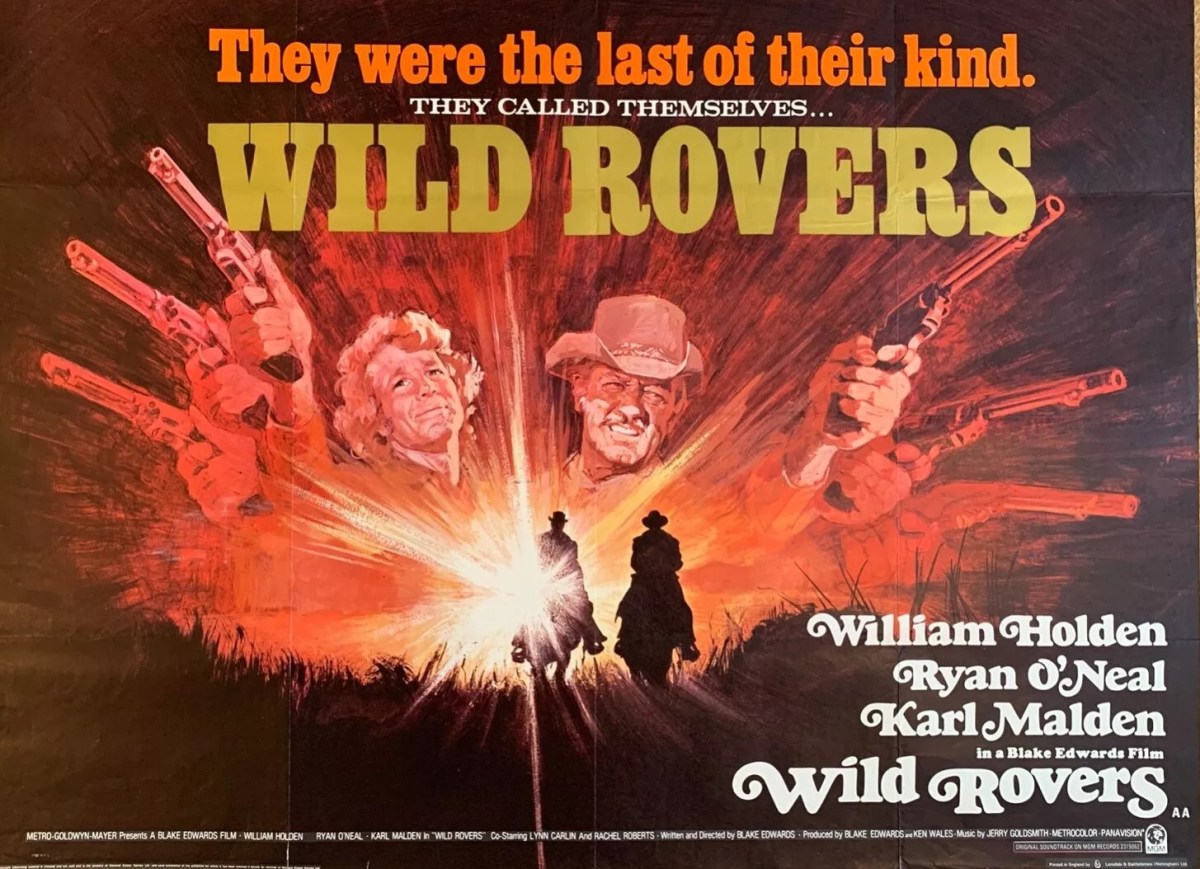
Wild Rovers (1971) ****

An unlikely candidate for redemption. Savaged by studio MGM, thoroughly trashed by critics, and ignored by audiences. MGM, having just called time on Fred Zinneman’s big-budget Man’s Fate and alarmed by the budgetary excesses on Ryan’s Daughter (1970), wasn’t in the mood for a three-hour elegiac western about nothing much. Reputedly, there was a first version that went out at two hours seventeen minutes, but the trade critics reviewed the version that went out on  general release and came in 30 minutes shorter.

Scorn was the most common reaction. It seemed excessively indulgent to allow director Blake Edwards (The Great Race, 1965) anywhere near a western when his forte was gentle or slapstick comedy and the one time he had ventured out of his comfort zone – for musical Darling Lili (1970) –  he had turned in a commercial and critical disaster. The first poster for Wild Rovers, the stars cuddled up on a single horse, suggesting home-erotic overtones, was widely derided.

Hollywood was fearful of pictures without a female prominent in the cast. And while William Holden had revived his career with The Wild Bunch (1969), there wasn’t exactly a long queue for his services, not after the disaster that was The Christmas Tree (1969). By the time he had another hit, five years later, it was in a supporting role in Towering Inferno (1974).

There were question marks also over co-star Ryan O’Neal. Despite the commercial success of Love Story (1970), and an Oscar nomination to boot, it seemed insane to opt for what was in some regards a buddy picture sorely lacking in the crackling dialog and hip approach to the nascent genre that made Butch Cassidy and the Sundance Kid (1969) such a success.

This is a very small story on a not-much-bigger canvas. Sure the scenery is splendidly shot, but close-ups are scant, most of the movie filmed in long shot, faces covered by beards and hats pulled down. Unless you were familiar with his distinctive voice, you wouldn’t, for example, recognize Karl Malden. We’re back in the cowboy realism of Will Penny (1968) but where that narrative helped Charlton Heston by transforming him into a stand-up good guy coming to the aid of a widow and subtle romance thrown in, this just about has the dumbest plot ever conceived. 

What makes this work is that the characters ring true, no matter how dumb they appear. These are generally people at the end of the line, or at the beginning of one and realizing it’s going nowhere, or with their small patch in danger of being overrun.

The local sheriff holes up in the whorehouse, there’s a range war brewing – sheep farmers invading valuable pastures –  a cowboy could be killed in a flash, not from a rampant gunfighter, but from a spooked horse trampling him to death, the upstanding turn out to be corrupt.

Fifty-year-old Ross Bodine (William Holden), no wife or family to berth him, has hooked up with Frank Post (Ryan O’Neal), half his age. They live on a ranch, eating and sleeping in a communal bunkhouse, and when one of their colleagues suddenly accidentally dies, they take to brooding on the unachievable future, one that seems to be drifting fast away from the older man, still a brass ring within potential grasp for the younger.

They decide to rob a bank. But not in the normal fashion of bursting in with guns blazing in the middle of the day. Instead, they do it at night, Frank holding bank manager’s wife Sada (Lynn Carlin) hostage while her husband Joe Billings (James Olsen) fills Bodine’s pockets to the tune of $36,000. They should get away with it. By daybreak they should have put an enormous distance between themselves and any pursuers and once over the state line would be out of the jurisdiction of local sheriff or marshal. Probably, they’d throw a chunk of it away in gambling, women and booze but they still reckon on having enough left to stake themselves to a small ranch, hiring a manager to do the dirty work.

Not wanting to leave their employers out of pocket, Bodine hands the bank manager back £3,000 to return to ranch owner Walter Buckman (Karl Malden). But the money is diverted along the way by Sada. So Buckman attaches sons Paul (Joe Don Baker) and John (Tom Skerritt) to the posse with the instructions not to turn back at the state border. Walter remains behind waiting for the sheepmen to trespass.

Except for the elegiac scenery, the tone appears uneven at the start, and you might think this is going down comedy lines, what with our heroes being drenched with buckets of ordure and generally being knocked around slapstick fashion. But it quickly settles and you realize you’re watching a couple of losers every bit as believable as the pair in Midnight Cowboy (1969). They’ve got nowhere to go and in making the most of what they have liable to make a hash of it. They don’t win saloon brawls, are on the wrong end of a shoot-em-up, squeal like a pig, to coin a phrase, when called upon to be manly and stoical when a bullet needs dug out of a wound, stare into space after making love because they can sense the inevitable. I found myself warming to them much more than I expected.

Frank may be a mean shot and a heck of a gambler but he’s a little boy at heart, picking up a stray puppy while on ransom duty. There’s a fabulous scene – and my guess what attracted Holden to the picture – when Ross talks to his friend about their friendship. Hell, you think, that’s sailing close to the wind, don’t tell me these guys are getting all emotional. Until you realize the only time Ross could ever speak so openly is if his pal is beyond hearing. Because he’s dead.

Beautifully shot, as I mentioned, boldly envisioned with the emphasis on long shot, and in the end more moving than I expected. I’ve no idea what kind of masterpiece lurked in the lost three-hour version, but MGM may have done Edwards a service because this edited version hits the mark.

Written and directed by Edwards. Both Holden and O’Neal, who was generally panned, have never been better. Host of new talent in the wings includes Tom Skerritt (Top Gun, 1986), Joe Don Baker (Walking Tall, 1973), James Olsen (The Andromeda Strain, 1971), Moses Gunn (Shaft, 1971), and Victor French (Little House on the Prairie, 1974-1977). Unexpected appearances from British pair Rachel Roberts (Doctors Wives, 1971) and Charles Gray (The Devil Rides Out, 1968). 

Check this one out. Reassessment urgently required.

The Lion (1962) ***

For such a harmless picture The Lion raises a couple of troubling issues. The first concerns the titular beast. Doubt if you’d get the authorities these days to greenlight a movie where a pre-pubescent girl was in such close proximity to a full-grown lion. Having as a safety measure two sharpshooters on the sidelines out of camera range, as director Jack Cardiff did here, might not cut it.

Secondly, we’ve got censor double standard. I remember my shocked parents forbidding me from seeing Zulu (1964), a massive hit in Britain, on account of the toplessness of the indigenous females. The censor didn’t slap an X-certificate on that sequence on the assumption that such nudity, in the context of tribal tradition, wouldn’t apparently incite the lewd male gaze. Had this been white breasts on show, in whatever tradition, the censor would not have been so lenient, signifying an inherent racism. Here, surprisingly, we’ve also got female toplessness, somewhat more discreet than Zulu, but coming as a surprise to your reviewer.

Perhaps the oddest feature of the picture is the contradictory message: Africa is wonderful but it’s not the place to bring up a young girl. Certainly not one who embraces the wildness with considerably more conviction than a passing wildlife tourist. As the imdb stub puts it: the young girl Tina (Pamela Franklin) must be brought “back to civilization.”

And there’s a distinctly old-fashioned tint to a storyline that demands the appearance of her father Robert (William Holden), long divorced from wife Christine (Capucine), as the firm male hand required to drag his estranged daughter back to said civilization. Christine’s current partner John (Trevor Howard), grizzled poacher-turned-gamekeeper, former big game hunter now eking out a living as a game warden, appears more sanguine about the girl’s lifestyle but less welcoming to the visitor. Tina has raised the wild lion King from a cub and as their bond is intense she is reluctant to give him up.

Disney would have taken a different approach, buffing up the cuter aspects. That the studio could show adult and child perspective in tandem is instanced by Pollyanna (1960) and in the later The Jungle Book (1967) solved the problem of a young boy becoming too involved with his wild playmates by having an intriguing young girl tempt him away. Or a touch of the Born Free (1966) playbook might have seen Tina simply mutate from childhood to an adult job in the animal preservation business

Instead, playing out in almost literal fashion, are two human male beasts battling it out (though not physically, unfortunately) over the mother with the needs of the child seemingly swept to one side as the love triangle takes hold.

The best scenes concern Robert and Tina, especially her early disinterest in his presence, and her later delight at leading him a wild dance through the jungle and seeing how his terror of her lion pal equates with her complete lack of fear. While John’s role is to keep a grip on poaching, he’s not so friendly to the animals, almost determined to torment them by running his jeep recklessly at or around them to elicit maddened response and alarm the visitor with their wildness rather than their apparent, at a distance, docility.

Perhaps the lack of a punch-up ensures this movie never catches fire. There’s quite a perplexing sub-plot that dictates the outcome. The son  of the local tribal chief has his eye on Tina and during the aforementioned tradition it’s clear the young girl wants to participate in the frenzied dance courtship ritual.

But this kind of tradition is at the polar opposite of civilization as is the tradition that an old man, succumbing to fatal illness, should be left out in the wild to die. Christine intervenes to save him. Meanwhile, believing his father dead, the son sets out to achieve manhood by killing the lion and in the ensuing tangle John kills both young man and lion. The tribal response to the death of their new chief goes unrecorded but Bullit’s action drives Tina towards her parents. With the lion dead, it’s a lot easier to winkle the girl away from Africa and back to civilization.

Plenty of wildlife for your buck, but plot and characters are not a patch on Hatari! (1962) or The Last Safari (1967). William Holden, whose yen for making movies as far away from the U.S. tax authorities as possible was destroying his career, is good value as the estranged father and if you are looking for smouldering then Trevor Howard (The Long Duel, 1967) is your man. Capucine would tee up with Holden – the pair had an affair – again in The 7th Dawn (1964) but she was more effective in the later picture than here.

Jack Cardiff (Girl on a Motorcycle, 1968) directs from a script by Irene and Louis Kamp (The Sandpiper, 1965) based on the bestseller by Joseph Kessel (L’Armee des Ombres/Army of Shadows, 1969).

Might have preferred the Disney version.

Behind the Scenes: “The Chairman / The Most Dangerous Man in the World” (1969)

Had things run according to the original plan, we could have seen Frank Sinatra return to a Communist country for the first time since The Manchurian Candidate (1962). But if you had wanted to write a script about the guy who wrote The Chairman, you couldn’t have invented a more interesting character than Samuel Richard Solomonick. He was one of those guy who held every job under the sun before reinventing himself as an anticommunist going by the name of Jay Richard Kennedy and subsequently entering the fields of real estate, radio and brokerage, then landing a gig managing Harry Belafonte and writing the screenplay for I’ll Cry Tomorrow (1955).

By the time he ended up as an executive at Sinatra Enterprises he had a couple of ideas to sell. Forming Jade Productions in 1966 with director Richard Quine (How To Murder Your Wife, 1965), the pair hooked Sinatra’s interest in two projects, Follow the Runner (which would have co-starred Sammy Davis Jr) and The Chairman plus William Holden eyeing the lead in The Wordlings about the population explosion.

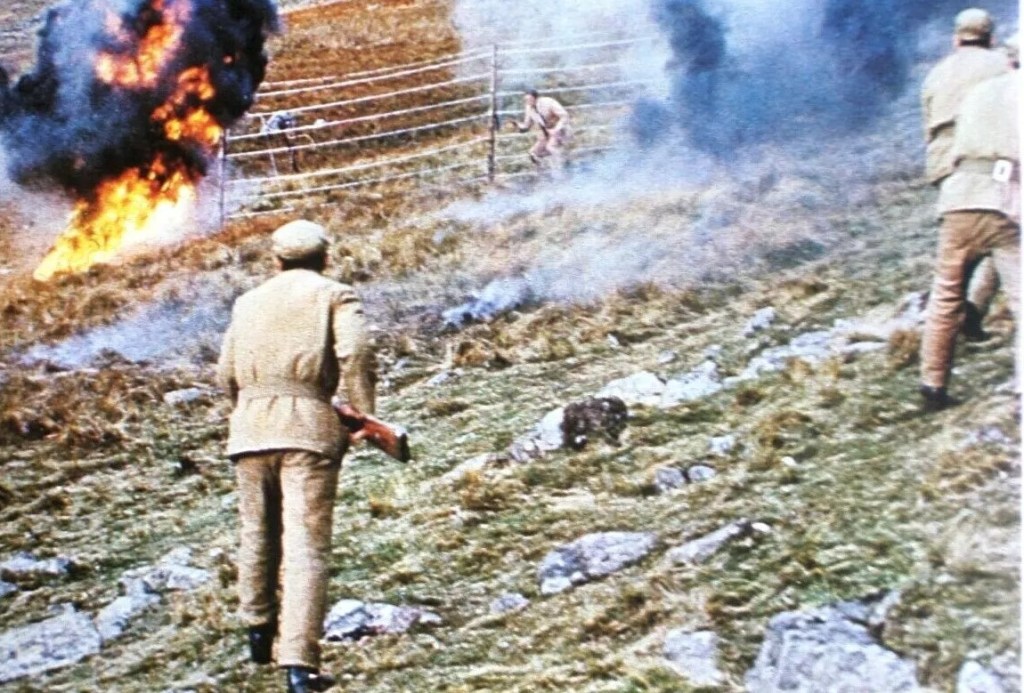
That’s Gregory Peck trapped on the wrong side of the Russian border with Chinese soldiers closing in.

Sinatra was known for falling out with directors, shunting Mark Robson off The Detective (1968), so whether Quine would have lasted the pace is anybody’s guess. After success with Tony Rome (1967), Twentieth Century Fox briefly toyed with the prospect of pairing Sinatra and new wife Mia Farrow in The Chairman. Originally scheduled to begin shooting on January 1967, that later shifted to early 1968. The notion that the movie also had parts for Spencer Tracy and Yul Brynner was one of those puff pieces that some journalists swallowed.

Despite some enticing projects – he was first name down to direct Catch 22, after Columbia had spent $150,000 buying the novel, and to helm the screen translation of Broadway hit The Owl and the Pussycat – Richard Quine’s career teetered after the flop of Hotel (1967). Making no headway with Sinatra he made instead another flop, Oh Dad Poor Dad (1967) and was effectively put on furlough for three years after failing to finance a movie to star Alex Guinness and Lee Radziwill.

Quine exited The Chairman in May 1967 when former PR bigwig Arthur P. Jacobs took over the production and with Sinatra in absentia turned to British director  J. Lee Thompson who had helmed the producer’s debut picture What a Way to Go (1964).  And that proved a lucky break for Thompson who had yet to match the success of The Guns of Navarone (1961).  

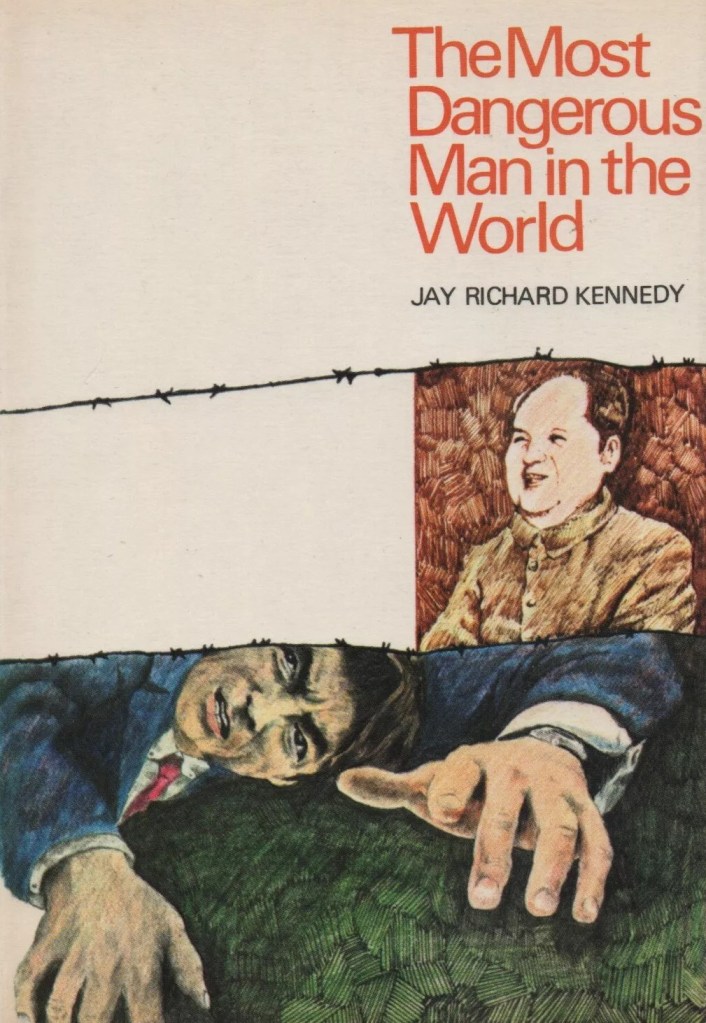
The book cover.

After successive flops – Return from the Ashes (1965) and Eye of the Devil (1966) – Thompson had plenty projects on the boil including a musical remake of Alexander Korda’s The Private Life of Henry VIII (1933) with a score by Richard Rodgers and Peter Ustinov playing the lead. Also on his slate was High Citadel based on the Desmond Bagley bestseller; The Harp That Once for Columbia; an adaptation of James Clavell bestseller Tai Pan; a sequel to The Guns of Navarone called After Navarone that would reunite the director with star Gregory Peck and writer-producer Carl Foreman; and Planet of the Apes (1968) to which he and Jacobs held the rights.

While none of these projects – except Planet of the Apes and minus Thompson – came to fruition, the Navarone connection would lead to Mackenna’s Gold for Foreman. In the meantime he had helmed a modest drama, Before Winter Comes (1968) starring Broadway star Topol. When Arthur P. Jacobs greenlit The Chairman, he hired Thompson who looked no further than Peck, connection re-established via the Navarone sequel.  They were a four-time pairing – Cape Fear (1962) and Mackenna’s Gold and The Guns of Navarone. Peck was a controversial choice from the Twentieth Century Fox perpsective given he had broken a contract with the studio in 1960 to star in Let’s Make Love. But Jacobs smoothed ruffled studio feathers and paid his star $500,000 plus a percentage. With Jacobs on hands-on duty with Planet of the Apes (1968) –  Mort Abrahams oversaw the production of The Chairman  and immediately engaged in a budget dispute with the director. Jacobs had initially stipulated $4 million, Thompson believed he required another million. They didn’t quite split the difference, Fox had the film come in at $4.9 million.

Thompson recognized the problems of the script, pointing out that “the hardest thing for Americans about the film’s concept is accepting that China has some competent scientists.” Rather ingenuously, he averred that the movie would have “no political overtones,” while Abrahams retorted that it might have “some political overtones.” It would been obvious to anyone that a picture featuring Mao was bound to have political repercussions, his Little Red Book a massive bestseller on the campus, an album cut of recitations from the book and Edward Albee in 1968 premiering a play called Quotations from Chairman Mao Tse-Tung.

Denied access to China, the production team spent four months “reading everything we could get our hands on.” At one point they considered dropping the scene featuring Chairman Mao and lengthening the sequence relating to Peck’s arrival in Hong Kong. In any case, different versions of the Hong Kong environs were shot, some with nude shots of girls in a house of pleasure.

The British Colonial Office in Hong Kong blocked filming there after fears of riots due to the production daring to portray Mao Tse-Tung on screen. Taiwan substituted for China although the locals there were also incensed, so much so they burned an effigy of Peck. Wales, funnily enough, was another location as was London University. Filming began on August 28 and finished on December 3.

Although it might appear that Ben Maddow (The Way West, 1967) wrote his script based on Jay Richard Kennedy’s novel, in fact the novel appeared after the screenplay with Kennedy writing the novelizaton, and it’s more likely that what Maddow adapted was the original Kennedy screenplay. Interestingly enough, around this time Maddow had first crack at the Edward Naughton western novel that became McCabe and Mrs Miller (1971).

It wasn’t the first time Variety got a prediction wrong: “powerful box office attaction” fell far short of the actual results. This proved an annus miserabilis for Gregory Peck. In fact, he had four films, not three, released in 1969. By release date The Stalking Moon technically belonged to the previous year, but it only played a handful of cinemas in 1968, its general release taking place in 1969.

Despite pocketing a total of over $2 million, Peck’s marquee value was in clear decline. Of the Peck quartet, Marooned did best, placing 33rd on the annual box office chart, with $4.1 million. Mackenna’s Gold (31st) took $3.1 million in rentals (the amount returned from the gross once a cinema has taken its cut), The Stalking Moon (38th) on $2.6 million, and The Chairman (41st) with $2.5 million.

SOURCES: Gary Fishgall, Gregory Peck (Scribners, 2002) p267; James Caplan, Sinatra: The Chairman, (Doubleday, 2015), p724;  “7 from 7 Arts,” Variety, March 3, 1965, p4; “Richard Quine,” Variety, July 7, 1965, p20; “Return of Advances,” Variety, October 6, 1965, p7; “Form Jade Prods,” Variety, December 15, 1965, p4; “J Lee Thompson Nearly Finished on 13,” Variety, February 2, 1966, p28; “Catch As Catch 22 Can,” Variety, February 23, 1966, p4; “Rodgers and Hammerstein’s Musical Henry VIII,” Variety, Mar 16, 1966, p1; “Inside Stuff – Pictures,” Variety, March 30, 1966, p22; “Lee Thompson Busily Blueprints His Musical Version of Henry VIII,” Variety, April 27, 1966, p17; “Jay Kennedy Script,” Variety, July 6, 1966, p5; “After Navarone,” Variety, April 19, 1967, p14; “Scripting Red Chinese,” Variety, May 21, 1967, p4; “”Personality Chemistry,” Variety, May 24, 1967, p4; New York Soundtrack,” Variety, Sep 20, 1967, p27; “Pat Hall Noel to Col,” Variety, December 27, 1967, p5; “N.Y. Indie Label Grooves Chairman Mao’s Thoughts,” Variety, April 10, 1968, p56; “Man About Town,” Variety, July 17, 1968, p68; “Jas Clavell to Roll Siege,” Variety, August 21, 1968, p7; “Thompson Wraps Up,” Variety, August 28, 1968, p29; “New York Soundtrack,” Variety, October 23, 1968, p18; “British Bar Fox’s Chairman,” Variety, December 4, 1968, p17; Big Rental Films of 1969,” Variety, January 7, 1970, p15; “Big Rental Films of 1970,” Variety, January 6, 1971, p11.

When Time Ran Out (1980) / Earth’s Final Fury ***

The Director’s Cut, can you believe? Or less pompously, The Expanded Version. An extra 30 minutes added to the general release version that traveled the world to general disfavor. (The original 121-minute cut was edited to 109 minutes and this version clocks in at 144 minutes.) Was it a sense of disgruntlement – or sheer opportunism – that led to the Director’s Cut, so many of which scarcely improved on the original version. How many versions can an audience take of The Exorcist (1973) or Blade Runner (1982)? And even where extra length definitely added depth to Kingdom of Heaven (2005) that couldn’t overcome its major flaw, in a massive case of hubris, director Ridley Scott believing he could get away with casting Orlando Bloom instead of waiting till Russell Crowe became available.

When Time Ran Out killed off the disaster cycle and the Hollywood career of uber-producer Irwin Allen who had started that particular ball rolling with The Poseidon Adventure (1972), upped the ante with The Towering Inferno (1974) and dropped the ball with The Swarm (1978) and Beyond the Poseidon Adventure (1979).

This doesn’t feel so much like a disaster movie as a picture tying up all the knots, various relationships coming asunder, and having to accommodate a bunch of well-known supporting actors of dubious all-star-cast status before they suddenly spring into dramatic narrative view.   Audiences had never been particularly keen on volcanic pictures, after all what can the trapped characters do but dodge a sludge of soup and hope they don’t run straight into a tidal wave or, worse, have to negotiate a rickety/rope bridge. The chances of you having a tightrope walker coming to the rescue would generally be remote but that’s what we have here (step forward Burgess Meredith).

I had thought from the title and some guy in a hazmat suit wandering over a desolate area that this might be a prophetic eco-disaster, but excepting that there’s, for reasons best known to the scriptwriters, an oil well being drilled close to a volcano and that hotel investor Shelby (William Holden) has the bright idea of using the volcano as a marketing prop, there’s nothing much going on. The special effects are okay on the small screen, but even if they had been spectacular on the big screen their effect on the much smaller environs of DVD would in any case have been diminished.

So, basically, it’s reliant on working up sufficient audience interest in the relationships to make us care for the characters. We’re offered a pair of two-timing teams. First up, we’ve got Shelby’s secretary and marketing guru Kay (Jacqueline Bisset) who’s just turned down the offer to become his sixth “or seventh” wife, but who, presumably is enjoying, this being the 1980s and not the 1930s, some kind of sexual dalliance with him. When Kay meets up with oil driller old flame Hank (Paul Newman), they rekindle their romance, although with doom impending there’s not much time to take it forward beyond a picnic on the beach.

Next up, hotelier Bob (James Franciscus) is cheating on wife Nikki (Veronica Hamel), Shelby’s god-daughter, with staff member Iolani (Barbara Carerra) who is due to be married to childhood sweetheart hotel manager Brian (Edward Albert). To flesh out the tale, both Shelby and Bob have daddy issues, Tom (Ernest Borgnine) is a New York cop on the tail of swindler Francis (Red Buttons), and no doubt audiences will be desperate to find who wins a  cockfighting contest being held in a local saloon.

Modern transport proves no match for an eruption, so in quick succession we see a car and a helicopter tumbling down the mountainside. The tsunami wipes out a good chunk of the actors that didn’t make it into the all-star-cast bracket and everyone else takes to the hills, no doubt hoping they won’t encounter a rickety/rope bridge. Disaster turns enemies into pals, Tom and Francis, for example, though it’s only now that Nikki comes across her husband’s infidelity.

And this would be a disaster all round except that having hooked myself into watching this, courtesy of a freebie on YouTube, and nothing of real dramatic interest going on, I found myself, oddly enough, concentrating on the three principals and was treated, even more odd I guess, to fine examples of just what these stars do to earn their crust. Paul Newman (The Prize, 1963) in particular, with very little to react to, does very little but with incredible facial agility, to genuine effect, portraying emotion with infinitesimal gesture. Sure, he’s always had the shrug and the walk, both far more suggestive of inner turmoil than any other actor I can name, but here, with very little dialog coming to his aid, you can tell exactly what’s going on in those baby blues.

Jacqueline Bisset (The Cape Town Affair, 1969), too, dressed a good bit less suggestively than in the posters, essays a confident woman coming unstuck when confronted with a romantic error. The scenes between the pair are not meant to be scorching, so there’s none of the screen charisma audiences might feel they’ve been sold, but instead it’s a slow-burn, a couple trying to come to terms with each other, passing through disappointment and hopefully onto something better. And you can’t find anyone better to carry disillusion than William Holden (The Devil’s Brigade, 1968).  

Abject swansong for director James Goldstone (Winning, 1969) and Oscar-nominated screenwriter Carl Foreman (The Guns of Navarone, 1961) but Oscar-winning co-writer Stirling Silliphant (Marlowe, 1969) carried on longer. Who wrote the most effective scenes, Shelby’s engagement ploy and Hank’s initial rejection of Kay, is anybody’s guess but there is some quality writing here. Probably the strangest part of the whole debacle was that the source was a piece of non-fiction, The Day the World Ended by Gordon Thomas and Max Morgan Witts, about a 1902 eruption on Martinique that had nothing to do with oil wells or hotel construction.   

There’s always something wrong with a disaster picture if you suggest watching it for the acting, but happily, this is the case.

Discover WordPress

A daily selection of the best content published on WordPress, collected for you by humans who love to read.

The Atavist Magazine

by Brian Hannan

WordPress.com News

The latest news on WordPress.com and the WordPress community.