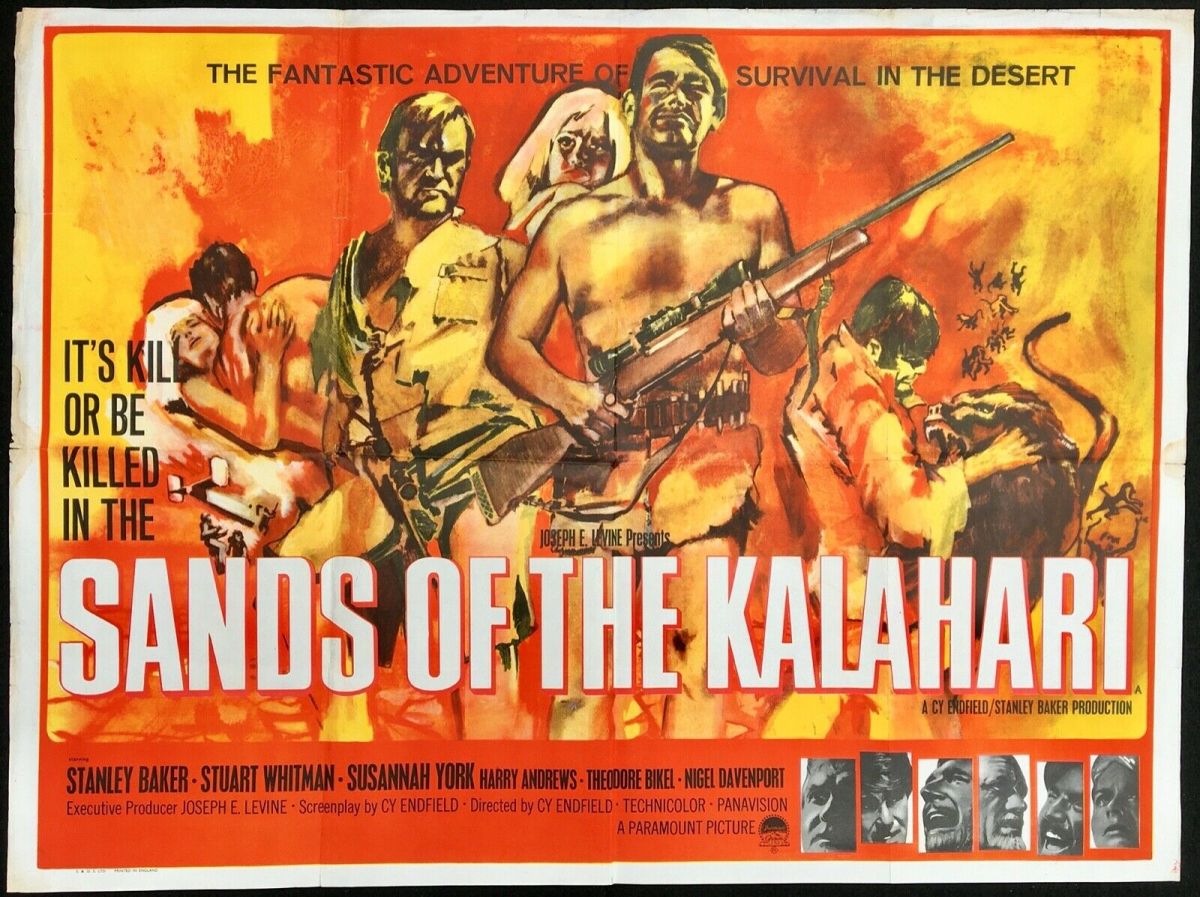
Sands of the Kalahari (1965) ****

You know the score: plane crashes in inhospitable territory (in this case a desert), personalities clash as food/water is rationed, tempers run high and/or depression sets in as attempts to attract attention fail, someone goes for help, someone else has an ingenious idea and eventually everyone rallies round in common cause. That template worked fine in The Flight of the Phoenix (1965).

It doesn’t here. This is not quite as inhospitable. There is water. Caves offer shelter from the blazing sun. There is food – lizards trapped, game hunted with telescopic rifle. But the food is lean, not fattened through farming for human consumption.  And you have to watch out for marauding baboons not to mention scorpions. And this group is split, two alpha males intent on exerting dominance with little interest in common cause.

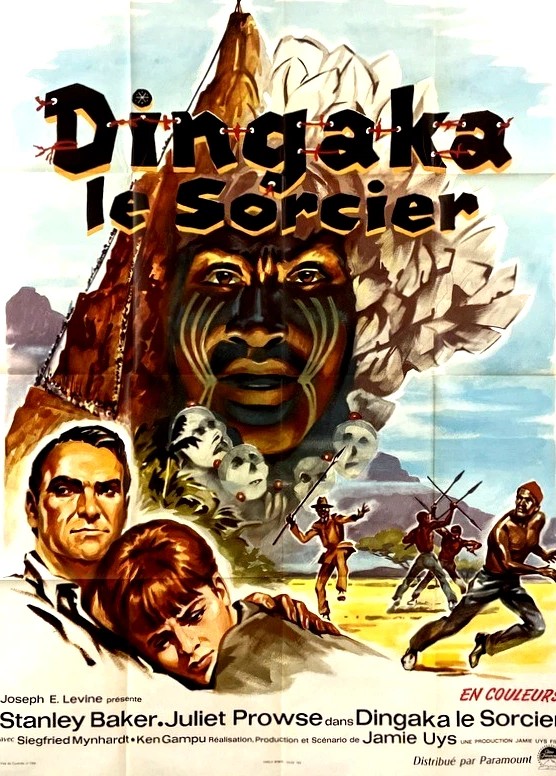
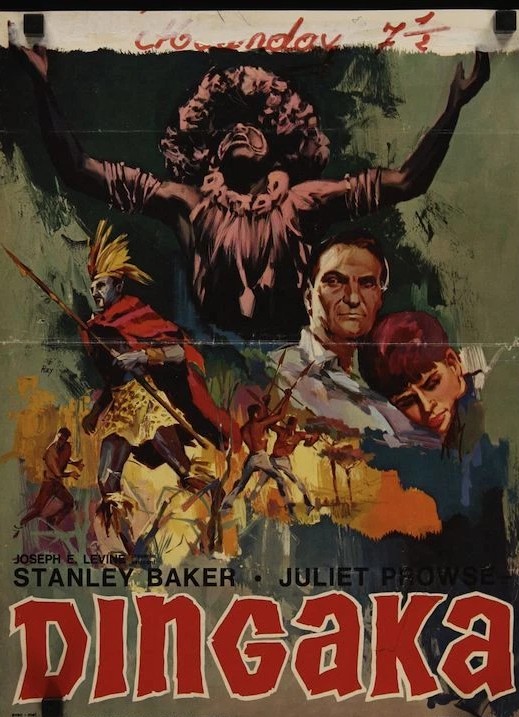
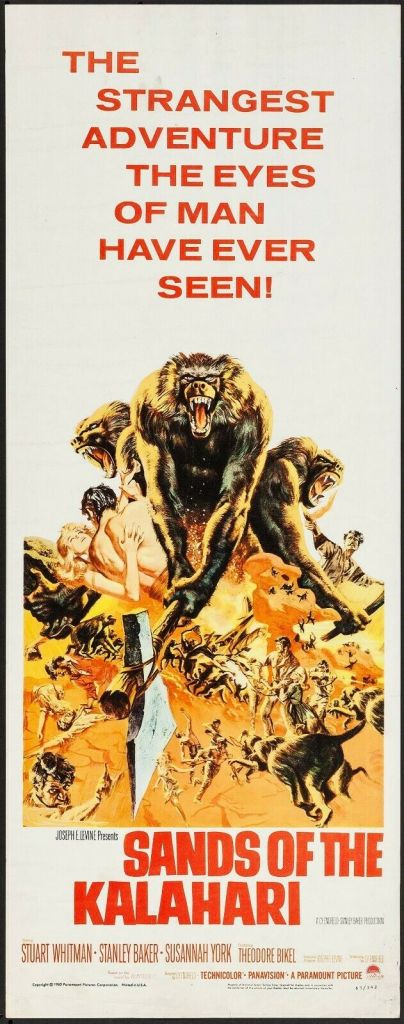
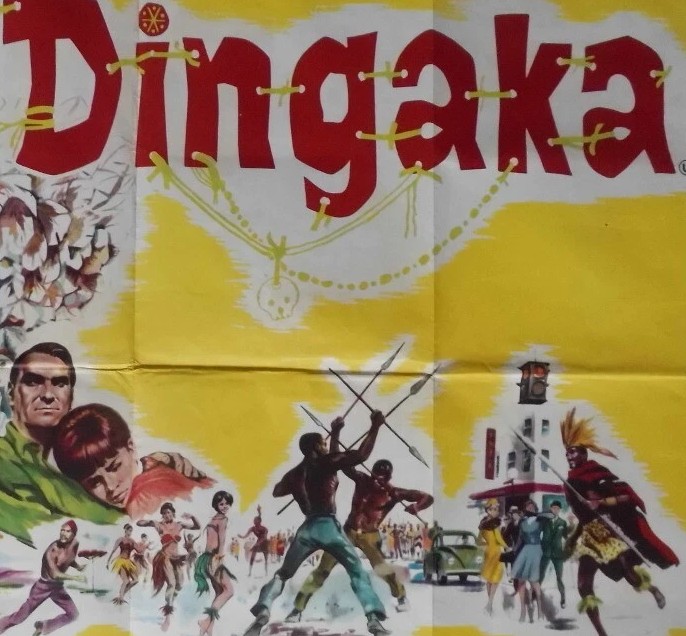
Producer Joseph E. Levine came up with the poster
without close examination of the picture’s content.

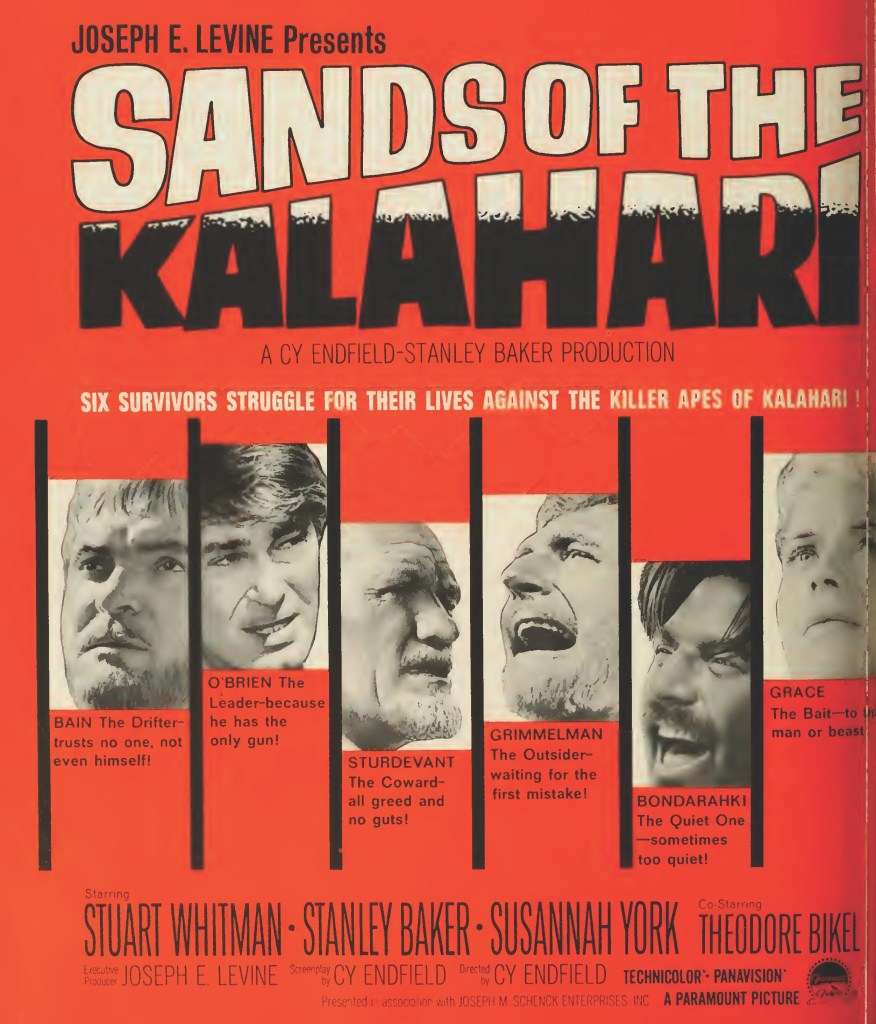
Of the six survivors of this crash, Sturdevan (Nigel Davenport) decides his leadership status entitles him to sole claim over the only woman, Grace (Susannah York). But when he accepts the genuine responsibilities of leadership, he sets off across the desert to get help. That leaves Grace to fall into the hands of O’Brien (Stuart Whitman), so alpha he could be auditioning for Tarzan, shirt off all the time.

It soon transpires O’Brien has a rather unusual idea of survival – getting rid of his companions so that he will have no shortage of food until rescue arrives. It takes a while for the others to catch on to his plan. And then rather than common cause and camaraderie, it becomes every man/woman for himself, a battle for individual survival, a return to the primeval.

The most likely challenger to O’Brien’s authority is Bain (Stanley Baker), but he has been badly injured in the crash and no match for the other man’s brawn or his weapon. So it becomes a game of cat and mouse. Except it’s in the desert, it’s the law of the jungle and the rule of autocracy brought home with sudden force to people accustomed to the comforts of civilization and democracy.  

The movie’s structure initially takes us down the obvious route of common purpose – Grimmelman (Harry Andrews) knows enough survival lore to devise a method of water transportation that would permit the group to escape the desert, Dr Bondrachai (Theodore Bikel) formulates  a method of trapping lizards, and O’Brien, at least at first, appears willing to take on the role of protector, warding off baboons with his gun.

The change into something different is subtle. While the others are desperate to escape, it becomes apparent that O’Brien has found his metier. We discover little about the lives of each individual prior to being stranded. Whatever O’Brien’s standing in society, it would not have been as high as here, where his superior skills stand out. Reveling in his supremacy, he doesn’t particularly want to go home.

Like any psychopath Bain knows how to manipulate so at first it seems his decisions are for the greater good. And only gradually does it emerge that he blames others for his own mistakes and intends to eliminate his rivals for the food supply one by one. Because he is so handsome, it is impossible to believe he could be so devious or so evil.

The three principals all play against type. Stanley Baker (Zulu, 1963) and Stuart Whitman (Murder Inc., 1960) made their names playing heroic types. Here Baker is too ill for most of the picture to do any good and Whitman plays a ruthless killer. But Susannah York (Sebastian, 1968) is the big revelation. Audiences accustomed to her playing glamorous, perhaps occasionally feisty, gals will hardly recognize this portrayal of a coward, not just abjectly surrendering to the alpha male but seeking him out for protection and guilty of betrayal.

Even though this picture is set in the days before gender equality and the independent woman was a rarity, Grace’s acquiescence to the powerful male is disturbing, in part because it takes us back to the days when a woman was impotent in the face of male dominance. Such is York’s acting skill that rather than despise this woman, she earns our sympathy.

While for the most part Harry Andrews (Danger Route, 1967) and Nigel Davenport  (Sebastian, 1968) appear in their usual screen personas of strong males, here their characters both are changed by the circumstances. Theodore Bikel (A Dog of Flanders, 1960) has the most interesting supporting role, the only one who takes delight in the adventure.

Director Cy Endfield (Zulu) – who also wrote the screenplay based on the William Mulvehill novel – delivers a spare picture. There is virtually no music, just image. Aerial shots show tiny figures in a landscape. The absence of character background frames the story in the present. As a reflection on the animal instinct, how close to the primordial a human being still operates, no matter how enlightened, this works exceptionally well, and melds allegory with thriller.

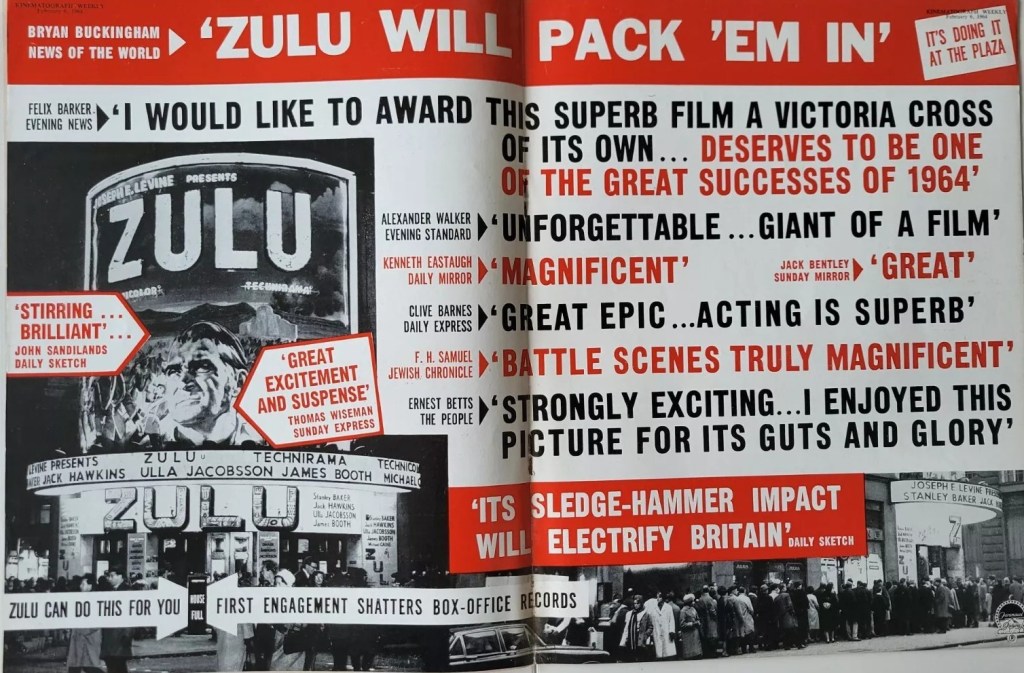
Behind the Scenes: Selling “Zulu” (1964) – The Pressbook

“Dwarfing the Mightiest! Towering over the Greatest!” wasn’t just the movie’s tagline. It could have easily been used to describe the Pressbook. This folded out into a colossal 40 inches wide  by 20 inches high, one of the biggest pressbooks ever produced.

The marketing team produced an impressive list of ideas. Cinema managers were urged to get war correspondents and war heroes involved and to blow up photos of the Victoria Cross. Hanging on the name of the star was a “Baker’s Dozen” competition, inviting people to list the thirteen movies featuring Stanley Baker. Quite how they thought a promotion involving banks would go down is anybody’s guess. Especially as this was the notion: “Zulus are allowed as many wives as they want, provided they can afford to pay for them. The price ranges between six and twenty head of cattle per wife. For an interesting tie-in, get local banks to display money and other barter materials. Give them a montage of still from the picture to display.” Culturally tone-deaf doesn’t cut it.

To attract children there was a coloring-in competition and a school study guide. The movie was available in 70mm Super Technirama so there was a special advertisement linked in to that for cinema going down that route.

Other taglines included: “The supreme spectacle that had to come thundering out of the most thrilling continent!” and “These are the days and nights of fury and honor and courage and cowardice that an entire century of empire-making and film-making can never surpass!”

And in case hyperbole wasn’t enough, one of the ads spelled out the exciting details. “The Massacre of Isandlwana! The Mating Song of the Zulu Maidens! The Incredible Siege of Ishiwane! Night of the 40,000 Spears! Days That Saved a Continent! Mass Wedding of 2,000 Warriors and 2,000 Virgins! Amid the Battle’s Heat…the Flash of Passion!”

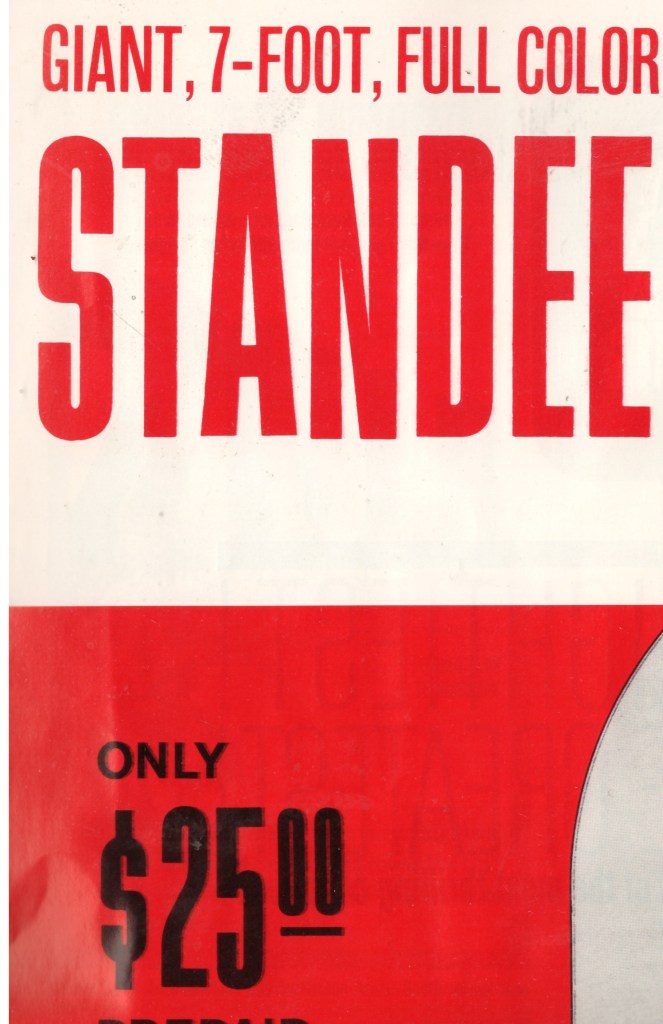
There was a seven-foot high standee and a three-foot 3D illuminated standee.

To help sell the picture to local journalists, little articles were planted that could hook an editor’s interest. For example, when director Cy Endfield glimpsed some soldiers firing their rifles left-handed, he stopped filming, because British soldiers were required to shoot right-handed. The film was shot in the shadows of the Darkensberg Mountains. The river which flowed past Rorke’s Drift was slower than it had been at the time of the battle so the course was altered and dammed to increase the flow. Out of sight of the cameras but essential to filming were the modern villages constructed to house cast and crew, stores, catering and compounds for horses and oxen.

The cast were on set at 6.30am for make-up. The Zulus spent more time in make-up than the British soldiers, as the costume department ensured every aspect of their outfits was historically correct. A total of 100lb of small colored beads was crafted by made by local women for the maidens to wear. A primitive method of making necklaces, strung together with animal sinew and rolled by hand, was employed incorporating a further 100lb of wild syringa seeds which were dyed.

The warrior loincloths of softened animal skins were made the traditional way using stones aqnd animal fat. Shields were also made from animal skin. The teeth of tigers and baboons formed their necklaces. They kept snuff in a small gourd worn round the waist. The purpose of a porcupine quill tucked into their hair was to extract thorns after a long march.

Three cameras were utilized to shoot the blaze that burned down the hospital. “Undress rehearsal” was the name given to the marriage ritual scenes of bare-breasted women.

Though Michael Caine was being touted for stardom, as far as the Pressbook was concerned he was relegated to section below Jack Hawkins, James Booth and Ulla Jacobsen who had smaller parts. The movie was a notable change for Jack Hawkins, who saw action in World War Two. Instead of playing his usual hero, he was a weakling and drunk. It was the second English-language film for Swede Jacobsen after Love Is a Ball / All This and Money Too (1963).

Zulu (1964) *****

The technical excellence is substantially under-rated. Not just the aural qualities – the approaching enemy sounding like a train – and the reverse camera and uplifted faces registering awe that later became synonymous with Steven Spielberg, but the greatest use of the tracking camera in the history of the cinema. So what could otherwise be a rather static movie given it revolves around a siege is provided with almost continuous fluidity.

It’s perhaps worth pointing out, in relation to accusations of jingoism, that the British had relatively few battles to celebrate – Agincourt in the Middle Ages, Waterloo in 1815, El Alamein in 1942. But the Crimean War, in which Britain was on the winning side, was remembered for the disastrous Charge of the Light Brigade. Dunkirk in 1940 was a defeat and in cinematic terms D-Day was seen as heavily favoring of the Americans. Although there had been a corps of British World War Two pictures, these generally focused on individual missions (The Dam Busters, 1955) or characters (Reach for the Sky, 1956). And in fact the defense of Rorke’s Drift was preceded by a resounding defeat at the hands of the Zulus at Isandlwana.

Tactically, too, the Zulus are smarter. Their leader is only too happy to sacrifice dozens of his troops in order to gauge the British firepower, their snipers probe for weaknesses in the British defences, their troops feint to attract fire and waste bullets.  The Zulus are too clever to attack where the British want.

This is not even your normal British army. Rorke’s Drift is a supply station and hospital. Its upper class commander Lt Bromhead (Michael Chard) idles his time away going big game hunting. The more down-to-earth Lt Chard (Stanley Baker) is there in his capacity as an engineer, erecting a pontoon bridge over the river. Neither has been in battle.

It’s surprisingly realistic in its depiction of the common soldier as having other interests beyond fighting. Private Owen (Ivor Emmanuel) is more concerned about the company choir, Byrne (Kerry Jordan) more focused on his cooking than bearing arms, and farmer Private Thomas (Neil McCarthy) spends his time cuddling a calf. Hook (James Booth) is a troublemaker and slacker and surgeon Reynolds (Patrick Magee) inclined to mouth off to his superior officers. The Rev Witt (Jack Hawkins) turns out to be a drunken hypocrite. His pious daughter (Ulla Jacobsen) is shocked when the men try to steal a kiss

Beyond a fleeting glimpse of victorious forces at Isandlwana, the Zulus are introduced in a sequence of harmony, a tribal ritual preceding a marriage ceremony, lusty singing and dancing scarcely setting up what is to come. It’s more like the by-now traditional section where the main characters in a movie set in an exotic land are introduced to aspects of local culture. Various characters attest to their military exploits.

But after that, tension cleverly builds. Witt raises the alarm, a bunch of cavalry irregulars refuse  to stay and fight, the sound of the pounding “train” of the approaching army (an idea imitated for the oncoming unseen German tanks in Battle of the Bulge, 1965) and then the awesome shot of the thousands of Zulus adorning a hilltop make it unlikely the garrison can survive, especially given the inexperience of Chard and Bromhead, the latter of the civil “old boy” old school, and their inherent rivalry. Nor are the commanders typical. Chard may be gruff but he’s not arrogant and the soft-spoken Bromhead is the antithesis of every British officer you’ve ever seen on screen.

As the camera continues its insistent prowl, many sequences stand out – the battle of the battle hymns (“Men of Harlech” from the Brits); the bandage unravelling from the leg of wounded Swiss; the blackened wisps of canvas on the burning wagons at Isandlwana; the trembling voice of Color Sgt Bourne (Nigel Green) in the post-battle roll call; “he’s a dead paperhanger now”; the frantic bayonets digging holes in the walls of the hospital to escape; the final “salute” by the defeated Zulus; the torrential firepower the defenders inflict when three units fire in turn.

There’s a scene you’ll remember from The Godfather (1972) when Michael Corleone and the baker’s son stand guard outside the hospital and the baker’s hand shakes when he tries to light a cigarette whereas Michael notes that his own is perfectly steady. That has its precedent here. Chard’s hand shakes loading bullets into his pistol but later, battle-hardened, it does not.

There’s no glory in war as the surgeon constantly reminds the leaders and Bromhead, expecting to exult in triumph, instead feels “sick and ashamed.”

Terrific performances all round, mighty score by John Barry, written by director Cy Endfield (Sands of the Kalahari, 1965) and Scottish historian John Prebble (Culloden, 1964). The high point of Endfield’s career. Despite his character’s prominence Michael Caine was low down the billing, and despite the movie’s success stardom did not immediately beckon and he had to wait until The Ipcress File (1965) and Alfie (1966) for that.

I hadn’t see this in a long while and expected to come at it in more picky fashion. Instead, I thought it was just terrific.

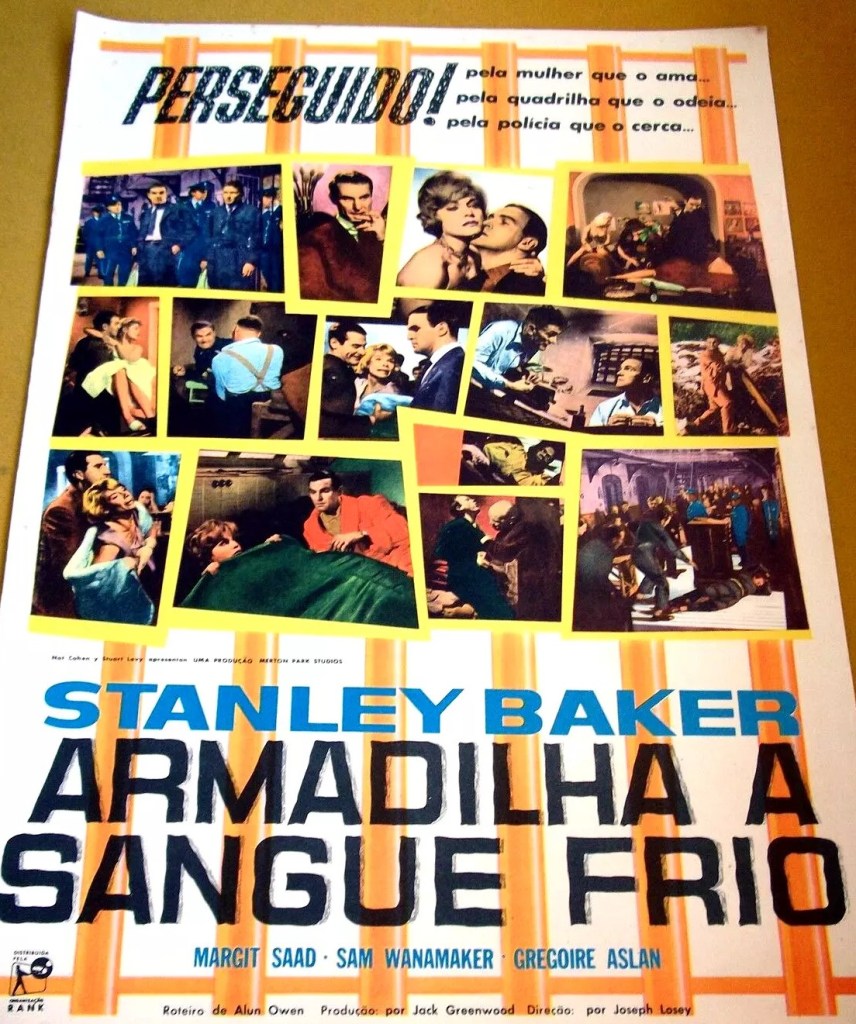
The Criminal / The Concrete Jungle (1960) ****

You’d be hard put to imagine from this hard-nosed gangster picture that both director Joseph Losey and star Stanley Baker would be capable of a more discreet arthouse offering like Accident (1966). Except for the director’s penchant for introducing a jazz score more often than suits the material – witness a brutal beating in a prison – this is an exceptionally gruelling blast through the British underworld, as though the domestic film industry had suddenly inhaled a narcotic comprised of Cagney and Bogart at their meanest.

With hardly a redemptive character in sight, it makes terrific demands of both director and star that anyone comes out achieving audience sympathy. Hollywood usually fell back on the trope of the innocent prisoner to instigate character empathy, but there’s no question from the outset that career criminal Bannion (Stanley Baker) is as tough as they come. In the opening section he arranges for rival Kelly (Kenneth Cope) to be viciously beaten with prison guard Barrows (Patrick Magee) turning a blind eye.

Out after a three-year stretch, Bannion plans a robbery of a race track with a partner, American Mike (Sam Wanamaker). But it turns out the track is owned by another gangster. After that, the double-crosses come thick and fast, nobody to be trusted, everyone out for themselves. He ends up back in prison, wanted by both sides of the law, the gangsters desperate to get their hands on the hidden loot.

Inside, he is protected by Italian mob boss Saffron (Gregoire Aslan), ruling his empire from prison, in return for a share of the loot. In due course, he instigates a riot, and double-crossing the other inmates, secures a shift to a low-security prison, and he is rescued from the transfer van. But there’s no escape. It’s a bleak ending all round. He dies on a beach, but without revealing where he has stowed the loot.

There are a couple of gals in the mix. The first, his ex-, Maggie (Jill Bennett) he treats in appalling fashion. The second, something of a present for his release, Suzanne (Margit Saad), sees the better side of him, although you have a sneaking feeling that she’s a plant.

But, really, nobody’s got a better side here. The prison scenes are grittier than had previously been the case in British movies, but the whole gangster set-up has a realistic “goodfellas” feel to it, boozing gangsters welcoming him home even as they are planning to stitch him up. And while Bannion may be unaware of ownership of the race track, clearly Mike isn’t, and Bannion is being set up to take the fall.

Joseph Losey (The Damned, 1962) takes an original approach to the material, cutting out the “big job” element entirely in favor of repercussion. He keeps up a brisk pace, which helps build tension, instead focussing on the relationships between the criminals and the prison hierarchy. Especially in the early prison scenes, more is made of vulnerability than toughness, many of Bannion’s confederates presented as weak and easily controlled rather than constantly challenging, prison guards complicit.

Stanley Baker (Where’s Jack, 1969) has such a malevolent appearance he was often as his best in the toughest arenas and perhaps Losey is making the point that even the toughest of tough guys can be duped by gangsters with more brains. There’s a terrific support cast: Sam Wanamaker (Warning Shot, 1966), Gregoire Aslan (Lost Command, 1966), Patrick Magee (Hard Contract, 1969), Jill Bennett (The Charge of the Light Brigade, 1968), Patrick Wymark (Where Eagles Dare, 1968) and  Laurence Naismith (Jason and the Argonauts, 1963). German star Margit Saad (The Magnificent Two, 1967) lends an air of mystery to her character.

This was the third – of four – teamings for Losey and Baker. The British censor took a mighty mild attitude to the unexpected levels of nudity and violence. Alan Owen (A Hard Day’s Night, 1964) and Jimmy Sangster (The Devil-Ship Pirates, 1964) are credited with the script.

Takes no prisoners.

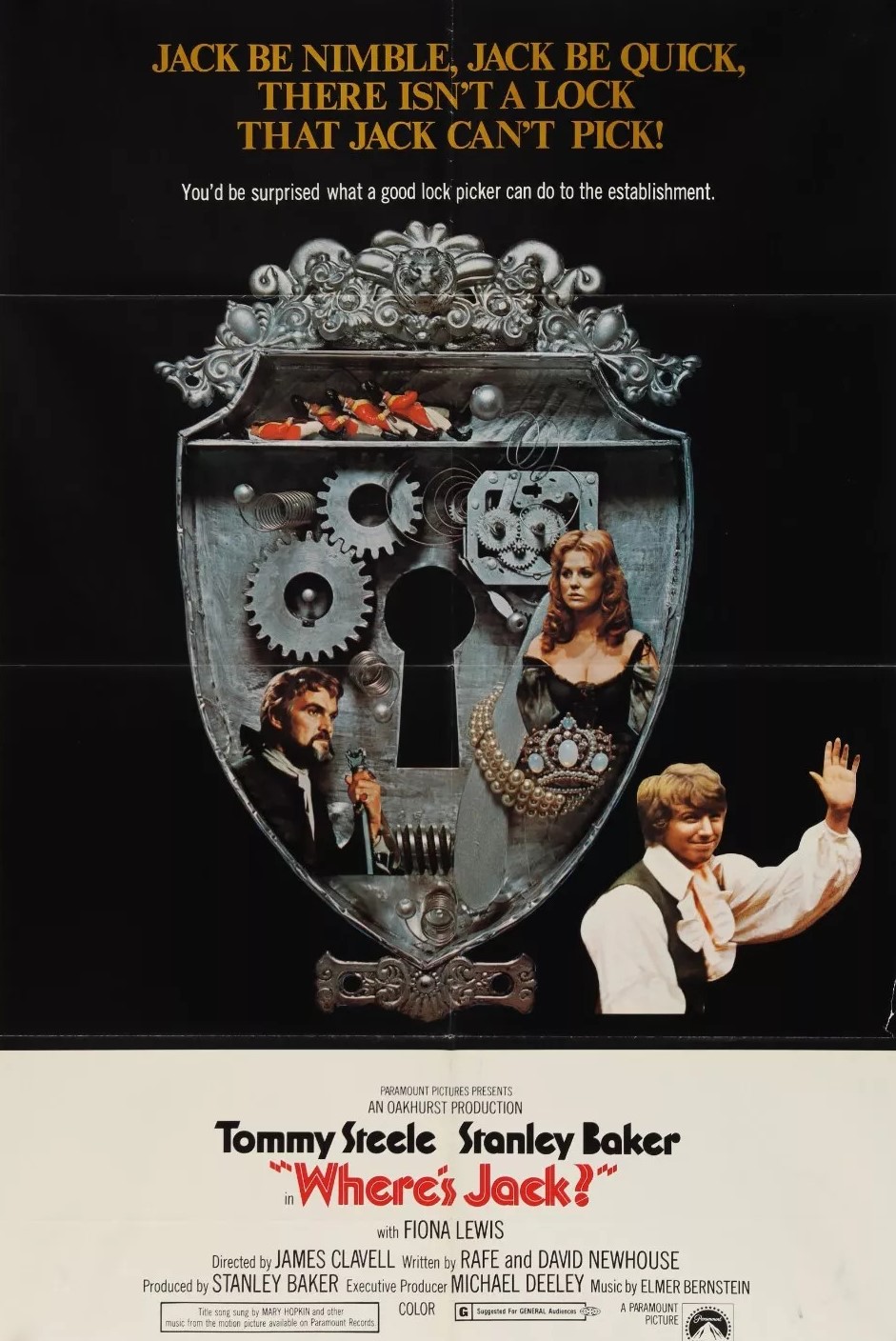
Where’s Jack (1969) ***

Prison escapees tend to conform to a certain type. Think Charles Bronson and Steve McQueen (The Great Escape, 1969), Paul Newman (Cool Hand Luke, 1967) and Clint Eastwood (Escape from Alcatraz, 1979). Admittedly, Tim Robbins (The Shawshank Redemption, 1994) doesn’t fit the bill, but he’s got brains instead of brawn. But he’s not twinkle-eyed or twinkle-toed or diminutive like British hoofer Tommy Steele (Half a Sixpence, 1967) who’s not helped here by being up against a distinctively tough screen character in the shape of Stanley Baker (Zulu, 1964).

Served up as an antidote to the tomfoolery and sexuality of Tom Jones (1963), more interested in the seamier side of Ye Olde England, it ignores the more interesting tale of criminal corruption and hypocrisy of Jonathan Wild (Stanley Baker), the Thief-Taker, in favor of young thief Jack Sheppard (Tommy Steele) who proves his nemesis.

Wild was the ultimate hypocrite, not just stewed in the corruption of the times but taking advantage of it, and not so much poacher-turned-gamekeeper but gamekeeper who had not entirely abandoned his previous profession. Wild, a notorious thief, managed to set himself up as London’s top lawman, keeping other thieves in line and handing over a certain number to the hangman. He had another sideline. He sold back stolen goods to burglarized owners. Most of this was condoned by the authorities who believed that it took a thief to catch a thief.

Wild enrages Sheppard, apprentice locksmith to trade, by reneging on a deal to free Sheppard’s criminal brother. Sheppard sets out to teach the antique godfather a lesson, breaking into his warehouse and stealing the contents.

Wild has him arrested on a variety of occasions, but each time Sheppard breaks out from prisons that had the reputation of the later Alcatraz, in one instance through a sewer, in another via a chimney, turning himself into a local hero in the process. Sheppard’s main trade is not so much burglary as highwayman and further annoying Wild by bringing such criminal solicitation to the streets of posh London, from which it had, by decree of Wild, been outlawed.

In so doing, Sheppard encounters Lady Darlington (Sue Lloyd), so taken with our scamp that had this been Tom Jones there would have been some rollicking in the hay (or the Mayfair equivalent). Instead, she bets her Scottish estate that he will escape from his latest incarceration.

Sheppard has the hots for barmaid Bess (Fiona Lewis) but this not being Tom Jones we don’t go much beyond cleavage. The sub-plot involving Lady Darlington, which I’m guessing forms part of the Jack Sheppard legend (since he was a real-life character), takes up valuable time which could have been spent either developing the romance or on the escapes, which don’t generate the necessary tension, or filling out the crook’s character.

Narrative-wise there’s more at stake for Wild, not just being led a merry dance by Sheppard and losing respect (the crime of crimes against a criminal mastermind) but also by potentially damaging his cosy relationship with the authorities, led by snippy Lord Chancellor (Alan Badel) who is on the other side of the Lady Darlington wager.

Fair amount of rubbish being tossed out of windows, unruly tavern occupants, poverty and homelessness abounding, and general but unspecified bawdiness, in fact a truer perspective of the times, doesn’t compensate for the lack of compelling narrative.

On paper, this should have amounted to a lot more. Mostly, it goes askew from miscasting. Tommy Steele is outshone without much difficulty by Stanley Baker and it’s asking a lot of an audience to accept that a cheeky chappie can outwit the exceptionally clever tough guy. It’s Baker who makes the most of his scenes, either lording it over his gangs, using cruelty to keep them in line, or fearing that he might be toppled from his lofty position and end up either back in the gutter or at the end of a noose.

There’s a bit of complicated jiggery-pokery relating to the effect your weight has on how long you can dangle on the end of a rope. Hangmen in those days did not follow scientific principles and provide some kind of weighting handicap as occurred later to prevent unnecessary suffering and make death as swift as possible.

Anyway, our Jack, being a skinny little runt (and this plot-point key to the climax ensuring the part required a skinny little runt rather than someone hewn from the normal tough guy runt) doesn’t die from the hanging, escaping the fury of Wild and (so legend has it) managing to escape to the colonies.

Put a Michael Caine (The Ipcress File, 1965) in the leading role or Richard Harris (Major Dundee, 1965) or even a Nicol Williamson (The Reckoning, 1970) and you would have quite a different movie, a more believable protagonist. Even Peter O’Toole (Night of the Generals, 1966), while devoid of muscle, would suggest the brains to outwit his opponent.

In the face of the mop-haired pop singers and raucous rock stars, Tommy Steele had reinvented himself from 1950s teen idol into Broadway musical star with Half a Sixpence and then viewed as a squeaky-clean alternative to the more louche movie star turned up in harmless offerings like Disney’s The Happiest Millionaire (1967) and Francis Ford Coppola’s non-grandiose Finian’s Rainbow (1968).

Oddly enough, it was to escape such typecasting that he took on what was perceived as a much tougher role only to discover he lacked the acting cojones to pull it off. Baker, Badel (Bitter Harvest, 1963) and Lloyd (Corruption, 1968) beat him hands down.

Director James Clavell was riding high after To Sir, with Love (1967) as was producer-star Stanley Baker after Robbery (1967) and screenwriters David and Rafe Newhouse following Point Blank (1967). This brought them down to earth.

More Artful Dodger than Get Carter.

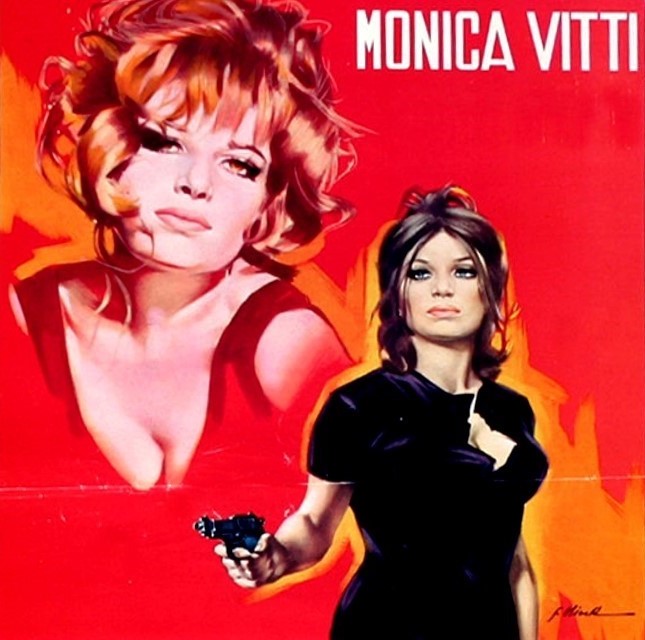
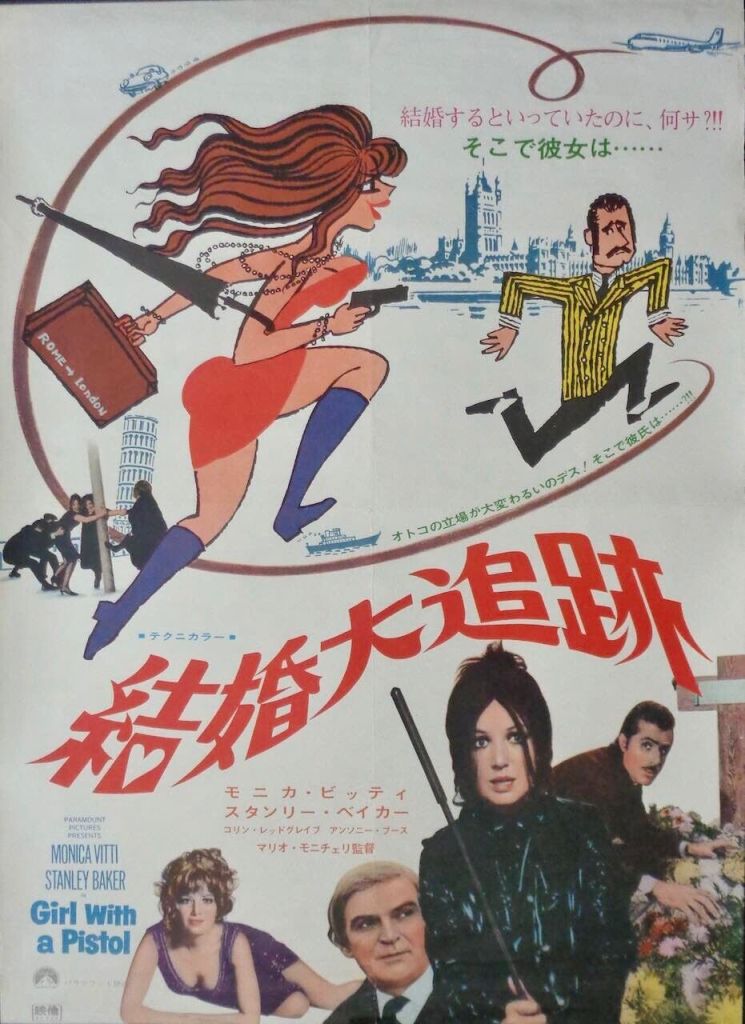
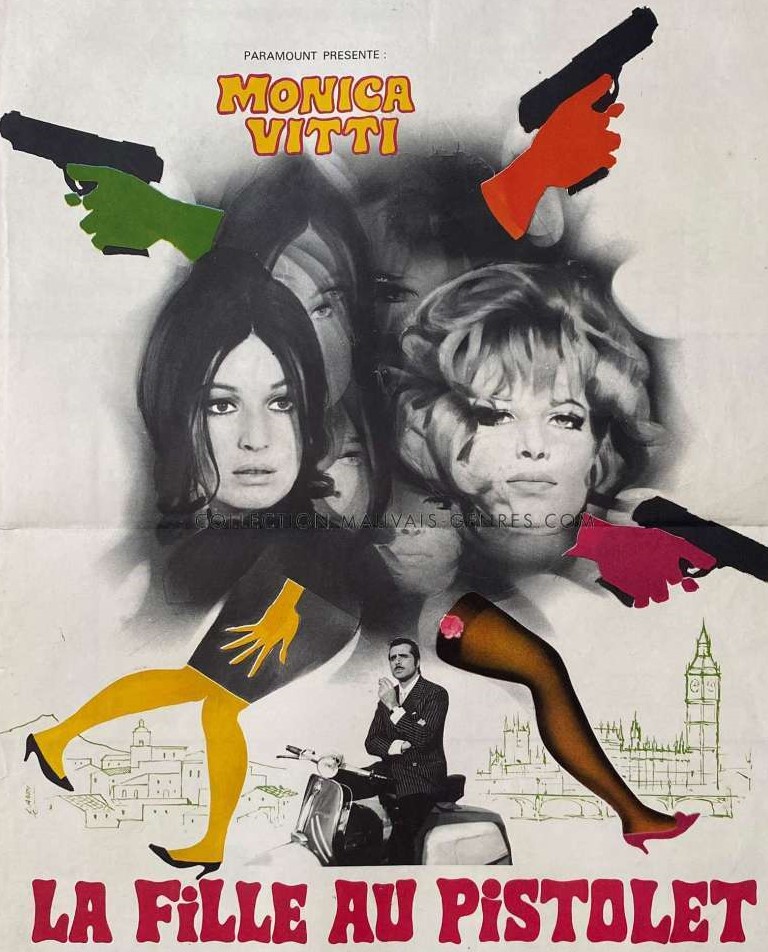
Girl with a Pistol (1968) ****

Off-beat Oscar-nominated comedy-drama that is both a marvelous piece of whimsy and a slice of social realism set in the kind of Britain the tourist boards forget, all drizzle and grime. It zips from Edinburgh to Sheffield to Bath to London to Brighton to Jersey as if the characters had been dumped from an If It’s Tuesday It Must Be Belgium sketch. If your idea of Italy was Fellini’s glorious decadence or Hollywood romance amid historic ruins and fabulous beaches, then the upbringing of Assunta (Monica Vitti) is the repressive opposite.

All women in her small town wear black. Men are not allowed to dance with women and must make do with each other. A man like Vincenzo (Carlo Giuffre) desiring sex must kidnap a woman, in this case Assunta, to which she will consent as long as he marries her. When instead he runs off to Scotland, she is dishonored and must kill him, armed with the titular pistol.

Pursuit first takes her to Edinburgh and a job as a maid, has a hilarious encounter with a Scottish drunk, and various other cross-cultural misinterpretations – in a bar she cools herself down with an ice-cube then puts it back in the bucket. Then it’s off   to Sheffield where she falls in with car mechanic Anthony Booth (television’s Till Death Do Us Part) because he is wearing Italian shoes.

She can’t imagine he can watch sport for two hours. “You’re a man, I’m a woman, nobody in the house and you look at the television.” Although tormented by images of being attacked back home by a screaming mob of black-robed women, she begins to shed her inhibitions, wearing trendier clothes, although an umbrella is essential in rain-drenched Britain and given the Italian preference for shooting exteriors.  

In between sightings of Vincenzo there are episodes with a suicidal gay man (Corin Redgrave) and a doctor (Stanley Baker). She becomes a nurse, then a part-time model, sings Italian songs in an Italian restaurant, drives a white mini, wears a red curly wig and more extravagant fashions. It turns out she can’t shoot straight. Gradually, the mad chorus of home gives way to feminist self-assertion as she becomes less dependent on men and a world run by chauvinists. It’s a startling mixture of laugh-out-loud humor and social observation. And while the narrative that at times verges on the bizarre, Assunta’s actions all appear logical given her frame of mind.

Vitti was Italian director Michelangelo Antonioni’s muse (and companion) through  L’Avventura (1960), La Notte (1961) and L’Eclisse (1962) to Red Desert (1964). She had a brief fling with the more commercial, though still somewhat arty, movie world in Joseph Losey’s Modesty Blaise (1966) and the nothing-artistic-about-it comedy On the Way to the Crusades (aka The Chastity Belt, 1968) with Tony Curtis. Director Mario Monicello had two Oscar nominations for writing but was best-known for Big Deal on Madonna Street (1958) and Casanova ’70 (1965). Girl with a Pistol was nominated in the Best Foreign Language film category at the Oscars.

In the French Style (1963) ***

Short stories can be an excellent starting point for movies because usually they are lean and narrative driven, a screenwriter needing basically to fill out the characters and add a subplot. But short stories have one weakness. They require a pay-off,  a twist, something the reader doesn’t see coming. And short of a twist of the caliber of Jagged Edge (1985) or The Sixth Sense (1999), these don’t usually come off, the audience feeling duped.

This one falls down due to a twist. Two actually, because it comprises a pair of initially unconnected short stories, A Year to Learn the Language and In the French Style. Which is a shame because the movie itself  with its Parisian setting is in general charming and conveys the development of young American Christine (Jean Seberg) as she moves from innocent wannabe artist to promiscuous model while worrying she is throwing her life away on transient pleasures.

Writer Irwin Shaw (Two Weeks in Another Town, 1962), who doubles as producer, has used Christine as the link between two of this best-known short stories. So it’s – to dip into soccer parlance – a film of two halves and I’ll let you know right away co-star Stanley Baker (Sands of the Kalahari, 1965) is consigned to the second part, when he meets an older and perhaps more rueful Christine.

So, young, not exactly starving (an allowance from her father funds her lifestyle), artist meets a young Frenchman Guy (Phillipe Forquet) determined to be the antithesis of the standard Frenchman. He doesn’t drink because alcohol is ruining his country. He won’t kiss her in public because not all Frenchman are insanely romantic. He’s severely lacking it has to be said in the romantic gene. Seduction is abrupt. He’s got the key to a friend’s apartment. Let’s go. Is as much subtlety as he can summon up.

So no sex this time and she decides she’ll be the one doing the asking, which upsets his notion of the biddable girlfriend. Anyway, they end up touring Paris on his scooter looking for a suitable no-questions-asked hotel. Surprisingly, the city, according to Guy, isn’t full of them.

And end up in a freezing hotel room. He can’t open the champagne bottle. He insists she undress last, as apparently that’s the done thing. And then he springs his surprise. He’s not only a virgin, he’s not the 21-year-old he told her he was, but still at school and just 16.

If this had been done The Graduate-style, with his awkwardness to the fore, or if she had just been as clumsy, it would probably have worked. There would have been nothing illegal in their coupling, or cringe-worthy (she’s 19 after all), but it just makes her out to be an idiot, fooled because she effectively fell for the first handsome Frenchman to come her way. It just drops a bomb of the wrong kind halfway through the movie.

Cut to four years later and she’s much more the lady-about-town, independent or of questionable morals depending on your point of view, self-sufficient or relying on male companionship to see her through depending on your point of view. Having been dumped by Bill (Jack Hedley), she hooks up with itinerant flamboyant journalist Walter (Stanley Baker) but while he’s off on some important story she’s made hay with more sober American Dr John Haislip (James Leo Herlihy, yes that one, author of Midnight Cowboy) and chooses security over culture and fun.

The problem with this section is that the short story was originally written from Walter’s point of view, as he comes to realize that long-term commitment is not compatible with globe-trotting.

All told, a pretty odd concoction. That it works at all is largely due to Jean Seberg (Breathless, 1960). I’m not totally convinced by her transition. You get the impression that had she met a more worldly Frenchman in the first half she would have quickly shaken him off for another lover. As it is, her rootlessness is meant to be the result of being disappointed by a schoolboy lover. Hmmm!

Although there’s over-reliance on Paris atmosphere – jazz club, Arc de Triomphe, restaurants where waiters transport flambe dishes halfway across a room, a “happening” where the art crowd lets it all hang out – and we rely on other characters telling us about Christine’s personal situation, it remains an interesting view of the French capital from the point-of-view of an American ex-pat, who, less successfully than Hemingway perhaps, offers a different perspective on the city. Robert Parrish (Duffy, 1968) directed.

Worth it, though, to see Seberg transformed.

https://amzn.to/470agOY

https://amzn.to/49n6Xmv

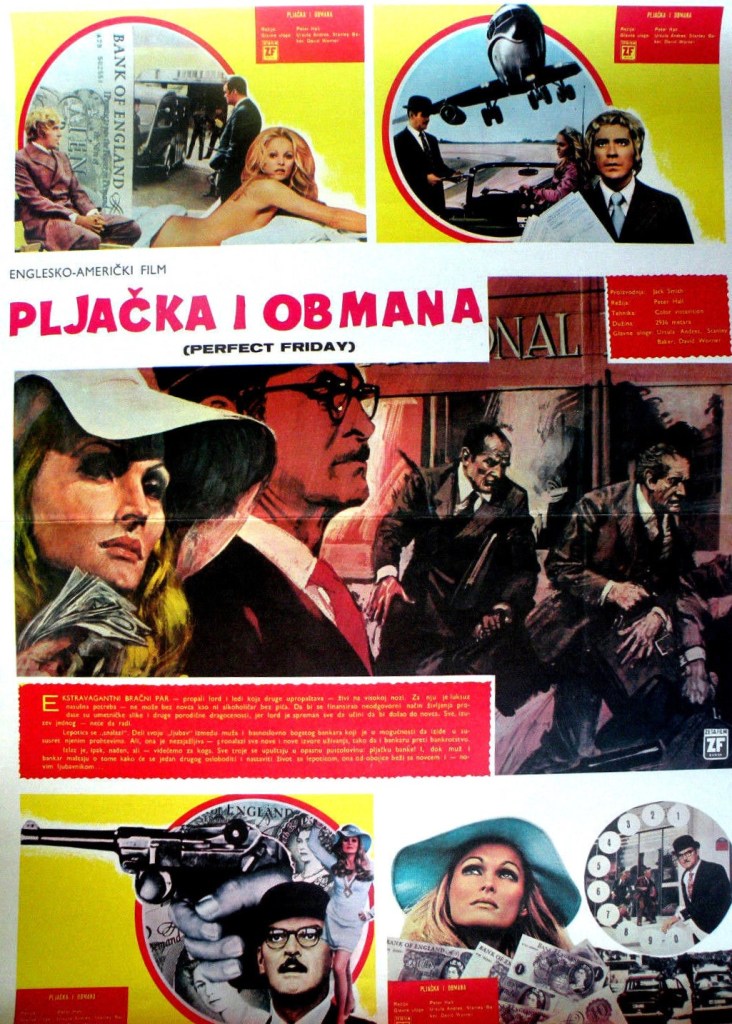
Perfect Friday (1970) ****

Delicious caper movie. Under-rated and largely dismissed because a) it is very British, b) audiences preferred Stanley Baker in an action film like Zulu (1964) and c) it appeared a year after the action-driven heist picture The Italian Job. So many black marks you might think it was an automatic candidate for relegation.

But, in fact, it is a delight, a gem that never outstays its welcome and, furthermore, elicits tremendously enjoyable performances from the three principals, with the added bonus, I guess, of the costume budget being much reduced by Ursula Andress prancing around so much in the nude.

Mr Graham (Stanley Baker) is an uptight, bowler-hatted, spectacled, unmarried, straitlaced banking executive. That’s too fancy a title for his job. He’s not the manager, he’s not even the deputy, he’s the deputy to the deputy (here called an “under-manager”) and his sole joy in life appears to be granting or refusing overdrafts, an action that might, to one of life’s smidgeons, be construed as an exercise in power.

One of his clients is uber-sexy Lady Britt Dorset (Ursula Andress) who, while living in penury, manages to swan around in the most divine outfits and a swanky sports car, mostly as the result of his overdrafts. Although he believes he is tough and worldly it never occurs to him to wonder how his client has the wherewithal to repay the overdrafts.

She is married, but to the equally poverty-stricken Lord Nicholas Dorset (David Warner) whose sole income derives from a daily payment from sitting in the House of Lords and schemes such as attaching his name to a restaurant chain.

It doesn’t strike Mr Graham as particularly odd that Britt takes a fancy to him, infidelity appearing to be written into her marriage vows. And it’s not long before the deputy deputy manager starts to wonder how he might turn this relationship into something more permanent. So he comes up with a clever caper, a three-man job, or more correctly a two-man one-woman job. He’s going to steal £300,000, split three ways, from his bank. Nicholas will pose as a bank inspector, Britt will be the one who physically removes the cash and Mr Graham, naturally, will take on the role of criminal mastermind, finding a way to get hold of the necessary duplicate keys and over-riding the usual security concerns.

For a good while most of the plan consists of keeping the husband out of the way, sent on various “missions” across the country and abroad, to give Mr Graham time to enjoy making love to the wife. There’s an occasional hiccup to the plan, but mostly it appears to be running smoothly.

Except, as you might imagine, double cross is afoot. Mr Graham would like to purloin the husband’s share, all the more to set up cosy home somewhere abroad with the wife. And, as you might expect, there’s a sting in the tale.

But this is all so effortlessly done, tremendous tension as the robbery is carried out in complete silence (as was by now par for the course), jaunty music intervening at other times, the combination of the three opposites making for a delightful scenario, the stuffy manager at odds with the lazy, louche husband, and an unlikely companion for the sexy, apparently docile, wife.

Some clever directorial touches from Peter Hall (Three into Two Won’t Go, 1967) provide unexpected zest, but primarily this is a comedy of manners shifted onto the heist plane. And the best thing about it is the performances.

Ursula Andress (The Blue Max, 1966), here taking top billing, delivers her best-ever performance, the sexy front concealing a clever brain, easily manipulating lover and husband, deceit embedded in her genes, the hard-coiled core hidden from view, as she indulges both herself and her paramour.

Stanley Baker is superb, almost in Accident (1966) stiff upper lip mode, but without, until sex triggers criminality, that character’s free-wheeling attitude and immorality. He lives his entire life in a glass booth, observing and being observed, working within an arcane code of practices, not believing that he, of all people, could actually break the rules.

But David Warner (Titanic, 1997) steals the show as a bored upper-class lord who wants nothing more than a quiet life paid for by someone else and who almost throws a hissy fit when, as part of his role, he is forced to wear clothes he finds demeaning. If it wasn’t for the prize, this whole enterprise would be so much beneath him, and he doesn’t even have the satisfaction of being able to put this underling in his place.

Sheer enjoyment.

Accident (1966) ****

Intellect can present as powerful a sexual magnetism as wealth. And for young women, unlikely to come into the orbit of powerful movie magnates or wealthy businessmen, they are most likely to experience abuse of power in academia, especially in top-notch universities like Oxford and Cambridge or Harvard and the Sorbonne.

Young students, unsure of their place in the world, depend on praise for their self-esteem. To be on the receiving end of flattery from a renowned scholar, a young person (males included) might be willing to overlook other unwanted attention. For young women and men accustomed to being assessed on looks alone this might be a drug too powerful to ignore.

The British system ensured that potential prey was delivered to potential predators. As well as attending lectures, each student was allocated a tutor and could spend a considerable amount of time with them in private in congenial surroundings behind closed doors. And since essays marked by tutors played a considerable element in an overall mark, there was plenty of opportunity for transactional sex.  

And it was easy for women to think they wielded the sexual power. I once employed a woman who boasted that she had seduced her university tutor, little imagining that that took any opposition on his part, and that, in reality, she was just another easy conquest.

So you might be surprised to learn that when this movie about inappropriate behavior in a university of the caliber of Oxford appeared, nobody gave a hoot about the grooming and exploitation of young Austrian Anna (Jacqueline Sassard) by two professors, Stephen (Dirk Bogarde) and Charley (Stanley Baker).

The story is told in flashback in leisurely fashion. Hearing a car crash outside his substantial house in the country, Stephen finds inside the vehicle an injured Anna and her dead boyfriend William (Michael York). Then we backtrack to Anna’s arrival in Oxford, and how the love quadrangle is created. The presence of William suggests Anna has predatory instincts, but there is no sign of sex in their relationship, rather that he is forever frustrated at being kept on a leash and clearly suspecting he is losing out to others.

Stephen, a professor of philosophy, no higher calling in academe, endless discussion on the meaning of life manna to every student, has a purported happy home life, wife Rosalind (Vivien Merchant) pregnant with their third child. He’s no stranger to infidelity, reviving an affair with the estranged daughter Francesca (Delphine Seyrig) of a college bigwig (Alexander Knox).

But he can’t quite make his move on Anna, despite idyllic walks in the fields and their hands almost touching on a fence. The uber-confident Charley, novelist and television pundit in addition to academic celebrity, has no such qualms and seduces her under the nose of his friend and sometime competitor.

When opportunity does arise for Stephen it does so in the most horrific fashion and, that he takes advantage of the situation, exposes the levels of immorality to which the powerful will stoop without batting an eyelid.

The web Stephen is trying to weave around his potential victim is disrupted by William and Charley and if any anguish shows on Stephen’s face it’s not guilt at the grief he may cause or about his own errant behavior but at the prospect of losing a prize.

Director Joseph Losey (Secret Ceremony, 1968) sets the tale in an idyllic world of dreaming spires, glasses of sherry, tea on the lawn, glorious weather, punting on the river, old Etonian games, the potential meeting of minds and the flowering of young intellect.  The action, like illicit desire, is surreptitious, a slow-burn so laggardly you could imagine the spark of narrative had almost gone out.

Stephen is almost defeated by his own uncontrolled desire, taking advantage of his wife entering hospital for childbirth, the children packed off elsewhere, to have sex with Francesca, not imagining that Charley will take advantage of an empty house.

And the young woman as sexual pawn is given further credence by the fact that at no point do we see the events from her perspective.

Anguish had always been a Dirk Bogarde (Justine, 1969) hallmark and usually it served to invite the moviegoer to share his torment. So it’s kind of a mean trick to play on the audience to discover that this actor generally given to playing worthy characters is in fact a sleekit devious dangerous man. Of course, the persona reversal works very well, as we do sympathise with him, especially when relegated to second fiddle in the celebrity stakes to Charley and humiliated in his own attempts to gain television exposure.

Stanley Baker (Sands of the Kalahari, 1965) was the revelation. Gone was the tough guy of previous movies. In its place a charming confident winning personality with a mischievous streak, a far more attractive persona when up against the more introspective Bogarde.

Jacqueline Sassard (Les Biches, 1968) is, unfortunately, left with little to do but be the plaything. There’s an ambivalence about her which might have been acceptable then, but not now, as if somehow she is, with her own sexual powers, pulling three men on a string. In his debut Michael York (Justine, 1969) shows his potential as a future leading man.

You might wonder if Vivien Merchant (Alfred the Great, 1969) was cast, in an underwritten part I might add,  because husband Harold Pinter (The Quiller Memorandum, 1966) wrote the script and Nicholas Mosley, who had never acted before, put in an appearance because he wrote the original novel.

Losey, a critical fave, found it hard to attract a popular audience until The Go-Between (1971) and you can see why this picture flopped at the time despite the presence of Bogarde and Baker. And although it is slow to the point of infinite discretion, it’s not just a beautifully rendered examination of middle class mores, and a hermetically sealed society, but, way ahead of its time, and possibly not even aware of the issues raised, in exploring abuse of power, a “Me Too” expose of the academic world.

The acting and direction are first class and it will only appear self-indulgent if you don’t appreciate slow-burning pictures.


Robbery (1967) ****

The explosive gut-wrenching high octane car chase that kicked off this thriller – and provided British director Peter Yates (Bullitt, 1968) with a Hollywood calling card – is somewhat out of place in this intriguing documentary-style fictionalised account of the British heist of the century, the Great Train Robbery of 1963. Setting aside that the chase would have been better employed as the climax, it does provide the cops with enough leads to keep tabs on some of the criminals, ensuring the authorities become aware of the gigantic theft planned.

But Yates’ unusual approach takes us away from the usual crime picture. You can say goodbye to the cliched villain for a start. Mastermind Paul Clifton (Stanley Baker) dresses like a suave businessman. Wife Kate (Joanna Pettet) rails against him for betrayal, not sexual infidelity, but for pretending he had given up the life of crime. And there is any amount of nuance. We don’t discover that Clifton lives in a huge mansion with a massive drive until the very end, we don’t know who else the police are tailing until they are picked up, we are not let in on the secret of Clifton’s escape until suddenly he is taking off in a light airplane. And there is the unexpected. A suspect is identified in a line-up by a witness slapping his face, a message sent to Kate from Paul via a dog.

Cop James Booth questions gangster’s moll Joanna Pettet.

Nor, beyond the basics, are we let in on the details of the plan, more time spent on recruitment, and not the usual suspects either, Robinson (Frank Finlay) – broken out of prison for this specific job – brought unwillingly on board because, as a former bank employee, he can check the stolen notes. I should point out, which may not be obvious to a contemporary audience, that banks shifted money over the weekend via the London-Glasgow night train that carried the mail. Given the £3 million being transported, the train is staffed not by a regiment of security guards but by postal workers sorting letters.

There’s nothing desperately clever about the plan anyway beyond its audacity. Signals are changed to make the train stop at the allotted point, the robbery takes place in military fashion, timed to the minute, some sacks left behind when time is up.

What’s cleverest is the hideout, an abandoned airfield, with underground passages. The gang doesn’t intend to run while the heat is at its hottest but some time later, the cash divvied up, Clifton’s share sent as cargo overseas. Clifton knows the consequences will involve road blocks, house searches, cars impounded, arrests but “without the money they can’t prove anything.” A junkyard owner is paid – too handsomely as it transpires – to clean the vehicles used of fingerprints and other potential giveaways (not much else in the days before DNA). And no matter Clifton ruling with a rod of iron, there is always the idiot who doesn’t quite stick to the plan.   

Most of the picture is detail, not just the meticulous planning but the equally meticulous hounding by the cops, interrogating getaway driver Jack (Clinton Greyn), identity parades, telephones tapped (or a crude version of it), with only the occasional hunch to keep the police, led by the dogged Inspector Langdon (James Booth),  on the right track. A few years before cops in movies were uniformly identified as either corrupt or useless, sometimes both, this bunch are shown to be relatively efficient, though still prone to underhand means.

Dominating proceedings is the moustached figure of Stanley Baker (Sands of the Kalahari, 1965) whose brusque no-nonsense manner sets the tone. He’s a cut above the normal criminal not just in ambition but ingenuity and while he rules the roost in the gang he’s less at home at home where Kate gives him a hard time. James Booth (Fraulein Doktor, 1969) is impressive as the pursuer, well-versed in gangland lore, inclined to look beyond the obvious. With only  a few scenes Joanna Pettet (The Best House in London, 1969) makes a mark.

In supporting parts you will spot Barry Foster (The Family Way, 1966), who seems to have the knack of catching the camera’s attention with a look or the turn of his head, and Frank Finlay (A Study in Terror, 1965), and a host of British character actors like George Sewell (The Vengeance of She, 1968) and Glynn Edwards (The Blood Beast Terror, 1968).

But the honors go to Peter Yates (Summer Holiday, 1963), not just for the stunning car chase which Hollywood would forever emulate, but the constant tension, the cutting back and forth between cops and robbers, and between the overtly dramatic and the subtle. He also had a hand in the screenplay along with George Markstein (The Odessa File, 1974) and in his only movie Edward Boyd (The View from Daniel Pike, 1971-1973).

Discover WordPress

A daily selection of the best content published on WordPress, collected for you by humans who love to read.

The Atavist Magazine

by Brian Hannan

WordPress.com News

The latest news on WordPress.com and the WordPress community.