Two Weeks in September (1967) ***

Soubriquets were not common currency in Hollywood. Names might be shortened to a Christian name or a surname, as in Marilyn or Garbo, and occasionally a reporter might suggest an unlikely familiarity by referring to a star as “Coop” and for sure Bogie must have been desperate for people to call him anything other than Humphrey, hardly a name that spun off the tongue for a supposedly hardbitten hero eschewing his middle-class origins. But the world swung on its axis when simple use of the star’s initials were enough to guarantee universal acceptance.

BB was born on a wave of controversy. After And God Created Woman (1956) broke box office records all over the world, a star was born. But one who seemed to live as much on the pages of newspapers as on the screen. She could forever be guaranteed to provide a revealing photograph to spice up the more puritan newspapers.

But BB’s global fame didn’t translate into worldwide box office in part because her movies were mostly X-certificate in the U.K. and, being made generally by foreign companies, slipping past the Production Code in the U.S. and therefore into arthouses or shady emporiums in both countries rather than mainstream houses.

This isn’t the best introduction to her canon, but in many senses it’s pretty typical. The camera adores BB and shuns anyone else in her presence. There’s not much story here – bored wife dashes off to a model assignment in London and has an affair and can’t decide whether he’s ready for divorce.

To fill in the time we get plenty Carnaby St fashion shoots, certainly put into the shade by the likes of Blow-Up (1966), but of the kind that used to be so common, beautiful women in outlandish clothes against backdrops like zoo animals or suits of armor and all the while flirting with photographers and being chatted up in night clubs by all and sundry. As you might expec, red buses and mini cars are common, though the chances of a cop on horseback at night seems to stretch it a bit.

Cecile (Brigitte Bardot) seems too lively for staid husband Philippe (Jean Rochefort) and burdens him with ensuring her happiness. But he seems, I guess unusually for the time for such a wealthy character, to be happy for her to continue in her profession. She’s never been unfaithful unlike model buddy Patricia (Georgina Ward). But all this cavorting brings out the lech in photographer Dickinson (Mike Sarne) and while she flirts with him she fancies for no apparent reason the doe-eyed Vincent (Laurent Terzieff) although his doe-eyed dog is livelier.

Anyway, off they go to Scotland for a romantic idyll since every filmmaker in the world has been duped by Scottish Tourist Board fantasies of sunshine, tartan, heather and miles of unspoiled beaches (unaware they are empty because the natives have more sense than to go diving into icy water in freezing temperatures). Mostly, what they get is damp streets and grey skies, though if you have BB romping  in the water then nobody’s really going to notice the awful weather. And, naturally, the highways and byways are filled with tartan-clad gents so Brigadoon rides again.

Not quite sure how “To Their Heart’s Content” – clumsy in translation as it is –
is turned into the dull “Two Weeks in September.” Though she hardly seems happy in the poster.

In any case, by the time September comes round, the sun has already packed up for the winter in Scotland, so there’s your get-out-of-jail-card in the title. Not much happens in Scotland either, mostly soulful camera work, soulful BB and dull-as-ditchwater Vincent. There’s a contrived ending.

What impresses most is how little BB you need to make a picture work, even one as patchy as this. It is almost the same template as an Elvis picture minus the songs. Just like BB, Elvis scarcely required a working script, just any excuse to get him on screen. Some stars possess screen charisman that it’s impossible to shift. Shame it was left to Serge Bourguignon (The Picasso Summer, 1969) to get more out of the faint storyline because he  was never that bothered with narrative and inclined just to get by on close-ups and scenery. With BB she was as much scenery as audiences ever seemed to require.

Hardly falls into the recommended bracket but nonetheless an interesting example of how Bardot could get away with the mildest of trifles.
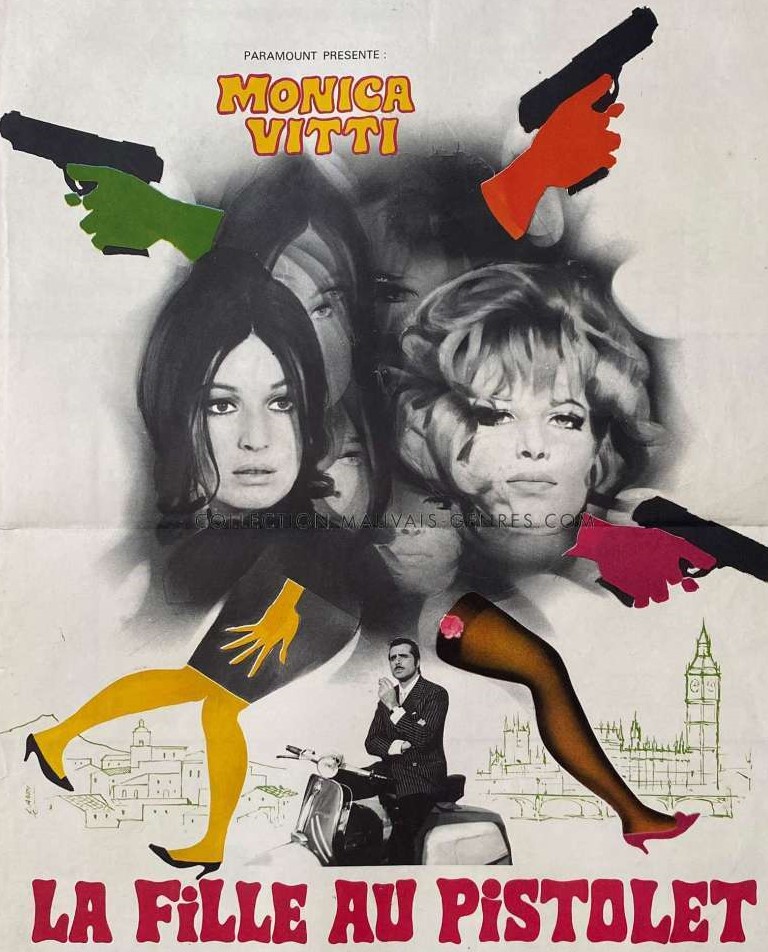
Girl with a Pistol (1968) ****

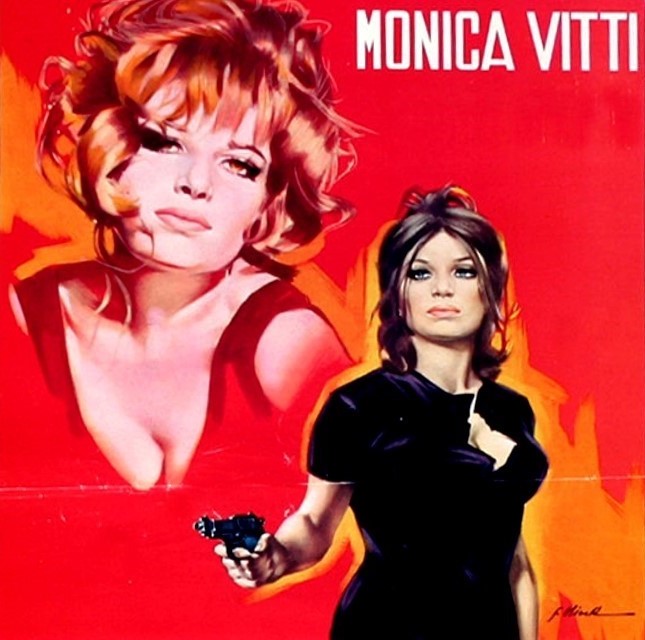
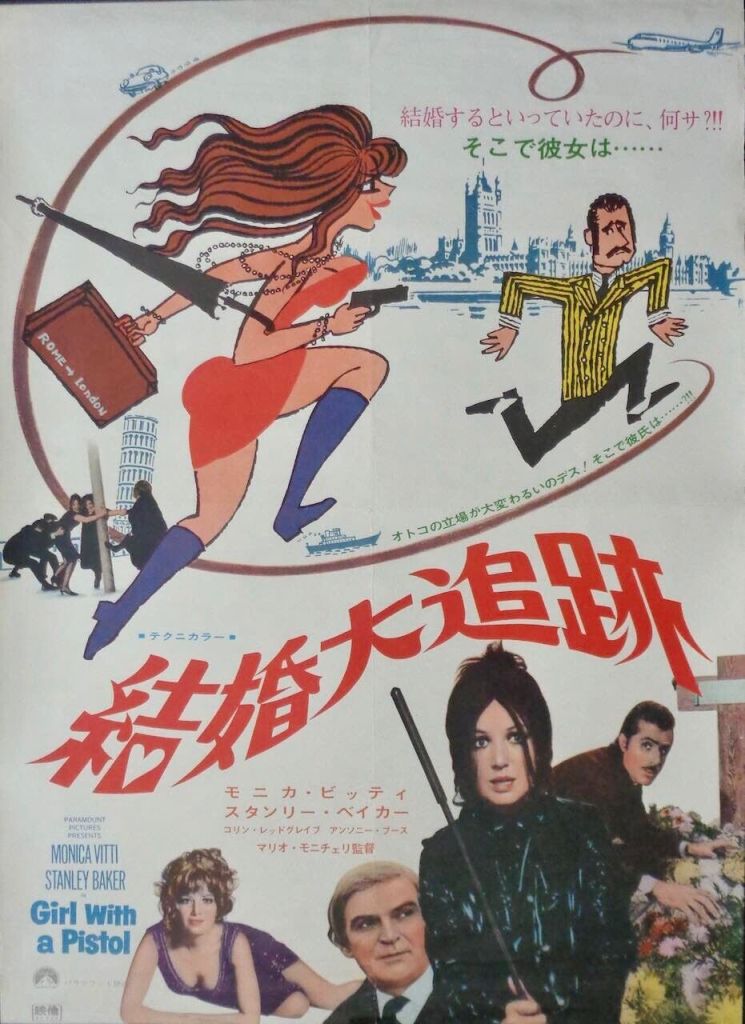
Off-beat Oscar-nominated comedy-drama that is both a marvelous piece of whimsy and a slice of social realism set in the kind of Britain the tourist boards forget, all drizzle and grime. It zips from Edinburgh to Sheffield to Bath to London to Brighton to Jersey as if the characters had been dumped from an If It’s Tuesday It Must Be Belgium sketch. If your idea of Italy was Fellini’s glorious decadence or Hollywood romance amid historic ruins and fabulous beaches, then the upbringing of Assunta (Monica Vitti) is the repressive opposite.

All women in her small town wear black. Men are not allowed to dance with women and must make do with each other. A man like Vincenzo (Carlo Giuffre) desiring sex must kidnap a woman, in this case Assunta, to which she will consent as long as he marries her. When instead he runs off to Scotland, she is dishonored and must kill him, armed with the titular pistol.

Pursuit first takes her to Edinburgh and a job as a maid, has a hilarious encounter with a Scottish drunk, and various other cross-cultural misinterpretations – in a bar she cools herself down with an ice-cube then puts it back in the bucket. Then it’s off   to Sheffield where she falls in with car mechanic Anthony Booth (television’s Till Death Do Us Part) because he is wearing Italian shoes.

She can’t imagine he can watch sport for two hours. “You’re a man, I’m a woman, nobody in the house and you look at the television.” Although tormented by images of being attacked back home by a screaming mob of black-robed women, she begins to shed her inhibitions, wearing trendier clothes, although an umbrella is essential in rain-drenched Britain and given the Italian preference for shooting exteriors.  

In between sightings of Vincenzo there are episodes with a suicidal gay man (Corin Redgrave) and a doctor (Stanley Baker). She becomes a nurse, then a part-time model, sings Italian songs in an Italian restaurant, drives a white mini, wears a red curly wig and more extravagant fashions. It turns out she can’t shoot straight. Gradually, the mad chorus of home gives way to feminist self-assertion as she becomes less dependent on men and a world run by chauvinists. It’s a startling mixture of laugh-out-loud humor and social observation. And while the narrative that at times verges on the bizarre, Assunta’s actions all appear logical given her frame of mind.

Vitti was Italian director Michelangelo Antonioni’s muse (and companion) through  L’Avventura (1960), La Notte (1961) and L’Eclisse (1962) to Red Desert (1964). She had a brief fling with the more commercial, though still somewhat arty, movie world in Joseph Losey’s Modesty Blaise (1966) and the nothing-artistic-about-it comedy On the Way to the Crusades (aka The Chastity Belt, 1968) with Tony Curtis. Director Mario Monicello had two Oscar nominations for writing but was best-known for Big Deal on Madonna Street (1958) and Casanova ’70 (1965). Girl with a Pistol was nominated in the Best Foreign Language film category at the Oscars.

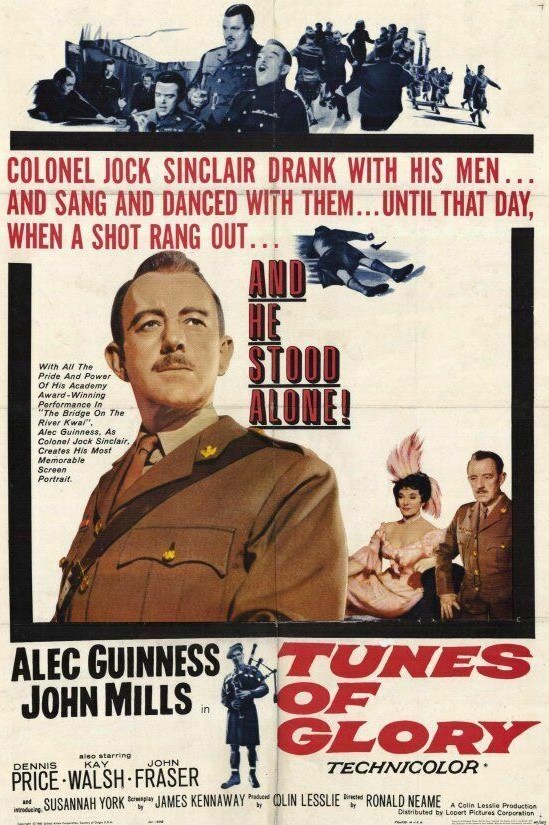
Tunes of Glory (1960) ****

Fans of Succession will appreciate this power struggle in a Scottish army regiment set in 1948. In a reverse of The Godfather (1972) where the Corleones complain about needing a “wartime consigliore,” here the powers-that-be have decided this unnamed distinctly Highlander company requires a commanding officer with skills more appropriate to peace time.

Major Jock Sinclair (Alec Guinness) has been in charge of the battalion since the North Africa campaign in World War Two when the original commander was killed. But he has never been promoted to full Lt. Col. Naturally, having been in charge for six years, he feels the job should be his. At a time when the currency of command was wartime experience he’s less than pleased when he loses out to Col. Barrow (John Mills) who spent most of the war as a Japanese POW.

It doesn’t help that they are complete opposites. Sinclair is a tough, hard-drinking, attention-seeking Scotsman who enlisted as an ordinary soldier and rose through the ranks winning two medals for courage during the conflict. Barrow is Oxford-educated English upper-class, a lecturer at Sandhurst Military Academy, and recalls his war experience with terror rather than the braggadocio of Sinclair. Worse, he doesn’t drink.

It doesn’t take long for the pair to clash. Sinclair, who has ruled as much by preying on weakness as force of personality, is quick to start to look for flaws in his opponent’s make-up. Barrow feels discipline has been slipping and enforces tougher measures. That might make him unpopular but an army is built on discipline so soldiers can hardly complain.

But Barrow slips up by misreading the men. He chooses the worst of all issues to make a stand. For the first post-war official barracks party, Barrow insists the soldiers embark on traditional Highland dancing in regulation fashion rather than in their normal exuberant, not to say rowdy, manner. The soldiers are infuriated when Barrow insists they take lessons.

He has just lit the fuse. Naturally, nothing goes according to plan. Barrow is humiliated, Sinclair triumphant. But victory does not turn out the way Sinclair expected.

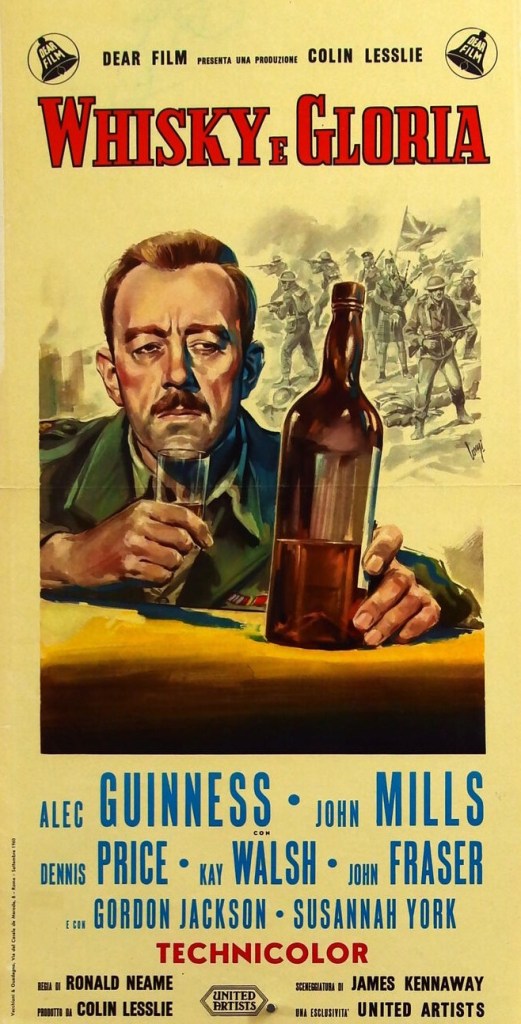
Somewhat cynical rebranding of the film in Italy as “Whisky and Glory,” possibly trying to cash in on the success of “Whisky Galore” and also misleading in suggesting actual conflict with the fighting in the background.

The main thrust of the narrative, as you might expect, is the stand-off between Sinclair and Barrow and the tensions felt all round, as would be the case in any business (Succession, now, of course the classic example) when a new boss takes control. While everyone might expect, and perhaps fear, change, in the military (as in the navy) there is always the danger, should the new broom try to sweep too clean, of mutiny.

This might not amount to a raising of arms. But there are other effective methods of mounting opposition – laxity, questioning or outright refusal to obey orders – or giving the new chief the cold shoulder. Here, in the background, are other simmering tensions. Not everyone is comfortable with Sinclair’s very laddish approach to command, the back-stabbing and double-dealing Major Charles Scott (Dennis Price) ready to pounce at any opportunity.

Sinclair is also having to deal with his daughter Morag (Susannah York) asserting her independence, having the temerity not just to take a boyfriend, Corporal Fraser (John Fraser), but one from the ranks rather than the officer class. And he feels the harsh tongue of his own paramour Mary (Kay Walsh).

Emotional isolation is rarely commented upon in matters of the armed forces and yet it is so much a driving force. If not adequately compensated by camaraderie, a man at the top can be very lonely indeed, and prone to the most vicious self-torment.

Director Ronald Neame (The Prime of Miss Jean Brodie, 1969) superbly invokes an army atmosphere away from the more usual battleground backdrop. The picture is anchored by brilliant performances all round and a roll-call of strong supporting characters. An unflinching look at power, especially leadership and the personal toll it takes. And it was astonishing that the movie could hit the target so well without relying on the usual round of sex, violence or that old stand-by the comic subordinate. It also probes the issues of what happens – in any industry – when the wrong person is put in charge. No less an authority than Alfred Hitchcock called it “one of the best films ever made.”

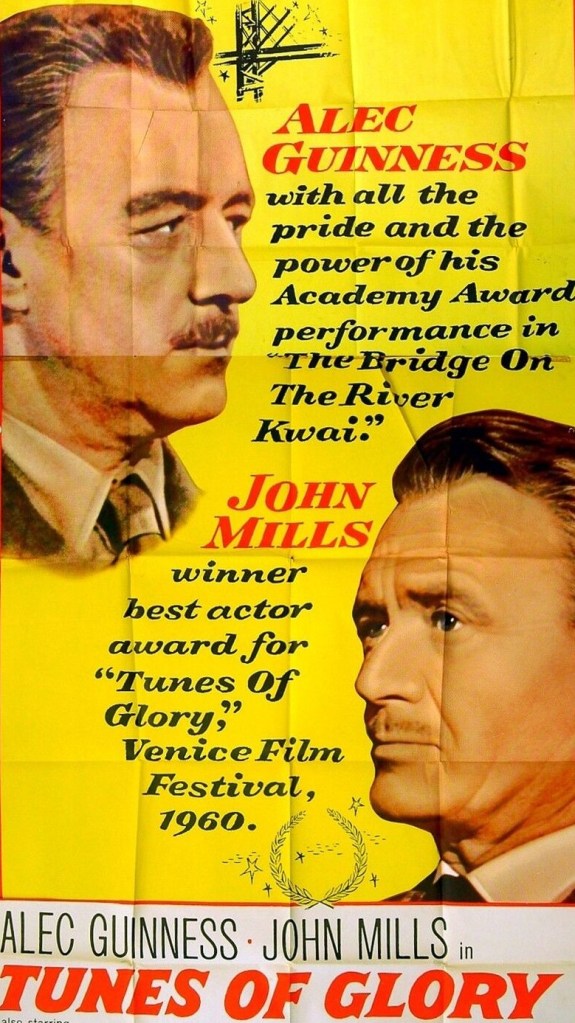
The sparring between Oscar-winning Alec Guinness (The Quiller Memorandum, 1966) and John Mills (The Family Way, 1966), who won the Best Actor Award at the Venice Film Festival for this role, is of the highest quality. Dennis Price (The Comedy Man, 1964) is the pick of the support while Susannah York (Sands of the Kalahari, 1965) makes an auspicious debut.

Few films could boast a better supporting cast: former British leading lady Kay Walsh (A Study in Terror, 1965), Gordon Jackson (The Ipcress File, 1965), Duncan Macrae (Best of Enemies, 1961), John Fraser (Tamahine, 1963), Gerard Harper (Adam Adamant Lives!, 1966-1967, TV series) and Peter McEnery (The Moon-Spinners, 1964).

James Kennaway (The Shoes of the Fisherman, 1968) wrote the screenplay based on his own novel.

The Last Bus (2021) *** – Seen at the Cinema

As we saw with Stillwater, great performances can rescue films. And there are two stunning performances on show in this alternative road trip, one from star Timothy Spall (Mr Turner, 2014) and another in a blink-and-you’ll-miss-it scene from supporting actress Grace Calder. The story here is pretty slim, Tom, aged over 90, sets out on 800-mile pilgrimage by bus from John O’Groats at the very top of Scotland to Land’s End at the very south of England. The trip’s purpose is concealed until the climax but hardy cinemagoers will easily guess it. He has various encounters along the way. That’s it, pretty much.

Most films about the old have redeeming features, a charming character and if grouchy with a last chance at redemption, and if played by a star generally bring with their performance a whole parcel of screen memories that have an audience rooting for them. Tom ain’t like that. He’s old the way really old people are old. He’s not an attractive sight. His bottom lip sticks out most of the time like an aged trout. He shuffles along, in battered old clothes clutching a battered old suitcase. Most of the time he’s out of his depth, occasionally rescued by passersby, occasionally not.  

The most you can say about him is he has grit, standing up to a drunk abusing a Muslim, fixing a broken-down bus, offering a shoulder to cry on to a weeping teenager. In another time, in another place, such characteristics would have propelled a story. Here, they are mere makeweights. He’s so self-effacing he’s easy to ignore.  

Scottish director Gillies Mackinnon (Whisky Galore, 2016) takes the bold decision not to make him overly sympathetic. Scenes that would have been played for all they were worth in any other film almost pass without comment, just minor ingredients in a larger tapestry. The most Tom achieves is retaining dignity at a time when body and mind are starting to betray him.

That this is just the smallest of small pictures is amply demonstrated when, trapped between a bunch of rowdy boys enjoying rowdy banter with a hen party, he starts singing “Amazing Grace.” Tom doesn’t have an amazing voice. He doesn’t even seem to recognise that he gradually attracts an audience. He is in a world of his own. And the director lets him stay there.

I was so convinced by Timothy Spall’s performance that I hoped they had used a stunt double to film a scene when he has to gingerly negotiate a path down rugged rocks. I had not realised that Spall is only 64 and not close to the aged specimen I had been watching. Spall has that quiet genius of the great actors even though rarely given a leading role and if you recognise him at all, unless you are an arthouse devotee, it will be from The Last Samurai (2003) or Vanilla Sky (1999).  

What of Grace Calder? Occasionally I deliver lectures on film and in one of these I use the final scene of Greta Garbo in Queen Christina (1933) to demonstrate the power of female close-ups, how women far more than men are capable of a greater range expression, showing a shifting series of emotions through their eyes. And I saw that same astonishing quality in Grace Calder (Love Sarah, 2020). She appears as the lover of an arrogant male who taunts Tom in a B&B. As she reins her lover in, her eyes rapidly change in a matter of seconds to conveying a depth of different emotions.  None of the other actors, who are all fleeting two-dimensional cameos, come anywhere close in a part that was not a part until she made it so memorable.

Most critics have been pretty sniffy about The Last Bus and you can see why. Television writer Joe Ainsworth making his movie debut tries too hard for diversity, the social media trope sticks out like a sore thumb, affords overmuch footage of glorious Scottish landscape to recompense Creative Scotland for its financial input, and never quite resolves the question of how a 90-year-old guy who can hardly manage a bus pass manages to work out a convoluted route in at least a dozen local buses to retrace a route he took 70 years before.

But it is all held together by a stunning performance by Spall.  

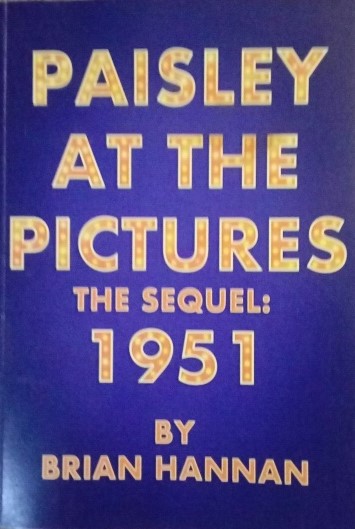
Books by Brian Hannan – “Paisley at the Pictures, The Sequel, 1951”

A couple of years ago, I wrote a book about cinemagoing in 1950 in my local town of Paisley in Scotland which at that time had eight cinemas screening over 1200 movies a year to the 93,000 inhabitants. Six of the theaters were first run and two second-run. A standard program consisted of main feature, supporting feature, newsreel and cartoon and in two cinemas a serial.

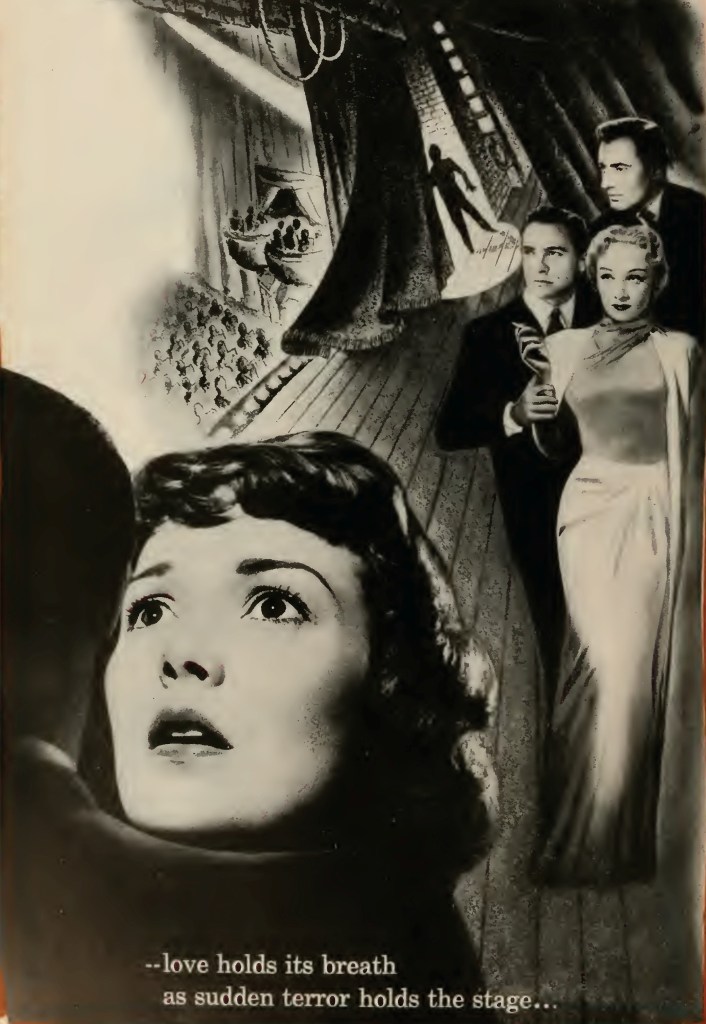
Jane Wyman in Hitchcock’s Stage Fright.

I got so engrossed in my research for this book that I went back to the source a second time and examined what happened in pictures houses for the following year. This treasure trove of cinematic memories turned into a bigger book with double the number of illustrations and also included a section on reminiscences and a look back to when the two biggest cinemas in the town had opened in the 1930s.

Anyone who was born outside the capital cities of their countries and a few other major cities besides will know that way into the 1970s there was a food chain in operation for movie distribution. Although the reference books and Imdb will show movies as having been made, for example, in 1951, most cinemas would not get to screen them that year. In Paisley, for example, only 11.5 per cent of the movies made in 1951 appeared in the town during the same year. More people went to the movies in those days than now – two or three times a week was not uncommon.

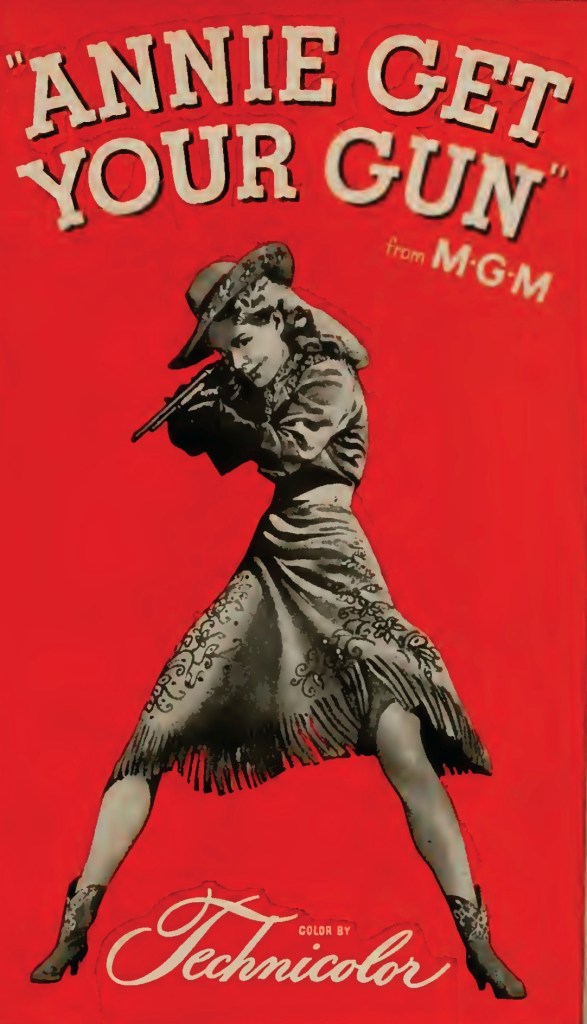
The biggest films of 1951 in Paisley included musical Annie Get Your Gun, marital comedy Father of the Bride with Spencer Tracy and Elizabeth Taylor, Deborah Kerr and Stewart Granger in MGM blockbuster King Solomon’s Mines, Gregory Peck as Captain Horatio Hornblower, John Wayne and Maureen O’Hara in John Ford western Rio Grande and Greer Garson in sequel The Miniver Story.

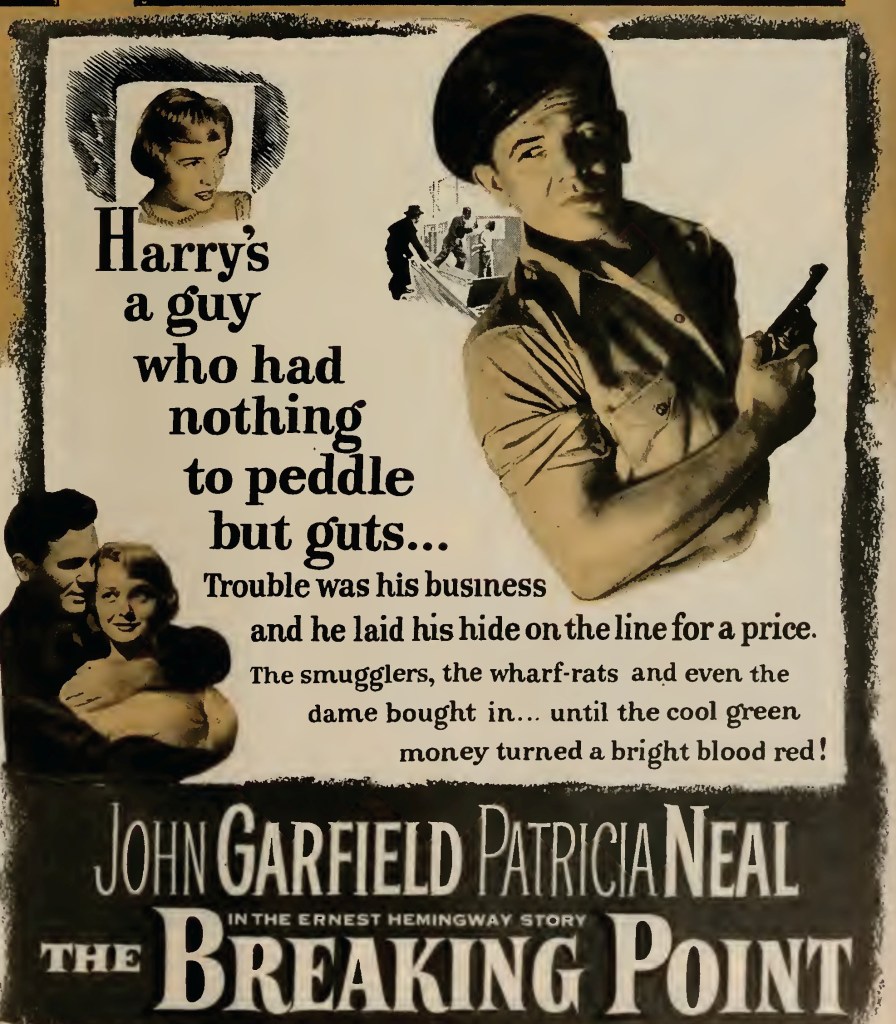
Also topping the popularity league were Mario Lanza in biopic The Great Caruso, British war film Odette starring Anna Neagle, Alfred Hitchcock thriller Stage Fright with Jane Wyman and Marlene Dietrich, Anglophile Douglas Fairbanks Jr. in thriller State Secret, David Niven musical Happy-Go-Lovely (filmed in Edinburgh), Cecil B. DeMille Biblical epic Samson and Delilah, John Garfield in The Breaking Point – a surprisingly speedy remake of To Have and Have Not – and comedy duo Dean Martin and Jerry Lewis in At War with the Army.

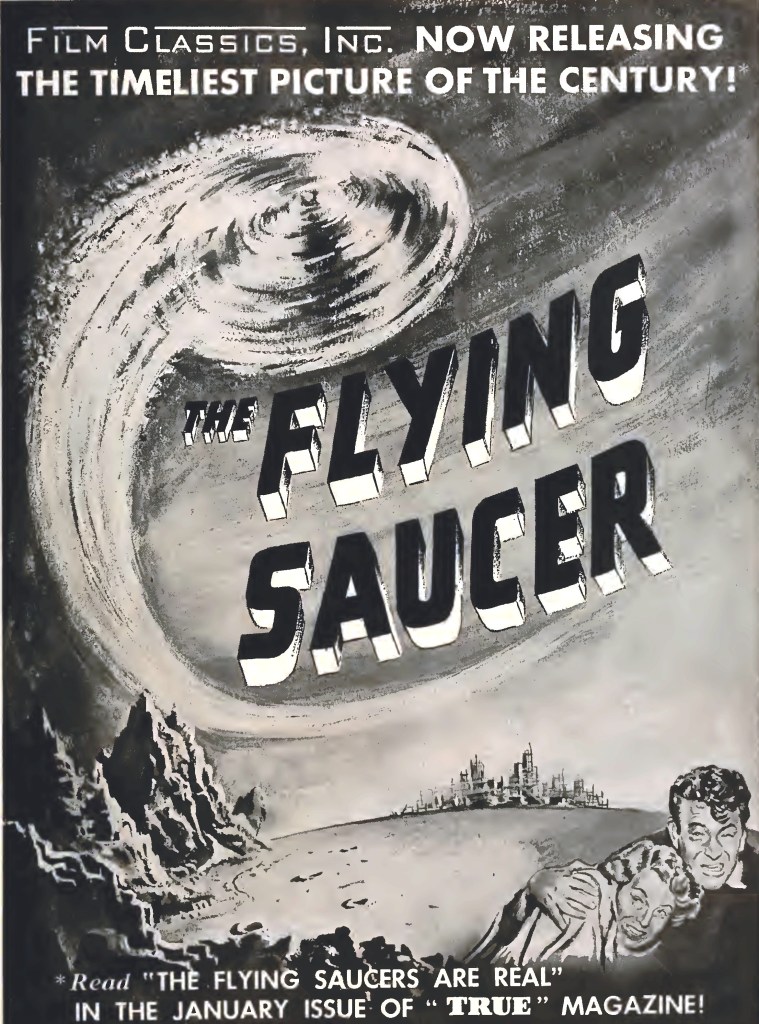
The beginnings of the sci-fi boom.

The year’s number one star in Paisley was Jane Wyman – judged on how many days her pictures played in the town. In second spot came John Wayne. Joan Bennett was third. Glenn Ford and Virginia Mayo rounded out the top five. Cowboy star Gene Autry topped the B-movie brigade.

Among the serials show were Batman and Robin, The Purple Monster Strikes, Atom Man vs. Superman, King of the Rocket Men, The Adventures of Sir Galahad, Flash Gordon’s Trip to Mars, The Monster and the Ape, Pirates of the High Seas and The Daughter of Don Q.

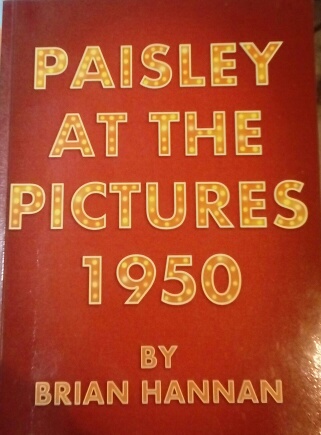
Books by Brian Hannan – “Paisley at the Pictures 1950”

Although this Blog focuses on films made in the 1960s, I have written various business histories of Hollywood as well as this book about cinemagoing in 1950 in the town where I live. Paisley, in Scotland, at that time had eight cinemas for its 93,000 inhabitants. Over 1200 movies were shown that year in the town, far more than you would see at your local picture house these days. Six of the cinemas were first-run and two were second-run. Most cinemas changed their programs mid-week, but one house, the Astoria, changed its program three times a week.

Although national statistics on the annual popularity of films and stars are readily available, what is less known is that the experiences of few cities or towns fitted in with that. Each area had its own favorite movies and stars. In Paisley, in 1950, for example, the top star was Virginia Mayo followed by Abbott & Costello and John Wayne. Less than 10 per cent of the films shown were British. And, unlike today, when movies are shown everywhere all at once, less than 10 per cent of the movies seen in Paisley in 1950 were released in 1950. So it was quite a different experience to the present era. You could still see serials as part of the program and series characters like Blondie, Charlie Chan, Hopalong Cassidy, Tarzan and Bulldog Drummond were regularly shown.

There are over 50 illustrations and the book also includes a list month-by-month cinema-by-cinema of all the films shown in Paisley that year.

Discover WordPress

A daily selection of the best content published on WordPress, collected for you by humans who love to read.

The Atavist Magazine

by Brian Hannan

WordPress.com News

The latest news on WordPress.com and the WordPress community.