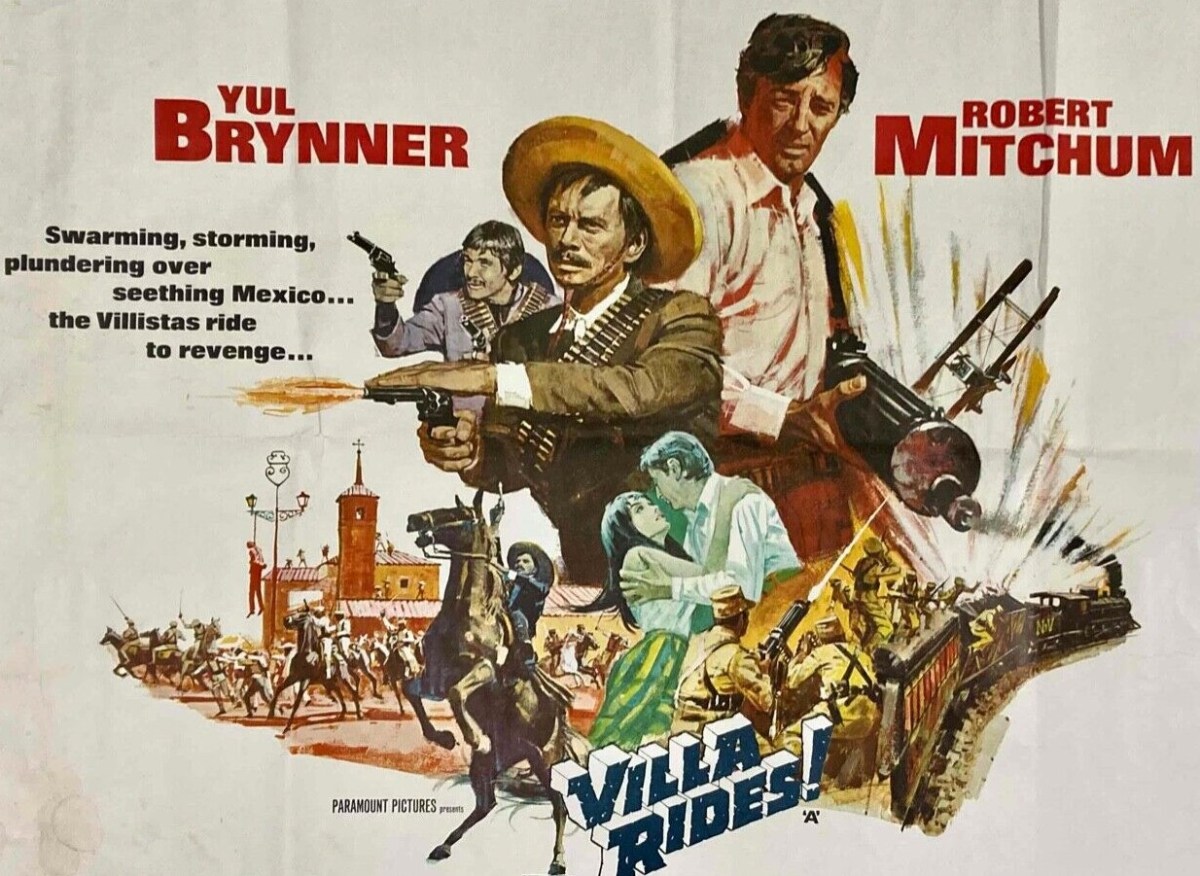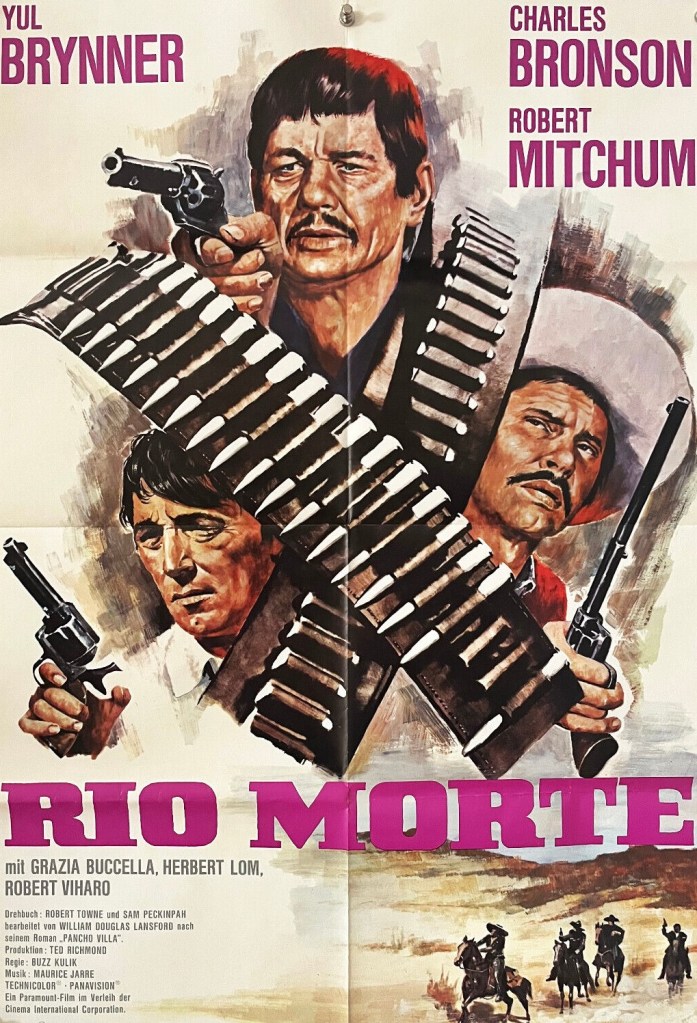
Behind the Scenes: “The Sons of Katie Elder” (1965)

The property had been bouncing around Hollywood for over decade. It had its origins in the true-life tale of the five Marlow brothers involving murder, revenge, and jailbreak, the story making national headlines when the case was heard at the U.S. Supreme Court in 1892. Based on the book The Fighting Marlows by Glenn Shirley,William H. Wright (Assignment in Brittany, 1943) shopped around a screenplay, jointly written with Talbot Jennings (Northwest Passage, 1940), that was purchased by Paramount in 1955.

Alan Ladd (Shane, 1953), who owed the studio a movie, was cast in the lead and the script went through rewrites by Frank Burt (The Man from Laramie, 1955) and Noel Langley (Knights of the Round Table, 1953) with shooting scheduled for 1956. John Sturges (The Magnificent Seven, 1960) was set to direct until Ladd quit, having bought his way out of his contract. Burt Lancaster (The Train, 1966) was brought in as his replacement.

When Lancaster dropped out, producer Hal Wallis took over the movie in 1959 and considered replacing him with James Stewart (Shenandoah, 1965) or Charlton Heston (The Hawaiians, 1970) with Dean Martin (Rio Bravo, 1959) as the second lead. But still the movie stalled for another five years before Wallis settled on John Wayne who signed on for $600,000 plus a one-third share of the profits and one-third ownership of the negative (a bounty that would continue to pay off through reissues and leasing to television). Henry Hathaway was paid a flat $200,000.

Wayne and Hathaway had history dating back to The Shepherd of the Hills (1941) based on the million-copy bestseller by Harold Bell Wright, and groundbreaking in its use of Technicolor, then in its infancy. They didn’t work again until desert treasure hunt Legend of the Lost (1957) which teamed Wayne with Sophia Loren. A few years later came North to Alaska (1960) followed by Circus World / The Magnificent Showman (1964).

Despite this long-term relationship, the most the director could offer about his star was that “Wayne is more particular about the pants he wears than anything in the world…unless he gets the thinnest kind of material it drives him crazy.”

When the script was finally knocked into shape, the Marlow siblings had been trimmed from five to four, and that family had been replaced by the Elders, a nod to western aficionados who would recognize the name Katie Elder (“Big Nose Kate”), occasional companion of Doc Holliday whose story Wallis had previously filmed as Gunfight at the O.K. Corral (1957). Even though Elder wasn’t dead enough – she lived till 1940 – to conform to this picture, it seemed an odd decision to choose that name unless resonance was expected.

But it was still far from a done deal because Wayne’s cancer threatened to scupper the picture. Start of shooting scheduled for October 20, 1964, was shuttered when the disease was diagnosed on September 13 following the completion of Otto Preminger WW2 epic In Harm’s Way (1965). Aware surgery might jeopardize the picture, Wayne suggested Wallis replace him with Kirk Douglas (Cast a Giant Shadow, 1966).   

Hathaway rejected the notion, but while neither star nor producer had any idea whether the operation would be successful, and whether Wayne would be even fit enough to work, or – God forbid, that the actor might already have made his last picture – Wallis took an optimistic approach and announced the picture would be delayed for a month and “even a little later.” Hathaway’s optimism was based on the fact that he had survived colon cancer a decade before.

At least the surgeon moved fast, operating four days after diagnosis, and again five days later. As well as fighting the damage surgery and pain had done to his body, Wayne found himself slipping into depression, convinced the operation would render him unemployable. “I’ll never work again if they find out how sick I am. If they think an actor is sick, they won’t hire him,” he said, a legitimate observation given the cost of shutting down a picture should the actor be unable to play his role.

Wallis’s business partner Joseph Hazen shared Wayne’s pessimism and urged the producer to recast with either William Holder (The 7th Dawn, 1964) or Robert Mitchum (The Way West, 1967). Paramount, too, fretted about insurance, the studio couldn’t risk hiring an uninsurable actor. Wallis refused to abandon Wayne and the studio finally agreed to tough conditions from the insurance company. So, on January 6, 1965, the principals gathered in Durango to commence the 46-day shoot on a production budgeted at $3.19 million.

The high elevations – 8,500 ft in places – were not conducive to someone recovering from a lung cancer operation and Wayne found it difficult to breathe. It didn’t help that on the fourth day of shooting Wayne was expected to jump into icy water for the sequence where the brothers were ambushed by the villains. It didn’t help, either, that Wayne was too big to wear a rubber suit to stave off the cold like his fellow actors.

Wayne never complained that Hathaway “worked me like a damn dog.” He realized that it “was the best thing ever happened to me. It meant I got no chance to walk around looking for sympathy.” The star put on a brave front, publicly acknowledging his battle with cancer as a way of giving hope to others while privately terrified not so much of dying but of being helpless. “I just couldn’t see myself lying in bed…no damn good to anybody.”

“He had to be the macho man,” commented Earl Holliman (The Power, 1968), a late substitute for original star Tommy Kirk (Swiss Family Robinson, 1960) who was sacked after being caught smoking marijuana, “he had to have more drinks than the next guy.” And despite the severity of his condition, and although publicly pretending he had given up tobacco, he continued smoking cigars.

Recalled Dean Martin (Rough Night in Jericho, 1967), “He’s two loud-speaking guys in one.” George Kennedy (Cool Hand Luke, 1967) asserted, “If you put him in a group with other movie stars, the eye went to him and that is the ultimate marker of respect. He was John Wayne. He was very real. It didn’t matter if he wasn’t Olivier; Olivier wasn’t John Wayne.”

But there were outward signs of the effect the illness had upon him. He was less sure of himself on a horse, riding with a shorter rein out of fear a horse would get away from under him, trying to minimize the chances of falling or being bucked from the animal. And as the film wore on, an oxygen inhaler was set up beside him on set.

Dennis Hopper (Easy Rider, 1969) was wary of working again with Hathaway after a difficult experience with him on From Hell to Texas (1958) starring Don Murray and Diane Varsi where the actor suffered the indignity of endless takes. Hopper quit three times and for good measure the director put the word around and virtually grounded the actor’s career. Hopper only made one movie in six years. In the interim he had married Brooke Hayward, daughter of actress Margaret Sullavan whom Hathaway respected, and peace was brokered.  

Although on his best behavior on the shoot, Hopper was no less impressed. “He was a primitive director, he rarely moved his camera, the movement came from the actors.”

“Westerns are art,” declared Wayne. “They’ve got simplicity and simplicity is art…There’s simplicity of conflict you can’t beat…Westerns are our folklore and folklore is international…In Europe they understand that better than we do over here. “

Whether it was public sympathy for an ailing star and his resolve to fight cancer, or audience delight that he was back in a western after a gap of a few years, The Sons of Katie Elder was a huge hit with $5 million in initial rentals (what studios were left with after cinemas had taken their share). It earned more later in reissues but that initial sum was enough for thirteenth spot in the annual box office rankings though beaten by both Shenandoah and Cat Ballou. Its foreign earning would probably match domestic, to make it one of Wayne’s biggest earners for the decade.

SOURCES: Scott Eyman, John Wayne: His Life and Legend (Simon and Schuster Paperbacks, 2014) p111, p387-396 ; Ronald L. Davis, Duke: The Life and Image of John Wayne (University of Oklahoma Press, 1998) p266; Hal Wallis Collection, Margaret Herrick Library; Hedda Hopper, “Ladd To Star in Film of Pioneers’ Reunion,” Chicago Daily Tribune, November 9, 1955, p16; Thomas M. Pryor, “Hecht-Lancaster Obtains 2 Novels,” New York Times, January 12, 1956, p22; Oscar Godbout, “TV Movies Extras Get Salary Rises,” New York Times, July 3, 1956, p17; John Wayne, “Me? I Feel Fine,” Los Angeles Times, January 18, 1965; James Bacon, “Wayne’s Biggest Bout vs. Killer Cancer,” Los Angeles Herald Examiner, March 14, 1965; Roderick Mann, “John Wayne – A Natural as The Shootist, Los Angeles Times, March 7, 1976.

Mister Moses (1965) ***

The “lost” Robert Mitchum picture, never seen on VHS or DVD, but now turning up on YouTube.

Elephants have little proven appeal for audiences. From Dumbo (1941), Hannibal (1960), Billy Rose’s Jumbo (1962) and Hannibal Brooks (1968) through to Dumbo (2017) and Babylon (2022), the story is one of negative impact on box office. Baby elephants are maybe a different story – see Hatari! (1962)  – but there’s very little that’s cuddly about the adult version and their main purpose appears to be to annoy a major stars initially and then go on a rampage that either hinders or helps said star. If you’re acquainted with elephants, you’ll notice this is of the tameable Asian variety rather than the untamed African.

The unnamed beast here would fall into the former category except the eponymous Mister Moses (Robert Mitchum) – real name Joe – can talk to the animal in a language it understands and persuade it to show off its parlor tricks, enhancing Moses’s status among a small  community in Kenya. Moses is a con-man-cum-diamond smuggler, rescued from a river, specifically the reeds growing there that offer a Biblical connection to the natives.

The Bible plays a significant role here, though the natives don’t fall for the Noah story as explained by missionary (Alexander Knox). They are, like Native Americans, being driven off their land by the arrival of a dam which will flood their traditional grounds. Their cattle have not been included in the grand plan to airlift the entire community. So they refuse government help, hence the need to embark on a 300-mile trek.

Moses, a dodgy character with “an allergy to badges of authority”, is blackmailed by the missionary’s daughter Julie (Carroll Baker) and ends up doing the job of her fiancé, district commissioner Robert (Ian Bannen), to shift the natives off their land. He’s got some parlor tricks up his sleeve, too, including a flame-thrower which, again the old Biblical touch, he can employ to burn a bush, thus endearing himself as a leader.  

Naturally, enough, though staid, Julie finds herself attracted to Moses, a somewhat laid-back character with quite a line in hip patter. But it’s quite a stretch for Julie to be seduced by his knowledge of classical literature, namely the Andromeda-Perseus tale. Not everyone takes to Moses’ leadership, saboteurs steal the map and the compass.  And it’s no surprise when someone finds another purpose for the flame-thrower. There’s a bad witch doctor Ubi (Raymond St Jacques) to be put in his place, and Joe rises out of his lethargy long enough to dispose of a couple of villains.

With the emphasis on the Biblical, Joe is called upon to “part the waters” Exodus-style. Disappointingly, this is a bit of a parlor trick. It had me wondering how the heck he was going to do that,  with just a flame thrower and an elephant at his disposal, and also given that the sole purpose of rivers in African movie vernacular is so that the leading lady can bathe in one. Since the aforementioned river is nothing more than the outcome of another dam, Moses is clever enough to simply persuade the dam superintendent to – miracle of miracles – to turn off the water.

There’s enough going on to maintain interest and the will-she-won’t-she element is well-handled and there’s a good final line, “What’ll I do for laughs?”

Robert Mitchum has been here before (Rampage, 1963) but this time is on the side of the animals. Of course, the main interest is not how well he gets on with the elephant but whether he strikes sparks with a Carroll Baker (Harlow, 1965) eschewing her normal sexy persona. A cross between Hayley Mills and Deborah Kerr, Baker doesn’t quite suggest bottled-up sexual energy fizzing to get out, but then that wouldn’t be in character. It’s not in The African Queen league in terms of screen partnerships but it’s certainly workable enough.

Ian Bannen (The Flight of the Phoenix, 1965) is at his scowling best although Raymond St Jacques (Uptight, 1968) gives him a run for his money. Director Ronald Neame (Gambit, 1966) proved as adept at handling the big-name stars as the animals without it being acclaimed as a famous “lost” work of Mitchum. The screenplay by Charles Beaumont (Night of the Eagle/Burn, With, Burn, 1962) and Monja Danischewsky (Topkapi, 1964) was based on the novel by Max Catto (Seven Thieves, 1960).

A pleasant enough diversion.

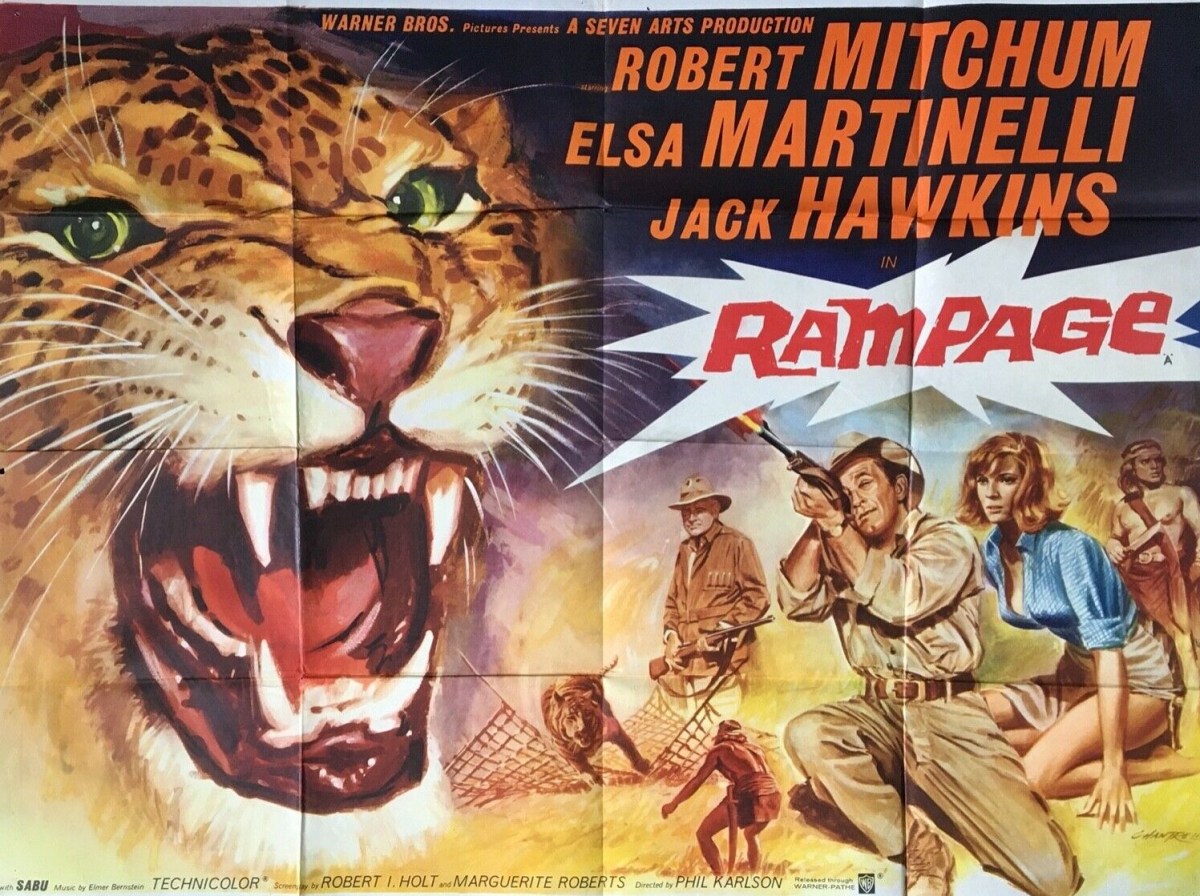
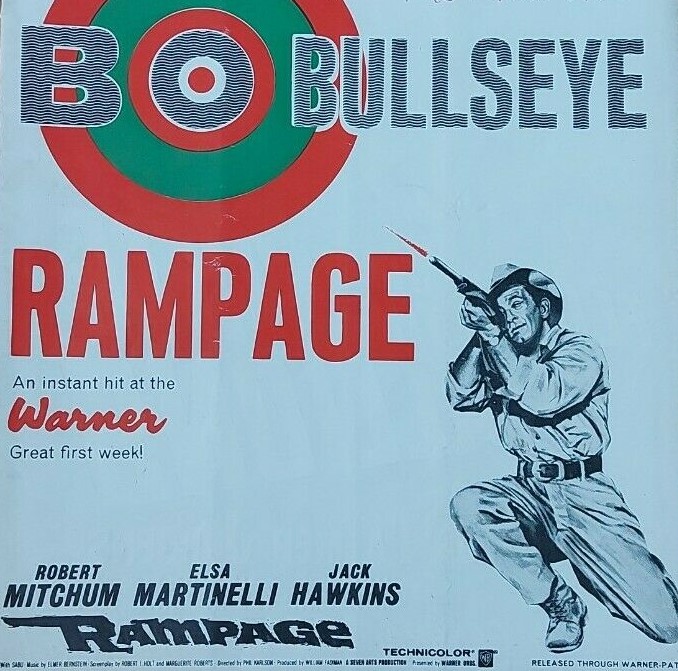
Rampage (1963) ***

A more misleading title you’d struggle to find. There’s no sign of a rampage until the last 20 minutes, and even then it plays out on a rooftop in a city. Not a patch, action-wise, on Howard Hawks’ Hatari! the previous year, but sharing the female lead Elsa Martinelli. More romantic drama than jungle adventurer, and not much Malaysian jungle at that given Hawaii was the stand-in.

Big on metaphor, women viewed as trophies to boost the male ego or requiring male protection. Surprisingly contemporary with reference to the grooming of young women. Though Hatari! went down the same line, hunting animals for zoos rather than sport, this again take  contemporary approach, animal conservation seen as a battle of cultures, between men for whom shooting an elephant or a rhino reinforces their macho tendencies, and those who want to preserve rare wildlife for future generations.  

Trapper Harry (Robert Mitchum) and hunter Otto (Jack Hawkins) team up to capture for a German zoo two tigers and a legendary panther-like creature known as “The Enchantress.” From the outset, sexual tension sizzles between Harry and Otto’s young partner Anna (Elsa Martinelli). Although Otto is possessive, he permits Anna to take male companions on the assumption that she will always return to him.

Anna’s not quite as submissive as Otto would like to believe and she puts Harry in his place more than once. There’s a 35-year age difference between Otto and Anna. But Harry is disturbed at how they became lovers, persistently asking how soon, after the older man saved the orphaned girl from poverty, he seduced her.

The love triangle is set against a more primitive background where women have no rights and are as likely to be offered up to any passing male. Native guide Talib (Sabu) feels duty-bound to pass his wife onto to Harry. The wife not only acquiesces, but is insulted when the American refuses.

The men represent different cultures, Otto a marksman who prefers to bring his trophies back dead, hanging his virility on every scalp, Harry more emancipated for whom capture is enough. There’s a stand-off with a local tribe when Otto is too hasty with his rifle.

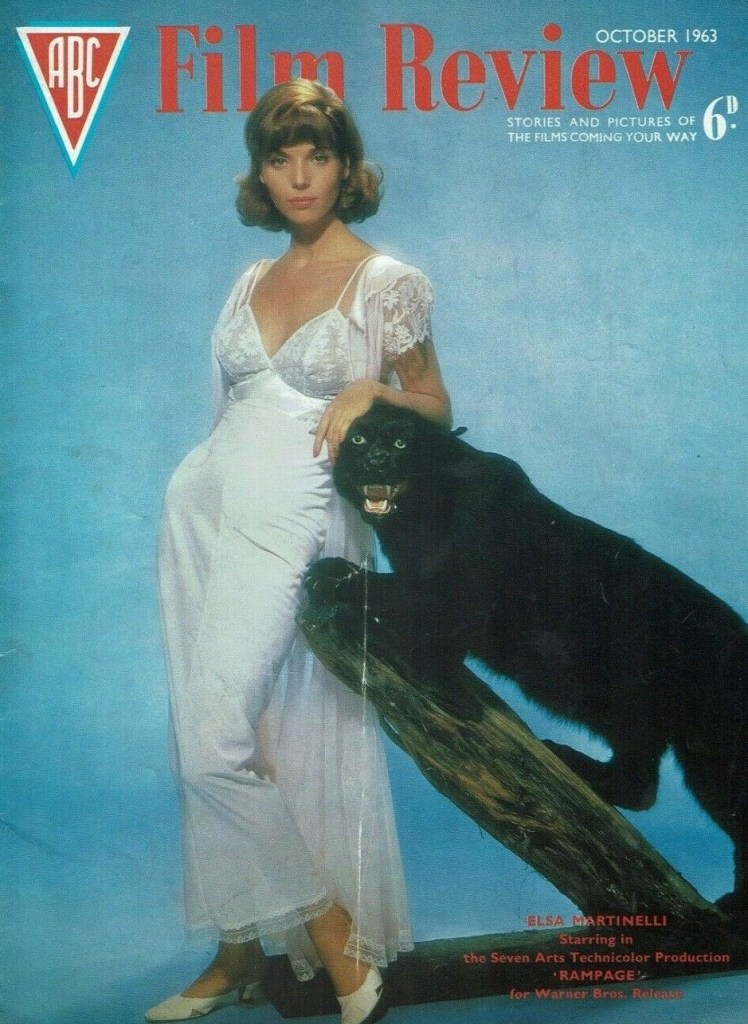
Martinelli does better here in terms of panther, the creature in the film was
more of a leopard with some red marks.

Given the lack of budget and the consequent lack of action, it’s no surprise that the drama revolves around whether Anna will betray her lover. Despite his apparent laid-back approach, Otto watches Anna with an obsessive eye, her potential loss deemed a blow not just to his esteem but a sign of approaching death.

What sets this aside from the submissive female trope is that the decision rests with Anna. Harry certainly doesn’t push his luck and until his pride is dented Otto allows the situation to play out. The shift in Anna’s feelings is discreetly rather than dramatically handled. The traditional bathing scene is used to reveal that Anna is not actually married and therefore neither committing adultery nor under legal obligation.

When we finally get down to some action, the build-up is interesting, Harry using beaters to nudge tigers towards his traps, but, unfortunately the majority of these animals are a disgrace to their wild forefathers, on the whole appearing pretty obliging if not outright dumb. There’s one charging rhino and, heaven forfend, Otto commits the cardinal son of requiring two bullets to finish it off.

The movie picks up when they encounter “The Enchantress,” by a long way the smartest beast in this particular animal kingdom, who enhances her mythical status by hiding in a cave, clash of personalities between the alpha males triggering the movie’s final, more dynamic, phase, Anna coming into her own not just as a crack shot but as an independent woman, Otto making Harry his prey.

More interesting as an examination of contemporary mores, not quite as sexist as initially it appears, and nudging in the direction of a woman attempting to attain independence, and in discussing the issues surrounding conservation. Just as bold is the questioning of Otto’s motivation is saving Anna from poverty, an act of kindness or grooming? You might wonder how much better off Anna would be with a man two decades older rather than one three decades older, but nobody goes there.

The acting is uniformly under-played. Elsa Martinelli is given a better showcase for her talents here than in Hatari! and this is Robert Mitchum (Five Card Stud, 1968) at his laid-back best while Jack Hawkins (Masquerade, 1965) keeps his simmering under control until the end.

Without the budget to ape Hatari! director Phil Karlson (The Secret Ways, 1961) has no option but to focus on characters rather than animals, but finds interesting ways to put various messages across. Marguerite Roberts (Five Card Stud) and Robert I. Hope (White Commanche, 1968) based their screenplay on the novel by Alan Caillou a.k.a Alan Lyle-Smith.

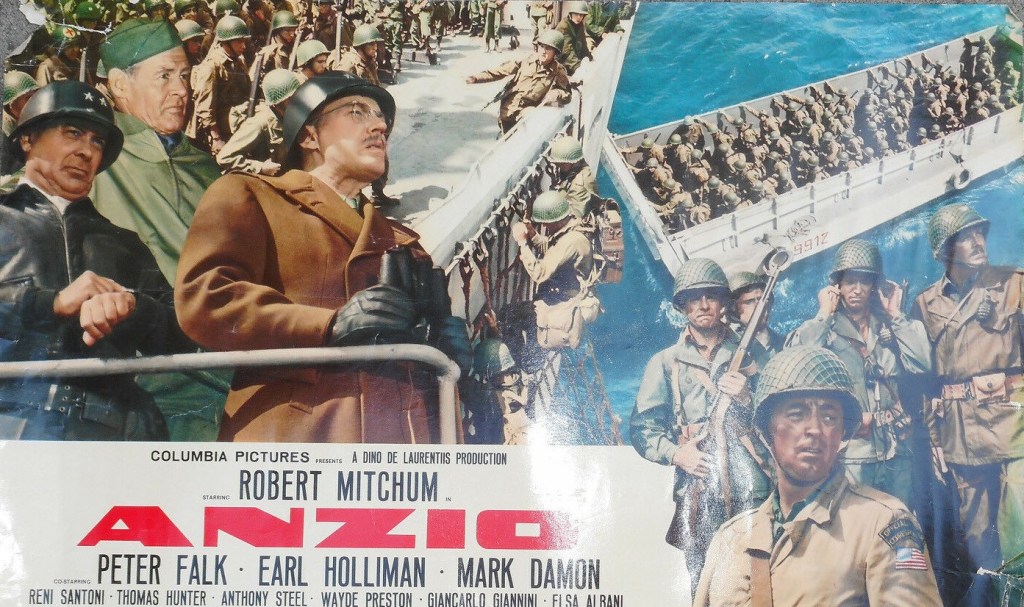
Anzio / The Battle for Anzio (1968) ***

Seems you couldn’t make a moive about defeat in the 1960s, you had to find something in the story that sounded victorious. Although the Allied landings at Anzio in January 1944 eventually led to the liberation of Rome, the whole operation was a mess. So instead of concentrating on outnumbered American and British troops being pounded to pieces on the beaches, director Edward Dmytryk (Alvarez Kelly, 1966) opts for the men-on-a-mission angle.   

Somewhat bizarre is the insertion of war correspondent Ennis (Robert Mitchum) into the story. Sure, because he’s not going to get busted for insubordination, he can challenge and/or lambast fictional commanding officers General Carson (Robert Ryan) and Major General Lasky (Arthur Kennedy) but it seems odd that he goes around spreading anti-war sentiment when the people escorting him are in serious danger of ebing killed. On the plus side are three sequences depicting the brutal reality of war in a way that no other picture of the period dared.

After landing unopposed Laskey decides not to risk moving forward, leaving his troops open to being trapped by advancing Germans even though Ennis, after commandeering a jeep, managed to reach Rome with encountering any opposition.

A Ranger battalion is sent to scout the surrounding countryside and the movie chooses to concentrate on a small platoon unit within that, headed by Sgt Stimmler (Earl Holliman) and including the fun-loving Corporal Rabinoff (Peter Falk), the kind of guy who spends the night before the landing entertaining three sex workers in the back of stolen ambulance who are of course desperate to learn the words to “Bye, Bye, Blackbird.”

After the Rangers are cut to pieces at the Battle of Cisterna, the unit escapes through a minefield, discovers a massive German construction site, holes up in house with three Italian women, is pinned down by snipers in a field of shell-holes and finally makes it back.

American tropps being slaughtered at Cisterna is a helluva note as the movie switches tack from exposing leadership folly to just getting the platoon out of this mess. Pursued by a flame-throwing Panzer, they pick their way through a minefield using the quite clever device of lobbing onto it large chunks of stone and then walking across on the stones as if crossing a dangerous river.

Wanting to find out more about the mysterious construction work results in Ennis causing the death of one of the gang. When they hide out in the Italian house, eventually killing off investigating Germans, the naïve Ennis wants to take the women with them.

Bit of marketing sleight-of-hand. Slinging a whole bunch of faces at the bottom of a poster was shorthand for all-star cast, which this picture definitely lacked.

Trapped by snipers in open country, they are being picked off one by one with only clever tricks and sacrifice offering a way out. One of the notions is to throw a fake grenade the snipers’ way. The instant reaction to any soldier to an incoming grenade is to get the hell out of the way, turning themselves into a turkey shoot. But the only other way to entice the snipers to reveal themselves is for the soldiers to take turns in presenting themselves as targets.

One of the ongoing themes of the picture is Ennis refusing to bear arms, and although the trailer shows him blasting away with a machine gun that only occurs at this climax when he seizes the weapon from a dead German. Ennis is an odd character for a war picture. None of the soldiers can believe anyone would not just volunteer to participate in a bloody war but carry nothing to defend themselves with. It’s a bit tiresome to hear him being reminded that he doesn’t have to be here, and to turn down the offer or a rifle or a grenade.

And for a non-combatant he’s not exactly uninvolved in strategic matters. A couple of times, as if he’s the most entitled grunt you ever came across, he virtually assumes command, barking orders that the others obey. Admittedly, it’s his cleverness that gets them through the minefield, but it’s his stupidity that gets others killed and to have him pontificating at the end that men go to war “because they like it” is incredibly facile, although in keeping with the anti-Vietnam sentiments of the time (1968, that is, not 1944).

Rabinoff, the only other character about whom we learn anything, is unfortunately on the preposterous side.

While the movie is far from dire, and as I said, very realistic when in portraying war actuality, it’s not the picture I guess audiences expected. While the scene-stealing of Peter Falk (Penelope, 1966) gets in the way, Robert Mitchum (5 Card Stud, 1968) proves an interesting character, although he is also laden down by having to spout a bunch of dumb lines. Arthur Kennedy (Fantastic Voyage, 1966) is the pick, especially at the end facing up to the ignominy of being relieved of command.

This kind of movie is potentially a breakout for the supporting cast. But here, with the exception of Falk, the script lets them down, nobody given the kind of distinctive characterisation that elevated The Dirty Dozen (1967), for example, above the norm. Apart from Earl Holliman (The Power, 1968) and Italian Giancarlo Giannini (The Sisters, 1969) this was not a career-making movie. You can spot Mark Damon (Dead Men Don’t Count, 1968), Patrick Magee (A Clockwork Orange, 1971), Anthony Steel (The Story of O, 1975), Rene Santoni (Guns of the Magnificent Seven, 1969), Wolfgang Preiss (Von Ryan’s Express, 1965)  and Robert Ryan (Battle of the Bulge, 1965).

Edward Dmytryk (Mirage, 1965) does a reasonable job with the materials to hand, and the minefield and sniper scenes are first class. Italian veteran Duilio Coletti (Under Ten Flags, 1960) directed the Italian version though I’ve no idea what that was, or if it differed in any way from the Dmytryk cut. Coletti also had a hand in fashioning the screenplay along with H.A.L. Craig (Fraulein Doktor, 1969), Frank De Felitta (Audrey Rose, 1977) and Giuseppe Mangione (Run, Psycho, Run, 1968).

Behind the Scenes: “The Grass Is Greener” (1960)

Cary Grant was coming off a commercial career peak, comedy Houseboat (1958) with Sophia  Loren, Hitchcock thriller North by Northwest (1959) and war comedy Operation Petticoat (1959) all among the top box office hits of their years. He was in enormous demand. In 1960 Jerry Wald wooed him for Tender Is the Night, eventually made in 1962 with Jason Robards.  He went so far along considering Can-Can (1960) that he began working with a voice coach and passed on Let’s Make Love (1960).

The prospect of Lawrence of Arabia – he had been lined up to play the lead over two decades before – reared his head with producer Sam Spiegel eyeing him up for Allenby (played in the 1962 picture by Jack Hawkins). He turned down Lolita and a remake of The Letter. The biggest letdown was John Huston’s The Man Who Would Be King which would have teamed him with Clark Gable. Of the screenplay, Grant commented: “I’ve read it twice and am still uncertain whether it’s fair, good, or perhaps, even excellent.” (It would not be filmed until 1975.)

Also in the pipeline was an intriguing original screenplay in which he and Ingrid Bergman would essay dual roles and his alternative company, Granart, also purchased The Day They Robbed the Bank. (Neither project was made.)

In the face of such indecision it’s not surprising he decided to play safe. The Grass Is Greener would be made by his own company, Grandon, a production outfit set up with director Stanley Donen – they had previously made Indiscreet (1957) – at that point still best known for musicals including Singin’ in the Rain (1951), though he had also directed Grant in the comedy Kiss Them for Me (1957).

Initially Grant cast himself as the American, with Rex Harrison (The Honey Pot, 1967) and his real-life wife Kay Kendall (Once More with Feeling, 1960, also directed by Donen) the titled British couple. Harrison would certainly have brought more natural acidity to the part but he pulled out after his wife died prematurely. Deborah Kerr, the most English of actresses, was ideal for the Earl’s wife.

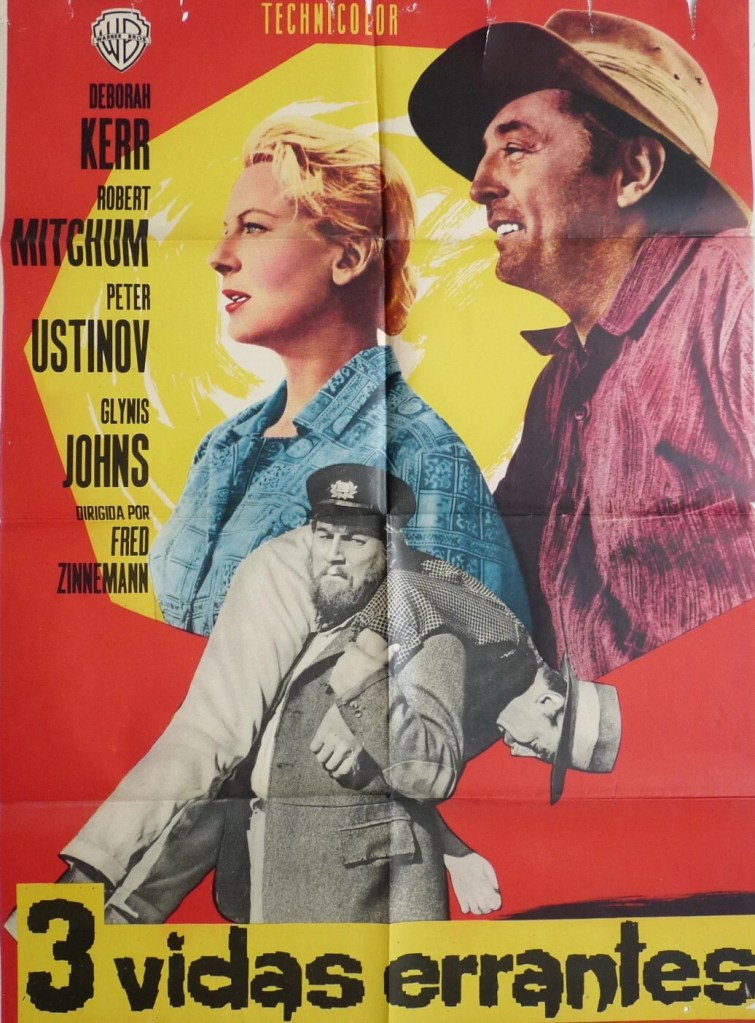
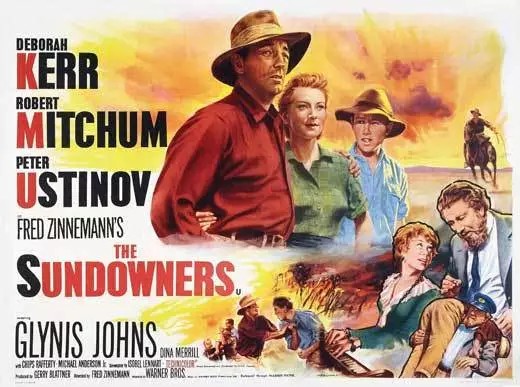
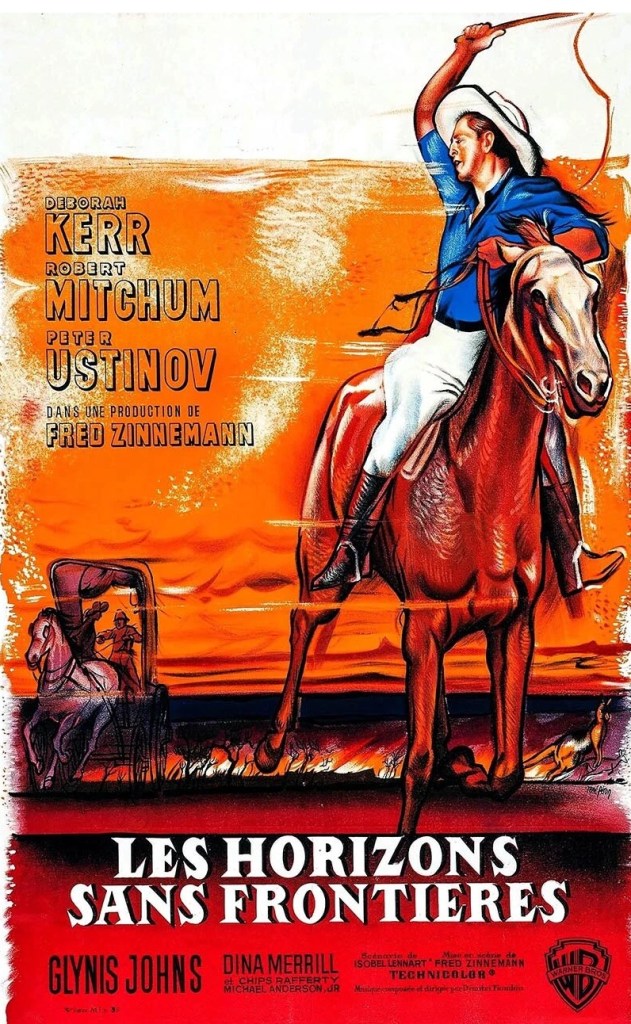
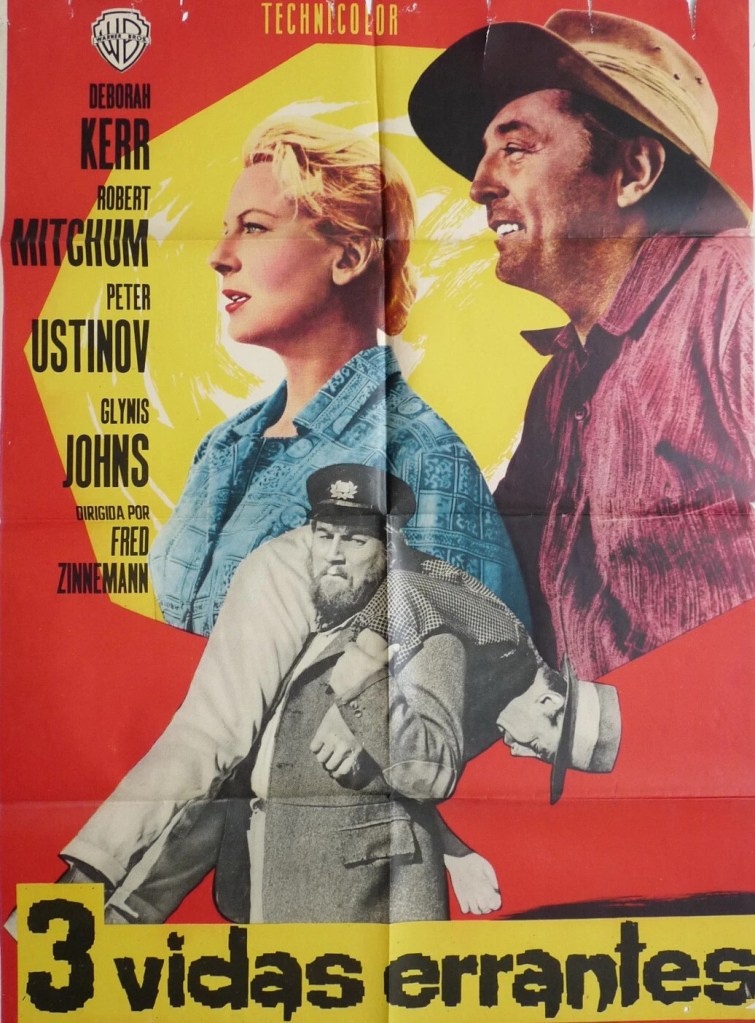
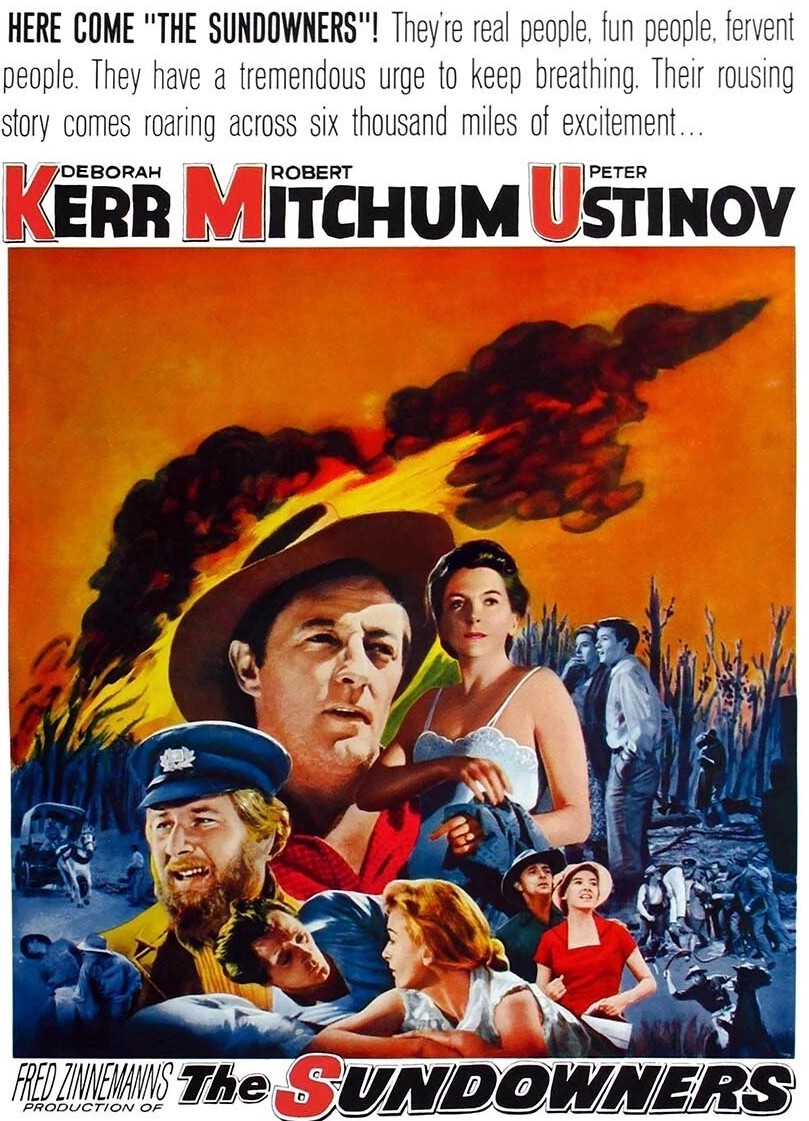
Robert Mitchum, with whom Kerr had just appeared in The Sundowners (1960), was a late addition as the Yank even though it meant him dropping to third billing for the first time in over a decade. For The Sundowners he had ceded top billing to Kerr on the basis it would be better for the poster, not realizing he would be viewed as the male lead rather than the acknowledged star (not quite as subtle a difference as you might imagine in the cut-throat credits business). Kerr was at an artistic peak, winning her sixth Oscar nomination for The Sundowners. Mitchum, by contrast, nominated in a supporting role for The Story of G.I. Joe (1945) had nary a sniff of peer recognition since.

Jean Simmons (Spartacus, 1960) was a surprise choice for Grant’s character’s ex-lover but was willing to accept lower billing because she was desperate to extend her range by doing comedy. The foursome already had considerable experience working with each other, Mitchum paired with Simmons for Angel Face (1952) and She Couldn’t Say No (1953) while Kerr and Grant had dallied in Dream Wife (1953) and An Affair to Remember (1957). To round things off Kerr had played opposite Mitchum in Heaven Knows, Mr. Allison (1957) and, as mentioned, The Sundowners.

Although the picture was financed by Universal, director Donen was more of a Columbia favorite. On top of Once More with Feeling and Surprise Package for the latter studio, he was contracted to make another four, all to be filmed abroad, the director having set up home in London. Deborah Kerr was involved in Cakes and Ale, based on the Somerset Maugham novel, with George Cukor and was announced as starring in Behind the Mirror (neither film made). Mitchum was also diversifying, the first of a three-picture deal between United Artists and his company being North from Rome (never made), based on the Helen MacInnes thriller.

Shooting began at Shepperton in London on April 4, 1860, but this time round, the personalities did not quite gel. Simmons complained that Grant was “a fuss-budget, everything must be just so.” Although she did admit that his preparation worked wonders. “He’d come forth with the most amusing, polished take, everything so effortless.” Mitchum complained Grant lacked a sense of humor. “He’s very light and pleasant but his humor is sort of old music-hall jokes.”

Despite the high-class cast, Grant had very definite ideas about his star status. In one scene that called for both actresses to be bedecked in expensive jewelry, he instructed the jewels be removed in case the audience was distracted from him.

Grant and Mitchum had one thing in common, a liking for experimenting with drugs. Mitchum’s preference for marijuana was well-known. Although he had been previously jailed for his “addiction,” Mitchum still grew his own. Grant’s drug of choice, on the other hand, was LSD. He had been on a course of LSD treatment since 1958 and was in the middle of coming off the drug. “He was a little weird,” noted Mitchum.

Fittingly, their personality clash was very English, “a mild, undeclared, rivalry.” The battleground was costume, Grant perturbed that Mitchum’s laid-back style was making him look over-dressed while Mitchum complained that he was a glorified feed, employed simply to make non-committal comments in the middle of a Grant monologue.

Grant’s parsimony was also a bit extreme. As part of his invoice for doing publicity on the picture, “not only did he turn in his hotel bills and meal receipts for those four extra days but also the costs of the suits” he had had made in Hong Kong. In other words, he billed his own company. Money paid for these expenses would be deducted from any potential profit he would receive.

Kerr, however, had no complaints. “Between Cary’s superb timing and Bob’s instinctive awareness of what you’re trying to do, this was a very happy film.” But there was one other source of contention. The British media were barred from the set on by Stanley Donen on the grounds that journalists of the more sensation-seeking newspaper were apt to needle actors. Grant softened the blow by arranging to be interviewed once filming was complete.   

However, Variety was able to give the picture a publicity boost by hailing stately home tourism as “a new type of British show business,” reckoning the 400 operations raked in $4 million a year. Average admission prices of 35 cents meant over 10 million visitors a year.

Ironically, the infidelity theme cost The Grass Is Greener a lucrative Xmas launch at the prestigious Radio City Music Hall in New York. The cinema felt the content was not in keeping with Yuletide and opted for The Sundowners instead, the Donen picture shifting to the much smaller and semi-arthouse Astor. Just how important the Hall was to a movie’s public reception could be judged by the takings the previous year for Operation Petticoat (a Granart release), a whopping $175,000 opener. The point was made when The Sundowners grossed $200,000 in its first week, three times as much as The Grass Is Greener.

SOURCES: Scott Eyman, Cary Grant, A Brilliant Disguise (Simon & Schuster, 2020) p339-343,363-368; Lee Server, Robert Mitchum, Baby I Don’t Care (Faber and Faber, 2002) p204-207, 429; Eric Braun, Deborah Kerr (WH Allen, 1977) p176-177; “Deborah’s Cakes & Ale,” Variety, July 15, 1959, p3; “Grant in Original, with Himself and Bergman in Dual Roles,” Variety, September 30, 1959, p10; “Nativity and Grant Combo at Hall,” Variety, December 9, 1959, p9; “Maugham-Hurst Film Location in Tangier,” Variety, January 6, 1960, p167; “Col Extending Donen,” Variety, May 25, 1960, p20; “400 Stately Homes of England,” Variety, June 1, 1960, p2; “Needling and Smartalec British Interviewers Not Allowed In By Donen,” Variety, June 22, 1960, p2; “Infidelity Theme Cancels Grant’s Comedy at Hall,” Variety, September 21, 1960, p7; “Cary Grant’s,” Variety, November 9, 1960, p20; “B’Way soars,” Variety, December 28, 1960, p9.

The Grass Is Greener (1960) ***

A genuine all-star cast goes off-piste in what used to be called – and maybe still is – a comedy of manners. A chance encounters at the stately home owned by Victor (Cary Grant), an Earl who makes ends meet by opening up his home to tourists, sees his wife Lady Hilary (Deborah Kerr), who helps make ends meet by selling home-grown mushrooms, fall in love with American oil millionaire Charles (Robert Mitchum).

Victor is far too English and posh to go off in the deep end and after considering allowing her to indulge in an affair until she gets bored, comes up with a strategy to ensure it’s her lover who is shooed away. Hilary’s best friend, the glamorous and often barmy Hattie (Jean Simmons), all Dior outfits and full-on make-up,  meanwhile, steps in to attempt to rekindle her romance with former lover Charles.

Needless to say, this scene does not exist in the film.

While it’s peppered with epigrams and clever lines and several twists, what’s most memorable is the acting, the initial scene between Charles and Hilary a masterpiece of nuance, what’s shown in the face opposite to what they say. And there’s another peach of a scene where the most important element is what’s conveyed by a sigh. And by Robert Mitchum of all people, an actor not known for nuance.

But it’s let down by the staginess – it was based on a hit play – the very dated by now notion of showing the comic differences between British and Americans and the pacing. The theatrical element, thankfully, doesn’t resort to farce but with a whole bunch of entrances at unexpected moments you occasionally feel it’s heading in that direction. There are minor attempts to open up the play, a scene in the river, some location work in London and upmarket tourist haunts, but mostly it’s a picture that takes place on a couple of sets.

The British vs American trope just becomes tiresome after a while except that essentially the two men trade cultures, Victor exhibiting the kind of ruthlessness you might expect (in the old cliched fashion) from an American while Charles displays the kind of subtlety you would more likely find in an Englishman.

The pacing’s the biggest problem. The actors deliver lines at such speed that no time is allowed for the audience to laugh. The three British characters are almost manic in their urgency, while the Yank so laid-back he might belong to a different century.

Late on, a couple of subplots brighten up proceedings, a joke played on Hilary by Victor over the contents of a suitcase that she has devised an elaborate cover story to explain, and a betrayal of Hilary by her friend. Devilishly clever though it is, the duel scene almost belongs to a different picture. There’s also an amusing butler Sellers (Moray Watson), a wannabe writer, who believes, as is obvious, he is being under-employed, and pops up when the movie requires straightforward comic relief.

It starts off, via the Maurice Binder (Goldfinger, 1964) credits with babies, occasionally in the buff, unspooling film and indulging in other humorous activities. The only characters established before the plot kicks in are the Earl and the butler, Victor shown as tight-fisted, literally counting the pennies (although, literally, these are actually half-crowns, the price of admission to the stately home), the efficient Sellers revealed as otherwise baffled by life. The joke of a wealthy couple forced to rely on the income from visitors was not even much of a joke by then.

Perhaps what’s most interesting is that this movie essentially about immorality failed to click with U.S. audiences while an equally immoral picture The Apartment (1960) did superb business, the difference less relating to star quality than directorial ability, Billy Wilder’s work always having a greater edge than the confections of Stanley Donen.

It’s the supporting cast – if stars can be so termed – who steal the show. Robert Mitchum  (Man in the Middle/The Winston Affair, 1964) is just marvelous, one of his best acting jobs, relying far more on expression to carry a scene. He delivers a masterclass in how little an actor needs to do. Jean Simmons (Rough Night in Jericho, 1967) is also excellent for the opposite reason, an over-the-top mad-as-a-hatter conniving ex-lover with an eye on the main chance. That’s not to say Cary Grant (Walk, Don’t Run, 1966) and Deborah Kerr (The Arrangement, 1969) are not good, just overshadowed, and Kerr’s first scene with Mitchum, where she, too, realizes she is falling instantly in love is remarkably underplayed.

Stanley Donen (Arabesque, 1966) should have done more, pre-filming, to tighten up the script and expand the production. Hugh Williams and Margaret Vyner adapted their own play. It’s entertaining enough but I was more taken by the acting than the picture.

Behind the Scenes – “Man in the Middle”/”The Winston Affair” (1964)

You were asking for trouble to pair heavy drinkers Robert Mitchum and Trevor Howard. But Man in the Middle was a fraught production long before the actors came on board. The picture was intended to kick off Twentieth Century Fox’s revamped 20-picture slate that signaled a studio back from the dead after near-bankruptcy. The success of The Longest Day (1962) triggered a cycle of World War Two pictures, Man in the Middle launching this cluster, which accounted for more than third of the studio’s projected output.

But before fox arrived on the scene, Man in the Middle was intended as a key element in the launchpad or an indie powerhouse, the grandly-named Entertainment Corporation of America (ECA), set up by Max Youngstein, one of the founders of the post-war version of United Artists. Youngstein had an 11-picture tab budgeted at $3 million including Honeybear, I Think I Love You starring Warren Beatty (Bonnie and Clyde, 1967), Cold War thriller Fail Safe, The Winston Affair (as Man in the Middle was originally tabbed) and The Third Secret.

But concerns about legal action against Fail Safe torpedoed the venture within a few months of opening for business in November 1962 after theatre chain Ace Films pulled the plug on its $1.3 million investment and distributor Allied Artists followed suit. Columbia took over Fail Safe (1964) and Twentieth Century Fox The Winston Affair in a co-production with Marlon Brando’s Pennebaker shingle and Talbot which was Robert Mitchum’s outfit. 

With Fox’s recent financial vicissitudes keeping the studio in the media spotlight, budget control was essential. The movie’s $1.35 million budget was trimmed by clever scheduling, no actor, outside of the star, on set for more than three weeks, ensuring that overtime vanished. The title, however, appeared forever in flux. Original title The Winston Affair, the name of the Howard Fast book on which the film was based, changed to The Man in the Middle, then back to The Winston Affair, reverting again to The Man in the Middle before ending up with a contracted version of that – Man in the Middle. The confusion played havoc with a movie called Light of Day that snapped up Man in the Middle when the Fox title became vacant but was released as Topkapi (1964) when Fox took the title back.

Producer Walter Seltzer (Number One, 1969) pushed for more African American representation on the picture. Three roles, not written as African Americans in the novel or in the Waterhouse and Hall screenplay, were given to African Americans, the “best men for the job,” according to the producer. The trio were: Errol John, the N.C.O of the prison cell where the murder suspect is held, Frank Killibrew who doubled as the jeep driver and confidante to attorney Adams (Robert Mitchum) and Oscar James as a court reporter.

The two ECA movies taken over by Fox.

Mitchum didn’t just have drink problems. He was in the middle of an affair with Two for the Seesaw (1962) co-star Shirley MacLaine which result in public rows with long-suffering wife Dorothy. Mitchum had enjoyed a long business relationship with Max Youngstein and when the producer came upon The Winston Affair the actor agreed to star in it, only to find the rights had already been snapped up by Pennebaker. However, Pennebaker was in no position to fund a movie and without a commitment from Brando as star unlikely to get it off the ground. Since the production company nonetheless required, for tax purposes, to show a movie on its books Brando had agreed to throw in his lot with Youngstein’s ECA. And when Fox took over, Brando and Talbot retained their production credits.

When Seltzer flew to London to meet Mitchum who was finishing off his cameo for The List of Adrian Messenger (1963) the star lived up to his hell-raising billing, walking drunk from his room along the hallway and down the elevator at the plush Savoy Hotel. He was buck naked.

The bulk of the filming took place in Elstree Studios in London with just a couple of weeks set aside for location work in India. The ongoing romance with MacLaine meant production could grind to a halt in the middle of a scene while Mitchum took a call from the actress in New York although conversation was inhibited with Selzer at his elbow looking at his watch.

“He was a professional in every respect,” recalled Selzer. “He was on time, knew his lines and didn’t make any trouble…very good with France Nuyen (A Girl Called Tamiko, 1962), who was a little unsure of herself, and he did a lot to help her performance and boost her confidence.”

Trevor Howard was a different kettle of fish. Mitchum and Howard had become friends in the 1950s while working in Mexico, and Mitchum was a great admirer of the Englishman’s talent. However, Howard had “been all but blackballed of late due to his drinking.” Oscar-nominated for Sons and Lovers (1960), Howard had only made two films since. And even the role here was more of an extended cameo than a main supporting role. To win the part, Howard invited director and producer to visit him at his home where he put on a very good act of restraint, limiting himself to tea while the others consumed alcohol.

Restraint proved an illusion. While Mitchum could drink and still turn up for work, Howard would go to pieces with a few drinks in his system. On his second day of shooting, Howard turned up on set wearing mismatched socks and threw a drunken fit when asked to change.

Director Guy Hamilton had worked with big Hollywood personalities Kirk Douglas and Burt Lancaster on The Devil’s Disciple (1959) but compared to them Mitchum was a pussycat.

“He understood the importance of listening,” said Hamilton, “which is very, very rare for American stars…If all else failed in a scene, you knew you could always fall back on Mitchum’s reaction shots, which could say more than the dialogue.”

Mitchum was blessed with a photographic memory. Even when confronted with pages of new script he would have no trouble remembering his lines. In fact, if anyone fluffed their lines they could rely on Mitchum helping them out. When the movie decanted to India, he had an encounter with a maharajah’s daughter, which ended up in the bedroom. Once the movie was finished, Mitchum resorted to type, getting stoned on raw marijuana on the 16-hour flight home from India, a zip bag full of the stuff, and sailing through the Nothing To Declare section at Customs at the airport.

Most reports have this down as a big flop. But I’m not so sure. It cost comparatively little and earned $1 million in rentals in the U.S. Mitchum was a big enough star for it to be released around the world and I’d be surprised if it didn’t manage the extra $300,000 required to break even.

SOURCES: Lee Server, Robert Mitchum, Baby, I Don’t Care (Faber and Faber, 2001) p457, 462-467; “Marlon Brando To Film Winston Affair,” Box Office, April 9, 1962, p16, “Youngstein As Exec Producer,” Variety, January 16, 1963, p4; “Entertainment Corp Sets Mitchum Film Overseas,” Variety, January 16, 1963, p4; “Four Months To The Day For Man,Variety, January 26, 1963, p5; “From Surefire to Fail Safe,” Variety, April 10, 1963, p3; “Winston Affair Set To Start 20th-Fox  British Production Program,” Variety, April 24, 1963, p22; “Fascination With Own Era,” Variety, May 22, 1963, p3.“Use Negro Skills in Seltzer’s Film,” Variety, October 2, 1963, p4; “No Principal On Role Longer Than 3 Weeks, Key Budget Control,” Variety, November 27, 1963, p3.

Man in the Middle / The Winston Affair (1964) ***

Scratch a war picture and you often find something more interesting underneath. This creditable courtroom drama makes a pitch for justice for all in the Compulsion (1959) vein while exploring the fragile and occasionally fractious relationship between the Allies during  World War Two. In front of several witnesses American officer Lt. Winston (Keenan Wynn) kills  in cold blood an ordinary British soldier in a remote depot in India.

It’s an open-and-shut case requiring a defence attorney of no great distinction. In fact so little legal ability is required that it’s assigned to Lt. Col Adams (Robert Mitchum), recovering from a war wound, who  hasn’t practised law in 14 years. It doesn’t help that Winston is a racist and psychopath, convinced left-wing conspirators are planning to take over the world. While dutiful, Adams displays no great enthusiasm for the task, taking time out to embark on romance with nurse Kate (France Nuyen), who is a good deal more fired-up about injustice than him. Adam’s superior officers just want Winston found guilty and hanged in double-quick-time to placate the British.

As if the odds aren’t already stacked against Adams, his boss General Kempton (Barry Sullivan) has brought in top prosecutor Major Smith (Paul Maxwell) while saddling Adams with two useless assistants. However, when Adams finally gets going, he discovers that Winston was assessed as mentally ill by psychiatrist Dr Kaufman (Sam Wanamaker) who has, unfortunately, been transferred and his report has vanished. Col Burton (Alexander Knox), who has taken over the case, refuses to accept Kaufman’s diagnosis. And Adams gets around to thinking there’s something fishy going on, the bottom line being that if the Winston is declared insane, then he won’t be hanged, the case neither open nor shut, fears rising of repercussions at a time when Allied unity is under threat.

So then we’re into classic courtroom territory. Kate has a carbon copy of the Kaufman report but as any lawman knows that in itself is inadmissible.  They can call back Kaufman to testify but there’s no allowing for the state of the roads and a driver in a hurry is liable not to make it. Major Kensington (Trevor Howard) might prove a trump card – or he may not. It’s a given that any defence lawyer’s life is filled with obstacles and this is no different. The out-of-practice Adams is in a hell of a pickle, and that’s how it should be.

On top of that, or underlying it, is the fight for justice for all. It’s easy to fight for the innocent but harder to battle for the sick and the mentally ill, however repellent their prejudices. You might despise the Winstons of this world, as Kate puts it, but you wouldn’t want to be his executioner.

And in the background are wartime considerations. What is one man’s life when judged against the uproar that would ensue and disrupt war planning should the self-proclaimed murderer be set free. Also, normally the mentally ill at this stage of Hollywood history are generally appealing characters, not hateful, but it’s only when Adams digs away at the experience of Winston that he realises the reasons for the murder, the hell that the insecure undergo when cleverer minds decide on torment.

Robert Mitchum (Secret Ceremony, 1968) is on excellent form as the attorney initially just going through the motions who determines to fight his superiors rather than toe the party line, even at the cost of losing his much-delayed promotion. France Nuyen (A Girl Named Tamiko, 1962) is somewhat spunkier than Hollywood nurses of this period and refuses to let romance get in the way of truth. Keenan Wynn (Warning Shot, 1967), a stubborn nutcase, is the worst kind of client, constantly shooting himself in the foot.

Trevor Howard (The Charge of the Light Brigade, 1968) has toned down the normal irascible persona and makes a respectable showing. Barry Sullivan (Light in the Piazza, 1962) is as ruthless as he is charming. The solid supporting cast includes Sam Wanamaker (Danger Route, 1967), Alexander Knox (In the Cool of the Day, 1963) and Errol John (The Sins of Rachel Cade, 1961).

This was director Guy Hamilton’s last film before he shot to international fame on the back of Goldfinger (1964). The screenplay by British pair Keith Waterhouse and Willis Hall (A Matter of Innocence/Pretty Polly, 1967) was adapted from the novel by Howard Fast (Mirage, 1965).

Courtroom with depth, giving a glimpse of the politics prevalent among High Command in wartime, almost a companion piece of The Charge of the Light Brigade.

Cinema Archives has a much pricier edition but I reckon this cheaper version will do the job.

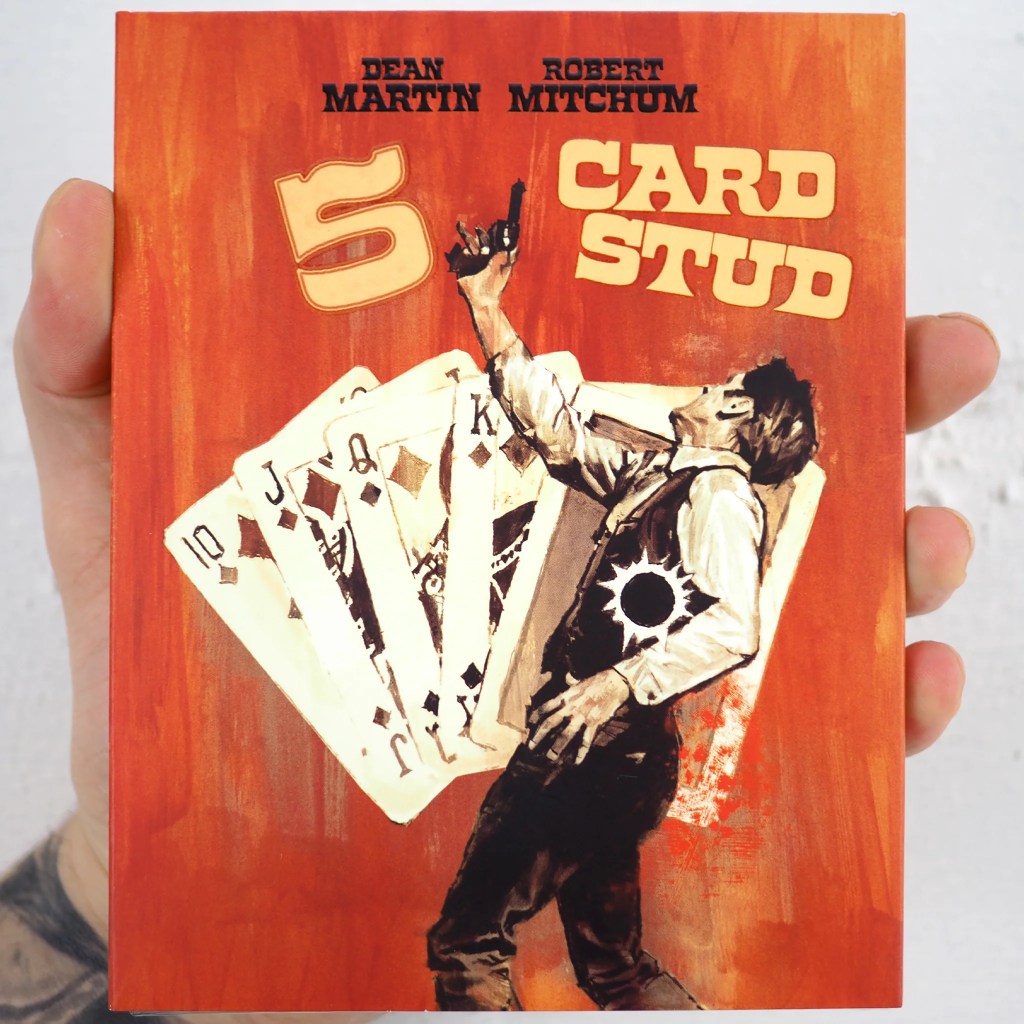
Five Card Stud (1968) ****

Another western in sore need of re-evaluation. Largely dismissed as a routine oater trading on the gimmick of a whodunit and packed with old stagers, this is in fact about a serial killer, a treatise on law and order, and almost acts as a conduit between the decade’s previous westerns when the good guys and the bad guys are easily defined to the end of the decade when such distinctions were muddied after The Wild Bunch (1969) and Butch Cassidy and the Sundance Kid (1969) invited audiences to root for the bad guys. In this rather well-structured picture, full of action and romance, we don’t know who the bad guy is.

The whodunit, however, is really a MacGuffin. The movie is more concerned with investigating the changing mores and hypocrisies of the West and predicting the inherent dangers in the proliferation of weaponry. It’s worth remembering that the movie came out at time when mass murderers such as Charles Whitman (the subject of Peter Bogdanovich’s Targets, 1968) who went on a killing spree in 1966 were becoming the norm.

A card sharp is lynched for cheating at poker in the quiet town of Rinchon where late-night gambling is the height of entertainment. One of the players, professional gambler Van (Dean Martin), attempts to stop the hanging but is beaten up for his troubles. No surprise then, that he ambles off to Denver. Sometime later the hangmen begin dying off and Van returns not just to solve the mystery but to ensure that his name isn’t on the list. “If someone is out to kill you, you don’t sit around and let him pick the time,” he concludes. With the number of killings, not to mention brawls and shoot-outs, it’s almost continuous action.

On his return, Van discovers, with a gold strike nearby, the incipient boom town has attracted unsavory elements, not just the high murder quotient but a whorehouse and loud music in the saloon. Acting as counterbalance is gun-toting preacher Jonathan Rudd (Robert Mitchum) who announces his presence by spraying bullets in the saloon floor, emerging as the self-proclaimed “conscience” of the town.

For a sometime protector of law and order, Van is rather lax in the morals department, unwilling to commit to main squeeze rancher’s daughter Nora (Katharine Justice) when the likes of Lily (Inger Stevens), the unlikely proprietor of a barbershop-cum-whorehouse, are on hand. Van is an interesting study. Once he becomes aware that the only people likely to end up in an early grave are the six men who played poker with the lynched individual, it doesn’t occur to him to fess up to Marshal Dana (John Anderson) which would ease the fears of the ordinary public. Awareness the only corpses belonged to the guilty would have prevented further outbursts of violence among a disaffected population. Interestingly, too, Dana makes no attempt to investigate the lynching.

At the core of this picture are a couple of amazing scenes as paranoia takes hold. One miner, without the slightest sense of irony, complains that in the old days a gunfight took place face to face, not by a murderer slinking round in the dark. Rudd adds some prophetic advice: “wear a gun and use it fast, wear a gun and use it slow – I say don’t wear a gun and you won’t use it at all.”

Van likes to think he has the measure of women, when in fact they have the measure of him. The story avoids the obvious lure of a love triangle, of jealous women competing for Van’s affections. Both the young Nora and the more mature Lily are pretty well grounded. “One wore-out no-account kiss” is Nora’s dismissive description of Van’s attempts at romance while Lily lets Van know she has taken a shine to him as a matter of convenience, he’s just a man and she hasn’t had one in three years. Expecting to be treated as a pariah, Lily, expressing the notion that “women don’t usually like women who like men,” strikes up a friendship with Nora.

Marshal Dana finds it increasingly difficult to maintain any kind of peace since as the death count mounts, paranoia grows rife, exacerbated by the kind of greed gold fever brings, resulting in citizens determined to challenge authority and take matters into their own hands.

The most antsy character is Nick (Roddy McDowall), Nora’s brother and the leader of the lynch mob. Nick seems to stir up bad feelings, provoking the ire of both his father and Van. The guilty are despatched in original ways, one man “drowns” in a barrel of flour, another strangled by barbed wire, a third wakes the town at night when the church bell to which his neck is attached starts ringing out. It’s not too hard in the end to work out who the killer is, but as I said, that is not the point of the picture, although the ending is satisfactory.

There a mass of small detail of the kind that director Henry Hathaway (True Grit, 1969) tends to work into his pictures. Van is a cut above. He travels to Denver and back by stagecoach not on horseback. Citizens can purchase Pocahontas Remedies and beer from the Denver Brewery. Shaves and haircuts at the Tonsorial Parlor are reasonably priced but “miscellaneous” comes in at $20. After the preacher shoots up her floor, saloon owner Mama (Ruth Springford) smooths out the holes.

And there is some distinctive direction. Rudd’s sermon that lasts nearly 90 seconds is delivered in virtually one take, a fistfight is conducted in silence except for a soundtrack punctuated by grunts and punches hitting their target, a dying man tries to leave a physical clue about the identity of the mysterious killer. And there is a superb main street gunfight with Van trying to rescue the marshal and Rudd striding down the street in old-fashioned gunslinger mode.  

Dean Martin (Rough Night in Jericho, 1967) and Robert Mitchum (The Way West, 1969), both with apparently easy-going but magisterial screen personas, come off well together. Inger Stevens (Firecreek, 1968)  always a great screen presence, an ethereal beauty, is vulnerable and strong at the same time. Katherine Justice (The Way West, 1967) is sassy and independent-minded and has a terrific facial response to coming across the first murder.  John Anderson (The Satan Bug, 1965) leads a fine supporting cast including Yaphet Kotto (Live and Let Die, 1973), Denver Pyle (Shenandoah, 1965) and Whit Bissell (Seven Days in May, 1964).

Screenwriter Marguerite Roberts, adapting the novel by Ray Gaulden, contributes some classic lines. “If that is a Bible, read it,” Van instructs Rudd, assuming the preacher has a gun planted in the Holy Book, “If it ain’t a Bible, drop it.” There’s a nod to a James Coburn scene in The Magnificent Seven (1960). Congratulated on his marksmanship in hitting the spinning wheels of a windmill six times out of six, Rudd protests his shooting was a failure since he was aiming for the spaces in between. It was ironic that her next assignment concerned a lawman who took much the same no-holds-approach to the criminal fraternity (True Grit, 1969) as the killer in this picture.

I was so intrigued by this picture, realizing it had much more to offer than a whodunit, that I watched it again within a few days and was pleasantly surprised by its depths.

Behind the Scenes: “Secret Ceremony” (1968)

I was probably as surprised as anyone to discover that far from being a flop, Secret Ceremony was in fact a hit, taking $3 million in rentals in the  U.S., ranking among the Top 20 foreign movies at the French box office, and hitting the target in Italy, Germany and Australia. Yet, outside of France, it was universally derided by the critics.

Joseph Losey (The Servant, 1964) held the unusual position of being a cult director working in Britain. He was the “object of a vociferous cult….his following grown in scope and size with each new film” and, conversely, as his popularity among the arthouse fraternity increased, he attracted more critical ire. Courting popularity by entering the spy genre with Modesty Blaise (1966) and linking up with the Elizabeth Taylor/Richard Burton box office colossus for Boom! (1967) seemed to go against the critical grain. Losey ascribed the critical coruscation Boom! received as less to do with the merits of the film itself than “people using the opportunity to launch personal attacks on the Burtons.”

Boom! had been packaged John Heyman, who coupled acting as agent for Burton and Taylor with being the producer, not necessarily a good combination. Universal was convinced it had “Virginia Woolf in color,” a reference to the previous enormous hit, although the box office told a different story. Jay Kanter, Universal’s London production chief who greenlit the project, commented: “When the Burtons were involved a lot of my judgement was colored by the magnitude of the star she (Taylor) was considered to be.”

So it was something of a surprise to find Losey and Taylor teaming up again for Secret Ceremony. Of course, it may have been the money, Taylor at this point still holding out for a million-dollar purse. Heyman said, “We were regarded as whizz-kids just for making two consecutive films with Elizabeth Taylor and bringing them in under budget.”  

Losey’s world reflects a “highly selective form of naturalism.” Except for Accident (1966), from Sleeping Tiger (1954) through to Secret Ceremony, Losey worked with the same design consultant/production designer Richard MacDonald whom the director treated as a sounding board, to “test (ideas) and reject them in the telling.” This is a director for whom “patterned exoticism is extraordinarily precise.” A more important collaborator had been playwright Harold Pinter who had fashioned The Servant (1963) and Accident, bringing to both films his distinctive ear for dialogue. He was hardly required for Boom! whose screenwriter was the even more famous playwright Tennessee Williams (A Streetcar Named Desire, 1951) and for Secret Ceremony Losey went elsewhere for his screenwriter.

Losey was among the string of American talent who taken refuge in Britain in the wake of the anti-Communist hysteria of the late 1940s/early 1950s – others included producer Carl Foreman (The Guns of Navarone, 1961), and directors Cy Enfield (Sands of the Kalahari, 1966) and Edward Dmytryk (Mirage, 1965). By the time of Secret Ceremony, Losey had been working in Britain for nearly a quarter of a century and established himself as a director of distinctive vision, a critical fave in his adopted homeland, wildly appreciated by the French, with an occasional box office home run.

But although regarded as a British film-maker, Losey made Secret Ceremony – and Boom! for that matter – exclusively with Hollywood money, the budget 100 per cent supplied by Universal, that studio having decided that anything coming out of Britain would appeal to younger audiences. There was an untapped pool of talent available in British television who could be hired for substantially less than their U.S. counterparts. In three years Universal’s London production unit, headed by Jay Kanter, spent $30 million on a dozen projects. The biggest budget was allocated to Boom! with $3.9 million followed by $3.5 million to The Countess from Hong Kong (1967) starring Marlon Brando and Sophia Loren.  The Night of the Following Day (1968) cost $1.5 million as did Fahrenheit 451 (1967) and Three into Two Won’t Go (1968). Secret Ceremony came in at $2.45 million.

Robert Mitchum and Joseph Losey went way back to a time in Hollywood when both were working their way up the RKO ladder. As well as Losey, Mitchum had been friends with many who would fall foul of the blacklist including screenwriter Dalton Trumbo, Dmytryk and Howard Koch (Casablanca, 1942). When Mitchum’s dalliance with drugs brought him a jail sentence, Losey visited him and brought him chilli from a famed restaurant.

Mitchum was recommended for the role in Secret Ceremony by Roddy McDowell, a friend of Taylor, who had been working with the actor on Henry Hathaway western Five Card Stud (1968). Mitchum received the job offer while on holiday in Mexico. For two weeks’ work he would earn $150,000. The role itself was scarcely onerous, drawing on aspects of the loathsome character he had created for Night of the Hunter (1955), but it did require an English accent of some kind and to his amusement Mitchum found himself on the telephone, like a salesman listing available product, going through the variety of accents he bring to the part.

Whether it was almost having to sell himself to the director or some previous incident, Mitchum and Losey did not resume their friendship. In fact, their relationship was the polar opposite. “He was very unpleasant,” recalled the director, “it was extremely hard for me to work with him.” Losey never found the source of Mitchum’s contempt. “In some curious way I must have made some mistake with him; I don’t know what it was.” Even attempts to recall Mitchum’s collaboration with Charles Laughton on Night of the Hunter failed to break the ice. Losey believed that Mitchum played tough to mask “an intense sense of failure.”

Mitchum wasn’t above sneaking away from the set. On one occasion taking himself off to visit old friend Robert Parrish, he knocked back some tequila and complained about the movie. On the Holland section of the shoot, Mitchum got into a food fight with a hotel diner. In the end, Losey was so disturbed by Mitchum that he was grateful when he departed as per contract despite the fact that some scenes had not been shot, including, according to the actor, the bathtub sequence, which would have accentuated the incest theme rather than the hint of lesbianism. Mitchum’s epitaph to the movie was that he talked Mia Farrow out of True Grit (1969) claiming Hathaway was a terror to work with.

The bath scene turned out to be the cause of some marital anguish. The set was cleared for its shooting of the scene after Taylor froze on emerging from her dressing room to see so many people gathered. But this was hardly Taylor at her beautiful best as she had been gaining weight. Even so Losey filmed her at times as though she was the grand Hollywood star with hair framing her face and the camera glimpsing her cleavage, but at other times her weight was a source of determining her character, when she eats with her mouth full and belches.

Halfway through filming Taylor was afflicted by severe physical pain and she was rushed to hospital for a hysterectomy, an operation that lasted over three and a half hours. Complications followed the surgery and she was given drugs that caused her to hallucinate. Writing in his diaries, Richard Burton noted: “This is the first time I’ve seen a loved one in screaming agony for two days, hallucinated by drugs, sometimes knowing who I was and sometimes not, a virago one minute, an angel the next.” She went from commanding him to leave the room to crying out for him to return. Sometimes she believed she was on board their yacht, other times that a film was playing on the switched-off television set.

The loss of her uterus may have affected her performance since in the film she plays a mother who has lost a child and in reality was a woman who had lost the ability to have another child.

The film exacerbated the tensions in the Burton-Taylor marriage. It was usually Taylor who was the one who had to keep a watchful eye on her partner in case he strayed. In this case, ironically, it was Burton who exhibited the jealous streak. The way Losey had whispered in the actress’s ear to build up her confidence during the bath scene while getting rid of extraneous crew found its way back to Burton who misinterpreted the action as intimacy.  “My wife and Joe Losey are having a professional love affair,” he claimed. He spent a lot more time than usual on the set of his wife’s film. He even offered to take on the Mitchum role.

Losey had long been fascinated by a strange-looking house in West Kensington, London, and managed to hire it for the shoot. Debenham House in Addison Road, between Holland Park Avenue and High St Kensington, is one of a handful of truly Gothic London buildings. The church used was in Little Venice, St Mary Magdalene in Rowington Close, also in London, and the antique shop was located at the corner of St Stephen’s Mews and Westbourne Green. When the production shifted to Holland it was to the coastal town of Noordwjik with use made of the Grand Hotel there.  

By the time the film opened, Taylor found herself in the middle of a storm over foul language (“gutter talk” in Variety parlance) for which she was seen as the “chief exponent.” It was an ironic position for Taylor to find herself in given her expletive-ridden performance in Who’s Afraid of Virginia Woolf (1966) had not only been critically acclaimed and a huge box office hit but seen as helping to break down the censorship barriers. However, it appeared that the “urination expression” and a word that was prefixed by “bull” were beyond the pale and Variety proclaimed that it was “evidently assumed that if a star of her (Taylor’s) magnitude can be gotten to speak the words, everyone else – actors, actresses, distributors, exhibitors and the public – will be accustomed to strong lingo in pix.” It was hardly coincidence that on the same day that this article was the leading story on the trade paper’s front page that inside six out of seven New York critics gave Secret Ceremony a drubbing, the exception being Renata Adler of the New York Times who called it Losey’s “best film in years.”

Even producer Heyman had his doubts about the material. “It should have been the story of two people who need and trust each other,” he said, “until one leans on the other a little bit more than she should. Unfortunately, the kind of sympathy which Losey shows for people in real life was absent from the relationship which is what I think made it unacceptable.” He summed up, “A cold picture.” (This has the taint of someone trying to work out why the film was a critical failure because otherwise I think Heyman got it exactly right for the movie I saw I did not view as cold nor unacceptable.)

And neither, strangely enough, did the public. Although making a poor showing in Britain, it was not a box office disaster. That was averted by astute marketing, the potency of the stars and a public who, not for the first time, ignored the critics.  The movie broke records when it opened at the New York arthouse pair, the Sutton and the New Embassy, and further afield in cities like Dallas. Arthouse success would have been anticipated but nobody would have expected that when it went wide in New York the second week improved upon the first. As well as a decent showing in the States, it hit the ground running around the world, and “ought to be credited” as one of Universal’s “most successful pictures from either domestic or foreign source.” In the French box office rankings, it placed above The Detective (1968) and Hang ‘Em High (1968) and just below The Thomas Crown Affair (1968). Acclaimed by that country’s critics, the Academie du Cinema named it best foreign film with Taylor and Farrow taking the gongs for best foreign actresses.

When Universal sold the movie to television for $1.25 million, a fee which certainly provided the picture with a decent extra profit margin, fourteen minutes were cut out and replaced by a 500 lines of extra dialog and a filmed discussion of the psychological issues raised, prompting Losey to demand his name be removed, claiming it “exactly reversed the meaning an intention of my film.”

SOURCES: Lee Server, Robert Mitchum, Baby I Don’t Care, (Faber and Faber, 2001) p169, 232, 509-512; Sam Kashner & Nancy Schoenberger, Furious Love, (JR Books, 2011)p240, 242-243,2; Alexander Walker, Hollywood England, (Orion Books, 2005) p200, 345, 354-257; “Screen: Secret Ceremony,” New York Times, October 26, 1968; “Joseph Losey Following Has Grown,” Box Office, October 28, 1968, pE1;   “No End to Gutter Talk,” Variety, October 30, 1968, p1; “N.Y. Critics This Week: Ouch,” Variety, October 30, 1968, p12; “Secret Ceremony Sets House Mark at Sutton, New Embassy,” Box Office, November 4, 1968, pE2; “Secret Ceremony Setting New Records in Dallas,” Box Office, January 13, 1969, pSW1; “This Week’s N.Y. Showcases,” Variety, February 5, 1969, p9; “Jay Kanter,” Variety, February 26, 1969, p78; “Kanter No Martyr,” Variety, March 19, 1969, p26; “Ceremony, Z Nab Kudos,” Variety, May 7, 1969, p107; “French Filmgoing,” Variety, January 28, 1970, P27; “Paris First Runs,” Variety, April 29, 1970, p76;  “Losey Wants His Credit Blipped from Vidversion of U’s Secret Ceremony,” Variety, September 16, 1970, p70; “All-Time Film Rental Champs,” Variety, October 15, 1990, pM184.

Discover WordPress

A daily selection of the best content published on WordPress, collected for you by humans who love to read.

The Atavist Magazine

by Brian Hannan

WordPress.com News

The latest news on WordPress.com and the WordPress community.