It took three attempts by different producers before Birdman of Alcatraz finally hit the screens. After the novel by Thomas E. Gaddis was published in 1955, Ingo Preminger, brother of director Otto Preminger, a year later was first to throw his hat in the ring – on behalf of director Joshua Logan.
Logan was on a roll, Oscar-nominated for Picnic (1955) starring William Holden and lining up Marilyn Monroe for Bus Stop (1956). Explained Preminger, “I knew Joshua Logan was looking for something off the beaten path for a personal project…(and found) exactly what he was looking for in the controversial novel.” Given Ingo’s track record – he wouldn’t produce his first film until Mash (1970), admittedly a smash – it was small wonder he didn’t make it to first base.
Twentieth Century Fox, under the aegis of Buddy Adler, had the movie on its schedule until abruptly dropping the project in 1958 when he failed to secure the cooperation of the Federal Bureau of Prisons. In fact, the Feds actively opposed the production, feeling the oxygen of publicity for the prisoner was undeserved.
Next up was accomplished independent producer Harold Hecht, who had formed a partnership with Burt Lancaster – Apache (1954), Trapeze (1956), The Unforgiven (1960). He was no more successful with the prisoner authorities – denied permission to shoot in Alcatraz or Leavenworth. But at least with Lancaster on board, he had a marketable commodity. Although he had a close relationship with United Artists, Birdman of Alcatraz was initially set up at Columbia and while shot on that studio’s backlot it was released through UA as a part of a 46-film three-year production package promising to be “as diverse, offbeat and box office” as previous offerings.
Lancaster had abandoned the actioners which had made his name and moved on to more challenging pictures. These days you’d call it virtue-signalling as he took on subjects as varied as evangelism (Elmer Gantry, 1960), juvenile delinquency (The Young Savages, 1961) and the Holocaust (Judgement at Nuremberg, 1961).
Neophyte Stuart Millar was brought in as director. He had set up in partnership with former agent Lawrence Turman (The Graduate, 1967) with a deal to make six movies in three years. His tenure at the helm didn’t last long and eventually he moved sideways to take on the role of producer. (He didn’t land a directing gig for another decade).
Though Lancaster had his eye on Jules Dassin (Never on Sunday, 1960), next in line was Charles Crichton (The Lavender Hill Mob, 1951) but he didn’t last long either. A decidedly odd choice, he fell foul of Lancaster’s impatience and was quickly replaced by John Frankenheimer (Seconds, 1966), one the new breed of directors emerging from live television, and who had made his debut on The Young Savages. Frankenheimer, going through a divorce, was reluctant to set foot in Los Angeles, and was lured there on another pretext by the actor who announced that, having just seen a cut of Young Savages, he was ideal for Birdman.
Not only was Frankenheimer he intent on revolutionizing the movie business, but he had the notion that he could reinvent television. After the demise of television’s Playhouse 90, he planned to set up a “creative stock company” of his former television colleagues and make two-hour programs for the small screen with the aim of helping “the medium out of its degradation.” He expected to win the backing of the likes of Arthur Penn, George Roy Hill, Delbert Mann, Ralph Nelson, Robert Mulligan and Sidney Lumet, who would all become major figures in Hollywood, as well as significant writers like Rod Serling and Horton Foote.
More pertinently to the project at hand, he intended to transition from mere director (i.e. gun for hire) to producer (in charge of his own career) and learn to function at “the business end of production” and to that extent was seeking overseas finance and lining up a $1 million adaptation of William Styron’s 1951 novel Lie Down in Darkness (never made) and Flowers of Hiroshima (never made). “Frankenheimer meant a new voice just at the time Lancaster needed it.”
Lancaster embarked on the picture as a campaign to free Stroud, who by now had served 40 years of a 50-year sentence in solitary confinement (a record). Obsessive by nature, the actor excelled himself, immersing himself in a study of Stroud’s books, letters, coverage of the case and penal law. Despite the enormity of the obstacles, Lancaster thought the movie and its attendant publicity would persuade the authorities to release the prisoner. Nor was Stroud much help. “Stroud will not kowtow,” said Lancaster, “He will not make polite amends for what he has done.” He was impressed by the fact that “Stroud took a miserable unnatural existence and yet made it a meaningful thing.”
While the actor saw Stroud as rehabilitated through his ornithology, the Feds begged to differ, viewing him as a double murderer who was a danger to society. Lancaster turned down other more lucrative work – though still managing to squeeze in a $750,000 payday for Judgement at Nuremberg – in order to “tinker and groom this very uncommercial” picture.
Writer Guy Trosper (One Eyed Jacks, 1961) was hired to make the character, within a realistic framework, as appealing as possible.
The film was budgeted at $2.65 million though that included some of the losses incurred on The Sweet Smell of Success (1957) and The Bachelor Party (1957) It proved a major collaboration between actor and director. “We blocked scenes,” explained Frankenheimer, “We decided to do the whole business of building the birdcage, of finding the first bird, of working with the birds – everything.” The movie was made in sequence to aid the ageing of the character. Lancaster didn’t wear a bald cap. His head was shaved halfway to the back and each gray and white hair was added individually
Lancaster spent two weeks rehearsing with 2,000 canaries imported from Japan as well as sparrows, until he could persuade the birds to hop onto his hand and peck at birdseed. To assist the recalcitrant birds, feathers were clipped so they couldn’t fly away. The method of achieving the scenes where the birds got sick and dropped from their perches was achieved by pouring lighter fuel down their throats.
The original cut ran four-and-a-half hours. The first half of the picture was rewritten and reshot. Editing would last another three months. Prior to release, Lancaster began his campaign to win Stroud a release, touring the country, addressing groups and journalists. He walked out of a television interview with Mike Wallace. Issues arose about Stroud’s homosexuality and the public opposition to Lancaster’s campaign soon derailed it.
United Artists planned an experimental release for the movie. Instead of going down the tried-and-tested route of the movie opening in big cinemas in big cities and working its way down stage by stage to the fleapits, A wanted to open the picture in as many houses as possible in new York in what it dubbed a “Premiere Showcase” (I’ve written about this elsewhere).
In one of those quirks that trade journalists pick up, it was noted that there was an ornithological cycle – on the path to release or in production were Bye, Bye, Birdie, To Kill A Mockingbird, The Sweet Bird of Youth, The Birds and Birdman of Alcatraz. The movie managed to see the inside of a jailhouse but only for a screening at Wayne County Jail in Detroit. Relations with the prison authorities otherwise remained frosty – Stroud was denied gifts and cards sent to him by stars and crew of the film.
Simultaneous with screenings at the 1094-seat Astor on Broadway and the 550-seat Trans-Lux 85th arthouse, UA opened the movie in eight other New York theaters (a process known then as daydating). The haul was $490,000 over three weeks. Stage two was an immediate moveover to 54 houses which locked up $196,000 in five days. Elsewhere it attracted the type of business expected of a prestige drama, not a prison movie as such. It finished the year with $2.2 million in rentals (the studio share of the box office gross) – enough for 27th spot on the annual chart – though observers reckoned it might be good for another $1 million or so once the effect of the ~Oscars (it was nominated for four and Lancaster was named Best Actor at the Venice Film Festival) kicked in.
It was successful overseas, ranked 25th of all the movies released in Italy over a two-year period. (Interestingly, in the same list poorer performer at the domestic box office The Notorious Landlady and The Counterfeit Traitor came eighth and 13th respectively, It was televised in October 1964.
SOURCES: Kate Buford, Burt Lancaster, An American Life, (Aurum,2008) pp 207-210; “Clips from Lots,” Variety, June 13, 1956, p24; “Banks Read Titles,” Variety, June 20, 956, p13; “Feds Veto Alcatraz,” Variety, October 19, 12958, p3; “Stuart Millar,” Variety, October 12, 1960, p17; “New York Sound Track,” Variety, November 23, 1960, p4; “Feds Not Helpful,” Variety, December 7, 1960, p19; “Cruel and Unusual Punishment,” Variety, February 15, 1961, p2; “Playhouse 90 Alumni Band Together,” Variety, March 8, 1961, p25; “If Changes in UA Plans Due,” Variety, October 18, 1971, p7; “To Be Creative Not Enough,” Variety, February 11, 1962, p11; “Homosexual Question Raised at Birdman Feed,” Variety, May 2, 1962, p2; “Audubon Influence,” Variety, May 2, 1965, p3; “Birdman Jail Screening,” Variety, July 4, 1962, p64; “Frankenheimer Thinks Out Loud,” Variety, July 18, 1962, p13; “Premiere Showcase,” Variety, August 22, 1962, p7; “Big Rental Pictures of 1962,” Variety, January 9, 1963, p13.
Given the surprising success of the reissue of Jaws this weekend – it came in second at the U.S. ticket wickets ahead of such new films as The Roses and Caught Stealing – I thought you might like a second look (or a first one) at exactly how Universal created box office history. And it was not the way you would expect. It did not follow the template set out by previous juggernauts.
Naturally, the hoopla surrounding the 50th anniversary of Jaws concentrates on the budget overruns, director Steven Spielberg’s problems and the mechanical shark, and no one gives a hoot about the most important aspect of the picture – the box office. Sure, it’s always mentioned in passing, because otherwise the movie would have had little impact on pop culture, the driving force of the water cooler effect when so many people see the same movie at the same time it drives word-of-mouth into the stellar regions.
What is little known is how Jaws changed the release system forever. Even The Godfather (1972), its predecessor in topping the box office firmament, while spreading the goodies amongst nabes and the showcase houses did not ignore first run. In fact, for The Godfather Paramount used five New York first run houses – the 1025-seat Orpheum, 1175-seat State I, 1174-seat State II, 599-seat Cine and 588-seat Tower East – to create a pre-emptive strike. This quintet screened the movie exclusively for the first week, permitting the studio to trumpet the record-breaking results.
The other 350-odd cinemas had to wait a further week to get their hands on the gangster saga.
For Jaws, on the other hand, Universal completely froze out New York first run. Not a single first run house was given access to the picture on its initial release on this weekend 50 years ago.
Instead, in New York, Universal went down the showcase route and clocked up just over $1 million in the first three days at 46 cinemas. Prior to Jaws, the only pictures that would open first in showcase in New York and ignore that city’s vibrant first run were those that first run would most likely have declined to show.
With Jaws, across the country Universal was as ruthless in squeezing out first run if it could make a better deal in the nabes and drive-ins. So while Jaws set house records at all the first run houses that were deemed up to standard, it also creamed the nabes and drive ins. Significantly, not all the first run houses chosen would have been the first choice of most studios for a major picture. You wouldn’t have expected this behemoth to end up at the 925-seat Gopher in Minneapolis where it took in $47,000. Similarly, the 900-seat Charles in Boston ($55,000 take) would not have been your first choice (and it’s worth noting that it was only in this city that the movie did not top the week, beaten into second place by Woody Allen’s Love and Death at the 525-seat Cheri Three).
By and large, Universal picked off those first run cinemas that were so delighted to be asked they agreed to the tough terms – a 90/10 split in the studio’s favor and a 12-week run.
Other first run destinations included the 800-seat Cooper in Denver ($53,000 for openers), the 1670-seat Coliseum in San Francisco ($68,000), the 900-seat Southgate I and 550-seat Town Center II in Portland ($55,000 total), the 1836-seat Gateway in Pittsburgh ($70,000) and the 1287-seat Midland in Kansas City ($55,000). In these cities, the premiere outing was restricted to first run.
But while in Chicago the 1126-seat United Artists hauled in $116,000 in the opener, Universal played it canny by screening it simultaneously at four other nabes which brought in another $260,000. It was the same in Cleveland where the 455-seat Severance II was the only first run house among the five cinemas that hoovered up a total of $84,000. The first run 500-seat Goldman in Philadelphia was the only first run location among the total of 15 cinemas that knocked up $312,000.
Elsewhere, echoing the New York approach, first run cinemas were frozen out in Detroit, Buffalo and San Francisco. In Detroit seven nabes gobbled up $350,000, in Buffalo a deuce of nabes snatched $50,000, in San Francisco a trio set about $75,000.
We’ve all seen movies driven to opening weekend box office heights on the back of heavy advertising or hyperbole only to take a dive in the second week. And the fact that Universal was not making an “event” out of its movie by restricting it to first run meant that the sophomore weekend could easily have brought disaster.
Instead, receipts at virtually all the cinemas either beat the first week or fell only fractionally below. The opening weekend appeared to set the tone, every successive day better than the previous one.
Universal immediately set its sights on taking down The Godfather and began posting weekly advertisements in the trade papers hyping its performance at the box office. But in nudging first run out of the equation, it triggered the slow decline of first run houses.
Tomorrow, you can catch on my article that sunk many of the other myths surrounding Jaws, “Behind the Scenes: Exploding The Myth of Jaws.”
Marlon Brando’s box office cachet had crashed. He hadn’t made a picture in two years following the flop of Queimada/Burn (1969) which had followed his debilitating box office trend of most of the decade. While his stock remained high enough to headline such big budget numbers as The Chase (1966) and Reflections in a Golden Eye (1967), thereafter confidence in his marquee value tumbled. Apart from Queimada, he had only been signed up for Night of the Following Day (1968), another loser.
But that last picture had brought him into the orbit of independent producer Elliott Kastner (Where Eagles Dare, 1968) who had been a friend of director Hubert Cornfield (Pressure Point, 1962) when they had both worked as agents at MCA. “Although he was crazy,” recalled Kastner, “I loved his writing and his drive.” Kastner was a fan of Cornfield’s earlier movies especially as they had been delivered on short time schedules. “I wanted to do something with Marlon Brando and he wrote Night of the Following Day.”
Brando still had clout in Hollywood. His three-picture deal with Universal obliged the studio to pony up for any (financially viable) projects he put to them. Kastner was delighted to hop over from his base in London to the French location and although the movie continued the actor’s poor reception at the box office, the producer enjoyed the experience.
Brando wasn’t averse to the “resting” that most actors endure, stints of unemployment between gigs. So when the actor approached Kastner to work with him again, it took the producer by surprise. “Marlon wanted to do a film,” said Kastner, “which was unusual for Marlon because he hides from work. He wanted to do a film in Europe and he loved staying at my house in the country. I talked to (Brando’s agent) Jay Kanter (who later became Kastner’s business partner) about it and we gave him a screenplay called The Nightcomers…that Michael Winner wanted to direct.”
Kastner had liked Winner’s output and was equally attracted to the fact that he also worked fast. Winner was contemptuous of directors who shot too much footage, especially “coverage”, filming a scene from too many different angles. But he was also a very fast editor. He took an editing caravan with him on location, and after the day’s filming ended at 6pm he spent the next two hours watching rushes and another two hours after that editing. His editor Freddie Wilson said,” His speed of decision in the cutting room saves a great deal of time and money.”
Winner had been sitting on the screenplay by Michael Hastings for some time. “No one was rushing to finance it,” remembered Winner, until Brando showed an interest. Winner arranged to meet the actor at his “modest Japanese-style house” in Los Angeles. However, insurance proved a sticking point following payouts for Quiemada.
“On a personal level,” recollected Kastner, “I thought he (Winner) was a bully with waiters. He was really nasty to people beneath him. I didn’t have much (personal) respect for him but he was very amusing.”
Due to scheduling conflict Vanessa Redgrave (Blow-Up, 1966) turned down the role of Miss Jessel. Winner also offered the part to Britt Ekland (The Double Man, 1967) provided she could bring some financing to the project. In the end, remembered Kastner, “Michael wanted to cast this girl with this big bust who was a halfway decent actor.” Neither Redgrave nor Ekland could compare in the bust measurement department to Stephanie Beacham, so clearly chest size was not a priority.
Kastner reckoned Brando “would bring plenty of poetry” to the project. It was remarkably cheap even for a star of Brando’s fading attraction. The budget was $686,000, of which Kastner received $50,000 as a producer’s fee plus 30% of the profits. Winner deferred his fee, only paid if the movie made money. At that point, Kastner was leading the way in finding funding outside the studio system. Funding for When Eight Bells Toll (1970), for example, was entirely sourced from an American businessman. For The Nightcomers, Kastner located investment of $100,000 from a company called Film & General Investments. Universal was involved through its contract with Brando – paying him his $300,000 salary for this picture to count as the final one on his contract, but declined to distribute the picture. For another producer, this might have been enough to kill off the project, but not for Kastner, who, following his current practice, intending to sell the completed film to a distributor.
As far as Kastner was concerned the movie went into immediate profit. Joe Levine of mini major Avco Embassy, still riding high after the success of The Graduate (1967) and The Lion in Winter (1968), ponied up $1 million for the worldwide rights plus a share of the profits. But Avco also limited its exposure, selling a 40% share to businessman Sigmond Summer for $1 million. (Judging from later legal documents, Universal retained some financial interest in the picture).
Brando had decided Quint was Irish. To learn the dialect, Brando and Winner got together with a group of Irishmen in the back room of a pub, one whom became the actor’s dialog coach on location.
The six-week shoot, on locations in Cambridgeshire, Britain, with Sawston Hall doubling as the mansion, began in January 1971. There was another reason for the speed of the shoot. Winner had contracted with United Artists to make Chato’s Land (1972) and there was no time to spare between the movies. Over 100 actresses auditioned for the role of the female orphan. Winner, seeking “someone over 18 who looked 11,” selected Verna Harvey (she also won a role in Chato’s Land).
Although Winner had gone to some expense to set up a private dining room for the star at Sawston Hall, Brando preferred to eat with the crew. According to Winner, despite Brando’s fearsome reputation, he knew all his lines, immensely patient with his young inexperienced co-stars, concerned about the crew, and, as importantly, arrived on time and even watched rushes, a rarity among the profession. Brando used earplugs to prevent distraction from extraneous noise. During the shoot Francis Ford Coppola flew over to spend time discussing the script of The Godfather with Brando.
Brando initially refused to have stills taken of him during the sex scene and only gave in after considerable persuasion, though he kept his wellington boots on. He wanted to leave the drunk soliloquy to the end of shooting. Though he was actually drunk after consuming a lot of Scotch, “he remembered his lines immaculately…(and) also matched his hand movements and body movements, which is very important in movies,” explained Winner, “because if you have to cut different bits of film together if the body or hands or arms are in a different position you’re in trouble.”
Jerry Fielding didn’t record his score until July during a three-day session with an orchestra of 80 at Cine Tele Sounds Studio. Despite his editing prowess, Winner realized his final version didn’t work. “The first cut was too fast. For a moody period film I’d just messed up. I put back seven minutes (of footage) and spent another three weeks getting it right.”
Thanks to its world premiere at the Venice Film Festival alongside the likes of Sunday, Bloody, Sunday (1971), it was touted, perhaps unwisely, as an arthouse picture, rather than majoring on the sex and violence. While Variety tabbed it a “grippingly atmospheric thriller,” only two out of the five most influential New York critics gave it the thumbs-up.
A distribution deal was not struck till the end of 1971. Rather than potentially riding along in the slipstream of The Godfather (1972), which was already attracting huge hype, Avco decided that it was better to come out before the Mafia picture than risk being swamped in its wake. But there was confidence in the project. “Joe Levine thought the film was so brilliant we didn’t have to wait for The Godfather,” related Winner.
It launched first in America, opening in February 1972 – beating The Godfather to the punch by a month – at the 430-seat Baronet arthouse in New York. The opening week of $20,700 was rated “nice” and held well for the second week before plummeting to $11,000 in the third week. It was yanked after six weeks.
By the time it spread out into the rest of the country, The Godfather rollercoaster was well into it stride, but the early release had not particularly gathered any pace and in the aftermath of the Coppola movie it was certainly buried. It opened to $6,500 in Boston compared to The Godfather’s second week of $140,000. There was a “scant” $39,000 from 13 houses in Los Angeles, a “modest” $4,000 in Louisville though $5,000 in San Francisco was rated “brisk” and the same amount in Washington “snappy.
Initially, at least, Britain appeared more propitious. It opened in key West End venue the 1,400-seat Leicester Square Theatre to a “loud” $24,700 and though it dropped $10,100 in the second week, the third and fourth weeks improved on the second. Eight weeks into its West End run, when it was still pulling down $13,300, The Godfather put it to the sword with a record-breaking $191,000 from five West End houses. After that pummelling, The Nightcomers managed only three further weeks.
In fact, the movie did surprisingly well, especially overseas. Total rentals came to $1.69 million, a clear million-dollar profit on the negative cost. While less than half a million came from the U.S., and only $160,000 from Britain, the overseas market kicked in the bulk of revenue – $986,000 – possibly because it was released after The Godfather (1972) rather than, as in the UK and the US, before. In the run-up to and in the wake of The Missouri Breaks (1976), it was included in Brando perspectives at the Museum of Fine Arts, where it was presented as a “novel film…lost in the shadow of The Godfather,” and Carnegie Hall. But an attempt at commercial reissue proved disastrous – a “weak” $1200 in Pittsburgh.
Except from a financial perspective, Kastner wasn’t especially impressed, calling it “grim, boring, contemptuous of story, oblique.” Viewers, including me, beg to disagree.
SOURCES: Elliott Kastner’s Unpublished Memoirs, courtesy of Dillon Kastner; Elliott Kastner Archive, courtesy of Dillon Kastner; Michael Winner, Winner Takes All, (Robson Books, 2004); “Production Review,” Kine Weekly, January 23, 1971, p10; “Not So Young,” Kine Weekly, May 22, 1971, p16;“Jerry Fielding,” Kine Weekly, July 17, 1971, p10; “Michael Winner,” Kine Weekly, August 13, 1971, p10; “Nightcomers to Avemb,” Variety, January, 19,1972, p5; “New York Critics,” Variety, February 23, 1972, p35; “Picture Grosses”, Variety, 1972: February 23-April 26, June 7-14; July 19- Sep 27; “Broadway,” Box Office, February 9, 1976, pE2; “Museum of Fine Arts,” Box Office, October 18.
It’s become something of a Xmas tradition that I puff up the books I have written in the hope you will stick them in your (or someone else’s) Xmas stocking. I’ve authored over a dozen publications – from “Behind the Scenes” books (known as “Making of” titles in the publishing business) and compilations of my daily reviews to histories of aspects of the Hollywood business machine, as well as those concentrating on my favorite era (the 1960s in case you can’t guess), and a few relating to my home-town of Paisley in Scotland.
The most popular has been, without doubt, The Making of the Magnificent Seven. Telling the “Behind the Scenes” tale of how one of the most popular westerns ever made wasn’t so initially popular (it flopped in the U.S.). Given the various problems it needed to overcome – loss of three directors, umpteen screenwriters involved, Actor’s Strike. Writer’s Strike, censorship by the Mexican government, the threat of severe editing – it was a wonder it ever saw the light of day.
If you’re keen on this line of Hollywood history you might also be interested in a couple of other “Behind the Scenes” volumes – The Making of The Guns of Navarone (Revised Edition) and The Making of Lawrence of Arabia. For that matter, there is ample “behind the scenes” material in two other books: The Magnificent 60s – looking at the top 100 movies of the decade and which could be retitled “how the decade was born” – and The Gunslingers of ’69 which examines the western in a pivotal year that saw the release of The Wild Bunch, True Grit, Once Upon a Time in the West and Butch Cassidy and the Sundance Kid.
I’ve possibly had an unusual writing career in that one idea has usually led to another. While researching The Magnificent Seven, two aspects of that film fascinated me. The first, as mentioned above, is that it was a flop but that it became very successful as a reissue. So that sent me looking at the whole issue of reissue/revival. That took me way back to the Silent Era. And given no one else has written so extensively on the subject I guess I can fairly claim to be the leading expert. The result was my biggest book – 250,000 words including Notes – Coming Back to a Theater Near You, A History of Hollywood Reissues 1914-2014.
The Magnificent Seven was also given an unusual kind of release – what was called a “saturation” release with about 750 prints racing from state to state in a staggered release around the country. Eyebrows were raised because that was the way dodgy films were distributed, exploitation and horror films, whipped out of cinemas before word of mouth could kill them off. Because prints already had another pre-designated destination, The Magnificent Seven, no matter how well it played, could not be retained at any cinema, so word-of-mouth was killed stone dead.
But when I did a bit of digging I discovered that the wide release had been in sporadic use since the Silent Era and I told that story in In Theaters Everywhere: A History of the Hollywood Wide Release 1913-2017.
Oddly enough, doing the research for both those books led me to my most unusual enterprise. When you go so far back in time doing research, and digging through the daily and weekly issues week-by-week of the Hollywood trade papers as was my wont, you tend to turn up other interesting facts. One of these was a report that in 1935 Mae West was the highest-paid actor (male or female).
Like everyone else I had assumed that female stars were underpaid compared to their male counterparts. But in digging deeper I came across another article that showed in the Silent Era that Mary Pickford, at the height of her box office powers, substantially out-earned a Charlie Chaplin at the height of his box office powers.
The result of that was When Women Ruled Hollywood – between 1910 and 1948 the top female stars often out-earned the top male stars – which examines the so-called gender pay divide.
Another movie-related hobby led me to a separate string of books. I have a collection of Pressbooks/Campaign Manuals dating from the 1950s. As well as providing, literally, cinemas with adverts in various sizes for a forthcoming movie, these publications (anything from double-sided A5 to 32-page full-color A3) came up with dozens of publicity wheezes. I got to wondering how many of these clever ideas a cinema manager put into practice. So I went down to the museum in Paisley, where I was living, and starting looking through five years’ worth (1950-1954) of the local newspaper the Paisley Daily Express.
In those days, local newspapers in Britian had adverts on the front page not news stories. And the biggest advert here was a block advert listing what was showing every day at the town’s eight cinemas. I didn’t find any examples at all of cinema managers using the ideas suggested in the Pressbooks but I did, as a matter of course, write down what was showing every day at every cinema. So at the end of the process I had five years’ worth of interesting data.
What to do? What else but turn the material into a book, relating the movie-going patterns of this town, what movies and stars were most popular, distribution patterns, B-movies, serials and reissues. That turned into Paisley at the Pictures 1950 (and there have been two sequels so far).
But since I’m not from Paisley, and as ever, in order to write this book, I started digging backwards into the town’s history of cinemas, I discovered that a horrific disaster had occurred in a cinema in 1929 where over 70 children attending a matinee perished. That became The Glen Cinema Disaster.
As a result of researching The Magnificent 60s book I came across so many interesting movies that didn’t fit into the remit, which was to analyze the 100 most popular films of the decade. In fact, I soon became aware, that thanks to academics, I had quite a distorted view of the 1960s cinema. And that nobody had really done any consistent work on popular rather than Oscar- or arthouse-worthy movies. And also, except for critics writing for monthly magazines, newspapers only allocated few hundred words to cover an entire week’s output. So most movies really only got potted reviews of less than 100 words. So I thought I would dig.
The initial result was this blog. But after receiving so many requests to make the material more easily available for consumption, I have started to turn the reviews and “Behind the Scenes” articles into books. Ambitious though this seems, I’m aiming to put into book form, one way or another, reviews on 1,000 films from the decade – and at the standard length I use for the blog, not reduced into capsule reviews like you get in so many other compendiums.
I’m going to have two types of books, splitting the actual reviews into one series of volumes (I’ve reached Volume Two so far) and the Behind the Scenes into another. Eventually, all will be available on both print and e-book formats.
So everything I’ve written is available on Amazon. I’m assuming the link below will take you to my Amazon page (you might find some items cheaper on Ebay) but if not then just put my name into Amazon and my page should pop up.
Even if you’re disinclined to purchase any books, you could do me a good favor by passing on details of my Blog to other interested parties. Currently, I’m approaching 90,000 views a year and I need 100,000 to be welcomed into the holy grail of Rotten Tomatoes.
The global release is a relatively recent phenomenon. Back in the 1960s nobody would dream of letting loose a film on 7,000 screens worldwide all at once. In those days release patterns were a moveable feast. You could guarantee that a big new movie would open on a scheduled date in first run in a major city like New York, London or Paris, but after that it was anybody’s guess how long it might take to arrive at your local neighbourhood cinema. Especially, if a movie was part of the roadshow equation, it could occupy one cinema for months, maybe even years, and as long as it was screening there could go no further afield.
But even I was astonished, once I dug around in the files, to see just how long it took a movie to shift from world premiere to turning up at the last booking stations on the route, those tiny cinemas that appeared to litter small-town America. Towns with populations under 2,000 could still support a cinema. And it fell to the exhibitor to ensure a movie did not outstay its welcome. In Britain, cinemas in the 1960s screened films six days a week (Sunday films were subject to different regulations and were often one-off showings of old horror pictures hired on a fixed rental basis). Films ran for six days or the week was split into two, one program running Mon-Wed, the other Thu-Sat, the latter being allocated the movies with the better box office prospects.
It seemed, from an objective perspective, a fairly straightforward system. But in Britain a cinema with a catchment area of just a couple of thousand people would have gone to the wall a good time previously. All cinemas, even independent ones, fitted into some kind of release pattern, and might get the fifth or sixth or seven run of a movie after its big city first appearance, but, excepting roadshow, once it had made that vital first appearance you could rest assured it would take no more than six months or so to travel down the pipeline.
That did not hold true for small-town America. In 1967, for example, a picture could 18 months or more to reach towns such as St Leonard (pop 1900) in New Brunswick; Pittsfield (pop 2300) in New Hampshire; New Town (pop 1200) and Washburn (pop 968) in North Dakota; Lansing (pop 1328) in Iowa; St Johnsbury (pop 6000) in Vermont; England (pop 2136) in Arkansas; Flomaton (pop 1480) in Alabama; Oshkosh (pop 1100) in Nebraska; Grace (pop 775) in Idaho and Miltonvale (pop 911) in Kansas.
Weeks here appeared to be divided into three: Sun-Mon (or Sun-Tues); Tues-Wed (or Tue-Thu); and Wed-Sat (or Thu-Sat or Fri-Sat); and possibly into four if the exhibitor reckoned he had a bunch of stiffs. Certainly, minimal population counted against a small town being favored with a release ahead of a larger town. In addition, this type of exhibitor might well hold back until the rental terms were lower.
Tobruk was the fastest movie out of the blocks as far as these towns were concerned, just four months passed from its launch in February 1967 until showing up in one of these aforementioned towns. Murderers Row was not far behind, six months after its December 1966 release. But these were rarities. It took nearly two years for The Great Race, a roadshow release in1965, to gain a booking while The Sound of Music, another 1965 roadshow, was only available on condition it was hired for two weeks rather than the usual maximum four days.
And it was nine or ten months from first run to last run for Raquel Welch vehicle Fantastic Voyage, Jack Lemmon-Walter Matthau comedy The Fortune Cookie and Rock Hudson sci-fi Seconds. It took a full year for World War One epic The Blue Max, Cary Grant comedy Walk, Don’t Run and the Oscar-laden Who’s Afraid of Virginia Woolf to show. There was an even longer wait for Marlon Brando drama The Chase (sixteen months) and Sophia Loren starrer Judith (eighteen months).
Assuming that any movie showing on a Saturday was considered the best risk, the following films were perceived by exhibitors to offer the best prospects: Disney family comedy That Darn Cat (booked for two days), western spoof Cat Ballou (three), British spy picture Deadlier than the Male (three), William Holden Civil War western Alvarez Kelly (three), a revival of Hammer horror The Brides of Dracula (two), Lee Marvin-Burt Lancaster western The Professionals (three), Glenn Ford in Rage (three), British epic Khartoum (two), The War Wagon (four days in once cinema, only two in another), El Dorado (four days, running Fri-Mon), The Blue Max (four), Tobruk (two) and crime thriller Warning Shot (three).
Programs beginning on a Sunday I would reckon to have the next best chance of collaring an audience. Among these bookings were: The Great Race (three days), The Fortune Cookie (three), Fantastic Voyage (three), Paul Newman private eye thriller Harper (two), The Russians Are Coming, The Russians Are Coming (two), In Like Flint (two), Paul Newman western Hombre (two), Night of the Generals (three), Walk, Don’t Run (just one), The Quiller Memorandum (two), western remake Stagecoach (three) and Lost Command (two).
That sometimes left a two-day program in the middle of the week as a bonus in a good week or make-and-break in a bad one. Clearly, exhibitors took greater risks on pictures slotted in then. Sometimes the gamble paid off. Raquel Welch in Swingin’ Summer (two days), booked on the back of expectations for Fantastic Voyage, did surprisingly well. So did Wild Angels and a revival of Tom Jones.
Exhibitors were not slow in venting anger at a poor performer. Box Office magazine’s fortnightly feature “The Exhibitor Has His Say” – from which all this information is drawn – allowed the cinema owner to mouth off and warn fellow exhibitors. Terry Axley of the New Theatre in England was among the most vociferous. “Never been able to do much business on Ann-Margret,” was his view on Made in Paris. There was “no dice” for The Russians Are Coming, The Russians Are Coming. Despite Sean Connery, A Fine Madness did only “average business.” Fantastic Voyage “flopped here entirely.”
The Quiller Memorandum provided an all-time low for S.T. Jackson of the Jackson Theater in Flomaton. Walk, Don’t Run was a “real disappointment” at the Arcadia Theater in St Leonard. A Man Could Get Killed was pulled “after the poorest Sunday ever” at the Roxy in Washburn. Arabesque held “no appeal” for the audiences at the Scenic Theater in Pittsfield, where Stagecoach “didn’t seem to have much draw.”
But exhibitors were equally good at pointing to pictures that had exceeded expectations: Laurel and Hardy’s Laugh In, Born Free, Henry Fonda western A Big Hand for a Little Lady, Tony Curtis comedy Not with My Wife You Don’t, Dean Martin comedy western Texas Across the River, espionage spoof Bang! Bang! You’re Dead and a revival of Ma and Pa Kettle Back on the Farm from 1951.
What it showed was that one man’s turkey could prove another man’s golden goose. And while on the lowest rung of the distribution ladder that there was an inbuilt camaraderie that attempted to prevent fellow exhibitors from picking the wrong horse while hoping to pin their faith on an outsider romping home.
SOURCE: “The Exhibitor Has His Day,” Box Office, various issues, 1967.
In the days before computerised box office figures and the internet permitting easy access, fans of the sport had to make do with the weekly tallies in the “New York Showcase” section run every week in Variety. The “Showcase” was an early version of the wide release but instead of the 3,000-4,000 cinemas involved today in an opening week launch, movies would hit the Big Apple in 23-60 theaters. No matter the low theater count, it was still considered the most accurate prediction of how a movie would fare nationwide.
Some films opened straight into the showcase format, others ran day-and-date with a glossy opening on Broadway or a prestigious arthouse, and for a few this was the first step in general release after a roadshow run.
The same rules applied as today. A movie was retained for a further week only if the picture hit the target. Long runs were rare, two weeks the standard. As we shall see, some were movies making their 1969 debut while others were going wide after opening the previous year, the delay accounted for by holdover success in first run or Oscar recognition.
Just over 200 theaters took part in the showcase splurge, divided into five main strands generally through circuit or distributor affiliation plus one that brought together suburban arthouses. Not all the streams were in full-time operation, some weeks saw four new releases others six. Movies could count on losing theaters after the first week.
And, as with now, while overall receipts were the main factor, the per-theater gross could also offer up some indication of future performance.
The best single week’s take in 1969 was achieved by Dustin Hoffman comedy The Graduate which took $760,000 from 43 houses (per-theater average: $17, 674) followed very closely by Ali McGraw debut Goodbye, Columbus with $757,000 from 44 ($17, 204 per theatre). Steve McQueen thrill-ride Bullitt nabbed $684,000 from 45 ($15,200). In fact all three pictures placed twice in the single-week top ten.
Others flying high, at least for one week, were: Whatever Happened to Aunt Alice ($540,000 from 48), True Grit ($531,000 from 49), Joanne Woodward in Rachel, Rachel ($522,000 from 42), psychedelic outing The Trip ($520,000 from 49), sexploitationer Fanny Hill ($506,000 from 42), The Boston Strangler ($481,000 from 38) and I Am Curious Yellow ($480,000 from 40).
By contrast, at the other end of the heap, Marlon Brando in Night of the Following Day could only manage $125,000 from 31, The Assassination Bureau scraped up $82,000 from 22, Elliott Gould in Ingmar Bergman’s The Touch hit $48,000 from 26 while Michael Caine performed abysmally, Play Dirty knocking up just $91,000 from 24, The Magus $80,000 from 20, The Battle of Britain tumbling stratospherically from $366,000 from 32 one week to $101,000 from 27 the next.
But the showcase system also breathed life into arthouse hits attempting to break out into a wider marketplace. John Cassavettes’ Faces rocked up $469,000 in three weeks, Luis Bunuel’s Belle de Jour $329,000 over the same period, Brian De Palma’s Greetings $263,000 in a fortnight while one week of Robert Downer Snr.’s Putney Swope registered $205,000.
Reissues were also prime fodder to stoke up a distribution system creaking at the seams due to lack of new product. Gone with the Wind (1939) was the plum, $658,000 in three weeks. Disney’s Swiss Family Robinson (1960) chopped down $418,000 in two and Clint Eastwood pair A Fistful of Dollars/For a Few Dollars More – both released Stateside in 1967 – $279,000 in a fortnight. More usually, reissues lasted just a week, filling a gap in the annual program.
Even so, they could pull in some decent numbers: Peter Pan (1953) grossing $300,000, Sidney Poitier double bill Guess Who’s Coming to Dinner (1967)/To Sir, With Love (1967) $272,000, perennial favorite The Sound of Music $230,000, Rosemary’s Baby (1968)/The Odd Couple (1968) $215,000, James Bond dualer Goldfinger (1964)/Dr No (1962) $162,000, another Eastwood pair The Good, The Bad and the Ugly (1967)/Hang ‘Em High (1968) $155,000 and a lengthy coupling of Planet of the Apes (1968)/ Those Magnificent Men in their Flying Machines (1965) $115,000.
The overall winner in the annual New York Showcase stakes was The Graduate which over a five-week run grossed $2.24 million. Bullitt was the runner-up with $1.99 million over six weeks, though the last sally was in a double bill with Bonnie and Clyde. Goodbye, Columbus came third with $1.95 million over four weeks. Romeo and Juliet lasted a record eight weeks to pocket $1.69 million. Fifth was Swedish sensation I Am Curious Yellow on $1.28 million after five weeks.
After playing first run for the best part of six months Rachel, Rachel hit the showcases following an Oscar nomination for Joanne Woodward, bringing in $1.08 million over three weeks. Another anomaly was I Love You, Alice B. Toklas, such a flop the previous year it was ranked 78th in the annual box office race, but now emerging as a showcase front-runner with $1.03 million over five weeks.
Eighth spot went to The Boston Strangler ($932,000 in three weeks) followed by Charly – Oscar win for Cliff Robertson – on $910,000 for six weeks. Butch Cassidy and the Sundance Kid was tenth with $900,000 in two weeks – the western had launched at the tail end of the year and did so well it ran for another five weeks in 1970 to capture an extra $1.5 million.
Filling out the top twenty were, in order, Easy Rider, Ice Station Zebra, The Night They Raided Minsky’s, The Wild Bunch, Popi, On Her Majesty’s Secret Service, True Grit, Oliver!,Whatever Happened to Aunt Alice and Fanny Hill.
In general terms, New Yorkers response to showcase releases was mirrored throughout the country. The majority of the high-flying films mentioned ending up in the annual box office top 20. But there were some anomalies. Rachel, Rachel had finished the previous year in 37th place in the annual chart, hardly suggesting it was prime candidate for an exceptional showcase run. The Night They Raided Minsky’s came only 32nd in the 1969 chart. Whatever Happened to Aunt Alice did not earn enough around the country to qualify for inclusion on the annual chart. And, frankly, I’m mystified as to why I Love You, Alice B. Toklas did so well.
By contrast Paul Newman racing picture Winning performed so indifferently in the New York showcase that for the final two weeks of its three-week run it was bolstered by John Wayne oil adventure The Hellfighters, yet it ran out 16th for the year. Three in the Attic (18th in 1969) and Support Your Local Sheriff (20th) failed to match expectations in New York.
For John Wayne it was the best of deals and the worst of deals. He had signed a six-picture seven-year contract with Paramount. On the plus side the studio paid the entire amount upfront, wiping out the accumulated debts from the debacle of The Alamo (1960). On the debit side, he received only $500,000 per picture, well below his standard price of $750,000. In fact, Paramount could recoup some of its expense by hiring him out at his previous going rate.
Wayne was coming off hits McLintock (1963), Hatari! (1962) and How the West Was Won (1962) but other movies The Man Who Shot Liberty Valance (1962) and Donovan’s Reef (1963) – the first in the multi-picture deal – had punctured a hole in his supposed box office supremacy. But for maverick producer Samuel Bronston (El Cid, 1961), getting his hands on a star of the magnitude of Wayne was a coup. Originally entitled Those Were the Days, the title switched to the more appealing Circus World.
Bronston was a new-style producer. Apart from a $2.5 million injection by Paramount he financed his pictures by country-by-country advances, and backed by DuPont, hardly the first big company to be seduced by the prospect of becoming a big Hollywood player. Distributors who advanced money in this fashion made hay if the film hit the bull’s eye, but if it flopped they didn’t get their money back. And a flop made it more difficult for an independent producer to raise the dough for his next picture. So Wayne’s involvement was viewed as a guarantee.
Nicholas Ray (King of Kings, 1961) was initially hired to direct followed by Frank Capra (It’s a Wonderful Life, 1946), also made a Bronston partner, who tried to sabotage the script, planning only to shoot the sections he had rewritten. Bernard Gordon (55 Days at Peking, 1963) was credited with the original idea, but when Wayne came on board he brought with him James Edward Grant (The Commancheros, 1961).
Grant was only tempted by the promise of a three-picture deal. The tussle ended with Capra evicted at a cost of $150,000 and Henry Hathaway (North to Alaska, 1960) at the helm. Hathaway instigated a week of rewrites with Ben Hecht (Spellbound, 1945) before settling down to more serious work with Grant.
Initial casting envisaged Rod Taylor (Dark of the Sun, 1968) in the role of Wayne’s partner and would-be lover of Cardinale, but he took the job without reading the script and on realizing it was little more than male romantic lead he bowed out. David Niven (55 Days at Peking, 1963) was initially signed as Wayne’s old buddy Cap but he, too, quit over the script. (Wayne and Taylor got on very well and should have teamed up for The War Wagon, 1967, until Kirk Douglas muscled his way in, later doing so for The Train Robbers, 1973. )
Their replacements John Smith (who had made his debut in Wayne picture The High and the Mighty, 1954) and the veteran Lloyd Nolan were hardly in the same box office league, but shaved cash off the budget.
A bigger concern than hiring a supporting cast was the circus. Bronston recruited famed European outfit Althoff Circus, whose 400 performers ensured the ringside element was authentic. For further realism Bronston added Bob Dover from Ringling Bros. There was no need for specialist horses, Bronston already having 125 trained from The Fall of the Roman Empire to pull circus wagons and for bareback riders.
The entire circus had to be transported by rail on 51 freight cars through the Brenner Pass to Germany and via Switzerland and France to Spain, halting at the Spanish border to unload the whole shebang onto a different train because the gauges didn’t match.
For the picture’s most spectacular scene, the capsizing of the ship transporting the circus, Bronston bought the 250ft long S.S. Cabo Huertas which was heading for the breaker’s yard. Repainted, decorated with circus posters and renamed S.S. Circus Maximus it was all set for a sinking overseen by special effects expert Alex Weldon (El Cid, 1961).
Three hundred tons of water were pumped into the half of the hold furthest away from the dock. The additional weight of 600 extras was enough to flip the ship on its side. Four 50-ton steam winches with steel cables kept the ship upright until it was time for action.
Female extras who were going to end up in the drink were fitted with corsets made of cork while the men wore cork belts hidden under their costumes. The Spanish Coast Guard cleared the harbor of debris and a local fleet of boats, just out of camera view, stood by for rescue. Seven divers patrolled the harbor bottom in case the cork failed to keep actors and extras afloat. Three sets of costumes were created for each participant so they would be kept dry as long as necessary.
Hathaway completed the scene without a single injury. He called it “the greatest job of its kind I have ever been involved in.” Bronston, who was as much a detail man as Cecil B. DeMille, ensured the band played instruments from the period
The picture went in front of the camera in September 1963 with Wayne due to end his commitment on December 18. But severe flooding in Spain knocked the movie off schedule and it went way over budget, running on until March 1964, the finishing touches added in London, the budget hitting $9 million.
Rita Hayworth, who hadn’t made a picture in two years, proved a handful, usually late on set, committing the cardinal sin of not learning her lines and, probably as worse, being rude to everyone
At just 135 minutes long, Circus World wasn’t originally envisaged as a roadshow until Cinerama put an estimated $2.5 million into the project, which defrayed the costs. By the time that partnership was announced, it was too late to shoot it in the Cinerama process. The 35mm Super Technirama footage was blown up to 70mm for showing in 60 U.S. theaters boasting the iconic Cinerama curved screens. Everything in Cinerama at that point was roadshow. And they had two more projects lined up with Bronston, Vittorio De Sica’s Paris 1900 and Jack Cardiff’s Brave New World, neither of which were made. Bronston also had another two movies in preparation with Paramount: The Nightrunners of Bengal to be directed by Richard Fleischer and Suez, neither made either.
Roadshow suited Paramount which had not used that method of premium release since The Ten Commandments (1956). In 1963 it had set up a roadshow department to handle the forthcoming Becket (1964) and The Fall of the Roman Empire, which were proper roadshow length of, respectively, nearly 150 minutes and over three hours. But, initially, Circus World did not fall into the roadshow category as far as Paramount was concerned. Only the arrival of Cinerama as an investor made it imperative.
To avoid a title clash with the ultra-successful It’s A Mad, Mad, Mad, Mad World (1963), British distributor Rank changed the title to The Magnificent Showman. That alteration did little to improve its box office, opening at London’s Coliseum for a “NSG” (not-so-good in Variety parlance) $11,200, not much more than The Fall of the Roman Empire in its 17th week, How the West Was Won (90th week) and Cleopatra (51st). Nonetheless it ran there for seven months, followed by a mass general release in the U.K. with a record number of prints. In the U.S., on the eve of general release in April 1965, Paramount considered a title change to Wild Across the World and a switch of marketing emphasis to John Wayne and action.
Audiences didn’t bite, certainly not enough to recoup the budget, and far from enough to prevent Bronston’s operation sliding into liquidation.
SOURCES: Scott Eyman, John Wayne, The Life and Legend (Simon & Schuster, 2014) p379-385; Mel Martin, The Magnificent Showman (Bear Manor Media, 2007), p153-168; Sheldon Hall, Introduction to Circus World, Bradford Widescreen Festival, 2022; “Rank To distribute New Bronston Pic,” Variety, September 26, 1962, p15; “Althoff Circus Logistics for Bronston’s Film,” Variety, September 25, 1963, p4;“New Roadshow Dept at Paramount,” Variety, November 13, 1963, p3; “Bronston and Paramount in 4-Picture Deal,” Box Office, December 9, 1963, p7; “Circus World Filming in London,” Box Office, February 17, 1964, p14; “Bronston’s Circus Goes Cinerama,” Variety, February 19, 1964, p4; “Bronston-Cinerama Unite on 2 Films,” Box Office, February 24, 1964, p5; “Special Mass Release for Showman,” Kine Weekly, May 28, 1964, p3; “Paramount Retains Circus World Title,” February 24, 1965, p3.
Easy Rider, more acceptable artistically, stole Night of the Living Dead’s thunder the following year as the poster boy for a low-budget phenomenon that would, temporarily at least, usher in a new way of Hollywood thinking. But Night of the Living Dead – initially entitled Monster Flick and Night of the Flesh-Eaters – was movie-making as fairy tale, virtually a throwback to the old trope of doughty characters putting on a show in a barn.
Using guerrilla production techniques, the movie took an astonishing six months to make starting July 1967. Bronx-born George A. Romero specialised in advertisements and industrial shorts through his Latent Image company before branching out in Pittsburgh with some work colleagues from Hardman Associates to form a movie production company Image Ten, the name indicative of the initial ten investors.
But don’t make the mistake of thinking Romero and his gang were movie neophytes out of their depth. Technically, they were pretty accomplished, churning out adverts and shorts at a steady pace, the kind of education the likes of Ridley Scott and Adrian Lyne enjoyed on the London advertising scene. According to Variety, Hardman was “the largest producer of record and radio shows in Pittsburgh…(running) the most completely equipped sound and film studio in the area” while Latent Image was the city’s “biggest producer of video and industrial shorts.”
The principals of both companies proved instrumental to the movie. While Romero took on directing, cinematography and editing duties, the screenplay was down to business partner John A. Russo while another partner Russell Streiner took on the role of producer. Hardman provided actors Karl Hardman, a former RKO contract player, and Marilyn Eastman, who also supervised make-up, costumes and special effects, while Kyra Schon, the dying daughter in the film, was Hardman’s real-life daughter. The rest of the cast were unknowns, Duane Jones in the lead had at least some stage experience, female lead Judith O’Dea had worked with the producers before, while Judith Ridley was a receptionist for the production company. Romance blossomed between O’Dea and Streiner.
Romero’s debut was heavily influenced by Powell and Pressburger’s British bizarre fantasy The Tales of Hoffman (1951) but the final film clearly draws on Richard Matheson’s celebrated 1964 sci-fi novel The Last Man on Earth – filmed in 1971 as The Omega Man and in 2007 as I Am Legend. Where Matheson’s book begins at the end, Romero wanted to show the beginning of how the undead came to rule the world. Since Matheson had used vampires, Romero needed an alternative.
Explained Romero: “I couldn’t use vampires because he did, so I wanted something that would be an earth-shaking change. Something that was forever, something that was really at the heart of it. So I said, what if the dead stop staying dead?” That tapped into the attractive notion of living forever – until you realized what that entailed.
Contrary to expectation – and myth – it didn’t exactly stumble at the box office. A month after initial release its opening salvoes were advertised in “Box Office” magazine (November 25, 1968) accompanied by some of the better reviews harvested.
Shockerama pictures would be the easiest way to find a foothold on the distribution ladder. Initially devised as a horror comedy it took several drafts, the first couple involving aliens, before arriving at the concept of flesh-eating re-animated corpses.
Ben was originally envisaged as a blue collar truck driver and evolved into the more educated character as a result of rewriting by Duane Jones who objected to playing such a cliché. But improvisation was very much the order of the day. Recalled O’Dea: “I don’t know if there was an actual working script. We would go over what basically had to be done and then just did it the way we each felt it should be done.”
The initial investors ponied up $600 each but that proved insufficient as production developed, the company eventually raising $114,000. (The average cost of making a movie at that time was $1.6 million.) Budget dictated location be as remote as possible, the main locale a house scheduled for demolition. Chocolate syrup doubled as blood, human flesh was roasted ham and entrails supplied by one of the actors who was also a butcher. Clothing was anything the cast possessed that they didn’t mind being ripped. Color film was too expensive, and the resulting black-and-white footage has the effect of newsreel, almost a documentary rather than a work of fiction.
Although a myth has arisen that the movie struggled to find its way into the distribution food chain, that was not the case. Studios were desperate to find product and happy to hang their shingle on anything that could keep their clients, cinemas starved of movies, happy. Columbia and American International were both interested, but demanded a happy ending. When Romero stuck to his guns, the movie ended up with the Walter Reade organisation, a noted distributor of foreign and cult pictures, better suited to this kind of fare.
Nor was it sneaked out into cinemas as has been usually assumed. Given that by 1968 cinema managers owners were in part reliant on low-budget shockers, the National Association of Theater Owners instigated a nationwide “Exploitation Picture of the Month” campaign of which Night of the Living Dead was one of the early beneficiaries, as a result of its involvement scooping, for example, $117,000 from 26 houses in Philadelphia. and other pretty decent figures shown in the advertisement above.
Nor did it go out below-the-wire in Pittsburgh. A full-scale black-tie premiere was held on October 1, 1968, at the Reade-owned Fulton attended by Mayor Barr and the city’s safety director Norman Craig and various councillors. It rang a heavy box office bell, knocking up $62,000 – over $500,000 at today’s prices – for 11 theaters, outpointing Rosemary’s Baby (1968) which had played the same houses the week before. The distributor came up with a clever marketing ploy of taking out a $50,000 insurance policy with Lloyds of London against adverse audience reaction.
The film attracted controversy for going out un-rated. There was nothing unusual about that either. Only studios aligned with the MPAA Production Code had to submit their movies for the censor’s rating. Reade, which wasn’t involved in the Code, often imported movies from Europe and part of their attraction was that they were unrated, containing levels of nudity or violence that the official censor at the time would find impossible to pass. Lack of the vaunted Production Code Seal of Approval did not prevent a movie being shown, it just meant certain cinemas would not book it.
Chicago critic Roger Ebert made journalistic hay by complaining that kids were being allowed in to watch the movie. That he might be on hand to witness their shock at the images they saw seems hard to believe since critics usually viewed pictures in advance of opening at special screenings. In any case, in Chicago, Night of the Living Dead didn’t slip through the censorship net, but was passed by the local censorship board. His beef was with them, complaining that while the censors drew the line at nudity they had nothing against cannibalism. And it seems pretty odd that the management wasn’t aware of the film’s shocking content – presumably that being the reason it was booked in the first place – and permitted youngsters to troop in.
Although New York critics gave it the thumbs-down at least the New York Times (Vincent Canby no less), Post and Daily News took the trouble to see it, so it would at least benefit from editorial exposure. The trade press were mixed. While Variety railed that it “set a new low in box office opportunism,” its trade press competitor Box Office reckoned there was “an audience for this particular brand of sadism especially in drive-ins.”
Perhaps surprisingly given critical disapproval Night of the Living Dead enjoyed first-run outings in a variety of cities, though its main target was showcase (wide local release) and drive-ins. In Los Angeles it picked up a “hip” $10,500 at the 1,757-seat first-run Warren. (Multiply by ten to get an idea of how inflation would treat the gross and bear in mind this is pre-multiplex when cinema capacity could reach 5,000 and most city center emporiums seated 500-plus). In Boston it registered a “cool” $8,000 at the 1,250-seat Center. New York’s Broadway had to wait a year when the prestigious roadshow house the DeMille, in the week before it hosted 70mm extravaganza The Battle of Britain (1969), booked Slaves (1969)/Night of the Living Dead, grossing $21,000 in an eight-day fill-in run.
In its first New York showcase, when Night of the Living Dead was the main attraction with Dr Who and the Daleks in support, it scorched through $286,000 from 39 cinemas, the joint top result for the week. Returning a year later, as the support to Slaves put another $125,000 in the kitty from 26 plantations, again the top showcase performer for the week. Among notable wider releases were $14,300 from three in Dayton where it was “weekends at capacity in ozoners” (industry jargon for drive-ins). There was $10,000 from three houses in Minnesota.
Not being a contender for sale to television extended its screen life at a time when even big hits landed on small screens within a few years. As well as Slaves it was revived as the supporting feature to newer items Brotherhood of Satan (1971), Lust for a Vampire (1971) and The Nightcomers (1971). The teaming with Slaves racked up a “rousing” $82,000 in Detroit at the 5,000-seat Fox, and $55,000 the following week. The double bill with Brotherhood of Satan beat the previous week’s pairing of the reissued Butch Cassidy and the Sundance Kid/Mash. It formed part of an interesting triple bill at the 500-seat Plaza arthouse in Boston where it was teamed with Dutchman (1966) and Ulysses (1967).
But it was also building up a head of steam on the midnight screening circuit and began a record year’s run in that slot at the Plaza in Boston. Gradually, as it acquired more artistic credibility it turned up at prestigious New York 538-seat arthouse the Beekman with Invasion of the Body Snatchers in support (gross $5,000), ironically acting as trailer for a six-week programme of revivals based on “Ten Best” selections from critics which had avowedly spurned the movie. And it was chosen as the ideal companion for the once-banned Freaks (1932). Perhaps proof of the breakthrough into respectable cult territory, six years after initial release, was a New York showcase pairing with Pink Floyd: Live at Pompeii (1972), drumming up $63,500 from 29 bandstands.
By the end of December 1970, rentals (the amount the studio collects from cinemas as opposed to overall gross) stood at $1 million – which probably indicated a gross of around $3 million. It found a British distributor in Crispin and eventually rolled out successfully around the world with an estimated $18 million in global gross.
SOURCES: John Russo, The Complete Night of the Living Dead Filmbook (Imagine, 1985), p6,7, 31, 61, 70; Joe Kane, Night of the Living Dead (Citadel Press, 2010) p23; Jason Paul Collum, Attack of the Killer B’s (McFarland, 2004) p3; Roger Ebert, Chicago Sun-Times, January 5, 1969; Brian Hannan, In Theaters Everywhere, A History of the Hollywood Wide Release, 1913-2017 (McFarland 2019), p161; “Pittsburgh Premiere Held for Walter Reade Thriller,” Box Office, October 8,1968, p8; “Pittsburgh’s Hometown Horror to Reade: Surprise Boff BO,” Variety, October 9, 1968, p17; “Review,” Variety, October 16, 1968, p6; “Big Success Claimed for Image Ten Film,” Box Office, October 21, 1968, pE1; Advert, Box Office, November 25, 1968, p7; “N.Y. Critics: A Shooting Gallery,” Variety, December 11, 1968, p19; “Sun-Times Wants Chicago ‘Absurd’ Censorship Brought to Halt,” Box Office, March 14, 1969, p10; “Pittsburgh’s Latent Image Make 2nd Film,” Variety, December 3, 1969, p4; “Pittsburgh’s Cannibal Film Big Box Office,” Variety, April 8, 1970, p13; Advertisement, Kine Weekly, June 16, 1970, p61; “Big Rental Films of 1970,” Variety, January 6, 1971, p11; “Year of Friday Midnight Showings,” Variety, August 16, 1972, p6.
Box Office Figures from Variety: December 4, 1968, p13; December 11, 1968, p10-p11; December 18, 1968, p8-p13; July 9, 1969, p8; March 4, 1970, p12; October 13, 1971, p8-p12; October 20, 1969, p9; October 27, 1971, p16; Mar 17, 1972, p10; April 12, 1972, p10; May 12, 1971, p8; July 19, 1972, p12; August 9, 1972, p8; September 25, 1974, p8.
The prospective casting was tantalizing. How about Clint Eastwood and Lee Marvin, a pairing for the ages, two of the toughest guys in screen history? Failing that, Eastwood and Charles Bronson, The Man With No Name vs The Monosyllabic Man? The role of Colonel Mortimer could also have gone to Henry Fonda or Robert Ryan before in one of the movie business’s oddest tales it ended up with Lee Van Cleef.
In due course Bronson and Fonda would work with Sergio Leone in the director’s best film, Once Upon a Time in the West (1969). Fonda’s agent had already dodged Leone’s entreaties once, having rejected A Fistful of Dollars (1964). Marvin was, in fact, all set, an oral agreement in place until a few days before shooting began on For a Few Dollars More he suddenly opted instead for Cat Ballou (1965), a decision that won him an Oscar and turned him into an unlikely star.
When none of his first choices proved available or interested, Leone turned to Van Cleef. Or, more correctly, a photo of the actor pulled from an old casting catalog. Although a western buff like Leone remembered Van Cleef from his debut in High Noon (1952) plus Gunfight at the O.K. Corral (1957), The Tin Star (1957) and a dozen other bit parts and supporting roles in westerns, Van Cleef had not been credited in a movie since The Man Who Shot Liberty Valance (1962).
He proved virtually impossible to track down. No small surprise there because he earned a living mostly as a painter now, a car accident having left him with a limp. He couldn’t run, much less ride anything but a docile horse. He required a stepladder to get mounted. Leone flew to Los Angeles and his first sight of Van Cleef, older than his photograph, proved his instincts correct, Van Cleef’s face “so strong, so powerful.” The salary on offer, for a down-on-his-luck actor scarcely able to pay a phone bill, was a fat purse of $10,000. (Eastwood’s salary was $50,000 plus a profit share compared to just $15,000 for the first film).
Leone put him to work right away, the day he arrived in Italy filming reaction shots. It was just as well his input that day was so simple because, as Clint Eastwood had discovered, the language barrier was a problem. Equally disconcerting was that Van Cleef had no idea why he had been chosen, and since A Fistful of Dollars had not been released in the U.S., no inkling of the kind of western the director had in mind. At Eastwood’s urging, he nipped out to a local cinema and returned with the understanding that the script was “definitely second to style.” Van Cleef was easy to work with, and although he could put away a fair amount of liquid refreshment it never interfered with his work. He came ready for direction.
Leone had not wanted to make a sequel. His original plan was a caper picture called Grand Slam or a remake of Fritz Lang’s classic M to star Klaus Kinski or an autobiographical drama – Viale Glorioso – set in the 1930s. Jolly, the producers of A Fistful of Dollars, offered him a 30 per cent profit share on that film if he made a sequel, as they felt he was legally obliged to do. Instead, furious with his treatment at their hands, the director hit upon the title of a sequel For a Few Dollars More, the actual storyline only coming to fruition when he came across a treatment called The Bounty Killer by Enzo dell’Aquilla and Fernando Di Leo, who in exchange for a large sum, surrendered their screen credits. Luciano Vincenzoni completed the screenplay in nine days, leavening it with humor, after the director and his brother-in-law Fulvio Morsella had produced a revised treatment, Leone also involved in the final screenplay.
Jolly Films, the makers of “A Fistful of Dollars” already had experience of selling its films abroad. But as with Mario Bava’s “Blood and Black Lace” they were usually sold outright with no share of the box office and in turn sold as a supporting feature for a fixed price to an exhibitor.
Leone found a new backer in Alberto Grimaldi, an Italian entertainment lawyer who worked for Columbia and Twentieth Century Fox and had produced seven Spanish westerns. He promised to triple the first film’s budget to $600,000, with the director on a salary and 50 per cent profit share.
Success bred artistic confidence. A Fistful of Dollars had broken all box office records in Italy, grossing $4.6 million, and so Leone sought to improve on his initial offering and develop an “authorial voice.”
Thematically, with two principals, initially rivals who end up as “argumentative children,” it took inspiration from westerns like The Bravados (1958) – the photo and the chiming watch – and Robert Aldrich’s Vera Cruz which pitched Burt Lancaster against Gary Cooper. While bounty hunters had cropped up in Hollywood, they were not ruthless killers, actions always justified, rather than merely professionals doing their job. So in some sense Leone was drawing upon, and upending, films like Anthony Mann’s The Naked Spur (1953) and The Tin Star, Andre De Toth’s The Bounty Hunter (1954) and Budd Boetticher’s Ride Lonesome (1959). Just as Clint Eastwood’s bounty hunter underwent change, gradually the character played by Gian Maria Volonte evolved from a straightforward outlaw called Tombstone to a stoned, sadistic bandit named El Indio.
With artistic pretension came attention to detail. Leone required historical exactitude not just relating to weapons used, but their ballistics and range. Lee Van Cleef’s arsenal included a Buntline Special with removable shoulder stock, Colt Lightning pump action shotgun, Winchester ’94 rifle, and a double-barreled Lefaucheux. Carlo Simi’s town, constructed near Almeria, contained a two-storey saloon, undertaker’s parlor, barbershop, telegraph office, jail, hotel and an adobe First City Bank. And there was nothing pretty about it. The saloon was dirty and overcrowded, machines belching so much smoke it “looked as if a man could choke in there.” Filming took place between mid-April and the end of June 1965.
Perhaps the biggest area for improvement was the music. Ennio Morricone had scored another nine films since A Fistful of Dollars. Both director and composer had ambitious ideas about how to use the music. The score was not recorded in advance, nor was Morricone given a screenplay, instead listening while Leone told him the story and asked for individual themes for characters. Morricone would play short pieces for Leone and if met with his approval compose longer themes. Each character had their own leitmotif, sometimes the same instrument at different registers, the flute brief and high-pitched for Monco (Eastwood) but in a low register for Mortimer, church bells and a guitar representing El Indio. In a very real sense, they were experimenting with form. Bernardo Bertolucci regarded Morricone’s music as “almost a visible element in the film.” Musical ideas regarding El Indio’s watch, however, were developed at the rough cut stage, its repetitive melody becoming “sound effect, musical introduction and concrete element in the story.”
As well as creating music for audiences, Leone’s films are punctured with music that holds particular meaning for characters, here the watch and in Once Upon a Time in the West the harmonica, in both films flashback used to assist understanding.
The myth of why it took so long for either film to reach the United States was based on two misconceptions, firstly that Japanese director Akira Kurosawa, whose Yojimbo (1961) A Fistful of Dollars closely resembled, had blocked its progress, secondly that it relied on screenwriter Vincenzoni to make the breakthrough via a contact working for United Artists.
In fact, there were more obvious reasons for resistance from American distributors. In the first place, you could not discount snobbery. The notion that the country that had invented the western should now be reliant on importing them from Italy seemed a shade abhorrent. Although For a Few Dollars More was sold to 26 countries in a day at the annual Sorrento trade fair in 1965 – at the same fair a year earlier there had not been a single taker for A Fistful of Dollars – the United States was not among the buyers, distributors perhaps even more daunted by the prospect of introducing so much violence to American audiences reared on the traditional western.
Foreign movies that made the successful transition to the United States arrived weighted down with critical approval and/or awards or garlanded with a sexy actress – Brigitte Bardot, Anna Magnani, Sophia Loren among the favored – and risqué scenes that Hollywood dare not include for fear of offending the all-mighty Production Code.
But sex was a far easier sell in the U.S. than violence. And an actor with no movie marquee such as Clint Eastwood did not fill exhibitors with delight and even the notion that A Fistful of Dollars was a remake of Akira Kurosawa’s Yojimbo (1961) failed to stir the critics (as with The Magnificent Seven being a remake of Seven Samurai, most viewing the notion as repellent). So both the first and second pictures in the “Dollars” trilogy were stuck in distribution limbo for three and two years, respectively, before being screened in America.
And, initially, it had appeared that Italian audiences shared the same distaste for a cultural intruder such as A Fistful of Dollars. One cinema chain owner refused to book the film on the grounds that there were not enough female characters. A Fistful of Dollars was released in Italy in August, a dead period, since the month is so hot and everyone has abandoned the city for the beach. It opened – only in Florence and with neither publicity nor advertising – on August 27th 1964, a Friday, and did poor business that day and the next. But by Monday, it was a different story, takings had doubled and over the following two days customers were being turned away. New films typically played first-run for 7-10 days in Florence, A Fistful of Dollars ran for three months, triggering a box office story of Cinderella proportions.
But my research indicated there had been ample opportunity for an American distributor to snap up the rights to A Fistful of Dollars in 1965, two years before it was finally released there. In the first place, the music rights had already been purchased by New York firm South Mountain Music in March 1965 in expectation the film would acquire release that year. In December 1965 Arrigo Colombo, partner in Jolly, flew to the United States for the specific purpose of lining up a major distributor for A Fistful of Dollars. The company had previously secured U.S. distribution for horror product like Castle of Blood (1964) and Blood and Black Lace (1964) but those were outright sales.
With the movie already sold to Spain, West Germany, France and Japan, Colombo aimed to conclude a deal for the English-speaking market, “purposely holding back” from releasing the picture in those countries as he sought an all-encompassing contract. At that point, Kurosawa no longer stood in the way, that issue “now cleared up” settled in the normal fashion by financial inducement, in an “amicable settlement” Toho snagging the Japanese and Korean rights, the deal sweetened with a minimum $100,000 against a share of global profits. But Colombo went home empty-handed, unable to secure any deal and his temerity ridiculed by trade magazine Variety
Although Sergio Leone had one other legal obstacle to surmount that would not have got in the way of a U.S. distribution deal, the worst that could happen being that a contract might be struck with a different company. Italian companies Jolly Films/Unidis, which had backed the original, took umbrage at Leone going ahead with the sequel without their financial involvement, cutting them off from the profit pipeline. So in April 1966 they took Leone to court in Rome arguing that For A Few Dollars More “represented a steal as well as unlawful competition for its own Fistful.” Four months later the judge denied the claim on the grounds that “the character played by Clint Eastwood in each film is not characterized to such a degree that a likeness exists” (even though to all intents and purposes it was the same character, cigar, poncho, gun, bounty hunting!). Ironically, Italian laxity in such matters counted against Eastwood when he failed to prevent the distribution of a film based on two segments of Rawhide stitched together.
It would also be highly unusual if United Artists was not aware of both A Fistful of Dollars and For A Few DollarsMore since, in keeping tabs on the foreign performance of both Goldfinger (1964) and Thunderball (1965) the studio could scarcely fail to notice the Italian westerns close on their box office tail, the second western outpointing Thunderball in daily averages in Rome.
But the story still, erroneously, goes that it was the intervention of writer Vincenzoni which proved decisive. He had contacts in U.S, namely Ilya Lopert of United Artists. Grimaldi was, meanwhile, trying to sell U.S. and Canada rights relating to the second picture. Vincenzoni arranged for UA’s representatives to view A Fistful of Dollars in Rome and cut himself in for a slice of the profits when the distributor surprisingly purchased the entire series.
Since A Fistful of Dollars had already been sold to most major territories, UA could only acquire the North American rights – for a reported $900,000 – but for the other two films gained a considerably larger share of global distribution
United Artists was an unusual company among the Hollywood hierarchy, and not primarily due to recurrent Oscar success, but because it had, completely unexpectedly, hit box office gold with James Bond. There was nothing particularly odd about a series, as Tarzan, Sherlock Holmes etc (still flourishing in the 1960s) testified. What was distinctive about the Bonds was that each picture – the four so far had earned close to $150 million worldwide, not counting merchandising – had done better than the last, which went against the standard rule of sequels of diminishing returns and higher costs. Given the opportunity to buy into a ready-made series (two films in the can, the third in production) UA made an “attempt to calculatedly duplicate the (Bond) phenomenon” and in so doing “create a trend.” Assuming the movies would follow the Bond formula of increased grosses with each successive picture, the studio was prepared to spend “many hundreds of thousands” of dollars to establish the first picture.
United Artists embarked on an unusual sales campaign to the trade. Instead of marketing the pictures one at a time, they started to promote the series with the tagline “A Fistful of Dollars is the first motion picture of its kind, it won’t be the last.” The advertising campaign was unusual in that it was based entirely around introducing the character rather than the story (much in the same way as James Bond had been), three separate slivers of the poster devoted to visual aspects, the cigar, gun and poncho, each carrying mention of “The Man With No Name,” such anonymity one of the talking points of the movies.
Cinema managers were briefed on release dates, A Fistful of Dollars in January 1967, the sequel for April and The Good, the Bad and the Ugly for Xmas that year. Like the Bonds, it was expected that box office would progressively, if not explosively, increase. The studio unveiled a “hard-hitting campaign” designed to “intrigue the western or action fan.”
However, the North American premiere was held not in the United States but Canada, at the Odeon-Carlton in Toronto. Having committed to a four-week engagement, a risky prospect for an unknown quantity, the cinema started advertising a teaser campaign three weeks in advance. During the first week, posters were not just focused on the “man with no name” but also “the film with no name” and the “cinema with no name,” all those elements removed from the artwork until the second week of the campaign. UA allocated $20,000 in marketing, up to four times the usual amount spent on a launch there, and was rewarded with strong results – “bullish but not Bondish” Variety’s verdict.
However, the UA gamble did not pay off, especially when taking into account the high cost of buying the rights allied to huge marketing costs. Initial commercial projections proved unrealistic. Despite apparently hitting the box office mark in first-run dates in key cities, the film was pulled up short by its New York experience. Shunted straight into a showcase (wide) release rather than a first-run launch, it brought in a pitiful $153,000 from 75 theaters – even The Quiller Memorandum (1966) in its second week did better ($150,000 from 25). As a consequence when For a Few Dollars More was released in April/May, UA held off boking it into New York until “a suitable arrangement” could be made, which translated into hand-picking a dozen houses famed for appealing to action fans plus 600-seat arthouse the Trans-Lux West.
United Artists predicted $3.5 million in rentals (the amount returned to studios after cinemas take their cut of the gross) for A Fistful of Dollars and $4.5 million with For a Few Dollars More. Neither came close, the latter the marginally better performer with $2.2 million in rentals (enough for a lowly 41st on the annual chart) with the first film earning $2.1 million in rentals (46th) way behind more traditional performers like Hombre ($6.5 million for tenth spot), El Dorado ($5.9 million in 13th) and The War Wagon ($5.5 million in 15th).
The vaunted Bond-style box office explosion never materialized and it might have helped if UA had kept closer watch on the actual revenues posted in Italy for the series. While For a Few Dollars More increased by $2 million the takings of A Fistful of Dollars, the final film in the trilogy, The Good, the Bad and the Ugly produced lower grosses than even the first.
However, it did look as if The Good, the Bad and the Ugly would come good. UA opened it in two first-run cinemas in New York where each house retained it for six weeks. But although the final tally of $4.5 million (24th spot in the annual rankings) was the best of the series, it did not herald returns that made it anywhere near comparable to the Bonds.
It’s possible the movies did better in terms of admissions than the box office figures show. Distributors pushing foreign product into arthouses were generally able to achieve a high share of the rental – 50 per cent the going rate – because they were able to set rival arthouses against each other and movies with a sexy theme/star had inbuilt box office appeal, La Dolce Vita (1960) and And God Created Women (1956) the classic examples. But that would not be possible when trying to interest ordinary cinemas with a film lacking in sex.
When I researched the early Bonds for a previous Blog, I found that United Artists had only managed to achieve bookings for Dr No (1962) by lowering its rental demand. Exhibitors paid the studio just 30 per cent of the gross. And I wondered if perhaps the same occurred with A Fistful of Dollars given the star, like Sean Connery, was completely unknown. Of course, it would not explain why the series did not grow as expected.
Of course, there was a surprising winner and an unexpected loser in the whole ‘Dollars’ saga. Clint Eastwood emerged as the natural successor to John Wayne with a solid box office – and later critical – reputation for American westerns starting off with Hang ‘Em High (1968) which beat The Good, the Bad and the Ugly at the box office, while Sergio Leone’s Once Upon a Time in the West (1969) proved a huge flop in the U.S.
Christopher Frayling, Sergio Leone, Something To Do With Death (Faber & Faber, 2000), p160-162, p165-200; “Italo’s Own Oater Leads Box Office,” Variety, December 2, 1964, p16; “South Mountain Buys Dollar Score,” Variety, March 10, 1965, p58; “Jolly’s Colombo Discovers N.Y.C. Busy at Xmas,” Variety, December 22, 1965, p3; “Tight Race for Box Office Honours in Italy Looms as Thunder Leads Dollars,” Variety, January 65, 1966, p15; “Dollars World Distribution for UA,” Variety, March 22, 1966, p22; “Clint Eastwood Italo Features Face Litigation,” Variety, April 13, 1966, p29; “UA Cautious on Links to Italo Fistful; Faces Slap from Kurosawa,” Variety, July 13, 1966, p7; “Rome Court Rejects Plea for Seizure of Few Dollars Made By Fistful Film,” Variety, August 3, 1966, p28; “Clint Eastwood vs Jolly on 2 Segs of Rawhide ‘Billed’ New Italo Pic,” Variety, September 7, 1966, p15; “Italy Making More Westerns, Spy Films Than Star Vehicles,” Box Office, October 31, 1966, p13; “Hemstitched Feature,” Variety, November 23, 1966, p22; “UA Division Holds Screenings of Westerns,” Box Office, December 12, 1966, pE2; Advertisement, Variety, December 21, 1966, p12-13; “UA Gambles Dollars As Good As Bonds,” Variety, December 28, 1966, p7; “Fred Goldberg Shows Ads on UA ‘Dollar’ Films,” Box Office, January 2, 1967, pE4; “Review,” Box Office, January 9, 1967, pA11; “Fistful of Dollars: Male (and Italo) B.O.,” Variety, January 18, 1967, p7; “Fistful of Dollars: The Glad Reaper,” Variety, February 1, 1967, p5; “This Week’s N.Y. Showcases,” Variety, February 8, 1967, p9; “Fistful’s Weaker N.Y. B.O. Clench,” Variety, February 8, 1967, p7; “Methodical Campaign Kicks Off Ideal Fistful Ballyhoo in Toronto,” Box Office, May 1, 1967, pA1; “Few DollarsMore Runs 30% Ahead of First Dubbed Italo-Made Western, So Bond Analogy Makes Out,” Variety, May 31, 1967, p4; “N.Y. Slow to Fall Into Line,” Variety, May 31, 1967, p4; “B’way Still Boffo,” Variety, July 12, 1967, p9; “Carefully Picked,” Variety, July 12, 1967, p4; “B’way Biz Still Big,” Variety, July 19, 1967, p9; “Big Rental Films of 1967,” Variety, January 3, 1968, p25; “B’way B.O. Up,” Variety, January 31, 1968, p9; “Big Rental Films of 1968,” Variety, January 8, 1969, p15.
Producer Joseph E. Levine was so carried away by the sensational performance of Zulu (1964) in Britain that he earmarked a million-dollar marketing budget for its U.S. launch. Levine was already doing the rounds of U.S. exhibitors in January 1964 and it was reviewed that same month in Variety – which predicted it would be a “sturdy box office prospect” – leading observers to believe its launch was imminent. That it was held back till the summer suggested interest from the trade, not as fascinated by an obscure war in Africa as the British, was not as high as the producer would have liked. Even then Box Office magazine reckoned it “should be a box office smash” to emulate the $589,000 it had taken in nine weeks in the first run Plaza in London’s West End coupled with two weeks in 29 houses on the British ABC circuit.
But somewhere along the line Levine had lost heart and promoted it as if was Hercules all over again, 500 simultaneous bookings in a month, little time to build on the decent box office it attracted in New York in two weeks at the first run Palace. The drubbing Zulu (1964) received at the American box office – it did not even attract the $1 million in rentals needed to place it in the Variety annual box office chart – made trade journalists, while recognizing Michael Caine’s initial promise, reserve judgement on his future, observing that he “still has some ground to cover before he becomes as familiar to filmgoers as Sean Connery.”
Michael Caine is way down the cast list.
Despite Zulu’s failure, Variety predicted that Caine’s performance had “won this blond young man a swift passport to potential stardom” and even while The Ipcress File (1965) divided critics, the trade paper reported “there’s no disputing Caine’s personal impact…the sky’s the limit.”
To justify his deal with Harry Saltzman, Caine was committed to appearing in ten films in five years, although the producer was not only happy to loan him out to other studios but share the spoils. That was an unusual trait, given that stars as varied as Sandra Dee, Carroll Baker and Rock Hudson bristled at what they saw as exploitation, when their paymaster retained the entire amount gained from loaning their services to other studios, often pocketing a hefty profit in the process. Caine, on the other hand, “kept the major share of any loan-out loot.”
After The Ipcress File, Caine would have five films released in the U.S. in the space of eight months from July 1966 to February 1967, an output that could make or break him. In order of U.S. launch these were: black comedy The Wrong Box (1966), ribald sex drama Alfie (1966), caper movie Gambit (1966), a second outing for Harry Palmer in Funeral in Berlin (1966) and big-budget steamy Otto Preminger drama Hurry Sundown (1967) not to mention a reissue in 1967 of Zulu to capitalize on his growing fame.
The breadth of acting skills Caine brought to these diverse movies caught the attention, by and large, of the critics as well as the industry. The National Association of Theater Owners, proclaimed him their Future Star of the Year in September 1966 with the ringing endorsement of “never has a newcomer to films so fully and immediately captured the imagination of the world audience.”
Oddly enough, there was no better follow-up as far as America was concerned to The Ipcress File than The Wrong Box in which he was a last-minute replacement for American actor George Hamilton. The Wrong Box (1966) presented Caine as the timid romantic opposite of the lothario of Alfie and the accomplished seducer of The Ipcress File (1965) but it was the kind of role to make critics sit up and wonder what else he had in his acting box of tricks.
But the release strategies employed by the various distributors, Columbia for The Wrong Box, Universal for Gambit and Paramount for the other three, ensured that the movies did not go down the Levine saturation-release route that had done for Zulu. Limited openings in prestigious arthouse-style cinemas allowed for slow build. In fact, it was almost tantamount to creating ‘sleepers’ out of every film. A film that remained for months at a time in one or two cinemas in a major city was the best way of driving up word of mouth. And during this hectic period whenever Caine was promoting one film, he was also being asked about all the rest.
It was almost inevitable that when a new picture opened, all the others were still playing. As a measure of how well this unplanned strategy worked, at Xmas 1966 his films were playing in six first run cinemas in New York, far more than any other star, and far more than any other star in the history of Hollywood. Each new opening boosted the box office of all the rest and when Oscar consideration or Year-End Best Awards entered the equation they served notice that, through his other films, this was an actor with a wide range of skills.
What had become quickly apparent to studios was that they had no idea how to assess Caine’s box office appeal. Such reticence proved invaluable. The limitations imposed on his film launches ensured that audience demand would dictate the release pattern. Only after Universal had opened The Ipcress File to sensational business at the Coronet in New York at the start of August 1965 did it consider widening the movie out. Audience response gave the studio the confidence to book it towards the end of the following month into Grauman’s Chinese in Los Angeles for an “unprecedented booking.” The two cinemas could not have been more opposite – the New York house seating just 590, the Los Angeles venue nearly three times as much with 1,517 seats. The studio was “evidently convinced to go commercial with the picture nationwide as booking into Grauman’s indicates.”
Columbia almost copied that campaign to the letter. The Wrong Box opened in early July 1966 to an “amazing” $35,000 at the 700-seat Cinema One. What was just as astonishing was that it was pulling in $28,500 in its seventh week by which time it had begun first run engagements across the country – a “socko” $25,000 in Chicago, “wham” $25,000 in Philadelphia, “boffola” $20,000 in Boston, “boffo” $18,000 in Washington D.C.
Although distributed by a different studio, Alfie followed a similar pattern, opening in New York again at the Coronet and also at the 500-seat New Embassy, breaking all-time records at both cinemas. Alfie, however,was less of a risk. On the financial front, it had already recouped its $750,000 costs solely from its London run. On the critical front, the film had won the Special Jury Prize at Cannes.
Just as important was Paramount’s marketing backing. A 16-page A3 Pressbook began by detailing both the critical acclaim enjoyed by the picture on its New York opening and its subsequent commercial success. Every advertisement was garnished with critical quotes: “Alfie bubbles with impudent humor and ripe modern wit” (Bosley Crowther, New York Times), “delightful comedy” (Judith Crist, NBC Today Show), “you are going to enjoy Alfie very much” (Life). “There’s no question about it,” crowed the Pressbook, “Alfie has completely conquered New York…(and) is the new champ of the press.” The New York Times had run four separate articles on the film, major magazines lined up to profile the star, on publicity duties Caine had come across as charming and personable, and the movie’s theme song topped the charts.
Three pages of the Pressbook were devoted to Michael Caine, calling him “multi-talented” and setting out the proposition, “Will Alfie’s Michael Caine Become the Newest Teenage Idol?” Caine predicted, “I believe it takes at least five movies to make a star of anyone,” counting Zulu as his first, plus The Wrong Box and Alfie. Given Funeral in Berlin and Gambit were still to come, he was already well on the way to proving himself correct.
Alfie launched in New York a few weeks after The Wrong Box had already whetted appetites. The Coronet delivered a $43,000 opener and the New Embassy $33,400, both all-time non-holiday records. Second weeks were equally potent, $40,000 at the Coronet, $33,000 at the New Embassy.
So Paramount “nursed” the sleeper. It didn’t properly expand until Thanksgiving and even then was limited to 56 theaters which had to commit to 14-week runs that would see it safely past Xmas and New Year so as to be “in active exhibition” during Oscar season. Before the first Oscar nomination was in, Paramount had pulled in $3m million in U.S. rentals (the studio’s share of the box office gross) and about the same again overseas (including Britain). Winning five Oscar nominations – including Best Picture and Best Actor – boosted takings.
The Xmas 1966 unofficial “Michael Caine Season” saw a three-cinema New York opening for Funeral in Berlin (budgeted at $2.6 million) and one house for Gambit while Alfie was still playing in two houses. The Harry Palmer sequel rocked up with a “wow” $40,000 – equivalent to $356,000 today – opening week at the 813-seat Forum, an “amazing” $21,000 ($187,000 equivalent) at the 450-seat Guild (extra shows to cope with the demand) and $37,000 ($330,000 equivalent) at the 568-seat Tower East. Gambit knocked up a “smash” $20,000 at the 561-seat Sutton with Alfie bringing in a “wham” £21,000 in its 18th week at the New Embassy plus $14,000 in its first week at the 430-seat Baronet. The capacities of all these cinemas showed that, in reality, they were glorified arthouses rather than the bigger 1,000-plus-seaters where the big-budget pictures resided.
In Britain, a top box office draw, in America king of the arthouses.
How well his movies did outside that limitation depended on popularity and accessibility. Pairings with top female stars like Shirley MacLaine (Gambit) and Jane Fonda (Hurry Sundown) ensured that the actor’s transition into the Hollywood elite was painless. His career has had many ups and downs, and many fans know him only from his appearance in Christopher Nolan films, but in celebrating a career that encompasses nearly 70 years as a star, no one should forget the eight months that turned him into one.
SOURCES: “Levine Heads Zulu showmanship Meets,” Box Office, January 13, 1964, p8; “Big Zulu Whoop,” Variety, January 15, 1964, p3; Review of Zulu, Variety, January 29, 1964, p6; “Levine Sells His Theatres,” Box Office, February 10, 1964, pNE2; Advert for Zulu, Variety, April 29, p26-27; “Britain Bubbles with Talent,” Variety, April 29, 1964, p58; Review of Zulu, Box Office, June 22, 1964, pA11; Review of The Other Man, Variety, September 16, 1964, p41; Review of The Ipcress File, Variety, March 1965, p6; “Newcomer Talent in British Pix,” Variety, May 12, 1965, p57; Advertisement for Zulu, Box Office, Jun 15, 1964, p3; “Ipcress File Pre-Release in NY Aug 2,” Box Office, July 26, 1965, pE4; “Michael Caine No Bottled-In Bond,” Variety, September 15, 1965, p30; “Grauman’s Sets Extended Run of Ipcress File,” Box Office, September 20, 1965, pNC1; “Preminger Signs Caine,” Box Office, April 11, 1966, pE1; “Funeral in Berlin Budget $2,600,000,” Variety, April 27, 1966, p29; “Caine Is Able at B.O. with Five Star Roles in 33 Months since Zulu,” Variety, August 31, 1966, p2; “Michael Caine Named NATO Future Star,” Box Office, September 19, 1966, p3; “Par Nurses Its Alfie with Limited Playoff Through Holidays,” Variety, October 12, 1966, p21; “Michael Caine On Tour for Funeral in Berlin,” Box Office, November 21, 1966, pE2; “Embassy Reissues Three Caine, Belmondo Films,” Box Office, January 9, 1967, p10; “Alfie Could Be Par’s Tom Jones,” Variety, February 1, 1967, p3. Box office figures taken from the “Picture Grosses” section of Variety: July 20, 1966-September 24, 1966 and December 28, 1966.


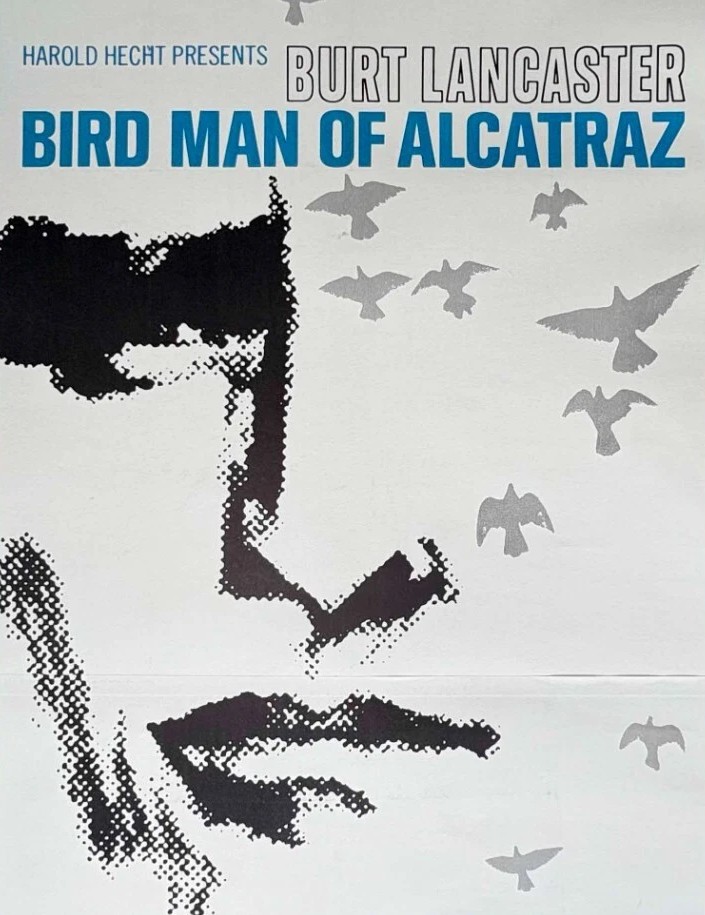
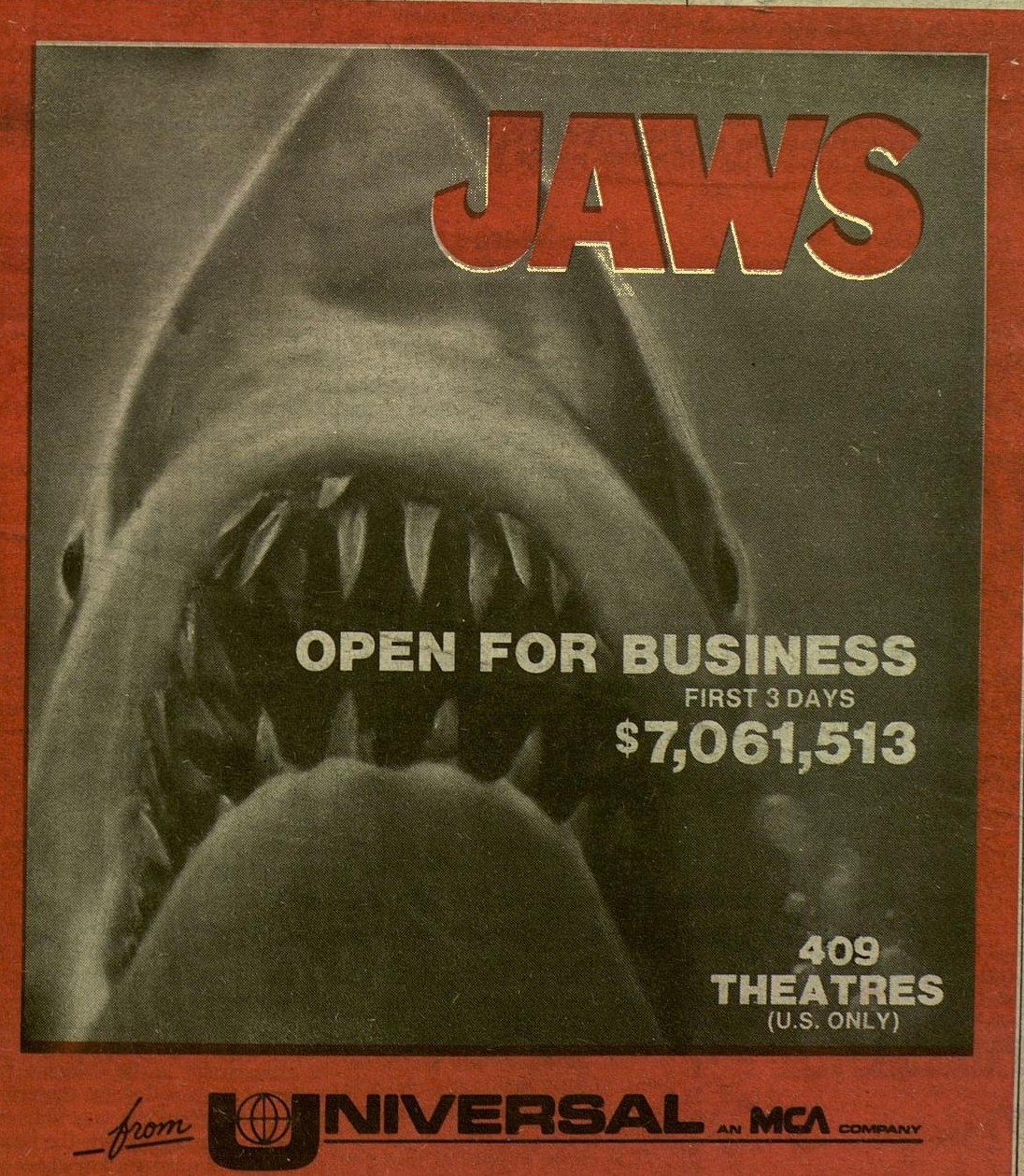
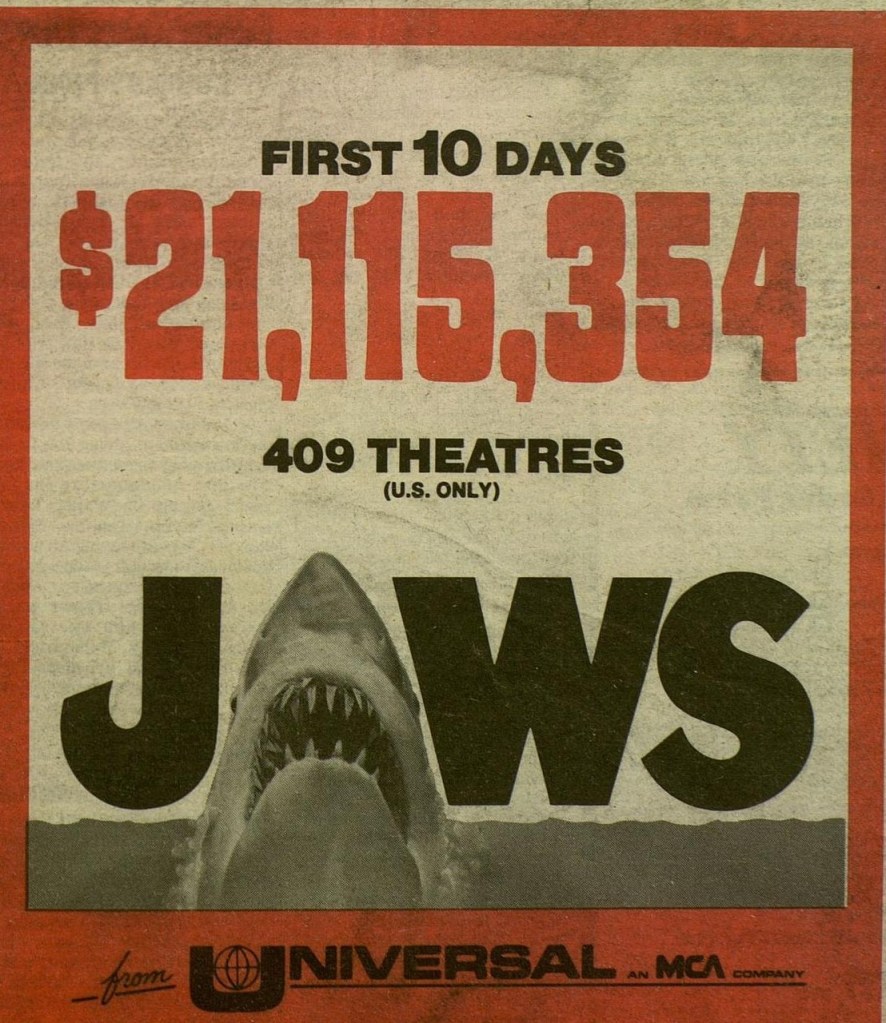
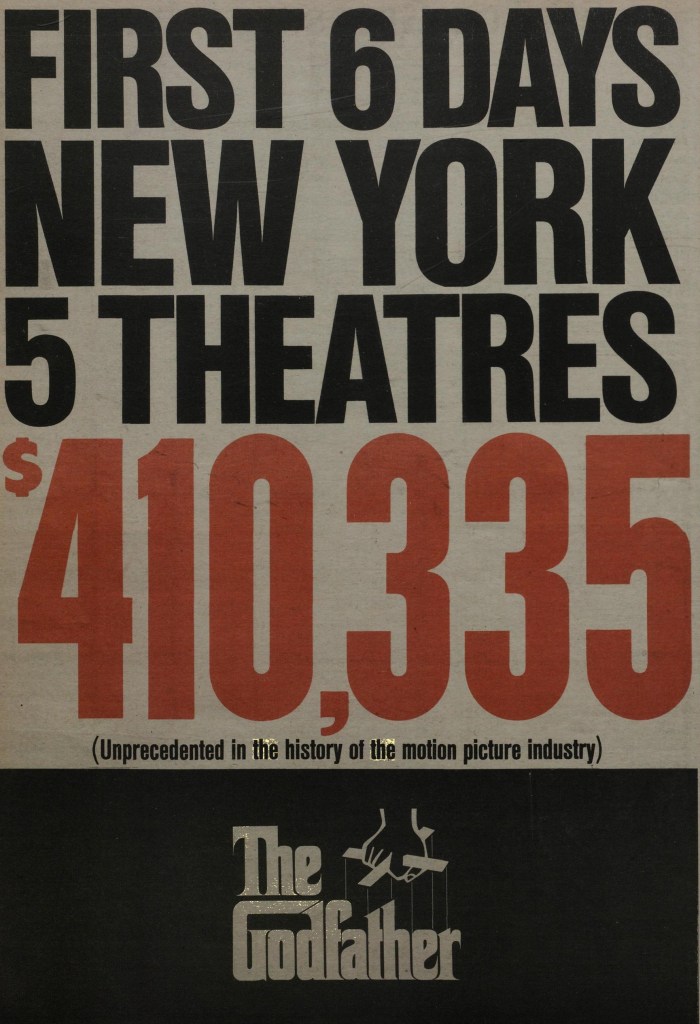
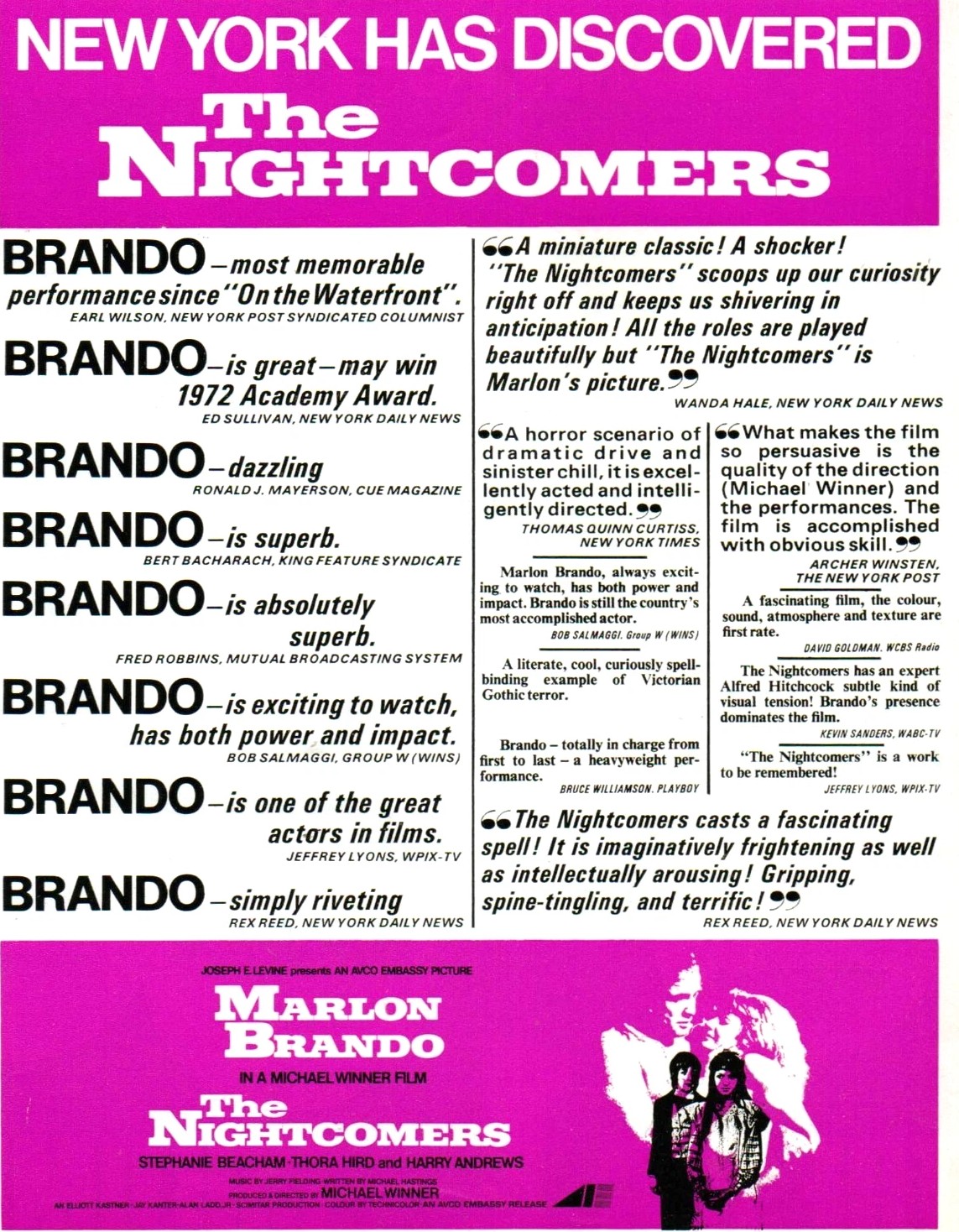

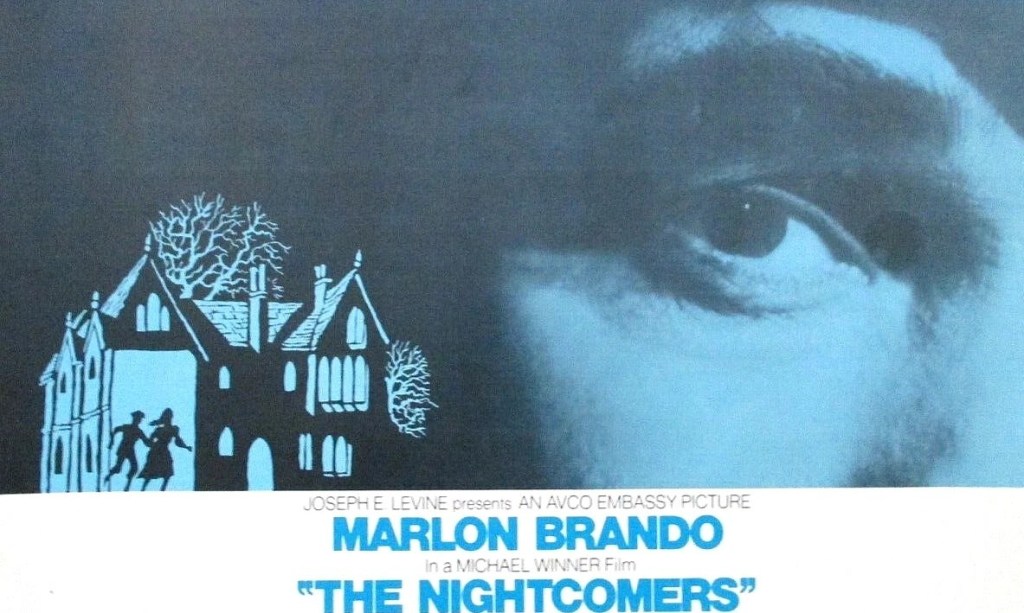
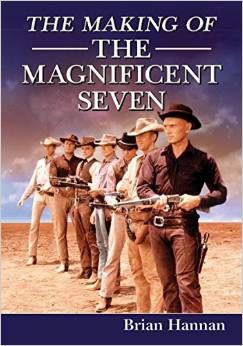
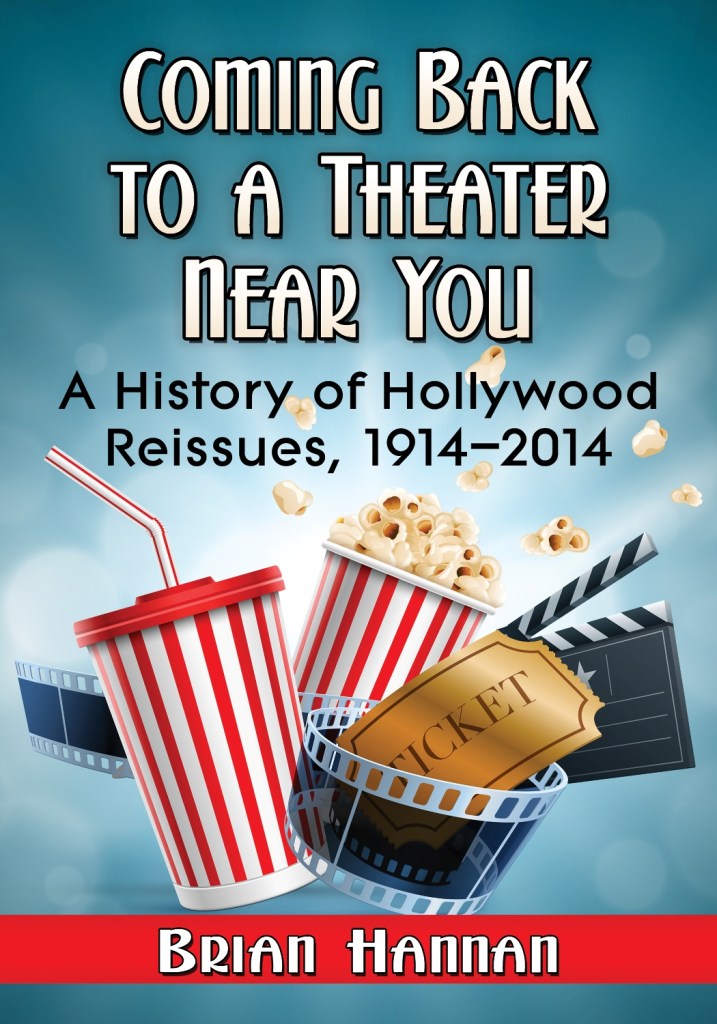
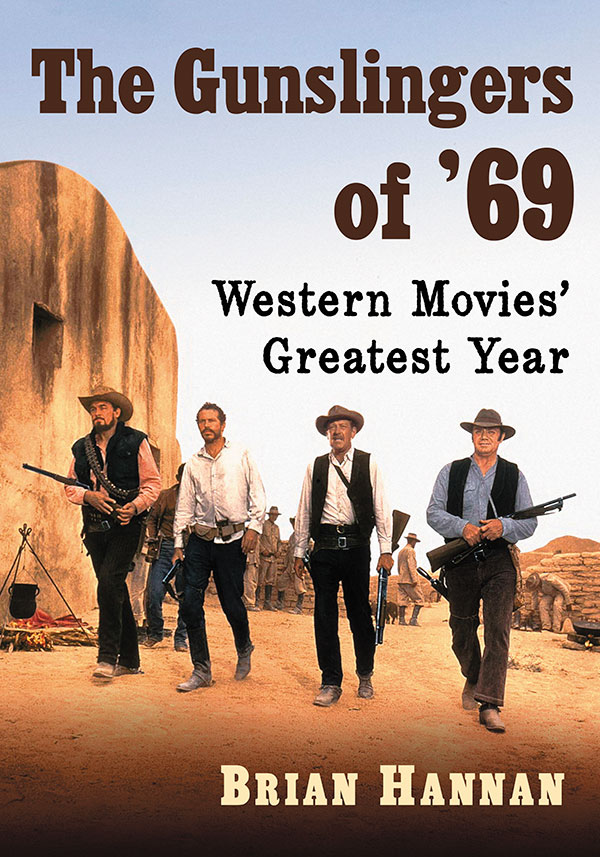
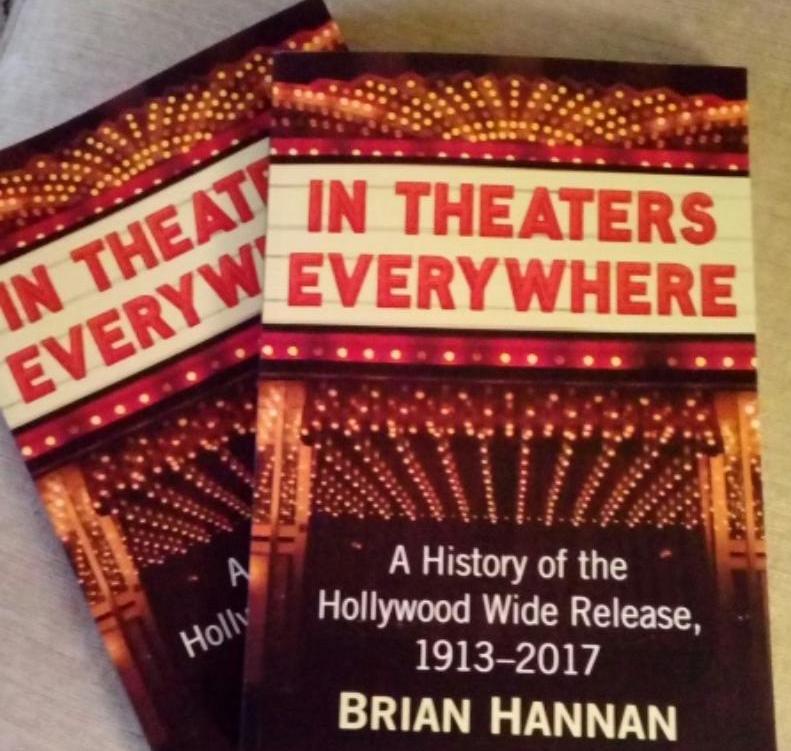
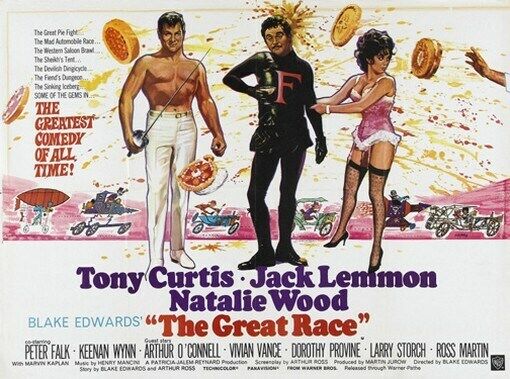


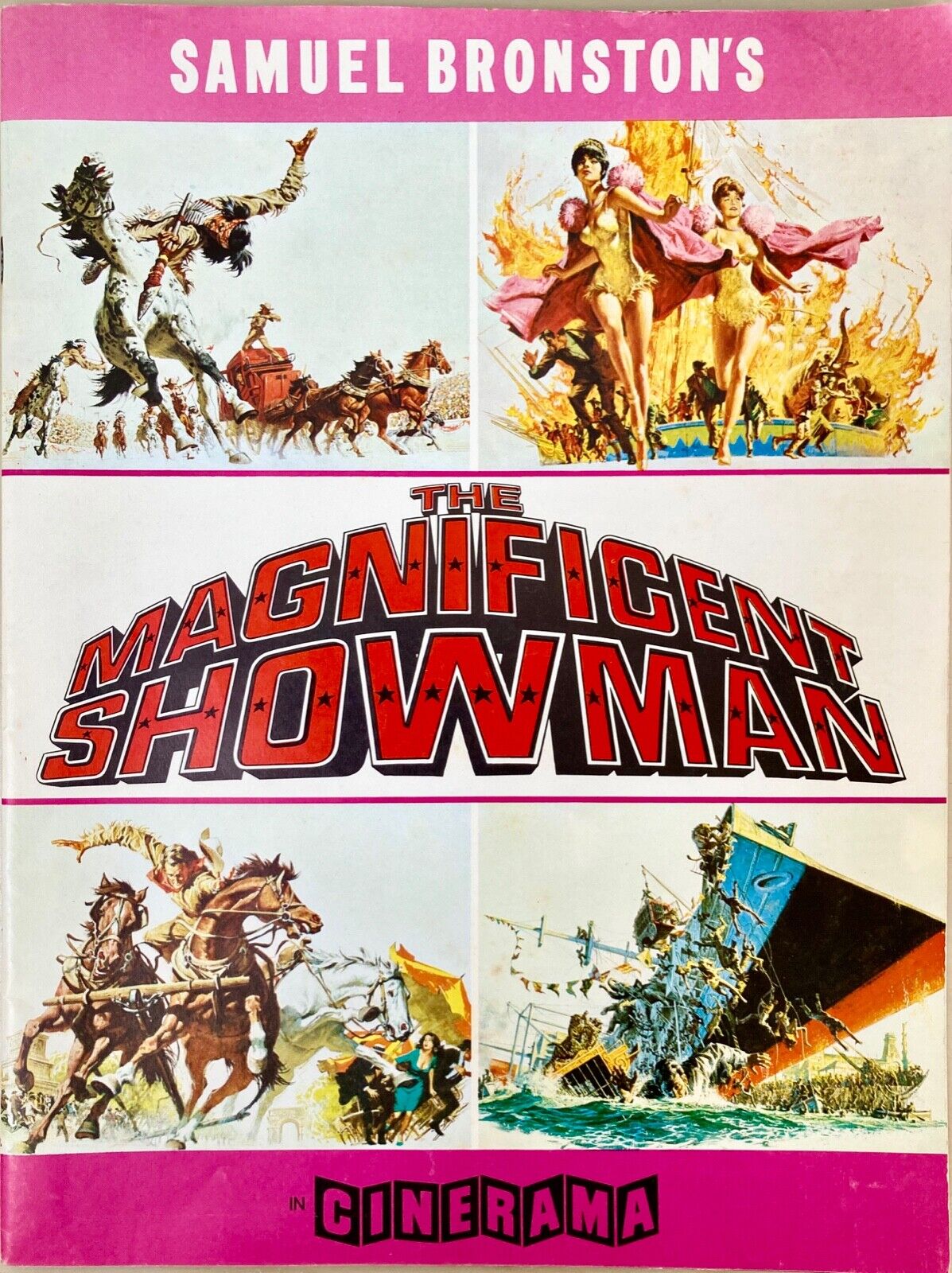
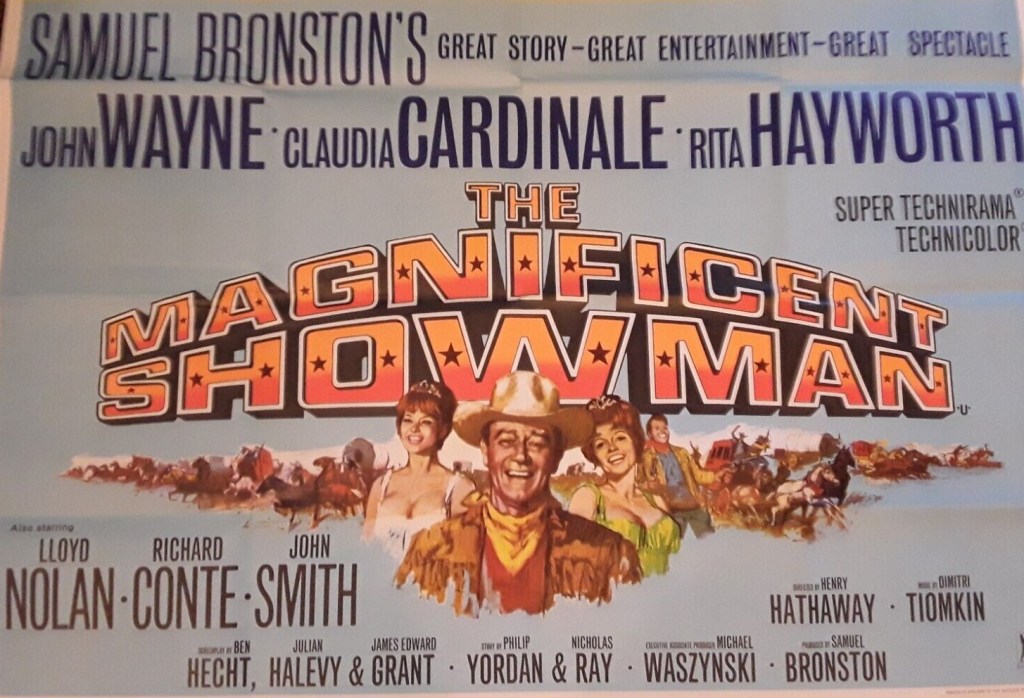


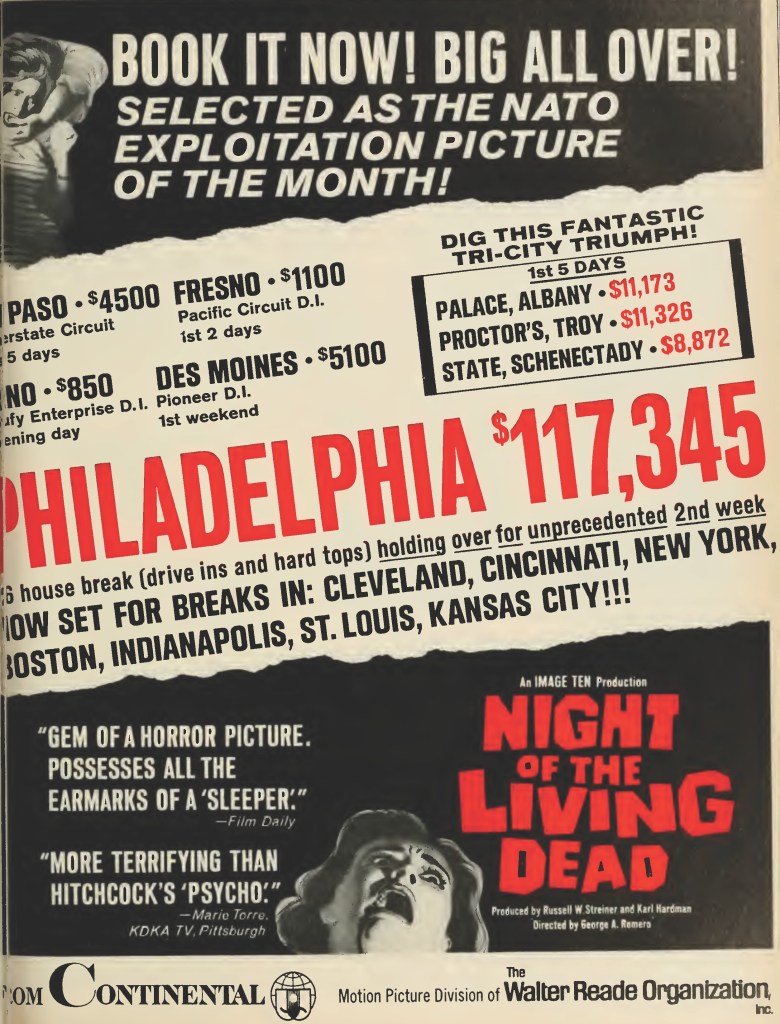

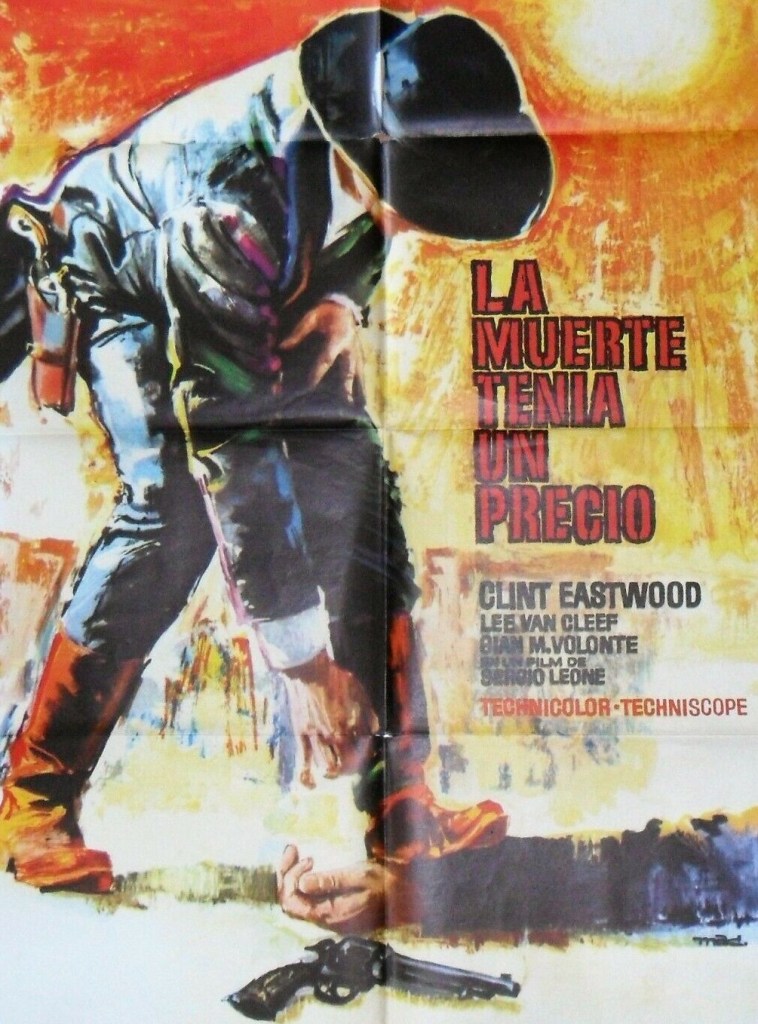
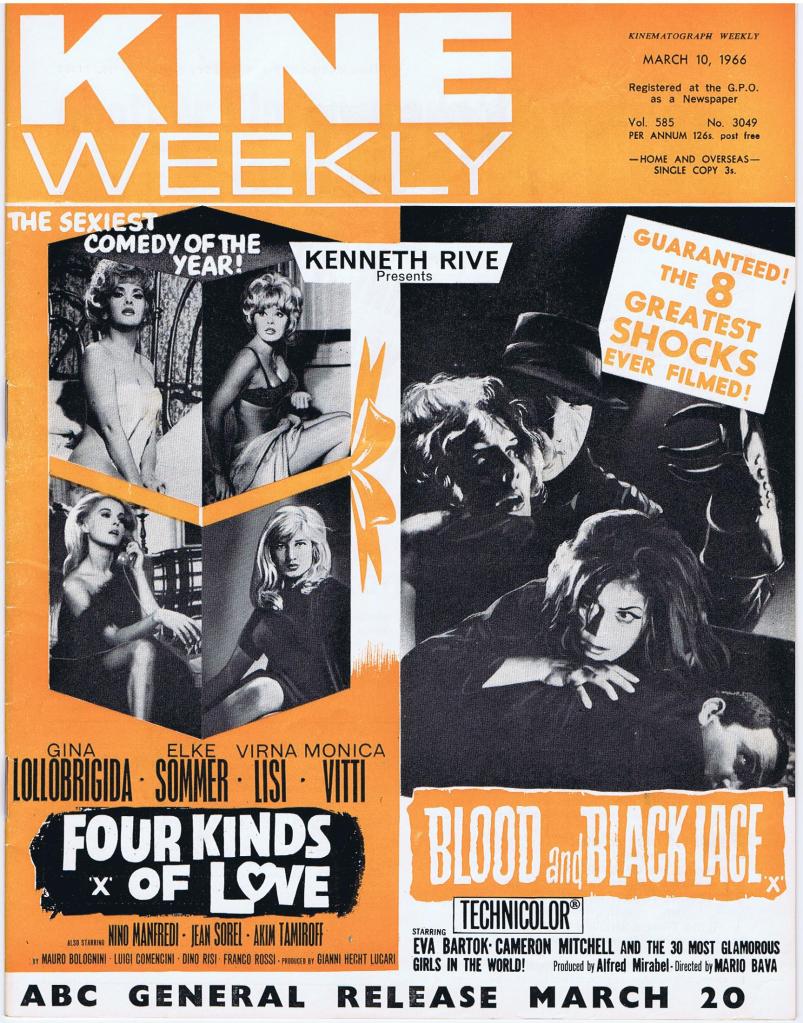
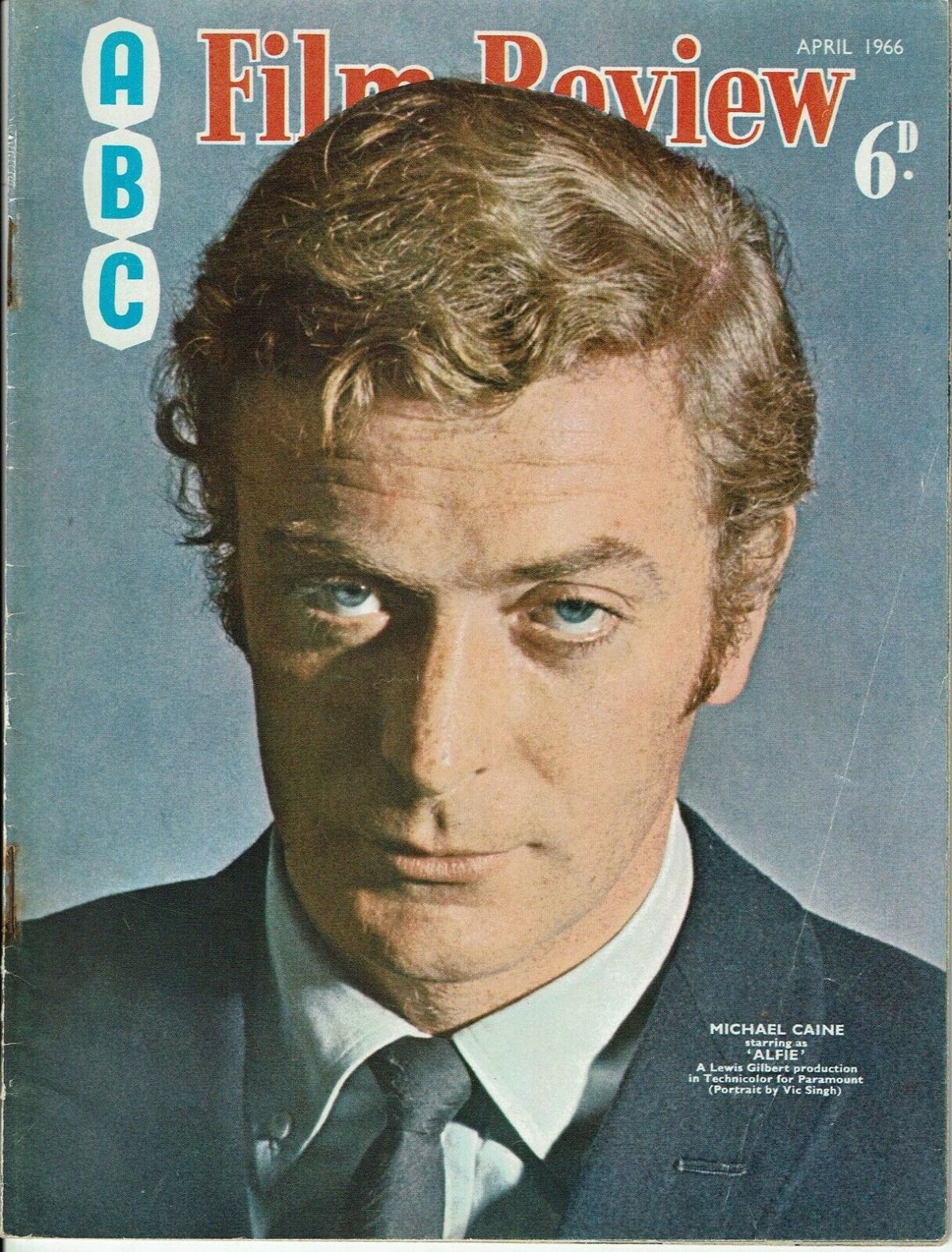
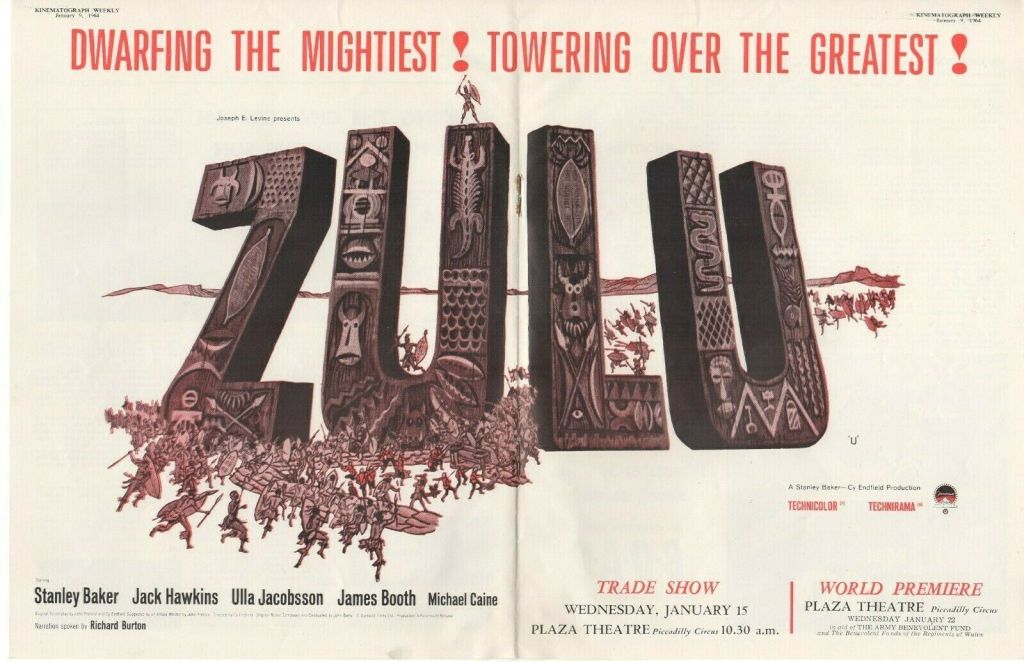
 The Magnificent 60s