The Innocents (1961) ***

One description of this film’s prequel The Nightcomers (1972) was that, even with the overt sex and violence, it was an arthouse picture masquerading as a horror movie. And obviously absent the sex and violence that’s how I feel about this one. I’m of the old-fashioned school when it comes to horror – once in a while I expect to jump. The biggest problem here is that fear is telegraphed in the face of governess Miss Giddens (Deborah Kerr). Instead of the audience being allowed to register terror, all the tension is sapped away by one look of her terrified face.

Atmospheric? Yes! Scary? No.

Certainly, the set-up is likely to spark the darkest imaginations. Orphans Miles (Martin Stephens) and Flora (Pamela Franklin) are abandoned by their uncle (Michael Redgrave) who wants to spent his time enjoying himself in faraway London without having to bother about the care of the minors. The governesses he installs are given carte blanche to deal with any situation that arises – as long as they don’t concern him with it. And he’s so disinterested in the children’s welfare that he hires a completely inexperienced governess in Miss Giddens despite the fact that the previous occupant of the post, Miss Jessel, had died in mysterious circumstances and a little digging would have revealed that she lived a hellish life under the thumb of valet Quint.

The kids appear somewhat telepathetic or telekinetic – Flora knows Miles is coming home before Miss Giddens does, Miles knows when the governess is standing outside his door. They’re maybe a too bit self-indulgent – Flora enjoys watching a spider munch on a butterfly and isn’t above finding out if her pet tortoise can swim, while Miles has Miss Giddens in a neck stranglehold.

But it’s unlikely the children are summoning ghosts – Quint appears to Miss Giddens at the top of a tower and again peering in through a window, Miss Jessel turns up, too, and I lost count of the number of disembodied voices. The ghosts it turns out have taken possession of the children in order to continue their relationship.

And while this is all very clever it does not chill you to the bone. The children are not as cute as they need to be to make this work. You get the impression, given half the chance, they would happily turn into little savages and experiment with all manner of cruelty. And that would occur whether there was the likes of Quint around to lead them astray because the adults in their lives are so selfish and set the wrong kinds of standards. But with the focus perennially on the trembling Miss Giddens, there’s little chance of getting inside the heads of the children.

Since jump scares are not in director Jack Clayton’s cinematic vocabulary, the best scenes are not visual, but verbal, housekeeper Mrs Grose (Meg Jenkins) filling the governess in on the unequal relationship between Quint and Miss Jessel, Flora imagining rooms getting bigger in the darkness (effectively more dark), Miles seeing a hand at the bottom of the lake.

There’s certainly an elegiac tone and the camera clearly sets out to destabilise the audience but that’s just so obvious it seems more an arthouse ploy than a horror schematic.

This was start of Deborah Kerr (Prudence and the Pill,1968) playing psychologically distorted characters. Over the previous decade she had revelled in a screen persona that saw her playing the female lead (sometimes the top-billed star) opposite the biggest male marquee names of the era – Burt Lancaster (twice), Cary Grant (twice), Yul Brynner (twice), Gregory Peck, William Holden, Robert Mitchum (three times), David Niven (twice), Gary Cooper. Now she turned fragile and that screen persona, introduced here, would see her through the next decade.

So she’s both very good and very bad here. Her character facially registers her inner thoughts but those too often get in the way of the audience. I found the kids more limited in their roles, not through acting inexperience, but through narrative restriction.

Jack Clayton (Dark of the Sun, 1968) directs from a screenplay by Truman Capote (In Cold Blood, 1967) and William Archibald (I Confess, 1953) from the celebrated Henry James story.

A bit too artificial for my taste. Probably heresy to admit it but I preferred the prequel.
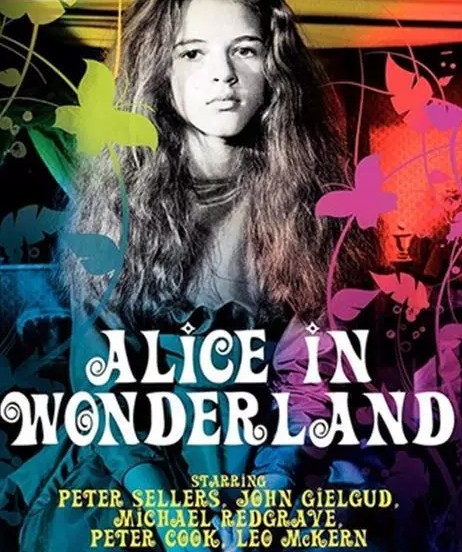
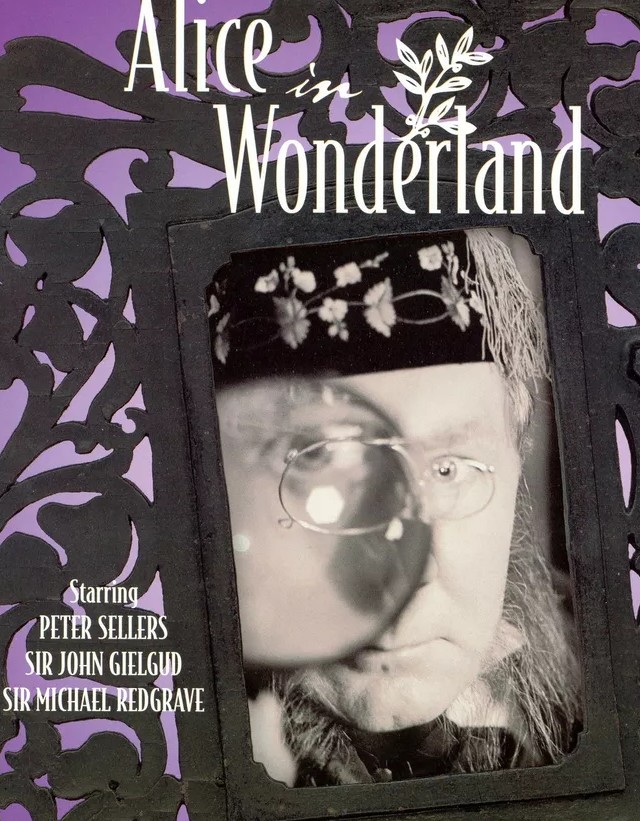
Alice in Wonderland (1966) **

Young bucks wanting to make a bigger splash are apt to rampage through sacred texts and treat unwary audiences to avant-garde notions. Thus, Jonathan Miller (Take a Girl Like You, 1970), in his debut, set aside all expectations and in fairness purists had decried Walt Disney’s 1951 telling of the Lewis Carroll classic. In truth audiences weren’t so in love with the Disney version either, an unusually low hitter for the company, and one that only really found its niche when reissued to catch a whiff of the stoned hippies who had drooled over 2001: A Space Odyssey (1968).

This 1966 reimagining might have been buried in the vaults after its initial showing except that Jonathan Miller went on to become something of a British institution, renowned directed of opera and stage plays, writer and presenter of a number of highly-regarded television projects and a regular on the talk show circuit. That his career had begun in sensational fashion, one of the hands on the tiller of the satirical Beyond the Fringe stage show (a hit in the West End and Broadway) and television program, meant that when he decided to spread his wings into the movies, no expense was spared.

Big stars flocked. What other neophyte could attract stars of the caliber of Peter Sellers (The Pink Panther, 1964), John Gielgud (Khartoum, 1966), Michael Redgrave (Goodbye, Mr. Chips, 1969), Leo McKern (Bunny Lake Is Missing, 1965), Peter Cook (The Wrong Box, 1966) and playwright Alan Bennett (The Madness of King George, 1994)? All admittedly in small parts but that was the nature of the all-star enterprise.

And that would have been fine if they had all been employed to supply the voices. Or if audiences had the fun of trying to determine who was who when hidden under the ton of make-up required to turn them into White Rabbits or Mock Turtles or Caterpillars or Lobsters cutting a quadrille.

But Miller had determined that not only was the Disney version short of the mark but for too long readers had missed the entire point of the Lewis Carroll book. He decided the point of the story wasn’t humor at all, nor a succinct exploration of the pitfalls of language, but about a young girl adrift in a adult world of confusion. So that was bye-bye to the cuteness.

He even broke a cardinal role. Alice doesn’t fall down a rabbit hole. The whole thing is a dream.

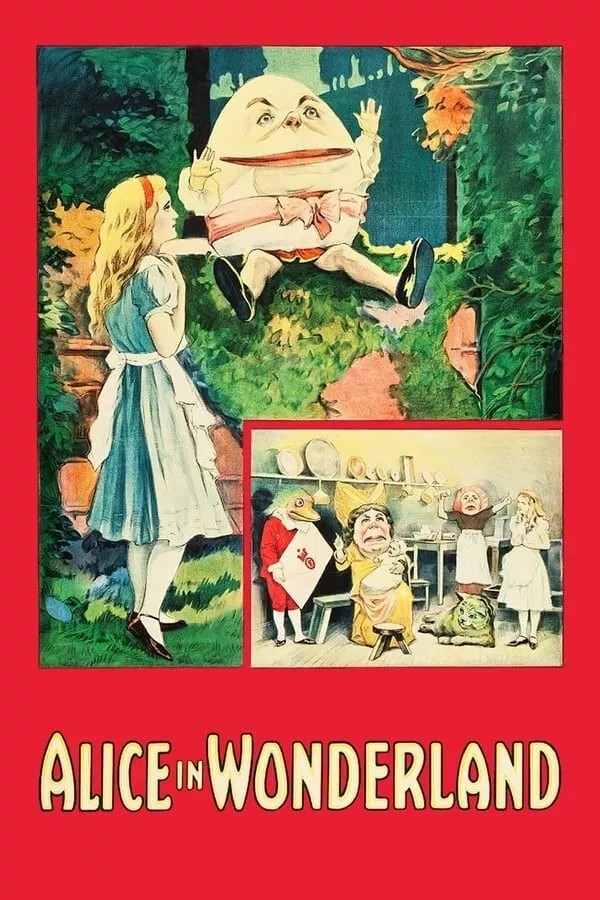
They’ve been adapting the book since the early days of cinema. This poster dates from 1915.

So you need to listen carefully to find out, with the lack of make-up, which actor is playing which fantasy character. And this isn’t set in any fantasy world either, certainly far removed from the famous illustrations that accompanied the book. It takes place in Victorian times which, yes, reflects the era in which the book was written, but, no, seems an extremely odd decision to give what is still fantasy some kind of realism.

It’s as if the director didn’t really have the courage of his convictions. That said, if he was catering to the arthouse mob, it’s got that kind of cinematic sensibility, with voice-over and unusual compositions.

Just to help you out, let me tell you that Peter Sellers plays the King of Hearts, John Gielgud the Mock Turtle, Michael Redgrave the Caterpillar, Alan Bennett the Mouse, Finlay Currie the Dodo, Leo McKern the Duchess and Peter Cook the Mad Hatter. The part of Alice went to 13-year-old Anne-Marie Mallik who never made another movie.

While it retains enough of the original to be recognizably based on the book – with all the catchphrases, “off with their heads” etc – the locale is just totally at odds with the story. And while it’s a tonic to hear the mellifluous tones of John Gielgud uttering the author’s immortal words, it would have been better just to hear his voice.

My guess is this is only still available because Miller made such a name for himself. You can catch it on Talking Pictures.

Curiosity or mess, it’s hard to decide.

https://www.facebook.com/TalkingPicturesTV/videos/easter-on-tptv/654499693946106

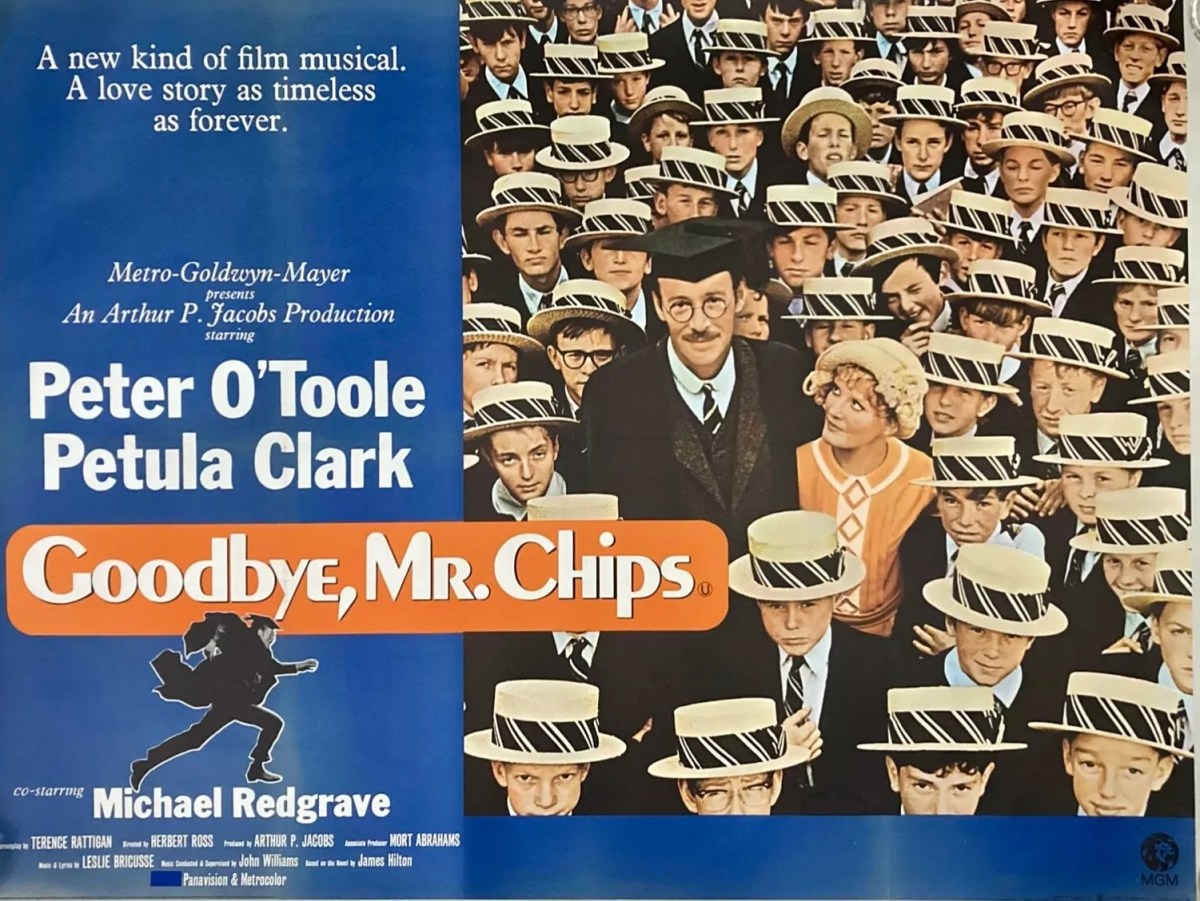
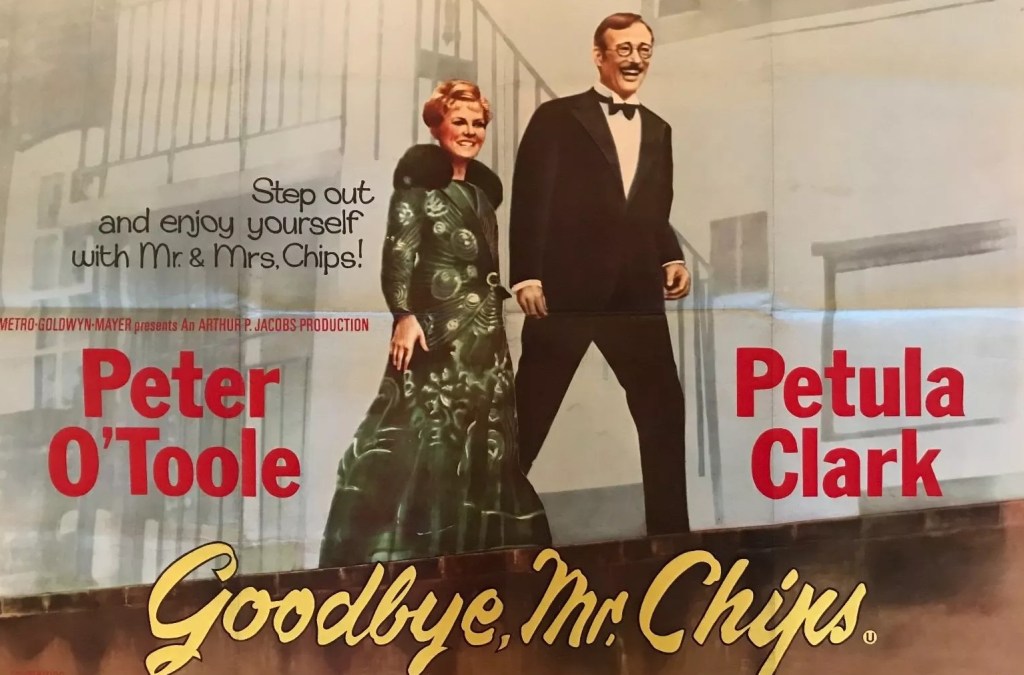
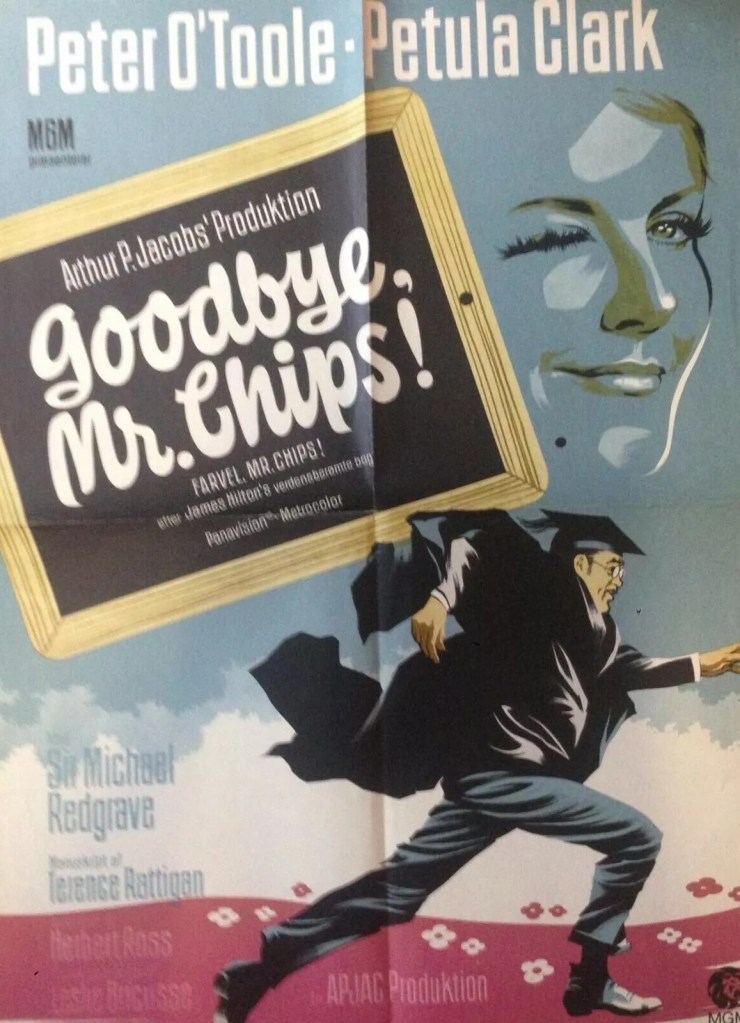
Goodbye, Mr Chips (1969) ****

Stunning revelatory performance by Peter O’Toole (The Night of the Generals, 1967) and unexpected screen chemistry with former British child star turned pop singer Petula Clark (Finian’s Rainbow, 1968) lift a relatively humdrum musical remake of the 1939 classic. Musicals entrusted with roadshow-sized budgets usually came with the proviso that they had already conquered London’s West End or Broadway – The Sound of Music (1965), Oliver! (1968) et al – and so came with an inbuilt audience. A movie musical original with little audience familiarity was always a risk.

There had been a trend away from the choreographic splendor, star exuberance and lightweight narratives that held the key to the golden era of Hollywood musicals. The movie musical had embraced both the introspective and weightier tales – Camelot (1967) the most obvious example. Male stars who couldn’t sing could simply “talk” their way through a tune following the example of Rex Harrison in My Fair Lady (1964).

The proper stretching of vocal chords is sensibly left to Petula Clark, but none of the songs by Leslie Bricusse (Doctor Dolittle, 1967) leave much of an imprint, and you might question why MGM was in such a hurry to commission a remake at all except for O’Toole’s Oscar-nominated turn. By now audiences were well aware of the actor’s screen tics and the intensity he could bring. But moviegoers might as well have been embracing a new star because everything you ever knew about O’Toole was left at the door.

In some respects the realism of his performance plays against the picture, which, effectively, save for the ending, has a lightweight narrative. There’s nothing remotely charming about his characterization of Arthur Chipping. He’s not the kind of eccentric fuddy-duddy that was a common feature of the British movie. Duty has got in the way of likeability. We are introduced to him denying a poor lad the opportunity to become a school tennis champion on the last day of term simply because the match had been scheduled to take place within teaching hours. Small surprise that he is actively disliked, although he takes that, in some respects, as a mark of his teaching prowess.

Unexpectedly, he is introduced to music hall singer Katherine (Petula Clark). What would be the standard meet-cute turns into a meet-awful as unintentionally he delivers a series of insults. Unexpectedly, they meet again, this time in the kind of surroundings that suit his mentality, a Greek amphitheater where he can demonstrate his academic skill, filling her on the acoustics and on the fact that sound travels upward so it’s easier for the person seated above to hear the person standing below than the other way round. Cinematically, this is superbly done, the best scene in the picture from a visual perspective.

Even though, initially, he has no recollection of their previous meeting, a spark is lit and catches fire so that when he returns to school it’s with a somewhat “unsuitable” bride. The best scene in the movie from an emotional perspective is driven by Katherine as she injects some verve into the stodgy school hymn so much so that she soon has the entire school singing with gusto and as though they have for the first time understood the lyrics.

It’s not long before her influence softens the harsh schoolmaster. But she is not a welcome addition in many eyes, her background not what would be expected of a schoolmaster’s wife, and a couple of sub-plots revolve around the impact of her unsuitability on her husband’s career. There’s not much more to go on beyond the sad ending and as I said the songs are treated in low-key fashion rather than full-on energy with dancing schoolboys in the background.

But you don’t really need the songs to enjoy this. Peter O’Toole’s sensational performance more than justifies the remake while the pairing with Petula Clark works surprisingly well.

Herbert Ross (Play It, Again, Sam, 1972) makes his directorial debut. Terrence Rattigan who had previously delved into the public school system to find lonely teachers with The Browning Version (1948) updates the original tale by James Hilton. This is not the performance Peter O’Toole fans would generally nudge you towards, because it’s such an oddity in his portfolio, but, truly, this deserves much wider appreciation

The Heroes of Telemark (1965) ****

Stellar World War Two mission picture, replete with tension and thrilling ski chases, told with some style, and with a conscience, probing the issue of civilian collateral damage.  Sensibilities were not so inflamed at the time when the US, as demonstrated in Oppenheimer (2023), dropped the atomic bomb on Japan, causing the deaths of hundreds of thousands of non-military personnel. Here, at stake are the 6,000 townspeople who live around the plant housing the German experiments into heavy water, the alternative method for building an atom bomb.

When the safety of the entire world is in the balance, and death is doled out by remote bombers, thousands of feet up, with no close-up of the carnage, it appears far more acceptable than when you are planting a bomb on a ferry boat, knowing you are possibly consigning all the passengers to drowning.

That’s the climax of this well-plotted and well-constructed quite thrilling last picture from director Anthony Mann (The Fall of the Roman Empire, 1964) – he died during the making of A Dandy in Aspic (1967) so that cannot be fully ascribed to him and in any case this is a much better send-off.

Probably old-school British and Hollywood pictures were to blame for depicting scientists as stuffy individuals, allowing work to overrule romance. But as Oppenheimer demonstrated, that was not always the case and here we are introduced to top Norwegian egghead Rolf (Kirk Douglas) when he is stealing an illicit fumble with an employee in the darkroom.

The Germans are racking up production of heavy water, aiming to produce – drip by endless drip – 10,000lb of the stuff in double quick time. Norwegian saboteurs led by Knut (Richard Harris) hitch a ride by boat to Britain to inform the Allies of the danger. The obvious solution is to bomb the hell out of the factory, despite the impact on the civilian population.

But that fails. Plan B, dropping 50 highly-trained British commandos, into snow-covered Norway, comes a cropper when the plane crashes. A beautifully-filmed sequence, by the way, in extreme long shot, with one character at the front to provide perspective, a burst of flame at the far end of the white landscape.

So the saboteurs have to do it for themselves, the reluctant Rolf forced into action since he’s the only one, purportedly, who knows where to place the plastic explosive around the tanks holding the heavy water. The Norwegians shoot themselves in the foot by, in limiting the potential civilian casualties, only aiming to blow up the water tanks not the entire factory. Turns out the clever Germans have their own Plan B, other tanks already assembled which can be quickly fitted in the event of such sabotage.

Now with the plant more heavily guarded, access is impossible, and the only chance to stop the consignment of heavy water reaching Germany is to stop it getting there, by blowing up the train carrying the materiel as it crosses the fjord by ferry. Had this sabotage taken place in Germany, nobody would have given two hoots about the passengers, collateral damage be hanged. But this being Norwegians, Rolf feels duty bound to remain on board rather than escape, and formulate a plan to minimize the casualties.

I’m not sure how true that aspect is, it feels like something intended to present the main characters in a less ruthless light, although in reality the bombs were positioned and timed to help make survival easier.

Although told in semi-documentary style a la the same year’s Operation Crossbow, In Harm’s Way and Battle of the Bulge, with the aforementioned sensibilities to the fore, and the re-firing of romance between Rolf and divorced wife Anna (Ulla Jacobsen), the ruthless Nazi habit of executing hostages any time one of their soldiers is killed or even attacked, a traitor in the camp, open hostility between Rolf and Knut and stunning ski sequences that are the equal of anything in the James Bond canon, this is a riveting watch.

Must have been one of the cheapest music scores and screenplays on record given how often the director dispensed with both dialog and music during the lengthy sabotage scenes. When dialog was permitted, it was often sharp or humorous.

There was no stiffer upper lip in Hollywood than that of Kirk Douglas (The Brotherhood, 1968) though his hard-nosed demeanor is alleviated by romance and his efforts to minimise civilian casualties. Richard Harris (This Sporting Life, 1963) always seemed ready to explode. Ulla Jacobsen (Zulu, 1964) and Michael Redgrave (Assignment K, 1964) bring some class to the supporting roles.

Tremendous piece of direction by Anthony Mann, as adept at the action and building tension as handling the personality clashes between the principals and the intimacy of romance. Ivan Moffat (Tender Is the Night, 1962) and Ben Barzman (The Blue Max, 1966) wrote the screenplay based on a memoir by Knut Haueklid and the novel But for These Men by John Drummond.

A fitting last hurrah for Anthony Mann.

https://amzn.to/3Rz0azh

Young Cassidy (1965) ***

I’m assuming MGM adjudged that a film about a playwright, no matter how famous, and even if directed by John Ford (Cheyenne Autumn, 1964), would not be enough to attract an audience. And that a better physical match for said writer would have been a weedy actor of a Tom Courtenay  disposition. So, I came to this with no idea it was about world-famous Irish playwright Sean O’Casey since his name is never mentioned and the main character is called John Cassidy (Rod Taylor).

Which was just as well because I was wondering what kind of lad Cassidy was when despite his obvious brawn he was an inept labourer, requiring instruction on how to properly use a spade. That this working-class fellow has any inclination towards authorship is not obvious until halfway through the picture, by which time he has demonstrated qualities more appropriate for brawling, revolution and sex. 

Technically, this was a John Ford film as he was the producer.
The French chose not to point out he was not the director.

It probably says a lot about me that I was unaware of the significance of the title of O’Casey’s most famous play – The Plough and the Stars (1926 and, incidentally, filmed a decade later by Ford). By the time I was cogniscent of the country – early on, I assure you, as my grandfather was an Irish immigrant – the Irish flag was the tricolor made up of green, white and orange. I hadn’t known that the flag created by rebels two years before the Easter Uprising of 1916 was a representation of the plough and the stars, hence public outrage when O’Casey blithely adopted it as the title for his breakthrough play.

But you only need a vague idea of history to appreciate the movie. A couple of stunning scenes provide the background of dissent and poverty. The brutality of soldiers and police in quelling a riot is matched by striking transport workers tossing a scab into the river, his drowning ensured by the wagon that follows him in. Cassidy’s true position in the hierarchy is best shown when he is given a cheque rather than cash from a publisher. Lacking a bank account, not only does he fail to cash the cheque but is treated dismissively by clerks at the bank. His joy at rising above his station in receiving such a payment is immediately destroyed by feeling out of place and unwelcome in a bank.

Because, otherwise, Cassidy is quite the confident young fellow, winning over almost any young woman who falls within his compass, varying from upmarket prostitute Daisy (Julie Christie) to meek bookshop assistant Nora (Maggie Smith) and casual acquaintances.

Writing isn’t presented in the romantic manner of David Lean in Doctor Zhivago out the same year (with Julie Christie in a much bigger role), no stunning imagery and no close-up of soulful eyes, just Cassidy sitting at a table working through the night. But there is no indication as to why he chose plays as his metier, especially when the main theatre in Dublin, the Abbey, was the fiefdom of the middle- and upper-classes.

Ironically, Cassidy is tested more when his situation improves than as a downtrodden worker joining the revolutionary cause. As a worker his fists, brawn, brain and looks see him through. But once he steps up into the intellectual class, he is adrift, his new occupation driving a wedge through relationships.  

Not aware that this was a biopic of a playwright, I had little need to question the narrative, and just took each incident as it came. I never had the impression of a condensed biopic, crammed full of cameos. More of an interesting story set  against the background of rising Irish nationalism.

There’s a certain amount of “Oirishness” to contend with – the accents vary – the poverty is never as bleak as you might expect, and once the story heads out of Dublin you might think it’s going to go all the way to The Quiet Man country. But then you have to bear in mind that working-class poverty, as long there was employment available, was not quite of the slum kind, and that once you get out of Dublin you do indeed hit beautiful countryside.

Rod Taylor is good as the brawler-turned-playwright. In the duel of the rising stars, Maggie Smith (The Prime of Miss Jean Brodie, 1969) wins by a nose from Julie Christie, but then, though further down the credits, she has the bigger role. Michael Redgrave (Assignment K, 1968) as poet W.B. Yeats (responsible for the phrase “a terrible beauty is born”) makes the most of choice lines, Edith Evans (The Chalk Garden, 1964) is a quirky, mischievous  Lady Gregory, co-founder of the Abbey. It’s top-heavy with talent including Sian Philips (Becket, 1964), Flora Robson (55 Days at Peking, 1963), Jack MacGowran (Age of Consent, 1969) and T.P. McKenna (Perfect Friday, 1970).

Turns out John Ford was too ill to direct more than few minutes and that role fell to Jack Cardiff (Dark of the Sun, 1968) and I would have to say he does an agreeable job. John Whiting (The Captain’s Table, 1959) drew from O’Casey’s autobiography to write an intelligent script.

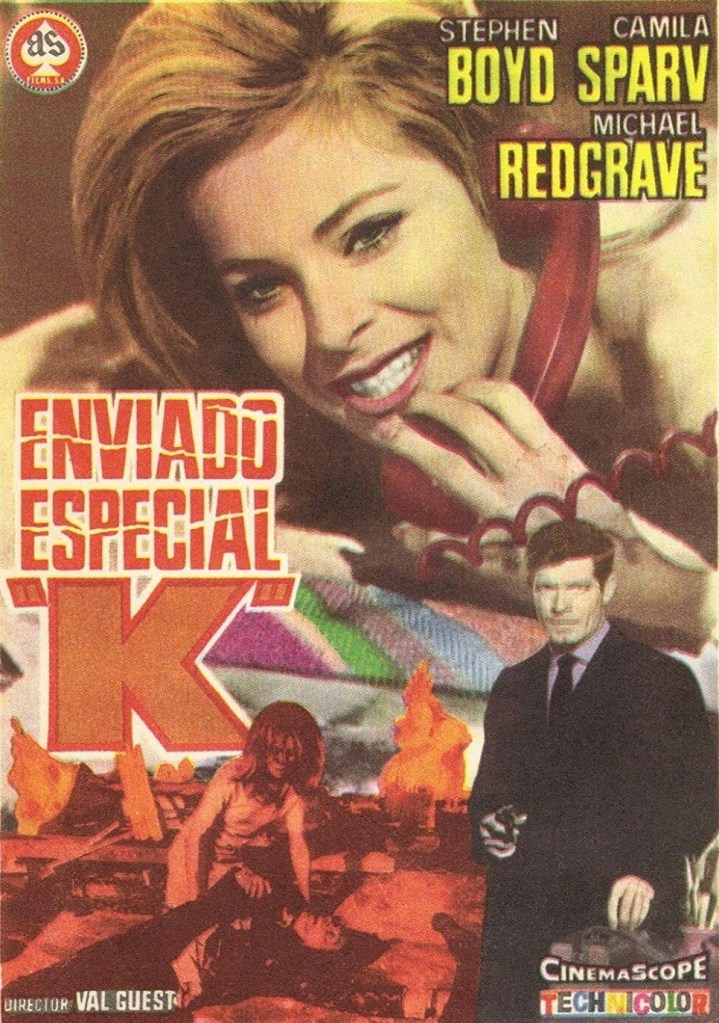
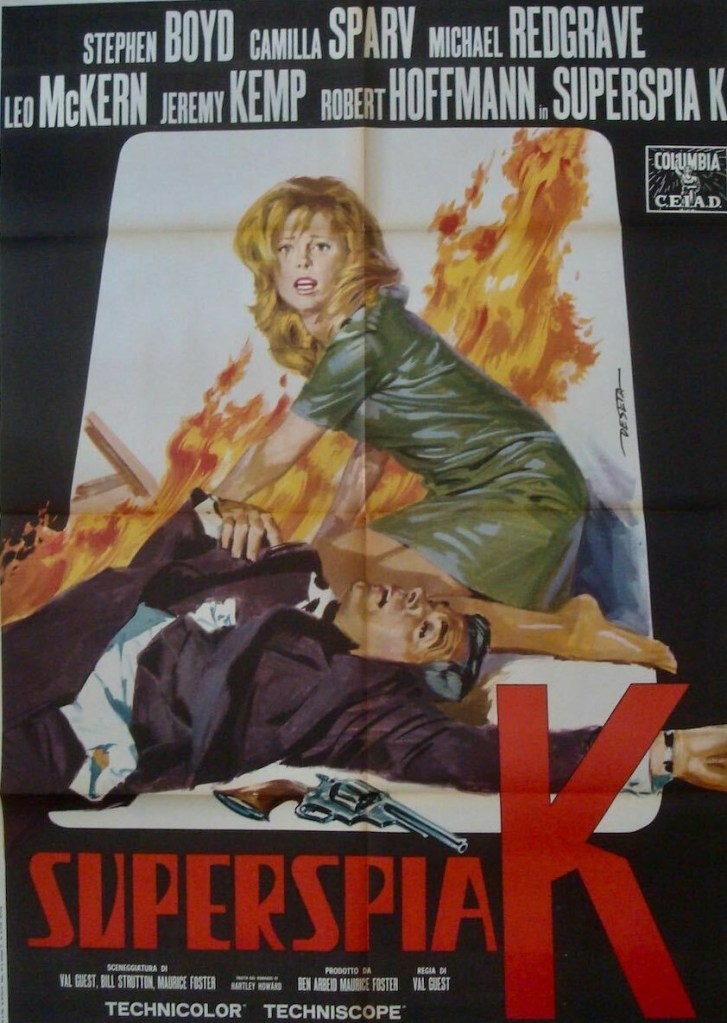
Assignment K (1968) ****

A good notch above the routine spy thriller, this deserves another look. By the mid-1960s the screen was awash with spies so other than trying to invent a new hero in the Matt Helm/Derek Flint vein or revamping older characters such as Bulldog Drummond  or sending up the entire genre in the style of Casino Royale (1967), it was difficult to find a fresh angle.

Assignment K does in some measure succeed, in part by going down the grimy  route of The Spy Who Came in from the Cold (1965), in part by stuffing the picture full of glorious scenery – the Austrian Alps – and in part by turning Stephen Boyd into the kind of spy who has begun to question the entire business. For reasons unspecified, former racing driver turned toy salesman Boyd (The Big Gamble, 1961) is running his own spy operation loosely linked into British intelligence but when the network is compromised his life and that of new love interest Camilla Sparv (Nobody Runs Forever/The High Commissioner, 1968) endangered. Things get trickier when she is kidnapped and he has to save her while not compromising his own agents.

There is enough mystery to keep the plot, uncoiling like Russian dolls, ticking along and the entire effort is underwritten by some decent tradecraft, dead letter drops, microfilm hidden inside cigarette filters and so on. Tension is surprisingly high. And Boyd is surprisingly human, falling properly in love for one thing, not just treating women in the James Bond/Matt Helm fashion as notches on a bedpost, not ice-cool under pressure either, face knotting in fury on occasion, and not so accomplished in the old fisticuffs department. There is less reliance on just sticking out his chin and looking handsome and this is a more assured performance than in The Big Gamble.

Michael Redgrave (The Hill, 1965), Leo McKern (Nobody Runs Forever) and a pre-Please, Sir John Alderton provide decent support though Jeremy Kemp (The Blue Max, 1966) is somewhat subdued. But Boyd is a revelation. Here, his screen charm and charisma are at their best and while he was never going to attract the attention of the Oscar fraternity is entirely believable as a spy coming to wonder at decisions taken.

Sparv, too, is much better than I have ever seen her. Unlike her turn in Murderers Row (1966), her role is not merely decorative and the unfolding romance would work perfectly well just as a love story never mind tucked away in the guise of a spy thriller. There is a lovely demonstration of her acting skill, although an odd one to describe, as she pulls on a bathrobe and shimmies out of the towel underneath; I can’t believe that was ever scripted, but if you watch it you will see what I mean.  Swedish Sparv was often viewed just as another of the decade’s ubiquitous European starlets but in fact she shows genuine acting ability.  

Director Val Guest was usually labelled a “journeyman” despite a repertoire that included The Quatermass Xperiment (1955) and its sequel, Yesterday’s Enemy (1959) and sci-fi The Day the Earth Caught Fire (1961) and he had previous form in this genre with Where the Spies Are (1966) which played more to the comedy gallery and did some work on Casino Royale to boot. Guest was also involved in the screenplay along with two first-timers Bill Strutton and Maurice Foster, the former primarily a television writer, the latter a producer. Guest’s work here falls into the efficient category, but it does zip along at the same time as allowing Boyd and Sparv to develop their characters and make their relationship believable. All in all quite enjoyable.

CATCH-UP: The Blog has reviewed Camilla Sparv in Dead Heat on a Merry-Go-Round (1966) Nobody Runs Forever/The High Commissioner (1968) and Downhill Racer (1969). Stephen Boyd pictures reviewed so far are The Big Gamble (1961), The Fall of the Roman Empire (1964) and The Third Secret (1964).

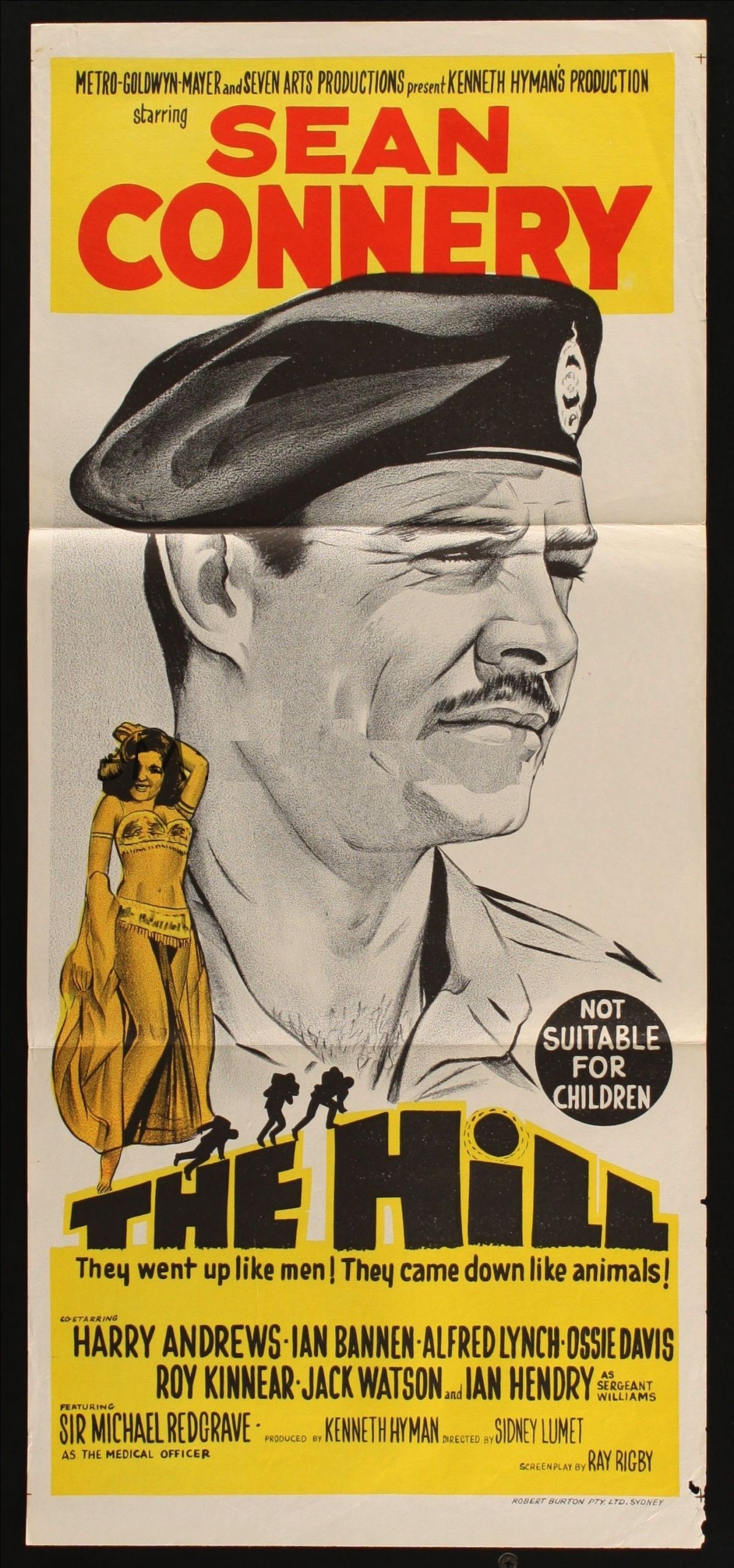
The Hill (1965) ****

Set in a British Army prison camp in North Africa during World War Two ruled by sadistic Sergeant Wilson (Harry Andrews) who believes himself above the regulations he forces others to follow, The Hill is a parable about the hypocrisy of totalitarian rule. And much of what is shown would be offensive to modern sensibilities. Although the commandant (Norman Bird) and medical officer (Michael Redgrave) are his superior officers, Wilson runs the unit by force of personality. He believes his ruthless treatment of the prisoners turns them into proper soldiers. Into his fiefdom come five new prisoners including coward Joe Roberts (Sean Connery), spiv Monty Bartlett (Roy Kinnear), African American Jacko King (Ossie Davis), another Scot Jock McGrath (Jack Watson) and weakest link George Stevens (Alfred Lynch).

Most films about prisons emphasize imprisonment, most scenes taking place in cells or other places of confinement. Sidney Lumet (The Pawnbroker, 1964) directs this film as though it is a paeon to freedom with incredible shots of the vista within which the men are contained. He uses some of the most bravura camerawork you will ever see outside of David Lean. The film opens with a two-minute crane shot credit sequence that begins with a prisoner collapsing on the titular hill and pulls back to reveal the entire encampment and follows with a one-minute reverse tracking shot of Andrews striding through his domain. And while the camera controls what we see, our ears are constantly assailed by the constant drumbeat of other marching prisoners.  

Climbing the hill in full pack would break any man and those who collapse are roused by pails of water. The first to crack is Stevens who is constantly tormented by homophobic jibes. Continuous racist abuse is heaped on Jacko King until driven to the point of madness he begins to behave like a gorilla which frightens the life out of his superiors. Obeying orders, says Joe Roberts, is “like a dog picking up a bone.”  RSM Wilson is out of control, the commandant spending his nights with a prostitute, the medical officer clearly sent here as punishment for some previous misdemeanor. Of the senior staff only Harris (Ian Bannen) comes away with any dignity, constantly trying to thwart the worst bullying.

When Stevens dies suddenly, the film changes tack and becomes a battle for survival among those who could be blamed for causing his death and those who dare to point the finger.  Wilson has no problem stitching up his colleagues and blackmailing the medical officer while Roberts is beaten up for his effrontery in standing up to authority. But the astonishing presence and self-confidence and, it has to be said, courage of Wilson lords it over everyone, and there is an extraordinary scene where he forces the entire battalion of prisoners to back down when they are on the brink of open rebellion.

Connery as Roberts is superb in what is his first dramatic role in a bread-and-butter dramatic production rather than the glossier Marnie (1964) and Woman of Straw (1964) and while he has his moment of defiance he gives enough glimpses of vulnerability and fear to ensure we do not mistake him for his alter ego James Bond. Ian Bannen delivers a touching assured performance far removed from the nasty sarcastic personalities he portrayed in his other desert pictures, Station Six Sahara (1963) and the Flight of the Phoenix (1965).  Ossie Davies, as defiant as Connery, is brilliant as the man who works out a way to beat the enemy by confusing them; the scene in the commandant’s office where he treats the officer as his inferior is a tour de force.   

Although the Army is meant to run according to established regulation, where obedience to a superior is paramount, it is equally apparent that it can also become a jungle if those who are the fittest assume control. Sgt Wilson demands unquestioned discipline even as he is breaking all the rules in the book. But he retains his authority not just by bullying, but by intelligence, exploiting weakness, coolness under pressure and by welcoming confrontation, his personality as dangerous as any serial killer.   

Assignment K (1968) ****

By the mid-1960s the screen was awash with spies so other than trying to invent a new hero in the Matt Helm/Derek Flint vein or revamping older characters such as Bulldog Drummond  or sending up the entire genre in the style of Casino Royale (1967), it was difficult to find a fresh angle.

Assignment K does in some measure succeed, in part by going down the grimy  route of The Spy Who Came in from the Cold (1965), in part by stuffing the picture full of glorious scenery – the Austrian Alps – and in part by turning Stephen Boyd into the kind of spy who has begun to question the entire business. For reasons unspecified, former racing driver turned toy salesman Boyd is running his own spy operation loosely linked into British intelligence but when the network is compromised his life and that of new love interest Camilla Sparv is endangered. Things get trickier when she is kidnapped and he has to save her while not compromising his own agents.

There is enough mystery to keep the plot, uncoiling like Russian dolls, ticking along and the entire effort is underwritten by some decent tradecraft, dead letter drops, microfilm hidden inside cigarette filters and so on. tension is surprisingly high. And Boyd is surprisingly human, falling properly in love for one thing, not just treating women in the James Bond/Matt Helm fashion as notches on a bedpost, not ice-cool under pressure either, face knotting in fury on occasion, and not so accomplished in the old fisticuffs department.

Michael Redgrave, Leo McKern and a pre-Please, Sir John Alderton provide decent support though Jeremy Kemp is somewhat subdued. But Boyd is a revelation, given a lot more to do than stick out his chin and growl. Here, his screen charm and charisma is at its best and while he was never going to attract the attention of the Oscar fraternity is entirely believable as a spy coming to wonder at decisions taken.

Sparv, too, is much better than I have ever seen her. Unlike her turn in Murderers Row (1966), her role is not merely decorative and the unfolding romance would work perfectly well just as a love story never mind tucked away in the guise of a spy thriller. There is a lovely demonstration of her acting skill, although an odd one to describe, as she pulls on a bathrobe and shimmies out of the towel underneath; I can’t believe that was ever scripted, but if you watch it you will see what I mean.  

Director Val Guest was usually labelled a “journeyman” despite a repertoire that included The Quatermass Xperiment (1955) and its sequel, Yesterday’s Enemy (1959) and sci-fi The Day the Earth Caught Fire (1961) and he had previous form in this genre with Where the Spies Are (1966) which played more to the comedy gallery and did some work on Casino Royale to boot. His work here falls into the efficient category, but it does zip along at the same time as allowing Boyd and Sparv to develop their characters and make their relationship believable. All in all quite enjoyable.

Discover WordPress

A daily selection of the best content published on WordPress, collected for you by humans who love to read.

The Atavist Magazine

by Brian Hannan

WordPress.com News

The latest news on WordPress.com and the WordPress community.