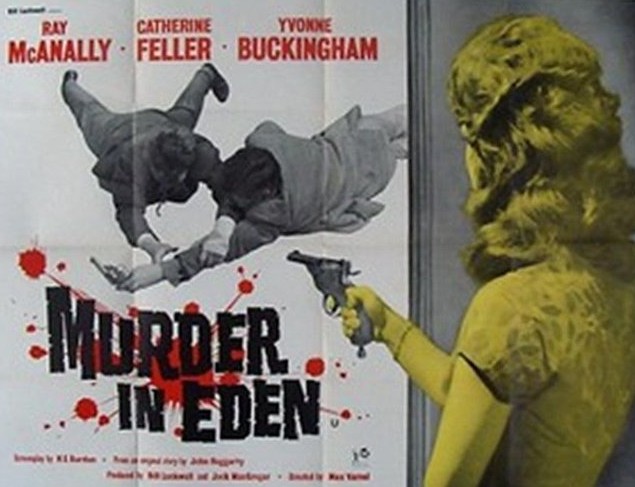
Had there been the budget to spare for more stylish cinematography and a director more inclined to tip the wink to the audience, this would have been recognized as a late addition to film noir. As it is, thanks to keeping the viewer largely in the dark, there’s an almighty twist at the end that aficionados of the unexpected climax would relish.
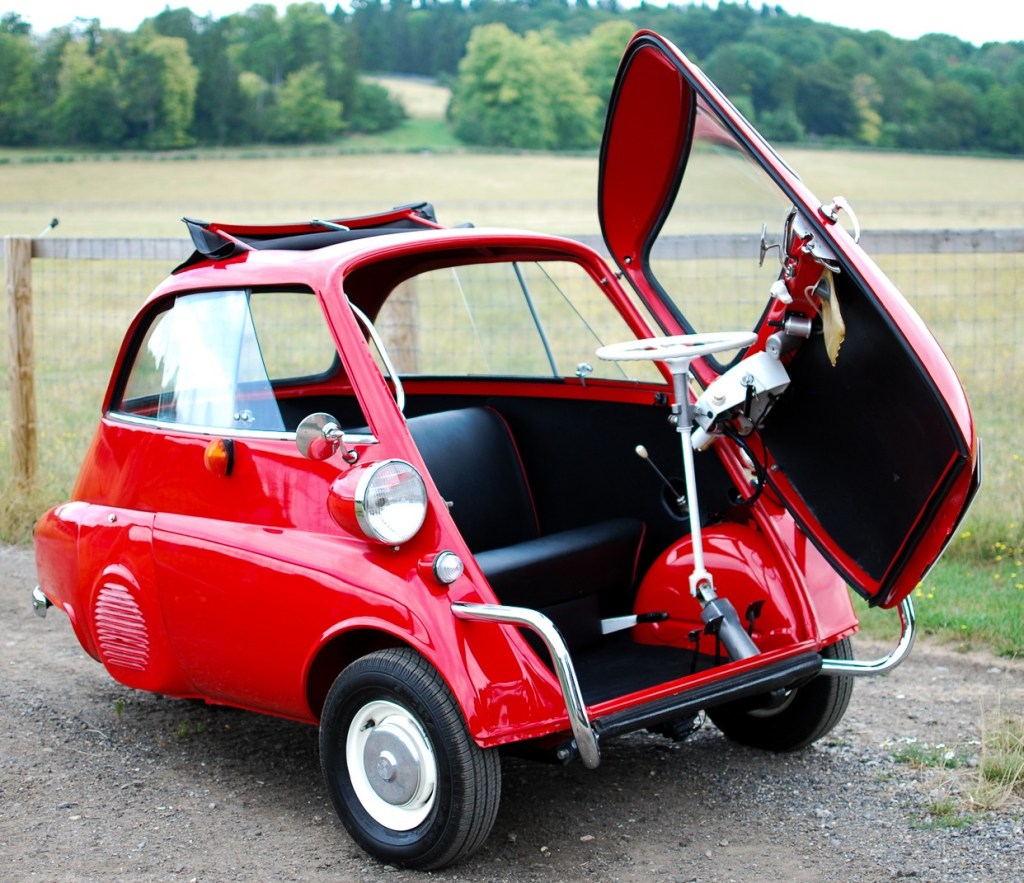
Although aficionados of another kind might have been happy to sit through a less-well-worked thriller for the sake of watching a “bubble car” in all its glory. In some eyes, the three-wheeler Italian-made Isetta should take center stage. Or you might consider an early appearance by Irish actor Ray McAnally (My Left Foot, 1990) an extra bonus.
An investigation revolving round art forgery might seem initially less than an interesting starting point. But when the expert who pointed out the forgery is bumped off and Inspector Sharkey (Ray McAnally) is called in, the investigation seems to take second place to his budding romance with French journalist Genevieve (Catherine Feller) especially after a meet-cute where she, literally, falls into his arms.
Suspicion falls upon gallery owner Arnold Woolf (Mark Singleton), art dealer Bill Robson (Jack Aranson) and paintings restorer Michael Lucas (Norman Rodway). A fellow called Frenchman Jack (Noel Sheridan) might also have made it onto the suspect short list except he is murdered.
Sharkey isn’t much of an ace detective and the investigation plods along except to throw out the occasional red herring. Director Max Varnel (A Question of Suspense, 1961) spends most of the picture keeping his powder dry. Much of what we learn seems incidental.
So what if Arnold’s glamorous wife Vicky (Yvonne Buckingham) is having a fling with Lucas? So what if Genevieve seems a shade too industrious for a journalist working for a newspaper whose trademark is soft features about the rich, famous and glamorous? So what if this looks like a plan to stitch up and bankrupt Arnold? And what are we to make of what might these days be called a “panic room,” a secret part of a house hidden behind a two-way mirror?
When the denouement comes it looks like Varnel has sold us short, kept us out of the loop about what’s been going on behind the scenes when Genevieve is revealed not just as a femme fatale but a dupe herself. The last five minutes is a story all by itself, of betrayal, lust and revenge.
It’s one of these films where at the end you look back and think it was much better than you imagined and the director has been too slick for you.
Especially as there’s been a certain innocence about the proceedings. Although the background, as we eventually discover, is decidedly murky, this appears to take place in a world where upright cops don’t just jump into bed with seductive Frenchwomen but have to go about wooing her the old-fashioned way.
Ray McAnally, who in his later screen persona, was a much tougher character, comes over as a juvenile lead, a rising star in an era that was full of them. The gravitas that was later a significant part of his onscreen presence is nowhere in evidence and in stringing him along Catherine Feller (Waltz of the Toreadors, 1962) is not permitted to be as seductive as she is later revealed to be while the role of Yvonne Buckingham (The Christine Keeler Story, 1963) appears to have been edited down so as to not give the game away.
The bubble car looks like it’s been included as product placement. You enter it from the front, literally peeling back the entire front of the car, engine in the rear a la Volkswagen, and it can whiz into the tightest of parking spaces, never mind race along main road.
Written by John Haggarty (The Killer Likes Candy, 1968) and, in his sole screenplay, E.L. Burdon. Won’t take up much more than an hour of your time.
Another welcome contribution from the Renown B-picture crime portfolio which has found a home on Talking Pictures TV.

 The Magnificent 60s