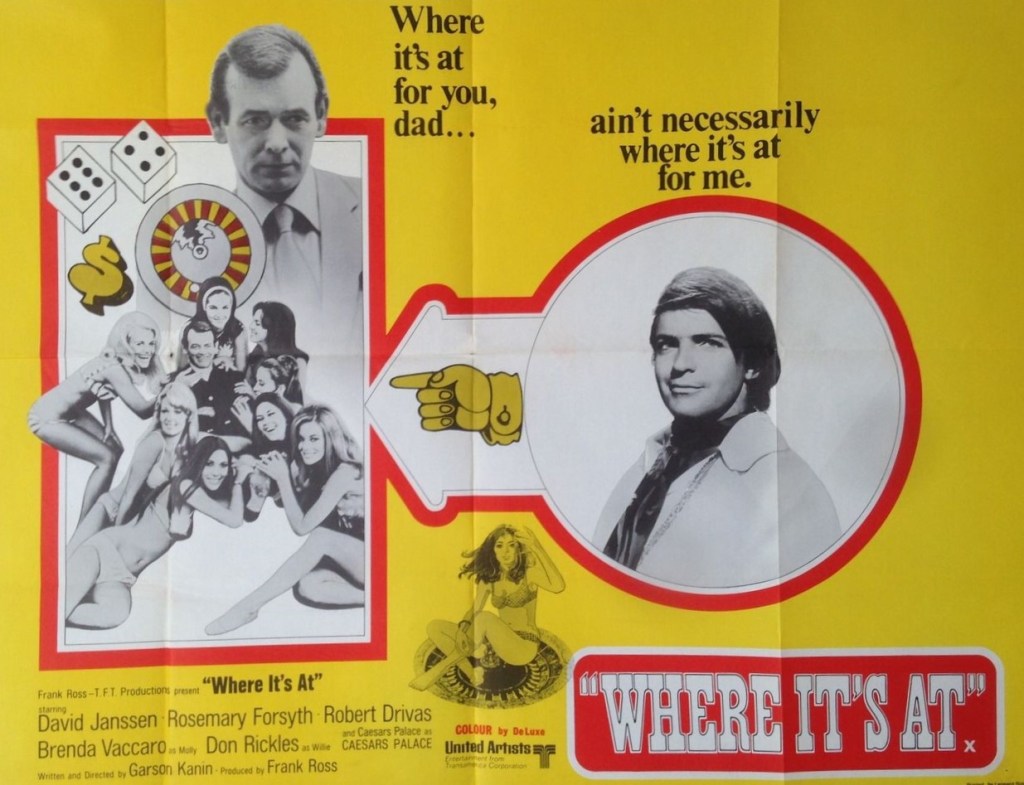
Where It’s At (1969) ****

There is probably no more stunning definition of Las Vegas than the brief shot in this otherwise widely-ignored film of a woman playing the slot machines with a baby at her naked breast.

I doubt if anybody has watched this all the way through in the fifty-odd years since its release. And I can see why. I nearly gave up on what I thought was a lame generation gap comedy. But some distinguished directors at the time clearly perceived its value, the flash cuts and overlapping dialog initiated here turning up, respectively, in Sydney Pollack’s They Shoot Horses, Don’t They (1969) and Mash (1970). And as I gamely persevered, I realized it was a different movie entirely, a cross between Succession and The Godfather.

Though saddled with a trendy catchphrase of the period for a title – though making more sense if applied in ironic fashion –  the original title of Spitting Image was much more appropriate to the material. As both veteran and new Hollywood directors struggled with understanding the burgeoning counter-culture, youth-oriented efforts of the Tammy and Gidget and beach pictures variety fast fading from view, and Easy Rider (1969) yet to appear, a generational mismatch between Hollywood veterans and younger audiences was in evidence.
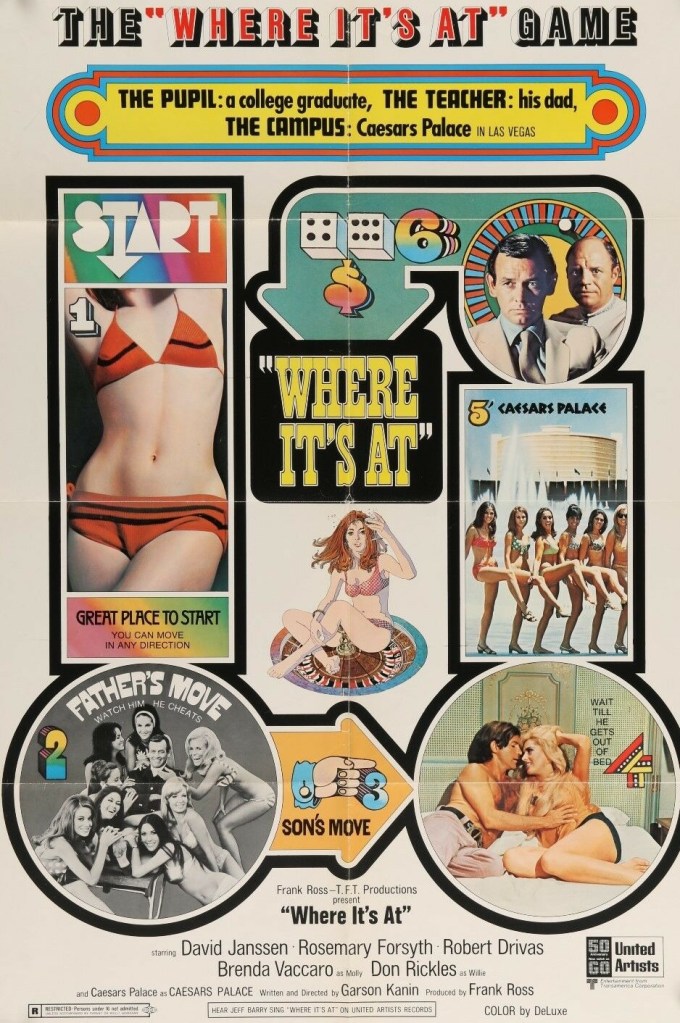
And you would hardly turn to Garson Kanin to capture the zeitgeist. Although acclaimed as a screenwriter, with wife Ruth Gordon responsible for a string of Tracy-Hepburn movies like Adam’s Rib (1949), he had not directed since 1941. The story he wanted to put over – he wrote the script as well – was not an easy sell. So he’s disguised it as a coming-of-age tale exploring the generation gap and as a lurid expose of Las Vegas with behind-the-scenes footage of the reality underpinning the glamour.

It’s pretty clear early on it’s not about some middle-aged parent getting jealous over the amount of sex his child has, for widowed casino owner A.C. (David Janssen) can have as much as he wants courtesy of fiancée Diana (Rosemary Forsyth) – and a wide range of available and eager-to-please showgirls – and certainly far more than the majority of his male customers whose biggest thrill is gawping at topless women on stage. Las Vegas was the epitome of Sin City, at the beginnings of its sacred position in American popular culture where what you got up to remained secret.  The representation of the “showgirl” world is less brutal than in Showgirls, but even so an audition includes removing your bra.

A.C. wants to introduce son Andy (Robert Drivas) into the business not realizing he is laying out a welcome mat for a viper. At first Andy is happy to learn the ropes by working in menial positions and wise enough to resist obvious lures like showgirl Phyllis (Edy Williams), whose interaction with him is recorded. However, when like Michael Corleone, he is required to make his business bones – “pay your dues and stop your whining” – by transporting cash skimmed from the business and banked in Zurich back home, where if caught he will have to take the rap, a more calculating and dangerous individual emerges. A.C. has been working a Producers-type scheme where by massaging profits downwards he hopes to panic his investors into offloading their stock cheaply to him.
The ploy works but it turns out his partners have sold their stock to Andy, who hijacked the Zurich cash to pay for it. Rather than chew out Andy, A.C. is delighted at the ruthlessness of the coup, until his son, now holding the majority of shares, takes complete control, easing him out – “If I need you, I’ll send for you.” Andy’s prize could easily include, had Andy showed willing, the duplicitous Diana. However, that’s not the way the picture ends and I won’t spoil the rest of the twists for you.

This is one of the few genuine attempts to show the pressure under which businessmen operate. No wonder A.C. is so glum, barking at everyone in sight, little sense of humor, when the stakes are so high and as with any game of chance you might lose everything. Employing indulgence to insulate himself against emotion, he is surrounded by what he deduces is the best life can offer, driven by mistaken values. Optimism is the automatic prerogative of youth, pessimism the corrosion that accompanies age.

The second half of the picture has some brilliant brittle dialog. Assuming the young man has principles, when his acceptance of the Las Vegas dream is challenged Andy replies, “Who am I to police the party?” In a series of visual snippets and verbal cameos, the film captures the essence of Las Vegas, from the aforementioned woman breast-feeding while playing the slot machines to the telephone call pleading for more money, waitresses hustling drinks, a machine in A.C.’s office rigged to give high-rollers an automatic big payout and leave them begging for more, customers not even able to enjoy meal without a model sashaying up to the table to sell the latest in swimwear, never mind the more obvious tawdry elements.

There’s a superb scene involving a cheating croupier (Don Rickles). Of course, when Martin Scorsese got into the Vegas act, violence was always the answer. A.C. takes a different route, allowing the man to pay off his debt by working 177 weeks as a dishwasher. There’s a neat twist on this when Andy, guessing which way Diana is going to jump, warns “watch out you don’t end up washing dishes.”

David Janssen (The Warning Shot, 1967) gives another underrated performance, gnarly and repressed all the way through until he can legitimately feel pride in his son. Robert Drivas (The Illustrated Man, 1968) is deceptively good, at first coming over as a stereotypical entitled youngster (or the Hollywood version of it) before seguing into a more devious character. Rosemary Forsyth (Texas Across the River, 1966) is excellent, initially loving until casually moving in on the young man when he appears a better prospect than the older one. Brenda Vaccaro (Midnight Cowboy, 1969), in her debut, plays a kooky secretary who has some of the best lines. “Two heads are better than one,” avers Andy. Her response (though Douglas Adams may beg to differ): “Not if on the same person.”

Garson Kanin takes the difficult subject of ruthless businessman and provides audiences with an acceptable entry point before going on to pepper them with vivid observations. This is not a picture that divided audiences – not enough critics or moviegoers saw it to create divergence – but it’s certainly worth another look especially in the light of the shenanigans audiences have welcomed in Succession. And if you remember the pride Brian Cox took when shafted by his son, check out this picture and you will see where the idea came from.

And it’s worth remembering that the defining youth-culture movie of 1969, Easy Rider, was actually about two young businessmen. The fact that their product was drugs didn’t make them any less businessmen. The idea that what a young buck “digs” the most is making money rather than peace and love seemed anathema to critics as far as Where It’s At went but not Easy Rider.

To be sure, none of the characters are likeable. Maybe likability was an essential ingredient of 1960s movies, but we’re more grown-up now. Compared to the the horrific characters populating The Godfather and today’s Succession, these appear soft touches. One critic even pointed out that The Godfather did it better without seeming to notice that Where’s It’s At did it first.  And there’s certainly a correlation between Andy turning his nose up at his father’s business and Michael Corleone showing similar disdain until the chips are down and the old cojones kick in.

Critics who complained this had little in common with the Tracy-Hepburn pictures missed the point. The Tracy-Hepburn films were always about power, in the sexual or marital sense. Kanin has merely shifted from a male-female duel to that of father-son.

Not currently available on DVD or on streaming, but easy to get hold of on Ebay and YouTube has a print.
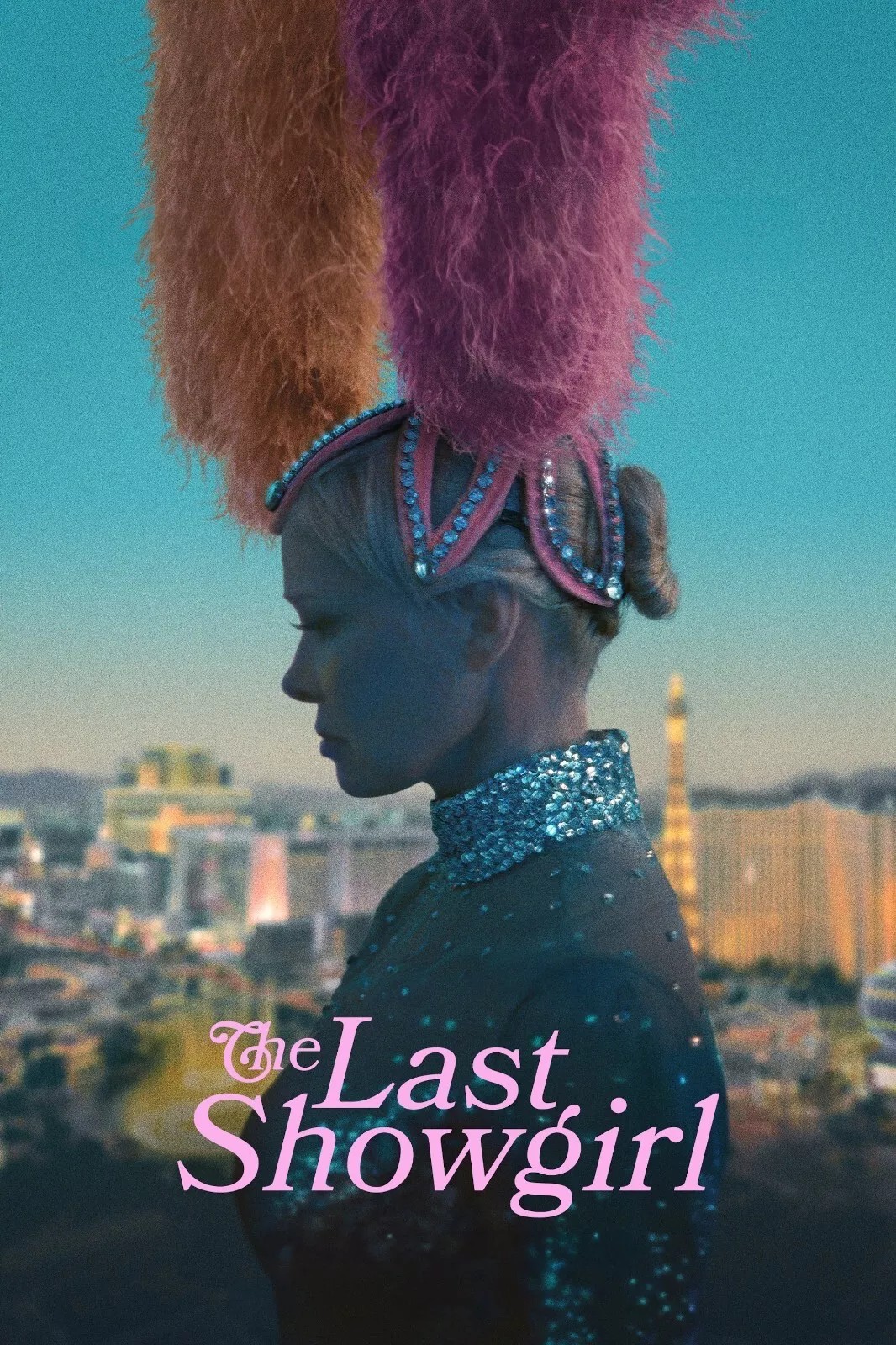
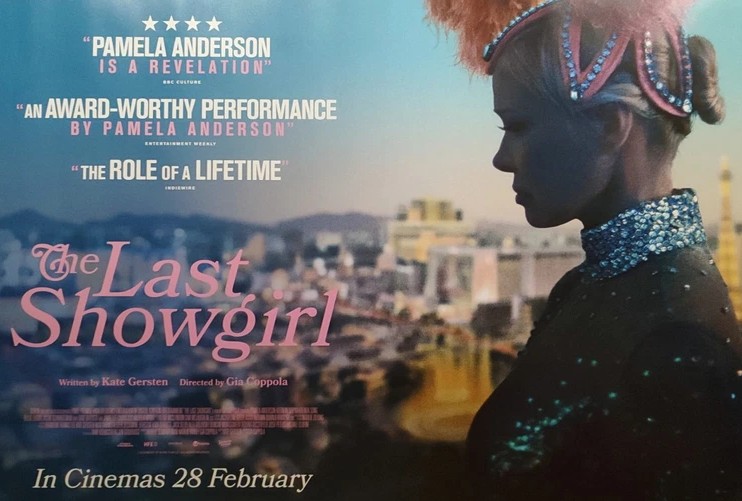
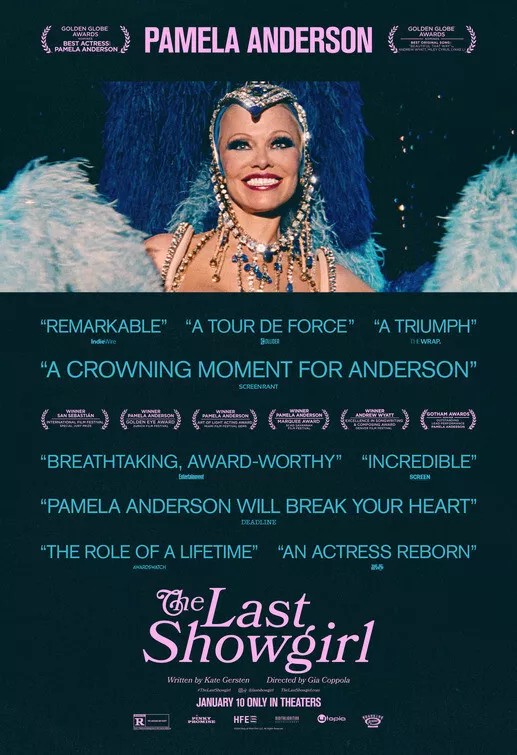
The Last Showgirl (2025) **** – Seen at the Cinema

I’m assuming this fell foul of Oscar voters because it lacked a woke agenda. In fact, it’s distinctly anti-woke, the subject matter of women flaunting their bodies for dough, and a heroine who revels in it, going against the contemporary grain. And I know Demi Moore put on a more showy performance in The Substance (2024) but Pamela Anderson here demonstrates significantly more substance. Everything you’ve heard about her performance is true and you do wonder, far more than with Demi Moore, why some casting director didn’t alight on such talent which would have been ideal for a rom-com or drama as a put-upon character.

I’ve scarcely come across a more well-rounded character – and yes the script by Kate Gersten was an Oscar shut-out, too, but scripts are more than fancy-dancy lines or setting up woke agendas. There’s a just fabulous scene where ageing showgirl Shelly (Pamela Anderson) slams the door in the face of one of the young dancers coming to her for emotional support. Shelly is too wrapped up in other personal dilemmas at that point to cope. Up to now she’s been maternal to a pair of younger girls, Jodie (Kiernan Shipka) and Mary-Anne (Brenda Song), and happy to offer a shoulder to cry on.

But it’s two-way. The girls help her fix bits of her costume. Following the door-slamming episode, Jodie takes the hump and refuses to assist pre-show and Shelly come a bit unstuck.

But not only is Shelly a willing participant in male fantasy, she’s also poster girl for a female fantasy, that her body and somewhat limited talent will carry her through to old age (older age, she’s 57 now) and she can dwell on career highlights such as being feted by the media and corporations who ferried her across the world as some kind of brand ambassador.

Frankly, she’s not ready to face up to much – certainly not the end of her career, the show (Le Razzle Dazzle) is closing and her daughter Hannah (Billie Lourd) is not only challenging her perception that she was a good mother but derides her occupation.

The script is cleverly structured in a kind of Christmas Carol fashion. We’ve got before – Jodie and Mary-Anne the eager beavers with stars in their eyes. After is represented by the jaded older hard-drinking gambling addict Annette (Jamie Lee Curtis), reduced to cocktail waitress (a rather grand term for what she does) in a casino with her cleavage on show as a possible repository for tips.

Shelly has more than enough shades of character. She’s daffy, hard-nosed when the situation requires, manipulative (also when required), selfish, unselfish, fulfilled, unfulfilled, friendly, lonely. Turns out there’s still room for the exploitative show as long as striptease can be performed in post-ironic fashion, throw in some slapstick and bizarre comedy, and there’s demand for the straightforward Vegas showgirl but they need a good bit more dancing training than Shelly can muster – brutally taken apart in that scene.

Thankfully, director Gia Coppola (The Seven Faces of Jane, 2022) doesn’t go down the sentimental route, nor is she out to curry pity. You’ll sympathize with Shelly for sure, but you’ll hold back because her problems are all of her own making and you know full well that she’ll find some solution, manipulative or not, to her immediate problems.  

If you’re looking to expend a bit of sympathy your better bet is Annette. The scene where, presumably as part of her job, she has to climb on to a mini-stage in the casino and gyrate to a tune with nobody paying the blind bit of notice resonates. Sharp-tongued though she is, Annette has the self-awareness to know she will always be broke, unable to kick her gambling addiction, even if it means losing her home and sleeping in her car.

Hannah’s really the only cliché, there as a scripting prop to make Shelly reassess her life (interestingly enough Shelly finds little to fault), and make her face up to her tawdry career. Though in a scene which makes some emotional sense – acceptance of parental failings, I guess, or pride at paternal skill – that I didn’t believe the daughter applauds her mother’s dancing having previously lambasted it.

This is old-school, from the time when you could make a whole film just about a character coming to the end of their career and facing up (or not, as here) to decisions made. It could be a football coach or a teacher or a politician. Here, it just happens to be a showgirl.

This would in any case have been the best performance of Pamela Anderson’s career because, frankly, that bar was set decidedly low. Demi Moore, by comparison, could at least point to some critical acceptance for roles like Ghost (1990) and A Few Good Men (1992). I don’t buy into the idea that box office stars are hard-done-by in not being offered Oscar-bait roles because as we’ve seen only too often any star can buy their way into a good role – by that I mean cutting their salary to the bone or spending their own dough to bring a picture to fruition, it’s what the term “vanity project” was invented for.

Still, with what Pamela Anderson presents here, shorn not so much of make-up but the glossy sleekness of her previous screen persona, and presenting a more realistic characterization, you could see her fitting well into a series of more demanding roles.

Yes, for once, the reviews are correct. Well worth seeing.  

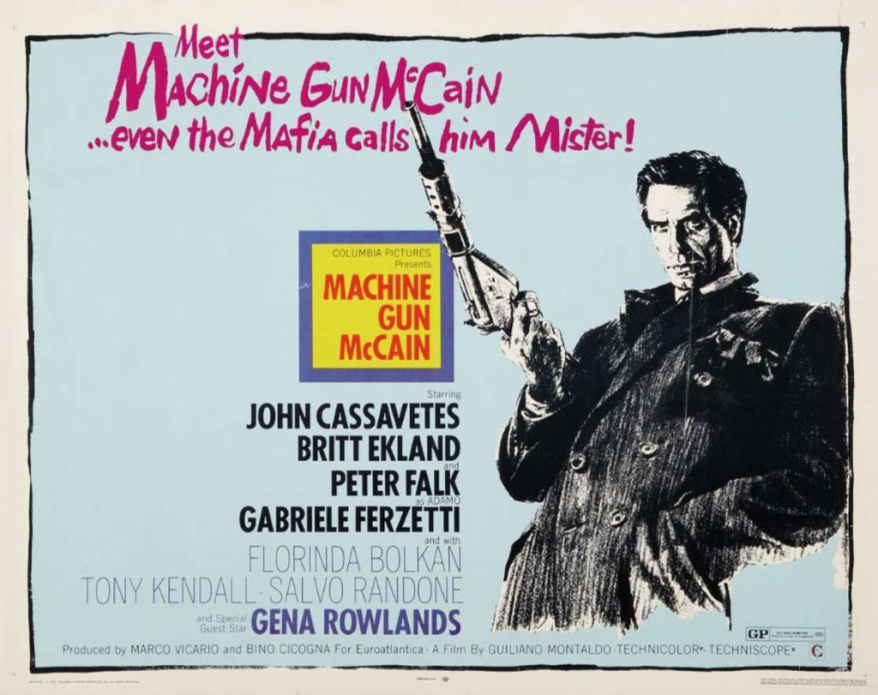
Machine Gun McCain (1969) ***

Armed robbers lack the finesse of a jewel thief or burglar when it comes to pulling off a major heist. Rather than resorting to the weaponry of the title, they are more inclined, as John Cassavetes does here, to plant bombs, both as a diversionary tactic and within the target building, in this case a Las Vegas casino.

Although boasting Hollywood leads in Cassavetes and Peter Falk and rising Swedish leading lady Britt Ekland (The Double Man, 1967) and wife of star Peter Sellers, this was an Italian-made gangster thriller with the usual abundance of location work. Without the romantic complications of A Fine Pair (1968) it concentrates on the machinations of the central characters.

And it is a pretty lean machine. The robbery takes place against the background of warring Mafia chieftains, West coast boss Charlie Adamo (Peter Falk) trying to muscle in on a Vegas casino without being aware it is controlled by the New York hierarchy. Hank McCain (John Cassavetes) does not realize the robbery has been set up by his naïve son Jack (Pierluigi Apra) on behalf of Adamo. Irene Tucker (Britt Ekland) is on board as a kind of mostly mute magician’s assistant, helping out Hank.

Little dialogue comes Cassavetes’ way, either, which plays to his strength, that glowering intense unpredictable weasel-face, whose reactions are less likely to be emotional than violent. Falk gets the dialog and little help it does him, his goose is cooked when he has the temerity to shout at the New York kingpin. 

Yet this slimmed-down documentary-style hard-nosed picture in the vein of Point Blank (1967) manages several touching moments, even more effective for completely lacking sentimentality. When Hank’s son is knifed in the back, the gangster finishes him off with a burst from the titular machine gun rather than see him suffer. His old flame Rosemary (Gene Rowlands), making too brief an appearance, has a wall covered in newspaper headlines of herself with Hank celebrating her life as his moll and she accepts without enmity the new woman in his life and she proves the toughest moll of all when confronted with Mafia gunslingers.. 

The planning of the heist is well done, no explanatory dialog, just action on screen; there’s a car chase; and the gangster dragnet is unexpectedly powerful. Gabriele Ferzetti (the railroad baron in Once Upon a Time in the West, 1968) is excellent as the calm authoritative New York boss, Falk a bit too excitable, and Florinda Balkan (The Last Valley, 1971), in her third screen role, has a small part as a traitorous moll. Ekland is surprisingly good with not much to play with, a couple of lines here and there but still emoting with her face.

Cassavetes, who always claimed he was only acting to fill in the time between directing  (Faces, 1968), and as a means of financing them, was at a career peak, Oscar-nominated for The Dirty Dozen (1967) and male lead in Rosemary’s Baby (1968). He had just appeared in another Italian gangster movie Bandits in Rome (1968). Cassavetes and Falk would go on to have a fruitful partnership over another five films. Falk and Ekland had played opposite each other in Too Many Thieves (1967). Falk also had an Oscar nod behind him for Murder Inc. (1961) but his career was about to go in a different direction after the TV movie Presciption: Murder (1968) that introduced Columbo.

Trivia trackers might also note a score by Ennio Morricone. Though not one of his best, a few years later he would deliver one of his most memorable themes for Sacco and Vanzetti (1971) for the same director Giuliano Montaldo.

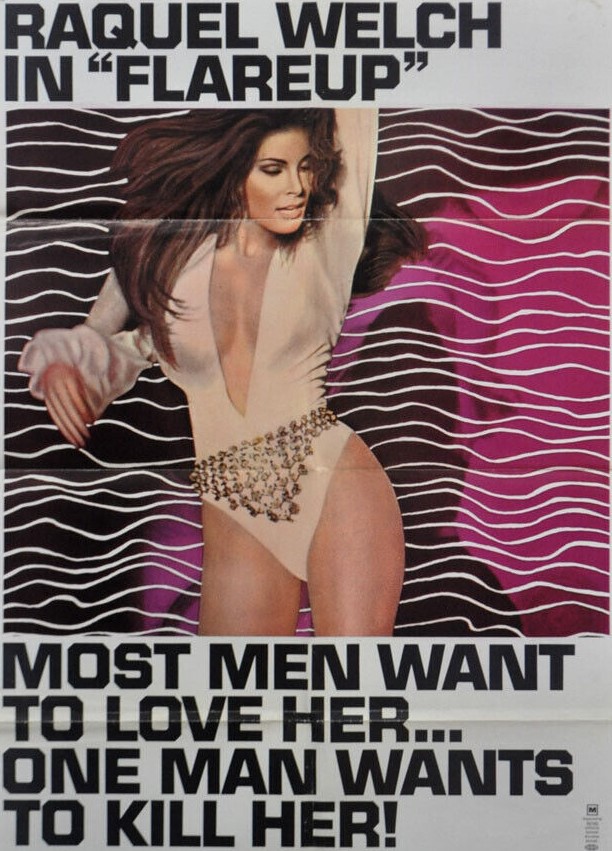
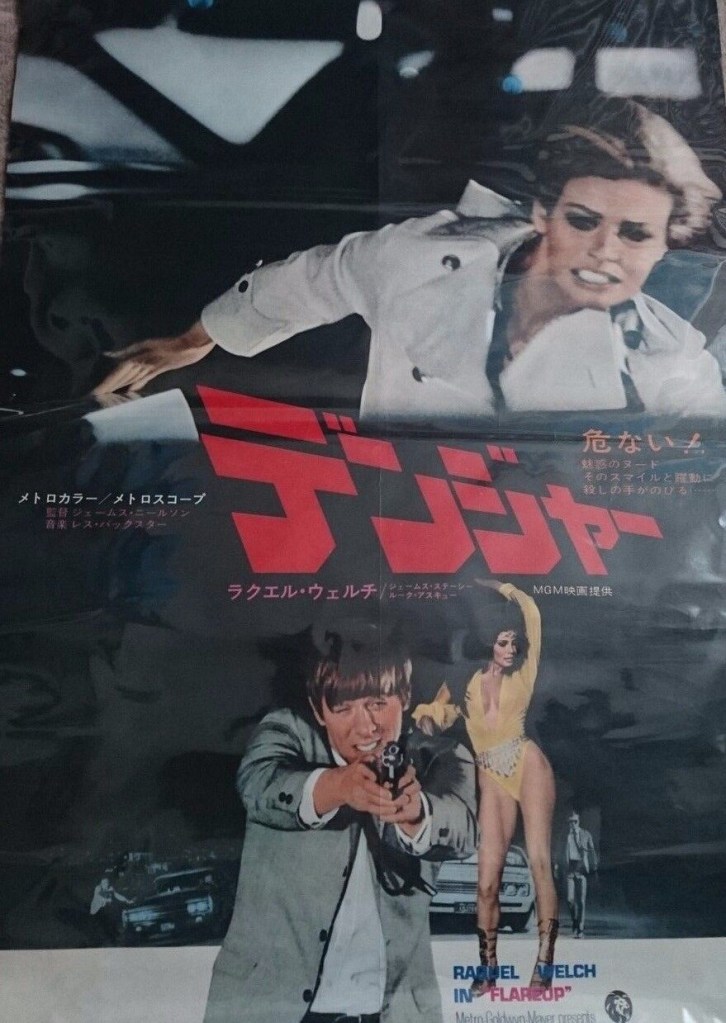
Flareup (1969) ***

I thought I’d be taking one for the team in tracking down this much-maligned Raquel Welch number. Instead, I was pleasantly surprised. Oh, the movie’s nothing to write home about, desultory home invasion thriller that fails to come close to Kitten with a Whip (1964), Wait until Dark (1967) or The Penthouse (1967). But La Welch is something of a revelation.

Forget the Las Vegas go-go dancer come-on, this is more of a gentle romance. While attractive, Welch dispenses with the bra-busting outfits and overt sexiness, settling for a girl-next-door persona. In fact, you could have dumped the entire murder plot and had a more interesting picture, along the lines of Fade In (1969) where the normal hot-to-trot Burt Reynolds plays a gentler character.

Artistic license taken to an extreme. Raquel Welch is a brunette not a redhead.

Since, (spoiler alert) in her sole dance number Welch keeps her attributes well-hidden, the producers felt obliged to stick in some topless dancers (quite how Welch is permitted to keep her clothes on in a topless go-go bar is never explained) which gives the picture a sleazy feel that runs counter to the tone of the romance.

So, Michele (Raquel Welch) is on the run from nutjob killer Alan (Luke Askew) who has bumped off his ex- Nikki (Sandra Giles) and her friend Iris (Pat Delaney). But why Michele is in the killer’s sights is never satisfactorily explained, except that she purportedly turned Nikki against him. Michele swaps Las Vegas for Los Angeles, finding work in another go-go bar and romance with Joe (James Stacy) whose interest in bull-fighting might have scared her off. But that’s tempered by his enthusiasm for flying model airplanes (an important plot point it transpires).

Cops are on the killer’s trail but not before he bumps off a guy who gave him a lift. Michele’s not hard to find, a drug addict employee of the Las Vegas operation points him in the right direction. There’s some desultory car chase footage and for no reason at all a chase on foot through an old zoo (presumably a genuine old zoo).

I had half-expected there might have been a lion or snake left behind to ramp up the thrill-quotient, but no such luck. What we do get, however, is a rarity in the chase department – exhaustion. Most people being chased on foot manage to drum up an insane amount of energy. Michele, on the other hand, is on the point of collapse.

But she’s not dumb. She might be rootless, not the questing soul of Easy Rider, but driven away by parental issues and, in gaining independence not keen on surrendering it to any passing male. And come the climax, she’s got a nasty weapon up her sleeve.

Essentially, she’s a sweet gal. Not the kind of character you’d expect La Welch to be playing, and perhaps that’s what attracted her to the script. It gives the actress the opportunity to escape from her sexy persona, and, while the tale is hardly weighty, the chance to prove she can do more than hide behind her particulars. Innocence isn’t something you’d associate with Raquel Welch, but here she exudes more of that than earthiness or sex appeal.

James Stacy (star of Welch’s debut picture A Swingin’ Summer, 1965) is a likeable boyfriend, not the kind trying to hustle her into bed. Luke Askew (The Devil’s Brigade, 1968) doesn’t do much except play mean.

James Neilson (The Moon-Spinners, 1964), while not able to jazz up a rancid plot, allows, as he did with Hayley Mills (an odd comparison indeed), Welch the chance to grow up on screen, defusing her sexuality but allowing her space to create a character so far removed from anything previously seen. But the tempo sags with over-reliance on dancing sequences, the Las Vegas backdrop and too much chasing that goes nowhere. Mark Rodgers (Let’s Kill Uncle, 1966) dreamt this up.

One perhaps for completionists. Lack of sexy scenes might be off-putting but, equally, you might want to see what Welch can do when playing against type.

https://amzn.to/3s0UpRi

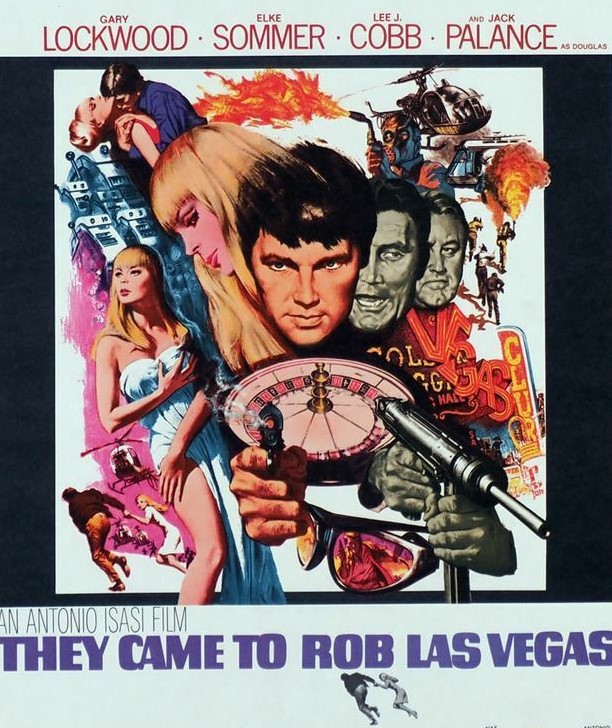
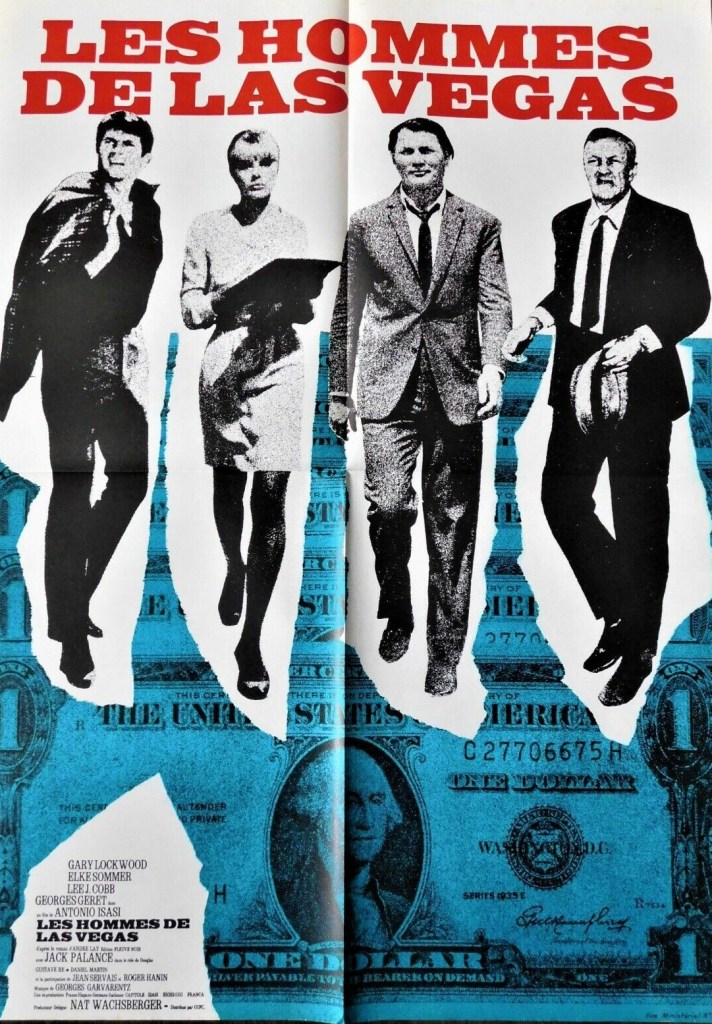
They Came To Rob Las Vegas (1968) ***

Actually, they didn’t. The thieves planned to pull off a heist of $7 million from a security truck as it travelled through the Nevada desert en route to Mexico. Las Vegas pops into the story every now and then, criminal mastermind Tony (Gary Lockwood) employed there as a croupier in order to romance the girlfriend Ann (Elke Sommer) of millionaire Steve (Lee J. Cobb) who owns the security business being targeted.

The picture’s overlong and a shade complicated but the robbery is terrific, if a bit unbelievable, while the ending is existential and almost Boorman-esque. It’s futuristic, too, with computers programming routes for security vehicles to make them harder to follow, pretty sophisticated visual communications for the era. The trucks are more like armored cars,  tough as tanks, steel so thick it’s impervious to an oxy-acetylene cutter, and with machine guns mounted on the roof.

You’ll scarcely have heard of the director, Spaniard Antonio Isasi (That Man in Istanbul, 1965) whose career only spanned eight movies. And while you might be familiar with Gary Lockwood (2001: A Space Odyssey, 1968), Elke Sommer (The Prize, 1963), Lee J. Cobb (Coogan’s Bluff, 1968), and Jack Palance (Once a Thief, 1965) who plays Douglas, an F.B.I. agent investigating Steve’s Mafia connections, you’ll struggle to keep tabs on the myriad other characters who flit in and out of what ends up as a four-way narrative.

So we start out with Tony’s brother (see, I told you it was complicated) who has bust out of jail and wants to go back to old-style heists that involve shoot-outs in the street, nostalgia getting the better of him as he winds up dead. Then we’ve got Steve who wants to quit the underworld. That seems to be a trope of the time, The Brotherhood (1968) and Stiletto (1969) going down a similar route.  When the truck is hijacked, Steve comes under suspicion from his Mafia buddies, who reckon he’s looking for an easy way to fund his retirement.

Meanwhile, as well as the $7 million in legitimate cash, the truck is also carrying millions in Mafia loot to be laundered across the border in Mexico, a notion that’s already attracted the attention of Douglas and his team.

Meanwhile, meanwhile, Tony is carrying out some low-grade casino theft, as croupier dealing Ann some very helpful cards and topping up his salary to the tune of $400-$500 a day. Ann, who could as easily be water ski-ing or living the high life in Acapulco with the married Steve, still takes time out of the mistress gig to undertake her ordinary job at the security company’s head office where she is in charge of the seemingly mindless task of feeding route cards into the computer.

While this takes quite a while to get all the wheels in motion and the various sub-plots and characters to fall into line, when finally we get to the robbery, it’s a cracker. Though you might find yourself asking who was funding the heist, with its five-man crew, helicopter, flame-thrower,  machine guns, plus what can only be described as a giant vault buried in the desert.  

At first, the heist appears patently old-fashioned. Gangsters dressed as guards replace the real guards but once in the back of the truck they have neither access to the loot nor the driver’s cabin. No matter, they know where the truck is headed, out into the desert, where they have made the road impassable with heaps of sand and just in case that didn’t work shoot out a tyre. The flame thrower finishes the job.

Thomas Crown would be impressed by their planning for they have another tyre buried in the sand to swap for the useless one and they also have metal tracks that can be laid over the sand to ease passage. They need the tracks because the truck goes off-road over the top of a dune and is lowered into the vault while the rotary blades of the whirligig serve to cover the top with a layer of sand, returning the desert to its normal pristine condition.

But we’re far from finished. We still have betrayal, underground paranoia, Steve being stalked by Douglas, the Mafia getting uppity with Steve, Steve becoming suspicious of Ann, a hapless motorist caught in the crossfire, squads of cops and goons descending on the hijack spot, and Tony still having to work out how to open the unbreakable truck.

At times, the plot comes together with devastatingly simplicity, but at other times the various strands merely serve to blow the whole thing apart. None of the principals is on their A-game, most appearing overly stiff and clichéd, while you’re still trying to work who all these other characters are.

The heist itself is splendidly done and the twist ending worthy of comment. Most of the time it’s pretty watchable but what should be a relatively seamless narrative is undone by over-plotting.

While the time was ripe for an ingenious heist, the crime thriller had taken one of those periodic leaps into new territory, what with Point Blank (1967) and The Thomas Crown Affair (1968), so it was virtually impossible to accommodate a movie with so many narrative jumps, where motive was unclear, characters diffuse and the tone widely variable.

On the other hand, as I said, the heist had me enthralled and the twist ending had me intrigued.

Lansky (2021) ****

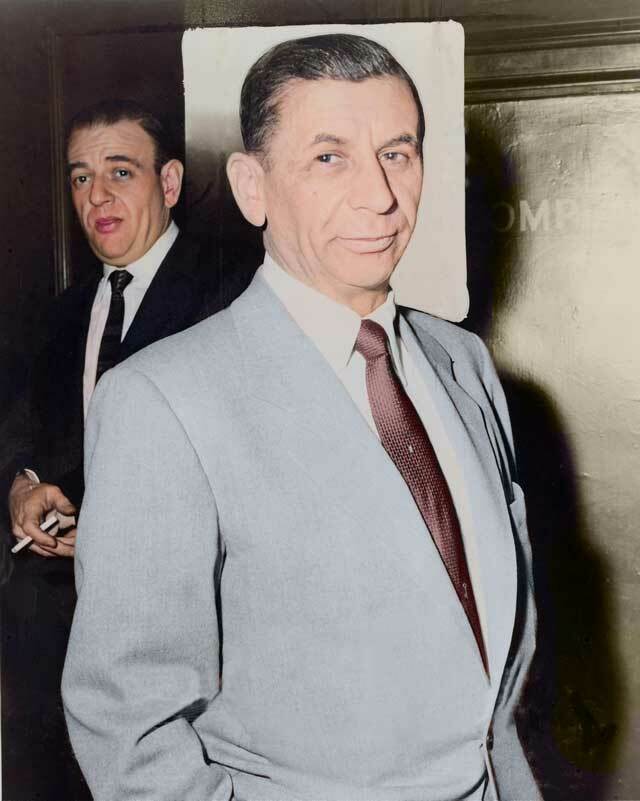
Murder Inc. gangster Meyer Lansky has featured in over a dozen Hollywood movies and television series from Lee Strasberg in The Godfather (1972) to Ben Kingsley in Bugsy (1991) and Dustin Hoffman in The Lost City (2015) so you could be asking why do we need another one? And it’s a good question because this part docu-drama, while recounting the well-known aspects of the mobster’s career, also examines less obvious areas as well as bringing the story up-to-date in a duel of wits between Lansky (Harvey Keitel) and the F.B.I. still chasing him for $300 million it presumes he has hidden away.  

The movie is framed by journalist David Stone (Sam Worthington) interviewing Lansky about his life. This turns out to be far more interesting than previously portrayed. Sure, there’s plenty of executions, but Lansky was also the most financially acute of gangsters, taking the business legitimate in the fashion of Michael Corleone in The Godfather, realising that rather than killing businessmen who could not pay their debts it was more sensible to take over their businesses and improve them, and in order to keep everything above board when contracted to oversee all the casinos in Cuba refusing to rig machines in the house’s favour.

Lansky in his heyday.

He’s also got a crippled son whose illness he perceives as a mathematical equation and is convinced he can beat the odds. In the course of his interviews, Stone falls for a honey trap and is blackmailed/bribed by the F.B.I.  So tension is raised by the government agency hovering in the background, the mystery of the missing millions, and Stone’s fears that Lansky will find out he is being betrayed.

Biopics succeed or failed based on what aspects of the subjects life they choose to cover. All the big names are here – Al Capone (Robert Walker Branchaud), Lucky Luciano (Shane McRae), Salvatore Maranzano (Jay Giannone), Bugsy Siegel (David Cole) – but we also delve into territory almost foreign to the gangster genre with Lansky’s patriotism leading him to root out Nazi spies and sympathizers during world War Two, in return for which he secures the release from prison of Lucky Luciano. His return to Israel is scuppered by U.S.-Israel relations. And, no matter his courtesy and manners, he’s also a scumbag of the first order, committing wife Anne (AnnaSophia Robb) to a psychiatric hospital because she has the audacity to blame him for his crimes.

Adding some depth is the “currency” of traded favours, that the U.S. government had little compunction in utilising his services at a time when it was trying to crack down on organised crime. Even the ageing Lansky is clever enough to outwit his pursuers.

But, of course, movie length works against the film. It would have been better as a limited series, exploring the man’s entire career. Even so, it certainly provides new insight into the mind of a gangster who was a businessman, in the correct term of the word, first and foremost. In another world, he might have been acclaimed as the man who pioneered a  gambling industry now worth $250 billion annually to the U.S. economy.

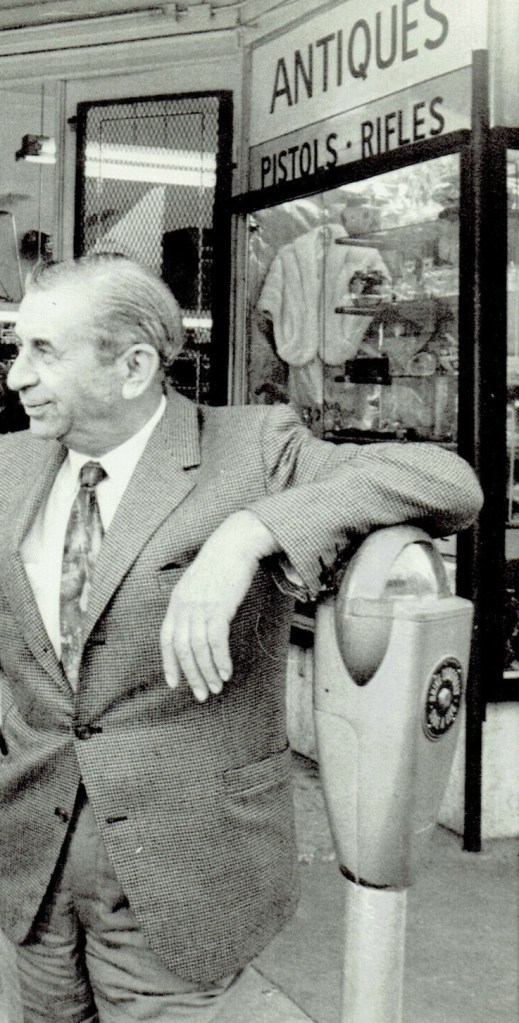
Just another elderly citizen.

Harvey Keitel (The Irishman, 2019) shows no sign of calling time on a career over half a century old and his bemused take on the gangster is solid work. Sam Worthington (Fractured, 2019) is excellent as the compromised journalist trying to keep family and finances together. Look out for David Cade (Into the Ashes, 2019) as Lansky’s lifelong buddy, Minka Kelly (She’s in Portland, 2020) as the deceitful girlfriend and AnnaSophia Robb (Words on Bathroom Walls, 2020) as the showgirl who realises marriage is not all it’s cracked up to be.

This was something of a personal project for writer-director Eytan Rockaway (The Abandoned, 2015) since his father was the journalist in the film. Rockaway’s approach is an interesting twist on the gangster film and he elicits strong performances all round. The final scene you won’t see coming.

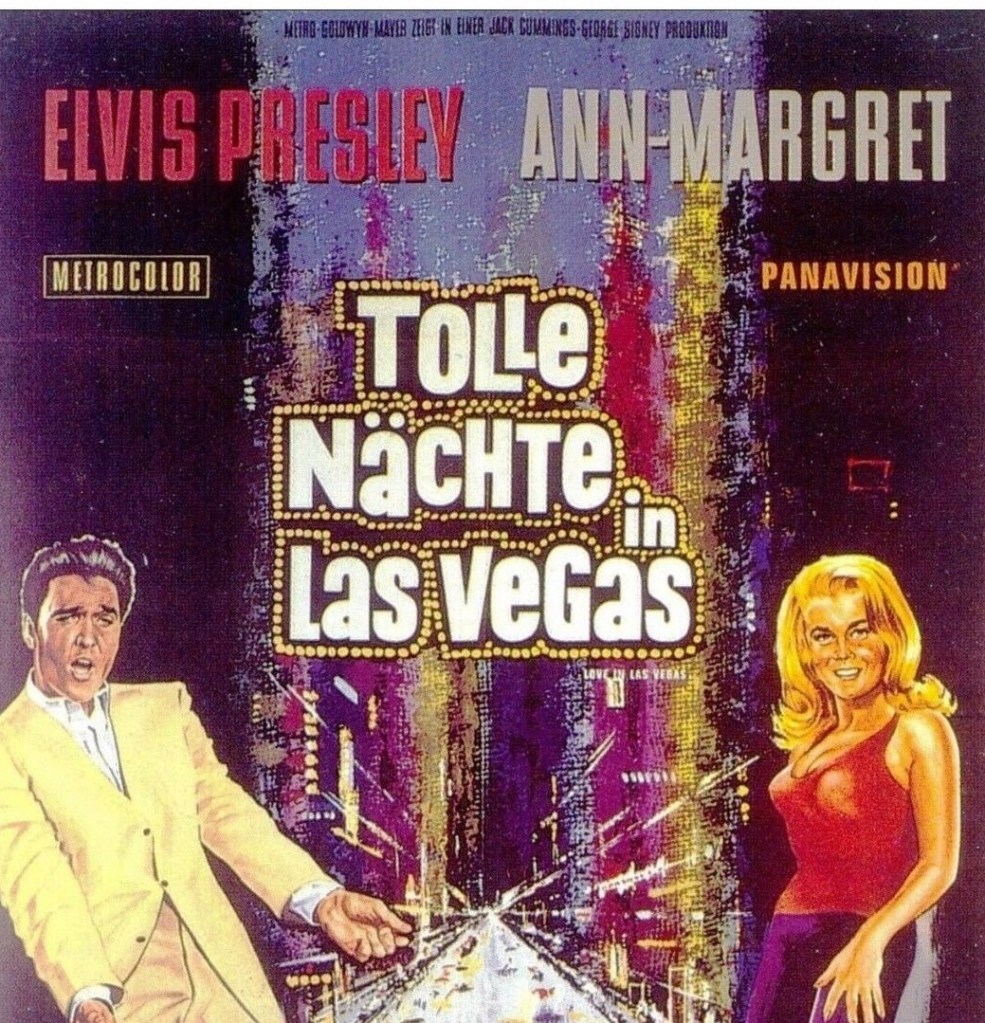
Viva Las Vegas (1964) / Love in Las Vegas ***

Screen chemistry, a great racing sequence and some good songs set alight this typical Presley vehicle. Unlike previous recording giants Frank Sinatra and Bing Crosby, Elvis Presley had not made much attempt to be anything other than himself on screen, nor elevated his status by taking on adaptations of hit Broadway shows, so his movies tended to need a certain extra something to set them apart, if only from his other pictures  – he was churning them out at the rate of three or four a year. The certain something, a whole bag of je ne sais quoi, came in the shape of Ann-Margret.

Garage mechanic Lucky (Elvis Presley), a racing driver wannabe, gets the hots for Rusty (Ann-Margret) after he tunes up her car. Chasing her to Las Vegas where she is a swimming instructor rather than a hot-shot performer, he takes a job as a hotel waiter. He has a rival, both in driving and romance, in Count Emo Mancini (Cesare Danova). Initially, Rusty  brushes Lucky and even when they get closer she fears getting too close since the consequences of falling in love with a man who chases danger are obvious.

There’s no danger of a picture like this straying from the most obvious path and helping fill in the screen time are nods to tourism, excerpts from Vegas shows, some water ski-ing and a helicopter ride over the Boulder Dam (Rusty supplying an earnest educational lecture). There is some lackluster comedy and not much in the way of subplot.

The race is well done for the times (i.e. pre-Grand Prix, 1966) with plenty of crashes, and it looks realistic enough although probably the cars were speeded up in the cameras.

But the pairing is dynamite. Rusty, all sizzle, smoky eyes and pout, dances Presley off the screen. She has the curves and she has the moves. Not a great deal of acting is required by either – they were in the early throes of an affair – but Rusty, a homely girl after all, keeps her sexuality in check long enough to hook her suitor.

The title song – shot in one take – is a winner but what lingers in the memory is the dazzling choreography (involving multiple camera) for Lucky’s dance numbers. And Lucky dancing. Only so many ways to say that that woman can shake her booty, but she shakes it in so many different ways the outcome is sensational.

But in the end just as dancing in an Ann-Margret picture was never enough to hit the box office heights so singing, except in his first screen forays, was not enough to create the longest queues for a Presley picture. Although previous Presley movies had featured the likes of Ursula Andress (Fun in Acapulco, 1963) and Stella Stevens (Girls! Girls! Girls!, 1963) none had the impact of Ann-Margret.

Perhaps fearful that audiences might respond more to his co-star, Ann-Margret’s musical contribution was limited. The pair performed a duet on one number, “The Lady Loves Me” – two other duets were recorded but dropped from the film – and she contributed two solo songs. By comparison, Presley was accorded eight solos. The theory being, I suppose, that audiences had come to hear Presley sing. And that might have been correct, in theory, but once the public saw Ann-Margret on screen they would surely have been calling for more.

It was both the shortest film of Presley’s career and the highest grossing. While Ann-Margret was entitled to have her name above the title – not equal billing as some would have it since his name came first (equal would have put them in alphabetical order) – some cinemas took matters into their own hands and on the marquees, over which studios could exert no contractual control, put Ann-Margret’s name first.

Perhaps more interesting was the question of career development. Presley kept on doing the same old stuff until Charro (1969) by which point it was too late to save his career. Within a year, however, she was moving on to more serious roles such as Once a Thief (1965) and The Cincinnati Kid (1965).   

Taking the helm was veteran George Sidney who had directed Ann-Margret in Bye Bye Birdie (1962) and was also responsible for Pal Joey (1957), Show Boat (1951)  and Anchors Aweigh (1945). He could have done this kind of picture in his sleep, so all credit to him that he brought it to such life.

Behind the Scenes – “The Cincinnati Kid” (1965)

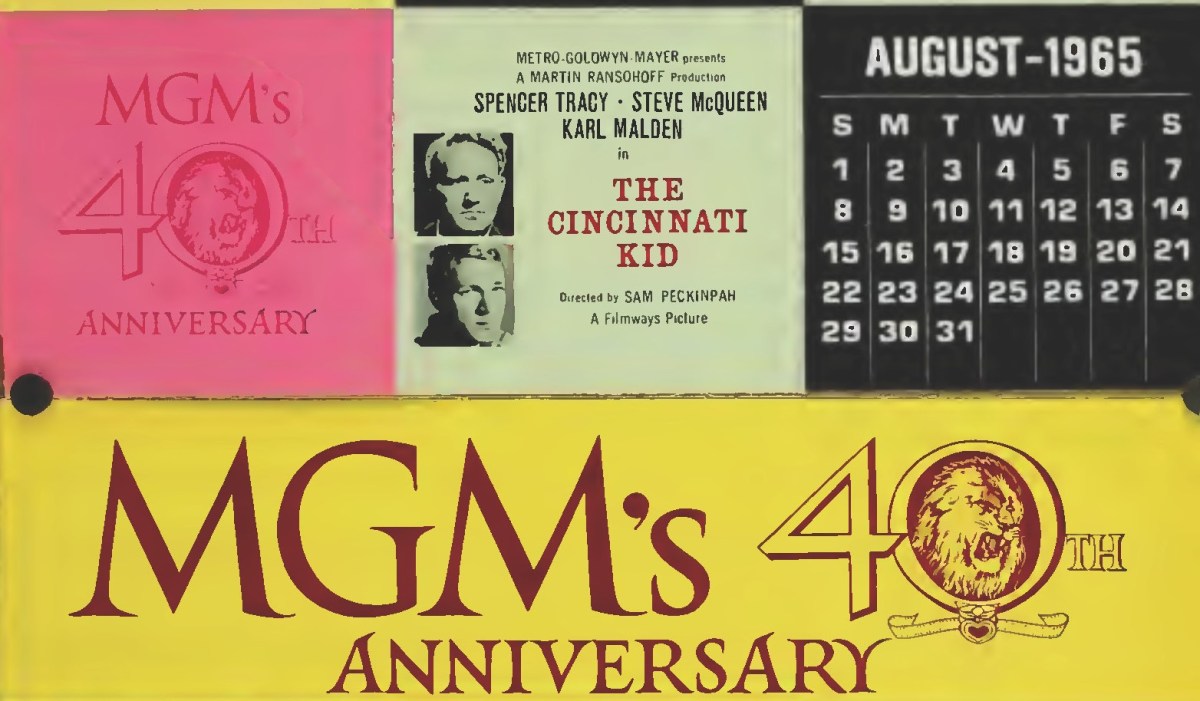
As you can see from the advertisement above, this was originally intended to be quite a different film, directed by Sam Peckinpah and starring Spencer Tracy in the role of ageing poker champ Lancey. The director had just come off one troubled shoot, Major Dundee (1965), and was seeking Hollywood redemption. Two-time Oscar winner Tracy was also hoping to revive his career. Except for what amounted to little more than a extended cameo on It’s A Mad, Mad,, Mad, Mad World (1963) he had not worked since Judgement at Nuremberg (1961). Also initially on board in a small role was Sharon Tate (Valley of the Dolls, 1967)

This was also a big gamble for industry outsider Martin Ransohoff who had moved to the forefront of independent production after The Americanization of Emily (1964) with Julie Andrews and James Garner and The Sandpiper (1965) starring current top-billed royalty Elizabeth Taylor and Richard Burton. He had wheeled and dealed with top studios – MGM, Columbia and United Artists – desperate for quality product. He was planning the biggest movie of his career having purchased the rights to the Alistair MacLean bestseller Ice Station Zebra. Ransohoff was a marketing innovator and long before Robert Evans pumped tens of thousands of Paramount dollars into advertising the book of Love Story (1970) to ensure it rode high on the bestseller charts and thus increased public awareness, Ransohoff had pulled off the same trick for Richard Jessup’s novel The Cincinnati Kid.

Tracy was first to quit, infuriated that he was denied script approval. Essentially, he wanted his role beefed up. But Ransohoff “would not expand his role in any way” and angered at the prospect of playing second fiddle to McQueen the actor walked out, to be replaced by a star with considerably less marquee appeal, Edward G. Robinson.

At least Tracy was able to depart with head held high. Peckinpah was ignominiously fired after shooting had begun. The intemperate director had already locked horns with the producer over a story which had now taken the efforts of four screenwriters – Oscar-winner Paddy Chayefsky (The Americanization of Emily), Oscar-winner Ring Lardner Jr. (Woman of the Year, 1943), Oscar nominee Terry Southern (Dr Strangelove, 1964) and newcomer Charles Eastman (Little Fauss and Big Halsy, 1970) – to knock the book into a workable screenplay without the extra bother of Peckinpah adding his own scenes.

Trade newspaper Variety reported: “Peckinpah’s problems stemmed from his filming of a nude scene that wasn’t in the script but which the director wrote on his own. Last Friday (November 4, 1964) he reportedly excused the featured cast and began to lense the nudie scene using an extra from the cast.” Whether this was indeed Sharon Tate, of whom Peckinpah was reported to have filmed in a flimsy shirt without a bra so that her nipples were showing, is unclear. And although there is an undertone of sex in the actual picture, as delivered by Ann-Margret, it was considerably more discreet.

Strangely enough, Ransohoff was no stranger to the benefits of nudity in his pictures and had fought a losing battle with the all-powerful MPAA, the industry ruling body in matters of censorship, to have nude scenes included in The Americanization of Emily. The nude statue of Elizabeth Taylor in The Sandpiper was permitted, however, and Ransohoff sent hundreds of miniature statues out to influencers as a gift.

Peckinpah did not have final cut so Ransohoff could easily have excised any nude scenes from the finished movie. What was considerably more alarming was that Peckinpah was shooting in black-and-white. Later, Ransohoff would contend that he was outraged by this notion but he surely must have signed off on it at the outset. Whatever the reasons, and some believed fisticuffs were involved, Peckinpah was sacked, leaving a $750,000 hole in the budget.

Production closed for over a month while Ransohoff scrambled for a new director. McQueen was pay-or-play, so if the film was cancelled, the actor was due his entire fee. McQueen had signed on for a fee of $200,000 – or $350,000 depending on who you believe – and $30,000 a week in overtime plus 25 per cent of the profit and a host of extras. McQueen had been initially lined up for a Ranoshoff remake of Boys Town to co-star James Garner, but that proved little more than a publicity flyer.

Replacement Norman Jewison had no reputation for hard-line drama – more at home with light comedy such as Send Me No Flowers (1964) – but was available and more likely to toe the Ransohoff line. However, initially he demurred. It was against the rules of the Directors Guild to step in in such a manner and Jewison required reassurance that Peckinpah was indeed out of the picture, and the film had been shut down, before accepting the job. Theoretically, Jewison received more control of the final cut than Peckinpah. His contract called for him to be in sole charge of the completed picture until after the third public preview. If it wasn’t working by that point, Ransohoff had the right to take over. Jewison exerted control in other ways, denying actors a chance to look at the rushes

Theoretically, McQueen had conceded top billing to Spencer Tracy, but that was not reflected in the artwork MGM put out – the illustration at the top of the Blog appeared in the trade press prior to production. To keep McQueen sweet during the layoff, Ransohoff handed him $25,000 to play the tables in Vegas. Edward G. Robinson had the same worries as Spencer Tracy, fearing his part would be cut to build up the star. In reality, McQueen welcomed going head-to-head with an older star, a situation he had not experienced since The Magnificent Seven (1960) with Yul Brynner.

But if the male stars, under the confident direction of Jewison, gave no trouble, that was not the case with the female contingent. Tuesday Weld came with a heap of personal issues related to becoming, as a child model,  the family breadwinner at an early age – nervous breakdown at nine, alcoholic at ten, suicide attempt at twelve. She had never quite achieved stardom, in part as a result of turning down roles like Lolita (1962)

Ann-Margret was the opposite. She could earn nearly as much as McQueen – her fee at some studios was $250,000. However, Twentieth Century Fox was holding her to an earlier four-picture deal which paid a miserly $25,000 per movie, forcing her to lose out on a $150,000 payday in Europe for The 10th Victim (1965) with Marcello Mastroianni – known at the time as The Seventh Victim, Ursula Andress her replacement – in order to take up a contracted role in the remake of Stagecoach (1966). Her over-sexed screen persona had caused playwright William Inge to remove his name from Bus Riley’s Back in Town (1965).

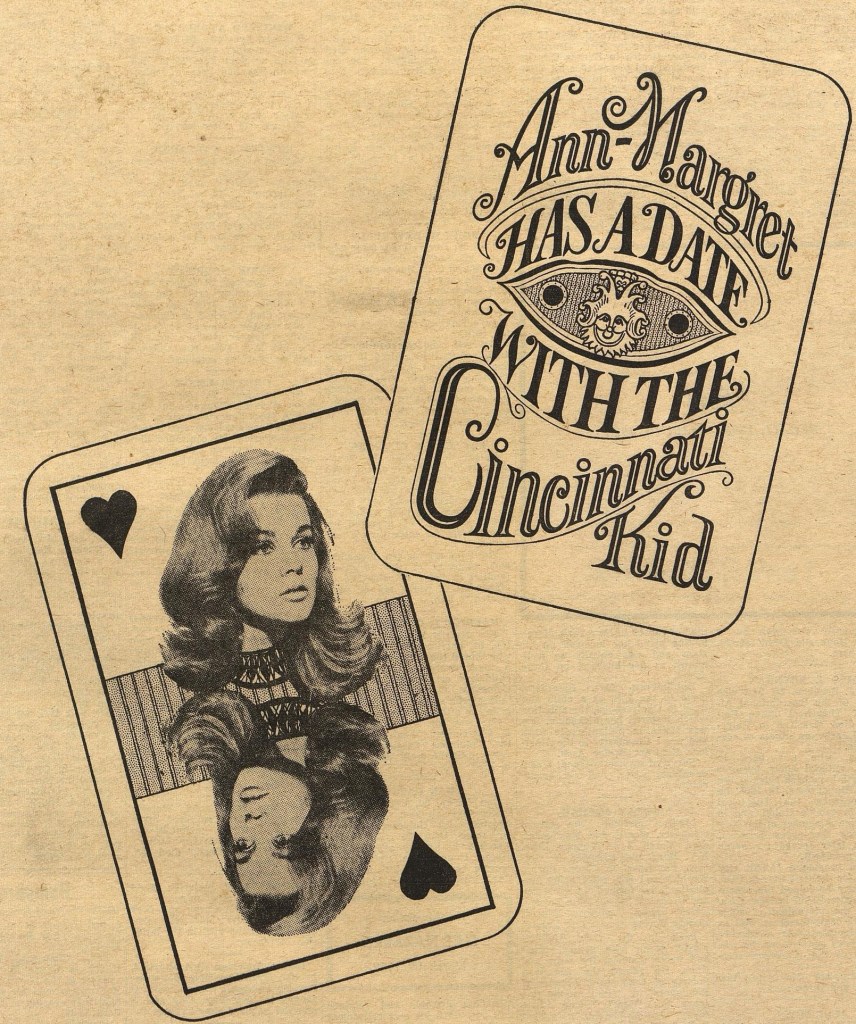
One of the hottest young stars in the business, she intended to stay that way, and her portrayal of Melba in The Cincinnati Kid pretty much fitted in with audience expectation. She was in such demand that she was under contract to make a total of 17 pictures for five separate studios plus Frank Sinatra’s independent production company. Her deals were with Universal (six pictures), Fox (four), MGM (three), Columbia (three) and United Artists (one). But after dropping out of Marriage on the Rocks (1965) with Sinatra her output for the rest of the decade comprised one movie apiece for Paramount, MGM, Fox and Columbia and four independent pictures in Italy.

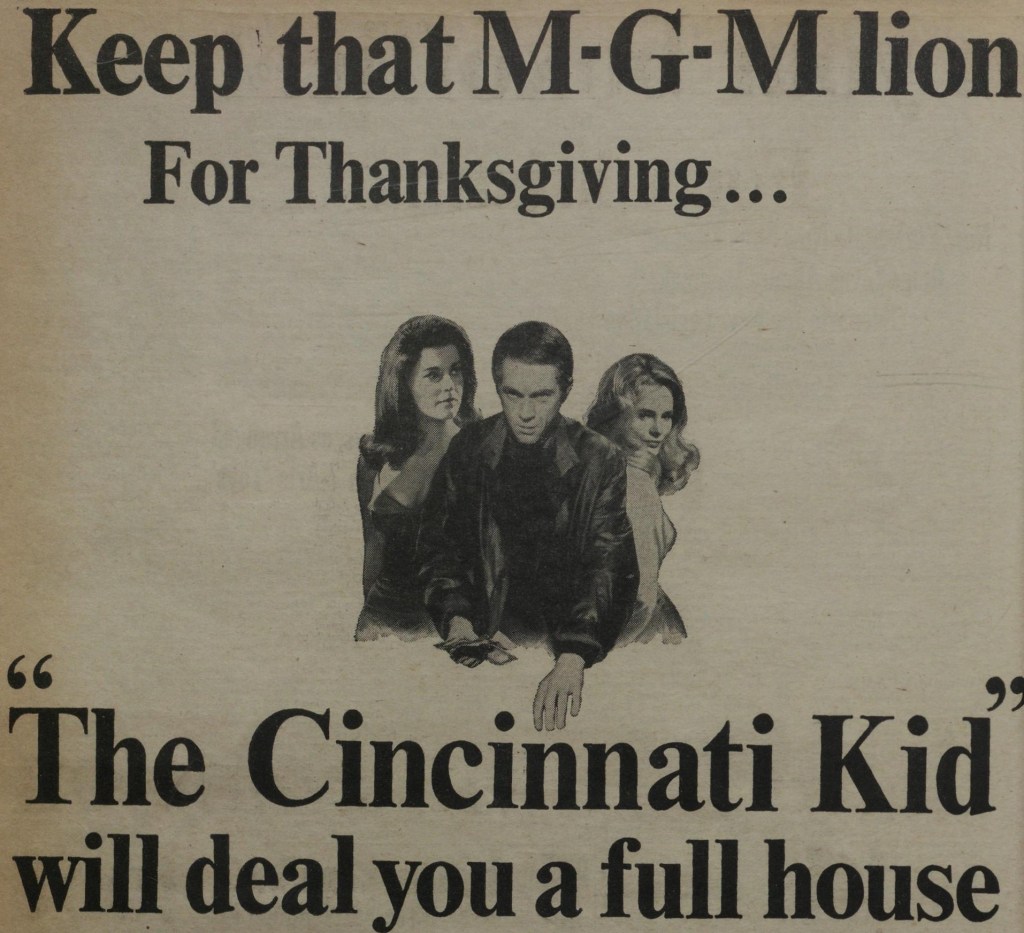
MGM spent big bucks promoting the picture and, in particular, the Ann-Margret connection. The studio had put a marker down on Thanksgiving 1965 for the launch date, but was marketing the movie more than six months ahead, the kind of exposure that was normally only allotted to roadshow features.

SOURCES: Christopher Sandford, McQueen: The Biography, Harper Collins paperback (2002) pages 165, 170-176; Penina Spiegel, Steve McQueen: The Untold Story of a Bad Boy in Hollywood,  Collins, 1986, p162, 169-173; “Ransohoff To Start Five Films in 6-Month Period,” Box Office, June 17, 1963, p27; “Marty Ransohoff To Seek Code Changes,” Box Office, November 25, 1963, p6; “Ann-Margret Into The Cash Splash,” Variety, July 22, 1964, p5; advert, Box Office, October 9, 1964, p9; “More Cincinnati Kid Books,” Box Office, October 24, 1964, pW-5; “Refuse Spencer Tracy Xincy Kid Script Okay So Actor Takes Powder,” Variety, November 11, 1964, p24; “Jewison Replacement for Sam Peckinpah,” Variety, December 9, 1964, p24; Advert, Variety, March 10, 1965, p80; “Fear Ann-Margret Going Wrongo In Her Screen Image,” Variety, March 24, 1965, p5; “Fox Holds Ann-Margret To Stagecoach, Denying Her For Mastroianni,” Variety, April 14, 1965, 4; Advert, Variety, May 19, 1965, p20.

Ocean’s 11 (1960) ***

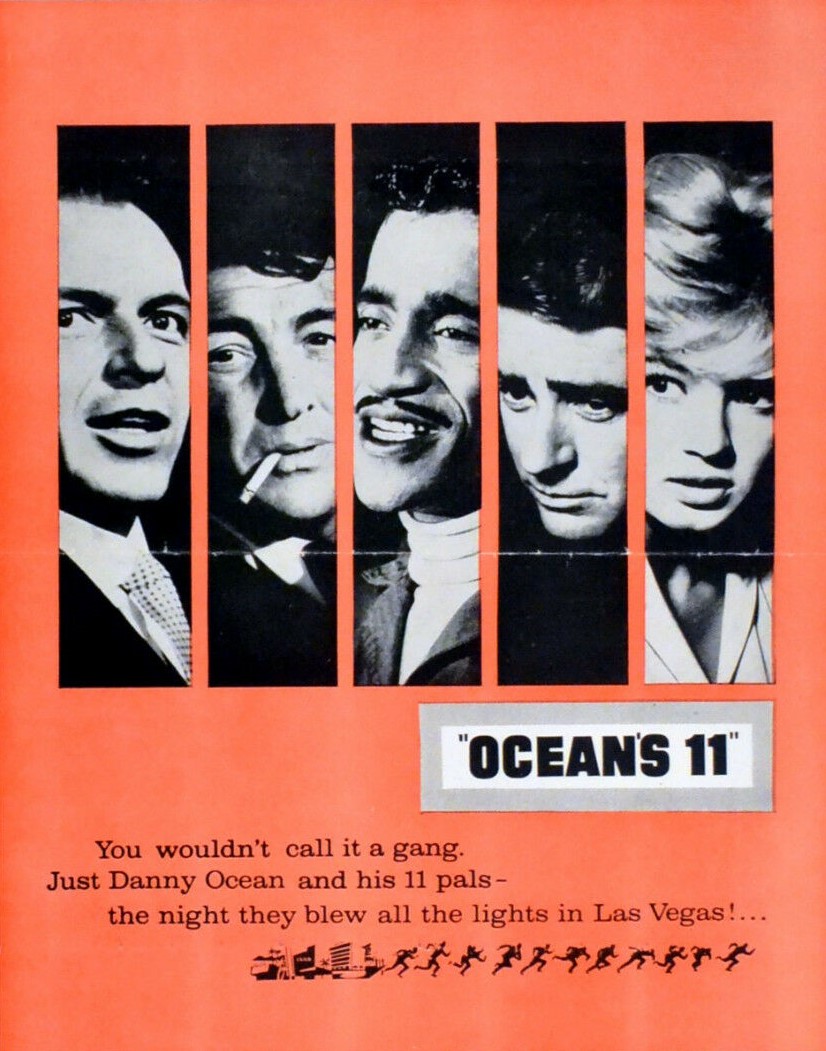
Heist pictures break down into planning, execution and reprisal. Here the planning stage moves at a leisurely pace, a bit of recruitment, and setting up bitebacks that will cripple the military-precision plan by ex-army buddies to rob five Las Vegas casinos of millions of dollars on New Year’s Eve. There’s a bit of reversal, Mr Big (Akim Tamiroff) is a collection of nervous tics, Jimmy Foster (Peter Lawford) a rich guy seeking financial independence from a possessive mother, Sam Harmon (Dean Martin) having second thoughts about the operation, and Danny Ocean (Frank Sinatra) trying to win back estranged wife Beatrice (Angie Dickinson) who surmises he prefers danger to intimacy. Mostly, it’s repartee between Harmon and Ocean while Foster makes a chump out of his mother’s next potential husband Duke Santos (Cesar Romero).

There’s not much hi-tech about the audacious plan, knocking out the electricity supply to the casinos, the switch to auxiliary power allowing the gang access to the inner sanctum where the cash is held, finding their way in and out of the darkness by nothing more sophisticated than luminous spray paint, and with a clever ruse to get the money out once all hell breaks loose.

The fun starts when one of the team (Richard Conte) drops dead post-raid and it transpires Santos is a big-shot underworld figure who investigates the robbery on behalf of the casinos and starts tracking the gang down, leading to a pay-off you don’t see coming.

Given the comedy element, there’s no great tension but it’s a pleasant enough diversion and Sinatra and Martin display an easy camaraderie that lights up the screen. It could have been funded by the Las Vegas Tourist Bureau so much attention is given to the wonder of the casinos, at a time when gambling was still only otherwise legal on racetracks, and with snippets of floorshows and the deluxe atmosphere. Add in a couple of numbers delivered a couple of times by Dean Martin (“Ain’t That a Kick in the Head”), legitimately since he is a cocktail bar singer, and Sammy Davis Jr. (“Eee-O-11”), somewhat shoehorned-in given he is a truck driver.

There’s a couple of neat reversals: Ocean’s dumped girlfriend Adele (Patrice Wymore) gets short shrift from Beatrice when she reveals the affair; casino bosses offered a double-or-quits gamble refuse to consider such a dangerous notion. Red Skelton and George Raft have credited cameos, Shirley MacLaine does not. As well as Richard Conte, Henry Silva (The Secret Invasion, 1964) has a small part as does Norman Fell (The Graduate, 1967).

Although there are on occasion outdated sexist attitudes, there is also a strong anti-racist statement in the hiring of Sammy Davis Jr., showcasing his talents in a big-budget picture, and clearly making the point that he has been welcomed by stars as big as Sinatra and Martin.  

And it’s worth also considering the picture in terms of early-onset brand management.  The “Rat Pack” was a loose group of entertainers which not only became a well-known stand-alone entity in its own right that celebrated what was considered “hip” at the time (assuming you excluded Elvis and his ilk), but as individuals supported each other on television and in live performance. They would make another two pictures as a team and another dozen or so where two or more of the players appeared. The principals were all major attractions at the nascent Las Vegas so they were also promoting their home patch. During the day they made the movie, at night they wove in and out of each others’ acts, creating an entertainment sensation. On top of that, Sinatra had his own record label Reprise – among the early acts Dean Martin and Sammy Davis Jr. So, in a sense, all this cross-promotion was money in their pockets.

Also of note are the opening and closing, the former for the credits devised by Saul Bass, the latter for the famous shot later appropriated by Quentin Tarantino for Reservoir Dogs. Ironically, Lewis Milestone, who devised the original shot, and long before that won two Best Director Oscars, is less well regarded these days than Tarantino.

Machine Gun McCain (1969) ***

Armed robbers lack the finesse of a jewel thief or burglar when it comes to pulling off a major heist. Rather than resorting to the weaponry of the title, they are more inclined, as John Cassavetes does here, to plant bombs, both as a diversionary tactic and within the target building, in this case a Las Vegas casino.

Although boasting Hollywood leads in Cassavetes and Peter Falk and rising Swedish leading lady Britt Ekland (The Double Man, 1967) and wife of star Peter Sellers, this was an Italian-made gangster thriller with the usual abundance of location work. Minus the romantic complications of A Fine Pair (1968), it concentrates on the machinations of the central characters. And it is a pretty lean machine. The robbery takes place against the background of warring Mafia chieftains, West coast boss Falk trying to muscle in on a Vegas casino without being aware it is controlled by the New York hierarchy. Cassavetes does not realize the robbery has been set up by his naïve son on behalf of Falk. Ekland is on board as a kind of mostly mute magician’s assistant, helping Cassavetes.

Little dialogue comes Cassavetes’ way, either, which plays to his strength, that glowering intense unpredictable weasel-face, whose reactions are less likely to be emotional than violent. Falk gets the dialogue and little help it does him, his goose is cooked when he has the temerity to shout at the New York kingpin. 

Yet this slimmed-down documentary-style hard-nosed picture in the vein of Point Blank (1967) manages several touching moments, even more effective for completely lacking sentimentality. When Cassavetes’ son is knifed in the back, the gangster finishes him off with a burst from the titular machine gun rather than see him suffer. His old flame Gene Rowlands, making too brief an appearance, has a wall covered in newspaper headlines of herself with Cassavetes when she was his moll and she accepts without enmity the new woman in his life and she proves the toughest moll of all when confronted with Mafia gunslingers.  

The planning of the heist is well done, no explanatory dialogue, just action on screen; there’s a car chase; and the gangster dragnet is unexpectedly powerful. Gabriele Ferzetti (the railroad baron in Once Upon a Time in the West, 1968) is excellent as the calm authoritative New York boss, Falk a bit too excitable, and Florinda Balkan (The Last Valley, 1971), in her third screen role, has a small part as a traitorous moll. Ekland is surprisingly good with not much to play with, a couple of lines here and there but still emoting with her face.

Cassavetes, who always claimed he was only acting to fill in the time between directing  (Faces, 1968), and as a means of financing them, was at a career peak, Oscar-nominated for The Dirty Dozen (1967) and male lead in Rosemary’s Baby (1968). He had just appeared in another Italian gangster movie Bandits in Rome (1968). Cassavetes and Falk would go on to have a fruitful partnership over another five films. Falk and Ekland had played opposite each other in Too Many Thieves (1967). Falk also had an Oscar nod behind him for Murder Inc. (1961) but his career was about to go in a different direction after the TV movie Presciption: Murder (1968) that introduced Columbo.

Trivia trackers might also note a score by Ennio Morricone. Though not one of his best, a few years later he would deliver one of his most memorable themes for Sacco and Vanzetti (1971) for the same director Giuliano Montaldo.

Discover WordPress

A daily selection of the best content published on WordPress, collected for you by humans who love to read.

The Atavist Magazine

by Brian Hannan

WordPress.com News

The latest news on WordPress.com and the WordPress community.