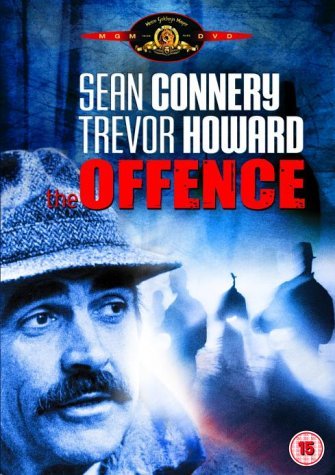
“Vanity project” – two words to strike terror into the heart of a Hollywood studio boss. It meant some star or director had you over a barrel. In return for them condescending to make a movie for you, they expected you to fork out for a movie you knew would never make a dime. But, in this case, as far as United Artists was concerned, it was worth the risk if it that meant getting the Bondwagon back on track after the disappointing box office of On Her Majesty’s Secret Service (1969). It was a (relatively) small price to pay to get Sean Connery signing on for Diamonds Are Forever (1971).
There was still a financial downside. In the Connery deal, United Artists agreed to stump up two million bucks for two pictures. The actor would cost nothing, so that might be considered a bonus, Connery relying on the back end to recoup his fee and share of profits. But the movie would still need marketing and advertising, which might add up to another half a million dollars per picture.
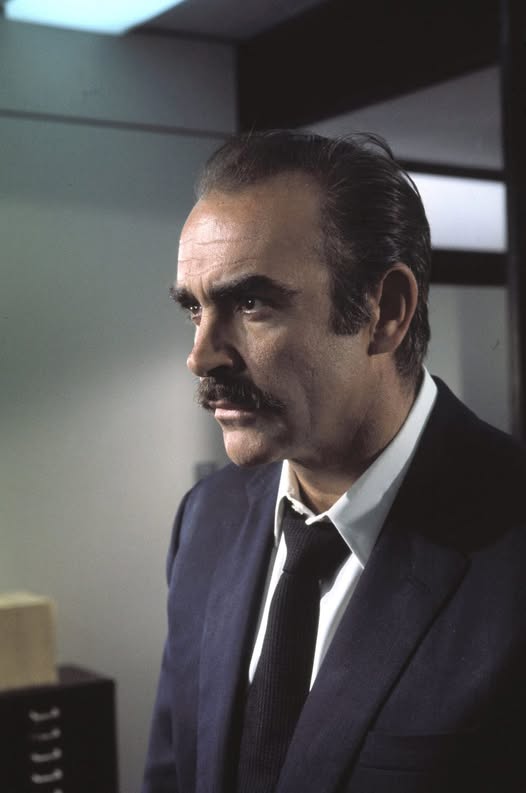
Worse, this was what was known in the business as a “put picture.” According to director Sidney Lumet that meant the studio “had nothing to say about it. A budget was picked – and in this instance it was $1 million – and then whatever Sean wanted to do with that million he could do. They would have no approval of script, director, cast, what-have-you and that’s how The Offence happened.”
Connery wasn’t the first actor to think he knew better than the studio or who fancied backing his own judgement. That particular line went back to the silent days of Mary Pickford and Charlie Chaplin and later included the likes of John Wayne, Marlon Brando, Gregory Peck and Doris Day.
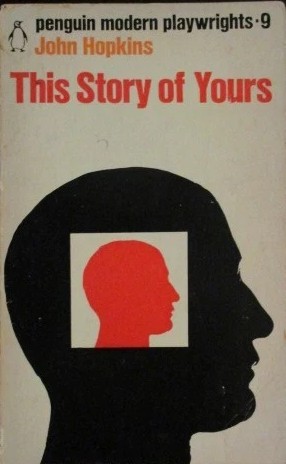
Connery planned to adapt a play by John Hopkins called This Story of Yours. He’d met Hopkins on Thunderball (1965) for which Hopkins had written the screenplay. UA might have been more interested had the play had been a whopping success in London’s West End and Broadway. But its London run was restricted to a few weeks at the Royal Court Theatre in 1968, so more arty than the general hit play.
Connery’s second choice for a “put picture” was an adaptation of Macbeth in which he would make his directorial debut.
“There was never a moment’s discussion,” noted Lumet, about how this would play with Connery’s global fanbase. “Sean knew exactly what he was getting into, shut his eyes and dived off the board without checking if there was any water in the pool.”
The budget was trimmed further following changes to the dollar-sterling exchange rate and Connery had only $900,000 to play with. But actually this wasn’t such a bad deal. Apart from three pictures, UA had limited budgetary exposure to $1.5 million for the rest of its slate. And Connery was flush, sitting on an estimated $6 million from his share of the proceeds of Diamonds Are Forever, his record fee of $1.2 million augmented by his 12.5 per cent share of $45 million in rentals.
Sidney Lumet, who had directed Connery in The Hill (1965) and The Anderson Tapes (1971) signed up. Ian Bannen, also from The Hill, took the main supporting role and Trevor Howard (The Long Duel, 1967), with just nine minutes screen time, added marquee lure. Lumet managed to bring the film in ahead of schedule, completing the film in just 28 days of shooting following a couple of weeks of rehearsal. The writer was on the set every day.
And UA hadn’t skimped on promotion either. Some of the 154 journos attending a junket for Man of La Mancha were shipped to London to cover The Offence.
Exteriors were shot in and around Bracknell in Berkshire in March and April 1972, making use of the Point Royal flats – the background made enough of an impression for a PhD student to use it for a thesis on the “brutalism” of modern architecture” – with interiors at Twickenham. The town’s library doubled as the film’s police station for exteriors.
The title was changed to Something Like The Truth – artwork was devised for this – and only switched to the “much more impactive” The Offence a month before the movie opened.
All Connery’s Bond hits had opened at big London West End theaters. So although this might have fared better in a smaller house, or a West End cinema known for more discretionary fare such as the Odeon Haymarket or a genuine arthouse like the Curzon, UA slotted it into the 1,993-seat Odeon Leicester Square in January 1974.
In opening week it took $17,900, a few hundred dollars short of the seventh week of the movie it replaced, Charles Bronson thriller The Mechanic, so “disappointing” was an understatement. According to a later article by Variety’s Peter Debruge, it only lasted four days. But it didn’t. It ran for five weeks. Week two brought in $13,700, the third stanza $10,200 and then $8,900 and a final sally of $7,300. But nothing like his Bond box office.
It transferred to the 139-seat Cinecenta – where it might more sensibly have opened and where demand would surely have outstripped supply and led to a lengthy run. In fact, the second week there improved on the first, $2,400 compared to $2,200. And it shifted over to the equally tiny Centa Cinema where its second week sat at $2,400. The Odeon chain gave it a circuit release, backed by a reissue of western Support Your Local Gunfighter (1971) starring James Garner.
The London figures resulted in a distinct lack of interest in the U.S. Not even Connery’s success as James Bond could induce any notable theater to take it on. U.S. reviews didn’t help. Among the New York critics, six were negative and only two positive. However, Women’s Wear Daily commented on the “beautiful acting by Sean Connery” and the Independentl Film Journal noted, “He is so much more right for this than any glossier star would be that he has an unbeatable advantage.”
Peter Debruge reckoned the poor London box office stalled its opening Stateside for a year. That wasn’t true either. Although it was slow out of the gate. It had received an “R” certificate in December 1974, which generally indicated an opening one month or so further on. Instead, the opening was delayed until 11 May 1973 at the 546-seat Festival in New York, by which point Connery was again in the news, having replaced Burt Reynolds on Zardoz.
Again according to Debruge, the distributor “buried it in a bad house” in New York. That wasn’t true either. The Festival, a Walter Reade arthouse, was the ideal location for a difficult movie that needed to find its feet. Success there could lead to a long run. The movie it replaced, Ten from Your Show of Shows, an equally odd proposition being a compilation of sketches from a 1950s TV show, was coming to the end of a 10-week run.
The first five days at the Festival hauled in $9,500 but neither the second nor third week figures were reported, which meant they were dire. That three-week run was the limit of its American release, as far as I could detect after researching the pages of Variety. It may well have turned up somewhere on the drive-in circuit or as a support. Judging from available posters, it was released at least in Germany, Finland, Australia, Belgium and Spain
Apparently, it turned a profit after nine years but my guess that would take a considerable amount of sales to television to get anywhere near recouping the investment. United Artists reneged on its deal to make another “put picture” with Connery, though likely there was a loophole in the contract that facilitated that. Interestingly enough, that might not have prevented Connery going down the directorial route. He was slated to direct and star in The Drooping W, based on a Leo Marks script, for Twentieth Century Fox.
Both Sidney Lumet and Christopher Nolan, possibly attracted by the complex flashback structure, both asserted it was Connery’s best work.
SOURCES: “About UA Financing,” Variety, May 19, 1971; “Connery Truth 1st of 2 for UA,” Variety, May 29, 1972; “Lumet Brings In UA’s Truth Ahead of Sked,” Variety, May 31, 1971; “UA Backed Mancha,” Variety, June 28, 1972; “Connery May Earn $6-Mil,” Variety, July 19, 1972; “R for Offence,” Variety, December 27, 1972; “Sean Connery Film Retitled,” Box Office, January 8, 1973; “Review,” Women’s Wear Daily, May 14, 1973; “Connery into Zardoz,” Variety, May 16, 1973; “N.Y. Critics Opinion,” Variety, May 23, 1973; “Review,” Independent Film Journal, May 28, 1973; “Fox Out-Races Hounds of TV,” Variety, September 19, 1973; Peter Debruge, “Helmers Tap into Charisma and Wigs,” Variety, June 7, 2006. Box office figures: Variety 1973, Jan 24-March 14 and May 16-30.

