The Last Safari (1967) ***

Producer Hal Wallis was known as a star maker. He had launched the careers of Burt Lancaster, Kirk Douglas, Lizabeth Scott, Dean Martin, Jerry Lewis and Shirley MacLaine and was instrumental in shaping Elvis Presley’s screen persona. Continually on the lookout for new talent and with a roster of pictures to cast, he had swooped in the mid-60s on Suzanna Leigh (Boeing Boeing, 1965), Broadway rising star Tanya Everett and on the basis of a television pilot Lithuanian-born Kaz Garas.

So if The Last Safari appears both overcooked and undercooked, put that down to Wallis saddling director Henry Hathaway with the untried Garas as his star, billed ahead, much to his fury, of veteran Stewart Granger (The Secret Invasion, 1964). The film’s way too long as the producer keeps finding ways to insert the youngster into the older man’s tale of hunting an elephant that killed his buddy. In fact, it’s another youngster, Gabriella Licudi (The Unearthly Stranger, 1965) who, with a fraction of Garas’s dialog, steals the show.

The safari picture was by now fast out of fashion, the days of glorifying hunting, even just to supply zoos as in Hatari! (1962), losing its appeal especially with the softer conservationist approach of Born Free (1966) and Africa, Texas Style (1967). So while issues regarding poaching, native self-determination, tribal tradition and colonial interference are given more coverage than you might expect, it still boils down to great white hunter Gilchrist (Stewart Granger) setting out to kill an elephant. That millionaire playboy Casey (Kaz Garas) keeps getting in his way is down to an odd screenplay and the top-billing error that seems determined to find more space for the younger irritant than for the older guy coming to terms with himself.

By the time Casey lands in Kenya in a zebra-striped private plane with native guide Grant (Gabriella Licudi), Granger has already torn up his hunter’s license. Much of the initial narrative is simply Casey pursuing him and being turned down, until the American simply decides to tag along, despite inexperience of the bush.

It’s unclear whether Grant is a guide-with-benefits but she milks him at every turn and filches anything she can, including a lucky charm belonging to Gilchrist. But where Casey drones on, the camera is kind to her, showing her character in tiny snippets, concealing the lucky charm at Gilchrist’s approach, for example, or not being at all perturbed at being excluded from dinner on the grounds that’s she’s a servant and astonished that Casey gets himself so wound up at what he sees as an injustice. She’s perfectly happy dancing the Watusi on her own away from the boring grown-ups. And she puts him in his place, “You want a trophy…I’m not for sale.”

Quite why Gilchrist is obsessed with this particular elephant is never satisfactorily explained. There’s guilt of course since he was the protector but any observer would see that the buddy had stupidly put himself in harm’s way for the sake of getting a better photo of a charging elephant. You get the impression that Gilchrist is just finding a long slow way to die, now he has little else to live for, and his profession is being swamped by idiots, and the work involves dealing with entitled nincompoops like Casey.

Every now and then the movie takes a different, occasionally cute, turn, like watching the baby hippos clamber all over their parents in the water, repetition of this item explained by Gilchrist’s preference for that animal rather than that someone dug up some interesting library shots. But, more likely, it’s dangerous intrusion on tradition. Both Grant and Casey take it upon themselves to participate in a tribal dance, which leads to fisticuffs after a native, following her response to his moves, takes a fancy to the woman. Another time Gilchrist has to rescue some white people trapped in a village because they had violated tradition or were upholding tradition (the reason was unclear). Another chap is trampled to death because his watch alarm went off at the wrong time.

Once the movie settles down to what Hathaway is expert at, old men heading off on quests, long vistas, unwanted traveling companion, it picks up though audiences were probably let down by the ending, not the expected savage slaughter. By the time Casey admits he has learned humility you’ve long lost interest in him.

Howard Hawks would have swung in with a gender switch to make this work, turning Grant into an annoying female, introducing a romantic tussle, hoping the age gap wouldn’t act as too much of a deterrent. Frustratingly, this is excellent in patches, primarily when Gilchrist gets to demonstrate tradecraft and understanding of tribal tradition.

Stewart Granger, in festering in his guilt far removed from the traditional hero, is surprisingly good. Kaz Garas’s career told its own story, this being his only top-billed movie. He’s been thrown in at the deep end and sunk not swam. I was surprised to see Gabriella Licudi not popping up elsewhere because she makes a good stab at the self-sufficient sassy heroine. Hathaway looks overburdened with Wallis’s star-making. John Gay (Soldier Blue, 1970) adapted the Gerald Hanley novel.

Despite the flaws, still interesting.

Victim (1961) ****

Blackmail remains an odious and, unfortunately, booming area of criminal activity, especially targeting youngsters for perceived sexually inappropriate behavior. Politicians still fall into honey traps and I’m sure there are  Hollywood stars who dare not risk coming out for fear of jeopardising their careers. Too often, people pay up or commit suicide rather than endure what they view as a shameful transgression. Seventy years ago, it was a crime in Britain to be a homosexual so anyone with that particular inclination was open to blackmail.

This picture tied the British censor in knots just for daring to use the word “homosexual” never mind “queer” (in the old slang). The Americans were less sympathetic, refusing to allow it to be shown.

It remains surprisingly powerful, not just for the dealing with a subject that had ruined as brilliant career as that of Oscar Wilde over half a century before and had the power to continue to do so. While the wealthy might be able to hush up such criminal acts, the less well-off endured spells in prison.

It’s structured as a triple-edged thriller. Top London barrister Farr (Dirk Bogarde), a fast rising star, determines to root out a vicious blackmailer, while keeping from wife Laura (Sylvia Syms) his own submerged inclinations,  and all the time paying the price in emotional terms for denying his true feelings.

The police are surprisingly sympathetic so this isn’t full of tough cops beating up poor gay men but a community turned inside out trying to retain its sanity. The movie makes various open pleas to the British government to change its mind, but such agitation for change takes place within the context of an enthralling narrative.

It opens like a conventional thriller. A man on the run, Barratt (Peter McEnery), one step ahead of the law, seeking help from a variety of acquaintances, one of whom is Farr. We don’t know what this chap has done except he lugs around a precious suitcase. Not filled, it transpires, with compromising photos, as you might expect, but with a scrapbook.

Eventually, we find out Barratt has embezzled a large stash of cash in order to pay off blackmailers. When caught, he refuses to fess up, instead taking the suicidal way out. Farr, feeling guilty, decides to hunt down the blackmailers. This takes him through a gay underground, populated by characters who are being similarly fleeced: upmarket hairdresser Henry (Charles Lloyd-Pack), upmarket car salesman Phip (Nigel Stock), West End actor Calloway (Dennis Price). Some victims are not only complicit but implicate others (exactly as happened recently in Britain when a Tory MP was blackmailed). Eventually, the trailer leads to the vicious Sandy (Derren Nesbitt) and vile accomplice Madge (Mavis Villiers).

That it avoids falling into the exploitation sector is thanks to a story that focuses on human torment rather than pointing the finger. Prior to his marriage, Farr himself has owned up to a previous indiscretion and promised never to go astray. He can allow himself to fall in love, as with Barratt, but take it no further than giving the young man a lift home. Laura, meanwhile, refuses to just be his alibi, his “lifebelt,” her belief that she is in a proper marriage torn asunder by her husband’s admission that his career is under threat.

Inadvertently, Farr has wrecked other lives, small, dumpy bookseller Doe (Norman Bird) rejected by Barratt for unrequited love with the handsome lawyer. Laura’s brother cuts ties with her over the stain such a scandal would cast over the family. Friendship with Farr throws  suspicion onto married friend Eddy (Donald Churchill). Not everyone can hide their sexuality, Henry having endured four prison sentences for being caught.

And as with your normal thriller, there are red herrings, a newcomer to a pub possibly being in league with the blackmailer, and audience suspicion is directed to the camp pair whispering in the pub. As with the best red herrings, these are transformed into different narrative pegs.

Farr is far from your usual detective, what with his upper class lifestyle, and the danger – physical, marital and emotional – he puts himself in, but he is dogged and principled and in the end gets his man, knowing full well that he will pay a price. Eliminating stereotypes helps. Nobody minces around and there’s no vicious gossip or sarcastic observer on the sidelines.

I’d already been very impressed by the work of the underrated Basil Dearden whose portfolio includes lean thrillers The Secret Partner (1961) and The Man Who Haunted Himself (1970), grander affairs such as Khartoum (1966) and The Assassination Bureau (1964), and fistfuls of sub-Hitchcockian twisted complication in The Mind Benders (1963), Woman of Straw (1964), Masquerade (1965) and Only When I Larf (1968). This sits high on his list. But he is very much aided by a superb screenplay by Janet Green (The Clouded Yellow, 1950) and John McCormick (Seven Women, 1965).

Excellent performance by Dirk Bogarde (Our Mother’s House, 1967) and a very rounded one by Sylvia Sims (East of Sudan, 1964). A shout out for Derren Nesbitt (The Blue Max, 1966) as the creepy smug villain and John Cairney (Jason and the Argonauts, 1963), who recently died, and was a relation of my mother.

Recommended. Blackmail has an ominous contemporary ring.  

Frankenstein Created Woman (1967) ***

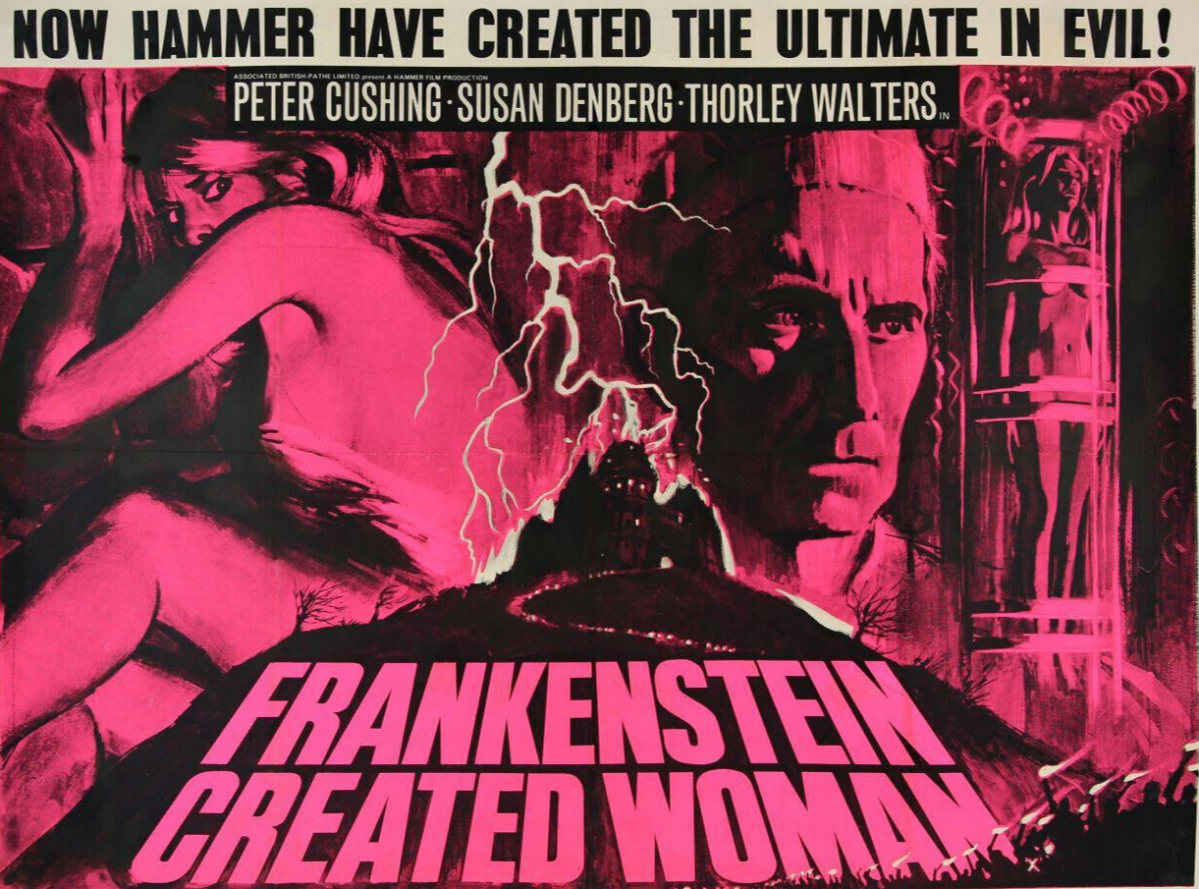
Custom-made for a contemporary audience. How can you fail with a tale about a male brain taking over a female body. Male soul if you want to be strictly correct and metaphysical about it or if you are Martin Scorsese for whom discussion about whether the soul leaves the body after death and exists on some other plane was of the greatest interest. But, yes, so although our hero/villain Baron Frankenstein (Peter Cushing) does create a female instead of a male, and not just with the misogynistic purpose of supplying a monster with a mate, unfortunately in the act of creation the poor woman is saddled with the soul/brain of a man, and, even worse, one with  bloody revenge on his mind.

These days for sure audiences would not have any trouble with female stars carving a swathe through any populace and nobody would require transplanting of  male hormones-soul-brain-whatever to take off on a rampage. But, back in the day, before Hammer went full-tilt-boogie down the lesbian vampire route, it was rare, outside of film noir and exploitationer pictures, for a woman to be so savage. So her actions are viewed with regret rather than roars of approval. But, for once, nobody is taking a torch or axe to the good old Baron.

That’s not all that takes the audience by surprise. The use of a guillotine, ideal for a post-task  dripping of blood, turns out to be widely used in central Europe in the 19th century, hardly surprising since it was a German invention. The movie opens with a young boy, Hans, witnessing his father’s execution on such a device, a point that seems arbitrary but proves pivotal.

The grown-up Hans (Robert Morris) assists Dr Hertz (Thorley Walters) assisting the Baron in some kind of resurrection experiment, the guinea pig being Frankenstein himself. Naturally, for purely metaphysical purposes you understand, the Baron would like to experiment on as barely-dead a cadaver as possible to prove his theories. That this takes a good while to materialize is largely because the narrative has to go all around the houses.

Hans’s lover, disfigured and lame innkeeper’s daughter Christina (Susan Denberg), is taunted by a trio of young swells that results in Hans attacking them. Later, for no particular good reason, the toffs kill the innkeeper, but Hans gets the blame and is sentenced to death. After he is  guillotined, Christina commits suicide by drowning. Both bodies turn up in Frankenstein’s lab at roughly the same time. Complication of course being that a guillotine doesn’t deliver a body intact. Quite how Frankenstein achieves his soul-body transplant is left up to your imagination – the scene promised in the poster is a marketing fiction.

And there’s a touch of Poor Things about the result as Christina wakes up minus scars and disfigurement but with no recollection of her past and needs to be taught who she is. Not that she requires much education in the feminine wiles department and is soon stalking the three young toffs, seducing them with hints of sexual promise before taking savage revenge.

There also a Curse of the Undead element when villagers discover her grave is empty. In fairness to the Baron, he soon realizes what fate had befallen her and tries to ensure that, once her revenge is complete, she can live a different life, although in the way of horror films a happy ending is rarely an option. And in fairness to the Baron the villagers aren’t queueing up to set him alight.

With various subplots to get through, this leaves the Baron out of the picture for considerable periods of time. From a contemporary perspective, there’s a freshness here that will appeal, especially the creation’s desire to discover her purpose in life, her not being bred to fulfil a romantic purpose, and the battle of the male-female will.

Peter Cushing (The Skull, 1965) is as usual splendid, Thorley Walters (Sherlock Holmes and the Deadly Necklace, 1962) presents as an inebriated and impecunious assistant while Austrian Susan Denberg (An American Dream, 1966) does well in the dual role.

Fourth outing in the Hammer series, directed with occasional verve by the reliable Terence Fisher (The Devil Rides Out, 1968) from a screenplay by Anthony Hinds (The Mummy’s Shroud, 1967).

Contemporary appeal and can never go wrong given that it is purportedly one of Martin Scorsese’s favorite films.

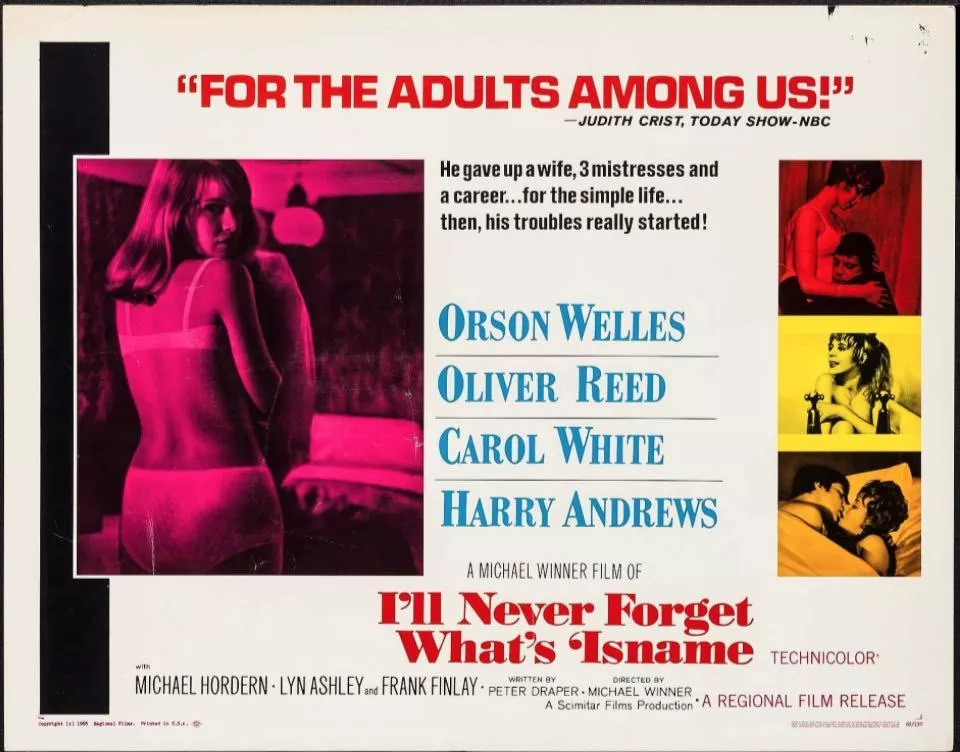
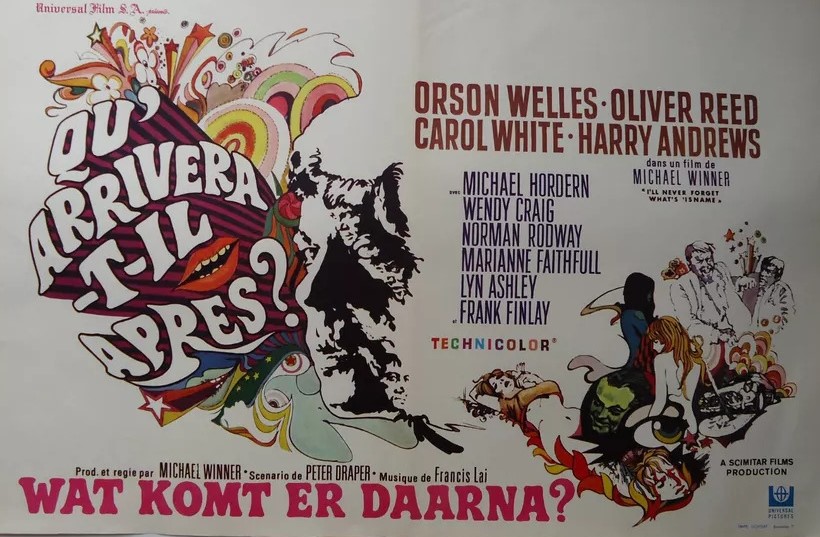
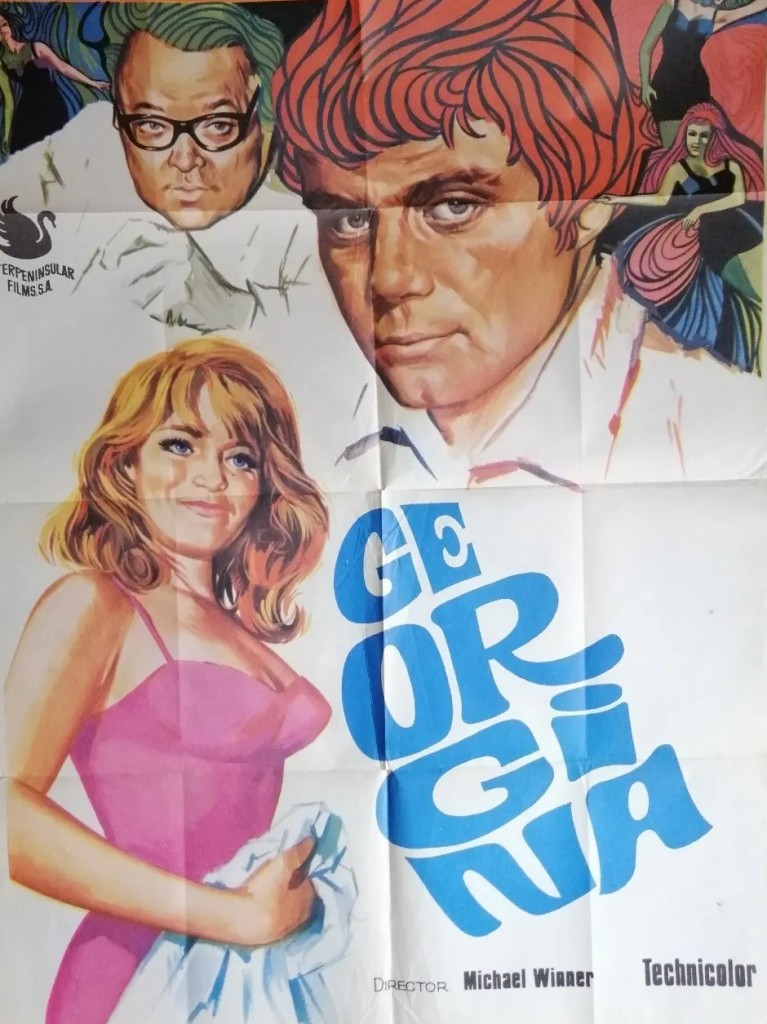
I’ll Never Forget Whatsisname (1967) ****

Director Michael Winner’s proudest moment – from a critical perspective. Rave reviews all round and hailed as a rising star of British cinema. Such adulation didn’t last long, of course, Hannibal Brooks (1968) and The Games (1970) elicited little critical reposnse and whatever kudos he achieved from a couple of westerns was soon blown away once he went down the Death Wish (1974) brutal revenge route. So this fits into the anomaly department in his canon and, although pretentious in spots, it does show a fine intelligence at work and a singular prophetic quality that should have contemporary reverberation.

For a start, he highlights the creativity of the advertising world that became the training ground for such British directorial talents as Ridley Scott (Alien, 1979), his brother Tony (Top Gun, 1986), Alan Parker (Midnight Express, 1978) and Adrian Lyne (Fatal Attraction, 1987) as well as producers in the vein of David Puttnam (Chariots of Fire, 1981). Perhaps more interesting are the ecological aspects, predicting the importance of waste both as an issue and a financial opportunity.

And although If… (1969) was viewed as the pre-eminent depiction of public school immorality, this provided a much shorter introduction to the prevalence of public school attitudes in society. You might also suggest, should you be so bold, that Winner envisioned the boom in reality televison, when the camera is not used to create illusion but to pick at the scabs of society. And we might also fast forward to Jaws (1975) whose meanest character shares the same surname as our hero here, whose personality defects are what drives the picture.

Within all this there’s a fair chunk of satire. And it’s rare for this director to so obviously poke fun at his heroes.

The narrative follows disillusioned advertising ace Quint (Oliver Reed) as he tries to extricate himself from various romantic entanglements in order to concentrate on first playing a more meaningful role via literary creativity and then, when that option is pulled out from under him, exposing the hypocrisy from which he has made his fortune.

The movie opens with a stunning image. Quint wielding an axe. Despite this being in the  middle of London, he scarcely receives a second glance – as if this might be construed as typical English eccentricity – as he marches towards his posh headquarters, proceeds to smash his office and hand in his notice to boss Lute (Orson Welles). He finds work in a literary magazine with old school chum Nicholas (Norman Rodway) where, unfortunately given he already has a wife and several mistresses, he falls for virgin secretary Georgina (Carol White).

But despite his success he is tormented by his schooldays, which instead of toughening him up made him more vulnerable to abuse from a teacher and to bullying from fellow pupils led by entitled thug Maccabee (Harvey Hall). The nightmarish glimpses of school are sharply brought into focus when he encounters Maccabee again and witnesses the savage hounding of another innocent man.

Meanwhile, Lute keeps popping up, either to try and seduce Quint back to his job or to sabotage his existing one. When a fight breaks out at one of Lute’s parties he wants it stopped before another of his precious artworks is broken rather than before a participant ends up in hospital. Lute takes English eccentricity to the extreme, enjoying a massage while playing Scalextrix, the epitome of avuncular decency except that he’s twisting the rules.

Even with his diabolical childhood, it’s hard to sympathize with Quint. He’s little more than a charming lout, but I suspect his is a more universal condition, those who have so much easy wealth inclined to poke at the foundations of success, and seek a more worthwhile profession. The ending is contrived, but, then, the fun has to stop somewhere.

That said, Oliver Reed (The Assassination Bureau, 1969) presents a more rounded character than in many of his later films. From the confidence of his delivery you get the impression that Orson Welles (House of Cards, 1968)  – top-billed ahead of Reed – improvised many of his lines. He’s certainly having some fun with his role, but then that is the seductive part of his character. Carol White (Daddy’s Gone A-Hunting, 1969) is the big surprise, bringing a genuine freshness to her role, before she conformed to the Hollywood dictat. And you won’t forget the malicious Harvey Hall (The Games, 1970).

The quite amazing cast includes Edward Fox (Day of the Jackal, 1973),  Michael Hordern (Where Eagles Dare, 1968) as a demented headmaster, Marianne Faithfull  (The Girl on a Motorcycle, 1968), Harry Andrews (The Long Duel, 1967) as a writer with a creepy hobby, Wendy Craig (TV series Not in Front of the Children, 1967-1973), Ann Lynn (Baby Love, 1969) and Frank Finlay (The Shoes of the Fisherman, 1968).

It’s entirely possible that it was pure coincidence that Winner covered so many topics relevant to today but I’m giving him the beenfit of the doubt. Written by Peter Draper (The System / The Girl-Getters, 1964).

Great – and meaningful – fun.

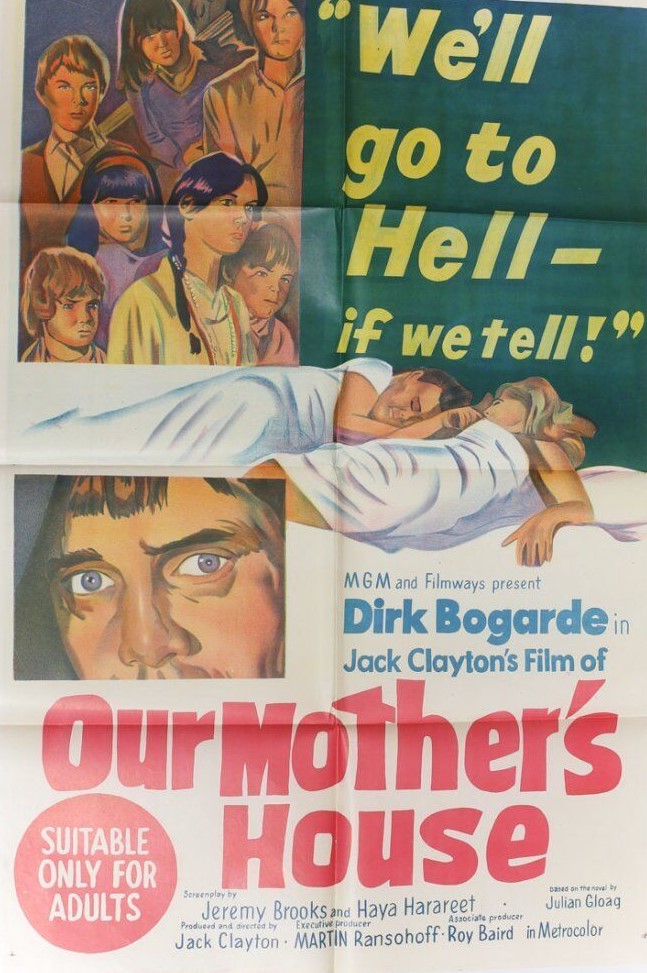
Our Mother’s House (1967) ***

Lord of the Flies set in a sprawling London Victorian mansion. At its best when kids give rein to vivid imagination, not so strong when melodrama intrudes.

After the death of her invalid mother and dreading being sent to an orphanage, eldest child Elsa (Margaret Brooks), who has been with the help of a maid running the house anyway, determines that she and the rest of the brood will pretend their mother is still alive. They bury the body in the garden, manage financially after Jimimee (Mark Lester) discovers an aptitude for forging their mother’s signature on the monthly cheques she receives from a trust fund, and hold séances in the shed to commune with the deceased one.

To maintain the pretence, they get rid of the nosey and querulous maid Mrs Quayle (Yootha Joyce) and come up with all sorts of reasons to explain their mother’s absence to school teachers and neighbors. Child fears run rampant as they visualize the terrible lives they would lead in an orphanage. But the generally tolerant community lifestyle is disturbed by the dictatorial rule of Elsa, determining that Gerty (Sarah Nicholls), for example, must have her long hair sheared off for innocently breaking a house rule and, in keeping with their mother’s fundamentalist beliefs, refuses to call a doctor when the girl falls ill. But the séance takes on a creepier aspect, Elsa the one in communion with her mother and therefore using the supposed other-worldy presence to enforce her will.

So far, so Lord of the Flies, and excellent in its depiction of a world ruled by children according to their fears and beliefs and without adult intercession. But it loses its grip when melodrama takes hold.

Their mother’s dissolute husband Charlie (Dirk Bogarde) returns, romancing Mrs Quayle, and, initially, spoiling the children, who are delighted to see him. He soon reverts to form, spending all their money, getting Charlie to forge his mother’s signature on the house deeds, planning to pocket the proceeds and dispatch the kids to an orphanage. Worse, he breaks the spell their seemingly devout mother had over their children, informing them that their mother’s conversion to religion only came after a life of debauchery and that, in fact, every single one of them is illegitimate and not his offspring. That’s too much for Diana (Pamela Franklin) who kills him with a poker.

Too many twists for sure and by diverting a fascinating dissertation of childhood into adult melodrama robs the film of much of its power.

Director Jack Clayton had been here before with The Innocents (1961) but, there, less was spelled out. Dirk Bogarde (Justine, 1969) is surprisingly good as the charming rough layabout with an eye to the main chance but it’s the children who captivate especially Pamela Franklin (And Soon the Darkness, 1970) and Mark Lester (Oliver!, 1968). The children’s innocence in any case would have been despoiled as they challenged Elsa’s rule and it would have been more satisfying to go down that route.

It was based on the bestseller by Julian Gloag and for anyone wondering what happened to Haya Harareet (Ben-Hur, 1959, and The Secret Partner, 1961) she married Clayton and is credited with the screenplay of this along with Jeremy Brooks.

Slow-burn that trips the wrong way.

Three into Two Won’t Go (1969) ***

Unhappily married and childless salesman Steve (Rod Steiger) begins an affair with kooky promiscuous hitchhiker Ella (Judy Geeson). A free spirit in control of her life – no VD and on the Pill – and happy to drift from mundane job to mundane job, Ella ranks her many lovers on their sexual performance. Steve has just moved into a new house on a dreary new estate, perhaps in the hope of revitalizing his staid marriage to Frances (Claire Bloom).

While Steve is away on business, Ella turns up at his home where, revealing, without implicating Steve, that she is pregnant, she convinces Frances to let her stay the night. Naturally, it is Steve’s baby, but Ella plans an abortion. Steve wants the baby and so, too, still unaware of the father, does Frances, seeing adoption as the solution to their marital woes. And so a love triangle, or more correctly a baby triangle, plays out, with a few unexpected twists.

Like most of the marital dramas of the 1960s, especially in the wake of the no-holds-barred Who’s Afraid of Virginia Woolf (1966), this is riddled with outspoken protagonists who have no idea how to find real happiness. Based on the book by Andrea Newman and adapted by Edna O’Brien, who both have previously marked out this kind of territory, the picture shifts sympathy from one character to the next. While no one is entirely culpable, none are blameless either. Yet there is an innocence about Steve and Frances in the way they fling themselves in the direction of unlikely salvation. They are not the first couple to find themselves in a marital cul de sac, nor the first to do nothing about it, hoping that somehow through a new house or job promotion things will right themselves.

Audiences, accustomed to seeing Steiger (In the Heat of the Night, 1967) in morose roles, might have been shocked to see him happy and he manages to present a more rounded character than in some previous screen incarnations. In burying herself in domesticity, Claire Bloom (Charly, 1968) essays a far from fragile character, whose resilience and pragmatic character will always find a way forward. Geeson is the surprise package, at once knowing and in charge, and at other times completely out of her depth, and to some extent enjoying the chaos she sparks. The exuberant screen personality she presents here is almost a grown-up more calculating version of the character she portrays in Hammerhead (1968).

Director Peter Hall (Work is a Four-Letter Word, 1968) generates more universal appeal by ensuring the movie is not so obviously grounded in the 1960s that it would quickly become outdated and the snatching at last-minute fantasy to avert marital disharmony will still strike a note. The performances are all excellent, including a turn by Peggy Ashcroft (Secret Ceremony, 1968) and bit parts from British character actors Paul Rogers (Stolen Hours, 1963) and Elizabeth Spriggs in her second movie.

Complex but not hard work.

Behind the Scenes: “The Long Duel” (1967)

Due some unexpected reverence after being chosen by Quentin Tarantino for his inaugural eponymous festival that kicked off at the Dobie theater in Austin, Texas, in 1996. I thought I’d throw that in since my opinion alone may not have swayed you as to this film’s merits. Ken Annakin (Battle of the Bulge, 1965) wasn’t first choice as director. It was initially on the slate of Jack Cardiff (The Girl on a Motorcycle, 1969) and should have also made waves as the first big British-Indian co-production. After his World War Two tank epic, Annakin’s career unexpectedly stalled.

He backed out of a project to make a Las Vegas version of Grand Hotel (1931), another, the $1.5 million The Fifth Coin, written by Francis Coppola and to star George Segal, got snarled up on the starting grid. He balked at Texas Across the River (1966) – when the females leads were going to be Shirley MacLaine and Catherine Deneuve – due to concerns about the schedule. He actually shot half of The Perils of Pauline (1967) with Terry-Thomas, Pat Boone and Pamela Austin, wife of super-agent Guy McIllwhaine, before being fired, for reasons that were unclear. Still, he remained in demand and was immediately off to Italy to shoot Raquel Welch heist picture The Biggest Bundle of Them All – not released until two years later as explained in my Behind the Scenes blog on that movie.

However, before jetting off to Italy, he had been sounded out by British producer Sydney Box who had a commitment from Yul Brynner and Trevor Howard to star in the $3 million The Long Duel being financed fifty-fifty by British studio Rank and fourteen Indian investors taking advantage of a tax-shelter deal. Annakin was in line for his biggest-ever fee. For Rank it was a brave new world. The British studio after years of relative inactivity was back on the production front foot, initially in co-production deals with American majors and British investment outfits like the National Film Corporation. It planned to invest $12 million in eight pictures. Initially, its stake in The Long Duel was limited to 60 per cent at a time when the movie was budgeted at $2.3 million. This was “particularly surprising because it came at a time when Britain was caught in a severe economic freeze” although the surprise success of the Bond pictures suggested the country’s movie industry was, in contrast, riding the crest of a wave.

Things turned sour on the location scouting trip to India. A “bottomless pit” of laborers was on standby to build a rope bridge across as soon as the money came through. Timber had been ordered to build a fort on a plateau with stunning views of snow-capped mountains, but nothing would arrive until money changed hands. While Rank had committed three-fifths of the finance with the rest coming from the release of blocked rupees guaranteed by a Maharajah, without any immediate cash and with the stars on pay-or-play contracts, there was no option but for Rank to pick up the entire cost and seek out alternative locations. That meant it was the single biggest British production financed domestically without a foreign partner.

Matters worsened when producer Sydney Box suffered a heart attack, triggering his departure from the business, in which he had been a mainstay for 33 years, movies ranging from The Seventh Veil (1945) to Accident (1966). In addition, Annakin was negotiating to make a permanent move to France while his wife was at home in England dealing with an adopted new-born baby. Annakin – acting also as producer for the first time – gambled on shifting the movie to Spain.

After the success of Doctor Zhivago (1965), Spain was fast being viewed as an ideal terrain, Custer of the West (1967), Camelot (1967), Fathom (1967) and The Bobo (1966) jostling for space. Having made a couple of movies there, Annakin assured the backers, the terrain was “not dissimilar” to the locations he had viewed in India. “I believe we can make Spain into India, so long as the crowds are dressed as Indians, which will cost quite a lot more because it means providing all the costumes whereas in India they already exist,” he explained. He had three weeks before the actors were due.

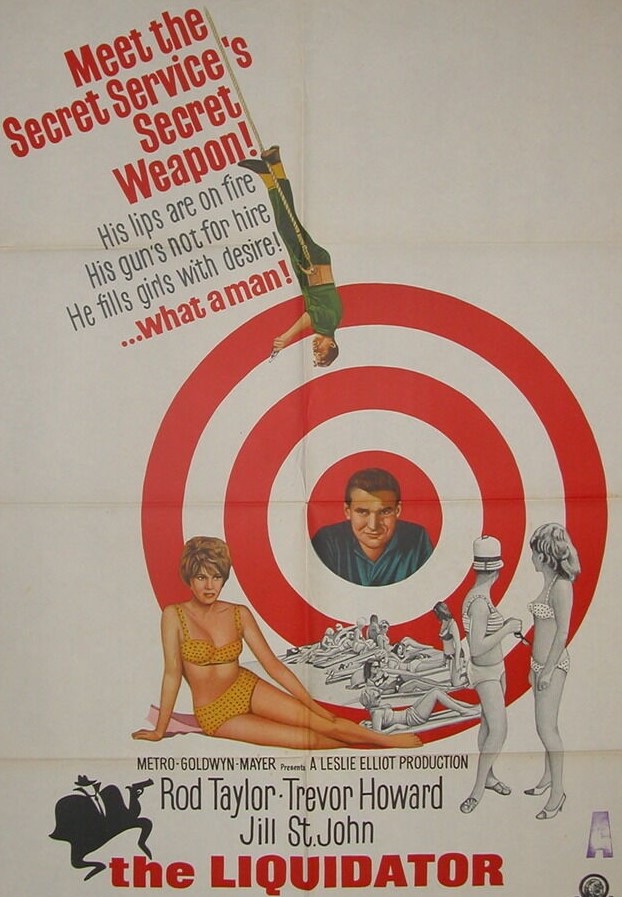
Yul Brynner and Trevor Howard would have seemed best buddies by now, having appeared in three films together over the past two years – Morituri (1965), The Poppy Is Also a Flower (1966) and Triple Cross (1966). Brynner’s career had revived thanks to Return of the Seven (1966). He was considered poor box office in the U.S. but made up for it with his global marquee appeal. Howard had been on an unexpected box office roll following Father Goose (1964), Operation Crossbow (1965), Von Ryan’s Express (1965) and The Liquidator (1965).

Annakin turned to the Sierra Nevadas to double as the Himalyas, located the rope bridge in a ravine near Ronda, the villages transplanted to the dusty Andalusian plains, and found sufficient horse-riding extras among the gypsies of Dacoit country. The Alhambra was called in to action for part of the Indian palace. A steam train of sufficient vintage was found.

Brynner supplied his own motor home, one of the most luxurious on the market, but required considerable assistance to move it around, especially on narrow country roads linking locations. Over 300 horses were required, with complications when the animals had to be moved in the dark. The major scenes required extensive lighting and nobody had taken into account the fierce winds which nearly blew everything away. The dancing bear was supplied by Chipperfield Zoo near Windsor, England. In the scene where Brynner returns to find his tribe massacred, the bear is also a victim. But, when the bear was knocked out by an injection, it didn’t wake up again. Cast and crew were so shocked that filming was abandoned for the day.

Howard’s alcoholism was another issue, liable to leave the actor so disoriented during the shooting of dangerous scenes that his close-ups were often shot at a later date, though, eventually informed of this accommodation, the veteran sobered up. If you felt when watching the movie that the female stars were out of place, you wouldn’t be far wrong. In the original tale there was no significant female role. But acceding to the demands of studio and distributor required various love interests. Suzanna Leigh (Subterfuge, 1968) turned down the lead, providing Charlotte Rampling (Three, 1969) with a worthy role.

Convinced it was onto a winner, Rank took out adverts in the trades claiming “all signs point to it being…among the greats” and it took the bold step of launching it in roadshow at the Odeon Marble Arch simultaneous with continuous performance at the Odeon Leicester Square in London’s West End.

SOURCES: Ken Annakin, So You Wanna Be a Director (Tomahawk Press, 2001) p186-189, 197-206; “Sydney Box $10-Mil Prod Program,” Variety, January 26, 1966, p14; “Rank Now Measuring Up,” Variety, July 27, 1966, p25; Advert, Variety, August 24, 1966, p27; “$3-Mil Rank Duel May Be Costliest British Film Ever,” Variety, October 26, 1966, p5; Advert, Variety, November 9, 1966, p27; “Sydney Box Quits Film Posts,” Variety, August 7, 1967, p2.

Murder Ahoy! (1964) ***

Agatha Christie tales were in a mostly B-movie limbo in the 1960s, despite Billy Wilder’s Witness for the Prosecution (1957) and would have to wait another decade before glorious all-star resurrection in Sidney Lumet’s Murder on the Orient Express (1974). In the meantime, audiences made do with Margaret Rutherford’s Miss Marple in an MGM quartet – all directed by George Pollock – that ended with Murder Ahoy!

Rutherford did not enjoy the national treasure status of the likes of Maggie Smith and Judi Dench these days, but she had been elevated to late-career fame by winning the Best Supporting Actress Oscar for The VIPs (1963). But she never quite made the cinematic impact anticipated after Blithe Spirit (1945) and was mostly seen in roles that called for eccentricity or determination, characteristics associated cinematically with Christie’s second most famous sleuth (although, in reality, the author was furious with her impersonation). And this had nothing to do with any published Christie work, just borrowed the character.

The title had led me to expect a picture set on a liner or a cruise ship. Instead, this being a cheaply-made British black-and-white feature, we are limited to sojourn on a sail training ship which remains moored at all times. Nonetheless, Miss Marple (Margaret Rutherford) is resplendent in naval attire and disports herself as if she were the captain.

Her excuse to get on board is the sudden death of a member of the committee overseeing said ship just before he makes an announcement. Miss Marple relies on a good deal more than Hercule Poirot’s little grey cells and through laboratory experiment determines the man died from strychnine poisoning. Among her other hidden talents are signaling mastery and dexterity with a sword and she drops popcorn on corridor floors to warn of imminent arrivals when she invades cabins.

The suspects include Capt Rhumstone (Lionel Jeffries), Sub-Lt Eric Humbert (Derek Nimmo), Lt. Compton (Francis Mathews) and Commander Breeze-Connington (William Mervyn) while Dr Crump (Nicholas Parsons) is described in double entendre fashion as “brisk.”  

Naturally, there is more murder, and the subplots include burglary, secret romance involving Matron Fanbraid (Joan Benham) and thwarted romance with Shirley (Norma Foster). However, nothing can deter Miss Marple and she soon puts the world to rights.

The first in the series.

It’s an engrossing enough little film, the resolution a surprise, and Rutherford has skill and charm enough to almost trademark the role. At one time in the 1960s in the USA the Marple pictures were revived as double bills but generally in Britain treated with less regard.

Although you could argue that MGM could have bolstered the standards of production, much of the merit derives from the quaintness and the quintessential English lives portrayed. Of course, Margaret Rutherford steals the show but he is ably supported by Lionel Jeffries (First Men in the Moon, 1964), Derek Nimmo, strangulated mannerisms from later BBC’s Oh, Brother not in evidence, William Mervyn (Hammerhead, 1968)  and Nicholas Parsons (ITV game show Sale of the Century.)

As a bonus there are moments of well-observed comedy and a very inventive score from Ron Goodwin (633 Squadron appeared the same year).   Directed by George Pollock (Kill or Cure, 1962) from a screenplay by the team of David Pursall and Jack Seddon (The Secret Partner, 1961).

Taken in the spirit it was intended and acknowledging the low budget, not bad.

Berserk! (1967) ***

“Murder is good for business,” declares magnificently callous circus boss Monica (Joan Crawford). And so is nostalgia. Interrupting the action every ten minutes or so with the kind of circus act – courtesy of legendary British ringmaster Billy Smart – that you couldn’t see these days is probably going to win more viewers than seeing Joan Crawford in late vintage nastiness. Roll up, roll up for the elephants ridden by glamorous lasses, death-defying (or not so much) high-wire acts, prancing horses, knife-throwing, cutting a woman (and who better than a sequined Diana Dors) in half, and “intelligent” poodles (is there any other kind?).

Step aside John Wayne (Circus World, 1964), whose magnificent showmanship has nothing on circus master Monica, calling the shots and not just in the ring. She rides roughshod over business partner Albert (Michael Gough), pushes back into his box newcomer Frank (Ty Hardin), and packs daughter Angela (Judy Geeson) off to boarding school to shut the book on maternal instinct in case it gets in the way of running the show.

Throw in a good few hapless coppers, including a toff – Monica being such a big noise it requires the involvement of a Commissioner (Geoffrey Keen) and a Superintendent (Robert Hardy) – who pop up sporadically and show surprisingly little skill for detection beyond standing over a corpse or murder implement and making a pronouncement. Naturally, such an atmosphere is riven with jealousy and it doesn’t take much to start a cat fight, no surprise to see Matilda (Diana Dors) in the thick of it.

When her star act dies (murdered) on the high wire and Monica looks around for a replacement, she happens upon pushy Frank (Ty Hardin) who not only walks across the tightrope blindfold, but operates without a safety net and should he fall will land on a series of nasty spikes. He wants to share her bed and her business, but has some dodgy backstory, hints of some incident in Canada seven years ago.

So just as Monica reckons the thrill of possibly seeing death occur in front of their eyes will pull in the punters, that could be (though I doubt it) an ironic nod at the cinema audience since, as in all serial killer pictures, viewers are calculating who will be killed next, and not so much who the murderer is, but who will survive at the end. Luckily, this is British and made in times when the censor exerted a tighter rein, so you can be sure nobody’s going to meet a sticky end just because they’ve had illicit sex.

As if her employees were scary beasts, Monica beats them into submission, though, in fact, outside of Frank, nobody’s got the guts to challenge her. And it being the 1960s and forensics not much in evidence and, frankly, the producers not much interested in rounding up any suspects, you just sit back and wait to see who will be next. Will someone scare the prize elephant into misplacing a foot and crushing to death the beauties lying on the ground so that it can daintily step over them? Will the knife-thrower miss his marks or the spinning wheel containing his human target be rigged to go awry?

My money was on the poodles attacking their mistress for making them jump over a skipping rope. I hadn’t quite seen coming Albert being foolish enough to lean against a post with his head positioned exactly beside a hole so that from behind someone could hammer a spike into it. That should have made Monica a suspect because he wanted out of the business, except she has stolen and burned their contract and not a single soul in the entire circus appears to know that he even was her business partner.

Angela, when she turns up accompanied by a headmistress, appears to be a chip off the old block, turfed out of yet another school for “causing trouble.”  Monica looks as if she was born to be trouble, and you can imagine the machinations that led her to owning a circus. There’s a surprisingly tender mother-daughter reunion and the daughter is soon enrolled in an act.

The ending seems straight out an Agatha Christie novel, take the least likely contender and make them the villain, with psychobabble as justification.

I have to say that I enjoyed this, as much for the circus acts as for seeing noir queen Joan Crawford (Mildred Pierce, 1945) returning to the tough-as-they-come persona of Johnny Guitar (1954) rather than the theatrics of Whatever Happened to Baby Jane (1962). A pre-lugubrious Michael Gough (Batman, 1989) and a non-blousy Diana Dors (Hammerhead, 1968) add to the treats. Maybe Sidney Sweeney (Immaculate, 2024) consulted the Judy Geeson (Prudence and the Pill, 1968) playbook in assessing the career value of appearing in a horror movie. Ty Hardin (Custer of the West, 1967) is miscast, especially in his high-wire wobbles, though anyone thinking they can act Ms Crawford off the screen should be taken away and locked up.

Jim O’Connolly (Vendetta for the Saint, 1969) directed from a script by the team of Aben Kandel and producer Herman Cohen  (Black Zoo, 1963).

Nostalgic fun.

The League of Gentlemen (1960) ****

Cracking British heist film prefiguring titles as disparate as The Dirty Dozen (1967) and Heat (1995). Superb opening scene shows the lid coming off a manhole cover and after a short pause to avoid being drenched by a municipal street cleaner a man in a dinner suit emerges and makes his way to his Rolls Royce. Say hello to Lt-Col Hyde (Jack Hawkins).

Don’t be fooled by early reviews that tabbed this this an “action-comedy,” the humor is only incidental, while serving the important purpose of cutting the grandiose down to size, and not in the vein of, for example, Beverly Hills Cop (1984).

A group of ex-WW2 officers receive a mysterious parcel containing a pulp novel and £50 in notes torn in two, the other halves redeemed if they turn up for a meeting at the Café Royal in London. The opening section is almost a riposte to the recruitment sequence of The Magnificent Seven, out the same year, which strived for effect, and zipped along with one-liners.

This gang are all down-on-their-luck, any courage or leadership displayed during the conflict counting for nothing in peacetime. The sequence is surprisingly risqué for the period, virtually all the characters engaged with disreputable women. So, we have Major Race (Nigel Patrick) running some gambling scam with easy-come-easy-go confederate Peggy (Melissa Stribling), Lt Lexy (Richard Attenborough) a garage mechanic with a sideline in fixing the odds on one-arm bandits and inclined to steal other men’s girlfriends, and Captain Porthill (Bryan Forbes) a pianist playing in seedy dives and living off a middle-aged woman whom he cheats on.

Barely getting by emotionally or financially are Major Rutland-Smith (Terence Alexander) whose glamorous wife (Nanette Newman) takes a string of lovers while ritually humiliating him and Captain Mycroft (Roger Livesey) running a chaplain racket and selling erotic magazines. Hyde lives on his own in a mansion, his absent wife described as “the bitch.”

There’s an undercurrent here that’s barely explored of soldiers who have lost their way, but at the time it could remain underutilized because audiences would be filled with men whose post-war experiences chimed with these characters. Hyde has come up with a stunning plan to relieve a bank of close on a million pounds, the cash split equally, using the various skills his team had acquired through war service.

It’s a bold and, even if carried out with military precision, frankly terrifying exercise that intends to use machine guns and smoke bombs to scare the living daylights out of anyone who dares intervene, bringing New York-style gangsters to the streets of peaceful London. First stop is an army training where, in a ruse similar to that of the later The Dirty Dozen, Mycroft impersonates a commanding officer, inspects troops and deals out humiliation at the drop of a hat. Without doubt, this is an amusing sequence, especially when his superiors in the enterprise, Hyde and Race, are forced to eat disgusting Army slop, but it fulfils the same role as in the Robert Aldrich picture, the least likely soldier allowed to strut his stuff, tension undercut.

The heist itself follows the normal template of planning and execution and it’s brilliantly done, although the crooks are undone by a minor flaw in the procedure. Except for the opening section, and when Hyde exposes, as perhaps community therapy, the criminality of his gang, we learn little more about them, except, as if revisiting the past, how they respond (or not) to the discipline and hierarchy of the Army model on which the group operates. Scoring points off each other, or rebelling, or meting out punishment for misdemeanors, it’s like being back in the Army.

Nobody’s seeking redemption as in The Magnificent Seven or The Dirty Dozen, but it’s still easy to sympathize with an odd bunch whose expectations have been dashed. The scene where Race witnesses Hyde’s stark living conditions, and then offers to wash up the plates piled up in the sink, tells you a lot about how lost some of these men are.

Excellent acting all round from, by British standards, an all-star cast. At one time the number one British star, Jack Hawkins was an occasional Hollywood pick, leading role in Howard Hawks’ Land of the Pharaohs (1955), major supporting roles in Bridge on the River Kwai (1957) and Ben-Hur (1959). Richard Attenborough (The Angry Silence, 1960) had been a top name for over a decade, Nigel Patrick top-billed in director Basil Dearden’s previous outing Sapphire (1959). Kieron Moore (Day of the Triffids, 1963), Bryan Forbes (better known as a writer and director) and Nanette Newman (The Wrong Box, 1966) were rising stars, and you might want to include Oliver Reed (Hannibal Brooks, 1969) in that roster as he makes a camp entrance in a bit part.

Basil Dearden (Khartoum, 1966) is in top form with a script by Forbes from the John Boland bestseller.  

Worth seeing.

Discover WordPress

A daily selection of the best content published on WordPress, collected for you by humans who love to read.

The Atavist Magazine

by Brian Hannan

WordPress.com News

The latest news on WordPress.com and the WordPress community.