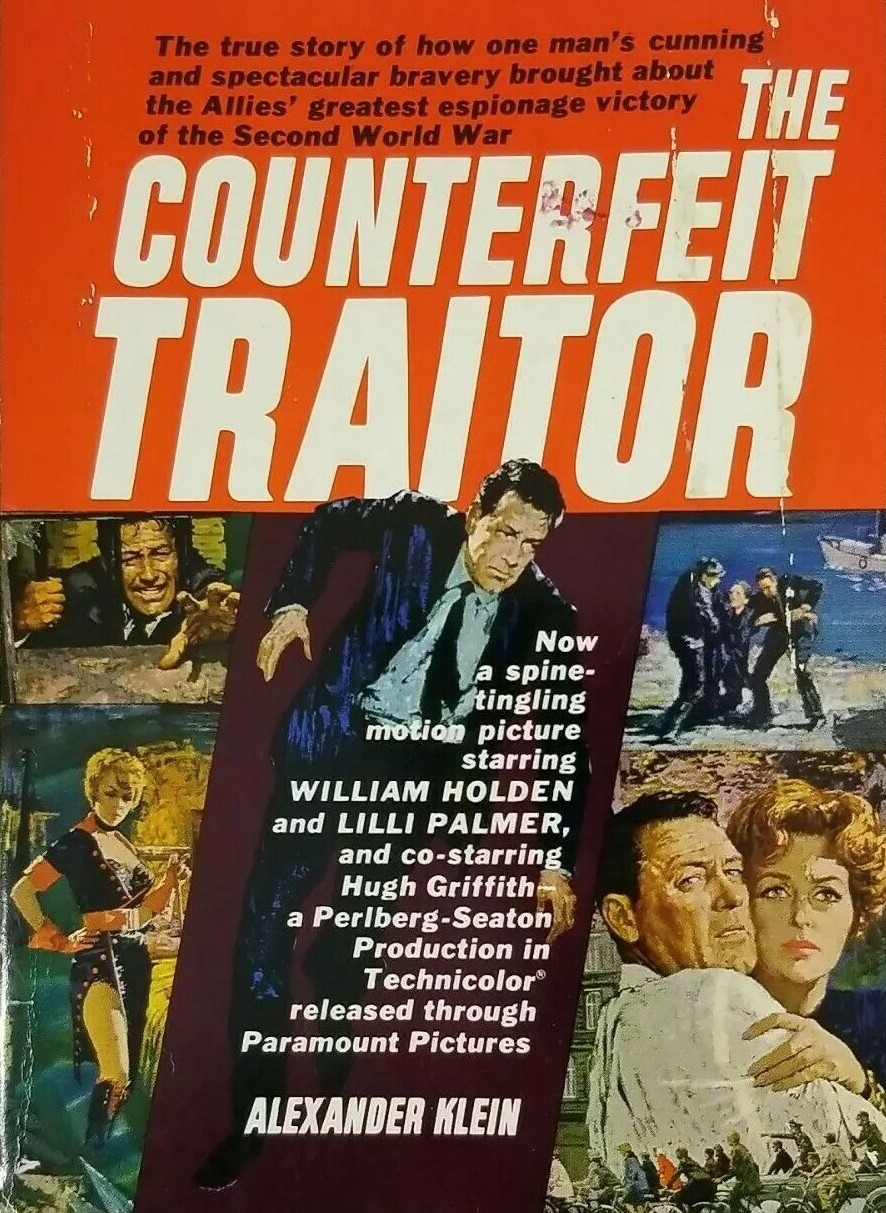
Cynical and opportunistic Swedish oil executive Eric Erickson (William Holden) blackmailed into World War Two espionage finds redemption after witnessing first-hand the horrors of Nazi Germany. Two extraordinary scenes lift this out of the mainstream biopic league, the first Erickson witnessing an execution, the second a betrayal. While some participants in the espionage game pay a terrible price, others like spy chief Collins (Hugh Griffiths) manage to maintain a champagne lifestyle.
Structurally, this is something of a curiosity. The first section, with over-emphasis on voice-over, concerns Holden’s recruitment and initial attempts at spying on German oil installations on the pretext of building a refinery in Sweden. Although resenting the manner in which he was recruited, Erickson had no qualms about resorting to blackmail himself to enlarge his espionage ring.
But it’s only when Marianne Mollendorf (Lili Palmer) enters the frame as his contact in Germany that the movie picks up dramatic heft. As cover for frequent meetings, they pretend to be lovers, that charade soon deepening into the real thing. While abhorring Hitler, she suffers a crisis of conscience after realizing that the information she is passing on to the Allies results in innocent deaths. The final segment involves Erickson’s thrilling escape back home.
The picture is at its best when contrasting the unscrupulous Erickson with the principled Marianne. Virtually every character is trying to hold on to way of life endangered by the war or created by the conflict and there are some interesting observations on the way Erickson manages to harness foreign dignitaries while being held to hostage in his home country. Loyalties are sparing and even families come under internal threat.
Sweden was neutral during the Second World War so in assisting the Allied cause Erickson was effectively betraying his country and once, in order to keep proposed German investors sweet, he begins to spout Nazi propaganda at home finds himself deserted by friends and, eventually, wife.
In some respects, William Holden (The Devil’s Brigade, 1968) plays one his typical flawed personalities, easy on the charm, fluid with convention, but once he learns the true cost of his espionage a much deeper character emerges. The actor’s insistence, for tax reasons, on working abroad – this was filmed on location in Europe – would hamper his box office credibility and although not all his movie choices proved sound this was a welcome diversion. Whether American audiences were that interested in what a Swede did in the war was a moot point, as poor box office testified. And the title might have proved too sophisticated for some audiences, given there was no counterfeiting of money involved.
Lili Palmer (Sebastian, 1968) is excellent as the manipulative Marianne, betraying her country in order to save it from the depredations of Hitler, not above using her body to win favor, but paralyzed by consequence. Hugh Griffith (Exodus, 1960) provides another larger-than-life portrayal, disguising his venal core.
Werner Peters (Istanbul Express, 1968) puts in an appearance and Klaus Kinski (Five Golden Dragons, 1967) has a bit part.
Double Oscar-winner George Seaton (Airport, 1970) makes a bold attempt to embrace a wider coverage of the war than the film requires and could have done with concentrating more on the central Erickson-Mollendorf drama, especially the German woman’s dilemma, but it remains an interesting examination of duplicity in wartime. Written by the director based on the novel by Alexander Klein.
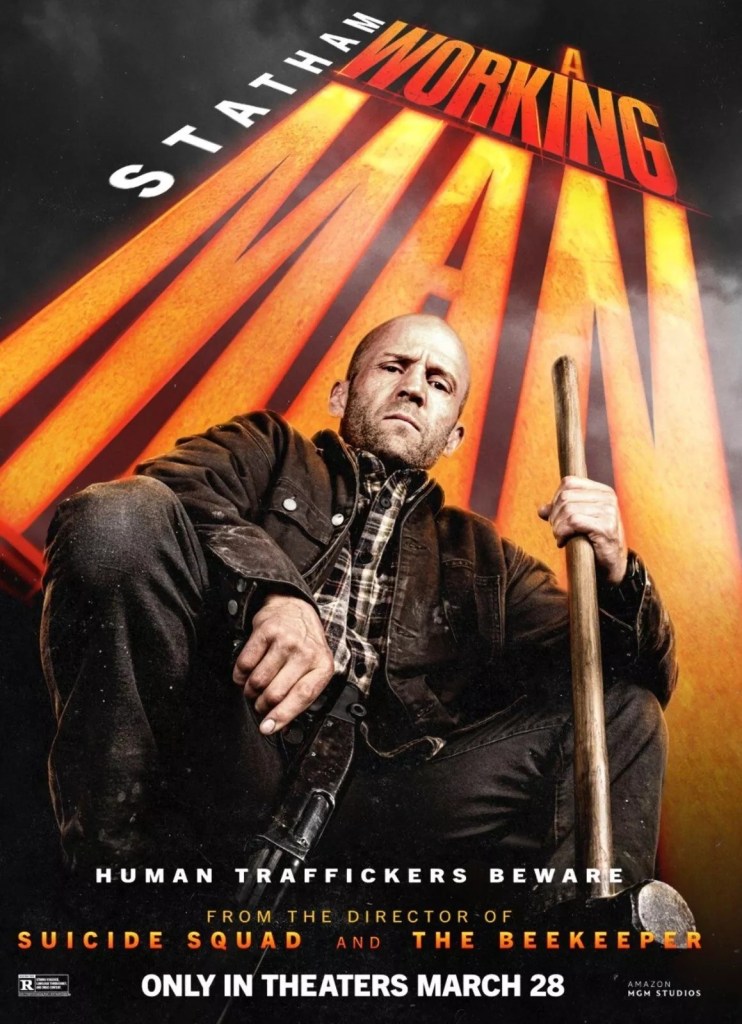
Audiences have been so let down by high-profile big-budget disasters like Snow White, Captain America, The Joker Folie a Deux, and critical clunkers like Anora, is it any wonder that they queue up to see a movie with a star who generally delivers. Sure, this is a meat-and-potatoes picture and it might well spell a new trend and consign high concept to the trash basket. That’s not to say our star Jason Statham hasn’t had his share of high concept – he doesn’t jump the shark but is inclined to punch it on the nose in the various The Meg iterations and his usual beating up bad guys routine was nearly snarled up in high concept politics in last year’s The Beekeeper.
I saw this at a matinee performance on Monday and the place was packed and as I left I overheard two ladies saying how much they had enjoyed it. Critics have been a bit sniffy about this because the plot is old hat. Who cares? All plots are old hat and those that aren’t are too new hat for audiences to enjoy.
There’s some attempt to repurpose the lonely hero, generally estranged from his family and down on his luck. Here Levon, an ex- (British) soldier, is suffering from PTSD, kept away from his only child by a wealth father-in-law who bankrolls teams of lawyers to ensure visitation rights are kept to a minimum. And Levon blames himself – as does the father-in-law – for being away fighting for Queen and Country when he should have been at home helping his depressed wife and stopping her committing suicide.
It’s piling it on a bit thick though to have him living in his automobile when as a boss on a construction site he must be earning enough to rent even the lowliest bug-ridden apartment, which he eventually does, since “no fixed abode” doesn’t look good on legal papers.
Anyways, we’re soon introduced to his special set of skills when he sets about some gangsters picking on one of his workers. You think the narrative’s going to involve some backlash from the guys he’s beaten up. But it takes a different route. The daughter Jenny (Arianna Rivas) of his boss Joe (Michael Pena) is kidnapped to order by a human trafficking operation headed up by Dimi (Maximilian Osinski), disgraced son of Russian Mafia head honcho Wolo (Jason Flemyng).
Posing as a drug dealer, after carrying out a ton of clever reconnaissance, Levon infiltrates the drugs outfit at a very low level and then works his way up, knocking off members of Wolo’s clan and various affiliates. Meanwhile, Jenny proves herself adept at improvising, in the violence arena, you understand – when your hands and feet are tied, remember you’ve still got your teeth.
This is the kind of film where you’re going to lose count of the number of violent deaths but all you’re interested in is Levon cutting through the wheat and chaff and getting to the top so he can save the girl. Luckily, it doesn’t try to build up a mythical gangster backstory in the manner of John Wick, but there are some interesting scenes where Wolo, initially introduced as sitting at the high table, is put in his place by someone higher up the rankings, and a great scene just at the end where Wolo, by now bereft of his sons, is told by the big boss to accept his losses and get on with the job of selling drugs and leave Levon alone, at which point he lets out the kind of wail that, had he been a bereft hero, would have had him in contention for an Oscar.
There’s no romance either to get in the way so it’s very strictly meat-and-potatoes. In an era when MCU and DC are flailing, Hollywood could do worse than resorting to a more basic kind of hero. Let’s call him, since all superheroes need titles, Workingman Man.
Directed with a zest for pace and tension by David Ayer (The Beekeeper). Interesting to see Sylvester Stallone’s name attached as co-screenwriter and a producer, so I wonder if this had been originally touted as starring him.
A gangster trend hit the mean streets of Hollywood at the start of the 1960s. But in the absence of big box office hitters like James Cagney, Humphrey Bogart and Edward G. Robinson, these were all B films with unknowns or low-ranked stars in the leading roles. Whereas Little Caesar (1931), Public Enemy (1931), The Roaring Twenties (1939) and White Heat (1949) were fictionalized accounts of hoodlums, the gun-toting movie spree kicked off by Machine Gun Kelly (1958) and Al Capone (1959) was based on the real-life gangsters who had terrorized America’s big cities in the 1920s and 1930s.
By the end of 1960, moviegoers had been served up an informal history of the country’s best-known mobsters from Ma Barker’s Killer Band (1960), Pretty Boy Floyd (1960), The Rise and Fall of Legs Diamond (1960) and Murder Inc (1960). The infamy of the criminals was so comparatively recent that moviemakers assumed audiences had a wider knowledge of their exploits and the context of their crimes.
Murder Inc tells how underworld kingpin Lepke Buchalter – Tony Curtis played him in the more straightforward biopic Lepke (1975) – set up a system of killing dissenters in the ranks for the entire American Cosa Nostra (aka The Syndicate) in a way that prevented those ordering the murders being connected to those committing them, the same kind of protective cell operation used by terrorists. He created a separate organization of hitmen.
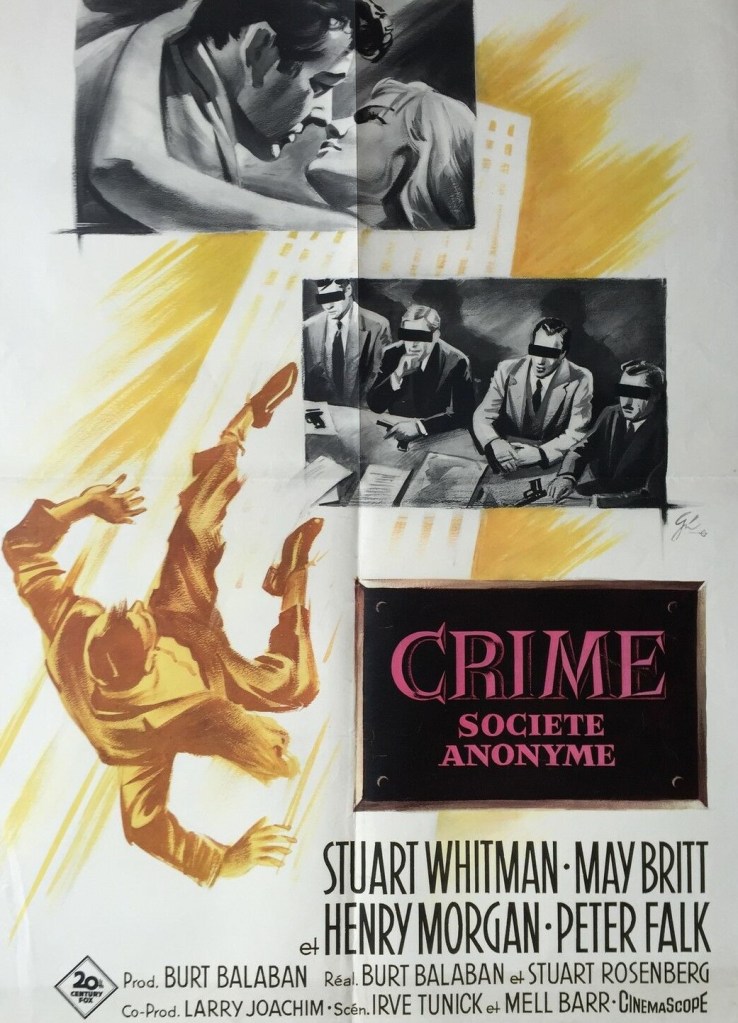
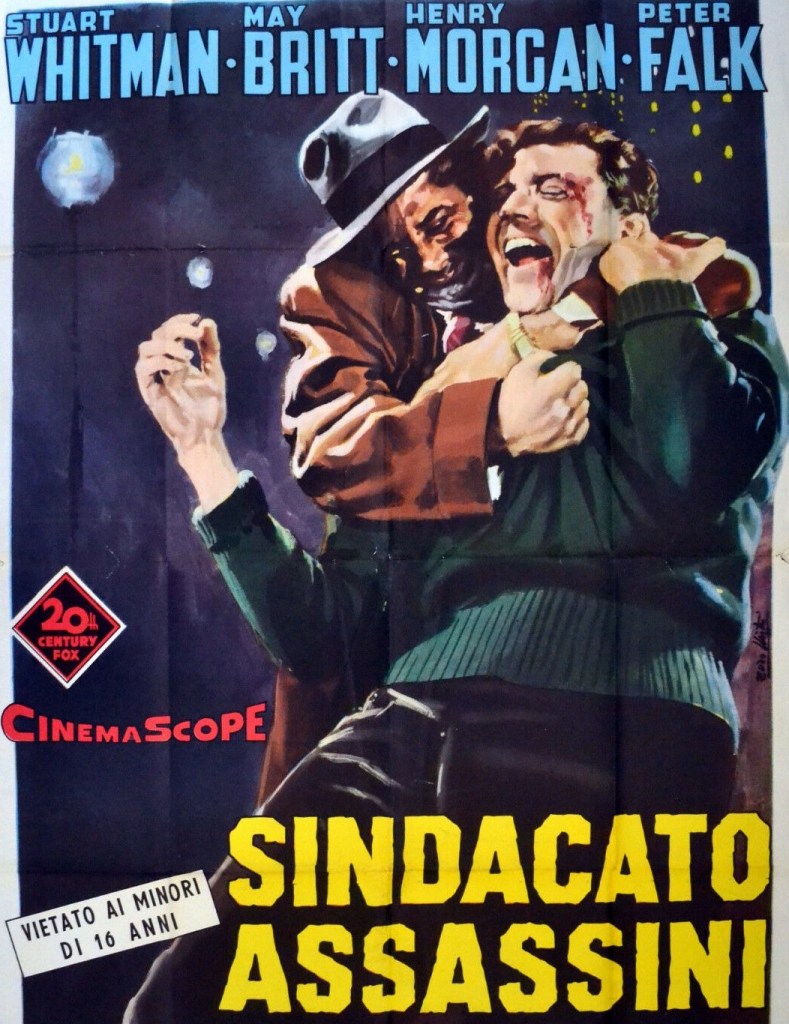
This quasi-documentary, with occasional voice-over narrative, focuses on three characters – the quiet-spoken Lepke (David J. Stewart), hitman Abe Reles (Peter Falk) and singer Joey Collins (Stuart Whitman) who becomes involved to pay off a gambling debt. Later on, the focus switches to Brooklyn assistant district attorney Burton Turkus (Henry Morgan), against a backdrop of massive police corruption, investigating the murder epidemic this deadly enterprise created. The films jumps around too much to be totally engrossing but it is certainly an interesting watch.
The two main villains could not be more different, Lepke representing the new school, a businessman, ordering killings but never participating, and for such a tough character tormented by a delicate stomach. Reles is old school, relishing opportunities to murder, and raping Collins’ honest wife Eadie (May Britt) in part because she treats him as scum. It’s hard to muster much sympathy for Joey especially as his wife takes the brunt of the violence.
In an Oscar-nominated performance Peter Falk (Castle Keep, 1969) steals the show as the chilling, venomous killer, the kind of nonentity who rises to prominence only through his penchant for homicide. Swedish star May Britt (The Blue Angel, 1959) isn’t far behind with a portrayal of a strong woman saddled with a weak husband. David J. Stewart (The Young Savages, 1961) only made three movies in the 1960s and his milk-drinking hood was as scary in his pitilessness as his more overtly violent underling.
Stuart Whitman (The Commancheros, 1961) is almost acting against type for he was later known for rugged roles. Henry Morgan (It Happened to Jane, 1959) gave his portrayal of Turkus similar characteristics to Lepke, appearing as a quiet individual, concerned with details, except that he was incorruptible.
Simon Oakland (Bullitt, 1968) is an honest cop, Vincent Gardenia (Mad Dog Coll, 1961) is a lawyer, comedian Morey Amsterdam (The Dick Van Dyke Show, 1961-1964) plays a hotel manager, Sylvia Miles (Oscar-nominated for Midnight Cowboy, 1969) has a bit part and singer Sarah Vaughan is a singer.
For some reason, this movie starred a number of actors in leading roles who made few screen appearances. This was the only movie of the decade for May Britt, David J. Stewart made only three movies during the same period, and Henry Morgan only made three pictures in his entire career, this being the last.
The movie boasted two directors. Stuart Rosenberg (Cool Hand Luke, 1967) was replaced by Burt Balaban (Mad Dog Coll, 1961) when the threat of strike action by actors and writers in 1960 forced the 18-day shoot to be cut by 10 days so it’s hard to say who was responsible for which scenes, although the film does boast some unusual aerial shots. Written by Irve Tunick (High Hell, 1958) and Mel Goldberg (Hang ‘Em High, 1968) from the book by Burton Turkus and Sid Field.
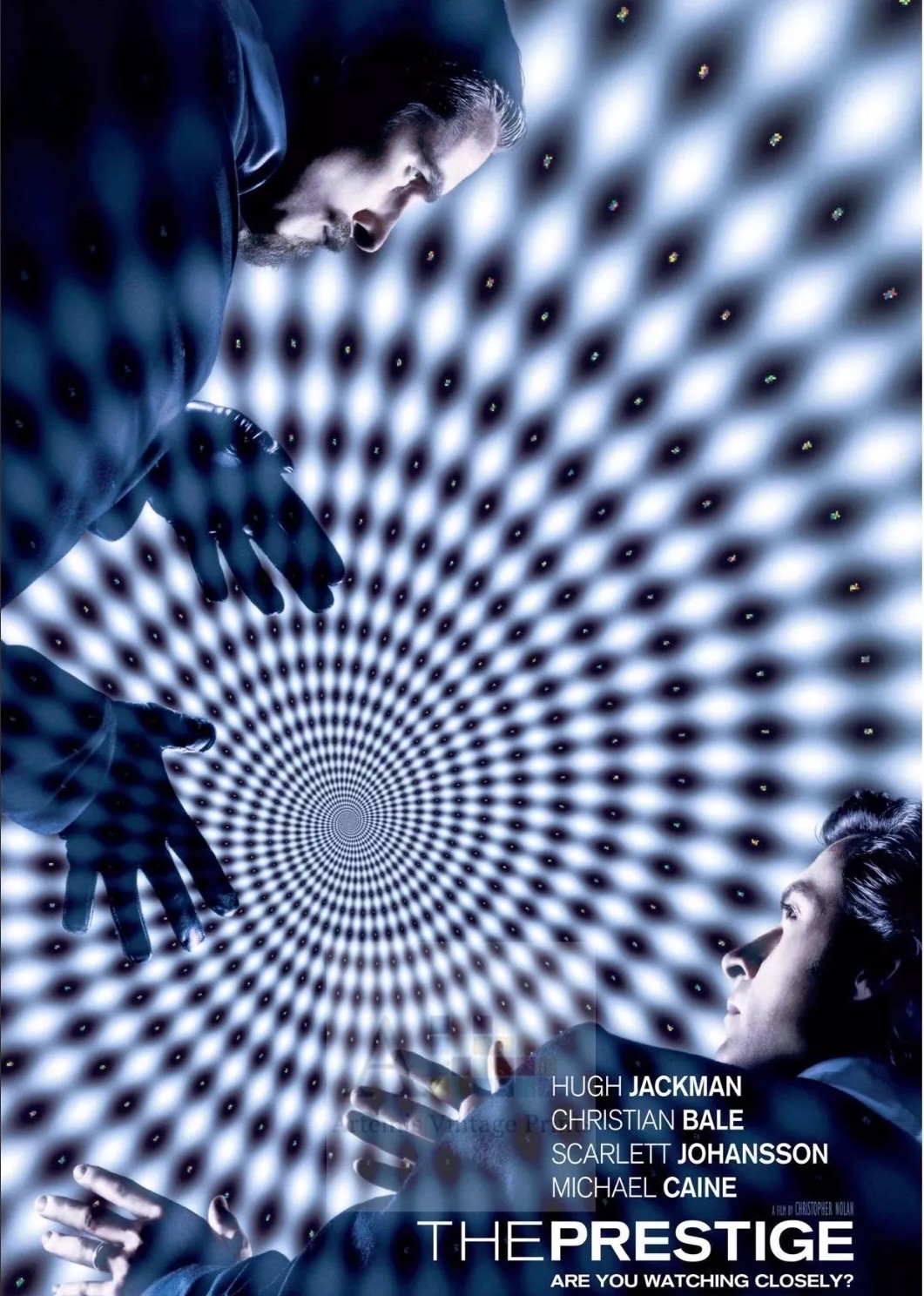
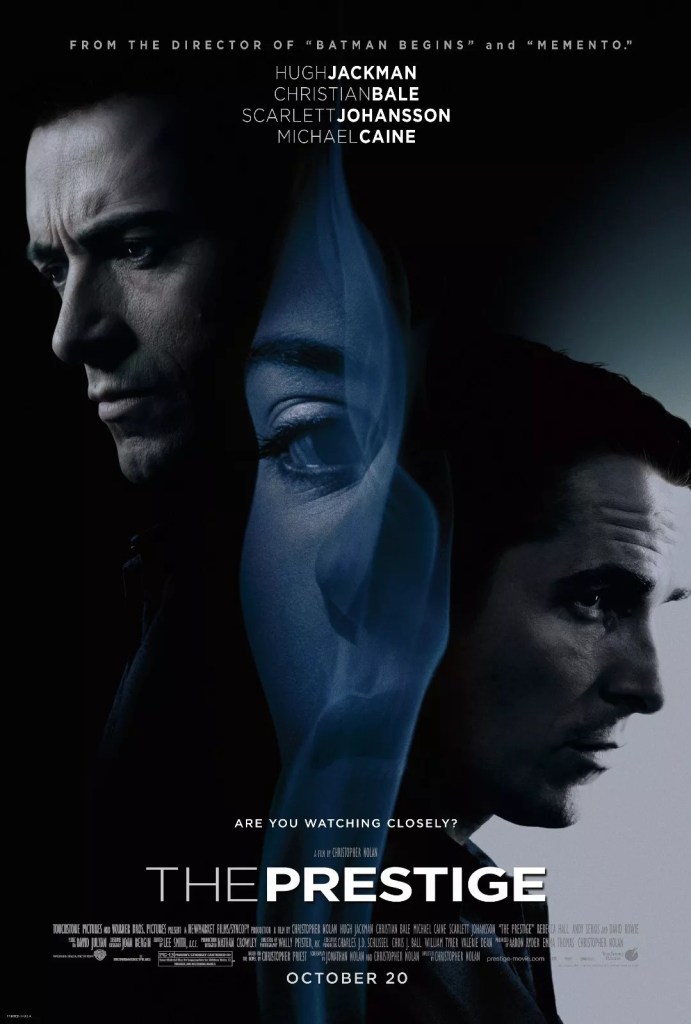
Christopher Nolan (Oppenheimer, 2023) revels in sleight-of-hand, if only by mixing up time frames, but even he isn’t intellectually smart enough to overcome the deficiency that ensured this picture failed to emulate the commercial success of all his other movies. And it revolves not around what you do to dupe an audience. An audience wants to be duped and isn’t so concerned if how the duping is achieved is never revealed, which is, of course, core to the business of the stage magician. Part of the success of this picture is that Nolan gives away stage secrets, even, if you were playing close enough attention, giving away the main reveal of one of the two dueling stage magicians.
But one of these revelations cuts so close to the bone the audience loses its sympathy for both the main characters, Alfred Borden (Christian Bale) and Robert Angier (Hugh Jackman). By the time we understand just how ruthless this pair are to the extent of risking marriage/romantic attachment for the sake of either getting one over on the opponent or maintaining the central deceit of their act, we have already become too squeamish to care overmuch. And the twists which come with increasing regularity which are supposed to take our breath away are defused by the ticking time bomb.
And the miscalculation pivots on who you can kill in a movie. Henry Fonda cold-bloodedly slaughtering an innocent child in Once Upon a Time in the West (1969) set a new high/low for onscreen barbarity, but that was excused because it demonstrated just what a villain this character was. Since then a virtual industry has grown up over inventing more creative ways in which people can be killed.
One of the standard ploys of the stage magician is to make a canary in a cage disappear in front of your very eyes only for said canary, minus cage, to reappear moments later to thunderous applause. Turns out the cage is collapsible and it vanishes into a space hidden in a table. The canary? It is squashed to death in the cage. It’s a different canary that magically reappears.
So all through the picture canaries are squashed, sometimes we see the cages being emptied of dead canaries, and workrooms filled with canaries waiting to be squashed.
What happens after this somehow pales into insignificance. Here we have a business that requires murdering God knows how many canaries every night of the year. It doesn’t take much intelligence among the easily duped moviegoer to work out how many canaries both magicians have ruthlessly despatched.
So when they get around to killing each other’s loved ones, or shooting off each other’s fingers or ruining each other’s acts, your stomach has already been turned and although the darkest of dark narratives has long been a theme of the movies, this, and not fitting into the exploitation B-picture genre where it would more comfortable reside, sucks the sympathy out from under the director’s feet and all his later sleight-of-hand, as ingenious as it is, counts for very little.
There’s certainly tragedy here and of the kind that only Shakespeare could conjure. In order to safeguard the integrity of his act – the secrecy paramount to its success – loving husband Borden is forced to pretend to his loving wife Sarah (Rebecca Hall) that he has a mistress, resulting in distraught wife killing herself. Though discreetly done, scarcely glimpsed in the final sequence, Angier has embarked on the murderous spree essential to concealing the mechanics of his famous trick, The Transported Man.
That it works at all, and splendidly to a large extent, is down to Nolan’s traditional time-shift sleight-of-hand and installing in the middle of this brouhaha the wise Cutter (Michael Caine) whose tempered diction brings the movie unexpected gravitas. When he speaks you tend to believe. The minute the other pair open their mouths you are suspect.
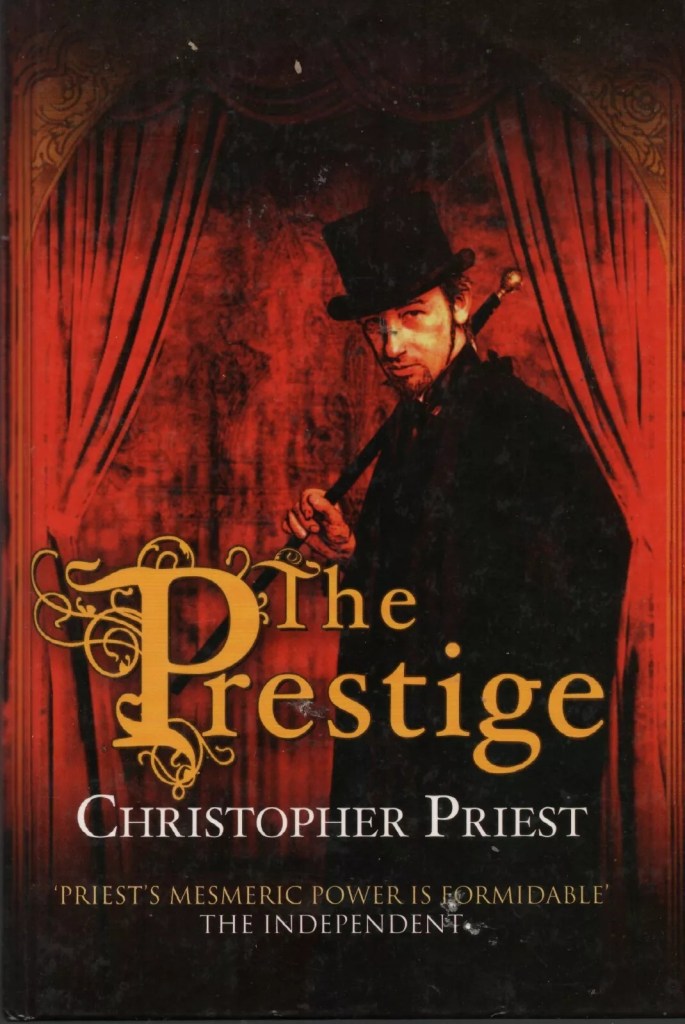
Just for his calmness Michael Caine (Interstellar, 2014) steals the picture from Christian Bale (Ford v Ferrari / Le Mans ’66, 2019) and Hugh Jackman (Deadpool and Wolverine, 2024). Rebecca Hall (Godzilla v Kong: The New Empire, 2024)and Scarlett Johansson (Fly Me to the Moon, 2024) are at opposite ends of the feminine divide, the former unable to cope with deceit, the latter manipulating it to her own ends. The director and brother Jonathan adapted the Christopher Priest award-winning novel.
Setting aside the canaries and the difficulties of presenting all-consuming obsession, this remains an intriguing work, possibly the darkest area into which the director ever ventured.
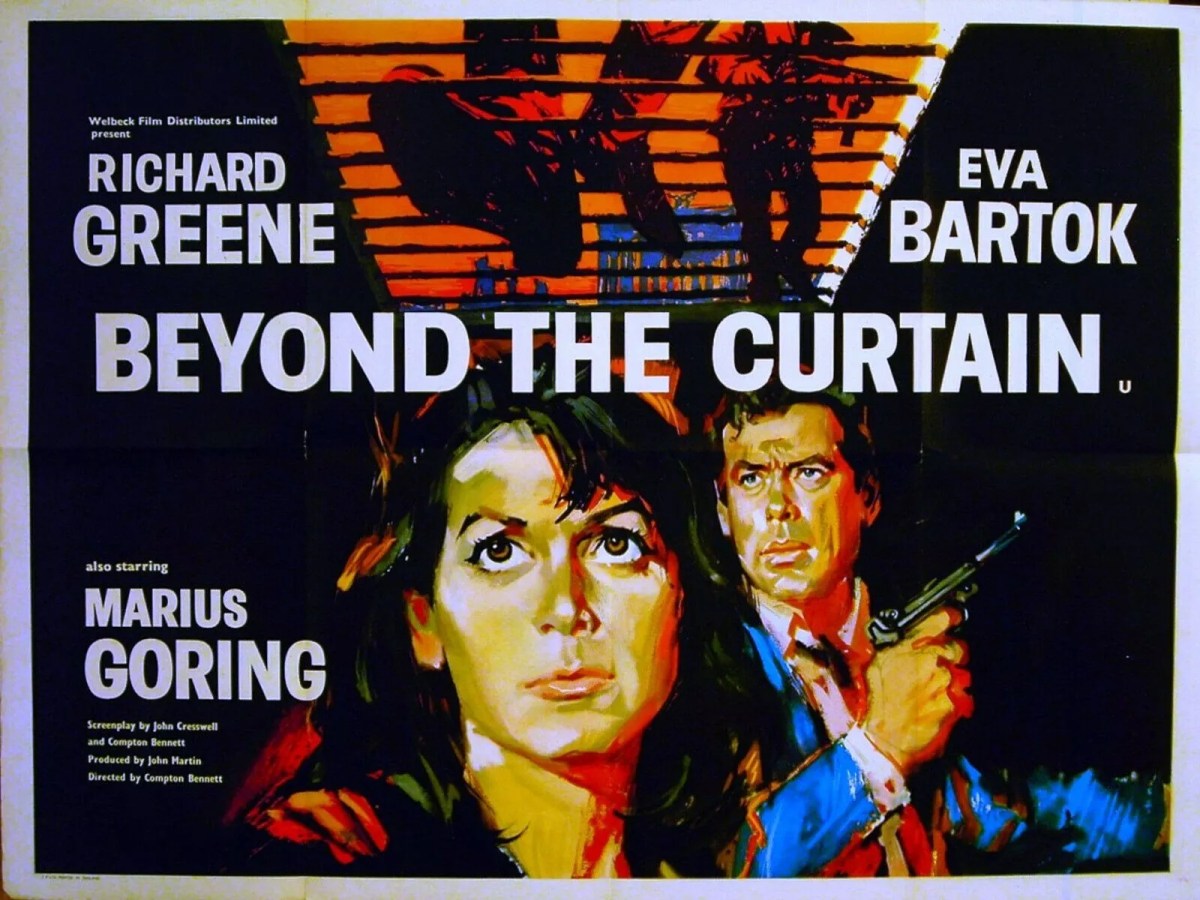
Richard Greene had been a childhood idol as that dashing hero Robin Hood in long-running British television series (The Adventures of Robin Hood, 1955-1960) and movie Sword of Sherwood Forest (1960) so I was rather at a loss to discover that his career appeared to stumble thereafter. Only one movie in seven years and then a short stint as the hero in The Blood of Fu Manchu (1968) and The Castle of Fu Manchu (1969). What I hadn’t realized given his eternal youthful demeanor was that he was already approaching 40 when he first donned the tights for Robin Hood and that he was coming to the end of a reasonable stint as a leading man in both Hollywood and domestically.
So I shouldn’t really have been surprised that he turned up in this Cold War B-picture. Precisely because he was the star the movie didn’t make the inroads it should have done, given the subject matter and the sensitive playing of Hungarian female lead Eva Bartok (Blood and Black Lace, 1964) whose career was equally foundering after a promising start as Burt Lancaster’s squeeze in The Crimson Pirate (1951).
Audiences were probably baffled by the technicality on which the story pivots. As the Cold War begins – the titular Curtain is The Iron Curtain – air space was as important a national border as land and venturing into foreign air space was construed as deliberate provocation.
East German stewardess Karin (Eva Bartok), a refugee in Britain from her home country, is arrested when her airplane touches down in East Germany after losing its way in a storm. Pilot fiancé Capt Jim Kyle (Richard Greene), who is let go by the Soviet-influenced authorities, returns to East Germany to try to rescue her.
This resonates more than it did at the time when the Berlin Wall was not yet in existence and the Cold War consisted more of saber-rattling than anything as perilous as the Cuban Missile Crisis. And there’s a definite Kafkaesque tone. Karin is treated as a traitor for attempting to flee her native land and is equally used as bait by her captors to attempt to draw out of hiding her dissident brother Pieter (George Mikell). Outside of Kyle, there’s a sense of romantic revenge, old friend Hans (Marius Goring) now leading the forces hoping to entrap her brother.
There’s plenty of the usual escape ploys, and the atmosphere has noir-antecedents with lighting that exploits shadow and night. And while the thriller aspects work well enough, especially the exciting climax in a tunnel, they carry less impact than the emotions. Karin is terrified of not just being held against her will and interrogated by the fierce secret police, but the prospect of repatriation – or more likely imprisonment – in a country she now despises and had managed to escape is proof that you can’t go home again.
If you remember the scene in Doctor Zhivago (1965) of Omar Sharif after the war returning to his palatial apartment and finding it filled up with other occupants and his family relegated to a very small space, this is its precedent. Karin’s family home is ruled by a sinister landlady-cum-busybody-cum-informant and her suicidal mother (Lucie Mannheim) lives in the attic and suffers delusions. The despair of living in a totalitarian regime comes across very well.
While reminiscent of elements of The Third Man (1949) and thoroughly overtaken in the espionage genre by the likes of The Spy Who Came in from the Cold (1965) and The Quiller Memorandum (1966), this makes it mark by concentrating on entrapment and lack of freedom.
Richard Greene is in his element as the dashing hero, but he’s outshone by Eva Bartok who has much more to lose.
Final feature of British stalwart Compton Bennett (King Solomon’s Mines, 1950) who injects occasional style into proceedings. Written by the director and John Cresswell (Spare the Rod, 1961) from the bestseller by Charles F Blair and A.J. Wallis.
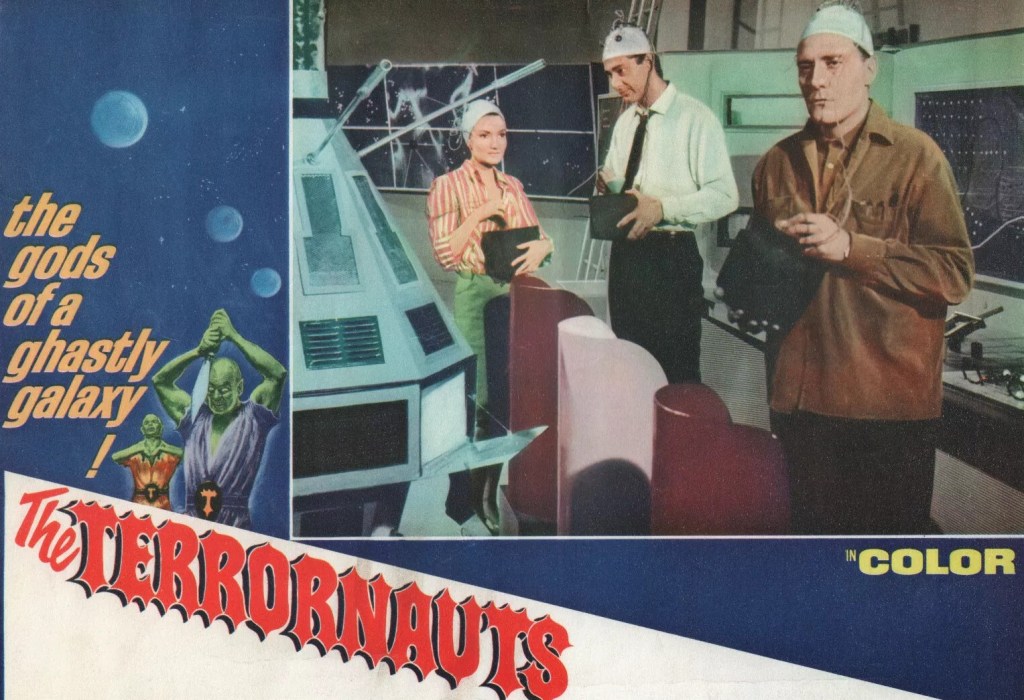
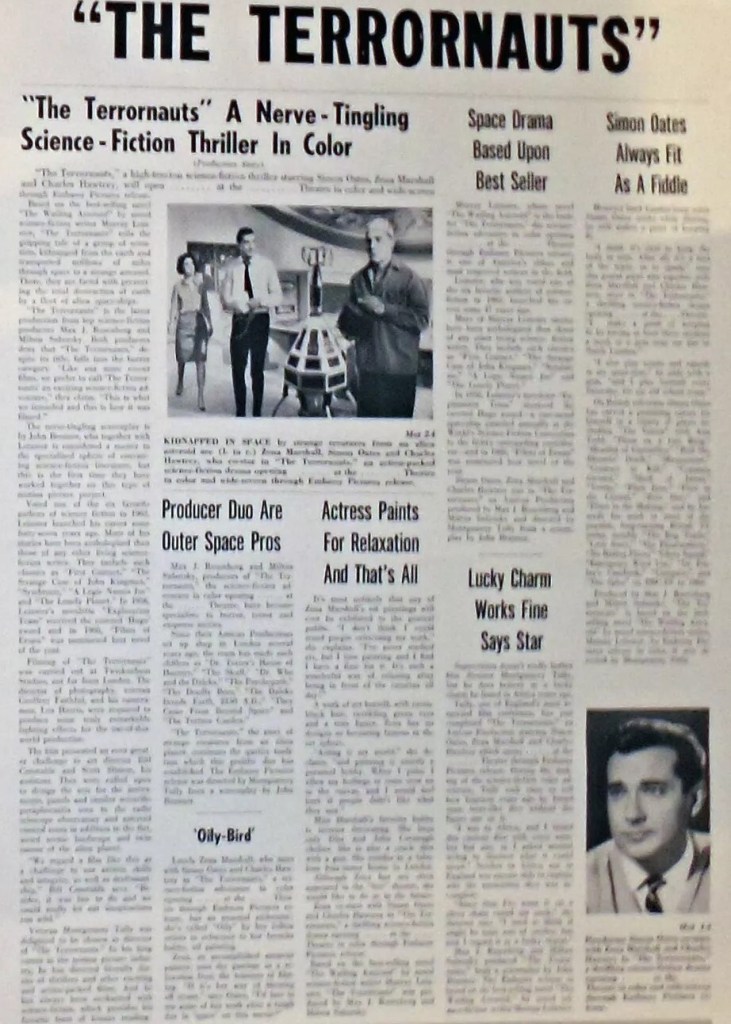
Unless you’re a sci-fi buff of a certain vintage, you probably haven’t heard of Murray Leinster who wrote The Wailing Asteroid on which The Terrornauts is based. Which is a shame because he was one of the giants of science fiction of the golden age. Time magazine called him The Dean of Science Fiction.
For a contemporary audience his name is of considerable significance because he invented the concept of the multiverse. In those days it was called a parallel universe or an alternate history but it amounted to the same thing. And he did so nearly a century ago – in 1934 in fact.
He was second only to H.G. Wells in originating science fiction concepts. He was the first, for example, to imagine meeting an alien culture that was as advanced as our own. He explored themes of mutual distrust, mutual assured destruction, and aliens as superior beings. He also invented the idea of the Internet and man-eating plants.
In The Wailing Asteroid, Leinster draws upon many of the ideas he was first to promulgate.
We have alien encounter. We have the fear that as a consequence terror might be brought back to Earth. We have a species that has evolved far beyond human experience.
We have the same kind of instant absorption of knowledge that occurs through the Internet. The little blocks that our hero finds might as well be called Miniature Googles.
You could also argue that what the space explorers discover is akin to The Sentinel that features in 2001: A Space Odyssey, released in 1968. And you could also view the asteroid as a life-affirming alternative to the hovering destructive Death Star of Star Wars filmed a decade later.
The Terrornauts is a rarity because only a handful of Leinster books were ever filmed. But he was very important to the movies in another way, at the forefront of an invention – front projection – that changed the way movies were made in the 1960s.
At this point, production entity Amicus was as well known for its sci fi output as its horror thanks to Dr Who and the Daleks (1965) and Daleks Invasion Earth 2015 A.D (1966).
So when Embassy Pictures knocked on the door and offered a flat fee of around half a million dollars for a science fiction double bill, Amicus was delighted. Hammer sold its horror pictures as double bills, a complete program more attractive to an exhibitor and more lucrative for a producer than half a program.
Amicus contracted to make The Terronauts and They Came from Beyond Space. They weren’t big enough to have stars under contract, nor the first port of call should a director or star have a pet project that required funding.
Their modus operandi was to trawl through the hundreds of novels published every year, either in pre-publication galley form, or when printed. Max Rosenberg claimed to read 500 books a year. “The basic job of a producer,” explained his partner Milton Subotsky, “is to find properties.” That was how they came across The Wailing Asteroid.
It was occasionally part of the deal in Hollywood that when a studio bought a best-seller, the author was given the opportunity to write the screenplay. But that wasn’t the case here.
Instead, Amicus turned to another science fiction author. John Brunner was as prolific as Leinster. Brunner got the gig because he mixed in the same social circles as Subotsky. Mostly, he wrote conventional space opera and it was only after his experience on The Terrornauts that he acquired a bigger name in science fiction, after winning a Hugo Award in 1969.
The first casualty was the title. The Wailing Asteroid was not as catchy as The Terrornauts. And Brunner had no qualms about scrapping most of the original narrative. He telescoped the time frame. The action in the book takes place over several months, not a couple of days. The book involves multiple countries. Leinster’s novel was set in the United States, but Brunner made the characters British and added the comedy – no tea lady or accountant in the original. And there’s no humor either. He changed the hero’s occupation from design engineer to scientist, and dumped the incipient hesitant romance between Joe and Sandy. But he brings in the notion of scientists hunting for intelligent life in space.
Nor does Leinster’s book involve little green men, robots or human sacrifice. That’s all Brunner’s doing. He turns what was really a concept novel, an exploration of ideas more akin to 2001: A space Odyssey and Planet of the Apes. Brunner shifts it from what if to alien abduction.
Budget shaped the picture. The first four reels are slow and full of dialog because dialog can be shot much quicker and more cheaply than action. Low budgets didn’t bother Amicus. “I defy any other picture making company,” proclaimed Rosenberg, “to turn out that sort of picture with the budget we are under.” He added, “We make pictures for a price and I think we’re better at it than anybody else.”
Amicus had something of a stock company, Freddie Francis, for example, the in-house director, had helmed four pictures, the same number as Peter Cushing headlined. Christopher Lee starred in two, Robert Bloch contributed four scripts and Elizabeth Lutyens scored two pictures. But only Lutyens was retained here.
Amicus handed The Terrornauts to veterans, the majority involved were over 50 years of age. Cinematographer Geoffrey Faithful was 74, author Murray Leinster 71, supporting actor Max Adrian 64, special effects guru Les Bowie 64, director Montgomery Tully 63, composer Elizabeth Lutyens 61.
It would prove the last hurrah for female lead Zena Marshall, Montgomery Tully would bow out later that year after Battle Beneath the Earth and Geoffrey Faithful would only make another two pictures.
The Terrornauts and They Came from Beyond Space were not filmed in October-December 1966 as has been widely reported. Instead, production took place earlier in the year. According to British trade magazine Kine Weekly’s Shooting Now section, The Terrornauts was first to go before the cameras at Twickenham Studios, on June 13 1966 and still featured on its production chart on August 3. Filming on They Came from Beyond Space in the second last week of September continued also at Twickenham until the week of November 3.
Though to some observers the amount spent on The Terrornauts was very little, in fact the £87,000 budget was nearly double the amount spent on City of the Dead and slightly more than The Skull. Admittedly, there were special effects to consider but to offset that the stars came cheaper than the likes of Peter Cushing and Christopher Lee.
For a time it looked as if Embassy expected The Terrornauts to prove the more popular picture. It ran a one-page advertisement in trade newspaper Variety for The Terrornauts in April 1967 claiming it would be available to rent the following month. The image of Zena Marshall being held down by aliens was accompanied by the tagline – “the virgin sacrifice to the gods of a ghastly galaxy” They didn’t run any adverts for They Came from Beyond Space.
I’m sorry to have to tell you this is a condensed version of the audio commentary by me that accompanies the spanking new DVD released by Vinegar Syndrome – I’m sure you’ll forgive me another small plug – and it’s on special offer.
There were five our great reasons to see this picture. Firstly, it was in Cinerama. Secondly, it was the first attempt in that special format to tell a dramatic story rather than offer just a travelog. Though How the West Was Won (1962) was promoted at the first dramatic use of Cinerama, that was actually untrue. This came first. Third, there was a terrific gimmick – Smell-O-Vision – which allowed audiences to inhale around 30 fragrances at the same time as the onscreen characters. Fourthly, it was produced by Mike Todd Jr., son of the Oscar-winning producer of Around the World in 80 Days (1956) and second husband of Elizabeth Taylor who was instrumental in bringing Cinerama to the big screen in the first place., Lastly, it was the first top-billed appearance of rising British star Denholm Elliott.
Unfortunately, none of these hit the target and it remains a novelty in the Cinerama canon. For a start, there wasn’t much of a story – it’s a chase tale of sorts with crime novelist Oliver (Denholm Elliott) uncovering a plan to kill American heiress Sally Kennedy. In setting out to thwart it he travels all over Spain in the company of philosophic wise-cracking taxi driver Smiley (Peter Lorre). Cue travelog of scenic Spain including fiestas, dances and the running of the bulls, which appears not to have been specially staged but filmed documentary-style as it occurred with the bulls inflicting considerable damage on the humans foolish enough to think it’s a lark.
The hook is the mystery woman who can only be detected by her Schiaparelli perfume while the giveaway for the villain, hired assassin Baron saradin (Paul Lukas), is his tobacco. Cue an onslaught of scents. But the smells don’t just pop up when characters are involved. When a barrel of wine smashes, that produces another smell.
Astonishingly, the movie manages to bring in some of the Cinerama trademarks – the runaway element seen from the audience POV, not just the traditional vehicle but also barrels of wine.
The smell gimmick worked well enough in cinemas set up for such technical aspects, but that amounted to very few screens, and outside of those the movie just seemed a random series of scenes with only panoramic views of Spain to lessen the boredom.
It did nothing for the career of Denholm Elliott and he did little for the movie. He lacked the edge or innocence required to make such a character come alive and mostly he looks as though he doesn’t know what to do. He didn’t make another movie for three years and on his return for Station Six Sahara (1963) he was no longer the star but quickly shifting into the character actor he would be for the rest of his screen career.
It was nearly the last hurrah for Peter Lorre. He suffered heart attack during filming so the real Peter Lorre is only seen in half the picture, for the other half it’s a stand-in.
The presence of Elizabeth Taylor (Butterfield 8, 1960) could conceivably have redeemed the picture but she puts in only a fleeting appearance, so speedy her distinctive features barely register. You see more of Diana Dors (Baby Love, 1969).
In the hands of Alfred Hitchcock (Psycho, 1960) or imitators like Stanley Donen (Charade, 1963) and with a more finely worked screenplay, reliant on neither visual nor olfactory gimmick, this might have worked. But it was in hands of Jack Cardiff (The Girl on a Motorcycle, 1968), famed cinematographer but only his third outing as a director, and he clearly didn’t know how to balance the various ingredients and so it limps home.
The minute the location of the source novel by Audrey Kelley and William Roos shifted from New York to Spain and the number of investigators halved, the trouble started. The hunt for a woman whose existence is in question was a standard mystery trope and might very well have worked here minus the smells and Cinerama.
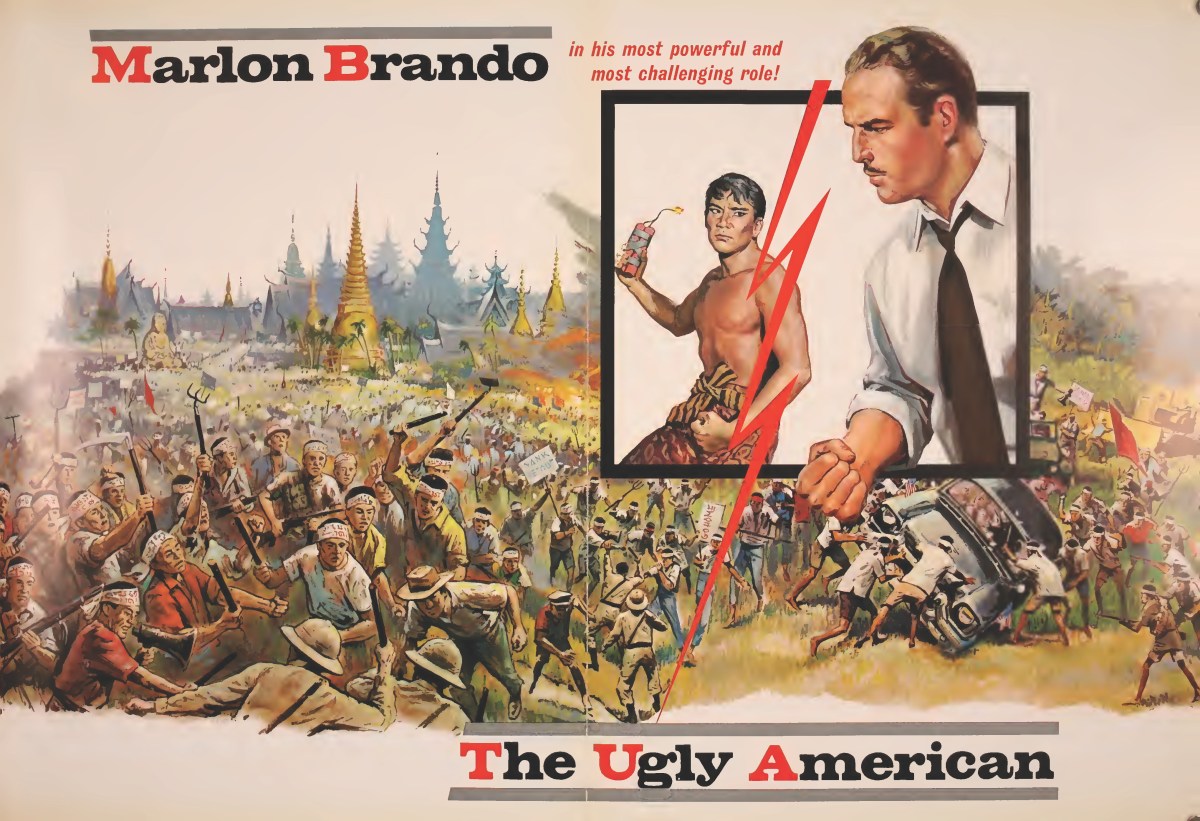
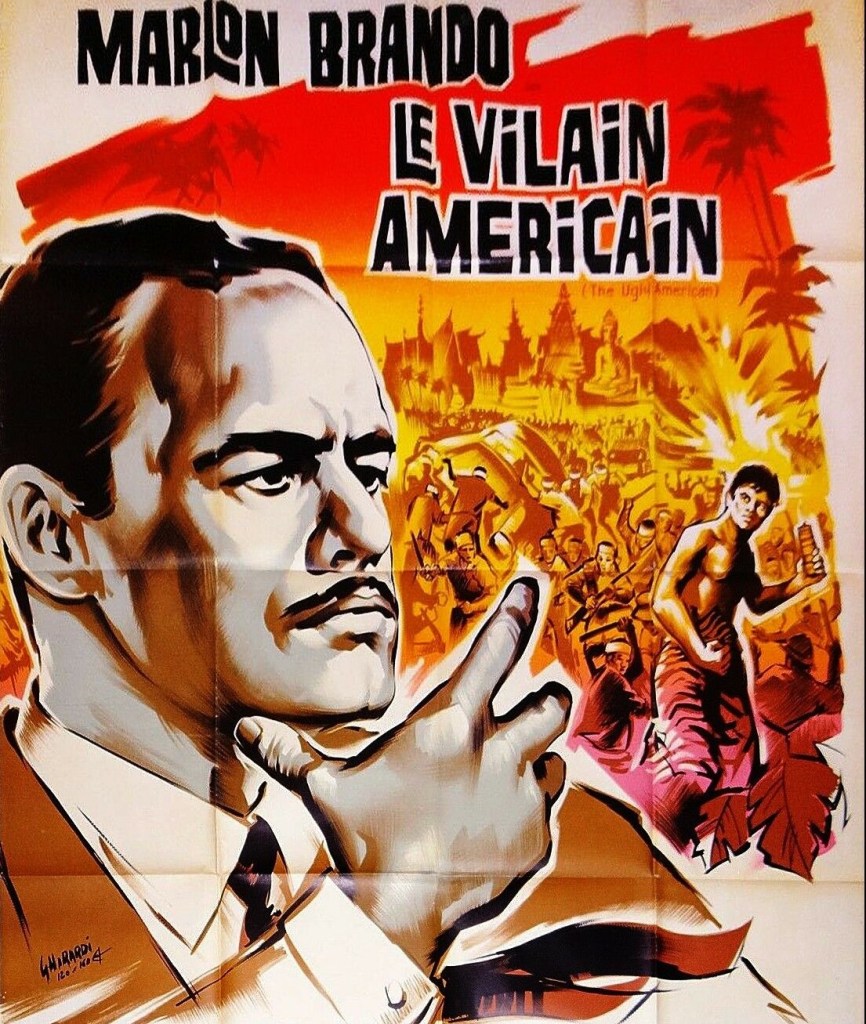
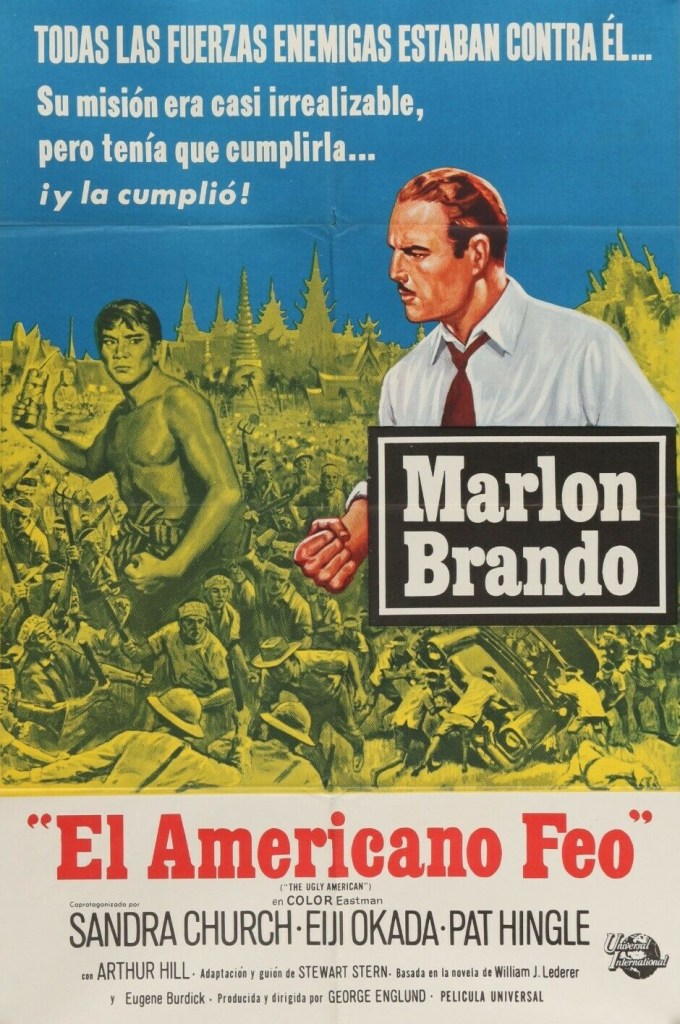
Terrific performance from Marlon Brando saves this prescient but preachy meditation on Vietnam. Harrison MacWhite (Marlon Brando) is the new ambassador, whose political credentials are questioned by many, parachuted into the fictional South-East Asia country of Sarkhan, knee-deep in civil war, Communist north versus westernized south. The battleground is the American construction of a “Freedom Road” north to China which dissenters fear will be a conduit for the military. MacWhite owes his appointment to his friendship with Deong (Eeji Okada), a charismatic leader.
On arrival, the ambassadorial car is engulfed in a riot, car rocked, windscreens smashed. MacWhite shakes up a complacent embassy and though articulate and scholarly believes he holds the solution to the tricky situation, not willing to accept that national self-determination does not necessarily mean complete hatred of the Americans. There is duplicity on both sides, rebels blaming U.S. truck drivers for deaths they caused, the Americans so used to getting their way they don’t stop to think if it is the right way.
Anxious not to be seen as a lapdog for Communism, MacWhite’s actions inflame the situation, while Deong falls victim to internal forces. Construction boss Homer Atkins (Pat Hingle) promotes the clever use of building hospitals along the road, thus encouraging locals to back it, but nobody falls for such honest skull-duggery masquerading as well-meaning intent.
Friends turning into enemies is a decent premise for any movie but this is over-burdened with debate that while interesting and providing a reflection of the times is basically a mixture of virtue-signalling and apportioning blame and, most heinous of failings, doesn’t really advance the story.
First-time director George Englund handles the action sequences well and captures the essence of a country about to explode against a background of growing tension and political machination. Use of Thailand as a location adds authenticity.
Based on a controversial novel by political scientist Eugene Burdick (who also wrote a more straightforward cold War thriller Fail Safe) and William Lederer, navy veteran and CIA officer, so it carried the stamp of authority in terms of putting forth the arguments for both sides. However, while the film bears only a “passing resemblance” to the book, according to co-author Burdick, he deemed it a superior achievement on the basis of its more dramatic treatment. Stewart Stern (Rachel, Rachel, 1969) was the screenwriter who received blame and praise in equal measure.
Marlon Brando (Burn! / Quiemada, 1969) exudes authority, broad shoulders packed into a suit, and brilliant captures the anguish of a man led into disaster by arrogance. Coming off back-to-back flops One-Eyed Jacks (1961) and Mutiny on the Bounty (1962), this was a considerable change of pace, the first of several excursions into political territory. Eeji Okada (Hiroshima, Mon Amour, 1958) proves a worthy opponent. Pat Hingle (Sol Madrid, 1968), Arthur Hill (Moment to Moment, 1965) and Jocelyn Brando (The Chase, 1966) provide sterling support.
The movie did not just predict what would happen if the U.S. lost the battle for hearts and minds but a similar situation confronting the U.S. Ambassador to Indonesia in 1965 whose appointment was unwelcome in that country.
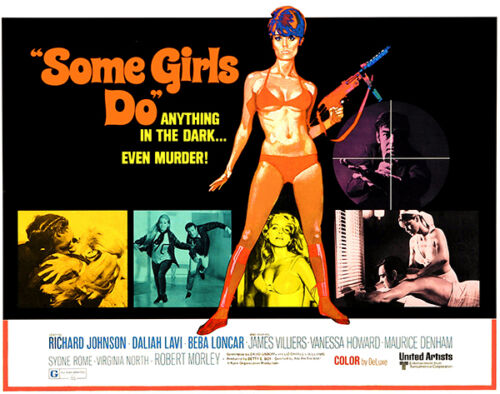
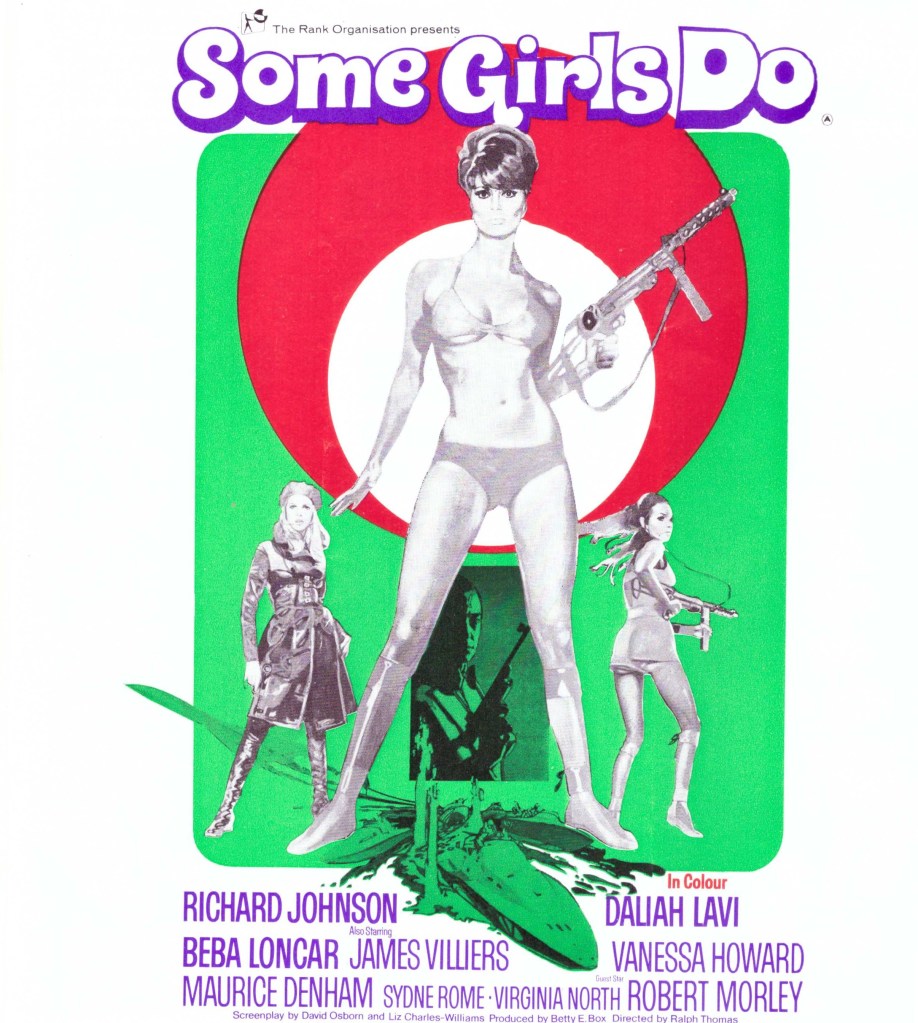
Enjoyed this sequel to Deadlier Than the Male (1967) far more than I expected because it sits in its own little world at some point removed from the espionage shenanigans that dominated the decade. Hugh (nee Bulldog) Drummond (Richard Johnson) is neither secret agent nor involved in espionage high jinks, instead employed in the more down-to-earth domain of insurance investigator, albeit where millions are at stake. Although his overall adversary is male, the smooth-talking Carl Petersen (James Villiers), adopting a series of disguises for most of this picture, the real threat comes from a pair of villainesses in the shape of Helga (Daliah Lavi) and Pandora (Beba Loncar). If anything, this pair are a shade more sadistic than Irma and Penelope from the previous outing.
The sequel doubles up – or doubles down – on the female villainy quotient, Petersen having created a race of lethal female robots who spend their time dispatching scientists working on the world’s first supersonic airliner. Global domination is only partly Petersen’s aim since he also stands to gain £8 million ($134 million today) if the plane doesn’t launch on schedule. Livening up proceedings are Flicky (Sydne Rome), a somewhat kooky Drummond fan who has her own agenda, Peregrine “Butch” Carruthers (Ronnie Stevens), a mild-mannered embassy official assigned bodyguard duties, and chef-cum-informant Miss Mary (Robert Morley).
Villiers has found a way of turning an ultrasound device intended originally to aid cheating in a boat race into something far more dangerous. But, of course, for Helga seduction is the main weapon in her armory, and Drummond’s first sighting of her – a superb cinematic moment – is sitting on the branch of a tree wielding a shotgun. Equally inviting are the squadron of gun-toting mini-skirted lasses guarding Petersen’s rocky fortress.
The movie switches between Helga, Pandora and the robots raining down destruction and Drummond trying to prevent it. Dispensing with the boardroom activities that held up the action in Deadlier than the Male, this is a faster-moving adventure, with Drummond occasionally outwitted by Helga and calling on his own repertoire of tricks. Dialog is often sharp with Drummond imparting swift repartee.
The action – on land, sea and air – is a vast improvement on the original. The pick is a motorboat duel, followed closely by Drummond in a glider coming up against a venomous aeroplane and saddled with a defective parachute. And there are the requisite fisticuffs. Various malfunctioning robots supply snippets of humour.
Richard Johnson (A Twist of Sand, 1968) truly found his metier in this character and it was a shame this proved to be the last of the series. Although Daliah Lavi never found a dramatic role to equal her turns in The Demon (1963) and The Whip and the Body (1963) and had graced many an indifferent spy picture as well as The Silencers (1966), she is given better opportunity here to show off her talent. Beba Loncar (Cover Girl, 1968) is her make-up obsessed bitchy buddy. Sydne Rome (What?, 1972) makes an alluring debut. James Villiers (The Touchables, 1968) is the only weak link, lacking the inherent menace of predecessor Nigel Green.
There’s a great supporting cast. Apart from Robert Morley (Genghis Khan, 1965) look out for Maurice Denham (Danger Route, 1967), Adrienne Posta (To Sir, with Love, 1967) and in her first movie in over a decade Florence Desmond (Three Came Home, 1950). The robotic contingent includes Yutte Stensgaard (Lust for a Vampire, 1971), Virginia North (Deadlier Than the Male), Marga Roche (Man in a Suitcase, 1968), Shakira Caine (wife of Sir Michael), Joanna Lumley (television series Absolutely Fabulous), Maria Aitken also making her debut, twins Dora and Doris Graham and Olga Linden (The Love Factor, 1969). Peer closely and you might spot Coronation Street veteran Johnny Briggs.
The whole package is put together with some style by British veteran Ralph Thomas (Deadlier than the Male). Screenplay by David Osborn and wife Liz Charles-Williams (Deadlier than the Male) is based on the book by “Sapper”.
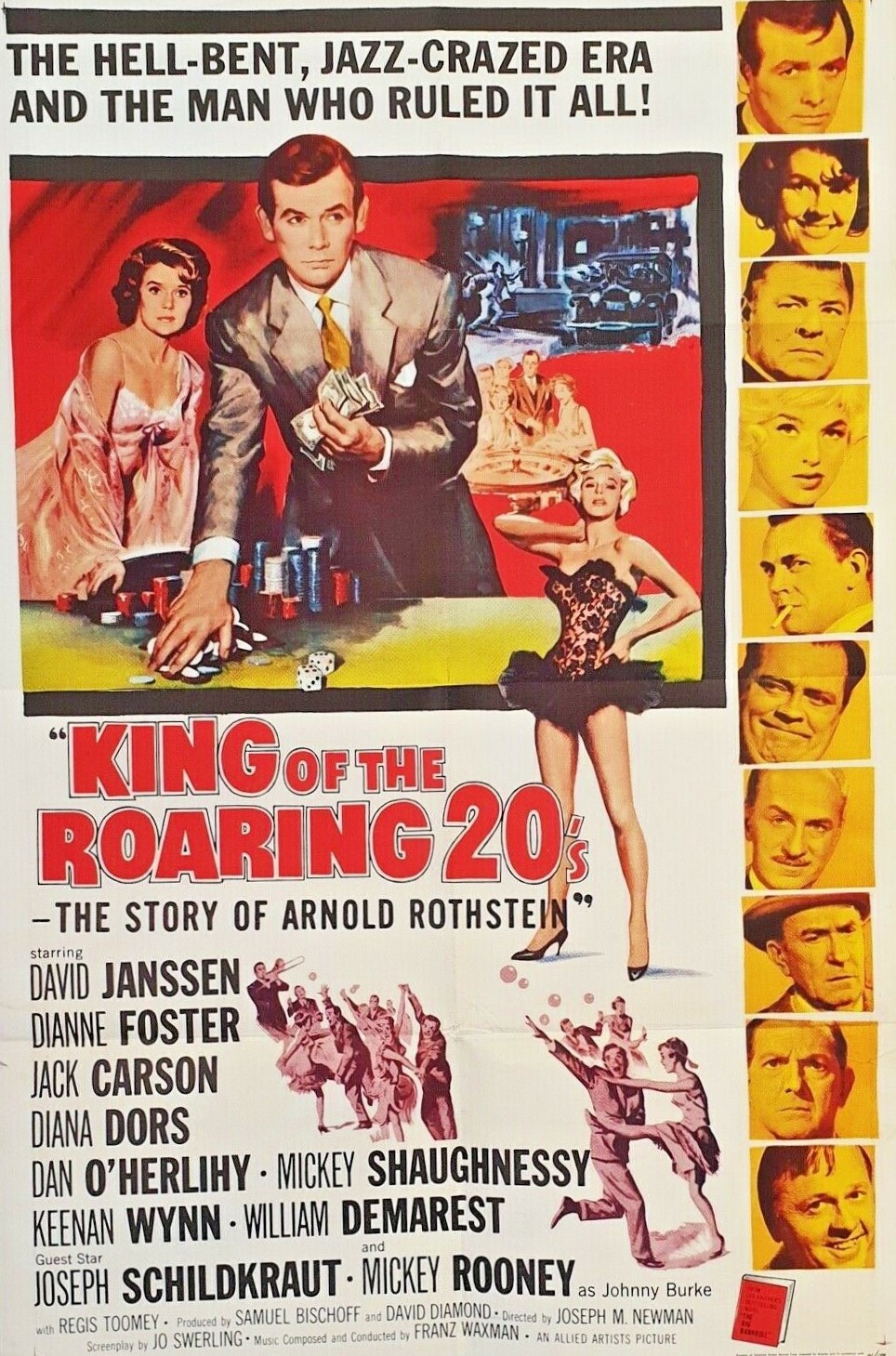
Occasionally stylish B-picture purporting to tell the story of American Prohibition-era gangster Arnold Rothstein. It’s more of drama with various nefarious figures trying to outwit each other rather than a shoot ‘em up in the style of Al Capone (1959). David Janssen (Warning Shot, 1967) is ideal casting as the thoughtful, cold, calculating and possibly gambling genius Rothstein, the opposite of an intemperate crook like Capone.
The story is told essentially in two parts, Rothstein’s rise to power in partnership with childhood pal Johnny Burke (Mickey Rooney), initially running dice games in the street and pulling the odd con before graduating to fly-by-night horse racing operations. When the opportunity arises to move into mainstream illegal gambling, he dumps Burke. Corrupt cop Phil Butler (Dan O’Herlihy) is a constant thorn in his side and showgirl fiancée Carolyn Green (Dianne Foster) views marriage as risky – “he’s the gambler but I’m the one that’s going to be doing the gambling.”
For whatever reason, the movie dodges what was believed to be Rothstein’s biggest coup, the fixing of the baseball World Series, but one long section is devoted to how he pulls off a massive horse racing win where he ends up placing a $100,000 bet through insider information and strategic betting. Inevitably, his gambling puts the kibosh on his marriage but by far the most interesting part of the picture is the chicanery as he shakes off one partner, battles another, and without compunction sets up Burke as patsy to settle his score with Butler.
In some respects Rothstein is a template for Vito Corleone (The Godfather, 1972) in terms of his business brain and ability to out-think and out-fox opponents and certainly his facial expressions and innate coldness bear comparison with what Al Pacino brought to his characterization of Michael Corleone. Except that he didn’t trust banks, and carried round wads of cash (hence the title of the biography on which this is based – The Big Bankroll), it’s hard to get a sense of the wealth the gangster generated or, given the minimal violence, the world of imminent peril he inhabited.
Period detail is cursory, limited to dancing the Charleston and pouring champagne into teacups. A better idea of the flavor of the times is the wholesale corruption endemic in police departments, untrustworthy lawyers and hypocrisy run wild. It’s not really Janssen’s fault that it’s hard to warm to such a cold-blooded character, although you could point to The Godfather and The Brotherhood (1968) for that matter as examples of Mafia hoods who do elicit audience empathy.
With occasional bravura moments involving long tracking shots and overhead shots, and a terrific image of champagne bubbles seen through a pair of binoculars, director Joseph M. Newman (This Island Earth, 1955) shows stylistic flourishes that eschew his B-movie roots. Given Janssen is called upon to show as little emotion as possible, he does very well. Dianne Foster (The Last Hurrah, 1958), though initially demure, provides the fireworks. Jack Carson (The Bramble Bush, 1960) as kingpin Tim O’Brien matches Janssen in the cool stakes and proves a worthy adversary. Rooney overacts but Dan O’Herlihy (The Night Fighters, 1960) relishes his dirty cop role.
In a rare Hollywood outing British sexpot Diana Dors (Hammerhead, 1968) puts in an unexpected and brief appearance as Carolyn’s cynical flatmate. The tremendous supporting cast includes Keenan Wynn (Point Blank, 1967), Mickey Shaughnessey (North to Alaska, 1960), Regis Toomey (The Last Sunset, 1961), Oscar-winner Joseph Schildkraut (The Diary of Anne Frank, 1959) and veteran character actor William Demerest.
Jo Swerling (It’s a Wonderful Life) delivers a pointed screenplay focusing on gangster conflict with some excellent observation of the deterioration of the Rothstein marriage and the nervousness of the usually ice-cold Rothstein when confronted by his father. This is one of those pictures that you think deserves a Netflix series, a dozen or so episodes to explore the myriad characters involved and especially to examine Rothstein in forensic detail. The movie spells out that potential and on a tight budget does it well.