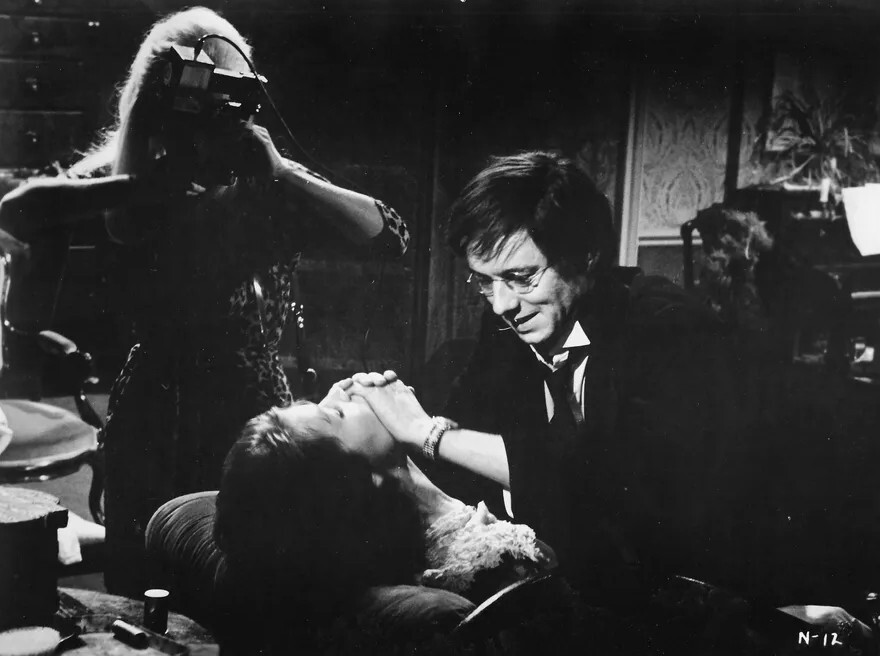
They Came from Beyond Space (1967) ***

If you’re familiar with the Amicus output from its portmanteau horror movies this excursion into sci fi might come as a surprise. On the other hand, should you be a fan of Dr Who you might well be acquainted with Amicus’s two excursions into this genre – Dr Who and the Daleks (1965) and Daleks’ Invasion Earth 2015 A.D. (1966). In fact, the outfit’s production at this point was evenly split between sci fi and horror and had They Came from Beyond Space and stablemate The Terrornauts (1967) done better the company might have persevered with the genre.

That these two were originally intended to go out as a double bill – they did in the U.S. but not in Britain – is somewhat surprising given they have similar themes of some kind of dying alien species using Earth for survival. And with a bigger budget, They Came from Beyond Space might have made a bigger dent into the box office, instead of heading beyond the realms of cult into oblivion.
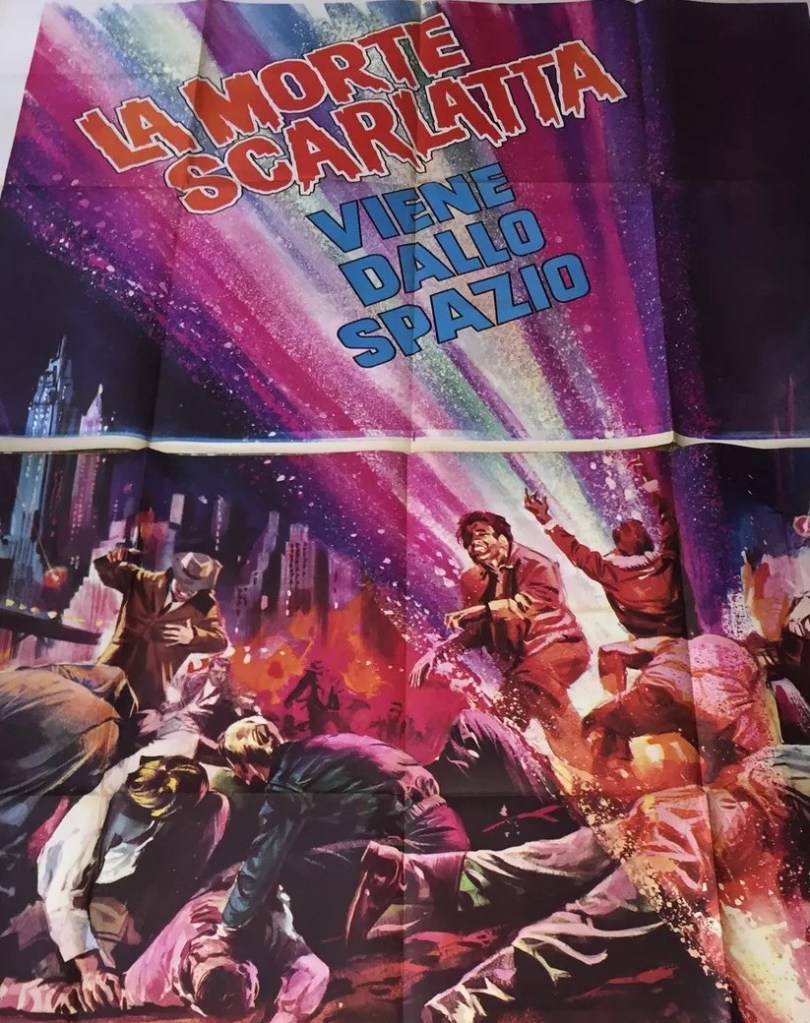
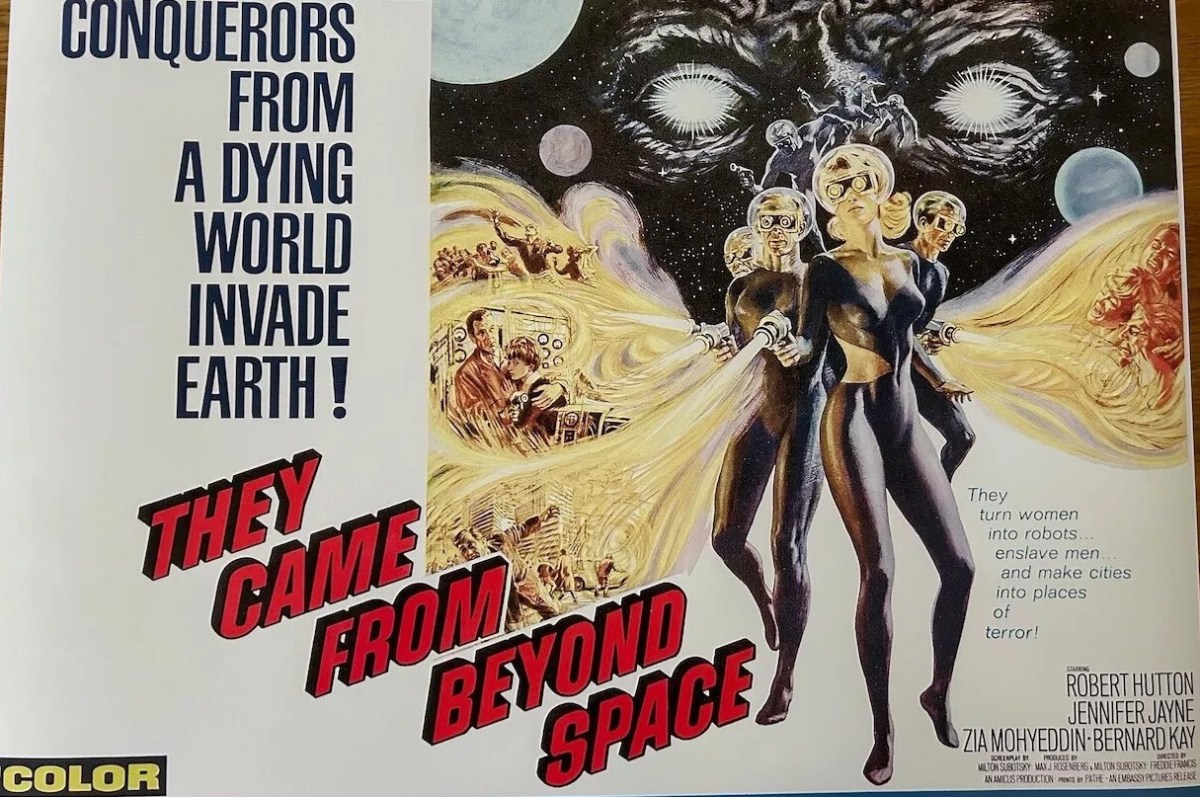
There are some neat touches. Meteorites fall on Earth. Nothing odd in that, certainly not in the world of cinematic sci fi. What’s strange is how they land – in a perfect V-formation. What’s more their source is the Moon. You won’t be at all surprised to learn, however, that the aliens bear no resemblance to the amazonian-type women promoted in the poster.

Also peculiar, for the time, is that the scientists sent to investigate are led by a woman, Lee (Jennifer Jayne), her boss and lover Dr Temple (Robert Hutton) left behind because he has a silver plate in his head as the result of an automobile accident. The meteorites exert a strange power and soon Lee and her confederates are organizing some massive scientific project to send a mission to the Moon, funding procured from a million-pound loan from a hypnotized bank manager and the local community falling victim to a strange plague which renders them obedient.

Eventually, alarm raised by Lee commandeering so much expensive equipment, Dr Temple does go to investigate and is baffled by the construction of a military compound complete with armed guards and electrified fence housing a vast underground laboratory and a rocket ready for launch.
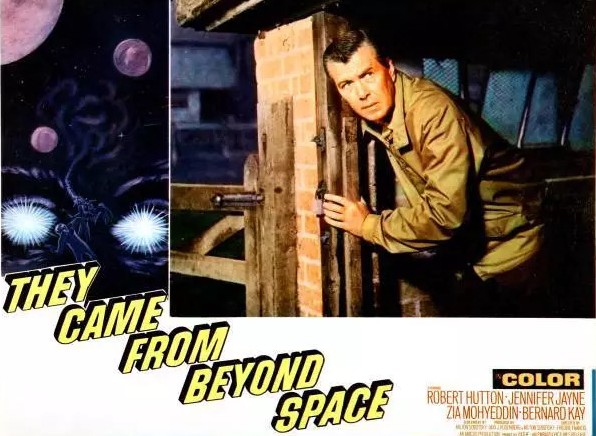
He manages to kidnap Lee, possessed by an alien force, and with buddy Farge (Zia Mohyeddin) comes up with a variation on the kind of common-cold weapon employed to defeat aliens – in this case the use of silver to block the alien rays, you always knew that silver plate in his head would have narrative purpose. Realizing her situation, Lee now pretends to be an alien and the trio sneak aboard a rocket and after a fantastically speedy journey land on the Moon where they are confronted by the Master of the Moon (Michael Gough).

Quite why female sacrifice was a common theme between this and The Terrornauts is anyone’s guess but soon enough the aliens have Lee staked out. And that silver plate has to be surgically removed from Dr Temple’s head so the aliens can get a good look at his brain.

Like The Terrornauts, there are no physical aliens, just some kind of energy source. And like E.T. some decades later they just want to go home. Farge leads the enslaved in revolt and normally that would trigger some violent finale but here, instead, there’s a curious – and welcoming – climax.

A kind of “why didn’t you say so, old chap” ending where the Earthlings agree to help the aliens return to their planet, no collateral damage necessary. This is probably the most unexpected thinking person’s twist that you could ever conceive – a variation on the idea of foes finding common cause. It certainly didn’t fit into the genre and my guess is most audiences were baffled at the outbreak of peace. It just didn’t go with the territory.

None of the acting is anything to write home about, but the picture is generally well done, the special effects more than passable given the budget, and enough in the narrative tank to keep you going.

Robert Hutton (The Vulture, 1966) was coming to the end of a B-picture career. Jennifer Jayne’s (The Liquidator, 1965) hardly really took off. Zia Mohyeddin (Deadlier Than the Male, 1967) had a decent run in supporting roles. Everyone is no more than adequate in roles that demand no depth.

Freddie Francis (The Skull, 1965) does his best with a script by producer Milton Subotsky (The Skull) adapting the novel by Joseph Millard.

Undemanding but holds the interest.
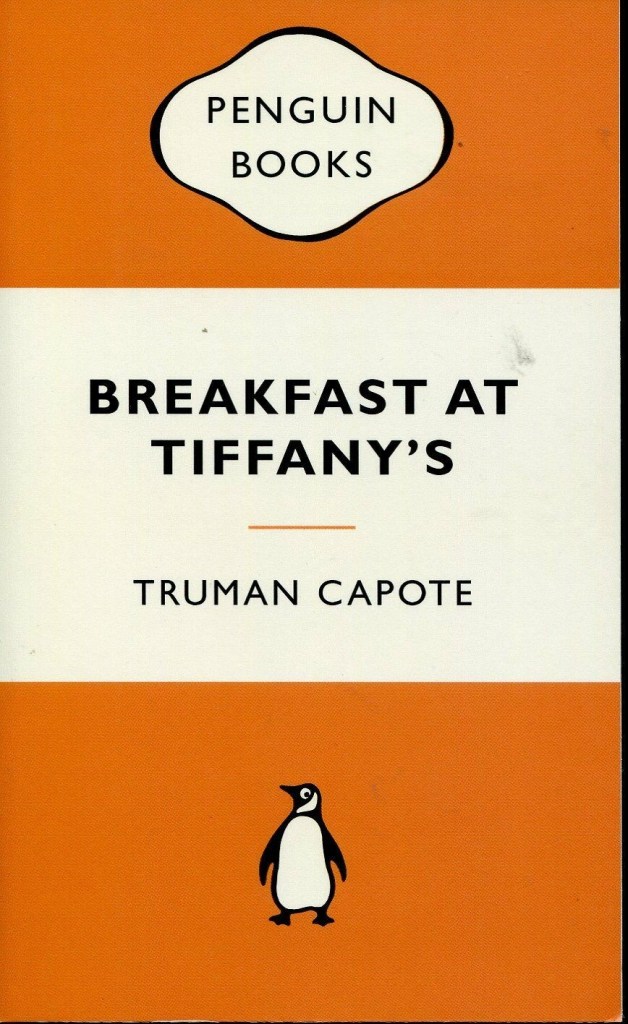
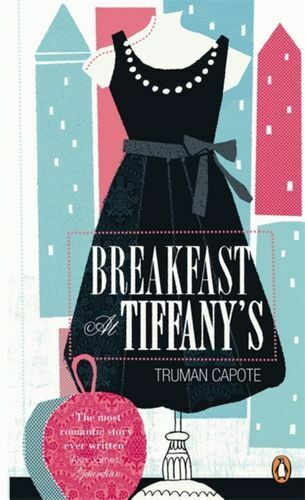
Breakfast at Tiffany’s (1961) ****

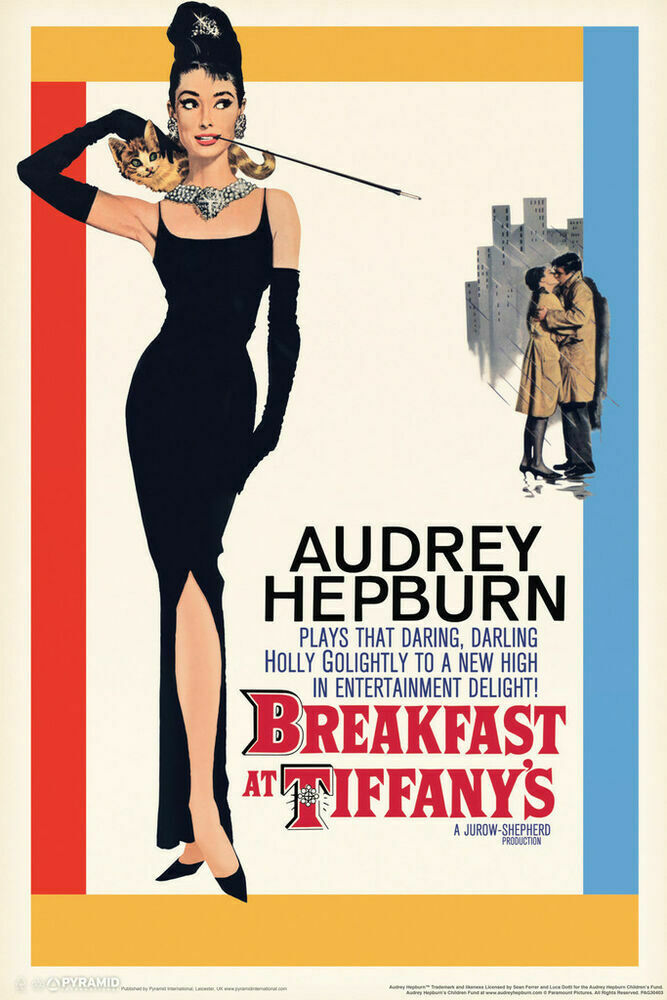
Reassessment sixty years on – and on the big screen, too – presents a darker picture bursting to get out of the confines of Hollywood gloss. Holly Golightly (Audrey Hepburn) is one of the most iconic characters ever to hit the screen. Her little black dress, hats, English drawl and elongated cigarette often get in the way of accepting the character within, the former hillbilly wild child who refuses to be owned or caged, her demand for independence constrained by her desire to marry into wealth for the supposed freedom that will bring, demands which clearly place a strain on her mental health.

Although only hinted at then, and more obvious now, she is willing to sell her body in a bid to save her soul. Paul Varjak (George Peppard), a gigolo, being kept, in some style I should add, with a walk-in wardrobe full of suits, by the nameless wealthy married woman Emily (Patricia Neal), is her male equivalent, a published writer whose promise does not pay the bills. The constructs both have created to hide from the realities of life are soon exposed.

There is much to adore here, not least Golightly’s ravishing outfits, her kookiness and endearing haplessness faced with an ordinary chore such as cooking, and a central section, where the couple try to buy something at Tiffanys on a budget of $10, introduce Holly to New York public library and boost items from a dime store, which fits neatly into the rom-com tradition.

Golightly’s income, which she can scarcely manage given her extravagant fashion expense, depends on a weekly $100 for delivering coded messages to gangster Sally in Sing Sing prison, and taking $50 for powder room expenses from every male who takes her out to dinner, not to mention the various sundries for which her wide range of companions will foot the bill.

Her sophisticated veneer fails to convince those whom she most needs to convince. Agent O.J. Berman (Martin Balsam) recognizes her as a phoney while potential marriage targets like Rusty Trawler (Stanley Adams) and Jose (Jose da Silva Pereira) either look elsewhere or see danger in association.

The appearance of her former husband Doc (Buddy Ebsen) casts light on a grim past, married at fourteen, expected to look after an existing family and her brother, and underscores the legend of her transformation. But the “mean reds” from which she suffers seem like ongoing depression, as life stubbornly refuses to conform to her dreams. Her inability to adopt to normality is dressed up as an early form of feminism, independence at its core, at a time when the vast bulk of women were dependent on men for financial and emotional security. Her strategy to gain such independence is of course dependent on duping independent unsuitable men into funding her lifestyle.  

Of course, you could not get away with a film that concentrated on the coarser elements of her existence and few moviegoers would queue up for such a cinematic experience so it is a tribute to the skill of director Blake Edwards (Operation Petticoat, 1959), at that time primarily known for comedy, to find a way into the Truman Capote bestseller, adapted for the screen by George Axelrod (The Seven Year Itch, 1955),  that does not compromise the material just to impose a Hollywood gloss. In other hands, the darker aspects of her relationships might have been completely extinguished in the pursuit of a fabulous character who wears fabulous clothes.

Audrey Hepburn (Two for the Road, 1967) is sensational in the role, truly captivating, endearing and fragile in equal measure, an extrovert suffering from self-doubt, but with manipulation a specialty, her inspired quirks lighting up the screen as much as the Givenchy little black dress. It’s her pivotal role of the decade, her characters thereafter splitting into the two sides of her Golightly persona, kooks with a bent for fashion, or conflicted women dealing with inner turmoil.

It’s a shame to say that, in making his movie debut, George Peppard probably pulled off his best performance, before he succumbed to the surliness that often appeared core to his acting. And there were some fine cameos. Buddy Ebsen revived his career and went on to become a television icon in The Beverley Hillbillies. The same held true for Patricia Neal in her first film in four years, paving the way for an Oscar-winning turn in Hud (1963). Martin Balsam (Psycho, 1960) produced another memorable character while John McGiver (Midnight Cowboy, 1969) possibly stole the supporting cast show with his turn as the Tiffany’s salesman.

On the downside, however, was the racist slant. Never mind that Mickey Rooney was a terrible choice to play a Japanese neighbor, his performance was an insult to the Japanese, the worst kind of stereotype.

The other plus of course was the theme song, “Moon River,” by Henry Mancini and Johnny mercer, which has become a classic, and in the film representing the wistful yearning elements of her character.

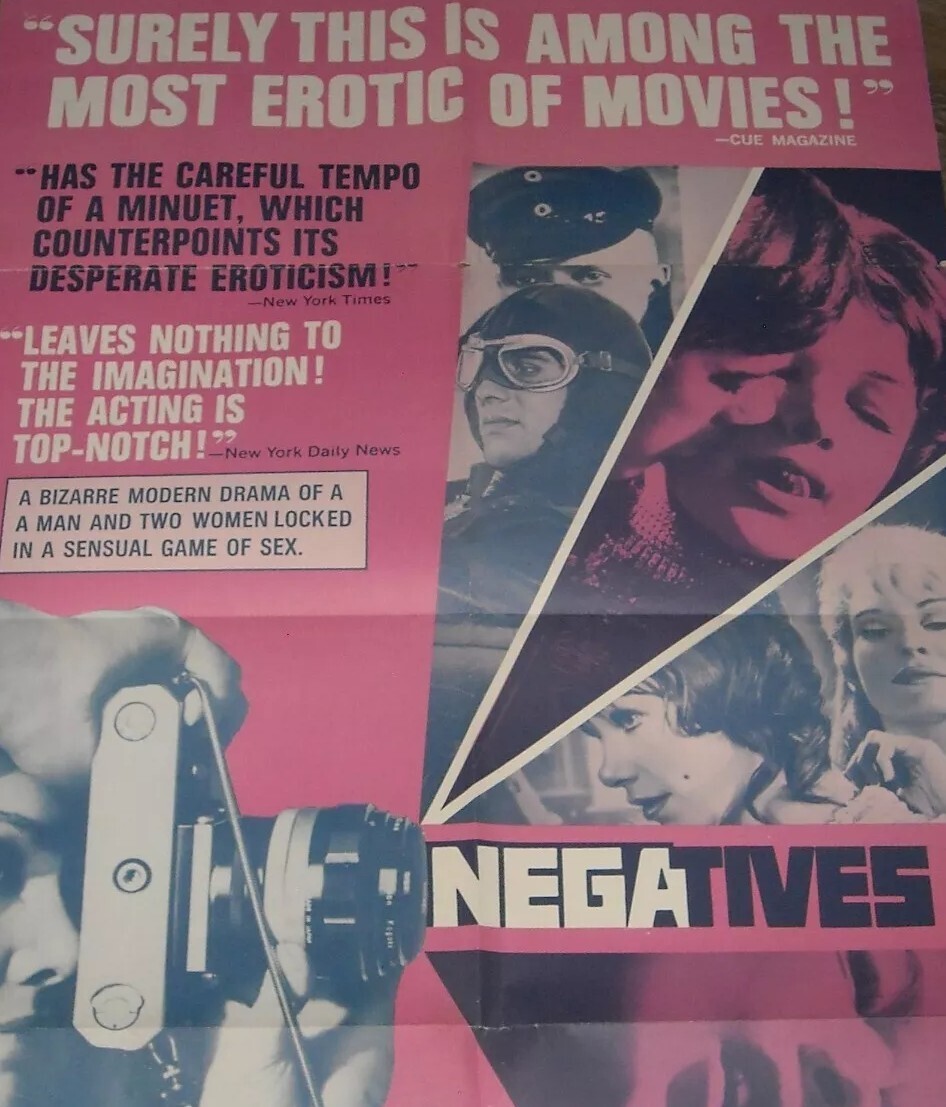
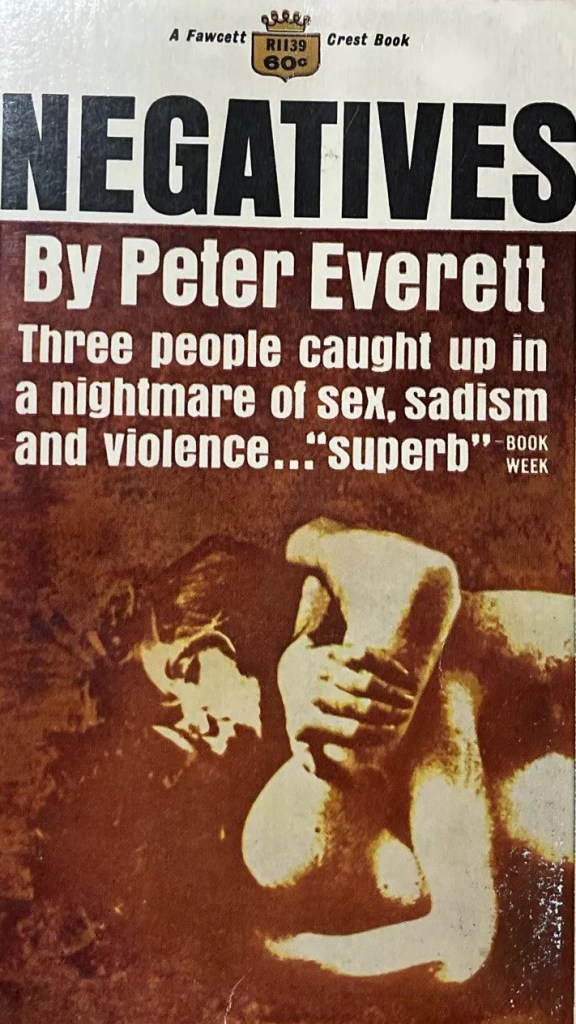
Negatives (1968) ***

Role play wasn’t the sub-culture it is now. Though fashion had injected more of a sense of dressing up what with Russian furs courtesy of Doctor Zhivago (1965) and snazzy berets from Bonnie and Clyde (1967), the idea of people living out their lives in costume had not taken hold. So consider this a precursor – and maybe a warning – as to what can go wrong if taken too far.

Obscurity to the point of obfuscation was an arthouse default especially prevalent in more commercial ventures like Blow-Up (1966) and In Search of Gregory (1969) so no need to bother yourself with hunting out motivation or background.

The erotic subtext – voyeurism too – here takes on a disturbing quality as it touches on the notion of male justified in using violence in response to female provocation.  Drama centers on a clash of role model sensibilities with a weak male shifting from interpreting a murderous villain to imitating a heroic pilot.

Antiques dealer Theo (Peter McEnery) spices up his stale marriage to Vivien (Glenda Jackson) by dressing up as serial killer Dr Crippen. She invests in the role of his complaisant lover Ethel. Play-acting, at her behest it appears, doesn’t prevent her verbally tearing into him. Into this unconventional nest arrives German photographer Reingard (Diane Cilento) who has been spying on him for several weeks. She has her own fantasy and soon has him rigged out as World War One flying ace Baron von Richtofen, complete with ancient biplane. He responds to the militaristic characteristics of the pilot, entering more into the spirit of the game than the famed killer.

Naturally, Vivien doesn’t take kindly to this intrusion, not least because she realizes she isn’t the only one who can manipulate her malleable husband and violence and tragedy ensue. It’s not entirely clear why either female character indulges in such fantasies and does give rise to the cliche notion, and redolent of the times, of the female wishing to give in to the dominant male, even when the man shows little sign of being a dominant personality.

Apart from Theo visiting his father (Maurice Denham) who appears to be dying in hospital, the picture doesn’t shift much from its three-cornered narrative. The idea of the ongoing masquerade is emphasized by a sequence set in Madame Tussaud’s. Given the censorship of the times, the eroticism is largely of the discreet variety, rather than going down the full-blown sexual fantasy of The Girl on a Motorcycle (1969).

Glenda Jackson both plays a character right up her street and brings far more to the role than either Peter McEnery (The Moonspinners, 1964) or Diane Cilento (The Third Secret, 1964) who give the appearance of slumming it in a low-budget production in the hope it might bring career kudos.

Unwilling to dig any deeper into the characters, director Peter Medak (The Ruling Class, 1972), in his debut,  merely toys with technique, elaborate shots following a character round a room or unusual compositions.

With the trendy crowd parading down King’s Road with all the latest hip gear including military uniforms and Victorian garb, this might have seemed to fit right in, except that the main characters have little in common with the “Youthquake” of the era.

On the one hand a true oddity with McEnery and Cilento well out of their comfort zones, on the other proof of what Jackson and Medak had to offer.

Might appeal to the role-playing crowd, more likely to those interested in early Glenda Jackson.

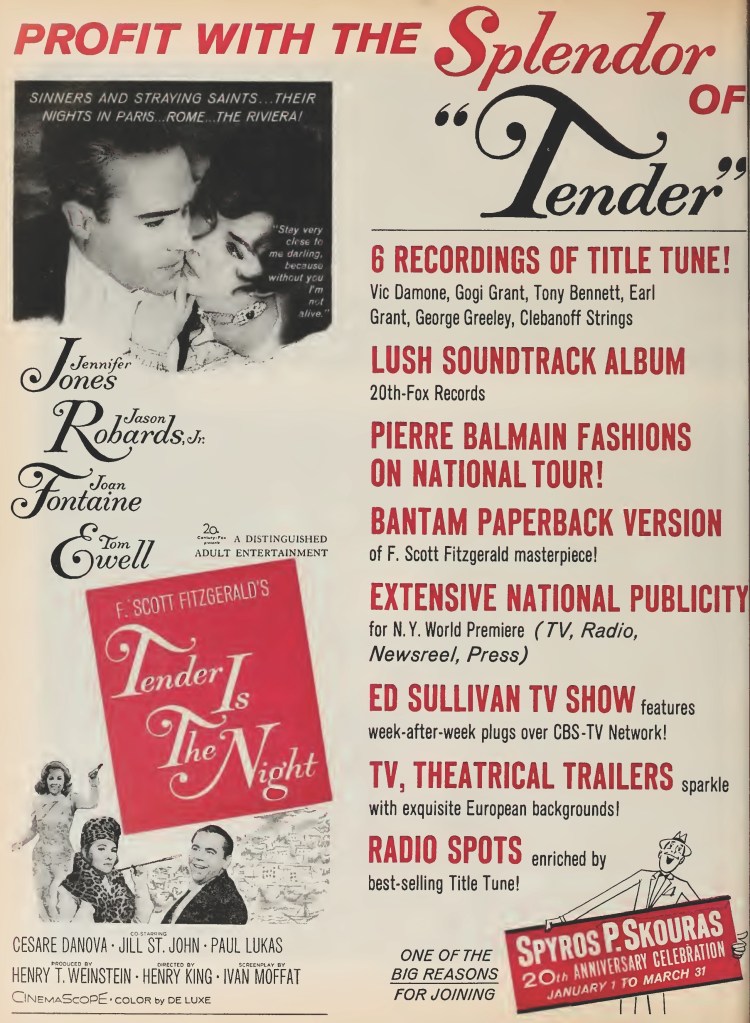
Tender Is the Night (1962) ***

Hollywood hadn’t had much luck with F. Scott Fitzgerald, now considered one of the three American literary geniuses of the 20th century along with Nobel prize-winners Ernest Hemingway and William Faulkner. His novel The Great Gatsby has easily proven the century’s best-read literary novel. He was an alcoholic wastrel when in the employ of studios, in the latter stages of his life. Although The Great Gatsby had been filmed twice, in 1926 with Warner Baxter and 1949 with Alan Ladd, both versions had flopped.

His biggest seller, debut novel The Beautiful and the Damned (1922) didn’t hit the box office mark either. The Last Time I Saw Paris (1954), based on one of his short stories and starring Elizabeth Taylor, and a modest success, didn’t inspire Hollywood and it took Beloved Infidel, the memoir of his lover, gossip columnist Sheilah Graham, to kickstart further interest. But the film of that book, even with top marquee name Gregory peck, died at the box office in 1959.

So, whatever way you cut it, Twentieth Century Fox was taking a serious gamble – the budget was $3.9 million – trying to mount Tender Is the Night especially with such questionable stars. It was a comeback for Jennifer Jones, at one time a solid performer at the box office and an Oscar-winner besides. But she had been out of the business for five years, a lifetime in Hollywood terms. Male lead Jason Robards was virtually a movie unknown. This was his sophomore outing and his debut By Love Possessed (1961) had flopped. How much his Broadway prowess would attract audiences outside the Big Apple was anyone’s guess.

But Oscar-nominated director Henry King (Beloved Infidel) who had helmed Jones’s breakthrough picture Song of Bernadette (1944) clearly thought he was on to a winner because this had the slow and stately feel – running time close on two-and-a-half-hours – of a movie that’s never going to run out of breath never mind pick up a head of steam.

Truth is, it’s slow to the point of being ponderous. Takes an age to set up the story. Psychiatrist Dr Dick Diver (Jason Robards) living with ex-patient wife Nicole (Jennifer Jones) – an arrangement that would be professionally frowned upon these days – in the French Riviera in the 1920s host a party where the husband takes a shine to Rosemary (Jill St John) and the wife shows she has not shaken off her mental malady. Despite there not being a great deal of actual period detail, we spend a long time at the party as various permutations take shape.

Then we dip into a long flashback to find out how we got here, mostly consisting of Dick falling in love with his patient, abandoning his career  to enjoy a hedonistic lifestyle funded by Nicole’s wealthy sister Baby Warren (Joan Fontaine). There’s a stack of gloss. We swap the South of France for Paris and Switzerland and we’re hopping in and out of posh restaurants and hotels and the kind of railway trains that for the rich never meant a draughty carriage and hard seats.

Basically, it’s the tale of a disintegrating marriage – one that would have been better avoided in the first place as most of the audience would have pointed out – and falls into one of those cases of repetitive emotional injury. Clearly, living on his wife’s sister’s money renders Dick impotent, compounded by the loss of peer regard.

Jennifer Jones (The Idol, 1966) is pretty good, essaying a wide variety of moods, flighty, whimsical, and stubborn, exhibiting the kind of nervous energy that was implicit in her illness and which he managed to tamp down but not fully control. Jason Robards is basically on the receiving end of a character he knows only too well, and he is simply worn down by the force of her personality. So, he can’t come across as anything but pathetic, especially when he wishes to succumb to the temptations of the likes of Rosemary.

For all the strength of his usual screen persona, Robards is miscast. He doesn’t command as he needs to in order for the film to work and for the audience to sympathize with his downfall. At this stage of her career, Jennifer Jones was so far more accomplished it doesn’t take much, even when she’s not letting fly, for her to hog the screen at the expense of a balanced drama. There’s a twist in the tale but by the time that comes we couldn’t care less.

In a less showy role than was her norm, Jill St John (Banning, 1967) is effective.

Ivan Moffat (The Heroes of Telemark, 1965) wrote the screenplay. A box office disaster, it only hauled in $1.25 million in U.S. rentals. Henry King didn’t direct another picture.

Trimmed by 30 minutes, this would have been more effective.

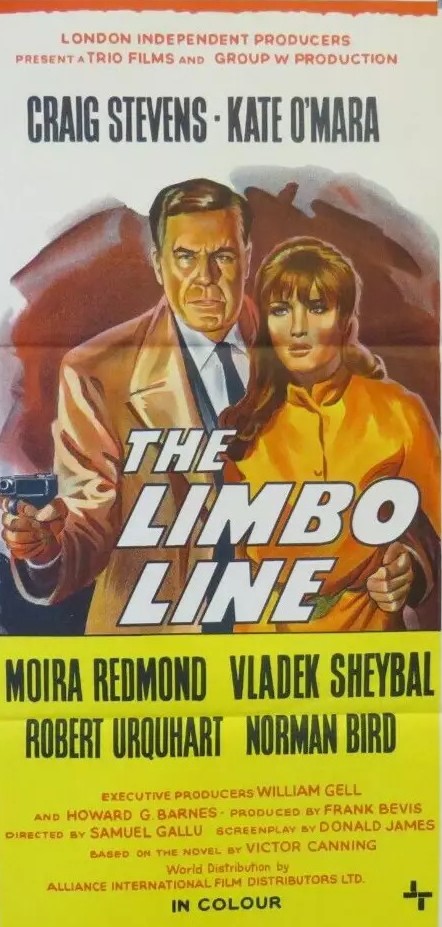
The Limbo Line (1968) ***

Should have been  a classic. The bleakest espionage tale of the decade ends up, unfortunately, in the wrong hands. Betrayal – personal and professional – underlines a sturdy enough narrative of defection, kidnap and rescue, infected with a spread of interesting characters far from the genre cliché.

We open with blonde Russian femme fatale Ludmilla (Moira Redmond), as sleek as they come, killing off her lover once she discovers his true intent. She works for the “Limbo Line,” an organization headed by Oleg (Vladek Sheybal) which whisks Russian defectors back to their home country. In romantic fashion, she inveigles herself into the lives of those who may be, for personal gain, about to take a wrong turn in the service of their country.

Richard Manston (Craig Stevens), meanwhile, is an operative of an undetermined secret unit, getting cosy with Russian ballerina Irina (Kate O’Mara), a defector, in the hope that she will become the next target for Oleg and thus lead him to his quarry. Responding to his amorous advances, she has no concept of this ulterior motives.

But he’s not the only one in the two-timing racket. Oleg lives high on the hog, a lifestyle financed by holding back remuneration due his operatives, who not only want better paid for the risks they are taking, but draw the line at murder. Ludmilla, meanwhile, uses intimacy with Oleg as a way of keeping tabs on him for her superiors.

Everyone, however, is operating under a new code of restraint. Arms limitation talks between the Superpowers currently taking place mean that neither side wants to be publicly seen to be working in the shadows. Hence, the no-holds-barred methods of both Manston and Oleg are frowned upon. Manston and Ludmilla have more in common than one would normally find in the spy movies of the period, the end justifying the means taking precedence over any personal interest in a lover.

The dangerous romantic elements would have been better dealt with in the hands of a more accomplished director. As it is, Samuel Gallu (Theatre of Death, 1967) has his hands full keeping track of a fast-moving tale as Irina is whisked by boat, bus and petrol tanker to Germany, hidden in such confined spaces the more cautious operatives fear she will die.

Nor, despite his fists, is Manston as good as you would expect from a heroic spy, battered to bits by his opposite number, himself imprisoned in the tanker, becoming a pawn to be sold to the highest bidder.

It’s in the tanker that Irina realizes her lover is deceitful, only using her as bait. Similarly, Oleg doesn’t realize he is every bit as dispensable to the ruthless Ludmilla who wishes to avoid public exposure and is only interesting in taking Irina back to Russia where she will be “re-educated.” Chivers (Norman Bird) looks like the nicer sidekick for Manston, the type to demonstrate fair play, except when he has to drown a suspect in a bath. He has the best line in the film, an ironic one at the climax.

The action, while overly complicated, is well done, none of the over-orchestrated fistfights taking place in odd locations. Chivers has a knack of turning up in the nick of time, but he’s the cleverer of the two.

An actress of greater skill than Kate O’Mara (Corruption, 1968) would have brought greater depth to the betrayed lover, but she does well enough to stay alert during the helter-skelter action. Craig Stevens (Gunn, 1967) was never going to be the right fit for a character required to show considerable remorse at his own actions.

The hard core of political reality, the constant betrayal of both innocent and guilty, the shifting sands of romance sit only on the surface and a better director would have brought them more into the foreground, eliciting better performances for deception incurred in the line of duty at the expense of the personal life.

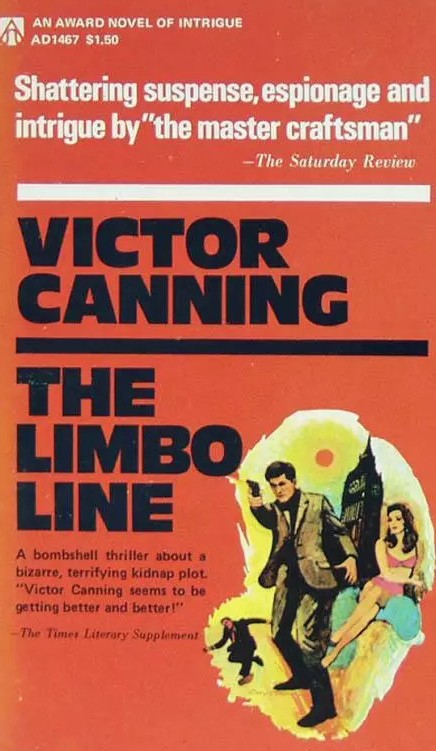
It’s never a good sign when the bad guys are the more interesting characters and while you might expect Vladek Sheybal (Puppet on a Chain, 1970) to steal the show, he is usurped by Moira Redmond (Nightmare, 1964). A bigger budget would have also offered better reward, but even so Gallu comes up with more interesting camera angles than you might expect.  Based on the bestseller by Victor Canning (Masquerade, 1965), he was helped in the screenwriting department by television writer Donald James.

You watch this thinking what might have been.

Castle Keep (1969) ****

A bit more directorial bombast and this could have matched Apocalypse Now (1979) in the surrealist war stakes. Never mind the odd incidents surrounding a small unit of G.I.s  taking over a magnificent Belgian castle towards the end of World War II prior to what turned out to be the Battle of the Bulge, this has on occasion such a dreamlike quality you wonder if it is all a figment of the imagination of one of the characters, wannabe writer Private Benjamin (Al Freeman Jr.). Throw in a stunning image, for the beleaguered soldiers at the start, of a horsewoman charging by in a yellow cloak, so out of place that it carries as much visual impact as the unicorn in Blade Runner (1982), and we are in definite cult territory.

One of the unusual elements is that, in this unexpected respite from battle, the soldiers are defined by character traits rather than dialogue or bravery as would be the norm. This ranges from baker Sergeant Rossi (Peter Falk) taking over the boulangerie and bedding the baker’s wife (Olga Bisera), mechanic Corporal Clearboy (Scott Wilson) diving into a lake to rescue a Volkswagen and the troops receiving a lecture on art history from Captain Beckman (Patrick O’Neal).

Commander Major Falconer (Burt Lancaster) is not only brilliant in the art of war, but calmly  mentors Beckman through a firefight with an enemy airplane, teaches local sex workers how to make Molotov cocktails and, evoking ancient aristocratic tradition, enjoys conjugal relations with the conquered countess (Astrid Heeren), whose impotent husband (Jean-Pierre Aumont) encourages the relationship since the castle needs an heir.  

There is wistful revelation, Beckman clearly hankering after his turn with the countess, a minister who wishes he had the courage to join the boys in the brothel, the young soldiers there being treated as children rather than customers. And there are juvenile pranks – moustaches are painted on statues, wine bottles used for ten-pin bowling practice.

But the surreal moments keep mounting up. The Volkwagen, though riddled with bullets, refuses to sink in the lake, a hidden German reveals himself by playing the same tune on a flute as one of the soldiers. The countess often appears as an ethereal vision.

Through it all is rank realism. Falconer knows a German previously shared the countess’s bed. The count will do anything to safeguard his castle and maintain the family line, even to the extent of incest, since his wife is actually his niece. But above all, while his troops believe the war is at an end and enjoy the pleasures at hand, Major Falconer prepares for rearguard action by the Germans, filling the moat with gasoline, planning to pull up the drawbridge and control the high ground.

The battle, when it comes, is vivid and brutal, the initial skirmish a hand-to-hand battle in the village before the Germans begin their siege of the castle.

Burt Lancaster (The Swimmer, 1968) is superb, far removed from his normal aggressive or athletic persona, slipping with pragmatic ease from the countess’s bed to battle stations. War films in the 1960s were full of great individual conflicts often won on a twist of ingenious strategy but seldom have we encountered a soldier like Falconer who knows every detail of war, from where and how the enemy will approach, to the details of the range of weaponry, and knows that shooting dead four soldiers from a German scouting mission still leaves one man unaccounted for.

Patrick O’Neal (Alvarez Kelly, 1966) also leaves behind his usual steely-eyed screen persona, here essaying a somewhat timid and thoughtful character. Peter Falk’s (Machine Gun McCain, 1969) baker is a beauty, a man who abandons war, if only temporarily, for a second “home,” baking bread, adopting a wife and child. In a rare major Hollywood outing French actor Jean-Pierre Aumont (Five Miles to Midnight, 1962) carries off a difficult role as a count willing to accept the humiliation of being cuckolded if it improves his chances of an heir. In one of only four screen appearances German actress Astrid Heeren (The Thomas Crown Affair, 1968) makes the transition from a woman going to bed with whoever offers the greatest chance of saving the beloved castle to one gently falling in love.

There is an excellent supporting cast. Bruce Dern (Support Your Local Sheriff, 1969) makes the most of a standout role as a conscientious objector.  You will also find Scott Wilson (In Cold Blood, 1967), Al Freeman Jr. (The Detective, 1968), future director Tony Bill (Ice Station Zebra, 1968) and Michael Conrad (Sol Madrid / The Heroin Gang, 1968).

Two top-name writers converted William Eastlake’s novel into a screenplay – Oscar-winning Daniel Taradash (Hawaii, 1966) and newcomer David Rayfiel who would work with Lancaster again on Valdez Is Coming (1971) and with Pollack on Three Days of the Condor (1973) and Havana (1990)

Sydney Pollack (This Property Is Condemned, 1966), who had teamed up with Lancaster on western The Scalphunters, 1968), does a terrific job of marshalling the material, casting an hypnotic spell in pulling this tantalising picture together, giving characters space and producing some wonderful images, but more especially for having the courage to leave it all hanging between fantasy and reality.

Expressions like  “we have been here before,” “once upon a time,” “the supernatural” and “a thousand years old” take solid root as the narrative develops and will likely keep spinning in your mind as you try to work out what it’s all about.

The Russia House (1990) ****

The amateur spy – the innocent caught up in espionage malarkey – had scarcely graced the screen for a couple of decades, Hot Enough for June/Agent 8¾ (1964) or Masquerade (1965) possibly the highpoints of that subgenre. That it turns up at all is probably due to spymaster John le Carre’s Cold War comfort zone evaporating following glasnost and perestroika in Russia in the late 1980s. Of course, the West didn’t entirely trust the Soviets to reform, and had no intention of pensioning off its battalions of secret agents.

The plotline is largely irrelevant here, acting more as a MacGuffin than anything else, because audiences will have long forgotten what was sacred to the West three decades ago. And the picture is devoid of the usual car chase and there’s not even the kind of foot-race that became de rigeur to prove our ageing superstars could still physically hack it – Clint Eastwood in In the Line of Fire (1993) or Liam Neeson in Taken (2008).

So what we’re left with is probably what le Carre was hoping for in the first place – a character study. It may have passed your notice that among the highest ranks of the superstars only Sean Connery could match Tom Hanks in actually changing his appearance – different hairstyle, different beard (yep, you didn’t think that could define character, did you) – to depict character. Of course, nobody was expecting Stallone or Schwarzenegger to alter their look; Harrison Ford got a buzzcut once; but Paul Newman, Burt Lancaster, Kirk Douglas, even going further back to James Stewart, Gary Cooper, their hairstyle remained untouched, and until Connery made it part of his persona Hollywood believed that moustaches were box office disaster.

Barley (Sean Connery) is an upmarket publisher whose business is on the slide, so much so that he doesn’t attend an annual book fair in Moscow. So when Russian single mother Katya (Michelle Pfeiffer) turns up looking for him, she ends up handing a manuscript to Penguin’s representative who, naturally, turns it over to MI6.

Takes a while what with interrogation and flashback to work out why Barley has been selected. Unwittingly, on a previous sojourn to Russia, he had made the acquaintance, over a drunken dinner, with Dante (Klaus Maria Brandauer) who turns out to be Katya’s long-ago first love and, more importantly, a nuclear scientist with secrets to sell or give away. Barley is hooked into returning to Russia to gain the confidence of both Katya and Dante and provide access to secrets  the British Secret Service and their Yank counterparts desire.  

That it doesn’t go the way the high-ups want is because Barley is a “decent human being” and when he realizes he has compromised Katya, and endangered the lives of her two young children, he turns traitor and trades their safety for secrets.

Given the plot and counter-plot thesis, and the various axes that need to be ground over nuclear weapons accumulation and inherent corruption, this cinematic enterprise could have proved way too unwieldy for a contemporary audience. Instead, the very fact that much of the background is now meaningless clears the way for the movie to stand on its own two feet, as yet another wonderful character study in the largely unheralded Sean Connery (The Hill, 1965) portfolio. And with Michelle Pfeiffer turning in a Golden Globe-winning performance, the  movie hinges more on the characters than the espionage.

There’s a fabulous scene where the initial narrative is just turned on its head. You’re already thinking MI6 must be hard put to be even thinking of employing Barley, given he’s a bit of a boozer, the kind of guy who knocks one whisky straight down before sipping the next. Katya, attempting to establish his bona fides and suspicious that he’s actually a spy, asks him, “Are you alone?” Meaning, has he come alone, is he acting independently?

Barley takes a different meaning from the question. “Never been more alone,” he replies, barely concealing the despair in his eyes. “I let people down,” he confesses at another point.

His life is headed in all the wrong directions. He’s fluffed too many lines and no guarantee he’s even capable of looking for redemption. And Katya’s way too wary. He’s like an enthusiastic schoolboy when he falls in love with her. When he dives in for a kiss, she tilts her head so he can only kiss her cheek in the Russian fashion.

His romancing comes unstuck when instead of responding to his ardor she recounts her experiences with Dante. It’s her scene and yet Connery steals it with his slow-burn despair. Her wariness shows in her face. The purported new freedoms her country promotes mean little more than citizens can more freely complain.

While you might not go along with his self-deprecating description of himself as a “large unmade bed” – his physical grace always going to make this unlikely – nonetheless he is a shambles of a man. Even Connery can’t make fashionable the duffel coat, his perennial outfit of choice, an item of clothing that to generations epitomized the unfashionable, a garment worn by those who couldn’t care less about their appearance.

Connoisseurs of Connery’s hair and beard will notice a certain rumpled element compared to the stylish beard he wore in Rising Sun (1993) or the confident full version of The Hunt for Red October (1990).

Outside of the Connery-Pfieffer axis, although the narrative stumbles in accommodating their manoeuvring, the movie boasts a phalanx of interesting supporting actors, some fallen from the marquee heights like Roy Scheider (Jaws, 1975) and James Fox (Thoroughly Modern Millie, 1967), others who would make their mark in television like John Mahoney (Frasier, 1993-2004), Martin Clunes (Men Behaving Badly, 1992-2014), David Threlfall (Shameless, 2004-2013) and Michael Kitchen (Foyle’s War, 2002-2015) and topped up with a wild-eyed indulgent performance from director Ken Russell (Billion Dollar Brain, 1967).

Rather devoid of screenwriter Tom Stoppard’s (Shakespeare in Love, 1998) trademark humor except in a couple of aural jokes about odd sounds emanating from hidden microphones. The first movie to be filmed in Russia after glasnost so a bit more authentic location work than usual. To his credit director Fred Schepisi (The Chant of Jimmie Blacksmith, 1978) allows Connery and Pfeiffer full rein rather than getting bogged down in the inescapable politics and office backstabbing.

Watch it for Connery and Pfeiffer.

Be warned: I feel a Connery binge coming on.

Missing You (2025) ***

A well-off good-looking couple trying to adopt a puppy are challenged by po-faced bureaucrat over the name they have chosen for said animal. Their purported good deed ends in disaster when he shows them a photo of the woman caught in a clinch with another man. We never see the couple again. But the prissy fella, Titus (Steve Pemberton) turns up. He’s some kind of farmer. But he runs a strange kind of operation. In his barn we catch a glimpse of a lot of guys in orange prison-style outfits kept in stalls and handcuffed to the ceiling.

And that would be wow and double wow except the algorithms have gone crazy and none of this gripping stuff occurs until episode two by which time you are bored to death by the insane amount of time devoted to Detective Kat Donovan’s (Rosalind Eleazar) woeful love life and her decade-old grieving for murdered cop father Clint (Lenny Henry).

We know more about Clint than anyone else for about every give minutes she gets all doe-eyed and we cut to flashbacks of the wonderful old dad all huggy and fun. And if that’s not enough every two minutes a colleague or relative or friend interrupts her doe-eyed contemplation to tell her to give up trying to find out why her father was murdered.

As to her love life, I can give you chapter and verse. After Josh (Ashley Walters) skipped out on her eons ago, she’s given up on commitment. She uses men for sex, pretending to be an air hostess in case the idea of dating a cop puts them off. She’s pulled up for the lack of commitment by buddy Jessica (Stacey Embalo) and various others, the same ones giving her grief about her extended grieving. But when Josh comes back into her life, albeit on a dating app, she goes all doe-eyed again – wouldn’t it be such fun to hook up again with that two-timing rat?

Luckily, Jessica is a private detective specializing in the honeytrap to expose errant husbands and even more fortunately one of her grateful clients is a prison guard who can sneak Kat into the prison where her father’s killer, doing life for two other murders, is dying. Although the killer was caught, Kat has driven herself crazy wanting to know why her father was fingered. And, luckily, there’s a prison nurse to hand who will dope up the killer with scopolamine – the old truth drug you might remember from The Guns of Navarone – so he will cough up about the murder, although we have already guessed, as our intrepid cop has not, that he didn’t kill her father just took the rap because he was already facing life for the other two killings.

In the old days, the chief cop either had no love life worth mentioning or had a different blonde/blond on his/her arm in every episode or was going through some hellish break-up, and audiences didn’t have to suffer having to empathize with the poor detective’s awry sex life. But in the old days all love life would have been shoved onto the back burner only popping up at a critical moment as some sort of narrative relief to the question in hand which was solving some horrendous case. Here, it’s the other way round, said case only pops up as a brief intermission to Kat’s awry love life and grief.

This is a Harlan Coban Netflix number but it seems very Coban-lite, a far cry from Tell No One (2006). I was a big fan of the books which seemed set in very realistic worlds with authentic plots and double-edged characters you could root for despite their failings. And mystery was the watchword. But proper mystery, a character caught up in some malfeasance, or the past coming back to haunt them, and rarely were his novels police procedurals.

The quality tailed off after a while but even then Coban knew how to hook the reader and generally the plots, though increasingly far-fetched, had sufficient spice to grip.

You are probably wondering when am I going to get to the juicy part – the case Kat is working on. Well, you see, I was wondering the same. When the heck are we going to get past all the personal angst and devote some time to the case of the missing bloke? He’s the guy who fell off a horse while riding in the lush countryside and after stumbling over said lush countryside is rescued by a fella in a tractor who stabs him with a taser.

As I said, it’s not until episode two that bad guy Titus turns up with his home-made prison and extortion racket but even then it’s hard to drag Kat away from her love life and her grieving.

Golly gosh, I just can’t wait to find out what happened with Josh and whether she will give him another chance. But is that what is meant to keep me going for the next three episodes?

Algorithms go home.

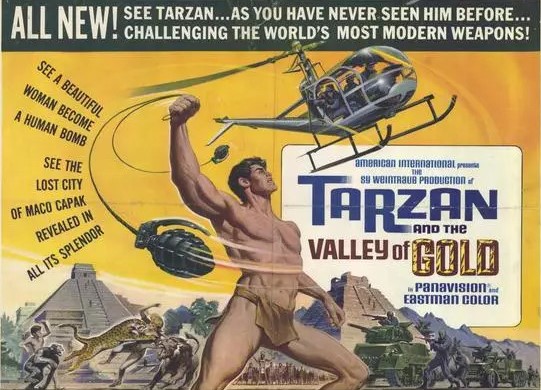
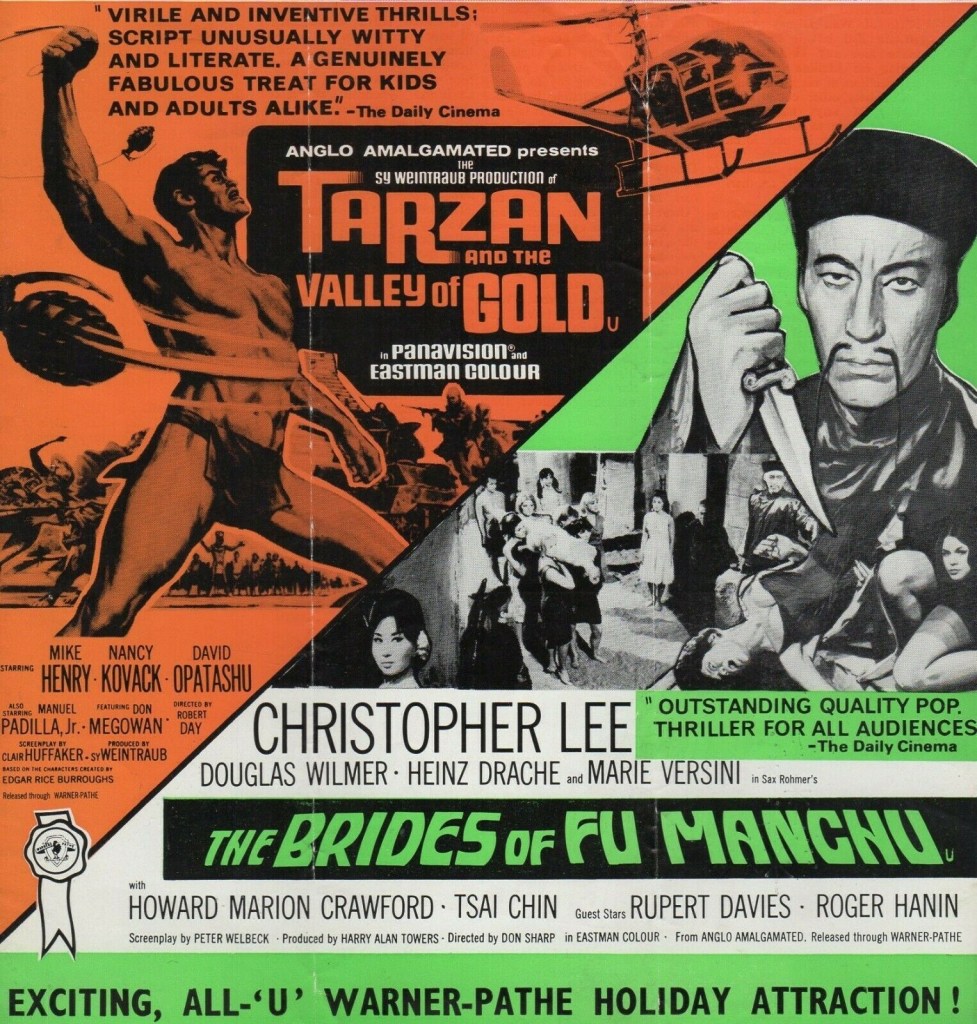
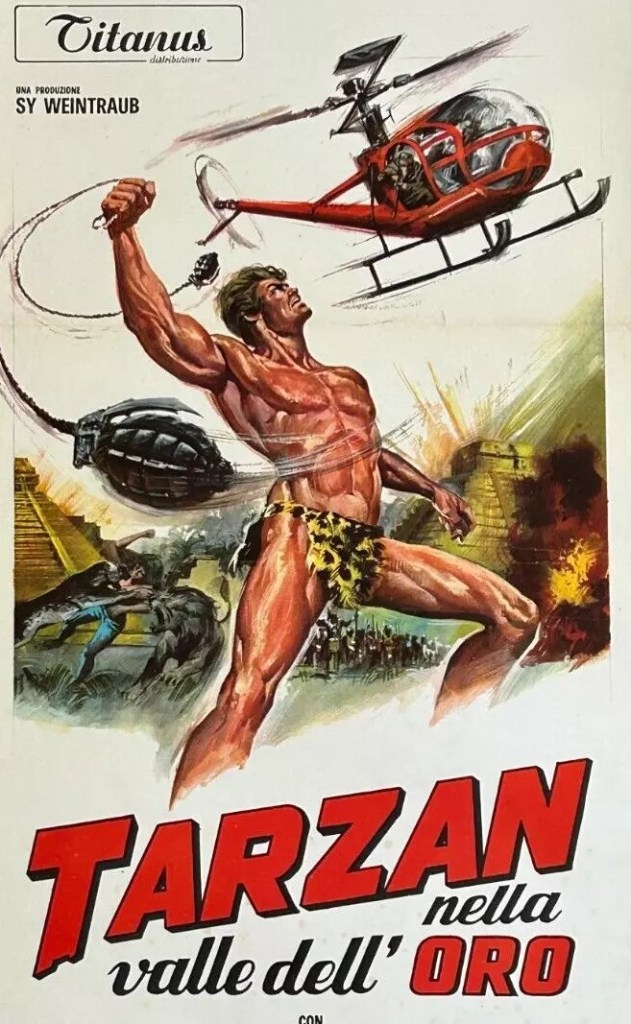
Tarzan and the Valley of Gold (1967) ***

Hooray for hokum. What should have been termed Tarzan: The Next Generation takes our hero temporarily out of loincloth but equips him with a hefty Browning machine gun and rudimentary grenade launcher, not to mention the neat tricks of  repurposing a giant Coca-Cola bottle and bringing stalactites down on the heads of pursuers. Hardly surprisingly he’s toting such weaponry given he’s not just, as was more common, wrestling pesky crocodiles and punching the living daylights of any villain stupid enough to get in his way.

Sadistic evil mastermind Vinero (David Opatashu), has raided the Army Surplus stores for a World War Two M5A1 Stuart light tank, an M3 half track and a Bell 47 helicopter to augment his battalion of 40-odd mean-looking mercenaries. Though he hardly requires them since his favored device is an exploding watch.

Vinero has kidnapped a small native boy Ramel (Manuel Padilla Jr. who reputedly knows the way to an ancient El Dorado complete with Aztec pyramid. Yep, we’re in Mexico, which, incidentally, should screenwriter Clair Huffaker so require, does boast crocodiles as well as jungle. Tarzan is called in to rescue the lad.

He only wears a suit long enough to dispatch an assassin who has dumped him in a football stadium. Once he smells the wild it’s into the traditional loin cloth. He teams up with a Dirty Quarter Dozen comprising chimp Dinky (recruited for his scouting skills, you understand, and his three wise monkeys impersonation), lion Major (specialty: human flesh) and the boy’s pet leopard who will lead our merry crew to the child.

Quite how Ramel was found wandering in the jungle is never explained though it’s perfectly believable that, once lost, he wouldn’t know his way back and would rely on that well-known human compass Tarzan to help him find the way.

There’s quite a lot of trekking one way or another, but, thankfully, that’s interrupted by spurts of sadistic behaviour, an entire village gunned down by Vinero’s henchmen and the big bad guy only too delighted to take time out to demonstrate his incendiary ability in despatching unworthy lieutenants.

To be honest, the jungle doesn’t provide much cover, helicopter ferreting out Tarzan with little problem, only to be downed by his inspired trick of throwing a home-made hand-grenade bolus at the aircraft.

You won’t be surprised to find there’s a fair maiden involved. Her task, unlike previous incursions into this kind of  jungle, is not to be discovered deshabille swimming in a pool. Instead, she’s bait. It’s hard to get a precise fix on Sophia (Nancy Kovack) since for most of the picture she’s Vinero’s mistress. It’s taken her quite some time to become disgusted by his sadistic tendencies. Probably, her rescue is to demonstrate Tarzan’s inherently gentle nature, given he’s got to separate her from a deadly necklace that will explode, so we have been led to believe, by the slightest tremor.

When they reach the lost city – who am I to quibble that a pyramid that can be seen for miles around hardly qualifies as a valley – they discover it is of a distinctly pacific nature, the chief willing to give away all their gold rather than sacrifice a single life, the kind of attitude that conspires against the traditional Hollywood notion of collateral damage.

Chief’s not much trusting of Tarzan and Sophia either and locks them up. Oddly enough, there could easily be an exquisite zero-sum-game at work, a winners-take-all scheme where everyone is a winner, except Tarzan has no truck with the chief’s notion of letting the bad guys get away with as much as they can carry, and Vinero literally digs his own grave by insisting on taking more than he can carry (though I doubt if this is where the makers of Witness, 1985, found their silo death scene).

Mike Henry (The Green Berets, 1968) hulks up pretty well, Nancy Kovack (Marooned, 1969) – replacing Sharon Tate – adds to the scenery, David Opatoshu (Torn Curtain, 1966) underplays the villainy to good effect. Clair Huffaker (Hellfighters, 1968) sufficiently updates Tarzan to a James Bond world. Robert Day (She, 1965) – who had also directed Gordon Scott in the role – delivers the goods.

Enjoyable matinee fare.

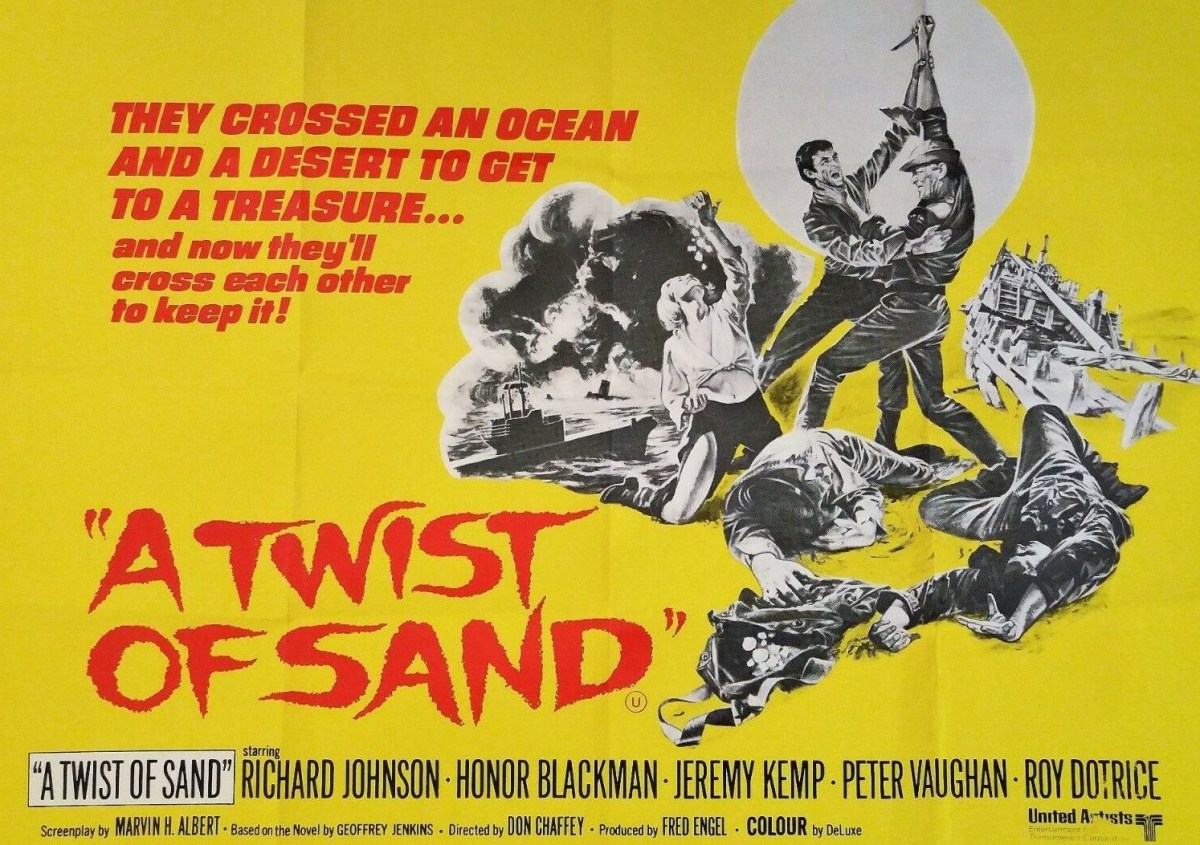
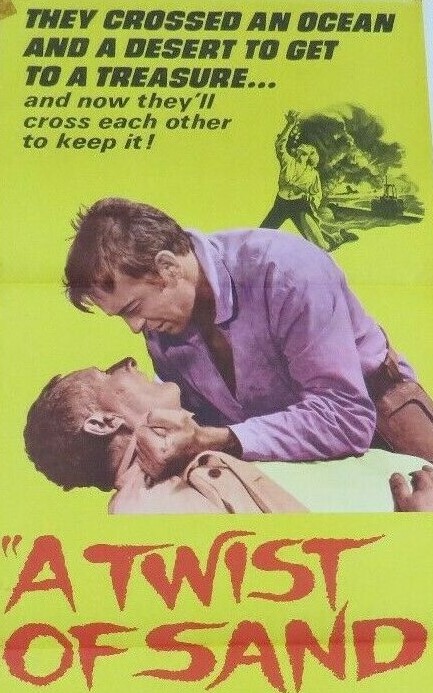
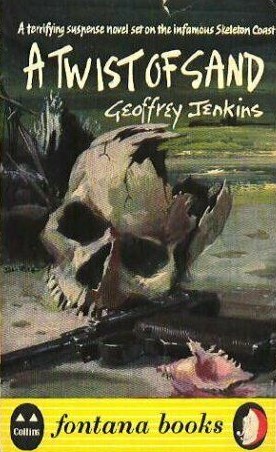
A Twist of Sand (1968) ***

Initially promising, ultimately disappointing thriller that proves you should not go to sea  without a big budget. Because he is the only skipper to have successfully negotiated the Skeleton Coast off Namibia in South Africa, smuggler Geoffrey Peace (Richard Johnson) gets roped into a scheme to collect stolen diamonds by Harry Riker (Jeremy Kemp) and Julie Chambois (Honor Blackman).

Peace knows his way around this area thanks to World War Two submarine exploits and that particular expedition is recalled both in a flashback and its repercussions form part of a plot. Also on board the boat are the goggle-eyed knife-wielding Johann (Peter Vaughn) and Peace’s shipmate David (Roy Dotrice).

Peace has to navigate through the treacherous waters of the Skeleton Coast before the team embark on a trek through the desert to find the diamonds, hidden in the unlikely location of a shipwreck, itself in imminent danger of being buried in an avalanche of sand that could be triggered by sudden movement or sound.

On paper – and it has been adapted from the bestseller by Geoffrey Jenkins – it has all the ingredients of a top-class thriller, but it doesn’t quite gel. For a start, the flashback, where Peace has to hunt down a new class of German submarine and not only sink it but make sure there are no survivors, gets in the way of the action.

The sexual tension you might expect to simmer between Peace and Julie does not appear to exist, the bulk of the threat coming from the villainous-looking pair, Riker and Johann, the former already known to be untrustworthy, the latter too fond of producing a knife at odd occasions. The trek into the desert takes way too long and rather than increase tensions slackens it off and there is no real explanation as to why the ship was lost so far into the desert without entering Clive Cussler archaeological territory.

Extracting the diamonds is certainly a taut scene, with the sand dunes threatening to collapse any moment but the climax you saw coming a long way off and although there is an ironic twist it is not enough to save the picture.

On the plus side, Richard Johnson (Deadlier Than The Male, 1967) shucks off the suave gentleman-spy persona of Bulldog Drummond to emerge as a snarly, believable smuggler. But Honor Blackman (Moment to Moment, 1966) is wasted and this is one of the least effective bad guy portraits from the Jeremy Kemp (The Blue Max, 1966) catalog. Roy Dotrice (The Heroes of Telemark, 1965) is better value while Peter Vaughn (Hammerhead, 1968), menacing enough just standing still, overplays the villain.

Set up as a thriller very much in the Alistair MacLean vein, this shows just how good MacLean’s material was, how great a command he had of structure and not just of action but twists along the way. A Twist of Sand wobbles once too often in its structure and never quite manages to build up the necessary tension between characters. Although the Skeleton Coast sea-scene falls apart due to defective special effects, the other two sequences at sea are well done, the opening section where Peace is chased by Royal Navy vessels, and the underwater attack on the German submarine where murky water manages to obscure the effects sufficiently they appear effective enough.

Don Chaffey (The Viking Queen, 1967) does his best with material that’s not quite up to standard. Marvin H. Albert (Tony Rome, 1967) doesn’t do as good a job of adapting other people’s work as he does his own. 

Discover WordPress

A daily selection of the best content published on WordPress, collected for you by humans who love to read.

The Atavist Magazine

by Brian Hannan

WordPress.com News

The latest news on WordPress.com and the WordPress community.