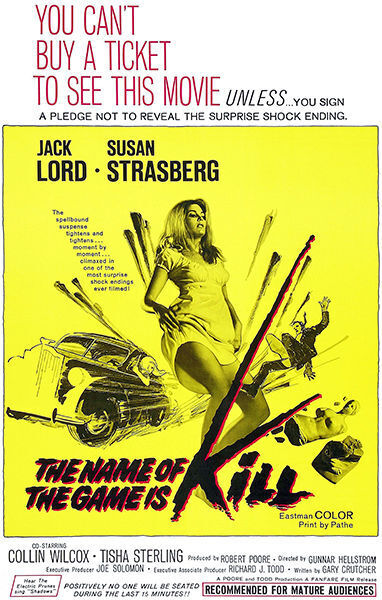
The Name of the Game Is Kill (1968) ***

Surprisingly effective thriller headlined by Jack Lord (Dr No, 1962) and providing Susan Strasberg (The Sisters, 1969) with a more complex role than hitherto.

Hungarian drifter Symcha (Jack Lord) hitches a lift in the desert with Mickey (Susan Strasberg), one of three sisters living with their mother (T.C.Jones) and running a filling station in a backwater. And before you can say Bates Motel, it’s clear not all is right. Youngest sister Nan (Tisha Sterling) keeps a rattler and a tarantula as pets and has the awkward personality trait of tending to set cats on fire.

Oldest sister Diz (Collin Wilcox Patton) eyes up the visitor for herself, even though Mickey is clearly hell-bent on him and is short in the fiancé department, her last boyfriend mysteriously disappearing. There’s more than a hint of the later The Beguiled (1970) in that each of the girls, Nan the most blatant, Diz the most persistent, shows keen sexual interest in the visitor.

And there’s some mystery, too, about the dead father. Everyone has a different tale to offer: he was murdered and incinerated by the mother; he committed suicide; he was run over by Nan. It’s this take-your-pick element that throws Symcha, though, admittedly, his brain might be addled after surviving a hit-and-run. Three days in a coma and all he has to show for it is a plaster on his head. He would need to be dumb, or just lusting after Mickey, to return to the house after that.

He makes no bones about being incapable of love, after witnessing friends and family slaughtered after the Hungarian Revolution of 1956. He “wants” her, but doesn’t commit to love. Mickey, in the manner of such romantics, reckons he’ll soon fall into a swoon over her. “Don’t let your past ruin our future,” she opines, in one of several good lines in the picture. “You have a sick mind,” Mickey tells Diz. “No,” she retorts, “I have a sick sister.” The bulk  of the good lines are the family taking verbal chunks out of each other so tension is kept high.

Mostly, Symcha’s job is to act like an involuntarily detective, getting close enough to each of the women to let them spill their secrets, though he’s less adept at working out what’s the truth. Is Mickey a “cheap lay” or virginal? Did Julio, the aforementioned fiancé, disappear once he realized what he was letting himself in for, or was he done away with?
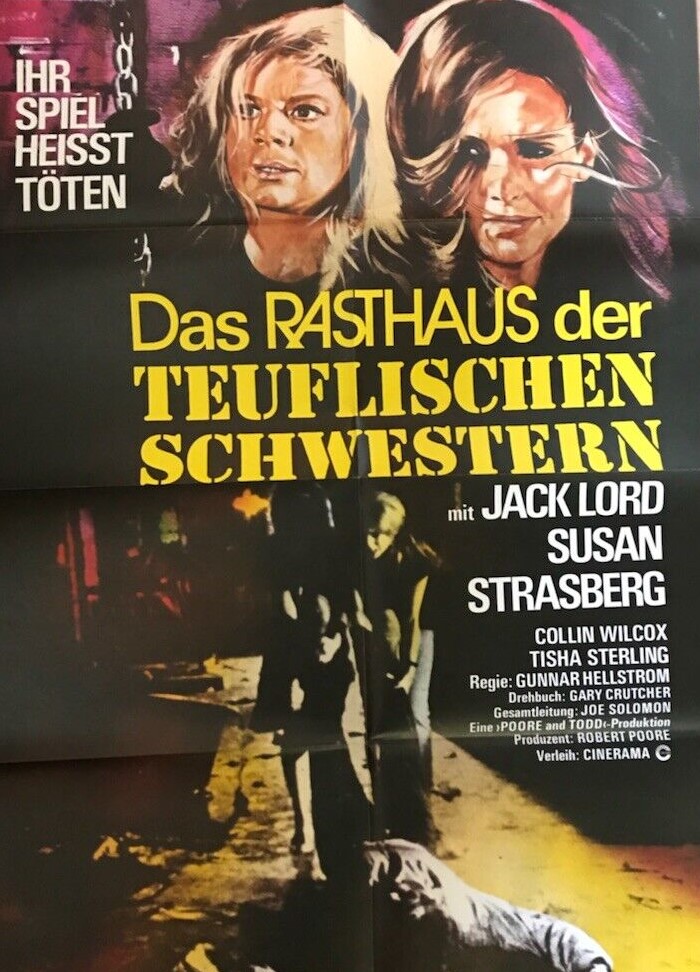
And Symcha’s even less adept at looking after himself. There’s a kind of clever gender switch here. It’s usually the girl who’s foolish enough to return to the haunted house, or who doesn’t recognize danger, or who lets love (in this case, lust) get in the way of rational decision.

Family here is the disturbing element. Anyone attempting to break it up – by heading for San Francisco for example with one of them – is viewed as a threat.

You’ll probably guess the ending from two unnecessary giveaways at the beginning and a flaw in the make-up department, but, in fact, though the poster pleads with you not to give away the ending, it doesn’t say which ending it’s referring to. For this ends with a bang, three twists in quick succession. And don’t be tempted to switch off before the final freeze-frame (I always did wonder where Butch Cassidy and the Sundance Kid, 1969, got that idea).

Swedish director Gunnar Hellstrom (Just Once More, 1962) cleverly plays with expectations. He has you thinking, from the way Symcha makes his intentions clear, and from his wandering eye, that he’s the predator descending on a bunch of vulnerable women. He’s got that strong masculine air. He’s soft-voiced, too, and that carries a greater aura of confidence (ask Clint Eastwood) than a loud-mouth more physically-dominant specimen. But it soon becomes clear he might have stumbled into a web.

Jack Lord is more impressive than I expected and if he hadn’t gone straight from this into a dozen years of Hawaii Five-O (1968-1980) he might have blossomed into a decent male lead in the movies. Susan Strasberg gets to run up an entire scale of acting notes, showing that she is far more accomplished and deserved more than just supporting roles.

But everyone gets their moment in the sun. Tisha Sterling (Coogan’s Bluff, 1968) is good, a mixture of  temptation personified and dangerous instinct. Collin Wilcox Paxton (The Baby Maker, 1970) as the dominant sister sometimes overacts to express that character trait, but that’s not to the movie’s detriment as sometimes it is a bit too low-key. Screenwriter Gary Crutcher (The House of Zodiac, 1969) ran with the rattler notion in Stanley (1972).

Would have been more suspenseful minus the early give-aways.

Damn good for a B-picture.

Catch it on Amazon Prime.

https://amzn.to/3uNCxdo

Behind the Scenes: Coming Soon(er) or Later or Not At All

My discovery that Hayley Mills’ career could have taken an entirely different turn had either Deep Freeze Girls or When I Grow Rich entered production in 1965/1966 and therefore prevented the star returning to Britain for The Family Way (1966) – and, as it transpired, love and marriage – made me look again at the huge volume of movies that were either never made at the time initially announced or never made at all.

I’d covered a couple of classic examples previously, 40 Days of Musa Dagh for example taking nearly half a century from initial proposal to some kind of fruition. And, of course, the financial collapse of studios at the end of the 1960s put an end to the prospects of such big budget movies as Man’s Fate, to be directed by Fred Zinnemann.

But sometimes as many as half the movies announced by a studio or independent for their forthcoming schedule never made it to the big screen. Others such as This Property Is Condemned (1966), initially to star Elizabeth Taylor and directed by John Huston, still got over the line but with new players, Natalie Wood as star and Robert Mulligan in the hot seat. On the other hand, of the quartet of movies – Lie Down in Darkness, Guardians, Grass Lovers, and Linda – that producer William Frye (The Trouble with Angels) thought would make his name, none were made.

Everyone knows moviemaking is a dicey business, but you don’t realize just how tricky it is unless you count up just how many pictures, often trumpeted with big stars signed up, just don’t make it to the cinema screen. Not that Hollywood was unwilling to gamble. Studios snapped up anything – novel, Broadway play – that appeared a decent prospect.

In the early 1960s talent agency Famous Artists earned for its clients a grand total of $850,000 (equivalent to $8.5 million now) for a disparate bunch of properties. King Rat by James Clavell went for $160,000 plus a percentage and was made in double quick time. As was Lilith by J.R. Salamaca, costing $100,000, and Sylvia ($20,000 purchase price) by E.V. Cunningham (aka Howard Fast). Ken Kesey’s One Flew Over the Cuckoo’s Nest went for $85,000 to Kirk Douglas’s Bryna outfit, which explained why, a decade later, it ended up being produced by his son, Michael.

But Broadway play The Perfect Set-Up by Jack Sher, sold to Hollywood for $400,000 and with Angie Dickinson signed up for the lead, was never made. You might recall George Peppard in a TV movie Guilty or Innocent: The Sam Sheppard Murder Case (1975) but that wasn’t based on The Sheppard Murder Case by Paul Holmes that someone shelled out $25,000 for in 1962.

Director Paul Wendkos had planned to follow up Gidget Goes to Rome (1963) with Native Stone, an architectural drama in the vein of The Fountainhead based on the Edwin Gilbert book that cost him $10,000 but that hit the buffers. Two novels by thriller writer John D. MacDonald, hot after Cape Fear (1962) – the aforementioned Linda costing $15,000 and A Child Is Crying $5,000 – were not made either. Nor, out of this batch, were Indian Paint by Glenn Balch or Fish Story by Robert Carson.

Even as powerful a producer as Ross Hunter (Midnight Lace, 1960), couldn’t get onto the starting grid The Public Eye as a vehicle for Julie Andrews, Laurence Olivier and director Mike Nichols (it would have been his movie debut) – when made in 1972 starring Mia Farrow and Topol it was under the aegis of Hal Wallis. Hunter also spent $350,000 on Dark Angel to star Rock Hudson but that fell at the first hurdle as did Broadway play A Very Rich Woman to star Katharine Hepburn.

Tony Curtis was down for a remake of Casablanca (1942) called The Fifth Coin and relocated in Hong Kong and to co-star Nancy Kwan. Shooting on the Seven Arts production had a start date: November 15, 1965. But never went in front of the cameras. Kwan was particularly unlucky. The aforementioned Deep Freeze Girls also had a budget ($1.5 million) and a start date (October 1965) but it didn’t get off the ground either.

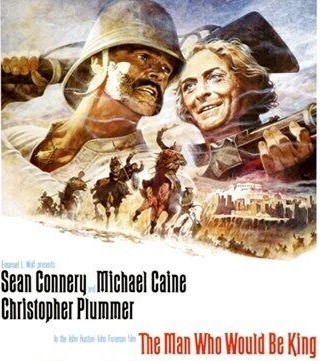
And of course Seven Arts had become enmeshed in the long-running John Huston saga of The Man Who Would Be King. This version, to star Richard Burton, had been set a $4 million budget and was due to start in April 1966. No go. At least The Owl and the Pussycat, budgeted then at $1.6 million and due to start on Dec 1965, was worth waiting five years for – when it was eventually filmed, though by Rastar not Seven Arts, it starred Barbra Streisand and George Segal.

In 1964 Columbia had 77 movies on the stocks. Richard Brooks was setting up Catch 22, Peter Sellers was being lined up for the musical Oliver!, and Carl Foreman was prepping Young Churchill. All these projects dropped off the roster, only to pop back up several years later with different stars (Ron Moody in Oliver!) or directors (Mike Nichols for Catch 22) or even studios (Paramount for Catch 22).

But others were simply shunted aside. Whatever happened to The Gay Place to team James Garner and Jean Seberg? Or The Fabulous Showman to be directed by Blake Edwards? Or another long-running saga, Andersonville with Stanley Kramer at the helm? Or Stephen Boyd as Richard the Lionheart? Even though The Ipcress File (1965) proved a big hit the same author’s Horse Under Water stalled at the starting gate, as did Robert Rossen’s Cocoa Beach and Ann-Margret in Strange Story.

When Robert Evans ushered in a new era at Paramount he placed his faith in writers. He doubled production and had over 40 writers working on projects. Some had little or no experience of movies but were big literary names. John Fowles, the adaptation of whose The Magus (1968) was an expensive flop, was hired to write Dr Cook’s Garden, but it was never made. Edna O’Brien had Three into Two Won’t Go on the stocks at Universal so she was set to write Homo Faber. Another casualty.

Oscar-winning screenwriter Edward Anhalt (Becket, 1964) was to make his directorial debut with We Only Kill Each Other. It didn’t happen. Nobody had ever managed to film Thomas Wolfe’s epic novel Look, Homeward Angel, so Paramount took a tilt at that without success. Escape from Colditz went into cold storage and an adaptation of Harold Robbins bestseller 79 Park Avenue ended up as a television mini series in 1977 and at a rival company, Universal.

It’s still standard operating procedure for Hollywood to snap up any big bestseller or Broadway hit without ever knowing whether it will ever see the light of day but willing to take the risk.

SOURCES: “Famous Artists,” Variety, August 8, 1962, p5; “Sanford and Frye of TV To Make Theatrical Films,” Box Office, January 7, 1963, p10; “Col-Frye TV Pact,” Box Office, August 19, 1963, p10; “Columbia Policy,” Variety, May 6, 1964, p13; “Seven Arts Pix Multiply,” Variety, March 31, 1965, p4;  “Ross Hunter’s Crowded Future,” Variety, May 12, 1965, p7; “Bob Evans Pays Chip Service To Writer As Star,” Variety, May 1, 1968, p19.

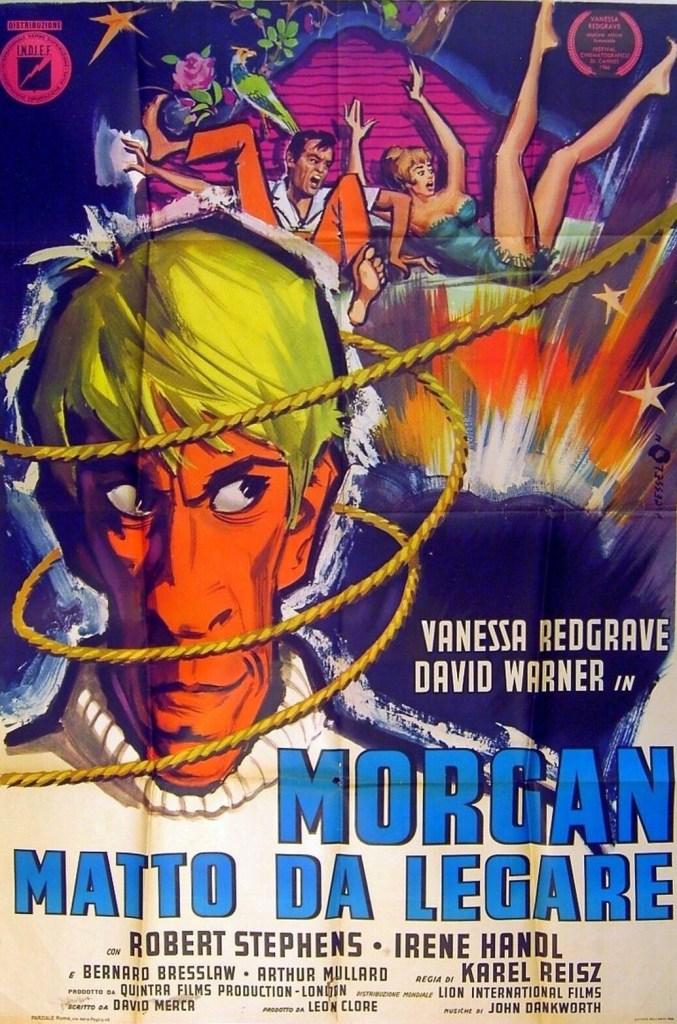
Morgan! / Morgan, A Suitable Case for Treatment (1966) ***

While Hollywood was capable of dealing with mental illness head-on in pictures like Frank Perry’s David and Lisa (1962), Sam Fuller’s Shock Corridor (1963) and Robert Rossen’s Lilith (1964), the British were more inclined to take an alternative approach. The titular characters of Billy Liar (1963) and this film dealt with awkward reality by creating a fantasy world.  

Morgan (David Warner in his first starring role), is a failed artist and virulent communist who cannot come to terms with being divorced by rich Leonie (Vanessa Redgrave) who is planning to marry businessman Napier (Robert Stephens). Morgan forces his way back into his wife’s house and attempts to win her back with nothing stronger than whimsicality and when that fails resorts to kidnap.

And it is clear that she shares his fancy for furry animals, responding to his chest-pounding gorilla impression with tiny pats of her own chest. For a slim guy, Morgan makes a believable stab at a gorilla, shoulders hunched up under his jacket, chest stuck out. And he has an animal’s sense of smell – detecting his rival’s hair oil. 

The tone of the film is surreal. Had David Attenborough been a big name then you could have cited him as one of director Karel Reisz’s influences, such was his predilection for inserting wildlife into the proceedings, not just primates but giraffes, a hippo, a peacock and a variety of other creatures. Some are comments on Morgan’s state of mind but after a while it becomes monotonous. The film is clearly intentionally all over the place, the class struggle also taking central stage, but it’s hard work for the viewer. If you had stuck in some psychedelia, the fantasy would have made as much sense as The Trip (1967).

Having said that, towards the end of the picture there is an extraordinary image – possibly stolen from the opening of La Dolce Vita – of Morgan in a straitjacket hanging from a crane. Had that been the film’s starting point, it might have dealt more demonstrably with the subject matter.  The whimsy is all very well but the focus on external animals does little to illuminate Morgan’s internal struggle and mental descent.

At this stage of his career, David Warner (Perfect Friday, 1970) exhibited a core instability, although later he was adept at ruthless villains. You could argue he is too charming for the role.

Vanessa Redgrave (Blow-Up, 1966), in her second film and her first starring role, steals the picture, winning her first Oscar nomination (in the same year as sister Lynn for Georgy Girl). She is made of gossamer. Still attracted to a man she knows will only bring her pain, she is far from your normal leading lady. There is a touch of the Audrey Hepburn in her ethereality but she portrays a completely genuine soul, not a manufactured screen personality. Robert Stephens (The Prime of Miss Jean Brodie, 1969) adds a welcome hard core to the frivolity.

But Karel Reisz (Saturday Night and Sunday Morning, 1960) misses the spot. Distinguished British playwright David Mercer adapted his own BBC television work from 1962.

Could have done with taking a step back from the material and offered a more objective assessment.

https://amzn.to/3GIA5HL

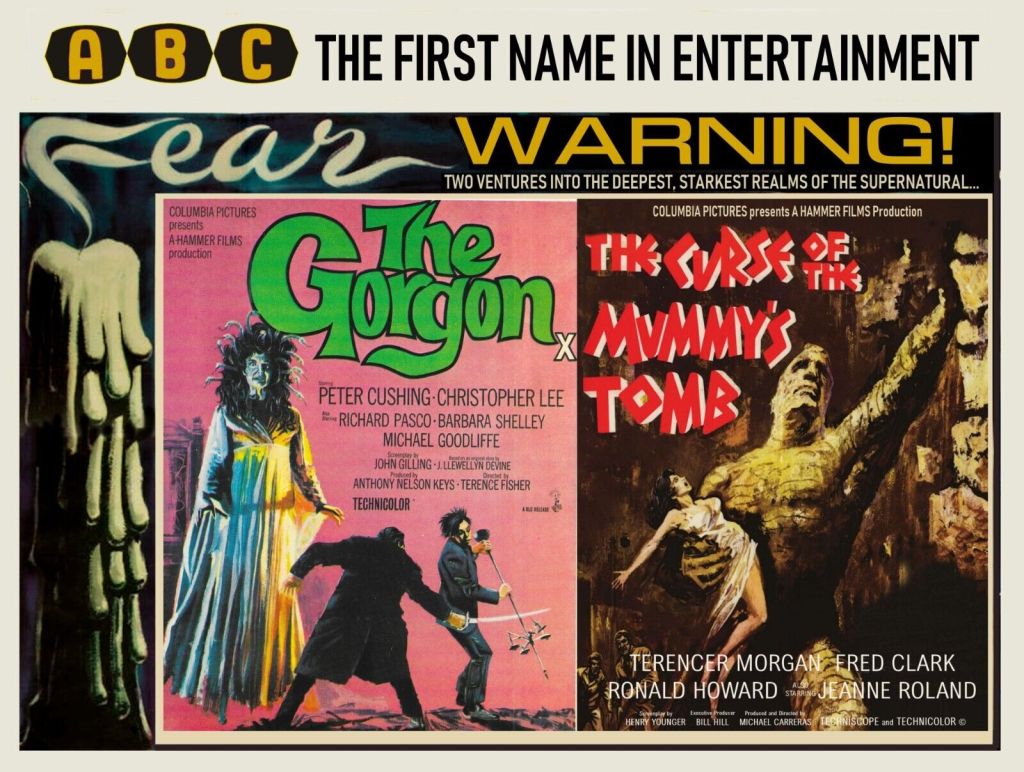
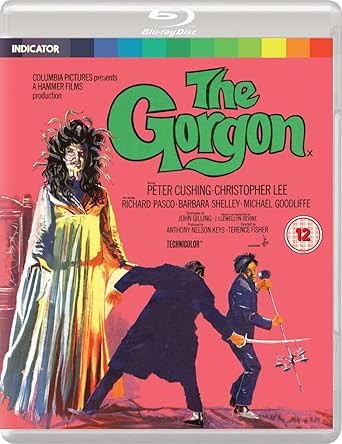
The Gorgon (1964) ***

This impressive Hammer conspiracy-of-silence slow-burner, more thriller than horror, features the triumvirate of Christopher Lee (The Devil Ship Pirates, 1964), Peter Cushing (The Sword of Sherwood Forest, 1960) and Barbara Steele (Dracula, Prince of Darkness, 1966) in untypical roles. Lee and Cushing, of course, had locked horns before, namely in Hammer’s reimagining of the classic Dracula, with the former the charismatic fiend and the latter his nemesis.

Dr Namaroff (Peter Cushing) is a  doctor in an unnamed European turn-of-the-twentieth-century police state who knows more than he is letting on about seven inexplicable deaths in five years and the possibility of a 2,000-year-old myth coming to life and taking on a human form. And with quite a human side, jealous when his assistant Carla (Barbara Shelley) falls for a younger man, Paul (Richard Pascoe). Professor Karl Meister (Christopher Lee) appears late in the day to investigate.

Director Terence Fisher, who had shepherded the studio’s Dracula, Frankenstein, the Mummy and Dr Jekyll franchises through the starting gate, builds up the atmosphere with full moons, haunting voices, fog, sudden sounds, drifting leaves and an abandoned castle forever in shadow. The camera is often a weapon of stealth. Shock is kept to a minimum, fleeting ghostly apparitions and a finger falling off a corpse. Given the limitations of special effects in this era, that was a smart move.

Far better to concentrate on fear of impending doom, a man knowing he is turning to stone, a woman living in terror of being taken over by the phantom. The title gives away the story somewhat – even if you didn’t know the Gorgon was a mythical monster with a headful of snakes and the ability to turn people to stone, that is soon explained. 

Death remains the trigger for action, the suicide of an artist after he has apparently murdered his pregnant girlfriend bringing his father onto the scene and then his brother accompanied by Lee. But all investigation hits a wall of silence after Inspector Kanof (Patrick Troughton) refuses to instigate detection.

The Hammer double bill was a common feature in British cinemas. It also meant Hammer didn’t need to share box office receipts with another company.

At the heart of all the relationships is betrayal. The artist leading his girlfriend on, Namaroff willing to endanger Carla, whom he professes to love, rather than revealing the truth. Even Carla spies on the brother, with whom she is falling in love, in order to gather information for Namaroff. 

Forgive the pun, but Shelley steals the picture. An amnesiac, a victim and finally the lure, she remains enigmatic, a whisper of a woman. It is a haunting portrayal far removed from Hammer’s traditional cleavage queens. This is a very human character who nonetheless must stand guard over herself. Shelleye, here a gentle beauty, initially introduced as merely the love interest, becomes central to the story but without sucking up all the available horror oxygen by over-acting.   

Cushing embroiders his character with little touches, smoking a cigarette in a holder, for example, but Shelley’s character, her distrust of herself, shows in every move she makes.

You would need a heart of stone to be unmoved.

https://amzn.to/41dZqD3

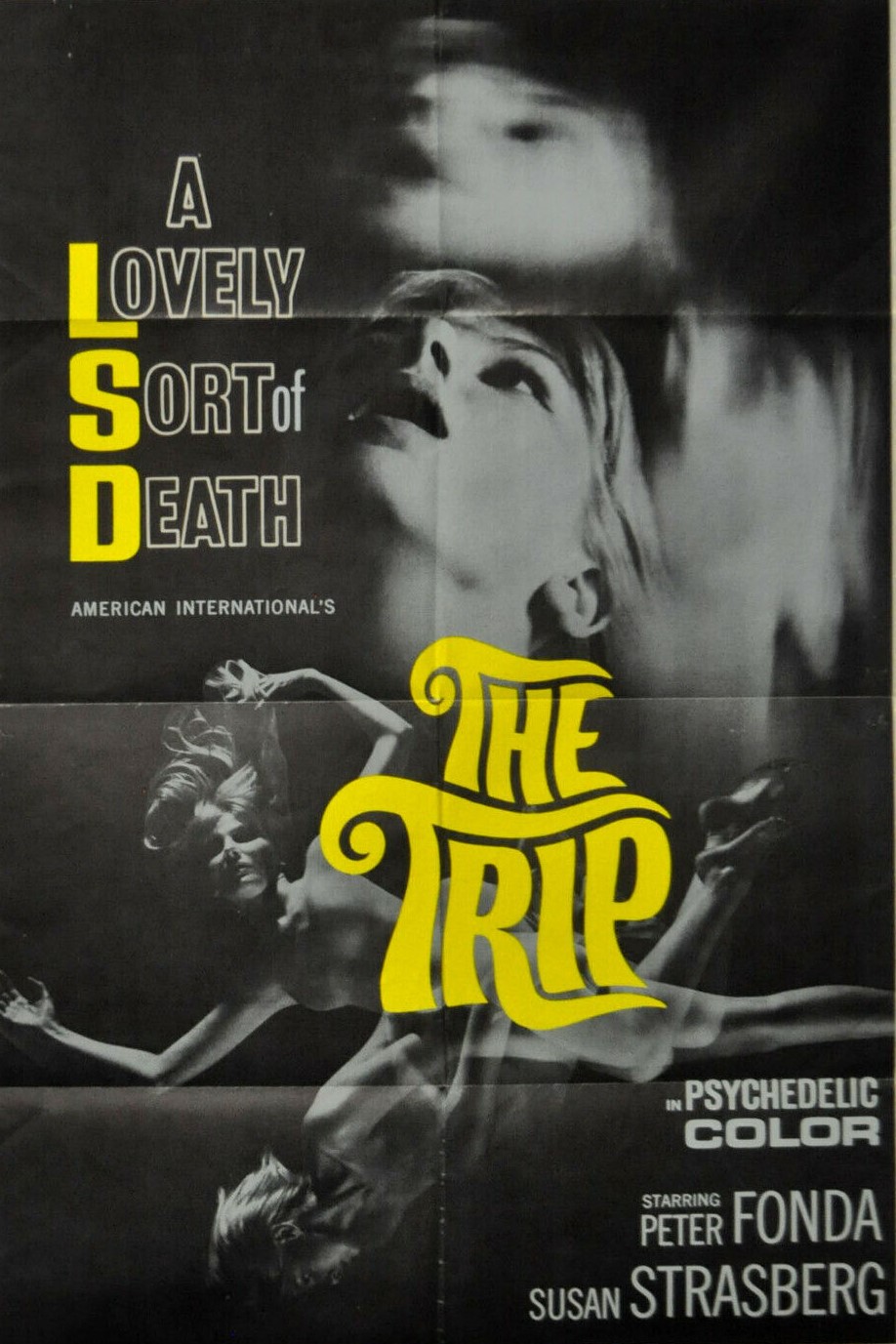
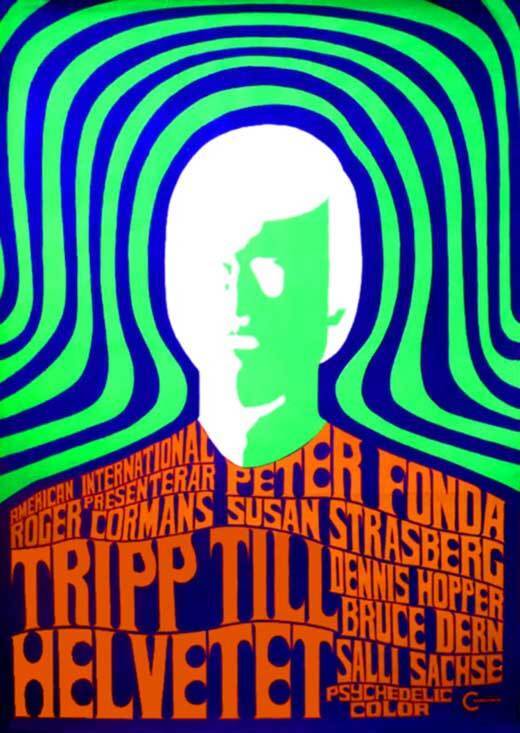
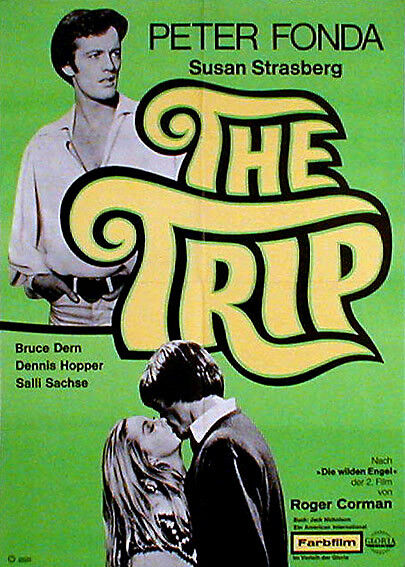
The Trip (1967) ***

Give any neophyte (word of the week!) independent film director a camera and a small budget ($100,000 in this case) and they might well have come up with something like this. Has the feel of being an advert for promoters of LSD who felt they had to play fair and show the potential downside. Meanwhile, they can jam in an absolute phantasmagoria of imagery and sit back and wait for Stanley Kubrick to rip off some of their ideas and give the whole head-spinning malarkey some credence for the conclusion of 2001: A Space Odyssey.

If there’s a story, it’s as thin as they come. Commercials director Paul (Peter Fonda), trying to understand himself better, and why, for example, wife Sally (Susan Strasberg) has left him for another man, enlists the help of self-help guru John (Bruce) to guide him through an LSD trip. The notion that there are drug guides comes as a surprise to me, and this feels like the kind of the warning you get on the side of cigarette packets, although quite what guidance anyone can expect while under the influence is anybody’s guess. If you’re high as a kite, it’s unlikely you’re on an even enough keel to do what you’re told.

Anyway, off we go. And lo and behold, before you can utter the words “groovy” or even “psychedelic,” suddenly the screen is invaded with all sorts of images, coming so quick and fast that even the ones that might makes sense – i.e. indicating paranoia – get little time to settle before the next appear. Some of the images look like they’re offcuts from an AIP horror picture, haunted houses, medieval backdrops, torture, people being mummified or hanged or drowned or all three (maybe all at once).

And from there it’s an easy step into being dazzled by headlights or climbing a cliff or running through a desert or being chased by masked men on horseback and hearing high-pitched giggling. Some of the images, while dreamlike, remain realistic, such as topless body-painted go-go dancers. And the oddest image of a woman in curlers eating a chicken leg in a laundromat feels easily like something out of a bizarre dream when in fact it isn’t.

Some stuff you might expect. Items like an orange are experienced with more intensity. And Paul is disembodied when he observes people making love. Sometimes you’re looking through a kaleidoscope, other times it’s with grim clarity. Strobe lights, hallucination, add to the dreamy expressionistic quality. Not sure the movie had much to say except drugs can be fun – or not. But, inevitably, the imagery, instead of assisting with characterization, gets in its way.

Looks strange to see so many hippies with short hair. Peter Fonda, Dennis Hopper and Jack Nicholson (here only in his capacity as the screenwriter) would come together with greater effect in Easy Rider (1969). This resembles nothing more than an audition for the later film but directed by someone (Hopper) with a bit more sense, adding a proper narrative and cutting the tripping down to the minimum.

Roger Corman (The Secret Invasion, 1964) directed but Susan Strasberg (The Sisters, 1969), Bruce Dern (Castle Keep, 1969)  and Dennis Hopper have such small parts they are almost only there to add marquee value. Not quite the ode to counter culture envisaged.

Shows how difficult it is to film the unfilmable.

https://amzn.to/3Rz1mCW

Behind the Scenes: “The Trouble with Angels” (1966)

Miracle this was made at all with so many neophyte producers involved. First up were Kenn Donellen and Jacqueline Babbin. No Hollywood experience. He was the television rep for Ford Motors, she worked for David Susskind’s talent agency. But like everyone else in the business in the early 1960s, when major studios were on the point of collapse, they thought they could do better. Especially after they nabbed the property, Life with Mother Superior by Jane Trahey, from under the noses of Disney and Universal.

The pair picked it up pre-publication, three months before it was launched by Farrar Strauss in September 1962 after serialization in McCall’s magazine and turned into a speedy bestseller. They got preference because they struck the kind of deal with the author that only newcomers desperate to get into the business would make. As well as paying a hefty fee upfront they guaranteed the author a percentage, plus, unheard-of for a first-time writer, a “say-so on production.” That clause alone would have alarmed any other studio.

Donellen and Babbin were prepared to put up half the $750,000 budget if the remainder was met by a major studio or independent. Production was scheduled for Spring 1963.

Not surprisingly, it suffered from lack of partners. Briefly, it shifted to the bulging portfolio of Ross Hunter. He envisaged an all-star cast older cast in the style of Disney’s Pollyanna (1960): Barbara Stanwyck (The Night Walker, 1964), Loretta Young (whose last movie It Happens Every Thursday was in 1953) and Jane Wyman (Pollyanna) as nuns, which removed the onus from youngsters Patty Duke (The Miracle Worker, 1962) and Mary Badham (To Kill a Mockingbird, 1962). Interestingly, his production of The Chalk Garden (1964) with Hayley Mills was so successful in its New York run it earned back its negative cost.

But that didn’t float Universal’s boat and Columbia stepped in in 1964, handing the production to another neophyte, William Frye. He belonged to a new breed of producers who had cut their teeth in television as writers before moving into overseeing small-screen programs, and attempting the jump to features. Frye had been more successful than most. He had a production deal with Columbia.

But initial attempts to film Guardians from the novel by Helen Tucker, Grass Lovers, thriller Linda by John D. MacDonald and Lie Down in Darkness by William Styron to be directed by John Frankenheimer came to nothing. In the end, Columbia handed him Mother Superior, as the movie was now known.

But this was his first production and either through naiveté, ambition or publicity-seeking genius, Frye had the sensational idea of fielding a million-dollar offer to Greta Garbo to play Mother Superior, in what would have been the comeback to end all comebacks, given she had not made a movie in three decades. That would have made a heck of a dent in a movie budgeted at $2 million. Needless to say, the offer was declined. Eventually, he settled on four-time Oscar nominee Rosalind Russell, for whom this was also something of a comeback, her first picture since Gypsy (1962).

Hayley Mills had parted company with Walt Disney after a run of six films that had turned her into the biggest child star (admittedly, a small pool) in the world. But she was trying to break out from that persona. She was 19 and couldn’t keep playing kids forever. In an attempt to spread her wings, she and her father, actor John Mills (Tunes of Glory, 1960) set up production outfit The Company of Six along with fellow actors Richard Attenborough, Herbert Lom and Curt Jurgens and writer-director Bryan Forbes.

And she faced another dilemma. Her Disney pictures were big box office, but other movies made out-with that brand were less successful. In some respects, this was an ideal halfway house. In this picture she wasn’t saddled with being a tomboy and there was no romance and she was able to infuse the role with more emotional maturity while still developing her comedy chops.

It wasn’t her only choice. She was set for Deep Freeze Girls along with Nancy Kwan and Sue Lyon for Seven Arts. Production was scheduled to begin in October 1965, following on from The Trouble with Angels, but it never got off the ground.

As importantly, Mills fitted the new Columbia talent development strategy. The studio had signed up seven young stars but aimed to have 40-50 on board within a year, partly as a way to reduce costs and partly as a method of courting the younger audience. So, you couldn’t have a better poster girl for that particular scheme than Hayley Mills.

By this point, Ida Lupino, once a big movie star (High Sierra, 1940) and an accomplished director after a string of B-film thrillers in the early 1950s such as Outrage (1950) – one of the first X-certificate films in Britain – and The Bigamist (1953), was now a television gun for hire, reduced to directing episodes of Bewitched, The Twilight Zone, Dr Kildare and The Fugitive. But she had worked for Frye in television when he was in charge of the General Electric Theater and Thriller series Still, it was a brave move to hire a director, never mind a female director, who had been out of the movies for 13 years.

In Hollywood, Lupino was now in a majority of one, the only female director working in the mainstream. Up till then, in the whole of the decade, only two other women had found a directing gig and that was in the independent sector, Shirley Clarke with The Connection (1961) and Joleen Compton with Stranded (1965), though that had been shot in Greece. Although Variety ran a front-page splash in 1964 entitled “Women Directors Multiply,” the situation overseas was little better. Belgian Agnes Varda (Cleo from 5 to 7, 1962), Swede Mai Zetterling (Loving Couples, 1964) and Lina Wertmuller (Lizards, 1963) were the only examples the trade magazine could find.

It was Lupino’s decision to limit the use of color, mainlining on “stark black and white and charcoal grey.” When color did appear it was in a “sudden splash” such as a swimming pool or a green meadow or the red of the marching band outfits. “The possibilities of color are fantastic,” opined Lupino.

Columbia was on such a production spree, 77 pictures on its slate, space so tight on its sound stages, that some scenes on The Trouble with Angels were farmed out to Goldwyn Studios. Most of the train scenes were shot at the Santa Fe depot, though the opening train sequence took place at Merion train station in Pennsylvania.

The movie title was changed to The Trouble with Angels due to a surfeit of movies about nuns. Of course, nuns had periodically hit pay dirt at the box office. Look to Heaven Knows Mr Allison (1958) and The Nun’s Story (1959). But their box office had hardly prepared anyone for The Sound of Music (1965). And coming up on the outside was The Singing Nun (1966) starring Debbie Reynolds, though a foreign effort La Religieuse (1965) had been banned in France.

Lupino’s picture and The Singing Nun were soon on collision course, vying to become the Easter 1966 attraction at the prestigious Radio City Music Hall in New York (the largest auditorium in the country with over 6,000 seats). The Trouble with Angels lost out and settled for the first run Victoria and the arthouse Beekman (not such an unusual mix as, due to a dearth of screens thanks to roadshow long-runners, arthouses were often drafted in to make up the numbers).

William Frye planned to team up again with Mills and The Trouble with Angels screenwriter Blanche Hanalis for When I Grow Rich, a $3 million romantic drama to be filmed in Turkey for Columbia, but that fell through and after falling in love with her director Roy Boulting on The Family Way (1966), Mills career headed in another direction.  

The Trouble with Angels was so successful it spawned a sequel, Where Angels Go Trouble Follows! (1968). Mills spurned an offer to reprise her role. Rosalind Russell returned, her young nemesis played by Stella Stevens (Sol Madrid/The Heroin Gang, 1968).

SOURCES: “Young Producers Not Arty At All,” Variety, June 20, 1962, p4; “Frye Buys Grass Lovers,” Variety, September 12, 1962, p11; “Sanford and Frye of TV To Make Theatrical Films,” Box Office, January 7, 1963, p10; “Col-Frye TV Pact,” Box Office, August 19, 1963, p10; “Women Directors Multiply,” Variety, March 11, 1964, p1; “Columbia Policy,” Variety, May 6, 1964, p13; “Ida Lupino To Direct Col’s Mother Superior,” Variety, February 10, 1965, p15; “Seven Arts Pix Multiply,” Variety, March 31, 1965, p4;  “Form Company of Six,” Variety, April 21, 1965, p28; “Ross Hunter’s Crowded Future,” Variety, May 12, 1965, p7; “Production Spills Over,” Variety, September 15, 1965, p22; “One Nun or Another for Music Hall,” Variety, January 12, 1966, p17; Robert B. Frederick, “Sister Act,” Variety, April 20, 1966, p22; “Istanbul Rides Location Boom,” Variety, May 4, 1966, p150.

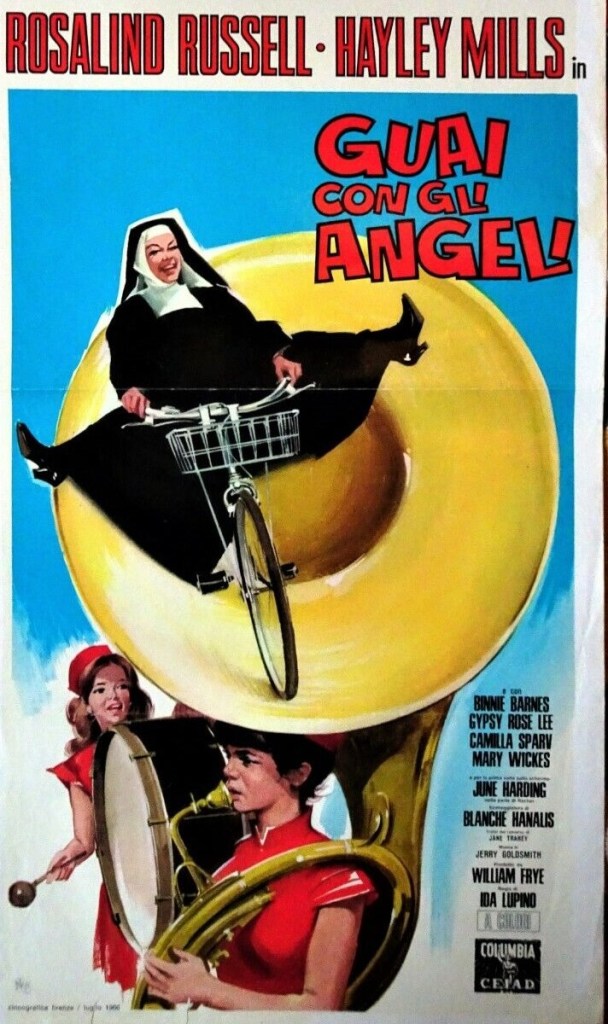
The Trouble with Angels (1966) ****

Shocking Fact No 1: director Ida Lupino was the only female director working in Hollywood at this time. And she hadn’t worked in features for over a decade. Her previous picture, The Bigamist (1953), was her fifth. And while she had continued to find work in television, the movie business shunned her. What was perhaps more shocking, as I pointed out in my book When Women Ruled Hollywood, was that in the period 1910-1919 more women worked as directors in Hollywood than at any time since and that it was a woman, Alice Guy, rather than Melies, who actually made the first narrative movie. Worst of all, despite being a major box office hit, this was Lupino’s last picture.

Shocking Fact No 2: this didn’t turn Hayley Mills into a major adult star. Oh yes, she made the transition – and how – in The Family Way later that year, a British romantic drama that saw her shed her clothes. Big hit in Britain, not so well-received in the USA. Her career then took an odd turn, into thrillers like Twisted Nerve (1968) and Endless Night (1972).

Not exactly demure. Marching band outfit takes the grey out of the convent uniform.

I say an odd turn because if there was any better demonstration that the actress had properly developed her comedy chops I’d yet to see it. Sure, Disney had used her in comedy, but that was mostly routine stuff. Here, she revealed an emotional maturity lacking in her previous work and, to some extent, in her future movies.

And, in part, because Lupino keeps her away from big dramatic moments, relying entirely on her facial expression to reveal character development. I am surprised that, at this point, with Doris Day’s box office allure dimming, that nobody saw Mills as her natural successor. She had the same puckish demeanor and she deftly handled comedy. Give her a few years and she would have been a natural for such polished items as Barefoot in the Park. You get the feeling there was more natural ability that was left untapped.

Anyway, on with the show.

This is just a delight. It shouldn’t work at all, certainly not for a modern audience accustomed to sharply-honed laugh lines. But it’s so cleverly constructed, in covering a three-year period, it could easily have been a string of loosely-connected episodes rather than a picture with an underlying narrative that mostly takes place beneath the surface.

Orphan Mary (Hayley Mills) has been dumped by rich playboy uncle (Kent George) in a  convent boarding school that looks more like a medieval fortress than anything else. She teams up with the equally unhappy Rachel (June Harding), whose parents are at least indulgent, and together they torment the life out of the nuns and other kids, pouring detergent into tea-pots, setting off fire alarms, charging their schoolmates for an illicit guided tour of the convent, developing their smoking habits, breaking everything in sight. One scheme goes so badly awry the nuns have to take shears to a face mask.

Throughout all of this, she comes up against a tough Mother Superior (Rosalind Russell) who comes across like Miss Jean Brodie, minus her dangerously progressive side, but ever ready with a quip, able to tackle any emergency, though Mary drives her to distraction. While set in her ways, the nun does sail close to the wind, kitting out the girls in red cheerleader outfits in order to give them an unfair advantage in a marching band competition.

Any other director would have made the marching band competition the climax of the movie. I was fully expecting it to take up the final third, as pupils with little musical ability work hard and discover they can improve enough to win the competition and in so doing find out some platitudes about themselves. Instead, every episode is kept short and sweet, often the pay-off delivered in unexpected manner, for example, that we discover the girls have won when Mother Superior takes the opportunity to gloat over her rival headmaster (Jim Hutton). Or a section where teenage girls sent to buy their first bra go wild trying on all sorts of outrageous outfits that in other hands could easily have been expanded is ended sharply by Mother Superior holding up the plainest item and ordering two dozen of them.

It fairly skates along. But every now and then it dramatically slows down. And for what? Pretty much nothing at all. Just Mother Superior taking a quiet moment to herself amid all the hurly burly of running a school and dealing with mischief. But gradually, in those quiet moments, she is joined, at a distance, by a staring Mary, wondering about the nun’s inner  calm.

Ida Lupino’s color palette is extraordinary. Sure, it’s nuns, so we can expect a lot of black and white. But Lupino avoids the temptation to compensate with huge swathes of color. Instead, for most of the film, the girls are decked out in grey. So when splashes of yellow or pink or red appear they are distinctive. Only as the girls grow older does more color emerge.

The wry Rosalind Russell (Gypsy, 1962) is on top form. Instead of attempting to dominate, she nips in and steals scenes with her dry delivery. She shifts from indominable to maternal and eventually engages the psychological attention of Mary in a superb scene about her own life.

In that sense Hayley Mills has her work cut out to hold her own against such an accomplished professional, which she achieves through her own delivery, but much more through facial expression. This was June Harding’s only movie. But look out for Camilla Sparv (Assignment K, 1968) in her movie debut and a cameo from Gypsy Rose Lee.   

Terrific direction for Ida Lupino – watch for example how the camera closes in on characters – from screenplay by Blanche Hanalis (Where Angels Go Trouble Follows! 1968) from the bestseller by Jane Trahey.

As old-fashioned as they come and a joy to watch.

Catch it on YouTube – the first link is rent or buy, the second one is free but punctuated by adverts.

https://www.youtube.com/watch?v=37FnvNp2EYc

The Heroes of Telemark (1965) ****

Stellar World War Two mission picture, replete with tension and thrilling ski chases, told with some style, and with a conscience, probing the issue of civilian collateral damage.  Sensibilities were not so inflamed at the time when the US, as demonstrated in Oppenheimer (2023), dropped the atomic bomb on Japan, causing the deaths of hundreds of thousands of non-military personnel. Here, at stake are the 6,000 townspeople who live around the plant housing the German experiments into heavy water, the alternative method for building an atom bomb.

When the safety of the entire world is in the balance, and death is doled out by remote bombers, thousands of feet up, with no close-up of the carnage, it appears far more acceptable than when you are planting a bomb on a ferry boat, knowing you are possibly consigning all the passengers to drowning.

That’s the climax of this well-plotted and well-constructed quite thrilling last picture from director Anthony Mann (The Fall of the Roman Empire, 1964) – he died during the making of A Dandy in Aspic (1967) so that cannot be fully ascribed to him and in any case this is a much better send-off.

Probably old-school British and Hollywood pictures were to blame for depicting scientists as stuffy individuals, allowing work to overrule romance. But as Oppenheimer demonstrated, that was not always the case and here we are introduced to top Norwegian egghead Rolf (Kirk Douglas) when he is stealing an illicit fumble with an employee in the darkroom.

The Germans are racking up production of heavy water, aiming to produce – drip by endless drip – 10,000lb of the stuff in double quick time. Norwegian saboteurs led by Knut (Richard Harris) hitch a ride by boat to Britain to inform the Allies of the danger. The obvious solution is to bomb the hell out of the factory, despite the impact on the civilian population.

But that fails. Plan B, dropping 50 highly-trained British commandos, into snow-covered Norway, comes a cropper when the plane crashes. A beautifully-filmed sequence, by the way, in extreme long shot, with one character at the front to provide perspective, a burst of flame at the far end of the white landscape.

So the saboteurs have to do it for themselves, the reluctant Rolf forced into action since he’s the only one, purportedly, who knows where to place the plastic explosive around the tanks holding the heavy water. The Norwegians shoot themselves in the foot by, in limiting the potential civilian casualties, only aiming to blow up the water tanks not the entire factory. Turns out the clever Germans have their own Plan B, other tanks already assembled which can be quickly fitted in the event of such sabotage.

Now with the plant more heavily guarded, access is impossible, and the only chance to stop the consignment of heavy water reaching Germany is to stop it getting there, by blowing up the train carrying the materiel as it crosses the fjord by ferry. Had this sabotage taken place in Germany, nobody would have given two hoots about the passengers, collateral damage be hanged. But this being Norwegians, Rolf feels duty bound to remain on board rather than escape, and formulate a plan to minimize the casualties.

I’m not sure how true that aspect is, it feels like something intended to present the main characters in a less ruthless light, although in reality the bombs were positioned and timed to help make survival easier.

Although told in semi-documentary style a la the same year’s Operation Crossbow, In Harm’s Way and Battle of the Bulge, with the aforementioned sensibilities to the fore, and the re-firing of romance between Rolf and divorced wife Anna (Ulla Jacobsen), the ruthless Nazi habit of executing hostages any time one of their soldiers is killed or even attacked, a traitor in the camp, open hostility between Rolf and Knut and stunning ski sequences that are the equal of anything in the James Bond canon, this is a riveting watch.

Must have been one of the cheapest music scores and screenplays on record given how often the director dispensed with both dialog and music during the lengthy sabotage scenes. When dialog was permitted, it was often sharp or humorous.

There was no stiffer upper lip in Hollywood than that of Kirk Douglas (The Brotherhood, 1968) though his hard-nosed demeanor is alleviated by romance and his efforts to minimise civilian casualties. Richard Harris (This Sporting Life, 1963) always seemed ready to explode. Ulla Jacobsen (Zulu, 1964) and Michael Redgrave (Assignment K, 1964) bring some class to the supporting roles.

Tremendous piece of direction by Anthony Mann, as adept at the action and building tension as handling the personality clashes between the principals and the intimacy of romance. Ivan Moffat (Tender Is the Night, 1962) and Ben Barzman (The Blue Max, 1966) wrote the screenplay based on a memoir by Knut Haueklid and the novel But for These Men by John Drummond.

A fitting last hurrah for Anthony Mann.

https://amzn.to/3Rz0azh

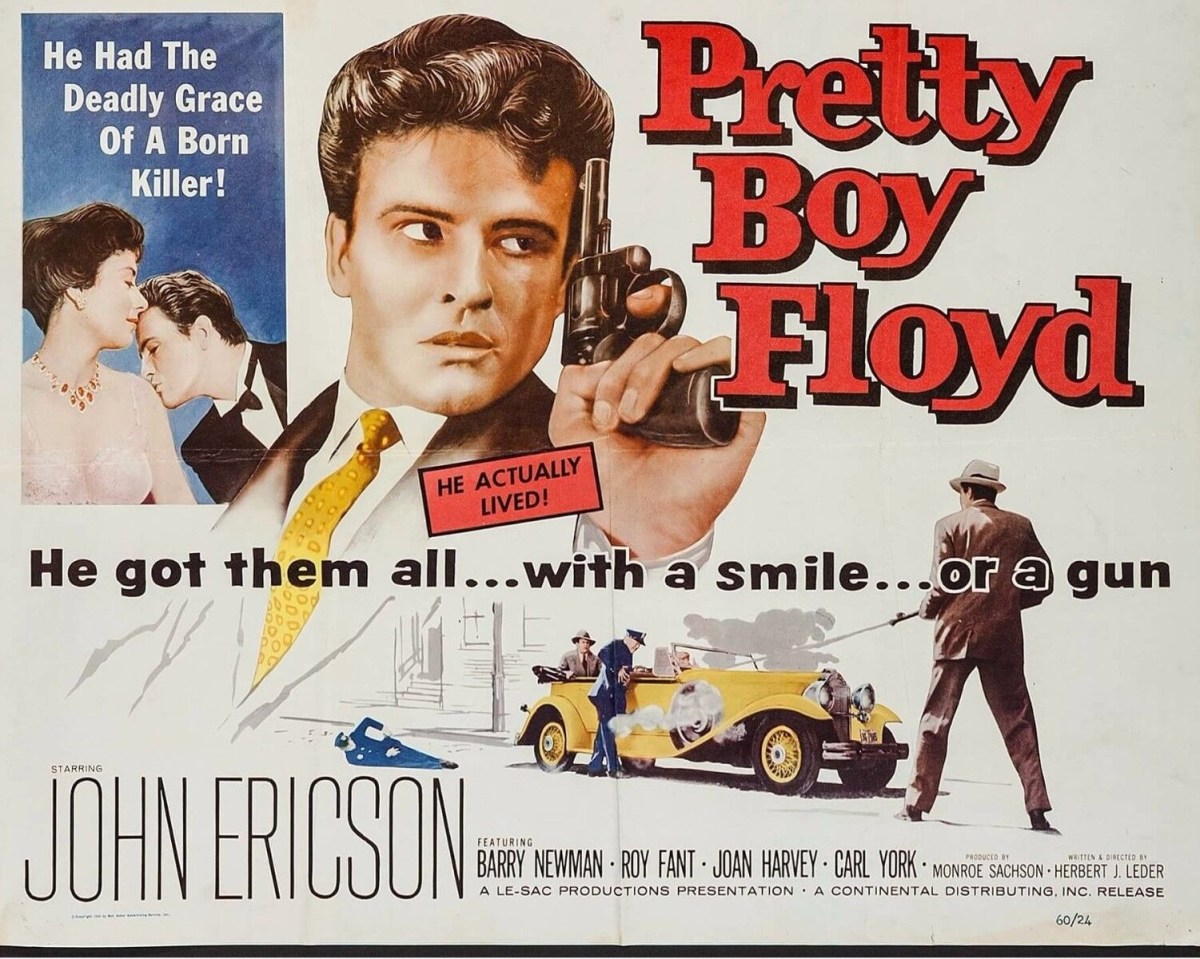
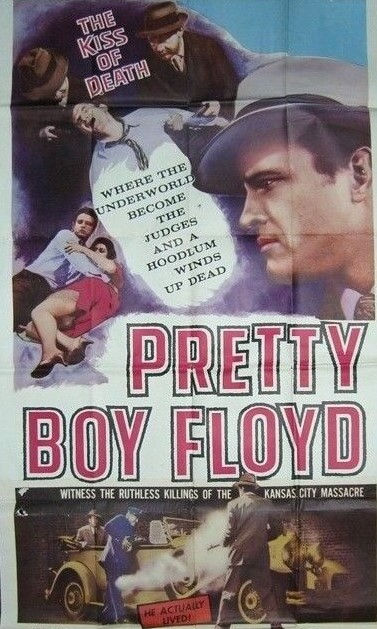
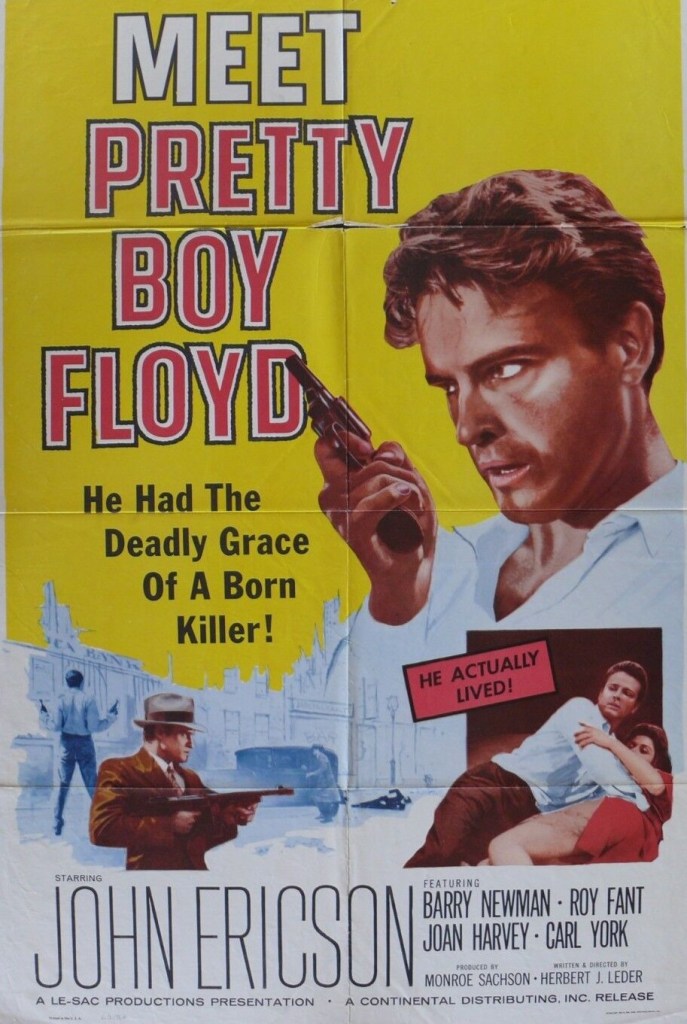
Pretty Boy Floyd (1960) ***

The makers of Oppenheimer (2023) and Napoleon (2023) cast light on the major problem of a biopic – what to leave out. Here, no such problem was actually countenanced. Hell, they just threw everything in – some job given the lean running time. That does mean, however, some mighty info dumps, as we are filled in on the gangster’s past and present. Not much of his life goes unturned.

There was a spate of gangster pictures around the turn of the decade. The success of Machine Gun Kelly (1958) starring Charles Bronson, The Bonnie Parker Story (1958) and Al Capone (1959) spurred a hot lead deluge the following year including Murder Inc (Lepke), Ma Barker’s Killer Brood, Pay or Die, The Rise and Fall of Legs Diamond and Pretty Boy Floyd. In 1961 came Mad Dog Coll, Portrait of a Mobster (Dutch Schulz) and King of the Roaring 20s (Arnold Rothstein).

But if you thought this would lead to a noir revival, think again. Nobody would give finesse the time of day. Not with so many facts to pack in. And to explain – love of power and ambition the only psychological insight available – why of all the millions of Americans brought to their knees by the Great Depression Floyd was one of the few who turned to violent crime. His own saving grace – if it can be called that, given the length of the murder sheet – is his Robin Hood-ism, he gives way a lot of his stolen loot

We pick up Pretty Boy Floyd (John Ericson) towards the end of his short-lived boxing career – by which time he’s already been sent away for five years by Sheriff Blackie (Jason Evers), annoyed the gangster had taken up with his sister. Floyd now beats up the husband of his lover, works on the oil rigs but loses his job for concealing his criminal record. Returning to Oklahoma, he discovers his father has just been shot by a character called Grindon, who got away with the crime.

He tries to go straight but is turned down for a loan by the bank. He locates Grindon and ices him. Partnering with hood Shorty Walters (Peter Falk), he enters the bank-robbing business, but Shorty’s loud mouth gets them caught. On the way to prison, they escape and rob the bank that refused him a loan.

He heads for Kansas City because until the FBI came along you could commit a crime in one state and vanish over the border to another knowing you were out of the original jurisdiction and couldn’t be tracked down. He finds another married woman, Lil Courtney (Joan Harvey), to romance, but the husband wants to turn him in for the reward, by now substantial. Returning to Oklahoma and teaming up with the vulnerable childhood pal Curly (Carl York), he gets into his stride, robbing a bank every two weeks.

You get the picture. This is biopic at full throttle. Every “I” is dotted and every “t” is crossed and still we don’t get any real idea what made him tick beyond he was as mad as hell and wasn’t going to take it anymore. I could have got all of this from a book.

The one ace fact I learned was where the term “kiss of death” comes from. Apparently, if you committed a crime against the mob – such as killing someone you were paid to rescue – you were put on trial before three Mob guys. The verdict had to be unanimous and was decided thus: a gun was passed between the three men, if each of them picked up the pistol and kissed it you were a dead duck.

The problem with all the gangster pictures is they all end the same way. Nobody is long for this world and nobody can evade justice.

This is straightforward stuff, shot on a tiny budget, and except for the info dumps and pausing here and there for a spot of philosophy/psychology or sympathy, tears along at a fair old pace. That’s very much on the plus side. On the minus side is the lack of depth and you would have to say lack of acting.

It’s not much of a stretch for John Ericson (The Money Jungle, 1967) to look mean, but he’s closer to James Dean than Charles Bronson. Peter Falk (Machine Gun McCain, 1969) is generally perceived as the standout but my money is on Barry Newman (Vanishing Point, 1970) as Floyd’s trainer and later criminal partner. Shame Joan Harvey (Hand of Night, 1962) only made three pictures, as she excels in a small part.  

The whizz-bang approach from writer-director Herbert J. Leder (It!, 1967) ensures that, like Napoleon, you need Google open to check out the flood of names racing towards you. You might be baffled and confused, but never bored.

Worth it for the “kiss of death.”

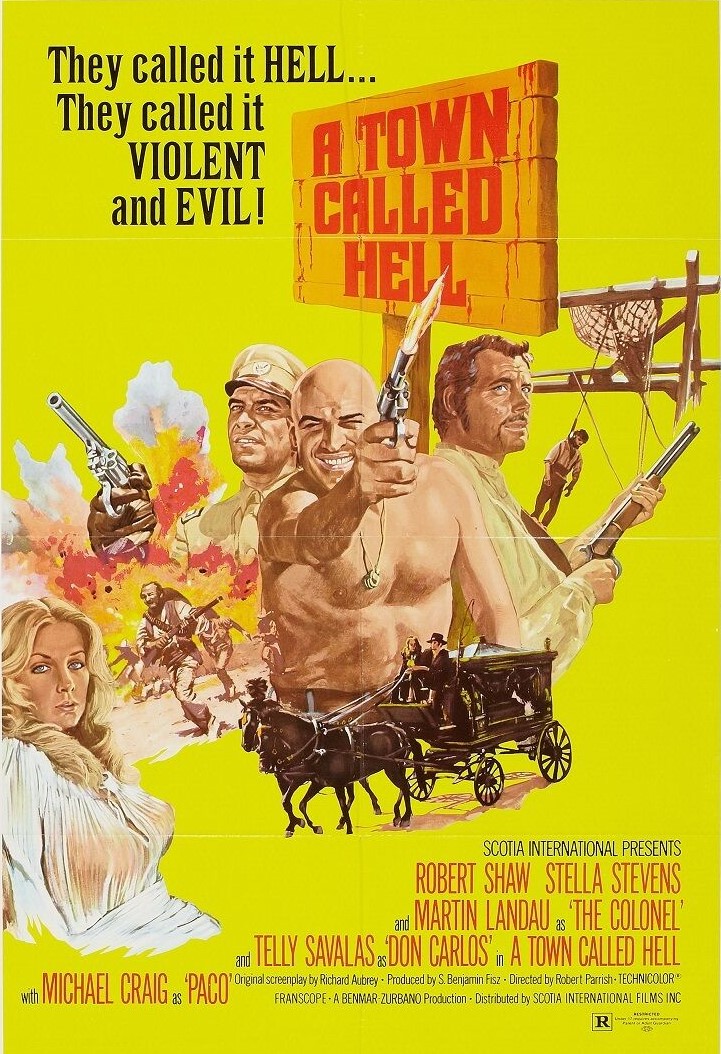
A Town Called Hell / A Town Called Bastard (1970) ***

You think you’re in for something quite stylish when widow Alvira (Stell Stevens) rides into town asleep in a coffin in a hearse. Or when she turns up in a dream as an avenging angel. Or when a rebel, entrusted with funds to buy guns, squanders the cash on women and booze. Or when a Mexican general is so disgusted by informer Paco (Michael Craig) that he refuses to face him. But these are about the only highlights in a bloody, sadistic confusing affair.

And diversity rules. Not only do we have a deaf mute going by the apocalyptic name of The Spectre (Dudley Sutton), there’s also an unnamed blind man (Fernando Rey) who comes in handy because he can recognise people by fingering the contours of their faces.

We begin straightforwardly enough with the massacre in a church of the well-to-do by Mexican rebels led by two unnamed characters (Robert Shaw and Martin Landau). Turns out that’s only the prologue and we cut to a decade later to a town ruled by sadistic sun worshipper Don Carlos (Telly Savalas) who has a tendency to string people up at the drop of a hat. Keeping a low profile is another unnamed character known only as the Priest (Robert Shaw) who may always have been a cleric or who has turned to God after being involved in the massacre. Even so, religion doesn’t prevent him having a mistress.

Alvira is offering a $20,000 reward for the killers of her husband, Montes, a victim of the earlier massacre. To get the money, Don Carlos employs the typical wheeze of framing a couple of villagers, husband and wife, hanging them before their tongues run so loose they can confess it wasn’t them. In a bid to save his own skin, the husband blames his wife.

Don Carlos’s luck turns bad when his sidekick La Bomba (Al Lettieri) decides it might be fun to take over, beginning by shooting off his boss’s fingers before hanging him in the sun. But just when you might think you are getting the hang of what’s going on, the unnamed Colonel (Martin Landau) appears. He’s also looking for information, but not inclined to pay for it. He’s hunting for a rebel leader with, wait for it, an actual name, though this still sounds like a pseudonym, Aguila (Eagle, get it?). For no reason whatsoever, it takes the priest a little while to work out this is his former comrade from the church massacre.

The Yanks were the ones who changed the title from the above. Interesting double bill, though, with Alain Delon as “Le Samourai.” Stella Stevens looks far more provocative
on the poster than she does in the film.

It doesn’t take long for the Colonel to get a grip on the hanging malarkey and with as much relish as Don Carlos, determining to continue hanging the townspeople until they tell him where Aguila is. The two narratives don’t quite mesh, but then what do you expect, this is high on atmosphere, sweating bodies, raw emotions, blazing sun. The Colonel, equally obviously, has given up on being a rebel, presumably because as a government official, he can officially murder people any time he likes without having to round up a gang of rebels to do so.

Every now and then the movie dips into flashback or Paco appears to confuse matters further.

There’s an odd sensibility at work. Maybe this is intended to be one of those down’n’dirty westerns trying to show us how mean the actual West really was (although given it’s set in Mexico, we only need to go as far back as The Wild Bunch, in 1969, to get that point). It doesn’t fit so easily into the spaghetti western canon, either, despite the uniform malevolence.

The oblique tone reminds you more of something that could have been put together by Luis Bunuel, but that would be ranking it far higher than it deserves.

The cast are the biggest plus points, though you might be asking whether Robert Shaw (Battle of the Bulge, 1965) and Stella Stevens (The Mad Room, 1969) were sold a different film entirely. Stevens doesn’t have much to do, except look beautiful and soulful. But Shaw is about the only leading man you’ll come across who so puts his heart into a part that he doesn’t mind being seen actually drooling at the prospect of massacre. In fairness, Telly Savalas (The Assassination Bureau, 1969) and Martin Landau (Nevada Smith, 1966), while not exactly dripping spit, drool in different ways.

There’s enough brooding going on stylistically that you are almost willing it to turn into something not just better but more definable. Alas, no such luck.

Robert Parrish (In the French Style, 1963) does his best with a screenplay  by Robert Aubrey (The One-Eyed Soldiers, 1967) and Benjamin Fisz, in his only writing gig, he was better known as a producer. My guess is they were more script doctors than anything else, the original damage having been done by the uncredited Philip Yordan (Battle of the Bulge).

Could a been something.

https://amzn.to/46Jpk2D

Discover WordPress

A daily selection of the best content published on WordPress, collected for you by humans who love to read.

The Atavist Magazine

by Brian Hannan

WordPress.com News

The latest news on WordPress.com and the WordPress community.