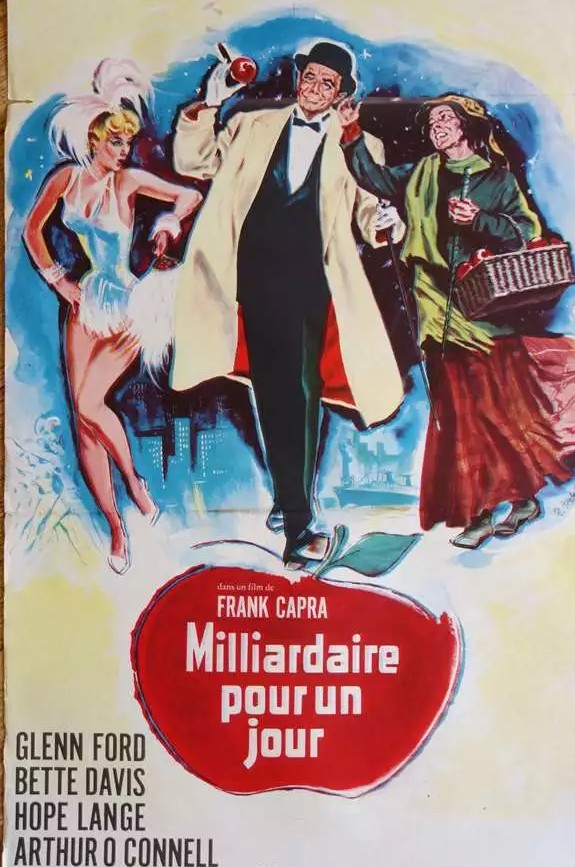
A Pocketful of Miracles (1961) ***

Frank Capra was yesterday’s man – one movie in a decade – and 15 years away from the consolation of knowing that his flop It’s A Wonderful Life (1948) was on its way to becoming, arguably, along with The Wizard of Oz (1939), America’s most beloved picture thanks to annual Xmas showings on television and subsequently in the cinema.

There’s nothing new here, either, it’s a remake of his Lady for a Day (1933) and it’s more of a fable lacking punch than some of his more famous pictures. And the main interest for contemporary audiences may well be that it marks the debut of Ann-Margret (The Swinger, 1966) who gets to sing but not shake her booty in trademark fashion. And it takes forever to wind up to a pitch. We’ve got to wade through three subplots before it gets going.

First of all Prohibition gangster Dave (Glenn Ford) meets up with the daughter Queenie (Hope Lang) of a deceased club owner who’s in hock for $20,000. Dave is much taken by the earnest Queen’s determination to repay the debt at the rate of five bucks a week. For no reason at all except narrative necessity, she’s turned into a nightclub singing sensation.

When Prohibition ends, big-time Chicago gangster Steve Darcey (Sheldon Leonard) plans to muscle in on the New York rackets and it takes all Dave’s suave bluster to keep him, temporarily, at bay. The end of Prohibition comes as a relief to Queenie and with the nightclub shut down she agrees to marry Dave with the proviso that he give up the gangster life and retire to her home town in Maryland and they become an ordinary couple.

Very much on the fringes of this is Apple Annie (Bette Davis), a street panhandler who sells “lucky” apples, one her most satisfied customers being Dave. When her illegitimate daughter Louise (Ann-Margret) returns from Spain to New York with rich beau Carlos (Peter Mann) in tow, Annie’s in a pickle, because she’s been keeping up the pretence of being a wealthy woman.
Queenie insists they help Annie to maintain her charade and Dave goes along with the idea because he’s worried his luck will run out. So Annie is turned into a sophisticate, manners polished, furnished with a luxurious apartment, including a butler, and fake husband Henry (Thomas Mitchell).

None of the stars seem to know how to handle the material, and for most of the time they act as if in a pastiche, like they were throwing winks to the audience. Glenn Ford (Fate Is the Hunter, 1964), generally adept at comedy, plays this all wrong. He wanted the part so badly he helped finance the picture. Bette Davis (Whatever Happened to Baby Jane, 1962) overacts, as does Peter Falk (Murder Inc, 1961), though the Academy didn’t think so and threw him a second Oscar nomination. Hope Lang and Ann-Margret, playing it straight, get it right, though the latter, vivacious personality to the fore, wins that battle by more than a nose. Might well have worked if original choice Frank Sinatra hadn’t ankled the project.

Hal Kanter and Harry Tugend wrote the remake, based on a Damon Runyon story. It was always a tricky business to capture the stylistic essence of Runyon, Guys and Dolls (1955) the most effective transition, Lady for a Day better than this and Little Miss Marker filmed three times.

Once the Bette Davis pretence enters the equation, the tale takes on some narrative drive and the quintessential Capra shines through. But it’s too little too late.

Not the swansong Capra anticipated, but he only has himself to blame.
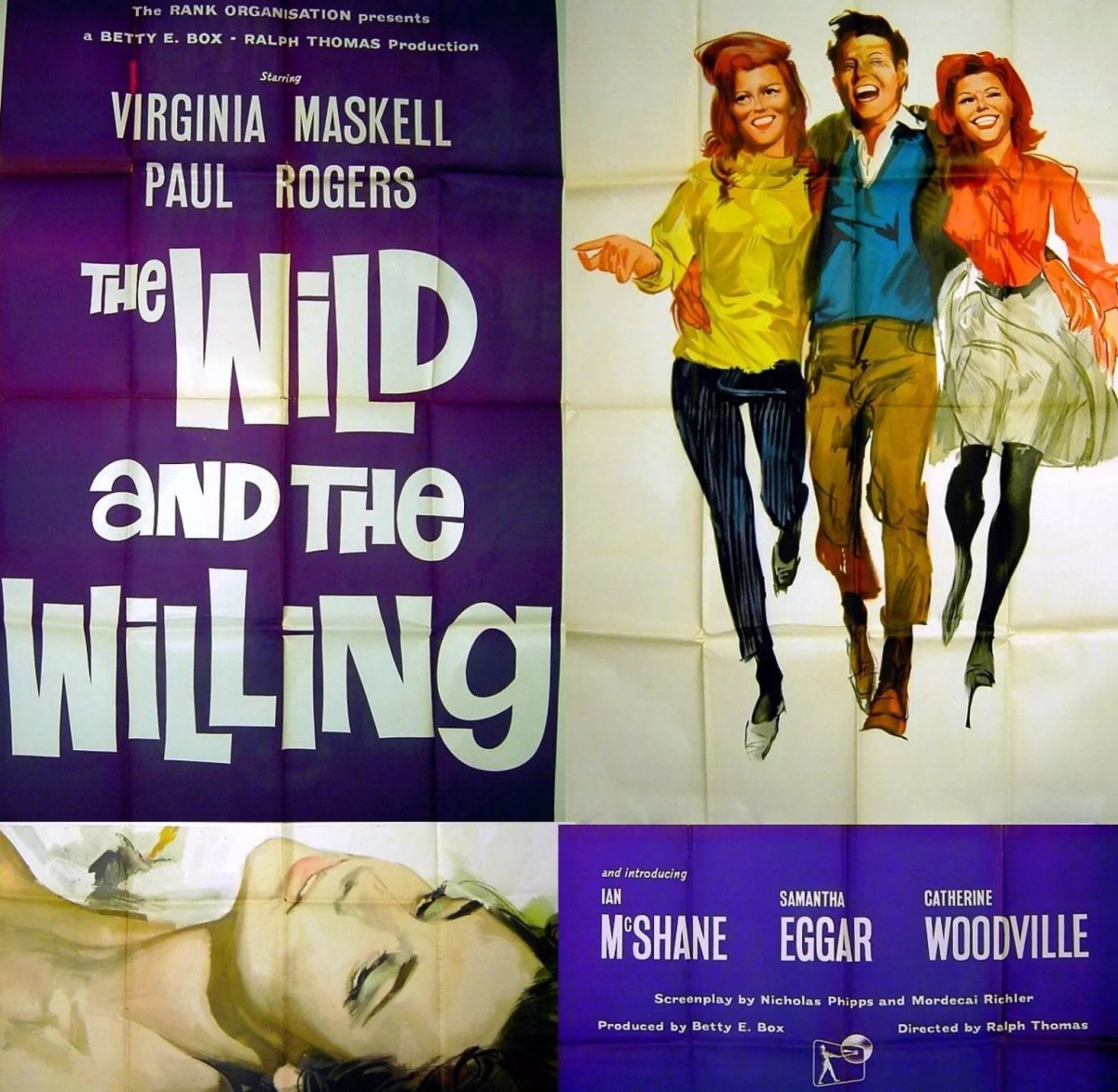
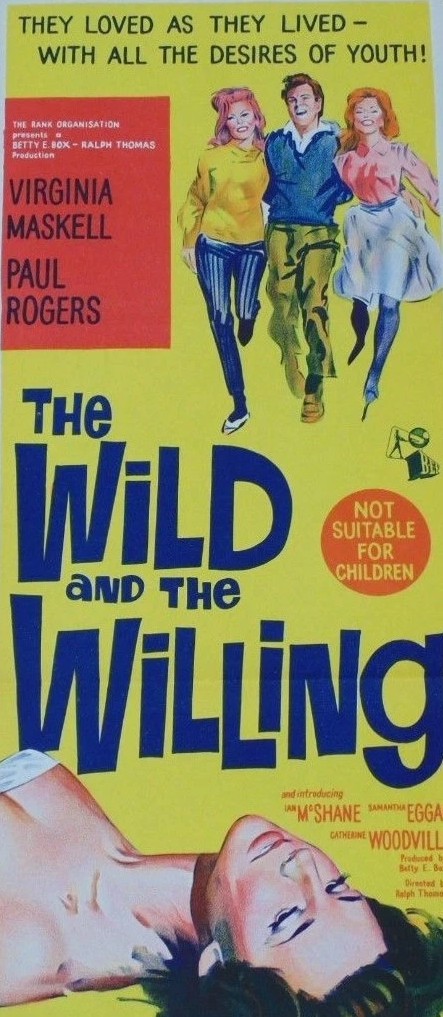
The Wild and the Willing (1962) ***

The problem with showcasing new talent is that it’s a pretty difficult sell given that all audiences have to go on is a studio’s faith in these newcomers. You can’t actually justify which of these will succeed until long after their initial forays.

In fact, this was a pretty good indicator one way or another of the talent the Brits had at their disposal, although some only became major players via television and others like Ian McShane, making his debut, as durable as he was as occasional leading and staunch support and television work (Lovejoy, 1986-1994), really only achieved substantial fame around four decades later via Deadwood (2004-2006) and the John Wick series.

For others, this proved an ideal calling card, Samantha Eggar, another debutante, was the biggest immediate beneficiary, female lead in big-budgeters The Collector (1965) and Walk, Don’t Run (1966). But virtually everyone in the cast had a whiff of stardom at one time or another. John Hurt’s stint as Sinful Davey (1969) didn’t do him much good but his career revived through the likes of television movie The Naked Civil Servant (1975), Midnight Express (1978) and Alien (1979).

This is stuffed with names you might remember one way or another. Jeremy Brett became a television Sherlock Holmes, Johnny Briggs enjoyed one of the longest-running roles in British soap Coronation St. Paul Rogers made headway in Stolen Hours (1963) and was a solid supporting actor. Johnny Sekka made a splash in Woman of Straw (1964) and The Southern Star (1969). Some careers were short-lived, the slightly more established Virginia Maskell’s last picture was Interlude (1968).

The story itself – I’m sure you couldn’t wait till I come to that – is slight, but with sufficient complication for a narrative to flourish. Activity takes place on a university campus. Harry (Ian McShane) and Josie (Samantha Eggar) are an item, at least until his eye wanders to Virginia (Virginia Maskell), the unhappy wife of Professor Chown (Paul Rogers).

Harry’s nerdy pal Phil (John Hurt) has been knocked back by Virginia’s classy pal Sarah (Katherine Woodville) and in trying to become as popular as Harry embarks in a daft adventure that ends in disaster.

As far removed from the kitchen sink drama popular at the time, this is a well-observed piece about the young and ambitious without ever descending into the intensity that other pictures wallowed in. You can forget about the suggestiveness of the title, by today’s standards this is very tame and skirts issues of sexuality that were becoming more predominant.

Ralph Thomas (Deadlier than the Male, 1967) directs from a script by Mordecai Richler and Nicholas Phipps adapting a play The Tinker by Laurence Doble and Robert Sloman, effortlessly seguing away from the stage origins and deftly putting every aspect of the narrative jigsaw in its place.

So, part of the fun here is seeing how well actors established a screen persona, or how they moved on. Ian McShane certainly had the cocky walk, but was still too much of the ingénue, even while playing a bad boy. Samantha Eggar was more instantly recognizable for the charisma she threw off. You would see John Hurt’s nerd again and again.

Interesting for more than archival purposes.

Tamahine (1963) ****

Columbia sold this as if Nancy Kwan was a Bond girl with massive images of the star in a bikini (see above) – the advert in the trade magazine comprised a drop-down A2 pull-out i.e. three times the size of a normal page. But anyone expecting a salacious time would have been in for surprise. For although Kwan swam underwater during the credits (not Helen Mirren style as in The Age of Consent, 1969) and did reveal a naked posterior, you could not have imagined a more innocent, joyous, movie.

Tahitian teenager Tamahine (Nancy Kwan) wreaks havoc on the British stiff upper lip when after the death of her father she is sent to the all-male English public school run by his cousin Poole (Dennis Price), a widower. But it’s not a sex comedy with all the misunderstandings and double entendres that genre normally entails. Instead, it’s a clash of cultures, free love and expression versus prudery and repression. Poole has trouble enough on the female front, his daughter Diana (Justine Lord) inclined to enjoy a gin-soaked afternoon and in the middle of an affair with art master Clove (Derek Nimmo).

The advertising department, however, could not resist the temptation
to stick a double entendre in the poster.

Without mischievous intent, Tamahine causes chaos, assuming an artist’s model would be naked she scandalizes the petrified Clove and egged on by a gaggle of schoolboys whose hormones are off the scale she jams a chamber pot on the school weather vane. The plot, if there is one, is mostly Tamahine fending off suitors, Clove and Poole’s son Richard (John Fraser), and attempting to persuade Poole to take a paternal interest in her well-being.

But mostly it’s about how a sweet-hearted woman struggles to survive in a world where attitudes to sex remain Victorian and in which the avowed aim of education is to build character through manly pursuits such as beating the living daylights out of each other rather than teaching them to express emotion. And certainly the movie takes a more benevolent view of public schools than the later, brutal, If…(1968).

While endorsing free love, Tamahine draws the line at crossing the line in the matter of Richard, whom she deems a relation, no matter how distant. Challenging all conventions, she takes part in sports day.

But the comedy is so gentle and Tamahine so charming that this is best described as a delight. I found myself chuckling throughout and I felt I had just watched a genuine feel-good movie. On paper it certainly doesn’t sound so potentially good, especially when you consider the clichéd portrayals you might expect from the supporting cast, but in reality it exerts an extraordinary appeal.

Hardly off-screen, Kwan (The World of Suzie Wong, 1960), in only her fourth film, easily carries the movie as if she scarcely felt the weight of stardom on her shoulders and is a revelation as the imparter of tender wisdom. What aids the film enormously is that Dennis Price and Derek Nimmo play more interesting parts than their movie personas suggest. Price (Tunes of Glory, 1960), in a far cry from his Ealing comedy heyday, dispenses with his wry delivery and cynical demeanor. Unusual for a character actor, his character actually has a story arc and turns what could have been a stereotypical role into a moving performance. Before his strangulated vowels got the better off him, Derek Nimmo (The Liquidator, 1965), too, delivers probably his best performance.

Justine Lord (Night after Night after Night, 1969) is good as the rebellious daughter but James Fox offers none of the intensity he brought to the screen a year later in The Servant (1964) and neither does John Fraser (El Cid, 1961) light up the screen. In small parts you can spot Michael Gough (Batman, 1985) and Coral Browne (The Killing of Sister George, 1968).

Full marks to director Philip Leacock (The War Lover, 1962), himself a former public school boy, for not taking the easy way out with loutish comedy but instead crafting a film full of sensitivity and sensibility. Denis Cannan (Why Bother to Knock, 1961) based his screenplay on the Thelma Nicklaus novel.

You might be surprised at the four-star rating and I do confess it is a shade optimistic but it is worth more than three stars. It’s worth taking a moment to examine the whole issue of ratings. You might be asking how can Tamahine be given four stars, the same as The Battle of the Villa Florita and a tad below the very few I deem five-star pictures. The answer is I compare like with like. If the best films in your opinion must concern social comment or excel technically, then there will be little place in your world for a sheer confection like Tamahine. But if you watch a wide variety of films and recognize those that contain a high enjoyment factor then you will want to draw attention to such. Hence, the rating.

It’s true that sometimes we do want movies to tackle difficult issues or take us into other worlds, but other times there is nothing to beat an old-fashioned good-hearted picture like this.

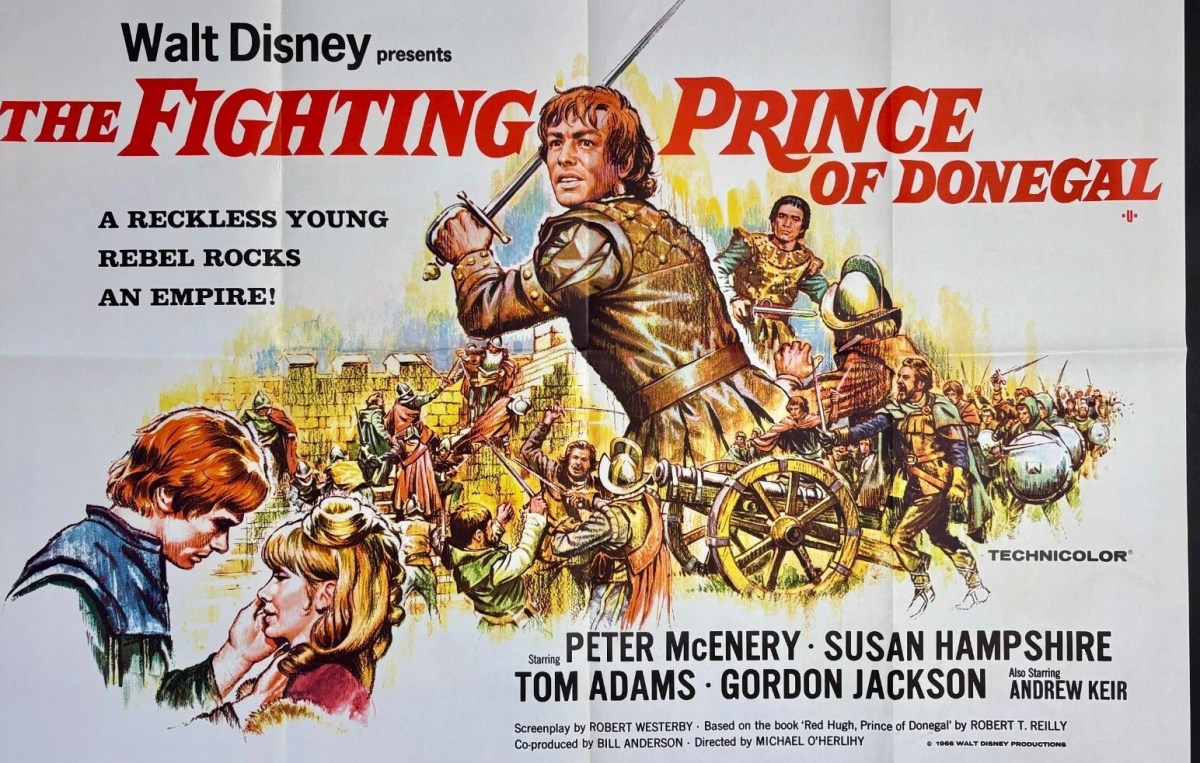
The Fighting Prince of Donegal (1966) ***

I’m amazed I sat through this without complaint as a kid. This was a rare outing for me, given I grew up in a town without a cinema and the only time I went was for a roadshow musical at Xmas or if we were away on holiday for the summer in towns that were bursting with picture houses. No doubt my parents, of Irish descent, were seduced by the last word of the title while assuming that the second word would be enough to keep us kids happy.

Unfortunately, the title is something of a misnomer. The titular character Hugh O’Donnell (Peter McEnery) spends more time sitting on his backside in a prison than he does engaging in any form of fighting. And in another annoying dupe, swords are scarcely in evidence, the weapon of choice being a wooden club of sorts, so it hardly qualifies as the swashbuckler the poster suggests.

Where Walt Disney was happy to play fast and loose with other aspects of history in other movies, here he cleaves close to the truth – though Hugh didn’t marry a McSweeney and his father didn’t die – so what we get is some kind of rebellion story, as the Irish attempt to rise up against the occupying English in the 1580s. If you are aware of your history, you will know that Oliver Cromwell is to blame for the English re-conquest of Ireland. Various rebellions followed, of which this is one.

It starts off promisingly enough with a nice bit of myth, that when Hugh becomes chief of the Clan O’Donnell he triggers a prophecy that insists the Irish will become free. That’s easier said than done due to the lack of a cohesive rebellion force thanks to infighting and historical distrust between the clans. And when Hugh does attempt to stand up against the British he’s promptly imprisoned – again and again.

A better title would be The Escapologist of Donegal because that’s mostly, except for the beginning and final sections, what this is about. He escapes, is betrayed and recaptured, or escapes, racing through the streets of Dublin, and remains free and then manages to gather the clans under his banner and take on the English.

And, actually, Hugh is not that keen on the use of force to win freedom. He prefers negotiation. So you can imagine how exciting that is for the kids in the audience. He wants to unite all the clans and hope the English will see sense. Luckily, for the frustrated kids in the audience, the English are not inclined to sit around a negotiating table. So, at last, we get a battle.

To save it from just being a history lesson, a romance is sneaked in between Hugh and Kathleen McSweeney (Susan Hampshire), daughter of another clan chief, and who already has an ardent admirer. A wedding is the easiest way to create unity between clans, but, luckily, this isn’t just the political matchmaking that occurred in England and Europe.

But that nascent romance is put on the back burner for most of the picture while Hugh sits in jail or runs around the country in escape mode.

So, a few fights with cudgels and fisticuffs, some bonding with other prisoners, some wooing of the clans until at last at last there is the semblance of a battle.

Nearly 60 years on from first viewing I am not won over. The politics and maneuvering is certainly more interesting to an adult, but I am still miffed at the absence of much actual swordplay – and you know how fond I am of a swashbuckler. It’s just too earnest in setting up a rebellion tale and the escapes have none of the ingenuity we have come to expect from such.

Peter McEnery (The Moon-Spinners, 1964) looks distinctly uncomfortable as a matinee idol of the kind groomed by Disney, especially when you see what he was capable of a few years later in the more scandalous Negatives (1968). Susan Hampshire (The Trygon Factor, 1966) only tops and tails the picture and her entire Disney experience was clearly so miserable she excised it from her biography.

Directed by Michael O’Herlihy (Smith!, 1969) from a screenplay by debutant Robert T. Reilley based on the Robert Westerby novel.

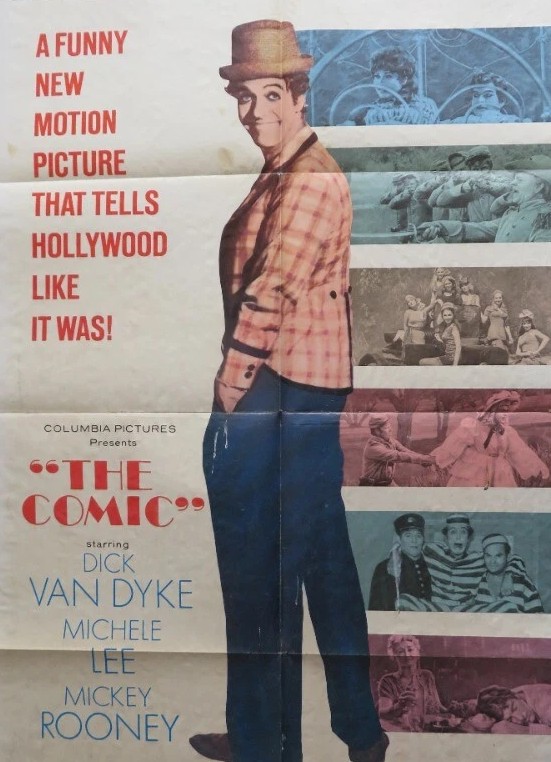
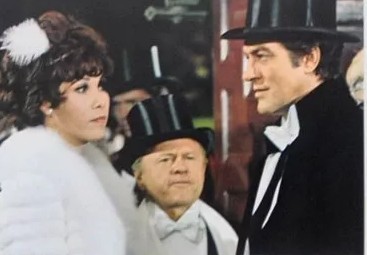
The Comic (1969) ***

It’s a Hollywood trope that successful screen comedians invariably want to test their mettle in more dramatic circumstances. Studios tend to cave in to such self-indulgence, usually with the proviso that the star makes another couple of laff fests with them, but audiences tend to give such enterprises the thumbs down. Dick Van Dyke (Divorce American Style, 1967), on a commercial roll for most of the decade, took the, theoretically at least, easier option of limiting the drama on this one.

Silent films were also on a commercial roll, the oldies having made a comeback via compilation reissues and through slapstick homages such as It’s A Mad, Mad, Mad, Mad World (1963) and The Great Race (1965) so setting the picture in that era in Hollywood’s history seemed a sure thing.

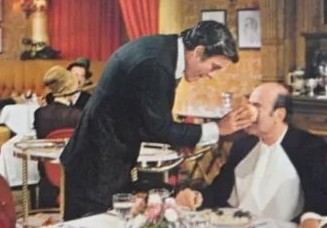
And it starts off bang on the money. A eulogy delivered at a funeral is interrupted by a pie in the face and (as seen above) that device can be utilized at any point.

I’d be telling you to give this complete misfire a miss if it wasn’t for an exceptional final third. The first two-thirds is made up of far too many silent film sequences starring Billy Bright (Dick Van Bright) who goes from vaudeville clown to major star complete with, at the height of his fame, being accorded the honor of a having a clockwork toy made of him.

When it’s not diverted into yet another silent movie sequence, which only serves to show that a modern comedian lacks whatever smarts the silent movie comedians had, the drama takes roughly the same approach, with scenes that could have come from a silent movie if not quite to the utmost.

Thanks to a multitude of affairs Billy burns his way through marriage to Mary (Michele Lee) and thanks to an overfondness for the bottle nearly kills off his career before the arrival of the talkies does that for him.

Eventually, and suddenly, we switch to an entirely different picture, a proper drama, very bold indeed for the time for its portrayal of old age and loneliness – a representation that would chime very much with today’s audiences. You don’t quite warm to this old fella because he wasn’t particularly sympathetic to begin with, but still, in its rawness, this section exerts a very emotional pull.

And, indeed, for Dick Van Dyke it was an incredible piece of acting. He morphs from young, tall, and fit with a head full of hair to an old bloke, bent over, shuffling and with the kind of  comb-over that would put Bobby Charlton to shame. He’s been abandoned by everyone except sidekick Martin (Mickey Rooney) whose career has also gone south. They tell lies to each other to keep up their spirits.

The highlight of Billy’s life is getting a set of false teeth and setting the alarm for 4.30am so he can get up and watch reruns of his old movies on television. He lives on boiled eggs and milk.

And he’s still dumb enough to be rooked by a gold-digger. He’s placed an ad in Variety, drawing attention to the fact that he’s still alive, which wins him a spot on a TV chat show which turns into a gig for a commercial which leads a much younger woman to think he must be loaded. He ends up marrying her while in an oxygen tent, but she vanishes when she discovers his newfound fame has led to nothing.

In theory, this is about the side effects of fame, the temptations which few can avoid, and the sudden collapse in income and public awareness when the well runs dry. But, in reality, setting aside the Hollywood overtones, the last third could have been about any lonely old man.  

A film of three thirds for the star, in the first two there’s nothing much to hold onto, in the last one he excels. Nobody else has much to do. Directed by Carl Reiner (The Jerk, 1979) and written by him and Aaron Ruben. Reiner had been the writer of The Dick Van Dyke Show so presumably that played a part in him getting the gig.

Died an absolute death at the box office. Not released outside America for decades and then only on DVD.

If it hadn’t been for the final third this would have been rated a one-star effort, it’s such an ill-conceived concept, and disastrous in its execution, but that final third makes it very worthwhile indeed if you can stick with it.

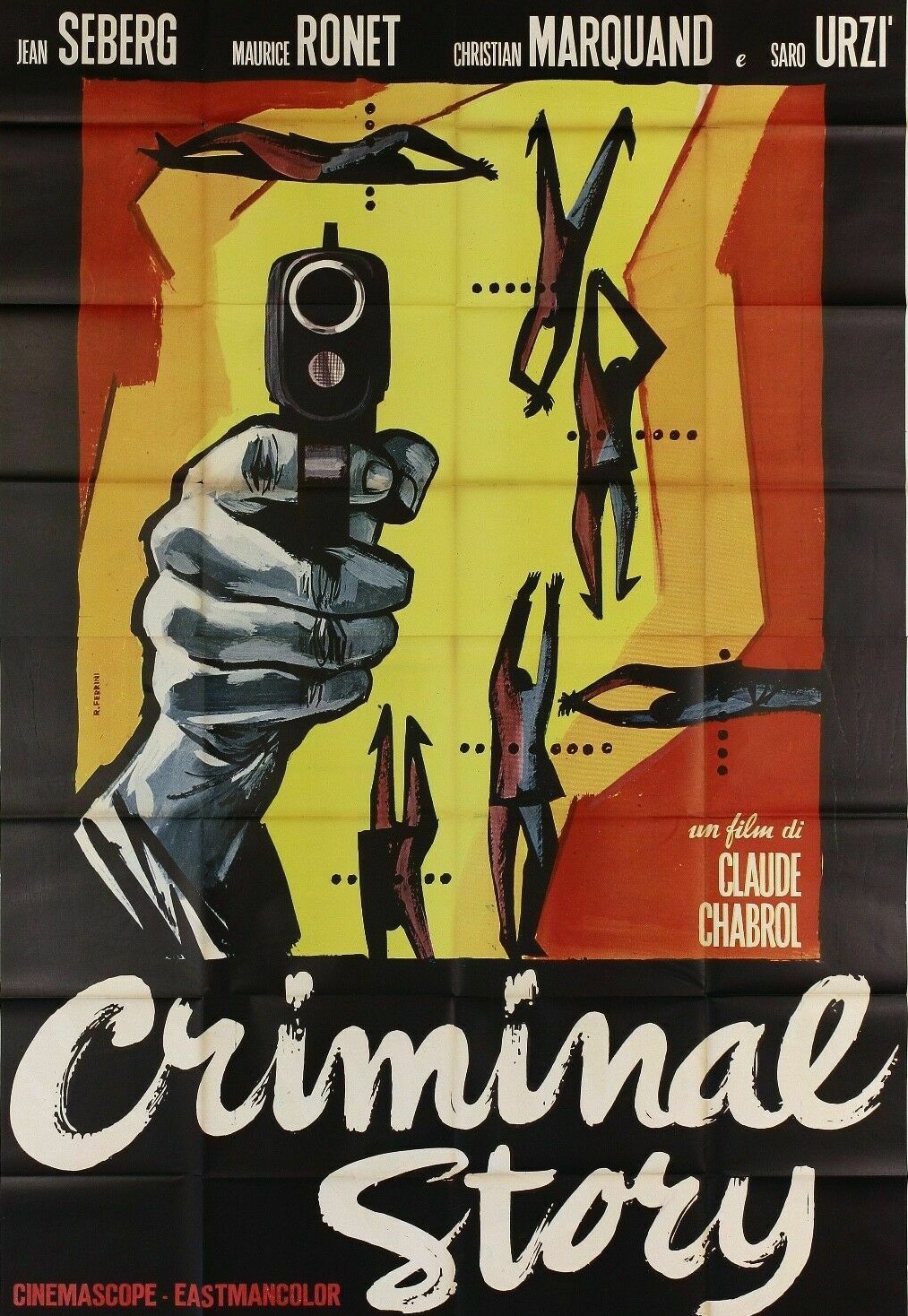
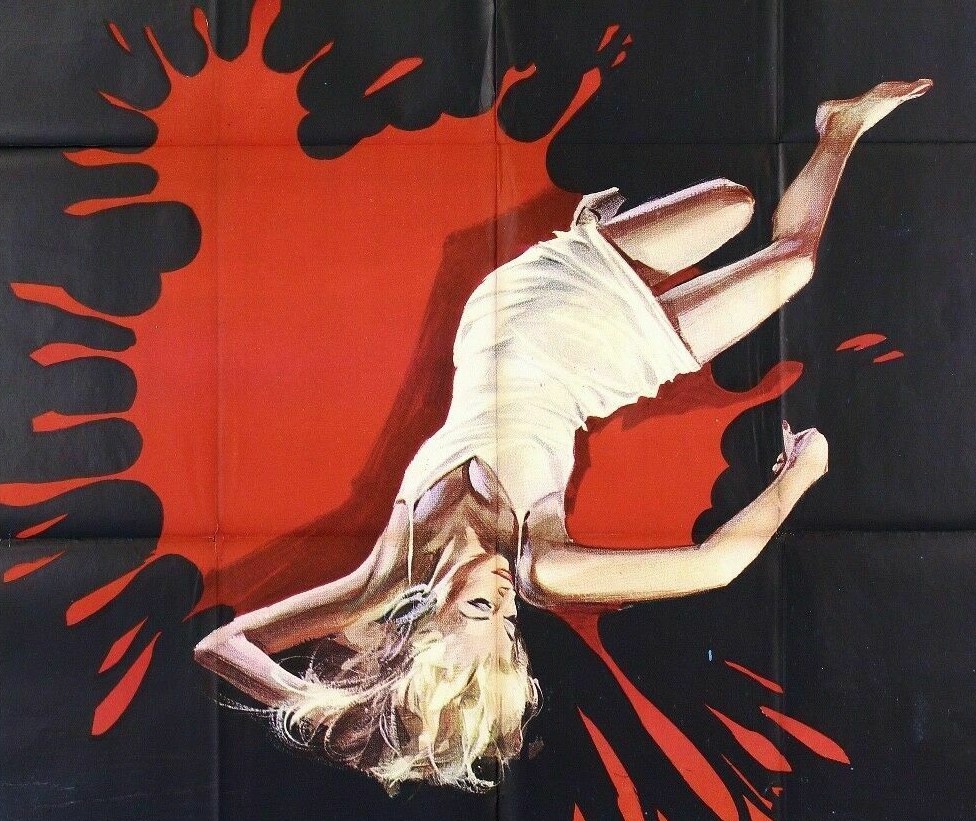
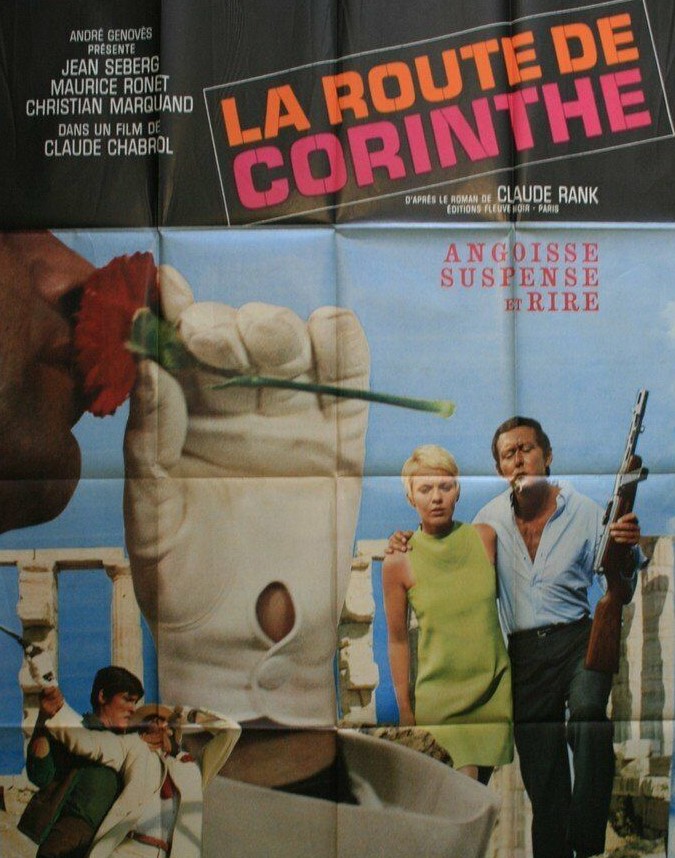
The Road to Corinth / Criminal Story / Who’s Got the Black Box? (1967) **

Top-class cast and occasional stylish direction get in the way of a thriller that can’t make up its mind whether it is in reality just a spoof. On the one hand we have a killer in a white suit complete with straw boater and a secret service boss who sells Turkish Delight, on the other hand a story not so much from James Bond but from Bond imitators.

Agent Robert Ford (Christian Marquand) is on the trail of black boxes that prevent missiles launching. When wife Shanny (Jean Seberg) is framed for his murder she determines to uncover the real killer, aided by Dex (Maurice Ronet), and find the maker of the boxes.

But that’s an over-simplification of an over-complicated plot so it’s best to concentrate on the highlights. For example, when customs officials stop a magician they find white rabbits and doves in his vehicle and, despite severe interrogation, he can, magically, release himself from his bonds enough to swallow a concealed cyanide pill. Instead of the usual cute children that proliferate in these kind of films, there’s a really annoying one. Shanny, imprisoned, has to make dolls. Greek Orthodox priests play a significant role.

Throw in kinky secret service boss Sharps (Michel Bouquet) who relishes being slapped for his inappropriate overtures to Shanny, a porn film starring Madame Phiphi, the heroine dangled from a crane and later lashed down to a dumper, and a villain willing to throw up is villainy for the love of a good woman.

But mostly it’s a picture in a rush. There are chases galore and nods to Hitchcock and lush Greek scenery.

It would be easy to assume that in eye-catching outfits Jean Seberg (Moment to Moment, 1966) is mostly there to provide eye candy but she does manage to outwit her pursuers from time to time although she seems equally to have a knack for being caught. Maurice Ronet (Lost Command, 1966), Christian Marquand (The Corrupt Ones, 1967) and especially Michel Bouquet (La Femme Infidele, 1969) bring an air of quality to the proceedings.  

Apart from the occasional stunning image, this is not the Claude Chabrol (Les Biches, 1968) that lovers of his thrillers would expect.

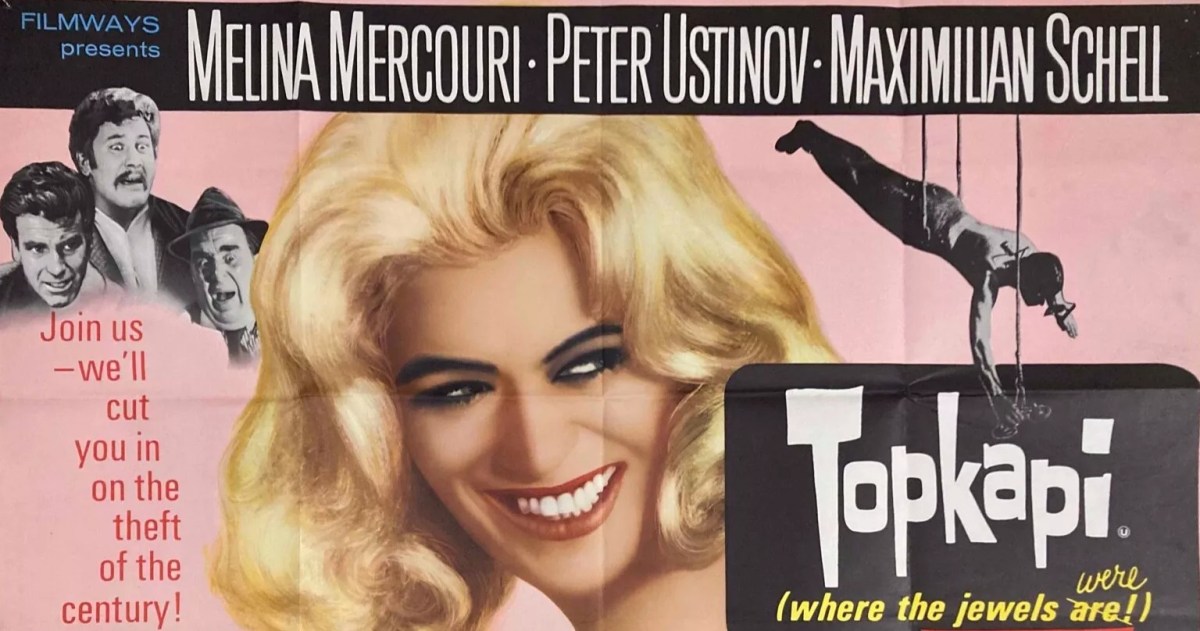
Topkapi (1964) *****

The mother of all heists directed by the father of all heist pictures. Films as diverse as The Italian Job (1969), Mission Impossible (1996) and Ocean’s Eleven (1960) owe director Jules Dassin a massive debt since he pretty much invented this genre with the French-made Rififi (1955). But that involved professional criminals. Outside of masterminds Elizabeth (Melina Mercouri) and Walter (Maximilian Schell), this crew are amateurs, deliberately chosen for their lack of criminal records and with a mind to the specific tasks required. So we have acrobat Giulio (Gilles Segal), upper-class English gadget inventor Cedric (Robert Morley), strongman Hans (Jess Fisher) and driver Arthur (Peter Ustinov).

The target is the impenetrable, complete with sound-sensitive floor, Topkapi Palace in Istanbul where they plan to steal a priceless emerald-encrusted dagger. The plan is ingenious. Arthur is initially only hired to smuggle the weapons essential to the audacious heist across the border. But when he is caught and forced to cooperate with the Turkish secret police, he is enlisted as a replacement for Hans. Minus the rifles and grenades which at first appeared indispensable to the plan, the thieves come up with an even more inspired alternative involving among other things scampering across rooftops, abseiling, a parrot and slowing down the revolutions of a lighthouse.

Originally intending to betray his colleagues as soon as possible, Arthur falls under the seductive spell of Elizabeth and finds himself recruited as the replacement muscles. Elizabeth exudes such sexuality she has the entire gang in her thrall and makes the cowardly, weak acrophobic Arthur believe he can overcome all his fears. Walter engages in a cat-and-mouse game with the police, always one step ahead, with a bagful of red herrings at his disposal, eventually giving the pursuers the slip during a wrestling competition held in a massive outdoor arena.

Interestingly, too, this doesn’t have the trope of gangsters at each other’s throats, planning to double-cross one another or bearing old grudges. Nobody challenges the leader. In fact, the entire crew could not be more docile, content to sit at the feet of Elizabeth and Walter, lapping up the former’s flirtation, wondering at the latter’s skill, as if they are all honored to have been chosen.

The climactic heist, carried out with no musical soundtrack and lasting over 30 minutes, is absolutely superb, setting a very high bar for future imitators, and there is a twist ending. Dassin mixes light comedy and high tension with the sultry attractions of Elizabeth to produce an at times breathtaking picture. As well as the heist itself, the wrestling sequence is stunning and the transition of Arthur forms the acting highlight (Ustinov won the Best Supporting Actor Oscar).

But all four main stars are superb. Audiences accustomed to a more uptight Maximilian Schell (The Condemned of Altona (1962) will have been surprised by his performance. Melina Mercouri (Oscar-nominated for Never on Sunday, 1960) is the archetypal blonde bombshell, liberal with her favors but careful not to favor just one. Although Walter devises the plan, she is actually the criminal supremo, selecting the targets, and then delegating to ensure the tasks are carried out. Robert Morley is having the time of his life. Akim Tamiroff (Lord Jim, 1965) has a cameo as a chef.

A film noir star after Brute Force (1947) and The Naked City (1948) Dassin’s Hollywood career collapsed in the wake of the anti-Communist McCarthy hearings and he was blacklisted. Rififi opened few doors but even the success of Never on Sunday (1960) brought little respite.  Despite returning to the mainstream with such elan through the conduit of Topkapi, albeit with a European cast, he remained on the Hollywood periphery and although Uptight (1968) – previously reviewed in the Blog – involved another heist that was primarily the wrapping for social documentary.

More at home with comedies screenwriter Monja Danischewsky (The Battle of the Sexes, 1960) draws out more humor than the source material, Light of Day by noted thriller writer Eric Ambler, would ostensibly suggest.

A delight from start to finish, the crème de la crème of the heist genre, this is unmissable. Dassin can lay claim to being the John Ford of the crime picture.

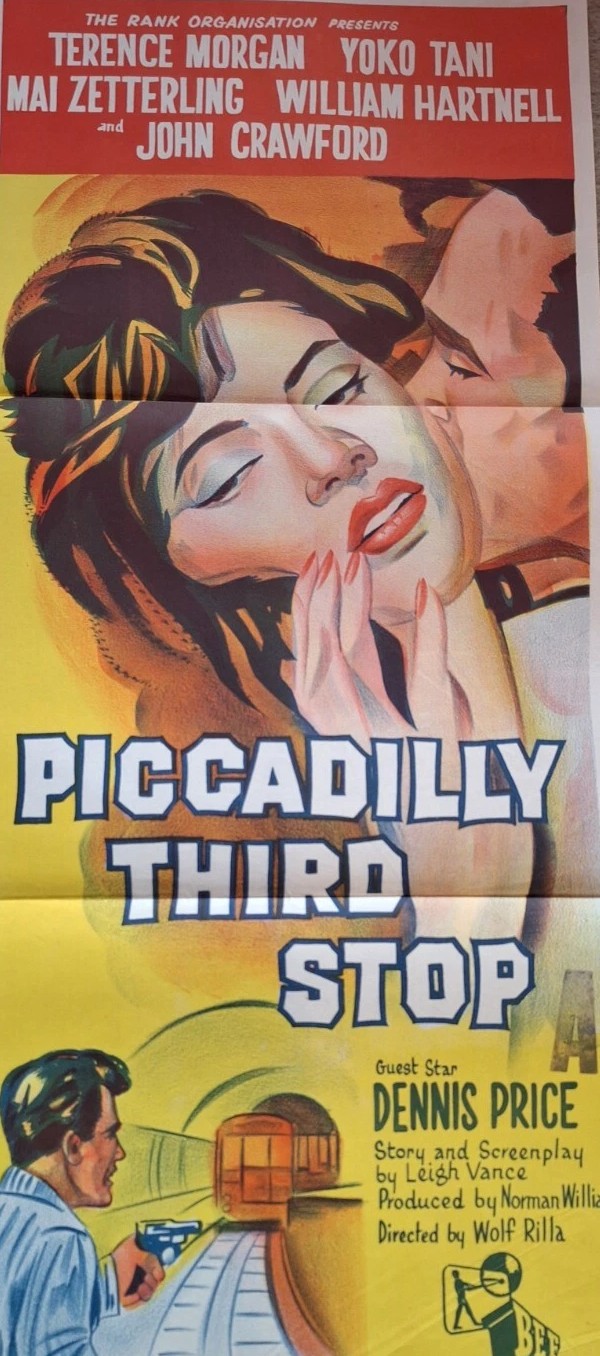
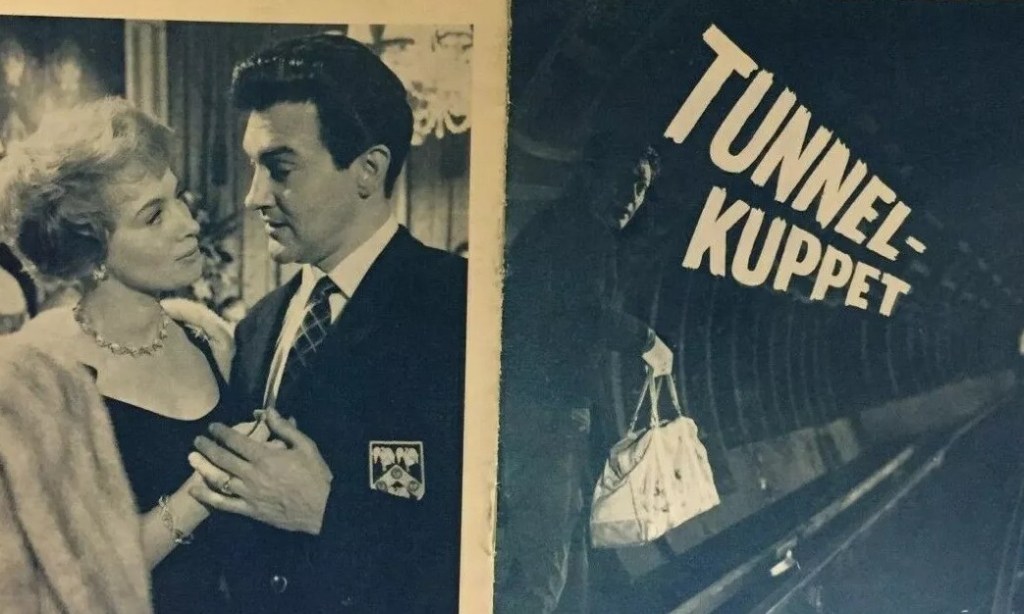
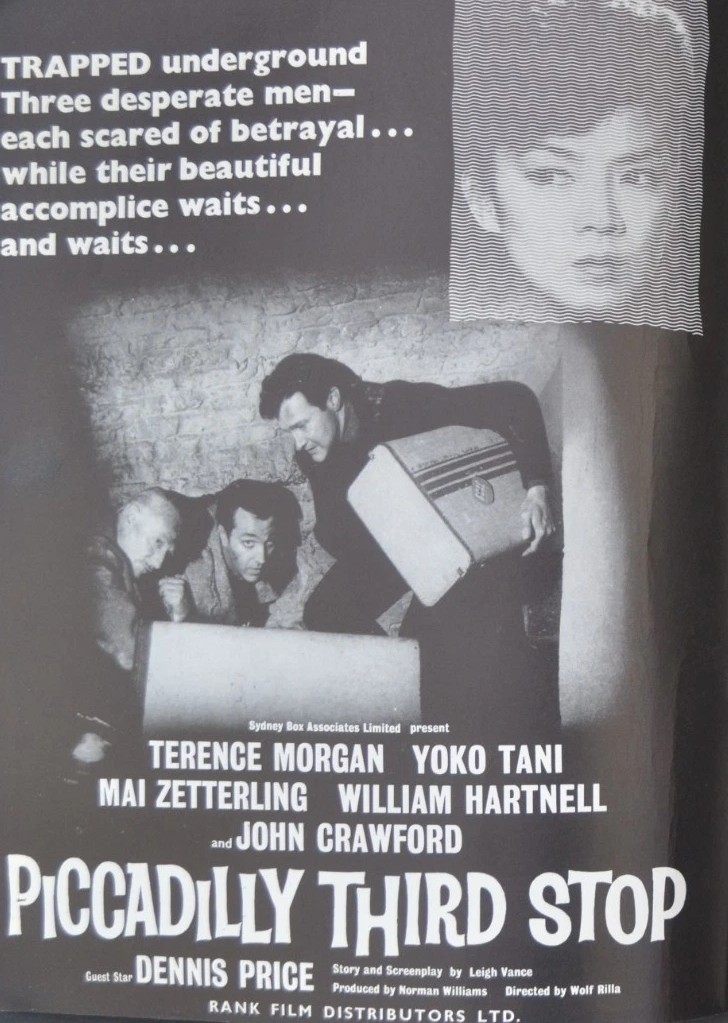
Piccadilly Third Stop (1960) ***

Well-worked full length British thriller that goes against the grain of presenting sympathetic hoods in the vein of Ocean’s Eleven or The League of Gentlemen both out the same year in which audiences largely align with the gangsters in part because they come across as charming and in part because their aims appear thoroughly reasonable.

Unlike the shorter efforts under the Renown umbrella this has time to develop several narrative strands, with deceit the main motivation, and spends a goodly time on the mechanics of robbery, the planning, the percentage split accorded each member, and the heist itself, which is an arduous one, involving digging through a brick wall.

Dominic (Terence Morgan) isn’t exactly a petty thief not when he can dress himself up to the nines, infiltrate a society wedding and make off with an expensive piece of jewellery, which he hides in an unusually clever fashion. But working on his own account is far more lucrative than being an employee in a watch-smuggling ring run by Joe Preedy (John Crawford) who has a classy wife Christine (Mai Zetterling) and life and has so much dough lying around that he’s easy pickings for Dominic who has a side hustle bring dupes to the gambling tables of the pukka Edward (Dennis Price).

Dominic happens to be bedding Christine but that still leaves him time to romance Fina (Yoko Tani), daughter of an ambassador, who casually reveals the embassy safe contains £100,000. She’s so helplessly in love she falls for his tale of them running off together and becomes an accomplice.

With the assistance of Edward, Dominic snookers Joe into supplying the readies to pay for the robbery set-up costs, the tools, gelignite etc. The plan involves digging a hole through the tunnels of the London Underground into the basement of the embassy.

Joe’s share of the spoils will hardly cover his debts so he’s intent on making off with the full amount. As it happens, Dominic has precisely the same idea. Christine is roped in, unknown to her husband, to act as getaway driver.

There’s a hefty dose of characterization unusual in these movies, more than just information dumps about characters. Dominic could easily fund the caper with the cash he would get from selling the stolen diamond, but he holds out for a larger amount from a fence. Joe should easily be able to afford the money, but he’s in dire financial straits because he lost a packet at the gambling tables and his own astuteness in ferreting away all he owns in his wife’s name. That puts his gains well beyond the long arm of the law but leaves him illiquid (I guess is the technical term) and he has to beg Christine to pawn her mink coats.

She’s a smooth operator, an amateur artist, happily living off Joe’s nefarious activities while running around with Dominic and planning to run away with him at robbery end. Joe’s desperate to be seen as a major player, hence his attendance at the casino, and kicking off when he doesn’t get his way, and raging against all the toffs born with a silver spoon in their mouths.

Two of the subsidiary characters are interesting studies. Safecracker the Colonel (William Hartnell) has too much of an eye for the pretty lady and too great a capacity for alcohol, but he’s been careful with his loot, spreading it around in various investments, very secure in his old age, and confident enough in his own abilities that he’s able to negotiate a higher share of the loot. But the prize supporting character is Mouse (Ann Lynn), girlfriend of Dominic’s sidekick Toddy (Charles Kay), who is considered so dumb and harmless that the crooks discuss their plans within her earshot. Except, she’s not concentrating and doesn’t quite get the hang of things and feeds Toddy the wrong information at the wrong time which nearly puts a spoke in the works.

As if the robbery required any more tension. Just how much work is involved in digging a hole through a wall is pretty clear here, should anyone in the audience have ideas of their own. You know double-crossing is also on the cards, not just the Dominic vs Joe and Christine vs Joe but the lovelorn Fina is also due her come-uppance.

And there’s a very nice touch at the end which proves that amateurs are a distinct liability. Any notion Christine has harbored that she would, if only given the chance, prove an ideal getaway driver are misplaced.

Directed by Wolf Rilla (Village of the Damned, 1960) not just with occasional style notes but with a determination to allow his characters room to move from a screenplay by Leigh Vance (Crossplot, 1969). You can catch it on Talking Pictures TV.

All in all a very entertaining little picture strong on tension with a host of interesting characters.

The Slender Thread (1965) ****

Hollywood paranoia in the 1970s ensured that any type of electronic surveillance was treated with suspicion. Cops, too, were almost certain to be corrupt. Although he would subscribe to such paranoia and implicit corruption in Three Days of the Condor (1973), in his movie debut director Sydney Pollack turns these concepts on their head.

Crisis center volunteer Alan (Sidney Poitier) faces a battle against time to save potential suicide Inga (Anne Bancroft), using his own powers of empathy and persuasion, but helped more than a little by dedicated policemen and the system of tracking calls. On the one hand the ticking clock ensures tension remains high, on the other Alan own’s battle with his nascent abilities brings a high level of anxiety to the proceedings especially as we learn of the particular circumstances driving Inge.

Alan is studying to be a doctor and he carries within him the arrogance of his profession, namely the power to cure. But that is within the realms of the physical. When it comes to dealing with the mental side of a patient he discovers he is ill-equipped. The intimacy he strikes up with Inga ensures he cannot seek relieve by handing over the problem to anyone else, the fear being that the minute he introduces another voice the spell will be broken. His medical training means only that he knows far better than a layman the effect of the pills the woman has taken and can accurately surmise how long she has to live. In the process he experiences a wide range of emotions from caring and sympathetic to angry and frustrated.

By sheer accident Inga’s otherwise loving husband, Mark (Steven Hill), skipper of a fishing vessel, has discovered that their son is not his. On being rejected, she has nothing to live for.

The simple plotline is incredibly effective. The two main characters never meet but we discover something of Inga’s life through flashbacks as her life gradually unravels and elements of insanity creep in. Alan, meanwhile, is shut in a room, relying on feedback from colleagues such as psychiatrist Dr Coburn (Telly Savalas) and others monitoring the police investigation attempting to discover where she is. 

The fact that there actually was a suicide crisis center operating in Seattle (where the film is set) will have come as news to the bulk of the audience for whom suicide was a taboo subject and virtually never discussed in public or in the media. The fact that the telephone network could be used so effectively to trace calls would not have been such a surprise since it was an ingredient of previous cop movies, but it had never been so realistically portrayed as here, results never instant but the  consequence  of dogged work.

Initially, the movie treats Seattle as an interesting location with aerial shots over the credits and other scenes on the shore or seafront, but gradually the picture withdraws into itself, the city masked in darkness and the principals locked in their respective rooms.

Sidney Poitier is superb, having to contain his emotions as he tries to deal with a confused woman, at various times thinking he is over the worst only to discover that he is making little headway and if the movie had gone on for another fifteen minutes might have reflected how impotent he had actually been. Anne Bancroft (The Pumpkin Eater, 1964) matches him in excellence, in a role that charts her disintegration.

The fact that their character never met and that their conversations were conducted entirely by telephone says a lot about their skills as actors in conveying emotion without being in the same room as the person with whom they are trying to communicate. Telly Savalas (The Dirty Dozen, 1967) delivers a quieter performance than you might expect were you accustomed to his screen tics and flourishes. Ed Asner (The Venetian Affair, 1966) and Steven Hill, in his last film for 15 years, are effective.

The bold decision to film in black-and-white pays off, ensuring there is no color to divert the eye, and that dialog, rather than costumes or scenery, dominates. Pollack allows two consummate actors to do their stuff while toning down all other performances, so that background does not detract from foreground.

Winning the Oscar for Lilies of the Field (1963) had not turned Sidney Poitier into a leading man and in fact he took second billing, each time to Richard Widmark, in his next two pictures.  Anne Bancroft was in similar situation after being named Best Actress for The Miracle Worker (1962) and although she took top billing in The Pumpkin Eater (1964) it was her first film after her triumph and, besides, had been made in Britain. And for both 1967 would be when they were both elevated to proper box office stardom. Written by Stirling Silliphant (In the Heat of the Night, 1967) based on a newspaper article by Shana Alexander.

Given the greater awareness of suicide today, this will strike a contemporary chord.

As the High Noon of the psychological thriller this more than delivers. Gripping stuff. And it’s worth considering the courage required to undertake such subject matter for your first movie.

o

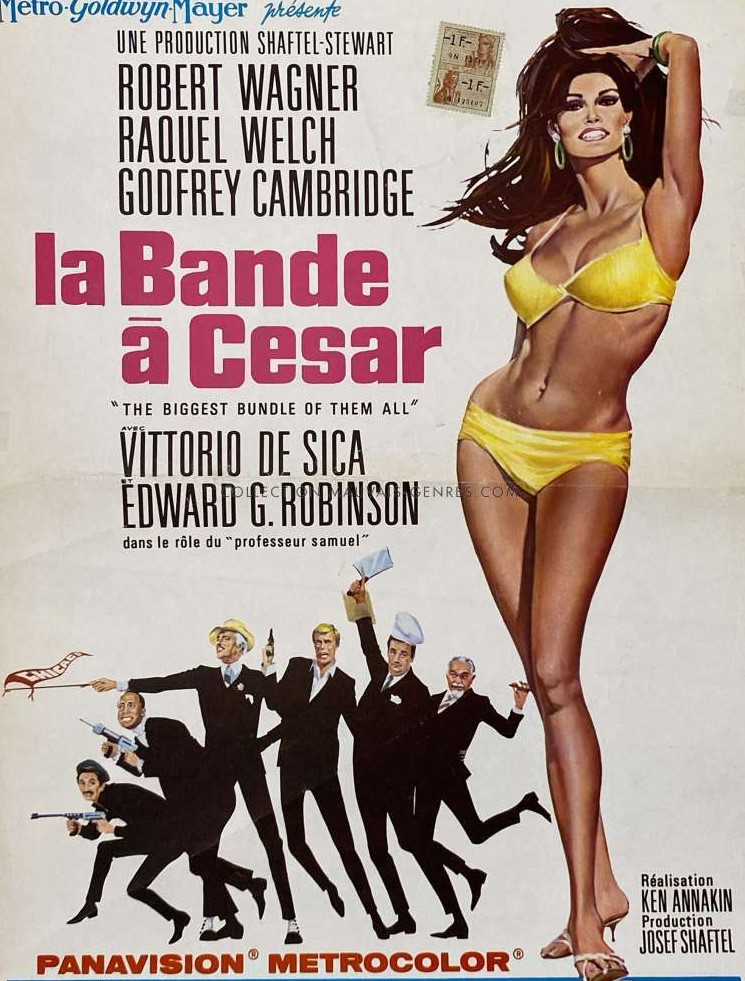
The Biggest Bundle of ‘Em All (1968) ***

Bunch of incompetent crooks kidnap an impoverished Mafia boss who pays his ransom by setting up a major heist. By a stroke of casting alchemy this brings together Cesare (Vittorio De Sica), the epitome of old world Italian charm, knock-out gangster’s moll and scene-stealer-in-chief Juliana (Raquel Welch) replete with scanty knock-out outfits and criminal mastermind Professor Samuels (Edward G. Robinson). In order to acquire the funds necessary to steal $5 million of platinum ingots from a train – the plan involving a tank and an WW2 bomber – the crew, initially headed by American Harry (Robert Wagner), need to carry out smaller jobs.

Problem is, none of them are any good, not even Cesare, who has lost his flair and botches an attempt to rob an old flame of her jewels. They can’t even carry out a simple theft from a restaurant. The heist itself is pretty spectacular and innovative. And the movie is quirky, with a darker edge. While there are few belly laughs, the light tone is enough to carry the gentle humor, mostly inspired by the misplaced team, amateurs for various reasons, not necessarily outright lawbreaking, on the run. These include London Cockney mechanic Davey (Davy Kaye), chef Antonio (Francesco Mule) distracted by hunger at every turn, cowardly violinist Benny (Godfrey Cambridge) and Joe (Mickey Knox) with a helluva brood to feed.

The story does a good bit of meandering, as does the camera, much of its focus on the voluptuous charms of Juliana, but the hurt pride of Cesare and the grandiose machinations of the professor keep it on course. The Italian settings, incorporating grand villas and ruins, do no harm either. The heist is terrific and there is a final twist you may or may not see coming. The interplay of characters works best when it involves Juliana, who attempts to twist Cesare around her little finger, that tactic mutual it has to be said, who keeps the professor on his toes by dancing with him in a disco, and it soon becomes apparent that she has the upper hand over loverboy Harry.

You could be forgiven for thinking the title refers to Raquel Welch – a cinematic infant at this stage with only One Million Years B.C (1966) in her locker – especially when her cleavage and looks receive such prominence, but the caper is classy and different. As well as being obvious she is both sinuous and seductive and clearly has a mind of her own, possibly the most criminally intent of the entire outfit, with weapons the others lack. By this point, she had invented the pop-out bikini, pictures of which had flooded Europe, making her the pin-up par excellence, but those who came to simply gawp quickly realised there was talent behind the body.

De Sica (The Shoes of the Fisherman, 1968) constantly plays around with the idea of being a defunct godfather and Robinson (Grand Slam, 1967) is the antithesis of the gangster roles on which his fame relied. Robert Wagner (Banning, 1967) is less effective, miscast and out of place in such august acting company and losing out to welch in every scene.

This was a considerable change of pace for British director Ken Annakin after Those Magnificent Men in Their Flying Machines (1965) and Battle of the Bulge (1965) and he brings to this the comedy of the former coupled with the narrative complications of the latter, wrapping everything up in an easy inviting style that makes the most of his stars and the locations. Screenwriter Sy Salkowitz was a television veteran (Perry Mason, The Untouchables et al) , this marking his first venture into the big screen.        

Discover WordPress

A daily selection of the best content published on WordPress, collected for you by humans who love to read.

The Atavist Magazine

by Brian Hannan

WordPress.com News

The latest news on WordPress.com and the WordPress community.