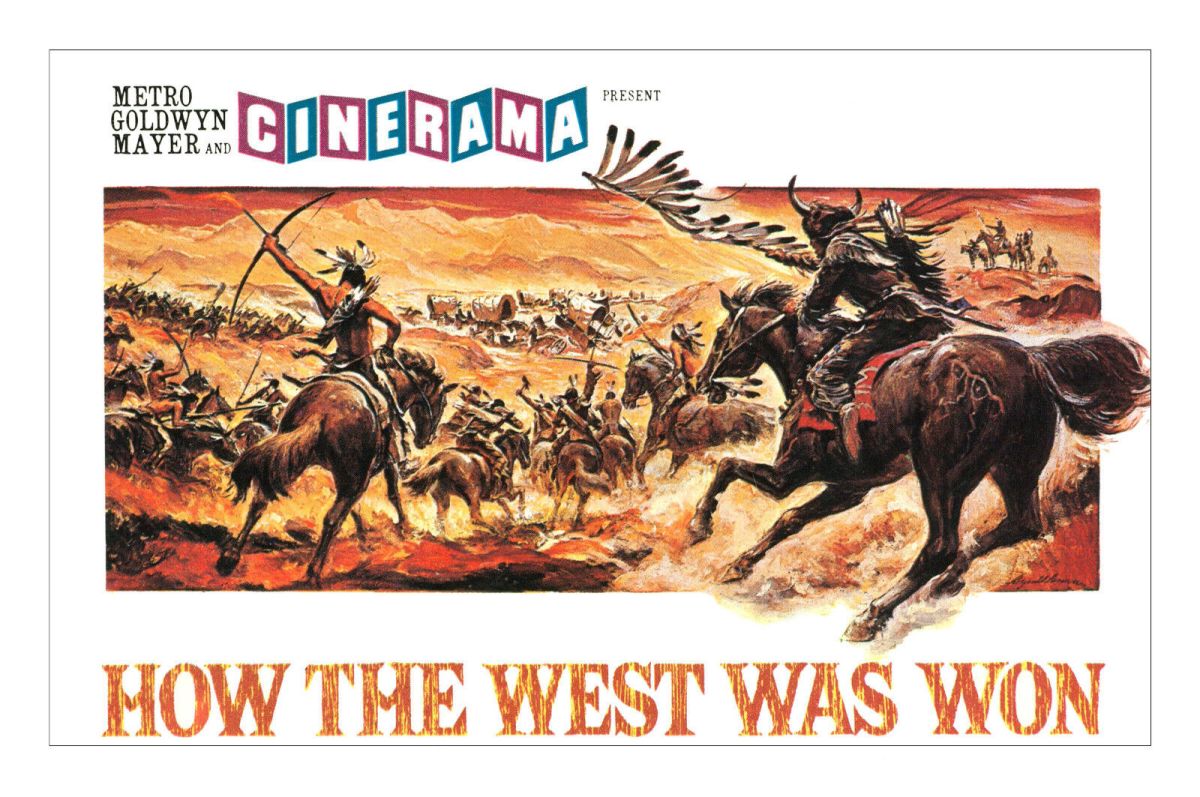
How the West Was Won (1962) ***** – Seen at the Cinerama

I’ve got Alfred Newman’s toe-tapping theme music in my head. In fact, every time I think of this music I get an earworm full of it. Not that I’m complaining. The score – almost a greatest hits of spiritual and traditional songs – is one of the best things about it. But then you’re struggling to find anything that isn’t good about it. But, for some reason, this western never seems to be given its due among the very best westerns.

Not only is it a rip-roaring picture featuring the all-star cast to end all-star casts it’s a very satisfying drama to boot and it follows an arc that goes from enterprise to consequence, pretty much the definition of all exploration.
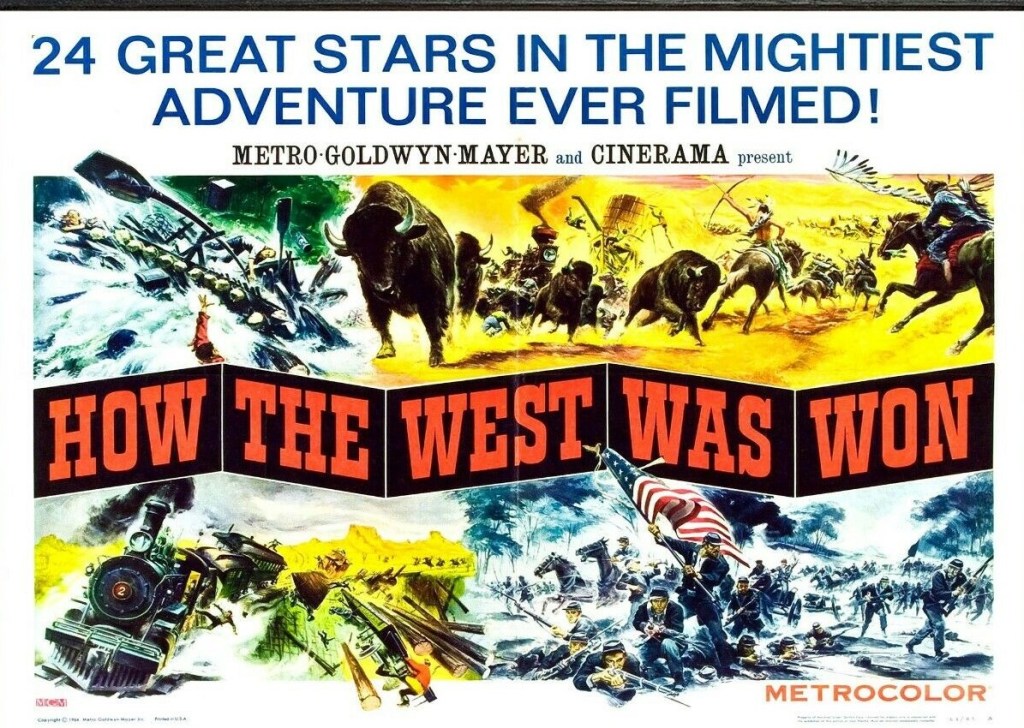
Given it covers virtually a half-century – from 1839 to 1889 – and could easily have been a sprawling mess dotted by cameos, it is astonishingly clever in knowing when to drop characters and when to take them up again, and there’s very little of the maudlin. For every pioneer there’s a predator or hustler whether river pirates, gamblers or outlaws and even a country as big as the United States can’t get any peace with itself, the Civil War coming plumb in the middle of the narrative.

Some enterprising character has built the Erie Canal, making it much easier for families to head west by river. Mountain man fur trader Linus Rawlings (James Stewart) on meeting prospective pioneers the Prescotts has a hankering after the young Eve (Carroll Baker) but as a self-confessed sinner and valuing his freedom has no intention of settling down. But he is bushwhacked by river pirates headed by Jeb Hawkins (Walter Brennan) and left for dead, but after saving the Prescotts from the gang changes his mind about settling down and sets up a homesteading with Eve.

We have already been introduced to Eve’s sister Lilith (Debbie Reynolds) who has attracted the attention of huckster Cleve Van Valen (Gregory Peck) and they meet again in St Louis where she is a music hall turn and widow. Her physical attraction pales in comparison with the fact she has inherited a gold mine. He follows her, unwelcome, in a wagon train which survives attack by Cheyenne, but still she resists him, not falling for him until a third meeting on a riverboat.

Zeb Rawlings (George Peppard) wants to follow his father to fight in the Civil War. Linus dies there, but there’s no great drama about it, he’s just another casualty, and the death is in the passing. In probably the only section that feels squeezed in, following the Battle of Shiloh a disillusioned Zeb saves General Sherman (John Wayne) and Ulysses S. Grant (Harry Morgan) from an assassin.
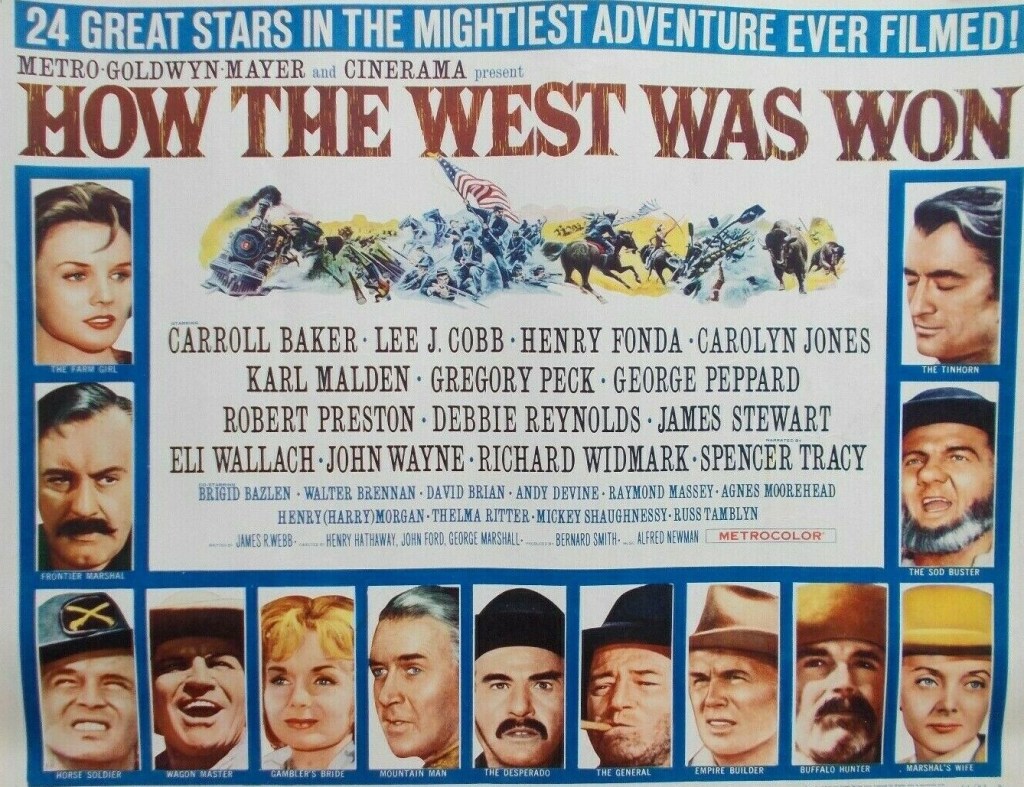
Returning home to find Eve dead, Zeb hands over his share of the farm to his brother and heads west to join the U.S. Cavalry at a time when the Army is required to keep the peace with Native Americans enraged by railroad expansion. Zeb links up with buffalo hunter Jethro Stuart (Henry Fonda), who appeared at the beginning as a friend of his father.

Eve, a widow again, meets up in Arizona with family man and lawman Zeb who uncovers a plot by outlaw Charlie Gant (Eli Wallach) to hijack a train. Zeb turns rancher once again, looking after her farm.

But the drama is peppered throughout by the kind of vivid action required of the Cinerama format, all such sections filmed from the audience point-of-view. So the Prescotts are caught in thundering rapids, there’s a wagon train attack and buffalo stampede, and a speeding train heading to spectacular wreck. There’s plenty other conflict and not so many winsome moments.

Interestingly, in the first half it’s the women who drive the narrative, Eve taming Linus, Lilith constantly fending off Cleve. And there’s no shortage of exposing the weaknesses and greed of the explorers, the railroad barons and buffalo hunters and outlaws, and few of the characters are aloof from some version of that greed, whether it be to own land or a gold mine or even in an incipient version of the rampaging buffalo hunters to pick off enough to make a healthy living.

And here’s the kicker. Virtually all the all-star cast play against type. John Wayne (Circus World, 1964) reveals tremendous insecurity, Gregory Peck (Mirage, 1965) is an unscrupulous though charming renegade, the otherwise sassy Debbie Reynolds (My Six Loves, 1963) is as dumb as they come to fall for him, and for all the glimpses of the aw-shucks persona James Stewart (Shenandoah, 1965) plays a much meaner hard-drinking hard-whoring version of his mean cowboy. Carroll Baker (Station Six Sahara, 1963) is an innocent not her usual temptress while George Peppard (The Blue Max, 1966) who usually depends on charm gets no opportunity to use it. .

Also worth mentioning: Henry Fonda (Madigan, 1968), Lee J. Cobb (Coogan’s Bluff, 1968), Carolyn Jones (Morticia in The Addams Family, 1964-1966), Eli Wallach (The Moon-Spinners, 1964), Richard Widmark (Madigan), Karl Malden (Nevada Smith, 1966) and Robert Preston (The Music Man, 1962).  

Though John Ford (The Man Who Shot Liberty Valance, 1962) had a hand in directing the picture, it was a small one (the short Civil War episode), and virtually all the credit belongs to Henry Hathaway (Circus World) who helmed three of the five sections with George Marshall (The Sheepman, 1958) taking up the slack for the railroad section.

And though you might balk at the idea of trying to cover such a lengthy period, there’s no doubting the skill of screenwriter James R. Webb (Alfred the Great, 1969) to mesh together so many strands, bring so many characters alive and write such good dialog. Bear in mind this was based on a series of non-fiction articles in Life magazine, not a novel, so events not characters had been to the forefront. Webb populated this with interesting people and built an excellent structure.

I’m still tapping my toe as I write this and I was tapping my toe big-style to be able to see this courtesy of the Bradford Widescreen Weekend on the giant Cinerama screen with an old print where the vertical lines occasionally showed up. Superlatives are superfluous.

Guns for San Sebastian (1968) ****

Pre-Stagecoach (1939) Hollywood used to differentiate between historical adventure pictures and westerns. Given it’s set in 1746, before there was such a thing as a revolver or repeater rifle, so a complete absence of gunslingers, this falls squarely into the former camp though its format displays western credentials. A tad top-heavy with religious allegory, “miracles,” peasant piety and an Ennio Morricone score mainlining on the celestial, nonetheless it manages to achieve a character-driven narrative and some powerful action sequences.  

However, it’s a lengthy set-up. Outlaw Leon (Anthony Quinn), on the run from Mexican troops, takes refuge in a church. As punishment for giving him sanctuary Fr Joseph (Sam Jaffe) is expelled to the abandoned church of San Sebastian in an equally abandoned village. Ringing the bell to attract parishioners only alerts bandits who kill him. Donning his garb, Leon is mistaken for a priest by Yaqui leader Teclo (Charles Bronson) and strung up crucifixion style. But he’s rescued by villagers who almost elevate him to sainthood courtesy of a couple of accidental “miracles.”

Enjoying his newfound status, but still attracted to peasant Kinita (Anjanette Comer), he directs the parishioners to build a dam to flood the fields to assist in corn-growing. Teclo objects to challenges to his authority and burns down the village. The villagers turn against Leon, and although initially intending to vanish, he decides instead to blackmail his mistress, the wife of the local governor (Fernard Gravey) who agrees to supply him with weapons. Leon builds a fortress to withstand the expected attack setting up a very engaging climax in which the dam plays a critical role.

A modern audience might expect a sturdier narrative rather than one that seems to shift at whim, not helped by Leon’s indecision. And it’s too slight a vehicle to carry the political points, the state of Mexico at the time, the settlers vs. original occupants (i.e. Native Indians) scenario, the problems facing half-breeds (Leon and Teclo both), but it’s better at exploring the power of the church, the worship bestowed on any priest who turns up, regardless of how ill-suited he appears.  The occasional comic sequence, banter with an architect, negotiation with a Mexican colonel, seems out of place.

On the other hand there is a truly mesmerizing performance from Anthony Quinn (Lost Command, 1966) as a womanizing low-life who happens upon redemption, so deep does his impersonation of a priest go that he can’t bring himself to touch the compliant Kinita, who is aware of his true identity. Switching between shiftiness and godliness at the drop of a hat and deriding villagers for their lack of character his turning point comes when he realizes he has fallen into the same trap. That he emerges as a wily man of conscience is no mean feat.

The other big bonus is to see someone at last recognize Charles Bronson (Once upon a Time in the West, 1969). Here he is given cinematic status, camera pitched up at his face, and allowed to eliminate the growl and monosyllabic delivery that has been his wont in lesser roles. He’s a rather decent villain at the end.

There are a couple of inconsistencies. Teclo wants villagers to take to the hills but on the other hand somehow to spend enough time tending the corn that come harvest time he can steal. And it’s a bit too neat how he falls into the dam trap.

All in all, enjoyable and very under-rated primarily, i suspect, because people come at it expecting a western rather than a historical film in the adventure vein. But it’s elevated by the intriguing narrative, the questionable hero, Quinn’s performance and the introduction to a new-look Bronson.

Frenchman Henri Verneuil (The Sicilian Clan, 1969) does well to probe so many issues for an audience probably expecting something more straightforward. James Webb (Alfred the Great, 1969) wrote the screenplay based on novel by a William Faherty, a Jesuit priest. In the book, the hero was a soldier who became a priest rather than an atheist opportunistic outlaw.

Lonely Are the Brave (1962) ***

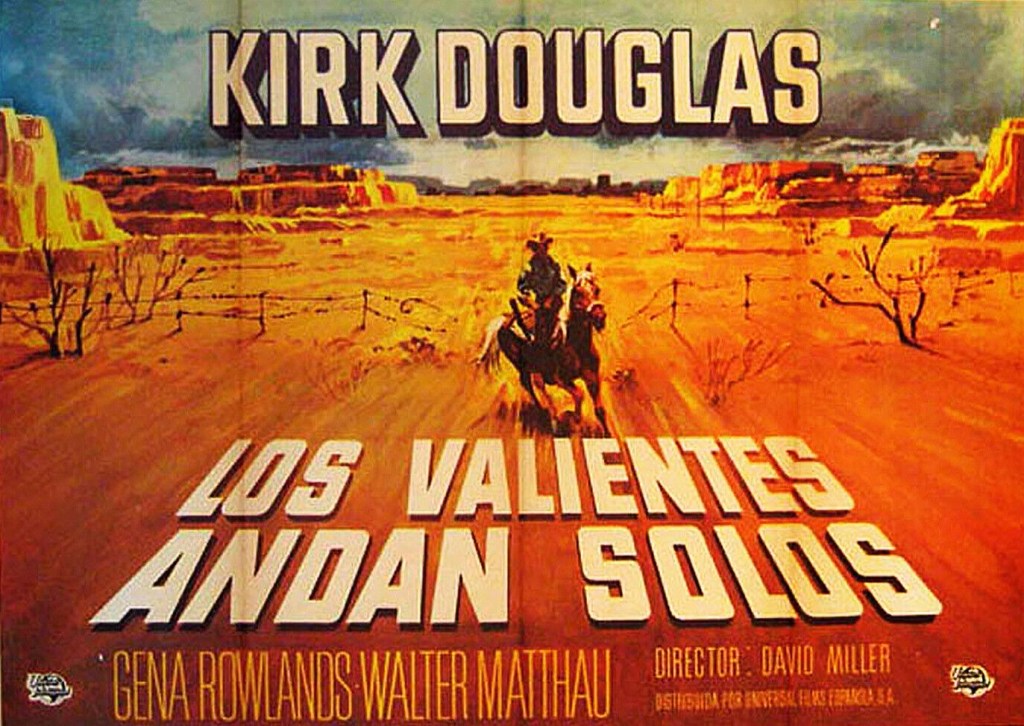
Wannabe blood brother to The Misfits (1961) but more like a distant cousin, cowboy out-of-time yarn too pre-emptive for its own good.  Freedom-loving, don’t-fence-me-in Jack Burns (Kirk Douglas) falls foul of the law by escaping prison and is pursued into the hills by competent and sympathetic Sheriff Morey Johnson (Walter Matthau) who is saddled with an incompetent law enforcement team out of their depth up against a true man of the west. You can see the end coming a mile off, a truck that interrupts the narrative for no particular reason.

The only problem for me are certain inconsistencies.  A man who refused to be tamed tames a wild horse, his freedom coming at the expense of a captive animal, hobbled overnight to prevent escape. And instead of leading a frightened beast across a busy highway rides him in clear danger.

And I don’t get this voluntary incarceration malarkey, highly principled though it appears, breaking into jail in order to break out a friend Paul (Michael Kane) who just wants to serve out his relatively short sentence instead of being faced with a longer one as an escapee.

Jack won a Purple Heart in Korea but although he was 22 when World War Two broke out there’s no mention of that war record. And it seems a bit of an unlikely cliché that you can still break out of prison in the 1960s with just small hacksaw.

David (Hammerhead, 1968) Miller’s film tries too hard to make a very obvious point, forgetting that it was cowboys like Jack who turned the West into the antithesis of freedom. There are some unexpected touches. Jack, wanting to start a brawl as a means of being arrested, finds himself with a tougher customer than he envisaged, a World War Two veteran who doesn’t take prisoners. There’s a nod towards immigrants swarming into America. Paul, knowing he has crossed a line in the contemporary world, just wants to pay his debt and move on, rather than trying to disappear into a fantasy life. Cops, with all the modern accoutrements, find themselves undone by a man with old world skills.

R.F.D. stands for Rank Film Distributors, patting itself on the head for getting
the picture off to a good start in the London West End.

Once the movie heads into the hills, which is what all this lengthy preamble is for, it becomes more interesting, if only because in what is intended to be a game of cat-and-mouse, the cop cats are revealed as the mice.

But Kirk Douglas, having lit a fire for freedom in Spartacus (1961), seems more intent on going down a similar route than creating a proper character. And, as usual, given he is top-billed, reveals acting insecurity, or arrogance, trying to steal every scene, tipping back his hat just one of his many bits of business to ensure the audience eye follows him.  

On the plus side is some notable playing by Walter Matthau (Mirage, 1965), encumbered with a bunch of lazy cops who spend more time eating and sleeping than doing their job and easily outgunned in the wilderness by a cowboy for whom it spells home.  Gena Rowlands (Machine Gun McCain, 1969) is impressive as Paul’s worn-down wife with a soft spot for Jack though she finds it hard to stand by a dumb man. George Kennedy (Cool Hand Luke, 1967) makes a mean sadistic cop. And there’s an early role for Carroll O’Connor (The Devil’s Brigade, 1968). If you’re talent-spotting Bill Bixby (television’s The Incredible Hulk, 1977-1982) is a helicopter pilot.

Kirk Douglas and business partner Edward Lewis were the producers and hired the former blacklisted Dalton Trumbo (Spartacus) to script Edward Abbey’s novel Brave Cowboy.

I thought the title was a bit of misnomer: Lonely Are the Foolhardy might be more accurate.

Ride the High Country (1962) ****

Far from routine western with director Sam Peckinpah, in his sophomore picture, channelling territory that would later become more familiar, old friends turning enemies, the encroachment of civilization, the passing of the Old West, and sharing with The Misfits (1961) incredulity that the once noble occupation of cowboy/lawman has become redundant.  In Major Dundee (1965) and The Wild Bunch (1969), the story turns on former friends turned enemies, here that aspect is in its infancy.

Down on his luck former lawman Steve Judd (Joel McCrea), shirt collar frayed, holes in his boots, eyesight not what it was, recruits old pal Gil Westrum (Randolph Scott), reduced to running a western sideshow, to help him escort a load of gold down from the mountains. Gil brings along his younger sidekick Heck Longtree (Ron Starr). Along the way, romance beckons for the ever romantically-inclined Heck when he encounters young Elsa (Mariette Hartley), daughter of Bible-thumping farmer Joshua. When she runs off, intending to marry prospector Billy Hammond (James Drury) at the mining camp, they act as her escort.

Gil turns out not to be the straight-shooter he originally appeared, planning to rob the gold consignment on the way back, with or without Steve’s assistance. The plot takes a wild detour in the mining settlement when Elsa realizes that her marriage will take place in a brothel, her fiancé is a drunk, and that his four brothers reckon they will have equal claim on her sex-wise. Gil arranges for the marriage to be apparently annulled, which doesn’t for a moment fool the Hammond brothers, and the return journey, already splintered by Steve working out what was on Gil’s mind, turns into one ambush after another.

The narrative switch away from the cowboys bewailing their lot, or, in Gil’s case planning payback for a life gone awry, to the plight of the vulnerable woman in the last of the lawless western wildernesses, is a nifty one. But you can’t help seeing Gil’s point, all the gun wounds, gunfights, months in hospitals, jobs lost as a result of confinement, make a man’s mind turn to the notion he has not been correctly reward for his endeavours. And not quite as convinced as Steve that honor makes up for everything.

There is some very lively dialog, great banter as Gil tries to sow sedition in Steve’s ear, Steve with an endless fund of humorous retorts, gently explaining that the hole in his boot is a masterpiece of the shoemaker’s art, a clever method of hidden ventilation, at each point deflecting a wily tongue probing for weakness. Steve is soon revealed as anything but a gunman past his past, or even a bare-knuckled fighter, knocking out cold a disbelieving Heck.

The romance is well done, Heck convinced he has prised Elsa away from her father, only to discover he is not included in her plans, and the isolated virgin unlikely to respond to male ardor. But when the reality of marriage strikes home, a slap in the face required to guarantee compliance, Elsa is extremely lucky not just to find Steve and Gil willing to come to her rescue, but for the less upstanding Gil to take legal matters into his own hand, although you can’t help feeling, in terms of the subsequent mortality rate, this is a hell of a price to pay for a young girl who was not aware of the realities of married life. But, hell, every decent western requires sacrifice.

Peckinpah introduces some excellent twists on more common scenes. A horse race is won by a camel, belly dancers instead of saloon girls, the restaurant bust up in the traditional fistfight is Chinese, Steve assumes the crowds lining the streets to witness the race are extending a hospitable welcome to him, courtesy of his previous exploits. And to Gil’s consternation, the fat pot of gold, literally, diminishes by the minute, the original quarter of a million dollars reduced first to twenty thousand and then a mere eleven, almost hardly worth reneging on a lifetime friendship. Unusually, the lusty young Heck begins to question turning criminal. And the clue to Joshua’s behavior is visual, as we glimpse his wife’s headstone, marked “harlot.”

But when it comes to the showdown you will see an early rehearsal of the famed shootout in The Wild Bunch. But here observation takes the place of action and the steady drip-drip of Gil’s moans serve to highlight a life wasted in community service and Steve’s stoical insistence on law and order, a code that demands good humor in the face of adversity.

This was a splendid last hurrah for Randolph Scott (Western Union, 1941) , well past his Hollywood heyday and now consigned to B-movie westerns, though lucky enough to team up with Budd Boetticher for the seven late-1950s pictures known as the Ranown Cycle, now held in very high esteem. Joel McCrea (Union Pacific, 1939), too, was on the downward Hollywood slide, pretty much restricted to westerns for the whole of the 1950s. This proved to be his final movie of this decade and he only made three more. So, for both, Ride the High Country, was a fitting send-off. Future Wild Bunch alumni Warren Oates and L.Q Jones had small parts.

Ron Starr (G.I. Blues, 1960) and Mariette Hartley (Marnie, 1964) were unlucky that their performances did not reach a wider audience, especially among producers, because they both created multi-faceted characters. Sam Peckinpah was far luckier, Ride the High Country becoming a calling card among foreign critics.

Chuka (1967) ****

I’m astonished this highly original western has disappeared into critical oblivion. As cruel as it is unusual, overturning every cliché, brimming with realism, more drama that action, some stunning scenes, and an ending only the bold would ever consider, this is desperately in need of reappraisal.

A refuge becomes a trap. The hero never wins. A spurned lover remains spurned. The cavalry are the dregs of society. Nobody listens to common sense. There’s no sending for help to relieve the beleaguered garrison. What chance does anyone have when the commanding officer is proud to die “by the book” rather than engineer a simple escape.

Gunslinger Chuka (Rod Taylor), arriving from the wintry north, shares some of his provisions with starving Arapaho Native Americans, comes upon a broken down stage containing two high-born Mexicans en route to California, Veronica (Luciana Paluzzi) and Helena (Victoria Vetri), his presence, thanks to that simple act of generosity, ensuring the marauding Arapahoes spare their lives. At the fort, a deserter is being whipped on the orders of martinet English commander Col Valois (John Mills). A patrol has failed to return so Valois won’t let the newcomers leave.

Chuka, sympathetic to the situation of the starving Arapahoes, suggests the colonel gives them food and sufficient weapons to allow them to hunt their own food. Veronica, now a widow, turns out to be Chuka’s long-lost love. Romance beckons but his unsavory occupation turns her stomach. Hired gun Chuka is not the only one to exploit need. Major Benson (Louis Hayward), the fort’s second-in-command, has a squaw (Herlinda Del Carmen), trading shelter for sex, stashed away.

Valois convenes a dinner party in honor of his guests – “I miss conversation and the elegance of dining in mixed company” – only to torpedo the occasion by revealing “what a uniform can conceal,” the sins of his officers: Benson a card cheat, Lt Daly (Gerald York) court-martialed for treason, the company doctor a coward. An arrow through the window ends dinner prematurely, Chuka demonstrating his skills in shooting the perpetrators.

Bit of artistic license here – Luciana Paluzzi is buttoned up all the way, no naked back,
and Rod Taylor is not quite so athletic.

Honor plays no part in Chuka’s life and he refuses to help out Valois unless paid $200, enough he thinks to start life afresh with Veronica, and only after a knockdown no-holds-barred fight with faithful Sgt Otto Hahnsbach (Ernest Borgnine), the only man on the post who doesn’t despise Valois – an upper-class stranger in a  strange land – prevents Chuka leaving in any case.

On a scouting mission, Chuka finds the patrol strung up and a massive Arapaho war party on the verge of attack. He returns to a mutiny, led by Benson, quelled by a single shot by Valois, the first time, it transpires, he has killed a man.  In a very moving speech, Hahnsbach reveals that Valois saved his life, but in consequence was tortured and castrated. Benson turns out to have a very soft spot for his squaw, feelings naturally unreciprocated. Valois refuses Chuka’s entreaty to abandon the fort, leaving the supplies and guns behind, but saving the lives of everyone.

This time it’s the Native Americans who exhibit the strategic martial skill. It doesn’t end well. And here’s no stirring music to comfort the audience. Defeat here is raw, none of the manufactured heroics of The Alamo (1960) or The Wild Bunch (1969).

Sure, I expected a tad more action, but in its place was a more than satisfying drama that honed to the reality of the American West, a pitiless region exploited by the pitiless. The rule of authority doesn’t just commit commanding officers to suicidal action, it also condemns civilians like Veronica, who flees her home rather than confronting her father over another forced marriage.

The ranks of the U.S. Cavalry – beatified by the likes of John Ford for whom occasional drunkenness and a fondness for fisticuffs were the only sins – must in reality, like armies the world over, have been filled with the scum of the earth, wanted men, killers, thieves and vagabonds, using new identities to escape their past. As if the best source of recruitment was characters on a par with The Dirty Dozen. While Valois and Hahnsbach believe they have whipped the men into shape, there wouldn’t be any whipping of deserters if that were true.

Valois the martinet certainly has parallels with the commanding officer of Tunes of Glory (1960), also played by John Mills, on the verge of a nervous breakdown  as a result of his war experience. And we are led to believe that Valois is as “guilty” as the rest of the outfit when, in fact, he keeps his heroism hidden. Hahnsbach begins with an impersonation of Victor McLaglen, John Ford’s high priest of rowdiness, but he also reveals hidden depths.

This is Rod Taylor reinvented, far removed from the romantic charmer of the Doris Day comedies or the tough hero of The Mercenaries/Dark of the Sun (1968). And Taylor, himself, was very much responsible for bringing this laid-back but deadly gunslinger to the screen. He was the film’s producer, had an uncredited hand in the screenplay, redefining the role as he saw fit. And it was an audacious character to put on the screen. The gunslingers of The Magnificent Seven bemoaned their lot, lack of family, wives, emotional baggage, but they didn’t bring the Revisionist Western to life.

And although Clint Eastwood would put a different spin on the hired gun, the Leone films were not released in the U.S. until after this was made so would not have influenced the production. As well as sharing his food with the starving Arapaho, Taylor ensures his character puts their case in straightforward language.

And a sense of foreboding, courtesy of the opening scenes, hangs over the whole enterprise, and part of the skill of director Gordon Douglas (Stagecoach, 1966) is to lull us into a false sense of security, that somehow the main characters will escape the foretold destiny. I have mentioned before my surprise that Douglas is treated just as a journeyman director. Sure, his western output can’t be mentioned in the same breath as Ford, Howard Hawks or Sergio Leone, but this is not far off not just for its down’n’dirty attitude to the West, but for some moments of pure cinema. Not only does the ending echo the opening but our introduction to Taylor, via an aerial shot, echoes our last image of him, in both cases eyes gazing upwards in apprehension.

The dinner party scene is quite superb, and Mills goes from hidebound martinet to sympathetic character, his wistfulness as he recalls wooing women in the past likely to stay in the memory, as does his reaction to shooting the mutineer, while Borgnine’s recollection of Mills’ heroism is beautifully done, Borgnine, too, morphing from cliché bully to proper  character. In another film, a star of Taylor’s caliber would have fought for a happy ending, but every opportunity for one, Taylor and Paluzzi scampering off into the sunset, for example, or being reconciled, is denied.

Good to see Luciana Paluzzi (Thunderball, 1965) in a more interesting role and Victoria Vetri (credited here as Angela Dorian), prior to her Playboy fame, given the chance to play a more rounded character than when she went down the Raquel Welch route in When Dinosaurs Ruled the Earth (1970). Richard Jessup (The Cincinnati Kid, 1965) wrote the taut screenplay based on his own novel.

Couple of minor quibbles – why doesn’t the window break when an arrow comes through it but shatters when Chuka jumps out, how come the Native Americans have enough guns to launch a major attack on the fort but not enough to hunt for food? But those are very minor points.

Very worth seeing.

A Fistful of Dollars (1964) ****

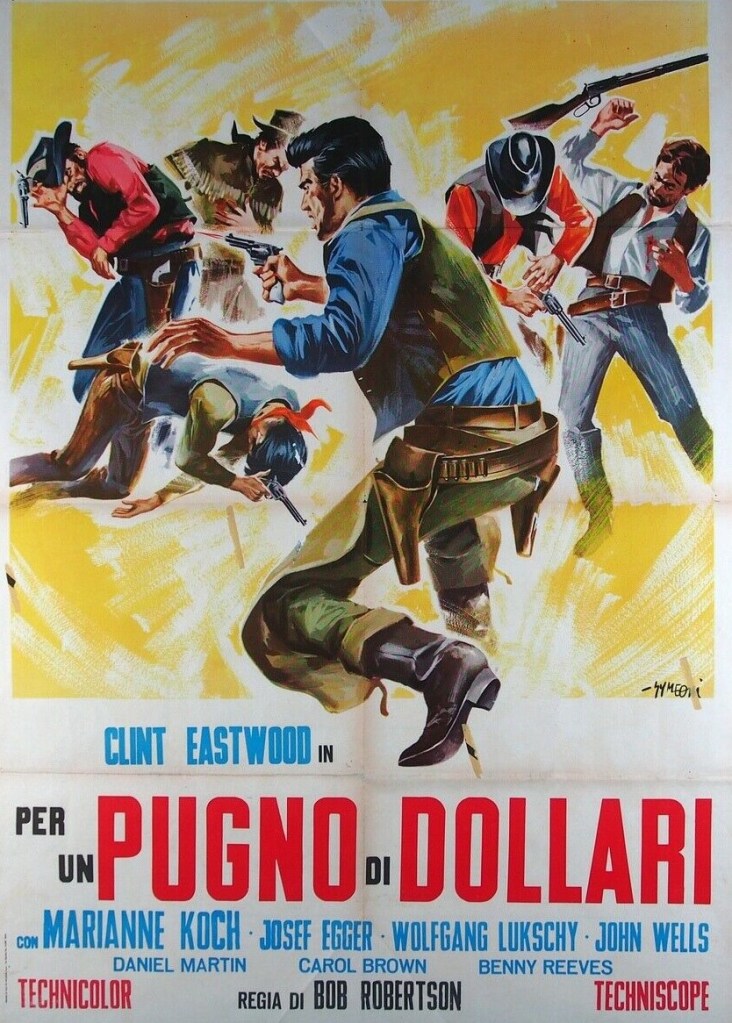
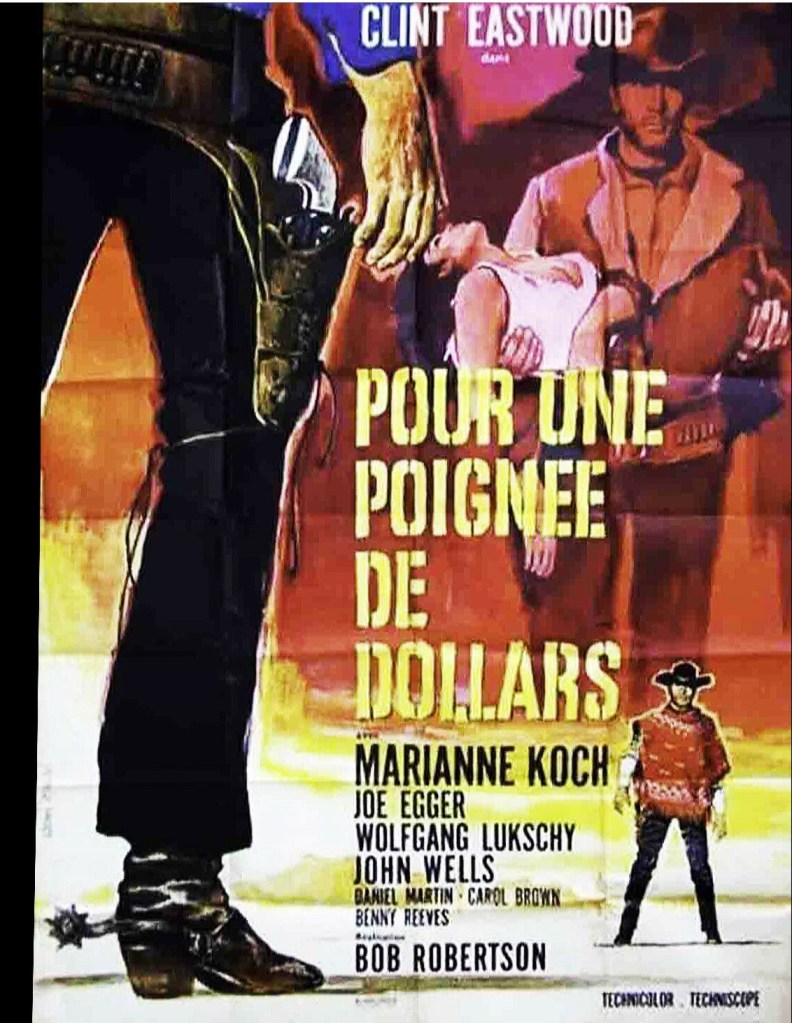
Breezy western debut that created five legends: announced the arrival of a new directorial force in Sergio Leone; bestowed screen stardom on Clint Eastwood; instantly created a new mini-genre in the Spaghetti western; provided a platform for the distinctive music of Ennio Morricone; and best of all from the producers’ perspective made a mountain at the box office. You could add in a cavalier attitude to corpses and adding a notch to the development of that 1960s standby, the anti-hero. From now on the good guy could be a bad guy or so morally ambiguous as not to make a difference.

Look no further than the opening scene to note the alternative Leone approach to the western. An anonymous stranger (Clint Eastwood) arriving in town, observes, while drinking water from a well, a gang torment a small boy by firing bullets at his feet. Indifference to the taboo subject of violence to children became a Leone trademark, most evident when children are slaughtered in Once Upon a Time in the West (1969). Most astonishing of all here, the stranger, ostensibly our hero, does not intervene despite, as we shall soon discover, being a ferocious shot.

Who the heck is this Bob Robertson? A pseudonym for Sergio Leone, as if Robertson was particularly any better known than the debut director. Daniel Martin, oddly enough, is correct, but John Wells, Carol Brown and Benny Reeves are all made up.

Instead he learns that the child is being kept from his imprisoned mother Marisol (Marianne Koch), who has been taken from her husband Julio (Daniel Martin) by Ramon Rojo (Gian Maria Volonte). Rather than directly intervene a a good hero should, the stranger decides to profit from the situation. Realizing there are two opposition factions in town, the Rojos and the Baxters, he decides to play them off against each other, taking money in turn from each, demonstrating his credentials by shooting four men. That the Baxter clan includes the town sheriff (Wolfgang Lukschy) shows how powerful the Rojos have become.   

In fact the stranger doesn’t orchestrate a straightforward shoot-em-up as you might expect but cleverly gets them to kill each other first of all by arranging for both families to confront each other in a makeshift cemetery where the stranger has deposited the bodies of two men, the supposed survivors of a massacre of Mexican soldiers escorting a gold shipment. The Rojos win this round.

After appearing as nothing but a ruthless opportunist, the stranger now turns into a hero, freeing Marisol, reuniting her with husband and son, and giving them money to go away. This kind act does not go unnoticed, the stranger captured and tortured, the Baxters massacred on the assumption he was acting on their behalf. The stranger escapes in a coffin, fashions himself some chest armour in a tin mine, and confronts the remaining Rojos in an old-fashioned, though with a typical Leone twist, gunfight.

Setting aside the body count, which enraged traditionalists, including the vast majority of critics who would later endorse the even more violent blood-letting of The Wild Bunch (1969), the trio of Leone, Eastwood and Morricone put their innovative stamp on the western.

Stylistically, it was in a class of its own (until, at last, Leone outdid himself with the further adventures of The Man with No Name and Once Upon a Time in the West). The operatic elements which feature so strongly in his later work, are here confined to the plethora of close-ups, more like portraits and extremely well-lit, the circular camera movement for the climax (again, more evident in Once Upon a Time in the West), and the stillness before the shoot-out, the way tension builds through nothing happening for a considerable amount of time, not through characters shifting to more advantageous position, but simply while the camera sits and broods.

Leone cut out exposition, generally a large part of the beginning of any western, the stranger having no emotional involvement in the situation. A normal western would focus on the forcibly estranged husband attempting to free the imprisoned wife, perhaps as in The Magnificent Seven (1960) hiring someone to do it for him. The stranger, in effect, sets out to profit from misery.

And he doesn’t say much. A character this monosyllabic would be a supporting actor in a traditional western, perhaps fulfilling a comic role or given some elaborate emotional back story for why words were so precious he wouldn’t spend them.

And he’s definitely iconic. In a later scene, Leone has Eastwood materializing out of the swirling dust in a scene that would easily have fitted the traditional western. But for the most part, he relies on audience reaction to a character who dresses in far from traditional fashion, most notably with his poncho and cigars. The western hero didn’t squint either. He walked not situations with his eyes open, indicative of his boldness and ability to face any situation.

Leone avoids classic western confrontation, the one-on-one scenes that usually occur close to the start where the hero either exhibits prowess or is humiliated. In what might be called “the Chicago Way” not only does nobody come to a gunfight with a knife, the bad guys come mob-handed.

Sure, that means the hero is shown to be even more deadly with a pistol, but it also permits Leone to extend the action by focusing not just on two opposing characters but a number of different faces. There are some other motifs at play in Leone’s debut – women are not all as submissive as Marisol, Consuelo, the Baxter matriarch, on hiring the stranger, says “I’m rich enough to appreciate the men my money can buy,” her power and wealth finding later echo in Once Upon a Time in the West.

Last but not least, is the Morricone sound. There had been great western themes before, plaintive as in High Noon (1952) and The Alamo (1960) or stirring like The Big Country (1958) and The Magnificent Seven (1960), but this appeared to arrive from a different orchestral planet.

If ever a movie could claim ownership of the title “a star is born” it’s this one. Perhaps it has remained so special because the triumvirate of Leone, Eastwood and Morricone had such illustrious careers, this merely a starting point rather than, as if often the case when Hollywood anoints a new star, the highlight.

The Misfits (1961) *****

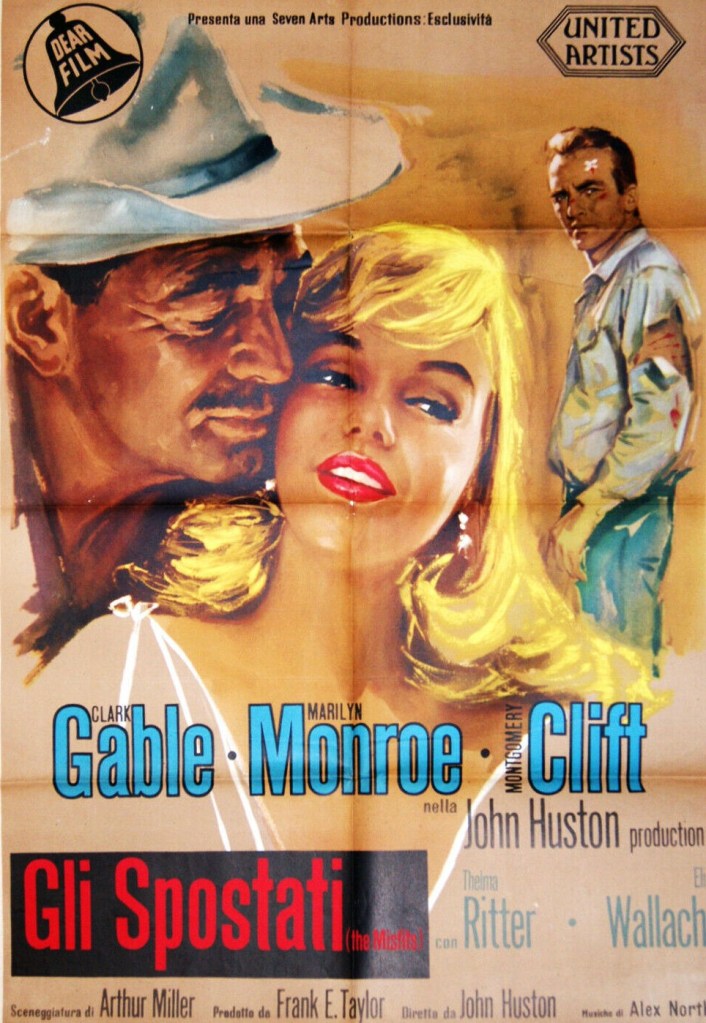
A knockout. Stone cold five-star gold label classic. It’s rare for a non-western to turn into one of the greatest westerns of all time. Forget The Wild Bunch (1969) and Once Upon a time in the West (1969) and every other paean to the dying of the Old West. This is all you need. A true insight into just what is left for the cowboy once civilization and modernization have run their course.

What’s perhaps most astonishing is that three major Hollywood stars plus a top director and  one of the three greatest American playwrights of all time combined to make an indie. There’s no high drama of the kind Hollywood usually requires, no love dashed, no death or murder, nothing dramatic enough to be called narratively gripping. Made today, it would be the kind of picture that would traipse from film festival to film festival, hoping for a break at Sundance. The cast would be no-namers unless a star, fed-up with actioners, wanted to gain some artistic credibility.

This is as misleading a tag line as you could get. Admittedly, selling the movie’s core sadness
in the early 1960s would have been tough.

By some freak of Hollywood magic this was greenlit. There’s plenty good dialog but nothing that’s going to make it into the Classic Line Hall of Fame and there’s only a handful of finely wrought scenes. So beyond the astonishing mustang sequence, what reverberated was the acting, with each big star producing a scene of the highest quality, for pure emotional impact possibly unsurpassed in their entire careers.

The story itself is pretty slim. Roslyn (Marilyn Monroe) in Reno to get a divorce hooks up with washed-up cowboy Gay (Clark Gable) and grieving car mechanic Guido (Eli Wallach). They repair to Guido’s cabin in the country, unfinished after his pregnant wife died because he didn’t have a spare tire. They are joined by hard-drinking man-hungry Isabelle (Thelma Ritter). Roslyn shacks up here with Gay, brightening up the place with decorative ideas and planting vegetables.

At the rodeo they stake drunken Perce (Montgomery Clift), a tough guy with mother issues, self-destructing one rodeo at a time. At various times the trio nurse and console each other, but mostly they get drunk. The three men take Roslyn along to show off their cowboy skills, catching wild mustangs. This is less old-fashioned than you might imagine. It’s more like tracking down the great white shark in Jaws (1975), a primeval battle between man and beast. Man has the advantage of being able to use Guido’s biplane to drive the horses down to Gay and Guido waiting with lassoes.

And tires.

What are the tires for you might well ask? Well, they fulfil the same function as the barrels in Jaws, to weight down the animals so they are easier to track, perhaps exhausting them so much they might just topple over and die. So the odds are not exactly even.

The guys are further disadvantaged by Roslyn’s presence. When she learns of the horses’ fate – not as you might expect to become working horses on a ranch like current television series Yellowstone – she is horrified. The critters will end up as pet food. So much for the Wild West.

This is an absolutely fantastic sequence and I’m surprised it doesn’t turn up on critical lists at all as one of the great western segments of all time. It says more about the end of the West than all the violence of The Wild Bunch or operatic fervour of Once Upon a Time in the West. And it’s a companion piece to The Old Man and the Sea, man, for all his endeavors, ending up with virtually nothing.

There’s a few twists and turns to this sequence so I won’t spoil it for you except to say it is one of the very few sections in movies where character plays out in action.

And this isn’t even Gable’s greatest scene. The moment when, drunken out of his skull already, he bleats in the street about his kids carries awesome power. What he’s saying doesn’t even make a great deal of sense, which is the beauty of it, because what drunk ever makes sense, most of the time he’s effectively addressing the demons inside.

Clift has a horrifically comic scene. His brain is as washed away as his body. He wakes out of a drunken stupor and can’t remember why he has a huge bandage round his head and proceeds to unravel it, again with a monologue that reveals his inner catatonic state.

Monroe is mute in her best scene. She just stares in horror at the mustang incident unfolding. And she has another terrific scene, probably the most ordinary thing she ever did in her screen career, battering a ping-pong.

The title is actually a rodeo term apparently for, unsurprisingly, a horse that was too small or weak to work. I would have preferred something less obvious because it’s quite clear from the outset all the characters are misfits.

This is probably the closest Monroe got to playing a character who reflected her inner turmoil. Roslyn’s beauty brightens up lives but mostly she is depressed, thinking that even when you win you lose, too fragile to cope with reality, and inclined to need consoled as much as she is willing to nurse the others. Gay is a superb creation, who despises men who earn “wages,” that is have a regular job and lose their freedom. Even if freedom means no female companionship and being reduced to catching horses for the few bucks they will bring in from pet food manufacturers, he would rather do that. Perce is just so battered by life he hasn’t a clue what he’s doing. The self-serving Guido whines.

Put all these characters together and they still live in world of their own, and although they occasionally cross the border into another’s existence by and large it is without understanding.

Without John Huston’s empathetic direction it would be unbearably sad, but with virtually nothing in the way of real plot he draws us inexorably in to their small lives. Given its budget and the box office potential of the stars, it was a flop on release. Now it’s a masterpiece.    

However tragic or premature, few Hollywood stars could have gone out at the top with a picture of this quality as did Gable and Monroe. Possibly as a result of his exertions on the film, Gable died a few days after shooting completed, Monroe eighteen months later, but what a final legacy.

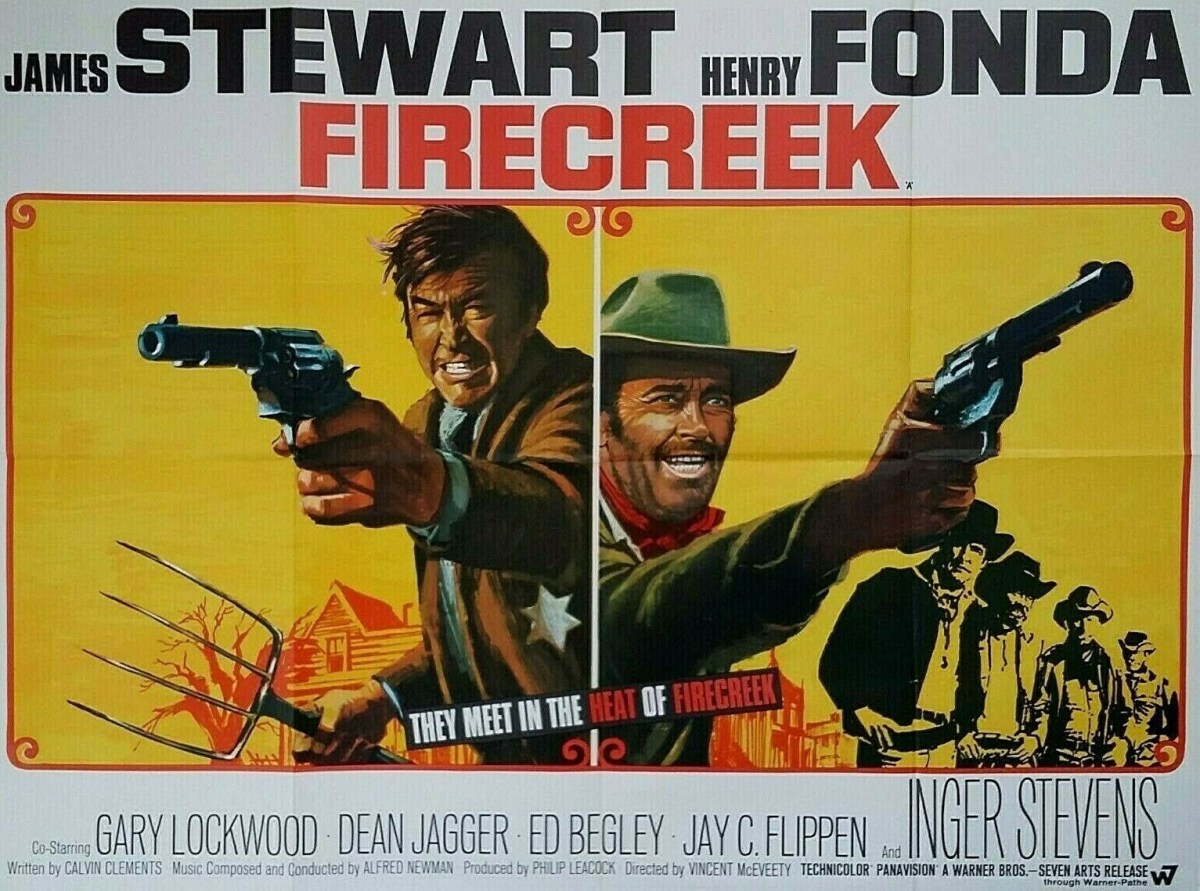
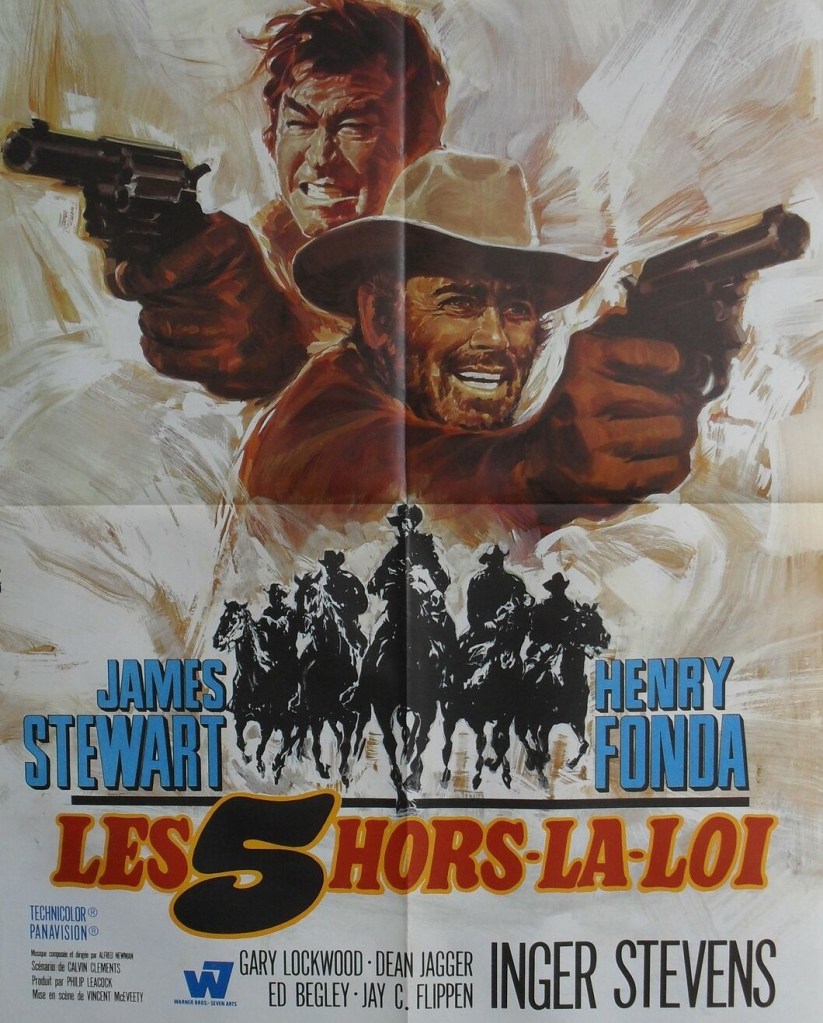
Firecreek (1968) ****

Unfairly overlooked intelligent western with terrific performances from the two male stars and thematically prefiguring both Once Upon a Time in the West (1969) and The Wild Bunch (1969). Granted it appears slow but it’s the slow-burn kind of slow that works exceptionally well. Too often under-stated means under-rated while subtlety rarely attracts critical plaudits. And if you see the role of the screenwriter as probing personality and uncovering self-delusion rather than merely devising pithy lines then this is one for you.

Johnny (James Stewart) is a two-bit (“honorary”) sheriff  in a two-bit town stuffed full of losers. Into his patch comes a gang of hired killers fresh from range wars led by the wounded Bob (Henry Fonda) and including cocksure trigger-happy Earl (Gary Lockwood), mean Norman (Jack Elam) and dumb Drew (James Best). With Bob side-lined with his injury, it’s not long before the gang kicks off, Earl half-drowning a man, smashing up the saloon and nearly killing a pompous preacher (Ed Begley) while Norman attempts to rape Native American squaw Meli (Barbara Luna). They think a few dollars will repair the damage and nullify hurt feelings.

But for the most part tensions just simmer, it looking like the outlaws are temporary visitors, Johnny using diplomacy to settle matters, and none of the townspeople inclined to get into a shooting match. And there’s a rich seam of characters who even when they skirt cliché seem to offer if not necessarily something new but not shop-worn either and with emotional depth.

Headstrong teenager Leah (Brooke Bundy) is attracted to dangerous Earl even though he would as soon rape as romance her, level-headed Evelyn (Inger Stevens) finds solace in a man she knows is a killer and midwife Dulcie (Louise Latham) is so dry her language could cut you with a knife. Johnny’s too trusting wife Henrietta (Jacqueline Scott)  bewails “why did we settle for less than we wanted,” storekeeper Whittier (Dean Jagger) would be a knife-whittling charming elder statesmen except for his habit of going for the jugular,  and hero-worshipping stable boy Arthur (Robert Porter), too old to be just cute and verging on a calamity, “couldn’t tell you what day it was.” And there’s a hint that the upstanding Johnny ain’t quite so perfect, the question of Meli’s white child left dangling in the air.

It’s the kind of “cemetery” town people end up when they’ve nowhere else to go, the inhabitants discomfited “because today didn’t turn out like yesterday.” Johnny’s the worst offender, stopping here on his way to a better life further west because all he “saw here was land nobody wanted and ground that nobody would be challenging me for.” The only person who will stand up for law and order is the witless Arthur who unwittingly triggers trouble. The townspeople mirror the villagers in The Magnificent Seven (1960) who require the assistance of mercenaries before they can stand on their own two feet except in this case nobody is rushing to the rescue.

The initial stand-offs between Johnny and Bob are under-stated, serving to stoke up tension, and the twist is that it’s Bob who tries to avert a showdown, feeling sorry for the sheriff, knowing he will be no match for a proven gunslinger, while the climax provides a surprising saviour. In fact, Bob is the most self-aware of all the characters. He tells Evelyn “you are living even more in the past than I am” and that “I don’t have your temperament to accept another empty day.” And even though he doubts the quality of his gang, he can’t give them up, or the power of being in charge. “I’ve been alone, didn’t like it…I can’t gamble with being a nobody, I’ve been that, doesn’t work for me.”

Among the ton of great touches are Johnny’s badge, made by his kids, title misspelled, the climax in a dust whirlwind, the pompous preacher whose bluster can’t save him, and the most terrible wake you will ever witness.

It’s quite astonishing that a film with such a high quotient of characters – except Johnny at the end – lacking redeeming features could work so well. Director Vincent McEveety was the epitome of a journeyman, best known for television and Disney (Herbie Goes Bananas, 1977) go-to guy. This was his debut feature – if you exclude Blade Rider, Revenge of the Indian Nations (1966) stitched together from episodes of television’s Branded – and it sank at the box office despite the presence of Stewart and Fonda, admittedly at the tail end of their marquee power.

Outside of the wake and the climax, the best scenes are under-played. McEveety lets the words do the talking, a good choice given the exemplary writing (as indicated above) and three principal actors who can be relied upon to ignore the temptations of over-acting. He handles the action well and there’s a growing sense of terror as the townspeople realize what their cowardice has let them in for.

There’s a nod here and there to High Noon (1952) with the town full of cowards but from today’s perspective it’s as a precursor that the movie is perhaps more interesting. Henry Fonda’s (The Best Man, 1964) performance, complete with pitiless stare and thick stubble, seems a rehearsal for Once Upon Time in the West (1969) while his gang, like The Wild Bunch (1969), complete with squabbling outlaws and leadership challenge, are “running out of borders.”  You might notice how Fonda’s death here – the movement to the side when shot, the shock in his eyes – while markedly less operatic closely resembles a similar scene in Once Upon a Time in the West. And if you want further reference to Sergio Leone’s epic, how about a nearby town called Sweetwater.

You might think you’ve seen this James Stewart (The Rare Breed, 1966) performance  before but it’s a subtle variation on the hapless character of Mr Hobbs Takes a Vacation (1962) and far removed from the take-charge characters of this decade. This is man who has fooled himself into thinking he is something he is not, a man of the west in name only.

Inger Stevens (House of Cards) again delivers, like the other townspeople acting tough to hide the weak interior. There’s a terrific supporting cast. Gary Lockwood (2001: A Space Odyssey) is given more rein than anybody else outside of Ed Begley (Warning Shot, 1967). Look out also for Dean Jagger (Elmer Gantry, 1960), Richard Porter (Mackenna’s Gold, 1969), Jay C. Flippen (Hellfighters, 1968), Louise Latham (Marnie, 1964), James Best (Shenandoah, 1965), Brooke Bundy (The Gay Deceivers, 1969) making her movie debut, Barbara Luna (Che!, 1969) and Jack Elam (Once Upon a Time in the West).

Credit for the intelligent screenplay goes to Calvin Clements (Kansas City Bomber, 1972), also making his first picture.

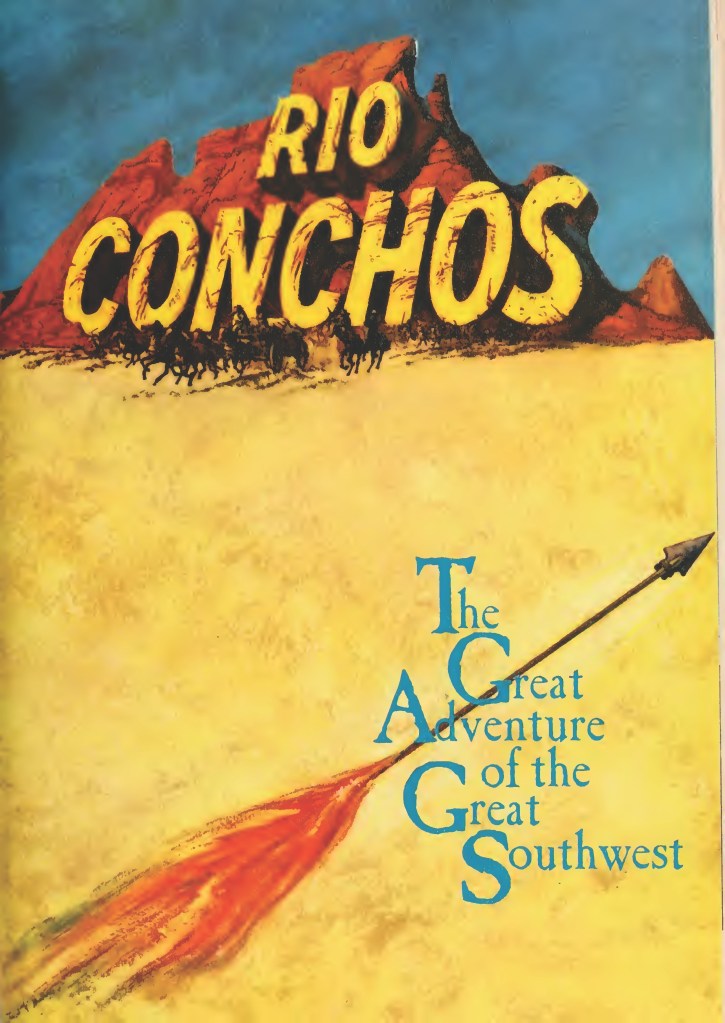
Rio Conchos (1964) ***

Starts and ends as a rootin’-tootin’ western but sags badly in between. The chance of turning it into The Magnificent Four or even The Dirty Pair go a-begging and it’s both revenge- and redemption-driven without either taking enough precedent. And there’s a curious dynamic in that the murderers are clearly smarter than the soldiers. Set in the aftermath of the Civil War, it’s engaging enough but too episodic and far short of a classic.

Lassiter (Richard Boone) kills Apaches with brutal efficiency in revenge for losing wife and child to them. But there’s no law against murdering Native Americans, not even when they form a harmless burial party, and when arrested by Captain Haven (Stuart Whitman) it’s for buying a stolen rifle, part of a consignment of 2,000 feared to be heading into the hands of the Apaches and a rogue Confederate Col Pardee (Edmond O’Brien), under whom Lassiter once served.

Charged with going undercover to get the weapons back is Haven, who lost the cargo in the first place, and another soldier Franklyn (Jim Brown), posing as gunpowder salesmen. Lassiter is freed from jail along with exceptionally vain murderer Rodriguez (Anthony Franciosca). From captured Apache Sally (Wende Wagner) they discover the Apaches are hooking up three days hence with Pardee in Rio Conchos in Mexico.

Mostly, it’s tension between the soldiers and their captives-turned-colleagues. There’s an incident with a dead baby at a house attacked by Apaches, Lassiter shooting the tortured mother. Lassiter attacks a saloon keeper for refusing to serve Franklyn. Pardee is building an army to re-start the war. There’s a brutal scene of the men being dragged behind horses. While Haven plans to use the gunpowder to blow up the Apaches and/or the rifles, Lassiter and Rodriguez nurture plans to steal the cargo.

Lassiter is pretty smart, twice outwitting the Apaches by using fire as a distracting device, easily getting the better of Haven and more than a match for the duplicitous Rodriguez. But there’s a powder keg waiting to explode in more ways than one, the chances of Lassiter toadying along to Apaches seeming remote.

Richard Boone (Night of the Following Day, 1969) coming off Have Gun –Will Travel (1957-9163) and The Richard Boone Show (1963-1964) is impressive as the wily renegade. Here’s one of those actors you never quite know what he’s going to do and that unpredictability adds continuous tension, but it would probably have helped if the audience was fully filled in on his intentions, rather than being surprised all the time. Given he was the star here, he was allotted time to be seen making up his mind in various situations, something he would be denied as a later supporting actor. So when there’s not really much going, he creates tension.

Stuart Whitman (Sands of the Kalahari, 1965) doesn’t really have enough to do what with Boone’s character always being one step ahead and clearly more attuned to danger. Anthony Franciosca (A Man Could Get Killed, 1966) has a gem of role, adding to his characterization withlittle bits of scene-stealing business, sharpening a knife on a wagon wheel, recovering a knife from the stomach of a victim being dragged away by a horse, snaffling a packet of cigarettes, and never ceasing to admire his attraction to women.

Jim Brown (The Split, 1968) makes a solid movie debut, offering more by his presence than in action terms since for the most part he is just the sidekick. Wende Wagner (Guns of the Magnificent Seven, 1969) has more screen time but mostly just smolders or looks sullen apart from a nice scene mourning the baby and another defying her tribe. Look out for Edmond O’Brien (The Man Who Shot Liberty Valance, 1962) and silent child actor Warner Anderson.

The action sequences are well done and director Gordon Douglas (Robin and the Seven Hoods, 1964) also deserves credit for allowing Boone such scope while the opening scene and the death of the unseen woman are exceptional. He has a great gift for the widescreen, but the movie could have done with more clarity. It’s not his fault the poster was misleading and led me into the picture with different expectations. The screenplay by Joseph Landon (Von Ryan’s Express, 1965) and Clair Huffaker (The War Wagon, 1967).was based on the latter’s book.

Nevada Smith (1966) ****

Half breed Max Sand (Steve McQueen) has little truck with the notion that revenge is a dish best served cold. But he’s too young and raw, far from Lee Marvin’s callous killer in Point Blank (1969), to properly avenge the slaughter of his family by three outlaws.

This is a coming-of-age tale with a distinct difference. Max’s development includes, apart from initiation into sex of course, learning to read and write so he can make sense of signposts in order to track down the murderers and receiving tuition from gunsmith Jonas Cord (Brian Keith) so that he can at least loose off some shots without doing himself damage. Vengeance burns so deep that he even stages a bumbled robbery so he can be sent to the prison where the second of his targets is incarcerated. Now that’s dedication for you. And along the way he learns the most important lesson of all, how to live, and not destroy himself through vengeance.

Even so, all Cord’s tuition counts for nought when Max needs a knife to dispatch his first victim Coe (Martin Landau). And he’s not yet so slick with a weapon to avoid serious injury himself. Kiowa saloon girl Neesa (Janet Margolin) nurses him back to health at her tribe’s camp. They become lovers but he rejects the wisdom of the elders and the opportunity to make a life with her.

Unfortunately, Bowdre (Arthur Kennedy)  is a jailbird. And worse, held prisoner in a swamp. Probably the worst bank robbery ever committed sends Nevada there. Max enrols another woman, Cajun Pilar (Suzanne Pleshette) working in nearby rice fields – fraternisation between the jailbirds and these women permitted – to steal a boat to help him and Bowdre escape. Bowdre gets his and this time it’s Pilar who is the collateral damage.

A genuine outlaw now, Max has no trouble joining a band of robbers headed by Fitch (Karl Malden), the final prey. By now calling himself Nevada Smith, Max’s plans are thrown into confusion when it becomes apparent Fitch is aware of his true identity. A surprise ending is on the cards whichever way you cut it, and especially thrilling since it occurs during a well-planned gold bullion robbery.

It’s a film of two parts but divided into three if you like, the unusual swamp setting fitting in between two sections of more straightforward western. Though in the hands of director Henry Hathaway (True Grit, 1969), there is little that’s so straightforward given his mastery of the widescreen and his hallmark extreme long shot. He’s capable of moving from the extreme violence of the vicious murder and rape of Max’s mother to the son’s discovery of the bodies shown just through Max’s physical reaction. And there’s some irony at play, too: gold triggers slaughter and climax; mental dereliction not as feared as its physical counterpart.

Although Hathaway was a true veteran, he was not best known for westerns in the manner of John Ford, more at home with film noir (Kiss of Death, 1947), war (The Desert Fox, 1951) and big-budget pictures like Niagara (1954) with Marilyn Monroe and Legend of the Lost (1957) teaming John Wayne and Sophia Loren. In a 30-year career he had only made three westerns of note – The Trail of the Lonesome Pine (1936), Rawhide (1951) and Garden of Evil (1954). So it was something of a surprise that in the 1960s over half his output was in the western genre. And unlike Ford and Howard Hawks who stuck to the formula of action within a defined community, Hathaway tended towards films of adventure, where the main character, often of a somewhat shady disposition, wandered far and wide.

Steve McQueen (The Cincinnati Kid, 1965) carries the picture with some aplomb, moving deftly from the wet-behind-the-ears youngster to a clever and calculated killer and still retaining enough humanity to enjoy a romantic dalliance. There’s enough action here to satisfy McQueen’s fans spoiled by The Magnificent Seven (1960) and The Great Escape (1963) and for those who had come to appreciate his acting plenty to enjoy. This and The Cincinnati Kid, where perforce as a poker player, he had to do a great deal of brooding, solidified his screen persona, a star you can’t keep your eyes off, wondering what on earth is going on in his mind. As much as he’s playing a character finding his feet, this is McQueen at very nearly the top of his game.

Brian Keith (The Rare Breed, 1966) is the pick of the support, adding a little softness to his usual more hard-nosed screen characters. The villains – Karl Malden (The Cincinnati Kid), Martin Landau (The Hallelujah Trail, 1965) and Arthur Kennedy (Claudelle Inglish, 1961) – are all good in their own different ways, and in the hands of excellent actors, easily differentiated. Suzanne Pleshette (Fate is the Hunter, 1964) shines in a too-brief role.

The sterling supporting cast includes Janet Margolin (Bus Riley’s Back in Town, 1965), Pat Hingle (Sol Madrid, 1968) and Raf Vallone (The Secret Invasion, 1964). John Michael Hayes (Harlow, 1965) fashioned the screenplay from The Carpetbaggers by Harold Robbins. 

Although Hollywood had been prone to sequels – Father’s Little Dividend (1951) following Father of the Bride (1950), Return to Peyton Place (1961), Return of the Seven (1966) etc – there had been no perceived market for prequels, so this was something of a first, Alan Ladd having essayed an older and considerably more sophisticated Nevada Smith in the 1964 film of Harold Robbins bestseller. 

Discover WordPress

A daily selection of the best content published on WordPress, collected for you by humans who love to read.

The Atavist Magazine

by Brian Hannan

WordPress.com News

The latest news on WordPress.com and the WordPress community.