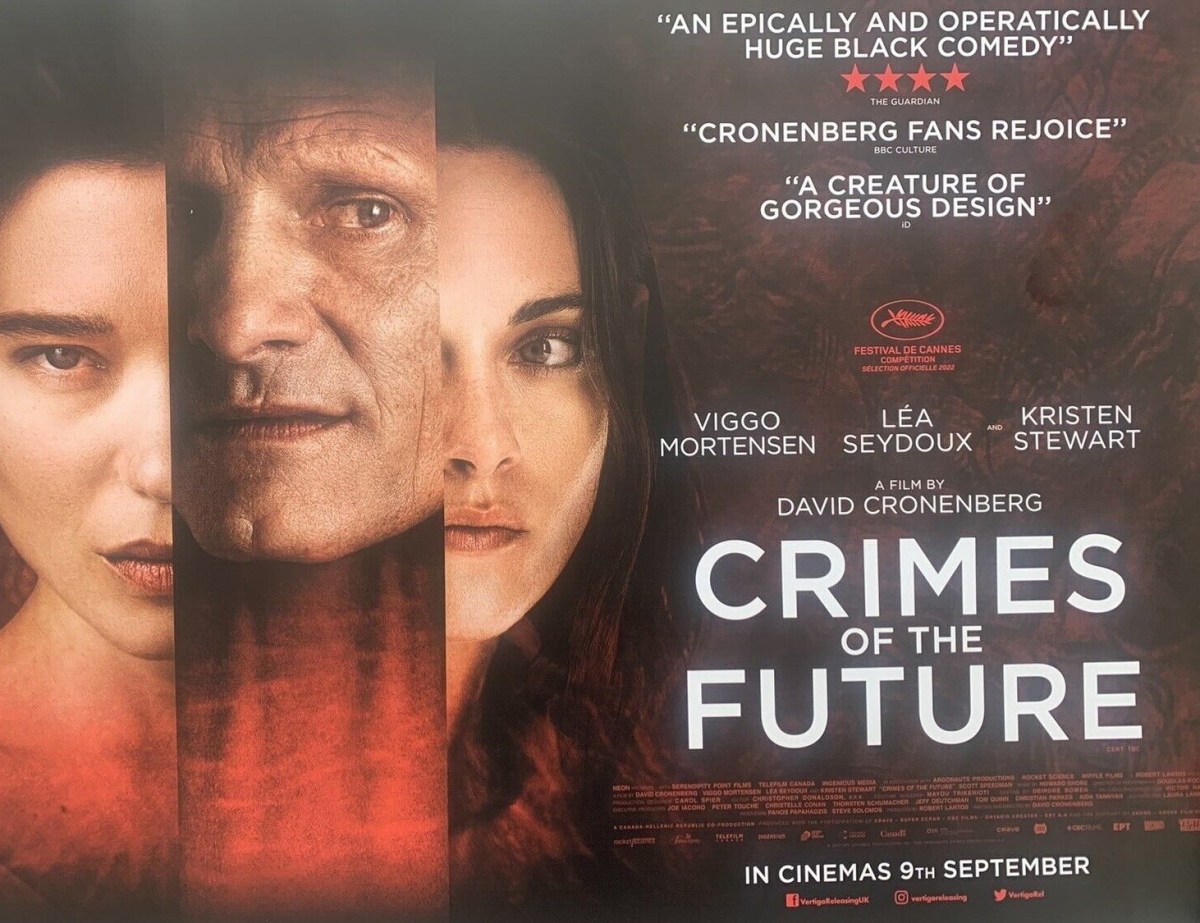
An hour of this was enough for me. Which was a shame because it started so well. A trio of short, sharp, scenes – boy on a seashore with a rusted capsized ship in the background, said boy munch on a plastic bin, said boy suffocated in his sleep by this mother – set up an intriguing premise. Whose significance takes forever to resurface.
Meanwhile, we are thrust into the world of underground performance art based on the notion that surgery is sex or, to put it another way, sex is surgery (the characters seem to think this is a point worthy of dispute). Buried deep is a clever idea: if human beings are pain free, what perversities will they dream up? If they can cut themselves open with impunity, will they just indulge?
And if tumours, rather than being the cause of death, are celebrated, will human beings engage in a competition to see who can grow the best/worst one. There is an actual such competition, called the “inner beauty” contest, presumably an alternative to the Miss World beauty pageants. As if the Alien that used to burst free out of stomachs and caused such terror was now being deliberately grown and harvested for the purpose of entertainment/art.
Our guides into this bizarre world are Saul Tenser (Viggo Mortensen), the incubator of such phantoms, and his partner former surgeon Caprice (Lea Seydoux) whose job is to tattoo whatever on his unique internal organs before they are summoned in front of audience with a flourish. We know he is Saul Tenser because every time he turns up at a door he is welcomed with “Saul Tenser.”
This might work as black comedy but not as serious drama. I call it drama because it certainly ain’t horror. The whole point of horror is to make the audience jump or at least wince. I’m a very good audience for genuine horror because I jump at the slightest thing and won’t event watch surgical reality television programs. But this looked more like a special effects festival to me rather than something that had a chance of scaring the pants off me.
And in real life – as in real Hollywood life – if there was any chance of humans being able to evolve in tis fashion you can bet your Hollywood dollar that the government would already be backing such a scheme and the story would be about an intrepid couple uncovering such goings-on.
Anyway, a creepy guy called Wippet (Don McKellar) for no reason at all runs an underground “organ registry” and whose only purpose it seems to me is to have, as in the best horror pictures, an even creepier assistant Timlin (Kirsten Stewart). So, eventually, after wading through tons of boring examples of creative scalpel, with bodies sculpted into all sorts of configurations including a job lot of ears, we come to the crux.
The killer mother has donated her child’s boy to the father Lang Dotrice (Scott Speedman) who is bidding to become the all-time king nutjob by performing a public autopsy on the child, the mother’s assumption being that Lang has somehow given birth to a new kind of human. But, to be honest, by this point I couldn’t care less.
Part of the problem was that all the actors had been allowed to overact. Every face was a gurn fest, every word endless chewed over, as if they had all decided this was a chance for Oscar glory, Timlin the worst example, every line she uttered was just excruciating. In fact, it there was any entertainment to be had, it was to see which actor could put on the greatest show of tics or utter the worst mangled words.
I would even argue that director David Cronenberg, often deservedly acclaimed as a “visionary” director, deserves better than this, except that he’s the cause of the entire mess. Despite the endless exposition it’s still hard to make out key elements. Is Saul in genuine pain, he sleeps in some kind of neo-skeleton contraption with the long arms monsters used to have before special effects grew up, or is he conjuring up pain because that’s the kind of perverse person he is in a pain-free world. If he’s not pain free, how could he possibly endure his body being sliced open to extract the organs? Don’t bother supplying answers, I couldn’t care less.
I generally make a point of not walking out of movies – maybe three in total in the last five decades of moviegoing – and I left not because I was shocked but because I was bored rigid. I’m giving this one star because I left more than halfway through. If I’d waited till the end it might have been elevated to two stars – or I might have been tempted to give it no stars at all.
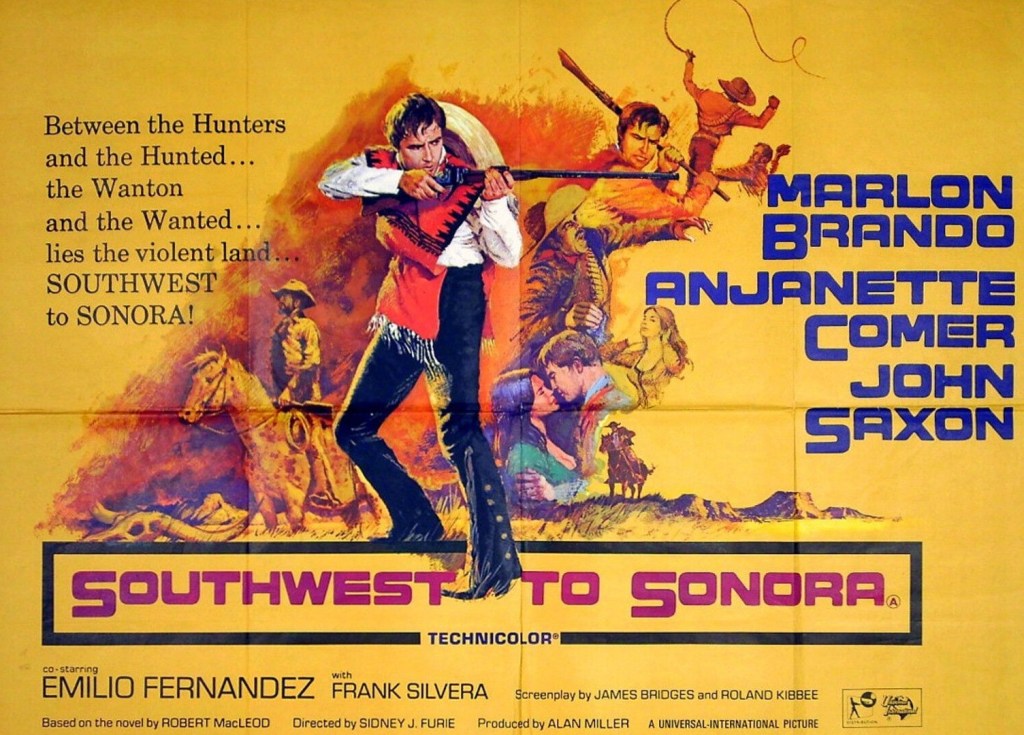
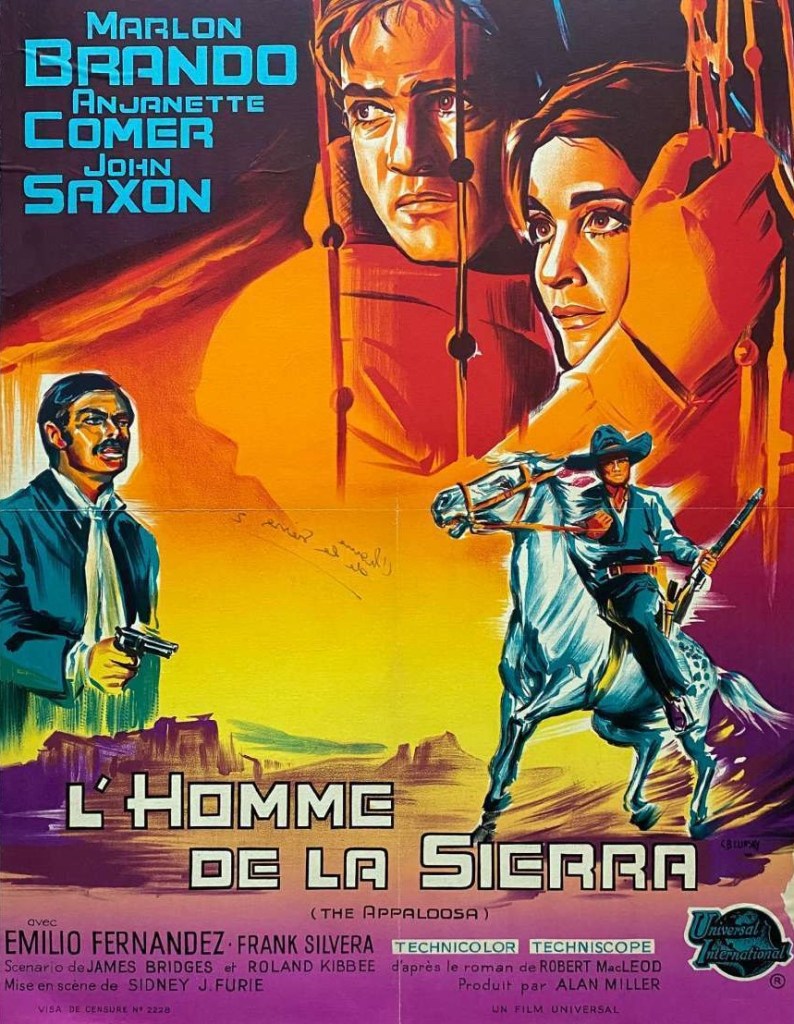
High expectation can kill a picture. Low expectation can have the opposite result. I came at The Appaloosa with the latter attitude in mind. I knew the picture had been a big flop and that critics had carped – as they had done through most of the 1960s – about the performance of Marlon Brando.
Neither was director Sidney J. Furie’s style to everyone’s taste. And it seemed an odd subject – Texan takes on Mexican warlord to recover a stolen horse. It is surely a slow burn, but it certainly worked well beyond my anticipation. There’s not much more to the story than two guys fighting over a horse.
First of all, Brando’s performance came across as natural, not mannered. Secondly, this was a real character. He was not a John Wayne striding into action to protect the underdog or a woman or out of some goddam principle.
At first it did seem odd that Matt Fletcher (Marlon Brando) placed so much importance on the horse given that said warlord Chuy Meena (John Saxon) had offered him a more than fair price for it. But in one brilliant two-minute scene, expertly directed and with virtually no close-ups – the actor caught mostly with his back to the camera or in silhouette – we discover why. Fletcher has been such a disappointment to his father that bringing home such a quality animal was proof that he had made something of himself. A buffalo hunter to trade, he was on the verge of starting a new life.
The second aspect of this intriguing picture was that Medena placed so much importance on a horse when he could easily buy any horse he wanted. But he was faced with losing face. His wife Trini (Anjanette Comer) had tried to escape from him on the horse and the only remedy was to persuade the watching federales that Fletcher had previously sold him the horse.
When Fletcher refuses, Medena takes the horse by force. Fletcher, in retaliation, and to save his own sense of pride, tries to take it back. He is not represented as a superhuman John Wayne or savage Clint Eastwood, but an ordinary guy who soon finds himself out of his depth. So ordinary that the first time he aims his rifle he misses the target by a mile.
Nor is he burdened with an over-enlarged empathy gland. He not only refuses to help Trini, but steadfastly refuses to take her with him, not even as far as the border, until in another of the film’s lengthy scenes she explains the reasons for her escape attempt.
Few films have exceeded it for atmosphere. This Mexico is grim, pitiless. Hostility and suspicion are endemic. Women are abused and discarded. The standout scene is Medena and Fletcher arm-wrestling over scorpions, played out against a soundtrack of scraping chairs and the poisonous insects scrabbling on the table.
This brooding western is enhanced by the best brooder in the business. And Brando is matched by Sidney J. Furie’s (The Ipcress File, 1965) gift – or affliction depending on your point of view – for the unusual camera angle. Here I think the former is on show. John Saxon (Istanbul Express, 1968), making his name as a specialist in bad guys, creates one his best. Anjanette Comer (Guns for San Sebastian, 1968) is worth a watch. Keep your eye out for Emilio Fernandez (The Wild Bunch, 1969) and Alex Montoya (The Flight of the Phoenix, 1965).
James Bridges (writer-director of The China Syndrome, 1979) and Roland Kibbee (Valdez Is Coming, 1971) wrote the screenplay based on the novel by Robert MacLeod, also responsible for the source western for 100 Rifles (1969).
When you watch this and The Chase (1966) together it’s hard to see what on earth got the critics so rattled about Brando’s mid-decade performances. This is realistic acting at his best. Where John Wayne or Clint Eastwood present a superhuman screen persona, even if for part of a picture they are downtrodden, Brando was happy to play very human characters. In both pictures he is just an ordinary joe – forced into action by circumstance.
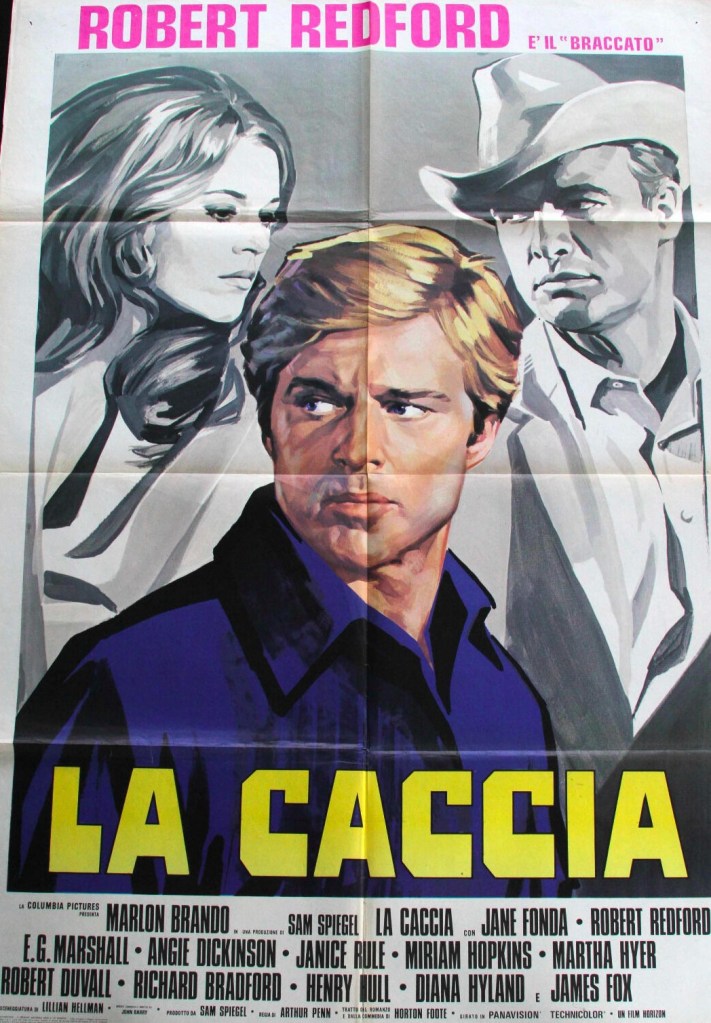
Arthur Penn’s movie came with a lot of baggage. Notwithstanding that he was in need of redemption – he was fired from The Train (1964) and Mickey One (1965) had flopped – he virtually disowned The Chase a week before it opened, denouncing Hollywood in the media, complaining that films were being made by committee. Producer Sam Spiegel was desperate to prove he could make big pictures without David Lean, who had decamped to Carlo Ponti and MGM for Doctor Zhivago (1965) and the knives were out, as always by this point, for Marlon Brando.
So it’s quite astonishing that the finished picture carries such visceral power. It’s a rich, meaty movie, part drama, part thriller, part social comment. Thematically it covers racism, power, adultery, civic apathy, injustice and integrity. At the same time it’s action-driven and the acting from a stunning cast is uniformly excellent. Theoretically, covering so much ground, it should be all over the place.
But three elements keep it grounded. The first is Lillian Hellman’s screenplay. Only using the bare bones of the source material (Horton Foote’s novel and play), she creates a fabulous intermeshed canvas wherein every character no matter how small has an integral part to play. As Coppola would do later with The Godfather she employs the device of large gatherings (two parties, in fact, one for the rich and one for the lower classes) to expose frailties.
The second is Brando, in a thoughtful performance, as an ex-farmer turned sheriff who despises the people he represents and battles to maintain his integrity. And third is Penn’s classical direction. Regardless of the interference he detected, nobody told him where to point the camera. It is noticeable that characters are often centered on the screen, rather than the more arty off-center compositions gaining in popularity. This creates an onscreen equality.
Basically, the narrative revolves around a small Texan town’s reaction to the return of escaped prisoner Bubber (Robert Redford), now wanted for a murder he did not commit, which both brings the past to light and exposes existing tensions within the community. That Bubber takes a good while to return allows those tensions to gently simmer. By the time he does the town is at fever pitch.
Meanwhile, his wife Anna (Jane Fonda), taking advantage of his absence to indulge in an affair with millionaire’s son Jake (James Fox), fears her adultery will be discovered. Timid banker Edwin (Robert Duvall) dreads Bubber finding out that he was initially imprisoned for a crime Edwin committed. Edwin’s sexy wife Emily (Janice Rule) taunts him with her exhibitionism, openly flaunting her affairs. Bubber’s mother (Miriam Hopkins) expects her son’s arrival to bring further humiliation.
Adding further bile to the proceedings are Anna’s venomous stepfather (Bruce Cabot), real estate manager and gossip-monger Briggs (Henry Hull) who preys on adversity, and Emily’s lover Damon (Richard Bradford) who drums up racial hatred against Bubber’s friend. And throw in the distraught Ruby (Angie Dickinson), Calder’s wife.
The incorruptible Sheriff Calder (Marlon Brando) is faced with keeping the lid on a number of potential explosions.
Hellman’s script and Penn’s empathetic direction prevent it from falling to a swamp of melodrama. All of Bubber’s mother’s maternal despair is captured in one shot of her sitting on a stool. Millionaire Val (E.G. Marshall) is building a local college so “young men do not have to leave here like my son.” The poor Anna and wealthy Jake are genuinely in love but she holds it against him that he married someone else (of his own class) first while she waited “all those bad years.” When Calder imprisons Bubber’s African American friend (Joel Fluellen) for his own protection, he lets him find his own way to the cell and trusts him to lock himself up.
Instead of descending into a ramped-up Peyton Place of the Deep South this tackles serious issues in a gut-wrenching manner. In some ways a modern take on High Noon (1952) with townspeople deserting the Sheriff, and more vicious in its violence this highly-underrated picture (at the time critical response appeared to give too much weight to highly-publicized production problems), develops into a searing drama, with terrific performances all round, especially from Marlon Brando, a slow start building through mounting tension to a blistering finale.
And there even time is an ample wit. A drunk confronts Calder with “the taxpayers of this town pay your salary to protect this place.” The Sheriff’s response: “If anything happens to you, we’ll give you a refund.”
While Brando (The Appaloosa, 1966) is without doubt the linchpin, Robert Redford (This Property Is Condemned, 1966), while relegated to dipping in and out of the story to keep tension high, produces a memorable performance. Jane Fonda (Hurry Sundown, 1967)and James Fox (Tamahine, 1963) are class acts. Martha Hyer (The Happening, 1967) is estimable as an alcoholic wife while Angie Dickinson (Jessica, 1962) extends her acting credentials with an untypical role as a domesticated wife.
John Barry’s score, dismissed by the Variety critic as having “no particular theme that lingers in the ear,” is in fact it is a triumphant piece of work, with a central melody that is in turn jarring and romantic.
But it is Arthur Penn who brings home the bacon, bringing together a disparate tale in fine style, drawn tight to a stunning conclusion, and proving he had a mastery of both style and material that would stand him in good stead for his next picture Bonnie and Clyde (1967). Lillian Hellman (The Children’s Hour, 1961) wrote the screenplay from the novel by Horton Foote.
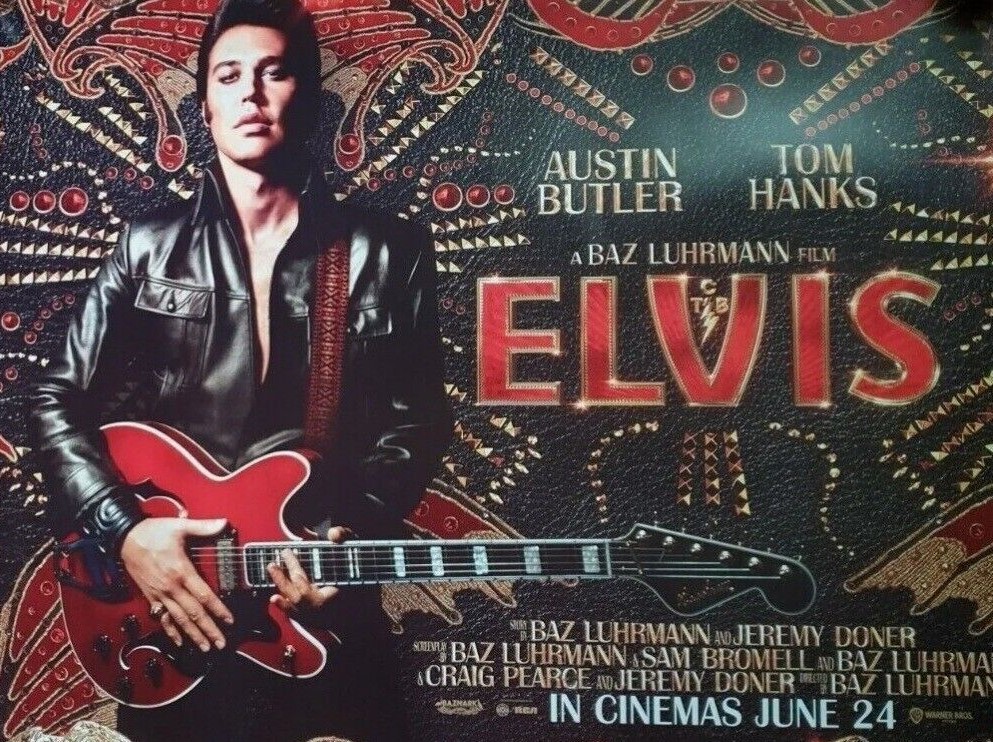
There’s a saying where I come from – “a big boy did it and ran away” – and that seems to be the approach here, Col Parker (Tom Hanks) to blame for all the ills of Elvis Presley (Austin Butler).
Exhilarating when it goes jukebox, capturing Elvis’s electrifying stage presence, anything but when we are subjected to Tom Hanks’ worst accent this side of The Ladykillers (2004). Essentially a tale of two spendthrifts, or “lost boys” as Col Parker persuasively puts it, who each wasted a vast fortune on gambling, drugs, women, cars, airplanes and hangers-on. Baz Luhrman’s flash-bang-wallop style only serves to hide the lack at the heart of the story, none of the self-awareness that lifted Bohemian Rhapsody (2018). The idea of telling the tale from the point-of-view of Col Parker is a movie suicide note.
The early section is best, recounting a troubled upbringing, alcoholic mother and jailbird father, and the birth of the star’s style, absorbing blues and soul and church music in his home town, his unheard-of (discounting Frank Sinatra and the bobby soxers and Bill Haley and the Comets, natch) impact on audiences. But except for political references the 1960s is skipped by so that we can come more quickly to the late decade stylistic reinvention of television and Vegas. Too much – Pricilla (Olivia De Jonge), the pill-popping, the women – exists on the periphery as if that was the cost of doing a deal with the devil, dig too deep into the murk and you will be denied access to the music.
Quite how a creepy soft-spoken manager straight out of Stephen King ever managed to talk the Presley family into anything is a mystery. Col Parker must surely have had more charm than Tom Hanks can ever muster. I get that Parker was increasingly out of kilter with the changing music scene, but his deal-making (which is all an act ever requires from a manager) was phenomenal, he played studios off against each other to keep Elvis on top in Hollywood, he set the tone salary-wise for Vegas gigs, and he invented the satellite concert.
I’m going a little off-piste here but I remember being shocked to discover, as I’m sure rock gods were too, that record labels charged the artists for everything. Those plush limousines that met you at the airport, the suites in fancy hotels, the cost of recording the album, every indulgence, every entitlement came off the top before a group received a red cent in royalties. There are umpteen cases of stars being stiffed by management, Creedence Clearwater Revival and Mike Oldfield who signed contracts that handed over the largest part of their earnings, or closer to home Britney Spears, Taylor Swift, George Michael who all raged at the machine.
By comparison, Elvis had a pretty good deal. Even at 50 per cent of everything he earned, he racked up a colossal amount, half a million a year at least from just two months of performing in Vegas, $1.5 million a year from his decade of making movies, not to mention singles and albums that sold by the gazillion. All told he took in the lifetime equivalent these days of at least half a billion and if he died with only a few million in the bank you can’t blame Parker for Elvis squandering it. If he had taken a bigger share, all that would have happened is he would spent more. It would hardly have saved him from twin dependence on two drugs – the need to play before a live audience and the pills he popped to make up for the times he spent not getting a high from his fans.
Although I’m a big fan of box office, I’m not usually one for box office prediction but I’d be surprised if this even reaches $100 million Stateside, and not just because it needs to pull in the resistant older audience but because I don’t think word-of-mouth, as opposed to CinemaScore ratings, will be as strong as it needs to be. Any recommendation will come with the kind of reservation that I have, wrong director, wrong perspective, too much wrong.
I kept on expecting more dramatic meat but it never came. Sure Elvis was shocked at the assassinations of the Kennedys and Martin Luther King but who wasn’t. It would be interesting to find out who chose the songs Elvis recorded because, for me, “In the Ghetto” marked the reversal of his fortunes, a piece that touched on a nation’s hidden agony, and not “Suspicious Minds,” great tune that it is. Outside of the opening section, the most absorbing parts were those that concentrated on creativity, how the famed television special was put together, Elvis himself conjuring up arrangements for his Vegas show.
On the plus side, I never noticed the time. The movie just about raced by and every time it looked like flagging there was another live performance to keep us hooked. I’d never heard of Austin Butler though he had a small part in Once Upon a Time in Hollywood (2019) but this is definitely a calling card. Tom Hanks, under a slab of prosthetics, may want to forget this performance and it’s shame because I’ve not seen him act since A Beautiful Day in the Neighbourhood (2019) due to streamer-snapping. Olivia De Jonge (Josie and Jack, 2019) isn’t in it enough but has a wonderful scene when they first meet, her intonation marvelous.
As well as directing, Baz Luhrman (The Great Gatsby, 2013) had a hand in the screenplay along with Sam Bromell, making his movie debut, and Luhrman regular Craig Pearce.
These days you need the impetus of an anniversary or the accompaniment of a live orchestra for an old movie to do the rounds on the big screen apart from perennials like It’s a Wonderful Life (1946) at Xmas and Casablanca (1942) on St Valentine’s Day. In attempting to turn a revival into an “event” these are mostly treated as one-screening-only affairs such as was the case with Dr No (1962) on the occasion of its 60th anniversary. While that milestone marked the birth of the Bond phenomenon, it ignored another landmark, one that played a significantly more important role in the 1960s than virtually any other picture – the rebirth of the reissue/revival.
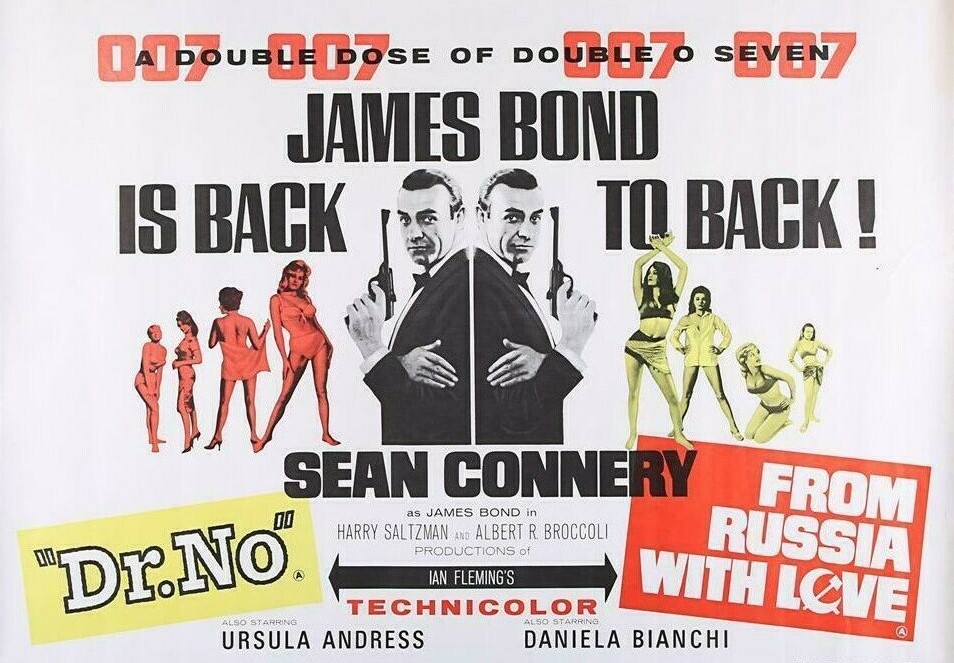
For the first James Bond double bill Dr No/From Russia with Love which appeared in 1965 in the wake of Goldfinger (1964) created a new market for old pictures, triggered the “threeissue” bonanza, boosted the coffers of virtually every studio in Hollywood and saved many an exhibitor from the perennial product shortage.
Quite how momentous this particular double bill was can be seen from the fact that no reissue beyond Gone with the Wind (1939), irregularly revived, had ever featured in the annual top ten at the box office. Dr No/From Russia with Love was the first oldie ever to reach fifth on the annual rankings, beaten in the 1965 year-end chart only by Mary Poppins (1964), The Sound of Music (1965), Goldfinger (1964) and My Fair Lady (1964). It earned more than Peter Sellers-Peter O’Toole smash What’s New Pussycat (1965), James Stewart in Shenandoah (1965), Richard Burton and Elizabeth Taylor in The Sandpiper (1965), Cary Grant comedy Father Goose (1965), Frank Sinatra war picture Von Ryan’s Express (1965) and comedy western Cat Ballou (1965).
Reissues had come to rescue of beleaguered studios in a major fashion several times before, most recently in 1948 and 1952 but in the 1960s exhibitors were wary of giving old movies a big-screen berth for fear that this was a mere prelude to an appearance on television and being faced with angry moviegoers duped into paying for a film they could have seen a few months later for nothing. So except for the umpteenth revival of Gone with the Wind in 1961, and Bridge over the River Kwai (1957) re-released in the wake of Lawrence of Arabia (1962) in 1964, few reissues had been welcomed by the marketplace.
In fact, there was no solid reason to bring back either of the first two Bond pictures in the United States, if judged by their initial box office. The sensational figures achieved in Britain were not repeated across the Atlantic, Dr No bringing in just $2 million in rentals, From Russia with Love double that, but neither in the box office ballpark that might automatically justify a rerun. In fact, both pictures had already been re-booked in cinemas, and as double-bills, though not with each other, but engagements of From Russia with Love/The Definat Ones, Dr No/The Manchurian Candidate and Dr No/Toys in the Attic elicited such low response the experiments were quickly terminated.
Nor was the idea precipitated by Goldfinger hitting the mother lode on its U.K. launch. What made United Artists executives in Hollywood sit up were not Goldfinger’s whopping figures. In the same week, however, that Goldfinger opened in London’s West End at the Odeon Leicester Square, Dr No was re-booked into the Leicester Square Theatre across the street and From Russia with Love into the Pavilion just around the corner. Neither oldie impinged on the audience for the new Bond, instead attracting their own avid moviegoers, desperate for a second chance to see the films that kicked off the whole phenomenon. In due course, Dr No and From Russia with Love were shunted onto the Rank circuit where they played as a double bill to great success.
When the double bill was announced as a prospective program in the United States, exhibitors were beating down UA’s door, despite the stiff terms demanded, a 60 per cent share of the receipts. That was an extraordinarily high sum for a reissue, especially one that would allow exhibitors time for only one showing every evening rather than the two showings afforded a single bill.
Unlike Britain, UA was disinclined to run the risk of the two oldies cannibalising demand for Goldfinger. So the double bill was held back until April 1965, five months after Goldfinger had opened, long enough for that picture to have been milked in first run, and long enough also for it to act as an effective trailer for the new pairing.
The double roared out of the traps, collaring, in first-run single-cinema opening-week debuts, $57,000 in Chicago, $42,000 in Philadelphia, $40,000 in Dallas, and $36,000 in Cleveland. The Bond reissue bandwagon proved unstoppable. These were the kind of figures attained by box office home runs. Second weeks drops were relatively small. The double bill grossed $1.3 million (equivalent to $11.9 million today) from 103 cinemas in its first week. When it entered multiple run in New York, the only film that did better over the course of the whole year was Goldfinger. From 26 houses Dr No/From Russia with Love gobbled up $649,000 – an incredible per-theatre-average even at 1965 prices – and the second week was $264,000. Total gross over four weeks: £1.29 million. Demand was so high that in June UA ran out of prints – 400 were in circulation. The Los Angeles showcase (multiple run) produced $647,000 in three weeks from a maximum of 30 houses.
The double bill notched up $8 million in rentals, virtually solid profit, since costs had long since been covered and the movies sold themselves. As much as UA realized that each new Bond film was a potential goldmine, so they also quickly understood the rich seam available from bringing back the older movies.
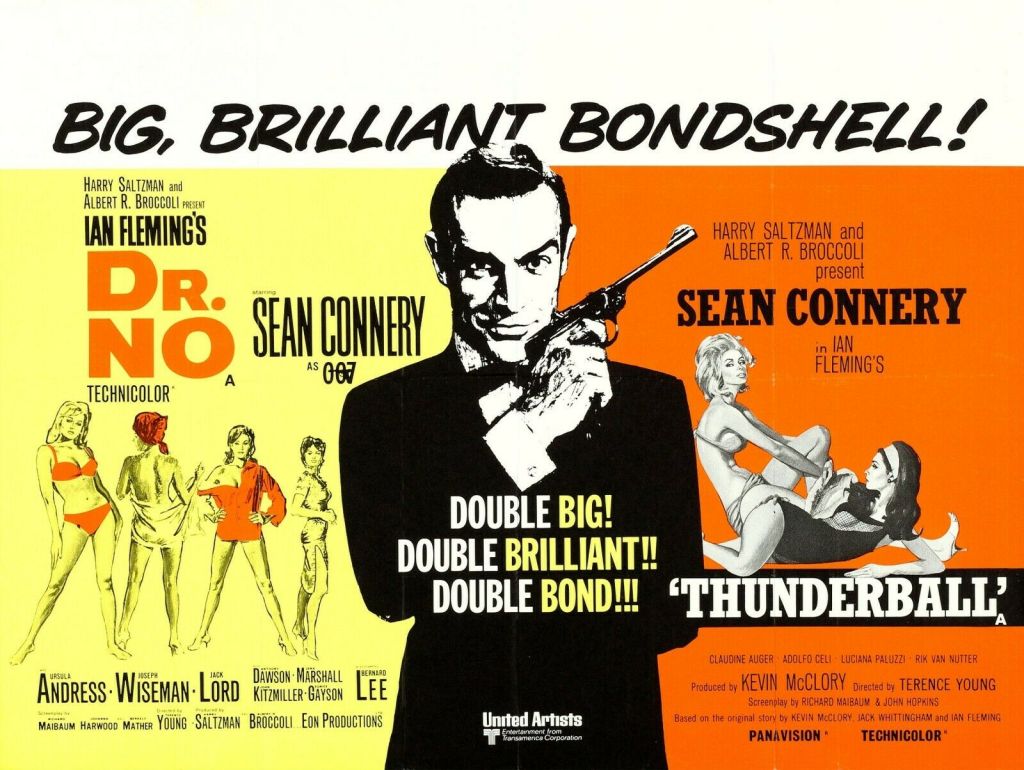
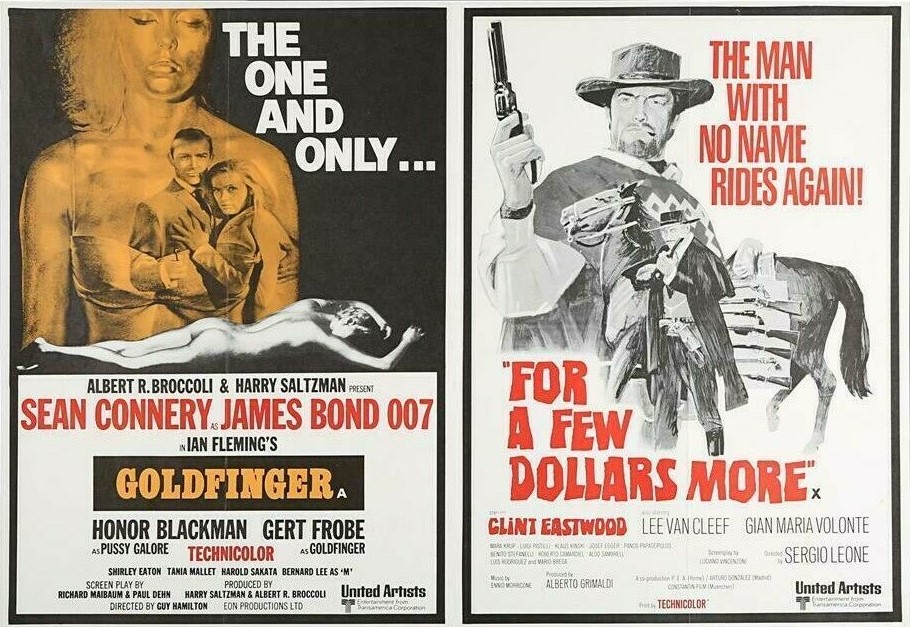
UA tested out the new idea the following year, this time with Goldfinger/Dr No. The result was $4.6 million in annual rentals, enough for seventeenth spot in the annual chart. Further pairings appeared – Thunderball (1965)/From Russia with Love and Goldfinger/Dr No in the wake of You Only Live Twice (1967). UA took the double bill reissue to its logical conclusion by dualing the “Dollar” features – A Fistful of Dollars/For a Few Dollars (both released in the U.S. in 1967) followed by Hang ‘Em High (1968)/The Good, the Bad and the Ugly (U.S release 1967). UA took the idea in a different direction by doubling up You Only Live Twice and The Good, the Bad and the Ugly. In fact, in 18 months between April 1968 and September 1969, UA sent its entire portfolio of Bond and ‘Dollar’ films back into the marketplace. The “threeissue” – a movie returning three times to cinemas in a short space of time – was born.
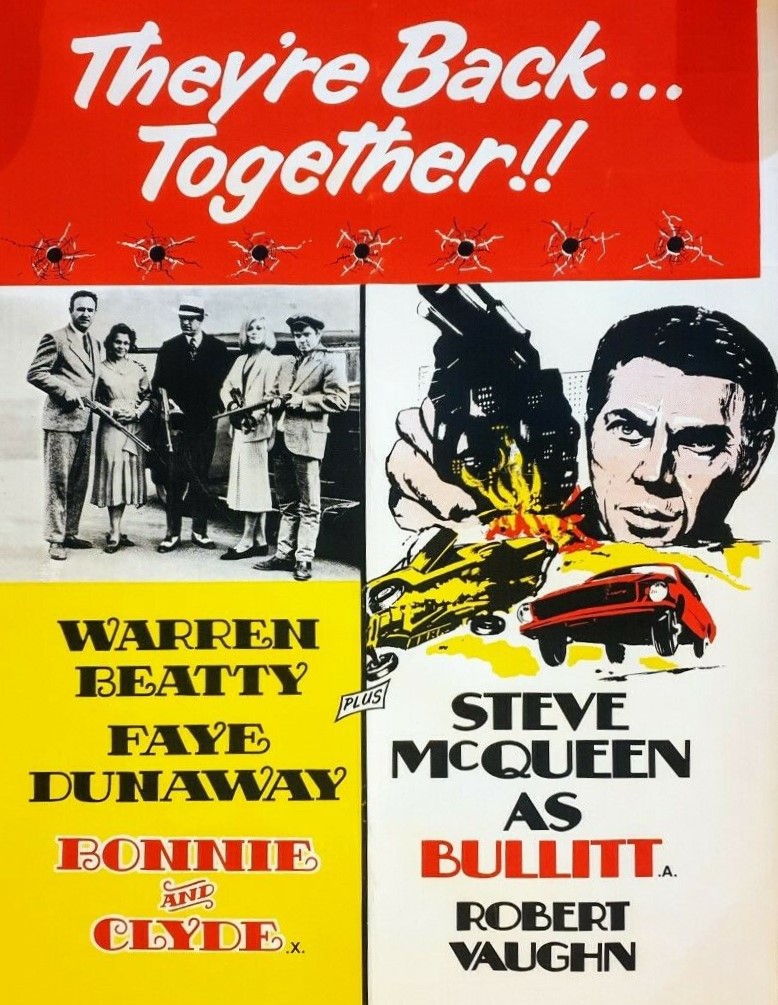
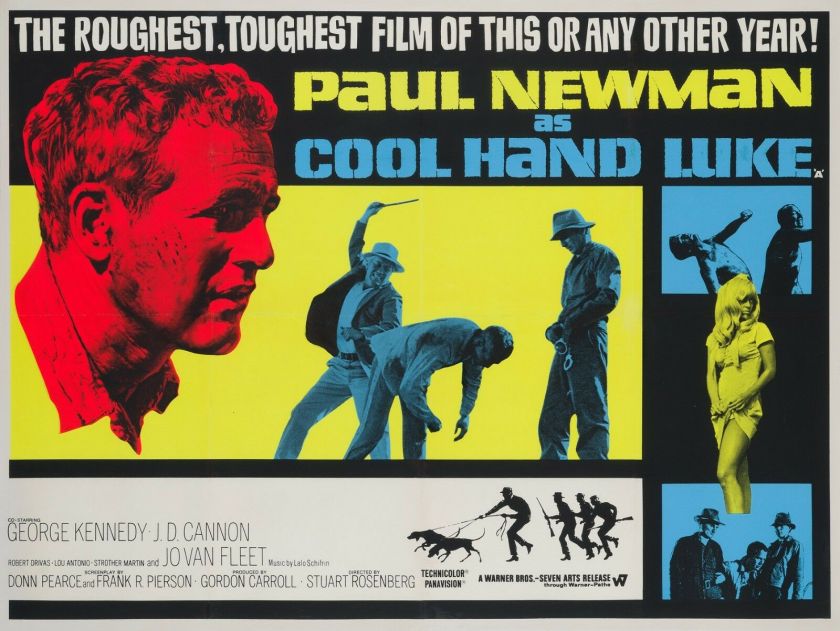
UA’s bounty created a new template for Hollywood, the opportunity to pair known winners not long after the originals had first been seen, rather than the traditional delay of seven-to-ten years. For some studios this was films with an Oscar link – Columbia’s Cat Ballou and Ship of Fools (1965) combo racked up $1.3 million in rentals, Warner Brothers with Cool Hand Luke (1967) and Wait until Dark (1967). For others the twinning was an attempt to prolong box office as with Bonnie and Clyde (1967)/Bullitt (1968) or arthouse breakouts like Belle de Jour (1967)/A Man and a Woman (1966).
In the 1970s when there was an even greater product famine the UA speedy reissue experiment was vital to studio finances. After initial release, Butch Cassidy and the Sundance Kid (1969) generated $24.8 million in rentals from two separate reissues. Brought back three times were Billy Jack (1971) with an extra $25.2 million, The Exorcist (1973) with a bonus of $21.4 million and Blazing Saddles (1974) with $26.4 million.
In other words around $100 million in extra revenues from just four pictures in the 1970s thanks to studios adopting the speedy reissue template initiated by United Artists for James Bond. At a rough estimate additional rentals (i.e. the money paid straight into studio coffers) from reissues in the 1960s and 1970s could easily have reached the half a billion mark.
SOURCE: Brian Hannan, Coming Back to a Theater Near You. A History of the Hollywood Reissue 1914-2014 (McFarland, 2016). Over 250,000 words devoted to the only history of the reissue.
My formative years in terms of movies coincided with the rise of the critic and the auteur theory, promoted by Andrew Sarris, which valued directors far higher than actors, dramatically changing the existing status quo. Critics like Sarris developed their own pantheon of artists who could be considered great and routinely ridiculed those actors or directors who did not come up to the mark or whose works occasionally fell short of the lofty standards thus set.
Critics liked nothing better than to hail a new unknown talent – and be the first to do so – and regularly found fault with films that had big budgets. In short, they set out to pulverize popularity. In a separate endeavor academics found a new way of looking at films, deciphering in movies particular previously unforeseen aspects, epitomized by Peter Wollen’s seminal Signs and Meaning in the Cinema (1969). If ever a small picture turned into a big hit it was always, it was claimed, down to the efforts of critics who championed the movie. More importantly, critics were a law unto themselves. Movies the public loved were often the very ones that critics and academics disdained. As a consequence, the universal question on critical lips was how could the public be so foolish and why were they so gullible?
That meant I was often a puzzle to myself. How could I enjoy a picture that apparently lacked critical merit? Or had no redeemable features according to those who knew best? It was a paradox that I have enjoyed to this day. I am not talking here of films “so bad they are good,” a category invented to accommodate a particular guilty pleasure such as the Ed Wood portfolio, or of films deemed “camp classics” like Valley of the Dolls (1968).
In fact, Valley of the Dolls is a good place to start in the critic vs. public divide. Here was a film based on a novel the literary critics of the period derided (although more recently its merits have been reassessed from a feminist perspective) and turned into a big-budget film with an Oscar-nominated director that the film critics of the period also vilified. The book was a bestseller and movie a huge hit. Public and critics were at an impasse. Were the public misconceived or, worse, duped, into devouring book and movie?
When I wrote my book on the making of The Magnificent Seven (1960 version) I discovered that that movie had not been generally well received either by the critics or the public but that it had turned into the most popular western of all time, courtesy of endless repeats on television and a considerable number of reissues, where other movies in the genre termed classics fell far short of such universal appeal and adoration – except as far as critics and academics were concerned.
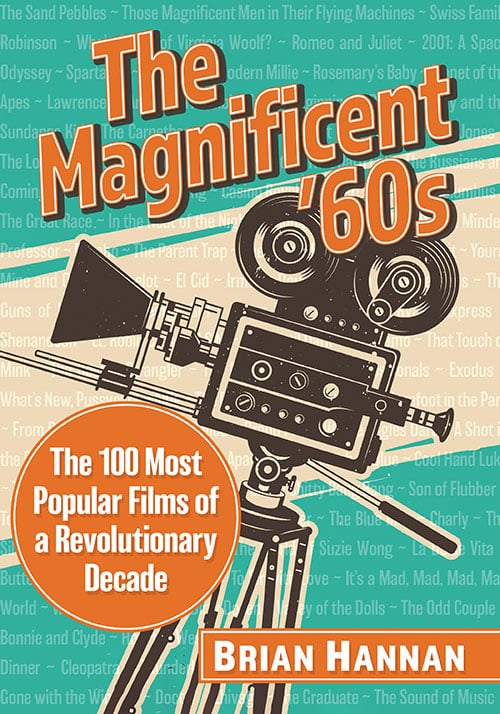
So when I came to look at the best films of the 1960s – a period of which I am inordinately fond – I decided I would in a sense ask the public. After all, box office is nothing more than a public thumbs up or thumbs down. My concept would mean cutting out the middle man.
I would go going straight to the public vote, determining popularity from box office receipts. We are not talking here about people who watched a movie for free on television years after it first came out and saw a version reduced in size, scale and sound and which in some cases had been trimmed for censorship reasons or to fit in with the advertisements. Instead, I am referring to this decade’s moviegoers willing to slap down their hard-earned bucks, take time out of their schedule, their effort maybe involving hiring babysitters or shelling out for transportation and parking and whatever.
In a sense there is something supremely egalitarian in that approach in that the people who pay to see movies are the ones whose box office dollar ends up funding new pictures and without whom there would be neither popular not unpopular films. So this assessment of the Top 100 Movies of the 1960s is based purely on the public’s response to a given film through the simple act of paying to go and see it. That act turns into the movie’s box office and that underpins this book.
This was the decade of legend. It spawned many of the greatest films ever made. Studios made more money than ever before, movie budgets ballooned and stars received record sums. As the auteur theory grew in influence, directors were feted. Businesswise, it bridged the old studio system where high numbers of movies were cranked out every year and the new approach where production was reduced in the expectation of creating the equivalent of today’s “tentpoles.”
Films made on a scope not conceived since Gone with the Wind (1939) became routine, arriving in theaters nearly every month, some so spectacularly successful they set the template for the future blockbuster. New genres such as the spy picture, driven by the James Bond phenomenon, came out of nowhere. Other moribund genres, previously restricted to low-budget or B-picture status, such as horror and sci-fi, reached new heights thanks to bigger budgets and top-name directors.
While every genre thrived, the decade will be remembered particularly for musicals like The Sound of Music (1965) and historical epics like Lawrence of Arabia (1962) and an explosion of British movies. It was also the era of “the little films that could,” low-budget pictures such as Lilies of the Field (1963) and Charly (1968) whose success far exceeded expectation. This epoch of dramatic change saw the industry embrace different attitudes to sexuality, violence and racism, adopt alternative release strategies and reassess movies’ ancillary value.
A new generation of stars emerged. Steve McQueen, Paul Newman, Sidney Poitier, Jane Fonda, Barbra Streisand, Sean Connery, Peter O’Toole, Natalie Wood, Faye Dunaway, Peter Sellers, Clint Eastwood, Julie Christie, Dustin Hoffman, Warren Beatty, Michael Caine, Raquel Welch, Omar Sharif and Lee Marvin formed the new elite. But that was not at the expense of existing stars. The post-war and 1950s generation retained – and in some instances expanded – their appeal.
Into that category fell Elizabeth Taylor, Burt Lancaster, Audrey Hepburn, Doris Day, Richard Burton, Sophia Loren, Rock Hudson, Tony Curtis, Charlton Heston and Frank Sinatra. And although Gary Cooper and Clark Gable died early in the decade, studios still counted on the box office prowess of pre-war contemporaries like John Wayne, Bette Davis, James Stewart, Joan Crawford, Spencer Tracy, James Stewart, Henry Fonda, and Katharine Hepburn and until his retirement in 1966 Cary Grant.
However, the “star system” had vanished and studios no longer invested millions annually on training new talent. Although in the 1950s Yul Brynner, Audrey Hepburn, Tony Curtis and Rock Hudson had graduated from smaller-scale new talent programs, by the 1960s they were largely defunct although occasional attempts were made to revive the concept. Occasionally, television might throw up a new prospect – a Steve McQueen or James Garner – but most new stars, as far as the public was concerned, came from nowhere. One minute you had never heard of them, the next they were everywhere, Sean Connery and Clint Eastwood in particular falling into this category. Where the previous system had relied on steady grooming, now stars were born in an instant. One picture was all it took.
Behind the camera was a parallel situation. The old-stagers like John Ford, Howard Hawks, Henry Hathaway, Fred Zinnemann, Billy Wilder, William Wyler, David Lean and Carol Reed were joined by post-war debutants such as Robert Aldrich, Robert Wise, Stanley Kramer and Stanley Kubrick.
The newer crop graduating from television included John Frankenheimer, Robert Mulligan, Sam Peckinpah, George Roy Hill, Franklin J. Schaffner, Sidney Lumet, Arthur Penn, Norman Jewison and Sydney Pollack. They were augmented by the British New Wave of Karel Reisz, Tony Richardson, John Schlesinger and Lindsay Anderson and by later additions like Peter Yates.
European directors welcomed into the Hollywood mainstream included Michelangelo Antonioni (Blow Up, 1966) and Roman Polanski (Rosemary’s Baby, 1968) while foreign-made pictures like Federico Fellini’s La Dolce Vita (1960) and Costa-Gavras’s Z (1969) made massive inroads into the box office and helped create a different artistic sensibility. While French New Wave films were mostly confined to arthouses, many of their techniques in storytelling and especially editing were embraced by Hollywood directors.
Studios began the decade in financial turmoil, MGM and Twentieth Century Fox on the verge of bankruptcy, production decimated and attendances in terminal decline. As had occurred at the start of the 1950s, studios gambled on a bigger throw of the dice, this time with 70mm big-budget roadshow, movies that paid little heed to budget strictures. The roadshow aimed to woo audiences away from the encroaching maw of television, to give big-screen lovers something that small-screen producers could not match, and at the same time reinvigorate the moviegoing experience.
First run big city theaters already generated far greater revenues than cinemas further down the food chain and now studios intended increasing the box office take further by hiking prices. Big city center cinemas would offer an experience unparalleled in the modern cinemagoing age. Roadshows were shown in the separate program format so you could not just slip in and out to suit yourself. And the movie started with a fanfare, an overture that could last up to ten minutes, giving you time to take your seat, and there was an intermission to let you stretch your legs, use the facilities or refuel.
The whole experience, what with souvenir programs on sale and babysitters to be hired, and maybe cocktails or dinner beforehand, was an event. And movies had never been events of any regularity. The prior moviegoing ethos was that it was a habitual part of your life. You popped into your neighborhood theater as you might go bowling or visit a bar. There was nothing fancy about it. It was just what everybody did. Or had done – until television became the way you spent your evenings, staring at a tiny box in the corner which lacked widescreen or color or 3D or any of the other gimmicks that for a time in the 1950s stopped the decline in theater attendance.
This book defines this decade in an entirely new way, not with reference to the critics, but as viewed by the public. Although you may find many critical faves here, you will find as many films that defined the public/critical divide.
Sergio Leone played the numbers game – one hero/anti-hero for debut A Fistful of Dollars (1964), doubling down in For a Few Dollars More, bad guys in triplicate for The Good, the Bad and the Ugly (1966) and virtually an entire spread – Charles Bronson, Henry Fonda, Jason Robards and Claudia Cardinale (not quite fitting the anti-hero mold) – for his masterpiece Once Upon a Time in the West (1969), upping the artistic ante with every episode. For a Few Dollars More is part sequel, part caper and part dress rehearsal.
Looking back on this Leone venture now you can’t help but be influenced by what followed in particular Once Upon a Time in the West, and the way in which themes, ideas and characters introduced here are more fully developed. You could start with the musical motif. Here a fob watch that plays a little tune, as important to its owner, the outlaw El Indio, as Bronson’s harmonica and coming complete with revelatory flashback. Oddly enough, you can find comparison between El Indio and railroad baron Morton from the later film in their almost orgasmic expressions (El Indio is stoned half the time, possibly the first western villain to be hopped up on marijuana) to what they perceive as a dream (water in the case of Morton). As with Once two enemies team up, here Eastwood and Lee Van Cleef, there Bronson and Fonda, and there’s an almost identical sequence when the pair, working in tandem, clear a street of gunmen. Although there’s no revolving camera, the final shoot-out takes space in a space marked out as a circle.
Revenge here is triggered by a murdered sister rather a brother. And Indio is at least as clever as Fonda, matching him in grandiose ambition and treachery. And there’s even an irritating insect, and a railroad, but that’s just a nuisance. Perhaps the most telling moment in Once, the one where Leone took command of his artistry was in the massacre at the ranch, a child brutally dispatched on screen whereas here when a child is murdered it is off-screen.
The story’s an unusual one for a sequel. Having established the Man with No Name (Clint Eastwood) – actually given a name here, Monco – as a gunslinger par excellence, the new film pits him against Colonel Mortimer (Lee Van Cleef) not just a rival bounty hunter but in some senses smarter. If it came to a shootout, the longer range of the Colonel’s weaponry would challenge Monco’s skills. When they discover they are both seeking the same wanted man, El Indio (Gian Maria Volonte), they decide to join forces. Monco, however, is tasked with being the inside man and must join the gang.
Halfway through, the picture switches tack and becomes a caper movie. El Indio plans to knock off the “fortress” of a bank in El Paso to the tune of half a million dollars. So, unexpectedly perhaps for a western, we get the usual heist preparation and logistics. El Indio’s cunning plan pivots on creating a diversion by robbing a bank elsewhere, Monco part of the small group tasked with that job. Turns out El Indio is disinclined to share the spoils, making the job of the bounty hunters easier by arranging for his own bunch to be killed off.
The twists and turns of the plot, El Indio trying to outwit everyone, Colonel Mortimer not easily duped, gives this more zip than you might expect. Sure in the first 20 minutes the body count is exceptionally high, but once it settles down becomes more character-driven.
There’s a surprising amount of humor, a boy huckster ripping off Monco, a trio of gunslingers turning tail after a demonstration of Mortimer’s marksmanship, a rapacious wife lusting after a “tall” man since, in a visual punch line, her husband is revealed as short.
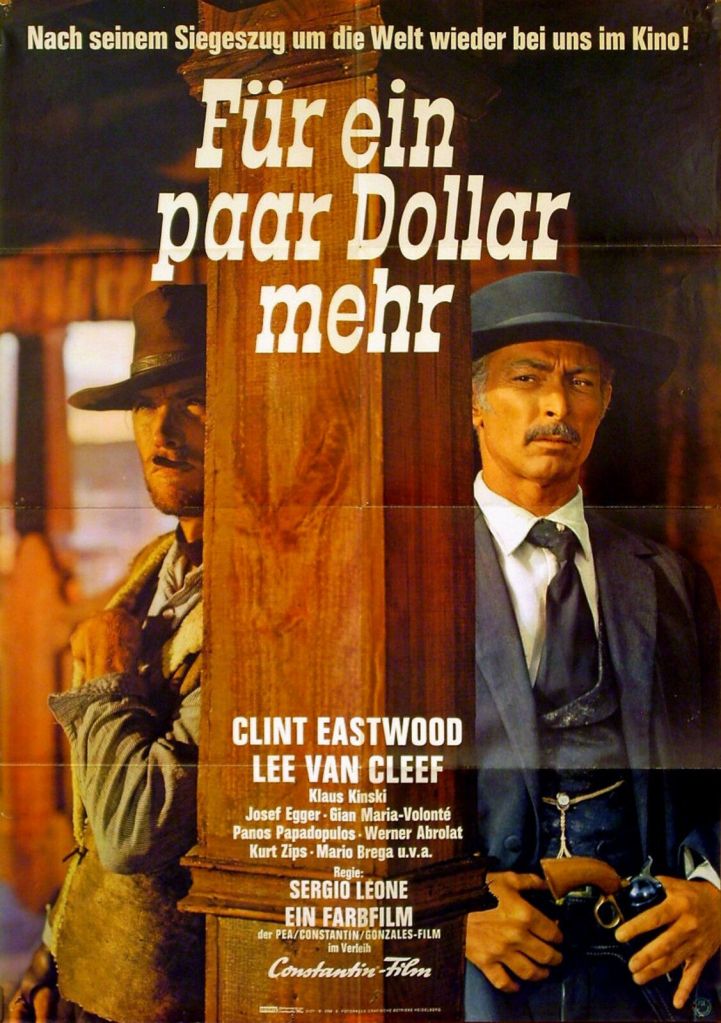
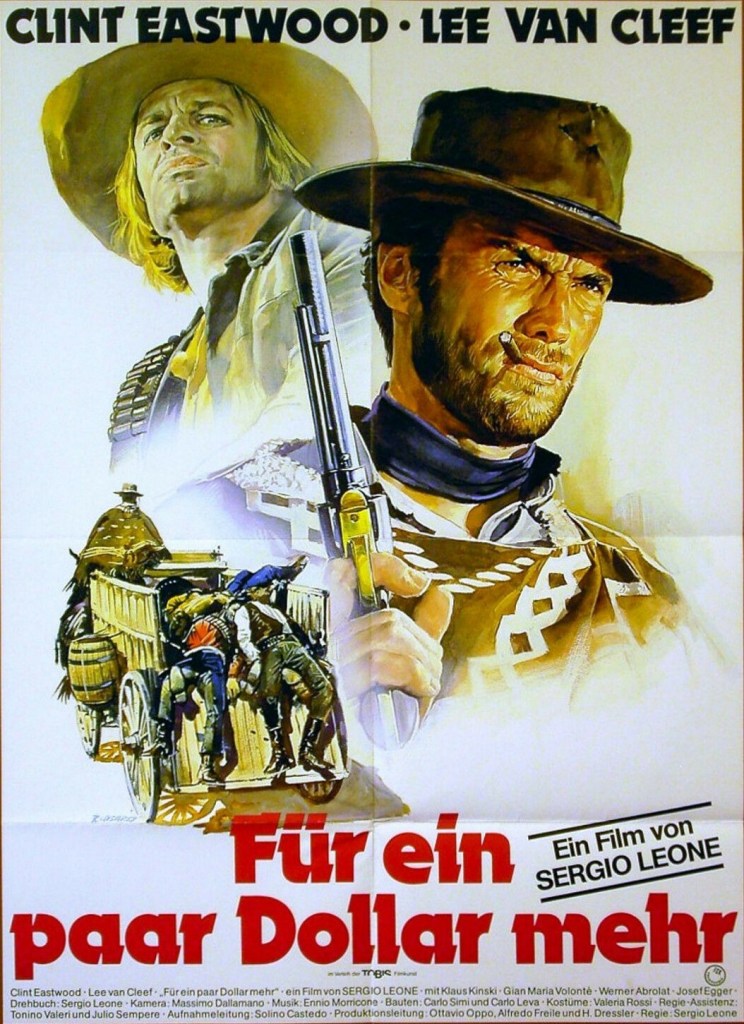
The German poster eliminated Lee Van Cleef in favor of local box office hero Klaus Kinski.
And, of course, there is Leone’s visual splendor, his unrivalled ability to create scenes, build tension, not quite to the baroque levels of Once but getting there, the “hat” shoot-out, Mortimer standing tall nonplussed as bullets zing along the ground coming closer and closer. Supporting characters are well observed, El Indio’s sidekicks Nino (Mario Brega) and Groggy (Luigi Pistilli), though in the scene-stealing stakes nobody can beat the glowering scene-stealer-in-chief, Juan Wild (Klaus Kinski), who scarcely needs to be saddled with a hunchback to steal a scene.
It was a rehearsal for Ennio Morricone too, as he developed individual themes from individual characters. It took a posse of writers to nail this down – Leone, sometime producer Fulvio Morsella (My Name Is Nobody, 1973), Luciano Vincenzoni (The Good, the Bad and the Ugly), Sergio Donati (Once Upon a Time in the West), Fernando Di Leo (Kiss, Kiss, Bang, Bang!, 1966) and Enzo Dell’Aquila (Seven Guns for the MacGregors, 1966).
Note: although movies could often take a while to work their way round the world, the first two “Dollars” pictures, despite their success in Continental Europe, took forever (in Hollywood terms) to reach the U.S. and Britain, not reaching either country till 1967, hence the oddity of the release date.
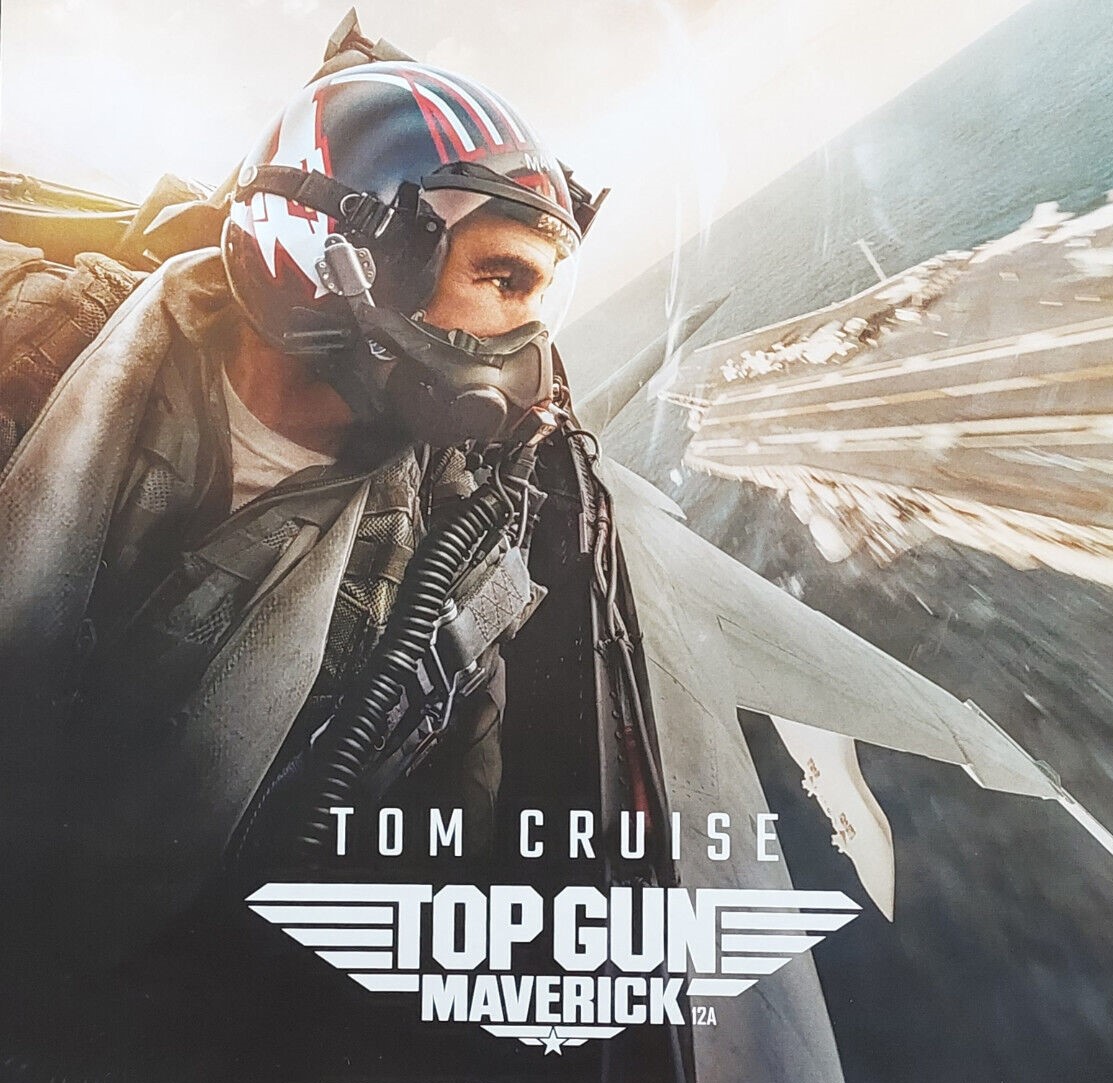
Box office performance is really the only measure the concerns Hollywood – Maverick: Top Gun setting a new Memorial Day high – but it’s not the only record studios are interested in breaking. Setting records for highest screen average and numbers of screens utilized is also important because it provides an indication, hopefully of a potential smash, at the very least of studio intent and exhibitor initial response to a movie. So the notion that Maverick: Top Gun received the biggest-ever U.S. release – in terms of screens – would not have gone unremarked by the industry. The more screens, the bigger the prospective pie.
In the run-up to opening when studios had little more than hype to sustain publicity, the number of screens was seen as a marketing tool. If that many exhibitors had signed up, they must be right. Many films in the past did not reach their box office potential simply because they were starved of screens and in failing to involve the necessary number of theaters opened themselves up to piracy.
The new screens mark set by Maverick: Top Gun was 4,732. You might be surprised to learn screen numbers in this range were being targeted as long ago as Shrek 2 (2004) when the animation juggernaut slammed into 4,223 palaces, beating with a vengeance the previous record held by Lord of the Rings: Return of the King (2003) by over 500. See what I mean – the bigger the volume of screens, the more screenings, the screens-plus-screenings equation resulting in bigger box office, usually, as in this case, of the record variety.
But Shrek 2’s record was there to be challenged – and it was. Madagascar (2005) set a new screens record followed by others like Mission: Impossible 3 (2006), Pirates of the Caribbean: Dead Man’s Chest (2006), Spiderman (2007), The Dark Knight (2008), Harry Potter and the Half-Blood Prince (2009), Twilight: Eclipse (2010) all the way to Despicable Me 3 which debuted on 4,535 screens. Sequels also had a built-in awareness factor.
The idea of getting a film out on as many screens as possible as soon as possible is not a new idea. Go back almost a century, to the advent of sound, and Warner Brothers employed the same technique for The Jazz Singer (1927), not exactly at launch, but a few months later in March 1928 in 235 theaters and not for the reasons laid out above but to give exhibitors who had installed expensive sound equipment a crack at a proper full-length movie. Following this was a system that would last from the silent era all the way through to the 1970s-1980s.
First-run was the key rather than what was initially called “saturation” or “simultaneous release” or “wide release” or “day-and-date” and also fell into the localized subset of “showcase.” Movies were launched in giant (by today’s standards) theaters seating 1,000-6,000 (Radio City Music Hall) and played there until the first-run juice had been extracted and then moved down a food chain delineated by ticket price down to as many levels as twelve, an automatic delay built into each shift down to ensure that moviegoers who wanted to pay the cheapest prices did not get ahead of the queue. In the silent era, prints were expensive and they were in short supply, so day-and-date was a risky prospect. Movies opened in different cities at different times and the same print went through hundreds of hands until it was unplayable.
Even so wide release – of any number – was viewed very early on as a marketing tool, Carl Laemmle the first to recognize the possibilities when he played Traffic in Souls (1913) in nine houses and by 1921 the idea, driven by phenomenon, had taken off when Charlie Chaplin’s The Kid (1921) was shown day-and-date in 300 venues. But such a wide release remained a rarity, most films going down the traditional route. The next stage was signaled by Cecil B. DeMille, wearing his marketing hat, when he invented the local world premiere. The Buccaneer (1938) launched in New Orleans and used the unprecedented nationwide publicity – gained by ferrying hundreds of reporters down from big cities in specially-appointed trains on an all-expenses paid jaunt – to precipitate a simultaneous release in 200 cinemas.
Area saturation was a natural development. The Westerner (1940) opened exclusively in Texas and broke 94 records in its first 94 engagements. Then came marketing genius Terry Turner who created the sequential area release, shifting huge numbers of prints week-by-week state-by-state. By concentrating advertising expenditure on a single area, Turner started “blitz marketing” and not necessarily for star-driven vehicles, Hitler’s Children (1943) the first to benefit.
But with too few movies being made, especially after studios were forced to sell off their lucrative cinemas chains by government decree in the late 1940s, first-run cinemas were inclined to hold onto big hits for weeks and months on end rather than participate in any simultaneous release program whose biggest beneficiaries were always the smaller cinemas. By the end of the 1950s and start of the 1960s, simultaneous release was accorded pictures of the here-today-gone-tomorrow variety, horror, sci-fi, exploitation and other low-budget items. One of the reasons why The Magnificent Seven (1960) did so poorly at the box office on initial release was it was sent out on the area saturation system, meaning in the first place it could not be held over since the prints were due somewhere else the following week, and it was viewed by audiences as a movie that fitted that low-budget criteria.
It was the exhibitor who revived the area saturation plan for pictures with decent marquee values. Wisconsin theatre owner Ben Marcus organised exhibitors into area groupings to assist studios in launching such films as The Great Imposter starring Tony Curtis and The Devil at 4 O’Clock (1961) with Frank Sinatra and Spencer Tracy. Out of this emerged the “showcase” release pattern whereby in, initially, New York and Los Angeles, movies headed straight into multiple engagements either immediately after first run or bypassing first run entirely. In 1963 a total of 124 movies were shown in Los Angeles using this system resulting in a $21.8 million gross from 3,769 playdates. By 1964 in New York The Carpetbaggers raked in $862,000 from just 25 theaters and with the Bond movies racking up box office records in first run their appearance in showcase proved invaluable.
But just as saturation was booming, demand suddenly slackened, shortage of movies, the collapse of studios, the demise of the roadshow, ensuring that by the early 1970s saturation release, whether national or local, was largely being used by low-budgeters, reissues, blaxploitation, king fu, soft porn or movies that went “four-wall” (i.e. the theaters were rented by a studio rather than the exhibitor doing the renting). Four-wall was largely the remit of nature documentaries, but Warner Brothers used it for Billy Jack (1971) and The Exorcist (1973), United Artists for Last Tango in Paris (1972) and Universal for Breezy (1973) directed by Clint Eastwood.
Legend of course has it that Universal created the modern wide release with Jaws (1975). That just happens to be myth. Jaws opened day-and-date in just 409 theatres. What Jaws instigated, purely by chance, was a reversal, a different approach to high-end big-budget pictures. “Studios with what they believed were guaranteed winners had consistently used a different scenario. The Exorcist opened in 24 theaters, Earthquake (1974) in 62, Papillon (1973) in 109 and The Godfather Part II (1974) in 157. Movies that opened in the Jaws range and above – Magnum Force (1973) in 418, The Man with the Golden Gun (1974) in 635, The Trial of Billy Jack (1974), Breakout (1975) and The Master Gunfighter (1975) in 1,000-plus were not expected to last as long. Statistics proved that for features with high box office expectation the slower limited roll-out was the more effective approach,” I wrote in 2019. I argued then and still believe that Universal expected Jaws to be a movie, as evidenced by the release strategy, that made a quick buck and the studio was as astonished as anyone when it skyrocketed.
But as production costs increased it was essential to get revenue in as quickly as possible so, except in rare cases, from the 1980s onwards, wide release became the norm. Even so it was another decade after Jaws before releases on 2,000 screens appeared, Rambo: First Blood II (1985) first there. Four years later – front-loading now the aspiration – the summer of 1989 saw 2,327 screens for Indiana Jones and the Last Crusade, 2,202 for Star Trek V: The Final Frontier, 2,410 for Ghostbusters II and 2,194 for Batman. Crocodile Dundee II (1988) had already upped the ante by opening in 2,837. A new high of 3,012 screens set by Mission Impossible (1996) did not last long, The Lost World (1997) leaving that in the dust with 3,565 screens. Screen records switched from studio to studio until the 4,000-mark was busted.
Maverick: Top Gun is just the latest in a long list of would-be blockbusters to take a similar approach. Any takers for next year’s Mission: Impossible – Dead Reckoning – Part One to be the first to hit 5,000 screens?
NOTE: The following week Cruise broke his own record when Maverick: Top Gun added another 19 screens. The new record is 4,751 screens. On top of that it had a record low box office fall of just 33% at a time when blockbuster generally drop 50% or more in their second week.
SOURCE: Brian Hannan, In Theaters Everywhere, A History of the Hollywood Wide Release, 1913-2017 (McFarland, 2019).
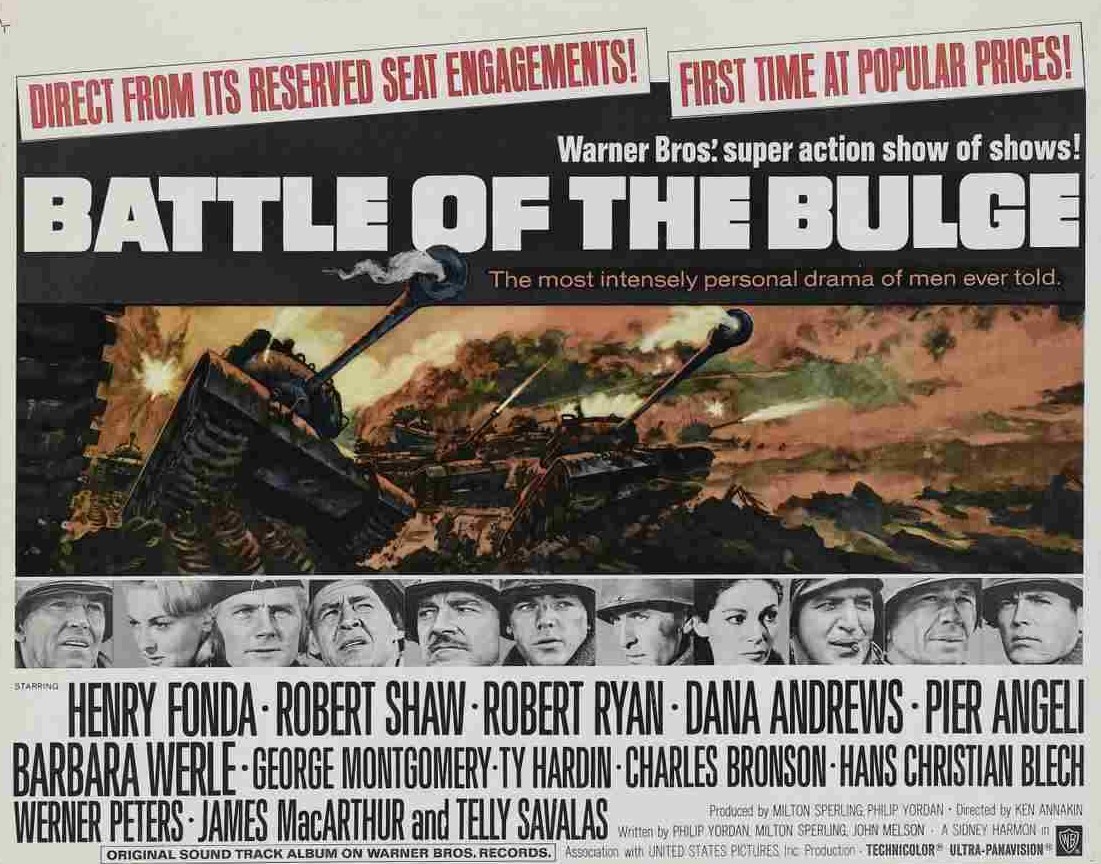
It was Hollywood’s worst nightmare. Two major studios – Columbia and Warner Brothers – were competing to make films about the Battle of the Bulge, one of the most famous episodes of the Second World War. Rival movies on similar or the same subject – classic examples You Only Live Twice (1967) vs Casino Royale (1967) or Deep Impact (1998) vs. Armageddon (1998) – risked cannibalizing each other, each entry eating into the prospective audience of the opposition.
At first it seemed like the Columbia entry had the upper hand. Writer-producer Anthony Lazzarino had spent four years preparing The 16th of December: The Story of the Battle of the Bulge (the date referring to the start of the battle). Lazzarino’s project was endorsed by the U.S. Department of Defense which offered exclusive cooperation. Advisors were of the top rank – General Omar Bradley, General Hasso E. von Manteufel who had commanded the Panzers during the battle, British generals Sir Francis de Guingard and Robert Hasbrouck and Colonel John Eisenhower (son of Ike) plus the cooperation of the legendary Eisenhower himself and Field Marshal Montgomery.
With a budget in the $6 million – $8.4 million range, and shooting set to start in winter 1965, William Holden was lined up to play General Eisenhower and Kirk Douglas for General Hasso. Although initially intending to film in the Ardennes and Canada, ultimately the producers settled for the cheaper option of Camp Drum, one of the largest military installations in the U.S, a remote area in upper New York where the buildings could stand in for Bastogne, around which much of the real battle revolved, production there feasible because the Camp closed for winter. .
But that meant it would already be behind the eight-ball since Battle of the Bulge intended opening at Xmas 1965. Richard Fleischer (The Boston Strangler, 1968) was signed to direct. But he had become embroiled in a lawsuit with producer Samuel Bronston (El Cid, 1961, The Fall of the Roman Empire, 1964) whose production outfit had gone bust, killing off a deal for Fleischer to make The Night Runners of Bengal. The director was seeking $910,000 in compensation.
Warner Brothers had enlisted Cinerama as co-producer, the studio’s first involvement in the stunning widescreen process and the first time war was considered a subject. The process had been utilised in other Hollywood pictures most notably MGM How the West Was Won (1962), but that had been as a supplier of the equipment, and taking a small share of the profits. But now Cinerama planned to enter the production business and had contracted with WB to shoot the film in the single-lens process instead of the more complicated three-camera approach which had led to vertical lines on the giant screen.
Neither company was in great shape. Cinerama had posted a $17.9 million loss in 1964, WB $3.8 million. But whereas WB had My Fair Lady on the horizon, Cinerama was less reasons for optimism. Its income stream relied on sales of its equipment, either for filming or projection, and a levy from every cinema using the process. Expansion was seen as key to renewal. With only 67 cinemas equipped to show Cinerama in the U.S. and only 59 overseas, a major program was underway to reach 230 by 1967. Setting up a production division would ensure there were enough films to feed into Cinerama houses, and since such films were intended as roadshows, they would keep the cinemas product-secure for months on end.
Cinerama planned to spend $30 million on five films – John Sturges western The Hallelujah Trail (1965) budgeted at $5 million, Battle of the Bulge ($5.75 million) while $6.5 million had been allocated to an adaptation of James Michener bestseller Caravans, $6 million for Beyond the Stars which became 2001: A Space Odyssey (1968) and $7 million for Grand Prix (1966). Added to the list was epic William the Conqueror, due to film in England in early 1966 with Robert Shaw taking top billing.
The WB-Cinerama project, which had taken a year to negotiate, was to be filmed in Spain under the aegis of producer Philip Yordan, one time associate of Bronston who had built a mini-Hollywood there. Yordan, Bronston’s chief scriptwriter, had written the screenplay along with his co-producer Milton Sperling. Instead of seeking official support or reproduce the battle in documentary detail, Yordan and Sperling aimed for a fictional account that took in the main incidents. The cast would include “ten important stars.”
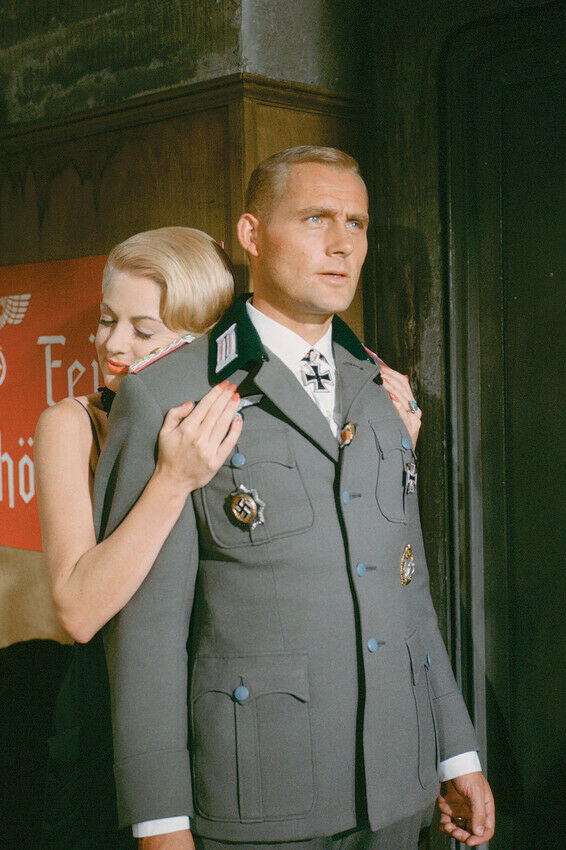
Barbara Werle seizes her moment – as a courtesan attempting to seduce Robert Shaw.
Just what constituted an “all-star cast,” one of the key ingredients of the roadshow phenomenon of the 1960s, was open to question. While The Longest Day (1962) boasted stars of the pedigree of John Wayne, Robert Mitchum, Richard Burton and Sean Connery, it was also liberally sprinkled with actors of little or no marquee value. David Lean in Lawrence of Arabia (1962) had loaded his film with the likes of Oscar winners Alec Guinness, Anthony Quinn and Jose Ferrer to offset unknowns Peter O’Toole and Omar Sharif as the leads. While The Great Race (1965) could boast Jack Lemmon, Tony Curtis and Natalie Wood, It’s A Mad, Mad, Mad, Mad World (1963) only had Spencer Tracy amid a host of television comedians.
But none of the stars of the hit Those Magnificent Men in Their Flying Machines (1964) had successfully opened a major picture. Of the Battle of the Bulge contingent only Henry Fonda could truly be called a current star, although his box office star had considerable dimmed since the days of The Grapes of Wrath (1939) and Fort Apache (1948). Former stars Robert Ryan and Dana Andrews were now supporting actors, Ty Hardin best known for television, Charles Bronson (The Great Escape, 1963) not achieved top billing and while James MacArthur had done so that was in youth-oriented movies. Initially, Italian prospect Pier Angeli (Sodom and Gomorrah, 1962) was announced as “the only principal female role” – playing a Frenchwoman – for a touching scene showing the effect of war on innocent women caught up in the conflict.
Just before filming was about to start, Fleischer pulled out, citing differences of opinion with the producers. Yordan turned to British director Ken Annakin, who had helmed the British sequences in The Longest Day and all of Those Magnificent Men in Their Flying Machines. There was soon a double whammy from the rival picture. Realizing he was losing ground, and hoping to sabotage the opposition’s progress, Larrazino sued WB for $1 million, claiming that “another film, less accurate, would be confused with his picture.” Just as filming of the Battle of the Bulge got underway in January 1965, it was hit by a temporary restraining order. While failing to shut down the production, it imposed a marketing blockade. WB was prevented from publicizing its picture, a potentially major blow given how dependent big budget roadshows were on advance bookings which could only be generated by advance publicity.
Annakin’s immediate response to the directorial opportunity was delight. He commented that he had a “lot of toys to play with.” He found inspiration for his approach from an unusual source, the Daleks (“an apparently irrevocable onslaught of metal monsters”) from the BBC television series Dr Who. He decided he would use Cinerama as “a kind of 3D, shooting in such a way that the tanks would loom up as monsters against humans whom I would make small and puny.”
Although he had no influence over the casting, Annakin was already familiar with some of the actors, James MacArthur from Swiss Family Robinson (1960) and Werner Peters and Hans Christian Blech from The Longest Day. He did not receive such a warm welcome from Robert Shaw whom he had rejected for a role in The Informers (1963).
He found Fonda “a remarkable professional…always on time, patient, eager to get to work, and always knew his lines.” Fonda confessed to being a reluctant movie actor, preferring the stage, and had not been a big office draw since his work with John Ford in the 1930s and 1940s. Even critical successes like Twelve Angry Men (1957) had lost money, some of it the actor’s own, and prestige movies like The Best Man (1964) and Fail Safe (1964) failed to attract sufficient audiences. “In the theatre,” he said, “the actor achieves fulfilment from beginning to end. But on a picture you create a minute here and a minute there over a twelve-week period. When it’s finished there’s no recollection of what you did…Films are a director’s medium.” Battle of the Bulge was his 59th picture, after completing a supporting role in Otto Preminger’s In Harm’s Way (1965) and taking second billing to Glenn Ford in modern western The Rounders (1965).
There was a stand-off with Bronson on his first day after the actor kept the crew waiting while fiddling too long with his costume. Ty Hardin (television’s Bronco, 1958-1962) was accident-prone, tumbling into a frozen river in full kit, and whacking the director’s wife in the face with his helmet. Dana Andrews had a drink problem so that in some scenes Fonda and Ryan would be surreptitiously holding him up.
Andrews was enjoying career resurgence. His movie career had been at a standstill, a long way from a peak like Laura (1944), his last significant top-billed parts over a decade past. “I was starting to get nothing for a while but offers came swarming in when I told my agent to go ahead and try for Walter Huston parts.” After only television roles in the four years since Madison Avenue (1961), Battle of the Bulge would mark his eighth role in 1965, including The Satan Bug and In Harm’s Way.
Winter in Spain was cold which meant it provided the ideal backdrop for the WB version. The chosen location, 4,500ft high in the mountains of Segovia, provided identical conditions to the actual battle. Spain had provided 80 tanks including Tigers mounted with 90mm guns and Shermans. Half of the 20-week shoot would be spent in Segovia with interiors filmed at studios in Seville and the Roma facility in Madrid.
The WB adviser was General Meinrad von Lauchert, a divisional tank commander during the battle. He hoped the picture would show the German soldier “as he was, brave and good” rather than clichéd presentation and not give the “impression that the American Army had nothing to do but walk into Germany.” He wanted the film to reflect the truth that the “Americans had to pay a high price for every yard.”
Extras were drawn from the Spanish village of El Molar, with a population of just 2,400, which specialised in that supply. Locals could earn 200 pesetas a day. A pair of tavern owners had established this lucrative side-line, demand so high at this point that “they can play Russian World War One deserters for Doctor Zhivago (1965) one day and shipped to World War Two the next for Battle of the Bulge.” Whenever Annakin found himself in trouble with the script he turned to the senior actors, Fonda, Ryan and Andrews who could improvise their way round scenes and “give me hints and lead me into changes.”
For the first scene, a week’s worth of white marble dust, representing snow, had been spread over the ground before 40 tanks emerged from a pine forest. But just as the cameras begun to turn, unexpectedly, against all weather forecasts, it began to snow. While initially a boon, when it continued to fall for five weeks the snow turned into a liability. Nobody was prepared for snow, not to the extent of snowploughs or even salt and it was a three-mile hike uphill to reach the tank location until army vehicles could be used to transport the crew. The tanks churned up so much mud that three or four cameras were required to catch the action.
“It was a director’s feast,” recalled Annakin, salivating about the prospect of a “vast panoramic” employing the entire array of tanks. To speed production, he had two units one hundred yards apart and jumped from one to the other, thus achieving 30-40 set-ups a day while the effects team exploded tubes and burned rubber tyres to create a fog of black battle smoke. A small town, already wrecked and shelled from the Spanish Civil War, added an air of realism when standing in for Bastogne.
Midway through shooting the producers realised the movie lacked a theme and from then on Annakin was faced with daily rewrites as new scenes were added to bring out the humanity implicit in war. Then Cinerama boss William Foreman arrived and demanded the insertion of the type of shot he believed his audiences were expecting, the equivalent of the runaway train and the ride through the rapids in How the West Was Won. He angled for a jeep racing downhill or a plane spinning and diving and happy to stump up any extra costs.
Such a request was more easily accommodated than his insistence that a role be found for his girlfriend Barbara Werle, a bit part actress Tickle Me (1965). While Yordan, wearing his producer’s hat, was willing to keep one of his main funders happy, the director and Robert Shaw were not. Shaw refused to do the scene until Foreman pleaded with both, explaining that in a vulnerable period of his personal life – when, in fact, he had been imprisoned – Werle had helped him out and he owed her a favour.
In Annakin’s opinion Werle was “willing but completely dumb…as though you had picked a girl straight from the cash desk of a supermarket.” Her one scene, as a courtesan offered to Robert Shaw by a grateful superior, was used to mark out the German commander as a man of honor when he rejected such temptation out of hand.
To overcome problems of matching earlier Panzer footage with the climactic battle to be shot on the rolling hills of Campo – in the earlier shots the ground was covered in snow, but now it was summer and the ground was scorched by the sun – Annakin relied on aerial shots, shooting downwards, “keeping as close as possible so as not to reveal what the terrain actually looked like” while on the ground two units shot close-ups of the action. This was augmented by 30 model shots with miniature explosions.
When shooting was completed, there was a race to get the movie ready for its scheduled launch, on December 16, 1965, the 21st anniversary of the start of the battle. There were ten weeks left to do post-production. Four editors had already been working on the material but Yordan asked Annakin, who had not been near a moviola for two decades, to personally edit the climactic battle scene. The director found the experience exhilarating: “matching my location footage with miniature shots; a four-foot helicopter (i.e. aerial) shot cut with a couple of feet of a U.S tank rounding rocks to face a Panzer; a shot of Telly Savalas at his gun site yelling ‘Fire’ intercut with a miniature tank blowing up.” But all his intricate work never made it into the final cut. Another editor fiddled around with the material and since no one had thought to make a dupe of Annakin’s original it was lost.
Although the challenge from Lazzarino had died away, the Pentagon was unhappy with the amount of time allocated to the German perspective. Yordan had the perfect riposte, pointing the finger at Annakin and saying “see what happens when you get a limey director.”
Werle had the last laugh. She was billed sixth in the credits (Angeli came fifth) but in the same typeface as Fonda, Shaw, Ryan and Andrews, and above the likes of Bronson, MacArthur and Hardin who not only all had substantially greater screen experience but had a bigger impact in the movie.
With the smallest part of all the listed stars, nonetheless she managed to turn the experience to her advantage, introduced to the press as part of the marketing campaign and attending the world premiere at the Pacific Cinerama on December 16, 1965 in Los Angeles and the New York premiere the following day, brought forward four days, at the Warner Cinerama. In Los Angeles she arrived in style at the head of a marching brigade of 100 service men.
SOURCES: Ken Annakin, So You Wanna Be A Director (Tomahawk, 2001) p167-181; “Du Pont, Bronston, Co-Defendants,” Variety, July 22, 1964, p4; “Schenck-Rhodes Roll Battle of Bulge at Camp Drum in U.S.” Variety, July 22, 1964, p42; “German Military Sensitivity,” Variety, September 23, 1964, p32; “Columbia Will Distribute Battle of Bulge Film,” Box Office, September 28, 1964, p18; “Plan Battle of Bulge As Cinerama Film,” Box Office, November 23, 1964, p4; “Tony Lazzarino To Produce The 16th of December,” Box Office, December 16, 1964, p4; “Rival Battles of Bulge; Bill Holden Up for Ike in Lazzarino Version,” Variety, December 16, 1964, p5; “Warner Reports Loss of £3,861,00,” Variety, December 23, 1964, p5; “L.A. Court Has Its Battle of Bulge Hearing, 27th,” Box Office, January 25, 1965, pW-2; “Dana Andrews Strategy: Regain Momentum,” Variety, March 10, 1965, p3; “Battle of Bulge Now Being Lensed in Spain,” Box Office, March 15, 1965, pNE2; “Winter in Spain Cold But Correct for Bulge Pic,” Variety, March 17, 1965, p10; “Cinerama Plans Five Films to Cost $30 Mil,” Box Office, April 19, 1965, p13; “For Actor, Satisfying Legit Still Beats Pix, Reports Henry Fonda,” Variety, May 3, 1965, p2; “London Report,” Box Office, May 3, 1965, p8; “One Girl in WB Bulge,” Variety, May 5, 1965, p20; “Battle of Bulge Pic May Roll Next Winter,” Variety, May 5, 1965, p29; “El Molar, Spain’s Village of Extras,” Variety, May 12, 1965, p126; “Cinerama Report Loss,” Variety, May 13, 1965, p15; Advert, Box Office, July 12, 1965, p22; “WB To Film Cinerama Epic in England,” Box Office, October 11, 1965, p11; “Introduce Barbara Werle,” Box Office, October 18, 1965, pE3; “Battle of Bulge Opens N.Y. Now Dec 21,” Box Office, October 18, 1965, p10; “Actress To Attend Bows of Bulge in L.A., N.Y.,” Box Office, December 6, 1965, pW4.
All films released in Britain in the 1960s made their debuts in London’s West End which comprised a total of 18 cinemas, nearly half of these playing roadshows. While the performance of openers here was important, just as critical an indication of box office potential was length of run. Half the cinemas could seat 1,300-plus patrons. Ticket prices ranged from 70 cents to $4.20. The week ending May 4, 1965, provided this snapshot.
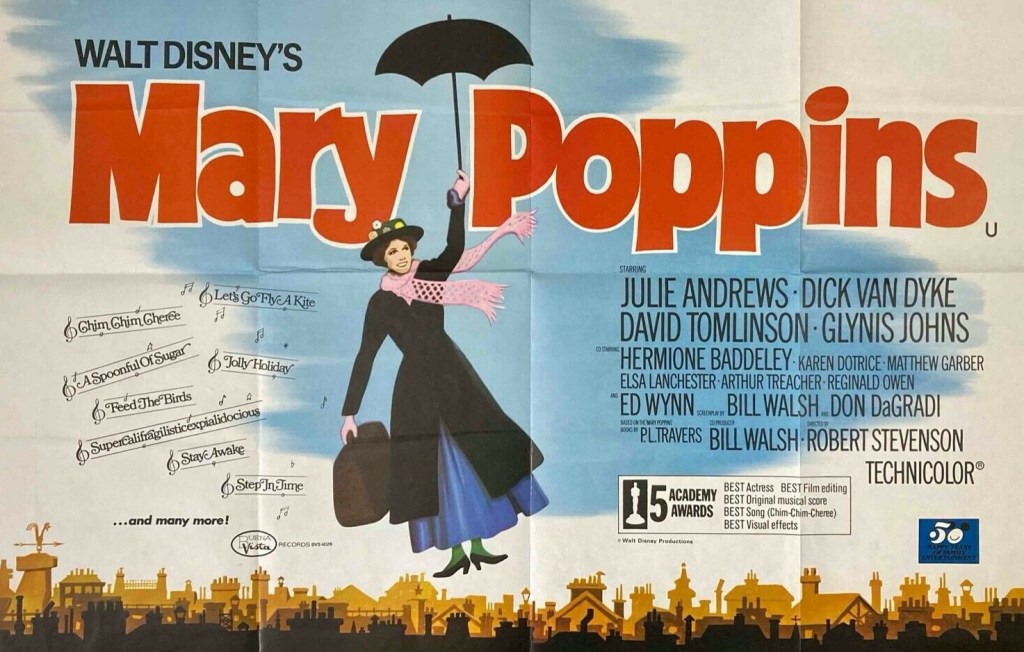
The top three films, all playing roadshow (i.e. two separate performances per day), were musicals. My Fair Lady at the 1,562-seater Warner pulled in $40,500 even though the movie was in its 15th week, some distance ahead of The Sound of Music which in its 5th week racked up $36,400 at the 1,712-seater Dominion. Much further behind, but setting a house record in the 16th week of its residency at the 600-seat Odeon Haymarket, was Mary Poppins which cleared $20,000. Both the Dominion and the Warner operated with the same ticket prices, cheapest seats setting customers back $1.45 with the most expensive seats costing $4.20, by far the dearest prices in London, no other West End cinema even breaking the $3 barrier. Tickets at the Odeon Haymarket ranged from $1.05 to $2.80.
Prospective longevity made the headlines ahead of new openings. Roadshows needed legs to justify the expense of running a movie at just one cinema in the British capital. Often, a major roadshow would play London weeks ahead of any other engagement in the country. The kind of wide release that was becoming increasingly common in the United States did not occur in Britain outside of the circuit releases in the two major chains, ABC and Odeon, which usually took product after it was played out in the West End.
Only two pictures made their debuts that week. Sylvia starring Carroll Baker was in pole position with $12,000 at the 1,889-seat Plaza (ticket prices $0.90-$2.80) just ahead of Robert Aldrich’s Hush, Hush, Sweet Charlotte which potted $11,000 at the 1,128-seat Carlton ($0.70-$2.10) but the latter, with its smaller seating and cheaper tickets, may well have been counted the winner.
The other big noise on the roadshow front was that the star-studded Samuel Bronston epic The Fall of the Roman Empire had entered its second year at the 1,474-seater Astoria. The movie had flopped in the United States where it had kicked off in 22 hard-ticket engagements in March 1964. In London in its 57th week it brought in $5,900. It would not go into general release, on the Odeon circuit, until September 1965; in other words, around 18 months after its launch.
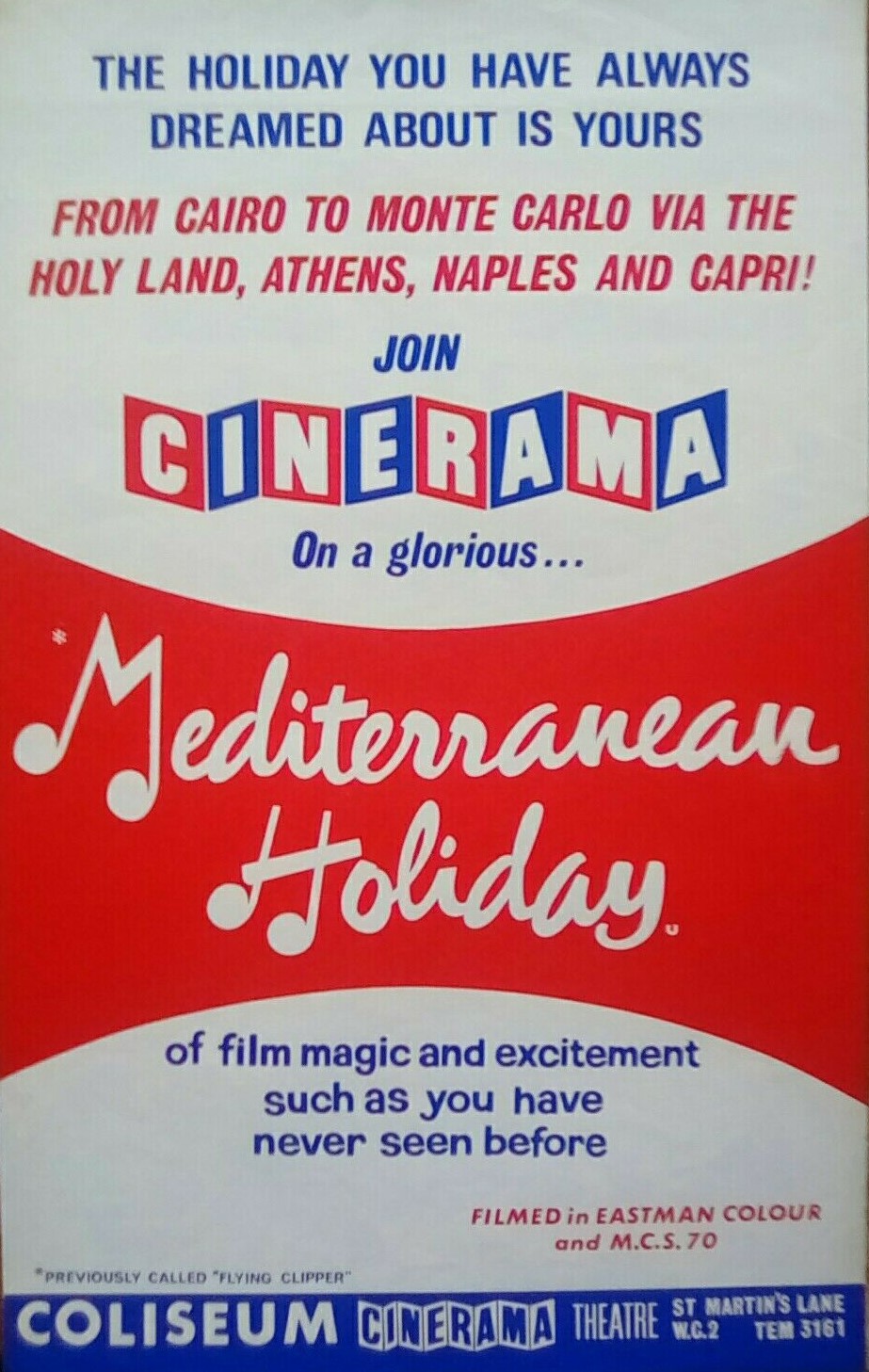
Other roadshows displaying legs were: Lord Jim starring Peter O’Toole with $13,500 at the 1,394 seat Metropole ($1.05-$2.80) in its 6th week after moving over from the Odeon Leicester Square and The Greatest Story Ever Told grossing $16,000 in its 3rd week at the 1,155-seat Casino ($1.20-$2.80). Two Cinerama productions had been recently launched – Mediterranean Holiday snapping up $12,000 in its 3rd week at the 1,795-seat Coliseum ($1.20-$2.50) while The Golden Head marked up $4,700 at the 862-seat Royalty ($1.20-$2.50).
But other pictures playing continuous performance were held over if justified by box office returns. Peter Sellers in his second outing as Inspector Clouseau in A Shot in the Dark had taken $8,500 in its 11th week at the London Pavilion ($0.80-$1.80). In its 7th week at the 430-seat Ritz ($0.70-$1.15) was The Yellow Rolls Royce with $3,400. The 5th week of Ursula Andress as She posted $5,500 at the 556-seat Studio One ($0.50-$1.20). Anthony Quinn as Zorba the Greek turned in $5,000 in the 4th week at the 529-seat Rialto ($0.70-$1.90). The second and final week (truncated to five days) of Fail Safe at the 740-seat Columbia ($0.70-$2.10) knocked up $6,700. Films completing a third week were: The Americanization of Emily with $11,800 at the 1,330-seat Empire ($0.70-$2.10), Masquerade with $8,500 at the 1,375-seat Leicester Square Theatre ($0.70-$2.40) and Strange Bedfellows on $12,800 from the 2,200-seat Odeon Leicester Square ($0.70-$2.20).
New openings had been announced for the double bill of Invitation to a Gunfighter and That Man from Rio which was moving into the London Pavilion on May 13, Those Magnificent Men in their Flying Machines flew into the Astoria on June 3 while Operation Crossbow hit the Empire on May 19.
However, there was often a considerable time gap between roadshow movies finishing their West End run and moving into general release on the circuits – dominated by the Odeon and ABC chains. My Fair Lady would not receive an ABC general release – and the rare accolade of an extended run of two weeks – until January 1967, nearly a full two years after it had premiered in the West End and it would be 1969 before The Sound of Music received an Odeon general release (and then only in London).
On the other hand, The Yellow Rolls-Royce, while still picking up decent coin at the Ritz, entered ABC general release at the end of January – and proved one of the top box office hits of the year on that circuit. She, enjoying a healthy stint at the Studio One, had been released through ABC in April. Mary Poppins would swing onto the Odeon circuit in time for the main English summer holiday period in August 1965. The ABC circuit played the double bill of The Americanization of Emily and To Trap a Spy at the start of May 1965, only a couple of weeks after its West End bow. Hush, Hush, Sweet Charlotte, on the other hand, wasted no time in shifting into top gear, sent out onto the Odeon circuit virtually day-and-date with its West End showing, and Strange Bedfellows would head down the same route barely a month after its opening.
I should point out that general release meant a movie was playing at the local/neighbourhood cinema. The big cinemas in big city centres throughout Britain would have mostly, but not always, shown the movie shortly after the West End debut, occasionally simultaneously. To complicate matters further, in Britain general release meant London rather than the entire country. And even then the London release was split in two – to save on prints – the north side of the capital receiving the film a week ahead of the south. But I remember well, as teenager, scanning the adverts and the listings in Films and Filming magazine, noting with disappointment that films being shown in local cinemas in London had yet to be shown in any of the big cinemas in my home town of Glasgow.
SOURCES: “West End Firm Despite Few New Pix,” Variety, May 12, 1965, p8; Allen Eyles, Odeon Cinemas 2 (Cinema Theatre Association) p211-213; Allen Eyles, ABC (Cinema theatre Association ) p123.











 The Magnificent 60s