The Leopard (1963) *****

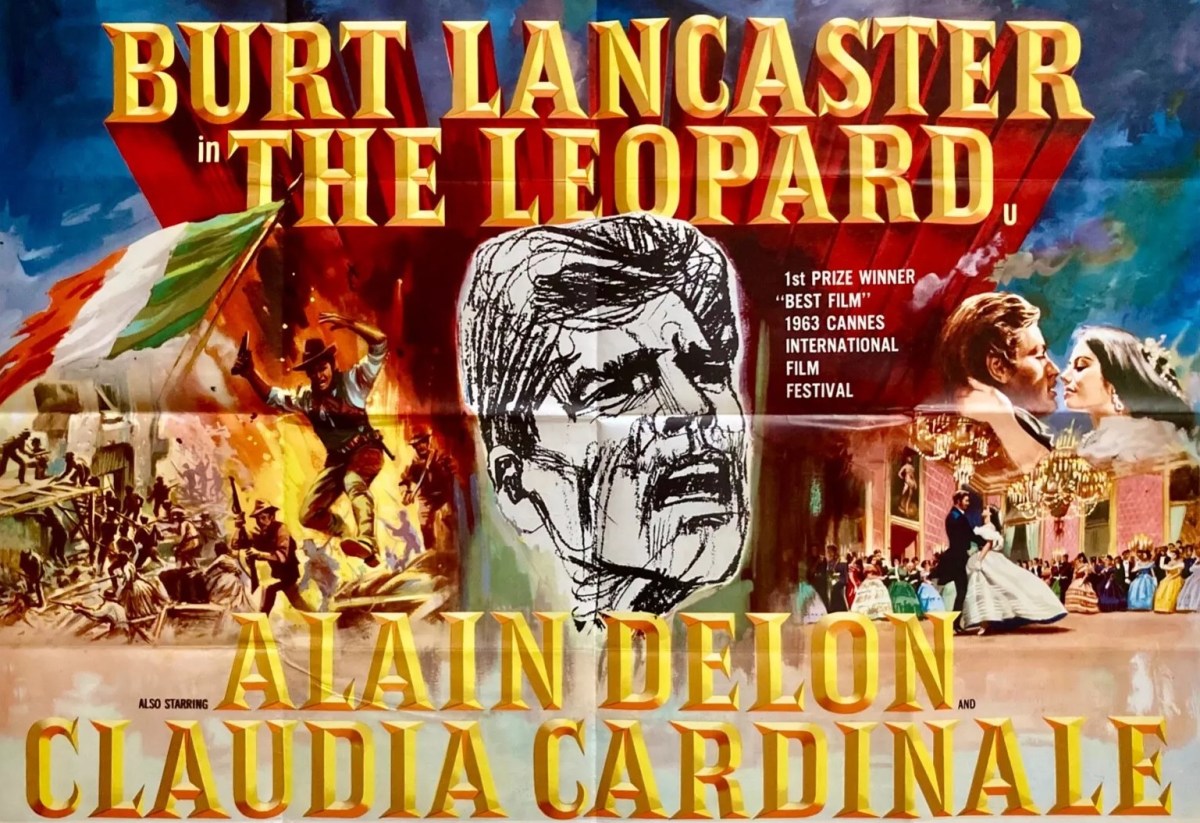
Masterpiece. No other word for the way director Luchino Visconti commands his material with fluid camera and three terrific performances (four, if you count the wily priest). An epic in the old-fashioned sense, combining intelligence, action and romance, though all three underlaid by national or domestic politics. And if you’re going to show crumbling authority you can’t get a better conduit than Burt Lancaster (check out The Swimmer, 1969, for another version of this), physical prowess still to the fore but something missing in the eyes. And all this on sumptuous widescreen.

Only a director of Visconti’s caliber can set the entire tone of the film through what doesn’t happen. We open with a religious service, not a full-scale Mass but recitations of the Rosary, for which the family is gathered in the massive villa of Prince Don Fabrizio Salina (Burt Lancaster). There is an almighty disturbance outside. But nobody dare leave or even react, children silently chided for being distracted, because all eyes are on the Prince and he has not batted an eyelid, worship more important than domestic matters.
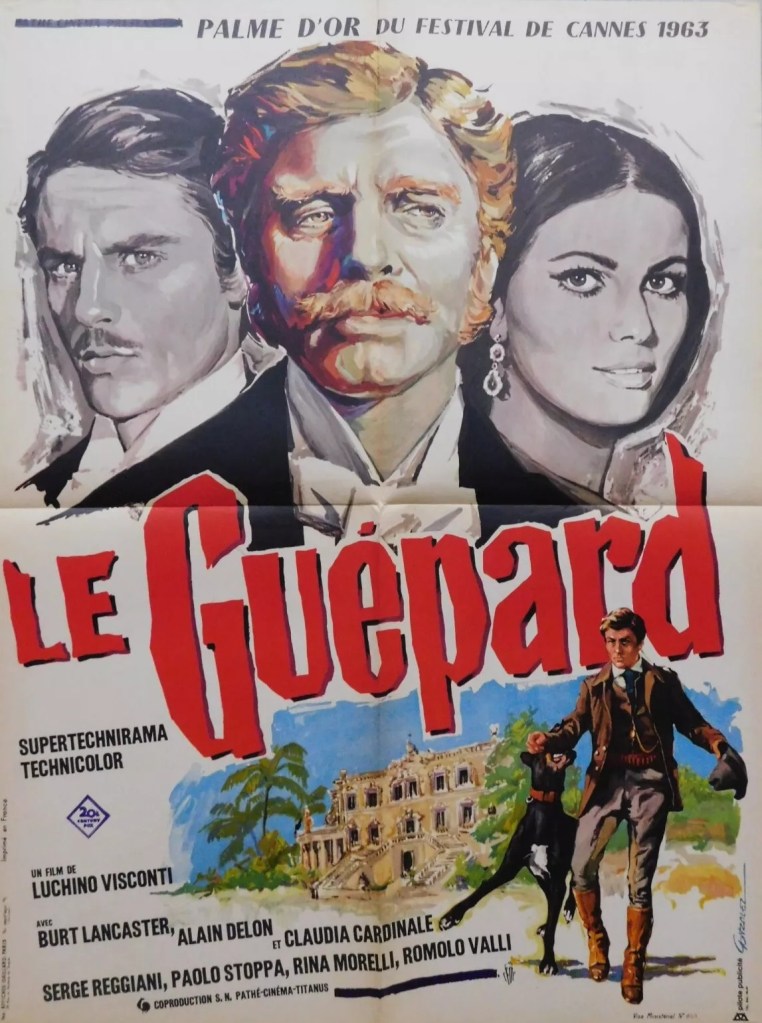
Turns out there’s a dead soldier in the garden, indication of trouble brewing. Italy has been beset with trouble brewing from time immemorial so the Prince isn’t particularly perturbed, even if the worst comes to the worst an accommodation is always reached between the wannabes and the wealthy ruling elite.

There’s a fair bit of political sparring throughout but this is handled with such intelligence it’s involving rather than off-putting. Rebel Garibaldi is on the march, it’s the 1860s and revolution is on the way. But it’s not like the French Revolution with aristocrats executed in their thousands and when Garibaldi’s General (Guiliano Gemma) comes calling he addresses the Prince as “Excellency.”

The Prince is a bit of a hypocrite, not as devout as he’d like everyone to believe. He’s got a mistress stashed away for one thing and for another he blames his wife for the need to satisfy his urges elsewhere, complaining that she’s “the sinner” and that despite him fathering seven children with her he’s never seen her navel. Furthermore, the person he makes this argument to is the priest Fr Pirrone (Romolo Valli), who, knowing which side his bread is buttered on, doesn’t offer much of a challenge.

If you’re not going down the more perilous route of taking up arms, advancement in this society is still best achieved through marriage and the Prince’s ambitious nephew Don Tanacredi (Alain Delon), more politically astute, does this through marriage to Angelica (Claudia Cardinale), daughter of Don Calogeo Sedara (Paolo Stoppa).
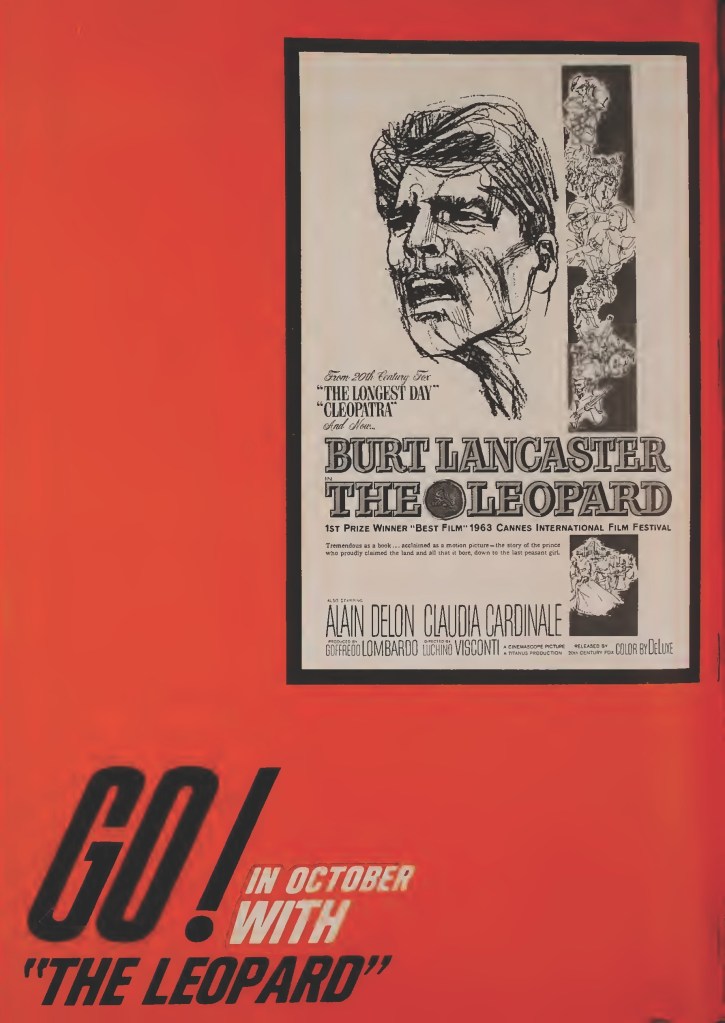
Brutality and elegance sit side by side. You’re not going to forget the mob of women hunting down and hanging a Government police spy nor, equally, the astonishing ball that virtually concludes proceedings, showing that, whatever changes in society take place, those with money and privilege will still hold their own. But that’s only if they do a little bit of bending the knee to the new powers-that-be, something that Tancredi, by now a rebel hero wounded in battle, is more than happy to do, since that procures him even further advancement, but a step too far for the Prince, who at the end retreats into his study, as if this will provide sanctuary from the impending future.

Don’t expect battle on the scale of Lawrence of Arabia (1962), this action is a more scrappy affair, undisciplined red-shirted hordes sweeping through a town and eventually overwhelming cavalry and ranks of infantry.

But if you’re aiming to hold an audience for three hours, a decent script, romantic entanglement and camerawork isn’t enough. You need the actors to step up. Luckily, they do, in spades. Burt Lancaster is easily the pick, towering head and shoulders, and not just in physicality, above the rest, a man who sees his absolute authority draining away in front of his eyes. Alain Delon (Once a Thief, 1965) comes pretty close, though, not afraid to challenge his uncle’s beliefs nor point out his hypocrisy, and adept at picking his way through the new emerging society, his potential ascension to newfound power demonstrated by wearing a war wound bandage wrapped piratically around one eye, as though keeping a foot in both camps. Though American audiences never quite warmed to Delon, he was catnip for the arthouse brigade, courtesy of being anointed by Visconti and Antonioni in, respectively, Rocco and His Brothers (1960) and L’Eclisse  (1962).

Far more than U.S. cinemagoers could imagine, Claudia Cardinale (The Professionals, 1966) also easily straddled commercial and arthouse – Rocco and His Brothers, Fellini’s (1963) – and on her luminous performance here you can see why. You might also spot future Italian stars Terence Hill (My Name Is Nobody, 1970) and Giuliano Gemma (Day of Anger, 1967). Adapted from the bestseller by Giuseppe Tomasi de Lampedusa by the director and his Rocco and his Brothers team of future director Pasquale Festa Campanile (The Libertine, 1968), Suso Cecchi D’Amico,  Enrico Medioli and Massimo Franciosa.

I can’t quite get my head round the audacity of Netflix in attempting a mini-series remake. I’m assuming they’ve had the sense to buy up the rights to the Visconti to prevent anyone comparing the two.

One of the decade’s greatest cinematic achievements.
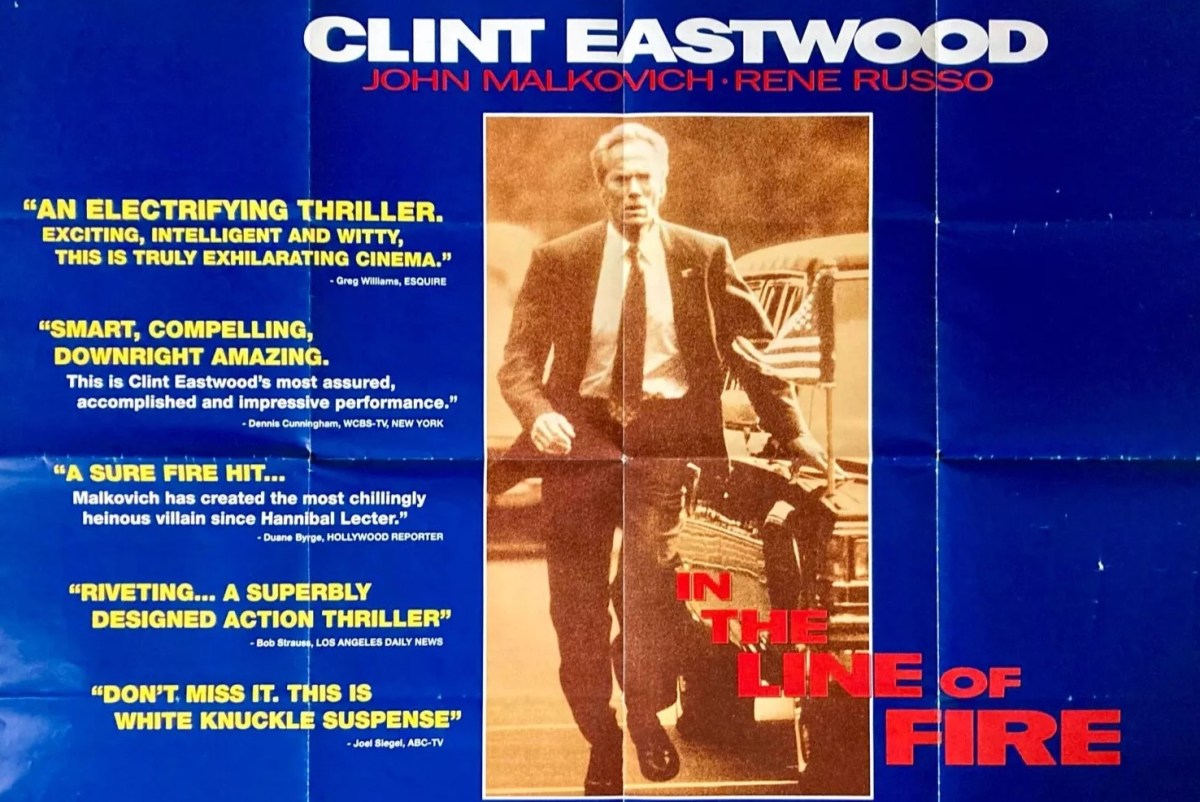
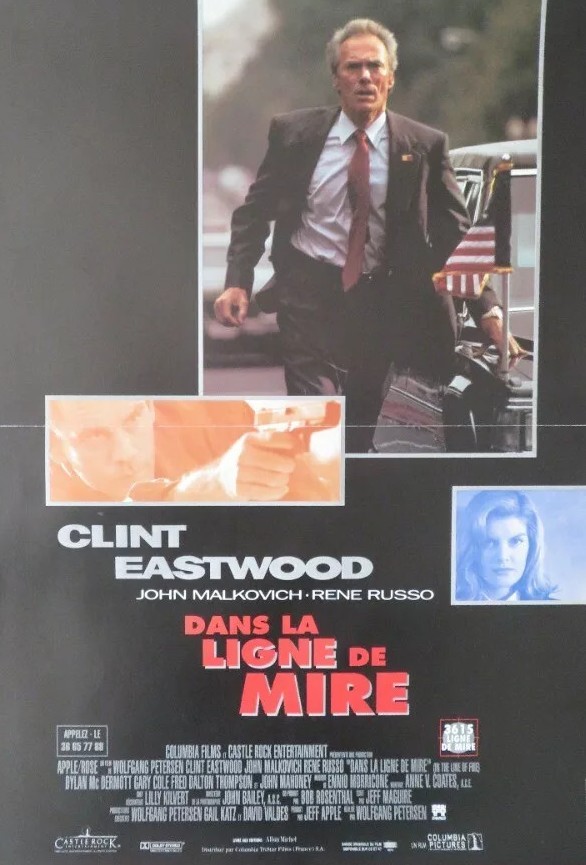
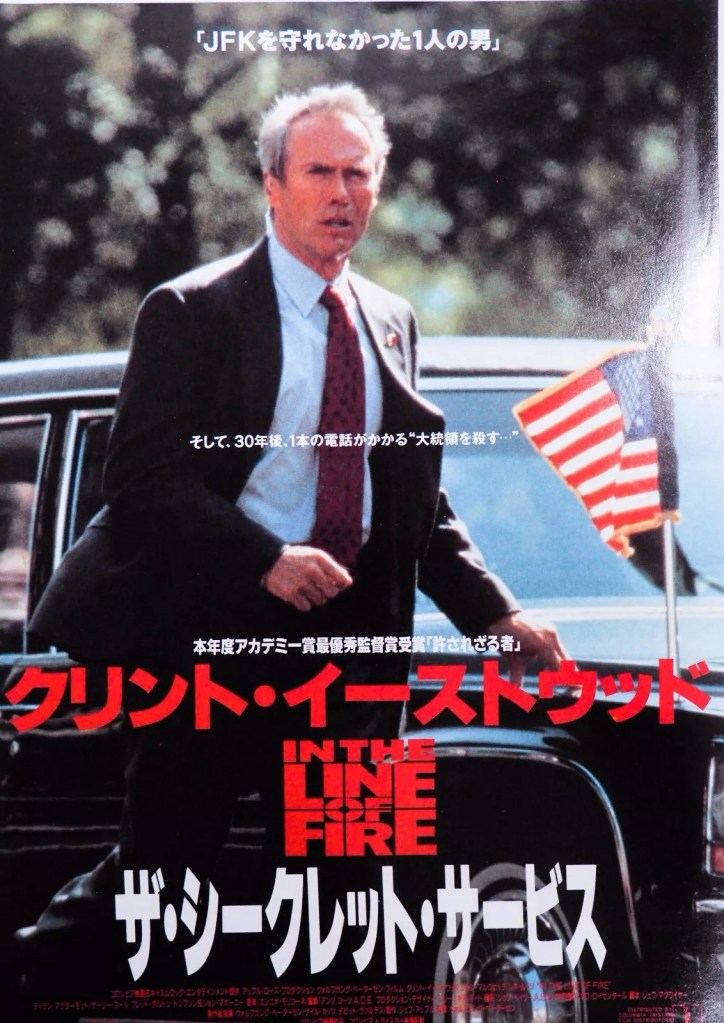
In the Line of Fire (1993) *****

Outside of the top-billed trio of Julia Roberts, Sandra Bullock and Meg Ryan, Rene Russo stole the limelight as the decade’s leading lady, bolstering the credentials of such supposedly superior marquee names as Dustin Hoffman (Outbreak, 1995), Mel Gibson ( Lethal Weapon 3, Ransom and Lethal Weapon 4, 1992, 1996 and 1998), John Travolta (Get Shorty, 1995), Kevin Costner (Tin Cup, 1996) and Pierce Brosnan (The Thomas Crown Affair, 1999) – an almost unprecedented, for a female star of the period, roster of hits.

Not only that, but she had also come to the game late, 35 at the time of her debut in Major League (1989) and therefore well into the most dangerous age for a female star in Hollywood, her 40s, by the time she came to work with some of the industry’s biggest names. By comparison Julia Roberts was 23 at the time Pretty Woman (1990) was released, Meg Ryan 28 when she captured hearts in When Harry Met Sally (1989) and Sandra Bullock 32 when she snazzed Sylvester Stallone in Demolition Man (1993).

It’s worth remembering that Eastwood, the previous decade washed away with insipid box office, was entering a late career halcyon period, his critical and commercial esteem boosted by the Oscar-winning Unforgiven (1992). Previous male superstars close to retirement age weren’t called upon to put in a sprint or two. Sure, John Wayne and James Stewart could land a good punch, but that was generally in a confined space and nobody was calling on their athletic skills. But, here, Eastwood set the tone for later pictures like Taken – and he was a decade older than Liam Neeson in that one.

Russo, an MTA, oozed class and maturity, never looked as if she was out of her depth or if she would come off second best to any of the macho males she was generally surrounded with.  This isn’t her greatest role – her duel with Brosnan takes that accolade – but comes pretty close.

As Lilly Raine, she nurses ageing Secret Service agent Frank Horrigan (Clint Eastwood) over the line. Frank isn’t just perennially out of puff, but catches bad colds and makes such a basic error that he’s chucked out of the presidential protection elite, though kept on by boss Sam (John Mahoney) in a bid to track down assassin Mitch Leary (John Malkovich).

This is nuts-and-bolts action, a lot of time spent in basic detection, following up insignificant leads, but it’s also a classic hunter vs. hunted duel, with for the most part the assassin getting the upper hand, running rings round the entire Secret Service with his disguises and ability to remain more than one step ahead. Instead of a car chase, there’s a rooftop chase.

Horrigan is the kind of imperturbable cop who doesn’t mind partner Al (Dylan McDermott) being suffocated half to death if it gives him an edge on a villain. He’s got a chequered past, maligned by the Warren Commission in the Kennedy assassination report, feeling his age, but when life gets too tough tinkers away at the piano.

He has spicy exchanges with Lilly, taking sexism to what was an acceptable limit back in the day (now of course he’d be in the same dinosaur category as James Bond), and in due course, in quite oblique narrative fashion, wooing Lilly. The sex scene is treated as comedy, the first items to hit the carpet in the undressing malarkey are not panties and bra, but handcuffs and pistols. Hot romance is put on the back burner, which is just as well because Horrigan has his hands full not just with Leary but with a variety of superiors what with his inability to bite his tongue.

Meanwhile, we follow Leary as he coldly disposes of two men and two women in separate instances who have inadvertently caught him out. And he’s not going to make it easy for Horrigan. This isn’t the one-plan-man of previous assassin pictures, he doesn’t just have a back-up, instead employing all sorts of strategies to mislead and misdirect. And he’s not your usual nutter either. Clearly, he’s a worthy opponent, matching the enterprise, initiative and imagination of the anonymous killer of Day of the Jackal (1973). And in those days, what with developments in technology, an assassin can assemble his own gun rather than handing the task, as in Day of the Jackal, to a denoted weapons expert.

The stunning key sequence, astonishing in character terms, is when Horrigan passes up the option of shooting the assassin stone dead in favor of saving his own life – resulting in the irony (as Leary points out) of good guy being saved by bad guy. And in avoiding such action Horrigan condemns his partner to death. There’s as good a scene where I could swear Horrigan’s chin wobbles as he wonders if he could have prevented Kennedy’s death.

Sure, this is a variation on the serial killer trope of someone tormenting a potential victim, but the connections Leary attempts to build with Horrigan aren’t as far short as the cop would like to believe.

Director Wolfgang Peterson (Outbreak) is due considerable praise especially for his pacing, fitting in a complex narrative in a shade over two hours, building tension in myriad ways, but not being afraid to take a laid-back approach with the camera, long, lingering shots establishing mood and occasionally character. The sequence where Horrigan waits, somewhat wistfully, for Lilly to look back from a considerable distance after they have enjoyed an ice-cream together on a national monument is in many ways one of the finest nods to incipient romance ever put on celluloid.

Terrific acting all round. Written by Jeff Maguire (Victory, 1981).

Superb stuff. Top notch.

The Man Who Shot Liberty Valance (1962) *****

A mighty cast headed by John Wayne (True Grit, 1969), James Stewart (Shenandoah, 1965), Lee Marvin (The Dirty Dozen, 1967) and Vera Miles (Pyscho, 1960) with support from Edmond O’Brien (Seven Days in May, 1964) Woody Strode (The Professionals, 1966), Strother Martin (Cool Hand Luke, 1967) and Lee Van Cleef (The Good, the Bad and the Ugly, 1967) do justice to John Ford’s tightly-structured hymn to liberty and equality and reflection on the end of the Wild West. So tight is the picture that despite a love triangle there are no love scenes and no verbal protestations of love.

The thematic depth is astonishing: civilization’s erosion of lawlessness, big business vs. ordinary people and a democracy where “people are the boss.” Throw in a villain with a penchant for whipping and a lack of the standard brawls that often marred the director’s work and you have a western that snaps at the heels of Stagecoach (1939), Fort Apache (1948) and The Searchers (1956).

The story is told in flashback after Senator Ransom Stoddard (James Stewart) and wife Hallie (Vera Miles) turn up unexpectedly in the town of Shinbone for the funeral of a nobody, Tom Donovan (John Wayne), so poor the undertaker has filched his boots and gun belt to pay for  the barest of bare coffins. Intrigued by his arrival, newspapermen descend, and Stoddard explains why he has returned.

Now we are in flashback as, arriving on stagecoach, novice lawyer Ransom is attacked, beaten and whipped by outlaw Liberty Valance (Lee Marvin). He is found by horse-trader Donovan (John Wayne) and taken to a local boarding- house-cum-restaurant where Hallie (Vera Miles) tends his wounds. With a young man’s full quotient of principle, Stoddard is astonished to discover that local marshal Link Appleyard (Andy Devine) has ducked out of responsibility for apprehending Valance on the dubious grounds that it is outside his jurisdiction and that Valance has so mean a reputation he has the town scared witless. When Valance turns up, he humiliates Stoddard and only Donovan stands up to him, rescuing an ungrateful Ransom, who detests violence and any threat of it.

Stoddard soon turns principle into action, setting up his shingle in the local newspaper office run by Dutton Peabody (Edmond O’Brien) and on learning that Hallie is illiterate establishing a school for all ages. In the background is politics, but the push for statehood is inhibited by big ranchers who employ Valance to intimidate. Despite his aversion to violence and insistence that due legal process will eliminate the law of the gun, Stoddard practices shooting. When Donovan gives him a lesson and, to point out his unsuitability to confront such a mean character as Valance, covers him in paint, Stoddard floors him with a punch. 

That principle I mentioned has something in common with Rio Bravo (1959) – Howard Hawks’ riposte to High Noon (1952) – in that Stoddard, determined to fight his own battles, refuses to ask for help when targeted by Valance. The inevitable showdown is extraordinary, not least because it takes place at night and Ford, a la Rashomon (1951), tells it twice from different points of view.  

Precisely because it retains focus throughout with no extraneous scenes, as was occasionally John Ford’s wont, the direction is superb. As in The Searchers, to suggest emotional state-of-mind, the director uses imagery relating to doors. This time the humor is not so broad and limited primarily to one incident. Both main male characters suffer reversals, in the case of Stoddard it is physical but in the instance of Donovan it is emotional. Either way, action is character. In the romantic stakes, they are equals, dancing around their true feelings.

Upfront there is one storyline, the upholding of law and order whether against an individual such as Valance or against the attempts of big business to thwart democracy. But underneath is a subtly told romance. Donovan and Stoddard are allies but in terms of Hallie they are rivals. Neither has an ounce of sense when it comes to women. Neither actually protests their love for Hallie. Although Donovan brings her cactus roses and is, unknown to her, building an extension to his house to accommodate what he hopes is his future bride, his idea of romance is to mutter, in patronizing manner, the old saw of “you look pretty when you’re angry.”  He would have been wiser to have taken note of her spunk, because she can more than direct if need be.

Stoddard isn’t much better. Despite her growing feelings towards him being obvious to the audience, he assumes she prefers Donovan. Action drives the love element, the need to save or destroy.

All three principals are superb. This may seem like a typical Wayne performance, a dominant figure, comfortable with a gun and his abilities, but awkward in matters of the heart. But he shows as great depth as in The Searchers and the despair etched on his face at the possibility of losing Hallie eats into his soul. Stewart combines the man-of-the-people he essayed for Frank Capra with some of the toughness he showed in the Anthony Mann series of westerns. Vera Miles tempers genuine anger with tenderness and practicality. Unlike many Ford heroines she is not a trophy wife, but a worker, mostly seen running a kitchen. Lee Marvin cuts a sadistic figure, with an arrogance that sets him above the law, his tongue as sharp as his whip.

As well as Woody Strode, Strother Martin, Edmond O’Brien and Lee Van Cleef, you will spot various members of the John Ford stock company including Andy Devine (Two Rode Together, 1961) as the cowardly gluttonous marshal, John Carradine (Stagecoach), John Qualen (The Searchers) as the restaurant owner and Jeanette Nolan (Two Rode Together) as his wife.

Written by James Warner Bellah (X-15, 1961), Willis Goldbeck (Sergeant Rutledge, 1960) and Dorothy M. Johnson (A Man Called Horse, 1970).

SPOILER ALERT

Despite its five-star status, I am dubious about the famous “print the legend” conclusion and for two reasons. You could subtitle this picture The Good, the Bad and the Politician. In the first place, what Stoddart tells the newspapermen in the flashbacks is in fact a confession. He did not kill Liberty Valance. Donovan did. By this point in his life Stoddart has served two terms as a Senator, three terms as a governor and been the American Ambassador to Britain. And yet his career is based on bare-faced fraud. He took the glory for an action he did not commit. That is a huge scoop in anybody’s book. And I just can’t imagine a newspaperman turning a blind eye to it.

The second element is that Stoddart does not show the slightest sign of remorse. He built his entire career on this violent action, the antithesis of his supposed stance on the process of law.  He takes all the plaudits and fails to acknowledge Donovan, except when it’s too late, and Donovan has died a pauper, his rootless life perhaps engendered as a result of losing Hallie. Hallie’s character, too, is besmirched. She chose Stoddart precisely because he was a man of principle who risked his life to tackle – and kill – Donovan. Those two elements are indistinguishable. Had she known Stoddart had failed and was only saved by the action of Donovan it is questionable whether she would have chosen the lawyer.  

There are a couple of other quibbles, not so much about the picture itself, but about other quibblers, commonly known as critics.  Alfred Hitchcock famously came under fire for the use of back projection, not just in Marnie (1964) but other later films. That spotlight never appeared to be turned on the at-the-time more famous John Ford. The train sequence at the end of the film uses back projection and the ambush at the beginning is so obviously a set.

Don’t let these put you off, however, this is one very fine western indeed.

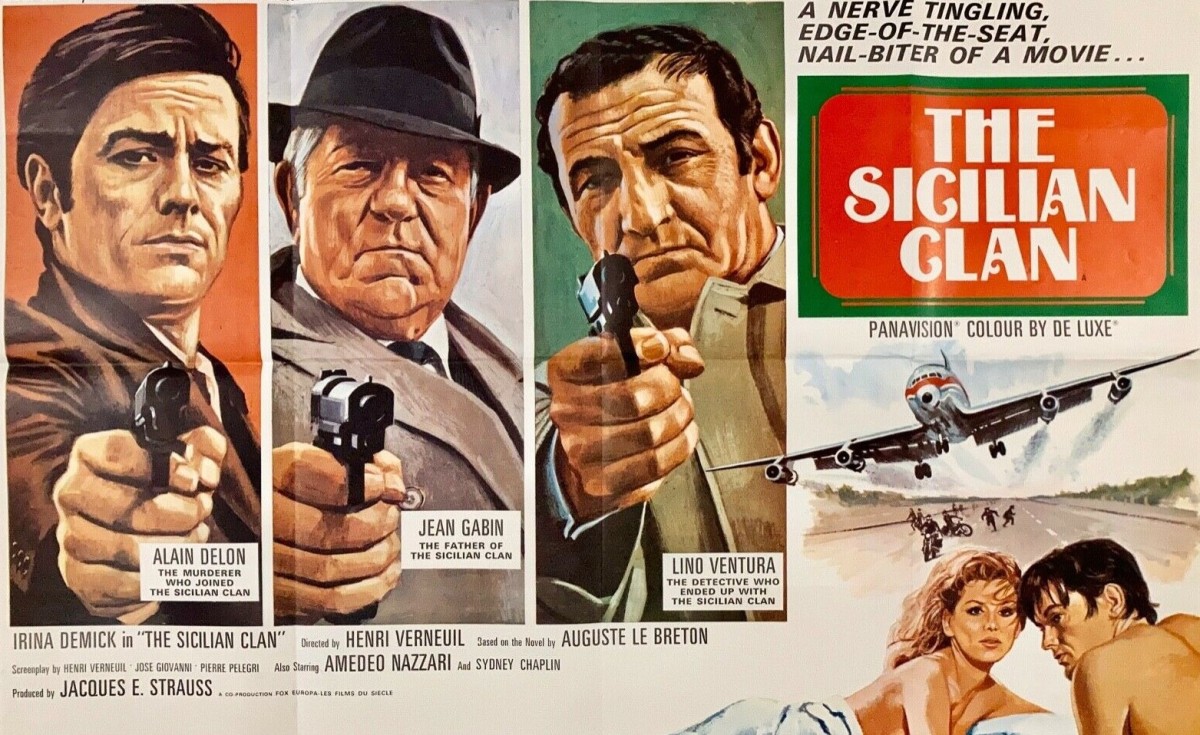
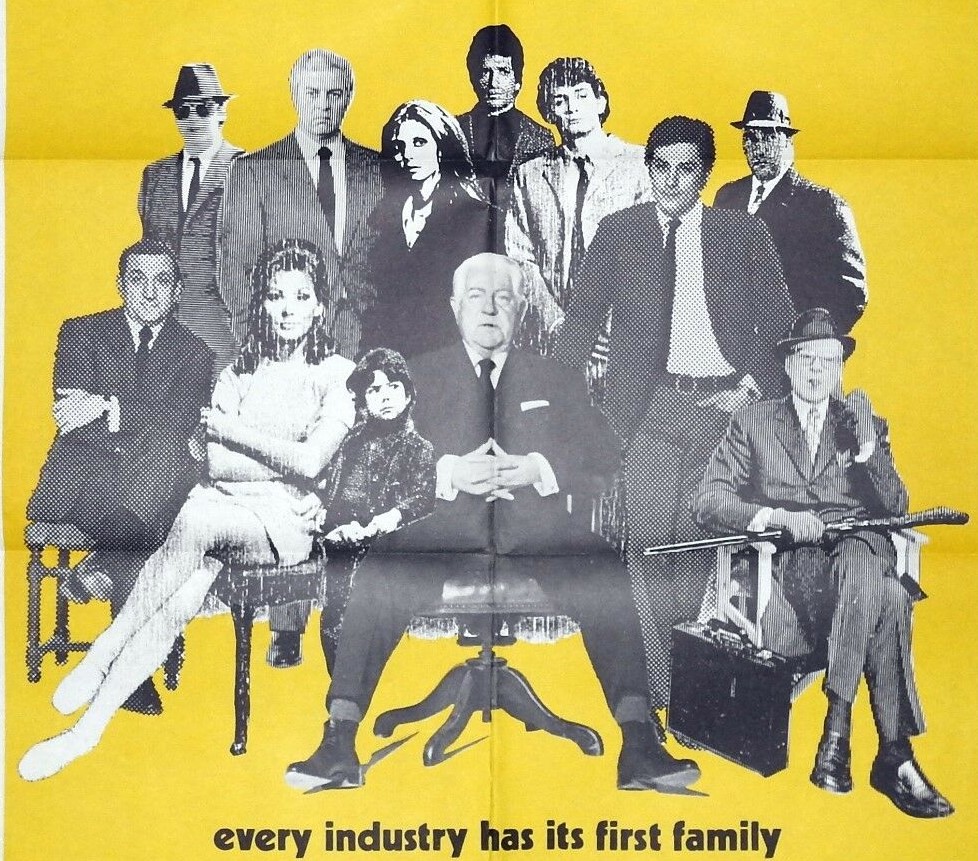
The Sicilian Clan / Le Clan des Siciliens (1969) *****

Absolutely cracking, brilliantly structured, gangster thriller featuring two fabulous heists and three legendary French stars in Jean Gabin, Alain Delon and Lino Ventura. Roger Sartet (Delon) is a trigger-happy robber whose terrific prison escape is organized for a hefty fee by French-based Mafia chieftain Vittorio Manalese (Gabin). Le Goff (Ventura) is the rugged cop hunting down the escapee which brings him into the orbit of Manalese, about whose existence he is completely unaware, the gangster having kept an extremely low profile, never engaging in violence, hiding behind the legitimate front of a pinball machine business.  Veteran French director Henri Verneuil (Guns for San Sebastian, 1968) dukes between the twin storylines with ease.

Sartet brings Manalese the opportunity to pull off the most audacious jewel robbery in history, even though the older man despises Sartet’s penchant for violence and sex. We often see Manalese at family gatherings, head of the dinner table, the family watching television together, frowning on one son’s liking for alcohol, playing with his grandson. He is not just a calm and clever businessman, but very quick-thinking, his sharp mind in a couple of instances preventing disaster. Sartet, on the other hand, will happily endanger his life and freedom by consorting with prostitutes and breaking an unspoken code of honor in an affair with Manalese’s son’s wife (Irina Demick).

The result combines dogged detective work by Le Goff and the inspired planning and execution of the jewel robbery until the two worlds collide. The investigation alone would have made this an outstanding picture. Le Goff, always seen with an unlit cigarette in his mouth although he is trying to give up smoking, concentrating initially on Sartet, sets up surveillance on the thief’s innocent sister and begins an involved – and engrossing – process of tracking down every potential lead and when at last he has Sartet in his sights it brings him up close to Manalese.

Le Goff’s professionalism is matched by that of Manalese and the picture develops into an absorbing battle of wits and the latter’s family values and moral compass puts him at odds with loner Sartet. There is some brilliant invention, the sacrificial watch, for example, and the unexpected appearance of a faithful British wife, although you do guess just how long Le Goff will go before lighting his ever-tempting cigarette. 

The ultra-cool Alain Delon (Once a Thief, 1965) excels in this kind of amoral part, but Jean Gabin (Any Number Can Win, 1963) and Lino Ventura (Army of Shadows, 1969) as old-style gangster and cop, respectively, steal the show. Irina Demick (Prudence and the Pill, 1968) thrives as the bored wife of a dull gangster who is attracted by the violent Delon, at one point deliberately putting herself in the line of his potential fire for the thrill. Actually, it’s the jewel heist that steals the show. Unlike other heist pictures where you have fair idea in advance of the details of the theft, here the audience is kept completely in the dark. Just as important in any heist is that the thieves get away with their plunder and the plan in this instance is breath-taking.

As proved by The Burglars (1971) director Henri Verneuil has the nose for a heist, but this tops that for sheer audacity and elan. Verneuil, Delon and Gabin had worked together on Any Number Can Play. Written by Verneuil and Jose Giovanni (Rififi in Tokyo, 1963) from the novel by Auguste Le Breton (Rififi, 1965).

Preceding The Godfather (1972) in its exploration of family and Mafia code of conduct, it offers plenty in the humanity department while dazzling with ingenuity in the criminality stakes.

Unmissable.

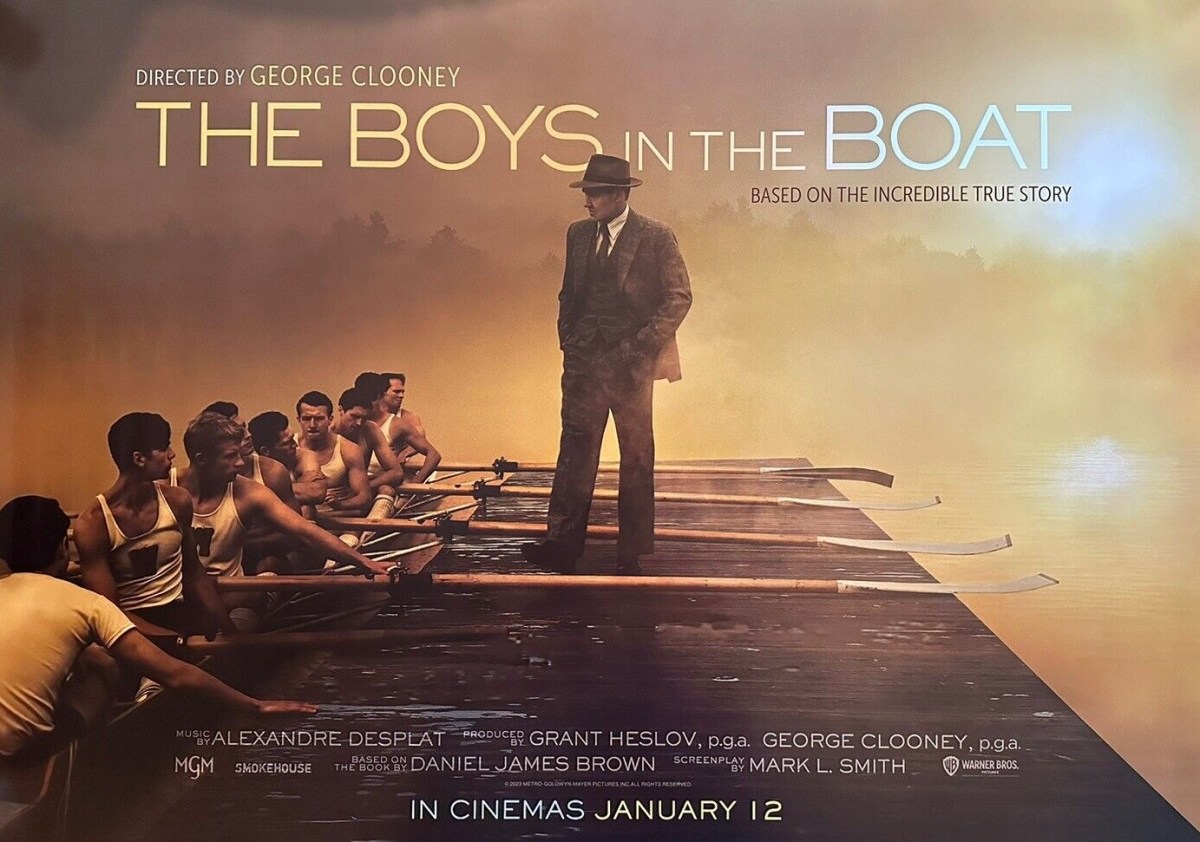
The Boys in the Boat (2023) ***** – Seen at the Cinema

Remarkable. I never thought George Clooney (Good Night and Good Luck, 2005) had it in him. His previous offerings had all been worthy but dry. Here, he conjures up a gripping drama of underdogs pitted against the rich and powerful of the USA and then the  might of Nazi Germany at the 1936 Olympics.

Rowing is generally considered an elite sport, contestants plucked from elite universities – in Britain it was always associated with the annual Oxford vs Cambridge Boat Race though from 1984 the country has won at least one gold at the Olympics and Sir Steve Redgrave, who lacked an alma mater, won five on the trot.

Except for athletics and golf, most popular sports are team games – football/soccer, American football, baseball – but the media and Hollywood tends to treat them as opportunities for individual excellence, the striker scoring the winning goal, the quarterback the winning touchdown, the baseball player the winning home run. The team aspects of these sports are rarely touched upon, even though you need a specific quantity of personnel working in tandem in order to compete.

What makes rowing so unusual is that, as one of the characters comments, you don’t have eight men in an eight-man crew you have one – in other words the guys have to be so in synch that they act as one. I probably learned more about the technicalities of sport from this one picture than any other sports-related movie I’ve ever seen and yet that information is passed out in dramatic form.

In terms of the feel-good factor, this comes closest to Chariots of Fire (1981), but in some regard exceeds that because it’s not about individuals coming good or coming from behind to win a medal, but about group dynamics. And it’s quite astonishing that with the narrative covering three key races, none much different from the other, just boats on water, that director Clooney manages to rack up so much tension.

And like Oppenheimer (2023) it’s a throwback, to those old days of men with hats. Unusual, too, that, like Moneyball (2011) or Any Given Sunday (1999) as much concerned with management as playing.

So, in the middle of the Great Depression, the young men who queue up to battle for a place on the eight-man rowing squad at the University of Washington (in Seattle not the national capital) are kids desperate to feed themselves, not those born with a silver spoon in their mouths, because making the team comes with a scholarship, a bed and meals. But qualifying is a massive attack on the human physique, not to mention psyche, as the combatants need to learn to breathe different and wear out muscles in a way no human being should.

There’s not room to showcase all the athletes so the narrative weight drops on Joe Rantz (Callum Turner), the hobo, abandoned by parents when young, living in a car wreck, skimping on food. He’s got a crush on well-to-do Joyce (Hadley Robinson) who has to do most of the running to get their romance over the line. Next in line is Don (Jack Mulhern), with a Charles Bronson haircut and taciturnity, no social skills but a handy piano player, his respiratory illness threatening to torpedo the team’s chances. In any other picture the cox Chuck (Thomas Elms) would hog the limelight because he’s the one who disobeys the coach’s commands and beats verbal hell out of the team.

Al Ulbrickson (Joel Egerton) is the coach fighting for his career, taking on the shady politics and rules-rigging and a system that wants to only reward the rich. Sidekick boatbuilder George (Peter Guinness) is the kind of backroom character who is mostly silent unless he has a pithy word of wisdom. Al manages two teams, the veterans if you like, who’ve been training together for three years and the juniors, comprising the Depression kids, but it’s the driven newcomers who impress the most and against all odds are selected to represent the university.

I had always assumed there was nothing to do in Poughkeepsie except “pick your feet.” Turns out its river is the locale for the annual rowing championships and so popular it’s not just a huge gala event but there’s even some kind of railway cars packed with passengers that runs along the side of the water so the elect can keep up with the rowers.

Most reviews of this picture have been on the niggardly side but I found it not only deftly done, but very moving, a couple of heart-tugging tear-snagging moments as it pounds its way to feel-good conclusion. The women, who are relegated to bit parts, are exceptionally good, Hadley Robinson (who I had just seen in a completely different role in Anyone But You, 2023) dances across the screen while Courtney Henngeler, as the coach’s wife, has a couple of the best lines in the entire picture. But probably the absolute zinger has to go to a blink-and-you-miss-it moment featuring Jesse Owens (Jyuddah James) when asked if he was going to “show” the Germans what he could do, replies that, no, he was going to show his countrymen back home, indicating the racial prejudice he had to overcome to win selection.  

Terrific turn from Joel Edgerton (Red Sparrow, 2018) who has been hovering around for donkeys without delivering a career-defining performance. Breakthrough, too, for Callum Turner (Divine, 2020) and Jack Mulhern (Pet Sematary: Bloodlines, 2023) though I have a sneaky feeling you’ll go away thinking British character actor Peter Guinness has stolen the picture. Top notch script by Mark L. Smith (The Revenant, 2015) from the bestseller by Daniel James Brown.

All the elements that appear essential to a contemporary sports picture, namely sex, drugs and violence, are missing and what a difference that makes, allowing the picture to streamline forward without getting bogged down. And critics, believing something critical is missing, are missing the point. At the opposite end of the pizzazz scale from Oppenheimer but with as interesting and adult-oriented tale to tell. And for once allows audiences the chance to let their hearts rule their head. And at just over two hours, doesn’t overstay its welcome. This ain’t made by a streamer so catch it in the cinema where it belongs.

Instant classic.

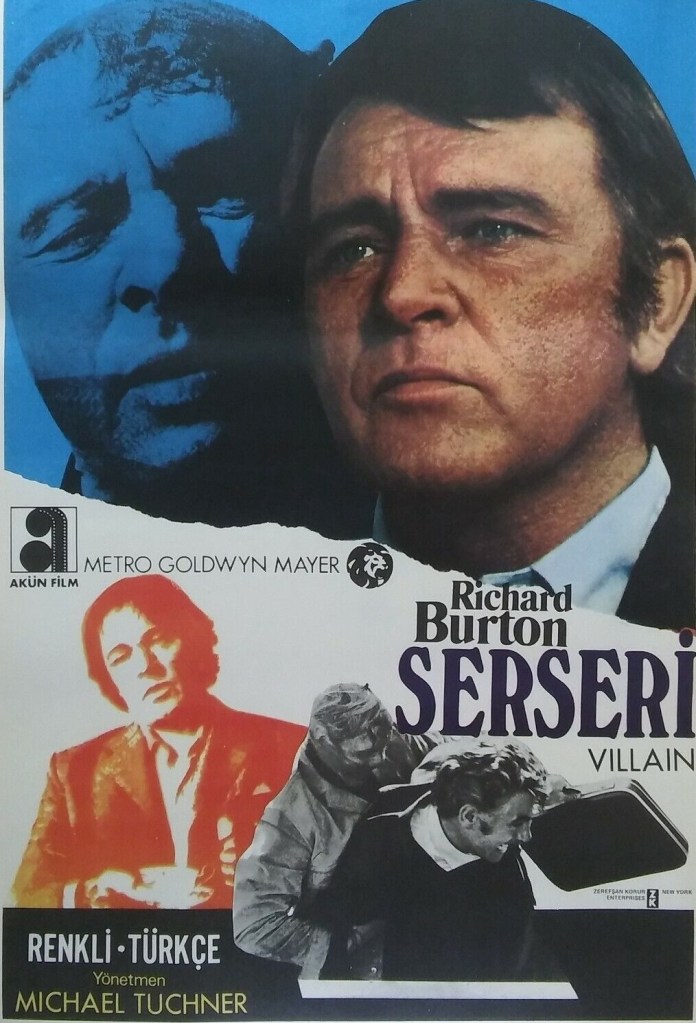
Villain (1971) *****

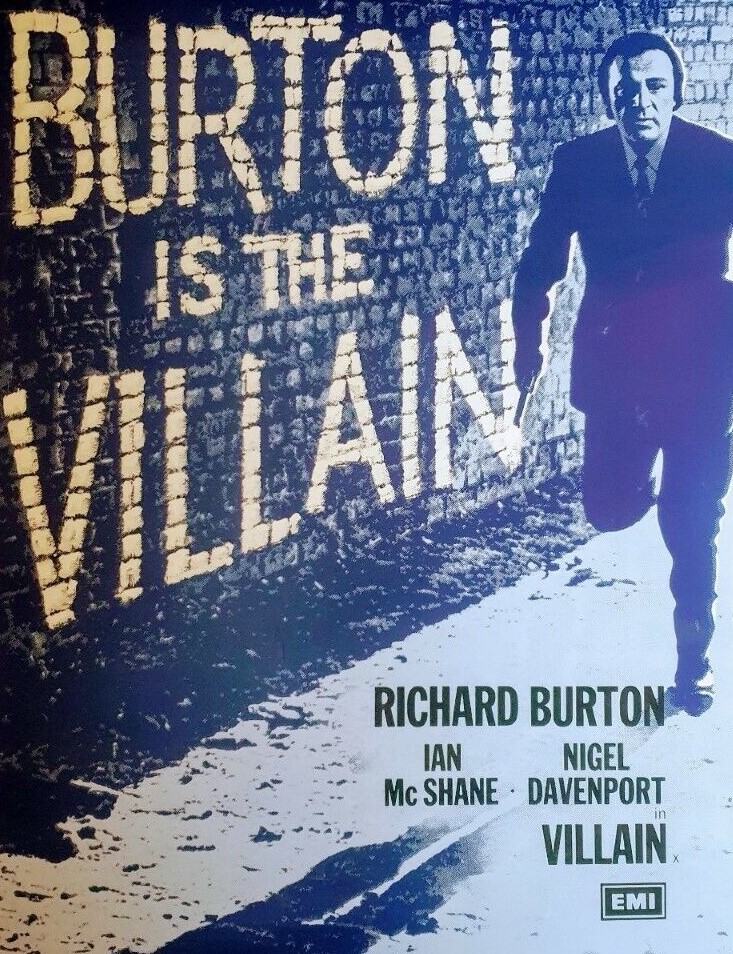
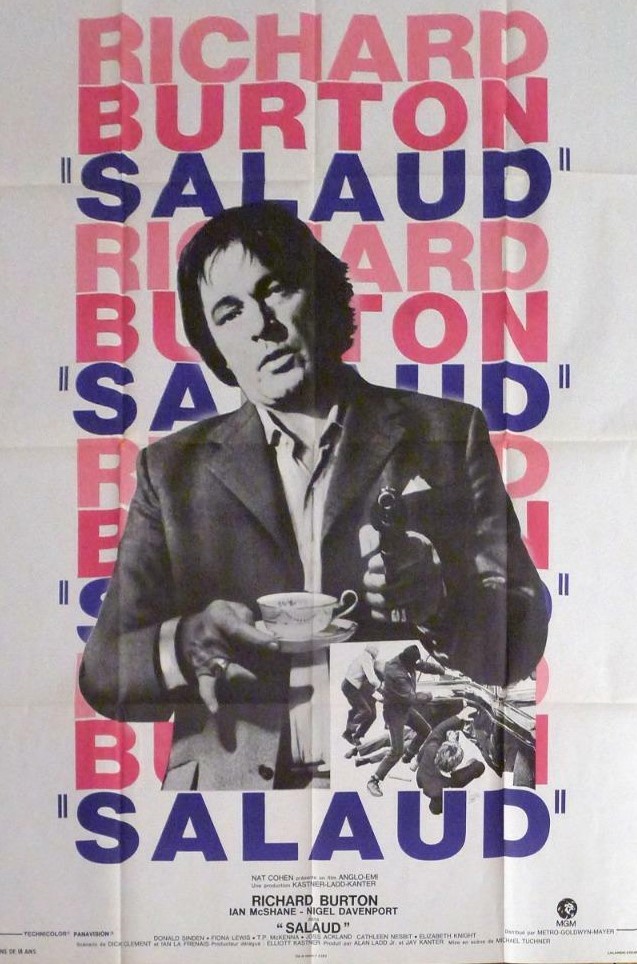
Get Carter, out the same year, tends to get the critical nod over Villain, but I beg to differ. Not only do we have the most realistic robbery yet depicted on screen, but Richard Burton (Becket, 1964), delivering one of his greatest performances, is nearly matched by Ian McShane, flexing acting muscles that would come to fruition in Deadwood (2004-2006) and John Wick: Chapter 4 (2023), and Nigel Davenport’s cop, as cool under pressure as Frank Bullitt.

Where Michael Caine in Get Carter is primarily the avenging angel, Burton’s Vic Dakin is every bit as complex as Michael Corleone. Way ahead of its time in portraying Dakin as a gay gangster in sympathetic fashion, he also has a moral code akin to that of Don Corleone. While the Mafia chieftain drew the line at selling drugs, Dakin despises MP Draycott (Donald Sinden) for his corruption and views with contempt sometime boyfriend Wolfe (Ian McShane) for small-time drugs and girl peddling.

He reveres (as did Don Corleone) family values, bringing his aging mother tea in bed, kissing her affectionately on the forehead, treating her to a day out at the Brighton. But he also rejoices in violence as much as any of Scorsese’s gallery of thugs.

Complexity is the order of the day. Every dominant character, whether operating on the legal or illegal side of the street, receives a come-uppance verging on humiliation. Dakin himself is arrested in full view of his mother. The bisexual Wolfe, who otherwise dances unscathed through the mire, is beaten up by Dakin and humiliated when his male lover shows his female lover, the upmarket Venetia (Fiona Lewis), the door. Top gangster Frank (T.P. McKenna), who attempts to lord it over Dakin, ends up whimpering in agony in the back seat of a car.

Maverick cop Mathews (Nigel Davenport) is brought to heel by internal politics and frustrated at home when his wife is indifferent to the late night shenanigans of his son. Even cocky thug Duncan (Tony Selby), with a quip to terrify victims, is reduced to a quivering wreck under the relentless stare of Dakin.

Unlike The Godfather, mothers excepted, wives and girlfriends are complicit. Little chance of a shred of feminism here. Women are chattels, Venetia is traded out as a “favor” to Draycott, terrified gangster’s moll Patti (Elizabeth Knight) also used in that capacity by Wolfe. Draycott professes little interest in whether the women, procured in this fashion, enjoy sex with him.

So, to the story. Tempted by a tasty payroll robbery, Dakin steps out of his usual line of work, a protection racket, and joins up with two other leading hoods, Frank (T.P. McKenna) and his brother-in-law, the belching Edgar (Joss Ackland). But the robbery goes wrong. The tail is spotted by the payroll car and the victims almost evade capture. But stopping the payroll car renders the getaway vehicle virtually useless, a flat tyre soon flies off and they drive for miles on a wheel rim.

The payroll is well-guarded and several of the villains emerge badly scathed. Worse, the cases containing the cash have anti-theft devices, equipped with legs that spring out and red clouds of smoke. And there are ample witnesses. Edgar is quickly apprehended, and the movie enters a vicious endgame.

Contemporary audiences were put off by the obvious references to the Kray Twins and the Profumo Affair and American audiences had long shown an aversion to Cockneys (though that is not so apparent here) and critics gave it a mauling, the general feeling being that after Performance (1970) and Get Carter, the British public was entitled to the more genial criminal as exemplified by The Italian Job (1969), incidentally another U.S. flop.

There are many superb moments: Dakin’s affectionate stroke of Wolfe’s shoulder, Dakin and his sidekick’s nonchalant stroll over a footbridge as they make their escape, Dakin pushing Draycott into a urinal, Wolfe abandoning Venetia at a country house party so that Draycott can avail himself of the “favor,” Dakin’s love for his mother. Throwaways point to deeper issues, a country stricken by strikes and political corruption.

Dakin, unaware he has made a target for his own back by the unnecessary brutal treatment of an associate, comes up against a cool implacable cop, as confident as Dakin without the arrogance or recourse to brutality, easy with the quip.

A modern audience might appreciate the violence more than the acting, given that a la Scorsese we are supposed to revel in criminal behavior, but it’s the performances that lift the film. Burton had entered a career trough, sacked from Laughter in the Dark (1969), involved in a quartet of financial and critical turkeys – Boom! (1968), Candy (1968), Staircase (1969) and Raid on Rommel (1971) – with only another Oscar nomination for Anne of the Thousand Days (1970) to alleviate the gathering gloom that would see him strike out in his next nine pictures before another nomination for Equus (1977) restored some stability.

So this is a superb character, suited and booted he might be, doting on his mother, but underneath stung by insecurity and unable to rein in his sadistic streak. A marvellous addition to the canon of great gangster portrayals.

Ian McShane, too, provides a performance of great depth, in his element when skirting around the small-time world, out of his depth with the big time, the charm that can hook a vulnerable upper-class lass like Venetia as likely to attract a malevolent mobster, the former under his thumb, the latter controlling. To see him go from cheeky chappie with a winning grin to penitent lover forced to dismiss Venetia is quite an achievement.

Nigel Davenport (Sands of the Kalahari, 1965) is on top form and the supporting cast could hardly have been better – T.P. McKenna (Young Cassidy, 1965), plummy-voiced Donald Sinden (Father, Dear Father TV series, 1969-1972) playing against type, Joss Ackland (Rasputin: The Mad Monk, 1966). Throw in a bit of over-acting from Colin Welland (Kes, 1969) plus Fiona Lewis (Where’s Jack?, 1969) at her most accomplished.

Michael Tuchner (Fear Is the Key, 1972) directs with some style from a screenplay by Dick Clement and Ian La Fresnais (Hannibal Brooks, 1969) working from the novel by al Lettieri.

Ripe for reassessment.

https://amzn.to/3GQS6Uo

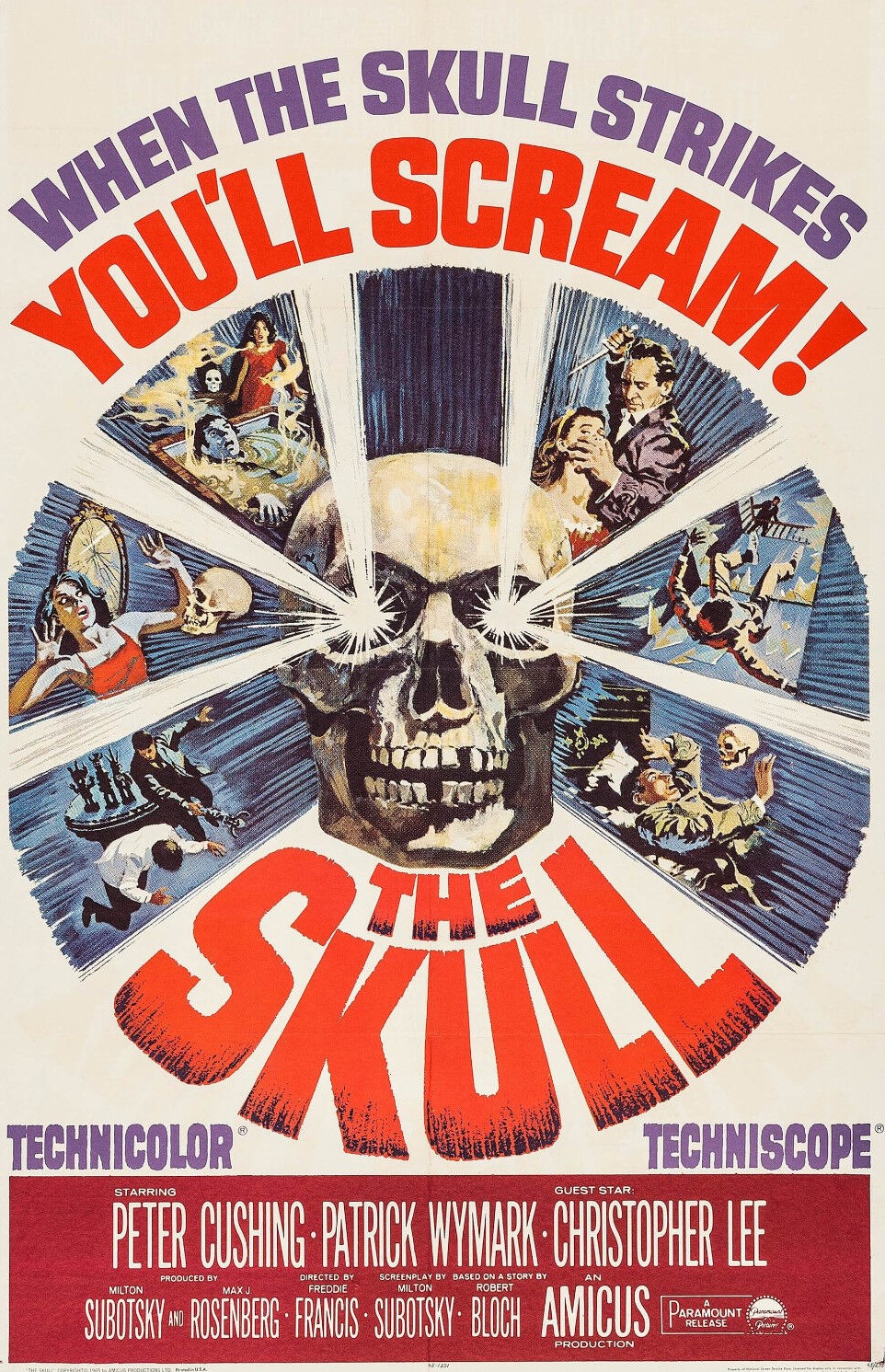
The Skull (1965) *****

I have no idea why this masterpiece has not been acclaimed. For virtually half the picture, there is no dialogue, the entire focus on camerawork and reaction. Even Stanley Kubrick in The Shining (1980) gave in to grand guignol and The Exorcist (1973) was filled with over-the-top scenes but here the psychological impact of possession remains confined.

Initially, it appears we are in familiar Hammer territory, a grave-robber detaching a skull from a corpse only to meet an untimely end. There is another flashback to the gothic where the presence of the skull drives an order man to murder. But this is an Amicus production and set in contemporary times where Christopher Lee and Peter Cushing are once again in opposition, but this time only in an auction house bidding for demonic artefacts.

Exposition is straightforward. Dealer Marco (Patrick Wymark) sells Maitland (Peter Cushing) a book about De Sade bound in human skin. Marco may be a con man. He claims to possess the skull of the Marquis de Sade but his attitude towards it, kissing its head, plucking its nose socket, and the fact that he willing to halve his asking price, suggest otherwise. Sir Matthew (Christopher Lee), who once owned the skull, warns Cushing against it.

The rest of the film covers Maitland’s possession of the skull and the skull’s possession of him. There is a notable Kafkaesque sequence where Maitland is arrested, taken before a judge and forced three times to play Russian roulette before ending up in the house of the dealer where he steals the skull. What is less often commented upon is that this nigh-on 15-minute sequence including a 90-second taxi ride is conducted in virtual silence, the camera mostly on Maitland’s face, that silence only broken by the feeding of bullets not the barrel of the gun and the barrel being rolled round. It is not long before Maitland commits his first murder.

There is a famous scene in the Last Tycoon (1976) in which Robert De Niro explains to a truculent word-obsessed British writer why dialogue is redundant in the movies. All you need is camera and reaction. That sets up The Skull’s greatest scene, a 17-minute dialogue-free climax, where Maitland is effectively preyed upon and consumed.

The skull itself appears to have a point-of-view, various shots of Maitland through the skull’s eyes. The actual special effects are limited to what is imminently achievable, the skulls glows, it moves through the air. The impact of its presence is shown on Maitland’s face and by his action. It is just hypnotic.

Various directors have been anointed for the way they move their camera – Antonioni’s 360-degree turn in The Passenger (1975) comes to mind, large chunks of 2001: A Space Odyssey (1968), the long wait for sunrise in Lawrence of Arabia (1962), the lengthy shots of James Stewart driving a car in Vertigo (1958). But I have never seen anything as innovative as the silent sequences in The Skull which would be a waste of innovation were the sequences not so effective, especially on the small screen. Freddie Francis (Nightmare, 1964) directed from a story by Robert Bloch (Psycho, 1960). Equally innovative is the jarring music by avant-garde composer Elizabeth Lutyens.

In the role of his career, Peter Cushing (Dr Who and the Daleks, 1965) turns on the style, his character virtually turning 360-degrees as he becomes enmeshed in diabolic terror.

A must-see.

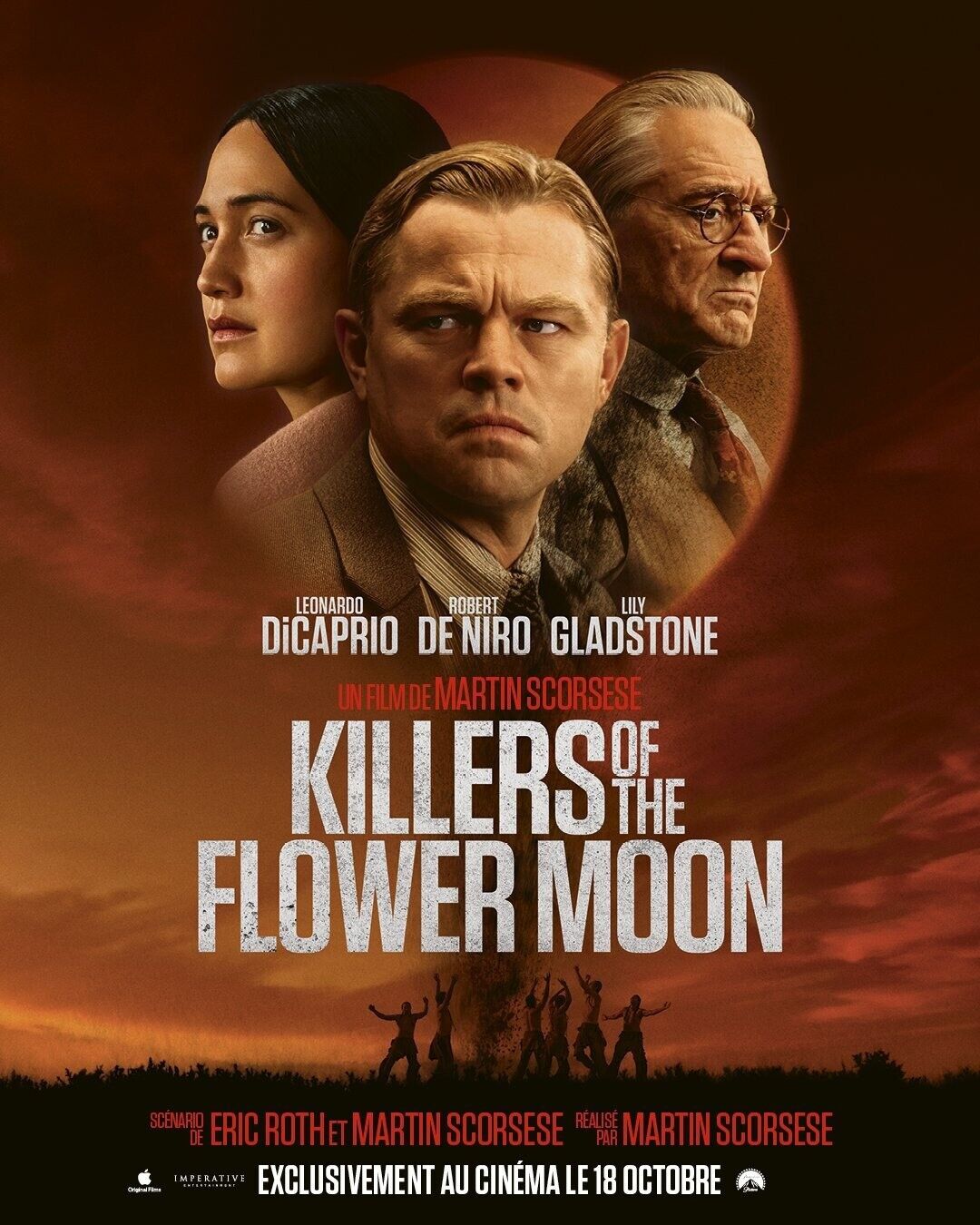
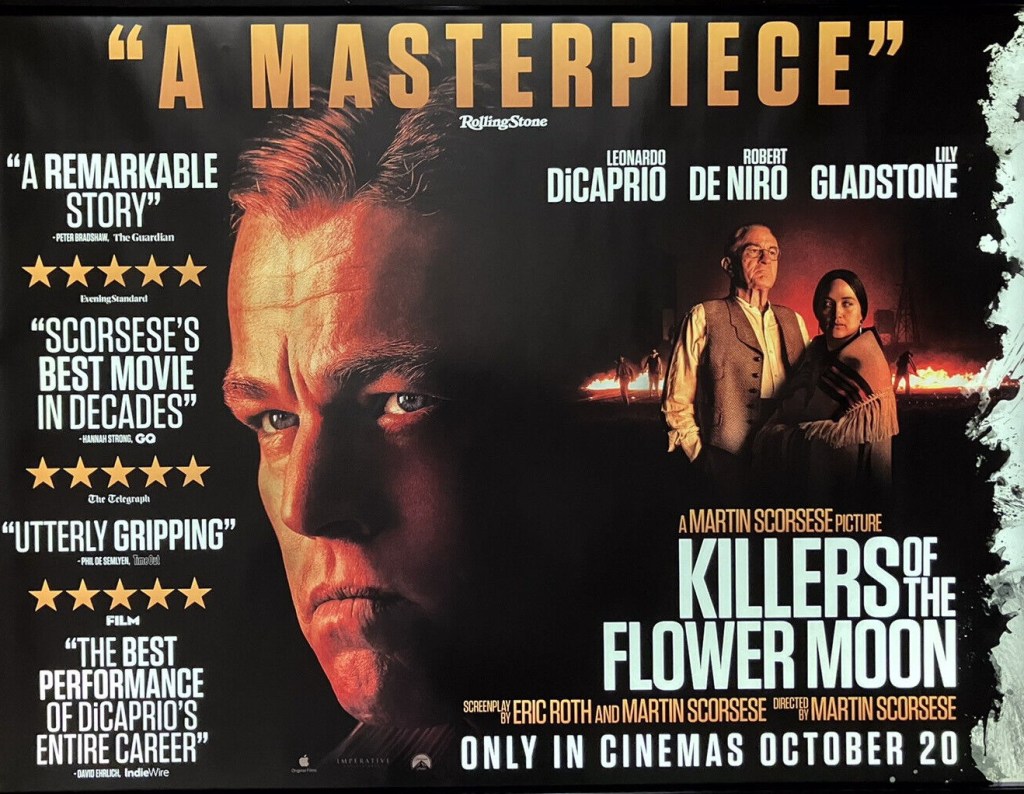
Killers of the Flower Moon (2023) *****

Let me stop you right there. This isn’t a review of this particular movie, you’re probably sick to death of those already, and it’s not some kind of Scorsese retrospective, but an expression of what it’s like to live through the transformation of one of the greatest directors Hollywood has ever produced. That zipping excitement when you first encounter a new Hollywood animal and when he charges down a different track or seems to lose control.

Catching up on a director’s life work via a carefully-curated retrospective hasn’t got an ounce of the flavor of living through it, from the days when film festival break-outs were not the carefully-orchestrated distribution and publicity machines they are now.

I first encountered Scorsese before a clever journalist had coined the rather derisory notion of a  Brat Pack, when the director was just another new voice clamoring for attention in a world of considerably more cinematic noise than exists today, when MCU and streaming didn’t exist, and audiences could find massive variety every time they attended the cinema.

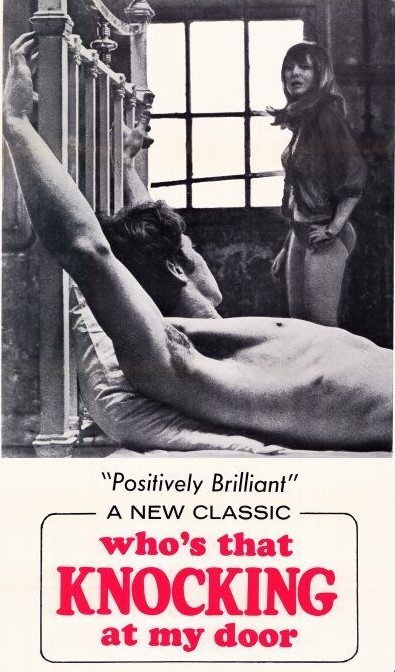
Who’s That Knocking at My Door slipped through the arthouse cracks in 1967 – the year of The Graduate, Guess Who’s Coming to Dinner, In the Heat of the Night, The Dirty Dozen and El Dorado. I didn’t see it then. I would be surprised if anyone did. Nobody was ready for that brash style with its insistent use of pop/rock music. I caught up with a few years later when the Scorsese we know now was still in embryo form.

Sure, Mean Streets (1973) gave strong indication of the gangster path towards which Scorsese was inclined, but it wasn’t so obvious then that he would make that genre his own, not when he interspersed that with a tale of Depression-era hobos, Boxcar Bertha (1972), and Alice Doesn’t Live Here (1974), a proto-feminist narrative whose stunning tracking opening set out his technical directorial credentials. And it was anybody’s guess which way he’d go from here. 

And I doubt if anyone expected Taxi Driver (1976), the moody glimpse of the New York underbelly with a psychopath hero, and certainly after that exploded at the box office and had critics purring, nobody would guess his career would take a musical turn, New York, New York and The Last Waltz in consecutive years. You might consider Raging Bull (1980), prototypical Scorsese. But the truth is, he was never typical. He jumped from project to project in a manner that only appeared to make sense to himself.

Some choices were so atypical you wondered if there had been any through-thread – what possibly connected King of Comedy (1982) to The Age of Innocence (1993) and Hugo two decades later. Certainly, when he imbibed a deep spiritual draft, you could make a thematic connection between The Last Temptation of Christ (1988), Kundun (1997), and Silence (2016).

But by this point he had achieved Hollywood nirvana, the mixture of critical adulation that put him top of the hitlist of those studios with one eye on the Oscars and bouts of box office glory that kept the same studios sweet. If he ever felt the need to revive a fading career he could churn out the likes of apparently mainstream but dark-tinged Cape Fear (1991), The Aviator (2004), Shutter Island (2010) and The Wolf of Wall Street (2103). And at the back of your mind, as a fan, was the question of how long would it take him to return to the gangsters. If you had Goodfellas (1990) forever etched on your mind, Casino (1995), Gangs of New York (2002), The Departed (2006) and The Irishman (2019) seemed almost always within reach.

Of course, he can hardly be separated from Robert DeNiro, his go-to star, ten teamings in all including the current number. And for a DeNiro substitute, Scorsese didn’t go far wrong with Leonardo DiCaprio, six including the new one. Stars with an edgy side were attracted to Scorsese and vice-versa.

It’s perhaps no coincidence that DeNiro and DiCaprio play murderous relatives in Killer of the Flower Moon, but the performances both deliver are so subtle, so far removed from what Scorsese’s asked of them before, as to point them both in the direction of the Oscar.

You think you kind-of know what you’re going to get with Scorsese, but, more than any other director, he whips the ground out from under you. Killers of the Flower Moon is bereft of the Scorsese trademarks, voice-over, exuberant violence, thumping soundtrack.

So when you’ve been watching his movies for over half a century, you look on him as you might a favored son, delighted in his achievement. But you don’t want him to stop, you want him to keep going. There must be one more film in him. Like Ridley Scott, he’s more bankable than ever, especially if the streamers are looking for a short-cut to hooking up with the best talent available.

Like Oppenheimer, this one is unmissable.

https://amzn.to/3MeEe9U

https://amzn.to/3Q6Lw0p

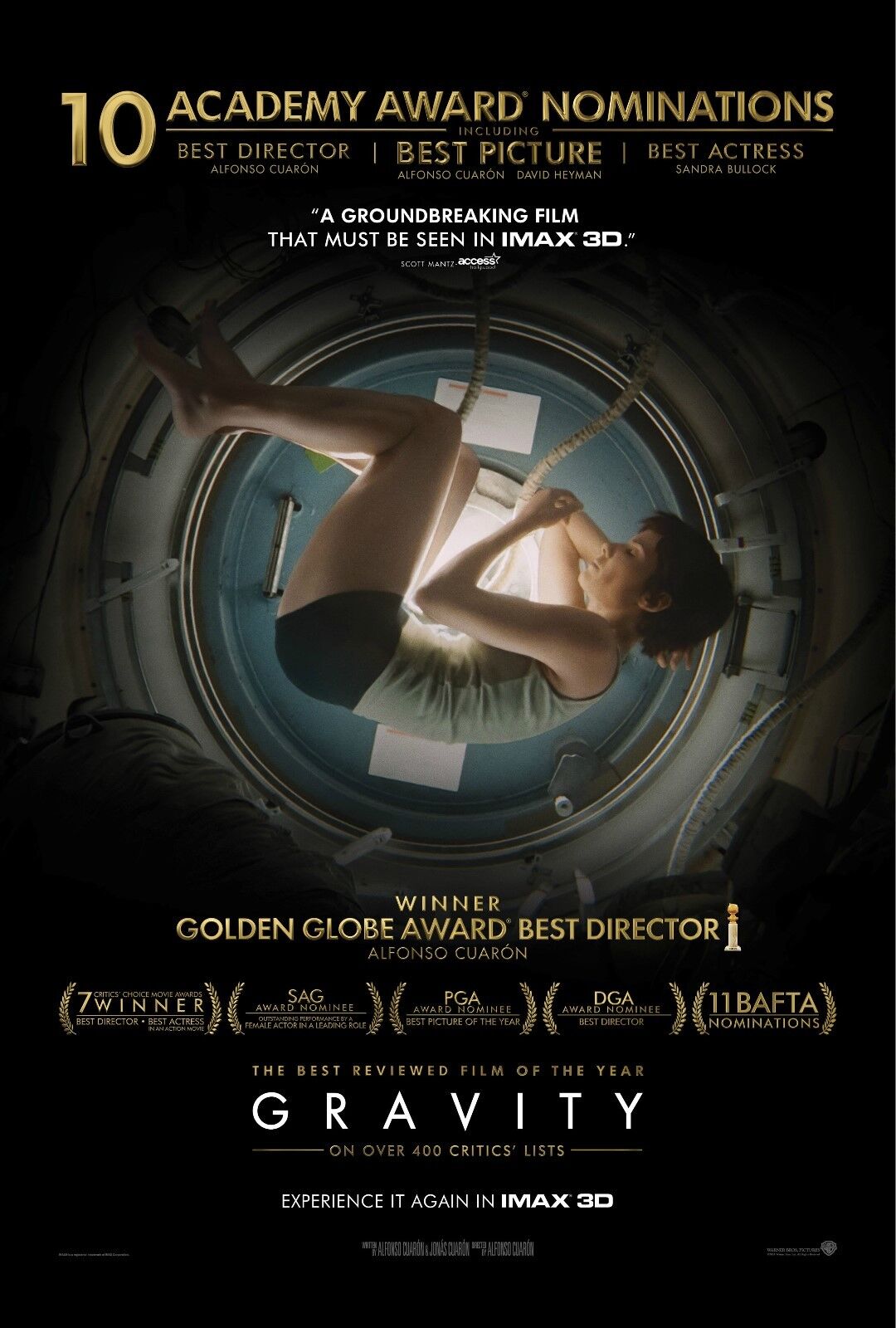
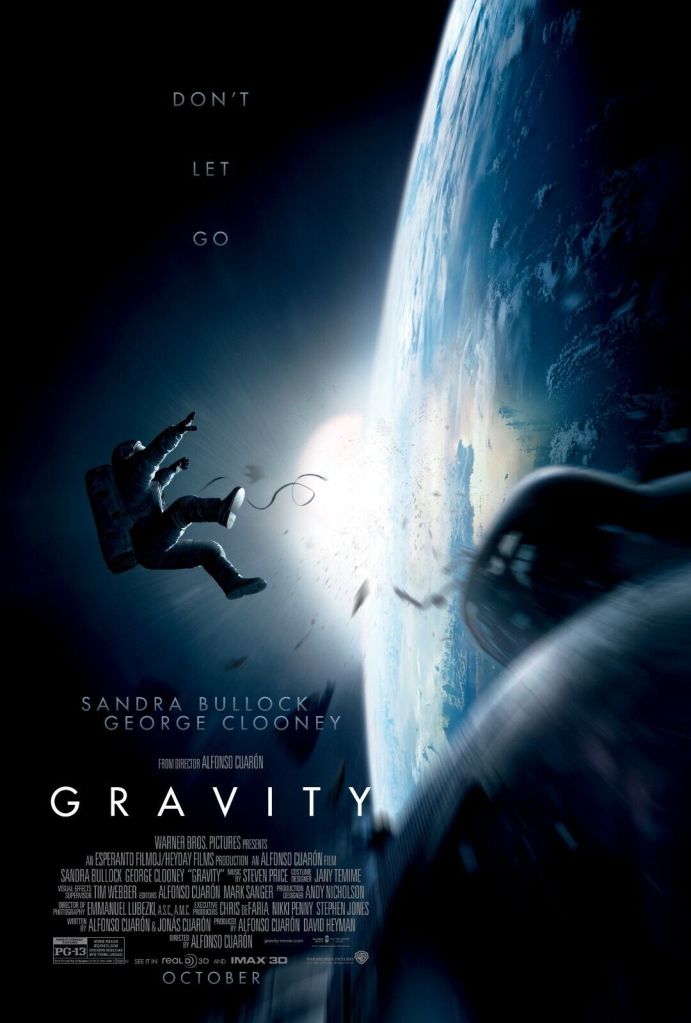
Gravity (2013) ***** in 3D, Seen at the Cinema

Superb piece of counter-programming saw this sleek sci-fi disaster picture pitted against the uber-lengthy Killers of the Flower Moon. Clocking in at under half the running time of the Scorsese feature (but with the bonus of 3D), almost B-movie style in a mean 93 minutes, it still stands as an awesome achievement by Oscar-winning director Alfonso Cuaron (Harry Potter and the Prisoner of Azkaban, 2004).

Stripping away the tedious back story that generally afflicts sci fi, and bold enough Psycho-style to dispense with a major box office figure halfway through, like John Wick it’s action from the get-go. No aliens here, just a couple of almost nerdy astronauts, sewn-up grieving mother Ryan (Sandra Bullock) and jabber mouth Matt (George Clooney), doing boring maintenance on a pretty mediocre-looking space vehicle, not the kind that’s going to blast off into deep space mapping unknown territories.

Russian space trouble causes a chain reaction that sends hundreds of miniature missiles in diabolic orbit around Earth, hitting the beleaguered Yanks time and again until their entire crew, and that of Russian and Chinese space units, is wiped out. Fits into the survival-in-space mini genre that accommodates Apollo 13 (1995) as easily as The Martian (2105) and the sub-sub-genre of women-surviving- in-space that Sigourney Weaver kicked off in Alien (1979).

So, you know from the off that you’re not going to get a woman bleating about the situation and unable to cope. It’s all about hanging on and using whatever skills got humanity into space in the first to get them back out. As usual, the answer is a pretty straightforward piece of reverse engineering.

But mostly this is sheer spectacle held together by one of the greatest actors of modern times in Sandra Bullock (The Lost City, 2022). When you need someone to emote for the most part from under a space suit, she’s the one. Takes the feet from under you though in the human twist. Why not just let nature take its course, instead of fighting for your life? Might have made a bigger psychological impact if Ryan had just let go, but that’s not, I would imagine, as big box office as the battle for individual survival, especially from someone who has zilch to live for.

I’ve no idea how they achieved the effects and don’t want to know, but a lot of it looks as if shot in-camera, with Ryan floating around in the spaceship. Quite how Cuaron, on triple-hyphenate duties here, writer-producer-director, captured her helplessly turning cartwheels across empty space is anybody’s guess.  

If it had been the usual muscled-up candidates hurtling towards their doom, I doubt if audiences would have cared so much, but the everywoman aspects of Ryan nailed it. No point trying to explain the narrative of destruction, suffice to say that whatever deadly comes her way is just as mundane as whatever is helpful.

Pure raw cinematic ride with no let-up in the action. Not sure it will hold up so well on a small screen (though the Blu Ray should provide a hefty impact) so I’m grateful for Warner Brothers for bringing this back for a reissue one-night stand to celebrate its tenth anniversary. Not sure either that it found much of an appreciative audience though. There was just me and one other person in the cinema audience last night.

A blast with heart.

https://amzn.to/3tMUvfO

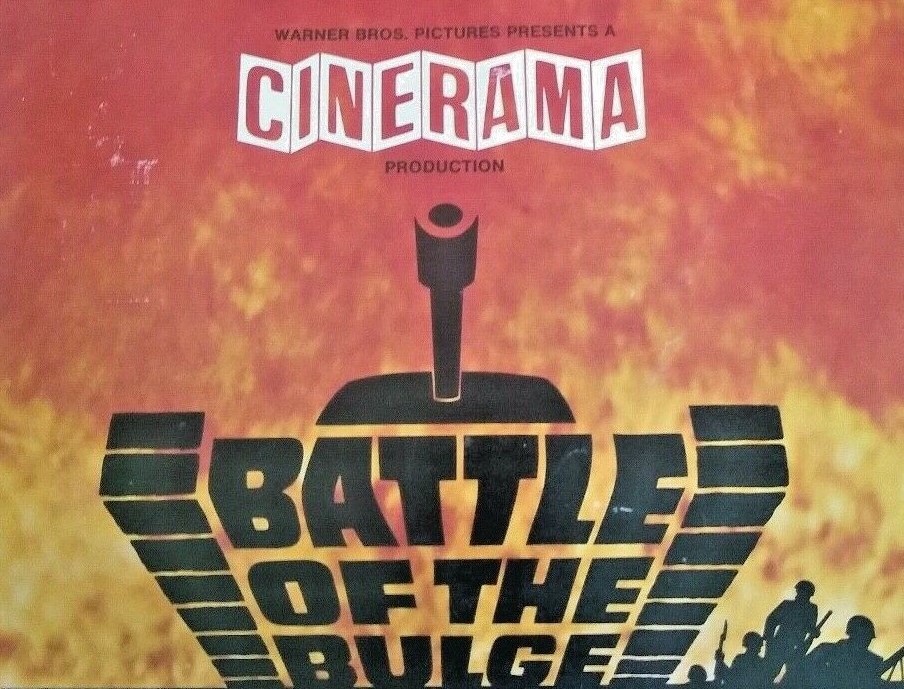
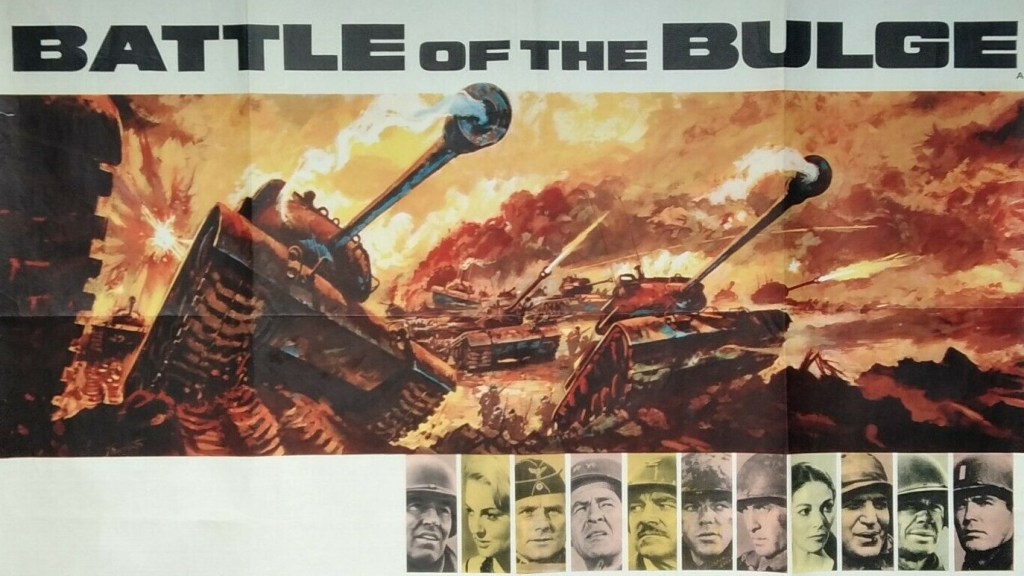
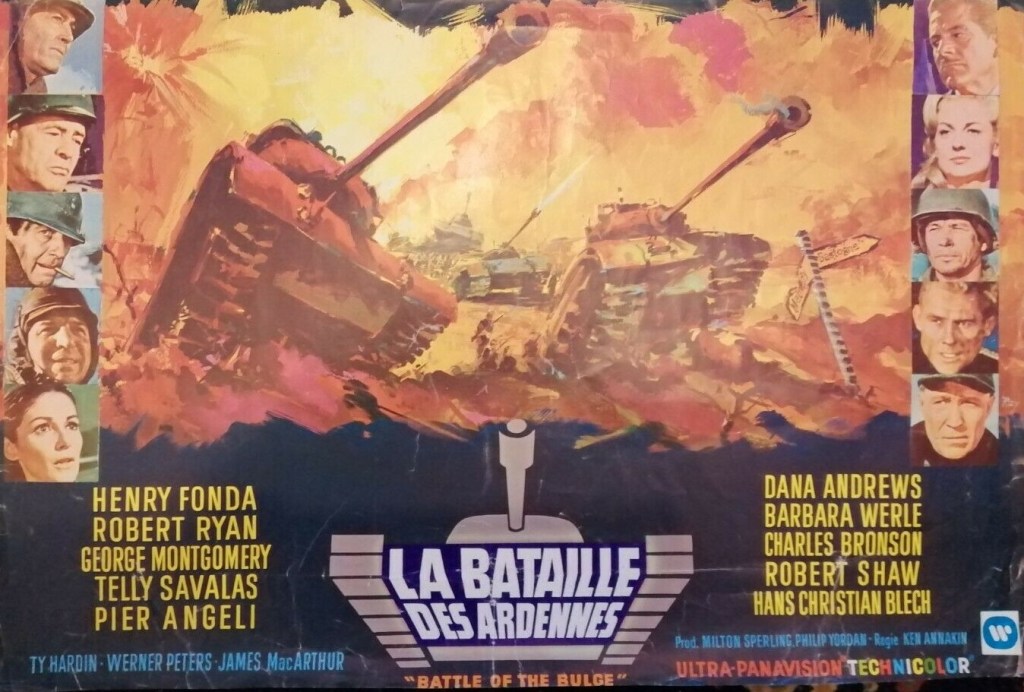
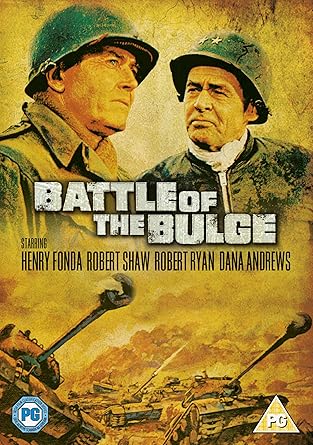
Battle of the Bulge (1965) ***** – Seen at the Cinema in Cinerama and 70mm

Cinerama was the IMAX of the day and far superior in my view in many aspects not least the width of the screen. IMAX goes for height but I’m not convinced that compensates for lack of the widest screen you could imagine. So the chance of seeing this in the original Cinerama print, 70mm and six-track stereo, at the annual Bradford Widescreen Festival yesterday was too good to miss. And so it proved. A thundering experience. Much as I enjoyed it on DVD, this was elevated way beyond expectation.

Superb even-handed depiction of war, far better than I remembered. Most war films of this era and even beyond showed the action primarily from the view of the Americans/British – even the acclaimed The Deer Hunter (1978) and Apocalypse Now (1979) show nothing of the skills of the Vietnam forces that would prove victorious. And while The Longest Day (1962) shows reaction to the invasion, the Germans are revealed as caught on the hop. Given the basis for this picture is the unexpected German offensive in the Ardennes, France, in December-January 1944-1945, you might expect the Germans to be accorded some attention. But hardly, given as much of the picture as this, so that in the early stages the Germans are portrayed as powerful, clever and patriotic while the Americans are slovenly and complacent, their greatest efforts expended on preparing for Xmas.

With tanks the main military focus, Cinerama is deployed brilliantly, the ultra-wide screen especially useful as the unstoppable vehicles rampage through forests and land and allowing true audience involvement when opposing armies meet head-to-head. Of course, it being Cinerama, there are a couple of scenes that play to the strength of this particular screen, a car careening round bends and a train racing along twisting tracks, the kind of scenes that previously would have had the audiences out of their seats with excitement, but here mainly used to raise the tension in the battle.

It’s to the film’s benefit that the all-star cast doesn’t feature a single actor who is truly a star in the John Wayne/Gregory Peck/Steve McQueen mould so that prevents the audience rubbernecking to spot-a-star that afflicted The Longest Day. The biggest name, technically, is Henry Fonda, and although he received top billing in many pictures, you would have to go back to The Wrong Man (1956) to find an actual box office hit. The only previous top billing for Robert Shaw (From Russia with Love, 1963) had been in The Luck of Ginger Coffey (1964), a flop few had seen. And the top-billing days of Robert Ryan (Horizons West, 1952) and Dana Andrews (Laura, 1944). In fact, the actor with the biggest string of hits was Disney protégé James MacArthur (Swiss Family Robinson, 1960). Anybody who had seen The Magnificent Seven (1960) and The Great Escape (1963) would recognise Charles Bronson in a supporting role. So fair is the movie that it’s the blond-haired Shaw who steals the show with a dynamic performance.

So it helped the almost documentary-style of the film that it was filled with familiar faces rather than dominant stars and the director was not bound to give a star more screen time or provide them with one brilliant scene after another, or establish a redundant love story in order to provide them with more emotional heft. In fact, the only romance goes to a sly black marketeer who views his relationship more as a business asset.

Initially, the role of Lt. Col. Kiley (Henry Fonda), a former cop, seems only to be to rile his superiors General Grey (Robert Ryan) and Colonel Pritchard (Dana Andrews), his pessimistic view contrasting with the accepted notion that the Germans are well and truly defeated and the war would be over soon. On airplane reconnaissance he takes a photograph of an officer later identified as Panzer tank genius Colonel Hessler (Robert Shaw). While Grey and Pritchard over-ride his conclusions, the movie concentrates on the German build-up, their discipline, efficiency, leadership and determination juxtaposed to the American inefficiency and sloppiness.

Where the Americans just want to get home, Hessler – more charismatic than any of the dull Yanks – is in his element, wanting the war to never end, convinced at least that a tank-driven assault would drive a wedge between the Allied forces, and reaching the target Antwerp in Belgium in the north would extend the war by another year by which time Germany’s V2 rockets would give them greater firepower. The Germans also have a clever idea, the type that the British were always coming up with and would make a film of its own, of parachuting American-born Germans behind enemy lines, dressed in American uniforms to carry out vital sabotage and hold crucial bridges across the River Meuse.

In one of the best scenes in the film, his tank commanders spurt spontaneously into a patriotic song with much stamping of boots. And while Hessler’s immediate superior (Werner Peters) , ensconced in a superior bunker, can enjoy a comfortable lifestyle, no more illustrated by the fact that he has courtesans to hand, one of whom, offered to Hessler, is furiously dismissed. And the clock is ticking, the Germans have limited supplies of fuel and must reach the enemy’s supply dumps before they run out of gas.

The maverick Kiley manages to be everywhere – the River Meuse bridge, in the air in the fog determinedly hunting for the panzers he believes are hidden, is the one who realises how critical the fuel situation is for the enemy, and at the fuel depot for the movie climax. Otherwise, the picture uses its cast of supporting characters to cover other incidents, the massacre of prisoners of war at Malmedy, the chaos  as the Germans over-run American-held towns.

Best of all is the human element. It would be easy on a picture of this scope to lose emotional connection, as you would say was the prime flaw of The Longest Day. Not only is Kiley the outsider trying to beat the system, but we have the cowardly Lt Weaver (James MacArthur) who would rather give up without a fight than lose his life, the weaselly Sgt. Guffy (Telly Savalas) representing the worst instincts of the grunts, the confused General Grey can’t make up his mind how to respond to the sudden attack, and Hessler’s driver   Conrad (Hans Christian Blech) who is fed up with paying the price of war.

The action scenes are outstanding. If you’ve never been up against a tank in full flight, you will soon get the idea how fearsome these metal battering rams are, as the rear up, crash over trees, race across open fields, and either with machine gun or shells wreak havoc. As with the best war films, you are given very precise insights into the battles, the tactics involved, the ultimate cost. Wolenski (Charles Bronson) is in the thick of the fighting.  

While Robert Shaw is easily the biggest screen personality, Henry Fonda is solid, and holds the various strands of the picture together, while Charles Bronson enjoys a further scene-stealing role. But the pick of the acting, mostly thanks to bits of improvisation, is Telly Savalas (The Slender Thread, 1965) as the thieving Guffy. In one memorable scene he kicks out in resentment at his collection of hens and in another shakes his body at the tanks. No one else, beyond Shaw, comes close to his infusing his character with elements of individual personality.

Pier Angeli (Sodom and Gomorrah, 1962) as Guffy’s mistress and Barbara Werle (Krakatoa, East of Java, 1968) as the courtesan are inexplicably billed above Charles Bronson, Telly Savalas and James MacArthur perhaps in a ploy to deceive audiences into thinking there was more female involvement.

Full marks to British director Ken Annakin (The Biggest Bundle of Them All, 1968) for visual acumen and for simplifying a complicated story and peppering it with human detail. His battles scenes are among the best ever filmed. Credit for whittling down the story into a manageable chunk goes to Philip Yordan (The Fall of the Roman Empire, 1964), Milton Sperling (The Bramble Bush, 1960) and John Melson (Four Nights of the Full Moon, 1963).

A genuine classic, with greater depth than I ever remembered.

Discover WordPress

A daily selection of the best content published on WordPress, collected for you by humans who love to read.

The Atavist Magazine

by Brian Hannan

WordPress.com News

The latest news on WordPress.com and the WordPress community.