Captain Newman M.D. (1963) ****

Somewhat lost in the rush to acclaim star Gregory Peck for his Oscar-winning To Kill a Mockingbird (1962), this bold attempt to tackle mental illness among the armed forces deserves reassessment.

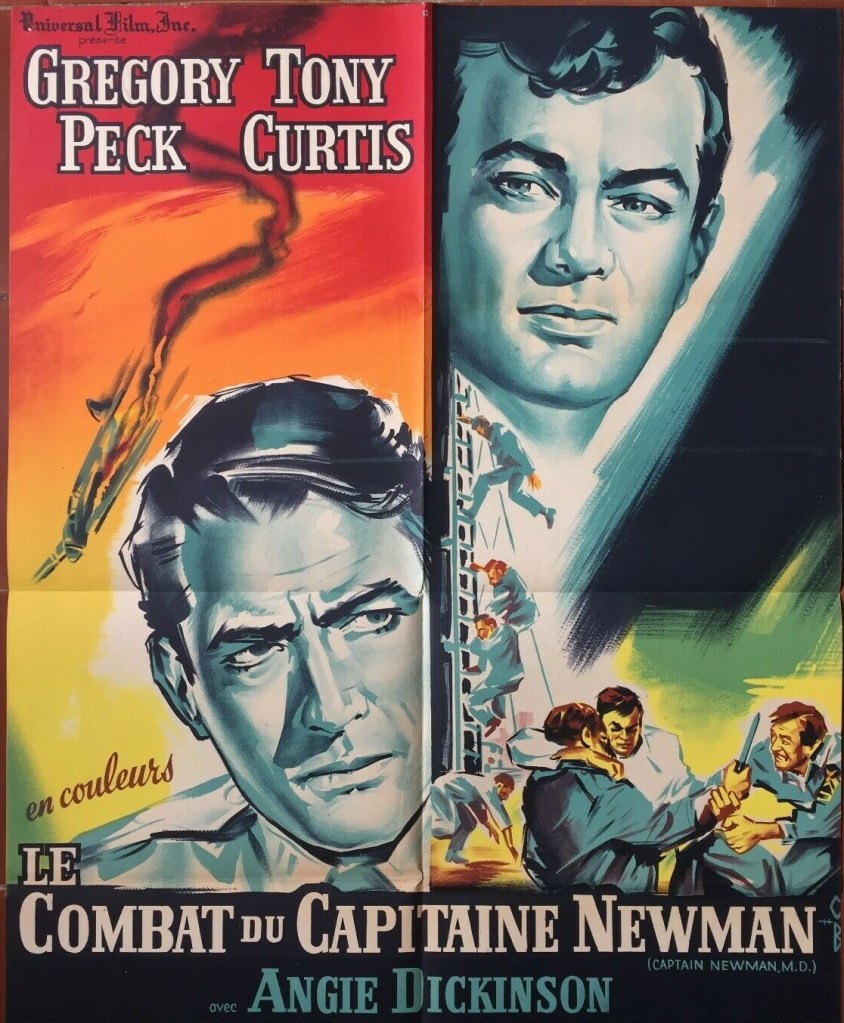
Set towards the end of World War Two, psychiatrist Captain Newman (Gregory Peck) heads up a unit addressing the previously ignored mental health issues of U.S. airmen. One of the first to identify post- traumatic stress disorder, Newman employs a whole raft of unusual techniques such as allowing his clients to tend sheep. And he’s not above using romantic sleight-of-hand to woo Lt. Corum (Angie Dickinson), a nurse in a non-psychiatric department, to join his team. Orderly Corporal Leibowitz (Tony Curtis), more of a con artist than a medical professional, is the other key member of the team.

As you might expect, Newman has to battle superiors to allow him to even attempt to cure any of the men under his care since in standard armed forces opinion they are really just cowards trying to duck out of their duty. Given there’s no prescribed treatment for his clientele, Newman basically improvises on a case-by-case basis to get to the heart of what caused mental collapse.

While the movie motors along nicely on the interplay between these three characters – the potential for real romance between Newman and Corum and Newman’s acceptance of Leibowitz’s alternative, more down-to-earth and decidedly un-medical approach – it focuses on three critical cases. Col Bliss (Eddie Albert) suffers from split personality, Capt Winston (Robert Duvall) is catatonic and Corporal Tompkins (Bobby Darin) too bubbly by far.

In dealing with each, Newman adopts a different persona, occasionally entering into the make-believe world of his clients to expose how much of a fiction they are. Stern with some, he is gentle with others and when he appears to go over the score explains he is not shouting at a person but at his symptoms.   

And while at time it feels like a mental equivalent of episodes of a hospital soap, the underlying drive, the knowledge that men are hiding from the horrors of war or endure guilt over action they may have taken or are unable to face the consequence of orders they carried out takes this into a different level. Almost all suffer from the standard conviction that they must be cowards. Newman’s task is to make all face up to their fears.

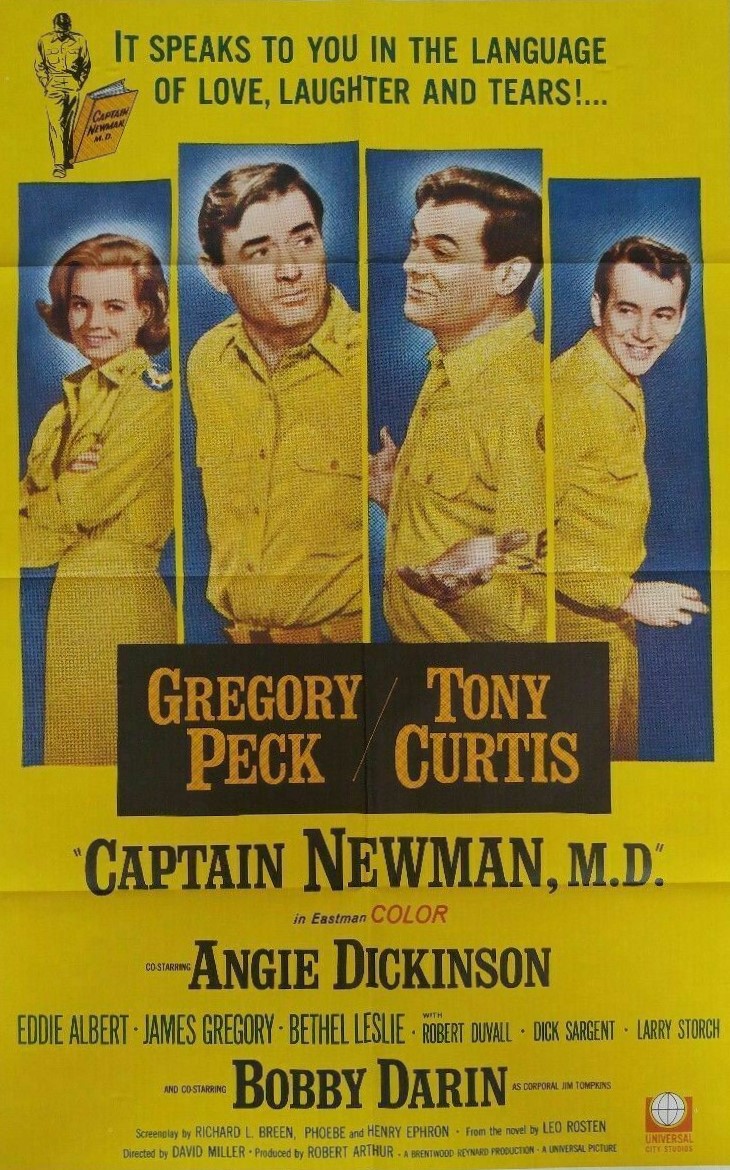
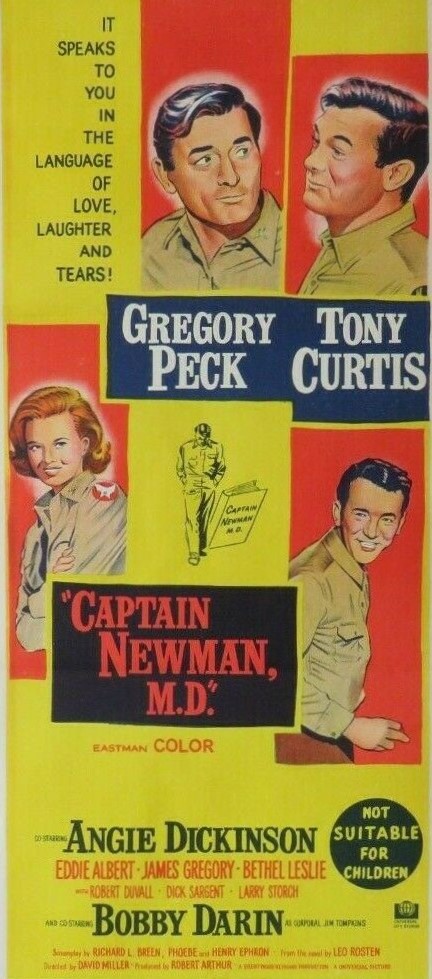
Presumably to overcome fears of audience resistance to the downbeat subject matter, the U.S. poster plain misled the public – “love, laughter and tears” were not much in evidence.

And it’s Corum’s self-appointed job to get under Newman’s skin and in so doing get to the heart of the terrible irony of his role. If he fails and men are discharged without being cured they will be returned to their units while mentally unstable and make decisions that could endanger thousands of men. If he succeeds, he sends men back to face potential death.

Luckily, it’s far from dour. Instead of taking the audience down a medical jargon rabbit-hole, the movie sensibly concentrates of character and humanity. It is filled with brilliant dialogue and whenever Newman appears overwhelmed up pops Leibowitz like the self-appointed class clown to bring events to a cheerier conclusion. Up till the end – a Xmas show by inmates and the arrival of a bunch of Italian POWs – the movie steers well clear of sentimentality and delivers a lucid exploration of the effects of war on the human psyche.

Gregory Peck (Mirage, 1965) is outstanding, not just from the way he adapts his character to suit the situation, but because quite a lot of his role is just to react to what is being said. Most stars would run a mile from being on the receiving end of chunks of dialog and insist on altering the script to make them appear more dynamic. Unlike Atticus Finch who is convinced he can find a solution, Newman knows his detection skills are very basic.

Tony Curtis (The Boston Strangler, 1968) might appear as if inhabiting a custom-made role suited to his natural effervescence and charm, but this is a deeper character than initially  seems the case and rather than ride along and enjoy himself he has spells of challenging Newman’s authority. It’s a more subdued role for Angie Dickinson (Jessica, 1962), too, but she also brings a level of seriousness to the part and is integral to the picture’s success.

Bobby Darin (Pressure Point, 1962) was Oscar-nominated but I found his acting over-the-top. Eddie Albert (Green Acres television series 1965-1971) and Robert Duvall (To Kill a Mockingbird), in particular, were more assured. Look out for James Gregory (The Secret War of Harry Frigg, 1968) and former child star Jane Withers.

David Miller (Hammerhead, 1968) strikes the correct tone, leavening the seriousness with humor, but not avoiding the deeper issues. In their final screenplay assignment Henry and Phoebe Ephron (Carousel, 1956), parents of Nora Ephron (When Harry Met Sally, 1989), teamed with Richard L. Breen (A Man Could Get Killed, 1966) for an intelligent screenplay based on the bestseller by Leo Rosten.

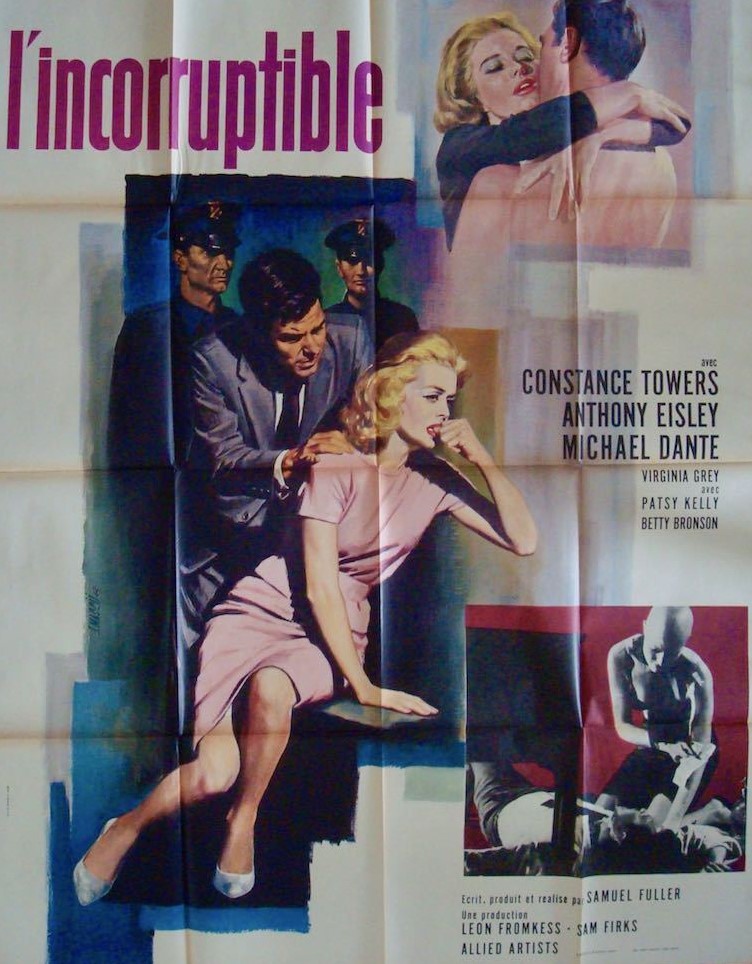
The Naked Kiss (1964) ****

Certainly doesn’t start off as your standard entry to the criminal-trying-to-go-straight mini-genre when a bald woman beats up and robs her pimp.  Kelly (Constance Towers), who knows “your body is your only passport,” nonetheless sets out to create a new life for herself as a salesperson (hawking overpriced champagne) in a small town where prostitution is outlawed.

She could easily settle for being the mistress of corrupt cop Griff (Anthony Eisley), but he’s something of a pimp, sending girls-off-the-bus across the river to the joint run by Candy (Virginia Grey). Instead, she takes up nursing, in an institute for crippled children, providing tough love to the kids. In due course, she hooks up the town’s handsome philanthropic millionaire Grant (Michael Dante), a relationship which Griff threatens to wreck.

However, she fesses up to Grant, now her fiancé in double-quick time, about her past and, remarkably, he forgives her. And you think, my goodness, she’s going to get away with it, new life, new career, a job she loves in which she is adored by the kids. You could be tootling along Sentimental Boulevard: Kelly forms the kids into a choir, she coaxes slightly mad  landlady Josephine (Berry Bronson) back to reality, determines to make her own wedding dress rather than be beholden to the millionaire, and takes under her wing nurses Buff (Marie Devereux) and Dusty (Karen Conrad) who have fallen victim to life’s traps.

You could be in Movie of the Week territory, another hooker with a heart of gold, except while she’s been turning her life around, there’s the inherent tension that she must fail. But this being a Sam Fuller (Shock Corridor, 1963) picture, Kelly is one tough cookie, outsmarting for a start Griff, who sees her as another in his assembly line of sex workers, and beating up Candy for daring to seduce Buff away from nursing by the promise of big money. Kelly ain’t sentimental. She views herself as a “broken down piece of machinery” with a future beckoning of “nothing but the buck, the bed and the bottle.” This is partly a shrew observation of herself but also of the production line nature or prostitution.

So there’s a catch. And it’s just plain awful. Grant is a paedophile. He has chosen Kelly because, as a sex worker, she is a deviant who will “understand my sickness.” And she’s sickened that despite her best efforts, that’s how she’s viewed, as a woman who would condone such behavior, and that he somehow believes she is complicit, in encouraging young girls from the hospital to visit him.   So she kills him.

And then reality strikes with a vengeance. She finds herself embroiled in the worst kind of small town corruption. Griff, who’s gunning for her anyway, refuses to believe her accusation against Grant, his best pal. Candy, who’s also gunning for her, says Kelly planned to blackmail Grant. There’s money missing, so she’s branded a thief as well. And nobody can find the little girl Grant had lined up.

An absolutely terrific film, constantly switching gear, twist after twist, but incredibly humane. There’s probably never been a better portrayal of the working girl, here all shown as vulnerable rather than predatory, as victims caught in a man-made web, and although dealt with in subtle fashion many clearly suffering from mental illness.

Kelly is cultured, reads Byron and Goethe, embraces the classical music education a relationship with Grant promises, but is unusually self-analytical. When she looks in a mirror she’s not seeking physical flaws but shortcomings of character. She understands all too well how men play women. Her tragedy is that when she sets aside her inbuilt cynicism, the man she trusts turns out to be as untrustworthy as they come.

Constance Towers (Shock Corridor) carries the picture, revealing several shades of personality, from hard-bitten woman to tender nurse, from avenger to pragmatic problem-solver. Michael Dante (Harlow, 1965) pulls off the difficult role of being persuasively a good guy gone bad. Veteran Virginia Grey (Jungle Jim, 1948) is all veneer.

But it is Sam Fuller’s movie. He was a triple hyphenate, writer-producer-director, so his vision was never in doubt. The dialog is terrific – the explanation of the title alone is extremely creepy – often cutting to the bone, but the best sequences lack words at all, the black-and-white photography bringing an air of film noir, and for all the striking toughness of the heroine, several moving scenes.

It’s not shocking in Fuller’s normal manner. As I can testify, it suggests to the viewer it’s going one way, and the core terrible act creeps up upon the audience. But it is brilliantly directed, even with a B-picture cast. Pulp reinvented as art. You could possibly argue in its vision and subject matter this was the birthplace of the indie.

Where the Crawdads Sing (2022) **** – Seen at the Cinema

I enjoyed the film so much I went out (literally) and bought the book (multiplex and bookshop in same shopping mall). And I’ve no idea why this has received such a tepid response from critics. Reminiscent of Prince of Tides (1991), it packs a far greater emotional punch when it gets into its stride with the aftermath of romance gone wrong. And it’s not as sappy as that might suggest, themes far more adult than young adult, covering domestic abuse, attempted rape, vilification and humiliation.

Even though set in the 1960s, the sense that people fear the different is as topical today, it still stands as a portrait of the outsider for whom rejection by society is common. Illiterate Kya (Daisy Edgar-Jones), snubbed by locals, lives alone in the marshes of North Carolina so when her boyfriend is killed she becomes the automatic suspect. The movie then shifts between the the present day courtroom of 1969 and the past. Isolation makes her vulnerable but not to the point where she is scared to fight back, although she acknowledges that “men always need the last word.” She’s also accustomed to literally covering her tracks, returning leaves disturbed by her footsteps to their original position, with concealment a fact of life.

Regardless of the prejudices of the townspeople, the audience is fed enough clues to leave them guessing right up to the very last scene in one of those revelations straight out of Jagged Edge (1985). And sufficient red herrings muddy the pitch while in true modern style vital pieces of information that might easily have determined the outcome of the trial are hidden until late in the day.

But this is not primarily a courtroom drama. It’s a beautifully realized coming-of-age picture, sucking you into a wilderness that in previous depictions of such alternative worlds would have been doused in violence, check Deliverance (1972) or Southern Comfort (1981). Kya isn’t capable of setting traps to lure the unwary, nor of predatory behavior. Instead, she is more open to abuse of her trust. The two men – Tate (Taylor John Smith) and Chase (Harris Dickinson) – who enter her life, with different degrees of entitlement, are liable to either abandon her or wish to control her.

Self-discovery remains core, with Kya’s tale as much about growing up as finding her path as an artist, and as she develops self-confidence is able to monetize her naturalist skills. Her artistry is often on show and through poetic internal monologues we view her soul, sometimes aching but just as often practical, never confusing the beauty of nature with a reality in which “even doves fight” to quote from the first few pages of the book I managed to read before starting this Blog.

Producer Reese Witherspoon performed a nifty trick. She chose the novel for her book club, watched it turn into a bestseller and then produced the film.

Tate and Chase bring out different aspects of her personality, the former teaching her to read and write, the latter determined to ensure she doesn’t lose the freedom so essential to her being. But whether either man can provide the emotional support she requires is open to question.

The twists and turns of the courtroom are well done. Defence attorney Tom Milton (David Strathairn) is surprisingly gentle for a lawyer, doing his best to bat away the more aggressive  prosecutor’s claims. It’s classic stuff, trying to tie Sheriff Jackson (Bill Kelly) up in knots, deflecting prosecution attempts to paint her as an out-of-control feral child. Milton, plus storekeeper Jumpin’ (Sterling Macey Jr.) and his wife Mabel (Michael Hyatt), are the only locals to show any kindness.

It’s rich in atmosphere and the feeling Kya has for nature comes easily to the surface. I found it totally absorbing, helped in equal parts by the court proceedings, and Kya’s difficult navigation of the emotional highway. There’s a nice meet-cute, done with feathers would you believe, and her reactions to both men, restraint followed by passion, caution at war with raw impulse, are entirely believable. If there is any problem in the narrative relating to both suitors, it’s that we only see them through Kya’s eyes, rather than being given true insight into their ambitions, but you can hardly fault a movie taking the point-of-view of the heroine for expecting her to have a clearer picture of what would-be romancers would rather hide.

The early scenes, depicting abuse of the young Kya (JoJo Regina) at the hands of her alcoholic father (Garret Dillahunt) and her disillusion and fear as one by one she is abandoned by mother and brothers are especially powerful, nobody departing without a cut or a bruise, as if carrying a paternal brand.

The whole picture is such an immersive experience, understanding insects and shellfish as Kya’s wealth of knowledge grows, fearing for her involvement with any man, her inexperience inevitably faulting her choice. And yet she grows through bad experience until she gains the self-reliance to see her through.

Daisy Edgar-Jones, best known for the television mini-series Normal People (2020) does wonders with a difficult role, never playing the sympathy card. It’s always a delight to see a veteran like David Strathairn (Nomadland, 2020) get his teeth into a meaty role. And it’s refreshing to see neither of the young men, Taylor John Smith (Blacklight, 2022) and  British actor Harris Dickinson (The King’s Man, 2021) favoring the grandstanding approach, delivering largely subtle performances.

Restrained performances too from Sterling Macer Jr. (Double Down, 2020) and Michael Hyatt (The Little Things, 2021) while Garret Dillahunt (Ambulance, 2022) continues to do admirable work.

Most credit goes to Olivia Newman (First Match, 2018) for creating a fascinating well-paced picture that allows the actors to breathe and refuses to fall into the trap of delivering a bloated adaptation of a bestseller. And in part this is down to calling in for screenplay duty Lucy Alibar, who has form in this area through Beasts of the Southern Wild (2012).

This has all the hallmarks of a classic sleeper.   

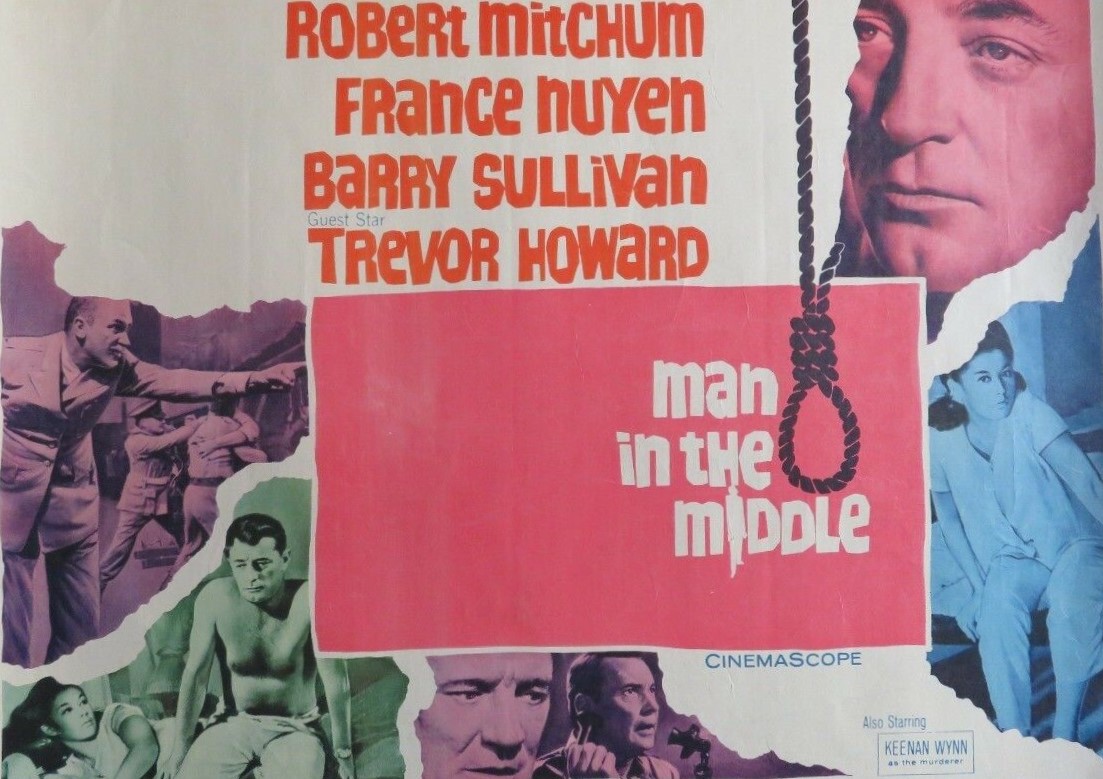
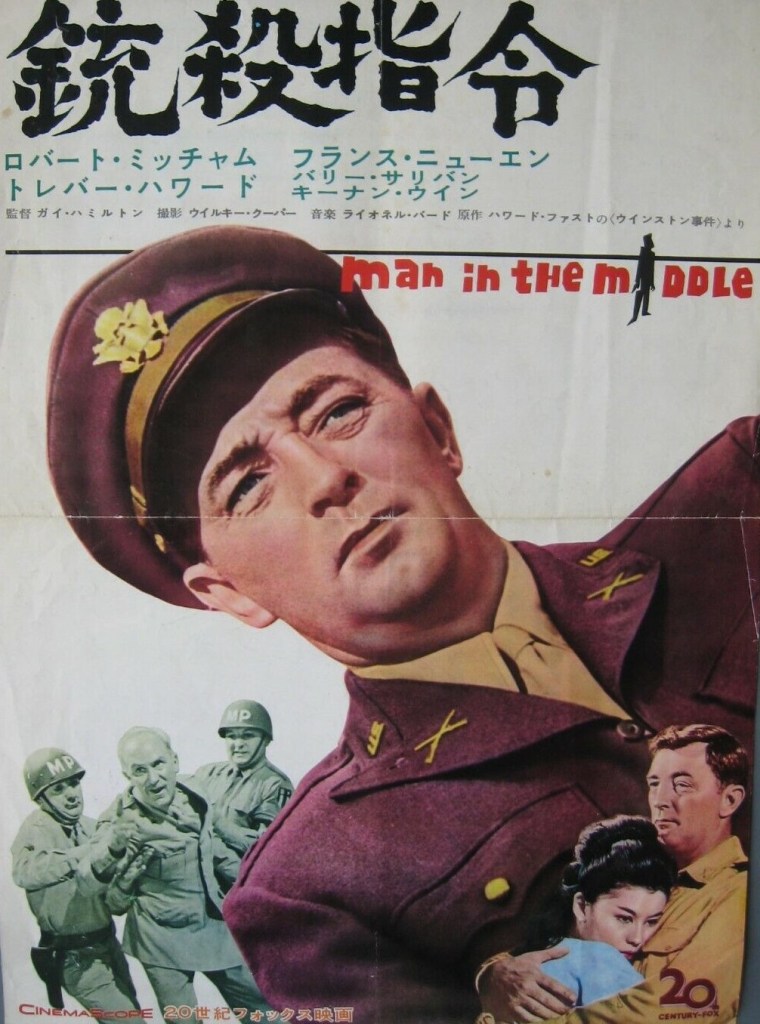
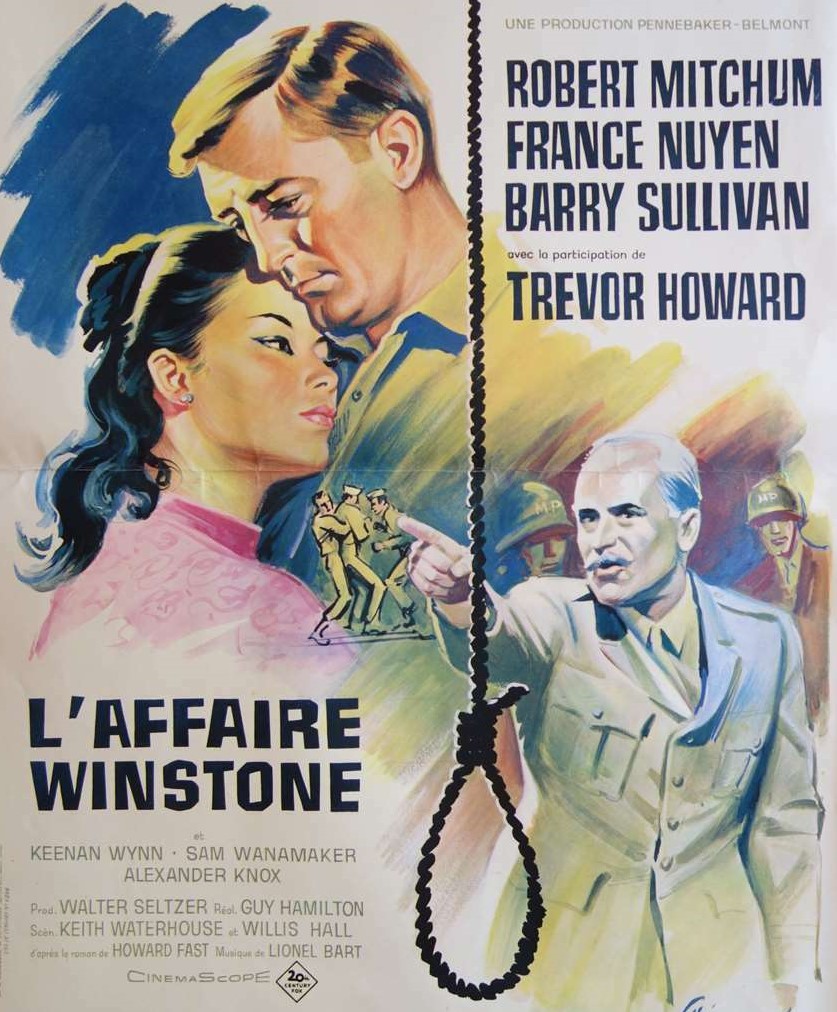
Man in the Middle / The Winston Affair (1964) ***

Scratch a war picture and you often find something more interesting underneath. This creditable courtroom drama makes a pitch for justice for all in the Compulsion (1959) vein while exploring the fragile and occasionally fractious relationship between the Allies during  World War Two. In front of several witnesses American officer Lt. Winston (Keenan Wynn) kills  in cold blood an ordinary British soldier in a remote depot in India.

It’s an open-and-shut case requiring a defence attorney of no great distinction. In fact so little legal ability is required that it’s assigned to Lt. Col Adams (Robert Mitchum), recovering from a war wound, who  hasn’t practised law in 14 years. It doesn’t help that Winston is a racist and psychopath, convinced left-wing conspirators are planning to take over the world. While dutiful, Adams displays no great enthusiasm for the task, taking time out to embark on romance with nurse Kate (France Nuyen), who is a good deal more fired-up about injustice than him. Adam’s superior officers just want Winston found guilty and hanged in double-quick-time to placate the British.

As if the odds aren’t already stacked against Adams, his boss General Kempton (Barry Sullivan) has brought in top prosecutor Major Smith (Paul Maxwell) while saddling Adams with two useless assistants. However, when Adams finally gets going, he discovers that Winston was assessed as mentally ill by psychiatrist Dr Kaufman (Sam Wanamaker) who has, unfortunately, been transferred and his report has vanished. Col Burton (Alexander Knox), who has taken over the case, refuses to accept Kaufman’s diagnosis. And Adams gets around to thinking there’s something fishy going on, the bottom line being that if the Winston is declared insane, then he won’t be hanged, the case neither open nor shut, fears rising of repercussions at a time when Allied unity is under threat.

So then we’re into classic courtroom territory. Kate has a carbon copy of the Kaufman report but as any lawman knows that in itself is inadmissible.  They can call back Kaufman to testify but there’s no allowing for the state of the roads and a driver in a hurry is liable not to make it. Major Kensington (Trevor Howard) might prove a trump card – or he may not. It’s a given that any defence lawyer’s life is filled with obstacles and this is no different. The out-of-practice Adams is in a hell of a pickle, and that’s how it should be.

On top of that, or underlying it, is the fight for justice for all. It’s easy to fight for the innocent but harder to battle for the sick and the mentally ill, however repellent their prejudices. You might despise the Winstons of this world, as Kate puts it, but you wouldn’t want to be his executioner.

And in the background are wartime considerations. What is one man’s life when judged against the uproar that would ensue and disrupt war planning should the self-proclaimed murderer be set free. Also, normally the mentally ill at this stage of Hollywood history are generally appealing characters, not hateful, but it’s only when Adams digs away at the experience of Winston that he realises the reasons for the murder, the hell that the insecure undergo when cleverer minds decide on torment.

Robert Mitchum (Secret Ceremony, 1968) is on excellent form as the attorney initially just going through the motions who determines to fight his superiors rather than toe the party line, even at the cost of losing his much-delayed promotion. France Nuyen (A Girl Named Tamiko, 1962) is somewhat spunkier than Hollywood nurses of this period and refuses to let romance get in the way of truth. Keenan Wynn (Warning Shot, 1967), a stubborn nutcase, is the worst kind of client, constantly shooting himself in the foot.

Trevor Howard (The Charge of the Light Brigade, 1968) has toned down the normal irascible persona and makes a respectable showing. Barry Sullivan (Light in the Piazza, 1962) is as ruthless as he is charming. The solid supporting cast includes Sam Wanamaker (Danger Route, 1967), Alexander Knox (In the Cool of the Day, 1963) and Errol John (The Sins of Rachel Cade, 1961).

This was director Guy Hamilton’s last film before he shot to international fame on the back of Goldfinger (1964). The screenplay by British pair Keith Waterhouse and Willis Hall (A Matter of Innocence/Pretty Polly, 1967) was adapted from the novel by Howard Fast (Mirage, 1965).

Courtroom with depth, giving a glimpse of the politics prevalent among High Command in wartime, almost a companion piece of The Charge of the Light Brigade.

Cinema Archives has a much pricier edition but I reckon this cheaper version will do the job.

The Best Man (1964) ****

Current openness towards mental health issues has bestowed a contemporary vibe on this lively political drama. The other topic raised here has long ceased to be controversial. Not that far removed from Otto Preminger’s Advise and Consent (1961) in terms of dirty dealing and horse trading, flaw is the weapon used to cut opponents down to size.

The two principal candidates seeking their (un-named) party’s Presidential nomination could not be further apart, William Russell (Henry Fonda) a rich intellectual, Joe Cantwell (Cliff Robertson) a self-styled man of the people. Cantwell chases the populist vote with a  campaign built on fulminating against immigration and Communism, driving down taxes and spending more on the military. Russell seems unsuited for the cut-and-thrust of politics, too idealistic, too indecisive.

But he is a good judge of character whereas Cantwell most decidedly is not and in misreading the intentions of President Hockstader (Lee Tracy) shoots himself in the foot and leaves the nomination wide open, triggering his use of the dark arts, planning to circulate a file on his opponent’s problems with mental illness. Existing on a much higher plane, Russell refuses to fight back, although he has access to a witness claiming Cantwell was gay.

Apart from discussing these taboo issues – this was the first time the word “homosexual” was uttered in a movie – what’s interesting is that Russell’s philandering is not deemed damaging as long as his wife Alice (Margaret Leighton) is seen to publicly stand by him. Despite the fact that Cantwell is as clean as a whistle – doesn’t drink or smoke or have a lover – affairs are seen as such a fact of life of politics that Cantwell’s wife Mabel (Edie Adams) assumes he will have one. Cantwell, very much one to go for the jugular, clearly believes the public takes the same non-judgemental view otherwise he would easily skewer Russell on his marital discord.

In some respects, Cantwell is by far the better candidate if you were to judge him on personal behaviour, but he lacks the necessary savvy, “ a tragedy in a man and a disaster in a president.

As you might expect from a script written by novelist Gore Vidal, sometime political heavyweight, there are plenty zingers: “expect 22 minutes of spontaneity”; “I don’t object to you being a bastard, I object you being a stupid bastard;” and “I won’t throw my mud if you won’t throw your mud.”

It may be artistic irony that determined director Franklin J. Schaffner to film in black-and-white since politics is nothing but various shades of grey, but there was probably a more practical reason, to incorporate footage from conventions.

Somewhat surprisingly, both men are honest with their wives, Russell making a pact to divorce Alice if not elected, their marriage long ago defunct, while Cantwell’s wife is fully aware of the slur on her husband’s name. The women here are well-drawn, not quite the submissive types you might expect, certainly not Alice who has every right, given his infidelities, to act the shrew, instead of which she plays the shrewd card. Mabel proves a loving wife but a little indulged to the extent her teetotal husband has no idea how much alcohol she can shift and she reserves her right to keep him waiting. Alice, it might be noticed, is more vicious than her husband should it come to the down-and-dirty.

And there’s a stack of wannabe power-makers from pushy busybody Mrs Gamidge (Ann Sothern) – so full of her own importance that she fails to see the slight in being told that “talking to you is like talking to the average American housewife” – to walking timebomb Sheldon Bascomb (Shelley Berman).

Not so full of arcane American politics as Advise and Consent, and with a more straightforward narrative, it digs the dirt in compulsive fashion on the dirt-diggers. In questioning whether someone with mental health issues could be a worthy national leader, the movie naturally ignores the narcissism and megalomania that seemed essential criteria for any person achieving high office or excessive business success. It’s probably a subject that remains unresolved, although a good many personalities have admitted to such problems.

Cliff Robertson (The Honey Pot, 1967) takes the acting honours if only because we have seen a version of the Henry Fonda (Battle of the Bulge, 1965) political idealist before in Advise and Consent. Robertson essays a character of Donald Trump dimensions and Fonda is clearly modelled on Kennedy, but Robertson comes across stronger and even Fonda may have been getting fed up with being such a straight-shooter as seen by his later villainous choices. Edie Adams has a more complex part here than in The Honey Pot and Margaret Leighton (The Fighting Pimpernel, 1949) can play ramrod-stiff women till the cows come home.

Hollywood veteran Ann Sothern of Maisie fame is terrific as the interfering Mrs Gamidge and Shelley Berman (Divorce American-Style, 1967), making his movie debut, is one of the most irritating characters you will ever see. Kevin McCarthy (Mirage, 1965) plays Russell’s whip-smart aide with Lee Tracy (Dinner at Eight, 1933) in his first movie in nearly two  decades as the wily President. 

Audiences were denied the first glimpse of Penny Singleton (the Blondie series) in fourteen years when her part was excised. To make up for that, we get to see Mahalia Jackson sing.

Director Franklin J. Schaffner (The Double Man, 1967) keeps characters to the fore rather than relying on the many twists, and does a decent job, complete with aerial helicopter shots, of opening up Gore Vidal’s stage play. Vidal (Ben-Hur, 1959) had stood unsuccessfully for Congress so had an insider’s viewpoint.

In the Cool of the Day (1963) ***

Jane Fonda tagged this the worst film of her career but that’s a bit harsh and I suspect it owed a lot to the actress being dressed up Audrey Hepburn-style in outfits that scarcely suited her. While it’s certainly overheated, melodramatic moments indicated by thundering music, a marvellous supporting cast, including a quite bitchy Angela Lansbury, provides ample compensation.

It’s  romance in the Love Story vein, rich young flighty heroine Christine (Jane Fonda) at death’s door half her life, but feeling smothered by understandably over-protective husband Sam (Arthur Hill). When she falls for married publisher Murray (Peter Finch) and sets off on a trip to Greece, chaperoned it turns out by Murray’s bitter wife Sybil (Angela Lansbury), it takes a while for romance to physically bud. That it does at all is only because   Sybil has taken off with suave traveling salesman Leonard (Nigel Davenport).

The movie takes a long time to heat up because, as in The Bramble Bush fashion, there’s overmuch character filling-in to do. Part of the interest in this picture is how the bad guys are effectively good guys, more victims of their partner’s behaviour than anything else, though for story purposes, the audience has to be persuaded otherwise.

So besotted Sam, having dealt with umpteen bouts of his wife’s pneumonia and lung operations, a “slave” to her illnesses, is deemed as treating her like a child rather than a wife, preferring her ill rather than well, and denying her the adventure to which she feels entitled. When she meets Murray she has run away. Murray’s wife has a downer on her husband because, wait for it, he killed her child and left her facially scarred (hidden now by hair but she’s still very sensitive about it) in a car accident he caused.

But she’s portrayed as over-sensitive, worried about her appearance, snippy, blaming him for her distraught life, and worse, a philistine, hating being dragged around ancient Greek monuments. Aware of her husband’s proclivities, she mocks, “You’d be an idiot to fall in love with her.” And any time she ventures out, the music rises to a crescendo as if she is a character straight out of film noir.

When she goes off with Leonard, her love affair is viewed as sneaky rather than redemptive, even though he restores her faith in herself. Triumphantly, she tells Christine, “He’s all yours” and her husband “nobody need feel sorry for me any more.”Admittedly, she does take revenge by informing Christine’s husband, who has entrusted his wife to Murray’s care, of their affair. And you would be hard put to argue, although the film wants you to believe otherwise, that Sybil and Sam have been ill-treated by their partners, Sam, in particular, funding her trip to Greece in the hope that allowing her the freedom she needs will save their marriage.

Of course, the characters of both partners, even if their self-pitying is the result of circumstance, do mean that Christine and Murray are presented as people trapped in bad marriages and for whom love, however brief, provides sanctuary from tortured lives, her physical, his more mental, since he is not averse to guilt. 

Sybil’s lack of interest in tourist Greece handily gives the prospective lovers plenty time to fall in love, amid gorgeous scenery, and breathing in air rich in culture. With all film made in the 1960s and set in foreign parts – Pretty Polly (1967) another example – sometimes the story takes second place to the scenery, so it’s lucky that the romance is played out against such an interesting background, an ideal combination, killing two birds with one stone if you like. Given this is prior to Zorba the Greek (1964), the filmmakers have even managed to sneak in some traditional Greek dancing, albeit on the deck of a ferryboat.

Dress-wise, the lovers are ill-matched, Murray plodding around in a suit while Christine parades the latest often clingy fashion. When Sybil departs the scene, that leaves one happy character of the happy couple free of marital encumbrance, but still leaves open the question of how Christine will rid herself of Sam and, more importantly, will Murray wish to take on the all-consuming job of nursing Christine. He never gets the chance to find out. When she does fall ill – as the result of Murray recklessly keeping her out in a thunderstorm – her mother Lily (Valerie Kendrick) swoops in to rush her to hospital.

Spoiler Alert – I’m telling you that she dies because it seems to me that the ending the filmmakers hoped for is not how the audience will perceive it. Beautiful young woman dies too young, yep that’s there, but the man, now free and able to shake off his dull life and start afresh as a writer, seems a long shot. Given he has now, thanks to the thunderstorm episode, killed two people, I would surprised if guilt was not uppermost in his mind.

Not so-good-it’s-bad, and despite the complications, and perhaps because of the Sybil-Leonard romance, it’s certainly an interesting picture as much, perhaps, because it fails to send the audience in the desired direction.

In only her fifth movie, Jane Fonda (They Shoot Horses, Don’t They, 1969), exhibiting the nervous friskiness that would become a hallmark, does pretty well with a febrile, spoiled, character. If she falls down at all it’s that she appears uncomfortable wearing Orry Kelly’s fabulous gowns and it would take Hollywood some time to work out she was not a natural successor to Audrey Hepburn. Peter Finch (The Pumpkin Eater, 1964) is perfectly at ease with the illicit.

But Angela Lansbury (Harlow, 1965), a hoot as the wife who turns rejection into triumph, steals the show. Throw in Arthur Hill (Moment to Moment, 1966), Nigel Davenport (Sands of the Kalahari, 1965), for once neither smug nor snippy, Alexander Knox (Khartoum, 1966), veterans Constance Cummings (The Criminal Code, 1930) and Valerie Taylor (Went the Day Well, 1942), John Le Mesurier (The Liquidator, 1965) and Alec McCowan (Frenzy, 1972) and you have a movie where hardly a moment goes by without admiring a performance.

Robert Stevens (I Thank a Fool, 1962) directed from a screenplay by Meade Roberts (Danger Route, 1967) based on the novel by Susan Ertz.

Hustle (2022) ****

Never thought I’d be praising the acting of Adam Sandler –  or lasting to the end of a Netflix movie (yep that includes The Irishman). Except that this effort which appeared to be very off-message for the sports genre suddenly veered back on course towards the finishing line I thought it had the makings of a genuine five-star movie, almost the prequel to all those Kevin Costner-type picture where the washed-up sports star/coach ends up working with a team from Nowheresville.

For a long time the movie’s tension derives from it looking as if the career of wannabe basketball star Bo Cruz (Juancho Hernangomez) is going south before it has even begun, partly from self-inflicted issues and partly from the shenanigans of the all-powerful,  and in so doing exposes the rough and dirty underbelly of basketball.

Scout Stan Sugarman (Adam Sandler) achieves his lifetime ambition of being promoted by ageing owner Rex Merrick (Robert Duvall) to assistant coach of the Philadelphia 76ers. But Merrick’s sudden death sends Stanley back on the road where he discovers hustler Bo playing in an ordinary outdoor court. Having incurred the enmity of Vince (Ben Foster), Rex’s son and new team boss, and with Bo being denied a contract, Stan quits and tries to get Bo accepted into the national trials (known, for the uninitiated, as the Combine Draft).

But Bo, who has a conviction for assault, blows his chance, loses his potential breakthrough spot and except for Stan’s herculean efforts would be on a fast track back to Nowheresville. Which would have been an interesting picture in itself, there being far more losers in sport than winners, and always room in some lower league for a washed-up coach.

Sure, there’s the usual unusual training regime (this is the home of Rocky after all), and plenty one-to-one scrimmaging and amazing shots, but mostly it moves at a slower pace, a character study more than anything, as Stan learns to mentor his pupil and his pupil learns to cope with mental pressures. Opportunities to widen the picture’s scope – a potential romance with Stan’s daughter Alex (Jordan Hull) or crisis in the Sugarman home – are ignored in favour of a sharper character focus.

I’m no fan of basketball, never watched a game, couldn’t name a single player unless they starred in an animated feature, and yet I was fascinated by the way the game was played, the ins-and-outs of on-field play. Having watched it, I wouldn’t say I was any more educated, couldn’t even tell you how many people were in a team or even how long as game lasted, but for sure it kept my interest.

There’s contrasting use of social media – one that triggers the young man’s downfall, another that prompts his comeback. But in the main, especially if like me you are unfamiliar with the game, you are mostly gripped by the tension, the consequences of failure for Stan far greater than failure for Bo, and the eventuality that there is no way this can work out. And in that respect it’s not like Rocky or Any Given Sunday where the steps to success are more readily pinpointed.

Like Brad Pitt, Adam Sandler (Uncut Gems, 2109) is entering potentially the “last leg” of his career. He’s lost the annoying nasal whine and the manic comedic energy and transitioned the loser persona into a more recognisable human being. Denied the need to strive for laughs, his delivery is more conversational and realistic. Juancho Hernangomez, a basketball player, making his acting debut, sensibly restrains himself. Queen Latifah (The Tiger Rising, 2022) has also stepped away from comedy although she enjoys some good riffs with Sandler. Jordan Hull (The L Word: Generation Q, 2019-2020)  also makes her movie debut. Ben Foster (Hell or High Water, 2016) plays the mean boss. SNL graduate Heidi Gardner is another stepping out of her comfort zone.

There are some anomalies, most notable being that Sandler seems a few inches short of being a former basketball player. Also, you would have to imagine that a young man who came from a tough background and hustled for a living was unlikely to be deterred by a few insults coming his way and equally unlikely to throw away so much food. And also, I never knew the basketball find actually came from Spain, the location work confusing to say the least, I thought he just spoke Spanish, hardly a rare language in America. And who is this guy called “Himself” who appeared to be played by over a dozen people?

Jeremiah Zagers (We The Animals, 2018) does an excellent job or reining in Sandler and the fact that the ending turns this into a warm-hearted drama does not lessen the fact that for most of the time it felt like anything but is testament to his skill.

Available on Netflix.

Term of Trial (1962) ***

Notable for the debuts of Sarah Miles (Ryan’s Daughter, 1970) and Terence Stamp (The Collector, 1963) and an ending that even in those misogynistic times was wince-inducing. The halcyon era of dull English schoolteachers being celebrated (Goodbye, Mr Chips, 1939) or finding redemption or even just managing to overcome pupil hostility (The Browning Version, 1951) were long gone, replaced by a more realistic view of the casual warfare endemic in education establishments, not quite in The Blackboard Jungle (1956) vein but running it close, with bullying, sexual abuse and ridicule running riot.

Self-pitying Graham Weir (Laurence Olivier) has failed to achieve his ambitions in part due to alcoholism, in part to antipathy to his conscientious objection during World War Two. And although he has a sexy French wife Anna (Simone Signoret) in the days when any Frenchwoman was deemed a goddess, she is embittered that the future he promised has not materialized. Like To Sir, with Love (1967) his classroom is filled with no-hopers so that he responds to the meek and innocent wishing for educational betterment.  

Weir’s only defence against endless indignity is a stiff upper lip and slugs of whisky. His lack of character contrasts with a young lad who takes revenge against constantly being chucked out of his house by his mother’s lover (Derren Nesbitt) by blowing up the man’s sports car.  

Spanning the twin cultures of religion and the razor, one falling out of favor, the other holding violent sway, opportunity to rise above kitchen-sink England lies with the self-confident such as thug Mitchell (Terence Stamp) who smokes in class, gives the teachers lip, takes photographs of girls in their underwear in the toilets, physically threatens classmates and when his target is bigger gets older men to give him a good thumping.  

A somewhat unlikely development is an end-of-term trip to Paris where the infatuated Shirley (Sarah Miles), who the good-hearted Weir has been giving free private tuition, ends up in the teacher’s bedroom and later accuses him of abuse. The impending court case and threat of imprisonment scupper Weir’s chances of promotion, make him consider suicide, and Anna to leave him.

The court scenes allow a number of famous character actors a moment of acting glory. Laurence Olivier (Bunny Lake Is Missing, 1965) must in part have been attracted to the role by a terrific court monologue. The movie is very downbeat in a country universally known never to enjoy an ounce of sunshine justifying the black-and-white movie rendition. If there is liveliness in the streets, cinemas, shops, it never translates into any of the main adult characters, all determined to uphold ancient values and endure constricted lives.

Exploiting audience expectation for verbal fireworks, the tension in Laurence Olivier’s finely judged performance comes from his untypical, unshowy delivery. You can almost hear him grinding his teeth. Simone Signoret (The Sleeping Car Murder, 1965) also acts against the grain, battening down her inherent sexuality, and her very presence speaks of lost hope, the fact that she was once attracted to Weir indicating he was once a very different prospect.

Sarah Miles excels as the wannabe seducer, that hesitant voice that would become her hallmark, struggling here to turn innocence into lure, expressing her adoration in heart-breaking simplicity, and yet aware that to catch Weir would require more than just the submission a guy like Mitchell requires. While hers is a stunning debut, I’m at a loss to see what marked out Terence Stamp’s typical surly teenager for speedier stardom.     

Oscar-winner Hugh Griffiths (The Counterfeit Traitor, 1962) is the pick of the supporting roles. A remarkable scene-stealer, a shift of his head, a flicker of his eyelashes is all he needs while sitting in the background to attract the camera from another character in the foreground. Look out for Barbara Ferris (Interlude, 1968), Derren Nesbit (Where Eagles Dare, 1968), Allan Cuthbertson (The 7th Dawn, 1964), Roland Culver (Thunderball, 1965) and Thora Hird (television’s Last of the Summer Wine, 1986-2003).  

Surprisingly un-stagey direction from Peter Glenville (Becket, 1964) who was far better known as a theater director in London and Broadway. Probably in those days if you were setting a movie outside sophisticated London you had to present a gloomy version of Britain so you can’t really blame him for that and Olivier was hardly a major box office attraction so a budget trimmed of color would be a requisite. Although the older characters display grim determination, the younger ones have not had the spirit knocked out of them in the Saturday Night and Sunday Morning (1960) manner and the location shots reveal a buzzy atmosphere.

Glenville also wrote the screenplay based on the bestseller by James Barlow.

The Bramble Bush (1960) ***

The secrecy business was working overtime in small-town America according to the Peyton Place template. And that wouldn’t be so bad here except returning big city doctor Guy (Richard Burton) has a few of his own in the locker but more importantly the unfolding of so many secrets detracts from the time available for the main dramatic premise which is an absolute corker.

We might as well account straight-off with the secret Guy drags around behind him like a two-ton weight thus explaining his general surliness, tight-lipped demeanor and occasional flashes of temper. As a twelve-year-old he told his father he had caught his mother in bed lover with Stew (James Dunn) which prompted his dad to chuck himself off a cliff.

The other big secret, dealt with fairly promptly, is that local nurse Fran (Angie Dickinson), who held a torch for Guy, now makes do with district attorney Bert (Jack Carson), that clandestine affair coming to light not so much in flagrante but in full beam when the illicit couple require treatment following a fire in a hotel bedroom.

The unravelling of both secrets impacts on Guy’s emotional state. The fire leads to Fran admitting her feelings to Guy, happy to have him use her for sex if love is not possible, “I love you so much I have no shame,” she proclaims, to no avail, but the hotel business also makes her fall prey to blackmail by local newshound Parker (Henry Jones), a budding amateur photographer of the unsavoury kind. Recounting his personal tragedy results in a Guy having a one-night stand with the married wannabe artist Margaret McFie (Barbara Rush).

But here’s the brilliant twist. Margaret’s husband Larry (Tom Drake) wants her to end up with Guy – but after his death. Larry, Guy’s best friend from childhood, is dying, the doctor scuttling back to a town that harbours too many bad memories in order to act as his personal physician. Larry’s never going to recover, he has the incurable illness Hodgkin’s Disease. His dying wish is that Guy marry Margaret.

Margaret is revolted by the idea, “I don’t want to be beautiful for anyone but Larry,” but unable to cope with his with illness is living on a cocktail of drink and drugs. And although Guy, who distrusts any woman, is similarly ill-inclined, Margaret becomes dependent on his medical ability, treating both husband and wife. Larry turns out to have another crazy idea – he wants Guy to kill him, medically speaking of course, some extra, illegal, doses of morphine would do the trick.

This incredible bucket list provides Guy with a huge dilemma, never mind what to do with Fran throwing herself at him and having to put up with the hypocritical Bert, and Stew, now the town drunk, begging for forgiveness, and Larry’s father Sam (Carl Benton Reid), who, for reasons unspecified, hates the doctor.  

There’s more twists to come, just in case you thought you had everything worked out. But you can see the problem over-complication creates. The euthanasia-please-have-sex-with-my-beautiful wife combination would have set the movie up nicely from the get-go. Guy wouldn’t need to have a deep secret to find himself in very deep waters. How he would react to either or both outcomes, how Margaret would equally react to the possibility of ending her husband’s suffering in a quick and painless manner, would be more than enough to provide the dynamic the picture required. The movie then pivots on Guy being charged with murder.

It’s certainly interesting enough but Guy is too buttoned-down to incur sympathy and his revelation, devastating though it is, doesn’t suddenly make him an instantly more attractive screen character. In fact, it’s Fran who elicits the greater sympathy, the woman bedding someone who views her only  as a sex object, yet willing to become a sex object for someone she does love if that’s all she can have. Eventually, the two key issues are put in the spotlight, which certainly puts a spark in the picture. But the poster promises a passion that just doesn’t exist.

Richard Burton (The Spy Who Came in from the Cold, 1965) plays this character in a lower register than his screen persona, the sonorous voice toned down, and although the look of someone who doesn’t want to be back rings true the performance lacks variety and there are only occasional glimpses of the fiery actor. Barbara Rush (Robin and the 7 Hoods, 1964) has her own legitimate reasons for being dispassionate and the vibrant character her husband married never really gets an airing. Angie Dickinson (Jessica, 1962) comes across as a more human character with, in emotional terms, a greater flaw, and a more tragic figure, even though there is nothing life-or-death about her circumstances. Two veterans are showcased: Jack Carson (Mildred Pierce, 1945) and James Dunn (Bad Girl, 1931).

Television director Daniel Petrie (A Raisin in the Sun, 1961) was making his movie debut. The screenwriting team of Milton Sperling and Philip Yordan (Battle of the Bulge, 1965) drew on the bestselling novel by Charles Mergendahl.

Hard to find DVD so Ebay is the best source.

Last Summer (1969) ****

Given the severity of the crime involved, you leave Frank Perry’s coming-of-age-drama wondering what happened to the four principals. Did the aggressive three young demi-gods of a golden age go on to pursue similar acts of cruelty? While one of them might show remorse, or at least suffer from guilt, of the other two I have my doubts. They would find ways to blame the injured party. And what about the victim? Would she have the courage to report the crime, or suffer in shame for decades.

It’s odd how time changes entirely the shape of a movie. In its day this was seen as a bold exposition of frank adventure by teenagers seeking their first experiences of growing up and experimenting with sex and drugs (pilfered from a parental stash). Although there is little focus on dysfunctionality, both Sandy (Barbara Hershey) and Rhoda (Cathy Burns) are missing a parent, the former’s father running off with another woman, the latter’s mother drowned by stupid misadventure. Both have been abused, unable to prevent the wandering hands of males. All are vulnerable, if only by youth.

Of the boys, Dan (Bruce Davison) is the more confident, Peter (Richard Thomas), while easily swayed, the gentler of the two. Dan merely seeks his first taste of sex, Peter the more likely to need love as well. Sandy is sexually precocious, somewhat on the exhibitionist side, peeling off her bikini top with apparently at times no idea of the effect it will have on the boys, at other times clearly uncomfortable with the notion that the guys might have nothing else on their minds but staring at her breasts. But she is the one who wants to continue watching a gay couple cavorting on the beach while Dan is embarrassed. Sometimes the frank sexuality is rite-of-passage stuff, other times it is distinctly creepy. In the cinema both men grope her breasts. She claims to have been excited by the experience, but you can’t help thinking at least one of the men should have shown restraint, not treating her as if she was some kind of sex toy.

The movie begins on a clearer note. The guys come across Sandy nursing a wounded gull and perhaps entranced by her good looks help her remove a hook from the bird’s throat, provide convalescence and eventually help the bird recover the confidence to fly again. It’s a cosy trio, but edgy, too, Sandy allowing them considerable latitude. But, of course, the guys do the same to her. When she bludgeons the bird to death because it bit her (“the ungrateful bastard”), the pair, initially shocked, are not shocked enough to reject her, afflicted by unassailable male logic, the kind that drove film noir, that maintained a beautiful woman could not have a black heart. 

Separated from the other two, Peter displays a gentler side, teaching the shy Rhoda to swim, kissing her in far more considerate fashion than the boys treat Sandy. But, effectively, she is a pet, and it’s only a matter of time before the unsavory aspect of Sandy’s character breaks out. After setting Rhoda up on a date, the trio do everything they can to spoil it, angry at the poor girl for not getting the “joke.”

Worse is to follow. Date-rape we’d call it today. Retreating to the cool forest, Sandy taunts Rhoda by removing her bikini top. When the horrified Rhoda refuses to do the same, Sandy attacks her, holding her down along with Peter while Dan rapes her. That’s where the film ends, no consequences, no repercussion. Back in the day it was a shock ending, an act of violence to mar an otherwise relatively innocent summer. After the deed is done, the camera pulls back into an aerial shot to observe the  guilty trio walking back to the beach, but without drawing conclusion or offering moral judgement. It’s hard to know what to make of the ending. These days, of course, we’d be appalled. But back then it didn’t appear to appall, certainly not drawing the outrage that accompanied similar scenes in The Straw Dogs (1971) or A Clockwork Orange (1971) perhaps because the perpetrators were so attractive and it was, after all, a coming-of-age picture, as if such things could be expected.

Roger Ebert, writing in the Chicago Sun-Times, for example, judged that the conclusion “is not really important to the greatness of the movie.” Andrew Sarris of Village Voice noted that “Perry retreats from the carnal carnage” to end with a shot that “prefers symbolic evocation to psychological exploration.” In other words adolescence is fraught with risk and Rhoda is just collateral damage.

Certainly the acting is uniformly excellent for such inexperienced actors, coping with many changes in dramatic focus, from early exhilaration through growing pains to violence.  Barbara Hershey (Heaven with a Gun, 1969) would go on to become a major star. Amazing to realise that Bruce Davison (Willard, 1971) and Cathy Burns, Oscar-nominated for her role, were making their movie debuts and for Hershey and Richard Thomas (Winning, 1969) their sophomore outings.

Director Frank Perry (The Swimmer, 1968) had a special affinity with the young as he had proved with David and Lisa (1962) and at times the whole affair had an improvised free-wheeling style. Eleanor Perry (David and Lisa) wrote the screenplay based on the novel by Evan Hunter (The Birds, 1963).

This is very hard to find, it turns out, so Ebay might be your best bet.

My thanks to one of my readers, Mike, for digging up this story of the disappearance of Catherine Burns from the movie business.

https://www.hollywoodreporter.com/movies/movie-features/catherine-burns-inside-50-year-disappearance-an-oscar-nominee-1275646/

Discover WordPress

A daily selection of the best content published on WordPress, collected for you by humans who love to read.

The Atavist Magazine

by Brian Hannan

WordPress.com News

The latest news on WordPress.com and the WordPress community.