Entrapment (1999) ****

Hugely enjoyable caper driven by the sleekest and leanest of screenplays from Hollywood screenwriting royalty Ron Bass (Rain Man, 1989) and William Broyles (Apollo 13, 1995). We learn virtually nothing, not even surnames,  about principals Mac (Sean Connery) and Gin (Catherine Zeta-Jones) beyond that they are top-notch thieves. So the narrative isn’t weighted down or driven into the barren wastes of left field by alcoholism or any other addiction, and nobody’s lamenting loss, and career girl Gin has little difficulty knocking back the clumsy romantic attempts of nerdy boss Cruz (Will Patton).

There’s a host of tight twists, not least of which is a reversal of The Thomas Crown Affair (1968) in that Gin, while purportedly hunting down the virtually anonymous Mac for a string of high-tech robberies on behalf of an insurance company, is in fact trying to pin the blame on him for thefts she undertook herself. The climax involves three clever twists in quick succession.  

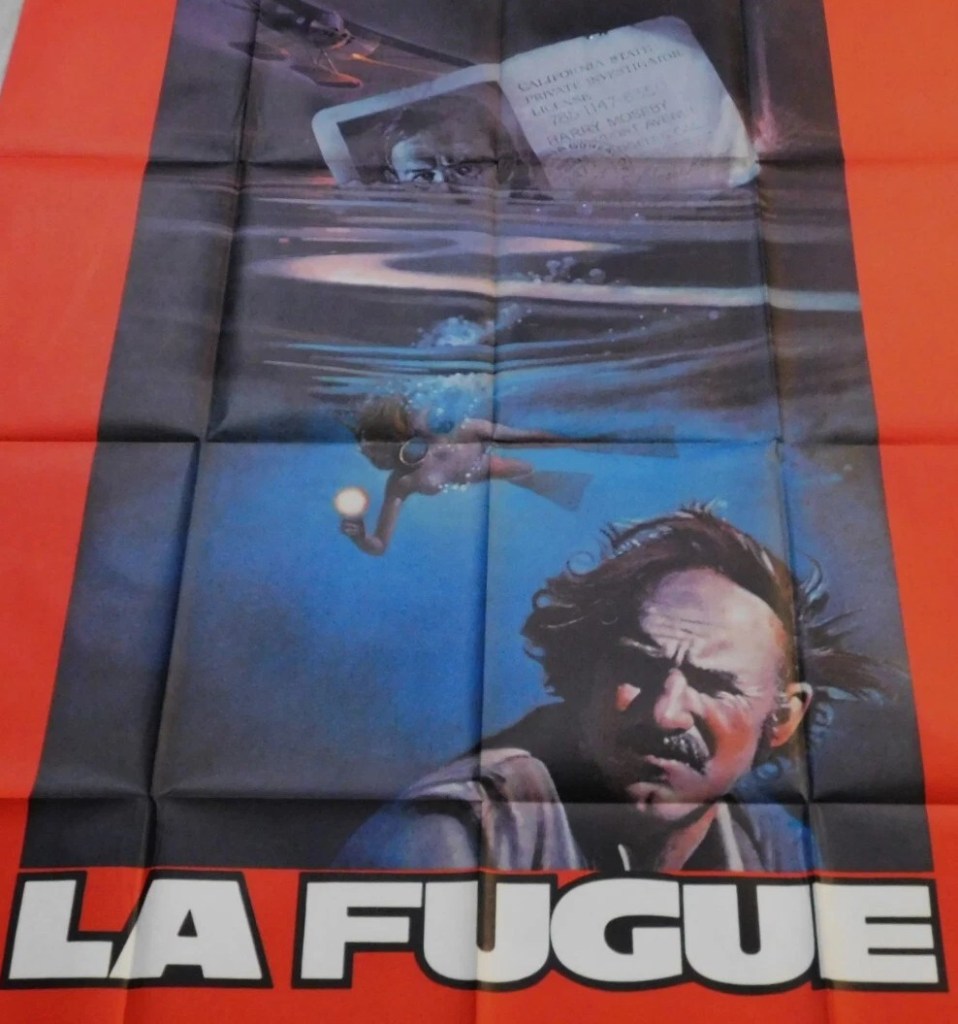
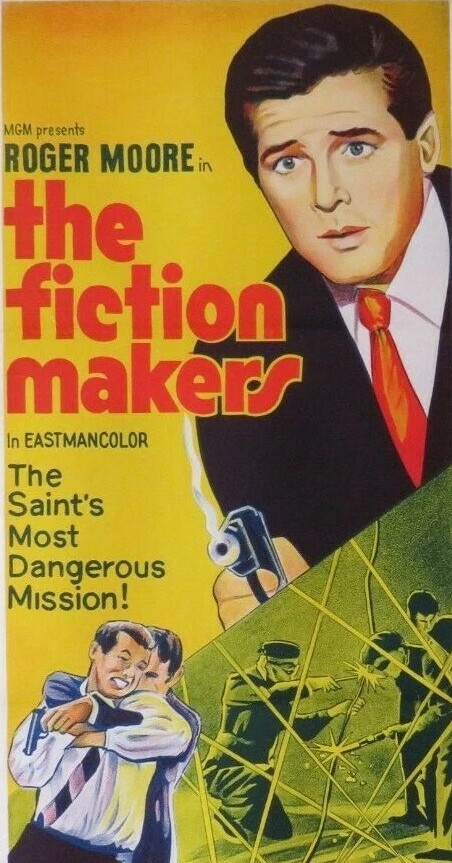
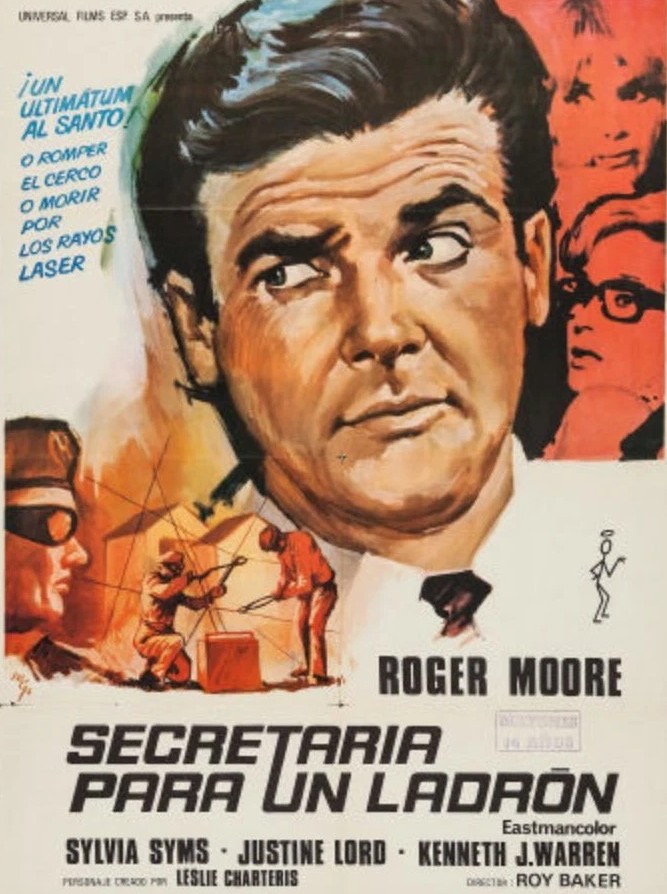
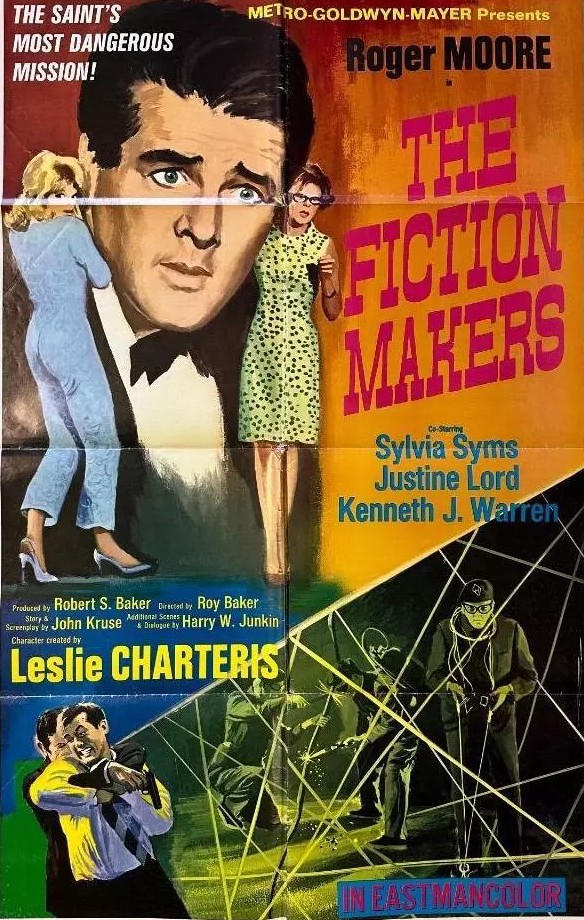
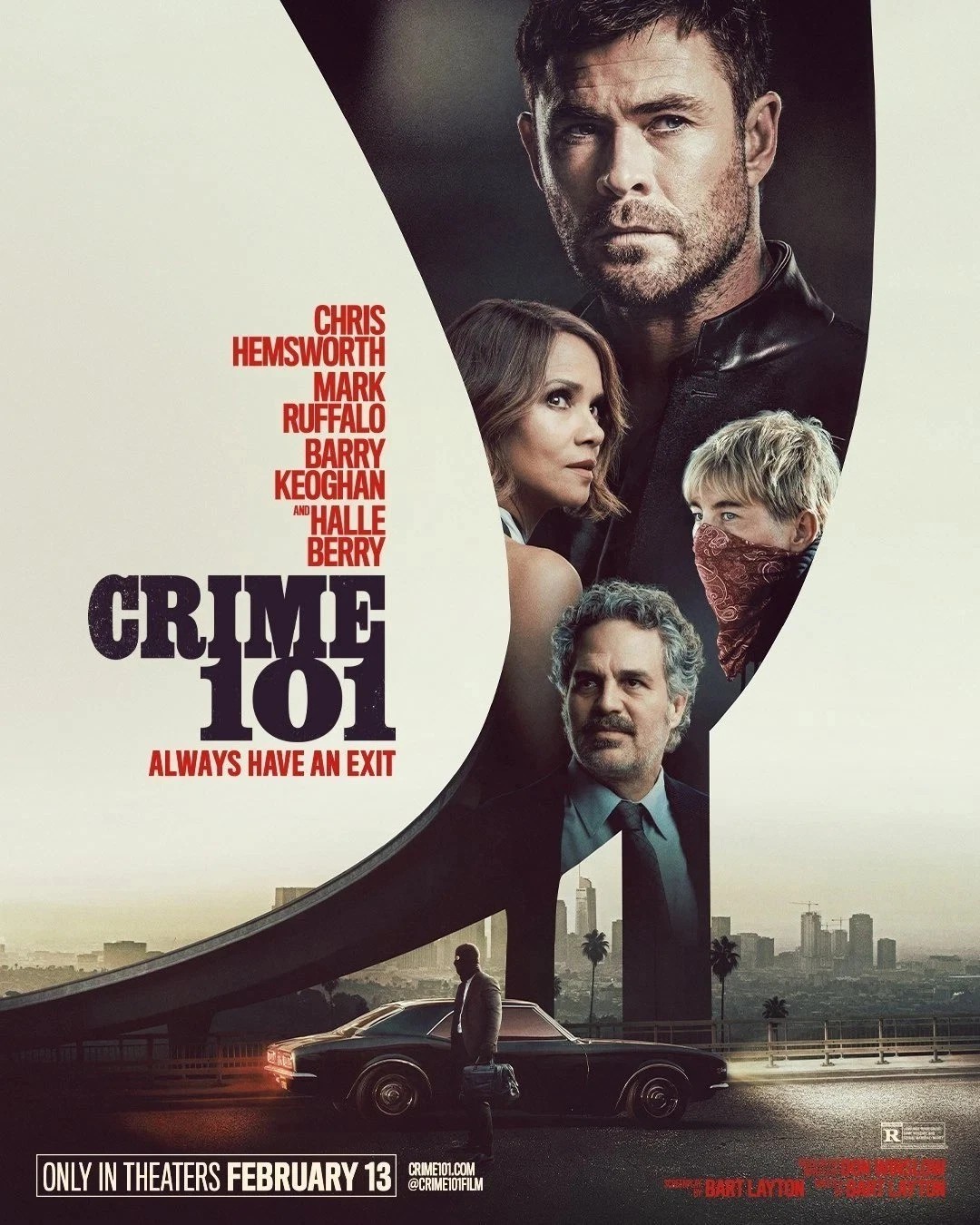
Connery’s face was so well-known that the poster designers could afford to leave half of it out.

In keeping with the overall leanness, the narrative concentrates on a succession of clever and increasingly more audacious robberies, culminating in a heist on the eve of the Millenium of a cool eight billion bucks from all the banks in the world. As they join forces, Mac becomes the mentor, although Gin has moments of exerting control in the working relationship. Capable of causing trouble in the background are the agitated Cruz, threatening to work out any moment exactly how he is being duped, a dubious fence Conrad (Maury Chaykin), and a muscle man Thibadeaux (Ving Rhames) who may be playing both sides against each other.

After more than three decades, Sean Connery maintained a position in the top echelons of the box office marquee, in part because of the size of his global audience, but mostly because he continuously delivered. Every three years in the 1990s he knocked out a big one. The Hunt for Red October (1990), Rising Sun (1993) and The Rock (1996) easily offset any movies that produced less.

Catherine Zeta-Jones had announced her candidacy for stardom through a scintillating turn as the foil for Antonio Banderas in The Mask of Zorro (1998) and had she taken a more blatant approach to stardom could easily have been a letter-day femme fatale in the style of Lana Turner or Ava Gardner, but her screen persona encompassed considerably greater guile and discretion.

The “Men in Black” on Connery’s tail.

John Wayne, to compensate for any age difference between himself and the target of potential romance, always came over as all shy and diffident in making an approach, ensuring that it was the woman who did all the running so he wasn’t presented as some kind of creepy predator. Here Sean Connery avoids the complications of seduction and a May-December situation by playing the paternal card, covering up Gin’s half-naked sleeping body, tucking her hair behind her ear.

So where the entire middle act of The Thomas Crown Affair revolved around romance and the final act depended on a will she/won’t she scenario, this steers largely clear of such confusion, concentrating instead on the heists, with the background figures creating such distraction as was necessary to heighten the tension. From the opening sequence of a cat burglar abseiling down a skyscraper and removing an entire window to gain access to the final time-dependent heist, it’s a thrilling ride.

As you’ll be aware I’m a huge fan of Sean Connery and of his minimalist style of action. There were two standouts here for me, both blink-and-you’ll-miss-it moments. You’ve seen plenty actors doing extended stretches or walking around or some such physical mugging to show that they’ve been awake for too long worrying over a problem. Connery’s concession to that is merely a clever trick with his eyes. Then there’s a scene where Gin is trying to put the squeeze on him and one look from him shows that she’s going to fail.

Sean Connery and Catherine Zeta-Jones have a screen chemistry that, unfortunately, was never repeated. British director Jon Amiel (Copycat, 1995) sticks to the screenplay, allowing the romance to seep out around the edges.  

Top-notch stuff. Not quite in the Topkapi (1964) category but not far off.  

The Housemaid (2025) **** – Seen at the Cinema (Twice)

An absolute cracker, two blistering performances, tons of twists, and set to become the word of mouth hit of the year. Clever piece of counter-programming though nobody was foolish enough as I was to market it as an “AvataMaid” double bill and just as well because it would blow the overlong and rather tepid James Cameron epic out of the water.

This didn’t come trailing a whole bunch of accolades from a film festival and print critics have generally been snooty about it because they don’t know what the public really wants. Nobody thought to sell it as a woman’s picture either, but I saw this (twice) in a packed theater and the crowd, mostly women, just lapped it up. Not because it was a hot romance or said something pious about  motherhood or women’s issues but because, without giving away too much of the plot, it featured two tough cookies, almost a modern Thelma and Louise, who weren’t going to take it anymore. 

Nobody is what they seem. And the plot slithers from under you. I had no idea what this was about apart from the fact that the book was a bestseller. So I came in expecting the usual kind of story – new housemaid Millie (Sydney Sweeney) infiltrates millionaire’s household, dupes the loving mother Nina (Amanda Seyfried), seduces husband Andrew (Brandon Sklenar) and between them the lovers find a way of offing the wife and getting away with it.

I couldn’t have been more wrong. Nina, who seems initially a great employer (giving Millie $20 at the job interview to cover her time), turns out to be anything but. The house is a complete mess, she blames Millie for anything that goes wrong, seems on the edge of a constant nervous breakdown, and eventually sets her up to be arrested. And there’s no bonding with her daughter Cece (Indiana Elle), the most stuck-up obnoxious brat.

On the other hand not only is Andrew goddam handsome with a fabulous smile, he’s a saint to put up with his wife. Turns out she spent nine months in a psych ward after trying to drown her daughter in the bath. And that means should they split up, she’ll likely lose custody, and thanks to the ruthless prenup, will be penniless, and mad though she is who’d want to give up a millionaire lifestyle.  

Turns out there’s a reason why Millie is so sweet and never stands up to her employer. She’s on parole and her parole conditions mean she needs a job and an address. To lighten her load, Andrew takes her side against the worst his wife can throw at Millie. Unwittingly, Nina is the architect of her own downfall, and it’s no wonder Andrew and Millie end up in bed and in love.

That’s not a twist, that’s what the audience was led to believe was going to happen. Twist Number One is Nina’s reveal is that Millie is serving a 15-year stretch for murder, still a third to go while out on parole. Twist Number Two isn’t that Nina also knows about the affair or even that as a result of another exceedingly malicious act by his wife that Andrew throws Nina out.

Twist Number Two is the best twist since The Sixth Sense (1999). Initially, it looks as if Nina is distraught with grief at losing her cushy number. But that quickly turns to being hysterical with relief at being freed of Andrew’s grip.

Why she would want to be free and what kind of trap Millie is walking into forms the second half of the picture and that’s a helluva ride, twist piling on twist, a combination of Dr Jekyll and Mr Hyde and Jane Eyre (madwoman in the attic).

If we’ve had too much torture porn over the last couple of decades courtesy of Saw and its imitators, this raises the art to a new level. This is torture of the most subtle kind, at least initially, with one woman having to pull two hundred strands of hair (complete with follicles) out of her head.

But the best twist in this smorgasboard of twists is that it’s not Millie who’s walking into a trap, but Andrew. Millie was hired because she beat a man to death and Nina reckons she’ll be more than a match for her husband. I’m tempted to reveal more just for the pleasure on the clever tale, but I’ll let it go at that. And, as you have come to expect with this type of thriller, there’s a stinger in the tale. Here, there are two.

Sydney Sweeney (Eden, 2024) and Amanda Seyfried (Seven Veils, 2023) are both superb, and you have to take your hat off to Brandon Sklenar (It Ends With Us, 2024) for his transformation from saint to devil.

Neatly directed by Paul Feig (Another Simple Favour, 2025) and he does well to control the balance although obviously following the template laid down by screenwriter Rebecca Sonnenshine (Archive 81 TV series, 2022) adapting the Freida McFadden novel.

A welcome return to what Hollywood does best, beginning with a stellar story and then adding actors who can bring something to it, rather than the other way round, which usually results in a rambling tale only elevated by performance which is distinctly unsatisfying.

It says something for the quality of a thriller than even knowing all the plot points I was delighted to go back for a second look and came away even more impressed at the way the pieces locked together.

Breakout (1975) ***

The advertising gurus earned their corn on this one because it must have come as a shock for all concerned, studio and audiences alike, to discover that star Charles Bronson (Farewell Friend, Adieu L’Ami, 1968) was engaged in a rapid reversal of his screen persona, an experiment that ended with the poorly received From Noon Till Three (1976). Sold as an action picture, this  struggles to fit into the genre, what with most of the elements of rescue misfiring or D.O.A.

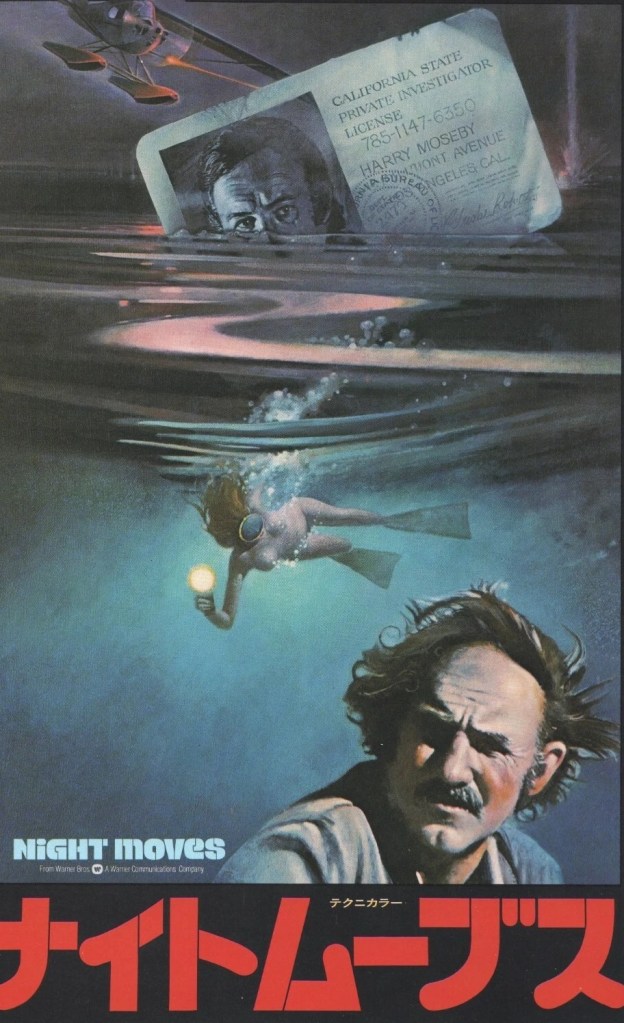
The poster people were so stuck for ways of selling the picture they resorted to using an image of an explosion in a manner that indicated it was key to the actual breakout when  in fact it was related to a random incident. The highlight of the picture, the breakout itself, despite the best efforts to generate tension though the application of a 10-second escape window, is as mundane as all get-out, a helicopter basically loitering in a prison courtyard until the prisoner to be rescued saunters out.

Not only does the movie jettison the Bronson tradition of uncompromising tough guy but it sets up constant screen partner Jill Ireland in a more interesting role than normal while skirting a Casablanca-style romance.

The story itself gets off to a mighty confusing start. Nefarious businessman Harris Wagner (John Huston) arranges, for reasons that are unclear, for grandson Jay (Robert Duvall) to be incarcerated in a Mexican prison. Your first double take as an audience is the purported age gap.  Huston was, in reality, was just past 70 years of age while Duvall was 44 – and never a chance of that actor playing younger –  so you are left wondering how in heck did they contrive to be grandfather and grandson.

Putting that to one side, the first 15-20 minutes of a lean 96 exclude Bronson altogether while director Tom Gries (Will Penny, 1968) builds up the tale of failed rescue attempts by Jay’s wife Ann (Jill Ireland) and the sadistic nature of prison overlord J.V. (Emilio Fernandez) who has a penchant for burying prisoners alive or taking bribes to let them escape before promptly reneging on the deal. Eventually, for reasons unexplained, Ann turns to bush pilot Nick (Charles Bronson) who runs a seat-of-the-pants operation with the kind of plane that looks like it’s held together with string.

Bronson…Stallone…Together! If only Stallone had been bigger at the time.

He’s not your usual monosyllabic grump, but an overconfident wide boy, the bulk of whose schemes fail to work. A modern audience is going to turn up its nose in any case at one plan that involves faking a rape to create a distraction for the prison guards rather than going down the simpler route of Raquel Welch in 100 Rifles (1969) and Marianna Hill in El Condor (1970) of giving the lascivious guards something to ogle.

And another proposal only works because it’s handed a get-out-of-jail-free card when the guards who make a point of groping every female visitor, in theory to check for contraband or concealed weapons, avoid doing so with Nick’s sidekick Hawkins (Randy Quaid) when he dresses up as a woman.

There’s not enough time for any genuine romance to develop between Nick and Ann, a notion that’s undercut in any case by the fact that she’s trying to rescue her beloved husband, but that does allow for more friction than was normal in their pictures. Takes her a long time, understandably, to trust this untrustworthy fella, what with his schemes that rarely work.

For tension we are almost entirely reliant on the bad guys, J.V. indulging in bits of sadism, someone on the inside always knowing of the plans ahead of time, or of Jay being so debilitated by his stay in prison that he seems too out of it to keep his appointment with freedom. There is a quite barmy assumption that should a stray helicopter land in a prison courtyard that none of the other inmates will think to hitch a lift out.

There is some good value here in the Bronson/Ireland partnership trying to shake off what they saw as the shackles of their joint screen persona, or perhaps wanting to re-validate Ireland’s place in the team after Bronson did exceptionally well in her absence in Death Wish (1974). But the story’s an odd one, a kind of discount-store escape, with Bronson essaying the kind of character usually left to such supporting acts as Warren Oates or George Kennedy.

But there’s just not enough that’s new here – the unfairly underrated From Noon Till Three showed how to ring in the changes – to justify Bronson’s inclusion although the Bronson/Ireland dynamic does undergo interesting change. Robert Duvall (The Rain People, 1969) is also acting against type, devoid of the bluster that was his calling card. Randy Quaid (The Last Detail, 1974) has a quirky part.

Tom Gries did well enough in Bronson’s eyes that he was selected for the follow-up Breakheart Pass. Too many hands on the screenplay tiller – Marc Norman (Shakespeare in Love, 1998), Elliott Baker (A Fine Madness, 1966) and Howard B. Kreitsek (The Illustrated Man, 1969) adapting the book by Warren Hinckle, William Turner and Eliot Asinof – suggested nobody really knew how to make this work. And they were right.

Interesting shift in the Bronson persona but a misnomer on the action front.

Best Seller (1987) ***

If nobody’s shot your dog or killed a member of your family, it’s kinda hard for an assassin to work up much audience sympathy. And although this is closer to John Wick than say The Mechanic (1972) or Day of the Jackal (1973), it doesn’t help the sympathy cause if your leading character is played by James Woods (Oscar-nominated the same year for Salvador) who so often essays an amoral fidgety weasel.

So it’s left to Brian Dennehy (F/X, 1986) to do the heavy lifting. Dennehy was the kind of stolid supporting actor who once in a while in the Hollywood Dream made it through on occasion to top billing. His brawn was not in the obvious top-off mold of muscle men Sylvester Stallone and Arnold Schwarzenneger and more in keeping with Holt McCallany (The Amateur, 2025).

It’s not unheard of for characters on either side of the law to team up to tackle the bad guys, but it’s a bit of a stretch for incorruptible widowed hero cop Dennis Meechum (Brian Dennehy) not to toss assassin Cleve (James Woods) into the pokey especially when there are ample witnesses to one of the killer’s killings. But, wait, let’s throw him a get-out-of-jail-free card because he saved the life of Meechum.

Even so, Cleve is as creepy as all get out and even if – especially if – he was a fantasist and not an accomplished assassin you would expect the sensible cop to run a mile, especially after he kidnaps Meechum’s daughter. For reasons unknown, Cleve is handed another get-out-of-jail-free card because actually he didn’t kidnap the 16-year-old Holly (Allison Balsam) but just gave her and her pals a lift home. Quite why a cop’s daughter would fall for the line given by a complete stranger that he was her dad’s pal is anyone’s guess, except it suits the script.

There’s quite a lot of what used to be called “high concept” – in other words getting away with the most unlikely of scenarios – here, not least that Meechum would go along with the psychotic Cleve in order to get the material to write a book, that particular well having dried up after the death of Meechum’s wife.

The fact that Meechum has a side hustle as a best-selling author – though still a cop – is one of the many stretches in the tale. You have to go along with quite a lot until the proper narrative kicks in, and realize that, in fact, Meechum is merely the dupe to allow Cleve to achieve his real aim which is to gain revenge by knocking off former employer David Madlock (Paul Shenar) who, regardless of whatever other malarkey he is up to, had the good sense to rid himself of the psychotic entitled gunman.

It seems inconceivable, too, that, by the simple device of employing a barrage of lawyers, big businessman and philanthropist Madlock would not be able to block publication. Meechum refuses to bow under pressure but his publisher might well do once she has been terrorized by Cleve.

And this wouldn’t work at all except for Cleve. Like Jeff Bridges in Thunderbolt and Lightfoot (1974) he’s a loner (though also like that character having no problem seducing women) who’s desperate for male friendship and appreciation. He wants to buddy up with Meechum and for the cop to enter into such a relationship willingly. In Cleve’s demented eyes, sharing the same woman appears to be one way they could cement the relationship. He appears to view the publication of the book which would uncover the illegitimate activities of the seemingly legitimate Madlock as a means of redemption. He wants to come out well in the book, even introduces Meechum to his quite normal family, and sees that as some kind of weird redemption.  

Eventually, there’s enough shoot-out action, especially when Cleve enters silent John Wick assassin mode, to make the journey worthwhile. But although Cleve is a fascinating original character and the dynamics of the relationship constantly shift, it beggars belief that Meechum would entertain him for a moment especially when he discovers Cleve was responsible for wounding him and killing some of his colleagues in a robbery several years before.

Woods is the standout though Dennehy does stake a decent claim as a leading man. Despite being third-billed Victoria Tennant (The Ragman’s Daughter, 1972) hardly appears.

Screenwriter Larry Cohen (It’s Alive, 1974) is no stranger to the genre mash-up and generally gets away with inconsistencies but here the bar is set way too low at the outset for the tale to be believable. Director John Flynn (The Sergeant, 1968) goes with the flow.

Worth it to see Dennehy get a shot at the big time and for another in Woods’ tribe of weasels but will have you scratching your head with the unlikeliness of the tale.

Mirage (1965) ****

“I owe you some pain,” barks the heavy to hero in one of the memorable lines in this classy thriller with surprisingly contemporary overtones. Underlying this tale of amnesiac David Stillwell (Gregory Peck) recovering his memory are themes of personal commitment, commitment to cause (“if you’re not committed to anything you’re just taking up space”), of individuals taking a stand against powerful forces seeking to thwart democracy, and of malevolent pandemic, the oldest of them all, greed, that infects even the most philanthropic enterprises.

The structure is brilliant. To every question David Stillwell (Gregory Peck) asks in trying to establish his identity, the answers are mystifying. He doubts his sanity and is plunged into a  life-threatening conspiracy.   

The film opens superbly. The camera pans across a New York skyline at night, every skyscraper lit up. Suddenly, one of the buildings goes dark. Cut to confusion inside as workers deal with the electricity cut-out. Among them Stillwell who is surprised to meet a woman on the stairs, Shela (Diane Baker), who not only recognizes him but seems to know a lot about him that is unfamiliar to him. They end up in the fourth level of the basement and on leaving discover that Charles Colvin (Walter Abel), a name that’s only vaguely familiar to Stilwell, has committed suicide by jumping from the building.

When he gets home to his apartment he is accosted by gunman Lester (Jack Weston) who tells him “The Major” wants to see him. Stillwell escapes but on reporting the incident to the police can’t remember his date of birth. After his amnesia being rejected by a psychiatrist he turns to private eye Ted Caselle (Walter Matthau) who takes up the case. But in Stillwell’s apartment a fridge he recalls as being empty is now full, the same with a dispatch case, the opposite with a closet, and in the building where he thinks he works there is now a wall where his office should be.

Stillwell believes he was employed as a cost accountant without a notion what that job entails. The building has no fourth level. Another gunman Willard (George Kennedy) is also in pursuit. Corpses pop up with increasing regularity. To add to the mystery, nobody actually wants him dead. He is too valuable alive. He has a secret only he doesn’t know what. The police connect him to the suicide.

And so the movie plays out brilliantly, with the audience only knowing what Stillwell knows, as confused as he, until piece by piece the jigsaw comes together although at times with cunning sleight-of-hand the pieces are the wrong shape or, worse, don’t fit the jigsaw in hand. There’s an emotional jigsaw to be put back together too, one that requires proper commitment, Shela’s “togetherness is not enough” could have been a mantra for today’s generation.

All the time Shela bobs in and out, hard to tell whether she is a victim or conspirator, whether to be trusted or merit suspicion, and she has an interesting philosophy of her own in terms of the trapped and caged.

As in the best thrillers we have been given the clues all the time, just not realized them for what they were, and in a series of brilliant scenes you cannot help but applaud the entire mystery is carefully stitched together. You will never in a million years guess the cause of Colvin’s mysterious death.

The ending is satisfying on a variety of levels. Yes, mystery solved, the secret Stillwell holds a good one, but the climax involves characters taking sides, displaying commitment, challenging their consciences, circumstances reflecting very much the world in which we find ourselves now.

One of the beauties of the movie is how it plays with our expectations. Peck has done amnesia before in Hitchcock’s Spellbound (1945) but since then his screen persona has been men of upstanding character, Atticus Finch in To Kill a Mockingbird (1962) the personification, confusion not a trait readily identified with him. Equally, the heavies look anything but,  Jack Weston small and rotund, George Kennedy bespectacled and slim.

Diane Baker, enigmatic throughout, far from the glamorous thriller female lead (think Audrey Hepburn in Charade or Sophia Loren who partnered Peck on Arabesque or Claudia Cardinale in Blindfold teamed with Rock Hudson), describes herself as a “lonely woman with a low opinion of herself due to many mistakes.” In the middle of the high tension, with Stillwell being pursued by cops, there is a wonderful scene where a little girl lets him hide in her apartment and on making him coffee it turns out to be the pretend coffee little girls make.

Gregory Peck (Arabesque, 1966) is superb, his face absorbing shock at his condition, at once welcoming unravelling mystery at the same time as doubting its source, wending his way through a past he cannot believe is true, a personality that occasionally appears abhorrent, and having to make the same decisions that he feared making in the past. Diane Baker (Marnie, 1964) has a difficult role, introspective where most heroines in this kind of film are more voluble, and frightened of her own vulnerability.

You can see from here how much George Kennedy bulked up for his breakthrough movie Cool Hand Luke (1967). Walter Matthau, too, was a stage away from interesting supporting roles to full-blown star in The Fortune Cookie (1966). Jack Weston might have been rehearsing his role as the stalker in Wait until Dark (1967). I am not going to mention the other sterling supporting players since that will give the game away.

Diane Baker makes the cover of Films in Review magazine.

Veteran director Edward Dymytryk (Alvarez Kelly, 1966) is on song, stringing the audience along beautifully, extracting wonderful performances, not frightened to give the film deeper meaning. The theme of commitment, of standing up to malevolent forces, seems an odd one for a straightforward thriller but it reflected Dmytryk’s experience as a victim of the anti-Communist witch-hunt of the 1950s.  

On the debit side, I can’t see any reason why this was made in black-and-white and it certainly served to put off the public, the film’s box office poor, but I dispute the criticism of what appeared too-frequent flashbacks. Rather than re-emphasizing plot points for the audience, I saw this instead as Stillwell holding up a mirror to a memory he doubted he could trust.  

Top-notch screenplay by Peter Stone who knows his way around this genre, having previously written Charade and with Arabesque round the corner, from the novel called Fallen Angel by ,surprisingly, given he is best known for Spartacus, Howard Fast under the pseudonym Walter Ericson. At least a dozen quotable lines included this cracker relating greed to a pandemic: “You’re a carrier, you infected him and he died from it.”

All told, an excellent thriller with modern resonance.

Oddly enough, Mirage was remade a couple of years later as Jigsaw (1968), directed by James Goldstone and starring Harry Guardino.

P.S. I see you that the “I owe you” line was adapted for use by Willow in the Buffy, The Vampire Slayer TV series. There’s even a link to that scene on YouTube. Glad to see it has found some kind of immortality. It’s the kind of line that should be a gimme for t-shirt manufacturers.  

Thunderbolt and Lightfoot (1974) ***

There’s a reason this has largely slipped from view, why it’s rarely included in any examination of the Clint Eastwood canon. For the most part it’s plain dull. When the best thing in it for large periods of time is the screen composition, then you know this is going to be an odd, not to mention tough, watch.

It’s confused as hell. Starts out as a road movie – and a desultory one at that – with a side hustle of a shaggy dog story, straightens out enough to fit into the nascent buddy movie genre before settling down into a heist. And all the time director Michael Cimino, with his use of widescreen and traditional arranging of the sometimes majestic scenery into thirds, thinks he is making a western.

Let’s play the phallic symbol card.

None of the characters seems to be much good at what they do. Thunderbolt (Clint Eastwood), on the run, doesn’t appear capable of evading the pursuing Red (George Kennedy), not a cop or bounty hunter as you’d expect, but an irate member of Thunderbolt’s former gang. And while Red seems excellent at tracking down his quarry, whose shifts of direction are almost whimsical, and even though he’s armed with the modern-day equivalent of a Gatling gun, he makes the basic mistake of not getting close enough to his target to make the bullets count.

The only one who comes out on top in the too-long opening section is Thunderbolt’s happy-go-lucky sidekick Lightfoot (Jeff Bridges) who has the knack of pulling the ladies and can drive. But their relationship is desultory, no zap, no funny lines in the vein of Butch Cassidy and the Sundance Kid (1969), and while clearly like the pair in Midnight Cowboy (1969) inclined to hold onto each other in the absence of anyone else it lacks the emotional power of the latter.

It takes forever to get to the point. Or the three narrative triggers, one of which involves Eastwood committing the most grievous sin a major star can ever commit – to be the one who carries the exposition. And boy does he go on. Anyways, he’s a bank robber and he planked his haul in a small two-room schoolhouse. But, blow me down, someone’s demolished the schoolhouse, without presumably happening upon the cash, and built a brand new one in its place.

Clint Eastwood…Bruce Lee…Together!

Then, just to annoy Thunderbolt, the police, because this is just how cunning they can be, have given out that they recovered the loot. Red hasn’t fallen for this ploy, believing Thunderbolt has duped the gang and made off with the stash. Eventually, Red and Thunderbolt reconcile and Lightfoot suggests they hit the bank that was originally robbed because nobody would expect it.

Thunderbolt has acquired his nickname because his idea of a heist is not to bring on board some clever dick safecracker and employ an ounce of patience but merely to barrel through any obstacle with the help of 20mm cannon.

So now – at last – we have a story, but that’s over halfway through the picture and way too late to save it. So, yes, there’s some decent action and excitement, a double cross, car chase, shoot-out, and just to complete the shaggy dog element one of the robbers is killed by a dog.

Once it gets going it’s within the Eastwood bailiwick. At the time there was a mini-trend, started off by Easy Rider (1969), for road movies so moviegoers back in the day would probably accept this more than a contemporary audience who, like me, is sitting there wondering when the heck are they going to get on with it.

Something of change of pace for Eastwood, in that he plays his age, the older man, one in not so good physical shape at that, and not catnip for the ladies. Jeff Bridges (The Big Lebowski, 1998) certainly brightens up the screen, but George Kennedy (Cool Hand Luke, 1967) overacts.

Writer-director Michael Cimino, in his debut, exhibits the strengths that would elevate The Deer Hunter (1978) and the self-indulgence that would cripple Heaven’s Gate (1980).

A long haul.

Que La Bete Meure / This Man Must Die (1969) ****

Heavily-layered Claude Chabrol revenge thriller that concentrates as much on the tricks the human mind can play rather a string of unusual twists. Self-justification and redemption go hand in hand. The director sucks us in to sympathize with an obsessed killer on the grounds that his victim deserves to die and then at the end makes us question everything we’ve been led to believe.

As usual, with this director, there’s more than enough atmosphere and his exposure of small-town life in France and the flaws in families and relationships almost serve to turn this into more of a drama than a thriller. But then that is Chabrol’s distinctive trademark.

When the police fail to track down the hit-and-run driver who has killed the young son of Charles Thenier (Michel Duchaussoy), the father, an author, determines to find the killer and, as he confides in his diary, not report him to the authorities, but finish him off himself. He makes the smart deduction that since there was no trace of a repair to a damaged car, the killer must own a garage. By a stroke of luck, he discovers a well-known actress Helen Lanson (Caroline Cellier) was a passenger in the car. Hiding behind his pen-name Marc, he seduces Helene, who has been hit by depression as a result of the incident, and discovers the driver was her brother-in-law Paul (Jean Yanne).

Convincing her to allow him to accompany her on a visit to his sister, his self-justification rises a notch as he notes that Paul is exactly the kind of guy who might well come to a sticky end given the detestable way he treats his wife Jeanne (Anouk Ferjac) and teenage son Phillippe (Marc Di Napoli) and is a womanizer to boot. While Charles bonds with Phillippe, who reveals he wants to kill his father, his relationship with Helene takes a knock when he discovers she’s had a brief affair with her brother-in-law.

So Charles plans to stage an accident at sea but Paul is one step ahead. The driver has found Charles’ diary and has taken a gun on the sailing trip to defend himself. But after Charles and Helene leave, Paul is discovered dead by poisoning. Charles’ diary makes him a suspect. And while he argues that it would be foolish of him to disclose his plans to a diary that is in the dead man’s possession, the police take the view that that would exactly what a clever murderer would do to deflect suspicion.

The police can’t find the poison so Charles is released. Phillippe confesses to the murder. But there is a further twist. The tale on which this is based was called The Beast Must Die, and from the various revelations we would be assuming that the beast in question, the remorseless despicable hit-and-run driver with not a single redeeming feature would be the most likely to fit this category.

But on reflecting on his own obsession, Charles clearly realizes that he is as likely a candidate to be termed a “beast.” It turns out he has let the son take responsibility for the murder and now he sets out to make amends, confessing to Helene that he did it and then heading off to sea presumably to jump overboard at a suitable spot.

Justified killing is never, it turns out, justifiable because in reality it turns the innocent into the guilty, and there’s little distinction between killers. When we cast our minds back, we become aware, as he does, that Charles has transitioned from grieving father to ruthless seducer of a vulnerable woman, preyed on a youngster who in consequence of their supposed friendship is happy to carry the can so Charles can escape, and is in any case going to complete his plan regardless of the cost to others.

Michel Duchaussoy (La Femme Infidele, 1969) steps up to the plate. The supporting cast are excellent. After the abysmal Road to Corinth (1967), Claude Chabrol established his name as the inheritor of the Hitchcock mantle after this and La Femme Infidele. Written by the director and Paul Gegauff (More, 1969) from the novel by Nicholas Blake (the pen-name of Irish poet Cecil Day-Lewis, father of Oscar-winning actor Daniel Day-Lewis).

No shortage of tension, upends your expectations, totally involving.

Woman of Straw (1964) ***

In a plot worthy of Hitchcock without that director’s sly malice, rich playboy Tony (Sean Connery) conspires with not-so-innocent nurse Maria (Gina Lollobrigida) to rid himself of  heinous upper-class racist misogynistic bully Charles (Ralph Richardson), his uncle. Beyond  a savage case of entitlement, Tony has good reason to hate the wheelchair-bound multi-millionaire, blaming him for his father’s suicide and for seducing his widowed mother, now dead. Tony’s ploy, in part by opposing the very idea, is to get Maria to marry Charles, inherit his fortune and provide himself a £1 million finder’s fee when the seriously ill old man dies.

Maria’s refusal to kowtow to the old man and her initial resistance to Tony make her all the more desirable to both. When Maria saves the old man from a potential heart attack, he is moved enough to marry her and draw up exactly the will the pair want. But when he suddenly dies, Maria surprises herself by the depth of emotion she feels.

But that soon changes when she comes under suspicion. A bundle of complications swiftly change the expected outcome. A police inspector (Alexander Knox) doubts cause and place of death.

The first half is the set-up, the various figures being moved into place, not quite as easily as might have been anticipated, which adds another element of tension. Charles is such a hideous person nobody could lament his passing, but still his vulnerability, not just his wheelchair confinement but his love of music, his better qualities coming to the fore as the result of Maria’s presence, accord him greater sympathy than you would imagine.

That the otherwise gallant Tony’s entitled life depends entirely on his uncle’s good wishes lends him an appealing frailty. The nurse’s principles safeguard her against being taken in by riches alone, but there is a sense that she has used her physical attraction in the past to her advantage.

After the first two James Bond pictures, this was Sean Connery’s first attempt to move away from the secret agent stereotype and in large part he is successful. As amoral as Bond, he could as easily be a Bond villain, smooth and charming and larger than life and superbly gifted in the art of manipulation, the kind of putting all the pieces in place that Bond villains excelled in.

It will come as a surprise to contemporary viewers that he is merely the leading man, not the star. Gina Lollobrigida (Go Naked in the World, 1961) receives top-billing because she carries the emotional weight, initially perhaps as cold as Tony, but her attitude to Charles changing after marriage, meeting a need that Tony would not consider his to fulfill, and beginning to regret going along with any devious plan. That she then discovers she may merely be a pawn rather than a partner creates the dilemma on which the final section of the film depends for tension.

Both actors are excellent, exuding star wattage, the screen charisma between them evident, and audiences craving the pairing of Connery with an European female superstar will be well satisfied. Lollobrigida has the better role, requiring greater depth, but it is romance as duel most of the way. Ralph Richardson (Khartoum,1966) has never been better as one of the worst human beings ever to grace a screen. Johnny Sekka (The Southern Star, 1969) brings dignity to the maligned servant and Alexander Knox (Khartoum) is a crusty cop. 

A slick offering from Basil Dearden (The Mind Benders, 1963), with one proviso – see seaparate article for the racism in this film. Written by Robert Muller (The Beauty Jungle, 1964) and Stanley Mann (The Collector, 1965) based on the novel by Catherine Arley.

Could have done with expending less time on the set-up and getting to the meat of the thriller quicker.

Wake Up Dead Man: A Knives Out Mystery (2025) ** – Seen at the Cinema (out on Dec 12 on Netflix)

An unholy mess. Serve Netflix right for once again indulging one of their “visionary” directors. I’m assuming either director Rian Johnson is a true believer or he’s embarked on a spoof that doesn’t work. Either way it’s a bone-headed venture filled with the dullest characters you would ever come across and testing audience patience to the limit by keeping the star of the show, private detective Benoit Blanc (Daniel Craig), out of the picture for the first 30 minutes, dumping all the exposition on Fr Jud Duplenticy (Josh O’Connor), the most cliched priest this side of Bing Crosby and relying on the “locked room” conceit, handled with some deadly ham-fistedness, to see the audience through an extremely trying time.

Once you work out that the title relates to the Resurrection of Jesus Christ and that we’re entombed in a flummery of Christian jargon, you start hoping this is going to head down the satirical route and that at least you’ll get a few laughs for your hard-earned bucks. But, no, it’s so straitlaced it might as well have called on a corset to design the narrative. In order to help the director out of a whole series of cinematic cul de sacs everyone overacts and we skip over inconvenient plotholes.

The priest is sent to help out in a rundown parish run by nutcase Monsignor Jefferson Wilks (Josh Brolin) whose idea of fun is to relate in detail, under the guise of confession, how many times, and how, he has masturbated that week. There’s a godforsaken subplot about lost treasure and a mysterious child who you’ve guessed from the off is the son of Wilks.

When Wilks is done to death in church in a small room off the altar, then we get the standard roll-call of suspects. These include church manager Martha (Glenn Close), who specializes in letting out blood-curdling screams, alcoholic doctor Nat (Jeremy Renner), barmy novelist Lee (Andrew Scott), suffering from the opposite of writer’s block who can’t stop spewing out an interminable book, Vera (Kerry Washington) who’s been put in charge of bringing up mysterious boy Cy (Daryl McCormack), now a failed influencer, and crippled Simone (Caillee Spainey) who Wilks has bled dry. Every now and then local cop Geraldine (Mila Kunis) turns up to listen in awe to Blanc.

Fr Jud is the main suspect for no apparent reason that I could see except the writer says so and he’s the most handsome guy around and wouldn’t it be great if Blanc could recruit a priest sidekick in the way of the television series of yore.

So first of all we get a lecture on the “locked room” thesis with reference to Golden Age of Crime novelist John Dickson Carr who invented the term and then to the likes of Agatha Christie and others who took up the challenge.  A variety of theories are presented by Blanc with the sole purpose of showing everyone how clever he is by knocking them all down.

Once we enter Resurrection territory it gets downright stupid, the dead man rising again on the third day in the manner of a certain religion, and then there’s another murder and because we’ve run out of things with which to add genuine tension a lot of the action now takes place in pouring rain and Fr Jud who looks like he is in the clear gets once again targeted as the main suspect.

And then we’re into scene after scene after scene of exposition and a ton of talk about “free will” and “grace” – religious terms you understand. Confession, you might not be surprised to learn, plays a key role.

This might have been more acceptable with a better cast. This is nothing like an all-star cast such as used to decorate Hercule Poirot epics and helped out with keeping an audience engrossed in the first two in the series. This is populated by over-the-hill stars like Glenn Close (Hillbilly Elegy, 2020), Mila Kunis (Bad Moms, 2016) and Jeremy Renner (Avengers: Endgame, 2019) and actors who wouldn’t be considered stars except in television like Andrew Scott (Blue Moon, 2025). Josh O’Connor (Challengers, 2024) is out of his depth. Josh Brolin (Weapons, 2025) would be closest we’ve got to what might constitute a genuine star but he was second-billed in that and only then because everyone else was a nobody.

The role of the star is to enliven a picture and those with an undiluted screen presence give audiences something to hang their hat on or direct their sympathies to. But none of this bedraggled lot, every character underwritten, would you care a fig for.

Rian Johnson ruins his own creation.

Pit of Darkness (1961) ****

Occasionally I get to wondering when one of these British crime B-pictures is exceptionally well-plotted, refreshing and above all logical, whether it might have benefitted from grander treatment Hollywood-style. You could easily see Cary Grant or Gregory Peck wriggling around in this one and with a Grant or Peck involved they’d be accompanied by a glamor puss of the Sophia Loren, Deborah Kerr vintage. And that would put the whole movie in an entirely different light and ensure it wasn’t lost for decades, as was the fate of this one.

What struck me most about the opening section here, an attitude maintained for about half the picture, was that the actress wife Julie (Moira Redmond) of amnesiac Richard (William Franklyn) didn’t believe for a minute his story that he couldn’t remember where he’d been for the last three weeks. There wasn’t an ounce of sympathy. That struck me as an entirely believable reaction. Rather than going all soppy at his return, she reckoned he’d run off with another woman and only came back because the affair had gone sour.  

And it doesn’t help his case that he was found unconscious on a piece of London waste ground where four days before the private detective she had hired to find him was discovered murdered. Then there are the suspicious phone calls, leaving him to deny the existence of anyone called Mavis.

But just when we start to believe him, suddenly we don’t. He seems to be too familiar with the Mavis who calls him and agrees to meet her at a remote cottage. And then we’re back on his side, as he just avoids being blown up in the cottage. But he leaves his hat behind.

And he doesn’t own up to Mavis about being nearly killed and gives a spurious reason for buying a new hat and not keeping the old one. So we’re on her side, something is going on for sure. And then back on his, when someone tries to sideline him in a hit-and-run accident.

In turn, he’s suspicious of everyone, including his wife, and his colleagues at work, especially Ted (Anthony Booth) who seems an unlikely candidate to have won the heart of his delectable secretary Mary (Nanette Newman).

He works for a firm that makes safes and whatever’s going on appears to be linked to a burglary that occurred in his absence involving one of the safes the company made. Eventually, Julie comes round to his way of thinking. Clues lead him to a nightclub, whose mysterious owner Conrad (Leonard Sachs) somehow seems familiar. He encounters Mavis, a dance hostess, and she agrees to help him but when he goes round to her apartment finds a corpse. There’s something distinctly odd going on in the building across the street from his office. On further investigation, he uncovers an assassin. Luckily, our man is armed with the office pistol and the villain is chucked from the roof.

But, still, nothing makes much sense, even though bit by bit memory is returning. He realizes he shouldn’t have been found unconscious on the waste ground, but dead, murder only interrupted by the sudden arrival of a gang of boys.

But in retracing his steps in order to unlock the lost memories he finds himself undergoing a perilous process a second time. He works out that he was kidnapped and locked in a cellar in the club. When he confronts Conrad, that instigates a repeat.

Conrad locked him away and when bribery and the seductive wiles of Mavis didn’t work, Conrad convinced Richard that his wife was in danger if he didn’t go along with the burglary. And Conrad isn’t one to let a good opportunity go to waste, so second time around, using the same threat that worked the last time, he forces Richard to commit another burglary. But this time there’s a catch and one that Richard’s secretary hasn’t known about to pass on to Ted.

So the bad guys are caught, and in the way of the obligatory happy ending the audience is left to assume that the police will ignore his part in the robbery and the death of the man on the roof.

Not just exceptionally well-plotted, but the addition of the marital strife, the suspicious wife, adds not just to the tension but makes it all the more believable and turns the amnesia trope on its head.

Having wished for a Cary Grant or a Gregory Peck, I have to confess I was more than satisfied with William Franklyn (The Big Day, 1960) who managed to look innocent and guilty at the same time. Certainly Deborah Kerr would have managed more in the acerbic look department than Moira Redmond (The Limbo Line, 1968) but I have no complaints.

Interesting support cast at the start of their careers, so Anthony Booth (Corruption, 1968) displays just a hint of his later trademark sarcastic snarl and there’s no chance for Nigel Green (The Ipcress File, 1965)  to put his steely stare into action or effect his drawl. Nanette Newman (Deadfall, 1968) has little to do except look fetching. Leonard Sachs was taking time off from presenting TV variety show The Good Old Days (1953-1983).

More kudos for the script than the direction this time for Lance Comfort (Blind Corner, 1964).

Given it’s from the Renown stable. I would normally have expected to come upon this picture on Talking Pictures TV, so I was surprised to find it as one of the latest additions to Amazon Prime.

First class.

Discover WordPress

A daily selection of the best content published on WordPress, collected for you by humans who love to read.

The Atavist Magazine

by Brian Hannan

WordPress.com News

The latest news on WordPress.com and the WordPress community.