Big names were rarely immune to box office upset. Top stars like Sean Connery, Robert Redford, Jack Nicholson, Meryl Streep, Al Pacino and Sylvester Stallone had their fair share of clinkers while the careers of the likes of the much-touted Mickey Rourke fizzled out in the face of audience indifference. Of course, it was the supposed marquee pull of big stars that got them attached to sometimes dodgy projects in the first place, the idea that their presence would be sufficient to generate box office heat.
You’ll probably be surprised to discover that Highlander (1986) – especially given its cult status and the various sequels – was an out-and-out flop in the U.S., rentals of just $2.8 million on a budget of $17 million. But that was a comparative hit compared to other Connery items, Fred Zinnemann’s Five Days One Summer (1982) with only $100,000 in the kitty on a $15 million budget. The Red Tent (1969) was covered in so much red ink it could have qualified as a horror picture, a return of $900,000 on a $10 million cost. Martin Ritt’s mining saga The Molly Maguires (1968) dug out only $1.1 million, around 10 per cent of its budget. Comparatively speaking, Meteor (1979) was a success, $6 million taken in on a $20 million budget.
Connery wasn’t the only big name cashing in on the disaster picture only to encounter disaster at the box office. Income from When Time Ran Out (1980), another in the $20-million range, barely covered Paul Newman’s fee. Other than a big fat check who knows what Jack Nicholson saw in an octet of calamities. The Border (1982) generated just $4.6 million rentals from a $22 million investment, the joke was on Martin Scorsese for King of Comedy with $1.2 million from $19 million, and even the $30 million Midnight Run (1988) failed to cross the line with just $18 million. Prayers and good reviews couldn’t save The Mission (1986) its $8.3 million take barely one-third of its cost, Angel Heart (1987) took about the same level of hit, $6.5 million from an $18 million expenditure.
A dream teaming with Oscar fave Meryl Streep proved a nightmare, not once but twice, Ironweed (1987) smoking out $3.5 million from $27 million, Falling in Love (1984) marginally better with $5.8 million out of $14 million, but all hope dashed on Once Upon a Time in America (1984), $2.5 million retrieved from $30 million spent. Streep on her own, and even with a dark wig, could do little to save A Cry in the Dark (1988) from picking up a paltry $2.5 million from a $15 million undertaking.
When you realize Angel Heart was one of Mickey Rourke’s better performers you can guess at the scale of his problem. The heavily-touted 9½ Weeks (1986) went straight down the plughole, recovering a distant $2.5 million from hot $17 million. Crime didn’t pay either, Michael Cimino’s Year of the Dragon (1985) flamed out at $7.3 million, less than one-third of cost.
Few were exempt. Richard Gere might as well have worn a crown of thorns in King David (1985) – $2.5 million return on $22 million forked out. And he was impotent to revive Sidney Lumet’s Power (1986), $1.7 million from a $14 million handout. Al Pacino served up $200,000 for Revolution (1985), a $28 million turkey. Burt Reynolds was stuck on $3.4 million for his directorial debut the $22 million Stick (1985). Steve Martin billed just $2.3 million for Lonely Guy, a $14 million no-hoper.
Even Clint Eastwood could not always work his box office magic, The Dead Pool (1988), his fifth iteration on Dirty Harry, coming up $1 million shy of its $20 million budget. Bruce Willis in Sunset (1988) lost $17 million. Sylvester Stallone was down $30 million for Rambo III (1988) and $16.7 million for Over the Top (1987).
Michael Keaton in The Squeeze (1987) lost $21 million, Sidney Poitier and River Phoenix in Little Nikita (1988) lost $14.3 million, The Adventures of Baron Munchausen (1988) lost a colossal $48 million hit, Heaven’s Gate (1980) $34.5 million, Honky Tonk Freeway (1981) $23.5 million, Bette Midler in the appropriately-named Jinxed (1982) $13.1 million. The Big Town (1987) starring Matt Dillon lost virtually all its $17 million budget, as much as prehistoric drama Clan of the Cave Bear (1986). Sheena (1984) roped a $23.1 million loss, Supergirl (1984) $24 million, the original Dune (1984) $25.4 million
Francis Coppola will be hoping his forthcoming self-financed $120 million Megalopolis doesn’t go the way of The Cotton Club (1984) – $12.9 million in rentals from $51 million – or One from the Heart (1981) – $400,000 back out of $26 million.
Of course, the best stars have longevity, a bad run doesn’t always spell the end. Connery bounced back big style with The Untouchables, The Hunt for Red October, Indiana Jones, Rising Sun and The Rock. Stallone went back to basics and drew on more Rocky and Rambo and flexed his muscles with The Expendables franchise.
SOURCE: “Film Costs vs Rentals,” Variety, February 21, 1990.
Due some unexpected reverence after being chosen by Quentin Tarantino for his inaugural eponymous festival that kicked off at the Dobie theater in Austin, Texas, in 1996. I thought I’d throw that in since my opinion alone may not have swayed you as to this film’s merits. Ken Annakin (Battle of the Bulge, 1965) wasn’t first choice as director. It was initially on the slate of Jack Cardiff (The Girl on a Motorcycle, 1969) and should have also made waves as the first big British-Indian co-production. After his World War Two tank epic, Annakin’s career unexpectedly stalled.
He backed out of a project to make a Las Vegas version of Grand Hotel (1931), another, the $1.5 million The Fifth Coin, written by Francis Coppola and to star George Segal, got snarled up on the starting grid. He balked at Texas Across the River (1966) – when the females leads were going to be Shirley MacLaine and Catherine Deneuve – due to concerns about the schedule. He actually shot half of The Perils of Pauline (1967) with Terry-Thomas, Pat Boone and Pamela Austin, wife of super-agent Guy McIllwhaine, before being fired, for reasons that were unclear. Still, he remained in demand and was immediately off to Italy to shoot Raquel Welch heist picture The Biggest Bundle of Them All – not released until two years later as explained in my Behind the Scenes blog on that movie.
However, before jetting off to Italy, he had been sounded out by British producer Sydney Box who had a commitment from Yul Brynner and Trevor Howard to star in the $3 million The Long Duel being financed fifty-fifty by British studio Rank and fourteen Indian investors taking advantage of a tax-shelter deal. Annakin was in line for his biggest-ever fee. For Rank it was a brave new world. The British studio after years of relative inactivity was back on the production front foot, initially in co-production deals with American majors and British investment outfits like the National Film Corporation. It planned to invest $12 million in eight pictures. Initially, its stake in The Long Duel was limited to 60 per cent at a time when the movie was budgeted at $2.3 million. This was “particularly surprising because it came at a time when Britain was caught in a severe economic freeze” although the surprise success of the Bond pictures suggested the country’s movie industry was, in contrast, riding the crest of a wave.
Things turned sour on the location scouting trip to India. A “bottomless pit” of laborers was on standby to build a rope bridge across as soon as the money came through. Timber had been ordered to build a fort on a plateau with stunning views of snow-capped mountains, but nothing would arrive until money changed hands. While Rank had committed three-fifths of the finance with the rest coming from the release of blocked rupees guaranteed by a Maharajah, without any immediate cash and with the stars on pay-or-play contracts, there was no option but for Rank to pick up the entire cost and seek out alternative locations. That meant it was the single biggest British production financed domestically without a foreign partner.
Matters worsened when producer Sydney Box suffered a heart attack, triggering his departure from the business, in which he had been a mainstay for 33 years, movies ranging from The Seventh Veil (1945) to Accident (1966). In addition, Annakin was negotiating to make a permanent move to France while his wife was at home in England dealing with an adopted new-born baby. Annakin – acting also as producer for the first time – gambled on shifting the movie to Spain.
After the success of Doctor Zhivago (1965), Spain was fast being viewed as an ideal terrain, Custer of the West (1967), Camelot (1967), Fathom (1967) and The Bobo (1966) jostling for space. Having made a couple of movies there, Annakin assured the backers, the terrain was “not dissimilar” to the locations he had viewed in India. “I believe we can make Spain into India, so long as the crowds are dressed as Indians, which will cost quite a lot more because it means providing all the costumes whereas in India they already exist,” he explained. He had three weeks before the actors were due.
Yul Brynner and Trevor Howard would have seemed best buddies by now, having appeared in three films together over the past two years – Morituri (1965), The Poppy Is Also a Flower (1966) and Triple Cross (1966). Brynner’s career had revived thanks to Return of the Seven (1966). He was considered poor box office in the U.S. but made up for it with his global marquee appeal. Howard had been on an unexpected box office roll following Father Goose (1964), Operation Crossbow (1965), Von Ryan’s Express (1965) and The Liquidator (1965).
Annakin turned to the Sierra Nevadas to double as the Himalyas, located the rope bridge in a ravine near Ronda, the villages transplanted to the dusty Andalusian plains, and found sufficient horse-riding extras among the gypsies of Dacoit country. The Alhambra was called in to action for part of the Indian palace. A steam train of sufficient vintage was found.
Brynner supplied his own motor home, one of the most luxurious on the market, but required considerable assistance to move it around, especially on narrow country roads linking locations. Over 300 horses were required, with complications when the animals had to be moved in the dark. The major scenes required extensive lighting and nobody had taken into account the fierce winds which nearly blew everything away. The dancing bear was supplied by Chipperfield Zoo near Windsor, England. In the scene where Brynner returns to find his tribe massacred, the bear is also a victim. But, when the bear was knocked out by an injection, it didn’t wake up again. Cast and crew were so shocked that filming was abandoned for the day.
Howard’s alcoholism was another issue, liable to leave the actor so disoriented during the shooting of dangerous scenes that his close-ups were often shot at a later date, though, eventually informed of this accommodation, the veteran sobered up. If you felt when watching the movie that the female stars were out of place, you wouldn’t be far wrong. In the original tale there was no significant female role. But acceding to the demands of studio and distributor required various love interests. Suzanna Leigh (Subterfuge, 1968) turned down the lead, providing Charlotte Rampling (Three, 1969) with a worthy role.
Convinced it was onto a winner, Rank took out adverts in the trades claiming “all signs point to it being…among the greats” and it took the bold step of launching it in roadshow at the Odeon Marble Arch simultaneous with continuous performance at the Odeon Leicester Square in London’s West End.
SOURCES: Ken Annakin, So You Wanna Be a Director (Tomahawk Press, 2001) p186-189, 197-206; “Sydney Box $10-Mil Prod Program,” Variety, January 26, 1966, p14; “Rank Now Measuring Up,” Variety, July 27, 1966, p25; Advert, Variety, August 24, 1966, p27; “$3-Mil Rank Duel May Be Costliest British Film Ever,” Variety, October 26, 1966, p5; Advert, Variety, November 9, 1966, p27; “Sydney Box Quits Film Posts,” Variety, August 7, 1967, p2.
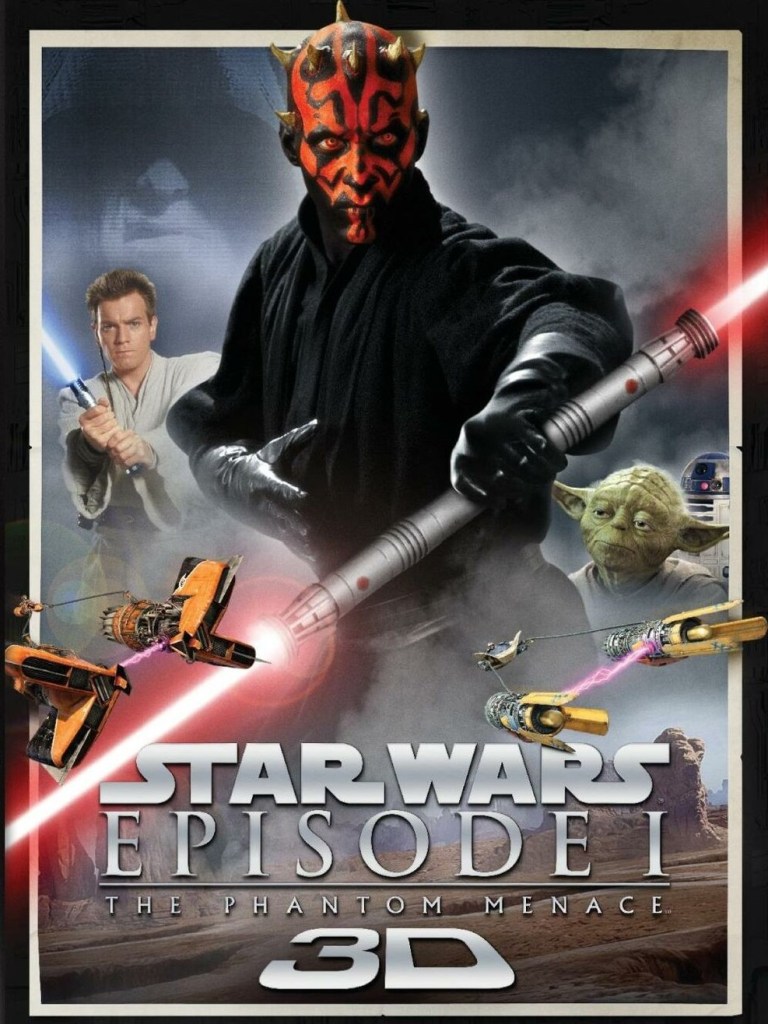
Astonishment all round from box office aficionados that the reissue of Star Wars I: The Phantom Menace (1999) has done so well at the weekend’s pack ($8.1 million gross – enough for second place). But that’s because most people don’t realize that the reissue in general has been around for well over a century, ready to step in to plug gaps (as now) in the product pipeline.
In fact, the original Star Wars (1977) – Episode IV: A New Hope – triggered a new style of reissue in 1978. The reissue had been reinvented several times over already, appearing under such nom de plumes as “revival,” “encore triumph” (“double encore” for a double bill), “masterpeice reprint,” before finally emerging as a genuine restoration, or re-released in 3D or Imax. Prior to the 1970s, studios had generally allowed box office hits to stick around the vaults for a decade or so – the idea they were re-released every seven years, theoretically long enough for a new generation to spring up, is a misconception.
Gone with the Wind appeared twice in the 1960s, the last time revived as a 70mm roadshow. And studios had taken to rushing out double bills of big hits – any configuration of James Bond pictures, for example, plus Bonnie and Clyde/Bullitt, Butch Cassidy and the Sundance Kid/The Prime of Miss Jean Brodie.
But the Star Wars revival in 1978 took the reissue to a new level. For a start, Twentieth Century Fox had invented a new word for it. They called it a “wind-up saturation.” They could call it anything they liked after what the box office engendered in the first week. With a $2 million advertising campaign and merchandizing that included bed sheets and sleeping bags, and opening on 1750 screens, Star Wars not only shattered the weekend box office record for a reissue it clobbered the record for a new film currrently held by Jaws 2.
After pulverizing the opposition with $10.1 million in the first weekend, it went on to rack up $45 million, a remarkable $24 million of which was rentals (meaning the studio was generally demanding a 60/40 share of the box office). So now reissue was seen as a clever method of bringing a new release, more than a year later, to a resounding close. There wasn’t time for anyone to get nostalgic about an old picture, the studio just rammed it down exhibitor’s throats before anyone could tire of it.
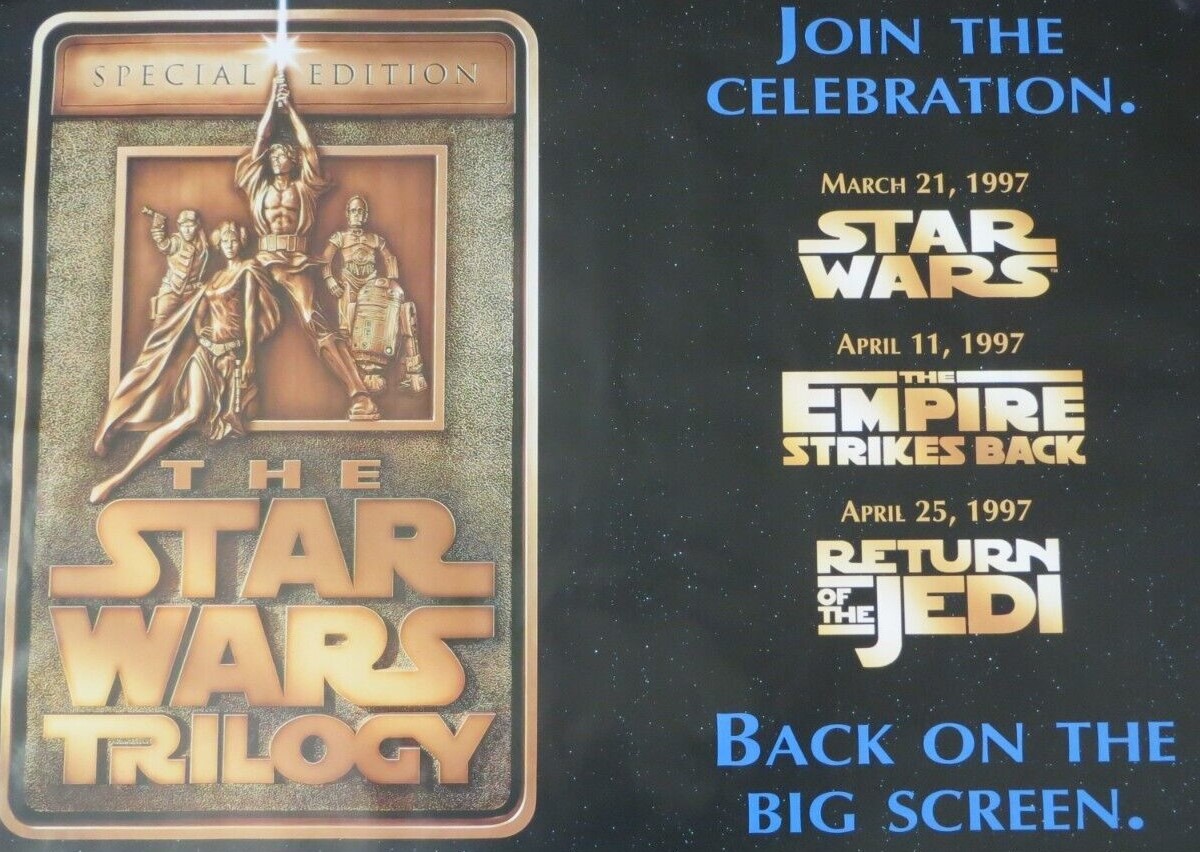
The Empire Strikes Back added another near $20 million in the two years after its initial release while Star Wars kept chugging along, another $9.3 million in 1981 and $8.3 million in 1982. But this was a gold mine that kept giving and, in 1997, following the Hitchcock reissue template of 1983, Fox brought back the first trilogy as the theatrical equivalent of a box set, releasing them three weeks apart. This was despite an actual video box set of the trilogy selling 22 million copies. But there were already 350 websites devoted to a galaxy far far away (a massive number in the prehistoric days of the internet).
Fox gambled there were two generations (using the old seven-year-cycle idea) that hadn’t seen the first picture on the big screen. There was also the opportunity for artistic reassessment and Fox spent $10 million on the restoration of the first picture, the sequels half that again each. In the first place, the negative had suffered considerable deterioration and then there were the hundreds of visual effects that George Lucas had neither the time nor money to do as effectively as he wished. Around a third of the budget went on audio. Lucas described it as “a rare chance to fix a movie only 60 per cent right.” So it qualified as a “Special Edition.”
Lucas viewed the trilogy as a serial unfolding in successive weeks. At its most basic, it was an exercise in nostalgia for fans too young to understand the meaning of the word. In reissue terms, it was the biggest, splashiest event of all time, better even than MGM’s 70mm reinvention of Gone with the Wind or David Lean’s restoration of Lawrence of Arabia. Excitement reached fever pitch. Only 2,000 screens were given the opportunity to make potential reissue box office history, Fox again setting stiff terms. Star Wars grossed another $138 million, The Empire Strikes Back $67 million and Return of the Jedi $45 million, the only sour note being the argument that if they had spaced the films out they might have done even better.
But when the time came to bring back Phantom Menace, there was a new toy to spark life into old pictures. 3D had been reinvented to accommodate reissues. Disney had made the running here, snacking on $30 million for a double bill of Toy Story/Toy Story 2, $98 million for The Lion King and $47 million for Beauty and the Beast. In 2012 the 3D version of The Phantom Menace romped home with a $43 million pot.
By such standards, this weekend’s reissue is strictly small potatoes, though proof that old movies never die and that nostalgia lives to fight another day.
SOURCE: Brian Hannan, Coming Back to a Theater Near You, A History of Hollywood Reissues 1914-2014 (McFarland, 2016), 274, 283, 286, 287, 289, 290, 291, 298, 304, 312, 313, 320, 329.
In previous decades, box office outside of the U.S., while a growing part of the ancillary equation, only in very rare circumstances outscored domestic. The general expectation, in part due to tougher competition for screens and extra distribution costs, was on average studios could expect to earn about half of domestic revenues.
There was one obvious exemption to this rule. James Bond overseas blew all the competition out of the water. And so it proved in the early 1970s from an examination of United Artists books for the period. Live and Let Die (1973) was the standout performer, knocking up $27 million in rentals (the studio share of the overall box office gross) from foreign cinemas compared to $16.4 million at home. Diamonds Are Forever (1971) did equally well – $22 million abroad, $20 million domestic.
James Bond was such a cash cow that surprised no one. Last Tango in Paris (1973) was considered an anomaly, controversy stoked by UA four-walling the picture when it couldn’t find enough screens. It came in third in the foreign market league, adding $16 million to domestic $21 million.
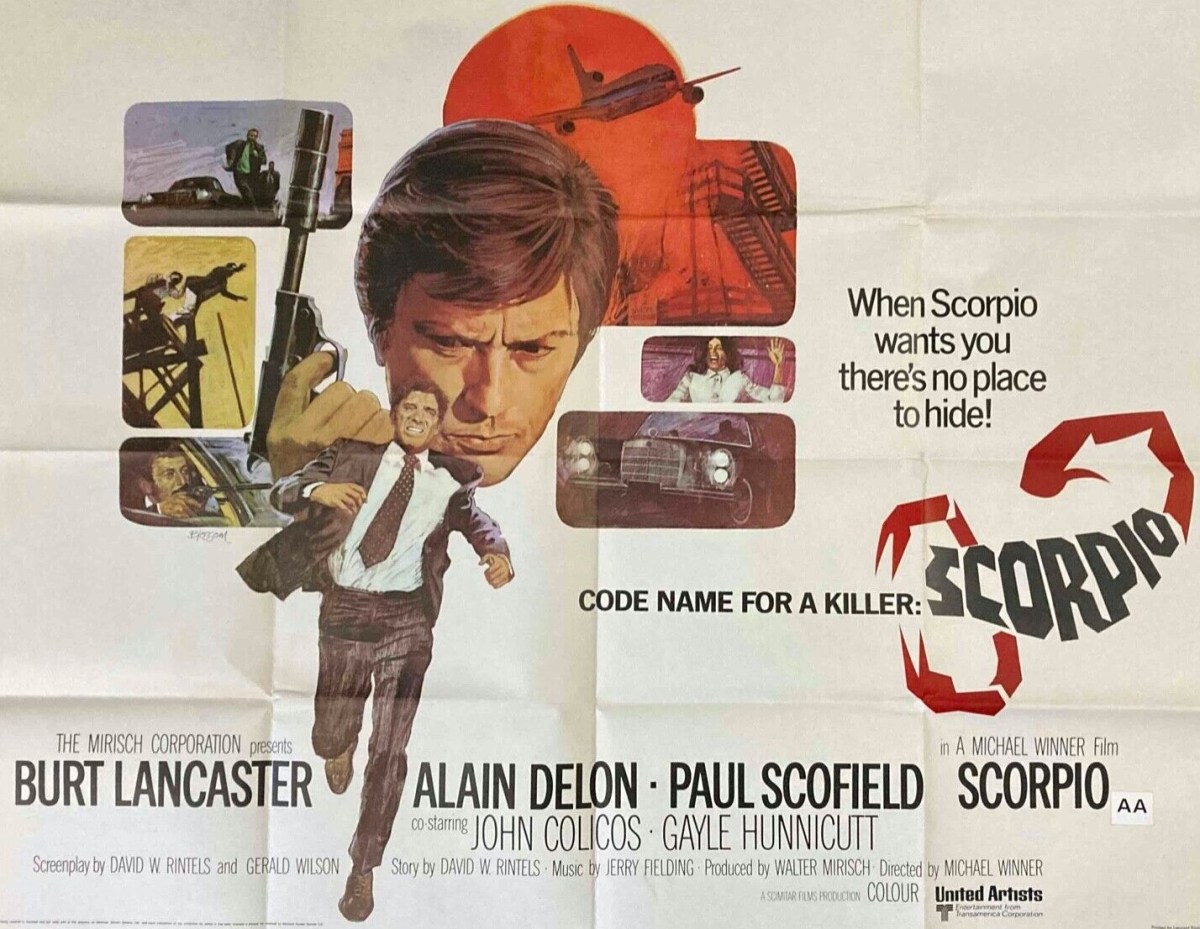
What did take Hollywood’s breath away was how often under-performers – flops even – at the U.S. ticket wickets did gangbusters elsewhere. The biggest winner was the aptly-named Michael Winner, director of westerns Lawman (1971) and Chato’s Land (1972), hitman thriller The Mechanic (1972) and spy drama Scorpio (1973). Total American rentals a shade over $7 million, total foreign rentals three times as much a colossal $21.8 million.
There was hardly a greater example of the disparity between American audience tastes and the rest of the world. And it made Hollywood studios more adventurous when it came to choosing subject matter, and in backing stars, aware that they could make their investment back – and more – from foreign markets.
It was probably astonishing to any studio executive that Burt Lancaster – for over two decades a high-flying marquee name from action-oriented fare like The Crimson Pirate (1952) and controversial drama From Here to Eternity (1953) to his Oscar-winning turn as Elmer Gantry (1960) and hardnosed western The Professionals (1966) – had lost his domestic audience especially after he had fronted up disaster movie smash Airport (1970).
But Lancaster could only scrape up $1.35 million at home for Scorpio, $2.1 million for Lawman and $2.8 million for another western Valdez Is Coming. Scorpio was the biggest hit abroad, with a massive $7 million, over five times domestic, while Lawman shot up $3.2 million (50 per cent above domestic) and Valdez Is Coming $2.65 million.
Charles Bronson was another beneficiary of foreign largesse. The Mechanic, too, targeted $7 million abroad, nearly three times the domestic tally of $2.6 million. Chato’s Land (1972) only delivered $1.27 million in the U.S. but $4.6 million abroad.
Westerns were a mixed bag. Oliver Reed-Candice Bergen-Gene Hackman number The Hunting Party (1971) was an almighty flop at home, just $800,000 in the kitty, but rallied somewhat abroad, not enough to turn profit but at least add a sheen of respectability, with $2.4 million elsewhere, three times domestic. The Magnificent Seven Ride! (1972), proof the sequels had outstayed their welcome, brought in just $750,000 domestically but again did triple the business abroad with $2.15 million and given the paltry budget enough to sit in the black.
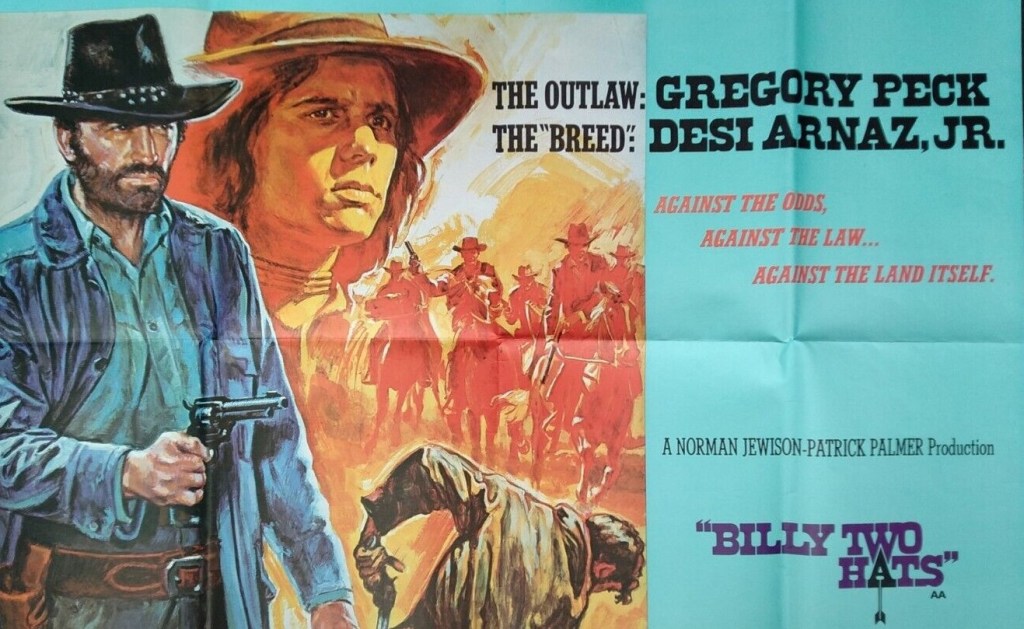
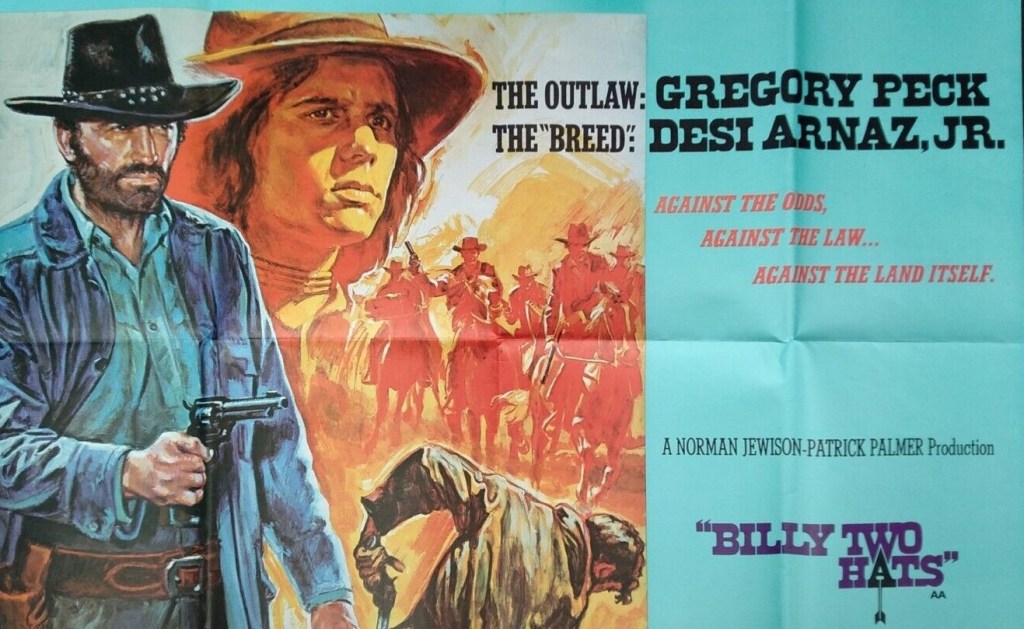
Revisionist effort Billy Two Hats (1974) starring Gregory Peck added $900,000 abroad to a miserable $440,000 at home – foreign revenues not enough to save it from flop. But foreign couldn’t save the second remake of the Gunfight at the OK Corral legend, Doc (1971) with Stacy Keach and Faye Dunaway which moseyed along to $1.35 million abroad to add to $1.8 million domestic. And another western sequel Support Your Local Gunfighter (1971) notched up just $970,000 abroad compared to $2.1 million. Modern western The Honkers (1972) with James Coburn managed just $550,000 abroad and $1 million at home.
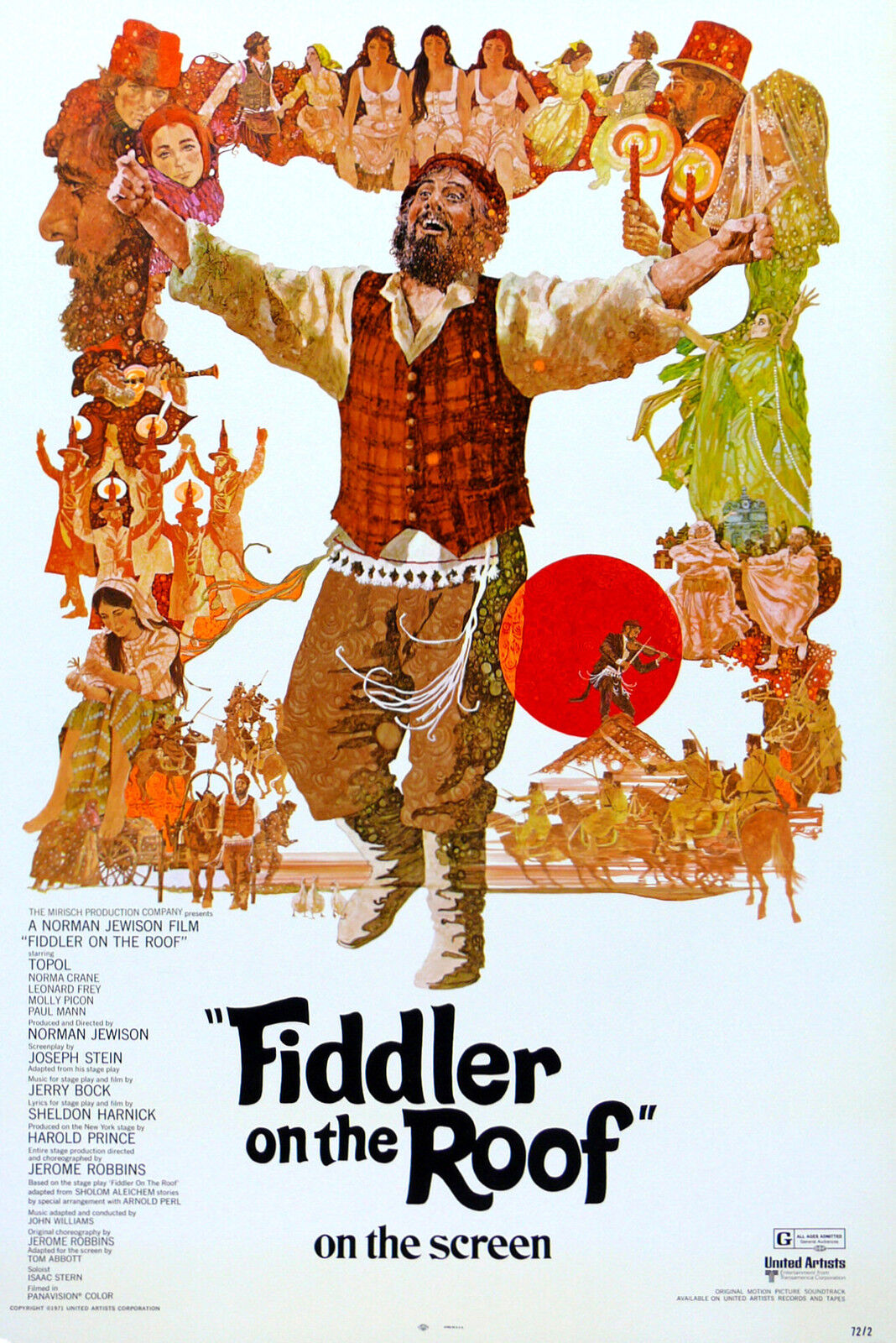
It didn’t really matter that Michael Caine comedy thriller Pulp (1972) did better abroad, figures everywhere nothing to write home about, $600,000 in total, five-sixths of that abroad. Fiddler on the Roof (1970), for other reasons, underwhelmed but nobody was going to complain too much when foreign audiences stuck $10 million in till, about a quarter of domestic.
There were some conundrums in the foreign-domestic share-out. Typically, American comedies didn’t travel. But Billy Wilder’s Avanti! (1972) starring Jack Lemmon, perhaps because of the Italian setting, did better abroad – $2.5 million to $1.6 million. Glenda Jackson British-made menage a trois Sunday, Bloody Sunday (1970) not surprisingly did better abroad, but only just, $1.8 million to $1.77 million.
Sidney Poitier in second sequel The Organization (1971) tapped into $2.9 million abroad and $2.45 million at home but generally too-specifically-American features struggled overseas, The Hospital (1971) snaring only $1.9 million compared to $9 million, White Lightning (1973) snagging $1.8 million compared to $6.9 million, Fuzz (1972) holstering $1.7 million against $3.1 million.
Giving customers value for money – the impetus behind the original double bill that was standard fare at local neighborhood cinemas for decades – was by the 1970s the least of the worries of exhibitors, their audiences slashed by the onslaught of television, the future in serious jeopardy owning to the financially precarious Hollywood studios. As audiences grew more picky, exhibitors, even with fewer films to hand, went back, in certain instances, to the double bill, hoping that the coupling of two relatively unattractive pictures would succeed where one on its own would not. Usually, for films playing the cinema circuits, it was left to the studios to devise the double bill programs.
So where Love Story (1970), The Godfather (1972), The Sting (1973), Jaws (1975) and Star Wars (1977) need not worry about being teamed with an unlikely partner, there were plenty movies who would have no choice in the matter. I should point that a) this survey only refers to Britain since I have in my possession books covering all weekly releases on the main circuits and b) it’s not touching upon those barmy programs dreamed up by some clever-dick independent cinema manager.
So I’m only looking at those interesting/odd double-A double bills which might leave you wondering why one or even both of the titles was considered so lacking in appeal that it didn’t merit single-billing. Many of these were tough sells even as a double bill. You could start with The Mind of Mr Soames (1970) featuring Terence Stamp awakening from a lifelong coma coupled with William Wyler’s last, disastrous, effort The Liberation of L.B. Jones. (1970). You got to wonder who would be queueing up for the incestuously-hinting Goodbye Gemini (1970) starring Judy Geeson and Mumsy, Nanny, Sonny and Girly (1970) starring nobody and featuring hippies forced into role-playing. Drug drama The People Next Door (1970) headlined by Eli Wallach (hardly a big draw on his own) was linked with C.C. and Company (1970), the movie that tried to make a star out of footballer Joe Namath and nearly wrecked the career of Ann-Margret.
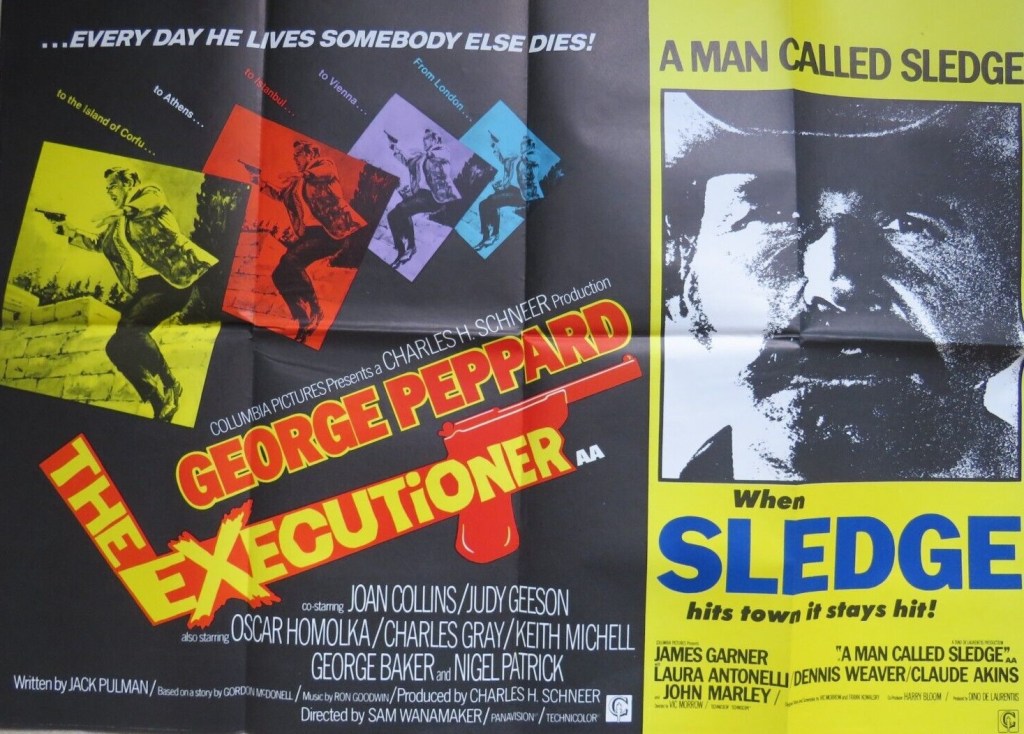
On the other hand some were tailor-made value-for-money packages featuring genuine star wattage. George Peppard in hitman thriller The Executioner (1970) went head to head with James Garner western A Man Called Sledge (1970). Sidney Poitier in They Call Me Mister Tibbs (1970), sequel to the Oscar-winning In the Heat of the Night (1967), went out with Rock Hudson-Sylva Koscina World War Two number Hornets’ Nest (1970). Top British star Hayley Mills fending off Oliver Reed in Take A Girl Like You (1970) hit the sack with Getting Straight (1970) starring Elliott Gould and Candice Bergen. Underrated Hitchcockian thriller Fragment of Fear (1970) with David Hemmings and then-wife Gayle Hunnicutt touched base with romantic drama Loving (1970) with George Segal and Eva Marie Saint. Charles Bronson-Tony Curtis adventure You Can’t Win ‘Em All (1970) stuck it to Gregory Peck and Tuesday Weld in I Walk the Line (1970).
David Janssen in revenge western Macho Callahan was supported by Charles Bronson French thriller Rider on the Rain (1970). Double bill of the decade has to be Raquel Welch as Myra Breckenridge (1970) and the even camper Beyond the Valley of the Dolls (1970), Russ Meyer’s mainstream paean to T&A. Mia Farrow couldn’t escape Blind Terror (1971) as Dyan Cannon headed up a platoon of Doctors’ Wives (1971). Jack Nicholson’s Oscar-nominated turn in Five Easy Pieces (1971) rode shotgun on Samantha Eggar in The Lady in the Car with the Glasses and the Gun (1971). Western Doc (1971) got the drop on World War One aerial spectacular The Red Baron (1971).
The double bill also opened doors for movies that otherwise wouldn’t stand a chance of reaching a wider audience. French crime flick The Samourai (1967) starring Alain and Nathalie Delon supported bloody western A Town Called Bastard (1970) with Robert Shaw and Stella Stevens. Charles Bronson’s Italian-made Violent City (1970) propped up Elliott Gould sex drama I Love My Wife (1970). Milo O’Shea as a sex-mad Irishman Paddy (1970) sought the shade beneath Last Summer (1970). John Mackenzie’s debut One Brief Summer (1971) clicked with demonic The Mephisto Waltz (1971) starring Alan Alda and Jacqueline Bisset. Ray Milland courtroom drama Hostile Witness (1969) found shelter with Lee Van Cleef western Barquero (1970). Walter Matthau-Ingrid Bergman-Goldie Hawn comedy Cactus Flower (1969) took pity on Machine Gun McCain (1969).
You would have thought the horror double bill was sacrosanct. And so it was in large part. Check Twins of Evil (1971)/Hands of the Ripper (1971), Scars of Dracula (1970)/The Horror of Frankenstein (1970), Count Yorga, Vampire (1970)/Cry of the Banshee (1970), and Dr Jekyll and Sister Hyde (1971)/Blood from the Mummy’s Tomb (1971). But strange developments were afoot and someone decided that if the vampire happened to be lesbian it was better for the movie to be paired with a biker picture. Hence, Countess Dracula (1970)/Hell’s Belles (1969) and Lust for a Vampire (1971)/The Born Losers (1967).
SOURCES: Allen Eyles, ABC: The First Name in Entertainment (CTA, 1993) p124-125; Allen Eyles, Odeon Cinemas 2 (CTA, 2005) p214-215.
Ancillary – the famed “long tail” – has all but disappeared. Used to be movie studios could count on up to 90 per cent of a picture’s overall earnings coming after it had completed its initial run in the cinemas. Until streaming cut off ancillary at the pass, that long tail consisted of an extraordinary number of revenue streams. Once a film was out of the cinemas, and assuming it wasn’t going to return in a steady reissue pattern like the James Bond or Disney movies or blockbusters such as Star Wars, its ancillary journey would begin with VHS/DVD (of which there were several sub-streams), then television (again, sub-divided into network, cable, syndication, and specialist operations like Turner) and then you could still be talking remake. Plus, you could bunch up an entire library of old pictures and sell them on again. The beauty of the system was that when movies hit whatever ancillary segment, there was rarely any such thing as an outright buy. Movies were leased. That meant every three or four years they could be sold all over again.
The forerunner of ancillary was network television. Television had begun mopping up old movies by the bucketload in the 1950s, and in such quantities that the attraction of old movies on the small screen prevented audiences seeking out new movies on the big screen and in part accounted for the steady decline of the moviegoing habit. By the 1960s, networks were beginning to fork out big bucks for individual pictures – Cleopatra (1963) going for several million.
By the 1970s, the income from a television showing of a movie could exceed what it had made at the cinema. For United Artists, in the period 1970-1972 (this covers the dates films were made not when released), television sales, calculated on an overall annual basis, brought in at least an extra 24 per cent on top of revenue from cinema release. That figure came from 1970, but in 1971 that shot up to 38 per cent and the following year dipped slightly to 37 per cent. And that was just for the United States. Although other countries tended to pay a lot less for movies, they still paid something and in total might bring in half as much again.
The ancillary gold mine had started to pay off big time. In the 1960s, the amounts networks ponied up for television rights depended very much on initial box office, the assumption being there was some obvious correlation between the numbers who would go to see a particular movie at the cinema and the size of the subsequent television audience. And while it was true the biggest cinematic blockbusters tended to attract the biggest television audiences, it was soon equally clear that television audiences were as segmented as much as cinema ones and therefore the amounts paid by networks for individual movies began to show sharp divergence.
There was no doubting that James Bond ruled the television roost as far as UA was concerned in 1970-1972. Diamonds Are Forever and Live and Let Die, regardless of U.S. box office – the former earning $20 million in rentals (the studio’s share of the box office), the latter $16.2 million – were each sold to American television for the same, princely, sum of $5.2 million, by far and away the most any movie pulled in.
Not far behind was Fiddler on the Roof which netted $5.12 million. But here’s the kicker – the musical earned more than both Bonds put together, a colossal $37 million in rentals. but in terms of attracting a television audience was considered a weaker proposition than both. But musicals were believed to be somehting of a golden goose for television, otherwise how to acocunt for Tom Sawyer which cost networks $2.76 million. Comparatively speaking, that made no logical sense because it had only taken in $5 million in rentals. But family-friendly fare was so rare it had networks duking it out for the rights. A third musical Man of La Mancha went to television for $1.7 million having racked up just$3.7 million at the cinema.
Conversely, networks weren’t remotely interested in films with a sex theme, no matter how well they had done at the box office. Last Tango in Paris had harnessed a colossal $16 million in rentals but was worth only $120,000 (yes, that’s right, $120,000) to any television station willing to show it (heavily cut of course). It didn’t even matter if you took a comedic approach to sex. Woody Allen’s Everything You Wanted To Know About Sex hauled in $8.2 million at the cinema but only $130,000 from television. But maybe Woody Allen was the problem. Bananas, with a highly-profitable $3.3 million at the box office, could only manage less than half a million from television, the comedian perhaps considered an acquired taste which not enough of the public had acquired.
But television, rather than being viewed as the perennial enemy, was often seen as salvation for under-performing movies, maybe not recouping the entire negative costs but going some way to stem the flow of red ink. And perhaps the more interesting statistics relate to those pictures which earned more from television than they did in their entire U.S. cinema run.
Michael Winner espionage thriller Scorpio headlined by Burt Lancaster and Alain Delon notched up $1.35 million at the cinema but $1.56 million from television. Similarly, Robert Altman’s critically-acclaimed The Long Goodbye with Elliott Gould as the iconic private eye picked up a mere $1 million at the U.S. cinema compared to $1.51 million from a network. Another private eye caper, Hickey and Boggs, teaming Robert Culp (who also directed) and Bill Cosby from a Walter Hill script, had snapped up just $900,000 from cinemas but $1.2 million from television. Cops and Robbers hoisted $1.32 million in small screen larceny as against $1.2 million elsewhere.
Westerns The Magnificent Seven Ride, the fourth in the series, and Ted Kotcheff’s Billy Two Hats starring Gregory Peck and with a script from Scotsman Alan Sharp, both did better financially from television than cinema. The former’s small screen take was $1.16 million compared to $750,000 from the cinema, the latter $1.15 million compared to $440,000. But for The Hunting Party with a top-line cast of Gene Hackman, Candice Bergen and Oliver Reed it went the other way, the $460,000 from television going hardly any way to offset the paltry $800,000 from cinemas.
It’s possible that star power, and weighted towards veterans, counted more in television. As well as Scorpio, Lancaster westerns Valdez Is Coming and Lawman tucked away $1.47 million and $1.5 million, respectively, from their television outings.
SOURCE: “Results of Distribution of Released Pictures (by production year),” MCHC 82, Box 1, Folder 8, The United Artists Archive, University of Wisconsin.
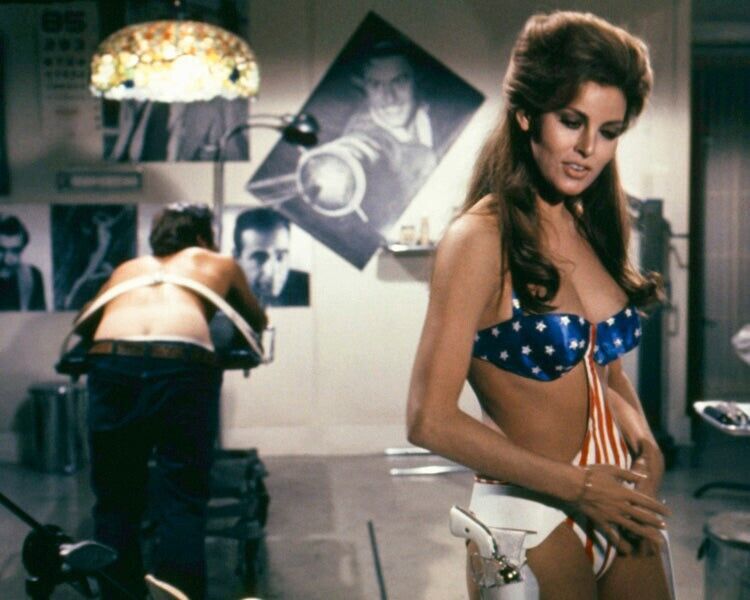
In 2012, Raquel Welch was accorded a ten-film tribute at the prestigious Film Society of the Lincoln Center for the Performing Arts in New York and turned up in person to be interviewed on stage prior to various screenings. One of these was Myra Breckenridge (1970). Though interviewer Simon Doonan kicked off proceedings by mistaking her for Ann-Margret (yep). Graceful as our star was, she didn’t storm off the stage.
She admitted she wasn’t first choice for the picture. “I didn’t get a call,” she explained. “I had heard about the movie. I had read the book. The book was absolutely hysterical, so funny, and I thought it was very innovative because it was the first time I had seen somebody like Gore Vidal, who was really a genius, deal with the duality of the nature of both the male and the female. I never saw that before.
Is that a gun or a are you just pleased to see me?
“I was interested in how they were going to do this movie and then I heard through the trade that Anne Bancroft (after the success of The Graduate, 1969) had turned it down. So I thought, hmmm, I wonder what they’re going for. A little bird told me to call Dick Zanuck (head of 20th Century Fox) so I called Dick, who I was in contract with, and asked what kind of actors they were looking for in this role. I was thinking if a guy was going to change his sex and wanted to be like a movie star kind of girl, don’t you think he might want to look like me? And he said, oh my god, that’s a thought, let me talk to David – that was David Brown (later, producer of Jaws, 1975) and I’m sure Helen Gurley Brown (his wife and editor-in-chief of Cosmopolitan) got in on it too. And then I did get the call and they asked me to come in and talk to them and they gave me the role.
“I had not seen the script, it’s true. As much as I loved doing Myra, I was kind of disappointed in the outcome of the movie because the narrative never did really string together. It was very disjointed and it didn’t really tell the story of Myron the film critic who was enamored of all the very very strong swashbuckling women of the golden age of film from Joan Crawford to Bette Davis and Myrna Loy.
“He wanted really to be one of those superwomen and I think that’s where the superwomen thing started because it was women then who used to go to the movies. They used to bring the guys to the movies. That was the way it went then more than it does now…The dialog was both male and female and I felt like now I’m playing the girl’s part. Rex Reed is playing Myron and there’s really hardly any relationship between the two. They’re not one person so there’s no idea of the duality and nature. One minute she likes girls and the next minute she likes studs and the older men are just to use and abuse.”
Asked about how she developed her character, Raquel replied: “The real thing – I know this is going to sound very shallow – but Theodora Van Runkle (who had swept to national fame by starting a fashion trend with her outfits for Bonnie and Clyde, 1967) did these beautiful period costumes which did emulate all of the great film stars…I felt these clothes kind of evoked this attitude.
“I did want to meet Mae (West). I did go out and research her and find out all about her and it turned out she had never made a color movie before. I asked for an audience. (In her apartment) I noticed all her furniture was white and also noticed all these 25-watt pink bulbs (to keep the room dim).”
Raquel had observed of movie stars, “There’s a screen persona and a real side. Mae didn’t have a real side. She was wearing a long peignoir and lots of eyelashes. This was noon. She didn’t bring the chimps out (she was rumored to have a menagerie of them…and young men, and neither were in evidence).”
(On set) “The other thing that got to me a little bit was that Mae never worked before 5pm. Also she never really moved by herself. (The limousine that had driven her to the studio) also brought her on to the set. I kissed her hand and one false fingernail fell to the floor and then I thought I’m getting a vibe, I think she’s a man. She refused to appear in the same frame as me. At 77 (Mae’s age) all bets are off and you’re not going to be able to doll it up that much.”
While stars being able to veto a director and perhaps refuse to work with certain other stars was still a perk for the highest-paid movie actors, Welch discovered that Mae West had a very distinctive unheard-of perk. She had costume approval. Van Runkle had designed a Garbo-esque black dress that Raquel was looking forward to wearing. But when it came time for that particular scene she discovered it had been “confiscated….nobody got to wear non-color (West was always dressed in white) except Mae.”
“Very early on (I realized) this isn’t Gore’s book. Nobody’s going to undertsand it…they hired Michael Sarne who’s only claim to fame was Joanna (1969), a visual montage kind of thing and that’s what he did to this movie. The fact that it had dialog was secondary. He used to carry round this little rectangular box and he used to say, I’ve got this little box for you, Raquel.
“It was sad fun, I didn’t want to make a movie that didn’t make any sense. I thought we were going to make something that was revolutonary. I did think it was kind of a landmark that said it’s very likely that world culture will change from this point on.”
You can catch this interview and another one discussing The Three Musketeers on Youtube.
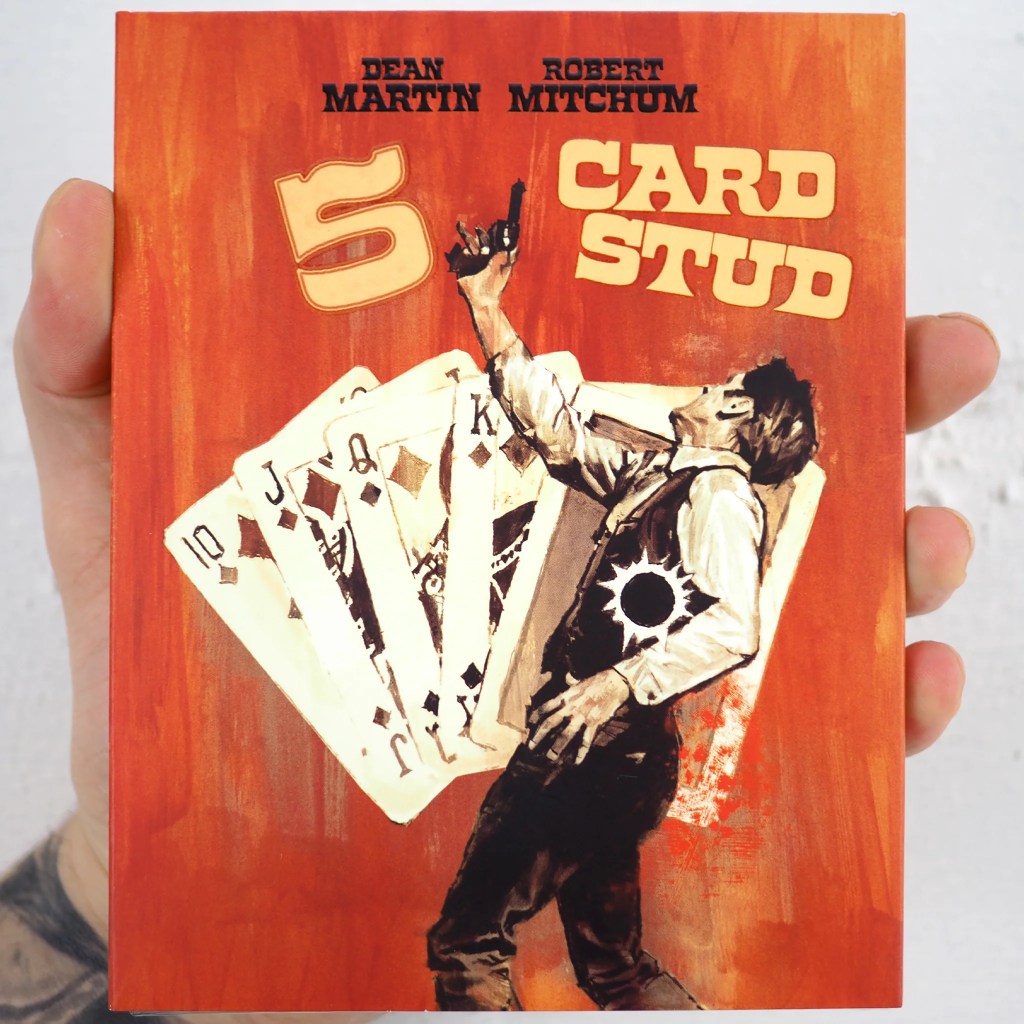
Every now and then in the writing of my blog an event occurs which comes as a great surprise. Last year, I was contacted from Los Angeles by Claudia Pretelin, a producer working for DVD specialist Vinegar Syndrome. They were planning a 4K restoration of Five Card Stud (1968) and, alighting on my review of the movie, Claudia asked if I would do the audio commentary, especially as I had detected the strong feminist undercurrent that runs through the western.
Five years ago, McFarland had published my book The Gunslingers of ’69: The Westerns’ Greatest Year. But if I had been writing about 1968, Five Card Stud would be one of the standouts. For whatever reason, it’s so under-rated it’s almost been completely forgotten, overshadowed by the three other westerns Henry Hathaway made either side of it, most importantly True Grit (1969) and The Sons of Katie Elder (1965) . Overshadowed because it wasn’t made by John Ford or Howard Hawks. Together with Sergio Leone, Sam Peckinpah and Clint Eastwood they were the directors most admired by critics. Overshadowed because it didn’t star John Wayne or James Stewart, both considered essential elements to any great western. Overshadowed because nobody gave a damn about Dean Martin (Rough Night in Jericho, 1967) as a serious actor.
But from the outset, this is distinctive with recurrent motifs and a visual symmetry – overhead camera, water, strangulation, the card table – that seems to have gone unnoticed, unlike The Searchers. Given the testosterone on display – Robert Mitchum (Secret Ceremony, 1969) in addition to Dean Martin – this is unusually an extremely feminist western. The three female leads are far from docile and screenwriter Marguerite Roberts has changed the source book, Glory Gulch by Ray Gaulden, to exploit those elements.
Entrepreneur Lily (Inger Stevens) runs an upmarket barbershop – generally a male monopoly – with an interesting sideline, but when it comes to romance she’s in charge, choosing – and dumping – the men. Nora (Katherine Justice) is a rancher’s daughter so smart and effective that her father has already decided that he’s going to leave her a half-share in his business rather than, as would be the norm, leaving it all to his son Nick (Roddy McDowell). Mama Malone (Ruth Springford) owns the eponymous saloon and takes no sass from anybody.
Van (Dean Martin) likes to think he has the measure of women, when in fact they have the measure of him. The story avoids the obvious lure of a love triangle, of jealous women competing for Van’s affections. Both the young Nora and the more mature Lily are pretty well grounded and judge their men by the standard of their kissing – that’s equality for you.
The movie was one of the fastest ever made, just five months from the start of shooting to release – that’s efficiency for you. And for many critics that was how they regarded director Henry Hathaway. He wasn’t considered a stylist, but a studio workhorse, apt to take what was offered, work in too many genres. But this is one of his most stylish films. In some ways it harks back to film noir. The story is a mystery. And his extensive use of overhead camera would be considered innovative had it been made now.
This is in fact about a serial killer, a treatise on law and order, almost acting as a conduit between the decade’s previous westerns when the good guys and the bad guys are easily distinguished to the end of the decade when such distinctions were muddied. Here, we don’t know who the bad guy is. He’s not a hero saving a town or enforcing law and order. Not a detective either, trying to nail down a killer. He’s only trying to save his own skin. The whodunit is really a MacGuffin, an opportunity to examine the hypocrisies of the West.
The Sons of Katie Elder, Nevada Smith (1966) and Five Card Stud are all about revenge, justified in you like in the first two. Play this another way and the vengeful preacher Rudd (Robert Mitchum) would be the hero, vindicated as much as characters in Hang ‘Em High (1968), Once Upon a Time in the West (1969) or True Grit.
Producer Hal B. Wallis (True Grit) bought Ray Gaulden’s western Glory Gulch in May 1967, three months after publication by Berkeley Medallion as a paperback original. (Reprinted a year later, it was re-titled Five Card Stud). It came cheap. Nobody else was bidding. Robert Redford (Downhill Racer, 1969) turned down the role of Rudd – he thought the character too obvious and didn’t like the way the narrative developed – so Robert Mitchum was actually second choice.
Filming was due to start in October 1967 but was delayed till February 1968. It was shot in Durango – a popular locale also utilized for Guns for San Sebastian (1968), Shalako (1968) and The Scalphunters (1968) – and Churabasco Studios in Mexico City. There were 22 actors and 52 crew. The main location was 8,000ft up on the Sierra Madre mountains. The actors were billeted in a motel, but Mitchum, demanding peace and quiet, had the end room so got more of the cold and required a portable oxygen tank. Instead of privacy he was frozen. The boilers didn’t work and allocated a single blanket he ended up piling all his clothes on the bed. Roddy McDowell wasn’t hired until after shooting began and he modelled his somewhat hippie sideburns after George Harrison. Mitchum was nearly crushed to death by a falling 18th high camera pedestal. While the two stars didn’t particularly hit it off there was no animosity either.
Some of those involved scarcely needed to work. Dean Martin was one of the richest men in the business. At a time when the very top stars took home $750,000 a picture, say $1.5 million if they made two movies a year, Martin took home closer to $5 million a year when you totted up fees from his television show, movies, records and performing. McDowell was the co-owner of a thriving disco franchise. Hathaway had just sold his stake in an oil business for $18 million.
Marguerite Roberts had been one of the top-earning screenwriters in the Hollywood
Golden Age. Starting out in 1933, her credits included Honky Tonk (1941) with Clark Gable and Lana Turner, The Sea of Grass (1947) starring Spencer Tracy and Katharine Hepburn and MGM’s big-budget blockbuster Ivanhoe (1951) teaming Robert Taylor and Elizabeth Taylor. Around the time of Five Card Stud she had two other projects on studio slates, Hero Suit and Flight and Pursuit, though neither was made and it was perhaps ironic that her next assignment concerned a lawman who took the same no-holds-barred approach to the criminal fraternity, namely True Grit, as the killer in this picture.
Filming began on February 7 and finished on April 14. It opened on July 12. That was a phenomenal turnaround for the period. A Time for a Killing/The Long Ride Home (1967), also starring Inger Stevens, took 16 months to reach the screen. In 1967 there were 125 films in studio backlogs – movies completed but no release date set as yet as yet, studios in no hurry, and often first run cinemas in the major cities clogged up by roadshows or long-running hits.
The western from mid-1960s had become the default for many stars. Where earlier in the decade stars might mix western and war with comedy and drama now for many top names for a period of three, four or five years they appeared either exclusively or almost exclusively in westerns. From 1965 to 1968 except for Matt Helm and one comedy Dean Martin had tackled five westerns. In the same period for James Stewart four out of five were westerns. For Mitchum it was four straight westerns from 1966 to 1968. In two years starting in 1967, four out of five Inger Stevens pictures were westerns. In three years, Glenn Ford made five straight westerns and after Battle of the Bulge (1965) Henry Fonda made four straight westerns. It was the same for directors: between 1965 and 1971 Andrew V. McLaglen made nothing but, and Burt Kennedy, in one year less, seven out of eight.
DVD with 4K restoration and audio commentary by yours truly available to pre-order and comes out in a few days.
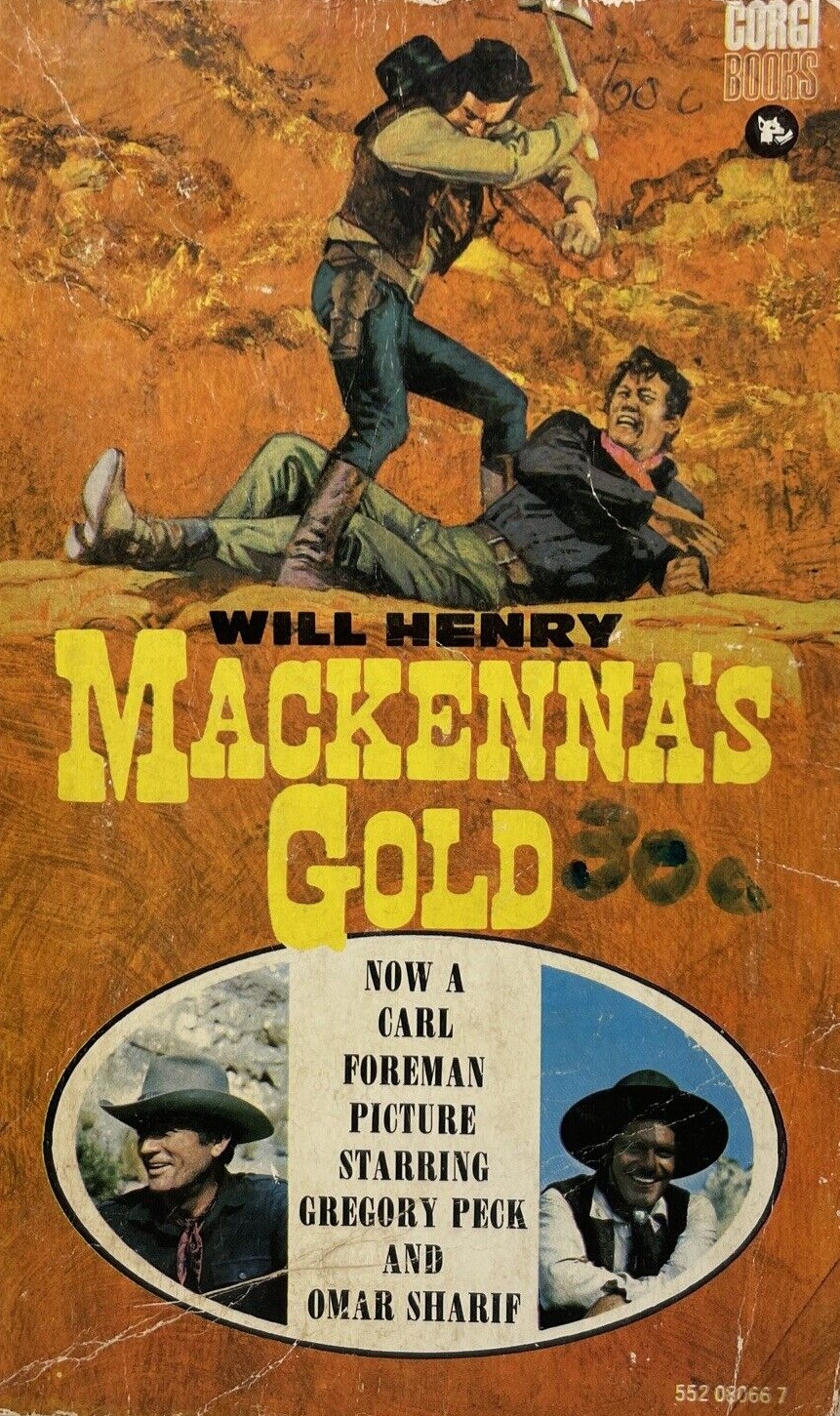
Will Henry’s 1964 source novel was, by today’s standards, a slim volume. The principal idea of Mackenna being given a map by a dying Indian comes from the book, as does the capture of the white woman (named Francie in the novel), and the surprisingly erotic description of Hesh-Ke’s attempted seduction of Mackenna in the pool, the Apache mysticism, and, equally surprisingly, the earthquake denouement.
Some white men do join the party, but they are of rougher stock, the “Good Men” of Hadleyburg entirely producer Carl Foreman’s invention. Foreman turned Mackenna into a lawman rather than just a prospector, made the map more tangible (in the book it was drawn in the sand), gave Mackenna a past with Hesh-Ke and with the outlaw Colorado (named Pelon in the book), and, just as Sergio Leone did with Henry Fonda in Once Upon a Time in the West, realized that a handsome attractive villain was far more interesting than the “jug-eared, ugly man” described in Henry’s book.
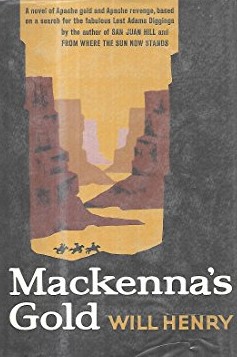
First edition cover.
Foreman made Tibbs a sergeant and added 20 years to the raw-boned youngster of the book. But in the original, Hesh-Ke was killed, accidentally, just after the pool incident, and it was another of the outlaws, Hachita, who killed Colorado so that the climactic fight on the ledge was between the axe-wielding Hachita and the unarmed Mackenna rather than between Mackenna and Colorado, but Henry had the woman taken hostage kill the Indian.
The various shoot-outs and chases are primarily a Foreman invention. He gives Mackenna more depth, and the vices of gambling and alcohol. Most important of all, it was Foreman who added the visual grandeur. There is no Shaking Rock in the source material, and no waiting for sunrise or for a shadow to point the way to the entrance to the canyon.
A writer-producer was the worst kind of hyphenate as far as a director was concerned in that, as suggested previously, the producer might be more apt to protect his original vision and dialog than adapt the screenplay, which is always only ever intended as a blueprint, to other ideas as the movie went into production.
The opening of the picture is pure Foreman, on a par with the introductory section of The Guns of Navarone, and the extensive use of narration ran counter to a director who felt the camera should tell the story. The greed aspect is spelled out well enough in the original novel, and comparisons with the classic examination of how gold turns men inside out was portrayed best as far as most people were concerned in The Treasure of the Sierra Madre (1948) so quite why Foreman felt obliged to hammer the point home so obviously in Mackenna’s Gold is anybody’s guess, except that the producer saw himself as a man with a message, the anti-war themes of The Guns of Navarone (1961) and The Victors (1964) having eliciting critical approval. You get the impression the original novel didn’t require as much tampering as this to be turned into a more than adequate picture.
Will Henry was a pseudonym, one of two he used for writing westerns, the other being Clay Fisher. His real name was Henry Wilson Allen and he began in the movies, joining MGM in 1937 as a screenwriter for cartoon shorts. He also wrote screenplays for cartoon shorts under the pen names Heck Allen and Henry Allen. Many of these were Tex Avery cartoons written between 1944 and 1955 which were considered some of the funniest ever made. He also worked on Woody Woodpecker and other cartoon characters. When he started writing novels in the 1950s he did so under a pseudonym to avoid attracting unwanted attention from his studio employers. He was a five-time winner of The Spur Award including for From Where the Sun NowStands (1960) – which also won The Saddleman Award – and The Gates of the Mountains (1963).
Westerns made from his novels were Santa Fe Passage (1955) starring John Payne, The Tall Men (1955) directed by Raoul Walsh and starring Clark Gable and Jane Russell, Pillars of the Sky (1956) starring Jeff Chandler, and Yellowstone Kelly (1959) starring Clint Walker. At the same time as Mackenna’s Gold was sold, his 1960 book Journey to Shiloh was being set up under the title Fields of Honor to be directed by veteran Mervyn LeRoy and when this fell through was made into a film under the original title in 1969 with newcomer James Caan while Who Rides with Wyatt would be released as Young Billy Young starring Robert Mitchum in fall 1969.
I should mention the George Lucas connection right away because, for some, that is the movie’s main contemporary connection.
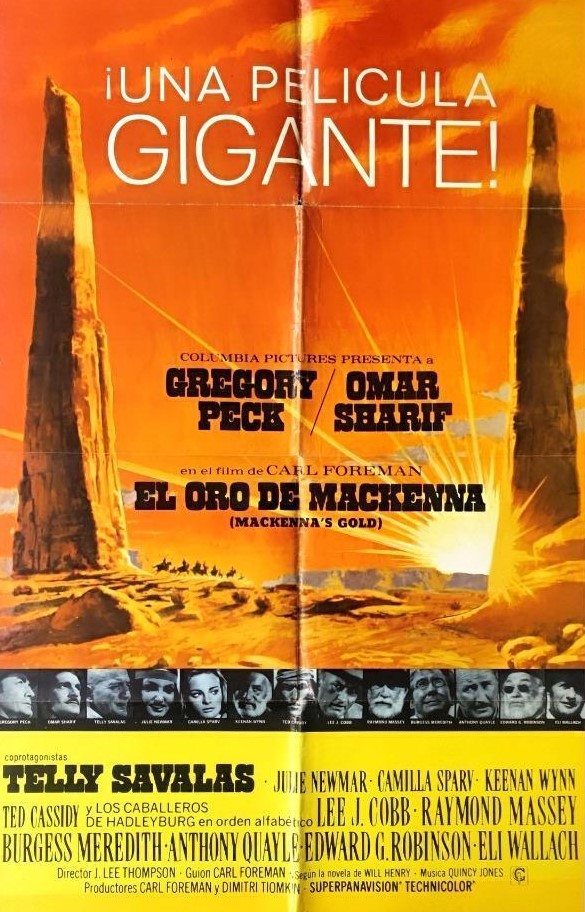
Mackenna’s Gold was originally intended as a three-hour movie[i] for roadshow release to be shot in early 1966 for Columbia Pictures by writer-producer Carl Foreman (Guns of Navarone, 1961) who would also be in the director’s chair.[ii] But outside of How the West Was Won (1962) westerns had foundered in roadshow. The Alamo (1960), John Ford’s Cheyenne Autumn (1964) and John Sturges The Hallelujah Trail (1965) were surprising roadshow flops. Foreman persuaded Columbia to increase the budget to $5 million – and then beyond – and film the movie in Cinerama, (over 25 percent of the budget was allocated to Cinerama to license the name and use the equipment – $1.35 million in total of initial negative costs[iii]).
In January 1967 Columbia launched the marketing campaign with full page advertisements in the trade papers promoting the fact that the movie would be filmed on location in the USA in Cinerama and that it would bring together the “creators of The Guns of Navarone,” meaning, at this point, Foreman and director J. Lee Thompson. The advertisement also highlighted author Will Henry, on whose novel the film was based (as the “author of San Juan Hill and From Where the Sun Now Stands”) and plugged the book as “a novel of Apache gold and Apache revenge based on the search for the fabulous Lost Adams Diggings.” By the following year, Foreman’s star was in the ascendant after the Parisian revival of High Noon[iv] and Columbia had another two major roadshows planned for the 1968-1969 season: Barbra Streisand’s movie debut in William Wyler’s Funny Girl also starring Omar Sharif and Carol Reed’s Oliver![v]
By this time, Columbia had reshaped its marketing effort to provide the specialist support required for promoting roadshows. In early 1967, it had poached sales guru Leo Greenfield from Buena Vista with the express aim of setting up an effective unit to market hard-ticket product – “first assignment Mackenna’s Gold, Oliver! and Funny Girl”[vi] – to the record number of Cinerama theaters[vii] and those desperate to accommodate roadshow. By the end of 1968, both Cinerama and Columbia had reported record revenues and profits, the former turning a $290,000 loss into a $679,000 profit,[viii] the latter on an unprecedented streak of success with a gross profit of $9.3 million profit on a gross income of $239 million.[ix] Columbia soon added another roadshow prospect to its slate, Sydney Pollack’s World War Two drama Castle Keep starring Burt Lancaster, and was so confident about the two non-musicals, for example, that it expected the western and the war picture to run consecutively from late spring 1969 well into the following year at Loews Hollywood in Los Angeles.[x]Funny Girl hit $550,000 in advance sales – $80,000 was the usual figure.[xi]Mackennas’s Gold’s was scheduled to premiere in Phoenix, Arizona, on February 15, 1969, with the roadshow launch set for the DeMille theater in New York five days later.
Within the next month, however, the world premiere was called off, work began on editing down the near-three-hour running time, and plans, two years in the making, for an ambitious roadshow release were quietly dropped. Public reaction to The Stalking Moon – also starring Gregory Peck – was one reason. Two other Cinerama movies, Custer of the West (1967) and Krakatoa – East of Java (1968) had also flopped. If Mackenna’s Gold was to be marketed as a drama in a western setting rather than a shoot-out in the tradition of 100 Rifles, then Columbia looked worryingly at Isadora, boasting a 177-minutes running time, whose roadshow run in Los Angeles was swiftly truncated, and the movie butchered in a bid to find an audience.[xii]
The studio took a different tack. The world premiere shifted to Munich, West Germany, in March[xiii] with most of the rest of the European capitals holding gala premieres (and running it as roadshow or at least 70mm) before the picture made its U.S. debut in Phoenix on May 10. But the picture unveiled in Phoenix was a ghost of the original. The running time technically came in at 128 minutes, but, in effect, was under two hours long, the introductory narration lasting eight minutes and the end credits accounting for further time. However, what was oddest of all was the 18-month gap between completion and world premiere. Filming had begun on May 16, 1967 and wrapped on September 29. Columbia had shelved one of its biggest budgeted movies for nearly 15 months.
The movie had a troubled history. For a start, Foreman didn’t own the rights to the Will Henry source novel. Dmitri Tiomkin, after a debilitating eye condition restricting his composing career, had in 1964 purchased the rights. Tiomkin agreed to sell the rights to Foreman in April 1965 in return not just for a fee and an agreement to compose the music[xiv] but also the vital producer’s credit necessary to launch him on a new career.[xv] Foreman was initially keen on filming the movie in Spain to take advantage of generous government subsidies.[xvi] But Foreman was demoted from director. His last picture as writer-producer-director The Victors (1964) had flopped. The studio did not want to offer the producer any distraction from the complex logistics of a location shoot where much of the time the crew would be 50 miles from the nearest town and where, despite the desert environment, could be subject to storms and flash floods. Instead, J. Lee Thompson (The Guns of Navarone) came on board as director. (Thompson was also at this point lined up to direct Charlton Heston in Planet of the Apes, whose rights he co-owned.)
However, the Thompson-Foreman relationship did not run smoothly. Foreman recalled: ‘I was not very happy with the work of J. Lee Thompson on that film and entirely apart from that we still got into trouble in terms of scheduling and so forth and our relationship was always a problem.’[xvii] Logistics were always going to be an issue on a picture of this scale, shot almost exclusively on some of the most inhospitable places on Earth. The buzzard section was filmed in Monument Valley on the Arizona/Utah border, and other scenic wildernesses included the Glen Canyon of Utah, Spider Rock in Canon de Schelly in Arizona, Kanab Valley, Sink Valley, the Panguitch Fish Hatchery in Utah, and Medford in Oregon.
Gregory Peck was not first choice for the titular role in Mackenna’s Gold. He only got the part after Steve McQueen and then Clint Eastwood had turned it down[xviii] and even then Peck wavered, only agreeing after pressure from Foreman, and in recognition of their work together on The Guns of Navarone.[xix] Depending on your point of view, Omar Sharif was miscast or cast against type, a matinee idol whose character, in ruthless pursuit of gold, eschewed any element of romance. By the time the movie appeared, Sharif’s marquee appeal had taken a tumble. MGM’s Mayerling and Twentieth Century Fox’s Che had flopped, The Appointment (1969) shelved and Funny Girl’s success rightly attributed to Streisand.
Over the past few years, Telly Savalas had discovered the harsh reality of Hollywood. An Oscar nomination for Best Supporting Actor in The Birdman of Alcatraz (1962) had done less for his career than the odious Maggott in The Dirty Dozen (1967) after which he was promptly promoted to third billing on Sol Madrid (1968), western The Scalphunters (1968) and The Assassination Bureau (1968). Although he retained that billing on Mackenna’s Gold, he did not appear until halfway through, suggesting that his role as Sgt Tibbs had been a casualty of the editing needed to reduce the running length. Camilla Sparv had been leading lady in Dead Heat on a Merry-Go-Round (1966), Assignment K (1968), and Nobody Runs Forever (1968). Newmar, a decade older, was best known for playing “Catwoman” in the television series Batman (1966-1967). Foreman had given her the leading female role opposite Zero Mostel in Monsieur Lecoq (1967) but the movie was unfinished, although Newmar still attracted attention after stills from the picture appeared in Playboy magazine. Mackenna’s Gold aimed to set a new standard in the quality of actors in supporting roles – the by now requisite roadshow all-star cast including Edward G. Robinson (The Biggest Bundle of Them All, 1968), twice-Oscar-nominated Lee J. Cobb (Coogan’s Bluff, 1968), Burgess Meredith (Skidoo, 1968), Anthony Quayle (The Guns of Navarone), Oscar nominee Raymond Massey (Abe Lincoln in Illinois, 1941), Keenan Wynn (How the West Was Won) and Ted Cassidy (“Lurch” in The Addams Family television series, 1964-1966).
The George Lucas Connection
In some respects, the involvement of George Lucas (Star Wars) in Mackenna’s Gold has overshadowed that of director J. Lee Thompson. Committed to bringing through a new generation of talent, Foreman had established an internship for the picture. Lucas was one of four winners and his entry was the first version of THX 1138 (1971). The internship funded the winners to shoot a short film on the location. Foreman became immediately a fan because of the quality of Lucas’s effort. Foreman explained: “He did the shortest one of the lot and the most technically accomplished. It ran only one minute and 47 seconds and it had no title – he gave it a date – and then we agreed we’d call it A Desert Poem because he went out on the desert and did a lot of stop-action photography. George really knew his camera and he played with his camera and it was around and about the film – he was doing the desert more than anything else but in the desert was the film company with its parasols and all that shimmering in the distance and he played around with little things where the sun was shining and the film company was working. And then it began to rain, and it rained like hell, and then the sun came out again. It was awfully good. He did a lot of trick stuff with his camera and that’s what the boys resented, that he could just go out by himself and do that.”[xx]
The “boys” resented Lucas for more than his technical accomplishment but Foreman’s admiration for the neophyte director increased after seeing a display of professionalism that put the other professionals to shame. “We were…in a very difficult location…near the place where we had painted in this great seam of gold…We got to the big scene, the scene where they (the actors) all discovered it (the gold), and they all started running towards it…But it (the location) was in a kind of ravine and there was a problem about the light – you could only shoot it…at that time of year when the sun was more or less directly overhead or had just begun to go down or had just passed the meridian…(but when Foreman arrived on location) the entire company was just sitting there. Lucas therefore pointed out in an indirect manner that the scene had not been rehearsed because J. Lee Thompson was waiting for the sun to rehearse it during the precious moments when the sun was there instead of being ready for when the sun was there.”[xxi]
Reception
Trade magazine Variety came out in overall favor of Mackenna’s Gold: “splendid western, stars plus special effects and grandeur should insure box office success.”[xxii]Hollywood Reporter predicted, “Audiences should queue up,” and Film Daily proclaimed “a fine, exciting western adventure.”[xxiii] However, Vincent Canby in the New York Times called it a “truly stunning absurdity,” The New York News, while generally positive, nonetheless complained it was “sprawling” and “pretentious.” New York magazine and the Washington Post were among the nay-sayers.[xxiv] Perhaps, Peck’s own opinion was the most damning: “Mackenna’s Gold was a terrible western, just wretched.”[xxv]
Star fatigue did not occur in the days of the studio system, when releases were carefully spaced out to give the public a breathing space between each release. Actor independence meant timing of releases was removed from studio control – Gregory Peck’s movies in 1969 came from three different studios, Universal (The Stalking Moon), Twentieth Century Fox (The Chairman) and Columbia (Mackenna’s Gold), and Omar Sharif was in the same position with MGM for Mayerling, Twentieth Century Fox for Che and the western from Columbia. As you might expect, releases were not coordinated, studios did not sit down around a table and discuss how to avoid each other’s movies clashing. So in the first six months of 1969 audiences were treated to three pictures apiece from the stars, the earlier ones flops though Mayerlingr was a big hit overseas.[xxvi] Whatever the reason, Mackenna’s Gold did not race out of the gate. Its final rentals tally of $3.1 million – 42nd spot in the annual chart,[xxvii] ahead of The Stalking Moon and Once Upon a Time in the West, but well below the much less expensive Support Your Local Sheriff and 100 Rifles. In budget terms it was close to a disaster. However, it was a huge hit in India, setting a record in Madras for the best showing for a foreign picture.[xxviii]
SOURCES:
This is an edited version of a much longer chapter from my book, The Gunslingers of ’69: Western Movies’ Greatest Year.
[i] Sheldon Hall has argued that the movie was never intended to be three hours long and that judging from a screenplay of 145 pages the film would have been roughly two-and-half-hours long. He identified a major sequence that was filmed but edited out – of another battle between the Apaches and the gold-seekers (“Film in Focus, Mackenna’s Gold,” Cinema Retro, Issue 43, 40.)
[ii] “Foreman to Start Gold, Delays Churchill Pic,” Variety, September 8, 1965, 4. The Churchill project would eventually become Young Winston made in 1972 for Columbia. The movie was originally postponed due to political unrest in the chosen movie locations.
[iii] Filmmakers licensing the Cinerama name had to pay $500,000 upfront and Foreman was committed to spend $875,000 for Cinerama camera equipment. The cost might escalate because Columbia also had to agree to pay Cinerama 10 percent of the gross (“C’rama Sets Major Int’l Expansion As More Pix, More Theaters Use Process,” Variety, November 15, 1967, 25).
[iv] “Junket for Noon Sparks Nostalgia,” Variety, April 24, 1968, 31. Not only was the revival a critical success but it was a box office hit all over again in Paris.
[v] “Leo Greenfield’s Chore,” Variety, May 31, 1967, 8. Wyler, of course, was the king of the roadshow, having directed Ben Hur. Reed had directed The Agony and the Ecstasy (1965) after an initial chastening experience with roadshow having pulled out of MGM’s Mutiny on the Bounty (1962) after clashing with star Marlon Brando.
[xii] “Switching of Isadora,,” Variety. The film, which had opened on December 18, was set to close on February 8 and go straight into continuous performance.
[xiii] “Col Bows Gold in Munich to Spark Lagging Box Office,” Variety, March 26, 1969, 41; “Mackenna’s Gold Launching Pattern,” Variety, March 5, 1969, 28. While it was true the studios were concerned about falling box office in Europe, the true reason for launching the picture in Europe ahead of America was because Foreman was so much better known there courtesy of his major marketing blitz for The Guns of Navarone and The Victors. It opened in Paris and Rome in March and in April in London.
[xiv] By the time the movie came out, Tiomkin had given up composing and the score was done by Quincy Jones.
[xv] “Tiomkin-Foreman Partners for Col,” Variety, April 21, 1965, 19.
[xvii]The Carl Foreman Tapes, Transcripts of Tapes between Sidney Cohn and Carl Foreman, Carl Foreman Collection, ITM – 4408, (Tape V – A, December 20, 1977, British Film Institute, Reubens Library, London).
[xviii] Avery, Kevin ed, Conversations with Clint, Paul Nelson’s Lost Interviews with Clint Eastwood, 35 ; Neibaur, James L, The Clint Eastwood Westerns, 44.
[xix] Fishgall, Gary, Gregory Peck, A Biography (Scribner, New York, 2002), 264.














 The Magnificent 60s