Behind the Scenes: “Kaleidoscope” (1966)

Producer Elliott Kastner had been angling to make a picture with close friend Warren Beatty for several years and already two highly-touted projects had bitten the dust – Honeybear, I Love You with a screenplay by Charles Eastman and Boys and Girls Together adapted from the William Goldman bestseller with Joseph Losey (Accident, 1966) lined up as director and filming set to begin in May 1965. Beatty was also first choice for comedy The Bobo (later filmed with Peter Sellers) when Kastner was trying to get that off the ground in 1965,

Like Carl Foreman (The Guns of Navarone, 1961) before him, Kastner had moved to London in a bid to find his production feet, setting up an office there in 1964, and living in a suite in the five-star Connaught Hotel for 14 months. He had commissioned a screenplay from Bob and Jane Carrington (Wait until Dark, 1967), their first work for the movies. Despite his close relationship with Beatty, he eyed up Frank Sinatra for the leading role of Barney Lincoln in Kaleidoscope. He cold called the actor at Goldwyn Studios. Sinatra operated out of a bungalow there and, while working an agent for MCA, Kastner knew his way around the locale, meeting up with the likes of Marilyn Monroe, William Holden, Gregory Peck, Billy Wilder and John Huston.

Elliott Kastner, second from right, managed to snag Raquel Welch for the world premiere.

Sinatra liked the screenplay. His only concern was how to fit into proceedings a shot of his Lear jet (which presumably he would hire out to the production). “The main thing yet to be done to the script,” he instructed the writers, “is to insert one Lear jet.” He suggested ways this could achieved – seen in the title sequence or flying the main character to France.

A bigger immediate problem was that Sinatra didn’t have an agent and his deals were made by his lawyer Mickey Rudin. With Sinatra potentially on board, Warner Bros was keen to back the picture. With his partner Jerry Gershwin, Kastner visited Rudin in his office at Gang, Tyre, Rudin and Brown in Los Angeles. But the meeting didn’t go as planned – nor followed the usual Hollywood pattern. Instead of the star being signed up by the producers, Rudin wanted it to go the other way around, the producer surrendering the property.

Kastner complained to the attorney, “It’s our project. We own it and the way you’re placing this negotiation is that you will agree to what fees and what points we want and it’s your picture and we work for you.” Despite Gershwin’s protests, Kastner ended the meeting.

Oddly enough that suited Kastner. He planned to replace Sinatra with Warren Beatty. Which was a pretty odd calculation given Beatty’s last five pictures – The Roman Spring of Mrs Stone (1961), All Fall Down (1962), Lilith (1964), Arthur Penn’s Mickey One (1965) and Promise Her Anything (1965) – had all been flops. “The vicissitudes of the industry are the same now as they were then,” explained Kastner, “if you are a movie star you can stay a movie star as long as you don’t have four flops in a row. Nobody really wanted Warren, including my partner who hated him.”

Jack Warner was of the opinion that nobody turned down Frank Sinatra and that Kastner should find a way to make a deal. When Kastner refused, Warner relented because he liked the script and because Kastner agreed to give the female lead to Sandra Dee (Come September, 1963) who  had been groomed by Universal to take over from Doris Day who had flown the studio nest. Dee’s contract came with some unusual provisos – hotel accommodation for her mother and the son Dodd from her marriage to Bobby Darin. The $525 per week, additional to her salary, that Dee expected for incidentals was par for the courser, but not another $300 per week for her mother

But what really appealed to Jack Warner was the innovative deal. Kastner had invented what would be known as the “negative pick-up.” As long as Warner agreed on a set budget, he wouldn’t have to stump up a dime until the movie was finished. An incredulous Jack Warner asked, “You mean I don’t have to give you any money until you deliver the picture to me?”

Which meant Kastner, who had nothing like that amount of money to hand, had to find the finance. Using Warner’s agreement as collateral, he persuaded the United California Bank to lend him $1.6 million. The only proviso was that Kastner find a completion guarantor. Kastner turned to Film Finance in London and won its approval.

In fact, Beatty was not the only actor under consideration. Also on Kastner’s short list were bigger stars of the caliber of Burt Lancaster (Elmer Gantry, 1960), Steve McQueen (The Great Escape, 1963), Sean Connery (Woman of Straw, 1964), Peter O’Toole (Lawrence of Arabia, 1962) and Paul Newman (The Hustler, 1961). For the female lead, the producer was eyeing up Jane Fonda (Cat Ballou, 1965), Julie Christie (Doctor Zhivago, 1965), Brigitte Bardot (Contempt, 1963) or Tuesday Weld (The Cincinnati Kid, 1965).

The likes of Yul Brynner (The Magnificent Seven, 1960), Rod Steiger (The Pawnbroker, 1964),  Jack Hawkins (Masquerade, 1965) and Kenneth More (Sink the Bismark!, 1962) were suggested for main supporting roles. Megging duties could have fallen to Brian G. Hutton (The Wild Seed, 1965), Bryan Forbes (King Rat, 1965), Richard Lester (A Hard Day’s Night, 1964), Clive Donner (What’s New, Pussycat?, 1965) or Karel Reisz (Saturday Night and Sunday Morning, 1960).

Although Warren Beatty had failed to capitalize on the early promise of Splendor in the Grass (1961) he wasn’t short of interesting offers including Youngblood Hawke from the Howard Wouk bestseller, John Updike’s Rabbit, Run, The Heart Is a Lonely Hunter adapted from the Carson McCullers novel – all films that were ultimately made but minus Beatty. He turned down Is Paris Burning? (1965) and walked away from What’s New, Pussycat? (1965), a massive hit. “All this talk about Beatty being difficult, refusing scripts etc is nonsense,” averred producer Charles K. Feldman, “I think he’s smart.”

Beatty had his own idea what he wanted to do and set up Tatira Productions to avoid “studio dictatorship” and interference. First project was Mickey One, a co-production with Arthur Penn, a $1 million flop. He claimed he had projects lined up involving screenwriters Elaine May – longer-term she wrote Ishtar (1987), a monumental flop –  and Budd Schulberg but nothing resulted from that arrangement.

So in some respects the future of Beatty’s career appeared to depend on Kaleidoscope. However, once the deal was done and the papers signed, Beatty agitated to replace Sandra Dee with Susannah York (Sands of the Kalahari, 1965), whom Kastner had originally suggested. “Now I had to double cross my partner, double cross Jack Warner and double cross Sandra Dee. All of which I did.” Kastner settled with Dee for $50,000, paid out of his own pocket.

Initial budget was set at $1.65 million – though this increased to $1.8 million – and for guaranteeing the production Film Finance charged $21,906 payable within 14 days of the first day of shooting. Beatty received $100,000 plus 5% of the gross.

Kastner handed directing duties to Jack Smight who had just made Harper for him. Smight was on  roll, having set up a production company. With writer James Lee, he owned the rights to Rabbit, Run and American Dream by Norman Mailer. He had a five-picture deal with WB and was hoping to pair William Holden and Julie Christie in The Lonely Side of the River.

The cast was filled out with British dependables like Clive Revill (The Double Man, 1967) and Eric Porter (The Lost Continent, 1968) and model Pattie Boyd, future wife of Eric Clapton and George Harrison, in a bit part. Beatty was “totally professional” although Kastner noted “he turned out to be a piece of shit later on.” Future director Peter Medak (Negatives, 1968) acted as associate producer.

Shooting “went fairly smoothly” at Pinewood and on location in Monte Carlo and Eze in the South of France and despite one day of reshoots on the Corniche thanks to cloudy weather the picture came in ahead of schedule and only slightly over budget.

Only when it came to the financial reckoning with Jack Warner was Kastner’s astuteness obvious. He and Gershwin took home $500,000 – around a third of the total budget. In essence the movie had cost around $1.3 million. So whether the movie was a hit or not (it wasn’t – rentals came to little more than $1 million) – and that would depend to a large extent on the amount Warner spent on advertising and promotion – Kastner walked away with a fortune.

SOURCES: Elliott Kastner Memoir, courtesy of Dillon Kastner; Elliott Kastner Archives,  courtesy of Dillon Kastner; “Elliott Kastner’s Partner on Honeybear Is Warren Beatty,” Variety, January 23, 1963, p4;  “New York Sound Track,” Variety, February 6, 1963, p7; Youngstein Sets Novel,” Variety, December 11, 1963, p5; “Dilemmas Already They Got,” Variety, June 24, 194, p13; Warren Beatty Firm Aim,” Variety, February 10, 1965, p3; “Warren Beatty Partner and Star of Goldman Tale Via Elliott Kastner,” Variety, March 31, 1965, p7; “Radical Kastner-Gershwin Policy: Get Scripts in Shape Way Ahead,” Variety, May 19, 1965, p19; “Clement Launches Is Paris Burning?”, Variety, July 21, 1965, p5; “Feldman Sees Beatty Director,” Variety, November 10, 1965, p15; “Landau-Unger On-The-Making,” Variety, November 17, 1965, p3; “Smight Starts Preparation of Kaleidoscope,” Variety, November 24, p4.

Behind the Scenes: “Bus Riley’s Back in Town” (1965)

Small wonder that Bus Riley’s Back in Town found scant appreciation on producer’s Elliott Kastner’s dance card. He preferred to have people believe that his career began with box office smash Harper / The Moving Target (1966) rather than the two flops – Kaleidoscope (1966) and Bus Riley’s Back in Town (1965) – that preceded it. As his son Dillon Kastner pointed out: “He always preferred to forget his first film. He liked to think his first film was Harper so he never put that title (Bus Riley) on his list of credits for investors.”

After jockeying in the Hollywood trenches for three years, Kastner should have been delighted to finally get his name on a picture after so many potential movies had slipped through his grasp. But he had good reason to want to forget the experience of working on Bus Riley. It sat on the shelf for a year and, minus the involvement of the producer, was “butchered” by the studio.

By the time the movie appeared it was the latest in a long line of failed attempts by former agent Elliott Kastner to get onto the Hollywood starting grid. He had previously been involved in a pair to star Warren Beatty – Honeybear, I Love You with a screenplay by Charles Eastman and Boys and Girls Together adapted from the William Goldman bestseller with Joseph Losey (Accident, 1966) lined up as director. Also on his scorecard were 1963 William Inge play Natural Affection, Tropic of Cancer from the controversial Henry Miller novel and The Crows of Edwina Hill. At the time of the Bus Riley opening, he had acquired a further seven properties.

Bus Riley was never intended as a major picture, the budget limited to $550,000 – at a time when a decent-sized budget was well over $1 million. Shot in Spring 1964, and in post-production in July, release was delayed until Universal re-edited it and added new scenes because Ann-Margret had  achieved surprising movie stardom between her recruitment and the film’s completion. Along with Raquel Welch, she became one of the most glamorous stars of the decade and in building up her own career Welch clearly followed the Ann-Margret template of taking on a bucket of roles and signing deals with competing studios.

After making just three movies – A Pocketful of Miracles (1962), State Fair (1962) and Bye, Bye Birdie (1963) – Ann-Margret shot into the fast lane, contracted for three movies with MGM at an average $200,000 per plus an average 12% of the profit, substantial sums for a neophyte. On top of that she had four far less remunerative pictures for Twentieth Century Fox, three for Columbia, Marriage on the Rocks with Frank Sinatra and a couple of others. By the time Bus Riley finally appeared, she had expanded her appeal through Viva Las Vegas (1964) opposite Elvis and top-billed roles in Kitten with a Whip (1964) and The Pleasure Seekers (1964).

Universal also had another property to protect. Michael Parks was one of small contingent of novice actors in whom the studio had invested considerable sums, using them in television roles before placing them in major movies. Others in this group – at a time when most studios had abandoned the idea of developing new talent – included Katharine Ross and Tom Simcox who both appeared in Shenandoah (1965), James Farentino (The War Lord, 1965), Don Galloway (The Rare Breed, 1965), Doug McClure (The Lively Set, 1964) and Robert Fuller and Jocelyn Lane in Incident at Phantom Hill (1965).

However, the introduction of Parks had not gone to plan. He was set to make his debut in The Wild Seed (1965) – originally titled Daffy and going through several other titles besides – but that was also delayed until after Bus Riley, riding on Ann-Margret’s coat-tails, offered greater potential. Kastner had been instrumental in the casting of Parks – whom he tabbed as “a wonderful up-and-coming actor” – in The Wild Seed.

Also making their movie debuts in Bus Riley were Kim Darby (True Grit, 1969) and Canadian director  Harvey Hart (Dark Intruder, 1965), an established television name. Hart joined David Lowell Rich and Jack Smight as the next generation of television directors making the transition. Universal was on a roll, in 1964 greenlighting 25 pictures, double the number of productions in any year since 1957.

Falling just behind Tennessee Williams league in terms of marquee clout, playwright William Inge had won an Oscar for Splendor in the Grass (1961) and been responsible for a string of hits including Come Back Little Sheba (1952) – Oscar for Shirley Booth – the Oscar-nominated Picnic (1955) starring William Holden and Kim Novak and Bus Stop (1956) with Marilyn Monroe.

Kastner had persuaded him to turn his little-known 1958 one-act play All Kinds of People into a movie-length screenplay. Inge was initially keen to work on a low-budget picture, anticipating “more freedom with an abbreviated budget.” He asserted, “You don’t have the front office calling you up all the time.” Since the movie was not initially envisaged as a star vehicle for Ann-Margret (and, in fact, she plays the supporting role) he saw it as a “way of breaking up that old Hollywood method of selling pictures before they were made” on the back of a big star and hefty promotional budget.

Unfortunately for him, once Universal realized they had, after all, a star vehicle, the studio concluded that her image was more important than the “dramatic impact” of the film. “When we signed Ann-Margret she wasn’t a big star but in six months she was and Universal became very frightened of her public image. They wanted a more refined image.”

Kastner and Inge were elbowed aside as Universal ordered a rewrite and reshoots. Inge took his name off the picture. The credited screenwriter Walter Gage did not exist, he was created to get round a Writer’s Guild dictat that no movie could be shown without a writer’s name on the credits.

Despite her supposed growing power, Ann-Margret had little say in preventing the changes either. She expressed her disappointment to Gordon Gow of Films and Filming: “You should have seen the film we shot originally. William Inge’s screenplay…had been so wonderful. So brutally honest, And the woman, Laurel, as he wrote her, was mean and he made that very sad. But the studio at the time didn’t want me to have that image for the young people of America. They thought it was too brutal a portrayal. They wanted me to re-do five key scenes. And those scenes completely changed the story. There were two of these scenes that I just refused to do. The other three I did, but I was upset and angry.”

Film historian James Robert Parish refuted Ann-Margret’s recollection of events. He claimed the changes were made at her insistence because she wanted to be the focal point of the narrative rather than Bus Riley (Michael Parks).

Harvey Hart reckoned Universal got cold feet after the audience attending a sneak preview made “idiotic” comments on the questionnaire. Recalled Kastner, “I had nothing but heavy fiddling and interference from Universal.” Even so, given it was his debut production, he wasn’t likely to disown then and didn’t follow Inge in removing his name.

Despite the changes, the movie received a cool reception at the box office. It turned in opening weeks of a “modest” $7,000 in Columbus, “slow” $9,000 in Boston, “modest” $9,000 in Washington, “lightweight” $10,000 at the 1642-seat Palace in New York, “mild” $4,000 in Provident, “so-so” $4,000 in Portland, “not so good” $7,000 in Pittsburgh, “okay” $7,000 in Philadelphia, and $98,000 from 22 houses in Los Angeles with the only upticks being a “good” $7,000 in Cincinnati and a “fast” $7,000 in Minneapolis. The movie didn’t register in Variety’s Annual Box Office Chart which meant it earned less than $1 million in U.S. rentals and was listed as a flop.

SOURCES: Elliott Kastner Memoir, courtesy of Dillon Kastner; “Elliott Kastner’s Partner on Honeybear Is Warren Beatty,” Variety, January 23, 1963, p4; “Elliott Kastner Will Helm Crows for U,” Variety, May 1, 1963, p21; “Escalating Actress,” Variety, May 22, 1963, page 4; “Raid Canadian Director,” Variety, March 4, 1964, p24; “Inge Thinks Writer Contentment May Lie in Creative Scope of Cheaper Pix,” Variety, May 6, 1964, p2; “Ann-Margret Into the Cash Splash,” Variety, July 22, 1964, p5; “Universal Puts 9 Novices Into Pix,” Variety, March 3, 1965, p25; “ A Collective Byline,” Variety, March 17, 1965, p2; “U Stable of Promising Thespians,” Variety, March 17, 9965, p2; “Fear Ann-Margret Going Wrongo in Her Screen Image,” Variety, March 24, 1965, p5; “Radical Kastner-Gershwin Policy: Get Scripts in Shape Way Ahead,” Variety, May 19, 1965, p19; “Warren Beatty Partner and Star of Goldman Tale Via Elliott Kastner,” March 31, 1965, p7; “Picture Grosses,” Variety – March-May 1965.

Behind the Scenes: United Artists Goes to War on a Low Budget – “Submarine X-1” (1968) and Five Others

With the contraction of Hollywood production in the 1960s, cinemas worldwide were always crying for pictures – any pictures – that could take up a weekly slot or pad out a double bill. (The single-bill programming that is standard these days was not welcome in most cinemas, except a prestigious few, and audiences expected to see two movies for the price of their ticket). Indie unit Mirisch had scored such a big hit with aerial war number 633 Squadron (1964) – it recouped its entire cost from British distribution so was in profit for the rest of its global run – that Walter Mirisch persuaded distribution partner United Artists to attempt to capitalize on the idea and thus set in progress a series of war pictures to be made in Britain.

There would be cost savings through the Eady Plan. Each film would have a “recognizable American personality in the lead” and have American directors. Budgets would be held under $1 million. Half a dozen movies were planned, the first appearing in 1967, the last in 1970.

Quite whether James Caan (Red Line 7000, 1965) passed muster as a well-known enough star to qualify as a “personality” at the time he headlined Submarine X-1 (1968) is debatable, as was the presence of James Franciscus (The Valley of Gwangi, 1969) in Hell Boats (1970) and Christopher George (Massacre Harbor, 1968)  in The Thousand Plane Raid (1969) though Stuart Whitman (Rio Conchos, 1964)  exerted a higher marquee appeal for The Last Escape (1970). Veteran Lloyd Bridges (Around the World under the Sea, 1966) who headlined Attack on the Iron Coast (1968) was probably the best known, but these days that was mostly through television. And David McCallum owed whatever fame he had to television as part of The Man from U.N.C.L.E. double act and the idea that would still be enough to attract an audience for Mosquito Squadron (1969) seemed dubious.

Beyond setting up the project, Walter Mirisch had little to do with the actual production, putting that in the hands of Oakmont Production, which beefed up the action with judicious use of footage from other pictures. Invariably, reasons had to be given to explain why actors with American accents were members of the British fighting forces – most commonly they were represented as Canadian volunteers or might have British nationality by dint of having a British mother.

Storylines followed a similar template. At its heart was a dangerous mission. Leaders were invariably hated for some previous misdemeanor or because they were ruthless and drove the men too hard. If there was romance – not a given – it would border on the illicit. And someone required redemption.

And while none of the stars chose – or were chosen to – repeat the experience, Oakmont established something of a repertory company behind the scenes, writers, directors and producers involved in more than one movie.

Italian poster (photobusta) for “Hell Boats”. I found Japanese and Australian posters
for most of the films in the series.

Boris Sagal (Made in Paris, 1966) directed both The Thousand Plane Raid and Mosquito Squadron and then made his name with The Omega Man (1971). Paul Wendkos (Angel Baby, 1961) helmed Attack on the Iron Coast and Hell Boats. Walter Grauman who had kicked off the whole shebang with 633 Squadron returned for The Last Escape. William Graham (Waterhole #3, 1967) as the only outlier with just Submarine X-1 to his name.

Veteran producer Lewis Rachmil (A Rage to Live, 1965) oversaw three in the series – Hell Boats, Mosquito Squadron and The Thousand Plane Raid. Another veteran John C. Champion, younger brother of celebrated Broadway choreographer Gower Champion, was involved in a variety of categories. Champion is almost an asterisk these days, best known these days for producing the film Zero Hour! (1957) that inspired disaster parody Airplane! (1980). He was only 25 when he produced his first picture, low-budget western Panhandle (1948). He was behind another four low-budget westerns pictures before Zero Hour!, which had a decent cast in Dana Andrews and Linda Darnell. But that was his last movie for nine years as he switched to television and Laramie (1959-1963), barely reviving his movie career with The Texican (1966) starring Audie Murphy.

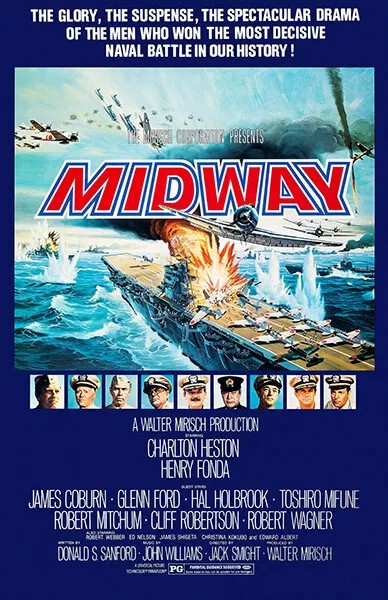
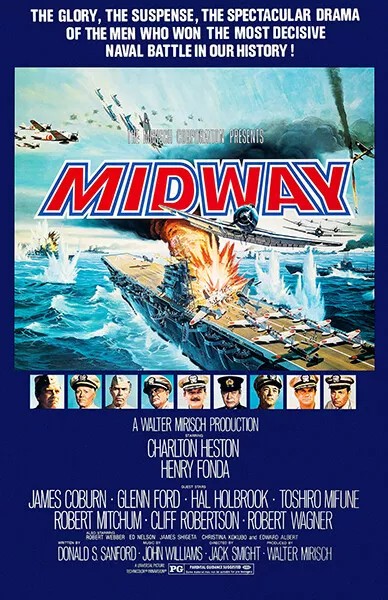
He produced Attack on the Iron Coast and Submarine X-1 and was credited with the story for both plus The Last Escape. Irving Temaner produced The Last Escape and received an executive producer credit on Attack on the Iron Coast and Submarine X-1.  Donald Sanford (Battle of Midway, 1976) was the most prolific of the writers, gaining screenplay credits for Submarine X-1, The Thousand Plane Raid and Mosquito Squadron. Herman Hoffman (Guns of the Magnificent Seven) wrote Attack on the Iron Coast and The Last Escape.

Cinema managers were not, it transpired, queuing up for the product. Most commonly, when reviewed in the British trade press, their release date was stated as “not fixed” which generally meant that United Artists was hoping the review would do the trick and alert cinema owners.

In the United States, they rarely featured in the weekly box office reports, though Portland in Oregon appeared partial to the product, Attack on the Iron Coast appearing there as support to Hang ‘Em High (1968), Mosquito Squadron supported The Christine Jorgensen Story (1970), Hell Boats supported Lee Van Cleef western Barquero (1970) while The Last Escape supported Mick Jagger as Ned Kelly (1970). To everyone’s astonishment a double bill of Hell Boats / The Last Escape reported a “big” $10,000 in San Francisco, but that proved an anomaly.

In Britain, the movies fulfilled their purpose as programmers, not good enough to qualify as a proper double bill, but accepted as supporting feature for a circuit release on the Odeon chain. Since UA supplied Odeon with its main features, it proved relatively easy to persuade the circuit to take the war films to fill out a program. This kind of second feature would be sold for a fixed price not sharing in the box office gross. However, they were given the kind of all-action poster they hardly deserved.

So in 1968 Attack on the Iron Coast went out with The Beatles Yellow Submarine. In 1969, Submarine X-1 supported slick heist picture The Thomas Crown Affair, which with Steve McQueen and Faye Dunaway in top form scarcely needed any help securing an audience. Hell Boats was supporting feature in 1970 to Master of the Islands (as The Hawaiians starring Charlton Heston was known). As well as accompanying it on the circuit Mosquito Squadron in 1970 made a very brief foray into London’s West End with thriller I Start Counting and then reappeared a few months later as an alternative choice of support for Billy Wilder flop The Private Life of Sherlock Holmes. If you went to see Burt Lancaster western Lawman in 1971 you might have caught The Last Escape – equally it could have been If It’s Tuesday, It Must Be Belgium (cinema managers could choose either).

United Artists, under the financial cost in the early 1970s, pulled the plug on “programmers” such as these. Walter Mirisch in his biography, disingenuously suggested that the six movies had done relatively well. But that wasn’t supported by the studio’s own figures.

Collectively, they made a loss of $1.7 million. Only Attack on the Iron Coast made it into the black and then by only $59,000. Hell Boats lost $700,000. None of the movies earned more than $200,000 in rentals in the United States.

Although Mirisch managed to keep budgets down to around the million-dollar mark, they would have had to be much smaller to see a profit. Ironically, it was the cheapest, Attack on the Iron Coast costing $901,000,  that made the most. Submarine X-1 lost $150,000 on a $1 million budget, Mosquito Squadron lost $253,000 on a $1.1 million budget while The Thousand Plane Raid lost $50,000 more on the same budget. The longer the series went on, the worse the losses – The Last Escape lost $449,000 on a $995,000 budget while for Hell Boats the budget was $1.36 million.

SOURCES: United Artists Archives, University of Wisconsin; Walter Mirisch, I Thought We Were Making Movies, Not History (University of Wisconsin Press, 2008) p204; Reviews, Kine Weekly – Feb 9 1968, Aug 31 1969, January 1970, April 18 1970; “Flops Loss-Cutting,” Variety, August 26, 1970, p6; “Picture Grosses,” Variety – March 13 1968, May 8 1968, April 24 1968, October 2 1968, June 10 1970, July 1 1970, July 8, 1970, August 12 1970, August 26 1970.

Behind the Scenes: “The Sundowners” (1960)

Whereas Deborah Kerr had always been first choice from the moment in 1957 Fred Zinnemann – he had directed her in From Here to Eternity (1953) –  announced plans to film the Jon Cleary bestseller about itinerants in the Australian Outback, Robert Mitchum was third choice. Despite having been successfully paired with Kerr for John Huston’s box office hit Heaven Knows Mr. Allison (1957), he was passed over in favor of, initially, William Holden with whom she had starred in the equally successful The Proud and the Profane (1956). When Holden dropped out, he was immediately replaced by Gary Cooper who had scored a big success with William Wyler’s Oscar-nominated Friendly Persuasion (1956)

And rather than Peter Ustinov (Topkapi, 1964) and Glynis Johns (The Cabinet of Caligari, 1962) in the major supporting roles, Zinnemann had hoped to secure the services of Claudette Colbert and Errol Flynn, both of whom had once been substantial box office attractions, though Colbert had been offscreen since Texas Lady (1955) and Flynn’s marquee appeal was spotty to say the least, though he had just signed up John Huston’s Roots of Heaven (1958). That decision was taken out of Zinnemann’s hands by Flynn’s premature death in 1959.

At this point Peter Ustinov was an all-purpose supporting actor and had not appeared in a major Hollywood production in six years but was just about to make a name for himself in Spartacus (1960) while Glynis Johns, at one time a major British star, had lost much of her marquee allure. Kerr and Johns had worked previously on Perfect Strangers (1945) and remained friends.

Nor was Zinnemann first to pounce on the tale. After the novel – based on the lives of the author’s parents – was published in 1952, rights were acquired by producer Joseph Kaufman who commissioned a screenplay from Kay Keavney. But when he failed to secure funding, Zinnemann scooped the rights after being persuaded by Tasmanian-born Dorothy Hammerstein, wife of the lyricist, that Australia would be a great location.

Screenplay duties then fell to Aaron Spelling (Guns of the Timberland, 1960), best known later as an uber-producer in television. After his draft was deemed “unsatisfactory,” he was replaced by Isobel Lennart (Please Don’t Eat the Daisies, 1960), though Zinnemann later claimed that her dialog was “not Australian enough” and author Jon Cleary (uncredited) was called in to solve “these problems.” .

Studio boss Jack Warner wanted Arizona to stand in for Australia but gave in to Zinnemann’s insistence on reality in part because the director had shot the successful The Nun’s Story (1959) in Africa, even though it added $500,000 to the budget. In fact, Warner gave in relatively easily. He understood that “were we to shoot in Arizona,” Zinnemann explained, “it would emerge as a half-assed Western with bars instead of pubs, cowboys instead of sheep-drovers – they move differently, walk and react differently.” It was the first major Hollywood film to be shot there.

In the second half of 1959 the director spent 12 weeks in advance of the stars arriving filming scenery and most of the scenes involving the sheep – 2,000 of them transported 800 miles to the location. Rather than hiring them, Warner Brothers bought them wholesale and afterwards sold them for a profit.  Despite their reputation for docility, sheep proved difficult to wrangle. A whole day was lost when the leader of the sheep just decided he would move no further and the entire flock did the same.

The crew was initially based in Cooma, a small town in New South Wales. Second unit camera operator Nicolas Roeg would return to Australia a decade later to director Walkabout (1971). The movie was hit by unseasonal bad weather – heavy rain and hailstones – which added several weeks to the schedule.

“There’s a good deal of Ida in me,” said Kerr, “I can settle anywhere and call it home.” Her second husband, screenwriter Peter Viertel (The Old Man and the Sea, 1958), made life more palatable by venturing out into the backs streets and finding German and Italian makers of foodstuffs and thereafter the stars took turns to cook for each other. “Bob Mitchum had a way with steaks,” noted Kerr, “but we all decided Peter was the best and most imaginative cook.”

It’s worth killing off the canard that Kerr only gained top-billing in this picture thanks to the generosity of Robert Mitchum. In fact, Kerr was by far the bigger star. She had been top-billed in Heaven Knows Mr. Allison ahead of Mitchum, The King and I (1956) ahead of Yul Brynner, Count Your Blessings (1959) ahead of Rosanna Brazzi, The Journey (1959) ahead of Brynner again, Bonjour Tristesse (1958) ahead of David Niven, Tea and Sympathy (1956) and The End of the Affair (1955) ahead of Van Johnson. She only ceded top billing to the likes of William Holden and Cary Grant (An Affair to Remember, 1957). Although many commentators these days assume that Elizabeth Taylor was the top British star of the decade, Kerr was easily her equal and outranked her – five versus two – in terms of Oscar nominations.

In fact, in terms of marquee appeal, Robert Mitchum could not compete with Kerr. Heaven Knows Mr. Allison was his biggest hit since River of No Return (1954) with Marilyn Monroe. The work with which he is most commonly associated, Night of the Hunter (1955), was a flop, and he was in the main reduced to a diet of westerns and war films.

He was more associated with the wrong sort of headlines than box office. His previous film The Night Fighters / A Terrible Beauty (1960) attracted more attention from journalists for his fight in a bar than from audiences. But Zinnemann was a fan and had tried to hire him for From Here to Eternity.

Mitchum’s notoriety went ahead of him and at the airport he was deluged by reporters, most determined to know, for such a renowned hard drinker, what he thought of Aussie beer. He crossed swords with journalists a few days later, complaining that he was misunderstood and nothing like his screen personality. “I’m no tough guy,” he argued, “all the public knows is some silver, chromium-plated jerk. How could they know what I’m really like?” When he pointed out that his marijuana bust had been expunged from the record, one frustrated newspaperman recorded, “He isn’t a jailbird, he isn’t a drunk, he isn’t a brawler.”

Mitchum had no trouble with cast and director. Zinnemann was astounded by the actor’s mastery of the accent, pronouncing it  “perfect” and adding “he had the uncanny knack of making any accent sound as though he had been born with it.” Mitchum and Kerr renewed their non-sexual love affair. “It was an honor to feed her lines,” said Mitchum. Zinnemann summed him up, “He has a problem with people who take themselves too seriously.”

But Mitchum was hounded by fans and autograph hunters. An audience gathered to watch him eat in local restaurants, his mood not helped by the solitary confinement imposed when rain prevented filming. One journalist, having inveigled his way into Mitchum’s rented home, was astonished to discover the actor could cook. Jon Cleary sprung to his defense. “Robert Mitchum is anything but a droopy-eyed slob once you get to know him. He is extremely well read and writes beautiful poetry.

When it came to horses, Ustinov was the bigger problem. “He was scared of them and they of him,” said Zinnemann, “and the moment he got in the saddle he would forget all his lines.”

Shooting a bush fire was relatively straightforward since they were a “frequent and devastating occurrence”, so the second unit simply flew near to the area in question, hired a taxi and started shooting. But these fires, fueled by the eucalyptus trees they were burning, moved at terrific speed, jumping along the tops of trees “and scattering their burning fragments fast and wide like projectiles.” But if the fire suddenly switched direction – and it moved at 30 miles per hour – there was a danger, as once occurred, that the crew could be cut off.

When the unit headed for Port Augusta in the south, it was a 45-minute commute to the sheep station at Iron Knob where many scenes were shot. Mitchum had had enough of being an object of curiosity and chartered a luxury cruiser, although he was still fending off young ladies who took to swimming out to the boat.

There was little scenic in the journey to the location. “The dust flew along the whole road,” said co-star Dina Merrill, and Mitchum was taken aback by the size of the sheep and found daunting the task of shearing a 400lb Merino sheep in one go. One mistake and you could cut into a vein and the animal would bleed to death. Mitchum relied on Dutch courage. Interiors were filmed in the more hospitable atmosphere of a London studio. There was an unwelcome sting in the tail for Mitchum – he was sent a tax demand from the Australian authorities which he refused to pay.

Although Jack Warner had given his assent to the overseas shoot, he was incapable of directing the advertising department to produce a poster that didn’t focus on the notion that this was the frisky Deborah Kerr of From Here to Eternity, “a highly-sexed lady who could harldy wait for the sun to go down so she could lay her hands on Bob.” Audiences were naturally disappointed when the projected love affair failed to materialize.  

While the critics were generally in favor of the movie and audiences in the U.S. big cities responded well, its attraction faded as it set out across the U.S. However, it did better abroad  and not surprisingly was a massive hit in Australia. Mitchum and Kerr re-teamed for Stanley Donen comedy The Grass Is Greener (1960) – with Kerr again billed before Mitchum.

SOURCES:  Eric Braun, Deborah Kerr (WH Allen, 1977) pp173-177; Lee Server, Robert Mitchum, Baby I Don’t Care (Faber & Faber, 2001) pp422-429; Fred Zinnemann, An Autobiography (Bloomsbury, 1992) pp173-183.

Behind the Scenes: John Williams and the Two Notes That Changed Movie History

I hadn’t planned on a Jaws triple-bill but the new biography of John Williams popped through my door yesterday and I dug in.

I was astonished to discover first of all that movie music was in his blood. His grandfather had been involved in accompanying silent music films and then, dipping his foot in Hollywood, had snagged a gig with Shirley Temple. His father went one better – he had been instrumental in the radio revolution and eventually moved to Hollywood to become a session musician in movie studios recording film scores.

Film composers don’t lend themselves that easily to biography – I still have a treasured copy of the book on John Barry – and what has appeared hasn’t been on the same scale as, say, a major account of the career of John Ford or Clint Eastwood and certainly nothing approaching the 200,000 words Tim Greiving has amassed. I’d never heard of this author although it shouldn’t have surprised me that there was a university course on movie music run by him and that he describes himself as a “film music evangelist.”

By the time Jaws (1975) came around, Williams was a Hollywood veteran, 10 Oscar nominations to his name and, having made his debut in 1958 with Downbeat, had already composed over 30 scores including The Rare Breed (1966) and The Towering Inferno (1974). But you wouldn’t call him a household name. While his name would be familiar to the aficionados, the general public did not go around whistling his tunes the way they might with the James Bond theme.

And although movie music was his bread-and-butter, Williams had a hankering for Broadway, where composers were top of the bill not way down the credits. So since 1973 he had been working on a musical about the relationship between King Henry II and Becket, which had been  the subject of plays by T.S. Eliot and Jean Anouilh and the film Becket (1964) starring Richard Burton and Peter O’Toole. He already had musical experience, though of the movie variety, and uncredited, having worked on Goodbye Mr Chips (1969). 

In fact, Thomas and the King was scheduled for the British equivalent, London’s West End, to open in October 16, 1975 at the 1200-seat Her Majesty’s Theatre and starring Australian Jim Smillie and former Bulldog Drummond Richard Johnson. The critics weren’t impressed. One described it as the kind of show where you came out “humming the costumes.” It folded after 27 performances in a mere two weeks.

Luckily, salvation in the form of a certain shark was at hand. Williams had scored Steven Spielberg’s 1973 debut Sugarland Express (Duel, though released theatrically abroad, was strictly a made-for-tv number Stateside). The director had in mind “avant-garde horror music” along the lines of the “freaky cerebral score” Williams had composed for Robert Altman’s Images (1973). 

Williams had enough confidence in himself to tell the director that approach was wrong. He went instead for something that was “all instinct.” Explained Williams, “meaning something that could be very repetitious, very visceral, and grab you in your gut not your brain.” Since the movie itself was a masterclass in suggestiveness – the shark remains largely unseen for the first part of the picture – the music was able to infer its presence.

The two notes – a bass ostinato – could be played softly to suggest the shark was far away. “You can keep playing it louder and louder,” said Williams, “there’s no shark there but you can feel it. It can be deafening – it can accelerate as it comes towards you…You can paint a whole choreography without seeing anything.”

Spielberg wasn’t convinced. He thought it “too primitive”, favoring something “more melodic” for the shark. In due course, the director succumbed. Williams was integral to the movie in another way – deciding when the music should appear, “spotting” being the technical term. “The art of film composition,” said Spielberg “is the placement of that composition.”

And while Jaws set a new template not just for box office but for scaring the pants off moviegoers, the impact of those two notes went far beyond the movie business. Hans Zimmer summed it up, “The scary thing about Jaws is those two notes.” The soundtrack reached No 32 in the Billboard chart and Williams won the Oscar. In Time magazine he was named the most influential composer of the 20th century. American conductor Leonard Slatkin said, “In classical music if you say I can name that tune in four notes” everybody knows Beethoven’s Fifth, “but with John he had it with two notes. There’s somebody whose legacy is assured.”

I have to confess this isn’t a proper book review in the sense that I’ve read it from beginning to end. I didn’t want to rush it just for the sake of a book review. But I’ve dipped in and out enough to be knocked out.

John Williams, A Composer’s Life, by Tim Greiving is published by Oxford University Press.

Behind the Scenes: Exploding the Myth of “Jaws” (1975)

Just to follow on yesterday’s reissue of an article of mine regarding the box office of Jaws, I thought it might be timely to ressurect an older article which sets the record straight on some aspects of the movie’s release.

This was in response to the publication of movie critic Richard Schickel’ s Spielberg: A Retrospective which continues to perpetuate the Jaws release myth. I can hardly expect Mr Schickel’s due diligence to cover my own modest tome, In Theaters Everywhere, A History of the Hollywood Wide Release, 1913-2017 (McFarland, 2019), which is now (apparently) the standard text (in case you didn’t know) for all questions relating to wide release, saturation, call it what you will.

Jaws was not a phenomenon in the normal sense. It did not belong to the realm of the unexplained. In fact, mystery was the least part. It was eminently explainable, despite realms of academics and observers regarding its explosion at the box office in tones of wonder. Hollywood loves a legend, especially one of its own making, and the movie did conform to two attractive narratives, that of the tyro director Steven Spielberg coming good and of  the movie overcoming a massive budget over-run (from $3.5 million to $8 million) that could have sunk the enterprise at the outset.

Jaws did not not invent the wide release, summer release or the event movie.

To start with the biggest myth – the wide release – that had been around since the 1930s. The Wizard of Oz (1939) debuted on 400-plus. Warner Brothers signed up 400 for This is the Army in 1943. David O. Selznick created a new phrase for wide release, “blitz exhibitionism,” for Duel in the Sun (1946). In 1948 Twentieth Century Fox opened Iron Curtain, Republic Bill and Coo and Allied Artists The Babe Ruth Story at over 500 cinemas. Fast forward to 1960 and The Magnificent Seven’s initial theater haul was 750. Earlier in 1975, studios had gone for saturation broke with The Master Gunfighter opening on 1,000-plus with Breakout starring Charles Bronson claiming the record of 1,400 houses for the opening week.

In fact, far from inventing saturation or the summer blockbuster or even the event movie, the Steven Spielberg picture, was merely an extension, albeit a wildly successful one, of what had gone before. The problem with the scenario of “Jaws the Legend” is that too few people, academics and journalists alike, placed it against the backdrop of not just the previous few years but the prior decades during which  saturation/wide release had flourished.

Long before Jaws came onto the scene, the 1970s had changed and the two conditions that had marked out the previous decade, the reduction in studio output and the increase in saturation, were the prime movers. Jaws was not the beginning of a new era, but very much the opposite, the triumphant culmination of an old one.

It owed a great deal to the other 1970s box office phenomena – Airport, Love Story, The Godfather, Towering Inferno, The Poseidon Adventure and The Exorcist.  Their most obvious common thread was that they were based on bestsellers and successful books enjoyed a publicity life and after-life all of their own, as well as providing marketing tie-up benefits and journalistic opportunity.

But turning bestsellers into films was not unusual, Gone with the Wind in 1939 the most obvious example. The top three movies of 1953 – The Robe, From Here to Eternity and Shane – were based on bestsellers as were 1958’s leading trio, Bridge on the River Kwai, Peyton Place and Sayonara. The Guns of Navarone (first in 1961), Spartacus (first in 1962), The Carpetbaggers (first in 1964), Thunderball (first in 1966), The Dirty Dozen (first in 1967), and The Graduate (first in 1968) were all taken from bestsellers. Airport, Love Story, The Godfather and The Poseidon Adventure were the number one films of their respective years, The Exorcist second in its. 

The subject matter of The Godfather and The Exorcist attracted a mass of newspaper headlines, Love Story because it was such an unexpected hit, while Jaws afforded endless journalistic opportunity. The Godfather, The Exorcist and Jaws all had in common budget and shooting problems. Like Jaws, the theme tunes to Love Story, The Godfather and The Exorcist were million-sellers. Airport apart, none of the biggies boasted established stars, Marlon Brando, although a giant of the 1950s, no longer a box office attraction while Gene Hackman was a potential one-hit wonder prior to The Poseidon Adventure. Ryan O’Neal and Ali McGraw (Love Story), James Caan and Al Pacino (The Godfather), Ellen Burstyn (The Exorcist) and Roy Scheider and Richard Dreyfuss (Jaws) were virtually unknowns.

The idea that summer was a release desert had not been true for more than a decade, Paramount launching ‘a powerhouse of important product’ – a total of eight pictures – in 1970 – Norwood had 1,400 bookings between May 27 and July 8 in four waves of 450 theaters – more, incidentally, than the number of theaters showing Jaws in its opening week – each running the picture for two weeks. In 1973 Twentieth Century Fox, MGM and Columbia opened a total of 19 movies during the season. 

The Twentieth Century Fox schedule comprised the long-awaited reissue of The Sound of Music, Robert Aldrich’s The Emperor of the North, Battle for the Planet of the Apes (the fifth in the series), Jeff Bridges as The Last American Hero (with a tie-up with over 16,000 gas stations) based on articles by Tom Wolfe, and The Legend of Hell House, the whole shebang kicked off in late June by a featurettes on ABC and an eight-day television campaign.

Columbia reckoned it would need a company record 3,150 prints to meet demand for George C. Scott and Faye Dunaway in Oklahoma Crude, Burt Reynolds as Shamus, Charles Bronson in The Valachi Papers, romantic comedy Forty Carats, remake Lost Horizon, and concert documentaries Let the Good Times Roll and Wattstax.

The MGM septet included Yul Brynner in Westworld, Burt Reynolds in The Man Who Loved Cat Dancing and Shaft in Africa. In 1974, Twentieth Century Fox  targeted summer with ten movies including Richard Lester period romp The Three Musketeers, heist drama 11 Harrowhouse, chase picture Dirty Mary Crazy Larry, Spys, and the ‘Ape-athon’, a quintuple bill of all the Planet of the Apes pictures, plus another outing for The Sound of Music. Substantial radio advertising was added to usual television/newspaper marketing mix, with stations in 30 key cities running an eight-week campaign.

The studio cleared $35 million over 13 weeks, up $5 million on its previous best summer in 1970. Paramount’s high voltage program included The Longest Yard and Chinatown. But it was not just the majors who recognized the importance of summer, Crown International and American International both reported record business for summer 1974.

The $1.8 million Universal spent marketing Jaws was both a large and modest amount. In proportion to production costs, it was less than Joe Levine devoted to Hercules or to the promotional budgets for four-wallers, and a lot less, than was allocated The Culpepper Cattle Company or Breakout. That television accounted for 38percent was not astonishing either since research proved that newspaper advertising was more effective.

Although claiming to be the largest amount spent in television spot advertising, compressed into the three days prior to opening and opening day (June 20) itself, it was rather last-minute compared to the selling of The Man with the Golden Gun for which United Artists ran 700 prints of a teaser trailer in theaters six months prior to launch and 30-second advertisements on the ten top-rated television shows well in advance of opening.

The tactic of specifying which television slots of movie would advertise on, as Jaws did, was far from rare, four-wallers specializing in this, and Breakout had done the same. In fact, the record that Universal claimed for Jaws, too, was questionable since Breakout had 42 30-second spots compared to 23 for Jaws. Disney, overall, spent a lot more. Nor did Universal knowingly aim for a summer launch – only shooting delays prevented it opening at Xmas 1974.  Nor did publisher and studio jointly adopt the same visual for Jaws from the start – a March 1974 trade advertisement in Box Office differed substantially from the iconic poster.

The marketing device of reporting grosses week-by-week was not novel either. Most the big hitters of the 1960s did not pull in money at top speed. Love Story changed all that. Paramount kept the industry and the wider newspaper planet up-to-date on a weekly basis of the movie’s unprecedented progress. Its $2.46million (actually $2.36million) in three days from 165 was the biggest in history and it set the seal on the industry reporting the weekend rather than weekly gross. The second weekend was $2.49million, the third $2.4million, the fourth $2million and the fifth $2.3million. That the second and third weekends both out-grossed the first, and the fifth weekend out-grossed the fourth, were publicity bonuses. The first five weeks topped $17.5million. Four weeks later, theater count risen to 231, it totaled $28.4million and two weeks further on, on 282 theaters, the gross stood at $35.4million.

When in 1972 The Godfather so quickly gunned down Love Story, it set in motion an ongoing marketing story, and the question facing each new hit, from The Poseidon Adventure to The Exorcist and The Sting, was box office speed and whether it could topple the reigning champion.

By 1975 accelerated grossing had become common: The Trial of Billy Jack hoisted $9 million in five days, The Man with the Golden Gun $5.1 million in a week, The Sting $7 million in two weeks, Papillon $11.25 million in three weeks, Airport ’75 $10 million in a month, Earthquake $7.3 million in a month, The Godfather Part II $22.1 million in under five weeks, Magnum Force $18 million in five weeks.

So when Jaws showed the potential to reach the very top, Paramount raced out of the traps with a series of advertisements showing the gap closing between the new movie and the title holder. This tack in itself was nothing new – The Robe, hoping to catch up on Gone with the Wind, had made a big hullabaloo of reporting opening week’s grosses day-by-day in the trade press and Twentieth Century Fox had capitalized on The Sound of Music’s overhauling of Gone with the Wind.

Jaws simply took advantage of a media ready-and-waiting for an accelerated box office story. Since money was made faster than ever before, box office records fell faster than ever before. It made news precisely because it was sustainable – week after week – an ‘immediate stampede’ at the box office – $14.3 million ($34,900 per theater average) in the first week, $33.8 million in two weeks and three days, $69.7 million in five weeks and three days, $100 million in eight weeks and three days, $150 million in twenty-three weeks. (It did not venture overseas until November, first stop Australia, and then it was a major Xmas release in seven hundred theaters in forty-four countries.)

Substantial questions remain about the Jaws saturation. Although history proved the Universal strategy to be a success, I am not convinced it was as deliberate as suggested nor that Universal had any idea of the winner it had on its hands.

There had been much larger saturations going back two decades and both Trial of Billy Jack in 1974 and Breakout in 1975 had debuted in over 1,000. The number of theaters involved in the Jaws launch was, I shall argue, proof of the studio’s lack of confidence not the opposite.

Studios with what they believed were guaranteed winners had consistently used a different scenario. The Exorcist opened in 24 theaters, Earthquake in 62, Papillon in 109 and The Godfather Part II in 157. Movies that opened in the Jaws range and above – Magnum Force in 418, The Man with the Golden Gun in 635, The Trial of Billy Jack, Breakout and The Master Gunfighter in 1,000-plus – were not expected to last as long. Statistics proved that for features with high box office expectation the slower limited roll-out was the more effective approach. The question really to be asked is whether Universal realistically expected Jaws to bring in rentals in the region of The Exorcist ($66million), The Sting ($68million) and The Godfather Part II ($128.9million) or whether its expectations were more in the Magnum Force ($18.3million) ballpark. I would argue that circumstantial evidence pointed to the latter. No other studio would throw away a prospective gold-plated opportunity on a saturation of the Magnum Force variety unless it reckoned grosses around the Dirty Harry sequel mark would count as a good return on its investment.

I would also challenge whether Universal actually deliberately limited the number of original theater participants. I would suggest it is much more likely that the studio encountered considerable resistance from exhibitors to being asked to hand over 90percent of the gross, agree a 12-week run and contribute to the national television campaign for a movie with an unknown director and no stars. Also, the movie did not, like The Exorcist or The Godfather, open in engagements exclusive to one city, but went multiple from the start, 46 in New York, 25 in Los Angeles; even Airport 1975 only opened in five theaters in New York.

More likely, I would venture, is that the original theater count declined over the blind-bidding controversy and/or when Universal and exhibitors reached a negotiating impasse. Negativity could also have been sparked by the recent experience of Breakout which fell short of box office targets. It certainly strikes of wisdom-after-the-event for Universal to claim this was a deliberate strategy. Nobody spends $1.8million on launch advertising in the hope that it would carry the picture all through summer since that would suggest a paltry $225,000 per week over an eight-week season.

Universal spent nearly two-fifths of the film’s production budget on that kind of launch because they wanted big opening grosses. For the first month, Jaws was restricted to 409 theaters in the U.S., the number increasing to 700 after five weeks and then to 900 after another three weeks, suggesting that exclusivity was part of the deal for initial exhibitors.

A tougher business take on the limited opening was that Universal shot itself in the foot.

With an 800-theater launch, grosses would have been stratospheric, even higher than the movie actually achieved. Ironically, it was roadshow precedent and practice that created the opportunity for Jaws to break all box office records. Without the guaranteed run that roadshows traditionally enjoyed, theaters would have dumped the movie, regardless of grosses, because they were already committed to another feature. Longevity, not opening week grosses, was the key to the Jaws record-breaking.

So if it was not a unique development in saturation that precipitated the Jaws success, or a new way of latching onto summer as an unrealized opportunity, or a breakthrough in publishing or record sales, or a novel approach to television advertising, to what else can you ascribe the movie’s unprecedented success?

Well, the answer is the simplest, the oldest, of all. The public just liked it. It hit a chord the way a raft of movies as different as Gone with the Wind, The Sound of Music and The Godfather before it. And it also benefitted from the public reappraisal of reissues, the idea that you could go back to see a movie you enjoyed again and again. Jaws broke no saturation rules and did not set new saturation boundaries. All the hard work on that had already been done. But it certainly reaped the reward. 

SOURCE: Brian Hannan, In Theaters Everywhere, A History of the Hollywood Wide Release, 1913-2017 (McFarland, 2019) p192-195.


Behind the Scenes: The “Jaws” Juggernaut

Given the surprising success of the reissue of Jaws this weekend – it came in second at the U.S. ticket wickets ahead of such new films as The Roses and Caught Stealing – I thought you might like a second look (or a first one) at exactly how Universal created box office history. And it was not the way you would expect. It did not follow the template set out by previous juggernauts.

Naturally, the hoopla surrounding the 50th anniversary of Jaws concentrates on the budget overruns, director Steven Spielberg’s problems and the mechanical shark, and no one gives a hoot about the most important aspect of the picture – the box office. Sure, it’s always mentioned in passing, because otherwise the movie would have had little impact on pop culture, the driving force of the water cooler effect when so many people see the same movie at the same time it drives word-of-mouth into the stellar regions.

What is little known is how Jaws changed the release system forever. Even The Godfather (1972), its predecessor in topping the box office firmament, while spreading the goodies amongst nabes and the showcase houses did not ignore first run. In fact, for The Godfather Paramount used five New York first run houses – the 1025-seat Orpheum, 1175-seat State I, 1174-seat State II, 599-seat Cine and 588-seat Tower East – to create a pre-emptive strike. This quintet screened the movie exclusively for the first week, permitting the studio to trumpet the record-breaking results.

The other 350-odd cinemas had to wait a further week to get their hands on the gangster saga.

For Jaws, on the other hand, Universal completely froze out New York first run. Not a single first run house was given access to the picture on its initial release on this weekend 50 years ago.

Instead, in New York, Universal went down the showcase route and clocked up just over $1 million in the first three days at 46 cinemas. Prior to Jaws, the only pictures that would open first in showcase in New York and ignore that city’s vibrant first run were those that first run would most likely have declined to show.

With Jaws, across the country Universal was as ruthless in squeezing out first run if it could make a better deal in the nabes and drive-ins. So while Jaws set house records at all the first run houses that were deemed up to standard, it also creamed the nabes and drive ins. Significantly, not all the first run houses chosen would have been the first choice of most studios for a major picture. You wouldn’t have expected this behemoth to end up at the 925-seat Gopher in Minneapolis where it took in $47,000. Similarly, the 900-seat Charles in Boston ($55,000 take) would not have been your first choice (and it’s worth noting that it was only in this city that the movie did not top the week, beaten into second place by Woody Allen’s Love and Death at the 525-seat Cheri Three).

By and large, Universal picked off those first run cinemas that were so delighted to be asked they agreed to the tough terms – a 90/10 split in the studio’s favor and a 12-week run.

Other first run destinations included the 800-seat Cooper in Denver ($53,000 for openers), the 1670-seat Coliseum in San Francisco ($68,000), the 900-seat Southgate I and 550-seat Town Center II in Portland ($55,000 total), the 1836-seat Gateway in Pittsburgh ($70,000) and the 1287-seat Midland in Kansas City ($55,000). In these cities, the premiere outing was restricted to first run.

But while in Chicago the 1126-seat United Artists hauled in $116,000 in the opener, Universal played it canny by screening it simultaneously at four other nabes which brought in another $260,000. It was the same in Cleveland where the 455-seat Severance II was the only first run house among the five cinemas that hoovered up a total of $84,000. The first run 500-seat Goldman in Philadelphia was the only first run location among the total of 15 cinemas that knocked up $312,000.

Elsewhere, echoing the New York approach, first run cinemas were frozen out in Detroit, Buffalo and San Francisco. In Detroit seven nabes gobbled up $350,000, in Buffalo a deuce of nabes snatched $50,000, in San Francisco a trio set about $75,000.

We’ve all seen movies driven to opening weekend box office heights on the back of heavy advertising or hyperbole only to take a dive in the second week. And the fact that Universal was not making an “event” out of its movie by restricting it to first run meant that the sophomore weekend could easily have brought disaster.

Instead, receipts at virtually all the cinemas either beat the first week or fell only fractionally below. The opening weekend appeared to set the tone, every successive day better than the previous one.

Universal immediately set its sights on taking down The Godfather and began posting weekly advertisements in the trade papers hyping its performance at the box office. But in nudging first run out of the equation, it triggered the slow decline of first run houses.

Tomorrow, you can catch on my article that sunk many of the other myths surrounding Jaws, “Behind the Scenes: Exploding The Myth of Jaws.”

SOURCE: Variety.

Behind the Scenes: “The Anderson Tapes” (1971) – From Book To Film

Had Sean Connery played the character of Duke Anderson as written, rather than reigniting his career it would have risked killing it off. It was already a significant ask for a star to shift from portraying good guys – even if James Bond had an immoral streak – to essaying a bad guy, though here was precedent – Paul Newman in Cool Hand Luke (1967) and Steve McQueen in some style in The Thomas Crown Affair (1968).

However, it would be difficult enough for audiences to accept a star who is two-timing his girlfriend, never mind one who in turn exhibits sadistic and masochistic streaks.

So that was the first problem for Oscar nominated screenwriter Frank Pierson (Cool Hand Luke) and not surprisingly he settles on the elimination route. The character’s sexual tendences are never mentioned. Theoretically, Pierson gets round the two-timing issue by merging the two girlfriends, Ingrid Macht and Agnes Everleigh, into one, Ingrid Everly (Dyan Cannon).

But Ingrid Everly has little connection to Agnes beyond that she lives in a luxury apartment. In the book, Agnes is a casual pickup,  a woman he meets in a bar. She was separated from her husband and retained possession of the apartment, which was in his name. In order to find the legal grounds on which he could regain the apartment, her husband had bugged the apartment.

In the film, the apartment is still bugged, but by her rich jealous boyfriend Werner (Richard B Shull) so, technically, it’s Ingrid who’s doing the two-timing. Whereas in the book Agnes’s husband is perfectly happy for her to be entertaining other men as he hopes this will enhance his chances in the divorce settlement, in the film Werner is the opposite, and does not embrace the notion of what he views as his “property” being involved with anyone else. Ingrid, who was genuinely Anderson’s ex-girlfriend, in the film comes to realize a sugar daddy is a better bet than a criminal no matter how handsome. The only oddity in the picture that when Anderson is confronted and Werner explains that, via his surveillance, he knows Anderson is planning a robbery, that he doesn’t give two hoots about that.

Other changes are equally sensible. In the book, the robbery is intended to take place in the middle of the night. The ploy the thieves planned to use to get the apartment residents to open their doors was that the building was on fire. This wasn’t by triggering the fire alarm but by running from door to door, shouting “Fire! Fire!”.  Pierson gets rid of that cumbersome device.

He also knocks into touch the notion that Tommy (Martin Balsam) would find supposedly legitimate reason to gain access to apartments to scout the premises in advance by pretending to be doing a survey for a civic group. In the book Tommy is a two-bit low-level hood and not involved in the actual robbery but with some knowledge of art and expensive items.  In the film he transforms into a smooth-talking  antiques dealer and Frank Pierson comes up with the idea that the management of the building is planning a refurbishment and wants to ensure that residents have the opportunity to align their interior décor with what is being planned.

In the book as well as eight luxury apartments, there are, on the ground floor two businesses, a doctor and a psychiatrist, but these are also thrown on the scrap heap, although in the book the doctor turns out to have $10,000 hidden away from the taxman as well as medicines that could be sold on the black market.

The pompous Capt. Delaney (Ralph Meeker) who organizes the offensive on the robbers, is drawn virtually word for word from the book. But there’s not room to incorporate all the criminal slang. I was especially intrigued to discover that what I always believed was called “a big job” was known to the criminal fraternity as “a campaign.” Nor the details of organizing such a robbery.

And there are a couple of interesting snippets in the book that Pierson had no room for in the movie. Firstly, author Lawrence Sanders includes verbatim a newspaper report dated 2nd July, 1968, to the effect that a new electronic communications office has been opened by the police to help cut down, initially, response times. The report included another fascinating fact. Prior to this date to report a crime the American public had to call a seven-digit number. That was reduced to the ”911” emergency number that operates today.

The second element is the call to unite all the different operations running criminal surveillance. Here, including Werner, there were four separate surveillance teams, none in contact with any of the others.

The book is a terrific read. I devoured it in one sitting. It is Sanders who introduces the flash forwards, interviews or somesuch with victims, while in real time the robbery is under way.

But the screenplay is an ideal example of how to trim a book to the bone without removing any of the essentials.

Sanders was also the author of The First Deadly Sin which was filmed with Frank Sinatra in 1980 and reviewed here earlier.

Behind the Scenes: From Big Screen Failure to Small Screen Redemption

Despite a heady concept and some excellent acting, Martin Ritt’s Five Branded Women (1960) – reviewed yesterday – was a flop on initial release. So television studios were not exactly lining up to provide it with its small screen premiere. In fact, the length between big screen release and small screen showing had been so truncated by that point (The Magnificent Seven, for example, out the same year was seen on television within two years of release) that it could have been shown on television any time from 1962 to 1966, and probably would have been had initial performance suggested there was a big audience awaiting its small screen premiere.

The other possibility for a flop was that between cinema release and television screening, the stars had gone on to better things so a small screen showing could be promoted off the back of a current big screen success or, better still, series of successes. But that wasn’t the case with Five Branded Women. Star Silvana Mangano had meant little to US moviegoers since Bitter Rice (1949). Jeanne Moreau’s sizzle at the arthouse box office had diminished and the limited success of Viva Maria (1965) was put down to the presence of her compatriot Brigitte Bardot. Vera Miles hadn’t appeared in a movie since The Man Who Shot Liberty Valance (1962). Barbara Bel Geddes was a long way from career revival in Dallas and all she had to show for the intervening years was a small part in By Love Possessed (1961) and a single episode in television. Italian Carla Gravina had no U.S. imprint at all. As a leading actor, Van Heflin was a busted flush.

So there was some consternation when Five Branded Women took ninth place in the television rankings for movies receiving their television premiere between 1966 and 1968. There was just no accounting for it. The same could be said for Your Cheatin’ Heart (1964) which was one place ahead of Five Branded Women. Star George Hamilton had not made it big, the film was an indifferent performer at the box office and its subject, Hank Williams, was long dead.

But television had a knack of providing unlikely redemption for movies that generally ended up on the wrong side of the box office. Cliff Robertson who headed the cast of PT 109 (1963) was still in the category of rising star with no breakout hits to suggest he was capable of rising to greater things. While 633 Squadron (1964) had done reasonable business, thriller Masquerade (1965) and war picture Up from the Beach (1965) had done so badly he was demoted to second billing in The Honey Pot (1967), incidentally another flop. He did achieve a breakthrough with Charly in 1968 but PT 109 was shown on television the year before. So how did that happen? You could maybe point to the continuing popularity of dead President John F. Kennedy, whose wartime heroism this movie recalled, but he had been dead when the movie first came out and that didn’t send it shooting to the top of the box office charts. On the television charts this came in one place behind Five Branded Women, although 633 Squadron could only manage a distant 92nd.

There were other surprises. Second Time Around (1961) placed 15th. But star Debbie Reynolds was still a genuine box office attraction after The Unsinkable Molly Brown (1964) and the unexpected success of The Singing Nun (1966).

Otherwise, the biggest hitters on television were Alfred Hitchcock, Elvis Presley and Doris Day. Hitchcock topped this particular chart with The Birds (1963), though presumably somewhat censored. His North by Northwest (1959) took 14th spot, Marnie (1964) placed 26th and Rear Window (1958) 39th.

Elvis Presley placed 11th with Roustabout (1964), 21st with Blue Hawaii (1961), 25th with Tickle Me (1965) and 41st with Fun in Acapulco (1963). Doris Day clocked in at 12th with That Touch of Mink (1962), 19th with Send Me No Flowers (1964), 23rd with The Thrill of It All (1963) and 35th with Move Over, Darling (1963).

Television had paid record sums to acquire the likes of Bridge on the River Kwai (1957) and The Robe (1963), taking second and sixth positions, respectively, and undoubtedly helped by the ongoing success of director David Lean (Doctor Zhivago, 1965) and Richard Burton (Who’s Afraid of Virginia Woolf, 1966).

Others in the top then were Cat on a Hot Tin Roof (1958), which had been successfully reissued in cinemas in a double bill with Butterfield 8 (1960), both headlining Elizabeth Taylor, to capitalize on her Oscar-winning turn in Who’s Afraid of Virginia Woolf. This came in third followed by The Great Escape (1964) and John Wayne as McLintock (1963) with Maureen O’Hara. Lilies of the Field (1963) was seventh.

The Made-for-TV films were beginning to make an impact. The Doomsday Flight (1966), released theatrically overseas, was 17th, one spot ahead of The Longest Hundred Miles (1967) with rising stars Doug McClure and Katharine Ross and seven ahead of Fame Is the Name of the Game (1967) with Tony Franciosa (Fathom, 1967) and Jill St John (Tony Rome, 1967).

Other notable small screen results were registered by Natalie Wood-Warren Beatty starrer Splendor in the Grass (1961) which took 12th spot, Shirley MacLaine and an all-star cast in What A Way To Go (1964) in 16th, Susan Hayward Oscar-winning weepie I Want To Live (1958) in 21st, and Henry Fonda and Maureen O’Hara in Spencer’s Mountain (1963) in 23rd.

SOURCE: “All Network Prime Time Features” (Seasons 1966-1967 and 1967-1968),” Variety, September 11, 1968, p47.

Behind the Scenes: “Valdez Is Coming” (1971) – Book Into Film

Elmore Leonard novels were catnip to the movies. From The Tall T (1957) and 3:10 to Yuma (1957) a shelf load of his books have been filmed by Hollywood – some of them (3:10 to Yuma, 52 Pick Up, The Big Bounce, Get Shorty) twice. What he brings to the table is a lean story and an interesting lead character, whether in the western – Hombre (1967), Joe Kidd (1972) – or crime division such as Mr Majestyk (1974) or Get Shorty (1995).

What you probably don’t realize is that pulp fiction (books that made their debut in paperback) were generally short, limited to 50,000-60,000 words rather than the 120,000-150,000 blockbuster “airport” novels, published first in hardcover, that dominated the bestseller lists. The shorter novel led to a leaner narrative, less characters, little in the way of subplot and information drop.

Valdez Is Coming made a speedy transition from paperback (published by Fawcett in the US in 1970, though it did achieve a hardcover edition in the UK) to movie (United Artists release 1971) and it’s interesting to see what changes, if any were made by screenwriters Roland Kibbee (The Appaloosa, 1966) and David Rayfiel (Castle Keep, 1969). You could literally transpose Leonard’s dialog and it would easily stand up in a movie. So the basic, very simple, plot is retained.

Mexican sheriff Valdez (Burt Lancaster in the film) gets it into his head that the mistaken killing of an African American requires monetary compensation and determines that cattle baron Frank Tanner whose mistake led to the killing should be the one to cough up. Tanner sees is differently, sends Valdez packing and when the sheriff returns a second time to plead his case exacts brutal punishment in the form a rudimentary crucifixion.

This triggers a personality change in Valdez. He reverts from being the subservient suit-wearing lawman to the feared sharpshooter who previously hunted down Apaches.

So one of the alterations in the book to film is this transition. In the book we know from the outset he has kept buried his older self in order not to attract attention and to live a peaceful life. That is verbalized via internal monologue and a scene with brothel keeper Inez, who is absent from the film. In the movie his past is visualized, as he pulls out from under his bed a hidden armory and a photo of his previous self.

In the film he is introduced riding shotgun on a stagecoach. He works part-time as a “constable” rather than a sheriff. In the book riding shotgun is the bigger job, keeping the peace requiring little of his time.

All the main incidents – initial rebuff by Tanner, the shooting of bullets around Valdez, the crucifixion, the kidnapping of Tanner’s wife Gay (Susan Clark), the involvement of wannabe gunslinger RL Davies (Richard Jordan), the picking off one-by-one of Tanner’s men and the final stand-off (a Mexican stand-off if ever there was one) – come straight from Elmore Leonard.

But the screenwriters make some critical changes. In the film the kidnapping is accidental, Gay snatched as a hostage as Valdez escapes from a gunfight at Tanner’s house. In the book, there’s no shoot-out at the house, Valdez kidnaps Gay in order to have something to trade with.

In the film it’s – rather surprisingly given his role so far – the weaselly gunman Davies who cuts Valdez free of the bonds of the crucifix. But that’s a considerable simplification from the book. For quite a long time in the book, Valdez believes that Gay cut him loose. And until Davies challenges that assertion, she lets Valdez believe it was her.

For the biggest change is the screenwriters’ decision to eliminate the Valdez-Gay romance. After being captured, in the book she makes overtures to him, whether initially out of survival instinct is unclear, and they make love and he begins to fall for her. We learn why she killed her husband – domestic abuse. Also that Tanner is a convicted felon and that he is a gunrunner supplying arms to Mexican rebels.

So by the time we come to the end there’s more riding on it in the book. Tanner is left isolated not just by his gang boss backing off but by his lover siding with Valdez.

One other point, I noted that in the film the guy called El Segundo (Barton Hayman) was referred to as “the segundo” (in lower case letters) in the book. So I looked it up. Literally, “Segundo” means “number two” which made sense either way.

I’ve been so used to comparing blockbuster novels with their movie adaptation and trying to work what they kept in – and why – that it never occurred to me that one of the reasons so many pulp fiction books were purchased by the movies was because screenwriters had to tussle with less plot and fewer characters.

If you’ve never read any Elmore Leonard this is as good a place as any to start.

Discover WordPress

A daily selection of the best content published on WordPress, collected for you by humans who love to read.

The Atavist Magazine

by Brian Hannan

WordPress.com News

The latest news on WordPress.com and the WordPress community.