Behind the Scenes: “Judgement at Nuremberg” (1961)

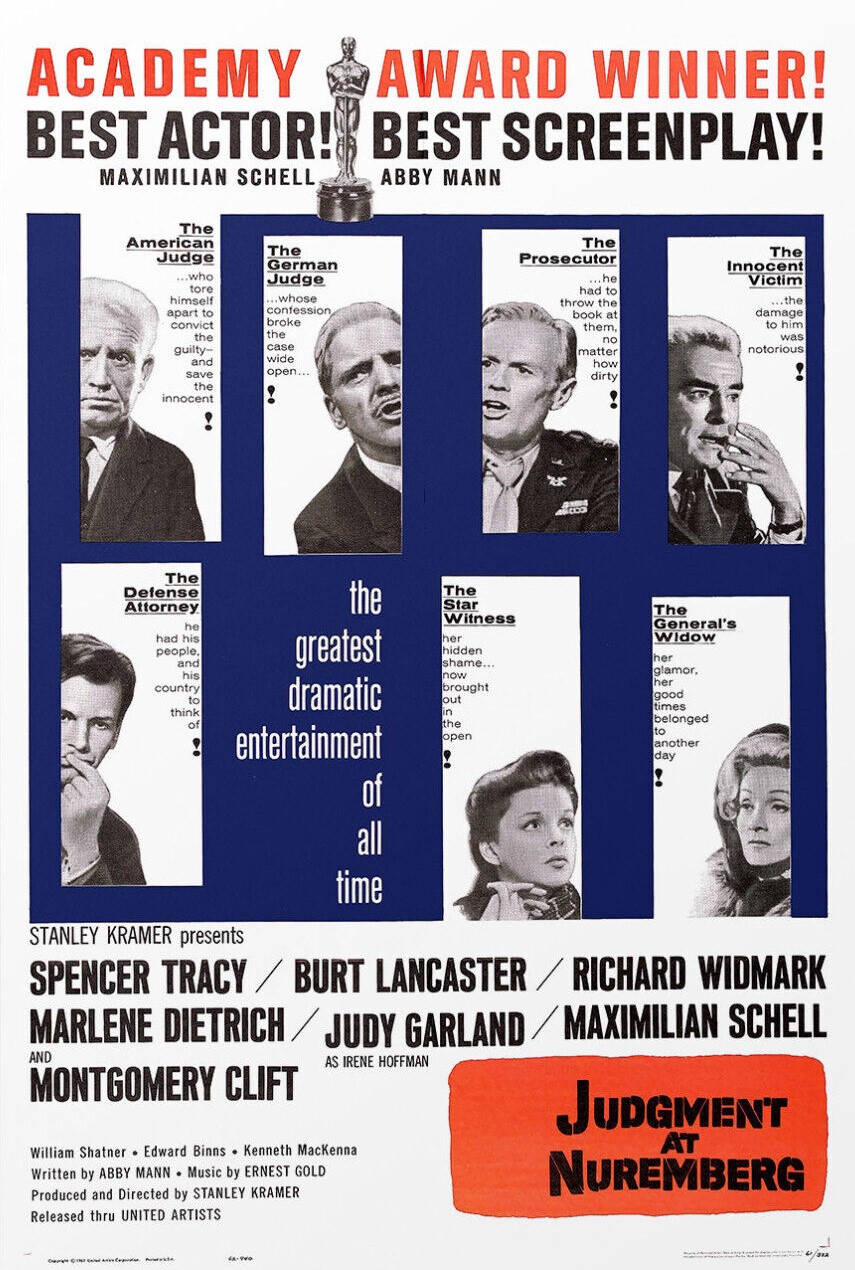
Laurence Olivier could have played a Nazi long before his celebrated villainous turn in Marathon Man (1976). He was producer-director Stanley Kramer’s first choice to play Chief Judge Dr Ernst Janning. He turned the role down in favor of getting married to actress Joan Plowright. Kramer had already decided an all-star cast was required to attract an audience for the grim picture.

The screenplay was an extended version of Abby Mann’s teleplay that had screened on the ABC in 1959. Although Marty (1955) had transitioned with box office and critical success from television to cinemas, that boom was long over.
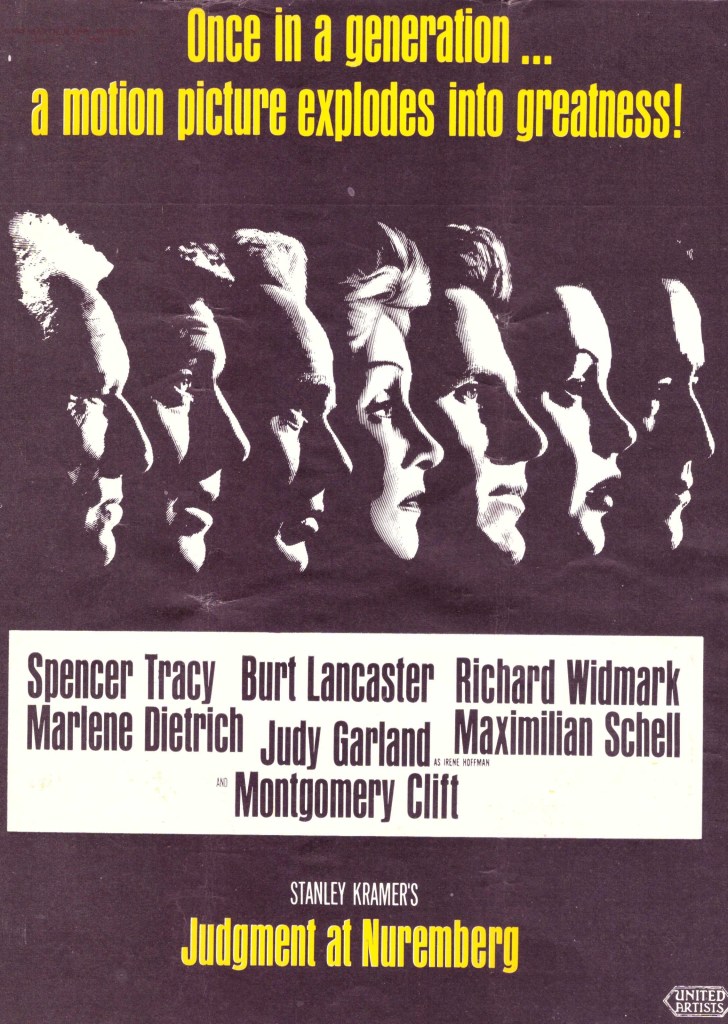
United Artists, with whom Kramer had a multi-picture deal, were not keen. “I did what looked like a compromise to them, but what I had been planning to do anyway. I promised to fill the cast with stars of such magnitude that their presence would almost guarantee the film wouldn’t lose money.”

There were a couple of other obstacles to overcome. A stage version of the teleplay was being planned for London and Paris and Kramer had to take out an injunction against a documentary with a similar title, Verdict at Nuremberg.

Kramer was known as an issues-driven director, his debut Not As a Stranger (1955) tackling the medical profession, The Defiant Ones (1958) racism and in On the Beach (1959) nuclear war. Along with Otto Preminger, he was viewed as a director of “worthy” pictures, not always a recommendation in the eyes of the critics, but as long as the movies made money and attracted Oscar interest likely to remain attractive to studios. Kramer was just about the only producer (High Noon, 1952, and The Caine Mutiny, 1954, on his calling card) who made a successful career-long transition to direction.

With the exception of Olivier, replaced with Oscar-winner Burt Lancaster (Elmer Gantry, 1960) – not incidentally second choice either, the director preferring to have used a German actor – Kramer hired all his first choices. Spencer Tracy, in fact, was the first recruit. After working with him on Inherit the Wind (1960), Kramer got it into his head when considering a picture to ask himself what part there might be for Tracy.

The actor provided “A depth and candor that would make people notice.” Maximilian Schell (Topkapi, 1964) reprised the role he had essayed on television, a man “living in a complicated gray zone.”

Kramer had a reputation for hiring singers and dancers – Gene Kelly, Fred Astaire, Frank Sinatra –  for dramatic roles and he continued in that vein by hiring Judy Garland. It was a difficult decision. He theorized that “the very disorders that made it difficult to work with her fitted perfectly with the role.”
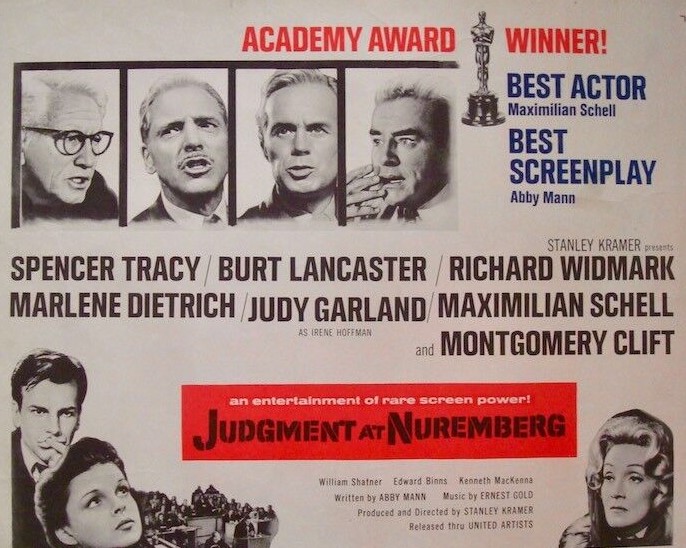
You could have said the same of Montgomery Clift (Freud, 1962), “reduced almost the level of the unsound person he was portraying.” Given the actor’s problems remembering lines, Kramer allowed Clift to basically ad lib, when attacked on the witness stand permitted to reach “for a word in the script” that appeared the correct emotional response to “convey the confusion in the  character’s mind.”  While Clift did not often adhere to the script, whatever he said worked well enough. Rarely has a director been so sympathetic to a troubled actor. “He needed someone to be terribly kind,” said Kramer, “someone who would consistently bolster his confidence and tell him he was wonderful.

Marlene Dietrich, who had firsthand experience of Nazi Germany at first hand, having fled the country, actually knew the general whose wife she was portraying, which helped to “deepen my understanding of the emotions of Hitler’s victims,” conceded Kramer. Opening up about her experiences and fears allowed Kramer to extend the scope of the character.

While the courtroom where the original trial had taken place was not available for hire – it was in current use – Kramer was permitted to measure and photograph the room to reconstruct it on a soundstage. Only 15 per cent of the movie was shot in Germany.

The experience of filming Inherit the Wind, another courtroom drama, taught Kramer the need to have fluid camerawork since talk and gesture tends to be static. “I learned to move the camera often to achieve a sense of movement for the viewer.”

Abby Mann was required to open up the teleplay, move the action outside the courtroom – scenes in the judge’s accommodation, on the derelict streets, in restaurants – and avoid cinematic claustrophobia and making it a “pious sermon.” “In my opinion,” argued Kramer, “Judgment at Nuremberg conveys a moral not always honoured, then or now, in the world of politics.”

Kramer had a particular method of pre-production. He built all his sets six weeks before filming began. As part of that process, he sat down with his cinematographer and went through the script scene by scene working out the lighting and camera positions. Then he called in the actors and took them through the sets and roughly his shooting thought-process, taking on board any queries and suggestions.  Film like this “sort of demanded it be shot in sequence with a single camera,” explained cinematographer Ernest Laszlo  (Fantastic Voyage, 1966).

The 360-degree turning of the camera was not as revolutionary as you might imagine – although, according to critics, Michelangelo Antonioni invented it for The Passenger (1975). Laszlo had done if before on The Hitler Gang (1944) for director John Farrow. But this was infinitely more complicated set-up with the revolving camera in constant use to allow Kramer the required fluidity.

“I used two key lights,” said Laszlo. “Shooting this I used one and then as we went round I used the other.” It wasn’t as simple as it sounds, the lights needed to be positioned with mathematical precision so the audience wasn’t aware of any change in the lighting.

“The circling camera saved us photographically,” said Kramer, preventing the picture from seeming “slow and cerebral.” As smooth as it appears on screen it was cumbersome. The entire crew involved had to carry cables and equipment round in a circle. But it permitted Kramer to pick up the judges without cutting to them.

Kramer also used the camera to achieve another transition. As the picture began, German actors spoke in German (with translators offscreen) to show the trial was mostly in German. But for the movie to work, the dialog needed to be in English. “We started the transition scene with Schell addressing the court in German. Laszlo’s camera zoomed in on him, then turned elsewhere, then turned again to Schell so that we were able to switch his speech from German to English in perfect cadence as the camera came in on him the second time. His English picked up from his German so naturally you could almost let it pass without noticing.”

Kramer conceded there might, in fact, be “too much camera movement.” But that was in part dictated by a “very authentic situation, a long courtroom, very wide, and the spacing between the original attorney’s box and the witness box was at least forty feet. That’s a long distance if your try to photograph it.” Also, it wasn’t like a normal Hollywood or American trial, where the lawyers can prowl in front of judge and jury. Here, the attorneys could not move from their box.

“Unless you want to play ping-pong in the cutting room, you have to move the camera…I felt trapped by these three positions – the judges, the attorneys and the witnesses in that big spread. So, the forty feet was compressed to twenty-eight feet. We had to put a lot of light on the far figures to hold the forms in focus,” resulting in the actors “perspiring a lot during these shots.”

The movie, rolled out as a roadshow, did better than expected, the all-star cast proving a major draw, global box office netting a healthy profit. Schell won the Oscar as did Abby Mann, Kramer was nominated in his dual capacity as producer and director.

SOURCES: Stanley Kramer, It’s a Mad, Mad, Mad, Mad World: Life in Hollywood (Harcourt Brace & Company, 1997) p179-197; Donald Spoto, Stanley Kramer Film Maker (Samuel French, 1990)p230-233;  “An AFI Seminar with Ernest Laszlo, American Cinematographer, January 1976, p52; “Judgment at Nuremberg Still Slated for Legit,” Box Office, February 3, 1960, p6; “Kramer Gets Injunction,” Box Office, December 11, 1961, p14.
https://amzn.to/3Mkl7v5

Behind the Scenes: Biggest Films in Australia 1960-1969

Information about how films performed outside the United States in the 1960s was incredibly difficult to obtain. Foreign or worldwide grosses were not reported in any consistent fashion – if at all – during that decade. Even the box office I’ve been able to report on previously, i.e. United Artists, just listed foreign as one all-encompassing entity, not breaking it down by country. So, when the opportunity does arise, it’s fascinating to observe how audiences in different countries react to what comes down the line.

Probably it will come as no surprise to discover that the top film of the 1960s in Australia was The Sound of Music. The musical brought in $4.4 million in rentals (the amount returned to studios once cinemas have taken their cut of the gross). It was the number one film, by a considerable margin, in the United States as well. Astonishingly, given the population differential (12.5 million Aussie inhabitants by 1970 vs 203 million in the US) the rentals were, proportionately, on a par, the movie hauling in $72 million in rentals on home territory.

Second place in Australia went to David Lean blockbuster Doctor Zhivago (#3 in the U.S.) with $2.6 million followed by My Fair Lady (#7 Stateside) on $2 million, in both instances, pro rata, bettering their U.S. box office.

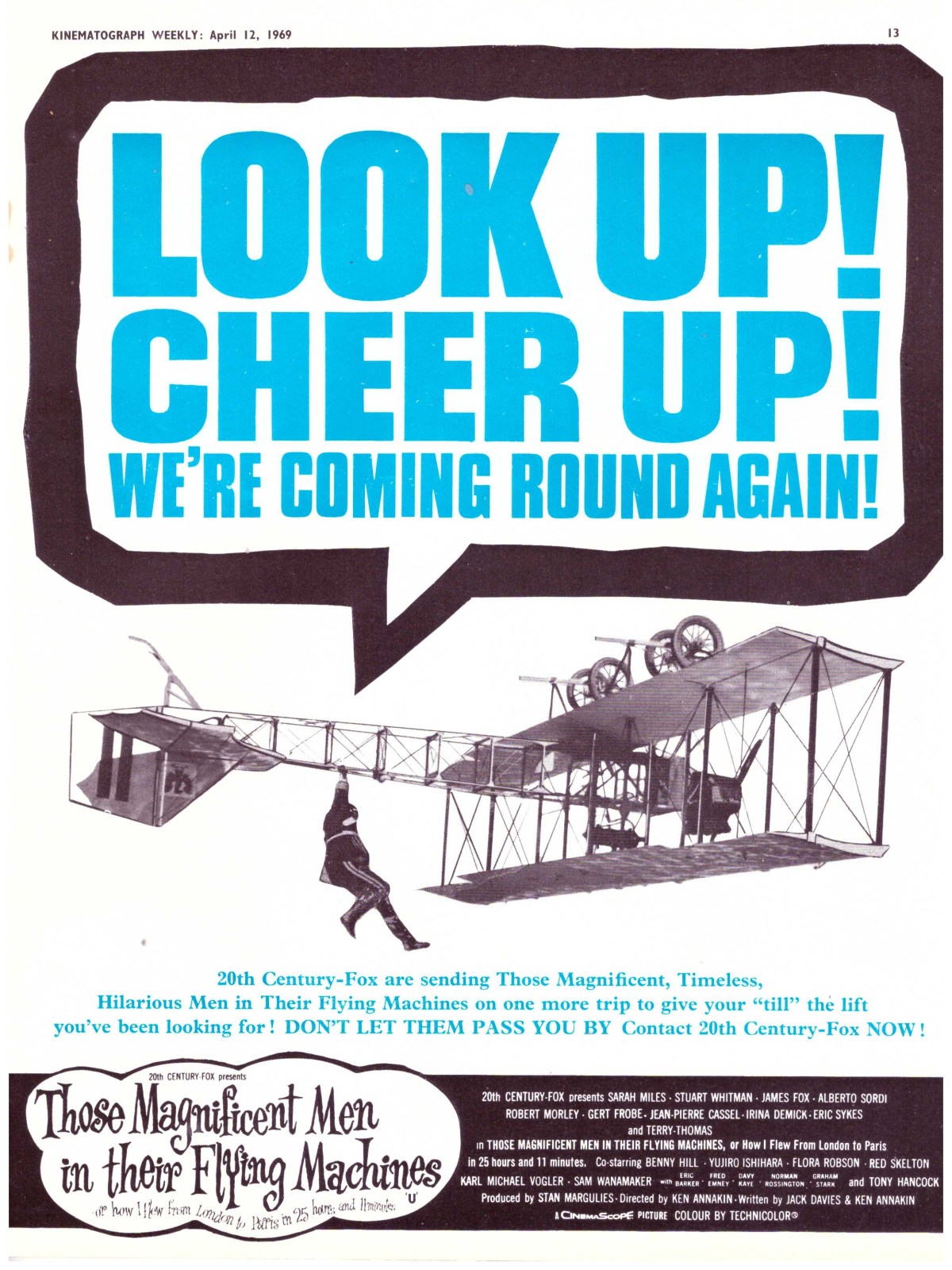
The biggest surprise of the decade was the performance of Those Magnificent Men in Their Flying Machines (#39 Stateside) which rocked up in fourth place with $1.7 million. You could probably say the same for the next picture on the list, Lee Marvin-Clint-Eastwood-Jean Seberg musical Paint Your Wagon, which struggled at the US box office. Australia rentals hooked $1.44 million.

Australians proved largely impervious to the flood of westerns that had struck pay dirt at the U.S box office. Big Stateside hitters like How the West Was Won (#12), True Grit (#47), Cat Ballou (#62), The Professionals (#69), The Alamo (#73) and Shenandoah (#77)  don’t feature on this list. The exception was Butch Cassidy and the Sundance Kid (#28) which raced to $1.31 million and placed seventh Down Under.

Whether humor would travel was difficult to predict. As well as  Those Magnificent Men,  comedies ranking better in Australia than in the U.S. were: It’s A Mad, Mad, Mad, Mad World (#18 Stateside) which took sixth spot here on $1.3 million; Tom Jones (#23) 10th here with $1.06 million; The Great Race (#54) 16th here on $884,000; and Irma La Douce (#43) 20th here with $832,000.

But The Graduate, the second-best performing movie in the U.S., failed to emulate that success, coming in 12th here with $1.02 million. Likewise, comedies that were massive in the U.S. made less of an impact, neither The Odd Couple (#14 Stateside) nor The Love Bug (#22nd) making this list.

Aussies were as appreciative as U.S. audiences of Sidney Poitier’s breakthrough duo Guess Who’s Coming to Dinner (#10) whose $1.08 million secured ninth position here and To Sir, With Love (#19) which took 11th spot on $1.05 million.

There was comparatively less interest in the spy genre that swamped American cinemas during the decade. James Bond was not the bonanza it was Stateside. Thunderball, ranked 8th in the U.S., Goldfinger ranked 11th, and You Only Live Twice ranked 20th were, 21st , 22nd and 30th, respectively here, and not commanding, proportionately, anything like similar rentals.

With $1 million in the kitty, Oliver! outranked both West Side Story ($902,000) and Camelot ($833,000) whereas in the U.S. the situation had been reversed. Here, respectively, they snapped up 13th, 15th and 19th spots whereas in America it had gone 55th, 17th and 45th.

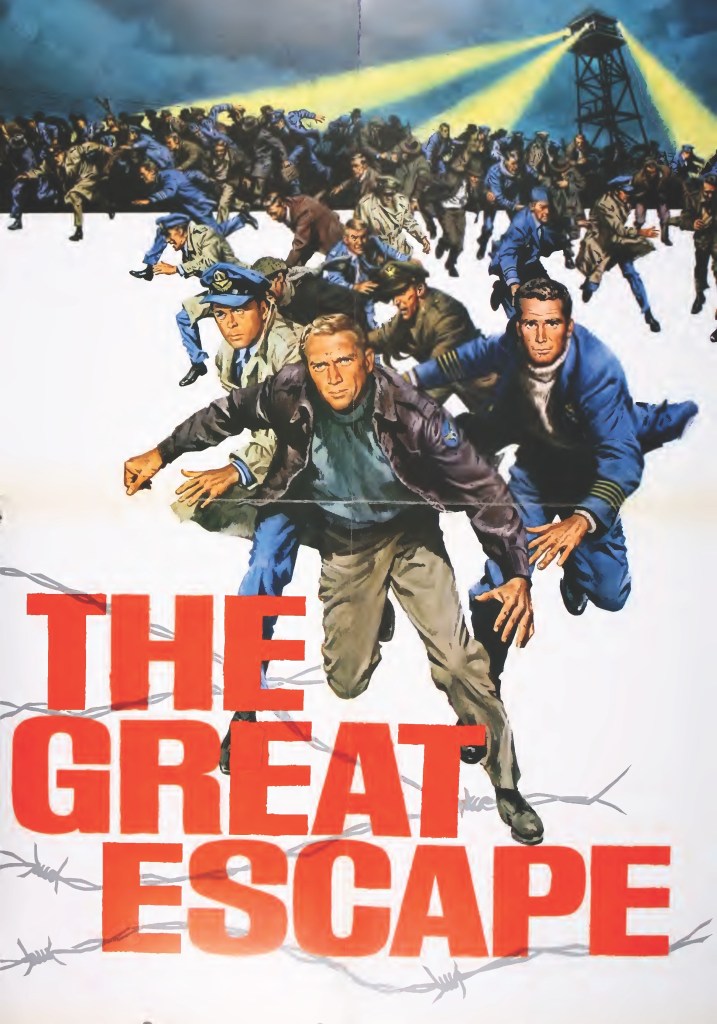
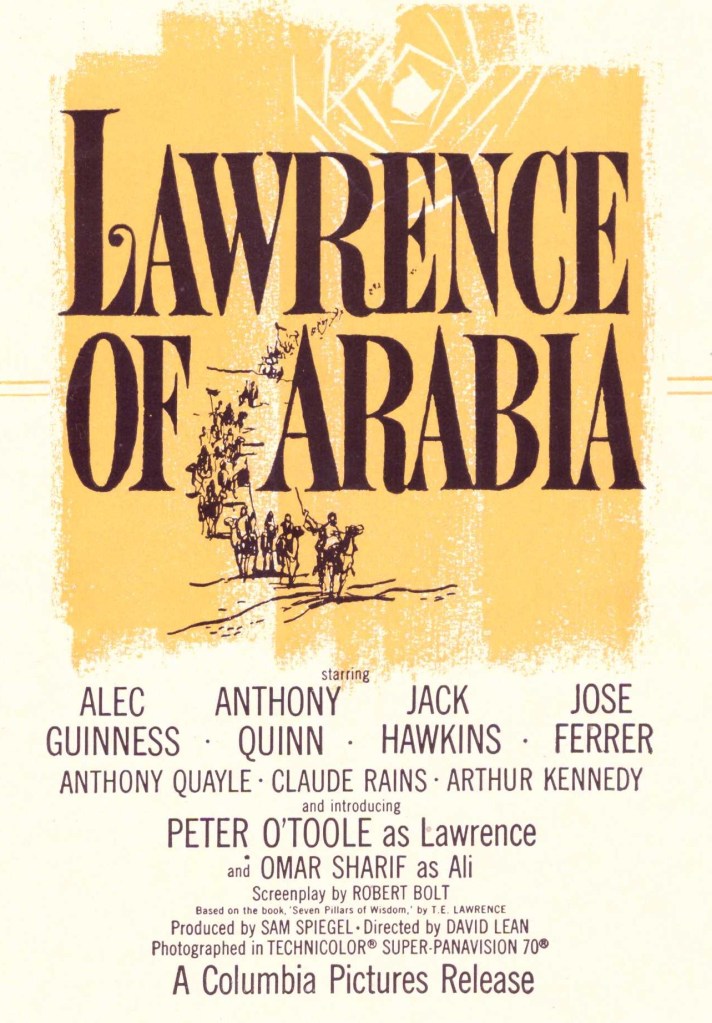
Three outliers which had not made the U.S. Top 100 performed far better in Australia:  Battle of Britain with $776,000 tallied up 23rd spot, Born Free with $721,000 homed in on 26th spot and The Great Escape shot up $543,000 for 32nd. Some other movies in the American Top 100 did considerably better in Australia. Lawrence of Arabia (#28) tracked to 8th spot in Australia with $1.1 million. Chitty Chitty Bang Bang and Hatari!, joint 92nd in the U.S rankings, topped out at 29th and 33rd, respectively, in the Aussie version.  

Controversy didn’t fly so well. Of pictures that fell into that category, the best results came from Midnight Cowboy. It was ranked 52nd in the U.S. rentals race but clocked up $846,000 in Australia to land 18th place. Conversely, The Dirty Dozen, 16th in the U.S., only managed  28th. But other movies laden with sex, drugs, profanity or violence proved to have less appeal. Bonnie and Clyde (#13 Stateside), Valley of the Dolls (#14), The Carpetbaggers (#26), Rosemary’s Baby (#28), Planet of the Apes (#28)  and Who’s Afraid of Virginia Woolf (#37) failed to make the cut.

SOURCES:  “All-Time Aussie Rental Champs,” Variety, May 5, 1982, p54; Brian Hannan, The Magnificent 60s, The 100 Most Popular Films of a Revolutionary Decade (McFarland, 2022).

Behind the Scenes: “Freud” / “The Secret Passion” (1962)

Your leading man is an alcoholic drug-addled star with substantially impaired sight. Your leading lady, in her first major role, decides she knows more about acting than the very experienced director. But in the world of victimhood, who gets the blame? Not of course Montgomery Clift (The Defector, 1964) or Susannah York (Sands of the Kalahari, 1965), but  director John Huston (The Night of the Iguana, 1964).

Huston had been trying to put together a movie about the flawed god of psychiatry, Sigmund Freud, for 13 years. In 1949, with a screenplay by Charles Kaufman and backed by Twentieth Century Fox, it was going to be called Dr Freud. That version was still on the stocks a couple of years later. It wasn’t the first attempt to put the Viennese genius’s life on film, in 1940 Warner Brothers announced Edward G. Robinson in The Life of Freud with a script by Gary Endore.

Huston began serious work on the movie in 1956, but it was only greenlit two years later, after he signed a five-picture $20 million deal with new production unit Seven Arts, set up by Ray Stark and Eliot Hyman, future kingpins at Columbia and Warner Bros, respectively. It was to follow The Man Who Would Be King (not finally made until 1975), for which Huston was scouting locations in Afghanistan. At that point Freud was scheduled for 1959. Then it was Unforgiven (1960) and The Misfits (1961) that came first.

Mostly, the delay was caused by the screenplay. Huston had handed the task to celebrated French philosopher and playwright, who with what amounts to contempt for Hollywood, had written a 300-page script. His next attempt was 780-pages. Read that and weep, Christoper Nolan and Martin Scorsese, this was a 10-hour movie. When questioned, Sartre retorted “so make a 10-hour film.” Huston contemplated turning the script into two unrelated movies, perhaps in the vein of Young Tom Edison and Edison, the Man (both 1940).

Sartre spent two weeks at Huston’s home in Ireland, with Reinhardt on hand as well, trying to condense the material. But he spoke so rapidly that Huston confessed “I could barely follow even his basic thought processes….sometimes I’d leave the room in desperation, on the verge of exhaustion from trying to follow what he was saying.” Huston could not fault Sartre’s diligence. The playwright rose at 5am and would have 20-25 pages ready for discussion five hours later.

Sartre was paid $40,000 for his screenplay. Kaufman was brought back on board but his work didn’t gel with Huston’s vision. Wolfgang Reinhardt, whose name also appeared as producer, was more involved on the script. His relationship with Huston went back to Juarez (1939) on which they were co-writers and Dr Ehrlich’s Magic Bullet (1940), for which Huston was credited with one-third of the script and Reinhardt was producer. But Reinhardt hadn’t received a screenplay credit since Juarez and his last Hollywood picture as a producer was Caught (1953). More recently, he had found work in Germany on The Trapp Family (1956). According to Huston, he was “misunderstood, distrusted and ill-used in Hollywood.”

Eliot Hyman questioned Reinhardt’s contribution. In addition to snagging $30,000-$35,000 and a 7.5 per cent profit share for his producer duties, Reinhardt was being paid $300 a week plus expenses for screenwriting, fees Hyman considered “out of line.”

Huston was determined that “Freud’s descent into the unconscious should be as terrifying as Dante’s descent into Hell.” Sartre was viewed as having not just objectivity but as someone who knew Freud’s work intimately. But clearly major work was required to trim the Sartre script. It took six months to reduce the material into a workable script. Naturally, Sartre objected to the reworking and wanted his name removed.

Eventually, with the project at an impasse, Huston turned to leading British psychiatrist Dr David Stafford-Clark to provide clarification. Clift, who as a patient had considerable experience of psychiatrists, insisted on joining their discussions, but “his presence served only to delay and confuse.” When asked to leave, he stood outside the door and cried, then “drank himself  unconscious.”

That should have been warning enough. Having worked with an equally addled Montgomery Clift on The Misfits (1961), Huston might have thought twice about going back into the lion’s den. But, while not covered in box office glory, The Misfits was superlative, with all three principles turning in excellent  performances. And in any case, Clift was the go-to actor for the tortured character.

Eva Marie Saint (The Stalking Moon, 1969) was first choice for the role of troubled teenager Cecily and after she turned it down Huston approached Marilyn Monroe whose psychiatrist advised against it. So, it went to 22-year-old English actress Susannah York, who had attracted Hollywood’s attention after two British films – Tunes of Glory (1960) and Loss of Innocence / The Greengage Summer. Unusually, this was not a romantic part, treatment of this patient critical to Freud’s analytical breakthrough. Karl Malden (Pollyanna, 1960) was offered the second male lead, but due to his unavailability it provided a comeback for Larry Parks (The Jolson Story, 1946) who hadn’t worked in Hollywood since 1954.

Huston recalled, “He had deteriorated to a shocking degree… I should have dropped Monty…but I didn’t. I thought that when we got on the set and he had lines he would be all right.”

Clift continually tried to rewrite the movie. He had got hold of previous copies of the script and produced his own indecipherable version and spoke the lines in an infantile manner. “Finally, I realized this was primarily a stall for time,” said Huston. “Monty was having difficulty memorizing the lines. I was surprized at this because he had done so well during The Misfits.” But those lines were simple compared to the long, complicated speeches of Freud.

“I’m sure Monty had almost no conception of what he said in the picture – yet he had the ability to make you believe what he did.” Eventually, his lines were written on boards, on the labels of bottles, door frames and other places on the set. Added Huston, “There was a mist between him and the rest of the world that you simply couldn’t penetrate.”

Huston also encountered problems with York. “Susannah was the personification of the uninformed arrogance of youth. Shortly, under Monty’s influence, she became convinced she was entitled to scientific opinions regarding a subject of which she was woefully ignorant.”

She and Monty would collaborate to rewrite their scenes. York refused to do a scene as originally written until a call to her agent changed her tune. 

It took all Huston’s experience to hold onto his temper but a confrontation with Clift in his dressing-room resulted in a door slammed so hard it shattered a mirror. That was later conflated into Huston smashing furniture and tearing the couch apart. Huston was also blamed for Clift receiving rope burns during the climbing sequence. In fact, the shots were arranged so that after just holding on to the rope for the short period required, the actor could let go and land a few feet down on a pile of mattresses. Instead, he slid down the rope, holding on with his hands.

“My reputation for cruelty appears to stem directly from this one scene,” complained Huston, convinced the rope burns were Clift “for his own reasons beating himself up.”

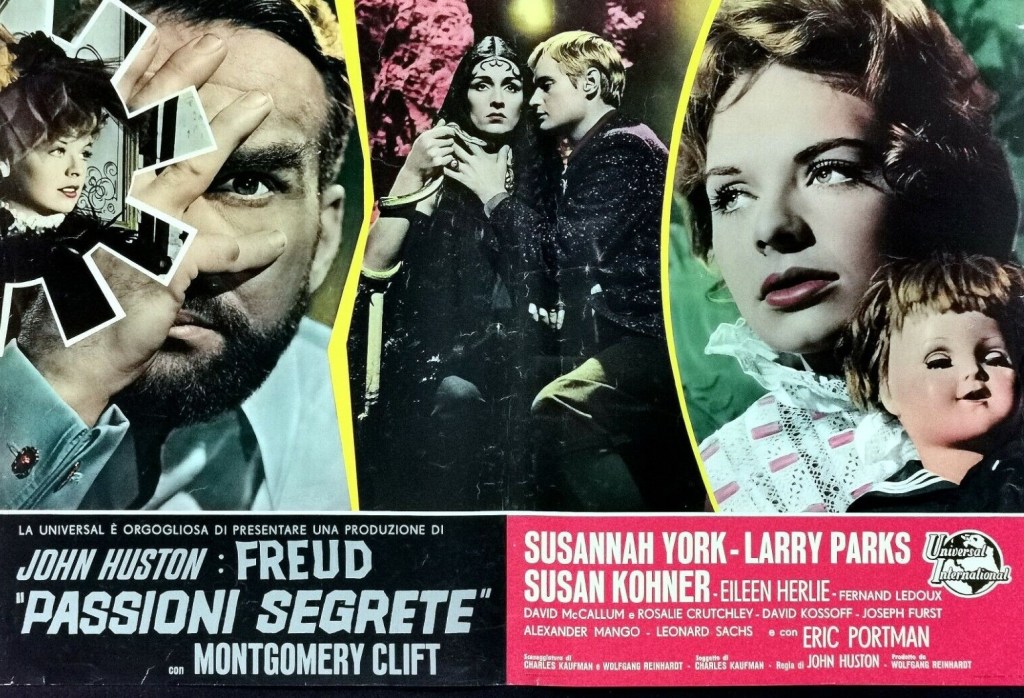
Cinematographer Douglas Slocombe developed a technique of three-plane camerawork to help audiences distinguish between reality, dreams and memory. Scenes where characters recalled memories were shot through a small clear-glass plate mounted on the lens matte box. Dreams acquired an extreme black-and-white effect with chalky faces and other details standing out as luminous in tunnels of darkness. This was achieved through a combination of dramatic contrast in photography, stock and lab work.

The production spent five weeks at the Bavaria Studios in Munich before shifting to Vienna, which included 10 days of night shooting.

Universal underwrote the movie, and with To Kill a Mockingbird (1962) also on its roster, intended to celebrate its golden anniversary in fine style with “record rentals” from a raft of movies appealing to the public and the critics.

Freud’s daughter Anna and son Ernest didn’t take kindly to Hollywood’s interpretation of their father’s life and disassociated themselves from the movie and the Viennese hierarchy objected to the film’s louche elements.

Filming began in August 21, 1961, including three weeks on location in Vienna, and was due to wrap on December 5. That it took another two months to complete, (final shooting date was February 10, 1962) inflating the budget, was laid at the foot of Clift. Never mind the drink and drugs he was consuming in mighty proportions, he had cataract problems and could hardly see. 

Universal sued Clift for $686,000 for not acknowledging his cataract problems prior to filming, an issue that prevented him memorizing his lines.  Clift counter-sued for the remaining $150,000 owed from his $200,000 fee, claiming the problems had developed during filming. “I refuse to accede to the defendant’s demand that this condition…was responsible for delays to the picture.” Firemen’s Fund Insurance, whose policy covered the actor for a year from April 1, 1961, with the proviso the movie finished by December 5, 961,  denied liability.

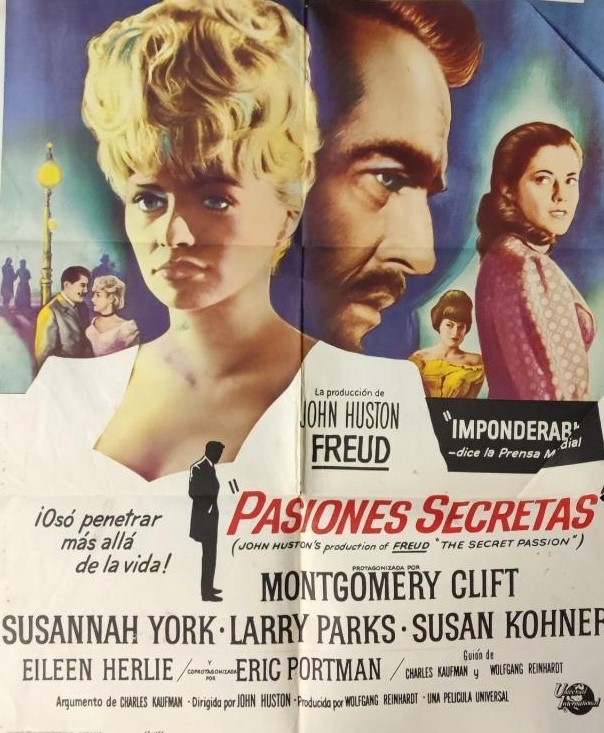
Universal was concerned that the title would mean little to the general public and pre-release toyed with changing the title to Freud: The Dark Passion but agreed, in the end, not to “tamper” with it. However, exhibitors disagreed. And once Minneapolis second-run and neighborhood cinema owners refused to book it under the existing title, it was changed to The Secret Passion, which at least got it through the door with bookers even if the public remained wary. On posters, The Secret Passion part of the title grew bigger and bigger until the Freud element almost disappeared. The film was cut after initial release but the DVD shows the full version.

Despite critical approval and a 12-week run in New York and some decent runs in smaller houses in the country’s bigger cities, it was a flop, not managing the $1 million in rentals required to earn a spot on Variety’s annual box office chart.

SOURCES: John Huston, An Open Book (Columbus books, 1988) p294-305; “Memo from Eliot Hyman,” July 15, 1959, United Artists Archive, University of Wisconsin, Box 7, Folder 7; “Endore for Freud,” Hollywood Reporter, February 24, 1940, p2; “Robinson As Freud,” Box Office, March 2, 1940, p2”; “Dr Freud Bio On Fox Docket,” Box Office, September 17, 1949, p19;  “20th Lead with Five in Biopic Sweepstakes,” Variety, January 24, 1951, p5; “Freud Biopic 1st Hyman 7-Arter,” Variety, July 30, 1958, p3; “John Huston’s Next Spot – Afghanistan,” Variety, October 15, 1958, p19; “Huston Seeks Saint,” Hollywood Reporter, November 10, 1958, p2; “Universal Unchained,” Variety, August 19, 1959, p5; “Huston in on Freud Biography,” Variety, October 28, 1959, p11; “Sartre Script on Freud: 780 Pages,” Variety, June 29, p3; “Freud Rolls August 21,” Variety, July 26, 1961, p5; “Freud Moves Location,” Hollywood Reporter, October 12, 1961, p6; “Freud on Night Shift,” Hollywood Reporter, October 24, 1961, p3; “Freud Film Not To Liking of Kin,” Variety, November 1, 1961, p2; “Three-Plane Photography Developed for Freud,” Hollywood Reporter, December 19, 1961, p11;  “Huston’s Freud Ends Photo Phase,” February 14, 1962, p4; “Universal Sues for $600,000,” Hollywood Reporter, April 30, 1962, p3 “Montgomery Clift’s Eye Trouble,” Variety, June 5, 1963, p5; “U’s Insurance Claim on Monty Clift,” Variety, June 27, 1962, p7;  “It’s Plain Freud, U Won’t Tamper,” Variety, October 3, 1962, p3; “Never Heard of Freud,” Variety, October 9, 1963, p5; ’“Top Rental Films of 1963,” Variety, January 8, 1964, p37.

https://amzn.to/404Z2q1

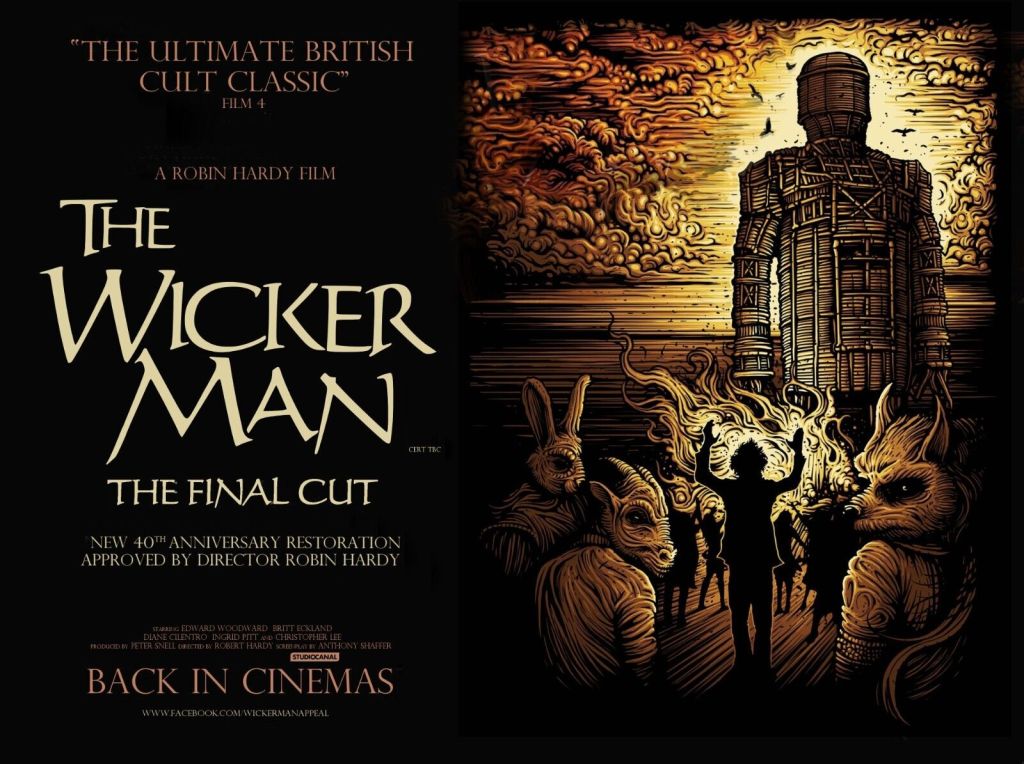
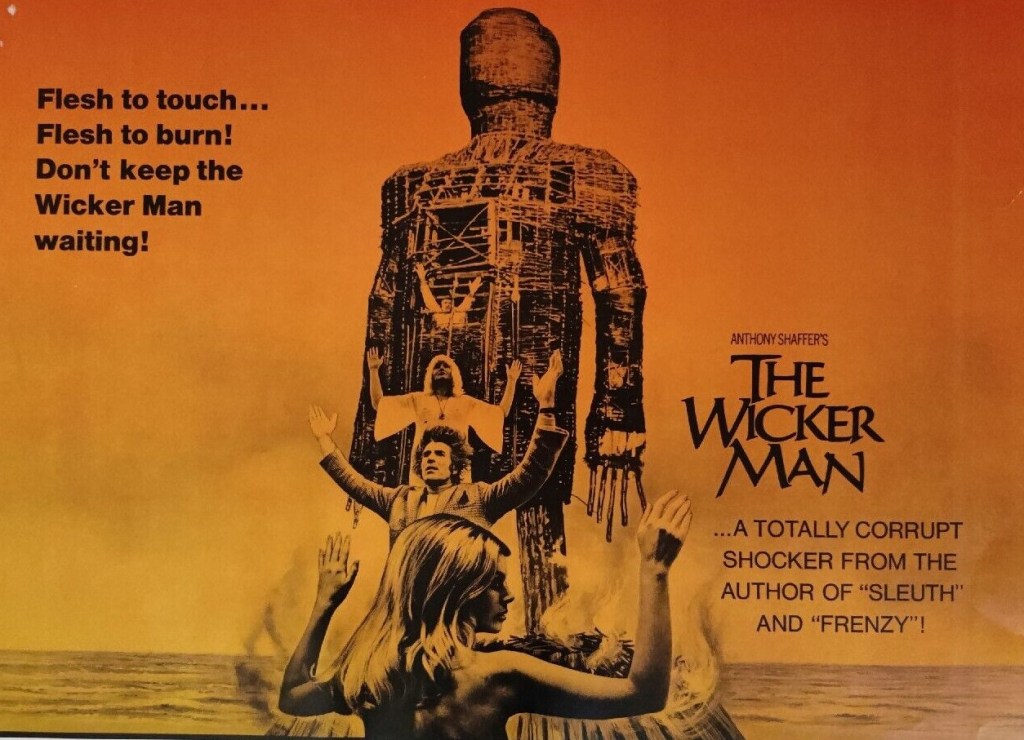
Behind the Scenes: “The Wicker Man” (1973) at the Box Office

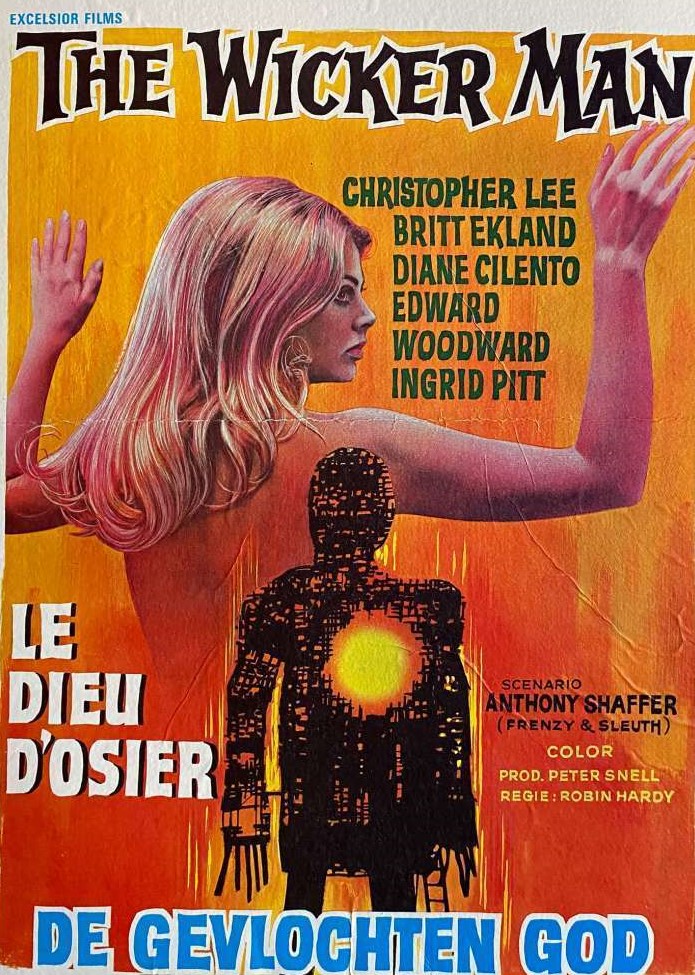
Cult films don’t come any bigger than The Wicker Man (1973). Regarded as a box office flop in Britain at the time of initial release, it struggled to gain any traction in the U.S., only managing a truncated release there towards the end of the decade. However, closer examination of the box office reveals a different story and suggests both that distributor British Lion was rather harsh in declaring it a box office disaster and that more careful handling on the delayed U.S. release could have produced better results.

In the U.K., it was denied a stand-alone release and went out as the second feature to the critically acclaimed and commercially successful Don’t Look Now (1973) directed with some style by Nicolas Roeg and starring Donald Sutherland and Julie Christie, and which has, assuredly, stood the test of time. Several weeks after Don’t Look Now launched as a solo feature on October 1973 at the prestigious Odeon Leicester Square in London’s West End it shifted in December to the less prestigious Metropole where it was coupled with The Wicker Man.

It’s my considered opinion that the reason the double bill managed such a long run – around five months – in the West End, moving between various cinemas, was, in substantial part, due to The Wicker Man. It had been released with virtually no fanfare and relied on word-of-mouth to attract an audience and I think it was the beginnings of that cult recognition that resulted in the double bill playing as long.

Given Don’t Look Now was a verified box office hit as a solo feature, it made little sense to couple it with an unfavored second feature since at this point the double bill was losing ground at cinemas. A single bill meant more performances, especially on the vital weekends, and therefore the potential for greater box office.

One of the elements that backed the notion that The Wicker Man was more important to the double bill than the distributors cared to acknowledge was that the fall-off week-by-week was minimal. The double bill played on in London’s West End long after it had completed a circuit run on the Odeon chain, suggesting that its attraction was perhaps due to the unexpected pulling power of The Wicker Man.

In its accounts, British Lion wrote off a $470,000 loss against The Wicker Man. But that seems like an accounting trick. The distributor had a choice in how it allocated the box office. A supporting feature could expect to receive little more than a flat fee as its share of the box office if it was deemed a B-feature. A genuine double bill – and bear in mind that horror maestro Christopher Lee was a box office attraction in Britain – would split the proceeds. That British Lion opted to treat it as a second feature, allowing it to maneuver the box office against the picture. Otherwise, given its low budget, it would certainly have turned a profit. The loss seems even more baffling when you take into account that it was sold to 17 countries.

In any case, since nobody else has tracked The Wicker Man’s actual performance in the UK and the U.S., I thought it might be interesting to do so.

UK (LONDON WEST END) BOX OFFICE 1973-1974

Don’t Look Now/The Wicker Man

Metropole (1,394 seats)

December 19 1973: – $5,300 (Variety deemed this “anaemic”)

December 26 1973: – $4,700

January 2 1974: – $4,900

January 9 1974: – $13,200

January 16 1974: – $9,700 (“very good”)

January 23 1974: – $8,700 (“fine”)

January 30 1974: – $7,700

Odeon Kensington (1,883 seats)

January 16 1974: – $16,800 (“boff”)

January 23 1974: – $13,700 (“robust”)

January 30 1974: – $10,900 (“fancy”)

February 6 1974: – $10,800

February 13 1974: – $9,300 (“stylish”)

February 20 1974: – $6,100

Odeon Haymarket (600 seats)

February 20 1974: – $6,000

February 27 1974: – $8,300

March 6 1974: – $7,700

March 13 1974: – $6,800

March 20 1974: – $7,400

March 27 1974: – $7,100

April 3 1974: – $6,900

April 10, 1974: – $5,700

Cincenta 3 (150 seats)

April 24 1974: – $2,600 (“nice”)

Cinecenta 2 (150 seats)

May 1 1974: – $2,700

It was pretty much unheard of in London’s West for a programme to move around five cinemas, and, with the exception of Cinecenta, running for so long at each venue with a low drop-off week-by-week (steeper falls would have seen runs more speedily terminated). And when it came to the U.S. release, half a decade later, as you can see, much to everyone’s surprise, The Wicker Man on its own delivered both some notable opening figures and lengthy runs.

US BOX OFFICE 1977-1981

The Wicker Man only

Although being rated “R” by the U.S. censor in April 1974 and being reviewed by Variety in May 15 1974, The Wicker Man failed to gain any release in the U.S. even though one-time partner Don’t Look Now was widely distributed. The Wicker Man received a promotional fillip after winning top prize at the Fantastic Festival in 1974 but it wasn’t enough to boost its Stateside distribution prospects. Both National General and New World had considered taking it on but ultimately passed. It ended up at Warner Brothers which stuck it in the vault after a disastrous test at drive-ins in Atlanta and San Diego.

Box Office magazine gave it a favourable review in 1978, calling it a “lost horror classic” and noting that director Robin Hardy had made “an impressive debut.” The version its reviewer saw was cut from the original 102 minutes to 87 minutes. But the version seen by The Hollywood Reporter in 1979 was the restored version and its reviewer reckoned that the “dark intagibles” of its mangled release made it ideal fodder for a “cult audience.” By now PR had kicked in and it received the accolade of a front-page story in The Hollywood Reporter, calling it “reborn” and making play of the problems encountered along the way.

But apart from the Minneapolis misadventure in 1977, it wasn’t until 1979 that it made any release headway. Most of the bookings were in arthouse cinemas. But what is noticeable is length of runs and comparatively small week-by-week drop-offs.

Minneapolis: World (461 seats)

October 5 1977: – $2,000 (“poor”)

San Francisco: Lumiere (300 seats)

January 24, 1979: – $19,000 “boffo”

January 31, 1979: – $15,500

February 7 1979: – $13,000

February 14 1979: – $11,000

February 21 1979: – $10,600

February 28 1979: – $7,000

March 7 1979: – $5,700

March 14 1979: – Not known

March 21 1979:  – $5,900

Los Angeles: Los Feliz Westland 1 (763 seats)

March 21 1979: – $19,500

March 28 1979: – $13,500

April 4 1979: – $11,000 (“not bad”)

April 11 1979: – $9,500 (“tidy”)

April 18 1979: – $4,000

April 25 1979: – $4,000

May 2 1979: – $3,100

Los Angeles: showcase release in four other theaters

March 21 1979: – $26,000

March 28 1979: – $18,000 (“pretty”)

Seattle: Crest (700 seats)

April 4 1979: – $7,100

April 11 1979: – $6,700

April 18 1979: – $6,300

April 25 1979: – $4,700

May 2 1979: – $3,300

New York: Paramount (533 seats)

April 2 1980: – $21,000

April 9 1980: – $9,000 (transit strike ruined second and subsequent weeks)

April 16 1980: – $4,400

April 23 1980: – $4,000

Boston: Orson Welles II ( 200 seats)

April 23 1980: – $15,000 (“house record”)

April 30 1980: – $14,000 (“lusty”)

May 7 1980: – $8,800

May 14 1980: – $8,700

May 21 1980: – $7,600

May 28 1980: – $6,200

June 4 1980: – $4,200

June 11 1980: –  $5,200

June 18 1980: – $3,200

June 25 1980: – $3,300

Washington: Cerberus II (150 seats)

December 3 1980: – $7,500

December 10 1980: – $5,500

Kansas City: Fine Arts (560 seats)

January 21 1981:– $3,200

Kansas City:  Watts Mill (250 seats)

February 11 198l: – $2,500

Miami: showcase release in four cinemas

April 1 1981: – $3,700 (“remote”)

Cleveland:

April 1981: shown as part of the Cleveland International Film Festival

Pittsburgh: Arcade (775 seats)

May 20 1981: – $5,000 (“stout”)

According to an advert in Box Office magazine placed by distributor Abraxas in October 1979, The Wicker Man had already grossed $500,000 on the U.S. west coast. counting it the 1980 and 1981 releases, more than likley it passed the $1 million gross. Whether any of these receipts found their way to British Lion is questionable, so the U.S. box office would have done little to remove the idea it was a flop, but, in fact, counting all the results together, it must have done enough overall to turn a healthy profit.

I should point out that the dates above refer simply to the dates when the box office was reported in “Variety” magazine and not to the actual date when the film was shown. Typically, “Variety” would report box office in the week after a film was shown but this could still be up to 14-17 days after. The actual week 1 / week 2 / week 3 stuff is completley accurate even if the dates might appear misleading.

NOTE/PLEA/WHATEVER: Collecting these figures took a huge amount of work so if you want to pass on this information to others, please acknowledge the source.

SOURCESVariety, dates as shown; “Coming Releases,” Box Office, September 30, 1974, pA6; Review, Box Office, January 9, 1978, pA9; “Wicker Man Reborn Thanks to Persistent Young Distribs,” The Hollywood Reporter, February 15, 1979, p3; Review, The Hollywood Reporter, February 20, 1979, p3; Advert, Box Office, October 1979, 1979, p16; “Wicker Man Gets Proper Release After 6 Years,” The Hollywood Reporter, April 3, 1980, p1; “Strike Dents N.Y. Box Office,” Box Office, April 14, 1980, p7.

https://amzn.to/406reJa

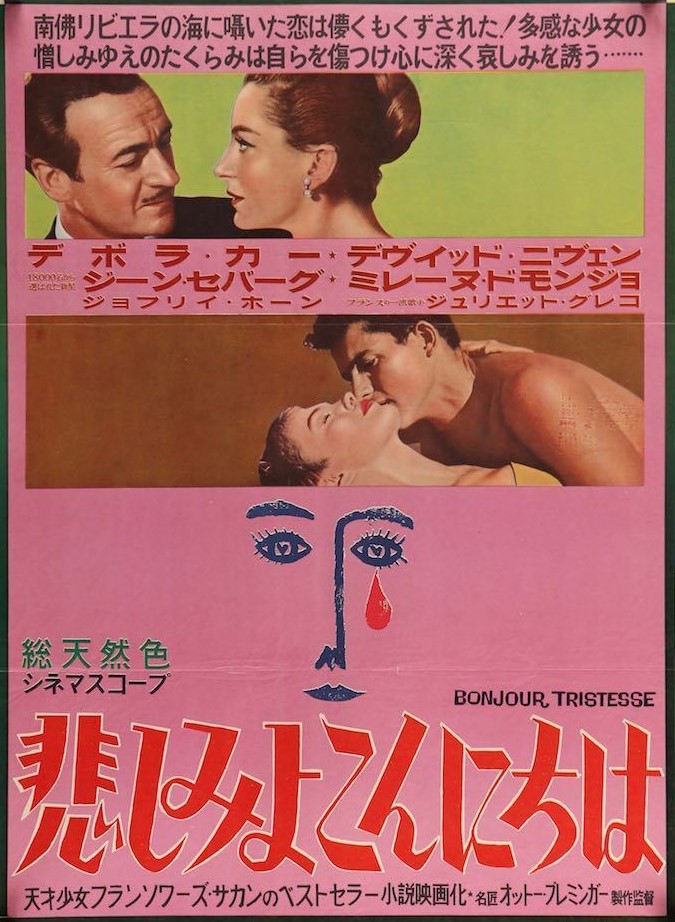
Behind the Scenes: “Bonjour Tristesse” (1958) – Part Two

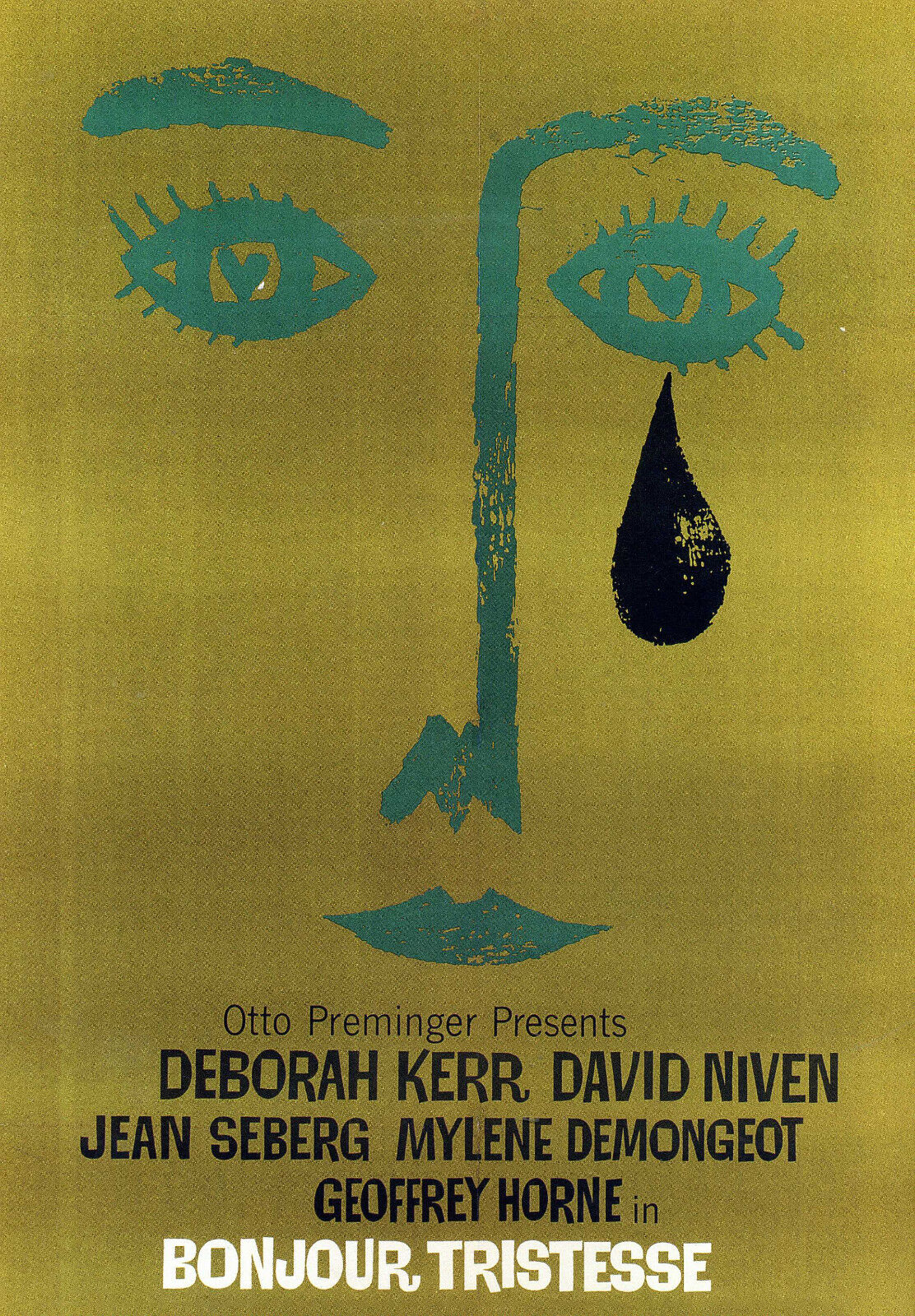
Audrey Hepburn and Cary Grant (later a famous duo in Charade, 1963) were the first names associated with Bonjour Tristesse. The former was mooted soon after the movie rights were sold to French producer Ray Ventura. She remained in the frame after Otto Preminger took over in 1955, when the project was intended for MGM rather than Columbia, at which point Grant was being targeted.

But, unfortunately, this was not being proposed as a dream team. Vittorio De Sica was being lined up to play the father in the Hepburn version that was to be directed by Jean Negulesco.

(You can see why uncovering this information prompted me to have a second shot at a “Behind the Scenes” for this picture. When I did the original article, I didn’t have access to my usual online sources. But after a query from a reader over the success/failure of the movie, and with internet access restored, I began to check out its box office and, in so doing, found a treasure trove of new data.)   

Even after Preminger dumped Hepburn – and Maggie MacNamara, star of The Moon Is Blue (1953) for that matter – as being too old, at this point Preminger was not looking in the direction of Jean Seberg either. Instead, he was going down a more traditional route to find an actress to play disturbed teenager Cecile. He embarked on a publicity-driven new star hunt. After in 1956 holding a “talent search for femme lead” in France, the director selected 17-year-old Gisele Franchomme for the role.

But she never made the grade either and was quickly jettisoned for Francoise Arnoul (French Cancan, 1955), aged 25 at the time, with another Frenchwoman, Michele Morgan (Lost Command, 1966), as the older woman who snares Cecile’s father, still to be played by Grant.

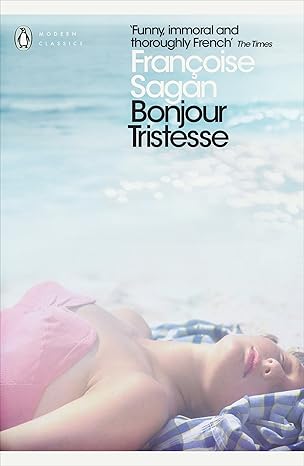
It’s hard to visualize now just what a hot number the source material was. The novel by Francoise Sagan had been a massive U.S. bestseller. By September 1955 it was in its ninth hardback printing, shifting 110,000 copies, and in 1956 became Dell’s top-selling paperback of the year. The movie rights had originally sold for just $3,000 to Ventura before Preminger ponied up $100,000 (or $150,000 depending on who you believe and in either case still the highest price ever paid for a French novel) and set the movie up at MGM.

So that studio was determined to strike while the novel was hot, taking advantage of the sensational sales figures achieved by Dell. Preminger had different plans. He had a double whammy in mind, planning to pre-empt the movie with a play written by S.N. Berhman (on loan-out from MGM who took first stab at the screenplay) initially scheduled to hit Broadway more than a year before the film appeared.

Preminger had worked the play-into-movie magic before, directing The Moon Is Blue on Broadway in 1951 two years prior to his controversial movie version. In the end Preminger concluded there was “insufficient time” to put a play into production before he was due to begin shooting.

Although it had originally gone along with the idea of the play to the extent of funding the stage production, MGM grew increasingly anxious about the delay in moving onto the picture-making part of the deal. Originally, it was planned as Preminger’s follow-up to The Man with the Golden Arm (1955) which would have seen it released either in later 1956 or early 1957.

The notion of turning the book into a play first probably caused the parting of the ways between MGM and Preminger, the studio unable to pin him down to a start date that would take advantage of phenomenal public interest. He was a hard guy to pin down, already commissioning Alec Coppel to write the screenplay of The Wheel, his proposed biopic of Gandhi, and he also had an ongoing deal with United Artists. So when MGM pulled out, the director turned to Columbia, planning Bonjour Tristesse as the first film in a multi-picture non-exclusive deal.

You could see why MGM were so anxious to get going. The studio was leading the way in a new trend, “the newest film cycle is controversy,” trumpeted Variety in a front-page splash in 1956, tagging Bonjour Tristesse “an unpleasant tale.”

But there was a better reason to act fast rather than just to be seen as with-it. Not only was the paperback market booming, its fastest-growing sector was the movie tie-in. While the 4,500 titles appearing annually accounted for sales of around 200 million copies, publishers also printed movie tie-ins for another 200 titles. 

Movie tie-ins had turned into a publishing phenomenon. Sales of Dell movie tie-in  paperbacks rocketed year on year, so much so that the rise in 1959 was 23 per cent over the previous year. Ironically, Preminger’s Anatomy of a Murder (1959) has been the publisher’s top title for that year. Peyton Place had taken the top spot in both 1957 and 1958 – 4.2 million copies in print – with Bonjour Tristesse its top seller in 1956.

Typically, a movie tie-in was, in effect, a follow-up to the initial paperback. Often the tie-in print run was much higher than the initial printing. The tie-in edition for Bridge on the River Kwai, for example, topped 750,000 copies, for Sayonara it was 900,000. Don’t Go Near the Water sold one million in a month. The average movie tie-in print run for Bantam was 200,000-350,000 copies; for Dell 250,000-300,000; for Signet 300,000; Popular Library 250,000-300,000; and Pocket 225,000-375,000.

Paperbacks accessed a new market. Apart from traditional bookshops, they were available in drugstores, newsstands, supermarkets, impulse buys when the reader was purchasing something else. But they provided for studios a powerful marketing tool. Dell advertised that its paperback “bestsellers were movie pre-sellers” and for good reason. Front covers adorned with stills from a forthcoming movie offered studios fresh promotional opportunity. When a big picture was due you could hardly walk down a street without your attention being called to a tie-in.

Paperback sales were also viewed as a providing a strong indication of box office potential. Based on its sales, it was predicted that Bonjour Tristesse would do as well as Old Yeller and Don’t Go Near the Water, which turned into, respectively, the 10th and 14th biggest films of the year. Columbia sales chief Rube Jackter was so confident of success for Bonjour Tristesse that he departed from convention, taking a groundbreaking approach, personally undertaking a nationwide tour to sell the project to his local sales teams. Perhaps he didn’t want to be beaten to the punch by A Certain Smile (1958), Sagan’s sophomore novel, rights selling for $150,000 and eight per cent of the gross.

Newcomer Jean Seberg was in the vanguard of a new talent hunt. Undaunted by his experience with Seberg in Saint Joan and the critical pummelling she had personally taken, Preminger defended his protégé. “I think she has talent. If I’m wrong, I’ll pay for it. I don’t say I’m infallible, but neither are the critics.”

Preminger backed new talent, taking a chance on Maggie MacNamara in The Moon Is Blue, Lee Remick in Anatomy of a Murder and, later, Tom Tryon in The Cardinal (1963) and Carol Lynley in Bunny Lake Is Missing (1965). In the late 1950s, Twentieth Century Fox was particularly active in developing younger – and cheaper – stars. But other studios such as Universal and Paramount (who had picked up Audrey Hepburn in a talent hunt in the earlier part of the decade) were also keen.

Lynley and Remick were among those being tipped for the top in 1959 in addition to Rod Taylor (Dark of the Sun, 1968), Jill St John (Tony Rome, 1967), Stuart Whitman (Rio Conchos, 1964), Troy Donohue (Rome Adventure, 1962), Bradford Dillman (The Bridge at Remagen, 1969), Sandra Dee (A Man Could Get Killed, 1966), John Gavin (Psycho, 1960) and Cliff Robertson (Masquerade, 1965).

Preminger’s cinematographer George Perinal (who had taken over Saint Joan, 1957, at short notice) hankered after using Technirama for the picture until the director pointed out “the difficulties of using such a large camera in the tiny interiors of the locations.” These included an art gallery in Montparnasse round the corner from Notre Dame where Preminger negotiated a one-day rental (and the purchase of a Picasso) from the Japanese owner. Following Saint Joan, Perinal was so taken with the experience of working with Preminger that he had turned down several other offers in order to keep himself free for a possible shot at Bonjour Tristesse.  

“A large part of my job,” noted Perinal, “ is keeping out of the way once I had lit the set as Preminger wanted,” leaving the physical shooting to the cameraman. He had “great admiration for Preminger’s methods” since “unlike most directors he doesn’t protect himself by having one or two extra cameras covering the scene from different angle. He knows the angle he is after,  and he gets it.” If the rushes proved the scene didn’t go as planned, he simply shot it all over again.

The scene in Maxim’s was filmed for a day and a night, extras being rehearsed in the morning. Most of the takes concentrated on chanteuse Juliette Greco. Francoise Sagan was tapped to write the lyrics for the movie’s theme song, but that didn;t work out instead it’s credited to Jacques Datin.

It’s worth remembering the ease with which top stars travelled. Deborah Kerr had booked passage on the Queen Mary sailing from New York to Cherbourg in the north of France for herself and two children, Melanie and Francesca, and after docking took a leisurely drive down to St Tropez.

As well as paperbacks offering marketing opportunities, the theme song to Bonjour Tristesse was also a promotional tool, Gogi Grant released it as a single, Les Baxter as an instrumental and Janet Blair sang it on British television top show Sunday Night at the London Palladium while the soundtrack album was a premier release for RCA Victor, which backed it up with an advertising campaign.

Released in February 1958 in the U.S., Bonjour Tristesse was one of 35 pictures distributed by Columbia over a six-month period. Thanks to the book sales and the cast, expectations were high. David Niven was riding a commercial (blockbuster Around the World in 80 Days, 1956, still in cinemas) and critical wave (Separate Tables, 1958, would earn him an Oscar). Deborah Kerr remained one of the industry’s most sought-after stars, her commercial and critical standing (three Oscar nominations 1956-1958 in a row) far higher than Niven’s. She had hit box office heights in The King and I (1956) and played opposite such top male stars as William Holden (The Proud and the Profane, 1956), Cary Grant (An Affair to Remember, 1957) and Robert Mitchum (Heaven Knows Mister Allison, 1957).

Robert Coyne of exhibitor alliance Compo rated it potentially one of the year’s “big pictures” along with The Young Lions and Peyton Place. But while enjoying some reasonable results in prestigious first run theaters in hi-hat locations, Bonjour Tristesse quickly fizzled out.

Although a dud in the United States – in terms of rentals it didn’t even clear $1 million – it enjoyed greater success elsewhere, ranking fifth in Japan, 20th in the annual Italian box office race, and in the Top 50 in France, “bang-up business” in journalistic parlance. But it was banned in Ireland. However, suggestions it was a box office smash elsewhere had to be taken with a pinch of salt. It only earned $195,000 in rentals in Japan. So, it is doubtful if it ever reached profitability on initial release.

There was some respite in the critical pummeling of Seberg. Hollywood Reporter, in a favorable review, tabbed her a “delicious little eyeful” noting her style was better suited to this than Saint Joan. And despite her experience of working with the director, the actress, one year later, was reported as “hoping Otto Preminger will come through with a commitment to her” not realising he was on the stage of ducking out of her contract, explaining that there wasn’t  a suitable role for her in his next three planned pictures. So that contract, too, went the way of Columbia who tested her for a supporting role in  The Beach Boys, a starring vehicle for Kim Novak to be helmed by Charles Vidor.

There was some reassessment of the title post-release. When Columbia sold a batch of 60 movies to television in 1964, Bonjour Tristesse was hailed in the trade advertising campaign as the main attraction, photos of the three stars adorning a full-page advert in Variety. It was reissued in Tokyo in 1981. It was featured in a 15-picture Columbia retrospective at the Museum of Modern Art in New York in 1985.

SOURCES: “Europe,” Hollywood Reporter, August 18, 1954, p7; “Otto Preminger Acquires Bonjour Tristesse  Novel,” Hollywood Reporter, April 27, 1955, p2; “Tristesse Legit Version Being Financed by MGM,” Hollywood Reporter, May 31, 1955, p1; “Preminger Gets Behrman To Script Play and Film,” Hollywood Reporter, August 5, 1955, p3; Mike Connolly, “Rambling Reporter,” Hollywood Reporter, August 24, 1955, p2; “M-G Bankrolls Tristesse Legiter,” Variety, September 7, 1955, p3; “Literati,” Variety, September 7, 1955, p69; “Preminger Sets Coppel To Script Wheel,” Hollywood Reporter, January 12, 1956, p3; Stuart Schulberg, “Europe’s Unpampered Stars,” Variety, February 15, 1956, p7; “Chatter,” Variety, February 15, 1956, p74; “Paris,” Hollywood Reporter, May 22, 1956, p20; Mike Connolly, “Rambling Reporter,” Hollywood Reporter, June 8, 1956, p2;  “Chatter,” Variety, June 13, 1956, p78; “Looky – We’re Controversial,” Variety, June 26, 1956, p5; “Bonjour Tristesse,” Variety, July 25, 1956, p4; “Chatter,” Variety, August 22, 1956, p62; ”Niven and Kerr  Will Star in Tristesse,” Hollywood Reporter, February 21, 1957, p2; “Broadway Ballyhoo,” Hollywood Reporter, April 19, 1957, p10; “Insufficient Time for Tristesse Stage Version,” Variety, March 28, 1956, p2; “Cameraman on the Sidelines,” American Cinematographer, August 1957, p510; “The Note-Book,” Hollywood Reporter, August 5, 1957, p7; “Broadway Ballyhoo,” Hollywood Reporter, August 13, 1957, p4; “Broadway Ballyhoo,” Hollywood Reporter, August 20, 1957, p4; “Preminger,” Variety, October 16, 1957, p75; “Jackter Hits Sticks for Bonjour Release,” Variety, December 18, 1957, p3; “Foreign TV Follow-Up,” Variety, December 18, 1957, p38; Advert, “Dell Book Best-Sellers Are Movie Pre-Sellers,” Hollywood Reporter, January 8, 1958, p5; Review, Hollywood Reporter, January 15, 1958, p3; Advert, Variety, January 22, 1958, p56; RCA Victor advert, Variety, January 29, 1958, p56; Advert, Billboard, January 27, 1958, p49; “Columbia Feeds 35 by August,” Variety, February 5, 1958, p18; “A Film ‘Still’ Big Sell on Paperback,” Variety, March 5, 1958, p7; “Irish Want New Film Censoring,” Variety, June 11, 1958, p11; “Broadway Ballyhoo,” Hollywood Reporter, July 1, 1958, p4; “Sindlinger: And Rebuffed,” Variety, July 2, 1958, p5; “Paris First Runs,” Variety, July 16, 1958, p12; “New York Sound Track,” Variety, July 30, 1958, p21; “Columbia To Test Seberg for Beach Boys Role,“ Hollywood Reporter, August 15, 1958, p1; “Yank Films Still Dominate Italy,” Variety, December 3, 1958, p12; “Top Grossers* of 1958,” Variety, Jan 7, 1959, p48; “Kwai Tops in Japan,” Variety, March 18, 1959, p24; “Nine U.S. Pix,” Variety,  May 13, 1959, p12;  “Hollywood Takes To Tyros,” Variety, September 2, 1959, p3; “Paperback-Film Zowie Tandem,” Variety, February 3, 1960, p5; Advert, Variety, September 9, 1964, p39; “Bull Takes Charge,” Variety, May 25, 1981, p32; “MoMa Columbia Retro Set,” Variety, January 30, 1985, p4.

* NOTE: Just to confuse things, Variety headlined its annual rentals report as “Top Grossers of 1958” but in the small print clarified that these figures related to “domestic market rentals accruing to distributors (i.e. studios) a distinguished from total theater gross.”

https://amzn.to/3M8AR40

Behind the Scenes: The Circuit Breaker Busts the Release System

Every country followed a similar system. Unlike nowadays, new movies would first be released on the biggest cinemas in the biggest cities. Only after the hullabaloo of premieres and publicity in national newspapers did the films move into the bread-and-butter of the release pattern, appearing for a given week on the circuits. Britain had two main circuits, ABC and Odeon, both of whom, unlike their counterparts in the USA, were permitted not just to exhibit movies but to make and distribute them.

In the UK at the start of the 1960s, regardless of how well new movies had done in their opening salvos at the super-cinemas, they were allocated just one week on the circuit. In retrospect, it seemed a weird notion that a big-budget Hollywood movie would be given the same amount of time to sell tickets as a cheaper home-grown product. Even more basic, that demand was automatically limited. Unlike now, a cinema could not hold onto a hit film for as long as it wanted, because the print was already assigned another cinema in another locale. And there was no way of bringing back a hit for a second go-round until years later.

The release system began to change with the introduction of the roadshow, when 70mm movies showing twice a day at increased prices would run for at least a “season” (13 weeks) and could respond to demand by playing for much longer. Following their roadshow run, such films would be fed, at a later date, into the circuit system.

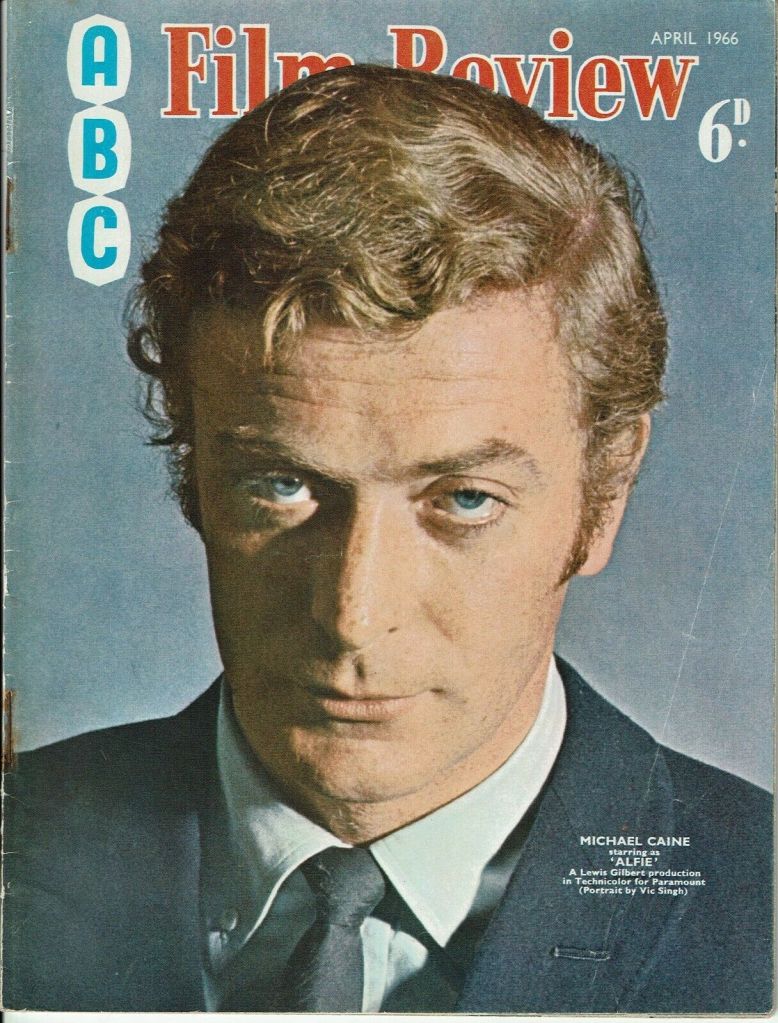
But in 1964, there was the beginnings of a shift on the ABC circuit. Towards the end of the year, instead of the traditional one-week circuit run, The Carpetbaggers, not a contender for roadshow despite its 150-minute running time, was shown for two weeks.  But that proved an isolated incident. It was another two years before ABC repeated the experiment, courtesy of  Alfie starring Michael Caine.

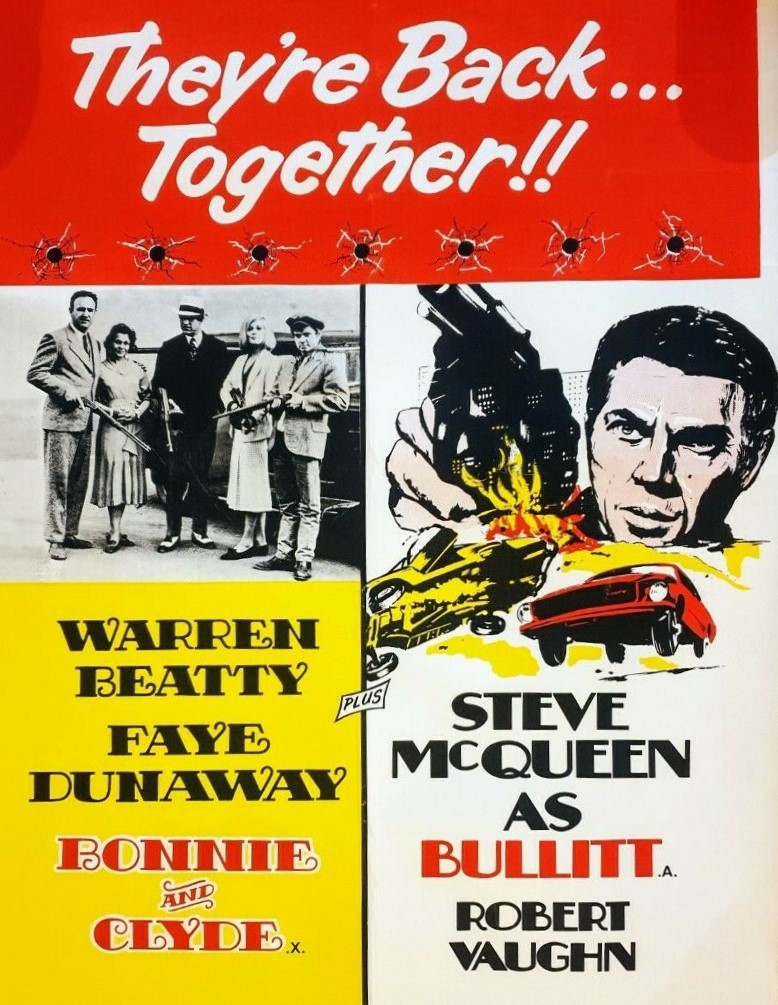
The following year the first two months saw four films go down the same route, Oscar-winning musical My Fair Lady which had been road-shown a couple of years before, Hayley Mills drama The Family Way, The Dirty Dozen, also a roadshow hit, and Bonnie and Clyde (a flop in the USA).

In addition, the circuit had learned to re-evaluate earlier hits. At that point a revival/reissue only made a second showing in the UK about 7-10 years after initial release. But in 1967, just three years after it proved to be a colossal box office success in the UK (it flopped in the USA despite an immense marketing campaign), Zulu was given another week on the circuit, this innovation adding a new dimension to the circuit release system.

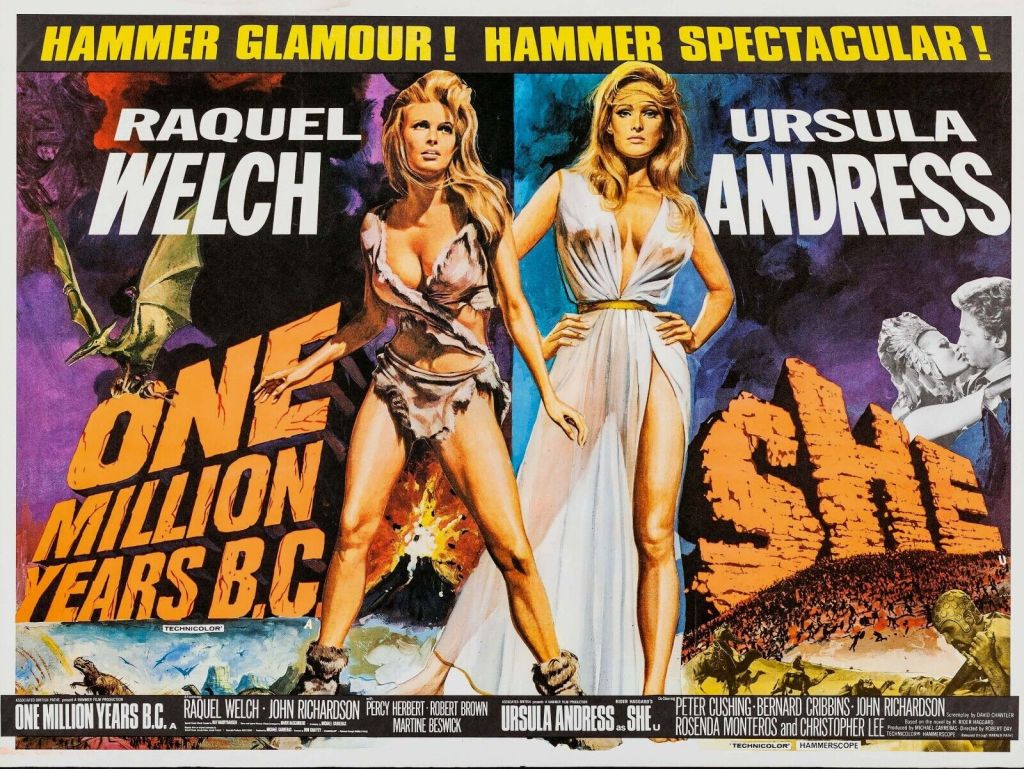
In fact, The Dirty Dozen was afforded yet another week on the circuit in 1968 – in effect, counting the roadshow and the initial circuit release, the public was accorded three opportunities in a very short space of time, The following year One Million Years B.C. (1966) starring Raquel Welch and She (1966) starring Ursula Andress were double-billed in a reissue.

But whether the two-week window had proved a complete success was open to doubt because such clear-cut hits as Bullitt and The Italian Job were only granted one week to make an impact on the circuit box office. In 1969, the circuit had so misjudged the box office potential of Till Death Us Do Part, a movie version of the popular British television comedy series, that it was initially scheduled for a one-week run. But it was such a blockbusting success that ABC tore up its release calendar and slotted it in for a further week two weeks later.

Growth of the multiplex meant big films could be retained for much longer on the biggest houses, switching between two or three or four individual cinemas until demand was deemed fully drained. No longer did a circuit release mean that release dates for the suburban part of the release were set in stone, an approach guaranteed to force the main city center cinemas to remove from its screens a movie that still had pulling power and at higher prices.

But any kind of change to the circuit release system remained minimal. In 1970, only two movies, Where Eagles Dare, a monumental success when road-shown (a release option denied in the USA), and the home-grown Women in Love were provided with a two-week circuit platform though Bullitt doubled with Bonnie and Clyde made a speedy return as a reissue.

In 1971, a pair of British comedies Percy and Up Pompeii, both made by EMI which had taken over the ABC circuit, were given the two-week treatment. But like Till Death Us Do Part, revisionist western Little Big Man was allocated another week over a month after its initial showing. The Dirty Dozen returned yet again.

In 1972, the circuit introduced unveiled another release strategy called variously a “selective release” or a “pre-release.” This meant, in effect, that in major suburban cinemas, the biggest new pictures would be given two bites of the cherry. A Clockwork Orange and The Godfather were both deemed worthy of a one-week “selective” release with a second week factored in for the following year in what was deemed a “full release.”  A version of roadshow was already in place for both these movies and in the main cinemas in big cities these were retained for a considerable amount of time.

In 1972 there were also re-runs for There’s a Girl in My Soup, Zulu and Paint Your Wagon (a bigger roadshow success in the UK than the USA). But the following year saw a whole wave of reissues beginning with The Ten Commandments (1956) followed by Dirty Harry/Klute (both 1971), The Wild Bunch (1969), Love Story (1970), Coogan’s Bluff (1968)/ Play Misty for Me (1971) while Gunfight at the OK Corral (1957) supported the new Friends of Eddie Coyle.

In 1974, The Sting and Airport 1975 went down the new “selective” plus normal release pattern, enjoying one week in each phase, while Blazing Saddles and The Exorcist received a two-week send-off from the start, Fear Is the Key (1972) was revived to support another television spin-off Holiday on the Buses.

Towering Inferno in 1975 ran for three weeks, the first qualifying as “selective” system but the others two weeks shortly after. But there was another development with Jaws which went out first as “selective”, then a week in “pre-release”  and its third appearance on the circuit deemed a “full release” turned into an extended run. But the “selective”/”full release” of Death Wish, Mandingo,  and Murder on the Orient Express comprised only two weeks. Lisztomania looked set to join the exclusive club but instead of going out on the full release some weeks later it was restricted to a single “selective” week, suggesting it had not fulfilled expectations first time round.  The Godfather Part II also managed two weeks but not sequential, the second week deemed a “re-run” six weeks later. Where Eagles Dare and David Essex duo That’ll Be the Day (1973)/Stardust (1974) were reissued while Uptown Saturday Night (1974) was revived in support of Inside Out. Gone with the Wind (1939) enjoyed another reissue in 1976 as did Zulu and Freebie and the Bean (1974)

In 1977 “pre-release” replaced “selective” as the preferred jargon and was applied to King Kong, Airport 77 and Rollercoaster but in these instances amounted to a total of two weeks counting the later full release. By contrast, When the North Wind Blows and The Eagle Has Landed  enjoyed a straight two-week release.  Ben-Hur (1959) was reissued as were Jaws (1975), The Sting (1973), The Godfather (1972), Clint Eastwood double bill The Outlaw Josey Wales (1976)/Magnum Force (1973) and television spin-off duo All Creatures Great and Small (1977)/It Shouldn’t Happen to a Vet (1976).

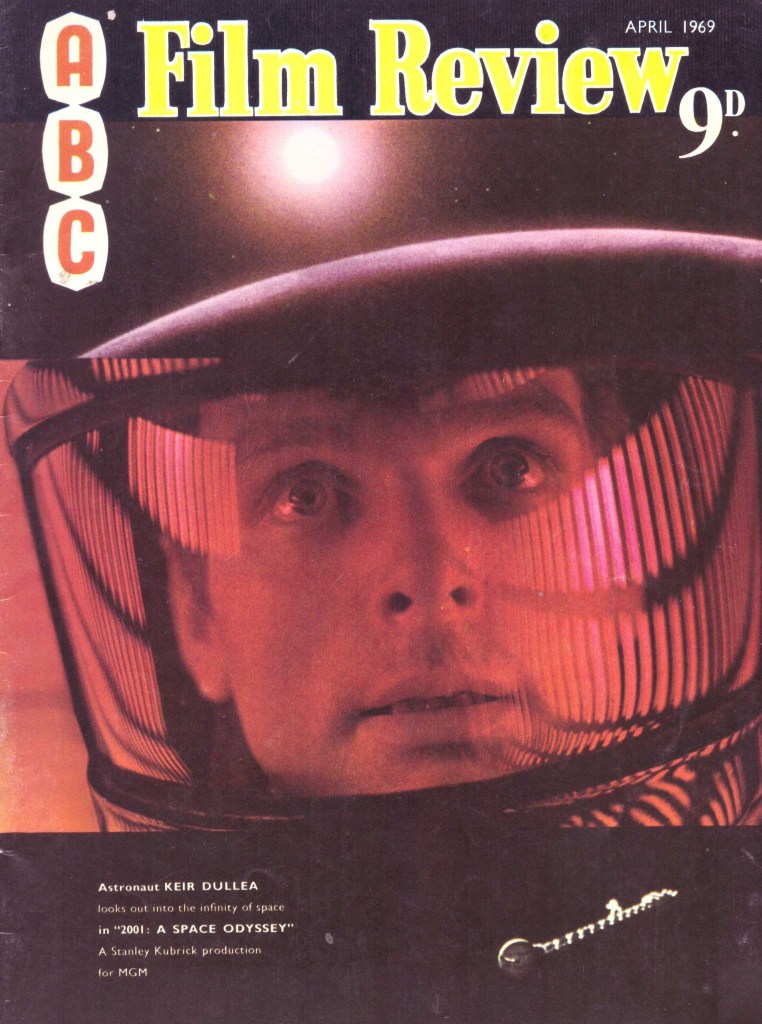
In 1978, 2001: A Space Odyssey (1968) and Jesus Christ Superstar (1973) entered the reissue market along with  revivals of Enter the Dragon (1973)/Death Race 2000 (1975). Charles Bronson western Breakheart Pass (1976) returned  in  support to Michael Caine thriller The Silver Bears, The Car (1977) to Full Circle, Paper Moon (1973) to House Calls and the ribald Adventures of a Taxi Driver (1976) to The Other Cinderella.

However, by this time, the big city center cinemas had begun holding on to major releases for such inordinate lengths of time that they were virtually played out by the time they reached the suburban circuit houses so there was little reason to insist on those cinemas retaining them for two or three weeks. None of the ABC chain’s top hits of the year – including the likes of Saturday Night Fever, Grease and Watership Down – played more than one week when they entered the circuit release.

By 1979 the “selective” and “pre-release” idea and the two-week booking was gone. But the following previous hits were re-cycled: Superman: The Movie (1978), The Goodbye Girl (1977), The Getaway (1972),  The Towering Inferno (1974), the inspired pairings of Blazing Saddles (1974)/Monty Python and the Holy Grail (1975) and Convoy (1978)/Sweeney 2 (1978). More obvious was the dualing of Peter Cushing duo The Ghoul (1975) and Legend of the Werewolf (1975).  Clint Eastwood was back on support duty, The Enforcer (1976) helping out new Boulevard Nights, The Eiger Sanction (1975) bolstering John Travolta romance Moment to Moment while The Land That Time Forgot (1974) boosted to The Brink’s Job.

But by the start of the new decade,  there was little differentiation between a major cinema in a city center and the rest, a new movie, in order to take advantage of advertising, either running for months in the one locale, and sucking the commercial meat out of a movie, or going much wider from the off rather than settling down in any one place for an exclusive run. Though the saturation that’s common today was still a long way off, movies still inclined to be released in regional bursts to save on prints, the circuit business had come a long way in two decades.  

Behind the Scenes: “Breathless / A Bout de Souffle” (1960)

The story of Breathless is usually told from the triumphant perspective of director Jean-Luc Godard, expressed in messianic terms as the young Frenchman who saved the turgid movie industry and inspired a new generation of filmmakers. For star Jean Seberg it provided partial redemption and a sharp plunge into a harsh reality.

Where she had been at the mercy of Otto Preminger in her previous two films, Saint Joan (1957) and Bonjour Tristesse (1958), and for all that she loathed aspects of that experience, she was still in the Hollywood system, where a whole phalanx of people attended to your needs. Preminger had had enough of the woman he believed he could turn into a star. Both movies had flopped, her acting talent questioned.

It’s generally understood that Preminger dumped her and sold her contract to Columbia. But the antipathy went both ways. Her husband, lawyer Francois Moreuil, approached Preminger to negotiate a release from her contract. She might have wished just to be set free for nothing but given Preminger’s investment, not just salary when she wasn’t working but all the build-up that went into turning an unknown talent into a star, that was never on the cards. So, he passed her on to Columbia, to whom he was contracted, and which would take her on as a favor.

But Columbia had little idea what to do with her either. As far as that studio was concerned she was far from the finished article, a long way away from stardom. The best she could hope for was a supporting role in a prestigious production, rebuilding her career under a more sympathetic director. That appeared the most likely outcome when her name was linked to a supporting part in Carol Reed’s Our Man in Havana (1959) starring Oscar-winning Alec Guinness and Maureen O’Hara. But she wasn’t even auditioned.

When Columbia finally found something for her to do it was in the low-budget British-made The Mouse That Roared (1959), leading lady to Peter Sellers, his first as star. After that though, as far as Columbia was concerned, it would be a tumble down the credits in the American Let No Man Write My Epitaph (1960) starring Burl Ives. The British film set had none of the highwire tension of a Preminger film. She was taken acting lessons which restored some of her confidence after the mauling she had taken from Preminger.

As luck would have it, while awaiting a summons from Columbia, she was ensconced in Paris in a romantic idyll with Moreuil, who had vague notions of turning to film direction and had therefore made the acquaintance of the Cahiers du Cinema gang of critics who harbored the same dream. That brought him into contact with Godard, who was, much to her surprise since her performances had generally been lambasted, a big fan.

She was impressed by his short Charlotte et son Jules starring former boxer Jean-Paul Belmondo. Her role in his debut feature, said Godard, was based on the character she had essayed in Bonjour Tristesse. “I could have taken the last shot of  Preminger’s film and dissolved to a title ‘Three Years Later’,” he explained. Still, even though there was nothing on the horizon from Columbia, she hesitated.

Godard was an unknown quantity, there was no script, and making a movie outside the Hollywood comfort zone would be a trial, a miniscule budget – $90,000 – scarcely a fortieth of that of a Preminger picture – would ensure no retinue of assistants. She would be largely on her own. Tippi Hedren had felt the same cold shock when she maneuvred herself out of her Hitchcock contract and discovered that rather than being waited on hand-and-foot by the industry’s best costume designers she had to wear her own clothes for her first job, in television.

Financially, Godard was in bad shape. Without a name – Belmondo scarcely counted – the film would be abandoned. In the absence of anything else, she signed up. But first she needed Columbia’s approval. The studio was offered $12,000 for her services and half the worldwide rights but when they stalled her husband pulled a fast one, announcing that since he was rich (untrue) Seberg need never work again and threatening that she would simply retire.  Columbia took the money and ignored the rights, which cost them several million dollars.

Seberg was paid $15,000 – around $5,000 a week (the shoot lasted 23 days) – a hefty sum for an ingenue if you took that as a potentially weekly rate ($250,000 a year), but even if that was all she earned it was still six times more than the average U.S. employee was paid in a year. That was still an improvement on the $250 ($13,000 per annum) paid by Preminger in 1957.

But there was a dramatic switch in power politics. With Preminger, she kowtowed, doing what she was told, failing to stand up to the director. On Breathless, she had no trouble expressing her views and wielding her power. She walked off the set on the first day of shooting after a disagreement with Godard. That was resolved by the director chasing after her. A couple of days later she was ready to quit.

And she argued vehemently against his interpretation of her character’s actions in the final scene. Godard wanted Patricia (Seberg) to steal the wallet of Michel (Belmondo) as he lay dying. She refused to do it on the grounds that it was not in character, but later explained that it was more personal, she did not want to play a thief on screen. She had reservations about taking off her clothes for the sex scene, resolved by the couple being hidden under the bedsheets and Seberg remaining full clothed. And if she fancied a day off – a considerable indulgence on a film on so tight a deadline – she took one. Godard saved face by allowing everyone a day off.

Cameraman Raoul Coutard observed, “She didn‘t let herself be pushed around but she did cooperate.” And without the normal armada of backroom staff attending to make-up and ensuring she looked her best in every scene, Coutard fell back on the fact that she was imply photogenic and did not require the full Hollywood treatment to look her best.

Perhaps the guerrilla style of movie making appealed. Instead of rehearsals with a script set in stone and lines learned weeks in advance, Godard made up the film as he went along, turning up in the morning with a students’ notebook filled with ideas and dialogue. At times there was no written script, Godard speaking lines and the actors repeating them.

Although at one stage after a spat he threatened to deny her a close-up, in reality budget restrictions –  a close-up would require filming a scene several times over – put paid to most of those. The scene in the car where the camera focuses on her an example of taking clever advantage of circumstance as the sequence, in its daring, appealed to the avant-garde.

But Godard did take the trouble to ensure that Patricia was true to her origins. As an American, her character should not speak fluent French, but make mistakes here and there, especially with gender. “It became much more colloquial and much more foreign in a way,” she said.

And much as she hated the way Preminger had imposed his ideas so strictly upon her, when left to her own devices, thanks to Godard’s improvisational style, she was at a loss. “She was very disabled because there wasn’t a script,” explained Francois. When she asked Godard for directions he would tell her to do what she wanted. Eventually, assuming the film was a mistake and would flop, she decided to “sit back and have fun.”

Although under time pressure, that was a less frightening experience than having a hundred pairs of eyes fixed on her as she spoke lines according to the Preminger dictat. But she had to come to terms with just how far down the production ladder she had fallen, a café toilet doubling as a make-up room, her wardrobe purchased from a discount store.

Godard’s inventiveness knew little bounds. For the final tracking shot, the director was pushed along in a rented wheelchair. The shot of the Champs-Elysess came from employing a postal cart. Filming began on August 29, 1959 and most of the film was shot consecutively.

Innovations included extensive use of the jump cut, hand-held camera and low lighting. Although deemed an arthouse movie by the rest of the world, Breathless opened at a commercial chain of cinemas in Paris where it was an instant hit, selling a quarter of a million tickets in its first four weeks.

While Godard and Belmondo basked in a critical and commercial triumph, for Seberg it was only part-redemption. Except at the end of the decade she was never the leading lady in big Hollywood productions, but she became an acknowledged star of French cinema, a couple of years later the third-highest paid actress  in France, earning $1,750 a week ($91,000 a year).

SOURCE: Garry McGee, Jean Seberg: Breathless, Her True Story (2018), pp60-68.

Behind the Scenes: “Bonjour Tristesse” (1958)

Otto Preminger was initially beaten to the punch, rights to Francoise Sagan’s 1954 bestseller already sold to Ray Ventura, forcing the director to ante up $150,000 a year later to retrieve them. The director started working on the script with S.N. Behrman (Quo Vadis, 1951) but, dissatisfied with the result, turned to Arthur Laurents (Rope, 1948), who was permitted to complete his screenplay without any interference.

Shooting began in July 1957 in Paris and locations included Maxim’s and jazz club La Hachette where Preminger filmed Juliette Greco singing the title song. The main locale, a villa in Le Lavandou in the South of France, was rented from French publisher Pierre Lazareff.

By casting Deborah Kerr (The Night of the Iguana, 1964) and David Niven, who had starred in The Moon Is Blue (1953) as principals, it was officially turned into a British production, providing access to Eady Levy monies, although it was shot with a French crew who proved largely hostile to the director’s personality and went on strike on the second day. Due to a scheduling misunderstanding, Niven and Preminger got off on the wrong foot.

But the chief victim of the director’s ire was Jean Seberg, star of his previous effort – and substantial flop – Saint Joan (1957). While not entirely happy with the neophyte’s performance in her debut, he decided to give her the benefit of the doubt. “I refused to believe that I was so wrong and the critics so right, that this girl was so completely devoid of talent,” he complained, offering her a second chance. “He showed a faith in me nobody expected him to show,” commented a grateful (at the time) Seberg.

But Preminger soon regretted his decision. “I don’t like the way you talk, walk or dress,” he told her. Unable to get a better performance from her after four or five takes he would just give up. At one point, she was drenched with buckets of water for a scene where she was emerging from the sea. However, that scene only took seven takes, something of a triumph for Seberg. And it’s worth noting that seven takes was nothing for Preminger if he really wanted to make an actor suffer.

If you think the movie takes a very melodramatic turn, the screenplay toned down much of the book’s melodrama and especially its more serious overtones. Preminger stuck to the script. He invented camera movement and blocking during the day’s rehearsals rather than arriving at the studio with fixed ideas. To allow the camera to move more freely, the floor of the set was treated with gelatin. He relied on only a few takes, expecting the actors to deliver what he wanted, so in some respects it was no surprise he reacted badly when Seberg failed to follow his instructions, although as a last resort he knew he could always cut to another actor.

Niven and Kerr both braced the director about his treatment of Seberg, telling him “to lay off this girl, because she’s had it, and if you continue, we don’t want to keep working. ”

The movie was completed at Shepperton Studios in England. The last shot of the film took an entire day to shoot, Cecile removing her makeup with cold cream in front of the mirror and tears form. Preminger wanted “the face to remain a child’s face.” Two days of flashback shoots had to be re-done as they had by mistake been processed in color rather than black-and-white

Preminger should have been a happy man. He was falling in love with costume coordinator  Hope Bryce, a model who had worked with Givenchy, and in due course she became his third wife. Ditto, Seberg, who had fallen for lawyer and nobleman Count Francois Moreuil – a relationship that also ended in marriage – and as a result of the romance grew more relaxed on the set and “didn’t let Preminger’s demands bother her.”

Opinions differ regarding Seberg. Arthur Laurents deemed her “a shrewd cookie, I don’t care what they say about her.” Deborah Kerr averred: “I think any other woman would have collapsed in tears or walked out, but she took calmly all the berating and achieved a very interesting and true Sagan-type heroine.” Co-star Mylene Demongeot said, “For a while she had everything in her hands to have a successful career.” From Seberg’s perspective she viewed Preminger as a father figure, with the attendant hate that often comes with that.

Demongeot, however, fought fire with fire, calmly warning the director he would get a heart attack if he kept on yelling at her. Standing up to him and occasionally dissolving into fits of laughter at his instructions kept him at bay. She saw a different side of the director,  although tagging him as “ a nasty man,” she also recalled him as “a very funny, intelligent man…and he could even be charming…outside of work.” Seberg and Demongeot had become friends after the American had stayed with the French actress and her husband in order to learn the lines of French required for her role.

After filming ended, Preminger’s current wife Mary Gardner sued for divorce and Twentieth Century Fox threatened to take him to court for repayment of $60,000 for a film bever made. Preminger sold Seberg’s contract to Columbia. “He used me like a Kleenex and threw me away,” said Seberg. But, interestingly, it was only after that relationship ended that she took acting lessons.

In truth Seberg’s Hollywood career never recovered although she enjoyed a brief mainstream revival a decade later through Paint Your Wagon (1969) and Airport (1970). Hollywood has its revenge on Preminger. After the failure of Skidoo (1968), Paramount chief Charles Bluhdorn exacted “a very slow death” on the director.

NOTE: There’s an update to this called Part Two which is published on Oct 19, 2023. When I did this original article I didn’t have my normal online access which permits me to check through trade magazines. Because I received a query about box office I decided, once the online issue had been cleared up, to check that issue and in the process I uncovered so much fascinating information I took a second stab at it.

SOURCES:   Chris Fujiwara, The World and Its Double, The Life and Works of Otto Preminger (Faber and Faber, 2008) pp210-217;  Eric Braun, Deborah Kerr ( W.H. Allen , 1977) pp164-165; Garry McGee, Jean Seberg, Breathless, Her True Story, (2017) pp42-48.

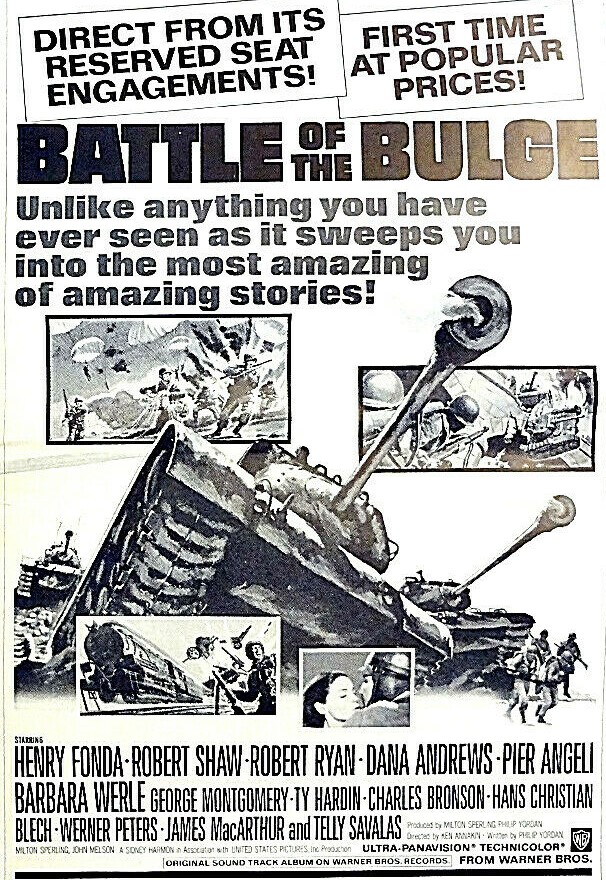
Behind the Scenes: “The Battle of the Bulge” (1965)

It was Hollywood’s worst nightmare. Two major studios – Columbia and Warner Brothers –  were competing to make films about the Battle of the Bulge, one of the most famous episodes of the Second World War. Rival movies on similar or the same subject  – classic examples You Only Live Twice (1967) vs Casino Royale (1967) or Deep Impact (1998) vs.  Armageddon (1998) – risk cannibalising each other, each entry eating into the prospective audience of the opposition.

At first it seemed like the Columbia entry had the upper hand. Writer-producer Anthony Lazzarino had spent four years preparing The 16th of December: The Story of the Battle of the Bulge (the date referring to the start of the battle). Lazzarino’s project was endorsed by the U.S. Department of Defense which offered exclusive cooperation. Advisors were of the top rank – General Omar Bradley,  General Hasso E. von Manteufel who had commanded the Panzers during the battle, British generals Sir Francis de Guingard and Robert Hasbrouck and Colonel John Eisenhower plus the cooperation of Eisenhower himself and Field Marshal Montgomery.

With a budget in the $6 million – $8.4 million range, and shooting was set to start in winter 1965, William Holden was lined up to play General Eisenhower and Kirk Douglas for  General Hasso. Although initially intending to film in the Ardennes and Canada, ultimately the producers settled for the cheaper option of  Camp Drum, one of the largest military installations in the U.S, a remote area in upper New York where the buildings could stand in for Bastogne, around which much of the real battle revolved, production there feasible because the Camp closed for winter. .

But that meant it would already be behind the eight-ball since Battle of the Bulge intended opening at Xmas 1965. Richard Fleischer (The Boston Strangler, 1968) was originally signed to direct. But he had become embroiled in a lawsuit with producer Samuel Bronston (El Cid, 1961, The Fall of the Roman Empire, 1964) whose production outfit had gone bust, killing off a deal for Fleischer to make The Night Runners of Bengal. The director was seeking  g $910,000 in compensation.

Warner Brothers had enlisted Cinerama as co-producer, the studio’s first involvement in the stunning widescreen process and the first time war was considered a subject. The process had been utilised in other Hollywood pictures most notably MGM How the West Was Won (1962), but that has been as a supplier of the equipment, and taking a small share of the profits. But now Cinerama planned to enter the production business and had contracted with WB to shoot the film in the single-lens process instead of the more complicated three-camera approach which had led to vertical lies on screens.

Neither company was in great shape. Cinerama had posted a $17.9 million loss in 1964, WB $3.8 million. But whereas WB had My Fair Lady on the horizon, Cinerama was less reaons for optimism. Its income stream relied on sales of its equipment, either for filming or projection, and a levy from every cinema using the process. Expansion was seen as key to renewal. With only 67 cinemas equipped to show Cinerama in the U.S. and only 59 overseas, a major program was underway to reach 230 by 1967. Setting up a production division would ensure there were enough films to feed into Cinerama houses, and since such films were intended as roadshows, they would keep the cinemas product-secure for months on end.

Cinerama planned to spend $30 million on five films – John Sturges  western The Hallelujah Trail (1965) budgeted at $5 million, Battle of the Bulge ($.75 million) while $6.5 million had been allocated to an adaptation of James Michener bestseller Caravans, $6 million for Beyond the Stars which became 2001: A Space Odyssey (1968) and $7 million for Grand Prix (1966). Added to the list was epic William the Conqueror, due to film in England in early 1966 with Robert Shaw taking top billing.

The WB-Cinerama project, which had taken a year to negotiate, was to be filmed in Spain under the aegis of producer Philip Yordan, one time associate of Bronston who had built a mini-Hollywood there. Yordan, Bronston’s chief scriptwriter, had written the screenplay along with his co-producer Milton Sperling. Instead of seeking official support or reproduce the battle in documentary detail, Yordan and Sperling aimed for a fictional account that took in the main incidents. The cast would include “ten important stars.”

Just what constituted an “all-star cast,” one of the key ingredients of the roadshow phenomenon of the 1960s, was open to question. While The Longest Day (1962) boasted stars of the pedigree of John Wayne, Robert Mitchum, Richard Burton and Sean Connery, it was also liberally sprinkled with actors of no marquee value. David Lean in Lawrence of Arabia (1962) had loaded his film with the likes of Oscar winners Alec Guinness, Anthony Quinn and Jose Ferrer to offset unknowns Peter O’Toole and Omar Sharif as the leads. While The Great Race (1965) could boast Jack Lemmon, Tony Curtis and Natalie Wood, It’s A Mad, Mad, Mad, Mad World (1963) only had Spencer Tracy amid a host of television comedians.

But none of the stars of Those Magnificent Men in Their Flying Machines (1964) had successfully opened a major picture. Of the Battle of the Bulge contingent only Henry Fonda could truly be called a current star, although his box office star had considerable dimmed since the days of The Grapes of Wrath (1939) and Fort Apache (1948). Former stars Robert Ryan and Dana Andrews were now supporting actors, Ty Hardin was best known for television, Charles Bronson (The Great Escape, 1963) had not achieved top billing and while James MacArthur had done so that was in youth-oriented movies. Initially, Italian prospect Pier Angeli (Sodom and Gomorrah, 1962) was announced as “the only principal female role” – playing a Frenchwoman – for a touching scene showing the effect of war on innocent women caught up in the conflict.

Just before filming was about to start, Fleischer pulled out, citing differences of opinion with the producers. Yordan turned to British director Ken Annakin, who had helmed the British sequences in The Longest Day and Those Magnificent Men in Their Flying Machines. There was soon a double whammy. Realizing he was losing ground, and hoping to sabotage its progress, Larrazino sued WB for $1 million, claiming that “another film, less accurate, would be confused with his picture.” Just as filming of the Battle of the Bulge got underway in January 1965, it was hit by a temporary restraining order. While failing to shut down the production, it imposed a marketing blockade. WB was prevented from publicising its picture, a potentially major blow given how dependent big budget roadshows were on advance bookings which could only be generated by advance publicity.

Annakin’s immediate response to the opportunity was delight. He commented that he had a “lot of toys to play with.” He found inspiration for his approach from an unusual source, the Daleks (“an apparently irrevocable onslaught of metal monsters”) from the BBC television series Dr Who. He decided he would use Cinerama as “a kind of 3D, shooting in such a way that the tanks would loom up as monsters against humans whom I would make small and puny.”

Although he had no influence in the casting, Annakin was already familiar with some of the actors, James MacArthur from Swiss Family Robinson (1960) and Werner Peters and Hans Christian Blech from The Longest Day. He did not receive such a warm welcome from Robert Shaw whom he had rejected for a role in The Informer.

He found Fonda “a remarkable professional…always on time, patient, eager to get to work, and always knew his lines.” He confessed to being a reluctant movie actor, preferring the stage, and had not been a big office draw since his work with John Ford in the 1930s and 1940s. Even critical successes like Twelve Angry Men (1957) had lost money, some of it the actor’s own, and prestige movies like The Best Man (1964) and Fail Safe (1964) failed to attract sufficient audiences. “In the theatre,” he said, “the actor achieves fulfilment from beginning to end. But on a picture you create a minute here and a minute there over a twelve-week period. When it’s finished there’s no recollection of what you did…Films are a director’s medium.” Battle of the Bulge was his 59th picture, after completing a supporting role in Otto Preminger’s In Harm’s Way (1965) and taking second billing to Glenn Ford in modern western The Rounders (1965).  

There was a stand-off with Bronson on his first day after the actor kept the crew waiting while fiddling too long with his costume. Ty Hardin (television’s Bronco, 1958-1962) was accident-prone, tumbling into a frozen river in full kit, and whacking the director’s wife in the face with his helmet. Dana Andrews had a drink problem so that in some scenes Fonda and Ryan would be surreptitiously holding him up. But such veteran actors could improvise their way round scenes and “give me hints and lead me into changes.”

Andrews was enjoying career resurgence. His movie career was at a standstill, a ong way from a peak like Laura (1944). But his last significant top-billed parts were over a decade gone. “I was starting to get nothing for a while but offers came swarming in when I told my agent to go ahead and try from Walter Huston parts.” After only televisions roles in the four years since Madison Avenue (1961), Battle of the Bulge would mark his eighth role in 1965, including The Satan Bug and In Harm’s Way.

Winter in Spain was cold which meant it provided the ideal backdrop for the WB version. The chosen location, 4,500ft high in the mountains of Segovia provided identical conditions to the actual battle. Spain had provided 80 tanks including Tigers mounted with 90mm guns and Shermans. Half of the 20-week shoot would be spent in Segovia with interiors filmed at studios in Seville and the Roma facility in Madrid. The WB adviser was General Meinrad von Lauchert, a divisional tank commander during the battle. He hoped the picture would show the German solider “as he was, brave and good” rather than clichéd presentation and not give the “impression that the American Army had nothing to do but walk into Germany.”

He wanted the film to reflect the truth that the “Americans had to pay a high price for every yard.

Extras were drawn from the Spanish village of El Molar, with a population of just 2,400, which specialised in that supply. Locals could earn 200 pesetas a day. A pair of tavern owners had established this lucrative side-line, demand so high at this point that “they can play Russian World War One Deserters for Doctor Zhivago (1965) one day and shipped to World War Two the next for Battle of the Bulge.” Whenever Annakin found himself in trouble with the script he turned to the senior actors, Fonda, Ryan and Andrews who could improvise their way round scenes and “give me hints and lead me into changes.”

For the first scene, a week’s worth of white marble dust, representing snow, had been spread over the ground before 40 tanks emerged from a pine forest. But just as the cameras begun to turn, unexpectedly, against all weather forecasts, it began to snow. While initially a boon, when it continued to fall for five weeks the snow turned into a liability. Nobody was prepared for snow, not to the extent of snowploughs or even salt and it was a three-mile hike uphill to reach the tank location until army vehicles could be used to transport the crew. The tanks churned up so much mud that three or four cameras were required to catch the action.

“It was a director’s feast,” recalled Annakin, salivating about the prospect of a “vast panoramic” employing the entire array of tanks. To speed production, he had two units one hundred yards apart and jumped from one to the other, thus achieving 30-40 set-ups a day while the effects team exploded tubes and burned rubber tyres to create a fog of black battle smoke. A small town, already wrecked and shelled from the Spanish Civil War, added an air of realism when standing in for Bastogne.

Midway through shooting the producers realised the movie lacked a theme and from then on Annakin was faced with daily rewrites as new scenes were added to bring out the humanity implicit in war. Then Cinerama boss William Foreman arrived and demanded the insertion of the type of shot he believed his audiences were expecting, the equivalent of the runaway train and the ride through the rapids in How the West Was Won. He angled for a jeep racing downhill or a plane spinning and diving and happy to stump up any extra costs.

Such a request was more easily accommodated than his insistence that a role be found for his girlfriend Barbara Werle. a bit part actress Tickle Me (1965). While Yordan, wearing his producer’s hat, was willing to keep one of his main funders happy, the director and Robert Shaw were not. Shaw refused to do the scene until Foreman pleaded with both, explaining that in a vulnerable period of his personal life – when, in fact, he had been imprisoned – Werle had helped him out and he owed her a favour.

In Annakin’s opinion Werle was “willing but completely dumb…as though you had picked a girl straight from the cash desk of a supermarket.” Her one scene, as a courtesan offered to Robert Shaw by a grateful superior, was used to mark out the German commander as a man of honour when he rejection such temptation out of hand.

To overcome problems of matching earlier Panzer footage with the climactic battle to be shot on the rolling hills of Campo – in the earlier shots the ground was covered in snow, but now it was summer and the ground was scorched by the sun – Annakin relied on aerial shots, shooting downwards, “keeping as close as possible so as not to reveal what the terrain actually looked like” while on the ground two units shot close-ups of the action. The action was augmented by 30 model shots with miniature explosions.

When shooting was completed, there was a race to get the movie ready for its schedule launch, on December 16, 1965, the 21st anniversary of the start of the battle. There were ten weeks left to do post-production. Four editors had already been working on the material but Yordan asked Annakin, who had not been near a moviola for two decades, to personally edit the climactic battle scene. The director found the experience exhilarating: “matching my location footage with miniature shots; a four-foot helicopter (i.e. aerial) shot cut with a couple of feet of a U.S tank rounding rocks to face a Panzer; a shot of Telly Savalas at his gun site yelling ‘Fire’ intercut with a miniature tank blowing up.” But all his intricate work never made it into the final cut. Another editor fiddled around with the material and since no one had thought to make a dupe of Annakin’s original it was lost.

Although the challenge from Lazzarino had died away, the Pentagon was unhappy with the amount of time allocated to the German perspective. Yordan had the perfect riposte, pointing  the finger at Annakin and saying “see what happens when you get a limey director.” 

Werle had the last laugh. She was billed sixth in the credits (Angeli came fifth) but in the same typeface as Fonda, Shaw, Ryan and Andrews, and above the likes of Bronson, MacArthur and Hardin who not only all had substantially greater screen experience but had a bigger impact in the movie.

With the smallest part of all the listed stars, nonetheless she managed to turn the experience to her advantage, introduced to the press part of the marketing campaign and attending the world premiere at the Pacific Cinerama on December 16, 1965 in Los Angeles and the New York premiere the following day, brought forward four days, at the Warner Cinerama. In Los Angeles she arrived in true style at the head of a marching brigade of 100 service men.

SOURCES: Ken Annakin, So You Wanna Be A Director (Tomahawk, 2001) p167-181; “Du Pont, Bronston, Co-Defendants,” Variety, July 22, 1964, p4; “Schenck-Rhodes Roll Battle of Bulge at Camp Drum in U.S.” Variety, July 22, 1964, p42; “German Military Sensitivity,” Variety, September 23, 1964, p32;  “Columbia Will Distribute Battle of Bulge Film,” Box Office, September 28, 1964, p18; “Plan Battle of Bulge As Cinerama Film,” Box Office, November 23, 1964, p4; “Tony Lazzarino To Produce The 16th of December,” Box Office, December 16, 1964, p4; “Rival Battles of Bulge; Bill Holden Up for Ike in Lazzarino Version,” Variety, December 16, 1964, p5; “Warner Reports Loss of £3,861,00,” Variety, December 23, 1964, p5; “L.A. Court Has Its Battle of Bulge Hearing, 27th,” Box Office, January 25, 1965, pW-2; “Dana Andrews Strategy: Regain Momentum,” Variety, March 10, 1965, p3; “Battle of Bulge Now Being Lensed in Spain,” Box Office, March 15, 1965, pNE2; “Winter in Spain Cold But Correct for Bulge Pic,” Variety, March 17, 1965, p10; “Cinerama Plans Five Films to Cost $30 Mil,” Box Office, April 19, 1965, p13; “For Actor Satisfying Legit Still Beats Pix, Reports Henry Fonda,” Variety, May 3, 1965, p2; “London Report,” Box Office, May 3, 1965, p8; “One Girl in WB Bulge,” Variety, May 5, 1965, p20; “Battle of Bulge Pic May Roll Next Winter,” Variety, May 5, 1965, p29; “El Molar, Spain’s Village of Extras,” Variety, May 12, 1965, p126; “Cinerama Report Loss,” Variety, May 13, 1965, p15; Advert, Box Office, July 12, 1965, p22; “WB To Film Cinerama Epic in England,” Box Office, October 11, 1965, p11; “Introduce Barbara Werle,” Box Office, October 18, 1965, pE3; “Battle of Bulge Opens N.Y. Now Dec 21,” Box Office, October 18, 1965, p10; “Actress To Attend Bows of Bulge in L.A., N.Y.,” Box Office, December 6, 1965, pW4.

Behind the Scenes: The 20th Century Fox Box Office Conundrum, Part Three – The Bottom Line

Admission: box office analysts like myself rarely get the full picture. Global figures have been available on a regular basis only since the 1990s and commentators these days are only too keen to inform us just how much revenue a movie has to take in before it can break even. Pictures like the latest Fast and FuriousIndiana Jones and Mission Impossible have little chance of turning a profit, it seems, unless they can pile up in excess of $400 million gross.

Back in the day it was a good deal more complicated. Studios were reluctant to reveal just how profitable or unprofitable movies were. But anyone with an inkling of the correlation between cost and rentals could tell that a $17 million movie like Doctor Dolittle (1967) was going to have a hell of a time turning a profit on U.S. rentals of $6.2 million. But throw in overseas rentals of $10.3 million and its position appeared considerably rosier, especially with television revenue still to come.

“The Bible” gets the full promotional treatment in the U.K.

But rentals minus budget did not provide the full picture. Budget reflected negative cost, the amount it took to make a picture. It didn’t take into account all those elements required to ready it for release – advertising, marketing, Pressbook / Campaign Manual, prints, publicity tour, premiere, distribution, studio overhead and interest on the loan necessary to fund the picture. There was a general rule of thumb – to turn a profit you needed to make twice as much in rentals as the movie cost to make.

But that was really only guesswork, an easily-understood equation conjured up to satisfy over-inquisitive journalists. Since the bulk of the journalists in the 1960s covering the business side of Hollywood were American, very often they deemed a movie a success or failure based on domestic receipts and had little understanding or interest in foreign revenues and how they might influence the outcome. In part this was down to distribution patterns. It might take a couple of years to measure a movie’s overall performance once it had completed its entire foreign tour. And that was too long to wait to make the snap decisions journalists favoured.

In any case, there was little prospect of studios in the 1960s opening their books to anyone other than head office to properly divine a movie’s success.

But it turns out there was an internal measure, at least at Twentieth Century Fox. That studio related global rentals to what it termed “estimated rentals required to break even.” That, in turn, provided a guide to the additional costs incurred by movies once filming had been completed but advertising and prints and so on were still to be paid for.

Taking the decade’s best example, The Sound of Music (1965). Initial cost was set at $8.02 million but once everything else had been taken into account the studio needed to generate total rentals of $29.5 million to break even. That was much higher than the 2-to-1 income-to-budget ratio, and more akin to nearly 4-to-1. Luckily, with a global rentals tally approaching $121.5 million there was more than enough in the kitty to meet those costs.

By comparison, Those Magnificent Men in Their Flying Machines the same year had a negative cost of $6.5 million. Fox estimated it needed to rake in $17.8 million – a ratio of 3-to-1 – to break even. Again, fortunately, global rentals hit $29.9 million so happy faces all round. Valley of the Dolls (1967), budgeted at $4.69 million, required $9.7 million – just over the supposedly classic 2-to-1 cost-to-profit ratio – and again, by chance, there was another $13 million in rentals to make this venture highly lucrative.

But there was nothing left over from either The Bible (1966) or The Sand Pebbles (1966). Global rentals for the former were $25.3 million and the latter $20.6 million, so you might assume such big hitters had a good chance of turning a profit. Originally budgeted at $15 million, The Bible incurred additional costs of $11.9 million and The Sand Pebbles, costing $12.11 million, was assessed as having an overall cost of $21.2 million. The outcome was that both were deemed financial failures, the former losing nearly $1.6 million, the latter $600,000. But on a cost-to-profit ratio, both came in at under the expected 2-to-1 calculation.

Improved overseas revenue was not necessarily the antidote to a flop. Dr Dolittle (1967) theoretically nearly broke even when foreign brought in $10.1 million in addition to domestic’s $6.2 million. On paper the movie cost $17 million. But additional costs of $14 million scuppered any chance of redemption. Although overseas improved on domestic for Audrey Hepburn’s How to Steal a Million (1966) once all the ancillary costs were added in it still lost $1.55 million and Two for the Road $1.7 million.

And what of stinkers like Justine (1969) and Staircase (1969)? You might imagine in light of their woeful box office performances in the U.S. that the studio saved money by cutting back on advertising and prints. However, in addition to the former being budgeted at $7.87 million and the latter at $6.37 million, they were still loaded down with additional expenditure, another $4.9 million for Justine and $4.23 million for Staircase, in both instances way below the 2-to-1 cost-to-ratio format. Justine was written off to the tune of $10 million and Staircase to $8.5 million.

After all the post-production extras were calculated and global rentals taken into account, Marlon Brando-starrer Morituri (1965) lost $6.4 million, James Stewart in The Flight of the Phoenix (1966) $6 million, Omar Sharif as Che! (1969) $5.3 million, Michael Caine-starrers The Magus (1969) $4.5 million and Deadfall (1968) $2.8 million, The Chairman / The Most Dangerous Man in the World (1969) $4.3 million, Hard Contract (1969) $4 million, and Doris Day-starrers Caprice (1967) $2.7 million and Do Not Disturb (1965) $2 million,

Relatively low cost was no protection against loss. A High Wind in Jamaica (1965) lost $3.7 million, The Visit (1964) $3.5 million, The Flim Flam Man / One Born Every Minute $2.8 million, The Reward (1965) $2.7 million, The Touchables (1969) $2.7 million, Fate Is the Hunter (1964) $2.6 million, Joanna (1969) $1.9 million and Hammer trio The Lost Continent (1968) $900,000, The Viking Queen (1967) $800,000 and The Vengeance of She (1968) $700,000

Even unexpected hit The Blue Max (1966) barely made it into the black. With $16.85 million in global rentals on a budget of $5 million you would have thought there was plenty of fat even with extra post-production costs. Instead, saddled with $9.2 million of additional cost – still below the 2-to-1 projection, it only earned a profit of $2.65 million. The Boston Strangler (1968) cost $4.1 million but with $4.5 million of post-production charges eked out a profit of $2.5 million.

Some pictures were surprisingly profitable. After all costs were met, Zorba the Greek (1965) cleared $6.4 million; Our Man Flint (1966) $5.25 million and In Like Flint (1967) $2.2 million; One Million Years B.C. (1966) $2.17; Dustin Hoffman-Mia Farrow oddball romance John and Mary (1969) $1.8 million; and The Prime of Miss Jean Brodie (1969) $1.2 million;

Despite poor overseas takings Hush, Hush, Sweet Charlotte (1964) registered a profit of just over $1 million; The Nanny (1965) $800,000; Bedazzled (1967) $725,000; Batman (1966) $700,000; the remake of Stagecoach (1966) with Ann-Margret and Alex Cord $650,000; the low-budget British-made Guns at Batasi (1964) $480,000; and Hammer double bills Dracula: Prince of Darkness / Plague of the Zombies (1966) $800,000 and Rasputin: The Mad Monk / The Reptile (1966) $400,00.

On the profit front from a global perspective Frank Sinatra proved not as safe a pair of hands – The Detective (1968) registered $1.4 million profit and Von Ryan’s Express (1965) $1.3 million but Tony Rome (1967) and its sequel Lady in Cement (1969) ended up in the red, losses of  $600,000 and  $300,000, respectively. It was also touch-and-go for Raquel Welch. As mentioned above One Million Years B.C. brought in $2.17 million and Bedazzled $725,000, respectively. But Bandolero (1968) lost $1.4 million and 100 Rifles $1.3 million with Fantastic Voyage (1966) and Fathom (1967) both down half a million each.

From 1964 to 1969, author Stephen M. Silverman records that Fox releases generated $714 million in global rentals and still, after additional costs, made a $13 million loss. In the Appendix to his book in the section devoted to these figures, Silverman came across a handwritten assessment of the studio’s year-to-year operation. That breaks down the movies into three categories – losers, just above breakeven and adequate profit. Of the 106 movies distributed over those six years, 76 were deemed outright losers, seven just topped breakeven and 23 made adequate or good profits.

Note: my two sources shown below, while presumably accessing the same figures, used them in different ways. Solomon employed only domestic rentals while Silverman took a global rental approach so it was down to me to subtract domestic from global to unravel foreign rentals and subtract global from initial budget to arrive at the post-production costs.. Any  mistakes, of course, are mine.

SOURCES: Stephen M. Silverman, The Fox That Got Away, The Last Days of the Zanuck Dynasty at Twentieth Century Fox (Lyle Stuart Inc, 1988) pp323-328; Aubrey Solomon, Twentieth Century Fox, A Corporate and Financial History (The Scarecrow Press, 2002) pp 228-231, 252-256.

Discover WordPress

A daily selection of the best content published on WordPress, collected for you by humans who love to read.

The Atavist Magazine

by Brian Hannan

WordPress.com News

The latest news on WordPress.com and the WordPress community.