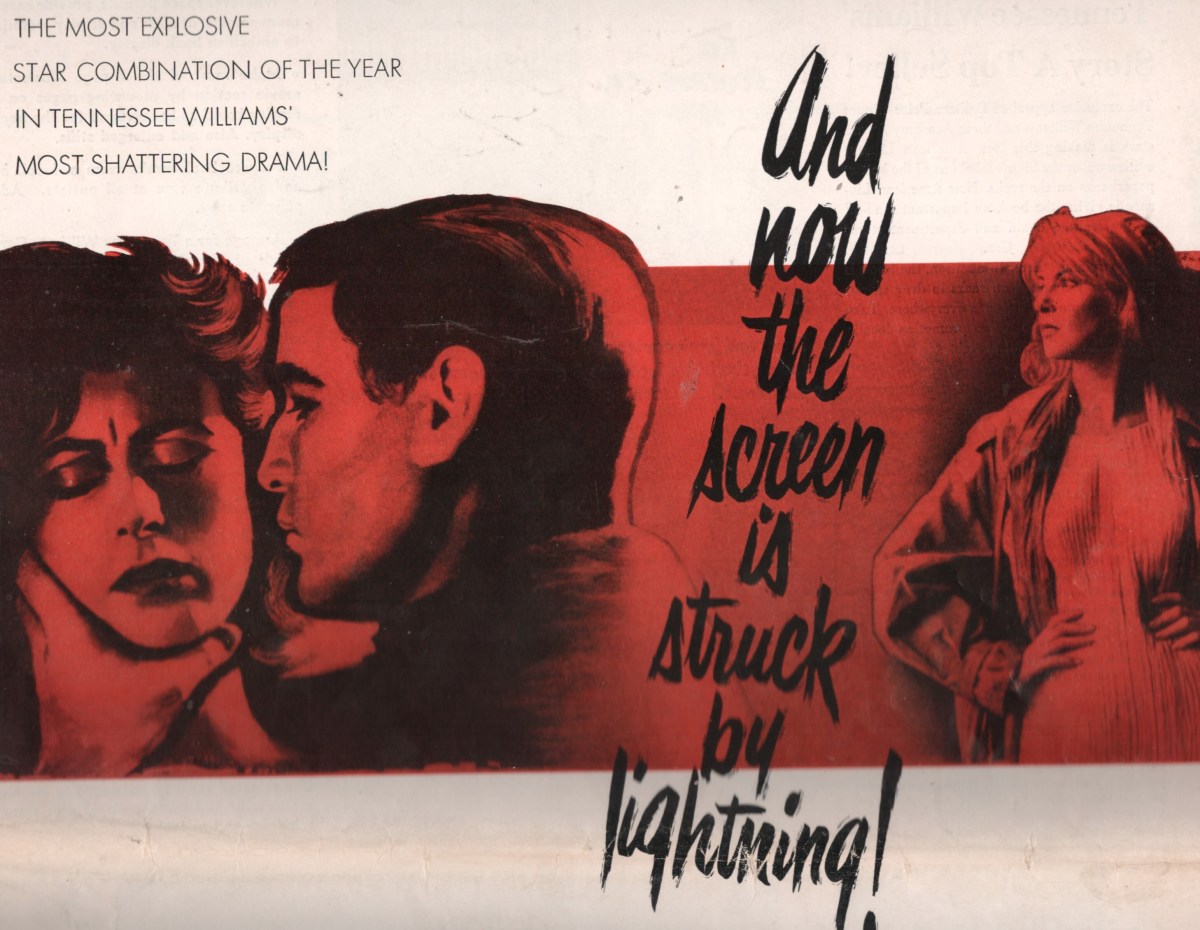
Let No Man Write My Epitaph (1960) ***

You can decamp to Europe all you like and even make a flashy bow in a hit French picture but that still won’t stop Hollywood hauling you back and treating you like a contract player. Thus it was with Jean Seberg. The toast of France and of arthouses worldwide for Breathless (1960) but relegated to ingenue here.

In truth, this had all the makings of an edgy drama given it was littered with alcoholics and drug addicts and pimps and heroin dealers. Set in the roughest part of Chicago, the shining light was Nick (James Darren), piano prodigy, weighted down not just by his surroundings but by memory of his murderer father who died in the elecric chair.

Single mom Nellie (Shelley Winters), not decent barmaid material because she refuses to allow customers to grope her, nonetheless ends up working as a B-girl and part-time sex worker to support Nick and pay for his ambition.

The motley gang promising to keep Nick out of harm’s way include alcoholic Judge Sullivan (Burl Ives), drug addict chanteuse Flora (Ella Fitzgerald), reduced to singing in deadbeat bars, ex-con George (Bernie Hamilton) and goodtime aloholic Fran (Jeanne Cooper). Unfortunately, Nick can’t keep himself out of harm’s way, responding too readily with his fists – not apparently noticing how risky that might be for his future – to the barbs and slurs meted out.

Nellie thinks she’s turned a corner when she hooks up with Louis (Ricardo Montalban). In her neck of the woods everyone’s shady so if he’s involved in the numbers or some other racket, she’s not that perturbed. But he’s spotted the stash in her bankbook, set aside to pay for her son’s tuition when he gets into music school, and gets her hooked on drugs to separate her from her dough.

Nick just thinks her erratic behavior is the kind of drunkenness he encounters every day. An old buddy of his father, Grant (Philip Ober), a lawyer, deciding to make restitution for not getting his father off the murder charge, eases the way into Nick getting an audition for music school. And this is where Jean Seberg comes in, as Grant’s daughter, whose only role is to believe in Nick. So much for swanky Paris!

Naturally, everything comes unstuck. Protecting Nick, George ends up on a charge, not saved by the judge riding to his alcoholic rescue, summoning up his previous oratorical skills to plead the case but only for so long as it takes for him to tumble to the ground in a drunken haze. When Nick discovers that Louis has got his mum hooked, he tackles the thug only to come out the worse, and end up hogtied in a garret. It’s up to the big man, i.e. the judge, to come to the rescue again. He’s the kind of man mountain that you can plug with several bullets and still he comes after you with his lethal hands to strangle the life out of you.

Made a decade later, this would have been much grittier, with tougher-minded directors happy to grind the audience in the residue filth and would probably have dumped some of the faithful retainers who come across like a Hollywood picture from the 1940s, the kind of save-the-day angels who always lingered on the edges of villainy ready to poke their heads above the parapets of degradation in the hope of snatching a glimpse of redemption.

It might have helped if singer James Darren (The Guns of Navarone, 1961) looked as if he could actually play the piano. A bit too cute in places and concentrating more on the only non-addict means too much bypassing of the generational consequences of addiction.

Oscar-winner Burl Ives (The Brass Bottle,1964) is the standout but that’s not saying much in a picture where the other actors pretty much stand by their existing screen personas. Shelley Winters (The Scalphunters, 1968) sways between tough and whiny, Ricardo Montalban (Sweet Charity, 1969) disappears behind his tough guy demeanor. You wouldn’t notice Jean Seberg.

Directed  by Philip Leacock (Tamahine, 1963) from a script by Robert Presnell Jr (The Third Day, 1963) from the bestseller by Willard Motley.

Wannabe neo-noir but not tough enough to qualify.

Behind the Scenes: “Will Penny” (1967)

Tom Gries was a jobbing television director who had written a script he wouldn’t sell except with the proviso that he also direct. Sylvester Stallone with Rocky (1976) and Matt Damon and Ben Affleck with Good Will Hunting (1997) used the same ploy to ensure they were given the starring roles.  In August 1966, the script reached Charlton Heston. “I read the first forty pages of a damn good western,” he noted in his diary, “if the rest is up to the beginning it could really be something.”

He had envisioned a director of the caliber of John Huston or William Wyler coming on board until his longtime producer Walter Selzer pointed out “the catch”. Gries was attached. Heston was on the point of declining but swiftly changed his mind. “The script’s so good, there’s really nothing else to do but give him a go at it.” The script became Will Penny, although Heston’s first reaction to the title was “that won’t do.”

This wasn’t Tom Gries’ movie debut though it was certainly a step up from the quartet of B-pictures he had directed in the previous decade – Serpent Island (1954) with Sonny Tufts, Hell’s Horizon (1955) starring John Ireland, The Girl in the Woods (1958) headlined by Forrest Tucker and Mustang! (1959) featuring Jack Buetel. But television was his beat, he’d even won an Emmy in 1964 for an episode of East Side/West Side with George C. Scott as a social worker.

Will Penny was based on his script for a 1960 episode of The Westerner called Line Camp. In preparing to write the movie, Gries spent two years researching “language, customs, fighting techniques and other aspects of the period” to provide the movie with an authentic feel. When it came to direction, he ensured the cowboys used antique weaponry rather than stock rifles and guns.

First call for funding was United Artists. The board turned it down “three to two.” Heston was “shocked” that the studio didn’t “recognize the value of this.” At that point, Heston was also putting together what became Counterpoint (1967), was in initial talks for Planet of the Apes (1968) and was also trying to get Pro/Number One (1969) off the ground.

Twentieth Century Fox was next to give Will Penny the thumbs-down. It was the same story all round Hollywood until Lew Wasserman of Universal showed an interest. But then rejected it. Finally, Selzer made a deal with Paramount, his first movie there since The Pigeon That Took Rome (1962).

Finding an actress willing to play the lead proved troublesome. Top of the agenda was Lee Remick (The Hallelujah Trail, 1965). Heston had two reservations. He considered her “too contemporary” and didn’t think “she’d be much help at the box office.” (She hadn’t had a hit since Days of Wine and Roses in 1962). She was the studio’s choice and although Heston’s contract allowed him to veto her casting, he couldn’t bring himself to do it. In the end, he didn’t have to take any action at all. After “all the fuss,” Lee Remick turned the part down. (Following The Hallelujah Trail she didn’t work again for three years.)

Next choice was Jean Simmons (Rough Night at Jericho, 1967), not as plain as the woman called for in the script, but a “helluva good actress.” Paramount chief Robert Evans was less keen. In the event Simmons was unavailable, so they turned to Eva Marie Saint (Grand Prix, 1966), “closer physically to our frontier woman.” But she rejected the script, too. They settled in the end on the less experienced Joan Hackett (The Group, 1966).

Meanwhile, Heston was trying to get into character, beginning with his clothing. “The look is the beginning, then you dig for the center.”

Filming started on February 8, 1967, on location in Bishop, California, shooting for around a month in the high altitudes. Heston was accommodated in a “not-quite-large-enough apartment.” It was slow going, Gries quite a one for the close-up especially in the action sequences. Some shots such as Heston milking a cow were edited from the final version. When the snow melted, bare patches of land were covered with detergent foam, “satisfactory enough in close angles, but we can’t cover enough for a long shot (and)…too slippery to work in for fight scenes.” A further fall of snow arrived five days later, the location covered in six inches of snow, ensuring that the previous week’s work required reshooting. But the “lovely snow” melting away every day created a deadline, calling for careful selection of which scenes to shoot on location and which to leave for the studio, consequently managing to finish location work only marginally over schedule.

To get the reaction he required from Heston and Lee Majors to drinking rotgut whisky, Gries plied them with straight gin. “If Wyler (famous for many takes) had been shooting it, we’d have been unconscious by the time he got a print,” noted Heston. This was an example of Gries’ inexperience. A good drunk scene was better played sober.

After two decades in the business, Heston had a technique that worked. “Since what you’re aiming for in a performance is the illusion of the first time, I like to start on takes as early as possible. I don’t forget lines, so I can nail down the necessary physical matches, then try to reach some truth in playing the scene.”

He was enough of an old hand, too, to ascertain when a scene wouldn’t work. “The scene (when the Quints captured the pair in the cabin) with Joan wasn’t really valid as written,” he pointed out. “To talk intimately within earshot of the Quints was unreal. We finally arrived at a concept of the scene where the Quints allow her to talk to Will so they can overhear and bait them.”

Sometimes, though, with an inexperienced director it was only failure that convinced. For the scene where Will pours sulfur down the chimney (to smoke the Quints out of the cabin), “I told Tom (Gries) we should begin with the acting scene and do the pickup shots with the sulfur later on, but he wouldn’t listen. I was right.” However, he conceded, “I saw Tom’s point. He wanted to shoot in sequence.”

On viewing the initial cut, Heston confided to his diary, “We may have something very worthwhile on our hands.”

Heston complained that Paramount, favoring movies instigated by the new management, “more or less buried the film.” But that wasn’t true. In the first place, this was made under the aegis of the new production team headed by Robert Evans. More importantly, Paramount made a determined effort to sell it as a serious picture, initial ads promoting positive critical response, leading with the Los Angeles Herald-Examiner claim that it was “quite possibly a classic.”  However, its release was flawed. It was launched in Britain first, pitched out, again despite excellent reviews (“Gries…deserves an Oscar” proclaimed the London Evening News), in general release in January 1968 after a short run the West End. It may have suffered from the choice of premiere venue. Except for this one year, the Cambridge in cambridge Circus had operated as a venue for stage shows. It had been co-opted into becoming a cinema because so many other cinemas were tied up showing roadshows.

In the US, it was sent out in “selected engagements” in March 1968 but without hitting the box office target so that by the time it reached New York Paramount had ditched the “artiest campaign of the year” and reverted to more action-oriented marketing, dispensing with a Broadway first run in favour of a showcase (wide release) outing which generated an “okay” $189,000 from 31 theaters in its first week and $144,000 from 28 in its second.

Overall tally came to $1.8 million in rentals, placing it 44th in the annual chart, far below the sixth place and $15 million in rentals accrued by Planet of the Apes (1968) which didn’t appear till later in the year. Had release dates been swapped, and Will Penny sold off the back of the success of the sci-fi epic, it might have done better. In general, it was hampered by the downbeat ending and the overacting of the villains. Although initially touted for Oscar glory, all the movie won was the annual Wrangler Award, for best western of the year handed out by the National Cowboy Hall of Fame.

Despite not making quite the anticipated impact, nonetheless it set Gries up as a movie director. His next project, for Columbia, Fugitive Pigeon, based on a Donald Westlake novel, didn’t reach the screen.

Despite tabbing Gries “gifted, mercurial, oddly unpredictable and somewhat childlike”, Heston lined him up to direct Number One/Pro (1969) and The Hawaiians (1970). In fairness, Heston conceded that “given the right material, Gries was excellent.” Gries directed two more westerns, 100 Rifles (1969) and Breakheart Pass (1975).

SOURCES: Charlton Heston, The Actor’s Life, Journals 1956-1976 (Penguin, 1980); “Heston To Star,” Box Office, October 17, 1966, pW1; Advert, Kine Weekly, January 6, 1968, p2; Advert, Variety, March 6, 1968, p20; Advert, Box Office, March 18, 1968, p8; “Big Rental Films of 1968,” Variety, January 8, 1969, p15; “Rex Reed Case Histories,” Variety, February 19, 1969, p22; “Will Penny Winner of Wrangler Award,” Box Office, April 21, 1969, pSW2.

Will Penny (1968) ****

Tale of two westerns. On the one hand two undoubtedly fine performances contribute to an excellent realistic somewhat downbeat cowboy yarn. On the other hand a bunch of loonies jumping in every now and then as plot devices upset the wonderful tone.  There had to be some other way, surely, to ensure itinerant illiterate 50-year-old cowhand Will Penny (Charlton Heston) and educated single mother Catherine (Joan Hackett) spend the winter together, other than him being bushwhacked by mad-eyed Preacher Quint (Donald Pleasance) and left to die.

This kind of sub-plot, you know where it’s going to end, even though, in this case, it goes down a few bizarre routes. Luckily, the main narrative continues to surprise in interesting fashion.

Like its modern equivalent The Misfits (1961), this mostly revolves around simple-minded cowboys who enjoy simple pleasures, drinking and fornicating, at the end of a hard trail ride. Will looks no further ahead than his next job. He’s easily the oldest of the cowboys and we’re introduced to him getting a telling off for trying to steal a few biscuits from the trail cook. He’s constantly razzed by the younger guys, though he’s able to take care of himself. At trail’s end, he hooks up with Blue (Lee Majors) and Dutchy (Anthony Zerbe) who, unexpectedly, find themselves in a shooting match with Quint’s family.

Dutchy comes off worst, a bad gunshot wound accidentally self-inflicted. The next few sequences are terrific. Dutchy, thinking he’s going to die, wants to go out drinking gutrot whisky and telling tall tales of heroism to Catherine who they encounter at a tiny trading post. There’s generally a callous disregard for the wounded. Even so, Blue and Will take the wounded, now drunk, man to the nearest town where the Dr Fraker (William Schallert) doubles as the local barber.

Will finds a job tending an outlying herd but finds the cabin that goes with it inhabited by Catherine and son Horace (Jon Gries). Out on the job, he’s attacked, robbed and left for dead by Quint and sons Rafe (Bruce Dern) and Rufus (Gene Rutherford). He manages to find his way back to the cabin and is tended by Catherine. Horseless and not fit for work, he decides to hole up in the cabin, fixing it up to withstand winter.

They’re wary of each other, but he bonds with the boy, and gradually they warm to each other, despite the two-decade age gap. She’s been let down so often by men, husband, trail escort etc, that she clearly finds something admirable in his dependability.

And we would probably be headed for a heartbreak ending. We’ve already seen how easy it is to be injured in the cowboy game, and how unemployable that renders a man, so the prospects of an ageing cowhand, who knows no other existence, settling down with an idealistic younger woman seem remote.

In any case, there’s a ways to go before that time comes since at Xmas the Quints reappear, beat Will up again and tie him up. You’d expect them to have their way with Catherine but there’s a twist in that Preacher has sized her up as a wife for one of her sons. While they are fighting over her, Will escapes.

Luckily, his old buddies come looking for him and he’s got a sack of sulphur (purpose never explained) so he smokes out the bad guys and they all get shot, leaving Will and Catherine with their heart-breaking moment.

As I said, two quite dfferent movies at odds with each other. Charlton Heston (Number One, 1969) is transformed. His trademark screen persona disappears under this quite different, diffident, awkward, character and there’s an argument to say this is his best-ever performance. The scenes where he tries to cover up his illiteracy, shies away from learning a Xmas tune, and explains his theories on the frequency of bathing are outstanding.

If you only know Joan Hackett from Support Your Local Sheriff (1969) you wouldn’t recognize her here, contained and watchful, rather than somewhat crazy in the James Garner picture.

While this pair gell, Donald Pleasance (Soldier Blue, 1970) et al stand out like a sore thumb as if they’ve decided to try and hijack the picture with some pointless over-acting. An excellent supporting cast includes Lee Majors (The Six Million Dollar Man) in his debut, Ben Johnson (The Undefeated, 1969), Slim Pickens (Rough Night in Jericho, 1967), Clifton James (Cool Hand Luke, 1967), Bruce Dern (They Shoot Horses, Don’t They, 1969) – in full chipmunk-teeth mode – and Anthony Zerbe (Cool Hand Luke).

Tom Gries (100 Rifles, 1969), as writer and director, makes an excellent impression.

The cowboy and homestead sections work incredibly well, what passes for action and plot drag it down. Still, on balance, well worth seeing.

Smile 2 (2024) ****

Striking an original note in a sequel is tough. Especially if you’re not returning to the character that made the idea buzz in the first place. But Smile 2 overcomes every obstacle in spades and a quite brilliant climax sets up part three.

That it does so with such style is quite unnerving. The confidence of the direction by Parker Finn, who helmed the first episode, takes your breath away. Because pretty much this whole thing relies on star Naomi Scott whose movie experience is limited to the lightweight Jasmine in Aladdin (2019) and a flaccid Charlie’s Angels reboot (2019). Talk about rebirth. A more experienced actress would not have gone full-on from the outset. But without overacting, Scott does a superb job of a woman on the edge.

There’s a heck of a lot at stake. A record company’s millions for a start, and a helicopter mamma (Rosemarie DeWitt) only too conscious that failure to turn in a knockout performance on her upcoming tour will spell the end of daughter Skye’s (Naomi Scott) career.

We’ve already had plenty real-life evidence of pop star burn-out and Skye’s on the precipice. Not only is she ridden with guilt for causing the death of her boyfriend in a car accident, but she’s put far too much up her nose, and although clean now, with the pressure mounting there’s every chance she’ll crumble. She didn’t come out of the accident physically free, either, some awful long scars mar her body, and such injuries impede her ability to carry out the dancing that’s a requirement with every chanteuse these days. You can’t just sidle up to a mic like Ella Fitzgerald and scarcely move a muscle for two hours.

But when strange things start happening she’s headed for a nervous breakdown.

One of the problems with the horror overload we’ve had in the past few years is finding original ways for people to die. So if you’re going to run out into a street and not look where you’re going and be mown down by a vehicle, it’s no longer enough to expect sudden impact to carry the visceral weight. So here, we follow a trail of blood. Not merely a trail, the kind with aesthetically pleasing drops here and there, but what looks like a flood, as if someone had cleaned the road with blood. And along the way we see innards and the few remaining bits of a mangled body.

This piece is sometimes so gory I had to avert my eyes. And if it had just been full-on gory it wouldn’t have worked. But it’s full-on subtle as well. What disturbs Skye most turns out to be very disturbing.

She hears glass break. Her water bottle is in pieces on the floor, though it wasn’t teetering on a coffee table, and she’s alone in the apartment. She begins to freak out but then screws on her sensible head and goes to the cupboard to fetch a brush. Before she can clean up the mess, she realises there’s no breakage, no spilled water.

Someone is messing with her head. But you’d be a bit on edge if you’d just watched old buddy Lewis (Lukas Gage) commit suicide in front of you by beating his brains in with a metal weight. You can’t report the incident to the police because he’s a junkie and your visit would be interpreted as having gone over to snort some coke. So now you’re terrified you’ve left unusual evidence of your presence. So now you start googling – can the police detect your DNA from your vomit?.

There’s a terrific sequence where she’s invited to address pop hopefuls and the Teleprompter goes awry and she starts babbling on to a shocked hush about the pitfalls of the business. Her smile is lopsided because she smeared her lipstick trying to bat away a fly. Shame she didn’t give her talk the full works because music wannabes these days haven’t spent years on a tour apprenticeship, trundling around from town to town in a clapped-out old van, gigging their lives away and so, if they strike lucky, well acquainted with the grind of the road. Rather than plucked out of nowhere and thrown into an unforgiving industry.

Another great scene has her confronted by the sometimes freaky or over-friendly fans in a meet-and-greet. And those smiles. Step away now, Mr Joker, your trademark has been stolen. And, as I said, in considerable style, plenty inventive ways here where it goes beyond creepy and topples into threatening.

And I don’t know who invented what I think is going to be a future horror trope. Skye has a way of scuttling back like a scalded cat, with her feet hammering the ground, that makes you jump every time.

Only gradually does she come to understand that she’s been infected with a parasitical demon. The way to get rid of it? Die!

A wee bit heavy on the gore but otherwise a more than accomplished sequel. Writer-director Parker Finn in top form. Naomi Scott is mesmerising. She pretty much starts at 10 and then stretches up ways beyond 11. Plus she can actually sing.

Bring on Part III.

The Apprentice (2024) ***

Allow me a digression. Let me take you back to the 1950s-1960s and the construction of the Lincoln Center in New York. That was seen as a “good thing” because although it drove out an entire community, the end result was an arts center that helped redevelop a rundown area of Manhattan while at the same time driving up the price of what had now become prime real estate. Sure, thousands of poor people lost their homes, but what was that in relation to a haven for the arts? No counting how many made huge profits.

The Lincoln Center didn’t send a left-wing press howling for the blood of Robert Moses, the urban planner who reshaped pretty much the whole of New York for decades but ripped the heart out of a vibrant Puerto Rican community and a bustling jazz scene in the name of slum clearance. The 7,000 inhabitants and 800 business in San Juan Hill couldn’t afford the rent in the 4,000 apartments that replaced their homes and the promised urban relocation came to nothing. Nobody was knocking on the door of the Metropolitan Opera or the Philharmonic, among the Lincoln’s tenants, berating them for causing such catastrophic social damage. Middle-class values took precedence over working class need.

I’m familiar with Moses and the Lincoln Center story because I read Robert Caro’s scathing biography of him, The Power Broker. But the makers of The Apprentice appear to have no knowledge of how much political machination and corruption it took to get the Lincoln Center constructed and the damage it inflicted on thousands of lives.

So, the building of Trump’s first hotel, in an equally rundown area of New York, where, incidentally, no inhabitant was displaced, is apparently the opening gambit for a game of hypocrisy. I’ve no doubt Trump has a lot to answer for, but this picture doesn’t go anywhere near asking the right questions.

I’m not particularly convinced by Sebastian Stan’s (The 355, 2022) portrayal either. About the only thing he gets right is that moue he does with his upper lip. The thing that typifies Trump, the way it does hundreds of entrepreneurs, is energy. And that’s totalling lacking here, in a bid, I guess, to diss Trump. It feels like director Ali Abbassi (Holy Spider, 2022) has already made up his mind the character he wants to see portrayed.

But think of The Wolf of Wall Street (2013). To a man, these characters are heinous, but somehow Scorsese makes us want to watch them. Or Spielberg’s Catch Me If You Can (2002), a sleazy counterfeiter cast in a more interesting light by the playing of Leonardo DiCaprio.

I’m not saying Trump should be deified, far from it, but any business movie that’s attracted any decent box office has done so by investing a lot more in character and narrative structure. Wall Street (1987) comes to mind. This Trump doesn’t look as if he could win a prize at a state fair let alone have any chance of grabbing the golden ring.

All the best business films are able to show you the inner workings of business without boring you to death. This goes quite a way to boring you to death without going anywhere near the more interesting aspects of business.

There’s also an unusual narrative structure. Even if the portrayal of Roy Cohn (Jeremy Strong), Trump’s lawyer, rings true, it presents him as a more corrupt character than Trump. Sure, Trump uses him to get ahead, but that’s mainly because Cohn has so many corrupt politicians in his pocket.

I wasn’t convinced by Jeremy Strong (Succession) either. He came across as a Glasgow ned about to demonstrate the Glasgow kiss or one of those puppets with the wobbling heads you saw on British television series Thunderbirds.

For all the critics who felt this might just give Trump a bloody nose, my guess is he would revel in the portrayal, the buccaneering spirit, the win at all costs mentality.

Robert Caro would have got him spot on. Unfortunately, biography-wise, he’s too busy putting the final touches to his monumental biography of LBJ.

A missed opportunity.

Sweet Bobby: My Catfish Nightmare (2024) ****

If Netflix had secured the screenwriting skills of M. Night Shyamalan around the time of his breakout picture The Sixth Sense (1999) this would be close to the result. I know that Netflix had created a new sub-genre in true crime, in presenting unsolved mysteries that never get solved, not leaving the viewer irate and frustrated but in fact gulling them into wanting even more, kicking off a tsunami of podcast investigators picking over the story looking for potential leads.

Any subject dealing with internet scams or vulnerable woman dragged along in the wake of some clever male manipulator, usually losing a fortune on the way, usually struggles to maintain viewer interest. And, initially, that appears to be the case here. How often can we return to the weeping and wailing victim Kirat, a 31-year-old successful London radio presenter when her ordeal begins, without viewers throwing things at the screen and asking why didn’t she notice the obvious signs?

Well, for a start, much of the scam took place before such frauds entered public perception. Even so, no matter how desperate Kirat is to get married, have children and a settled family life, you’d think red flags would fly the minute her internet lover, the wealthy Bobby Jandu, has to go into a witness protection scheme after being shot during some do-goodery in Kenya. Hence, the legitimate-sounding reason why he can never post a photo of himself, just in case bad guys track him down.

And hey, he’s not entirely invisible. She can hear his voice, though it sounds suspiciously soft. But, hey, he’s got a good reason for that. He’s the king of good reasons.

He even has an explanation for why he got an old girlfriend pregnant. And soon Kirat’s snookering herself into forgiving him, even ending up sending him baby clothes for the new arrival, and he responds by posting photos of baby with the chosen attire.

But the deception just goes on and on – for eight years in fact. Any time she thinks she’s going out of her mind, her mother, fervently wishing for a happy ending, tries to keep the white wedding pot boiling. Her cousin Simran, who vouched for Bobby in the first place, is equally on hand to keep romance on track. And it helps justify her implicit confidence that she’s not being conned by the fact that he’s not bilking her for money. So it can’t be a fraud, can it?

Naturally, when Bobby does finally accede to her pleas and flies from New York to London, he finds other reasons to delay their meeting. When she loses all patience and turns up at his hotel, the reception has no record of such a guest. But, of course, still fearing for his life, he had told the hotel staff to deny his existence. However, by luck, she surmises that he’s in Brighton on the English south coast and heads there. She has his address, knocks on his door.

Bear in mind the entire movie has so far been seen entirely from Kirat’s point of view with only occasional intercessions by family or friends.

So the door of this house in Brighton opens. And we cut to Bobby. First time he’s appeared in person. He appears the genuine article. And says he doesn’t know her from Adam (or Eve, I guess). His wife of course is suspicious. Who’s this strange woman at my door?

And you think what else is the scam artist going to do but deny he’s ever met her?

But he turns out to be completely innocent – in legal terms a victim more than Kirat since it’s his identity that was stolen,

But who was the thief.

Step up someone imitating M. Night Shyamalan with one of the most devious twists you’ll ever come across.

The guilty party is – the cousin Simran.

So then like The Sixth Sense you’re feverishly backtracking, running the entire picture in your mind, to see where clues had been left.

But cousin Simran has been incredibly clever not so much in covering her tracks as being the one who invented the tracks in the first place, controlling the narrative from the outset. Even to the extent of the baby’s clothes. Simran knew already what the baby was wearing. She convinced Kirat to buy the same clothes and – voila – shows her a photo of the baby wearing said clothes.

If you’d run this as a movie the other way round, watching every step of Kirat’s torment but knowing Simran was behind it and wondering what she would do next and whether her victim would ever escape, you’d have the basis of a terrific suspenser.

Sting in the tail – police tells Kirat she has no legal case.

So. Wow.

Moment to Moment (1966) ***

Screenwriter Alec Coppel, responsible for Alfred Hitchcock’s Vertigo (1958) – until recently considered the best film ever made, supplanting Citizen Kane in the Sight & Sound poll – follows pretty much the same structural idea as in the James Stewart-Kim Novak thriller. The second half here is in many respects a repeat of the first, with a man trying to recapture previous experience in a bid to reawaken memory.

But in this case the man is French police inspector DeFargo (Gregoire Aslan) trying to trap glamorous Kay Stanton (Jean Seberg) suspected of killing young sailor and architect-wannabe Mark (Sean Garrison) with whom she has engaged in a brief affair. DeFargo is cunning in the extreme, almost stalking Stanton, turning up unexpectedly, employing all sorts of ruses, including recruiting Stanton’s unsuspecting husband Neil (Arthur Hill), an internationally renowned psychiatrist.

The picture is set on the French Riviera so it’s the height of fashion. Kay wears a series of stunning top-of-the-range clothes (designed in fact by Yves St Laurent), as does high-living  neighbor and suspected accomplice Daphne (Honor Blackman). She drives a red sports car and frequents swanky restaurants and chic bars.

A number of cleverly-wrought images in the first half – white doves that turn golden at sunset, dancing to a tune called “Moment to Moment,” the wind causing shutters to bang, a statue in a village square, some sketches, the clacking together of the hard balls used to play the French traditional games of boules, a boardgame called “Blockhead” – prove pivotal in the second half. They form clues from which the inspector has to determine meaning. 

But if ever there was a film of two halves, this is it, and they are not a great fit. The first section involves Kay, lonely due to her husband’s continual absence, embarking on an affair. That she initially resists, in order to prove she is at heart really a good woman, gets in the way of the picture, since that makes the romance more drawn-out than necessary and leaves the viewer wishing the director would get a move on. Even though the time is spent in planting all the clues necessary for the second half to work, had Kay been more keen on a piece of action, driven for example (as is the case) by her husband staying away far longer than promised, it would have speeded things up to get to the more interesting part of the story.

Part of the problem is that the affair is totally unconvincing. Mark the character is handsome enough and dashing in the way most sailors are in uniform with an artistic streak, first viewed  making sketches, but actor Sean Garrison is so wooden the romance never sparks. That leaves Seberg to do the heavy lifting and, in fairness, once she is targeted by the wily inspector she comes up to the mark.

I’m not the first to think, after watching this picture, what would Hitchcock have done? That was exactly the same conclusion reached by the New York Times critic on original release. For this picture has a great deal going for it, but not a sufficient quota of suspense, and, as I mentioned, takes too long to get to the core of the story.

Seberg’s career up to now had been somewhat disjointed, a sense of unfulfilled potential. An Otto Preminger protégé via Saint Joan (1957) and Bonjour Tristesse (1958), she was widely believed, despite the artistic coup of Jean-Luc Godard’s Breathless (1960), to have thrown her career away by decamping to France where she made no further films of particular note. Her previous Hollywood film Lilith (1964) had not commercially delivered. So this high-budget Universal number was considered something of a comeback. But the perfectly-coiffed fashion-model look seems a poor imitation of Grace Kelly (To Catch a Thief, 1955) and Tippi Hedren (The Birds, 1963). At the times, with the romance scarcely touching the lower rungs of passion, the movie falls back on haute couture.

However, the second half works exceptionally well, as Seberg is put under pressure by the wily inspector and her husband unexpectedly enters the equation. An abundance of  twists culminate with a number in the final few minutes that serve to confound audience expectation.

Second half Seberg is better than the first as she is given far more material to work with and a decent opponent in Gregoire Aslan. Honor Blackman, as a flirtatious divorcee, reinvents her  screen persona, far removed from her memorable incarnations as Catherine Gale in British television series The Avengers (1962-1964) and Pussy Galore in Goldfinger  (1964). Sean Harrison made only one more movie, and his career mainly consisted of television. Arthur Hill (Harper, 1966) is excellent as the over-enthusiastic husband, unwittingly hammering nails in his wife’s coffin and Gregoire Aslan (Lost Command, 1966) almost steals the show as Seberg’s accomplished adversary.

Veteran Mervyn LeRoy (The Devil at 4 O’Clock (1964) had a distinguished and versatile career including an Oscar nomination for Random Harvest (1942) and recipient of an Oscar in the form of the Irving G. Thalberg Award for lifetime contribution to the business. But this isn’t quite up to the mark of innovative gangster picture Little Caesar (1931), drama Little Women (1949), Biblical epic Quo Vadis (1951) or cultish The Bad Seed (1958). 

Paris Blues (1961) ****

Sometimes the stars just do align. Issue-driven drama played out against scenic Paris and host of jazz greats in support. The Walter Newman script gets quickly to the nub of a drama that focuses squarely on racism and creativity.

Jazz trombonist Ram (Paul Newman) lives for his music and fancies himself a composer as well as a player and expects women to fall in with his creative lifestyle until he comes across single mother tourist Lillian (Joanne Woodward) who ups the romantic ante by hopping into bed right away. Ram’s buddy, saxophonist Eddie (Sidney Poitier), falls for Lillian’s pal Connie (Diahann Carroll) but not only is she less promiscuous but a civil rights activist who rails against him for abandoning the cause and hiving off to Paris.

There’s a good twist on the will-she-won’t-she trope as this time around it’s the men (no surprises there) who have trouble committing. While the guys are both smitten, and at various times ready to throw up their Parisian lives and head for home, it doesn’t work out that way, so mostly what we get is argument, making up, repeat. But that’s not to suggest this falls into any kind of trap.

While Lillian uses seduction to try and winkle Ram out of his refuge, Connie, on the other hand, depends on guilt. Although Eddie’s able to verbalize the benefits for a black musician playing in Paris, he hardly needs to point it out, it’s plain to see that the innate racism he suffers at home is entirely absent in his adopted city.

If you’re a jazz enthusiast you’ll probably be more aware of the central musical conflict, the older-fashioned New Orleans style versus the modern be-pop. There’s no shortage of jazz. Duke Ellington was Oscar-nominated for the score, Louis Armstrong turns up, mobbed at the train station by fans, and every time the movie’s not cutting away to a Parisian backdrop it’s indulging in some great jazz tunes in the traditional smoky night club.

What’s really attractive here is the assured acting. Paul Newman was in the middle of a hot spurt, both at the box office and from the critics, successive Oscar noms on the way for The Hustler (1961) and Hud (1962) and endorsing his marquee credentials with From the Terrace (1960) and Exodus (1960). This is a lively performance, one in which he doesn’t have to carry the weight of the world on his shoulders or the deadweight of expectation. He’s not a snarling rebel, he doesn’t need to be, not with nightly improvisation, recognition from his peers, and a toehold on the next stage of creativity, composition. If he’s tussling with anybody it’s himself and his spats with Lillian are little more than arguments with himself about the road to take and the sacrifices that might be essential along the way.

Sidney Poitier (The Long Ships, 1964) snags a great career break, like Newman deprived of heavy duty, able to display his great charisma and charm with such a light touch. Joanne Woodward (Big Hand for a Little Lady, 1966) as ever brings a wide range to her role, sassy at times, pragmatic, not inclined to the lovelorn. Diahann Carroll has the hardest part, since she’s the evangelist for modern America, one where equality is going to be a given, so her scenes with Poitier end up mostly being argument rather than pure romance.

This would have been a lot edgier had it gone down the originally planned route of Ram falling for Connie, and that’s hinted at when they first meet, but I guess Hollywood wasn’t ready for that.

This was the second (of five) of director Martin Ritt’s collaborations with Paul Newman – they had formed a production company – and shows the pair’s preference for movies bearing social comment. Ritt (The Spy Who Came in from the Cold, 1965) marries all the various elements to produce an entertaining picture on a serious subject.

Walter Bernstein (The Money Trap, 1965), Jack Sher (Move Over, Darling, 1963) and Irene Kemp (The Lion, 1962) collaborated on the screenplay from the novel by Harold Flender.

Thought-provoking.

The Touchables (1968) **

Take a giant bubble, yellow Mini, an abundance of mini-skirts, Michael Caine waxwork,  one pop star, four models, a masked wrestler, nuns, table football, a pinball machine, a circular bed, various sunsets, a shotgun and a lass milking a fake cow. And what do you get? Not much? A dry run for Performance (1971), given Donald Cammell’s involvement, but otherwise a largely soporific feature hoping for redemption on the cult circuit. But with the unsavory subject matter, even with a proto-feminist outlook, that might struggle might to win approval from a contemporary audience.

Unlike Privilege (1967) it’s not saved by ironic comment on the music scene or even anything in the way of decent performances and looks more like an attempt to guy up the nascent careers of a bunch of young actresses and get by with a day-glo pop art sensibility. At no point are we invited to disapprove of the model quartet who decide, having tried out their kidnapping skills on a Michael Caine waxwork, that they might as well go the whole hog and abduct pop star Christian (David Anthony) and tie him to a bed and take their turns having their wicked way with him.

This is all purportedly acceptable stuff because a) it’s a gender switch and b) the poor pop singer is only too happy to escape the drudgery of making millions and not have to even consort with groupies and c) is presented as if he is thoroughly enjoying the whole experience. That is, if you ignore him being chloroformed, shot, and whacked over the head, then of course it’s all very pleasant.

Naturally, these being cunning wenches, they hide him in plain sight. Who would think to look for him in a giant transparent bubble?

Although drawn with villainous strokes, as were all the managers in Privilege who put unnecessary pressure on the pop star they have created, it’s hard to view Anthony’s upper class manager Twynyng (James Villiers) as a bad guy for wanting his safe return.

So what happens once the ladies take charge of their victim? Beyond sex, not much, playing with the various items mentioned, not even any jealousy rearing its ugly head, just the kind of cinematography that might well pass for advertising.

It’s hard to see what the point of it all was. Screenwriter Ian La Fresnais (The Jokers, 1967) might have been brought in to add a touch of levity to what otherwise – kidnap, rape – was a dodgy subject based on an original by Donald and David Cammell. Even taking a comedy approach wasn’t going to work if it was saddled with little interaction between characters and nobody, to put it bluntly, who could act.

I would tend to think with the “talent” involved that this was made by a neophyte producer. But, in fact, this is the oddest part of the whole debacle. John Bryson was an Oscar-winner – admittedly for art direction for Great Expectations (1948) – but also an experienced producer, this being the last of the dozen he made. But they included Man with a Million (1954) and The Purple Plain (1954), both toplining Gregory Peck, The Spanish Gardener (1956) with Dirk Bogarde, The Horse’s Mouth (1958) starring Alec Guinness, Tamahine (1963) – reviewed in this Blog – and Peter Sellers in After the Fox (1966).

It didn’t do anything for anyone’s career, which was the least you could expect for the actors forced into such mindless cavorting. Judy Huxtable appeared in a similar lightweight advertising-led concoction Les Bicyclettes de Belsize (1968) and bit parts in the likes of Die Screaming, Marianne (1971) and Up the Chastity Belt (1972). Ester Anderson did somewhat better, female lead to Sidney Poitier in A Warm December (1973), her last movie. For Kathy Simmonds this was her first and last movie, but she was better known as a genuine pop star’s girlfriend, dating George Harrison, Rod Stewart and Harry Nilsson. Only movie of David Anthony. Seems it’s too easy to confuse Marilyn Rickard with German Monica Ringwald so she may or may not have a string of bit parts in sexploitationers. Arts presenter Joan Bakewell put in an appearance as did Michael Chow, later a famous restaurateur and artist, and wrestler Ricki Starr.

Director Roger Freeman made one more picture, Secret World (1969) with Jacqueline Bisset which at least had a decent premise.

File under awful.

The Criminal / The Concrete Jungle (1960) ****

You’d be hard put to imagine from this hard-nosed gangster picture that both director Joseph Losey and star Stanley Baker would be capable of a more discreet arthouse offering like Accident (1966). Except for the director’s penchant for introducing a jazz score more often than suits the material – witness a brutal beating in a prison – this is an exceptionally gruelling blast through the British underworld, as though the domestic film industry had suddenly inhaled a narcotic comprised of Cagney and Bogart at their meanest.

With hardly a redemptive character in sight, it makes terrific demands of both director and star that anyone comes out achieving audience sympathy. Hollywood usually fell back on the trope of the innocent prisoner to instigate character empathy, but there’s no question from the outset that career criminal Bannion (Stanley Baker) is as tough as they come. In the opening section he arranges for rival Kelly (Kenneth Cope) to be viciously beaten with prison guard Barrows (Patrick Magee) turning a blind eye.

Out after a three-year stretch, Bannion plans a robbery of a race track with a partner, American Mike (Sam Wanamaker). But it turns out the track is owned by another gangster. After that, the double-crosses come thick and fast, nobody to be trusted, everyone out for themselves. He ends up back in prison, wanted by both sides of the law, the gangsters desperate to get their hands on the hidden loot.

Inside, he is protected by Italian mob boss Saffron (Gregoire Aslan), ruling his empire from prison, in return for a share of the loot. In due course, he instigates a riot, and double-crossing the other inmates, secures a shift to a low-security prison, and he is rescued from the transfer van. But there’s no escape. It’s a bleak ending all round. He dies on a beach, but without revealing where he has stowed the loot.

There are a couple of gals in the mix. The first, his ex-, Maggie (Jill Bennett) he treats in appalling fashion. The second, something of a present for his release, Suzanne (Margit Saad), sees the better side of him, although you have a sneaking feeling that she’s a plant.

But, really, nobody’s got a better side here. The prison scenes are grittier than had previously been the case in British movies, but the whole gangster set-up has a realistic “goodfellas” feel to it, boozing gangsters welcoming him home even as they are planning to stitch him up. And while Bannion may be unaware of ownership of the race track, clearly Mike isn’t, and Bannion is being set up to take the fall.

Joseph Losey (The Damned, 1962) takes an original approach to the material, cutting out the “big job” element entirely in favor of repercussion. He keeps up a brisk pace, which helps build tension, instead focussing on the relationships between the criminals and the prison hierarchy. Especially in the early prison scenes, more is made of vulnerability than toughness, many of Bannion’s confederates presented as weak and easily controlled rather than constantly challenging, prison guards complicit.

Stanley Baker (Where’s Jack, 1969) has such a malevolent appearance he was often as his best in the toughest arenas and perhaps Losey is making the point that even the toughest of tough guys can be duped by gangsters with more brains. There’s a terrific support cast: Sam Wanamaker (Warning Shot, 1966), Gregoire Aslan (Lost Command, 1966), Patrick Magee (Hard Contract, 1969), Jill Bennett (The Charge of the Light Brigade, 1968), Patrick Wymark (Where Eagles Dare, 1968) and  Laurence Naismith (Jason and the Argonauts, 1963). German star Margit Saad (The Magnificent Two, 1967) lends an air of mystery to her character.

This was the third – of four – teamings for Losey and Baker. The British censor took a mighty mild attitude to the unexpected levels of nudity and violence. Alan Owen (A Hard Day’s Night, 1964) and Jimmy Sangster (The Devil-Ship Pirates, 1964) are credited with the script.

Takes no prisoners.

Discover WordPress

A daily selection of the best content published on WordPress, collected for you by humans who love to read.

The Atavist Magazine

by Brian Hannan

WordPress.com News

The latest news on WordPress.com and the WordPress community.