I am a published author of books about film - over a dozen to my name, the latest being "When Women Ruled Hollywood." As the title of the blog suggests, this is a site devoted to movies of the 1960s but since I go to the movies twice a week - an old-fashioned double-bill of my own choosing - I might occasionally slip in a review of a contemporary picture.
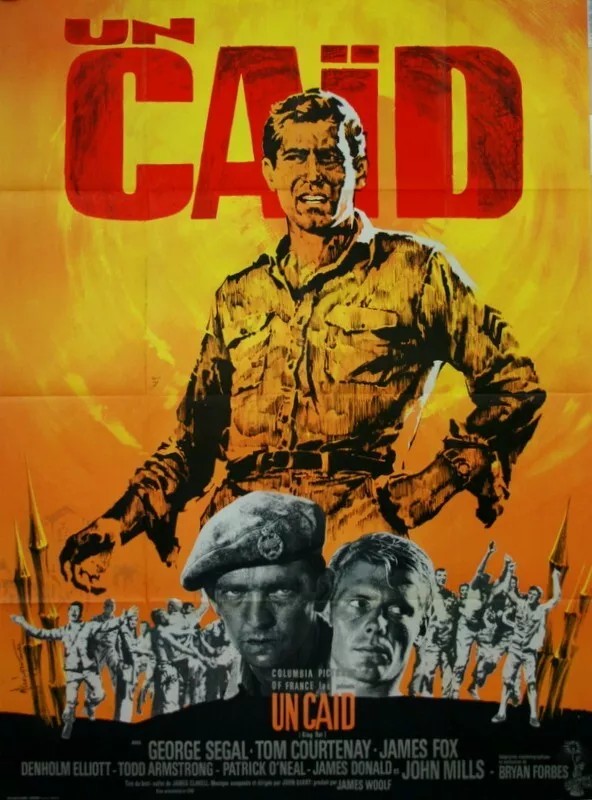
Turns the POW sub-genre on its head. Nobody’s interested in escaping or, in the vein of Bridge on the River Kwai (1957), committing an audacious act of sabotage. It’s hard enough just surviving with any high-falautin’ notions of honor or courage getting in the way.
Imagine if the James Garner character in The Great Escape (1963) was wheeling-and-dealing to fill his own pockets or ease his confinement in the way of Morgan Freeman in The Shawshank Redemption (1994).
That’s what we’ve got here. American prisoner Corporal King (George Segal) hasn’t got the general good in mind. He’s only interested in number one. The British idea of “fair play” doesn’t register. But, of course, there being Brits involved, there’s the whole class thing. Officers are generally upper-class and speak with pronounced drawls and affect that this whole prisoner-of-war lark is merely tiresome. Throw into the equation as well as kind of Lord of the Flies scenario where ideas of civilization are rudely interrupted by desperate need to claw to the top.
Three narratives intertwine. King’s black market activities attract the ire of the British security chief Lt Grey (Tom Courtenay), who, despite his position is clearly working class. King befriends airman Lt Marlowe (James Fox) who, though occasionally sticking to some honor code, gradually drifts away from any notions of upright behavior into the seductive immorality implicit in dealings with the American. And while investigating the theft of rations, Grey comes up against the brick wall of camp commander Col Smedley-Taylor, who while distinctly upper-class, nonetheless is a realist and keeps the situation on an even keel.
In the background, of course, is deprivation. Men commit suicide if caught stealing – and in quite awful fashion, diving headfirst into the dung-hole and suffocating.
In due course, King, as the title of the picture suggests, hits upon the notion of breeding rats and selling the food to the other prisoners under the guise of calling it “mouse-deer,” a genuine species in the area.
Complicity in corruption lingers, Grey assuming that Smedley-Taylor is glossing over punishment for the thefts, while all the prisoners begin to view King in a better light once he becomes the source of much-needed nourishment.
Mostly, though it’s about the characters and therefore about the acting. Tom Courtenay (Otley, 1969) is the least interesting, we’ve seen this snarky grumpy screen persona too many times before. George Segal (The Quiller Memorandum, 1966) is the revelation. He’s so charming it’s sometimes difficult to realize that he’s the villain of the piece, the unscrupulous soldier taking advantage of circumstance. He might be like your local drug-dealer, the criminal aspect of his activity overlooked because people want so badly what’s he’s selling.
The impact of James Fox (Thoroughly Modern Millie, 1967) is largely down to the fact that he plays against officer type, that one of the supposed good guys goes along with King and junks his stiff-upper-lip when easier pickings are on offer. But John Mills (The Family Way, 1966) is the other standout, determined not to make waves that will only upset a delicate order. You’ll catch Patrick O’Neal (Stiletto, 1969) and Denholm Elliott (Maroc 7, 1967) in small parts and a whole host of British supporting actors.
Writer-director Bryan Forbes (Deadfall, 1968), adapting the James Clavell bestseller, keeps the package taut, allowing the actors to do their stuff.
There were five our great reasons to see this picture. Firstly, it was in Cinerama. Secondly, it was the first attempt in that special format to tell a dramatic story rather than offer just a travelog. Though How the West Was Won (1962) was promoted at the first dramatic use of Cinerama, that was actually untrue. This came first. Third, there was a terrific gimmick – Smell-O-Vision – which allowed audiences to inhale around 30 fragrances at the same time as the onscreen characters. Fourthly, it was produced by Mike Todd Jr., son of the Oscar-winning producer of Around the World in 80 Days (1956) and second husband of Elizabeth Taylor who was instrumental in bringing Cinerama to the big screen in the first place., Lastly, it was the first top-billed appearance of rising British star Denholm Elliott.
Unfortunately, none of these hit the target and it remains a novelty in the Cinerama canon. For a start, there wasn’t much of a story – it’s a chase tale of sorts with crime novelist Oliver (Denholm Elliott) uncovering a plan to kill American heiress Sally Kennedy. In setting out to thwart it he travels all over Spain in the company of philosophic wise-cracking taxi driver Smiley (Peter Lorre). Cue travelog of scenic Spain including fiestas, dances and the running of the bulls, which appears not to have been specially staged but filmed documentary-style as it occurred with the bulls inflicting considerable damage on the humans foolish enough to think it’s a lark.
The hook is the mystery woman who can only be detected by her Schiaparelli perfume while the giveaway for the villain, hired assassin Baron saradin (Paul Lukas), is his tobacco. Cue an onslaught of scents. But the smells don’t just pop up when characters are involved. When a barrel of wine smashes, that produces another smell.
Astonishingly, the movie manages to bring in some of the Cinerama trademarks – the runaway element seen from the audience POV, not just the traditional vehicle but also barrels of wine.
The smell gimmick worked well enough in cinemas set up for such technical aspects, but that amounted to very few screens, and outside of those the movie just seemed a random series of scenes with only panoramic views of Spain to lessen the boredom.
It did nothing for the career of Denholm Elliott and he did little for the movie. He lacked the edge or innocence required to make such a character come alive and mostly he looks as though he doesn’t know what to do. He didn’t make another movie for three years and on his return for Station Six Sahara (1963) he was no longer the star but quickly shifting into the character actor he would be for the rest of his screen career.
It was nearly the last hurrah for Peter Lorre. He suffered heart attack during filming so the real Peter Lorre is only seen in half the picture, for the other half it’s a stand-in.
The presence of Elizabeth Taylor (Butterfield 8, 1960) could conceivably have redeemed the picture but she puts in only a fleeting appearance, so speedy her distinctive features barely register. You see more of Diana Dors (Baby Love, 1969).
In the hands of Alfred Hitchcock (Psycho, 1960) or imitators like Stanley Donen (Charade, 1963) and with a more finely worked screenplay, reliant on neither visual nor olfactory gimmick, this might have worked. But it was in hands of Jack Cardiff (The Girl on a Motorcycle, 1968), famed cinematographer but only his third outing as a director, and he clearly didn’t know how to balance the various ingredients and so it limps home.
The minute the location of the source novel by Audrey Kelley and William Roos shifted from New York to Spain and the number of investigators halved, the trouble started. The hunt for a woman whose existence is in question was a standard mystery trope and might very well have worked here minus the smells and Cinerama.
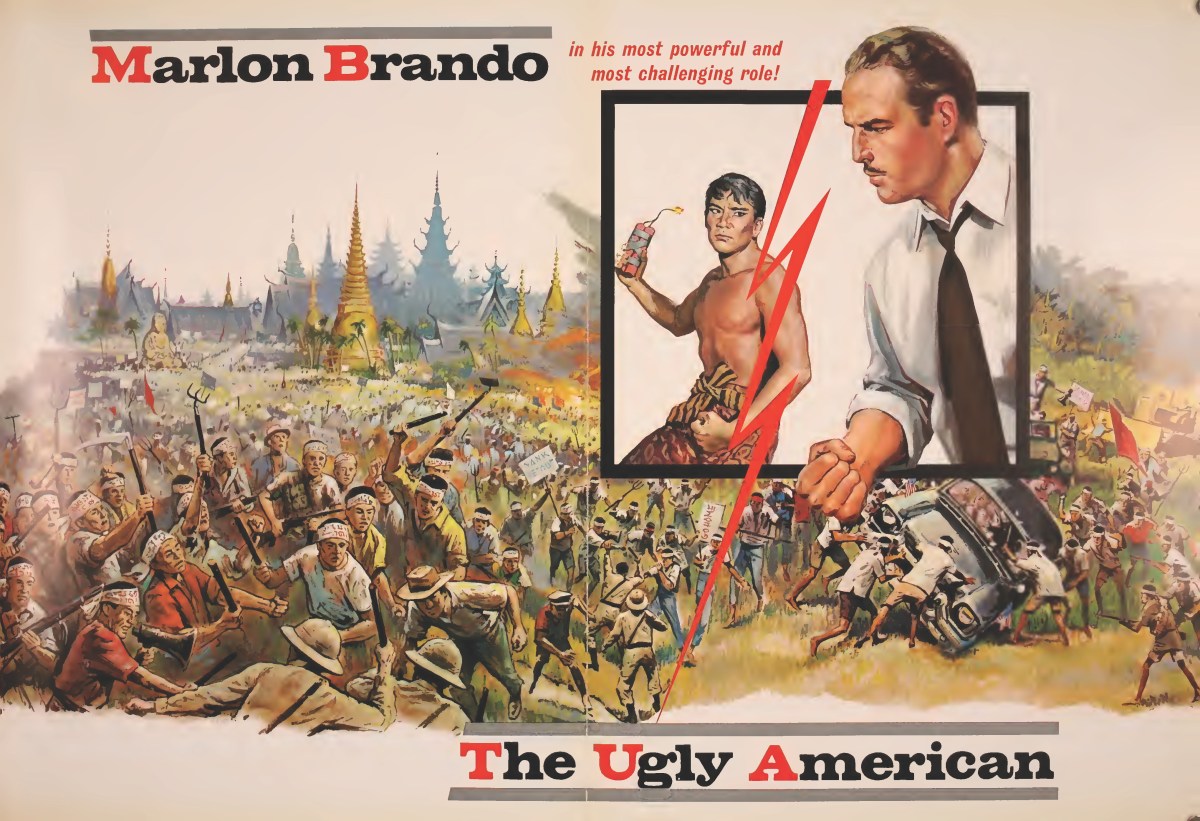
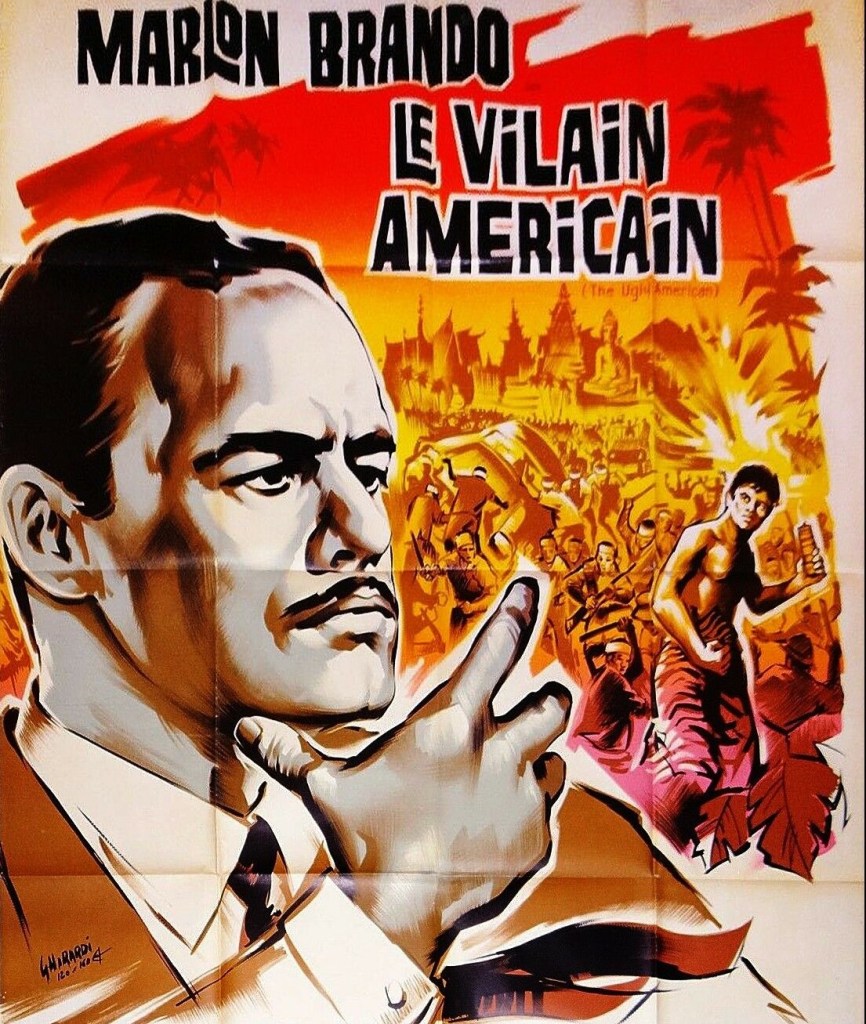
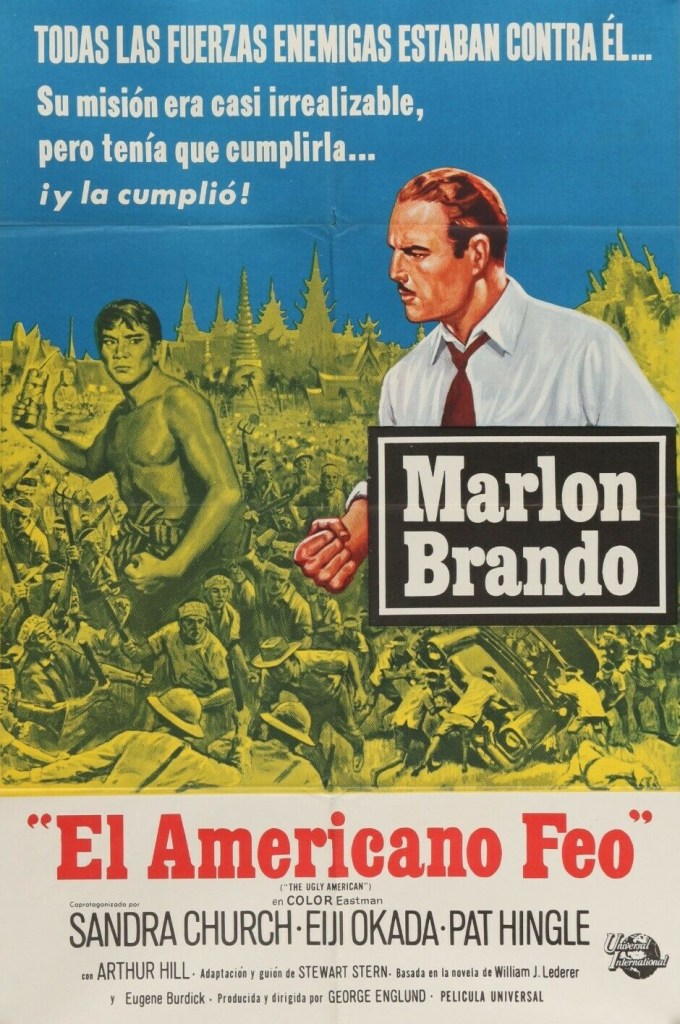
Terrific performance from Marlon Brando saves this prescient but preachy meditation on Vietnam. Harrison MacWhite (Marlon Brando) is the new ambassador, whose political credentials are questioned by many, parachuted into the fictional South-East Asia country of Sarkhan, knee-deep in civil war, Communist north versus westernized south. The battleground is the American construction of a “Freedom Road” north to China which dissenters fear will be a conduit for the military. MacWhite owes his appointment to his friendship with Deong (Eeji Okada), a charismatic leader.
On arrival, the ambassadorial car is engulfed in a riot, car rocked, windscreens smashed. MacWhite shakes up a complacent embassy and though articulate and scholarly believes he holds the solution to the tricky situation, not willing to accept that national self-determination does not necessarily mean complete hatred of the Americans. There is duplicity on both sides, rebels blaming U.S. truck drivers for deaths they caused, the Americans so used to getting their way they don’t stop to think if it is the right way.
Anxious not to be seen as a lapdog for Communism, MacWhite’s actions inflame the situation, while Deong falls victim to internal forces. Construction boss Homer Atkins (Pat Hingle) promotes the clever use of building hospitals along the road, thus encouraging locals to back it, but nobody falls for such honest skull-duggery masquerading as well-meaning intent.
Friends turning into enemies is a decent premise for any movie but this is over-burdened with debate that while interesting and providing a reflection of the times is basically a mixture of virtue-signalling and apportioning blame and, most heinous of failings, doesn’t really advance the story.
First-time director George Englund handles the action sequences well and captures the essence of a country about to explode against a background of growing tension and political machination. Use of Thailand as a location adds authenticity.
Based on a controversial novel by political scientist Eugene Burdick (who also wrote a more straightforward cold War thriller Fail Safe) and William Lederer, navy veteran and CIA officer, so it carried the stamp of authority in terms of putting forth the arguments for both sides. However, while the film bears only a “passing resemblance” to the book, according to co-author Burdick, he deemed it a superior achievement on the basis of its more dramatic treatment. Stewart Stern (Rachel, Rachel, 1969) was the screenwriter who received blame and praise in equal measure.
Marlon Brando (Burn! / Quiemada, 1969) exudes authority, broad shoulders packed into a suit, and brilliant captures the anguish of a man led into disaster by arrogance. Coming off back-to-back flops One-Eyed Jacks (1961) and Mutiny on the Bounty (1962), this was a considerable change of pace, the first of several excursions into political territory. Eeji Okada (Hiroshima, Mon Amour, 1958) proves a worthy opponent. Pat Hingle (Sol Madrid, 1968), Arthur Hill (Moment to Moment, 1965) and Jocelyn Brando (The Chase, 1966) provide sterling support.
The movie did not just predict what would happen if the U.S. lost the battle for hearts and minds but a similar situation confronting the U.S. Ambassador to Indonesia in 1965 whose appointment was unwelcome in that country.
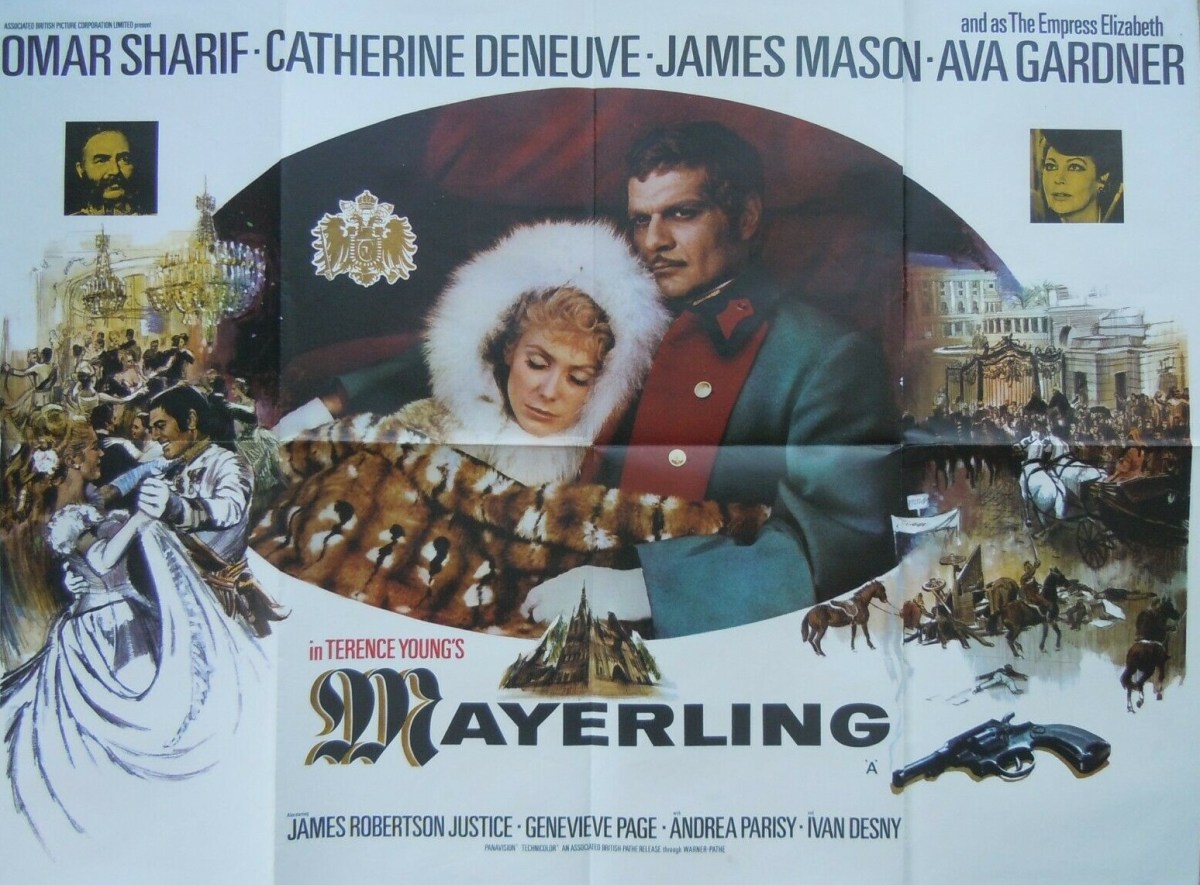
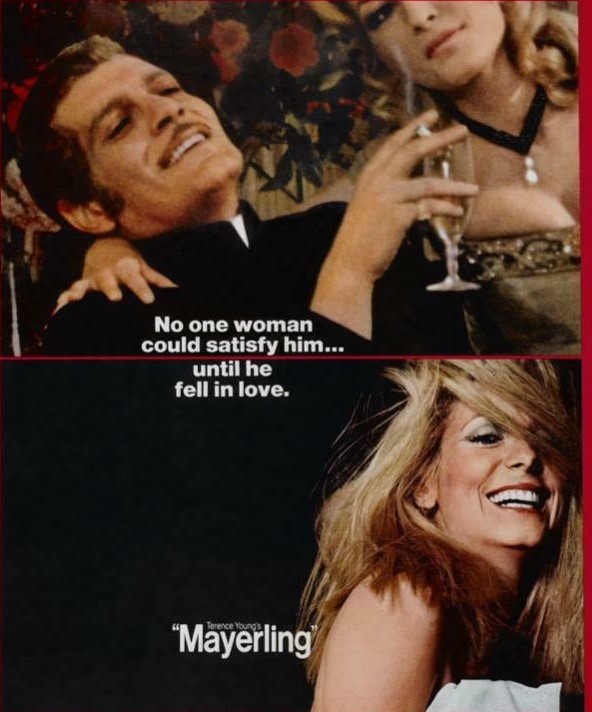
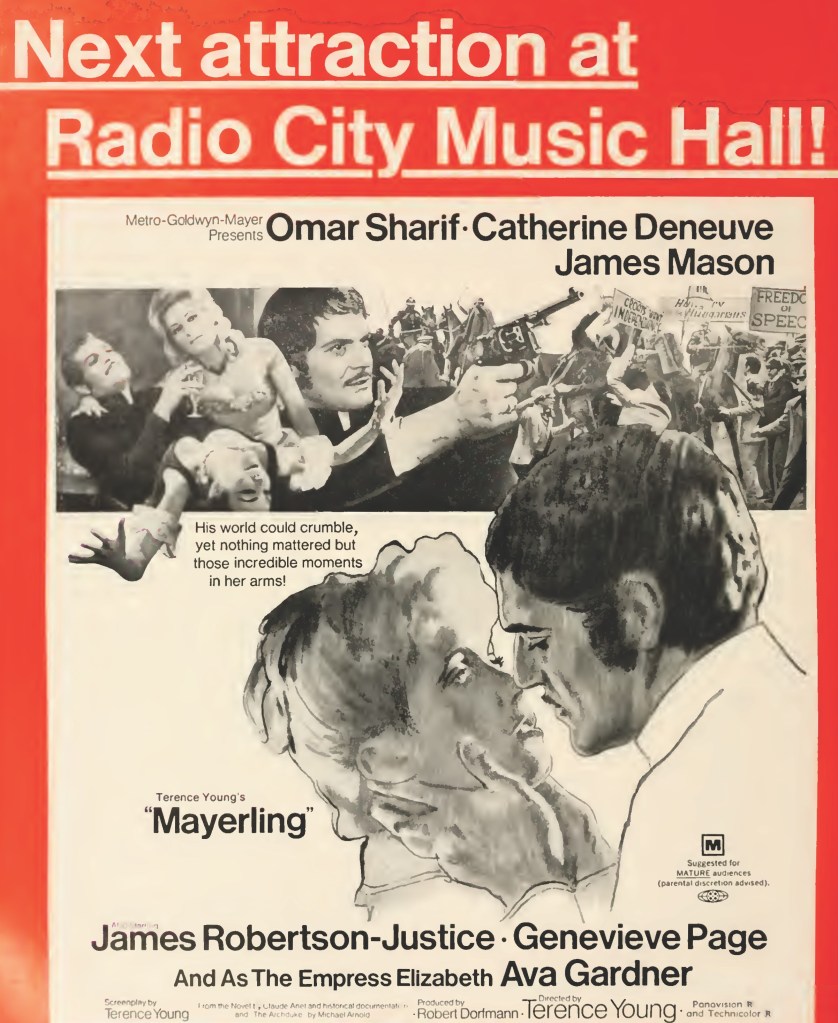
Sumptuous historical romantic drama set in a fading European empire awash with political intrigue and incipient revolution. Archduke Rudolf (Omar Sharif), married heir to the throne and constantly at odds with rigid father Emperor Franz-Josef (James Mason), sympathizes so strongly with Hungarian dissidents that he threatens to tear apart the Austro-Hungarian Empire. However, when he falls in love with Maria (Catherine Deneuve) and wants to marry her instead that, too, threatens to throw the empire into disarray.
Although dissolute, a mistress (or two) on the side, and addicted to morphine, that is not the way Rudolf is introduced to the audience. Instead, he is one of a string of bloodied men arrested after a demonstration giving his name to an officer in a police station who, once he is recognized, orders all other prisoners be released. He is the poster boy for good royalty. The Hungarians, agitating for independence, want him to become their king.
Beautifully mounted with lavish sets and enough in the way of balls, ballet, processions, horse riding and sleighs to keep up a steady parade of visually interesting distractions, the films steadily builds up an undercurrent of tension, both between father and son and between rebels and ruler. The emperor is a political genius, not just spying on his son, but full of devious devices to hold together whatever threatens to break up the empire.
The romance develops slowly and with true historical perspective, the first kiss they share is not on the lips, Rudolf kisses both her cheeks, she kisses his palm. Yet, there is a real sense that, no matter his power, they can still both be trapped in roles they despise, separated at the whim of parents. Rudolf, as he understands true love for the first time, finds the self-belief to challenge political certainties.
The regal aspects are well done, arguments about the rule of monarchy come over as heated conversation rather than boring debate, the political realities unavoidable. Rudolf is desperate to avoid a future where someone has to die before he has a reason to live. Escape is not an option.
There is a wonderful bitchy atmosphere in the court, where ladies-in-waiting disparage each other behind their backs, one dress described as “wallpaper,” and are forever seeking advancement. Countess Larish (Genevieve Page) is a self-appointed procurer-in-chief for Rudolf, not caring what chaos she causes.
I should add, if you are as ignorant of your European history as myself, that Mayerling is a place not a person. I tell you this so that you don’t make my mistake of waiting for a Mayerling character to appear. The film pointedly avoids a history lesson but it could have spared a minute to explain that the events depicted take place just 20 years after the establishment of the Austro-Hungarian Empire, the second largest land-mass in Europe, and among the top two or three nations. That would have helped clarify why Franz-Josef was in such a constant state, worried about forces that could break up the empire, and as concerned that his son, living such a debauched life, lacked the personal skills to hold it together after his father’s death.
It is ironic that Rudolf does prove his worth as a result of being briefly separated from Maria, taking the army to task for its incompetent officers and poor maintenance of everything from weaponry to horses.
To his credit director Terence Young (Dr No, 1962) does not rely on Omar Sharif’s soulful brown eyes and instead allows action to convey character and looks and touch the meaning of his love. This is probably Omar Sharif’s best role, one where he clearly made all the acting decisions rather than being over-directed by David Lean as in Doctor Zhivago (1965). Catherine Deneuve is equally impressive as a far-from-docile innocent, especially given the wide range of more sexually aware characters she has created for Repulsion (1965) and Belle de Jour (1967).
James Mason (Age of Consent, 1969) is superb as the conniving emperor, so rigid he will not approve a change of buttons for the army, so cunning that an apparent rapprochement with his son has unseen strings attached. Ava Gardner (55 Days at Peking, 1963) sweeps in briefly as an empress protective of her son and making the best of life in a gilded cage. Also impressive are Genevieve Page (Grand Prix, 1966) and James Robertson Justice (Doctor in Distress, 1963) as the high-living British heir nonetheless under the thumb of his mother Queen Victoria.
Terence Young also wrote the literate, often amusing. script, although Denis Cannan (A High Wind in Jamaica, 1965) and Joseph Kessel (Night of the Generals, 1967) are credited with additional dialog. While Francis Lai (The Golden Claws of the Cat Girl, 1968) wrote the score he relies heavily on classical music from Aram Khachaturian’s Spartacus.
If you come at this not expecting a David Lean style affair full of striking compositions, but an old-fashioned drama advancing at leisurely pace, you will not be disappointed.
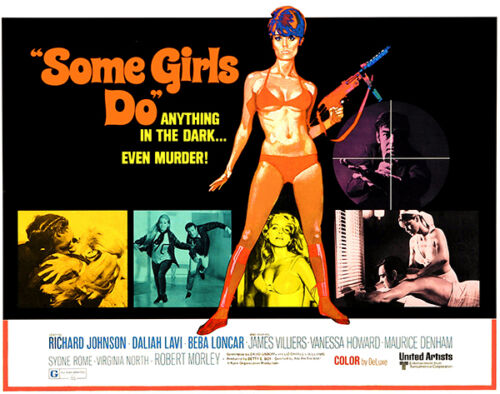
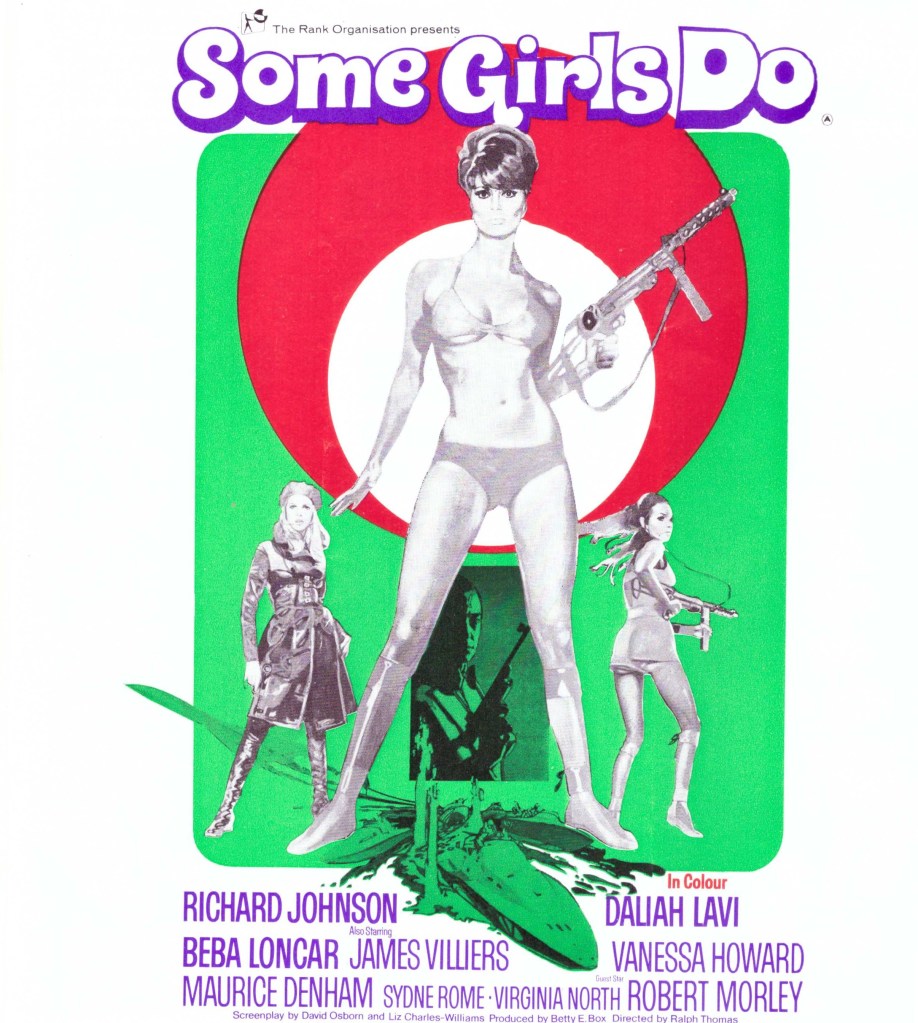
Enjoyed this sequel to Deadlier Than the Male (1967) far more than I expected because it sits in its own little world at some point removed from the espionage shenanigans that dominated the decade. Hugh (nee Bulldog) Drummond (Richard Johnson) is neither secret agent nor involved in espionage high jinks, instead employed in the more down-to-earth domain of insurance investigator, albeit where millions are at stake. Although his overall adversary is male, the smooth-talking Carl Petersen (James Villiers), adopting a series of disguises for most of this picture, the real threat comes from a pair of villainesses in the shape of Helga (Daliah Lavi) and Pandora (Beba Loncar). If anything, this pair are a shade more sadistic than Irma and Penelope from the previous outing.
The sequel doubles up – or doubles down – on the female villainy quotient, Petersen having created a race of lethal female robots who spend their time dispatching scientists working on the world’s first supersonic airliner. Global domination is only partly Petersen’s aim since he also stands to gain £8 million ($134 million today) if the plane doesn’t launch on schedule. Livening up proceedings are Flicky (Sydne Rome), a somewhat kooky Drummond fan who has her own agenda, Peregrine “Butch” Carruthers (Ronnie Stevens), a mild-mannered embassy official assigned bodyguard duties, and chef-cum-informant Miss Mary (Robert Morley).
Villiers has found a way of turning an ultrasound device intended originally to aid cheating in a boat race into something far more dangerous. But, of course, for Helga seduction is the main weapon in her armory, and Drummond’s first sighting of her – a superb cinematic moment – is sitting on the branch of a tree wielding a shotgun. Equally inviting are the squadron of gun-toting mini-skirted lasses guarding Petersen’s rocky fortress.
The movie switches between Helga, Pandora and the robots raining down destruction and Drummond trying to prevent it. Dispensing with the boardroom activities that held up the action in Deadlier than the Male, this is a faster-moving adventure, with Drummond occasionally outwitted by Helga and calling on his own repertoire of tricks. Dialog is often sharp with Drummond imparting swift repartee.
The action – on land, sea and air – is a vast improvement on the original. The pick is a motorboat duel, followed closely by Drummond in a glider coming up against a venomous aeroplane and saddled with a defective parachute. And there are the requisite fisticuffs. Various malfunctioning robots supply snippets of humour.
Richard Johnson (A Twist of Sand, 1968) truly found his metier in this character and it was a shame this proved to be the last of the series. Although Daliah Lavi never found a dramatic role to equal her turns in The Demon (1963) and The Whip and the Body (1963) and had graced many an indifferent spy picture as well as The Silencers (1966), she is given better opportunity here to show off her talent. Beba Loncar (Cover Girl, 1968) is her make-up obsessed bitchy buddy. Sydne Rome (What?, 1972) makes an alluring debut. James Villiers (The Touchables, 1968) is the only weak link, lacking the inherent menace of predecessor Nigel Green.
There’s a great supporting cast. Apart from Robert Morley (Genghis Khan, 1965) look out for Maurice Denham (Danger Route, 1967), Adrienne Posta (To Sir, with Love, 1967) and in her first movie in over a decade Florence Desmond (Three Came Home, 1950). The robotic contingent includes Yutte Stensgaard (Lust for a Vampire, 1971), Virginia North (Deadlier Than the Male), Marga Roche (Man in a Suitcase, 1968), Shakira Caine (wife of Sir Michael), Joanna Lumley (television series Absolutely Fabulous), Maria Aitken also making her debut, twins Dora and Doris Graham and Olga Linden (The Love Factor, 1969). Peer closely and you might spot Coronation Street veteran Johnny Briggs.
The whole package is put together with some style by British veteran Ralph Thomas (Deadlier than the Male). Screenplay by David Osborn and wife Liz Charles-Williams (Deadlier than the Male) is based on the book by “Sapper”.
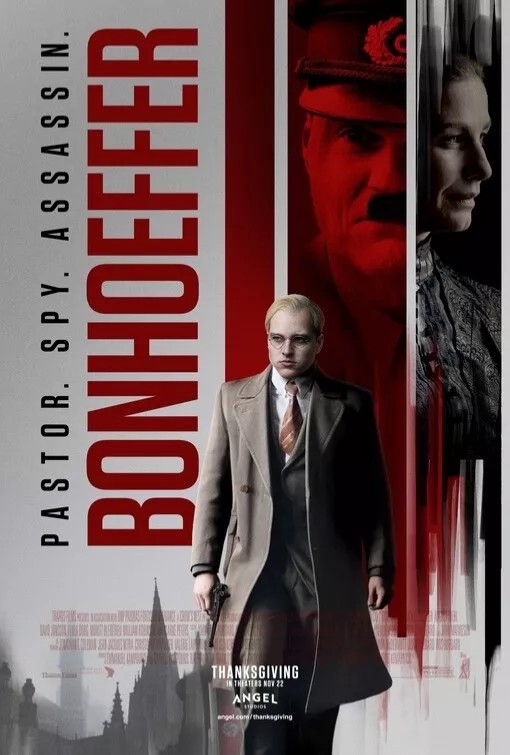
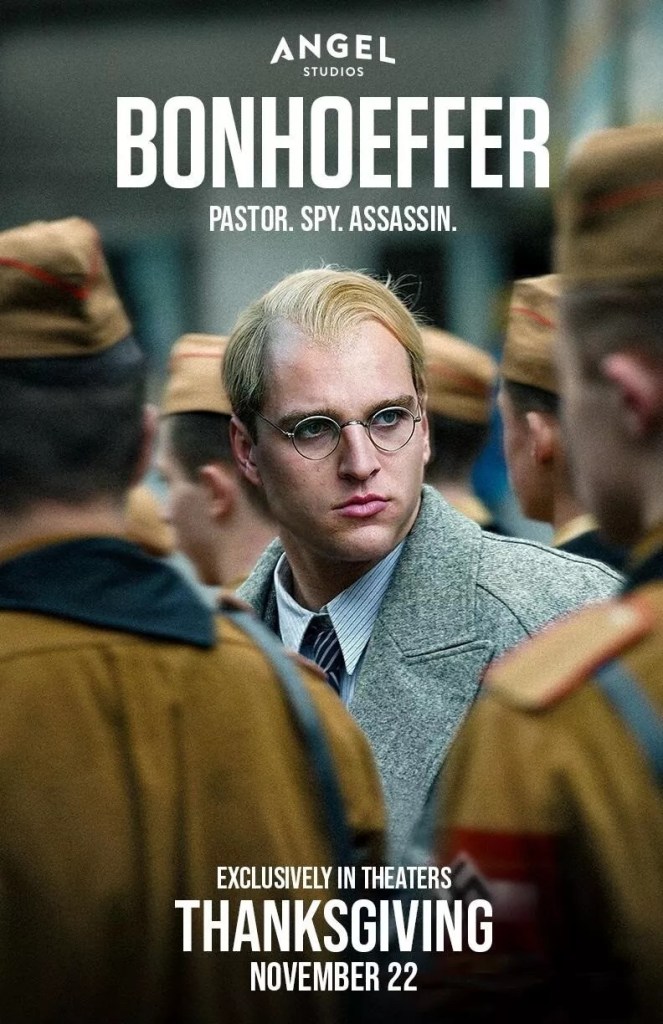
I had forgotten all I knew about Dietrich Bonhoeffer, the German theologian who was hanged three weeks before the end of the war for his part in the failed assassination of Hitler. I hadn’t realized, either, that there was a virtual spate of biopics, three in the last two years and two more since the turn of the century. The name of writer-director Todd Komarnicki didn’t mean much to me either, except, to counter that obstacle, he pops up before the movie begins to remind us of his credentials, director of World War Two picture Resistance (2003), producer of Elf (2003) and writer of Sully (2017), the latter involving, he is at pains to point out, Hollywood royalty in the shape of director Clint Eastwood and star Tom Hanks.
While this is workmanlike rather than, until virtually the very last scene, inspiring, and, until the final credits, pivots on virtually a handful of his writings – from the millions of words he wrote, many that have become the kind of pithy sayings that people are apt to quote.
There’s a sense that this is for the converted and that there’s little need to remind an audience of what it should already know. While the narrative doesn’t meander, it does oscillate through various timeframes and for those unacquainted with the life it could have done with more attention to detail.
Except for one detail that resonates at the end, the childhood sequences could have been eliminated, though they reveal that his elder brother died in the First World War. Then we are pretty much pitched straight into Harlem where a colleague, Frank (David Jonsson), attending the same New York theological college, introduces him to Baptists who expound gospel music, sassy preacher Rev Powell Sr (Clarke Peters) and the devil’s music, jazz. Bonhoeffer (Jonas Dassler) gets sharp reminder of the pervasive racism when he tries to book a hotel room for his African American buddy and gets whacked in the face with a shotgun for his troubles. This makes him realize piety isn’t enough and that action is required to stand up for your principles.
He becomes one of the first to report on Hitler’s victimization of the Jews and a leader in the dissident movement at a time when the German church is supportive of the Fuhrer. He was a published author from 1930 and became a significant public figure. He promoted the ecumenical movement and spent two years as a pastor in London. He was jailed for his opposition to the Third Reich.
As I said, this is mostly a straightforward affair, and you might struggle to keep up with church politics and it’s a guarantee you won’t have any idea who the other clerics are, and none of them come alive enough for us to care about them.
The best scene, and key to his beliefs, comes at the end. The night before he is due to be hanged, a prison guard offers to help him escape. But Bonhoeffer, fearing repercussions for both of their families, turns him down. He holds an imitation of the Last Supper for the other inmates, including, much to the initial fury of the assembled prisoners, the guard. He dies not just with considerable dignity but welcoming death.
Jonas Dassler (Berlin Nobody, 2024) is stolid more than anything and it’s very much a one-note performance. Frankly, none of the acting will take your breath away. However, placed against the current political climate, this resonates more than the film possibly deserves. It’s a worthy biopic and a timely reminder that “not to act is to act.”
However, if the name Bonhoeffer has ever entered your consciousness and you want to know more this is as good an introduction as any (though in fairness I haven’t seen the other biopics and I suspect the one starring Klaus Maria Brandauer will carry more emotional heft).
This was surprisingly busy when I saw it at my local multiplex on Monday, so the name has not been forgotten.
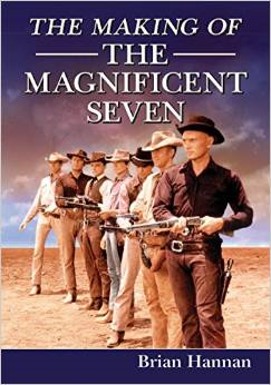
Yep, another plug. I’m honored to have been invited to adapt my book The Making of The Magnificent Seven (McFarland, 2015) for this magnificent full issue, packed full of illustrations, of the iconic Cinema Retro magazine.
Anthony Quinn was convinced it was his idea. In 1956 watching a new 155-minute Japanese film about seven samurai, which had won the Silver Lion at the annual Venice Film Festival, second only in global prestige to Cannes, and was astonishingly action-packed for a movie playing an arthouse theatre, it occurred to him this would make a good western. It already had a great title – The Magnificent Seven(as Akira Kurosawa’s Seven Samurai was known in the US). Thinking it would be an ideal vehicle for them both, Quinn mentioned his samurai idea to Yul Brynner.
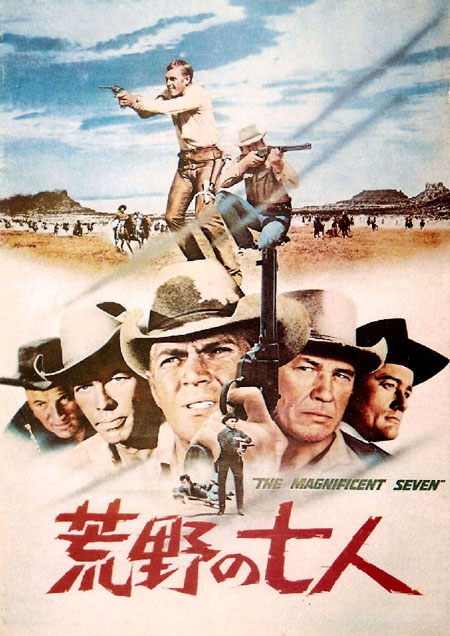
One of the fantastic images found by Cinema Retro for its Special Edition. The movie was a huge hit in Japan.If you’re not familiar with the magazine and love seeing posters and stills from old movies you’re in for a treat because these guys have access to an amazing treasure trove of memorabilia.
Brynner had been a star-in-waiting since appearing on stage in the Rodgers and Hammerstein musical The King and I in 1951. Born on July 11, 1920, in Vladivostok in the USSR, reaching the USA in 1941 via Paris, he starred in one of the first U.S. television shows Mr Jones and His Neighbors (1944) but also directed over 1,000 programs. He briefly decamped to Broadway for LuteSong (1946), leading man to star Mary Martin, but turned down the film version, making his movie in Port of New York (1947). “You’ll be seeing plenty of him after this film break,” prophesied Variety. But television presented better opportunity, future director Martin Ritt dabbed him “ a brilliant tv producer” and the BBC sent over a team to study his innovations.
When Rodgers and Hammerstein went looking for a strong male presence to compete with star Gertrude’s Lawrence’s stage charisma in The King and I, Mary Martin pushed for him. The musical turned Brynner into a star.
Paramount signed him up, along with Audrey Hepburn, for its new talent roster. The first project, A New Kind Of Love, to be directed by Billy Wilder, would pair him with Greta Garbo. Sam Spiegel wanted him for a biopic of Nijinsky. When Garbo proved, as you might expect, disinterested, Audrey Hepburn stepped in and when she dropped out was replaced by namesake Katharine Hepburn. When that project died, Paramount shifted Brynner to South Seas Story in 3D. But that didn’t work out either. He was up against Charlton Heston and Mel Ferrer for Columbia’s Miss Sadie Thompson starring Rita Hayworth. He was wooed by Dino De Laurentiis and Carlo Ponti for Lust for Life and then for Biblical drama Judith and Holofernes with Silvano Mangano.
At the interval of a performance of The King and I, Cecil B. DeMille went backstage. “In four years,” noted Brynner, “I have never had a visitor. There are only 7½ minutes between acts. By the time I had to go on stage again I had not only agreed to do The Ten Commandments with him but another picture following it.” Twentieth Century Fox ponied up $1m for movie rights to The King and I. Brynner pushed the studio to allow him to direct the musical.
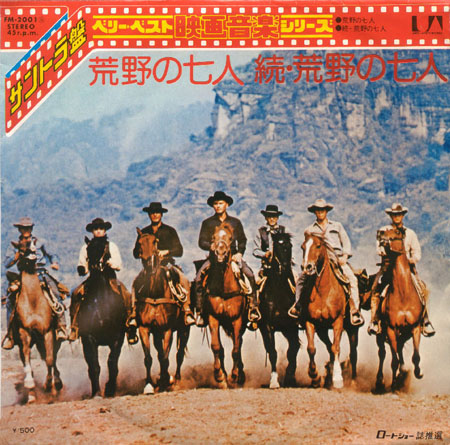
Told you Cinema Retro had access to amazing images – this is the soundtrack.
Anthony Quinn was also hankering after going down the route of direction, or at least greater production control of his career. But while Brynner’s career was taking off, Quinn’s was at a standstill. Even winning the Best Supporting Actor Oscar for Viva Zapata (1952) had not done much for this career and in a bid to revitalize that he had gone to Italy in 1954, but Attila, Ulysses and Fellini’s La Strada did not bring him stardom, second-billed in all three. When top billing finally did arrive in film noir The Long Wait (1954) it sank without trace
By contrast, Brynner made a pampered entrance to screen stardom, flown to Egypt at the end of October, 1955, for just two days shooting on The Ten Commandments (1956) for a scene involving Pharaoh heading his army of 10,000 men, then whisked back to the U.S. and not required for shooting until six months later. While assigned the male lead in Fox big-budget drama Anastasia (1956), directed by Anatole Litvak, as with The King and I (1956) he was not top-billed. That honour went to Ingrid Bergman, making her Hollywood comeback after her scandalous affair with Italian director Roberto Rossellini, while Deborah Kerr’s name came first for the musical. Whatever way you cut it, in his first three movies, Brynner was not considered the main attraction.
So his thoughts turned once again from acting to directing. “Acting was only supposed to be a temporary job,” he complained and he hustled Paramount to give him an actor-director deal. “Directing is my baby. It is for me more satisfying than acting – it’s like leading a symphony orchestra compared to playing a fiddle.” As to genre, “I have a yen to make westerns,” he said. “Westerns are the poetry of films.” he said. His badgering paid off. In 1956 Paramount announced it had signed him up as an actor-director in a purported million-dollar deal.
To take more control of his career, Quinn had shifted gear and established Antone Productions. But none of the fist six projects announced – including an MGM-backed El Cid – made it over the line. By contrast after the triple success of The King and I, The Ten Commandments, and Anastasia, Brynner could not be flying higher. He was inundated with offers.
But he envisaged himself as a mogul, setting up production outfit Alciona. And won a unheard-of $25m deal with United Artists for eleven movies. This was unprecedented. Nobody in the annals of Hollywood had ever been given such largesse, never mind a man with no experience of the two skills – producing and directing – which he would have to master. On his slate, the idea to turn Seven Samurai into a western.
Unbeknownst to Brynner and Quinn, ex-newspaperman and Columbia Studios story editor Lou Morheim snapped up the remake rights for $2,500 from International Toho Inc. Despite previous cooperation Brynner and Quinn became rivals in bidding for the project. Brynner won, contract signed in February 1958.
Brynner had decided the movie was the ideal vehicle for his directing debut. But he wouldn’t act. The Magnificent Six, to be shot in Europe, was announced as Alciona’s first film, being made for United Artists with Brynner directing.
Brynner offered Quinn $125,000 plus a profit share to star. Despite various delays, Brynner, still intent on directing, in January 1959 went to Spain to scout locations. But there were problems with Quinn. Brynner handed over the directorial reins to Anatole Litvak, while remaining on board as star, Glenn Ford
drafted in as co-star. But with the budget rocketing to $2.4m, UA pulled the plug on Alciona, reimbursing Brynner’s $112,000 investment, turning the project over to Mirisch. Mirisch had the ideal director in mind, one who was equally proficient in the genre – John Sturges.
Yep, sorry, this is just a taster. You can read the whole story (or a condensed version of it) in Cinema Retro – see link below – and if you want the whole shebang check out my book.
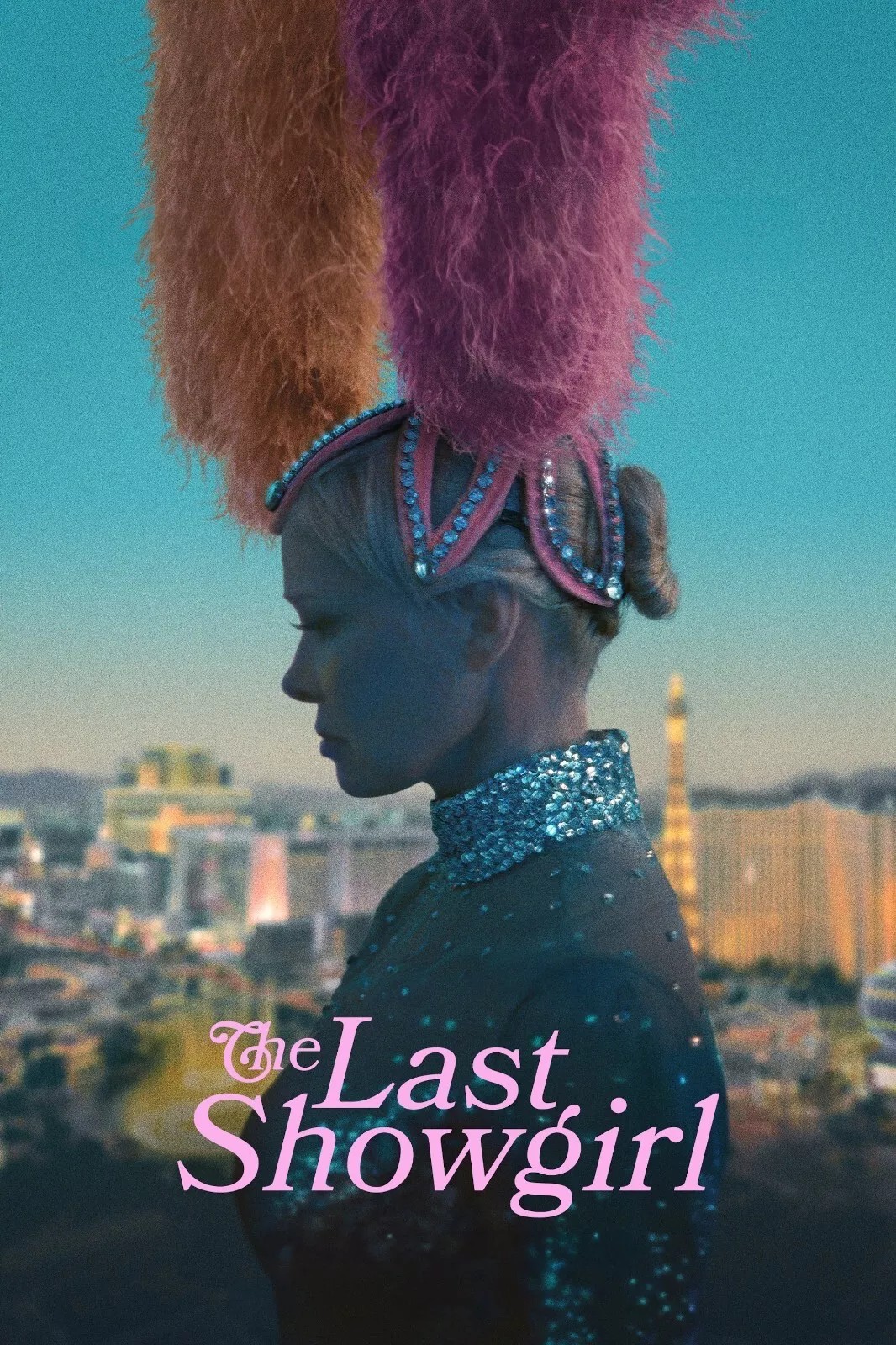
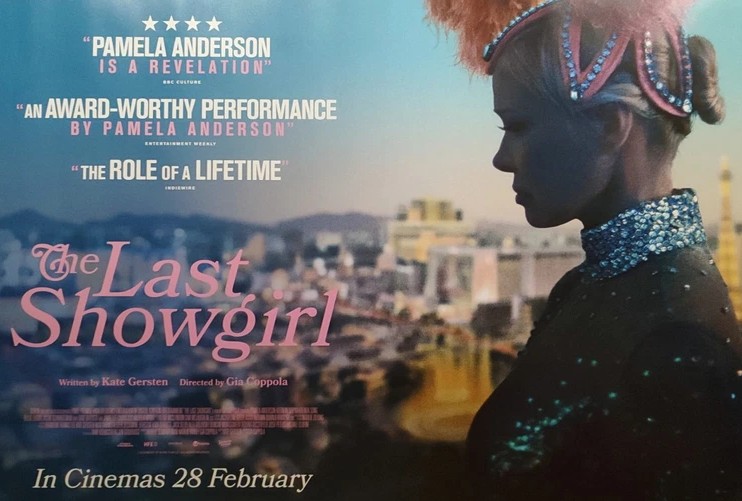
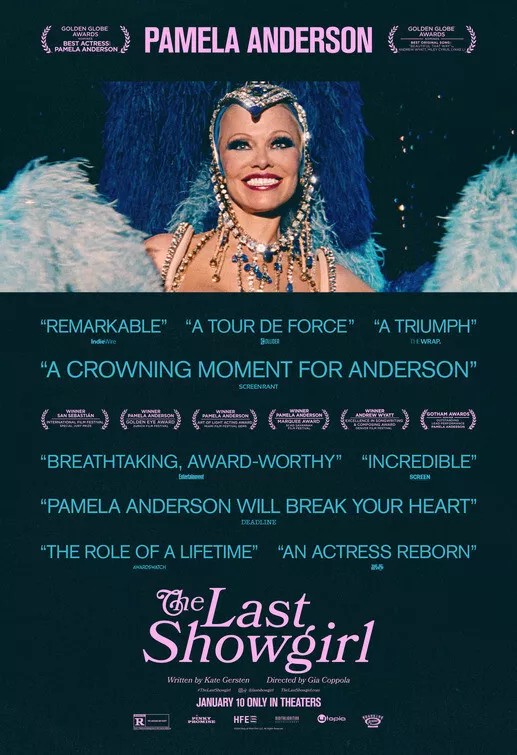
I’m assuming this fell foul of Oscar voters because it lacked a woke agenda. In fact, it’s distinctly anti-woke, the subject matter of women flaunting their bodies for dough, and a heroine who revels in it, going against the contemporary grain. And I know Demi Moore put on a more showy performance in The Substance (2024) but Pamela Anderson here demonstrates significantly more substance. Everything you’ve heard about her performance is true and you do wonder, far more than with Demi Moore, why some casting director didn’t alight on such talent which would have been ideal for a rom-com or drama as a put-upon character.
I’ve scarcely come across a more well-rounded character – and yes the script by Kate Gersten was an Oscar shut-out, too, but scripts are more than fancy-dancy lines or setting up woke agendas. There’s a just fabulous scene where ageing showgirl Shelly (Pamela Anderson) slams the door in the face of one of the young dancers coming to her for emotional support. Shelly is too wrapped up in other personal dilemmas at that point to cope. Up to now she’s been maternal to a pair of younger girls, Jodie (Kiernan Shipka) and Mary-Anne (Brenda Song), and happy to offer a shoulder to cry on.
But it’s two-way. The girls help her fix bits of her costume. Following the door-slamming episode, Jodie takes the hump and refuses to assist pre-show and Shelly come a bit unstuck.
But not only is Shelly a willing participant in male fantasy, she’s also poster girl for a female fantasy, that her body and somewhat limited talent will carry her through to old age (older age, she’s 57 now) and she can dwell on career highlights such as being feted by the media and corporations who ferried her across the world as some kind of brand ambassador.
Frankly, she’s not ready to face up to much – certainly not the end of her career, the show (Le Razzle Dazzle) is closing and her daughter Hannah (Billie Lourd) is not only challenging her perception that she was a good mother but derides her occupation.
The script is cleverly structured in a kind of Christmas Carol fashion. We’ve got before – Jodie and Mary-Anne the eager beavers with stars in their eyes. After is represented by the jaded older hard-drinking gambling addict Annette (Jamie Lee Curtis), reduced to cocktail waitress (a rather grand term for what she does) in a casino with her cleavage on show as a possible repository for tips.
Shelly has more than enough shades of character. She’s daffy, hard-nosed when the situation requires, manipulative (also when required), selfish, unselfish, fulfilled, unfulfilled, friendly, lonely. Turns out there’s still room for the exploitative show as long as striptease can be performed in post-ironic fashion, throw in some slapstick and bizarre comedy, and there’s demand for the straightforward Vegas showgirl but they need a good bit more dancing training than Shelly can muster – brutally taken apart in that scene.
Thankfully, director Gia Coppola (The Seven Faces of Jane, 2022) doesn’t go down the sentimental route, nor is she out to curry pity. You’ll sympathize with Shelly for sure, but you’ll hold back because her problems are all of her own making and you know full well that she’ll find some solution, manipulative or not, to her immediate problems.
If you’re looking to expend a bit of sympathy your better bet is Annette. The scene where, presumably as part of her job, she has to climb on to a mini-stage in the casino and gyrate to a tune with nobody paying the blind bit of notice resonates. Sharp-tongued though she is, Annette has the self-awareness to know she will always be broke, unable to kick her gambling addiction, even if it means losing her home and sleeping in her car.
Hannah’s really the only cliché, there as a scripting prop to make Shelly reassess her life (interestingly enough Shelly finds little to fault), and make her face up to her tawdry career. Though in a scene which makes some emotional sense – acceptance of parental failings, I guess, or pride at paternal skill – that I didn’t believe the daughter applauds her mother’s dancing having previously lambasted it.
This is old-school, from the time when you could make a whole film just about a character coming to the end of their career and facing up (or not, as here) to decisions made. It could be a football coach or a teacher or a politician. Here, it just happens to be a showgirl.
This would in any case have been the best performance of Pamela Anderson’s career because, frankly, that bar was set decidedly low. Demi Moore, by comparison, could at least point to some critical acceptance for roles like Ghost (1990) and A Few Good Men (1992). I don’t buy into the idea that box office stars are hard-done-by in not being offered Oscar-bait roles because as we’ve seen only too often any star can buy their way into a good role – by that I mean cutting their salary to the bone or spending their own dough to bring a picture to fruition, it’s what the term “vanity project” was invented for.
Still, with what Pamela Anderson presents here, shorn not so much of make-up but the glossy sleekness of her previous screen persona, and presenting a more realistic characterization, you could see her fitting well into a series of more demanding roles.
Yes, for once, the reviews are correct. Well worth seeing.
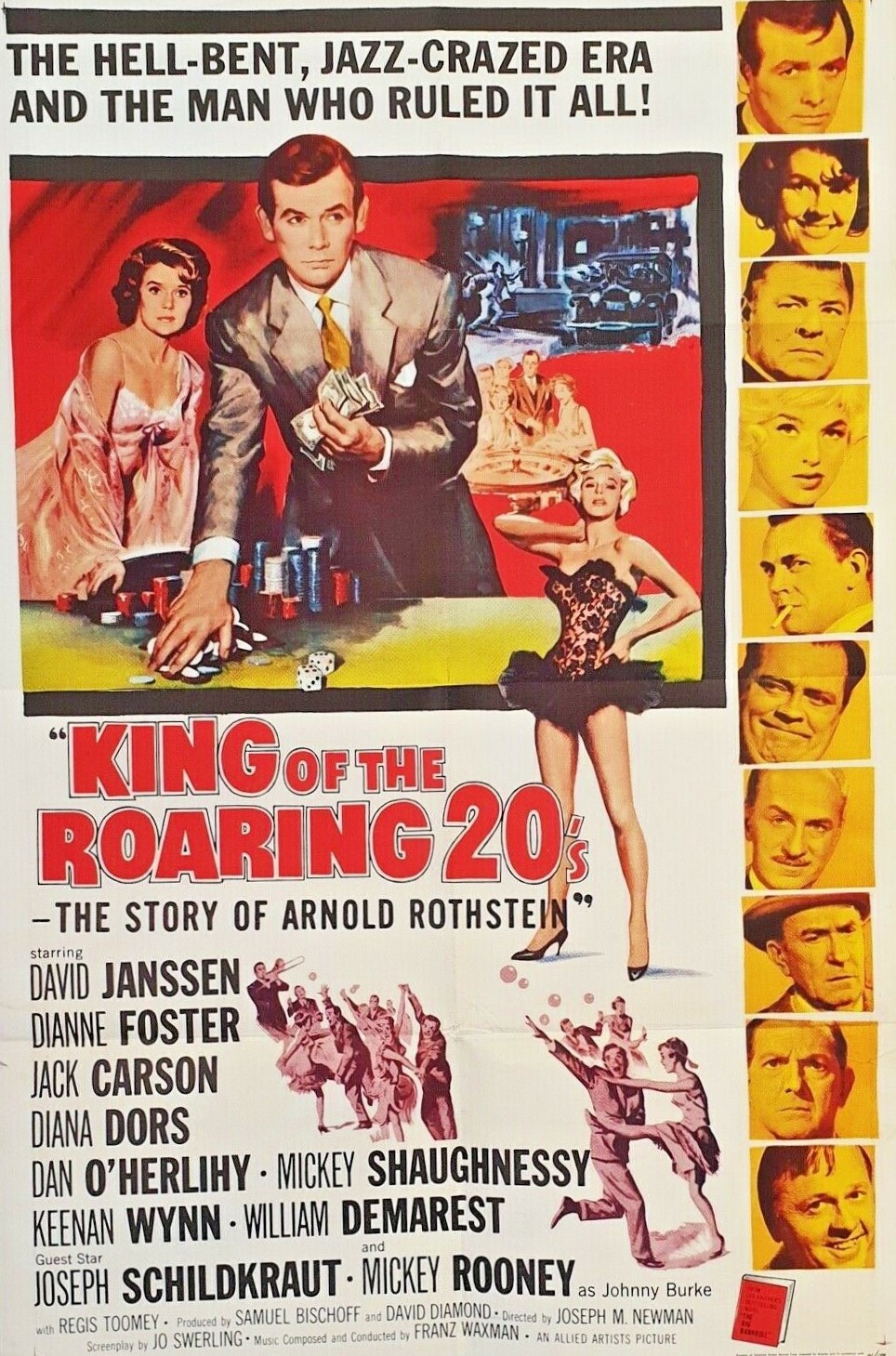
Occasionally stylish B-picture purporting to tell the story of American Prohibition-era gangster Arnold Rothstein. It’s more of drama with various nefarious figures trying to outwit each other rather than a shoot ‘em up in the style of Al Capone (1959). David Janssen (Warning Shot, 1967) is ideal casting as the thoughtful, cold, calculating and possibly gambling genius Rothstein, the opposite of an intemperate crook like Capone.
The story is told essentially in two parts, Rothstein’s rise to power in partnership with childhood pal Johnny Burke (Mickey Rooney), initially running dice games in the street and pulling the odd con before graduating to fly-by-night horse racing operations. When the opportunity arises to move into mainstream illegal gambling, he dumps Burke. Corrupt cop Phil Butler (Dan O’Herlihy) is a constant thorn in his side and showgirl fiancée Carolyn Green (Dianne Foster) views marriage as risky – “he’s the gambler but I’m the one that’s going to be doing the gambling.”
For whatever reason, the movie dodges what was believed to be Rothstein’s biggest coup, the fixing of the baseball World Series, but one long section is devoted to how he pulls off a massive horse racing win where he ends up placing a $100,000 bet through insider information and strategic betting. Inevitably, his gambling puts the kibosh on his marriage but by far the most interesting part of the picture is the chicanery as he shakes off one partner, battles another, and without compunction sets up Burke as patsy to settle his score with Butler.
In some respects Rothstein is a template for Vito Corleone (The Godfather, 1972) in terms of his business brain and ability to out-think and out-fox opponents and certainly his facial expressions and innate coldness bear comparison with what Al Pacino brought to his characterization of Michael Corleone. Except that he didn’t trust banks, and carried round wads of cash (hence the title of the biography on which this is based – The Big Bankroll), it’s hard to get a sense of the wealth the gangster generated or, given the minimal violence, the world of imminent peril he inhabited.
Period detail is cursory, limited to dancing the Charleston and pouring champagne into teacups. A better idea of the flavor of the times is the wholesale corruption endemic in police departments, untrustworthy lawyers and hypocrisy run wild. It’s not really Janssen’s fault that it’s hard to warm to such a cold-blooded character, although you could point to The Godfather and The Brotherhood (1968) for that matter as examples of Mafia hoods who do elicit audience empathy.
With occasional bravura moments involving long tracking shots and overhead shots, and a terrific image of champagne bubbles seen through a pair of binoculars, director Joseph M. Newman (This Island Earth, 1955) shows stylistic flourishes that eschew his B-movie roots. Given Janssen is called upon to show as little emotion as possible, he does very well. Dianne Foster (The Last Hurrah, 1958), though initially demure, provides the fireworks. Jack Carson (The Bramble Bush, 1960) as kingpin Tim O’Brien matches Janssen in the cool stakes and proves a worthy adversary. Rooney overacts but Dan O’Herlihy (The Night Fighters, 1960) relishes his dirty cop role.
In a rare Hollywood outing British sexpot Diana Dors (Hammerhead, 1968) puts in an unexpected and brief appearance as Carolyn’s cynical flatmate. The tremendous supporting cast includes Keenan Wynn (Point Blank, 1967), Mickey Shaughnessey (North to Alaska, 1960), Regis Toomey (The Last Sunset, 1961), Oscar-winner Joseph Schildkraut (The Diary of Anne Frank, 1959) and veteran character actor William Demerest.
Jo Swerling (It’s a Wonderful Life) delivers a pointed screenplay focusing on gangster conflict with some excellent observation of the deterioration of the Rothstein marriage and the nervousness of the usually ice-cold Rothstein when confronted by his father. This is one of those pictures that you think deserves a Netflix series, a dozen or so episodes to explore the myriad characters involved and especially to examine Rothstein in forensic detail. The movie spells out that potential and on a tight budget does it well.
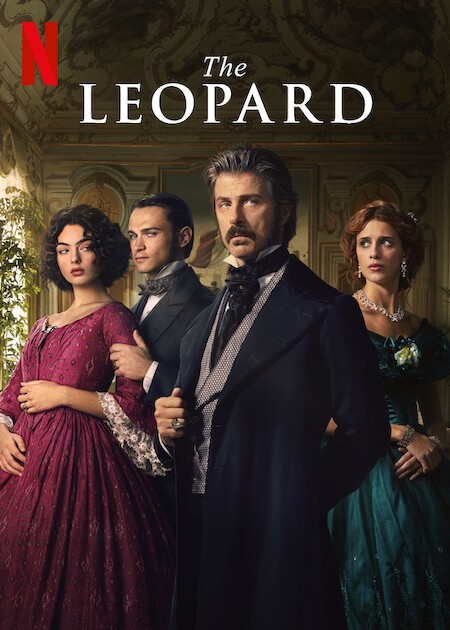
I should have guessed. The Netflix mini-series misses by a country mile. You could blame the casting – who could ever match Burt Lancaster (in the 1963 Luchino Visconti film) as the imperial Prince of Salina? That would be a fair point – it is television after all and that kind of gravitas coupled with regal authority is hard to find. But you should have been able to find someone to match Alain Delon in the second male role, Tancredi, but instead of any real finesse, this is played as soap opera. In fact you could say Downton Abbey Goes To Sicily might have made a better title.
The picturesque is no substitute for genuine understanding of cinematographic use of scenery. The Visconti version was a true epic but this, with double the running time, just stutters, the reimagining of the Lampedusa classic resulting in effect without notable cause.
Scenes are invented to establish character rather than that being shown through the actors. And while we might appreciate the Prince (Kim Rossi Stuart) putting his thieving farm manager in his place and in giving away a good chunk of his land to a corrupt Governor in order to save his wayward nephew Tancredi (Saul Nanni), these sequences look as if though they are dreamed up in soap opera fashion, turning on episodic impact rather than any inherent logic.
Sure, we learn more about the political background. Garibaldi wanted to unite Italy which until then had been a series of small kingdoms. Sicily was the last outpost of the old way and invasion was afoot, bolstered by rebellious islanders already causing ructions. In safeguarding Tancredi, the prince is nursing a viper in his bosom. Occasionally, the script makes a decent point, that in order to stay ahead of the game you need to embrace change.
But the rest is labored. Mostly directed by Tom Shankland with adaptation mostly by Richard Warlow. That Warlow is credited as “creator” rather than Giuseppe Tomasi de Lampedusa, author of the original novel, tells you all you need to know.








 The Magnificent 60s