I am a published author of books about film - over a dozen to my name, the latest being "When Women Ruled Hollywood." As the title of the blog suggests, this is a site devoted to movies of the 1960s but since I go to the movies twice a week - an old-fashioned double-bill of my own choosing - I might occasionally slip in a review of a contemporary picture.
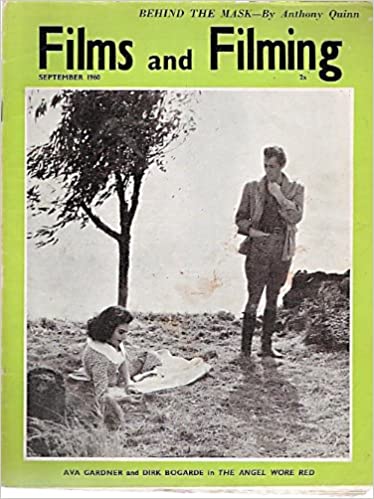
Vincent Price and Christopher Lee – two scions of 1960s horror – together! Yet anyone expecting a clash of the giants would be sorely disappointed as they only share one short scene. This is a typical American International Pictures venture, based even more typically on an Edgar Allan Poe story, with some stylistic direction – the extreme close-up never more effectively utilized – from Gordon Hessler in his third feature.
Given that German-born Hessler was a last-minute substitute for English director Michael Reeves (Witchfinder General, 1968), he made an exceptionally good job of a complicated plot. The production was even more complicated than that since it was originally intended as a Spanish co-production to be shot in Spain. And at one point writer Lawrence Huntingdon was reportedly also carrying out producer-director duties.
What seems like a mishmash of different stories – African sorcery, grave-robbing, disfigurement, forgery, blackmail, lifetime imprisonment, medical experiment, buried alive, a monster in a scarlet mask – soon comes together in a tense tale of retribution and revenge.
Vincent Price plays an English aristocrat in nineteenth century England who has withdrawn to his country manor, for unknown reasons distancing himself from his fiancée (Hilary Dwyer) , but in reality to conceal from the world the fact that he has locked up his own brother. When the brother, a disfigured monster, escapes he embarks on a murder spree.
The various storylines keep the narrative sufficiently entangled to sustain tension. Despite what may appear to a modern audience as primitive special effects, several scenes are bone-chilling largely through directorial manipulation. The Gothic look – graveyards, castles, the village – adds to the atmosphere. The violence was trimmed in America to avoid an “R” rating, but led to the film being banned in Australia.
There is more overt sexuality than normal, a scheming whore (Uta Levka – a sensation in Radley Metzger’s Carmen, Baby, 1967) tempting a man with her bare breasts, and Sally Geeson as a maid entranced by the monster.
The various plot strands appeared to confuse critics at the time and even now the film receives comments that it is “vague” but at a time when Hammer’s output usually comprised a straightforward – and somewhat limited narrative – I found AIP’s approach to this picture a welcome development. The slowly emerging story set the film up as much as a thriller as a horror.
You might be able to catch it for free on Sony Movies Classic. Otherwise, check out the DVD.
Confession time! I never saw either of Bill and Ted’s previous outings nor the animated series for that matter and in truth had there been the usual choice of new movies to see – other than a slim pandemic ration – I might well have skipped this one. The good news is that I come with no preconceptions. I’m not overloaded with sequelitis, I’m not in a position to compare new with old.
So I was surprised how much I enjoyed this very amiable comedy. It makes no bones about the unintelligibility of the sci-fi side of things, no mind-bending required to find out how it is all meant to work. Shades of the BBC’s Dr Who series, the boys just hop into a telephone buy and dial up the future. you know from the outset that the scientific mumbo-jumbo is just that and there’s a running gag when someone tries to explain it, which goes over the heads of our heroes.
The plot, if you’re unfamiliar with it, has the pair dashing back and forth time-wise, meeting their future selves, in a bid to pull together the one tune that will save the universe while their daughters nip back in time in an effort to put together the best band of all time – Mozart, Jimi Hendrix and Louis Armstrong – are dragged into the combo. Bill and Ted – or Dim and Dimmer if you want to be more accurate – do little more than look stunned by developments. But I take my hat off to still under-rated Keanu Reeves for reprising his comedic character after nearly two decades of building up a meaty portfolio of action (Speed, John Wick) and more substantial sci-fi (Johnny Mnemonic, The Matrix) roles as well as a string of romantic (A Walk in the Clouds, Sweet November) and dramatic (The Replacements, Hardball) parts. Alex Winter’s career hardly matches that of Reeves, but they are a good pairing.
Perhaps gender-conscious sensibilities conspired to the pairs sons from the previous movie turning into the goofy daughters they are currently saddled with. A good twist, I thought, for the kids to take after their dads rather than their more sensible mothers. I found myself laughing out loud at several sections even when they had already been highlights of the trailer, such as the couple counselling and Death (William Sadler) cheating at hopscotch. I liked the guilt-ridden killer robot. There is even some character development, though nothing that would trouble the likes of Shakespeare.
I saw this last night on the big screen at my local Odeon. It’s streaming in the United States.
This is a low-budget gem, an exploration of the psychological consequences of grooming. You can probably guess from the outset where it is headed but simmering tension has rarely been handled so stylistically.
With the exception of Patricia Neal, an unexpected Best Actress Oscar-winner for her previous film Hud (1963), there were no stars in the cast. Curd Jurgens was only beginning to play characters for whom a German accent was not essential, Samantha Eggar one movie shy of her breakout picture The Collector (1965), Ian Bannen, essentially a character actor, building on his success in Station Six Sahara (1963).
Blinded after an unexplained psychological trauma, Neal welcomes back, over husband Jurgens’ objections, her much younger sister Eggar to the family home. Bannen is the family friend, caring (possibly overmuch) for Neal, hankering after Eggar. The screenplay by veteran Julian Zimet (Saigon, 1947, with Alan Ladd) is taut as a drum, every line a threat, suppressed emotion or piece of exposition that could bring the whole house of cards tumbling down.
The blindness is exceptionally well handled, Neal’s need for physical contact with her husband sensual in its expression. Though she can a ride a horse, her vulnerability is implicit; as she is led across a beach you wonder what would happen were she to be abandoned. What she cannot see becomes central to the movie. That Eggar – vivacious but damaged – clearly has some hold over Jurgens is demonstrated in a tete-a-tete between them but as tensions mount such scenes cannot be kept secret and when Jurgens grabs Eggar’s hair and she retaliates by jabbing him with scissors, neither party emitting a sound, Neal is oblivious to it all.
Eggar takes delight in exposing what has lain on the surface for too long – when Bannen begins to fall for Eggar, the younger woman astutely remarks to her sister: “Am I taking him away from you?” Neal, however, is self-aware, convinced she could see if she wanted to, if she was prepared to lift the psychological barrier that keeps the past safely hidden. “I’m afraid to see,” says Neal, “there’s something I’m scared to look at.”
Given the period when it was made there was a lot that could not said – or shown – and even so the film was censored prior to release, but it is the direction by Alexander Singer (A Cold Wind in August, 1961) that lifts the picture up. An acolyte of Stanley Kubrick, the movie teems with imagination. Close-ups and extreme close-ups are balanced by long two-shots, a conversation in a car between Jurgens and Bannen mostly direct to camera a prime example.
Emotion is captured at every turn and Singer avoids the cardinal sin of treating Neal like an invalid or focusing on her reaction to what she cannot possibly see, her eyes hidden behind dark glasses for much of the time. Levity is provided by Beatrix Lehmann as Jurgen’s sci-fi-reading horoscope-obsessed mother and by a couple of excitable children.
The grooming is in the past but the after-effects very real. In a film like this it is tempting to consider that certain attitudes are dated, but it is clear from this film that nothing has changed, that men believe they can take what they want regardless of the impact on their victims.
In the light of the MeToo movement, this is a salutary tale of tawdry Hollywood. Such a convincing picture of Hollywood abuse was as true now as it is then. However, although presented as a biopic it is more pertinently viewed as a “reimagining” of the life of sex goddess Jean Harlow. While taking a few liberties with the truth where the main character is concerned, the rest of it could easily be realistic since we are now only too familiar with the excesses men in any kind of power in Hollywood believed they were entitled.
Jean Harlow was a hugely popular star in the 1930s before her untimely death at the age of 36. This film depicts her as a virgin (not true) who turns neurotic (not true) after her impotent husband commits suicide (debatable) on their wedding night (not true) leading to her go off the rails and die from pneumonia (not true).
But in terms of the Hollywood system a great deal rings true and if the Me Too movement had existed in the late 1920s and early 1930s the finger would be pointed at a huge number of men.
The film is at its best when dissecting the movie business. A five-minute opening sequence demonstrates its “factory” aspect as extras and bit players clock in, are given parts and shuffle through great barns to be clothed and made up, often to be discarded at the end of the process.
No sooner has this version of Jean Harlow been given a small part than she encounters the casting couch, operated by a lowly assistant director, who bluntly offers five days’ work instead of one if she submits to his advances. When she turns him down, work is hard to come by and she resorts to stealing lunch before being rescued by agent Red Buttons. After tiny parts that mostly consist of her losing her clothing, receiving pies or eggs in the face and displaying her wares in bathtubs, she gets a big break only for that producer to demand his pound of flesh – “I’ve already bought and paid for you.” Here, she has “the body of a woman and the emotions of a child” and ends up choosing the wrong suitor which leads to a calamitous outcome.
However, the pressures of stardom are well-presented: she is the breadwinner for her unemployed mother (Angela Lansbury) and lazy stepfather (Raf Vallone) and soon box office dynamite for a studio chief (Martin Balsam) who sees in her the opportunity to sell good clean sex. The negotiations/bribery/ blackmail involved in fixing salaries are also explored.
But the film earns negative points by mixing the real and the fictional. The agent and husband Paul Bern existed but most of the others are invented or amalgamations of different people. MGM is represented as “Majestic” and among her films there is no Red Dust (1932) or China Seas (1935) but lurid inventions like Sin City.
Director Gordon Douglas was a versatile veteran, with over 90 films to his credit, from comedies Saps at Sea (1940) and Call Me Bwana (1963) to westerns The Iron Mistress (1952) and Rio Conchos (1964) and musicals Follow That Dream (1962) and dramas The Sins of Rachel Cade (1961) and Sylvia (1965) which also starred Baker. The opening scene apart, which is a seamless construction, he is adept at this kind of helter-skelter drama. John Michael Hayes (Rear Window, 1954) has produced a punchy script.
In the title role Carroll Baker has probably never been better, comedian Red Buttons excellent in a straight role while the smarmy Vallone is the stand-out among a supporting cast that also includes Peter Lawford, Leslie Nielsen and Mike Connors.
Despite the fact that virtually none of the movie is true, I have given it four stars for its realistic portrayal of Hollywood.
Despite the title and Hammer’s penchant for the unholy, there is nothing satanical about this picture. Christopher Lee, less cadaverous than in his better-known incarnation as Dracula, plays the captain of ship called Diablo, part of the defeated Spanish Armada, who lands in 1588 on British shores and by convincing the locals that the British have been defeated imposes an occupation.
Writer (and later director) Jimmy Sangster’s clever premise works, the lord of the manor (Ernest Clark) immediately surrendering and befriending the invaders, most of the villagers succumbing, a few more doughty lads (Andrew Keir and son John Cairney to the fore) rebelling.
Running alongside its regular horror output, Hammer had a sideline in swashbucklers, the Men of Sherwood Forest (1954), Sword of Sherwood Forest (1960), The Pirates of Blood River (1962) and The Scarlet Blade (1963) – aka The Crimson Blade – preceding this, and all, interestingly, aimed at the general rather than adult market. Australian director Don Sharp, in the first of several teamings with Lee, does extraordinary well with a limited budget. Although the village square was a leftover from The Scarlet Blade, there is a full-size galleon, swamps, fog, floggings, a hanging, fire, chases, a massive explosion, and a number of better-than-average fencing scenes.
In other hands, more time could have been spent exploring the psychology of occupation, but despite that there is enough of a story to keep interest taut. Lee has a high-principled lieutenant who secretly subverts his master’s wishes. Tension is maintained by Lee’s ruthlessness, the efforts of captured women to escape, and attempts to seek outside help. While the intended marketplace meant toning down actual violence, Sharp creates a menacing atmosphere. The final scenes involving sabotage are tremendously well done.
I should acknowledge a vested interest as John Cairney was a distant relative and I do remember as a child being taken to see his previous outing Jason and the Argonauts (19630 but, strangely enough, this one was given a miss by my parents. I wonder if the title put them off.
Made just before director Basil Dearden embarked on Khartoum (1965), this is probably best-known these days for being screenwriter – and ace self-publicist – William Goldman’s first credit. It’s based on Castle Minerva by Victor Canning whose previous filmed books included The Golden Salamander (1950) with Trevor Howard, The Venetian Bird (1952) with Richard Todd, and The House of the Seven Hawks (1959) with Robert Taylor.
I’d like to say this is a self-aware thriller with spy and comedic elements but it veers awful close to either a cult film or a mess. Basic story has Cliff Robertson hired by former wartime commander and now British intelligence agent Jack Hawkins to look after an Arab princeling who has been kidnapped by the British (so much for Brits always being on the side of the angels) to help seal an oil concession in the Gulf.
Theoretically, the kidnapping is for the teenager’s own good, to prevent him being assassinated before he ascends to the throne…see it’s getting awfully complicated already. Anyway, it turns out he actually has been kidnapped by Hawkins who has turned rogue in order to fund his retirement. The boy is held in some kind of fortress/castle in Spain and then another more sinister one.
Robertson, who looks half the time as if wondering how the hell he got into this, meantime falls for the seductive charms of Marisa Mell who he thinks is a smuggler intent on stealing his boat but a) is part of the kidnap gang and b) in love with him enough to help him escape when he in turn is captured.
Did I mention the film also included a circus, a clown act, a gunfight on a dam, characters left dangling on a rope bridge, a lady in red, a balancing act along a perilous ledge, entrapment in a wine tanker (huh?) and an animal cage (double huh?), a vulture, men in bowler hats…
It is enlivened by visual gags – ultra-large footprints (from somebody wearing flippers). The dialogue sparkles as when the prince, with an overactive entitlement gland, says, “I am practically divine,” to which Hawkins deadpans “Your Highness, you are irresistible.” Add to that various cliché-twisting scenes – the double-dealing Marisa Mell now overcome by love, says to Robertson: “Ask me anything you want and I will tell you the truth,” but every question he asks solicits the response, “I don’t know.” Then, imprisoned in a cage, after protracted cobbling together of lengths of bamboo to steal keys they turn out to be the wrong keys.
Throw in British propriety – Robertson’s substantial fee for risking his life is reduced to a miserable sum once tax has been deducted. And a superb Arab charge on horseback with tracking cameras, either a rehearsal for Khartoum or the scene that got Dearden the gig.
Actually, the more I write about it the more fun it sounds and I wish it were, but it does not quite gel. Robertson and Mell don’t convince – Robertson talks through gritted teeth without suggesting he has much inner grit – although Hawkins and other British stalwarts like Charles Gray and Bill Fraser and Frenchman Michel Piccoli deliver the goods. It should have been a straightforward three-star job or – if qualifying as a cult – in the five-star class. It is definitely not an outright stinker. Perhaps best filed under “curiosity.”
I never thought I’d see the day when Paul Newman was out-acted by Julie Andrews. Or spent most of the time wondering how much better it would be with James Stewart or Cary Grant instead. They can both do stillness. For all the wrong reasons you cannot keep your eyes off Newman – he is such a jittery, fidgety commotion.
Which is a shame for all that is wrong with this often wrongly-maligned Hitchcock picture is the set-up. The opening love scene is only necessary to get it out of the way (“Newman! Andrews! Together!” type set-up) though it is something of a riff on Psycho, setting up the possibility of a bad girl (i.e. goody two-shoes Andrews having sex before marriage) being punished. You could have started more economically with Andrews just turning up in Copenhagen for whatever reason (fill in the blanks) and the story pushing on from there, unintentionally Andrews becoming involved in Newman’s plan to infiltrate the East German nuclear programme.
The rest of the picture is classic Hitchcock, and as ever he uses sound brilliantly, just the clacking of feet as a bodyguard pursues Newman through an empty museum. And he riffs on North by Northwest in the tractor scene. The murder, also soundless apart from the noise of human terror, is quite brilliant. And another riff, on The 39 Steps, with the woman who knows their true identity but has her own reasons for not giving them away.
Every time we think they are going to be caught something unexpected prevents it, every time we think they are safe something unexpected prevents that. Clever twists all the way. Hitchcock has a knack of doing the same thing differently every time, he hated repeating himself, so when transport enters the picture, there are unexpected results.
Andrews is very good. Like Doris Day in The Man Who Knew Too Much, she is often the focal point of the story, getting Newman out of a spot. Two scenes in particular stand out: one in a bedroom where she is filmed side-on looking out of a window with Newman at the far back of the screen and the other when she lets a single tear leak out of her eye. Where Newman just looks out of sorts (maybe he was annoyed Andrews was being paid more), she does a nice line in barely contained rage.
Even with the annoying Newman, Torn Curtain is still up there not at the very top of the Hitchcock canon but certainly in the second rank.
Otto Preminger’s drama was the first of a trio of heavyweight films in 1967 – the others being In the Heat of the Night and Guess Who’s Coming to Dinner – that took African-American issues seriously. In post-war Georgia land-grabbing by ambitious Michael Caine pits him against World War Two vet John Philip Law and African-American farmer Robert Hooks who team up. Throw in a sextet of feisty women – Jane Fonda (Caine’s wife), Faye Dunaway (Law’s wife), schoolteacher Diahann Carroll (Hooks’ love interest), Donnie Banton (Caine’s lover), Beah Richards (Hooks’ mother) and Madeleine Sherwood (Burgess Meredith’s wife) – and you are set for a series of emotional confrontations.
Preminger had spent most of the decade making films about big subjects – Exodus (1960), the politics behind the formation of Israel, Advise and Consent (1962), just politics, and The Cardinal (1964), politics within the Roman Catholic Church
Preminger is both economic and elegant. From opening dialogue to climactic court scene, the picture races along, and continuous use of tracking shots ensures the movie never gets bogged down. While there is no lynching, racist abuse, whether direct or indirect (through patronizing attitude) is never far from the surface. Corrupt judge Burgess Meredith is by far the most vicious, his unrestrained language making you wince. But even those with more measured approaches have to play the game, Law gives a lift to Hooks but has to let him off before they reach town in case anyone spots this, Hooks forbidden, for example, to buy dynamite.
But the racists do not get it all their own way. Jane Fonda, Caine’s wife, stands up to Meredith and her standing in the community is so strong that others boycott Meredith’s daughter’s wedding leading to the judge receiving a tongue-lashing from his wife. Weak sheriff George Kennedy coming to arrest Hooks is bamboozled by his female relatives while Diahann Carroll charms her way past the judge.
The women are uniformly strong. Fonda goes from seductive wife to distraught mother, but in between capable of defrauding Hooks’ mother, her childhood nanny, out of her inheritance. Her usual shrill delivery is tempered somewhat by the deeper emotions she is forced to bear. Hooks’ wife Dunaway resents his return after in his absence taking on a full-time job while running the farm and now resisting the idea of selling up to Caine. Hooks’ mother, beholden to white men all her life, now turns against them. Donnie Banton (Burgess’s daughter) makes no bones about the fact that she is marrying her “dull” fiancé for his money. This is no spoiler because you will have guessed some similar outcome but at the end it is Carroll who takes the initiative in her relationship with Hooks and marches into his house with her baggage, declaring she has come to stay.
And although the ruthless Caine is the bad guy, he, too, is afforded insight, soothing himself by playing a musical instrument, a man with talent who had “distracted” himself by pursuit of money. And there is another touching moment when he takes in a runaway child. Acting-wise, Caine is a revelation. Gone is the trademark drawl and the laid- back physical characteristics. Here he talks snappily – and no quibbles with his Southern accent either – and strides quickly. That we can believe he is brutal, gentle, remorseful and ruthless is testament to his performance.
Similarly, this is a massive step forward in Jane Fonda’s career, away from the limp Hollywood comedies and sexed-up French dramas, and her internal conflict springs from being forced to choose between husband and son, between her innate sexiness that oozes out in every intimate scene and maternal longing to comfort her disturbed child. While her attempt to defraud Hooks’ mother comes from a desire to keep her husband, her eyes tell you she knows that is no excuse.
What’s perhaps most surprising of all is the tenderness. There are wonderful, gentle love scenes between Caine and Fonda and Law and Dunaway.
Children, too, also unusually, play a central role. Caine’s callousness is no better demonstrated than in his earlier treatment of his son. Law’s eldest son also resents his father’s return and, viewing Caine as a more suitable adult, betrays his father. Burgess Meredith is obliged to drop one of the worst aspects of his racism in order to appease his daughter.
The acting throughout is uniformly good. Dunaway’s debut won her a six-picture contract with Preminger which she quickly wriggled out of. Singer Diahann Carroll’s role as a confident young woman led to a television series. Robert Hooks would also enjoy small-screen fame. The surprisingly effective John Philip Law would partner Fonda in sci-fi Barbarella (1968) and link up with Preminger again in the ill-fated Skidoo (1969).
Unfairly overlooked by Oscar votes, who preferred the other Poitier films, Hurry Sundown, despite the rawness of the language and the innate brutality meted out to African-Americans, has been vastly under-rated. It is worth another look because at its core is not just racism but big business which scarcely cares about the color of those it exploits. It is as much about the power shift in relationships and ambition.
The DVD below plays in all regions and without subtitles.
Kevin Billington’s debut benefitted from a brief fad for classical music soundtracks, Elvira Madigan kicking off the fashion the year before, 2001: A Space Odyssey, which opened at the same time as Interlude trumping everything in sight. And as luck would have it, this was not the only movie about an orchestra conductor, Counterpoint with Charlton Heston released in America a couple of months before this one opened in Britain.
What makes the movie so enjoyable is that overlaying the sumptuous love story is the angst of a mistress. It’s sweetly set in wonderful British locations, riverside inns, olde worlde hotels, trendy restaurants, a few flashes of swinging London, luxurious mansions. The solid backdrop for something as fragile as romance.
There could not be two more opposites to attract, the rich Oskar Werner (Jules and Jim, 1962) in full-on arrogant mode, all dark glasses and leather gloves with enough petulance to sink a barge, and journalist Barbara Ferris (off screens since the lamentable Catch Us If You Can three years before) who lives in a bedsit with a goldfish called Rover. He drives a Rolls-Royce convertible, she a Mini.
There are some very good touches. We first see the characters in mirrors. He plays a “concerto for wine glass and index finger.” There is the very serious British business of whether milk goes in first to a cup of tea.
The screenplay by Lee Langley and Irish playwright Hugh Leonard is sharp and often witty. “I want to marry you,” says Ferris, before conceding, “I just don’t want to be your wife.” There is clear realization of the nature of his personality in her remark, “Instead of being what you want, I’ll be what you’ve got.”
Even when emotion is expressed there is a feeling that a lot is still suppressed. Ferris goes from high excitement to high dudgeon and carries within the seed of fear, a character who spends as much time in terror as in love. This is exacerbated when she spots of Werner’s wife, stoically played by Virginia Maskell, at the hairdressers and “all of the sudden” the wife who has existed in her imagination “has a face.”
John Cleese and Donald Sutherland have decent cameos, the former in a bit of an in-joke as a PR man wanting to get into comedy (“satire – that’s my field”), the latter as the womanizing brother of Werner’s wife.
Oddly enough, the music – Beethoven, Tchaikovsky, Mozart, Dvorak, Brahms and Rachmaninov – acts in the same manner as Easy Rider the following year, as extensive interludes to the developing drama. Perhaps it is where Dennis Hopper got the idea.
It is very rounded for a romance, the acting excellent and the undernote of despair well-wrought.
I caught it for free on Talking Pictures TV, but I’m not sure how often it is being scheduled. Otherwise, here’s the DVD link.
Oscar-winning film producers like Sam Spiegel – The African Queen (1951), On the Waterfront (1954), Bridge on the River Kwai (1957), Suddenly Last Summer (1959) and Lawrence of Arabia (1962) – tended to abhor gimmicky promotions and depended on more classic marketing strategies to sell their pictures.
in this case, Spiegel relied on a 16-page A3 Pressbook (plus a slightly smaller four-page supplement) which in the main concentrated on a series of advertisements. Having said that, it was quite clear that Speigel considred his own name one of the movie’s biggest selling tools since his accomplishments were splashed over many ads and he took second billing to Marlon Brando. His name was above the title whereas that of director Arthur Penn was in a typeface smaller than all the leading players. Of the 20 pages available for original pressbook and supplement, a total of 14 were given over to the advertisements.
However, efforts were made to secure promotional partners. Harper’s Bazaar blocked out an eight-page section of its January 1966 issue for a fashion merchandising spread involving four top manufacturers – Ben Zuckerman, Originals, Larry Aldrich and Patullo-Jo Copeland – and 20 major retailers including Joseph Magnin in Los Angeles, De Pinna in New York and Couture Ltd in Chicago. New York exhibitors also benefited from marketing tie-ins from Horn & Hadart Co in its 88 restaurants and and Kinney System Inc. in 96 parking lots.
There was a big push in radio stations and record stores for the soundtrack by John Barry and in bookstores for the novel by Horton Foote published by New England Library with photos from the film on front and back covers. The closest Spiegel came to a gimmick was a tie-in with Barb-Q-Matic which sponsored barbecues for press previews and special screenings. The company had 1,500 distributors lined up to provide the necessary equipment and food.
A more violent image from the Pressbook supplement which also included reviews.
Otherwise, the producer expected the movie’s various talking points to provide fuel for media discussion. The way in which a community deteriorates “from a group of average people into a mob of hatefilled manhunters” would be ideal fodder for newspaper columnists, radio discussion and screenings for law enforcement agencies.
Among the attempts to provide filler material for newspapers was the notion that those involved were global citizens – Brando flying in from Tahiti, Spiegel and Jane Fonda from France, James Fox from London, while screenwriter Llllian Hellman was living at the time in Mexico. This was also the first pairing of Brando with his sister Jocelyn and a return to the screen for 1930s star Miriam Hopkins.
A measure of the film’s scope was that it required five sound stages at Columbia studios in Hollywood. In order to achieve authenticity art director Richard Day traveled 3,000 miles to photograph southwestern towns, rice fields, junkyards and sugar mills. There was an unusually high proportion of night shooting – 50 days in total – and 500 extras were on call for some critical scenes.
Interestingly, there was no great promotional push for Robert Redford. Brando, Fonda, Janice Rule and Hellman were the first stars mentioned in the first page of the editorial section of Pressbook, followed on the next page by Angie Dickinson, E.G. Marshall and Miriam Hopkins. Redford did not appear until the final editorial page, allocated space along with Katharine Walsh and Diana Hyland.
There were ten separate adverts, some of which were altered in minor ways to create another half-dozen. One of the unusual aspects of the advertising was the thematic design of the title and the image of a running man. The main advert had Brando center stage in casual mode smoking a cigarette surrounded by a montage of characters and incidents with the tagline “The Chase Is On” and a list of the producer’s credits. The second advert was identical except for an extra tagline – “He was the right man in the right place…the day everything went wrong.” A third ad used the running man theme around Brando and split the montage which now showed some characters in different ways with a new tagline “A breathless explosive story of today” plus the Spiegel credits.
The fourth ad also split the montage but this time Brando was more aligned with the characters on one side and the Spiegel credit reduced to “the man who has brought the screen its most exciting productions.” The running man logo took pride of place on advert number six with six main characters featured at the edges each with a quote – e.g. Fonda: “I never asked for anything because I knew I wouldn’t get it.” A seventh advert used a montage in criss-cross fashion. Violence and sex were the keys to the eighth advert while the ninth featured “the women”, “the men” and “the excitement” of The Chase. The final ad was more suggestive, just the thematic typeface, the logo of the running man and the names of star and producer.