I am a published author of books about film - over a dozen to my name, the latest being "When Women Ruled Hollywood." As the title of the blog suggests, this is a site devoted to movies of the 1960s but since I go to the movies twice a week - an old-fashioned double-bill of my own choosing - I might occasionally slip in a review of a contemporary picture.
I had my first belly-laugh within seconds, a wonderful sight gag, and was chortling all the way through this London-set battle-of-the-sexes comedy. Rock Hudson is a high-flying businessman who needs to win back long-estranged wife Gina Lollobrigida in order to gain promotion in a family-conscious oil company. Initially, Hudson re-discovers the reasons he had first fallen in love with her but then, of course, only too bitterly, why they split. Hudson and La Lollo had previously teamed up for Come September (1963) and Hudson had spent most of the early 1960s in romantic mishap with Doris Day so he could call on an extensive range of baffled and enraged expressions. Lollobrigida is an artist-cum-political-firebrand which sets up hilarious consequence. Gig Young is on hand to act as referee.
There’s some marvelous comic invention, a conversation between the two principals relayed through taxi controllers turns into a masterpiece of the misheard and misunderstood. Complications arise from Lollobrigida’s fiance Edward Judd (First Men on the Moon, 1964), also an activist, but on the pompous side, and an Italian lothario. Taking advantage of the less than congenial London weather, there are jokes aplenty about umbrellas and in a nod to farce occasions for Hudson to lose his trousers and share a bed with the fiance. Smoldering sexual tension also kindles many laughs. By the time the film enters its stride it’s one comedic situation after another. It being England, naturally enough Lady Godiva is involved.
Hudson in suave mode trying to cope with the feisty Lollobrigida is an ideal comedy match. Costume designer Jean Louis has swathed the actress in a stunning array of outfits, some of which leave little to the imagination. When Doris Day got angry you tended to laugh, not quite believing this was anything more than a moderate hissy fit, but if you crossed Lollobrigida you were apt to get both barrels and it never looked like acting, she was a very convincing when she switched on the fury engine, plus, of course, whatever she threw added both to the comedy and her character’s conviction. Both have terrific comic timing.
Writer-director Melvin Frank was something of a comedy specialist, a dab hand at suiting comedy to screen persona having previously set up Road to Hong Kong (1962) and Mr. Blandings Builds a Dream House (1948). Terry-Thomas makes an appearance as a comic mortician and there are parts for English comedian Arthur Haynes and Dave King. Hudson and Lollobrigida exude screen charisma and while not in the class of Come September this delivers enough laughs to make you wonder why they don’t make them like that anymore.
Dirty Half-Dozen – cashiered British major, five hardened criminals with particular sets of skills – on a mission to rescue an Italian general and start a second front in the north of Italy just as the Americans are invading the south. Throw in a grand theft of ideas from The Guns of Navarone (shoot-out with German gunboat, scaling a cliff) and The Great Escape (tunneling, although in not out) and the usual bickering and rebellion and a top-class B-list cast bringing their A-game and you have the basis of a very solid actioner.
The classy Raf Vallone (Sidney Lumet’s A View from the Bridge, 1962) is the standout here, not least because he chooses crime, pitting his wits against the authorities, rather than exploiting his university degree in philosophy. But he’s ably supported by Mickey Rooney as an unlikely IRA terrorist and various inmates from Leavenworth and Alcatraz including Henry Silva (Johnny Cool, 1963) of the fashion model cheekbones, Edd Byrnes (77 Sunset Strip), William Campbell (Dementia 13, 1963), and top-billed Stewart Granger (North to Alaska, 1960). That any appeared in this Corman brothers (Gene directing, Roger producing) spread suggested careers on the slide. Still, that’s to the movie’s gain. Forget the occasional dodgy process shots and enjoy the Dubrovnik location complete with ancient fortress, cobbled streets, and tiled roofs, each of which is put to violent use, with shoot-outs in each area, not to mention a cemetery where tombs provide the perfect cover for digging into the citadel. At times, the script is snappy enough that some one-liners stick in the memory and when the characters aren’t acting up they’re doing a lot of brooding, especially Silva, the hired assassin.
This doesn’t go quite the way you would expect, especially the double twist at the end, and a couple of places where the plot gets bogged down, but there’s enough invention, interesting characters and story to see us through and one genuinely heartbreaking moment that could have been the starting point or revelatory denouement of a film all on its own. Granger lacks Lee Marvin’s icy demeanor but delivers enough leadership in typically British style when it matters. Silva’s own icy demeanor softens enough to allow romance to peek through with local girl Spela Rozia (who you will, of course, remember from Hercules the Invincible, 1964). While trying to steal every scene, Rooney, nonetheless adds a couple of imaginative bits of business to his character. Edd Byrnes is nobody’s idea of a forger, nor would his notions, nor equipment, pass muster with the experts of The Great Escape. Vallone is terrific as the imperturbable mastermind.
This is a more hard-edged, realistic endeavor than The Dirty Dozen. In that picture every scheme goes according to plan. Here nothing does and the crew are constantly thrown back on their wits, finding what they require from the most improbable resources, and carrying out a scheme timed to the second, finger-snapping to the beat in the absence of watches. The labored and overlong interrogation sequence slows the plot down until you think it will never get back on its feet – but that complaint aside, it is full of action and the ruses pulled fit comfortably into the genre.
After I had written my review of East of Sudan, I discovered the action scenes that open the picture were filched from Zoltan Korda’s The Four Feathers (1939) so, out of curiosity rather than intent to stray from my designated decade, I took a look to see how much had been stolen and, to my surprise, kept on watching.
Setting aside the outdated attitudes, this is a pretty amazing picture to have come out of Britain at a time when color was in its infancy and when the Brits were not known for producing watchable historical epics with full-blown battles and thousands of extras on a desert location. Released on the eve of the Second World War, it also takes a remarkably sympathetic view of conscientious objectors. The story mostly concerns the fall of Khartoum (1885) and then a decade later events surrounding the Battle of Omdurman (1898).
Advert that appeared in American trade magazine “Box Office” in 1939.
Story concerns Harry Faversham (John Clements), pacifist scion of a military family who, having being called into war, tears up his commission and is branded a coward by three army friends and by implication his fiancée Ethne (June Duprez), daughter of a general (hence the four white feathers). Eventually, Faversham determines to make amends and, donning a disguise, spies on the enemy, enduring endless hardship and torture before finally rescuing his friends and contributing to the battle. While it all sounds too stiff-upper-lip for its own good, it’s still quite a feat of direction, tracking cameras measuring the battle charges, the enemy racing forward on thousands of camels, the traditional British square reminiscent of Waterloo holding firm. While Korda lacks David Lean’s visual flair, and Miklos Rozsa’s score too often intrudes on intimate moments, there are still plenty of stunning sequences, boats being towed up the Nile by slaves on shore, the prison sequences, the destruction of the arsenal, the blaze of color on military parade and ballroom, and the sheer wonder at the desert and an innate cinematic understanding of its perils.
Ralph Richardson steals the show as an officer blinded by the sun in the desert and there are a couple of good twists at the end, the fiancée realizing that she, too, was guilty of immoral act in branding Faversham a coward because he objected to the senselessness of war, and a crusty old general of Crimean vintage getting his come-uppance.
It’s always difficult to come to a proper assessment of the 1930s British movie, since so many of the voices sound upper class and the directors lack the skills and understanding of pace of their American counterparts, while the actors too often fall short of Hollywood standards. This was the year of Stagecoach, Gone with the Wind, The Wizard of Oz and Wuthering Heights, for example, and no British picture came close to that quartet, but this is an exceptionally decent effort especially in terms of historical detail. It was a commercial and critical success at the time (nominated for the Palme d’Or at Cannes, Oscar nomination for cinematography) and more recently reappraised by Criterion.
A triumvirate of art thieves are blackmailed into stealing a famous Goya painting from the Prada museum in Madrid. Jimmy Bourne (Rex Harrison) is the actual thief, Eve Lewis (Rita Hayworth) smuggles the artworks out of the country and Jean-Marie (Joseph Wiseman, soon to be more famous as Dr No, 1962) creates the forgeries that replace the stolen masterpieces. Hayworth is the least reliable of the trio, her drinking (she had a problem in real life) jeopardizes their slick operation. Not only has the painting they have stolen slipped through her hands but the thief Dr Victor Munoz (Gregoire Aslan) has filmed the original theft and is not above a bit of murder on the side.
Harrison and Hayworth are a delightful pairing. Hayworth has abandoned the sultry in favor of the winsome, Harrison shifted from sarcasm to dry wit. He is always one-step-ahead but never overbearing, and the thefts are carried out with military precision. Even when let down by colleagues, who are inclined to scarper when threatened, he takes it all in his stride, the calm center of any potential storm. And there is genuine chemistry between Harrison and Hayworth though his matter-of-fact attitude tends to undercut the kind of passionate romance that moviegoers came to expect from top-class players thus paired. His proposal, for example, comes by way of dictation, “the new Mrs Bourne.” It would have been tempting for Hayworth to act as the ditzy blonde (brunette, actually) but instead she plays it straight, which is more effecting.
Bourne is the archetypal gentleman thief (“there is a touch of larceny in all successful men”) and Eve does her earnest best to keep up (“I want so much to be a first-class crook for you, I’m trying to be dishonest, honestly I am.”) There is never the remotest chance of them being confused with real gangsters. “I thought that stealing was the only honest way Jimmy could live with himself,” says Eve. In truth, their characters set the template for better-known later heist pictures like How to Steal a Million (1966), Gambit (1966) and A Fine Pair (1968) – all reviewed on this blog – which couple one determined thief with one less so.
Of course, heist pictures rely for much of their success on the actual heist. And Bourne’s plan for the Prada is brilliantly simple and carried out, as mentioned, with military precision. The get-out clause, which, of course, is how such films reach their conclusion, is more realistic and human than the other movies I have mentioned.
What’s more, there are number of excellent sight gags and great throwaway lines while Jean-Marie and Dr Munoz are well-written, the villain’s motivation particularly good. Other incidentals lend weight – their apartment is opposite a prison, the security guards at the Prada are caring rather than the idiots of How to Steal a Million, and a sub-plot involving a bullfighter (Virgilio Teixeira, Return of the Seven, 1966) also sheds light on Bourne. There is a jaunty whistling theme tune by Mario Nascimbene (One Million Years B.C., 1966) which maintains levity throughout.
The movie does tilt from the gentleman thievery of the initial section into something much darker, but, so too, do the two principals and, unusually, rather than in the usual contrived fashion, Bourne and Eve undergo personal transition by the end.
I found the whole exercise highly enjoyable. It’s very under-rated. My only quibbles are that it is shot in black-and-white, which seems bizarre when Spain, the location, is such a colorful country. The title, too, is an oddity. This was the only picture produced by Hayworth in partnership with husband James Hill. They split up before the picture was released which might explain its poor initial box office. Hill was an experienced producer, part of Hill-Hecht-Lancaster (The Unforgiven, 1960), but this proved his final film.
Hayworth, too, had previously worn the producer’s hat for The Loves of Carmen (1948), Affair in Trinidad (1952) and Salome (1953). Hayworth was still a marquee attraction at this point, taking top billing here, and second billing to John Wayne in Circus World/The Magnificent Showman (1963). But this is quite a different performance to her all-out-passionate persona or the slinky deviousness of Gilda (1946). Alida Valli (The Third Man, 1949) puts in an appearance and trivia trackers might take note of the debut of Britt Ekland (credited as Britta Ekman).
Director George Marshall was a Hollywood veteran with over a quarter of a century directorial experience including film noir The Blue Dahlia (1946), Jerry Lewis comedy The Sad Sack (1957) and western The Sheepman (1958) with Glenn Ford. In fact, five of his previous six pictures had starred Glenn Ford and his next shift would be on How the West Was Won (1962).
Remembering this picture as a summer holiday matinee of stiff-upper-lip-ness entangled in all sorts of Khartoumery, I came at this film with low expectations. Given producer Charles H. Schneer’s (First Men on the Moon, 1964) involvement, there were no Ray Harryhausen magical special effects. I was only aware of star Anthony Quayle as a bluff supporting actor in epics like Lawrence of Arabia (1962) and The Fall of the Roman Empire (1964) and Sylvia Syms as a willowy supporting actress (The World of Suzie Wong, 1960). So I was in for a pleasant surprise. Take away the back projection, stock footage and the unlikely zoo of wild animals and there is a fairly decent action film set in the Sudan on the fringes of the Mahdi uprising (that story filmed as Khartoum the following year).
Quayle is a former army sergeant awaiting court martial when he escapes from a battle near Khartoum, ends up saving governess Syms, her charge Jenny Agutter (making her debut), officer Derek Fowlds (BBC Yes, Minister) and a wounded soldier. The motley crew flees down the Nile in a boat. You know you are in for something quite different when the soldier dies and Quayle wants to toss him overboard. Overruled by prim Syms and stiff upper lip Fowlds, this good deed is rewarded by losing their beached boat while burying the dead. A picture like this only survives on twists. Burning the remainder of their boat to attract the attention of the British relief force only brings in their wake a mob of Arabs, who we are informed, in a spicy exchange, don’t know the ten commandments, especially “thou shalt not kill.” It turns into a battle of the sexes, with Syms’ innocence and good breeding quickly eroded in the face of danger, her natural antipathy towards a scallywag like Quayle softening. Lacking due deference, said scallywag is given some choice lines which spark up proceedings. It being Africa, the animals have nothing better to do than torment them, so cue snakes, crocodiles, charging rhinos, hippos, elephants without even an entertaining monkey to lighten proceedings. Quayle sets his ruthless tendencies to one side to take a tender, paternal interest in young Agutter. Ongoing action prevents the usual male-female meet-cute African Queen-style banter and it’s all the better for it.
Capture by African tribesman takes the story on an interesting detour. Quayle, attempting to make friends, shouts out despairingly (and without irony), “Don’t any of you even speak English?” only for chieftain Johnny Sekka (The Southern Star, 1969) to stride out of the bushes with the reply, “I speak, English, Arabic and Swahili.” Quayle explains, “We come in peace.” Sekka retorts, “With gun in hand?” Game on! The plot goes offbeat when we become involved in Sekka’s life. A former slave, his village presents an unusually realistic alternative world not least for Agutter, ill by this time, saved by an African witch doctor. There are further surprises, clever ruses to foil the enemy, revelations about Syms and a surprising but very British ending.
Quayle is convincing, reveling in the opportunity to create a fully-formed character rather than confined to a small chunk of a picture. Syms, too, with more on offer than normal, Agutter (Walkabout, 1971) not a precocious Disney cut-out, and Fowlds revealing what did for all those years before turning up on television as puppet Basil Brush’s sidekick. As a British B-picture making do on a small budget, it overcomes this particular deficiency with some sparkling dialogue and attitudes that go against both the time in which it was set and the era in which it was made.
NOTE: Khartoum, The Southern Star, The Fall of the Roman Empire, The Southern Star and First Men in the Moon (with Harryhausen effects) have all been reviewed on this blog.
Best viewed as Charles Bronson’s breakout movie. Yes, he had played supporting roles in The Magnificent Seven, The Great Escape and The Dirty Dozen, but these had all been versions of the same dour, almost monosyllabic, persona. Here, though somewhat ruthless, he steals the show from the top-billed Robert Mitchum and Yul Brynner with many of the best lines and best situations with an extra slice of humor (make that first-ever slice of humor) to add to the mix. He is the most interesting of the three main characters, in part because he does not have to spout any of the “good revolution/bad revolution” dialog that falls to the other two.
Villa (Brynner) is fighting the Colorados but his superior General Huertas (Herbert Lom) is planning to overthrow President Madero (Alexander Knox). Mitchum is an aeronautical gun-runner from El Paso, initially against the revolutionaries, stranded in Mexico when his plane breaks down. He has just about time to romance a local woman Fina (Maria Grazia Buccello) before the Colorados arrive, take over the village, start hanging the leaders and raping Fina. Villa saves them, Bronson slaughtering the Colorados with a Gatling gun on the rooftop. Faced with the one-man firing squad that is Bronson, Mitchum turns sides. His plane comes in handy for scouting the enemy, then bombing them.
The actions sequences are terrific especially Villa’s attack on a troop train. To get Villa out of the way, Huertas puts him in the front line in a suicidal attack on a heavily-defended stronghold which turns into another brilliant set-piece with cavalry charges. The plot is constantly interrupted by politics of one kind or another and comes to dead stop when Villa is arrested by Heurtas and Villa demands a proper trial. It’s kind of hard to take when a murdering bandit, no matter how legendary, decides that he has been hard done by in the justice department.
That aside, there are interesting attempts to build up his legend. He doesn’t want power for himself, but to give it to the people, although he has sat back and let the first village be attacked so that the people there learn to hate the Colorados enough to join the fight. There’s not really any good guys – Brynner and Bronson are stone-cold killers, Mitchum a mercenary. But Brynner does marry Fina in order to prove that a raped woman should not be treated with dishonor, though he has a tendency to marry other women as well.
Bronson’s unusual one-man firing squad involves him laying on the ground with a pistol in each hand and giving prisoners the opportunity to escape before he shoots them. After all that hard work, he bathes his hands. Then he decides he can kill three men with one bullet, lining them up exactly so he can drill them all in the heart. But he’s also the one who shoots a molester in a cantina, then delivers the classic line: “Go outside and die, where are your manners?” He is at the heart of some well-judged comedy – continually sending back his meals and trying to get out of getting into a plane with Mitchum. Without him, there would be too much justification of slaughter (Brynner) and arguments against (Mitchum). This is the first time in the kind of action role that suits him that he has an expanded characterization.
Brynner did not like Sam Peckinpah’s original script so Robert Towne (Chinatown) was brought in to present Villa in a more appealing light. Jill Ireland (Mrs Bronson) has a small part and you can also spot Fernando Rey.
The links below seem somewhat dodgy but you could try the Talking Pictures channel which is free.
The 1960s was awash with movie megalomaniacs, most courtesy of the spy vogue. You could also count on secret agents for trailing in their wake bevies of beauties. So no surprise then that criminal mastermind Fu Manchu (Christopher Lee) has his own gang, his “brides,” although they are hardly volunteers, being the kidnapped daughters of top scientists. His plan for global domination this time consists of transmitting energy as sound waves, using miniaturization, a sonic death ray, with enough power to destroy a city.
The result is good hokum, a thriller set in the 1920s with a cracking pace, plenty of action, explosions, burgeoning romance, and plot that gets more complicated by the minute as a tribe of worthies try out to outwit the evil genius. There is a terrific lair – where the disobedient end up in a snake pit – a passable laboratory, chases, truth serums (“the dust that loosens tongues”), hypnotism, bait-and-switch tricks and decent special effects. Three stories race along in a parallel pell-mell: Manchu needs one more kidnapping to complete his complement of daughters; the good guys headed by Fu Manchu’s old adversary Nayland Smith (Douglas Wilmer) are trying to locate the bad guy’s secret location while at the same time attempting to find out where he will strike next.
While Fu Manchu is indestructible – supposed dead after the previous film – his henchmen (and henchwomen) are all too human. It takes three attempts to kidnap Manchu’s next victim. They are easily identifiable by their giveaway cummerbunds and bandannas and their method of assault is not kung fu but brawling so a good solid British punch of the old-school soon sorts them out. Manchu’s daughter Lin Tang (Tsai Chin) is a chip off the old block, delighted at any opportunity to torment the brides.
The brides wear diaphanous gowns that might have been a job-lot from the set of She, but are far from compliant, even rebelling at one point, and employing vicious fight tactics. Fans of director Don Sharp will find him every bit as inventive as in The Devil-Ship Pirates and Bang, Bang, You’re Dead. It’s another Harry Alan Towers (written under his pseudonym Peter Welbeck) production so that means an international cast. Two television cops, British Rupert Davies (BBC’s Maigret) and German Heinz Drache (cop in a Francis Durbridge series), plus Francois Mitterand’s brother-in-law Roger Hanin, provide solid support. Not forgetting Burt Kwouk as a henchman. Brides of the Year include French Marie Versini (German western Winnetou, 1963) and Rhodesian Carole Gray (Curse of the Fly, 1965). The film did not prove much of a jumping-off point for other brides such as Ulla Berglin, Danielle Defrere and Anje Langstraat, for whom this debut was as far as their careers went.
Christopher Lee, despite the dodgy moustache, is resplendent, exuding evil, and with a gift for rising again (just like Dracula) as he would do for another three films in the series.
Note: The Devil-Ship Pirates and Bang, Bang, You’re Dead are reviewed on this blog.
This is the second volume of The Gladiators vs Spartacus opus, published separately to the tome I reviewed on February 24, 2021. Reading Abraham Polonsky’s screenplay is like having a piece of history in your hands. And it is a fascinating read. Polonsky’s take on the Spartacus legend was quite different to that of Dalton Trumbo for Stanley Kubrick’s 1960 Spartacus. Based on works presenting alternative visions, Polonsky’s on the book by Arthur Koestler and Trumbo’s on the Howard Fast novel, suggested there would be differences.
The most initial significant departure is that Polonsky gives considerably less emphasis to Roman politics. It’s a classic three-act film, the first section revolt and escape, part two battle against pursuing Romans, the final segment betrayal and defeat. Rather than viewing the uprising as a glorious event, Polonsky concentrates (as does Koestler) on conflict among the escapees. Where the relationship between Kirk Douglas and Jean Simmons follows a pure Hollywood arc, the female lead here, Lydia, is a more unusual character and for most of the time Spartacus fends her off.
Top pic: Variety, June 24, 1959, p44; above Variety, February 12, 1958, p3. Ira Wolfert was a “front” for the blacklisted Polonsky.
And the revolt kicks in right away. Within 25 minutes (allowing one minute of screen time for every screenplay page), Spartacus spares the life of rival gladiator Crixus and together with their compatriots they rise up against their oppressors and escape to Vesuvius. Immediately, the differences between Spartacus and Crixus become apparent, the former wanting to press on, while Crixus wants to stop at an inn (“half-brothel, half resting place”), eat his fill, get drunk and have sex. To Spartacus, self-indulgence risks turning the men into a drunken horde, but to others (as expressed by the poet Fulvius) “this is freedom…the first thing a man wants back is his vices.”
But unexpected freedom brings a rebellion “without leaders, without plans, without hope” and the gladiators have attracted a rag-tag of other slaves. Crixus wants to discard these camp followers, head south, steal a ship and get home. Addressing the horde, Spartacus is brutal in his assessment, “I see a host of dead men” unless they submit to his authority and “swear by the gods never to surrender.” Crixus refuses and leads his Gauls away. With the Roman legions in pursuit, and blocking the one path up the mountain, Spartacus begins to train his horde. In a brilliant scene, the slave army, “faces and bodies blackened with charcoal,” descend on vine ropes on the outside of the crater in the darkness to surprise the Roman encampment.
When Crixus returns, he sees not a rabble but a proper army, Spartacus the undisputed commander. Spartacus plans to build a Sun City in alliance with the “old Greek cities conquered by Rome.” But such coalitions require compromise, forcing Spartacus to return to the Greeks slaves who have run away to join his army. “Every road has its detours,” says Spartacus. Naturally, his decision causes dissension, especially from Crixus. In order to win, Spartacus is willing to become a tyrant. (“It’s survival. It’s a detour. It’s a way around what we can’t go through.”)
Divisions within the army lead to a showdown. Crixus and Spartacus fight, at one point Crixus sparing his opponent’s life, to repay the debt from their skirmish in the arena, and, reprieved, Spartacus kills him. But, eventually, Rome exerts its power, the slaves are betrayed, Spartacus refusing an opportunity to save himself, and in the final battle overwhelmed by superior forces, resulting in “eight thousand slaves on eight thousand crosses, all the way from Capua to Rome.” The screenplay ends in mythical fashion (i.e. true Hollywood). Spartacus’s body cannot be found. “They say the ground opened beneath him and swallowed him up. And some say he’ll be back.” The final scene is of Spartacus’s infant son in the desert of Qumrum “empty, formidable, immense, the barrenness everywhere and yet here the spirit and first sign of modern man.”
Polonsky’s epic (two hours forty minutes by page count) is driven by conflict, not just against the pursuing Romans, but by different attitudes within the slave army as to the best way to achieve – and enjoy – freedom. The Crixus approach would be to loot every city. Spartacus adopts a policy of the end justifying the means. These “detours” were crucial to Koestler’s assessment of the true cost of revolution (taking the Russian revolution as his starting point). This is not a story of an impotent leader, driven to destruction by more powerful forces, but one where an individual, taking up the mantle of leadership, must make cruel decisions. This is the battle commander as politician. He faces a chorus of dissent from his own chief supporters – the poet Fulvius, the priest and scribe John, and his “wife” Lydia – who challenge his rulings, each with their own idea of how the revolt should fulfill its destiny. Spartacus himself is under little illusion, resisting attempts at deification, far more realistic than your standard Hollywood revolutionary. He does not believe in the gods or destiny and, ultimately, considers the revolt has little chance of success.
Polonsky, too, ignores the rules of the Hollywood romance. There is no meet-cute, Spartacus distrusts the willful and obsessive Lydia, possessor of mysterious powers, and, unlike the Hollywood standard attraction of opposites, there is no happy reconciliation. “I would never pick a wife who wanted to rule all men, the gods, and the world,” he tells her, “I would never choose a superstitious woman like you, with a tongue like a snake.” As for many a slave, the only freedom he enjoys, beyond a brief period unshackled, is the freedom not to die in servitude. From reading the screenplay, this is very much a movie I would have liked to see take its place on the big screen as an intelligent and challenging epic.
However, the actual screenplay only forms part of this 500-page-plus volume. Dr Fiona Radford provides extensive annotations and a critical commentary to the screenplay, drawing on both historical and literary sources and on Koestler’s book and Polonsky’s own notes. The commentary is worth reading in itself. Also included are draft scenes omitted from the revised script, lengthy excerpts from Polonsky’s Journal (which touches upon the screenplay and the blacklist) plus a survey of Roman gladiators in fiction and film from 1822 (Susanna Moodie’s Spartacus: A Roman Story) to 2020 and an examination of how Polonsky’s screenplay drew upon the source material, what he left out and what he invented. Henry Macadam and Duncan Cooper contributed the background essays. The combined volumes of The Gladiators vs Spartacus come to around 1,000 pages and a thousand more informative and highly readable pages would be hard to find. Dr Radford, by the way, along with Dr Peta Greenfield, runs a fascinating podcast-driven website “The Partial Historians” focusing on ancient Rome.
Note: I have not previously awarded marks to book reviews, in part since some are mine, modesty forbids, but if I ever there was a case for a five-star review, both these volumes fall into that category.
As with volume 1, The Gladiators vs. Spartacus Vol 2 is published by Cambridge Scholars Publishing.
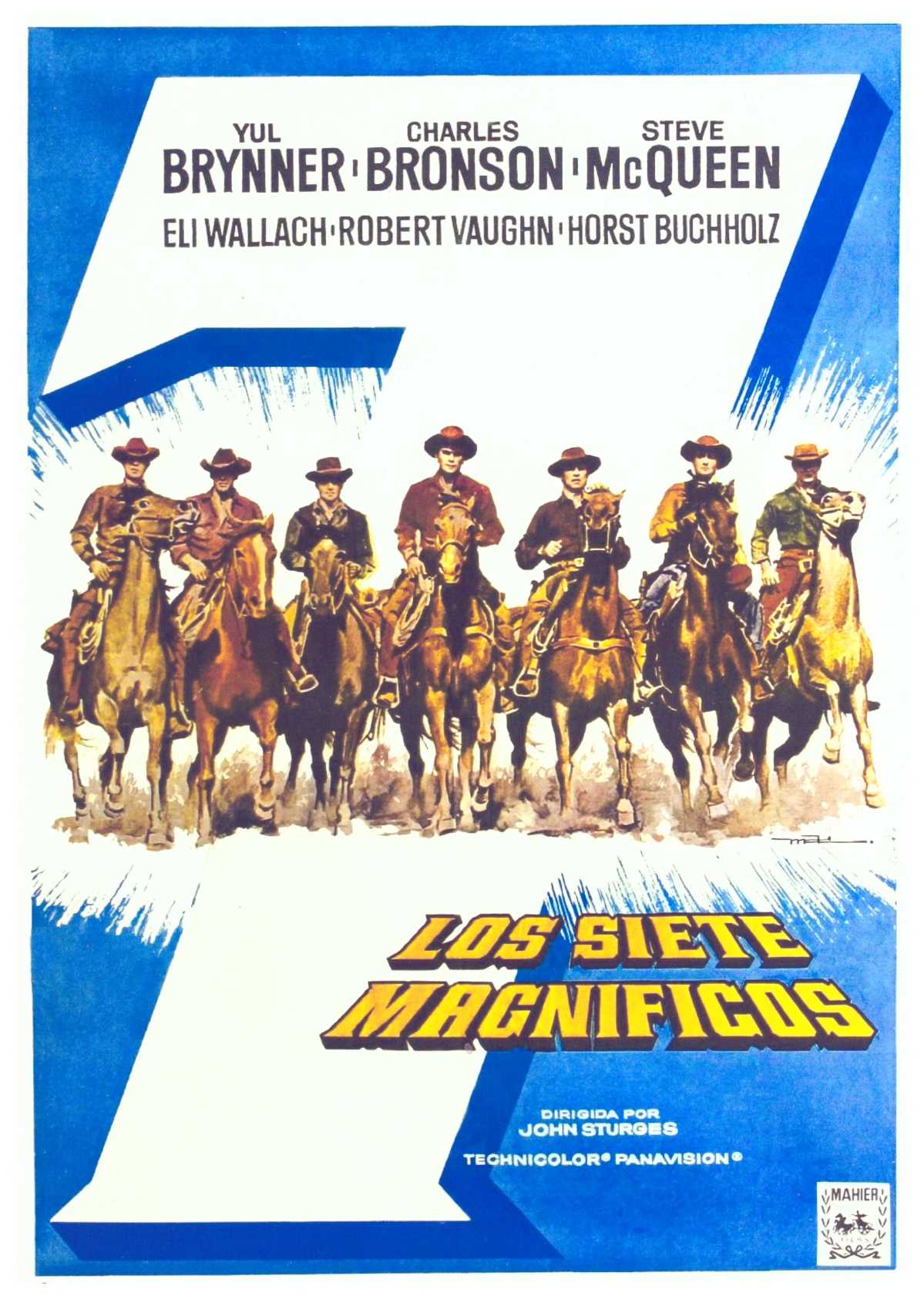
There’s a terrific western directed by John Sturges (The Magnificent Seven, 1960) inside this Rat Pack offering, the second of four in the series. On the plus side are plenty twists on traditional scenarios, Frank Sinatra and Dean Martin displaying a certain kind of easy screen charisma, and three exceptional and well-choreographed battle scenes. Sinatra, Martin and Peter Lawford play the eponymous sergeants, Lawford committing the cardinal sin of wanting to quit the regiment to get married, with Sammy Davis Jr. as a former slave, bugler (an important plot point) and horse-lover wanting to sign up, and Joey Bishop (television star and occasional movie actor) as their sergeant-major boss.
A fair bit of time is spent on the usual Rat Pack shenanigans, getting drunk, brawling, playing tricks on each other, and exploring odd comic notions such as playing poker with a blacksmith’s implements as chips. But when it gets down to proper western stuff, it fairly zings along, with a decent plot (a Native American uprising) and excellent action scenes. You could have had William Goldman writing the script for the number of reversals, where the picture keeps one step ahead of audience expectation. For a start, rather than flushing out outlaws from a town, the troopers have to remove Native Americans who have taken it over. Instead of the cavalry pursuing Native Americans, it is mostly the other way round. It is the soldiers rather than the Native Americans who attack a wagon. Sinatra finds himself employing a bow-and-arrow and then a tomahawk rather than being on the receiving end of such weaponry. Instead of dynamite, the good guys make do with fireworks. Where Native Americans are usually pinned down, this time it is Sinatra’s merry band. And when it comes to resorting to serious violence, that, too is usually the remit of the Native Americans, not as here, Sinatra chucking man off a cliff.
When it sticks to action, the picture is very well done and involving. When Sinatra has to take charge instead of larking about, the movie has focus. Both Sinatra and Martin were undertaking serious roles around this time, the former in The Manchurian Candidate (1962), the latter in political drama Ada (1961) so this might have appeared welcome relief. The comedy isn’t along the laugh-out-loud lines of Support Your Local Sheriff (1969) or Blazing Saddles (1973) and when the action is so full-on you wonder why anybody thought this required comedy at all, although there is a pretty good punchline ending. Action aside, it’s almost the equivalent of easy listening. The Rat Pack was a particular 1960s institution, the members joining each other on stage in Las Vegas or featuring in television programs, but there’s no real modern correlative.