Entrapment (1999) ****

Hugely enjoyable caper driven by the sleekest and leanest of screenplays from Hollywood screenwriting royalty Ron Bass (Rain Man, 1989) and William Broyles (Apollo 13, 1995). We learn virtually nothing, not even surnames,  about principals Mac (Sean Connery) and Gin (Catherine Zeta-Jones) beyond that they are top-notch thieves. So the narrative isn’t weighted down or driven into the barren wastes of left field by alcoholism or any other addiction, and nobody’s lamenting loss, and career girl Gin has little difficulty knocking back the clumsy romantic attempts of nerdy boss Cruz (Will Patton).

There’s a host of tight twists, not least of which is a reversal of The Thomas Crown Affair (1968) in that Gin, while purportedly hunting down the virtually anonymous Mac for a string of high-tech robberies on behalf of an insurance company, is in fact trying to pin the blame on him for thefts she undertook herself. The climax involves three clever twists in quick succession.  

Connery’s face was so well-known that the poster designers could afford to leave half of it out.

In keeping with the overall leanness, the narrative concentrates on a succession of clever and increasingly more audacious robberies, culminating in a heist on the eve of the Millenium of a cool eight billion bucks from all the banks in the world. As they join forces, Mac becomes the mentor, although Gin has moments of exerting control in the working relationship. Capable of causing trouble in the background are the agitated Cruz, threatening to work out any moment exactly how he is being duped, a dubious fence Conrad (Maury Chaykin), and a muscle man Thibadeaux (Ving Rhames) who may be playing both sides against each other.

After more than three decades, Sean Connery maintained a position in the top echelons of the box office marquee, in part because of the size of his global audience, but mostly because he continuously delivered. Every three years in the 1990s he knocked out a big one. The Hunt for Red October (1990), Rising Sun (1993) and The Rock (1996) easily offset any movies that produced less.

Catherine Zeta-Jones had announced her candidacy for stardom through a scintillating turn as the foil for Antonio Banderas in The Mask of Zorro (1998) and had she taken a more blatant approach to stardom could easily have been a letter-day femme fatale in the style of Lana Turner or Ava Gardner, but her screen persona encompassed considerably greater guile and discretion.

The “Men in Black” on Connery’s tail.

John Wayne, to compensate for any age difference between himself and the target of potential romance, always came over as all shy and diffident in making an approach, ensuring that it was the woman who did all the running so he wasn’t presented as some kind of creepy predator. Here Sean Connery avoids the complications of seduction and a May-December situation by playing the paternal card, covering up Gin’s half-naked sleeping body, tucking her hair behind her ear.

So where the entire middle act of The Thomas Crown Affair revolved around romance and the final act depended on a will she/won’t she scenario, this steers largely clear of such confusion, concentrating instead on the heists, with the background figures creating such distraction as was necessary to heighten the tension. From the opening sequence of a cat burglar abseiling down a skyscraper and removing an entire window to gain access to the final time-dependent heist, it’s a thrilling ride.

As you’ll be aware I’m a huge fan of Sean Connery and of his minimalist style of action. There were two standouts here for me, both blink-and-you’ll-miss-it moments. You’ve seen plenty actors doing extended stretches or walking around or some such physical mugging to show that they’ve been awake for too long worrying over a problem. Connery’s concession to that is merely a clever trick with his eyes. Then there’s a scene where Gin is trying to put the squeeze on him and one look from him shows that she’s going to fail.

Sean Connery and Catherine Zeta-Jones have a screen chemistry that, unfortunately, was never repeated. British director Jon Amiel (Copycat, 1995) sticks to the screenplay, allowing the romance to seep out around the edges.  

Top-notch stuff. Not quite in the Topkapi (1964) category but not far off.  

Fackham Hall (2025) *** – Seen at the Cinema

I’m not sure Downton Abbey is a big enough franchise to be allocated a parody, so I came at this with low expectations. However, instead of a leaden spoof, I found it constantly amusing and was chuckling from the get-go. There’s only one cracker of a scene and not the correct number of killer lines for a killer comedy, but, oddly enough, it gets by with a more subtle shade of humor, often of the blind-and-you’ll-miss-it variety, a sign on a wall, a newspaper headline and so forth, almost the ultimate in visual gags.

I’m beginning with the crackerjack scene in part because when I heard that British stand-up comedian Jimmy Carr not only had a hand in the screenplay but was down for a key cameo, I dreaded his appearance. But it was a gem, the best maladroit vicar since Rowan Atkinson in Four Weddings and a Funeral (1994). If comedy is all about timing, Carr puts on a masterclass, putting the wrong pronunciation on the first few syllables of every line in order to tip it over into full-blown double entendre snigger material.

As you might expect there’s not much plot and yet what narrative there is keys into the most significant aspect of the aristocracy, namely inheritance. Nobody wants a stately pile to end up in the hands of the undeserved, which is why there was such a preponderance of people marrying cousins or second cousins.

As a result, this is distinctly anti-woke, incest, buggery and masturbation all taking center stage. And perhaps because of playing about with bloodlines, there has never been a better tagline “born to aristocracy, bred for idiocy.” Even the leading lady Rose Davenport (Thomasin McKenzie) – scheduled to marry repulsive cousin Archibald (Tom Felton) as substitute for older sister Poppy (Emma Laird) who ducked out of the chore – is as dumb as a spanner.

Given the genre’s natural spin towards complication Rose has fallen for new employee Eric (Ben Radcliffe) while Poppy makes a beeline for a cast-off from Lady Chatterley’s Lover. When Lord Davenport (Damian Lewis) is murdered and Eric imprisoned as the main suspect, Rose, in order to maintain the family line, is forced to reconsider Archibald.

There’s also a quite clever parody of the standard Agatha Christie murder mystery with Inspector Watt (Tom Goodman-Hill) making all sorts of wrong assumptions – though admittedly it’s a complicated corpse given Lord Davenport has been stabbed, poisoned, shot and strangled –  before a quite brilliant denouement. There are secret love affairs and long-lost family.

It only takes a few complications to keep a comedy rolling so there’s no shortage of narrative drive here. There are twists, too, not least the unexpectedly dumb Rose, but the unexpectedly uncouth commoner who takes up with Poppy.

With ineptitude to the fore, none of the actors has much problem with making their characters believable and, as I mentioned, there are plenty visual gags and a couple of other excellent set pieces. Anna Maxwell Martin’s (Ludwig TV series, 2024) atrocious Scottish accent stands out for the wrong reasons, as if she was the only actor who decided to play it as a spoof rather than for real.

Otherwise Damian Lewis (Wolf Hall, 2015-2024), Tom Felton (Draco Malfoy in the Harry Potter series), Thomasin McKenzie (Joy, 2024) and Ben Radcliffe (The Witcher series 2023-2025) are pretty much spot-on. Katherine Waterston (Babylon, 2022) has a small role, and spearheads another superb scene, and Hayley Mills (The Family Way, 1966) acts as narrator.

Directed by Jim O’Hanlon (Your Christmas or Mine, 2022). Written by Steve and Andrew Dawson and Tim Inman (The Bubble, 2022) and Jimmy and Patrick Carr.

Surprisingly, for a very low-budget endeavor, this did very well at the British box office and I suspect word-of-mouth might well gather it a sizeable following when it enters streaming.

Not going to be mistaken as Oscar-bait, but does what it sets out to do.

Marty Supreme (2025) *** – Seen at the Cinema

I’m sorry to be bursting the bubble of yet another Oscar juggernaut. Once more an outstanding performance just about saves this shaggy dog story, a narrative so rambling if you had dropped King Kong into the plot I wouldn’t have been surprised. It’s a mesh of two narratives that just don’t fit. In the first place we’ve got a Paul Newman (The Hustler, 1961) type of hustler in the shape of the titular Marty (Timothee Chalamet) in yet another “sport” (like American pool in The Hustler, not to be confused with the more widely-accepted snooker or billiards) that’s not been recognized by the powers- that-be as a proper sport.

And then we’ve got a standard 1950s slice-of-life drama where everyone is just mean to each other. Marty knocks up his neighbor’s wife Rachel (Odessa A’zion) and refuses to take responsibility in case it gets in the way of his dreams. Out of spite, his uncle Murray (Larry Sloman) arranges for him to be arrested. For a spot of revenge, millionaire benefactor Milton Rockwell (Kevin O’Leary) forces Marty to bend over a chair and be beaten on the bare backside by a table tennis paddle. Rachel fakes being beaten up by her husband so that Marty will beat him up in return

And that’s before we get into a smorgasboard of bits and pieces that are either rejects from other screenplays  or might well have made a small indie picture of their own such as the the bizarre attempt to extract $2,000 ($25,000 in today’s money) from small-time hood Ezra (Abel Ferrara) for his lost dog, this being a gangster who lives in a fleapit hotel, whom Marty first makes acquaintance with when his bath falls through the ceiling on top of Ezra and dog. This particular episode ends, would you believe, in a shootout of the Quentin Tarantino/Tony Scott intensity.

And that’s before we get into exactly how a posh hotel like the Ritz would fall for a cheap New Yorker in a cheap suit and let him run up a bill not far short of $20,000 in today’s money while he seduces former movie star Kay (Gwyneth Paltrow), wife of Milton. And before Marty sets fire to a bunch of table tennis players he has successfully hustled.

Of course, everyone’s against our darling Marty, the powers-that-be don’t allocate him decent accommodation and ban him from a tournament because he failed to get his notification of attendance in on time, the Japanese guy Endo (Koto Kawaguchi) who beats him must be cheating , and he’s forced to earn a crust by competing against a seal. Given he’s so busy biting the hand that feeds him – stealing a necklace from Kay, trying to shaft Milton, refusing to rush to his mother’s hospital bed – it’s a surprise he’s got any time left for actual table tennis.

The sporting action, what little we see of it, works well. Though the director doesn’t see fit to fill us in on the rules – no idea how many points are needed to win or how many games are in a match though to keep us onside someone occasionally calls out “match point”. However, it is athletic stuff, both players racing around the table.

There’s a mawkish ending which I didn’t for a minute believe.

So what we’re left with as with most of the other major Oscar contenders is a picture’s that’s run away with itself (150 minutes, anyone?) redeemed by a fabulous performance. This is truly one of the all-time greatest performances. In any other world Marty would be a low-life who never got anywhere or perhaps given his line in salesmanship ended up a conman, but here he finds redemption in table tennis.

It’s a testament to Timothee Chalamet (A Complete Unknown, 2024) that we invest so much in this thoroughly unlikeable character and go with the actor all the way. Gwyneth Paltrow (Avengers: Endgame, 2019) is the best of the rest who mostly seem as if they are stock characters from an early Scorsese picture.

But it’s a testament to the lack of studio management that is bankrupting Hollywood that nobody is able to rein in the narrative excesses of director Josh Safdie (Uncut Gems, 2019). Written by the director and producer Ronald Bronstein (Uncut Gems) – never a good idea to leave control of a screenplay in the hands of the screenwriter.

Another great performance in a mess of a narrative.

The Housemaid (2025) **** – Seen at the Cinema (Three Times)

An absolute cracker, two blistering performances, tons of twists, and set to become the word of mouth hit of the year. Clever piece of counter-programming though nobody was foolish enough as I was to market it as an “AvataMaid” double bill and just as well because it would blow the overlong and rather tepid James Cameron epic out of the water.

This didn’t come trailing a whole bunch of accolades from a film festival and print critics have generally been snooty about it because they don’t know what the public really wants. Nobody thought to sell it as a woman’s picture either, but I saw this (three times now) in a packed theater on a Monday night and the crowd, mostly women, just lapped it up. Not because it was a hot romance or said something pious about  motherhood or women’s issues but because, without giving away too much of the plot, it featured two tough cookies, almost a modern Thelma and Louise, who weren’t going to take it anymore. 

Nobody is what they seem. And the plot slithers from under you. I had no idea what this was about apart from the fact that the book was a bestseller. So I came in expecting the usual kind of story – new housemaid Millie (Sydney Sweeney) infiltrates millionaire’s household, dupes the loving mother Nina (Amanda Seyfried), seduces husband Andrew (Brandon Sklenar) and between them the lovers find a way of offing the wife and getting away with it.

I couldn’t have been more wrong. Nina, who seems initially a great employer (giving Millie $20 at the job interview to cover her time), turns out to be anything but. The house is a complete mess, she blames Millie for anything that goes wrong, seems on the edge of a constant nervous breakdown, and eventually sets her up to be arrested. And there’s no bonding with her daughter Cece (Indiana Elle), the most stuck-up obnoxious brat.

On the other hand not only is Andrew goddam handsome with a fabulous smile, he’s a saint to put up with his wife. Turns out she spent nine months in a psych ward after trying to drown her daughter in the bath. And that means should they split up, she’ll likely lose custody, and thanks to the ruthless prenup, will be penniless, and mad though she is who’d want to give up a millionaire lifestyle.  

Turns out there’s a reason why Millie is so sweet and never stands up to her employer. She’s on parole and her parole conditions mean she needs a job and an address. To lighten her load, Andrew takes her side against the worst his wife can throw at Millie. Unwittingly, Nina is the architect of her own downfall, and it’s no wonder Andrew and Millie end up in bed and in love.

That’s not a twist, that’s what the audience was led to believe was going to happen. Twist Number One is Nina’s reveal is that Millie is serving a 15-year stretch for murder, still a third to go while out on parole. Twist Number Two isn’t that Nina also knows about the affair or even that as a result of another exceedingly malicious act by his wife that Andrew throws Nina out.

Twist Number Two is the best twist since The Sixth Sense (1999). Initially, it looks as if Nina is distraught with grief at losing her cushy number. But that quickly turns to being hysterical with relief at being freed of Andrew’s grip.

Why she would want to be free and what kind of trap Millie is walking into forms the second half of the picture and that’s a helluva ride, twist piling on twist, a combination of Dr Jekyll and Mr Hyde and Jane Eyre (madwoman in the attic).

If we’ve had too much torture porn over the last couple of decades courtesy of Saw and its imitators, this raises the art to a new level. This is torture of the most subtle kind, at least initially, with one woman having to pull two hundred strands of hair (complete with follicles) out of her head.

But the best twist in this smorgasboard of twists is that it’s not Millie who’s walking into a trap, but Andrew. Millie was hired because she beat a man to death and Nina reckons she’ll be more than a match for her husband. I’m tempted to reveal more just for the pleasure on the clever tale, but I’ll let it go at that. And, as you have come to expect with this type of thriller, there’s a stinger in the tale. Here, there are two.

Sydney Sweeney (Eden, 2024) and Amanda Seyfried (Seven Veils, 2023) are both superb, and you have to take your hat off to Brandon Sklenar (It Ends With Us, 2024) for his transformation from saint to devil.

Neatly directed by Paul Feig (Another Simple Favour, 2025) and he does well to control the balance although obviously following the template laid down by screenwriter Rebecca Sonnenshine (Archive 81 TV series, 2022) adapting the Freida McFadden novel.

A welcome return to what Hollywood does best, beginning with a stellar story and then adding actors who can bring something to it, rather than the other way round, which usually results in a rambling tale only elevated by performance which is distinctly unsatisfying.

It says something for the quality of a thriller than even knowing all the plot points I was delighted to go back for a second look – and a third – and came away even more impressed at the way the pieces locked together.

Box Office Update: The Housemaid which cost only $30 million is already into hefty profit with $200 million, more than double the take of critical fave Marty Supreme (costing $90 million). Plus it’s been so successful there are plans for a sequel.

Behind the Scenes: “Ship of Fools” (1965)

Stanley Kramer was on a roll, It’s A Mad, Mad, Mad, Mad World – an outlier in his portfolio of serious pictures – his biggest-ever hit. Although United Artists, where the director had made his last four pictures, was initially in the frame for Katharine Anne Porter’s 1962 best seller Ship of Fools, the project ended up at Columbia which Kramer had last partnered on The Caine Mutiny in 1951. While the asking price was $450,000 plus a percentage, Kramer secured the rights for $375,000 although he chipped in $25,000 towards the book’s advertising campaign.

Kramer envisioned a character-driven film that would make up for the lack of action. He shifted the timescale to 1933 from 1931 to bring greater overtones of the Hitler threat. “Although we never mention him in the picture,” said Kramer, “his ascendancy is an ever-present factor.” Since there were no seagoing liners available to take over, the movie was shot entirely on the soundstage. “We filmed a ship’s ocean voyage without a ship and without an ocean.” He ransacked old footage for establishing shots of the ship, usually seen in the distance. Decks, staterooms and dining areas were constructed in the studio.

The kind of muted color he would have preferred was not available and since “the theme was just too foreboding for full color” he decided to film in black and white. Shooting in black and white wasn’t yet redundant. Of 27 features going in front of the cameras in 1964, six (including The Disorderly Orderly and Hush, Hush, Sweet Charlotte) were made in monochrome –  down from ten out of 24 the year before.

A thoughtful epic was always going to have trouble finding stars especially as current wisdom was that the industry only had at its disposal 22 genuine box office stars “thinly sprinkled” through the 43 pictures currently in production. While the movie’s marketeers boasted of an all-star cast, the reality was that while overall the actors had “combined heft” they were “minus any individual box office behemoth.”

Spencer Tracy, whom Kramer initially envisioned for the role of the ship’s doctor and who had starred in the director’s last three pictures, would have added definite marquee allure, but he was unavailable due to illness. Greer Garson and Jane Fonda also fell by the wayside.

And unusually, Kramer insisted that many of those actors were not American. Vivien Leigh was born in India, Simone Signoret – who had just quit Zorba the Greek (1964) – was German and Oskar Werner Austrian. Jose Ferrer (who had won the Oscar in Kramer’s production of Cyrano de Bergerac, 1950) hailed from Puerto Rico, Jose Greco from Italy, Charles Korvin from Hungary, Lila Skalia from Austria and Alf Kjellin from Sweden. Signoret and Skala had Jewish ancestry.

His biggest casting coup was luring double Oscar-winner Vivien Leigh (The Roman Spring of Mrs Stone, 1961) out of retirement. But that was a double-edged sword. In real-life she led a tortured existence. Her marriage to Laurence Olivier was over and she had only appeared in two films since A Streetcar Named Desire (1951). She suffered from mental illness and tuberculosis. “Happiness or even contentment” eluded her and in that respect she was ideal for the role. “I’m sure she realized that, in the picture, she was playing something like her own life yet she never, by word of gesture, betrayed any such recognition.” She was another gamble, the reason her dance card was so empty down to directors despairing of getting a performance out of her.

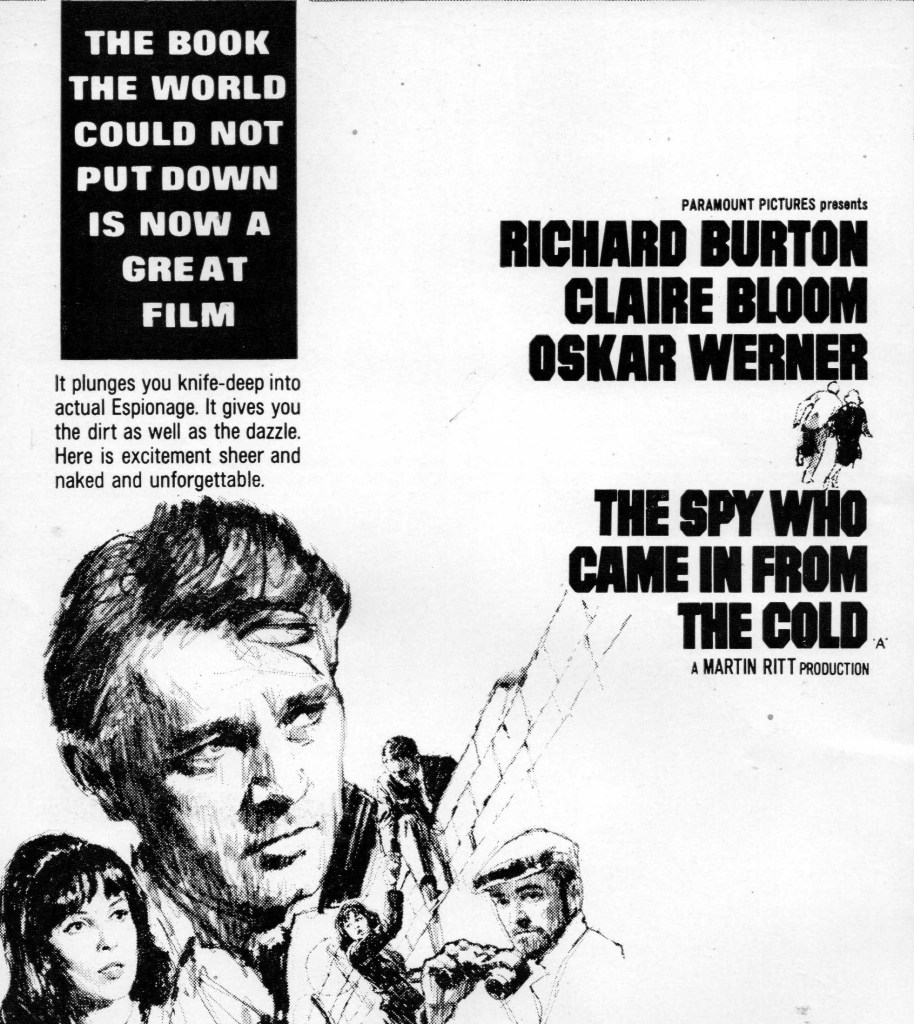
Kramer flew to Germany to persuade Oskar Werner to take on the role intended for Spencer Tracy. At the time Werner, while familiar to European audiences and the American arthouse set through Jules and Jim (1962),was a relative unknown and a casting gamble. On set he proved obstinate. For one scene where he was instructed to enter camera right he did the opposite. When the direction was repeated, he stood his ground, insisting he preferred that view of his face. Despite the cost of reversing the set-up Kramer was forced to concede. Despite these trials, Kramer got along with Werner better than the actors. “They just couldn’t stand him.”  Notwithstanding such difficulties Kramer later signed him for another film, but the actor died before shooting began.

James MacArthur (The Truth about Spring, 1964) was mooted for a role as was Sabine Sun (The Sicilian Clan, 1969). The most unlikely prospect was German comedian Heinz Ruhmann who was cast as Lowenthal. The Screen Actors Guild complained when Kramer hired five Spaniards instead of Americans for bit parts paying union scale of $350 a week, but their complaints were ignored.

Kramer admitted the ingénue roles played by George Segal (The Bridge at Remagen, 1968) and Elizabeth Ashley (The Third Day, 1965) were too much of a cliché. “As in most pictures,” observed Kramer, “older actors not only had more stature but they were also better armed by the writers. There was no way Segal and Ashley could compete with Werner and Signoret.”

The film cost $3.9 million. Filming began on June 22, 1964. It was initially a long shot for roadshow release but since Columbia was already committed to the more expensive Lord Jim and there were already 15 others lined up from other studios, Columbia nixed the two-a-day release in favour of continuous program.

Boosted by book sales – it was the number one hardback bestseller of 1962 and had sold millions in paperback – the movie carved out a more commercial niche than had been anticipated. Positive reviews helped. It opened to a “mighty” $88,000 in New York breaking records at the 1,003-seat Victoria and the 561-seat Sutton arthouse.

There was a “socko” $25,000 in Chicago, “giant” $23,000 in Philadelphia, “sock” $14,000 in Baltimore, “strong” $13,000 in St Louis, “lively” $12,000 in Detroit, “stout” 12,000 in San Francisco, “sturdy” $11,000 in Pittsburgh, and “slick” $10,000 in Columbus, Ohio. The only first run location where it toiled was Denver where it merited a merely “okay” opening of $8,000.

There was a sense of Columbia letting it run as long as possible in first run in the hope of garnering Oscars to boost its subsequent runs. But the studio was the beneficiary three times over from the Oscars – with Cat Ballou, Ship of Fools and William Wyler’s The Collector in contention for various awards.

The studio had the clever idea of pairing Ship of Fools in reissue with Cat Ballou, for which Marvin had won the Oscar, and although not the star of Ship of Fools the teaming suggested it was a Marvin double bill. In Los Angeles the double bill hoisted $135,000 from 21 houses followed by $121,000 from 28. But in Cleveland Ship of Fools went out first with The Collector and then Cat Ballou. A mix-and-match strategy also saw Ship of Fools double up with, variously, A Patch of Blue, Darling and The Pawnbroker.

The final tally was difficult to compute. In its 1965 end-of-year rankings Variety reckoned it had only pulled in $900,000 in rentals but it was good for $3.5 million in the longer term, a realistic target once you counted in the $1.3 million in rentals generated by the combination with Cat Ballou.

SOURCES:  Stanley Kramer with Thomas F. Coffey, It’s A Mad, Mad, Mad, Mad World, A Life in Hollywood (Aurum Press, 1997) pp203-212; “New York Sound Track,” Variety, May 2, 1962, p4; “375G for Fools Novel,” Variety, May 2, 1962, p5; “Publisher’s Big Break,” Variety, May 23, 1962, p4; “Kramer to Produce Ship of Fools for Columbia,” Box Office, June 18, 1962, p9; “Abby Mann to Script Ship of Fools,” Box Office, November 1962, pSE4; “Top German Comic,” Variety, April 15, 1964, p23; “Simone Signoret Exits Zorba,” Variety, April 22, 1964, p11; “Control of Space,” Variety, May 6, 1964, p4; “Five Spaniards on Ship of Fools Irks SAG,” Variety, June 3, 1964, p5;“To Speed MacArthur for Ship of Fools,” Variety, June 10, 1964, p17; “27 Features Shoot in Color, Only Six in Monochrome,” Variety, August 5, 1964, p3; “Perennial Quiz,” Variety, September 2, 1964, p1; “15, Maybe 17, Pix for Roadshowing,” Variety, October 28, 1964, p22; “Too Many Roadshows,” Variety, August 2, 1965, p5. Box office figures, Variety September-November 1965, “Big Rental Pictures of 1965,” Variety, January5, 1966, p6.

Ship of Fools (1965) ****

Too easily dismissed as soap opera masquerading as a movie making a serious point, this is redeemed and, in some respects, elevated by the performances. If anything, the two political aspects are underdone. The heavy air that hangs over proceedings given the German passengers are heading back to Nazi Germany at the start of Hitler’s reign in 1933 with no idea of the outcome is only there in the audience’s mind. That the racism is underplayed is in part due to the fact that those victimized, a Jew and a disabled man, refuse to act as victims and indeed bond.

The other political aspect, of Spaniards being deported from Cuba for economic reasons, would have more resonance today. But they, too, are heading for consequence and the Spanish Civil War which would break out a few years later. Director Stanley Kramer was noted, indeed often ridiculed, for tackling weighty subjects in movies like The Defiant Ones (1958), On the Beach (1959), Judgement at Nuremberg (1961) and Inherit the Wind (1961). That was tempered somewhat when he went off-piste for It’s a Mad, Mad, Mad, Mad World (1963) and although that’s generally remembered for its hilarity what’s often overlooked is the director’s dexterity in handling a busload of characters and narratives, his pacing and his understanding of character.

Deduct the comedy and you have a similar approach here, the meshing of various narrative arcs while allowing character to flourish so the general smorgasbord of, if I’m allowed such an obvious notion, ships passing in the night is what gives this more heft.  And the fact that the audiences knows more than the characters about what the future holds permits the director just to concentrate of character interaction.

Unusually, for a historical movie of the period, it’s the females who dominate and have the best storylines. The ship is so full that upscale single passengers who might otherwise have the choice of dining alone are thrown together thus divorcee Mary Treadwell (Vivien Leigh) shares a table with former baseball player Bill Tenny (Lee Marvin).

Their paths unexpectedly cross in unusual fashion. Both are seeking love, though in reality Tenny is happy to settle – and pay for – sex. Mary finds Captain Thiele (Charles Korvin) ignoring her subtle advances while in turn she dismisses the lieutenant. When a drunken Tenny without warning bursts into her cabin, she responds with ardor until she realizes he thinks she’s a prostitute.

La Condesa (Simone Signoret) is a civil rights activist who finds a fellow traveler in Dr Schumann (Oskar Werner). Although, initially, she mines him to feed her opiate addiction, it’s soon apparent they  are falling in love, although that doesn’t end well. Not much ends well in the romance department, Jenny (Elizabeth Ashley), while initially supportive of artist David (George Segal), soon realizes that his art will take dominance in their relationship.

The older Rieber (Jose Ferrer), with the most pronounced Nazi sympathies, has taken up with younger blonde Lizzi (Christiane Schmidtmer), among whose physical attractions is that she’s a great table tennis player, until she discovers he’s married.

Flamenco dancer Elsa (Gila Golan) is pimped out by her father Pepe (Jose Greco). Social exclusion leads Jew Lowenthal to bond with Glocken who suffers from dwarfism and when German World War One hero Freytag is forced to join them that permits most of the discussion about the state of Germany.

Otherwise, the fact that a mastiff is permitted to sit at table is more to do with aristocratic entitlement than any other social condition. 

For once, Kramer is more interested in character than scoring points. So what might have been heavy going turns into an acting class. To accommodate its portfolio of ageing superstars Hollywood had returned to the subgenre of movies about ageing beauties. Double Oscar-winner Vivien Leigh’s previous outing The Roman Spring of Mr Stone (1961) belonged in that category but this latest reincarnation was a class above, a truly tender examination of loss. However, it was Simone Signoret (The Deadly Affair, 1967) who was Oscar nominated.

Michael Dunn (Justine, 1969) and Oskar Werner (Interlude, 1968) were nominated and while Lee Marvin (Point Blank, 1967) and George Segal (The Bridge at Remagen, 1968) were overlooked the latter two clearly scored points judging by their future acceptance in the Hollywood hierarchy, Marvin in particular alerting the industry to untapped talent, a point made more emphatically in his next picture Cat Ballou for which he won Best Actor. Ship of Fools missed out to The Sound of Music for Best Film. Nominated for eight awards it picked up two, ernest Laszlo for Cinematogrpahy and Robert clatworthy and Joseph Kish foir Art Direction

You might also spot Alf Kjellin (Ice Station Zebra, 1968), Barbara Luna (Firecreek, 1968) and Gila Golan (The Valley of Gwangi, 1969).

Even without the political overhang, this holds together as Grand Hotel on the high seas with Stanley Kramer in his element employing compelling characters to flesh out an interesting narrative. Written by Abby Mann (Judgement at Nuremberg) from the Katherine Anne Porter bestseller.

While the politics add a contemporary veneer, watch it for the acting.

Alfred the Great (1969) ****

The Prince Who Wanted To Be A Priest. The King Who Didn’t Want To Fight. The Husband Who Raped His Wife.

Not exactly taglines in the grand tradition of Gladiator (1999), but a succinct analysis of a Film That Wanted To Be A Roadshow. This is almost an anti-epic, a down-n-dirty historical movie far removed from El Cid (1961), Lawrence of Arabia (1962) and The Fall of the Roman Empire (1964). And one element that has to be taken into consideration when making a historical picture set in Britain in AD 871, if you are aiming for realism, is the rain. The battles in the three movies mentioned, as with virtually every historical movie of the decade, took place in bright sunshine on hard ground, not in the rain on mud-soaked fields. Director Clive Donner lacks the genius of an Akira Kurosawa who turned rain into a glorious image in Seven Samurai (1954) or even Ridley Scott whose first battle in Gladiator took place in a snowstorm. But he does make a battleground reflect the grim reality.

Alfred (David Hemmings) was fifth in line to the throne – and just to a small region of England called Wessex – and as was common practice all set, quite happily, for a career in the priesthood. So it was not surprising, envisioning religion as a mark of civilization, and the priesthood guaranteeing an education, that he was loathe to become a warrior just because his brother King Ethelred (Alan Dobie) was a useless leader. The price of taking on the warrior’s mantle and, after his brother’s death, of ascending to the throne is that Alfred must not only cast away his priestly ambition but his chastity in order to get married to unify rival kingdoms and produce an heir. So there’s a good deal of the religious quandary of El Cid and the sexual ambivalence of Lawrence of Arabia.

So repelled by what he is forced to do, that on his wedding night Alfred rapes new wife Aelhswith (Prunella Ransome) and when the marauding Vikings win a decisive battle and the price of peace is the wife taken in hostage Alfred offers no great protestation. So Alfred is hardly an appealing character. His wife hates him so much that she conceals her pregnancy from him. If you were an Englishman you might well prefer the straightforward lustful Viking leader Guthrun (Michael York) whose men are not restrained by Christianity – “it’s a strange religion,” he mulls, “ that wars with everything your flesh and your blood cries out for” – who makes a better fist of wooing Aelswith, whom he could as easily rape, than Alfred.  

Eventually, of course, Alfred gets it together, rallies a bunch of outlaws and steals back wife and son (now four years old). However, there is no romantic reunion. Instead, he plans to imprison her for life, “the whore shall rot in silence.” Nonetheless, Alfred has acquired some tactical skills, adopting the old Roman infantry tactic of forming his troops up in a phalanx behind a wall of shields. His battlefield address is to promise ordinary people a set of laws that will give them equality with the wealthy and powerful.

Given there are no castles and this is indeed the Dark Ages as far as costume and interior design is concerned and that therefore the camera cannot, for respite, be turned onto some glorious image, Clive Donner (Here We Go Round the Mulberry Bush, 1968) concentrates on character rather than scenery. There are a couple of inspired touches. For a start, in permitting various characters to offer prayers to God, he introduces a number of soliloquies which take us to the heart of troubled souls, and then he does a clever split-screen number to effect a transition. You can’t blame him for British weather and the battles are well-staged. He does show the courage of his convictions in making the film concentrate on conflicted character rather than going along the easier heroic route of underdog rallying people to a cause.

David Hemmings (Blow-Up, 1966) is both the film’s strength and weakness. He is excellent at capturing the torment, the soul divided, and the inherent arrogance as well as the preference for peace instead of war. But in terms of his leadership skills he is on a par with Orlando Bloom in Kingdom of Heaven (2005). That part was originally intended for Russell Crowe and Peter O’Toole was first choice for Alfred and you can’t help thinking both would have been a substantial improvement. On the other hand, Alfred was just 22 when he became king and for someone intent on the priesthood there would be no need for him to develop his physique or political skills. So this is a far cry from your typical Hollywood hero and in that regard the casting makes perfect sense and Hemmings a bold actor to take on such an unlikeable character.

Prunella Ransome (Man in the Wilderness, 1971) does well in her first leading role, suggesting both vulnerability and independence and while virtually imprisoned by both Alfred and Guthrun remaining principled. Michael York (Justine, 1969) was a definite rising star at this point and plays the Viking with considerably more gusto than his tendency towards passive characters would suggest.  

There’s virtually a legion of excellent supporting players in Colin Blakely (The Vengeance of She, 1968), Alan Dobie (The Comedy Man, 1964), Ian McKellen (Lords of the Rings and X-Men), Peter Vaughan (A Twist of Sand, 1968), Vivien Merchant (Accident, 1967),  Barry Evans (Here We Go Round the Mulberry Bush, 1968), Sinead Cusack (Hoffman, 1970), Christopher Timothy (All Creatures Great and Small, 1978-1990) and Robin Askwith (Confessions of a Window Cleaner, 1974).

Oscar-winner James R. Webb (How the West Was Won, 1963) was an improbable name to be attached to a British screenplay. But this was a pet project he had been trying to get made since 1964. Ken Taylor (Web of Evidence, 1959) was brought in to lend a hand.

Not being a student of English history but familiar with the ways of the movie business, I am sure the picture has many historical inaccuracies, but it does present one of the most complex individuals ever to feature in a historical film of the period, when audiences preferred their heroes more black-and-white. So it is a significant achievement in the canon.

Breakout (1975) ***

The advertising gurus earned their corn on this one because it must have come as a shock for all concerned, studio and audiences alike, to discover that star Charles Bronson (Farewell Friend, Adieu L’Ami, 1968) was engaged in a rapid reversal of his screen persona, an experiment that ended with the poorly received From Noon Till Three (1976). Sold as an action picture, this  struggles to fit into the genre, what with most of the elements of rescue misfiring or D.O.A.

The poster people were so stuck for ways of selling the picture they resorted to using an image of an explosion in a manner that indicated it was key to the actual breakout when  in fact it was related to a random incident. The highlight of the picture, the breakout itself, despite the best efforts to generate tension though the application of a 10-second escape window, is as mundane as all get-out, a helicopter basically loitering in a prison courtyard until the prisoner to be rescued saunters out.

Not only does the movie jettison the Bronson tradition of uncompromising tough guy but it sets up constant screen partner Jill Ireland in a more interesting role than normal while skirting a Casablanca-style romance.

The story itself gets off to a mighty confusing start. Nefarious businessman Harris Wagner (John Huston) arranges, for reasons that are unclear, for grandson Jay (Robert Duvall) to be incarcerated in a Mexican prison. Your first double take as an audience is the purported age gap.  Huston was, in reality, was just past 70 years of age while Duvall was 44 – and never a chance of that actor playing younger –  so you are left wondering how in heck did they contrive to be grandfather and grandson.

Putting that to one side, the first 15-20 minutes of a lean 96 exclude Bronson altogether while director Tom Gries (Will Penny, 1968) builds up the tale of failed rescue attempts by Jay’s wife Ann (Jill Ireland) and the sadistic nature of prison overlord J.V. (Emilio Fernandez) who has a penchant for burying prisoners alive or taking bribes to let them escape before promptly reneging on the deal. Eventually, for reasons unexplained, Ann turns to bush pilot Nick (Charles Bronson) who runs a seat-of-the-pants operation with the kind of plane that looks like it’s held together with string.

Bronson…Stallone…Together! If only Stallone had been bigger at the time.

He’s not your usual monosyllabic grump, but an overconfident wide boy, the bulk of whose schemes fail to work. A modern audience is going to turn up its nose in any case at one plan that involves faking a rape to create a distraction for the prison guards rather than going down the simpler route of Raquel Welch in 100 Rifles (1969) and Marianna Hill in El Condor (1970) of giving the lascivious guards something to ogle.

And another proposal only works because it’s handed a get-out-of-jail-free card when the guards who make a point of groping every female visitor, in theory to check for contraband or concealed weapons, avoid doing so with Nick’s sidekick Hawkins (Randy Quaid) when he dresses up as a woman.

There’s not enough time for any genuine romance to develop between Nick and Ann, a notion that’s undercut in any case by the fact that she’s trying to rescue her beloved husband, but that does allow for more friction than was normal in their pictures. Takes her a long time, understandably, to trust this untrustworthy fella, what with his schemes that rarely work.

For tension we are almost entirely reliant on the bad guys, J.V. indulging in bits of sadism, someone on the inside always knowing of the plans ahead of time, or of Jay being so debilitated by his stay in prison that he seems too out of it to keep his appointment with freedom. There is a quite barmy assumption that should a stray helicopter land in a prison courtyard that none of the other inmates will think to hitch a lift out.

There is some good value here in the Bronson/Ireland partnership trying to shake off what they saw as the shackles of their joint screen persona, or perhaps wanting to re-validate Ireland’s place in the team after Bronson did exceptionally well in her absence in Death Wish (1974). But the story’s an odd one, a kind of discount-store escape, with Bronson essaying the kind of character usually left to such supporting acts as Warren Oates or George Kennedy.

But there’s just not enough that’s new here – the unfairly underrated From Noon Till Three showed how to ring in the changes – to justify Bronson’s inclusion although the Bronson/Ireland dynamic does undergo interesting change. Robert Duvall (The Rain People, 1969) is also acting against type, devoid of the bluster that was his calling card. Randy Quaid (The Last Detail, 1974) has a quirky part.

Tom Gries did well enough in Bronson’s eyes that he was selected for the follow-up Breakheart Pass. Too many hands on the screenplay tiller – Marc Norman (Shakespeare in Love, 1998), Elliott Baker (A Fine Madness, 1966) and Howard B. Kreitsek (The Illustrated Man, 1969) adapting the book by Warren Hinckle, William Turner and Eliot Asinof – suggested nobody really knew how to make this work. And they were right.

Interesting shift in the Bronson persona but a misnomer on the action front.

The Reptile (1966) ***

If there is such a thing, qualifies as the thinking person’s Hammer horror picture. More atmospheric than usual, creepy rather than shocking, and with greater emphasis on psychology and loss than you’d expect to find in a Hammer film. No recognizable stars either so something of a risk for the studio. The low-budget probably accounts for the fact it was made to play the supporting feature of a horror bill.

That’s what makes it so interesting. It’s crammed full of character actors getting to play interesting people and it puts the main good guy on the bench as we approach the climax appointing the female lead as substitute in the most perilous segment of the investigation into strange goings-on in the old (but not dark) house.

CGI would have made this instantly more potent and while the special effects are acceptable for the time period, the characterization and the dilemmas posed relieve the picture of having to rely on shocks for impact.

Even these days studios would find it hard to greenlight a movie where the focus is on a parent shielding a serial killer. But that’s effectively what’s happening here.

Dr Franklyn (Noel Willman), the big house resident, is trying to keep safe his cursed daughter Anna (Jacqueline Pearce) who has been knocking off villagers at a heck of a rate. Anyone she attacks foams at the mouth and turns a nasty colour so the villagers are more likely to blame a disease or some kind of ghostly apparition, though obvious suspects like werewolves or vampires don’t come into consideration and a lurking Malay servant (Marne Maitland) doesn’t set alarm bells ringing.

Newly-weds Harry Spalding (Ray Barrett) and wife Valerie (Jennifer Daniel) have inherited the cottage next door to the big house from his brother, the latest victim of the phantom killer. As was standard for Victorian villages, strangers are treated with suspicion, and it’s left to local landlord (Michael Ripper) and local lunatic Peter (John Laurie) to scare the wits out of the new arrivals with tales of multiple deaths.

Franklyn appears a congenial enough gent though he’s apt to be sharp with his daughter, taking serious offence at her playing the sitar. Harry takes on the burden of sniffing around until he’s put out of action by the phantom. Since he’s not dead and therefore not instantly buried, there’s time to check out his body and that’s when marks are discovered in his neck. Normally, that would point to the presence of a vampire, but I guess since vampires weren’t popularized until much later in the century, there’s no reason to go down that route of investigation.

Instead of sitting around like a homebody as Victorian wives were meant to do, Valerie takes over the investigation and it’s she who discovers that the doctor’s cursed daughter periodically turns into a snake. Not only is Franklyn averse to handing his daughter over to the authorities, he’s made her a cosy nest in the warm cellar. Still, he’s wracked by guilt. Audiences these days would be more aware that his snippiness to his daughter covers up the burden of his love. Proof more that he’s coming apart.

The billing gives it away. While the narrative ostensibly revolves around Harry and his wife caught in a web, it’s actually a bold decision to put the emotional onus on Franklyn. It’s a great study, especially for a horror film, of parental anguish. Anna, clearly aware of the discrepancies in her character, also shows unexpected depths.

Australian Ray Barrett was a television stalwart, taking time out from The Troubleshooters (1965-1971) and as the voice of the leading puppet in Stingray (1964-1965). Jennifer Daniel had been terrorized by Noel Willman in Kiss of the Vampire (1963). Jacqueline Pearce (The Plague of the Zombies, 1966) adds good touches.

Director John Gilling (Plague of the Zombies) doesn’t fall into the shocker trap which posits the picture, written by John Elder (Dracula, Prince of Darkness, 1966), as one of the more interesting in the Hammer portfolio.

Worth a look.

A High Wind in Jamaica (1965) ***

Forget swashbuckling shenanigans in the Captain Blood (1935) and Pirates of the Caribbean (2003) vein, this has more in keeping with Lord of the Flies (1963) as a bunch of third-rate pirates get more than they bargained for after kidnapping a bunch of English children.

The pirates are clever enough when required, using the ruse of pretending to be a ship in distress to defeat an enemy, capable of torturing a captured captain into revealing concealed treasure, or hiding from pursuit by disguising the masts with palm leaves, but generally short on intelligence. That the kidnapping is unintentional, no sensible pirate wanting the British Navy breathing down its neck, gives an indication of the mentality of Captain Chavez (Anthony Quinn) and his mate Zac (James Coburn). Nor are the children Disney-cute and far from being petrified they see it as a great adventure while the crew are superstitious about having the youngsters aboard.

The kids have great fun running rings round the pirates, stealing Chavez’s hat, climbing the rigging, and ringing the bell, while turning round the ship’s figurehead provokes another bout of superstition. When the kids are eventually imprisoned in a rowboat to prevent upsetting the crew they still manage to do so by playing a game that the crew take too seriously.

An attempt to abandon the children on the island of Tampico fails when the oldest boy John (Martin Amis) dies by accident. The children are unperturbed by his death, the only question raised is who can have his blanket. Much to his surprise Chavez discovers he has a strong paternal side, protective when he discovers that one of his captives is a young woman rather than a child, and going against the wishes of his crew when he tends to a knife wound on Emily (Deborah Baxter).

The children are far more grown-up and matter-of-fact than the childish crew, consumed by superstition, and Chavez, consumed by emotion. Although there is considerable comedy to be had from the children’s endeavors, it’s largely an adult film about children. In general, they don’t react the way they would in a Disney picture, nor in the manner which many adults would expect. The sexual tension of the book is considerably underplayed. But the fact that the adults are brought into harm’s way by sheer folly, and their reactions to life are essentially childish, creates a contrast with the more savage attitudes of the children. Emily essentially exposes Chavez’s guilty conscience.

While there is ambivalence aplenty, the depths the book explored go unexplored here, much to the benefit of the picture. The movie dances a tightrope as the children who would otherwise expect to trust an adult grow to learn how to distrust, a rather sharper lesson in growing up than they might have anticipated from their middle-class innocent lives.

Alexander Mackendrick (The Ladykillers, 1955) excels in ensuring the tightrope remains in place while taking advantage of the opportunity for comedy, the realization that this adventure is far from fun only becoming gradually apparent.

Anthony Quinn (Shoes of the Fisherman, 1968) reins in his tendency to ham things up, and his development from unbridled pirate to responsible adult is an interesting one. James Coburn (Dead Heat on a Merry-Go-Round, 1966) reins in the flashing teeth and reveals a more ruthless side than his captain anticipated. Deborah Baxter (The Wind and the Lion, 1975) is easily the pick of the kids although future novelist Martin Amis with his trademark sneer gives her a run for her money.

Lila Kedrova (Torn Curtain, 1966) appears as a brothel madam, Nigel Davenport  (Sebastian, 1968) as the father and Gert Frobe (Goldfinger, 1964) as the captured captain. The cast also includes Dennis Price (Tamahine, 1963) and Vivienne Ventura (Battle Beneath the Earth, 1967).

Stanley Mann (Woman of Straw, 1964), Ronald Harwood (The Dresser, 1983) and Denis Cannan (Woman of Straw) wrote the screenplay based on the celebrated Richard Hughes novel.

Discover WordPress

A daily selection of the best content published on WordPress, collected for you by humans who love to read.

The Atavist Magazine

by Brian Hannan

WordPress.com News

The latest news on WordPress.com and the WordPress community.