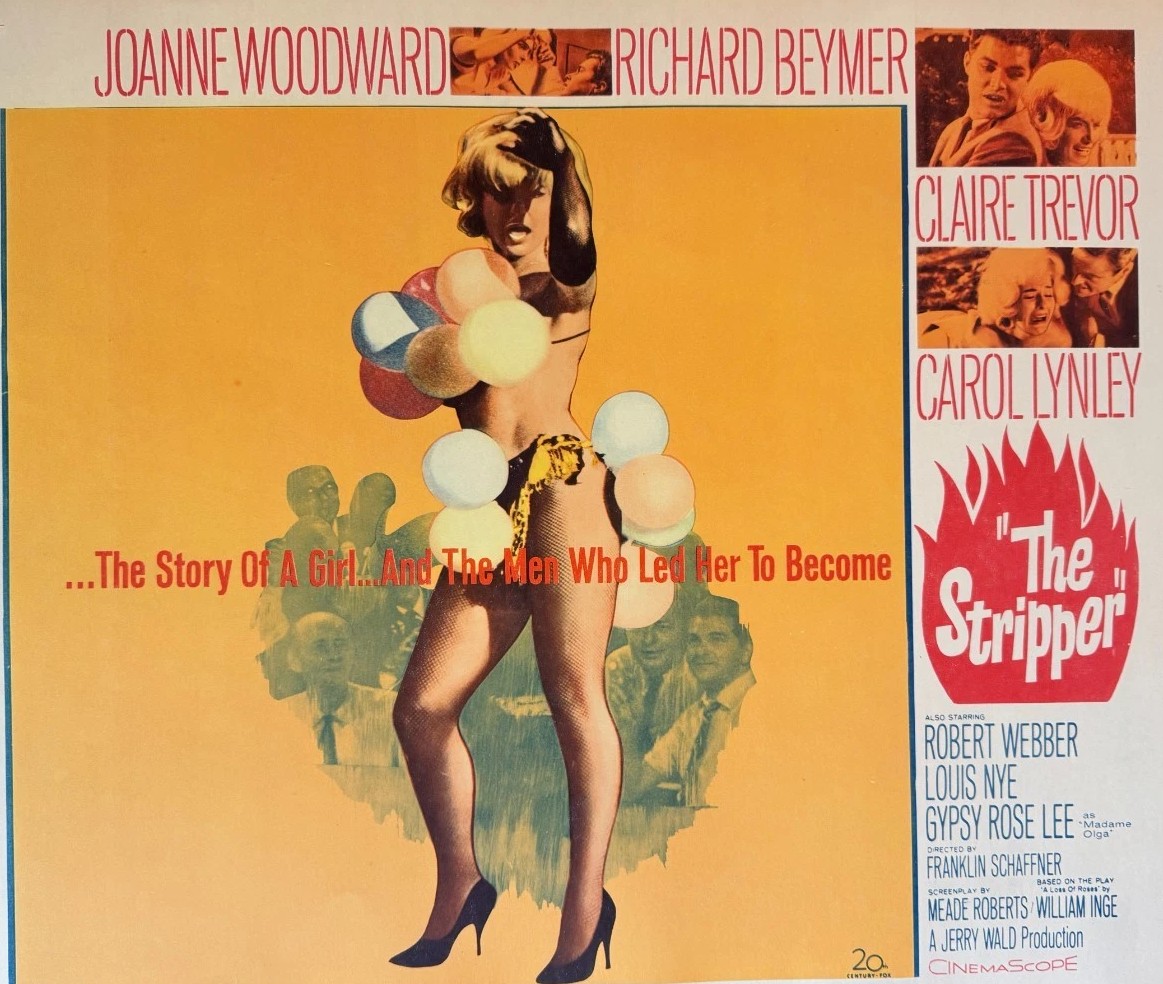
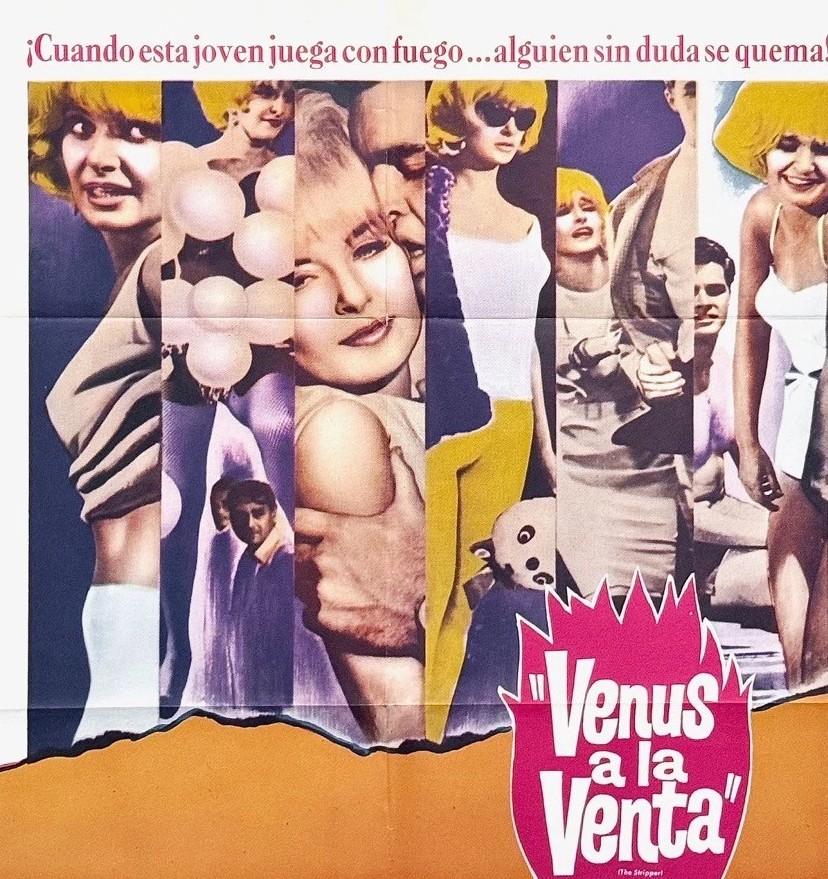
Can’t shake off its stage origins though Joanne Woodward is riveting as the eternally optimistic but ultimately luckless showgirl of this tawdry tale. For a while it looks like it’s going be another examination of small town morals but those who want to break free of social constriction come from such different parts of the world that the two tales – teenage rite-of-passage and older woman trying to recapture her innocent youth – don’t mesh while the background for both is routine and stale.
Magician’s assistant Lila (Joanne Woodward) returns to her home town and meets up with old neighbour Helen Baird (Claire Trevor) and her pump jockey son Kenny (Richard Beymer). He reminds Lila of Helen’s dead husband on whom Lila had a teenage crush. Abandoned by lover/manager Ricky (Robert Webber), she finds a safe berth with Helen. Kenny, annoyed at principled girlfriend Miriam (Carol Lynley), soon, as you might expect, falls for Lila. For a time she enjoys the security of small town life.
But, as you would expect, Ricky returns. He beats her up and drags her off to become a stripper. Kenny gets to witness her more degrading employment. Lila manages to quit Ricky and sets off with another suitcase full of delusions.
Despite Lila’s effervescence lacks the emotional punch to make this more than a re-tread of a standard Hollywood trope. Lila’s an eternal wannabe, not deterred by crushed dreams, but failing to understand the limitation of her talent, her most treasured possession a few strips of film from a screen test, and undone by her taste in men. She calls Ricky “daddy” and he punishes her with his belt.
The most effective sequence is the one with leering men reaching forward with lighted cigarettes to burst the balloons that cover her modesty while she strips. That tells a different story to the one we’ve sat through, the degrading endgame, the price paid for falling in with the wrong man or for believing you can live on illusion.
There would have been no shortage of better role models when she grew up, but dreams of stardom derailed that. In some respects, Ricky is rebelling against the same upbringing, requiring excitement (and sex) rather than the life he has been brought up to respect. He’s over-mothered for sure, but lacks ambition and probably needs marriage to give him some direction.
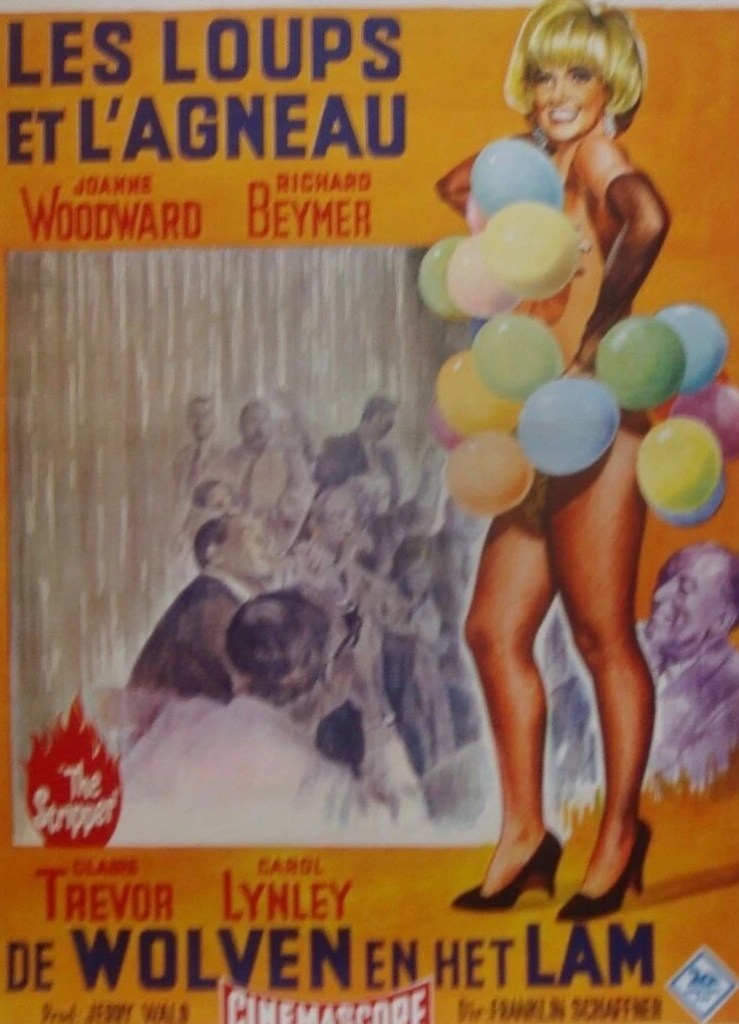
But there’s too many cliché characters, beginning with mother and girlfriend and rough lover. There’s nothing new about Ricky and no depth and while Lila is happily shallow that doesn’t help the story.
As I said, Joanne Woodward (Big Hand for the Little Lady, 1966) more than holds the film together but that’s not really enough. Richard Beymer (West Side Story, 1961) doesn’t rise above juvenile lead. Clare Trevor (The Cape Town Affair, 1967) has little to do but Carol Lynley (Bunny Lake Is Missing, 1965) acts against type.
Solid directorial debut I guess you would call it from Franklin J. Schaffner (Planet of the Apes, 1968). Screenplay by Meade Roberts (Danger Route, 1967) from a play by William Inge (Bus Riley’s Back in Town, 1965).
Worth it for Woodward but not much else.


Worth it to see the spinning showgirl sign that was located in front of Chateau Marmont! It’s the opening scene I believe. Need to watch again.
LikeLiked by 1 person
Yeah, I liked that. Amazing.
LikeLike
I’m going to watch again, it’s on youtube!
LikeLike