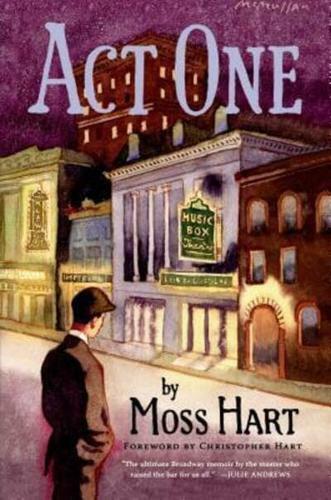
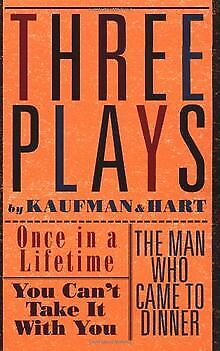
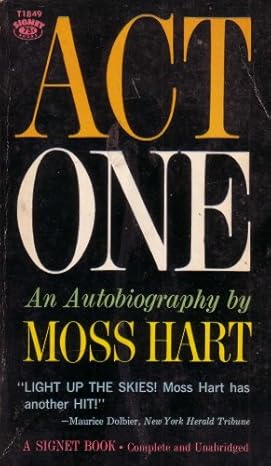
Highly enjoyable and surprisingly good. Could be viewed as a companion piece to Two Weeks in Another Town (1962), swapping movies for Broadway. I have to confess I had only seen the writing team of George S. Kaufman and Moss Hart in the context of movies – Frank Capra’s Oscar-winning You Can’t Take It With You (1938) and The Man Who Came to Dinner (1942). I hadn’t realized these had begun as plays and the movie tells the story of the beginning of their partnership when Kaufman was an established playwright and Hart a neophyte.
Perhaps because this was the only directing gig for Dore Schary, better known as a screenwriter (Boys Town, 1939), producer and head honcho at MGM, there’s none of the melodrama of Two Weeks in Another Town. In fact, except for an occasional appearance by Kaufman’s exasperated wife, there’s hardly a woman in sight and certainly no complicated nuptials or even romance. It’s basically a two-hander, the relationship between the two writers and their struggle to turn the play Once in a Lifetime (1930) into a hit.
It’s helped along by what must be most subdued and subtle performances in the careers of either George Hamilton (Two Weeks in Another Town) or Jason Robards (Once Upon a Time in the West, 1969). This is easily Hamilton at his finest and it is one of Robards’ better performances. Rather than gung-ho turns, all sturm and drang, emotions out of control, the two actors inhabit their characters. Once only is Hamilton let off the leash, in an unfair tirade against buddie Joe (Jack Klugman) and is far more effective in a scene where he doesn’t say a word, and Schary has employed a film noir technique of leaving a face, apart from the eyes, in darkness, as he comes to terms with the realization he has a hit on his hands.
The story simple enough. In 1929, cigar-maker father out of work, family struggling to cope with the onset of the Great Depression, Hart is a struggling playwright, first five serious works rejected. But turning to a comedy about Hollywood, he strikes gold. Or at least some gold dust. Because a play on paper is scarcely the finished work. Teamed up with a recalcitrant, grumpy, introspective, monosyllabic Kaufman, Hart finds out the hard way just what it takes to turn prospect into success.
Mostly, it’s rewrites. And more rewrites. What’s wrong with the initial play is everything bar the idea. What’s wrong after that is everything they haven’t been able to fix. Gets to the stage where Kaufman – remember, the more experienced one – is ready to quit.
So once Kaufman appears, it’s mostly two guys in a room or backstage trying to sort out a myriad of problems. There’s some nice interaction. Kaufman never eats, so Hart is constantly famished. Kaufman hates Hart’s cigar smoke. Eventually, they come to an agreement, constant food in exchange for extinguishing the cigars (a pipe deemed an acceptable substitute).
There’s a cast of interesting characters, famous producer (Eli Wallach) and Hart’s support network, talented unsung writers and actors (including Archie Leach before he went Hollywood and became Cary Grant, his attraction to females a constant refrain), and a scene-stealing George Segal (The Quiller Memorandum, 1966). At a party we briefly meet the Alqonquin Round Table set, all insufferable and barely a bon mot between them.
Movies about the stage invariably involve an actor so this makes a refreshing change. And most films about writers concern the literary artist rather than the more overtly commercial variety. But I’m guessing the level of endeavour is much the same.
But it’s the lack of grandstanding that makes this work. Rather than lading down characters with tons of dramatic dialogue much of the piece is carried by small bits of business, the fastidious Hart snipping loose threads from a shirt, pressing his trousers under his mattress, the equally finicky Kaufman constantly washing his hands and the scourge of sentimentality. Sure, it’s showtime, so there’s a measure of bitchiness, a marvellous scene where Kaufman imagines a producer’s positivity is intended to put him off.
Unexpectedly excellent acting lifts this. Not easy to find, Ebay would be the best place.
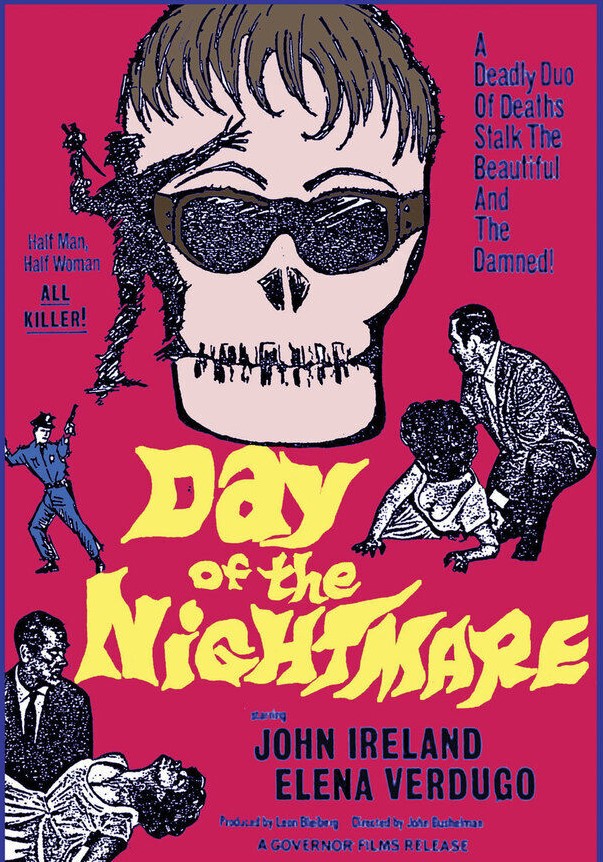
As you can imagine back in the day audiences struggled with accepting cross-dressing never mind transgender instinct – both deemed psychological aberrations – so it was understandable that the only treatment of the subject appeared in the sexploitation genre where budgets were so low a flop incurred no great financial loss. But even so, perhaps astonishingly so, despite a tendency towards violence, and what would amount to raw shocks, there was some implicit understanding of the need to shed one gender in order to take on the other.
More sympathetic in treatment than Homicidal (1961) but still from a narrative perspective taking the noir route, although, in reality, you could view the action as metaphor, hard-case chrysalis evolution.
Housewife Barbara (Beverly Bain) is being stalked by a blonde in a checked jacket and dark glasses, only saved from being slashed to pieces by unexpected appearance of a neighbour. Husband Jonathan (Cliff Fields), an illustrator, is often away to Los Angeles on business so she’s lonely and the marriage is under strain.
Meanwhile, Det Sgt Harmon (John Ireland) is investigating a potential murder. The tenant in the flat below heard a scuffle in the apartment above. But when the police arrive the only victim is a dog and, as we all know, it wasn’t a crime to kill a dog in the U.S. But someone else witnessed a trunk being dragged down the stairs from the apartment.
The trunk ends up in Barbara’s garage. Once the police start stitching clues together, the finger points at Jonathan. The dog was killed in his apartment (where he lives while working in L.A., home being too distant to commute) but his alibi stands up, and in the absence of a corpse it’s still no crime to kill a dog. But when Barbara opens the trunk with a screwdriver she doesn’t find a corpse, just drawings of a woman. Given that it’s Jonathan’s business to draw women she sees that as no big deal.
Jonathan’s father Dr Crane (John Hart), a psychiatrist, blames himself for his son’s marital problems, as it was his adultery that caused his own marriage break-up. Meanwhile, Barbara continues to be stalked, the killer getting a good deal closer. The cops feel Barbara is hiding something and if she is she doesn’t know what.
While she’s kept in suspense, the audience isn’t. Jonathan pulls on stockings and female apparel and kills his father. Once Barbara discovers her husband conversing with himself as both genders the game is soon up, but not before another terrifying chase.
Noir seems as good a genre as any for exploring the sexual psyche. That the misunderstood feel obliged to kill off anyone who knows them by their birth, rather than their desired, gender fits in with the notion often essential to noir of a criminal getting rid of traces of evidence. Given the era and the lack of gender exploration it would have been unfeasible to present a more sensible approach to the issue.
At the time I am guessing this was dismissed as sheer sexploitation. But, now, it appears to have considerably more depth. The afflicted repressed male with no way of expressing his female side coalesces with a movie maker with no way of tackling the subject in realistic fashion and so turns to the cliché of the person trying to start a new life by killing off all remnants of the old one. Although sold as a serial killer thriller, it’s nothing of the sort, Jonathan not on some sort of murderous spree as a result of repression.
As a bonus, there’s John Ireland (The Fall of the Roman Empire, 1964) and some humorous banter between the cops plus former B-picture star Elena Verdugo (How Sweet It Is, 1968), in her first movie in nearly a decade, as a boss.
Directed with some sensivity by John A. Bushelman (The Broken Land, 1962) from a screenplay by Leonard Goldstein in his only movie.
It’s definitely flawed, sexploitation is rarely anything else, but this falls on the right side of interesting. Viewed in a contemporary light, the sexploitation tag falls away, and it’s revealed as a more compassionate attempt to deal with what was then a taboo subject.
Until a technological invention first used in Once a Thief (1965) it was impossible to shoot “day for night” without it appearing very obvious. So when director Vincente Minnelli aimed for as much verisimilitude as possible for the Rome-set drama it meant half the shoot took place at night. “Minnelli could sleep easily during the day,” recalled star Kirk Douglas (The Arrangement, 1969), “sometimes till six o’clock in the evening, but I couldn’t so there were three unpleasant weeks of night shooting and not much sleep.”
But the movie suffered, Douglas later complained, by studio interference at the editing stage. When the movie fell foul of the Production Code, change of MGM management vetoed the more salacious aspects of the movie – the worst aspects of “La Dolce Vita” including a sequence in a nightclub where guests watched an unseen sexual act. Fifteen minutes were cut including a scene that showed Cyd Charisse’s character in a more sympathetic light. In an ironic reflection of the film’s narrative, Minnelli played no part in the editing, not due to production deadlines as in the movie, but out of choice.
The actual producer John Houseman – producer of Douglas starrers The Bad and the Beautiful (1952) and Lust for Life (1956) though later best known as an actor in Rollerball (1975) etc – backed out of any tussle with MGM head honcho Joseph Vogel. Douglas implored Vogel and editor Margaret Booth, to no avail. Consequently, in Douglas’s opinion, the film was “emasculated.” He argued MGM had turned an “adult” picture into a “family” film. Quite how this could be squared with marketing that promised a “shocking intimate view of Rome’s international film set” (see below) was not mentioned.
Following the commercial and artistic success of Spartacus (1960), Douglas was at the peak of his career, though his last three pictures had been flops. After nabbing an Oscar for Gigi (1959), Minnelli also enjoyed a career high, and although best known for musicals like Meet Me in St Louis (1944) and An American in Paris (1951) was equally adept at drama like The Bad and the Beautiful, Lust for Life (1956) and Some Came Running (1958). But he, too, was running empty, his last three serious films – Home from the Hill (1960), All the Fine Young Cannibals (1961) and big-budget roadshow The Four Horsemen of the Apocalypse (1962) coming up short at the box office.
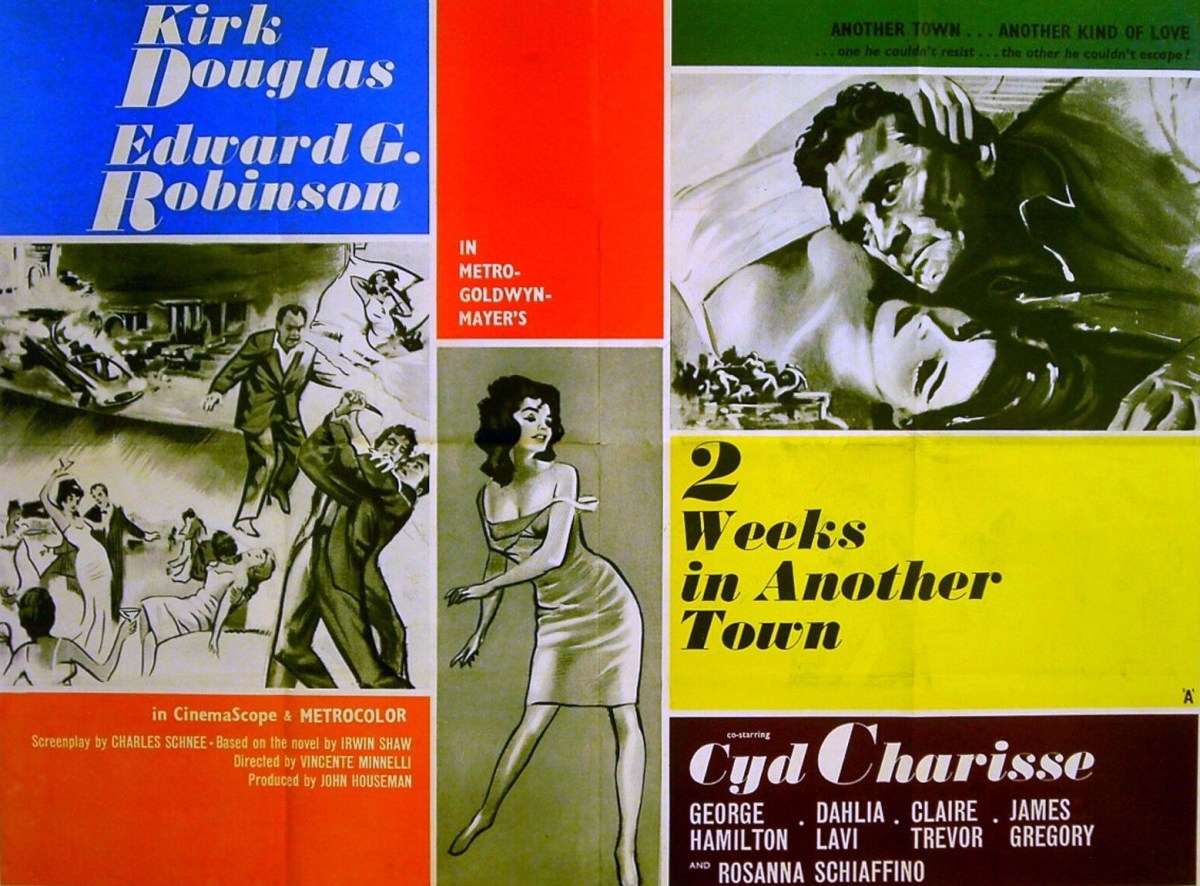
Douglas earned $500,000 and a percentage of the profits (though none were forthcoming – it made a loss of $3 million) and top-billing. Although co-star Edward G. Robinson (Seven Thieves, 1960) appeared above the title, Douglas refused to accord female lead Cyd Charisse (Maroc 7, 1967), on one-tenth of his salary, that concession.
Douglas recalled that he build up his acting skills through wrestling. A college wrestling champ, he barnstormed across the country in a carnival, playing the cocky person reputedly from the audience who challenged the giant resident wrestler. “My job was to make the audience think he was going to murder me,” Douglas told the Pressbook/Campaign Manual. “And the way to do this was by expressions on my face. To yell out in pain would seem cowardly. But I learned a hundred and one ways of showing it through use of my eyes and the muscles in my face.”
The actor escaped serious injury when lightning, preceding one of the worst thunderstorms in a decade, struck a 200-year-old clock on the top of the church in Santa Maria Square. Four huge iron numerals were torn off and crashed to the ground, one grazing Douglas’s head.
In fact, the movie’s authenticity owed much to being filmed on the streets of Rome rather than reconstructed on the studio lot. In particular, scenes utilizing the Via Veneto, two long blocks of sidewalk cafes where the movie industry socialized, created a realistic atmosphere, especially when a hundred or so of the extra employed were actually people who would naturally populate the location. So, for example, when the script called for an opera star among the extras, casting director Guidarino Guidi used Bostonian Ann English, an opera singer studying in Rome. Among those sitting in the background at café tables were a promising young painter, a poet and a librettist.
George Hamilton (Act One, 1963), who had worked in Home from the Hill and just finished Light in the Piazza (1962) also shot in Rome, reckoned he couldn’t have been more miscast given his role called for a “funky James-Dean type.” He got the role through the influence of Betty Spiegel, wife of producer Sam, and her friend Denise Gigante, the director’s current girlfriend (later wife). Hamilton drove around in a red Ferrari costing $18,000 (ten times that at today’s prices) and, as he put it, “Italians knew how to worship” Hollywood stars.
Hamilton reckoned part of the problem of the film was that Minnelli was so “besotted with Denise that he had lost his vision.” Jumping to the defence of Cyd Charisse against a tirade from journalist Oriana Fallaci at the Venice Film Festival won Hamilton, unexpectedly, the cover of Paris-Match.
Daliah Lavi owed her career break to Douglas. As a nine-year-old in Hiffa, Israel, she struck up a friendship with the actor when he was filming The Juggler there in 1952. The actor and other stars attended her birthday party, Douglas presenting her with a ballet dress. Later a dancer and then an actress, this was her Hollywood debut. Erich von Stroheim Jr, making his movie acting debut, had his head shaved to make him appear more like his famed director father. Originally employed as an assistant director on the picture, Minnelli decided he would make a good Ravinski, the “fast-talking press agent.”
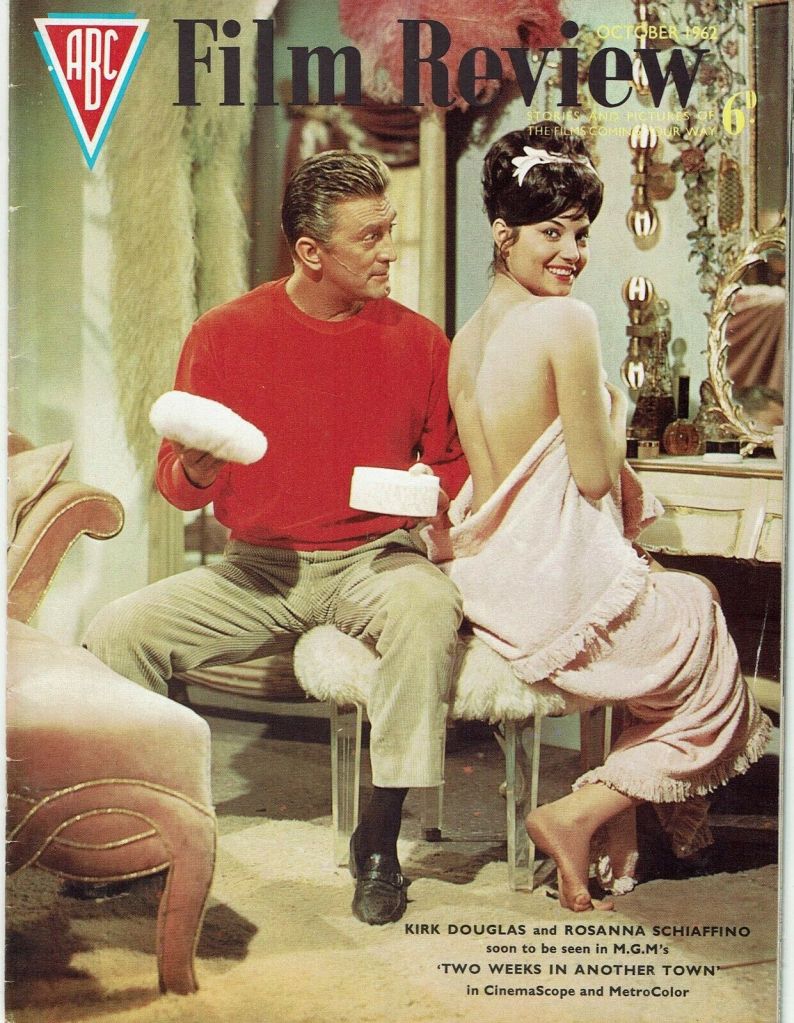
Chauvinism reared its ugly head, especially when women had to apologise for being on the receiving end. “What goes on in the minds of beautiful women when they get slapped for the cameras?” mused the editor of the Pressbook/Campaign Manual. Rossano Schiaffino’s response regarding being whacked on the behind by Douglas: “He hits hard so charmingly I didn’t mind standing up for a day of two.”
The actress proved tougher than many of her colleagues. She turned down the offer of a double for a scene in which she jumped into a lake. That might not have been such an undertaking had the sequence been shot in the hot Italian sunshine at the height of summer. But the MGM studio tank on Lot 3 was a different – and much colder – proposition. “She shrugged off her stunt with the remark that heated pools are unknown where she comes from.”
Irwin Shaw, author of the best-selling source novel, wasn’t too upset at the way the movie turned out. “An author who wants complete control of his work on the screen is in something of a cleft stick,” he observed. “He can either go into production himself, which is often neither possible nor desirable, or he can refuse to sell his work to the movies. Minor deviations in screen conception don’t send me reeling back a stricken man. I think I’m sufficiently realistic to know that even in the most enlightened films there must be some compromise if they are to be a success. What does matter very strongly to me is that the theme of the novel…should come over on the screen.”
Music trivia: Kirk Douglas was the first big Hollywood star to perform “The Twist” on screen and the song “Don’t Blame Me” was reprised from The Bad and the Beautiful, sung here sung by Leslie Uggams and in the older film by Peggy King.
French designer Pierre Balmain created the dresses, allowing a marketing campaign to be built around those stores which supplied his clothes. TWA, which flew directly to Rome, was suggested to cinema owners as an ideal tie-in. Not only did New American Library issue a new movie tie-in paperback/soft cover but cinemas were encouraged to build a campaign around a director, many of whose films would be well-known to audiences. The marketeers also had material to tie in with stores retailing music, women’s sportswear, menswear, men’s sweaters, beauty and hair styling.
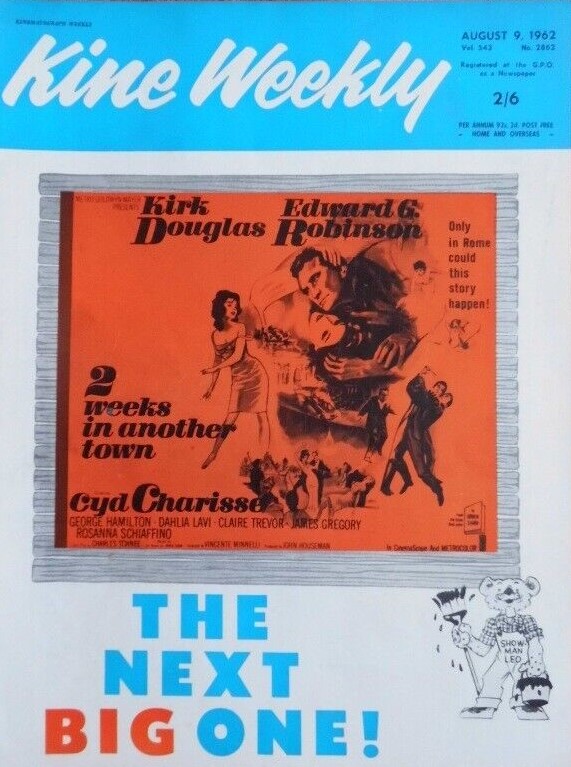
The 16-page A3 Pressbook/Campaign Manual offered a selection of advertisements and taglines. The key advert tagline ran “Another town…another kind of love…one he couldn’t resist…the other he couldn’t escape.” But there were alternatives: “Only in Rome could this story be filmed/Every town has women like Carlotta and Veronica and the kind of man they both want!/From Irwin Shaw’s great best seller.”
Or you could opt for: “Irwin Shaw’s shocking intimate view of Rome’s international film set. The world only sees the glamor. This is the drama behind it!.” Or: “Only in Rome could this story happen. Only in Rome could this story be filmed!”
SOURCES: Kirk Douglas, The Ragman’s Son (Simon and Schuster paperback, 2010) p342-344; George Hamilton, Don’t Mind If I Do (JR Book hardback 2009)pp 155-159; Pressbook/ Campaign Manual, Two Weeks in Another Town (MGM).
Unholy triumvirate of director Vincente Minelli, star Kirk Douglas and screenwriter Charles Schnee had been here before, eviscerating Hollywood in The Bad and the Beautiful (1952). Now, while the locale has shifted to Rome, Hollywood-on-the-Tiber, the behind-the-scenes battles are, if anything, even more fraught since careers are on the slide.
Burnt-out washed-up star Jack (Kirk Douglas) is duped by washed-up director Maurice (Edward G. Robinson) into thinking he is going to revive his career with a supporting role in a low-budget movie made at Cinecitta. In reality, Maurice wants Jack to oversee the dubbing, time restraints preventing the director doing this. Jack and Maurice have history, good and bad, making some fine pictures together, but inveterate womanizer Maurice bedding Jack’s wife Carlotta (Cyd Charisse).
Carlotta, divorced from Jack, now living in Rome and married to a shipping magnate, wants Jack back, if only to keep her bed warm while her husband is away. Young beauty Veronica (Daliah Lavi) dumps temperamental boyfriend and fading star Davie (George Hamilton), in favour of Jack. Maurice is having an affair with his latest find, the tempestuous Barzelli (Rosanno Schiaffino), so brazen she strokes his legs while he toasts his wife Clara (Claire Trevor) at a dinner to celebrate their tenth anniversary. Clara is prone to attempting suicide.
So far, so melodramatic. But instead of explosive melodrama, it’s more about insecurity and the honing of the cutting line. We know enough about vicious Hollywood in-fighting so none of this will come as a surprise, but it’s still astonishing the depth of self-deception on display that occasionally flowers into genuine insight. Maurice may be ducking and diving in the last chance saloon but he still knows how to disarm a young man with a knife. Not sure Jack giving Barzelli a kick in the pants would be deemed an acceptable method of calming down a screeching star. And you won’t get much kudos for a line like “all women are monster.”
But there are nuggets of Hollywood lore. Barzelli being forced to keep her arms in a certain position for a shot, for example, that actors doing the dubbing require direction, the shifting around of scenes, the producer already guaranteed profit through pre-sales before the movie is released, the endless rewrites, and of course that career rejuvenation brings actors a sudden jolt of power. And there’s a car ride that matches Hitchcock for sheer terror, regardless of the fact it is shot with back projection.
Fame as we all know is an illusion, but so is success. The famous are notoriously lonely. What’s hardest to get your head round is failing to notice when your career is on the slide. Being so wrapped up in your notion of invincible self, to which, while you are successful, all pander. There’s some lovely stuff about the collusion of audience and moviemaker, both hiding from reality.
But it’s a true adult drama, far superior in many ways to Once Upon a Time in Hollywood (2019) or Babylon (2022), avoiding the excesses of both, while homing in on character fragility, weakness exacerbated under pressure. In the end all make concession, some beating a tune of self-awareness. Even Maurice accepts he needs his wife to provide him with grounding and self-belief. The aloof arrogant Davie has to beg Jack not to steal his girl. Jack learns to ignore adulation.
If you like long speeches and elegant camerawork and confident direction this is for you. There’s plenty attendant glamor, but mostly it’s characters coming apart and putting themselves back together again, with or without a side order of bitchiness.
The acting is uniformly top-notch. Kirk Douglas might be auditioning for The Arrangement (1969), in which he essays a similar ambitious talent coming unstuck, but here he underplays, to the picture’s benefit, the early scenes when he’s still working out why he has fallen out of favor, and who he now is, just outstanding. But Edward G. Robinson’s (Seven Thieves, 1960) callous insecure monster runs him close. And the petulant performance by George Hamilton (Angel Baby, 1961) had critics purring and the industry predicting great things.
But it wouldn’t be anything without the believable women, all convinced their version of themselves will win favor. Cyd Charisse (Maroc 7, 1967), the female equivalent of the predatory Maurice, Claire Trevor (The Cape Town Affair, 1967) with suicide the preferred option to divorce, and especially Daliah Lavi (Some Girls Do, 1967) who gives Hollywood splendid notice of what she can do away from the sex symbol persona she was later lumbered with. Rossano Schiaffino has a ball as the sex symbol who views powerful men as playthings.
This was Vincente Minnelli’s fourth film with Kirk Douglas and just like Anthony Mann with James Stewart and John Ford with John Wayne or, more recently, Antoine Fuqua with Denzel Washington, draws a greater maturity from the actor. Charles Schnee wrote the screenplay based on the Irwin Shaw bestseller.
Sure-footed, bitchy as hell, hard-hitting, honest and unmissable.
She sings, she dances, she shakes her booty. What else would you expect from Ann-Margret in light comedic mode (i.e. The Swinger, 1966) rather than serious drama (i.e. Stagecoach, 1966). While appearing as free-and-easy as in The Swinger, she’s actually a dedicated virgin, as was par for the course before the Swinging Sixties kicked in. But the way she lets it all hang out, you’d be forgiven (if you were a predatory male) for guessing the opposite.
Maggie (Ann-Margret) is a career girl, assistant fashion buyer in a New York store, having come up the hard way, small-town-girl then model then salesperson. When the Paris buyer Irene (Edie Adams) quits her job to get married, Maggie is shipped out as her replacement, not as a reward for all her hard work but as punishment because she refuses to sleep with the boss’s cocky son Ted (Chad Everett). The idea is she’ll be so out of her depth, she’ll return humiliated and only too happy to jump into bed.
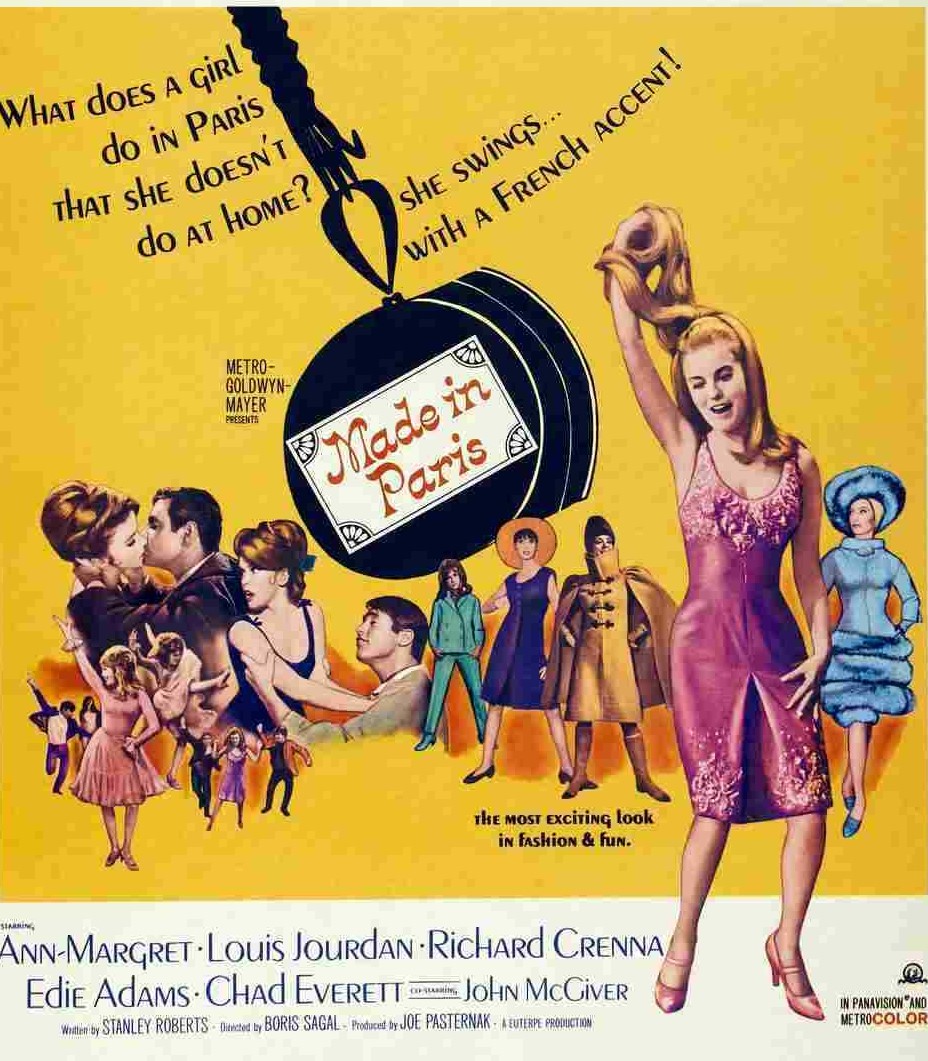
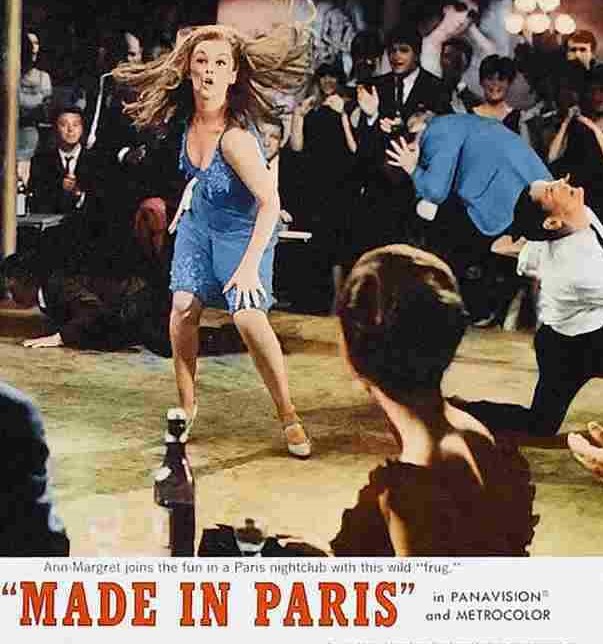
What do poster designes have against certain colors? In the movie Ann-Margret dances in blue. In the poster, the dress turns red.
Turns out Irene quit so fast she didn’t have time to tell her Parisian boyfriend and fashion designer Marc (Louis Jourdan) so on Maggie’s first night in the company’s luxurious apartment he turns up. Naturally, he expects a bit of the old-fashioned quid pro quo, je ne sais quoi, whatever they call sex when they are being coy about it, and when she refuses to play ball he cables New York to demand her dismissal. Even when the New York boss (John McGiver) relents, she is banned from Marc’s fashion shows, meaning she can’t buy clothes she is forbidden to view.
Enter Ted’s buddy Herb (Richard Crenna), from the same lothario mold. Just to even things up or add further complication, Ted realizes he is actually in love with a girl who said no after a thousand boring girls who said yes. Trying to win her way back into Marc’s good books, with Herb as her guide she tracks the designer through the night clubs, eventually putting on the kind of sexy wild impromptu dance exhibition that the more staid Maggie could only have achieved if she’d taken lessons from Ann-Margret.
That does the trick and they share an impromptu number (“Paris Lullaby”) on the banks of the Seine although Marc still insists she shed her inhibitions before marriage if she wants to be considered a true Parisienne. The arrival of Mark and then Irene, abandoning her husband on their honeymoon when called in to retrieve the situation, adds fuel to the fire and then it’s one mishap after another, especially when Maggie discovers the pleasures of absinthe and ends up in Herb’s bed (yep, she has a hell of a time wondering not just how she got there but if, Heavens to Murgatroyd as Snagglepuss would say, she committed the terrible deed).
Unbelievably, and just as well perhaps from the narrative perspective, Herb isn’t a love rival. Maggie isn’t his type, its transpires. Shoot that man on sight – doesn’t fancy Ann-Margret? Lock him up!
You won’t be surprised to learn that it all sorts itself out in the end but you might be a bit taken aback how quickly a dedicated career girl throws away her career once a marriage proposal comes her way.
You might have expected from the title that Maggie would be a model, the best excuse you could find for the actress to cavort in a series of skimpy costumes, as she does in the pre-credit sequence, an exquisite dialogue-free montage with a clever pay-off that makes you think this is going to be much more stylish – excluding the fashion show of course – than it is.
Ann-Margret has such a dazzling screen persona she makes light work of even the lightest of confections. She does all that her most fervent fans would want but it’s not her fault she’s been cast in a Doris Day comedy that ensures she can only properly express her character by acts of exhibition. Louis Jourdan (Can-Can, 1960) keeps creepy entitlement at bay with lashings of Gallic charm. Despite his character’s playboy tag, Chad Everett (The Impossible Years, 1968) is the squarest of squares.
Richard Crenna (The Midas Run, 1969) spins his normal hard-ass screen persona into something a bit more sympathetic. Edie Adams (The Honey Pot, 1967) and John McGiver (Fitzwilly/Fitzwilly Strikes Back, 1967) add a bit of dash in support.
You’d never guess the director was Boris Sagal of The Omega Man (1971) fame. Stanley Roberts (Come September, 1961) wrote the screenplay.
Ann-Margret at her zingiest. What more could you ask?
What appears a routine conspiracy thriller fleshed out with contemporary hooks about body shaming, victim shaming and the dark web suddenly explodes in the third act as consequence gets personal. If you’re of an arthouse bent you’ll equate Polish cinema with Andrzej Wadja (Man of Marble, 1977), Roman Polanski (Knife in the Water, 1962), Jerzy Kawalerowicz (Pharaoh, 1966) Krysztof Kieslowski (Three Colours Trilogy, 1993-1994) or Pawel Pawlikowski (Ida, 2013) and you’ve probably turned a blind eye to the boom in commercial Polish cinema of recent years, mostly concentrating on corrupt cops, gangsters, the Mafia, and strong-minded women.
Luckily, my local multiplex, which lacks arthouse inclination, has been running the biggest hits from Poland on a regular basis. The latest arrival lacks the bombast and outlandish narrative of previous entries and while following a standard investigative narrative eventually twists into a more personal reflection on crime.
Adapted from this Polish bestseller.
Journalist Julita (Magdalena Kolesnik) investigating the suicide of well-known television presenter Gustaw (Mariusz Czajka) finds evidence of a murder plot. After publishing her story, she becomes an even bigger story when her sex video is made public. Her outraged editor demands she apologise for embarrassing the news website. When she refuses, she is fired. Widowed father Henryk (Andrzej Sweeryn) – wife committed suicide way back – disowns her, older sister Magda (Wiktoria Gordecka) chucks her out of her flat.
The journalist ploughs on, but hunting down her own hacker puts her back on target to uncover a man who could conceivably possess the computing skills – that once upon a time could have only existed in the fictional James Bond/Fast and Furious universe but now with the driverless car upon us less a figment of the imagination – to force the television presenter’s vehicle over a bridge. She’s more determined than resourceful, tempting a security guard out of his office by setting off a smoke alarm, escaping from another security guard by ramming his hands with a car door.
She is assisted by Chinese chef Emil (Piotr Trojan), a part-time computer whiz, whose Army background makes him a suspect. Eventually, with more digging and a good deal of luck, she finds the hacker. Instead of turning him in, she agrees to give him a stay of execution.
For why? He has evidence Gustaw was part of a child sex abuse ring of which the hacker was an early victim. He wants to employ more computer wizardry vigilante style to knock off another member of the abuse ring. He promises to stop after that, leaving it to Julita to make a decision on whether to go to the police.
I’m going to have to issue a spoiler otherwise this will just seem too routine a thriller. This is where it gets emotionally harrowing and spins completely on its axis, away from standard investigative journalism and into another realm entirely. The twist is that the hacker’s next victim, murdered by tampering with a dialysis machine, is her father. He was another legendary television figure. Now her mother’s suicide makes sense as does her sister’s reluctance to let her son anywhere near her grandfather.
Now what? Not enough to be the already humiliated daughter of a sex offender, but to realize the hidden role this has played in her family, and to decide whether further exposure would be in anybody’s interest.
Despite a car chase and being hounded, this doesn’t quite get to the boil in terms of conspiracy thriller as though director Piotr Adamski (Eastern, 2019) knew that the final act would blow everything that went before out of the water. But given this is the director’s sophomore outing and he didn’t want to go the all-out violence-ridden crime route, it’s tense enough and with some interesting news-room background, sniping colleagues, an editor pumping breast-milk at her desk, electronic scorecard ranking journos by the minute. Surprised, to be honest, some of the images that the censor passed.
But Magdalena Kolesnik (Sweat, 2020) plays this just right. Too self-reliant to be out of her box with fear, too independent to let her emotions get the better of her, meaning that when the big reveal hits she can dive into all that repressed emotion.
If you’ve not dipped into modern commercial Polish cinema, this is as good a place to start as any. If you’re already a fan, you’ll know what to expect, and come up somewhat shaken at how this pans out.
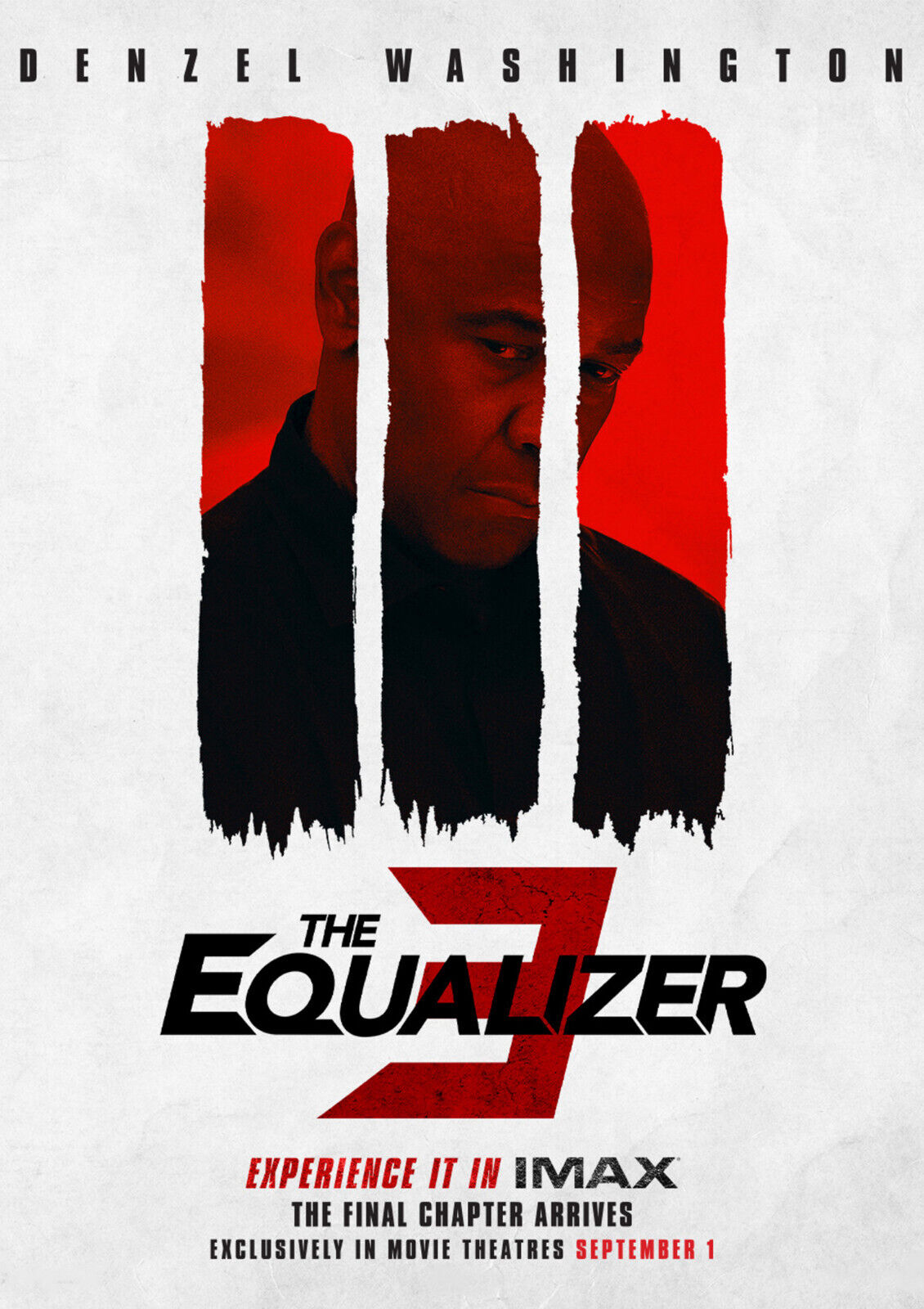
Stylish, triumphant, conclusion to a vigilante series that stands comparison with John Wick as the best of the new century. Oddly enough, the pair share some motifs, not least a mountainous stairway to a medieval church. And there are nods to The Godfather, killings against the backdrop of a religious procession and fruit spilling onto a corpse, a dagger pinning a hand to a table. And you might find shades of Apocalypse Now in the brooding remorseful figure of Robert McCall (Denzel Washington) convalescing in a remote fishing village in southern Italy. And it’s fully contemporary with a nod to the power of the mobile phone in depicting live events.
For an actioner it’s chockful of mystery. To begin with, you think we’re at the end, the aftermath of some gun battle, but, in fact, it’s just the start. Quite why McCall has ended up in a Mafia fiefdom in Sicily is held back till the end as is explanation regarding helping young C.I.A. agent Emma (Dakota Fanning) track down Mafia drug dealers, both narrative hooks adding to the subtlety and nuance that filters through this reflective actioner. Sure, there’s brutality, when is there not with McCall around, but there’s also reality, marvellously evocative scenes of village life, the vigilante sipping his trademark tea in a café, buying fresh-caught fish, joining exuberant locals celebrating a famous win at soccer.
Assisted by local physician Enzo (Remo Arisio) and local cop Gio (Eugenio Mastandrea) in recovering from a life-threatening bullet-wound, it’s all McCall can do to hobble down the steps with the aid of a walking stick. No Rocky-style reinvention dynamics here, no weight-training or running regime, no taking to the target range. When McCall struggles up a flight of steps your heart is in your mouth.
Meanwhile, a story unfolds of a power grab, legitimate and illegitimate, by Mafia chief Vincent (Andrea Scarduzio). But when the gangster’s younger brother Marco (Andrea Dodero) pushes his weight around once too often in McCall’s presence the rumbling volcano starts to erupt. But in temperate fashion to begin with, McCall relying on being able to locate a particular nerve (a physical one) enough to send the young thug scarpering.
Worth noting that the movie avoids two obvious traps. Agent Emma isn’t fighting a gender war, she’s no feminist battling for approval from male counterparts; in fact, if anything, she’s accorded full praise for her work and makes sure that she never acknowledges McCall’s input to her superiors, which seems even more realistic.
You might expect by now that widower McCall would be ripe for romance but though waitress Aminah (Gaia Scodellaro) takes a shine to him that goes little further than a pleasant walk along the beach sampling local delicacies. So you might also expect that, sticking to the core, this would be just a lean rip-off sequel. Instead, it’s rich in composition and detail. Many scenes play out in what appears to be atmospheric black-and-white. While not in the operatic league of John Wick 4, it’s a joy to watch.
Plenty bang for your buck but an interesting storyline that meshes drugs, terrorism and the Mafia. Deceptively subtle performance from Denzel Washington (The Magnificent Seven, 2016). He could have coasted home with his brooding persona. Instead, he walks like a man half-dead, reacts as if bewildered to still be alive, and finds he is no longer an outsider. Dakota Fanning (Once Upon a Time in Hollywood, 2019) plays down her role, there are no dramatic fireworks, she’s a confident individual, not giving an inch in her quiet duel with McCall, but no histrionics either.
Long-lasting director-actor teamings generally bring richer rewards as the partnership grows. This is the fifth film for Washington and Antoine Fuqua, beginning with Training Day (2001) and incorporating The Magnificent Seven and the two previous Equalizer outings. It has the feel of a famous partnership along the lines of John Wayne-John Ford, James Stewart-Anthony Mann and Gregory Peck-Henry King.
Nod to Richard Wenk, third time in the writer’s chair, for the screenplay and espcially to Marcelo Zarvos (Emancipation, 2022) for a score that combines haunting theme tune and screeching guitar for the action.
I was so taken with this I’ve already seen it three times. Might well head back a fourth time next week for more nuance – and more bang.
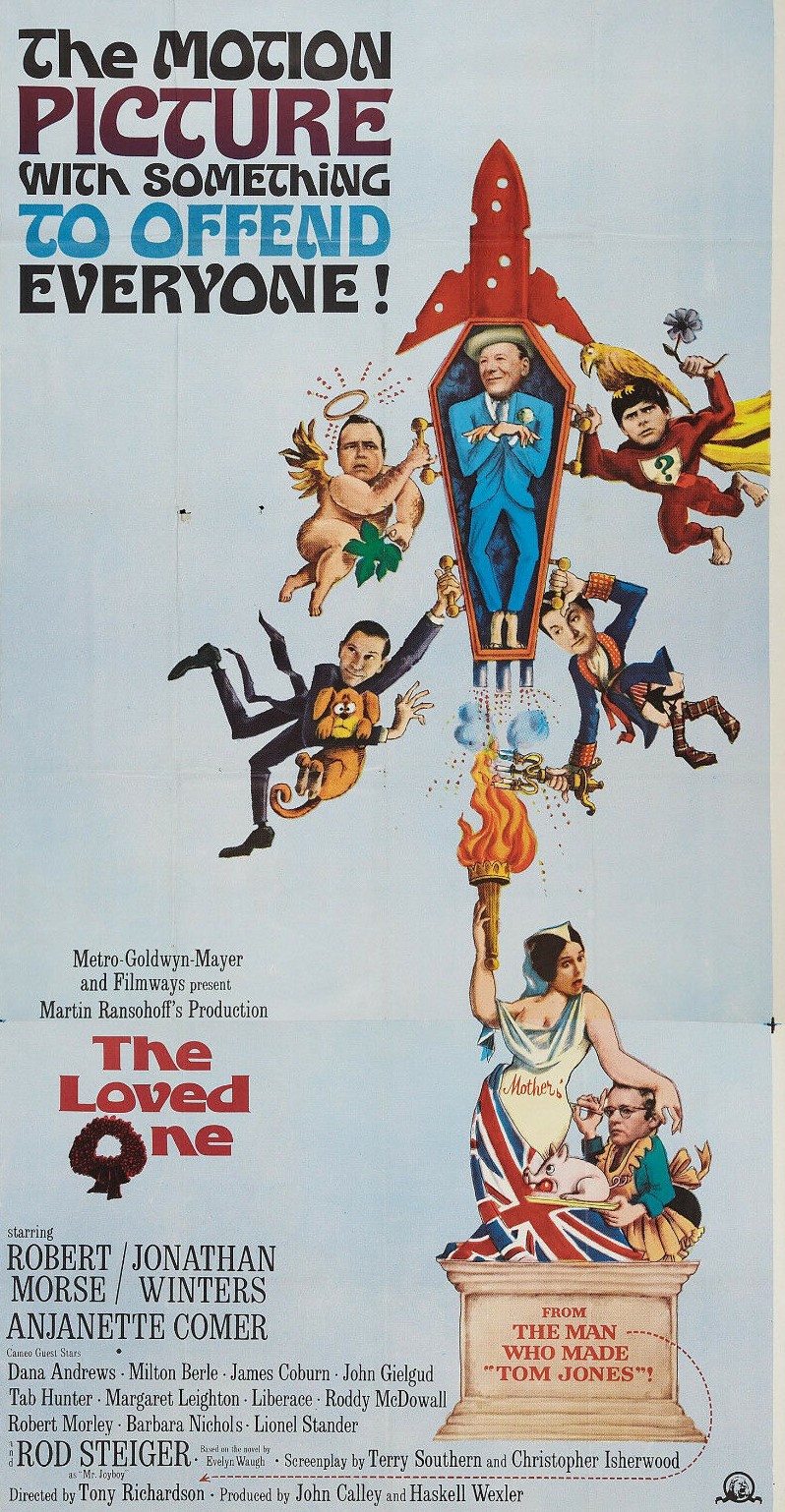
Yep, you hand the promotional department the problem of selling a movie about undertakers and see what they come up with. The tagline “the motion picture with someone to offend everyone” is unlikely to attract the unwary and leaves you only with an audience that enjoys seeing sacred cows slaughtered, which might minimize appeal. Coupled with a montage of outlandish scenes and characters, the main advert had its work cut out to attract anyone.
Just as well, then, the marketing department had some apparent plums up its sleeve. Even more than weddings, funerals are associated with flowers. So, top of “the ticket-selling ideas” was suggesting to cinema owners either to stick a wreath at the front door or get a florist to spell out the title in a lobby display.
If that didn’t work, go for broke and stick a tombstone (easily constructed from plywood or papier mache, apparently) in the lobby. (The Fall of the House of Usher had gone one better, promising a free casket to anyone who dropped ad of fright.) Better still, lay down grass on the pavement outside to achieve a lawn effect.
And if that doesn’t get the media buzzing, why not just hire a hearse. That could sit outside the theater or tour the locality with banners slung along the sides. If the local newspaper was willing, you could arrange to have the print delivered by hearse, photographer on hand to record proceedings.
“Since The Loved One spoofs the undertaking business, most morticians aren’t too happy with the picture. This can be twisted to advantage to get you a newspaper story,” proclaims the Pressbook. Basically, the notion is that undertakers will respond to a reporter nosing around and that somehow that will permit mention in the resulting article of the movie. Another idea is to invite undertakers to the opening night on the assumption that no one will turn up and that somehow that, too, will make a newspaper story.
A simpler alternative was just to hire a model and have her parade around town dressed in white like a mortician and passing out flowers.
Just in case nobody had noted the off-beat nature of the picture, cinema managers were encouraged to browbeat local journalists into spelling this out and putting the movie into the same bracket as Dr Strangelove (1964), What’s New, Pussycat? (1965) and, of course, Tom Jones (1963).
Oddly enough, the movie received a favourable press – or at least a word or two which could be culled from reviews to make it appear so. Thus, one advert was able to rustle up quotes from the New York Times, Cue magazine, Herald Tribune, Holiday magazine, Life and Saturday Review.
Basically, there was as little meat on the advertising bones as in the genuine narrative to the picture itself. There was only one tagline and all the adverts, covering three-quarters of the 12-page A3 Pressbook, were variations on the one ad.
Outside of the cameo appearances, the male and female leads were relative newcomers, both starring in Quick, Before It Melts (1964). Courtesy of his long-running role on Broadway hit How to Succeed in Business Without Really Trying, Morse was marginally the bigger marquee name.
For a comedy, it was a potentially lethal role for Morse. “There was one scene in which a toy rocket blew up in my face and another in which I was dragged 40 feet by an automobile. I came close to being asphyxiated after doing a 60-minute stint in an air-tight embalming room.”
“Fate has been kind to me so far,” averred Comer. “But it didn’t all happen overnight, you know. Actually, I don’t think the quickie successes mean very much. You can be belle of the ball one day and a has-been the next.
“When I decided to go into this business, I made up my mind about one thing. I wouldn’t go into it unprepared. I got the groundwork in workshop plays at the Pasadena Playhouse and I concentrated on acting to the exclusion of everything else. I never even got to see what Hollywood actually looked like.”
After the success of Tom Jones, director Tony Richardson was given carte blanche. He filmed in 21 locations including the California freeway (as yet unopened), pet cemeteries and Beverly Hills mansions (the ground floor of Dohney marble chateau) and never in the studio. “I feel constricted working anywhere but in the real locales,” he told the Pressbook. “There are inconveniences in working outside a studio but I don’t mind them.”
His quest for realism extended to make-up. For example, he vetoed applying make-up to Jonathan Winters’ hand so that it matched his tanned face. Other attempts at verisimilitude saw lights taped to ceilings and sound equipment strapped to plumbing. Substitutes were found for equipment deemed too bulky or sensitive for location filming.
Future Warner Bros boss John Calley, here working as co-producer, explained some of the problems encountered. “Normally, when a piece of equipment is to be used or something needs to be constructed in Hollywood, it is only a matter of dialling the proper studio telephone extension. But under the Richardson plan every bit of equipment, every prop, every item of construction had to be individually contracted. There is no question that this is the most difficult way to make a picture, but it is the only way Richardson will work.”
If only British director Tony Richardson had seen fit to add some meat to the bones, this satirical look at the American funeral business might have emulated the dramatic impact of Elmer Gantry (1960). As it is, the director is so preoccupied with the funereal inanities that it doesn’t so much lose sight of the plot as pretty much ignore it.
So, yes, the burying of a loved is big business and just like weddings some of the trimmings would make your toe curl. But even when reality intrudes, feet swell after death so require larger shoes and the only way to fit a suit on a corpse is to slit open the back, these are treated in humorous fashion.
And that would all be fine if this was the laff-fest Richardson intended but even with a puffed-out roster of cameos – Liberace as a salesman and James Coburn (Hard Contract, 1969) as a truculent customs officer the pick – this ends up as more documentary than movie. And that’s it’s main attraction for a contemporary audience who might be less concerned about the director’s almighty fall from grace after the stunning critical and commercial success of Tom Jones (1963).
In fact, it’s a shame the story goes anywhere near internment because the initial section concentrating on Hollywood is more successful in achieving a modicum of gentle satire. Wannabe poet Dennis (Robert Morse) has won a trip to America as a prize and lands on upper crust uncle Sir Francis, a Hollywood veteran, tasked with improving the elocution of cowboy Dusty (Robert Easton) so that he can play a British spy akin to James Bond.
That section entails gorillas turning up outside telephone booths, all sorts of monsters dawdling through the studio canteen, and head honcho (Roddy McDowell) running his father’s studio by the seat of his pants until he comes unstuck, resulting in Sir Francis being fired after 31 years. There’s some interesting, almost British, issue-dodging and Sir Francis in true British style, unable to deal the embarrassment of being sacked, commits suicide, leading the nephew into the arms of Whispering Glades funeral operative Aimee (Anjanette Comer). She’s in love with the creepy Joyboy (Rod Steiger) leaving Dennis to woo her using other people’s poems.
There’s another nutcase dropping out of the woodwork every two minutes, and occasionally there’s a mild piece of slapstick or physical comedy. Of course, using rampant sex as the basis for comedy, as with Tom Jones, works far better than death. In the absence of a decent narrative or interesting characters, once the initial heavy-handed points have been made there’s nowhere else to go except be more heavy-handed.
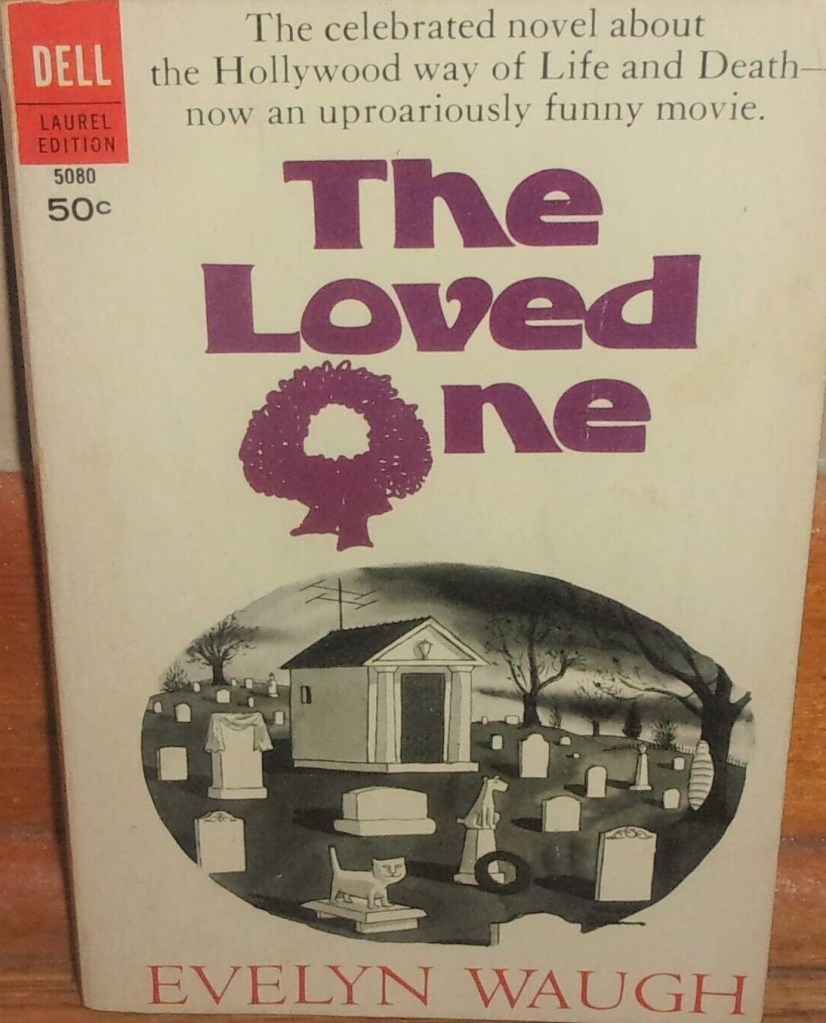
Until Brideshead Revisited (1981) was turned into a triumphant mini-series, the works of British author Evelyn Waugh had difficulty being transferred to the screen. In part, this was due to his idiosyncratic style and in part that, even at his most serious, he was viewed as a comedy writer.
Screenwriter Terry Southern (Candy, 1968) wouldn’t have been my first choice to translate the Waugh essence for the big screen, but co-writer Christopher Isherwood (Cabaret, 1968) was no more successful.
Robert Morse (Guide for the Married Man, 1967) offers little beyond mild buffoonery. While Anjanette Comer (Guns for San Sebastian, 1968) is surprisingly good as the angelic ditzy object of his affections, she can’t carry the entire picture. Robert Morley (Genghis Khan, 1965) manages to keep a straight face while delivering his lines.
Without doubt hits the immediate target but somehow misses the bulls-eye.
Even so, there’s one element of the picture that would have contemporary Hollywood salivating. And that is a producer not frightened of taking risks, willing to go outside the envelope in a bid to deliver the different kind of movie that audiences obsessed over with Barbie and Oppenheimer.
Martin Ransohoff had an enviable track record in the 1960s. For MGM, he was the mastermind behind movies as offbeat as The Americanization of Emily (1964), The Cincinnati Kid (1965) Eye of the Devil (1966) and Castle Keep (1969) as well as big-budget offerings The Sandpiper (1965) and Ice Station Zebra (1968). His name was on such later diverse titles as The Wanderers (1979) and Jagged Edge (1985). As you can see from this random selection, his movies didn’t always come off, but at least they were different.
The one element that every movie requires – advance publicity – was denied Elmer Gantry. Shooting took place on a closed set with all visitors carefully screened. Only six actors were given access to a complete screenplay while a general synopsis was denied distributors and cinema owners.
Over 30 years after publication of the source novel by Sinclair Lewis, its contents were considered so volatile and contentious that, rather than be pre-judged by the industry on expectations of what the movie may contain, director Richard Brooks took to issuing baffling statements such as describing Elmer Gantry as “The All-American Boy.”
Even the 12-page A3 Pressbook/Campaign Book, the prime source of marketing contact between studio and theater owner, was niggardly in the extreme. Narrative detail was limited to “the story of a spellbinding evangelist” rather anything approaching a synopsis.
Stuck with how to woo an audience in advance, United Artists fell back on a teaser campaign comprising six separate ads. The sequence was as follows: “Elmer Gantry Is Coming!” / “Sinners! Elmer Gantry Is Coming!” / “Sinners! Elmer Gantry Is Coming! starring Burt Lancaster”/ “Sinners! Elmer Gantry Is Coming! Starring Jean Simmons” / “Sinners! Elmer Gantry Is Coming! starring Burt Lancaster and Jean Simmons”. The last advert was coupled with a quote from the New York Times with the final salvo the same ad repeated but with a different quote from the New York Post.
The New York campaign – in those days a movie might take a few months to spread out from initial opening locale to other cities allowing promotional ideas that worked in one area to be publicized – relied on the first two teasers. But they went out in saturation – in railroad stations, subways, buses and race tracks with additional displays on poles, stilts and drums.
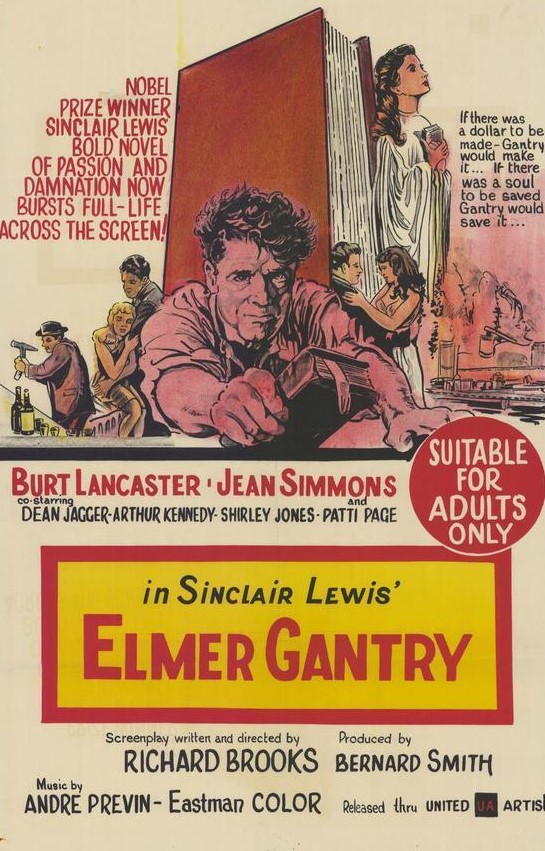
The major print advertising onslaught was led by two bold large-sized adverts intended to run facing each other on the same page. “Bless Him! Tens of thousands of believers shouted his praises!” was accompanied by the iconic illustration, Bible in hand, of Burt Lancaster. “Damn Him! Three women damned his soul” showed Lancaster grappling with Jean Simmons with Shirley Jones and Patti Paige in the background in more revealing clothing. But these two elements could also be fitted into the one ad, as shown above.
There were nearly a dozen full-size advertisements with a range of taglines. In all Lancaster is shown in the same pose with the Bible while Simmons is presented clutching a Bible and gazing heavenward. Shirley Jones appears in even skimpier outfits.
As was standard at the time, taglines could stand on their own or mix and match. Snippets for other ads were edited from this main ad: “Nobel Prize Winner Sinclair Lewis’ Bold Novel Of Passion And Damnation Bursts Full-Life Across The Screen! If there was a dollar to be made – Gantry would make it…If there was a soul to save -Gantry would save it…”
“Sinner! Elmer Gantry Wants You!” ran another ad backed up by “Are you ready, sinner? He wants you to know all about heaven…but not about his whiskey and his women!” Other adverts were fashioned from taglines like: “You’re all sinners…you’ll all burn in Hell! Tell ‘em Gantry…save ‘em from sin…lead ‘em to salvation…tell ‘em about everything…but not about your whiskey and your women!” Or included: “From the book that shook a nation with its sledgehammer theme…from a Nobel Prize-winning author…comes the raging story of a man who used the Holy Bible and broke every rule in it!”
Rarely have so many exclamation marks been employed in so short a space, but equally, rarely has a marketing team encapsulated so vividly a movie with a difficult subject matter, all tease and no substance.
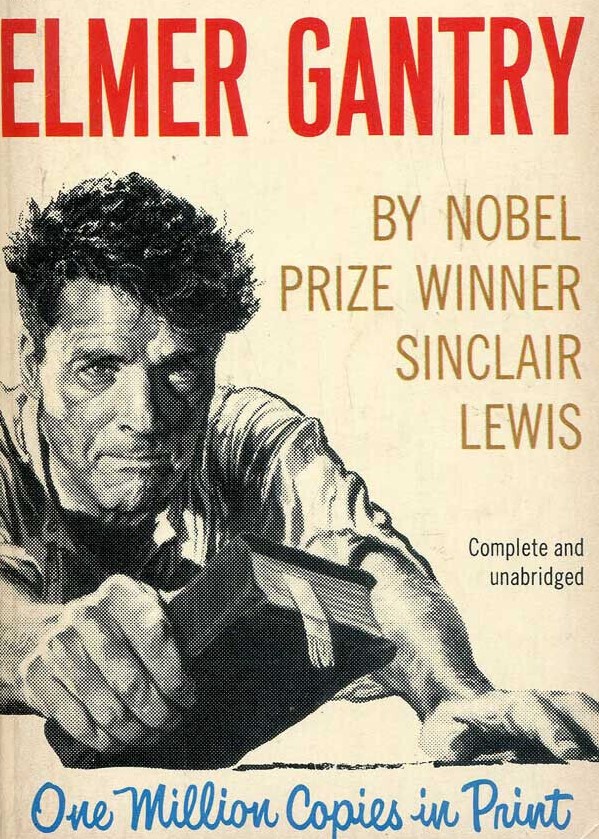
Out-with the usual marketing routes, the marketing team were able to take advantage of various ancillary promotional opportunities. Dell organized a massive paperback book tie-in in thousands of bookstores and newsstands, Burt Lancaster dominating the front cover with Simmons and Jones pictured on the back. Music retailers also played their part, United Artists Records launching the Andre Previn soundtrack album while Mercury released an album of revival tuness sung by Patti Paige, who made her movie debut in the film. With record sales exceeding 35 million, Paige’s host of fan clubs were a natural target for contact and if there was none in the local vicinity cinema managers were encouraged to start one by the simple device of setting up “a giant postcard in the lobby” and inviting fans to attach their signatures.
Department stores were called upon to run 1920s Fashion Shows.
Anniversaries, so important today, helped out. It was 30 years since Sinclair Lewis was awarded the Nobel Prize, the first American author so recognized, and 1960 was the 75th anniversary of his birth. But the promoters also played upon the book’s initial controversy, hoping to re-ignite the debate as a promotional tool.
With the bulk of the Pressbook given over to advertising and promotional ideas, barely little more than a single page was devoted to the stars, but even then there was little of the usual soft-focus puff pieces. The kind of journalistic nuggets that might help an editor fill a vacant space were limited. All we learned of Burt Lancaster, who had worked with Richard Brooks before on Brute Force (1947), was that – as if this was a mark of respect – he agreed to read the screenplay twice. Of Jean Simmons it was pointed out she had played an evangelist in Guys and Dolls (1955) but the Pressbook erroneously states that she played a nun in Black Narcissus (1947); in fact, she was a beggar girl. Arthur Kennedy is mentioned in relation to his Oscar nominations.
Shirley Jones was the most likely to attract column inches as a result of explaining how she made the transition from more demure roles in Oklahoma (1955) and April Love (1957). “It feels just fine – now,” she told the Pressbook interviewer. “At first, well, I really don’t wear much except what you see. A slip, these shoes with the green frills, and slinky black silk wrap-around that’s transparent.
“Usually, I walk into a movie set wearing my bustle and petticoats and some of the boys turn round as I go by and say, ‘Hiya, Shirl.’ But when I walked in dressed like this the fellows all just turned round and didn’t say anything. They never turned round like that before. Well, not really. It did take some getting used to after provoking the big brother reactions for so long.
“But I guess every girl dreams of being a conversation stopper some day. This is my chance. Of course, I am embarrassed sometimes…or maybe it’s inhibited.”
Brooks rewrote the script eight times before “he felt he had captured the essence” of Gantry. Most of the scenes were filmed on sound stages or adapted from an assortment of 1920s vintage streets from the backlots of other studios. The tabernacle was constructed out of an ice skating rink on a beach pier in Santa Monica.
Art director Edward Carerre spent $6,500 erecting and furnishing a genuine evangelist tent rented from Canvas Specialty. It was slightly trimmed to fit onto two combined sound stages on the Columbia lot. A total of 400 benches each measuring eight- or ten-feet were constructed by studio carpenters to provide seating for 1,000 – the tent accommodated another 2,000 standing. The stage required 500lb of imported sawdust and banners 30ft long were specially made to incorporate Biblical quotations. Where most movies required a maximum of 15-20 sets, Elmer Gantry boasted 62.
The climactic scene, conflagration in a tent, took five days to film. Soaking the set in kerosene would not supply the instant flash of flame the director demanded. So, instead, he turned to old film footage, including some frames from It Happened One Night (1934). “We’re burning film to make film,” quipped Brooks.












 The Magnificent 60s