The Misfits (1961) *****

A knockout. Stone cold five-star gold label classic. It’s rare for a non-western to turn into one of the greatest westerns of all time. Forget The Wild Bunch (1969) and Once Upon a time in the West (1969) and every other paean to the dying of the Old West. This is all you need. A true insight into just what is left for the cowboy once civilization and modernization have run their course.

What’s perhaps most astonishing is that three major Hollywood stars plus a top director and  one of the three greatest American playwrights of all time combined to make an indie. There’s no high drama of the kind Hollywood usually requires, no love dashed, no death or murder, nothing dramatic enough to be called narratively gripping. Made today, it would be the kind of picture that would traipse from film festival to film festival, hoping for a break at Sundance. The cast would be no-namers unless a star, fed-up with actioners, wanted to gain some artistic credibility.

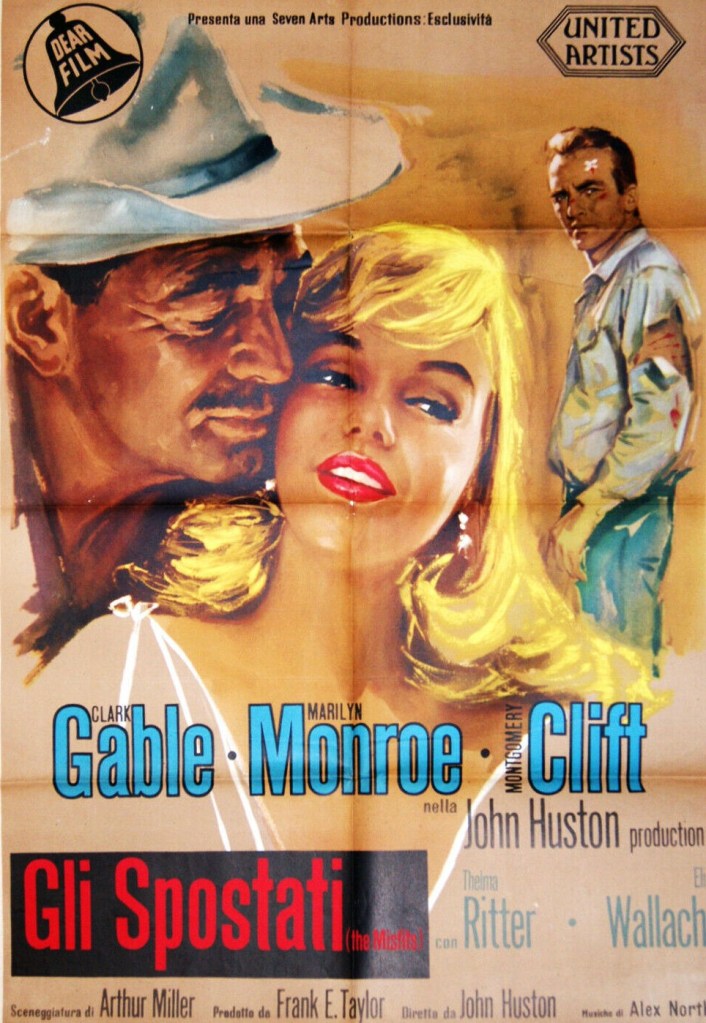
This is as misleading a tag line as you could get. Admittedly, selling the movie’s core sadness
in the early 1960s would have been tough.

By some freak of Hollywood magic this was greenlit. There’s plenty good dialog but nothing that’s going to make it into the Classic Line Hall of Fame and there’s only a handful of finely wrought scenes. So beyond the astonishing mustang sequence, what reverberated was the acting, with each big star producing a scene of the highest quality, for pure emotional impact possibly unsurpassed in their entire careers.

The story itself is pretty slim. Roslyn (Marilyn Monroe) in Reno to get a divorce hooks up with washed-up cowboy Gay (Clark Gable) and grieving car mechanic Guido (Eli Wallach). They repair to Guido’s cabin in the country, unfinished after his pregnant wife died because he didn’t have a spare tire. They are joined by hard-drinking man-hungry Isabelle (Thelma Ritter). Roslyn shacks up here with Gay, brightening up the place with decorative ideas and planting vegetables.

At the rodeo they stake drunken Perce (Montgomery Clift), a tough guy with mother issues, self-destructing one rodeo at a time. At various times the trio nurse and console each other, but mostly they get drunk. The three men take Roslyn along to show off their cowboy skills, catching wild mustangs. This is less old-fashioned than you might imagine. It’s more like tracking down the great white shark in Jaws (1975), a primeval battle between man and beast. Man has the advantage of being able to use Guido’s biplane to drive the horses down to Gay and Guido waiting with lassoes.

And tires.

What are the tires for you might well ask? Well, they fulfil the same function as the barrels in Jaws, to weight down the animals so they are easier to track, perhaps exhausting them so much they might just topple over and die. So the odds are not exactly even.
The guys are further disadvantaged by Roslyn’s presence. When she learns of the horses’ fate – not as you might expect to become working horses on a ranch like current television series Yellowstone – she is horrified. The critters will end up as pet food. So much for the Wild West.

This is an absolutely fantastic sequence and I’m surprised it doesn’t turn up on critical lists at all as one of the great western segments of all time. It says more about the end of the West than all the violence of The Wild Bunch or operatic fervour of Once Upon a Time in the West. And it’s a companion piece to The Old Man and the Sea, man, for all his endeavors, ending up with virtually nothing.

There’s a few twists and turns to this sequence so I won’t spoil it for you except to say it is one of the very few sections in movies where character plays out in action.

And this isn’t even Gable’s greatest scene. The moment when, drunken out of his skull already, he bleats in the street about his kids carries awesome power. What he’s saying doesn’t even make a great deal of sense, which is the beauty of it, because what drunk ever makes sense, most of the time he’s effectively addressing the demons inside.

Clift has a horrifically comic scene. His brain is as washed away as his body. He wakes out of a drunken stupor and can’t remember why he has a huge bandage round his head and proceeds to unravel it, again with a monologue that reveals his inner catatonic state.

Monroe is mute in her best scene. She just stares in horror at the mustang incident unfolding. And she has another terrific scene, probably the most ordinary thing she ever did in her screen career, battering a ping-pong.

The title is actually a rodeo term apparently for, unsurprisingly, a horse that was too small or weak to work. I would have preferred something less obvious because it’s quite clear from the outset all the characters are misfits.

This is probably the closest Monroe got to playing a character who reflected her inner turmoil. Roslyn’s beauty brightens up lives but mostly she is depressed, thinking that even when you win you lose, too fragile to cope with reality, and inclined to need consoled as much as she is willing to nurse the others. Gay is a superb creation, who despises men who earn “wages,” that is have a regular job and lose their freedom. Even if freedom means no female companionship and being reduced to catching horses for the few bucks they will bring in from pet food manufacturers, he would rather do that. Perce is just so battered by life he hasn’t a clue what he’s doing. The self-serving Guido whines.

Put all these characters together and they still live in world of their own, and although they occasionally cross the border into another’s existence by and large it is without understanding.

Without John Huston’s empathetic direction it would be unbearably sad, but with virtually nothing in the way of real plot he draws us inexorably in to their small lives. Given its budget and the box office potential of the stars, it was a flop on release. Now it’s a masterpiece.    

However tragic or premature, few Hollywood stars could have gone out at the top with a picture of this quality as did Gable and Monroe. Possibly as a result of his exertions on the film, Gable died a few days after shooting completed, Monroe eighteen months later, but what a final legacy.
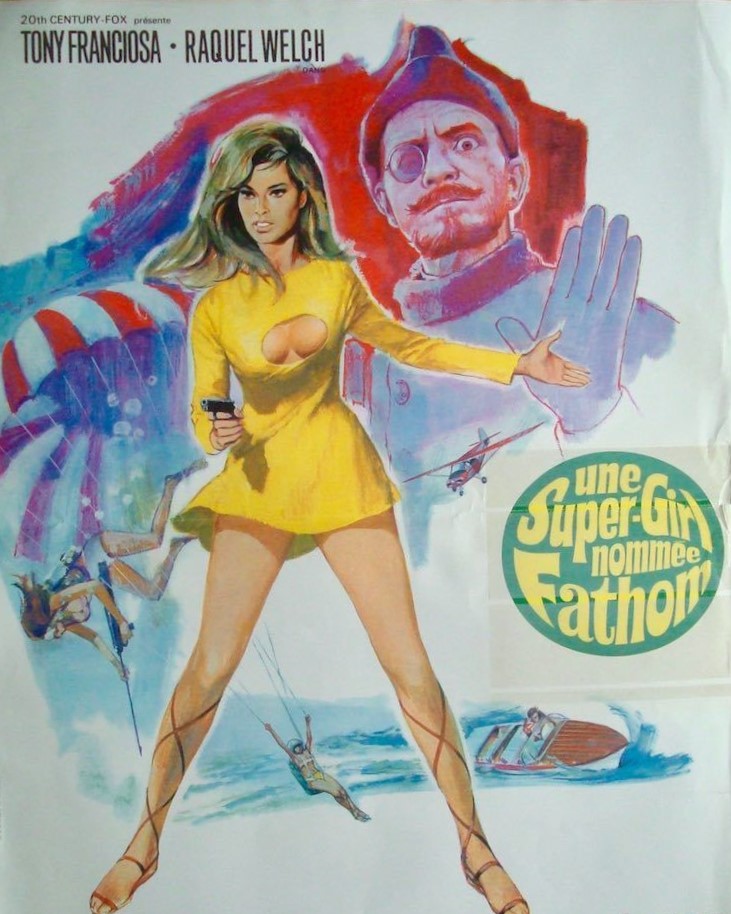
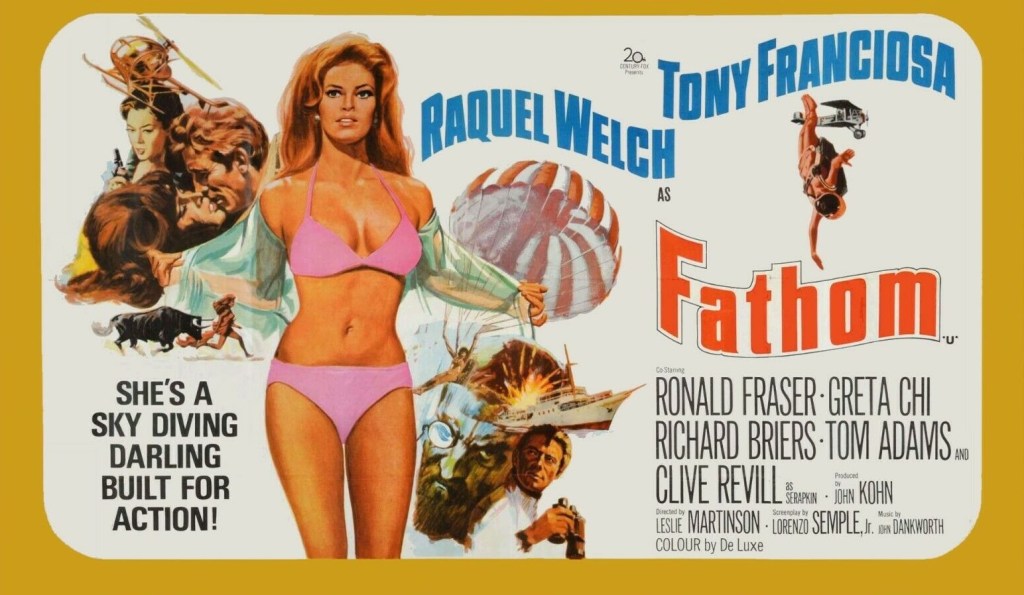
Fathom (1967) ***

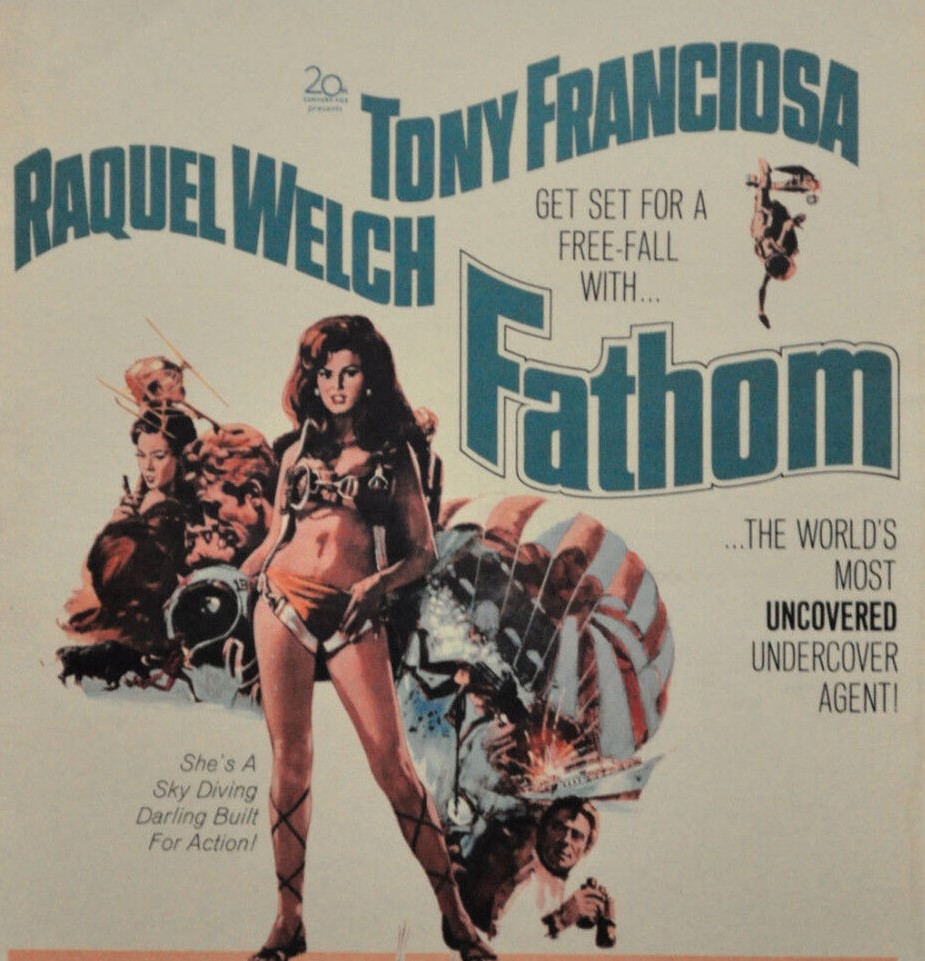
If audiences rallied to the sight of Raquel Welch wearing nothing more than a fur bikini for the entirety of One Million Years B.C. (1966) and a skin-tight suit in Fantastic Voyage (1966)  Twentieth Century Fox must have reasoned they would surely return in droves were the star to spend most of Fathom in a succession of brightly-colored bikinis.

Given such a premise who would care that a sky-diving expert was named after a nautical measurement? Or that Fathom (Raquel Welch) came nowhere near the height indicated by her name? Or that  the character as described in the source material (a novel by Scottish screenwriter Larry Forester) had a distinctly harder edge; murder, sex and drugs among her proclivities.

With Our Man Flint (1966), the studio had successfully gatecrashed the burgeoning spy genre and spotted a gap in the market for a female of the species, hoping to turn Modesty Blaise (1966) starring Monica Vitti and Fathom into money-spinning series. The Fathom project was handed to Batman, The Movie (1966) co-conspirators, director Leslie H. Martinson and screenwriter Lorenzo Semple Jr. (Flash Gordon, 1980).

Female independence was hard-won in the 1960s and there were few jobs where a woman was automatically at the top of the tree. Burglary was one option for the independent entrepreneur (see The Golden Claws of the Cat Girl) and sport was another.

Welch plays an innocent bystander recruited for her top-notch sky-diving skills (her aptitude demonstrated in the opening sequences) to help Colonel Campbell (Ronald Fraser) of British intelligence recover the “Fire Dragon,” a trigger that could explode a nuclear bomb. Her sky-diving skills are required to land in the courtyard of playboy Peter Merriwether (Anthony Franciosa).

That turns out to be baloney, of course, a MacGuffin to point her in the direction of a valuable Chinese heirloom. And then it’s case of double-cross, triple-cross and whatever cross comes next.   

There’s an intriguing mystery at the heart of this picture and a couple of top-class hair-raising moments. In one she is trapped in a bull ring and stunt double Donna Garrett had a few very definite close calls trying to avoid the maddened beast. In another she is stalked at sea by a circling motor boat while being peppered with harpoons. There is also an airplane duel and a ton of great aerial work. A couple of comic sequences are well wrung – Campbell pins his business card to one of the prongs of a pitchfork being brandished with menace by Fathom  while Peter delivers a classic line: “The only game I ever lost was spin the bottle and that was on purpose.”

You could probably determine something about national character from the color of costume different countries chose to show Raquel Welch in.

The biggest problem is that the film veers too far away from the source material which posited the heroine as a much tougher character, one who can despatch bad guys with aplomb. Instead, Fathom is presented almost as an innocent, bundled from one situation to another, never taking charge until the very end. Minus karate kicks or a decent left hook, she is left to evade her predators by less dramatic means. She has a decent line in repartee and by no means lets the show down. However, the idea, no matter how satisfactory to fans of the actress, that Fathom has to swap bikinis every few minutes or failing that don some other curve-clinging item, gets in the way of the story – and her character. Into the eccentric mix also come a millionaire (Clive Revill) and a bartender (Tom Adams).

There’s no doubt Welch had single-handedly revived the relatively harmless pin-up business (not for her overt nudity of the Playboy/Penthouse variety) and had a massive following in Europe where she often plied her trade (the Italian-made Shoot Loud, Louder…I Don’t Understand in 1966 and the British Bedazzled in 1967) but she was clearly desperate for more meaty roles. Those finally came her way with Bandolero (1968) and 100 Rifles (1969) and Fathom feels like a lost opportunity to provide her with that harder edge. 

She’s not helped by the odd tone. As I mentioned she gets into plenty of scrapes and proves her mettle with her diving skills. In the hands of a better director and with a few tweaks here and there it could have been a whole lot better and perhaps launched a spy series instead of languishing at the foot of the studio’s box office charts for that year.  

Anthony Franciosa (Rio Conchos, 1964) , still a rising star after a decade in the business, who receives top billing, doesn’t appear for the first twenty minutes. And then he behaves like a walking advert for dentistry, as though his teeth can challenge Welch’s curves. And some of the supporting cast look like they’ve signed up for a completely different movie. Richard Briers (A Home of Your Own, 1965) – Ronald Fraser’s intelligence sidekick – looks like a goggle-eyed fan next to Ms Welch while Clive Revill (The Double Man, 1967) thinks it’s a joke to play a Russian as a joke. Ronald Fraser (Sebastian, 1968) provides decent support.

But it is certainly entertaining enough and you are unlikely to get bored.

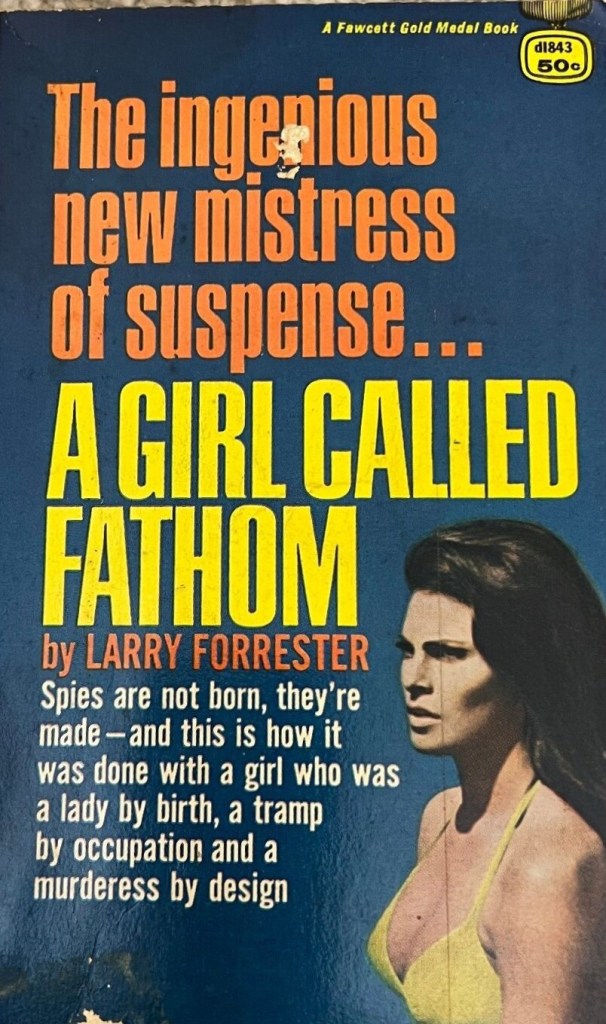
Book into Film: A Girl Called Fathom by Larry Forrester (1967)

The blurb gives the game away. The British paperback published by Pan went: “She was blonde. She was beautiful, she was six foot tall. She’d killed the man who had dragged her to the lowest depths of addiction and lust.” The American Fawcett Gold Medal paperback was more succinct: “lady by birth, tramp by occupation and murderess by design.”

If any of that rings a bell, it was not from the film Fathom (1967) starring Raquel Welch which chose to ignore her background and her venomous skillset. The novel opens with the heroine killing a man in cold blood. He had promised her a film career but turned her into a call girl and heroin addict. Her father, now dead, was in the British secret service.  Once she has committed her first murder, she is immediately kidnapped by a secret organization (C.E.L.T.S. – Counter Espionage Long-Term Security) and trained to become an even more ruthless government-sanctioned killing machine.

Larry Forrester was a Scottish television scriptwriter who had worked on a stack of British series such as Whirligig (1953), Ivanhoe (1958) and No Hiding Place (1960-1964) before publishing his first novel A Girl Called Fathom. His sole screenplay was Tora! Tora! Tora! (1970) after which he concentrated on U.S. television including episodes of Fantasy Island (1980-1983) and Hart to Hart (1983-1984).   

A Girl Called Fathom is split into two. Comprising roughly two-fifths of the book, the first section concentrates on her brutal training and on getting her off drugs. There’s a fair amount of sexual intrigue not to mention sex. But also a lover’s betrayal.  For the final part of her training she is abandoned in the middle of nowhere in scorching heat and barely makes it home. “She had passed over a great divide. She was empty, hard – dehumanized. Alone. She would always be alone.” And then she is forced to kill again.

As was common with this kind of book in the 1960s, it was fast-moving and globe-trotting with plenty of realistic detail to offset the preposterous plot. For the remainder of the book, which shifts location to Europe, Fathom is up against an organization called W.A.R. (World of Asian Revolution) which aims to destabilize the existing world order. Her arch enemy is an American-born Soviet agent (and whip and knife expert) Jo Soon (who turns up in the film Fathom in slightly different form as Jo-May). Fathom’s team must protect French elder statesman Paul-Auguste Valmier whose playboy son Damon (who fantasizes about burning people alive), a friend from her past, is her main contact.

The book is peopled by interesting and occasionally outrageous characters – for example Tin (shades of Iron Man), who has hardly a human bone left in his body; the far-from-harmless Aunt Elspeth; and a sadistic colleague who loves her but dare not let his emotions out lest he loose on her his love of pain. The central plot is driven by a mass of twists and turns, heroine endangerment, fights with knife and gun and fist, traitors (naturally) and the clever idea of killing off the leaders of the free world with a bomb hidden in the coffin of a man worthy of a state funeral being held in Paris.

At the end she is counting the human cost of victory and sees herself as one of the walking wounded, a reject, driven from the herd. The film was apparently based on an unpublished sequel so it’s conceivable that the plot concerning the Chinese heirloom was pulled from that in its entirety. But even so the film’s heroine was neutered, not a patch on the ruthless killer with a sordid past outlined in A Girl Called Fathom.

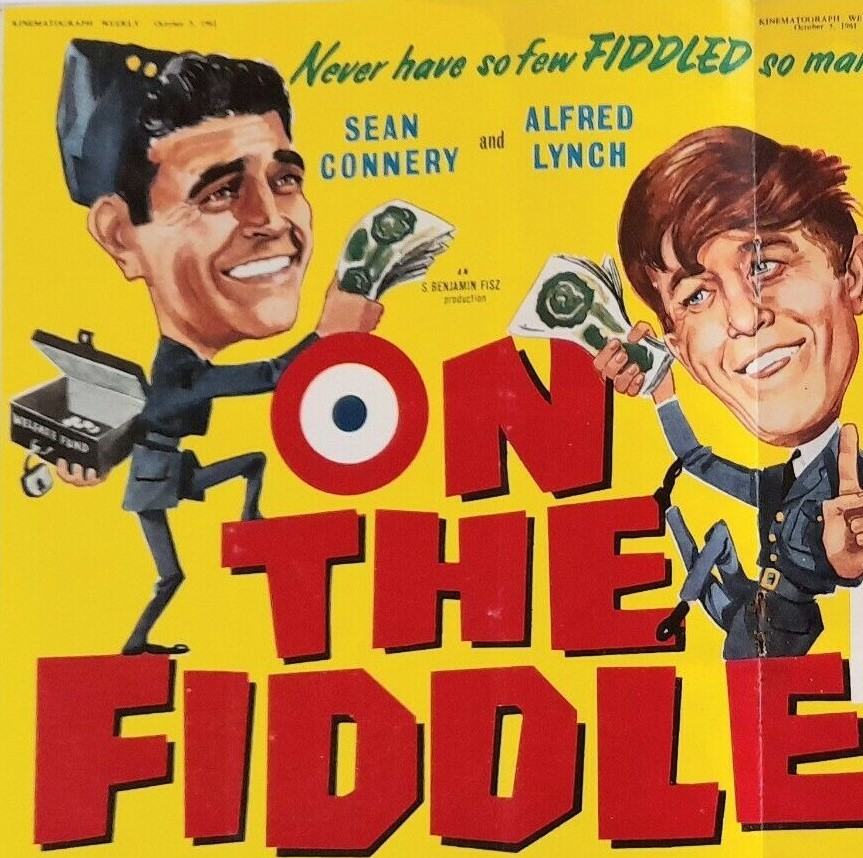
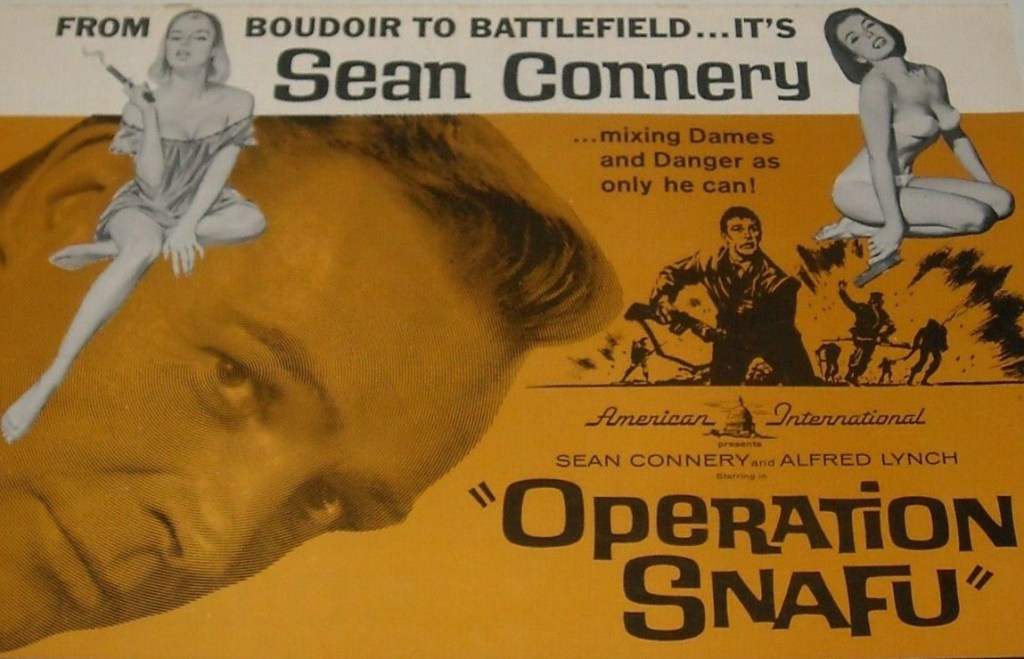
On the Fiddle / Operation Snafu (1961) ***

Unassuming but undeniably charming British World War Two comedy denied U.S. release until four years later when a savvy distributor jumped on the James Bond bandwagon. Primarily of interest these days for the opportunity to see a pre-Bond Sean Connery (Dr No, 1962) in action its merit chiefly lies in ploughing the same furrow, though with a great deal less pomposity and self-consciousness, as the later The Americanization of Emily (1964), of the coward backing into heroism.

Horace Pope (Alfred Lynch) is a scam merchant who only dodges prison by enlisting. Assigned to the RAF he teams up with Pedlar Pascoe (Sean Connery) and they embark on a series of schemes designed to keep them as far away from the front line as possible. It’s hardly an equal partnership, Pope dreams up the fiddles while Pascoe just falls in with them. It’s not dumb and dumber but a collaboration that goes no further back in the annals of movies than brain and brawn.

Needless to say, the movie lacks the the damsels in bikinis which were a prerequisite of the Bond pictures. Sean Connery takes top billing Stateside where he was originally behind Lynch.

It’s certainly a cynical number, reflecting the boredom experienced by many of the Armed Forces backroom staff, the administrators whose inefficiency turns them into easy dupes, and the determination of soldiers to take advantage of every opportunity to bend the rules. It takes the unusual position of presenting the ordinary soldier as smart and every officer as a numbskull, an approach that would only have been possible 15 years after the war ended and in marked contrast to the determined heroism of other British war films – such intrepid stiff-upper-lip behavior a hallmark of the British version of the genre.

First stop is to run an operation issuing leave passes – for a price – and the sheer effrontery exhibited by Pope is a joy to behold. Next up is selling stolen meat on the black market.

While Pedlar is the wide-eyed camp follower, and more likely to forever sit on the sidelines, cheerful but shy, and only a few pratfalls away from being a bumbling idiot, they do make a good team. Being sent to France is more of a heaven-sent opportunity to increase their bankrolls than a hazardous wartime mission as Pope sells rations to the French. Eventually, of course, their various scams are rumbled and they are forced into battle.

The only thing better than one pre-Bond Connery picture is two.

The movie switches a bit more deftly into serious mode than the aforementioned The Americanization of Emily mostly because these are actual soldiers trained to be soldiers rather than an officer who landed a cushy number and whose main effort is to avoid combat. War is presented as horrific rather than comedy and it must have been the same experience for an ordinary soldier at the time, after months of inactivity suddenly thrust into the cauldron.

The picture moves at a brisk pace and is continually amusing if not particularly laugh-out-loud. You’ve probably seen most of the set-ups before but they are reinvented with an appealing freshness and briskness  As a bonus there’s reams of British character actors and comedians – plus token American Alan King (who would appear in Connery starrer The Anderson Tapes, 1971) – along the way. The term “snafu” in case you’re interested, has a similar meaning to the “fubar” of Saving Private Ryan (1998).

Alfred Lynch (The Hill, 1965) doesn’t milk the Cockney patter overmuch and he’s got a greater international screen appeal than the likes of the more English Sid James (Carry On films) or Norman Wisdom. Think a shiftier Sgt Bilko, if the Phil Silvers creation could be any more untrustworthy.

Connery’s performance is well worth a watch as a prelude to what was to come once his roles were tailor-made. He is an effortless scene-stealer, gifted in expressing emotion through his eyes, and although verbally Lynch dominates it’s difficult to take your eyes off Connery.

The roll-call of character actors includes Cecil Parker (A Study in Terror, 1965), Stanley Holloway (My Fair Lady, 1964), John Le Mesurier (The Moon-Spinners, 1964), Graham Stark (The Wrong Box, 1966) and Victor Maddern (The Lost Continent, 1968).

Cyril Frankel (The Trygon Factor, 1966) comfortably cobbles this together from a screenplay by Harold Buchman (The Lawyer, 1970, and who had ironically enough penned the picture Snafu in 1945) based on the novel Stop at a Winner by R.F. Delderfield.

When the box office supremacy of the Bond pictures was underscored by the reissue of the Dr No/From Russia with Love double bill in 1965, distributors, as had been their wont, racked the vaults for anything featuring Connery that could be re-sold to a willing public.    

While there is a readily available DVD, this turns up on a regular basis, in Britain at least, on television.

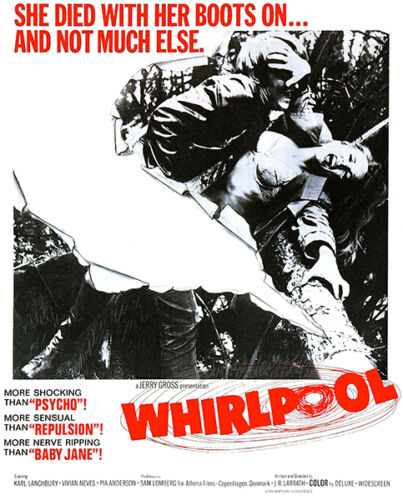
She Died With Her Boots On / Whirlpool / Perversion Flash (1969) ***

Sexual adventuress takes trip to the country with disastrous results. Best described as an early British venture in the giallo mold it lacks some of the style of that genre but is notable for the debut of Spanish cult director Jose Ramon Larraz (Vampyres, 1974). Perhaps as interesting is that it details a nascent killer warming to his task and climaxes in a nihilistic ending. Scoring so high on the sex/nudity quotient in the U.S., it was considered an out-and-out exploitationer.

Wealthy older woman Sarah (Pia Andersson) brings home model Tulia (Vivian Neves) for her protégé Theo (Karl Lanchbury), a budding photographer.  Sarah’s proclivities are apparent from the start, preferring young women though young men will also suffice, a switch in the normal power play of the era (and now for that matter) of rich old men chasing younger women.

Tulia is no innocent, lured or straying into the big dark house, and she’s game for anything, happily participating in a game of strip poker that ends in sex with Theo. However (and striking a contemporary note), he is unable to perform – for reasons that might be similar linked to young people today who suffer from the same condition due to over-exposure to porn – and in Theo’s case because he prefers watching.

Quite how far he is willing to go to achieve his kicks is shown in a scene where he drives Tulia to the woods where she is almost raped by his friend Tom so that Theo can photograph the act. Quite how far Tulia is willing to go is indicated by the fact that, while upset at this incident, she doesn’t run a mile and instead continues to enjoy games of seduction, this time with Sarah, with Theo at first limiting his participating to recording the action but later taking part in a menage a trois.

Meanwhile, a Scotland Yard Detective Inspector (Barry Craine) interrogates businessman Mr. Field (Edwin Brown), sugar daddy to missing Irishwoman Rhonda (Johanna Heger), and Field takes it upon himself to pay Theo a visit. Quite how he knows of Theo’s involvement with Rhonda is unclear but he doesn’t accept the explanation that the girl has gone home and hangs around to do a bit of spying. Not such a good idea, because he pays the penalty.

Although it’s a pleasant detached cottage and far from an old dark house, Tulia takes it upon herself to take a look at Theo’s studio where she finds various items of female clothing and photos of an unsavoury nature. A flashback reveals the death of Rhonda, seduced by Tom, then, following the arrival of Theo and his trusty camera, raped by a tramp. But it’s not Theo who kills her. It’s Tom, and largely by accident.

So what’s being set up really is how far beyond his normal games Theo will go, with Tulia providing the test case.

A chunk of the tension comes from having no idea what’s going on beyond Sarah indulging Theo. She appears ignorant of the depth of his perversion. And with Tulia being so complicit initially in the sex it appears to be going down a different route to the slasher pictures like Scream and more in keeping with the giallo which had yet to get into its stride. Tulia is a modern girl for the times, certainly not sexually repressed, which was refreshing, and being a model comfortable with her body. But she would not have been expecting something like this.

Karl Lanchbury (What’s Good for the Goose, 1969) looked like he was perfecting the creepy persona that would carry him through a few more Larraz pictures. Vivian Neves was a model, famous two years later for featuring in the first nude advertisement in The Times, but also a glamour model with pictorials in Penthouse and The Sun, and known as “The Body” a quarter of a century before that title was appropriated by Elle Macpherson, and later set up her own modelling agency. Pia Andersson only made this one picture.

Given he was dealing with so much inexperience and was himself a debutant, Larraz does a pretty good job. He would go on to make another 25 films mostly in the exploitation vein.  

I came across this on YouTube while looking for the Otto Preminger film noir Whirlpool (1950). The version I saw is taken from a very ropey VHS with time codes but there’s a better print on the channel under the title of Perversion Flash.

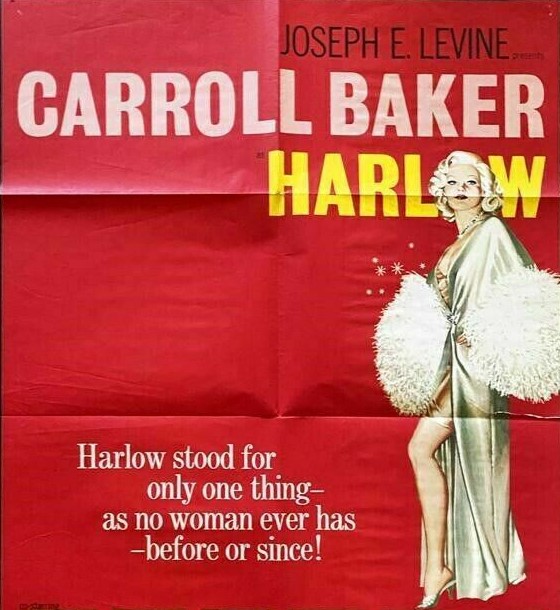
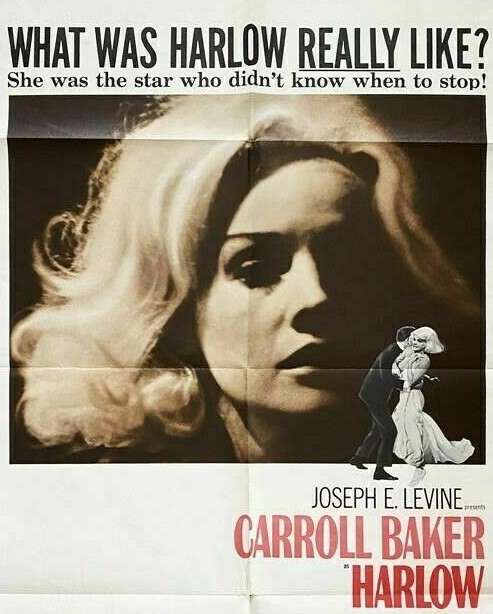
Harlow (1965) ***

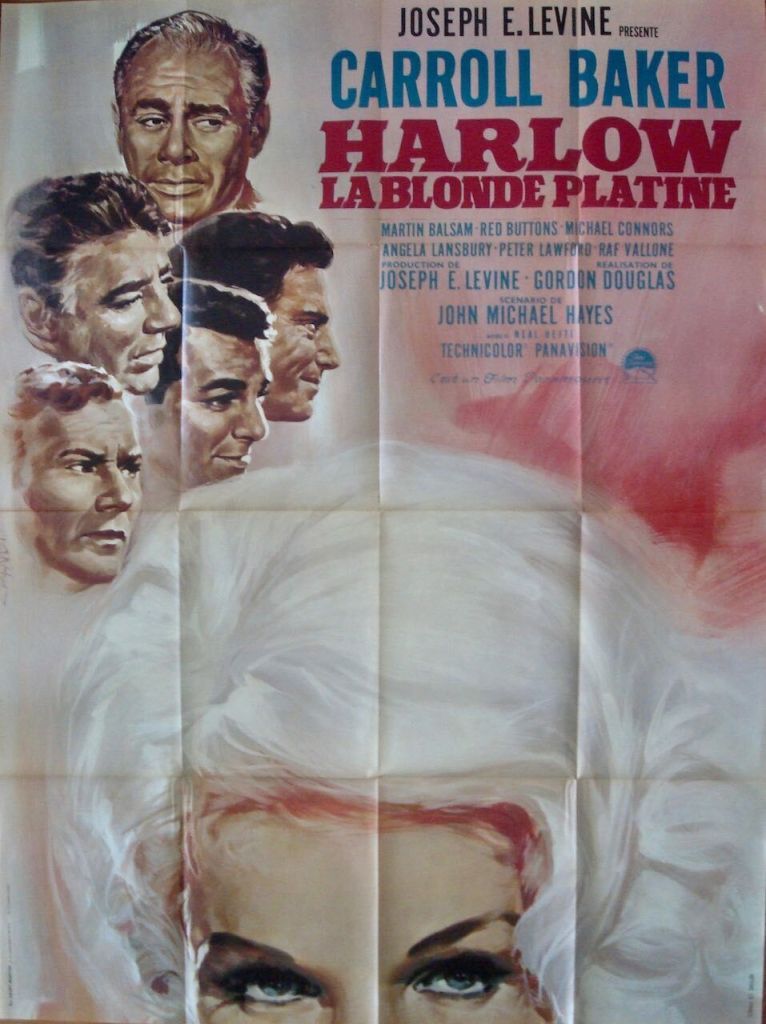
Harlow presents such a convincing picture of Hollywood abuse that I was astonished to discover that it was not entirely truthful where the title character was concerned.

Jean Harlow was a hugely popular star in the 1930s before her untimely death at the age of 36. This film depicts her as a virgin (not true) who turns neurotic (not true) after her impotent husband commits suicide (debatable) on their wedding night (not true) leading to her go off the rails and die from pneumonia (not true). But in terms of the Hollywood system a great deal rings true and if the Me Too movement had existed in the late 1920s the finger would be pointed at a huge number of men.

The film is at its best when dissecting the movie business. A five-minute opening sequence demonstrates its “factory” aspect as extras and bit players clock in, are given parts and shuffle through great barns to be clothed and made up, often to be discarded at the end of the process.

No sooner has this version of Jean Harlow (Carroll Baker) been given a small part than she encounters the casting couch, operated by a lowly assistant director, who bluntly offers five days’ work instead of one if she submits to his advances. When she turns him down, work is hard to come by and she resorts to stealing lunch before rescued by agent Arthur Landau (Red Buttons). After tiny parts that mostly consist of her losing her clothing, receiving pies or eggs in the face and displaying her wares in bathtubs, she geta a big break only for that producer to demand his pound of flesh – “I’ve already bought and paid for you.” Here she has “the body of a woman and the emotions of a child” and ends up choosing the wrong suitor which leads to a calamitous outcome.

However, the pressures of stardom are well-presented: she is the breadwinner for her unemployed mother Jean (Angela Lansbury) and lazy stepfather Marino (Raf Vallone) and soon box office dynamite for studio chief Everett (Martin Balsam) who sees in her the opportunity to sell good clean sex. The negotiations/bribery/blackmail involved in fixing salaries are also explored.

But the film earns negative points by mixing the real and the fictional. The agent and husband Paul Bern (Peter Lawford) existed but most of the others are invented or amalgamations of different people. MGM is represented as “Majestic” and among her films there is no Red Dust (1932) or China Seas (1935) but lurid inventions like Sin City

Director Gordon Douglas was a versatile veteran, with over 90 films to his credit, from comedies Saps at Sea (1940) and Call Me Bwana (1963) to westerns The Iron Mistress (1952) and Rio Conchos (1964) and musicals Follow That Dream (1962) and dramas The Sins of Rachel Cade (1961) and Sylvia (1965) which also starred Baker. The opening scene apart, which is a seamless construction, he is adept at this kind of helter-skelter drama. John Michael Hayes (Rear Window, 1954) has produced a punchy script based on the book by Arthur Landau and Irving Shulman.

In the title role Carroll Baker (Sylvia) has probably never been better, comedian Red Buttons (Stagecoach, 1966) excellent in a straight role while the smarmy Raf Vallone (Nevada Smith, 1966) is the stand-out among an excellent supporting cast that also includes Angela Lansbury (In the Cool of the Day, 1963), Peter Lawford (Sylvia), Leslie Nielsen (Beau Geste, 1966), Martin Balsam (Seven Days in May, 1964) and Mike Connors (Stagecoach, 1966).

Except that virtually none of the movie is true, I would have given it four stars for its portrayal of Hollywood but I have come to expect that biopics, while moving facts around for dramatic purposes, are required to be good more faithful to their subjects than this. 

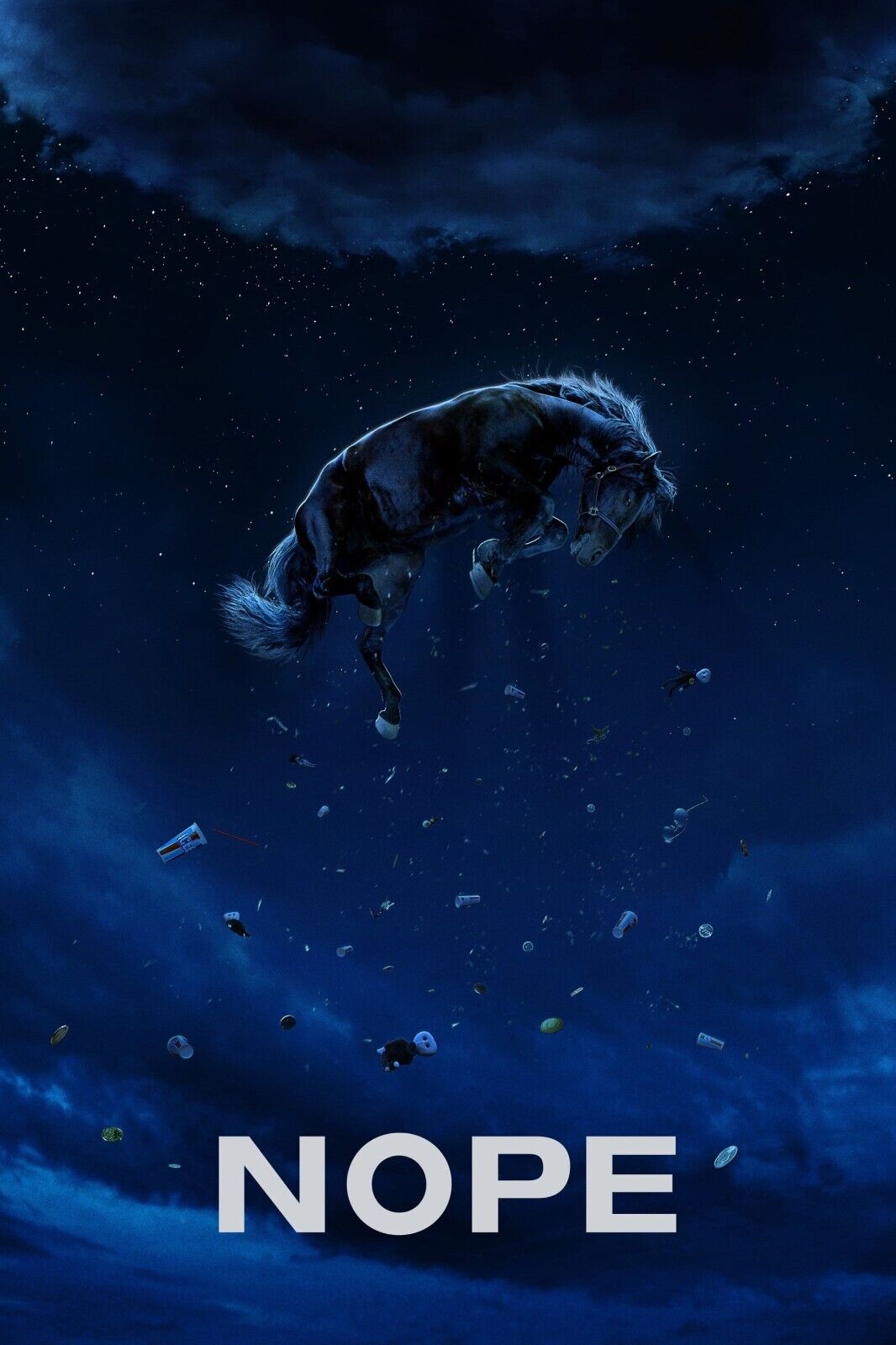
Nope (2022) **** – Seen at the Cinema

So I’m going to start with a SPOILER ALERT. To give you a moment to digest that, I’m going to explain that if I included half points in my ratings system, this would be a three-and-a-half rather than a four. But it’s certainly better than a three, so it automatically becomes a four. Okay, now that we’ve got that out of the way let’s take the plunge.

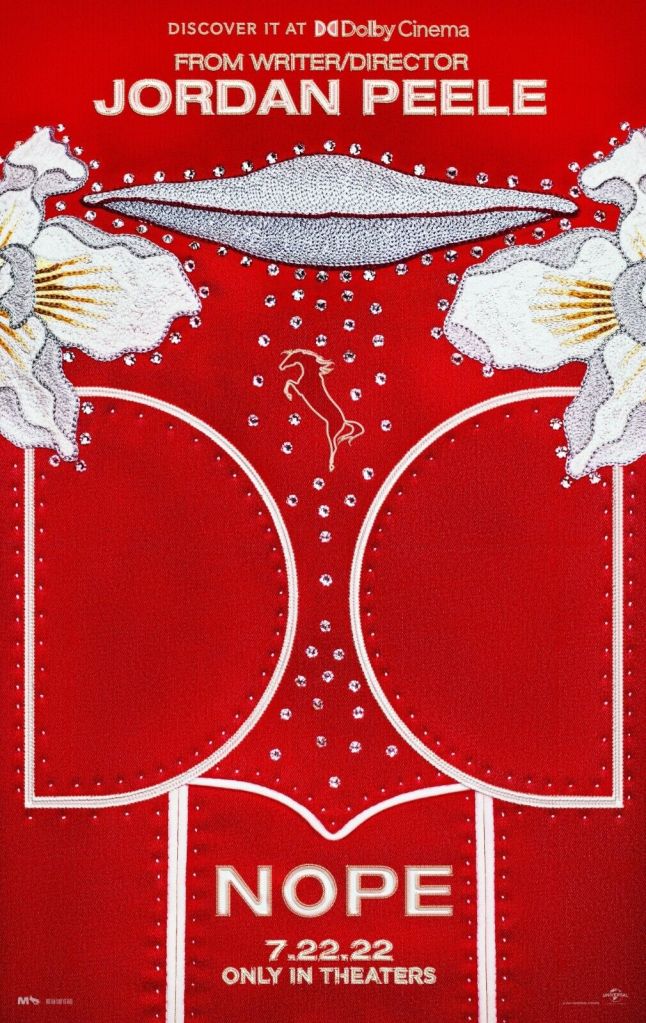
After a pretty good build-up, invoking elements of Close Encounters of the Third Kind (1977), Alien (1979) and, yes, Predator (1987), the mysterious spaceship goes from being a cloud that doesn’t move for six months to a flying saucer (yawn!) to a giant stetson with a hole in the middle to the kind of piratical sail that might have been shredded in a storm. And for an alien that’s flown a gazillion miles to get to this spot of wilderness, it’s pretty dumb, falling for the old trick of swallowing a balloon. Yep, didn’t make much sense to me neither.

But that’s most of the downside because it’s anchored by an absolutely outstanding performance from Daniel Kaluuya who is not far off being this generation’s Tom Hanks.

And there’s a lot of pretty neat stuff, a couple of sizzlers of a red herring, some clever moves at the end by our beleaguered team as they turn from hunted to hunters. And there a host of stunning images, blood drenching a house, a pig on a roof, the deflation of inflatable stick figures, a guy wrapping himself in barbed wire, a boy trapped under a table by a chimp terrorizing a television studio, a shoe that stands up on its end, a horse statue rammed through a windscreen, a bug on a camera that might just be the alien and innovative sound effects.

O.J. Haywood (Daniel Kaluuya) runs a ranch specializing in supplying horses for the movies. But it’s on its last legs after the mysterious death of his father (Keith David). He’s not helped by his sister Emerald  (Keke Palmer), as wacky as he is sombre. Amateur Ufologist Angel (Brandon Perea) invites himself to the party while sometime cinematic genius Antlers (Michael Wincott) is a late recruit, but in the end a bit too close to the nutters atop skyscrapers in Independence Day (1996) desperate to welcome aliens.

It does veer too often from sci-fi to horror but instead of Spielbergian awe the characters, while intrigued by the prospect of aliens, are just as likely to be shit scared, too worried about consequence to actually come clean about what they may have witnessed. Emerald and Angel are the enthusiasts, OJ the naysayer. Turns out the sassy Emerald, prone to unearned self-importance and acting too often on whims, annoys the alien by planting in a field a statue of a horse, stolen from a Wild West tourist attraction run by Ricky Park (Steven Yeun), a one-time child television star. Turns out Ricky has the same sensitivity to the presence of the cloud as OJ but instead of leaving well alone plans to publicize its existence to help market his ailing venture.

I’m not sure where the rampaging chimpanzee fits into the equation since that incident occurred in 1998 and Ricky was the youngster hiding under the table.

But once the quartet turn their attention to attempting to lure the alien onto a camera, previous efforts ruined by the alien’s ability to knock out any electricity supply, it turns into quite a cinematic spectacle, the kind of equivalent to Apollo 13 (1995) or The Martian (2015) where survivors of catastrophe have to come up with ideas out of left field.

Adding a bit of spice surprisingly enough is some interesting comedy, OJ and Emerald rubbing each other up the wrong way, Angel complaining of being dumped by a model-turned-actress, and some deadpan one-liners.

There’s a certainly a welcome freshness in terms of the characters, all superb inventions, recognisable as only too human, some of the family dysfunction but none of the obsession of Roy Neary from Close Encounters, nor the enclosed world of the space travellers from Alien whose personalities are generally revealed only in relation to their reaction to the predator, and none of the governmental mumbo-jumbo of ID4.

As I mentioned, the acting is a huge plus. Often sci-fi characterisation is paper-thin, the director thinking, wrongly, that audiences just want to get to the monsters. Daniel Kaluuya (Get Out, 2017) is top-notch but energy-on-a-stick Keke Palmer (Alice, 2022) runs him very close. Brandon Perea (American Insurrection, 2021) and Steven Yeung (The Humans, 20201) are also excellent, investing their characters with considerable ambiguity, while veteran  character actor Michael Wincott has his first movie outing since Forsaken (2015).

I take issue with the notion that director Jordan Peele (Get Out) has fallen into the M Night Shyamalen (The Sixth Sense, 1999) trap of following an inspired debut with subsequently less inspiring pictures. This is a very bold effort for his third outing and only really let down by the fact that, in carrying out the roles of writer, producer and director, he doesn’t have anyone to rein him in when the ideas go off-piste. Trimming twenty minutes out and losing the self-consciously arty elements and adding a bit more clarity and spending a bit more on CGI and this might have been a real winner.

As it is, worth seeing but with reservations.

Seven Thieves (1960) ****

You wouldn’t figure director Henry Hathaway for a caper movie. He seemed more at home with action, whether that be war (The Desert Fox, 1951), adventure (Legend of the Lost, 1957) or western (Nevada Smith, 1966) although he was a dab hand at film noir (Kiss of Death, 1947). And before the big-budget all-star Oceans 11 entered the equation in the same year as Seven Thieves – and stole much of its thunder – the heist movie ran mostly on B-movie steam such as Rififi (1955), The Killing (1956) and Big Deal on Madonna Street (1958).

And probably judged against other glossy efforts of the 1960s like Topkapi (1964) and Gambit (1967) Seven Thieves would appear on the surface to come up a bit short. No doubt accounting for it being so under-rated. But while this is in itself a neat little thriller the kick comes in the emotional entanglements and a succession of twists at the end that sends it in my book into a higher category.

And it’s so outrageously clever that the mystery of why French-based criminal mastermind Theo Wilkins  (Edward G. Robinson) would reach out across the Atlantic Ocean to recruit former jailbird Paul Mason (Rod Steiger) to spearhead the heist of a cool four million dollars from a Monte Carlo casino is not resolved until the end, and in spectacular fashion.

Technically, there are actually only six thieves, the other is an inside man, Raymond (Alexander Scourby), who has fallen for the seductive charms of nightclub dancer Melanie (Joan Collins). Making up the rest of the septet are safe cracker Louis (Michael Dante) and muscle-cum-driver Hugo (Berry Kroeger) with Poncho (Eli Wallach) playing the key role of the pretend crippled, arrogant, irascible millionaire – and contrary to the claims of one poster he is the decoy not Melanie.

Distrust of his team makes Theo bring in Paul, who ruthlessly knocks them into shape, putting into seamless action the plan devised by Theo. Simply put, Poncho is going to act as a distraction by having a heart attack at the gambling table while Paul and Louis climb out a window along a ledge to the casino director’s flat which provides, by means of an elevator, direct access to the underground vaults. Once they’ve stolen the cash, they clamber back along the ledge and hide in the flat where, by this time, Theo, playing the role of Poncho’s personal physician, has taken him. The money will be hidden in Poncho’s wheelchair and removed to a waiting ambulance.

But Paul is a rather suspicious character and wants to know what he’s letting himself in for so in turn works out the weaknesses of his team. Melanie hides behind a façade of high birth, Pancho is too reckless, “measuring danger only in terms of profit,” Hugo prone to unnecessary violence, while Louis has omitted to mention he is terrified of heights, the ledge on which the operation depends standing on a 100ft high cliff.   

In some posters, this was promoted as Al Capone (Steiger)
vs Little Caesar (Robinson).

The plan relies on Poncho actually appearing to be dead, so dead that the casino director (Sebastian Cabot) will not hesitate, at Theo’s insistence, to shift him out of sight of the rest of the gamblers into his flat. But Complication No 1 is that Poncho doesn’t want to be dead, even if it is a ruse, skeptical of Theo’s plan to convincingly knock him out by means of a carefully measured dose of cyanide. Complication No 2 is that a night club client recognizes Melanie and casts doubt on her credentials as a lady of quality. Complication No 3 is that English physician Dr Halsey (Alan Caillou) questions whether Poncho is as dead as he seems.

But such complications are nothing compared an extraordinary range of twists that raise tension sky-high at the movie’s denouement. I challenge you to guess what these three superbly-conceived twists would be, all of them one by one turning the project on its head, and it rapidly shifts from one direction to another, ending with an unbelievable – and yet so in keeping with the premise – climax.

Attention to character detail lifts this out of the rut, whether it be Theo’s penchant for collecting seashells, Paul resplendent in a white suit, Melanie resisting the blandishments of becoming a kept woman, Raymond trying to climb out the murky depths into which the lure of Melanie has taken him, and a series of subtle relationships, some developing through the robbery, others which began long before the heist working themselves out.

The heist itself is well done, tension kept constant mostly through the failings of the crew and the suspicions of the dupes. All in all an excellent picture.

This was a critical film in the careers of most of the cast. Edward G. Robinson (The Cincinnati Kid, 1965) was handed his first top-billed role in four years. It was a deliberate change of pace for Rod Steiger (The Pawnbroker, 1964). For Eli Wallach, best known at the time for stage work, it was the first of three films that year that would launch him into the higher ranks of top supporting stars; it was followed by The Magnificent Seven and The Misfits. After being leading lady to the likes of Gregory Peck and Richard Burton, this spelled the end of Twentieth Century Fox’s belief in Joan Collins’ star qualities while for Michael Dante (The Naked Kiss, 1964) it was a step up.

Wallach and Dante could be accused of over-acting but Robinson, Steiger and Collins all act against type with considerable effect. Hathaway does a superb job working from a script by Sydney Boehm (Rough Night in Jericho, 1967) based on the Max Catto bestseller.

Ford vs. Ferrari / Le Mans ’66 (2019) *****

So good that immediately on finishing a screening I pressed the re-watch button. But then this proved such compulsive viewing on original release that I saw it at the cinema four times in as many weeks. High-octane pedal-to-the-metal drama that easily takes the chequered flag from such illustrious predecessors as Grand Prix (1966), Le Mans (1971) and Rush (2103).

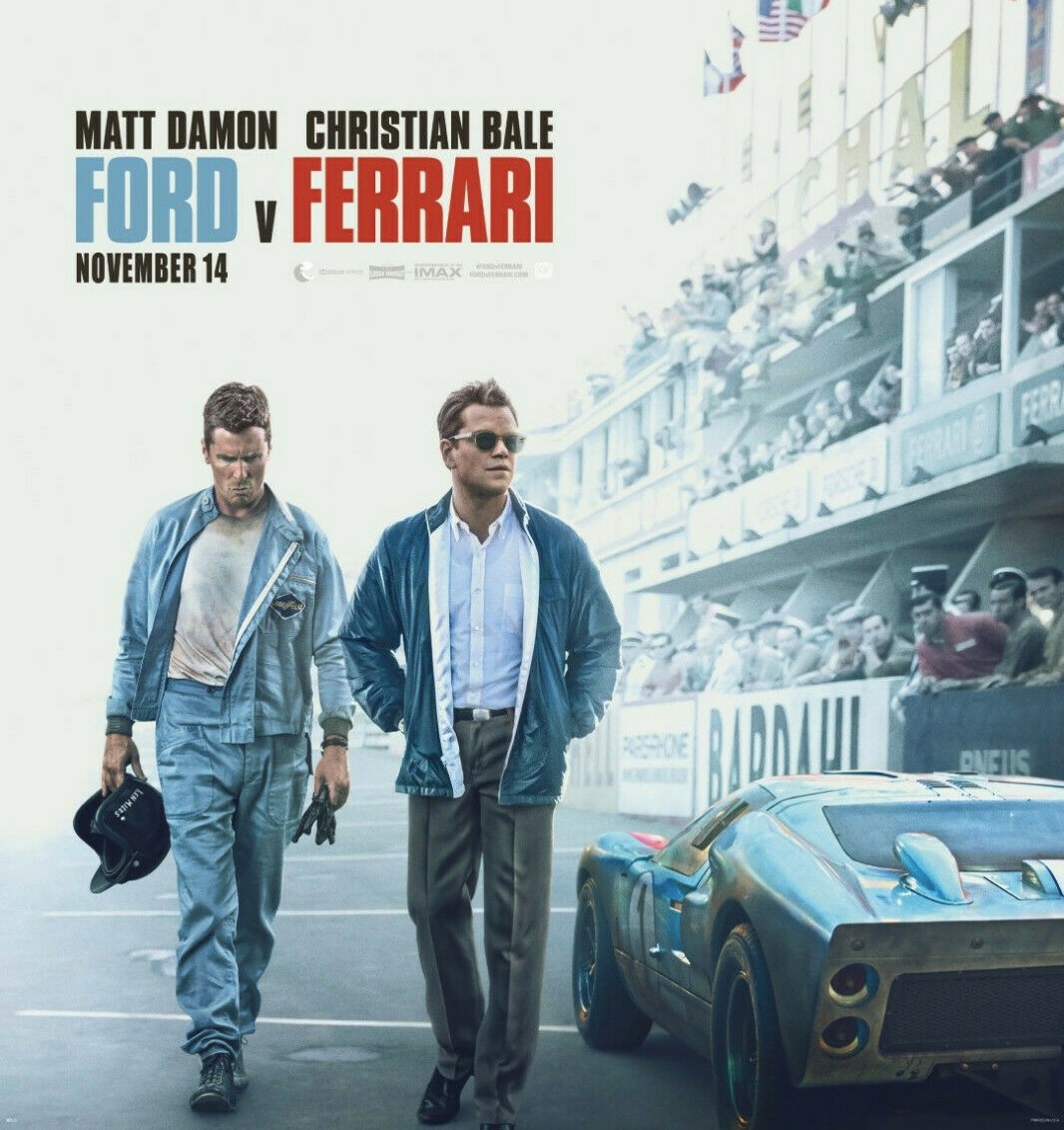
Astonishing racing footage is matched by a gripping narrative of ambition and revenge played out at the highest level by a quartet of terrific performances. Henry Ford II (Tracy Letts), humiliated by competitors in the domestic market and thwarted by his plan to take over Ferrari, decides to steal the Italian giant’s crown at Le Mans, the 24-hour race considered then the pinnacle of motor racing achievement rather than Grand Prix.

He hires Carroll Shelby (Matt Damon), the only American winner of Le Mans, who now runs a sports racing construction business and in turn he recruits maverick English driver Ken Miles (Christian Bale). Putting a spanner in the works at every possibly opportunity is oily Ford top executive Leo Beebe (Josh Lucas) who constantly shifts the goalposts because he’s just mean that way or to win commercial advantage. Driven as much by personality conflict as anything else,  the narrative pivots on Shelby shouldering the job of placating both big business and his maniac driver while outmanoeuvring all in sight to achieve his goals.

Jargon overload should be the kiss of death but that bold decision to involve the viewer in the minor and major technicalities of motor sport – proven and unproven techniques such as applying strips of paper to a car or battering the car boot with a hammer to increase its capacity and so comply with an arcane rule – pays off big time so that the picture can actually cover in greater depth the reality of running a racing team. Winning can be a matter of millimetres, tiny alterations amounting to massive differences during a race.

And it helps the narrative thrust that Le Mans is a single race rather Grand Prix or Nascar where over a season inevitably attention and excitement will sag. Other races are easily accommodated because they are vital to the end result, either in personal or technical terms. This is the ultimate battle against the odds, not just novice Americans taking on the big boys  of Italy, but the ageing driver needing to prove himself again and again and the constructor sometimes giving in, sometimes not, to big business.

It’s pretty difficult to retain audience involvement with the competitors masked up but (as Top Gun: Maverick would later prove) little works better than having your half-hidden driver (or pilot) reveal his emotions by talking to the machine, providing a commentary on the action, though Miles’s favoured expression of “giddy-up” may not qualify as a technical term.

Interestingly enough, the principals are all indifferent, not to say occasionally shady, businessmen, Henry Ford II laboring in the shadow of his father, the repair shop run by Miles shut down by the taxman, Shelby selling the same car over and over to multiple buyers. But this is a richness of character rarely seen in action films, flaws usually restricted to sexual or alcoholic peccadilloes. Nor is there any sign of the old trope of wife/lover unable to watch drivers race, and marriages/relationships buckling under that pressure. Instead Miles’ wife Mollie (Catriona Balfe) rejoices in his skills while Henry Ford II clearly has a string of lovers.

The contrast between the romance and the reality of speed is no better expressed than when Ford is taken for a spin by Shelby or between the devil-may-care and the safe than when Shelby takes control of an aeroplane.

So many internal obstacles, Beebe’s manoeuvrings for a start, remain to be overcome never mind complications on the track that it is pretty much one twist after another with one awful ironic twist left for the climax of the race.

Christian Bale (Thor: Love and Thunder, 2022)  picked up most of the acting plaudits, nominated for a Golden Globe, but I thought Matt Damon, Tracy Letts and Josh Lucas ran him close. Damon (The Last Duel, 2021) delivers a restrained performance that occasionally cuts loose to reveal the carefully camouflaged daredevil. Letts (Lady Bird, 2017), better known to me as a playwright, brings the right mixture of arrogance and power. One-time matinee idol Josh Lucas (A Beautiful Mind, 2001) eases back on the shit-eating grin and is one of the most self-righteous business bad guys you could encounter.

Sterling turns also from Jon Bernthal (Those Who Wish Me Dead, 2021) as Lee Iacocca (who later wrote a book about brilliant he was, although there’s little evidence of that here); Catriona Balfe (Belfast, 2021) and Noah Jupe (A Quiet Place, 2018) as her son. Special mentions for Ray Mackinnon (News of the World, 2020) as Shelby’s number two and Remo Girone (The Right to Happiness, 2021) as Enzo Ferrari.

Distinguished career as director James Mangold has enjoyed  – from Walk the Line (2005) and 3.10 to Yuma (2007) to Logan (2007) – this has to be the peak, brilliantly bringing the human side into a movie that could easily have concentrated on the machines. He drew on an equally brilliant screenplay by Jez Butterworth (Spectre, 2015), John-Henry Butterworth (Edge of Tomorrow, 2014) and Jason Keller (Escape Plan, 2013).

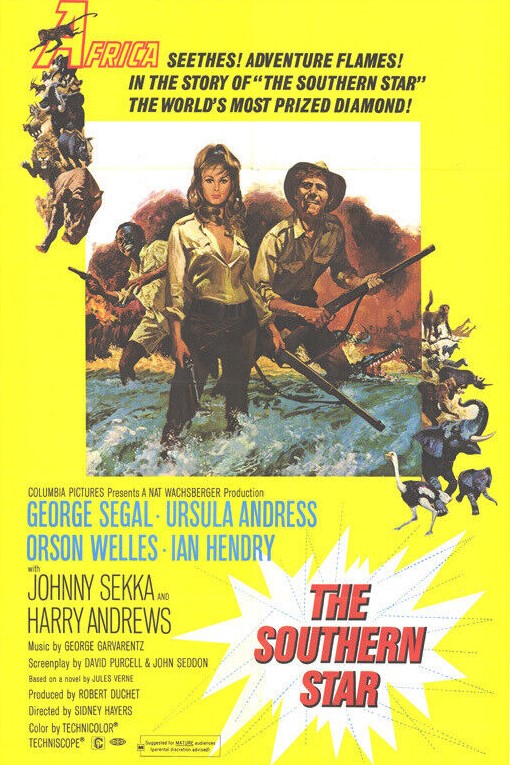
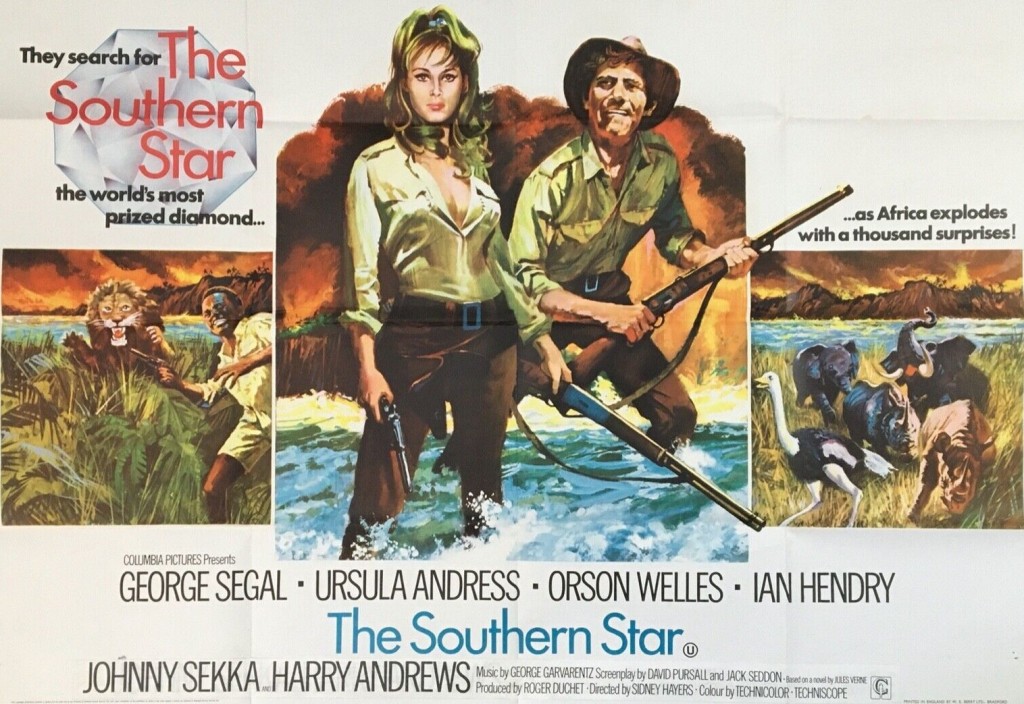
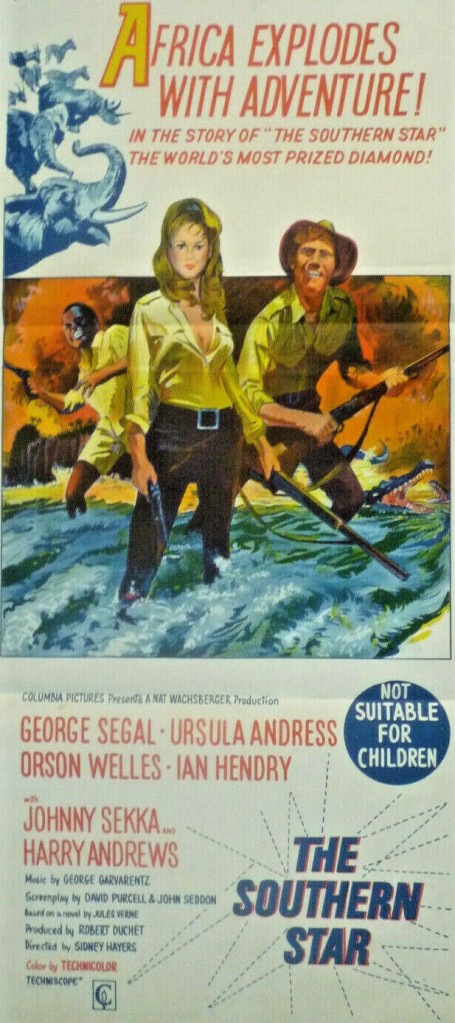
The Southern Star (1969) ***

There’s a surprisingly good movie here once you strip out the cliché jungle stuff and the racist elements. The diamond of the title is actually a MacGuffin, just enough to get you started on two parallel tales of revenge.

Dan (George Segal) is a mining engineer-cum-adventurer and Erica (Ursula Andress), daughter of mine owner Kramer (Harry Andrews), as far from the traditional jungle heroine (except in one regard) as you could get. She saves him from crocodiles, rescues him from jail and quicksand, swims across a hippo-infested river and is a better shot than him (or anybody for that matter) with a rifle. This is female empowerment with a vengeance.

Suspected of stealing the diamond, he is hunted by ranger Karl (Ian Hendry), Dan’s love rival, who intends to win Erica back using the simple expedient of killing the thief. Lying in wait is all-purpose rogue Plankett (Orson Welles) who seeks revenge on Karl. The second unit had a whale of a time filming anything that moved –  lions, leopards, zebras, giraffes, buffaloes, monkeys, antelopes, the aforementioned hippos and crocodiles and what looked like a cobra – and at one point everything does move in coordinated fashion if you can call a stampede coordinated.

But the main focus is an Erica who constantly confounds Dan’s sexist expectations. Docility is her disguise. Anytime she appears to be doing what she’s told you can be sure she’s planning the opposite. While Dan does have his own specific set of jungle skills, he often looks a fool. But they do make a good screen partnership and their dialogue is lively.

Hollywood spent millions of dollars trying to create screen chemistry between various stars and although it seemed to work very well in the industry’s golden age with Clark Gable and any number of MGM female stars, Bogart/Bacall and Tracy/Hepburn and I guess you could chuck John Wayne-Maureen O’Hara into that particular mix, the formula seemed to have gone awry by the 1960s discounting the Doris Day/Rock Hudson combo, big budget romances like El Cid (1961) and Doctor Zhivago (1965) and an occasional home run with whomever Cary Grant was romancing on screen. So it was usually hit-or-miss whether any sparks flew between the stars.

Andress had certainly been a European femme fatale par excellence as seen in Dr No (1962) and The Blue Max (1966), but it was certainly not a given that she would more than hold her own for an entire picture. Segal was nobody’s idea of a romantic leading man although the notion had been given a tryout in The Girl Who Couldn’t Say No (1968) with Virna Lisi. But here the whole enterprise works in an It Happened One Night vein with the supposedly superior male recognizing that perhaps his companion was more than a match.

Harry Andrews and Orson Welles both try to steal the picture, with polar opposite characterizations, Andrews loud and menacing, Welles soft and menacing. You can tell Scottish director Sidney Hayers (The Trap, 1966) was an editor because he cuts for impact and mostly does an efficient job of sticking to the story. Supposedly, Orson Welles directed his own scenes, but that might be to make sure he got to hog the camera. He has enough choice lines and bits of business to keep him happy and gives his venomous character a camp edge. Matakit (Johnny Sekka), Dan’s buddy, who actually has the diamond, is separately pursued and subjected to racism and being whipped.

Despite my reservations, this is well constructed and keeps one step ahead of audience expectation with plenty twists to subvert those, although the music by Johnny Dankworth gets in the way, offering musical cues opposite to what is required.

As it is a jungle picture there is the obligatory heroine’s bathing scene – and to balance the books on that score Segal does whip off his shirt at one point. Except for the clichés and the racism, it would have gone higher in my estimation for by and large it is well done and Andress is once again (see The Blue Max) a revelation.   

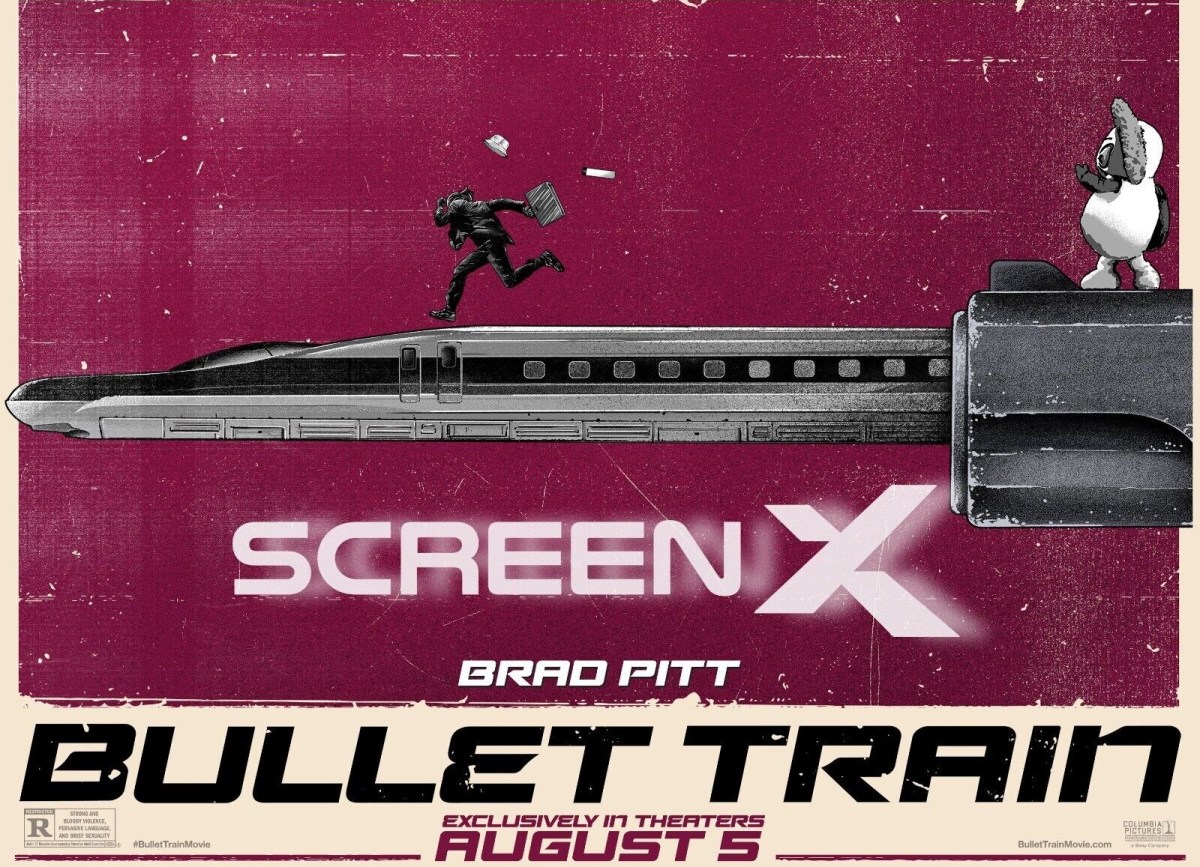
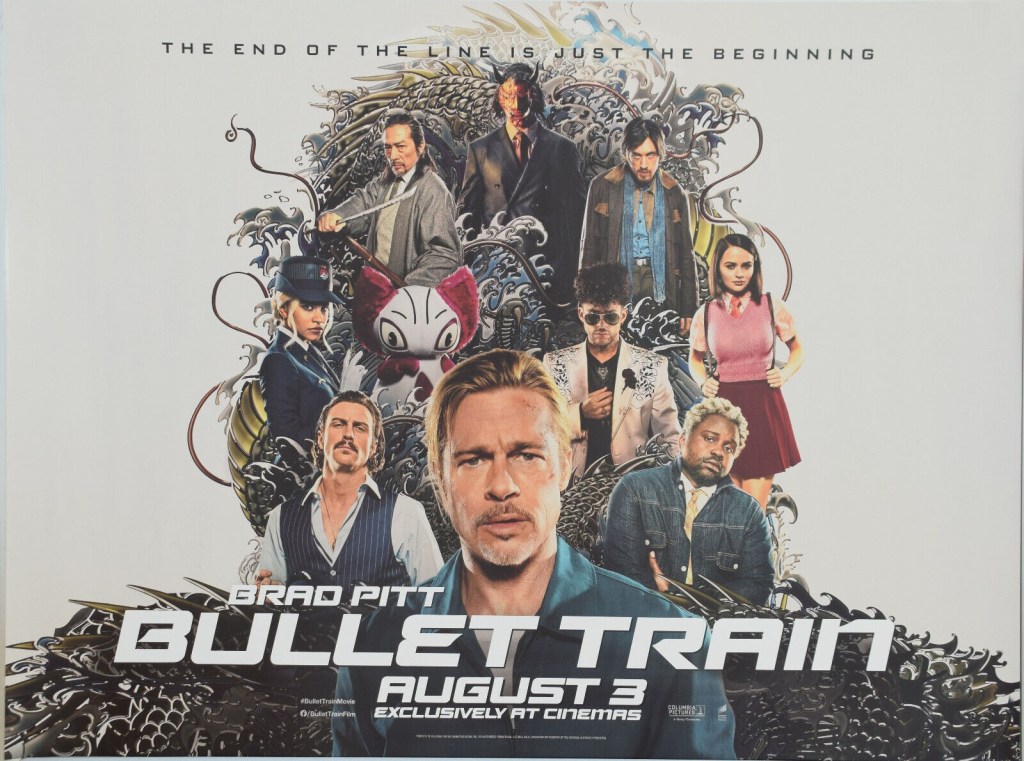
Bullet Train (2022) **** – Seen at the Cinema

What a blast! What a gas! And what the heck’s wrong with critics? Complaining Hollywood lacks originality and turning their noses up at this helter skelter of a thriller that hits eleven from the outset, maintains a hectic pace, and boasts gut-busting laughs.

The plot’s as complicated as it is simple. A bunch of assassins on a train trying to steal a suitcase containing ten million dollars discover they are taking the ride for another reason. Finding out they have competition, not just on board, but on various train station platforms, lends to the complications as they – and the viewer – try to work out just what the hell is going on. While there’s some great dialogue, for most of these guys fists and guns are their easiest means of communication so cue some fabulous action sequences.

Twin English hitmen Tangerine (Aaron Taylor-Johnson) and Lemon (Brian Tyree Henry) are the original messenger boys, tasked with delivering the loot from Tokyo to Kyoto on the titular train along with the son of a notorious gangster. Lemon, not the brightest gun in the arsenal, has left the case on a communal luggage rack where first off it is snaffled by Ladybug (Brad Pitt), as ethereal an assassin as you could wish for, and one in denial, preferring a more spiritual outlet for his skills. But guys who are good at killing people are less efficient at holding onto suitcases.

And so the prize bounces from character to character, including Kimura (Andrew Koji), the Wolf (Bad Bunny), Hornet (Zazie Beetz) and Prince (Joey King). Did I mention there was a deadly snake aboard and that the ultimate gangster going by the moniker of The White Death (Michael Shannon) was lying in wait? No? I didn’t want to overcomplicate matters.

Every time the various assassins, who specialize in different murder techniques, think they are getting to the bottom of the mysterious goings-on the movie virtually jumps track to head down a different route, but it does so with such elan and verve that you can’t wait for the next wrong turn.

The characterisation is as good as anything dreamt up by Tarantino, the oddbeat characters dancing to their own odd beat, the squabbling Tangerine and Lemon almost steal the show from Ladybug who believes he is suffering from a run of bad luck. And like he’s caught up in the wrong movie, Ladybug confides his thoughts to his offscreen handler Maria (Sandra Bullock). Wistful schoolgirl Prince can talk her way out of any situation. But as I said, the others prefer to just beat up their rivals.

So stand by for some of the greatest action this side of Jason Bourne and John Wick. And some of the dumbest moves this side of Dumb and Dumber. You’d think the action/comedy fusion wouldn’t work at all but the way director David Leitch plays with our expectations the whole shebang works beautifully. Though I wouldn’t describe it as such, more like an action picture that happens to make you laugh.

Part of the reason the action is so terrific is Leitch is a former stuntman, who must dream fights in his sleep, because he’s certainly dreamt up some original mano a mano stuff here. But he’s also the uncredited co-director of John Wick (2104) and sole helmer of Deadpool 2 (2018) and Fast and Furious Presents: Hobbs and Shaw (2019) so he’s no stranger to mixing action and comedy. And he takes a fluid approach to narrative.

But the laidback Brad Pitt (Ad Astra, 2019), almost a Bill Murray throwback, is absolutely superb, an Oscar worthy performance, a character re-examining his life in the midst of an assassins convention, and trying not to blame anyone attempting to kill him. Brian Tyree Henry (Joker, 2019) is the pick of the supporting cast. It’s a step up for Aaron Taylor-Johnson (The King’s Man, 2021), who plays the most irascible gangster since Daniel Day-Lewis in Gangs of New York (2002). The outstanding supporting cast is mostly made up of up-and-comers  – Joey King (The Kissing Booth 2, 2020), Zazie Beetz (Lucy in the Sky, 2019), Andrew Koji (Snake Eyes, 2021) – plus Michael Shannon (Heart of Champions, 2021) and Sandra Bullock (The Lost City, 2022) and cameos from Channing Tatum (The Lost City) and

The only minor quibbles are overuse of references to British kids fave Thomas the Tank Engine which may not be such a global phenomenon as the director would like, leading I would guess to some audience bafflement in the U.S., as might occasional mention of London soccer team West Ham, both key to the lives of Tangerine and Lemon.

Leitch owes an almighty vote of thanks to screenwriter Zak Olkewicz (Fear Street, Part Two -1978, 2021) who not only pulls the whole package together but springs brilliant lines and situations though how much was lifted directly from the source book by Kotaro Isaka I couldn’t tell you.

Can’t wait for the sequel. Brad Pitt has created a brilliant screen character that deserves a second outing.

Discover WordPress

A daily selection of the best content published on WordPress, collected for you by humans who love to read.

The Atavist Magazine

by Brian Hannan

WordPress.com News

The latest news on WordPress.com and the WordPress community.