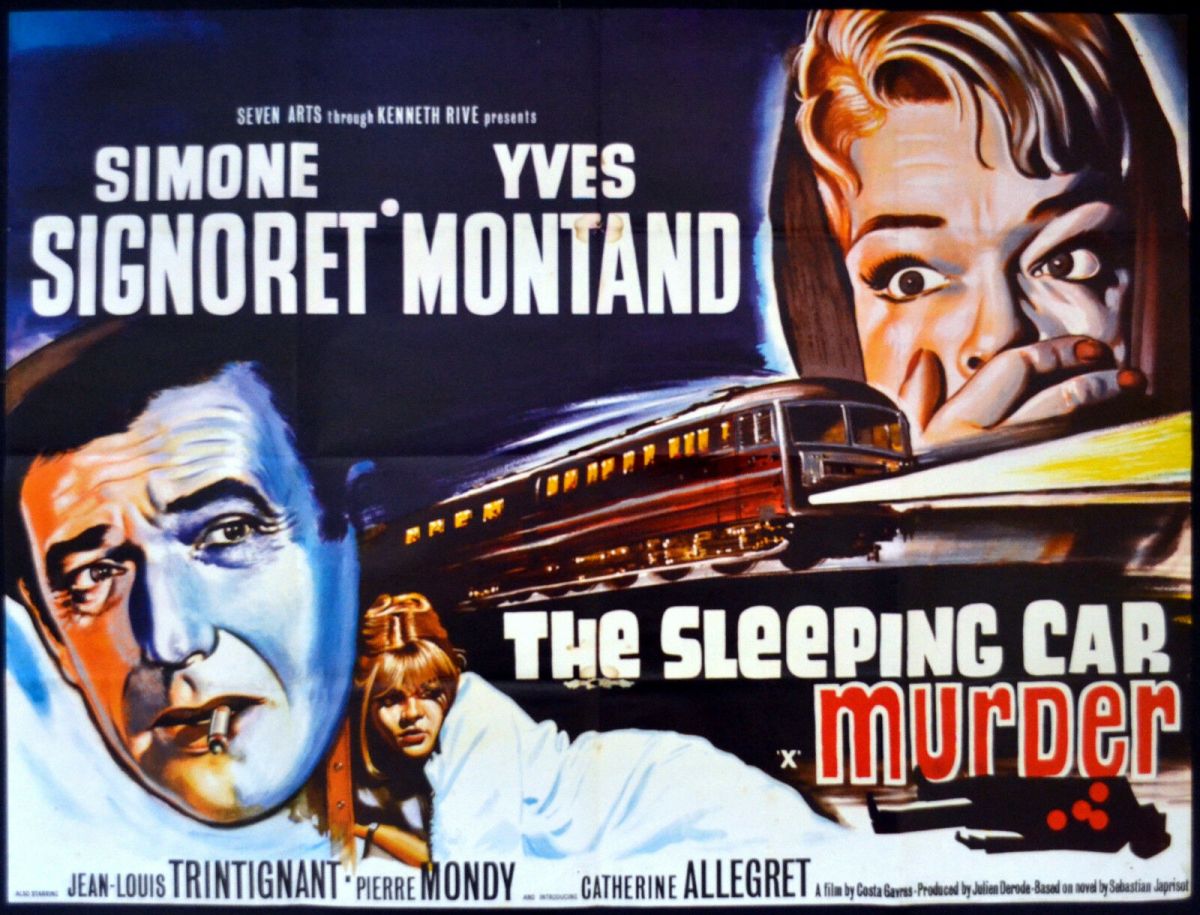
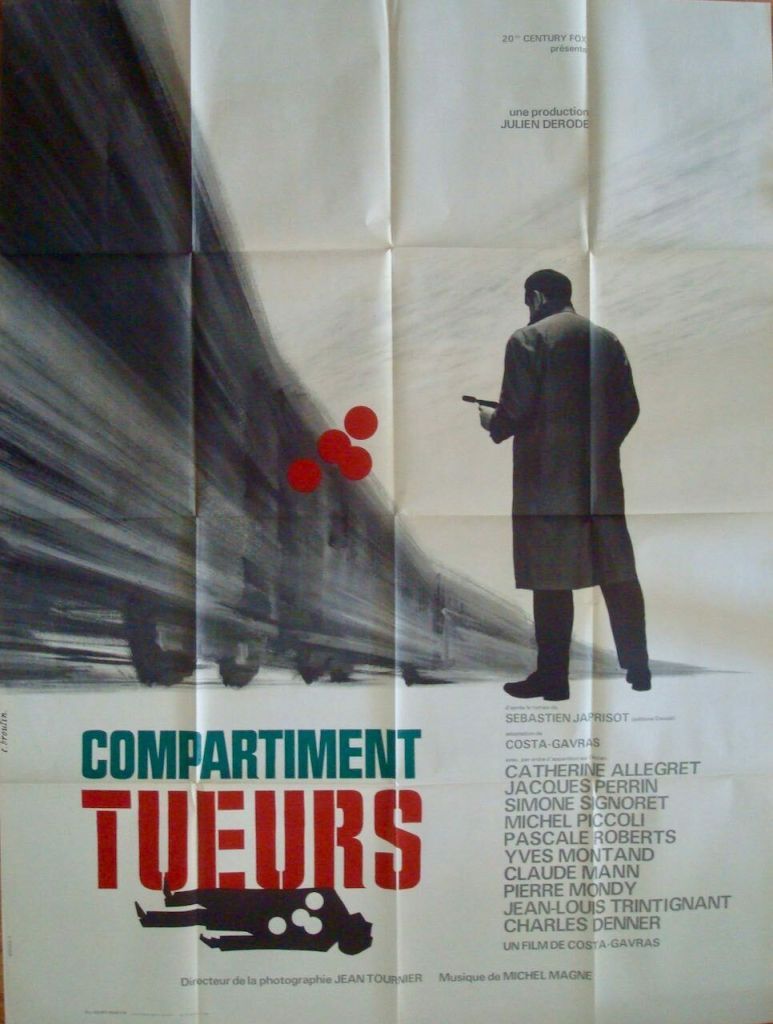
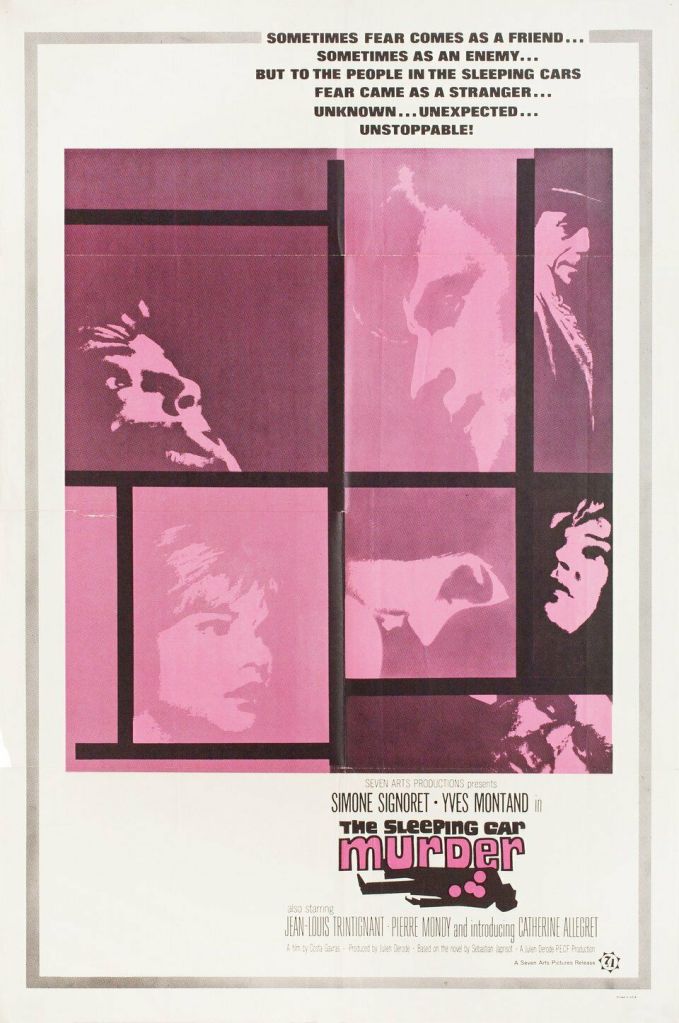
The Sleeping Car Murder (1965) ****

Absolutely brilliant thriller. Even after a half a century, still a knock out. A maniac on the loose, baffled cops, glimpses into the tattered lives of witnesses, victims and relatives, told at break-neck speed by Greek director Costa-Gavras (Z, 1969) on his debut and concluding with an astonishing car chase through the streets of Paris.  Not just an all-star French cast – Yves Montand (Grand Prix, 1966), Oscar-winner Simone Signoret (Is Paris Burning?, 1966), Jean-Louis Trintignant (Les Biches, 1968) and Michel Piccoli (Topaz, 1969) – but directed with a Georges Simenon (creator of Maigret) sensibility to the frailties of humanity.

As well as the twists and turns of the narrative, what distinguishes this thriller are the parallel perspectives. Where most whodunits present an array of suspects, inviting the audience to work out the identity of the killer, here virtually all the characters are presented both objectively and subjectively. Some are delusional, others highly self-critical, occasionally both, and we are given glimpses into their lives through the characters’ internalized voice-over and dialog.
Tiny details open up worlds – the wife of a dead man bewailing that he would not be able to wear the fleecy shoes she had just bought him to keep out the cold during his night-time job, a policeman revealing he wanted to be a dancer, a vet who wants to create a new breed of animals, a witness whose parents committed suicide. But just as many, the flotsam and jetsam of the police life, irritate the hell out of the cops: Bob Valsky (Charles Denner) constantly berates their efforts, relatives bore the pants off their interviewer, not to mention self-important police chief Tarquin (Pierre Mondy) who has an answer for everything.

A young woman Georgette (Pascale Roberts) is discovered dead in the second-class sleeper compartment of a train after it has pulled into Paris. Initial suspicion falls on the other  occupants including aging actress Eliane (Simone Signoret) in the thrall of her much younger lover Eric (Jean Louis Trintignant), impulsive blonde bombshell Bambi (Catherine Allegret), low-level office worker Rene (Michel Piccoli) and Madame Rivolani (Monique Chaumette). Weary Inspector Grazziani (Yves Montand), suffering from a cold and wanting to spend more time with his family, is handed the case. But before he can interview the suspects, they start getting knocked off.
So convinced are the police of their own theories that they ignore the testimony of Eliane and instantly home in on fantasist Rene, treated with contempt, a dishevelled lecherer who on the one hand misinterprets signals from women and on the other realizes that no one in their right mind would ever date him. Eliane is tormented by the prospect of being abandoned by her controlling lover.

It’s a race against time to find the passengers before the killer. In the middle of all this there is burgeoning romance between Bambi and clumsy mummy’s boy Daniel (Jacques Perrin), who may well hold the key to the murders. Their meet-cute is when he ladders her stockings.

I won’t spoil it for you by listing all the red herrings, surprises, mishaps, tense situations and explorations of psyche, but the pace never abates and it keeps you guessing to the end. And while all that keeps the viewer on tenterhooks what really makes the movie stand out is the depiction of the inner lives of the characters.

So often cast as a lover Yves Montand is outstanding as the diligent cop. Signoret captures beautifully the life of a once-beautiful woman who now enjoys the “empty gaze of men,” Trintignant essays a sleazier character than previously while Michel Piccoli who often at this stage of his career played oddballs invites sympathy for an unsympathetic character. Catherine Allegret (Last Tango in Paris, 1972) and Jacques Perrin (Blanche, 1971) charm as the young lovers. In tiny roles look out for director Claude Berri (Jean de Florette, 1986), Marcel Bozzuffi (The French Connection, 1971) and Claude Dauphin (Hard Contract, 1969),  

Costa-Gavras constantly adds depth to the story and his innovative use of multiple voice-over, forensic detail, varying points-of-view, plus his masterful camerawork and a truly astonishing (for the time) car chase points to an early masterpiece. Sebastian Japrisot (Farewell, Friend / Adieu L’Ami, 1968) wrote the screenplay based on his novel.  

Can’t remember where I got my DVD, perhaps second-hand, but there is an excellent print, taken from the 2016 restoration, available on YouTube.

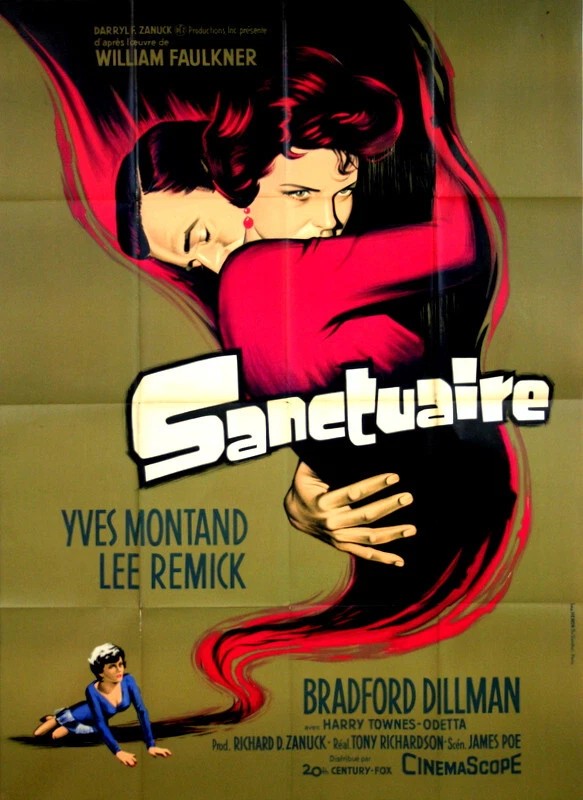
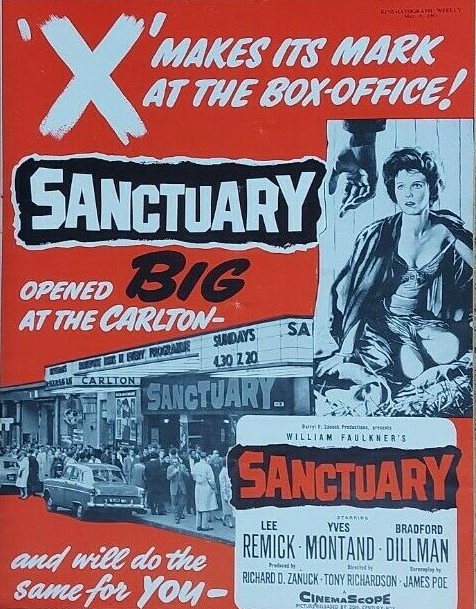
Sanctuary (1960) ***

This overheated melodrama stands as a classic example of Hollywood’s offensive attitudes to women. Nobel prize-winning author William Faulkner could hardly blame the movies for sensationalizing his misogynistic source material since if anything the movie took a softer line.  Told primarily in flashback as headstrong southern belle Temple Drake (Lee Remick) attempts to mitigate the death sentence passed on her maid Nancy (Odetta). Given that such appeals are directed at Drake’s Governor father (Howard St John), and that the maid has been condemned for murdering Drake’s infant child, that’s a whole lot of story to swallow.

Worse is to follow. Drake takes up with Prohibition bootlegger Candy Man (Yves Montand) after being raped by him and thereafter appears happy to live with him in a New Orleans brothel – the “sanctuary,” no irony intended, of the title – despite him slapping her around. The film steers clear of turning her into the prostitute of the original book, but pretty much sets up the notion that high class women will fall for a low-class tough guy whose virility is demonstrated by his brutality. In other words a “real man” rather than the dilettantes she has previously rejected.

After the Candy Man dies, Drake returns home and marries wealthy suitor Gowan Stevens (Bradford Dillman) who blames himself, rightly, for Drake falling into the clutches of the gangster in the first place. But a past threatening to engulf her precipitates the infanticide.

Faulkner was a Hollywood insider, adapting Sanctuary for The Story of Temple Drake (1933) and earning high praise for  his work on Bogart vehicles To Have and Have Not (1944) and The Big Sleep (1946). The success of The Tarnished Angels (1957) starring Rock Hudson, The Long, Hot Summer (1958) with Paul Newman and The Sound and the Fury (1959) headlined by Yul Brynner had sent his cachet rocketing. But all three were directed by Americans – Douglas Sirk and Martin Ritt – who had a distinctive visual style and an ear for what made melodrama work.

Sanctuary had been handed to British director Tony Richardson (Look Back in Anger, 1959) and he didn’t quite understand how to make the best of the difficult project. So while Lee Remick manages to suggest both strength and fragility, and makes her character’s wanton despair believable, Yves Montand is miscast and Bradford Dillman fails to convince even though portraying a weak character. Too many of the smaller roles appear as cliches. And it’s hard to believe the maid’s motivation in turning murderer.

What was acceptable steamy melodrama in the 1930s fails to click three decades on. Faulkner’s thesis that high-falutin’ women want a man to master them and furthermore will fall in love with their rapist seems to lack any understanding of the female mind and will not appeal to the modern sensibility than it did on release. Lee Remick is what holds the picture together, in part because she plays so well the role of a woman embracing degradation, and refusing – no matter how insane the idea appears – to let go of the man she believes is the love of her life. It’s not Fifty Shades of Grey, but it’s not that far off that kind of fantasy figure, and given the success of that book, it’s entirely possible there is a market for what Faulkner has to peddle.

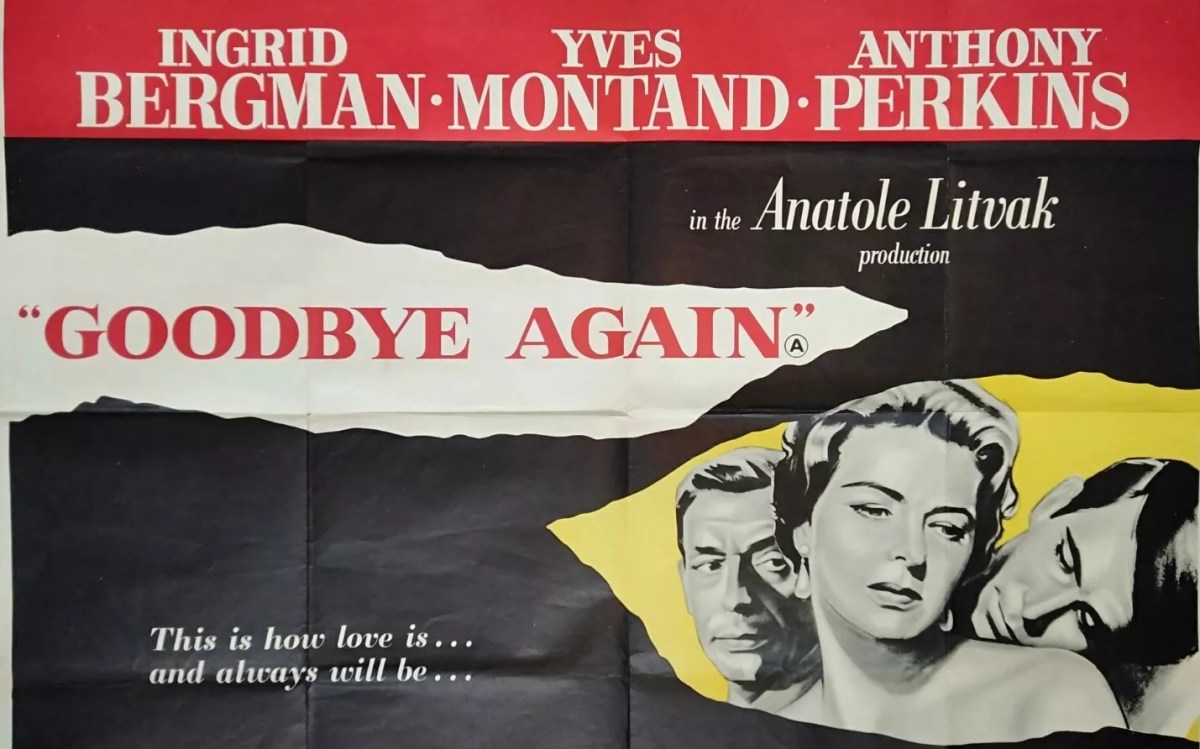
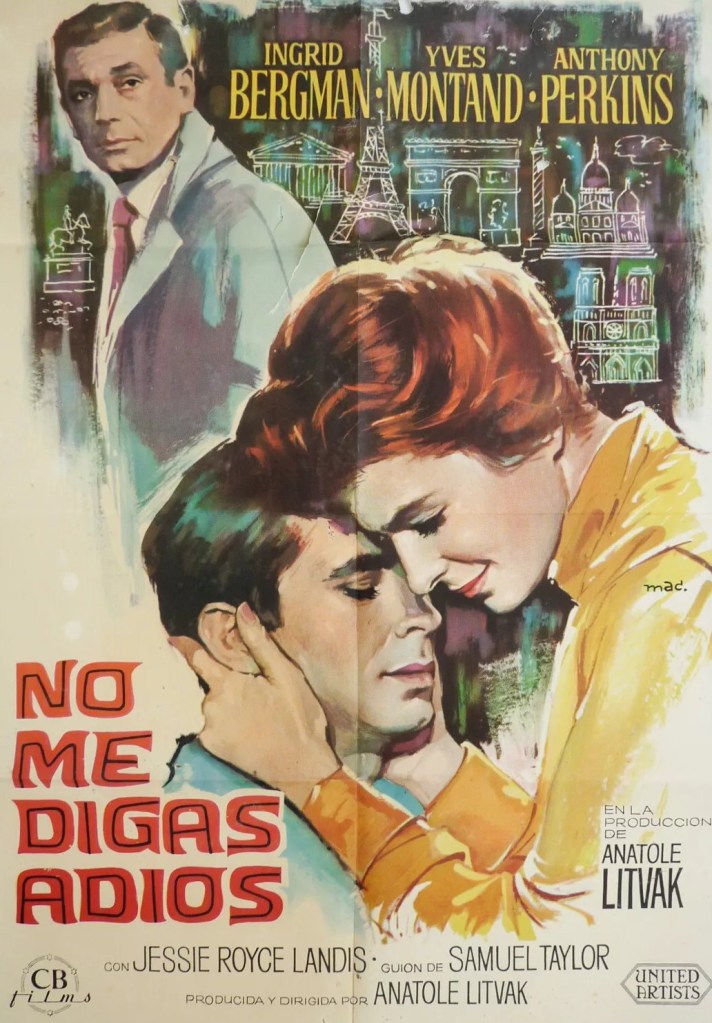
Goodbye Again / Aimez-vous Brahms (1961) ***

Something of a feminist icon with middle-aged single woman choosing her lovers. I should warn you that there’s a May-December trope, which was very common at this period, as older female stars, engaging on romance with younger males, catch up with the unchallenged notion that any ageing male star should be accorded a younger female partner regardless of the age difference.

Paula (Ingrid Bergman), a lady of independent means, is tiring of philandering lover Roger (Yves Montand). After five years, he still can’t keep his hands off any young girl – known as “Maisies” – who come within reach. Paula is pursued by a younger man Philip (Anthony Perkins) and eventually succumbs to his ardent wooing. They differ on whether their relationship has much of a future, she the more pragmatic of the two, as, I would guess, are the audience.

While he’s refreshing and energetic, the spoiled rich boy exhibits childish tendencies. There’s a clash between the independent woman and the older macho misogynist male who expects his lover to be at his beck and call, even when his disappearances are the result of assignations with other lovers.

A middle-aged woman was as much on the hook to an unfaithful lover as a married woman. While she doesn’t want to be married, she wants to enjoy the same sense of trust that marriage might bring. However, she’s not destroyed, as a married woman of the period might have been, by her partner’s infidelity. And precisely because they are not bound by legal obligation, she is perfectly within her rights to choose another lover.

Still, there is an intense melancholy that she cannot make Roger settle down with just the one woman – her – and that if their affair is to continue it must be on his unacceptable terms. Yet she is terrified of being alone and except for the appearance of Philip and her independence there is the sense that she might subdue tragic instinct and settle for the crumbs from Roger’s table.  

Glorified soap opera, no doubt, but it survives on the playing of Ingrid Bergman (The Visit, 1964) who shares with Deborah Kerr the ability to show conflict and sadness in her eyes. She brings so much depth to her character you are apt to forget you are watching a soap opera. That she remains attracted to Roger beyond the realms of logic compounds her tragedy.

Anthony Perkins (Pretty Poison, 1968) is very charming, ridding himself in the main of the jumpiness that appeared to fit his screen persona. While Perkins and Bergman make an unlikely screen couple, they are a believable one.

Yves Montand (Let’s Make Love, 1961) doesn’t have to drift much outside his screen persona of male fantasy figure, the one who has all the dames at his feet.

This is one of those very well-made Hollywood movies, full of gloss, trimmed with an edginess that soon takes center stage. Made in the 1940s it would be a classic weepie. The ending will take you by surprise.

Directed by Oscar-nominated Anatole Litvak (The Night of the Generals, 1967) in determined old-fashioned style from a screenplay by Samuel A. Taylor (Topaz, 1969) based on the Francoise Sagan bestseller.

An old-fashioned treat.

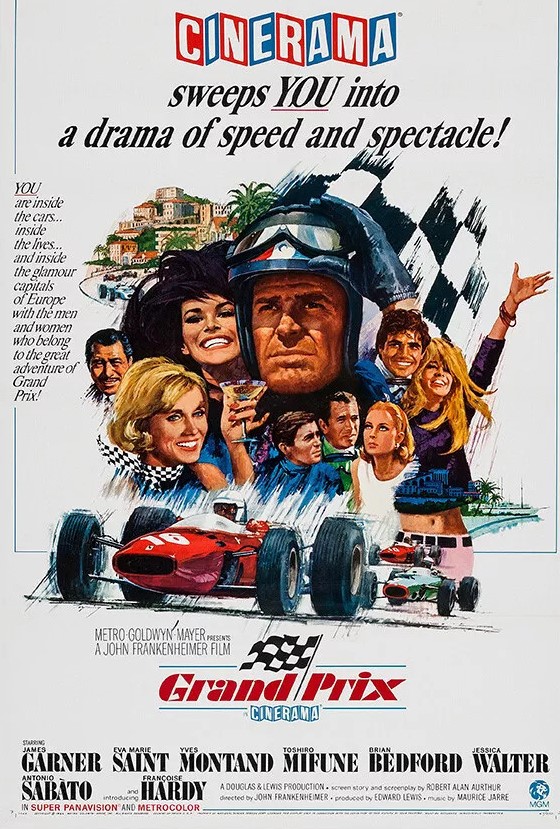
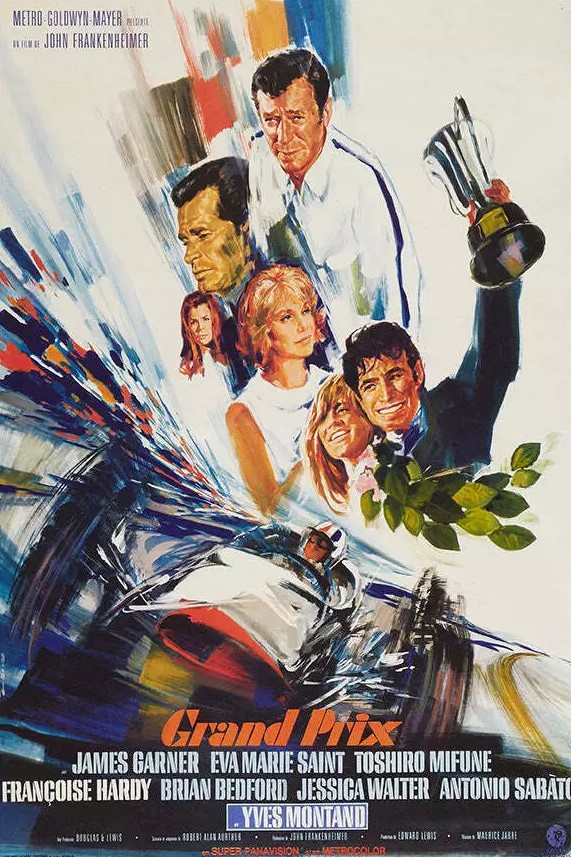
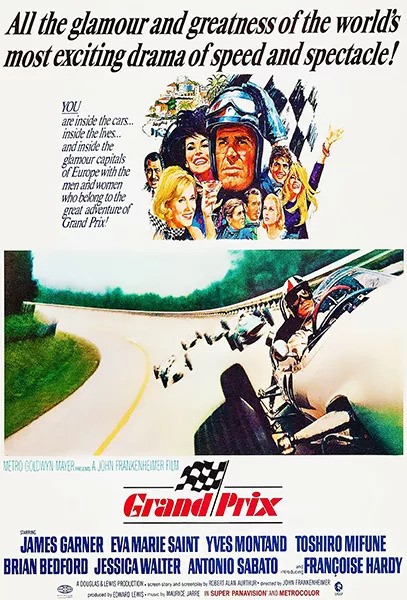
Grand Prix (1966) *****

If ever there was a case to be made for six-track stereophonic sound or, for that matter, split screen Grand Prix would form the first line of defense. That it was made in Cinerama 70mm was merely a bonus. Most roadshow movies start with an overture, a ten-minute or so musical introduction that would thematically at least give the audience some indication of the picture they were about to watch. Thrumming and roaring engines formed the montage opening to Grand Prix, a noise that almost shook a cinema to its foundations.

Cinerama had been built on its ability to create almost primeval effects. There was always a downward rush, a runaway train, a roller coaster, something to set an audience on the edge of its seat in pure exhilaration. But the visual had nothing on the aural and what set Grand Prix apart was danger, that constant thrum of engines rising to impossible crescendos. Split screen allowed the director to tell several stories at once as competitors chased each other round perilous circuits at a time when death was a racing driver’s constant companion and in fact of the thirty-two professional participants including Graham Hill, Jim Clark, Juan Fangio and Jack Brabham five were dead within two years of the movie’s completion. Nobody needed to remind an audience how hazardous the sport was, they could read about the continuous carnage in the newspapers, but what was less easy to convey, although such events were well attended, was the pure thrill of being at a race meeting. Grand Prix set out to rectify that problem.

At nearly three hours long it had room to tell several stories and in that respect it was more of an ensemble picture than something like Lawrence of Arabia (1962) which took even more time to tell just one story. Many of these stories came to an abrupt end as the character died in an accident.

Steve McQueen and Paul Newman, both racing aficionados, were front runners for the leading role but it went instead to James Garner, also a racer who did all his own driving (though not necessarily at the speeds indicated). And to properly represent the competition it required an international flavor so other drivers were played by Yves Montand (The Wages of Fear, 1953) in a part first offered to Jean-Paul Belmondo and Antonio Sabato (in his second film) with Adolfo Celi (Thunderball, 1965) as the Ferrari boss and Toshiro Mifune (Seven Samurai, 1954) as a Japanese team owner. Swedish star Harriet Andersson (Through a Glass Darkly, 1961) was cast as the female lead but dropped in favour of Eva Marie Saint (Exodus, 1960) in a role turned down by Monica Vitti (Modesty Blaise, 1966).

Garner and Saint had previously worked together in thriller 36 Hours (1964) and it said a lot for his marquee credentials that he was still best known for The Great Escape (1963). Although he had reached top billing status, films like The Art of Love (1965) and Mister Buddwing (1966) did not deliver commercially. Saint’s career had been as peripatetic after Exodus (1960) as before, star of All Fall Down (1962) but third-billed in The Sandpiper (1965) and second-billed in The Russians Are Coming, The Russians Are Coming (1966), the latter two both big hits.

Frankenheimer had directed Saint in All Fall Down and enjoyed a distinguished career with The Birdman of Alcatraz (1962), The Manchurian Candidate (1962) and Seven Days in May (1964) although the high regard in which he was generally held was somewhat tarnished by The Train (1965) and thriller Seconds (1966), the latter a spectacular flop. Grand Prix was not only the biggest film of his career, though The Train had given him a grounding in action, but also his first in color.  The movie was filmed on existing legendary circuits with Formula 3 racing cars adapted to look like Formula 1 and a thousand other incidental details including an appearance by a Shelby Mustang (with Carroll Shelby as technical adviser) that made it an accurate depiction of the sport. Eighteen cameras were used to film the races.

The narrative arc follows the Grand Prix season and while the actual competition dominates the movie it is against the background of the emotional turmoil the sport wreaks on the drivers and the wives and girlfriends who have to live with the knowledge that their partners might not come home at the end of the day. Garner is considered too reckless for the top spot in a racing team and in a bid for redemption signs for a new company. Former world champion Montand is coming to the end of his career. English actor Brian Bedford makes his mainstream movie debut as a driver recovering after a horrific crash caused by Garner. The emotional subplots comprise Garner having an affair with Bedford’s wife (Jessica Walter); Montand embarking on an affair with Saint who plays a magazine writer, with French actress  Francoise Hardy (better known as a chanteuse) involved with Sabato. In addition, there are some telling sequences in which the drivers unload about their fears.

Frankenheimer does a terrific job in marshalling all the effects and the minute details, and the fact that there is no big star in the mix makes the battles between the characters more realistic.  

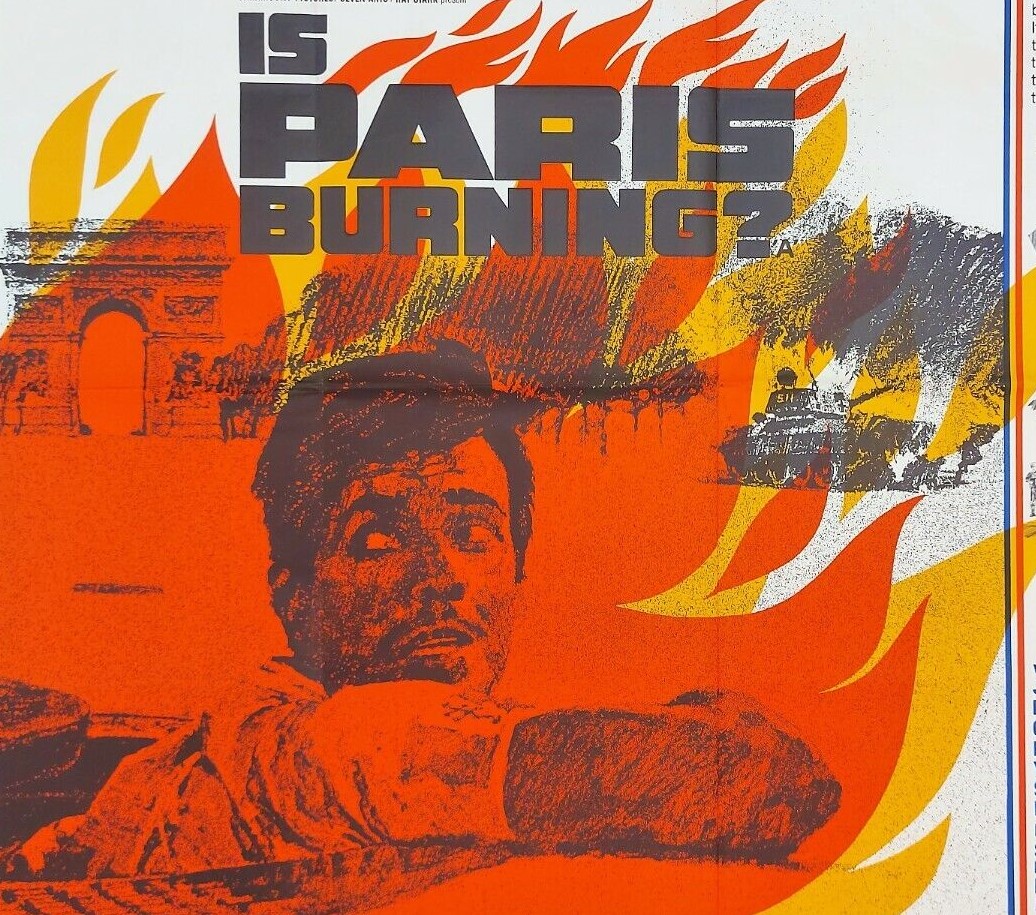
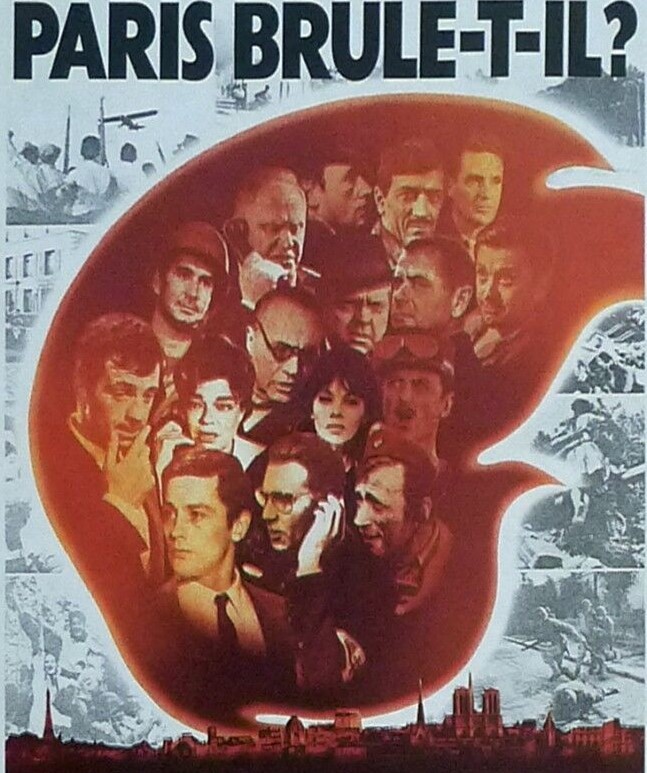
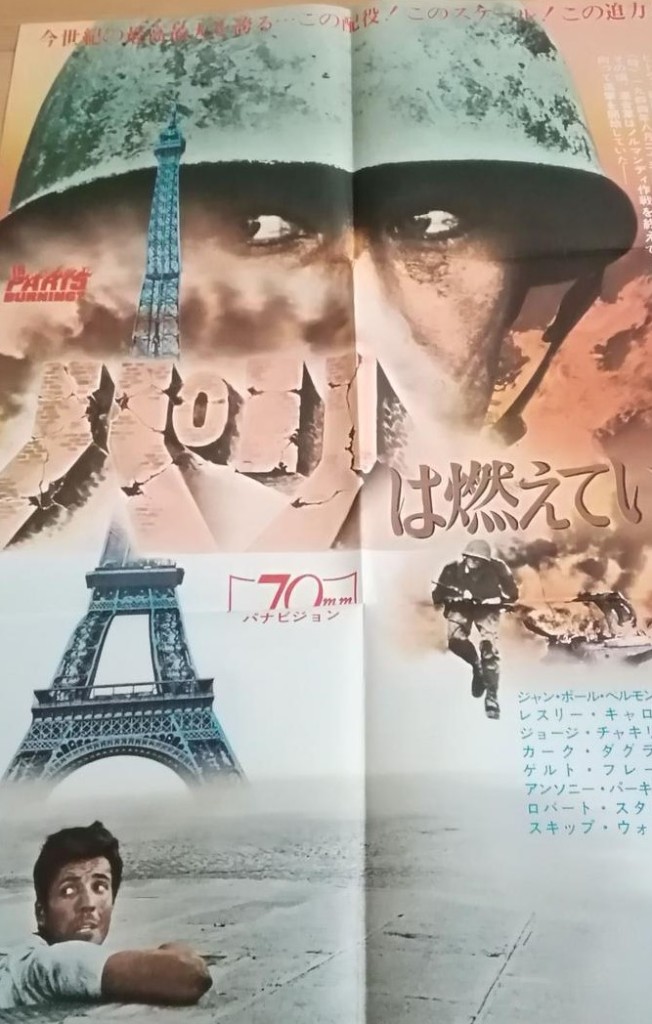
Is Paris Burning (1966) ****

Politics didn’t usually play a part in war films in the 1960s but’s it’s an essential ingredient to Rene Clement’s underrated documentary-style picture. Paris had no strategic importance and after the Normandy landings the Allies intended to bypass the French capital and head  straight for Berlin.

Meanwhile, Hitler, in particular vengeful mood after the attempt on his life, ordered the city destroyed. Resistance groups were splintered, out-numbered and lacking the weaponry to achieve an uprising. Followers of General De Gaulle, the French leader in exile, wanted to wait until the Allies sent in the troops, the Communists planned to seize control before British and American soldiers could arrive. 

When the Communists begin the fight, seizing public buildings, the Germans plant explosives on the Eiffel Tower, the Louvre, and other famous buildings and all the bridges across the River Seine.  The German commandant Von Choltitz (Gert Frobe), no stranger to slaughter having overseen the destruction of Rotterdam, holds off obeying his orders because he believes Hitler is insane and the war already lost.

The Gaullists despatch a messenger to persuade General Omar Bradley (Glenn Ford) to change his mind and send troops to relieve the city. Sorry for the plot-spoiler but as everyone knows the Germans did not destroy the city and the liberation of Paris provided famous newsreel and photographic footage.

Director Clement (Rider on the Rain, 1970) was also aware he could not extract much tension from the question of whether von Choltitz will press the destruct button, so he takes another route and documents in meticulous detail the political in-fighting and the actual street battles that ensued, German tanks and artillery against Molotov cocktails and mostly old-fashioned weaponry. The wide Parisian boulevards provide a fabulous backdrop for the fighting.

Shooting much of the action from above allows Clement to capture the action in vivid cinematic strokes. Like The Longest Day (1962), the film does not follow one individual but is in essence a vast tapestry. Scenes of the utmost brutality – resistance fighters thrown out of a lorry to be machine-gunned, the public are strafed when they venture out to welcome the Americans – contrast with moments of such gentleness they could almost be parody: a shepherd taking a herd through the fighting, an old lady covered in falling plaster watching as soldiers drop home-made bombs on tanks.

This is not a film about heroism but the sheer raw energy required to carry out dangerous duty and many times a character we just saw winning one sally against the enemy is shot the next. The French have to fight street-by-street, enemy-emplacement-by-enemy-emplacement, tank-by-tank.

And Clement allows as much time for humanity. Francophile Sgt Warren (Anthony Perkins), as an American grunt, spends all his time in the middle of the battle trying to determine the location of the sights he longs to see – before he is abruptly killed.  An unnamed café owner (Simone Signoret) helps soldiers phone their loved ones.

Like The Longest Day and In Harm’s Way (1965), the film was shot in black-and-white, but not, as with those movies for the simple reason of incorporating newsreel footage, but because De Gaulle, now the French president, objected to the sight of red swastika. Even so, it permitted the inclusion of newsreel footage, which on the small screen (where most people these days will watch it) appears seamless.

By Hollywood standards this was not an all-star cast, Glenn Ford (as Bradley), Kirk Douglas (General Patton) and Robert Stack (General Sibert) making fleeting glimpses.

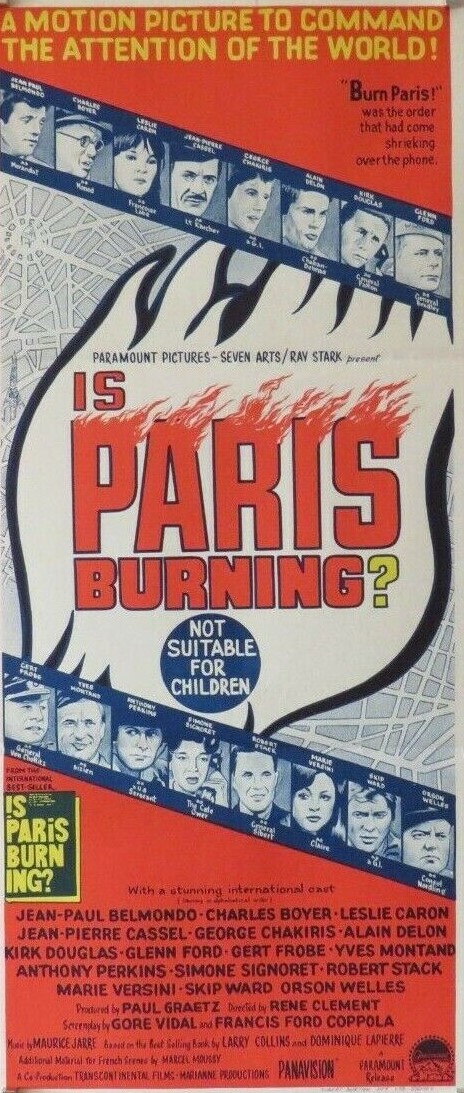
But by French standards it was the all-star cast to beat all-star casts – Jean-Paul Belmondo (Breathless, 1960), Alain Delon (Lost Command, 1966), Yves Montand (Grand Prix, 1966), Charles Boyer (Gaslight, 1944), Leslie Caron (Gigi, 1958), Michel Piccoli (Masquerade, 1965), Simone Signoret (Room at the Top, 1959) and Jean-Louis Trintignant (A Man and a Woman, 1966).  Orson Welles, in subdued form, appeared as the Swedish ambassador.

Gore Vidal (The Best Man, 1964) and Francis Coppola (The Godfather, 1962) devised the screenplay based on the bestseller by Larry Collins and Dominic Lapierre

At $6 million, it was the most expensive French film ever made. It had a six-month shooting schedule and was shot on the streets of the city including famous locations like Etoile, Madeleine and the Louvre. It was a big hit in France but flopped in the United States, its box office so poor that Paramount refused to disclose it.

Gripping.

Is Paris Burning (1965) ****

Politics don’t usually play a part in war films of the 1960s but’s it’s an essential ingredient to Rene Clement’s underrated documentary-style picture. Paris has no strategic importance and after the Normandy landings in 1944 the Allies intend to bypass the German-occupied French capital and head straight for Berlin.

Meanwhile, Hitler, in particular vengeful mood after an attempt on his life, orders the city destroyed. Resistance groups are splintered, outnumbered and lacking the weaponry to achieve an uprising. Followers of General De Gaulle, the French leader in exile, want to wait until the Allies send in the troops while the Communists plan to seize control before British and American soldiers can arrive. 

When the Communists begin the fight by seizing public buildings, the Germans retaliate by planting explosives on the Eiffel Tower, the Louvre, and other famous buildings and all the bridges across the River Seine. German commandant Von Choltitz (Gert Frobe), no stranger to slaughter having overseen the destruction of Rotterdam, holds off obeying his orders because he believes Hitler is insane and the war already lost.

The Gaullists dispatch a messenger to persuade General Omar Bradley to change his mind and send troops to relieve the city. Director Clement, aware how little tension he can extract from the question of whether von Clowitz will press the destruct button (history tells us he did not) so he takes another route and documents in meticulous detail the political in-fighting and the actual street battles that ensued, German tanks and artillery against Molotov cocktails and mostly old-fashioned weaponry.

The wide Parisian boulevards provide a fabulous backdrop for the fighting. Shooting much of the action from above allows Clement to capture the action in vivid cinematic strokes. Like The Longest Day (1962) the film does not follow one individual but is in essence a vast tapestry. Scenes of the utmost brutality – resistance fighters thrown out of a lorry to be machine-gunned, the public strafed when they venture out to welcome the Americans – contrast with moments of such gentleness they could almost be parody: a shepherd taking his flock  through the fighting, an old lady covered in falling plaster watching as soldiers drop home-made bombs on tanks.

This is not a film about heroism but the sheer raw energy required to carry out dangerous duty and many times a character we just saw winning one sally against the enemy is shot the next. The French have to fight street-by-street,  corner-by-corner, bridge-by-bridge,   enemy-emplacement-by-enemy-emplacement, tank-by-tank.

And Clement allows as much time for humanity. Francophile Sgt Warren (Anthony Perkins), an American grunt, spends all his time in the middle of the battle trying to determine the location of the sights he longs to see. Bar owner Simone Signoret helps soldiers phone their loved ones.

Like The Longest Day and In Harm’s Way (1965), the film was shot in black-and-white, but not, as with those movies for the simple reason of incorporating newsreel footage, but because De Gaulle, now the French president, objected to the sight of a red swastika.

Even so, it permitted the inclusion of newsreel footage, which on the small screen (where most people these days will watch it) appears seamless. By Hollywood standards this was not an all-star cast, only fleeting glimpses of Glenn Ford (Fate Is the Hunter, 1964), Kirk Douglas (A Lovely Way To Die, 1968), Robert Stack (The Corrupt Ones / The Peking Medallion, 1967), Orson Welles (House of Cards, 1968) and George Chakiris (West Side Story, 1961).

But by French standards it was the all-star cast to beat all-star casts – Jean-Paul Belmondo (Breathless, 1960), Alain Delon (Lost Command, 1966), Yves Montand (Grand Prix, 1966), Charles Boyer (Gaslight, 1944), Leslie Caron (Gigi, 1958), Michel Piccoli (Masquerade, 1965), Simone Signoret (Room at the Top, 1959) and Jean-Louis Trintignant (A Man and a Woman, 1966).  Director Rene Clement was best known for Purple Noon (1960), an adaptation of Patricia Highsmith’s The Talented Mr Ripley starring Alain Delon

At $6 million, it was the most expensive French film ever made, a six-month shooting schedule, shot on the streets of the city including famous locations like Etoile, Madeleine and the Louvre. Big hit in France, it flopped in the United States, its box office so poor that Paramount refused to disclose it.

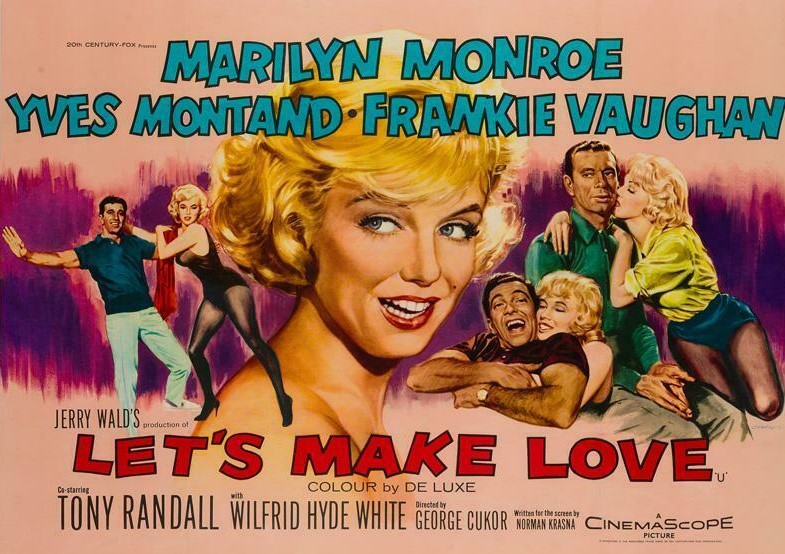
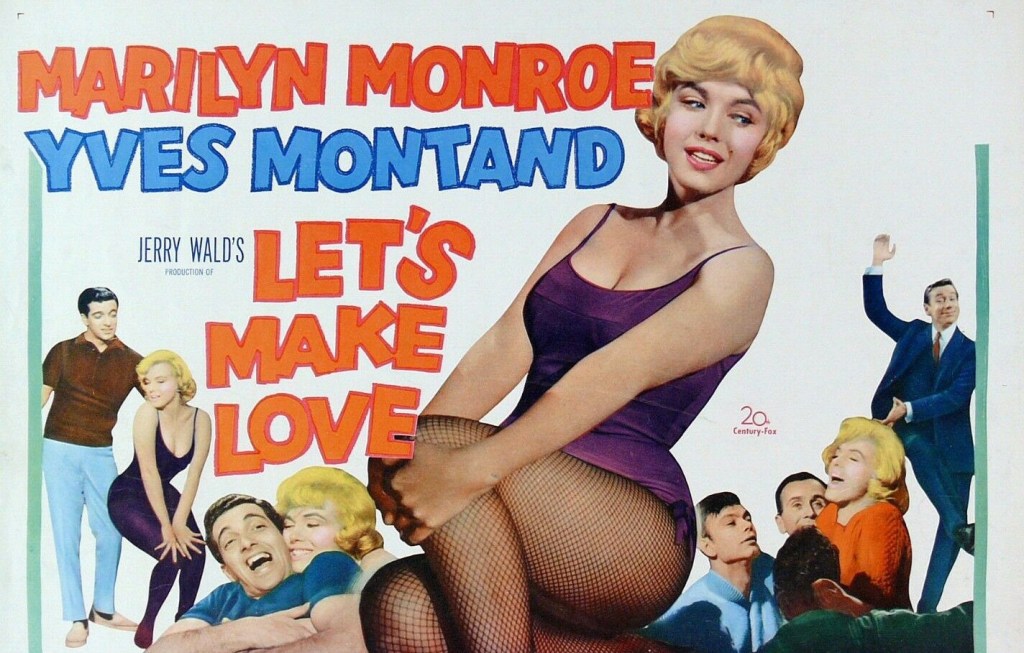
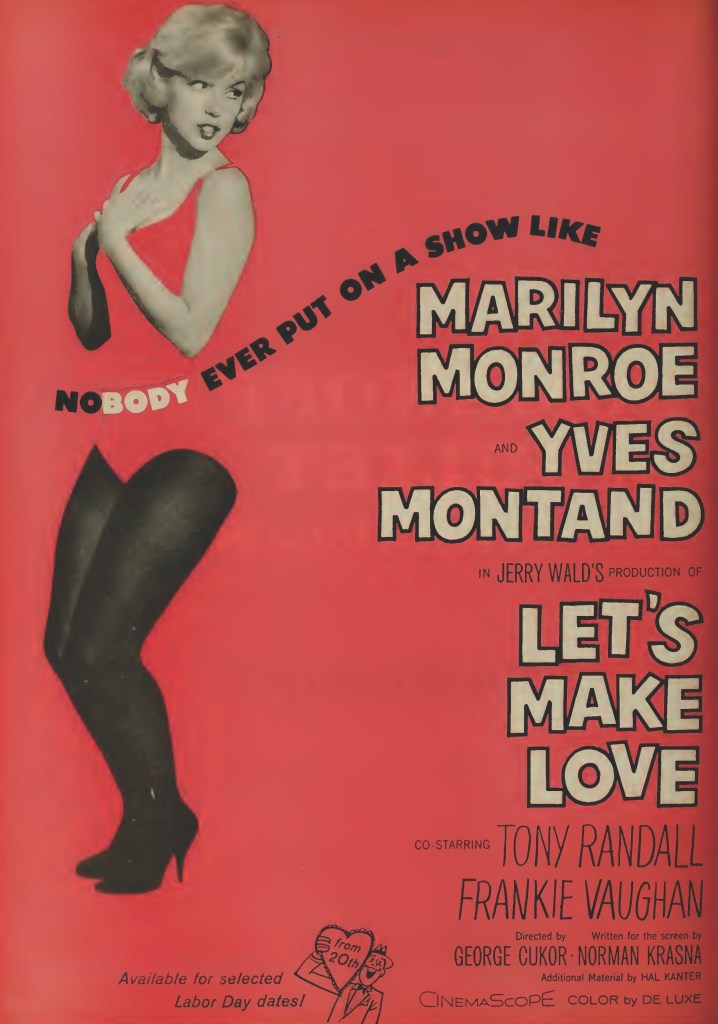
Let’s Make Love (1960) ***

Despite a luminous performance by Marilyn Monroe (Some Like it Hot, 1959) , in revealing outfits half the time, this backstage musical drama barely staggers over the line. Whatever relationship the actress enjoyed off-screen with co-star Frenchman Yves Montand (Grand Prix, 1966) fails to register here. In this fish-out-of-water tale of the Broadway intrigue involved in putting a musical together, watching klutz billionaire Jean-Marc Clement (Montand) getting his act together as neophyte actor-cum-singer fails to fly.

It’s always difficult observing a good actor trying to be bad. If he’s a really good actor, it’s going to be an awful watch. And unless he’s got the comedic chops to trigger a bucketload of laughs it’s painful to observe. Gregory Peck reportedly quit this role in favour of The Guns of Navarone (1961) because there was too much Marilyn Monroe in it, and possibly an awkward Peck would have been more fun to watch though comedy was scarcely his forte, but without Monroe the movie would have been virtually unwatchable.

The story’s familiar, a twist on Cinderella with Clement being the ugly duckling in terms of talent. The billionaire businessman, notorious for his love life, attends a rehearsal of a show intending to register outrage at its veiled portrayal of him. Instead, he is mistaken for an auditioning actor and offered a role. He falls for Amanda (Monroe) but she shows little interest, either obsessed with her knitting or trying to improve her education at night class, and appears far more interested in her stage co-star Tony (Frankie Vaughan).

In order to sharpen up his act, Clement hires a bunch of well-known thespians: Milton Berle, Bing Crosby and Gene Kelly.

This is where the show could be get interesting. Genuinely learning the secrets of a great comedian, singer and dancer should at the very least provide a fascinating insight into their skills. Of these, Crosby is the pick, demonstrating the importance of raising or dropping your voice at various points in order to maximize the emotion in a song, in other words a singing masterclass. Berle has too much screen time and does little to justify it.

Whatever, regardless of what the script says, Clement seems to take on board little of what he is taught. Montand was a gifted crooner in any case, having begun his career as Edith Piaf’s protégé, and it just seems like he switched instantly from being a bad singer to a good one. In contrast, when Amanda has to take direction, she immediately shows how simple it is to improve a number by adding some actions.

Luckily, Monroe is such a mesmeric screen quality that she can rescue any indifferent movie.  This would work better with a more charismatic leading man – and the prospect of Peck teaming with Monroe was intriguing – but regardless of who she acts opposite Monroe will always blow them away. This is a different kind of role for her because in a sense she is neither the girl adored nor the victim of romance gone wrong. For the most part she’s just a career girl focusing all her attention on getting on. She’s almost just the foil in the dramatic sequences for Montand. But once she has the stage or screen or to herself she dazzles.

Sanctuary (1961) ***

This overheated melodrama stands as a classic example of Hollywood’s offensive attitudes to women. Nobel prize-winning author William Faulkner could hardly blame the movies for sensationalising his misogynistic source material since if anything the movie took a softer line.  Told primarily in flashback as headstrong southern belle Temple Drake (Lee Remick) attempts to mitigate the death sentence passed on her maid Nancy (Odetta). Given that such appeals are directed at Drake’s Governor father (Howard St John), and that the maid has been condemned for murdering Drake’s infant child, that’s a whole lot of story to swallow.

Worse is to follow. Drake takes up with Prohibition bootlegger Candy Man (Yves Montand) after being raped by him and thereafter appears happy to live with him in a New Orleans brothel – the “sanctuary,” no irony intended, of the title – despite him slapping her around. The film steers clear of turning her into the prostitute of the original book, but pretty much sets up the notion that high class women will fall for a low-class tough guy whose virility is demonstrated by his brutality. In other words a “real man” rather than the dilettantes she has previously rejected.

After the Candy Man dies, Drake returns home and marries wealthy suitor Gowan Stevens (Bradford Dillman) who blames himself, rightly, for Drake falling into the clutches of the gangster in the first place. But a past threatening to engulf her precipitates the infanticide.

Faulkner was a Hollywood insider, adapting Sanctuary for The Story of Temple Drake (1933) and earning high praise for  his work on Bogart vehicles To Have and Have Not (1944) and The Big Sleep (1946). The success of The Tarnished Angels (1957) starring Rock Hudson, The Long, Hot Summer (1958) with Paul Newman and The Sound and the Fury (1959) headlined by Yul Brynner had sent his cachet rocketing. But all three were directed by Americans – Douglas Sirk and Martin Ritt – who had a distinctive visual style and an ear for what made melodrama work.

Sanctuary had been handed to British director Tony Richardson (Look Back in Anger, 1959) and he didn’t quite understand how to make the best of the difficult project. So while Lee Remick manages to suggest both strength and fragility, and makes her character’s wanton despair believable, Yves Montand is miscast and Bradford Dillman fails to convince even though portraying a weak character. Too many of the smaller roles appear as cliches. And it’s hard to believe the maid’s motivation in turning murderer. Watch out for Strother Martin (Cool Hand Luke, 1967).

What was acceptable steamy melodrama in the 1930s fails to click three decades on. Faulkner’s thesis that high-falutin’ women want a man to master them and furthermore will fall in love with their rapist seems to lack any understanding of the female mind and will not appeal any more to the modern sensibility than it did on release. Lee Remick is what holds the picture together, in part because she plays so well the role of a woman embracing degradation, and refusing – no matter how insane the idea appears – to let go of the man she believes is the love of her life. It’s not Fifty Shades of Grey, but it’s not that far off that kind of fantasy figure, and given the success of that book, it’s entirely possible there is a market for what Faulkner has to peddle.

Not easy to find. This is actually on YouTube if you go onto that channel and search. Strangely enough, if I post a link, it says it is no longer playing there – but just as strangely if you go looking you will find it.

Discover WordPress

A daily selection of the best content published on WordPress, collected for you by humans who love to read.

The Atavist Magazine

by Brian Hannan

WordPress.com News

The latest news on WordPress.com and the WordPress community.